


 English
 Español
 عربى

PVC Shrink Film for Cost-Effective Label Packaging and Industrial Protection
Content
- 1 What Is PVC Shrink Film?
- 2 Why PVC Shrink Film Remains a Mainstream Choice
- 3 Key Product Advantages
- 4 Manufacturing Process and Quality Considerations
- 5 Company Manufacturing Strengths
- 6 Available Specifications
- 7 Width and Length Selection
- 8 Applications in Label Packaging
- 9 Industrial and General Packaging Uses
- 10 Comparison with Alternative Shrink-Film Options
- 11 Processing Guidance
- 12 Safety, Compliance, and Responsible Use
- 13 Why Choose This Product for Small and Medium-Volume Packaging?
- 14 How the Supplier Supports Custom Requirements
- 15 Quality Inspection Checklist
- 16 Purchasing and Order Planning
- 17 Four-Step Evaluation Method for Buyers
- 18 Questions and Answers
- 18.1 What is PVC shrink film mainly used for?
- 18.2 What temperature is required to shrink the film?
- 18.3 Can the film be applied with a heat gun?
- 18.4 What shrinkage rate does the film provide?
- 18.5 Is the film suitable for direct food contact?
- 18.6 Can the film be used directly on children’s products?
- 18.7 Is PVC shrink film suitable for European export?
- 18.8 What standard thickness is available?
- 18.9 What widths can be ordered?
- 18.10 What colours are available?
- 18.11 How should the film be stored?
- 18.12 Can the film be printed?
- 18.13 What information should be included in a quotation request?
- 18.14 Does the listed tensile-strength value include a test unit?
- 18.15 What makes this film cost-effective?
- 18.16 Can the film be used on irregular products?
- 19 Conclusion
- 20 References
- 21 Product: PVC Shrink Film
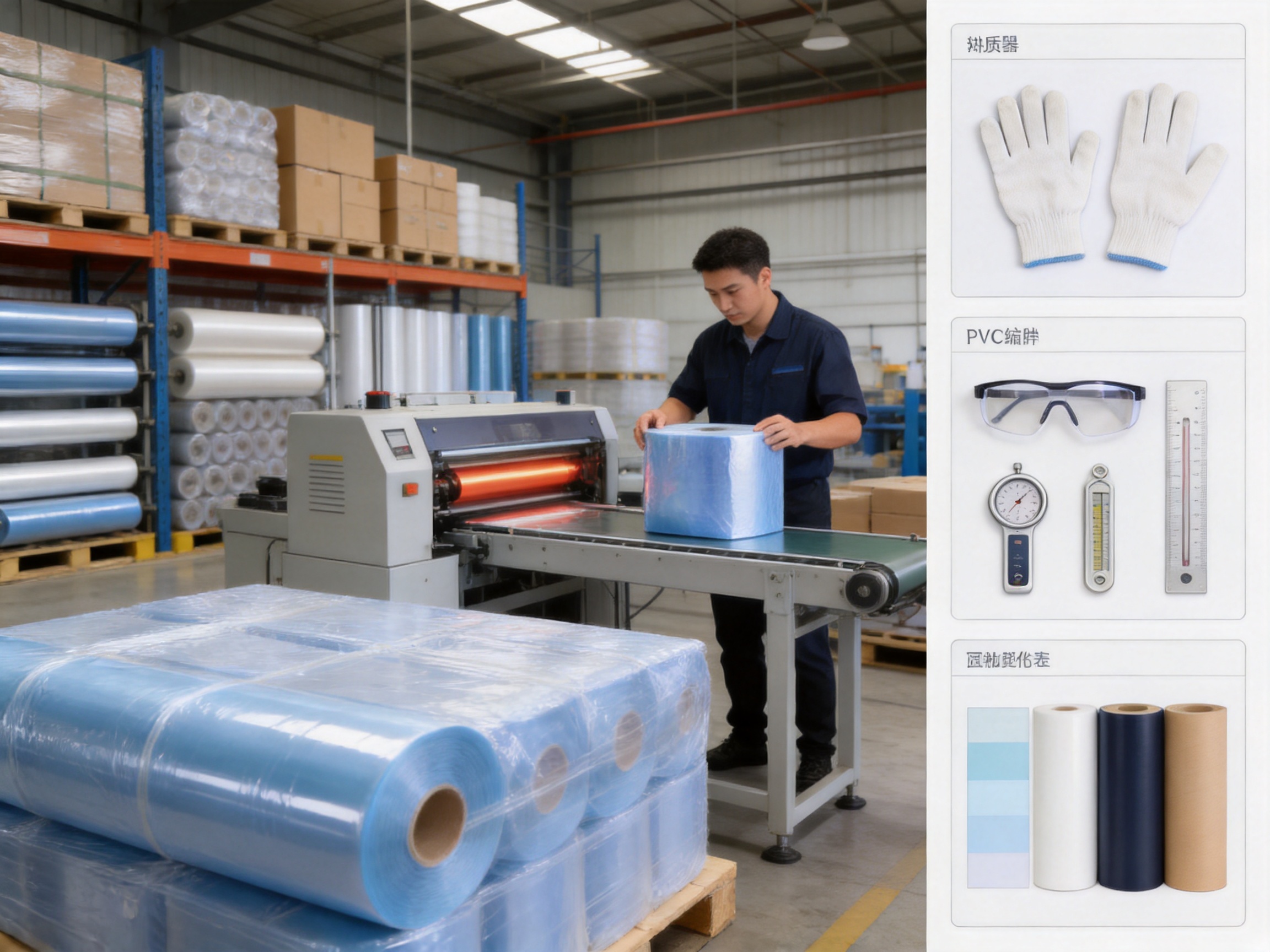
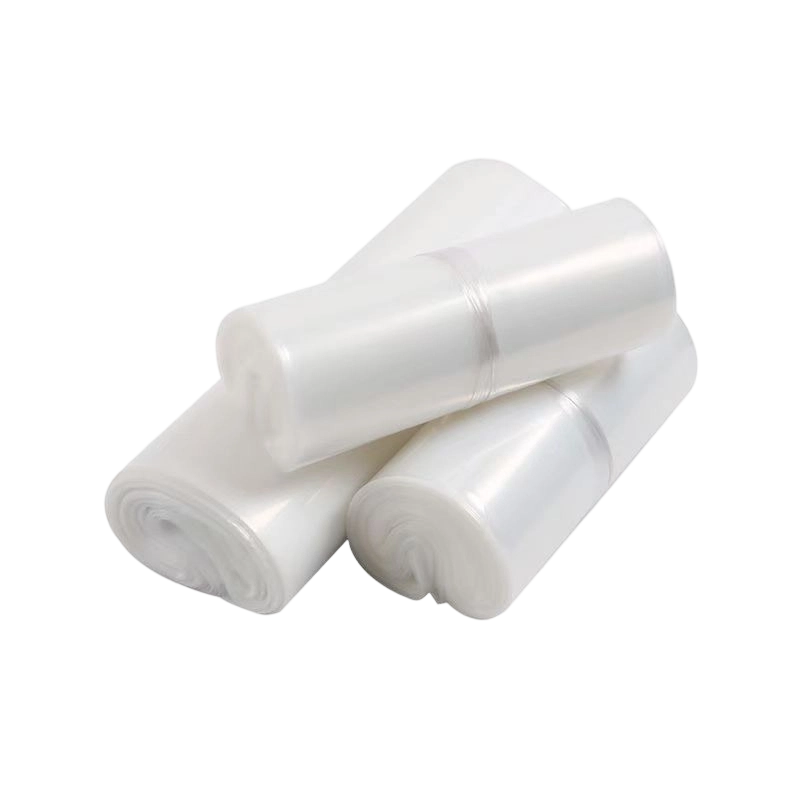
PVC shrink film remains a practical and widely used packaging material for businesses that need reliable shrink performance, clear presentation, and manageable operating costs. Produced through a polyvinyl chloride calendering process, this film is designed to respond to heat by contracting around a product, label, or packaged component. Its combination of low processing temperature, good printability, high rigidity, and broad application range makes it suitable for packaging operations that require functional performance without the higher investment associated with some advanced shrink-film systems.
For companies serving beverage, health-care, personal-care, stationery, toy, building-material, and industrial markets, PVC shrink film can provide an efficient way to improve product appearance and protect finished goods. It can be processed at approximately 80–100 °C, meaning that many users can apply it with a standard heat gun or other relatively simple heating equipment. This low equipment threshold is particularly valuable for small and medium-sized packaging operations, contract packers, workshops, and businesses that do not require a fully automated high-speed packaging line.
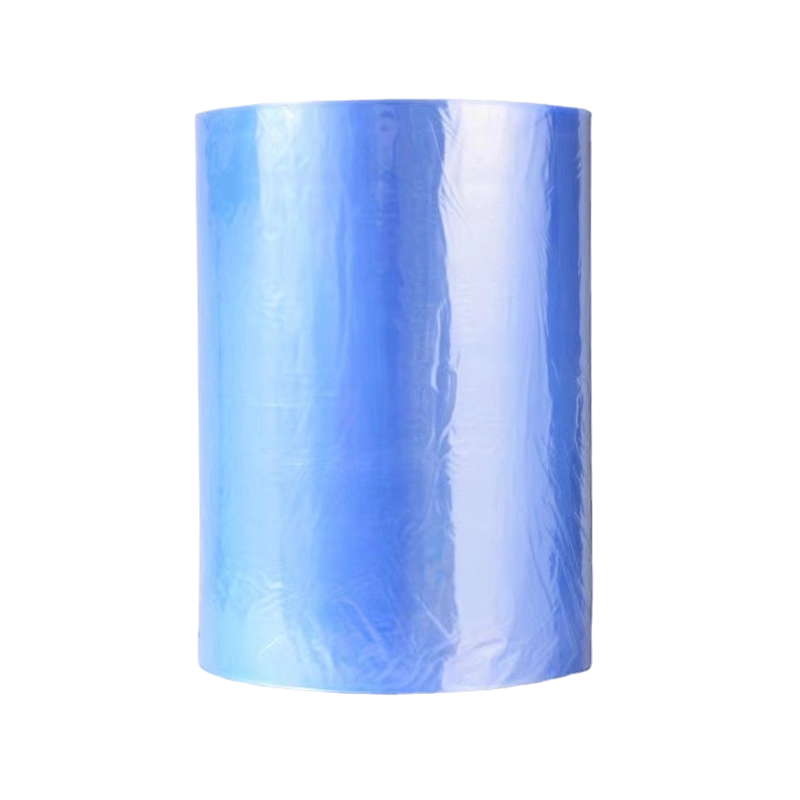
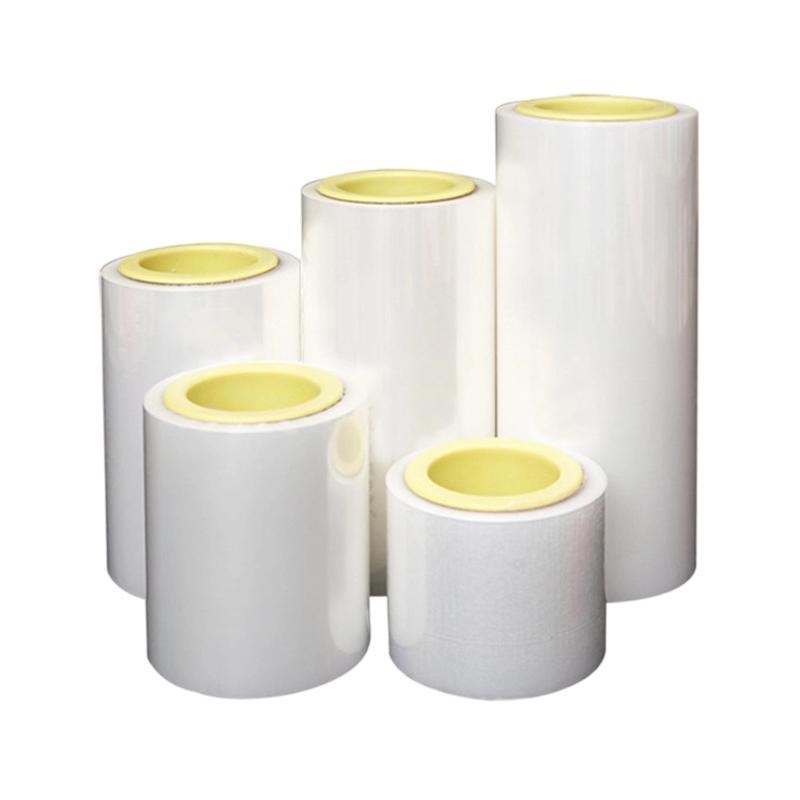
The product supplied by Zhejiang Geruite Packaging Materials Co., Ltd. is positioned as a value-oriented PVC shrink-film solution for label packaging and product wrapping. Available in light blue and transparent versions, the film has a stated standard thickness of 0.05 mm, with customized thickness available. Widths can be selected from approximately 3–80 mm in the listed formats, while larger customized widths can be produced up to 150 cm according to order requirements. This range allows the material to serve both narrow label applications and broader protective-wrapping tasks.
What Is PVC Shrink Film?
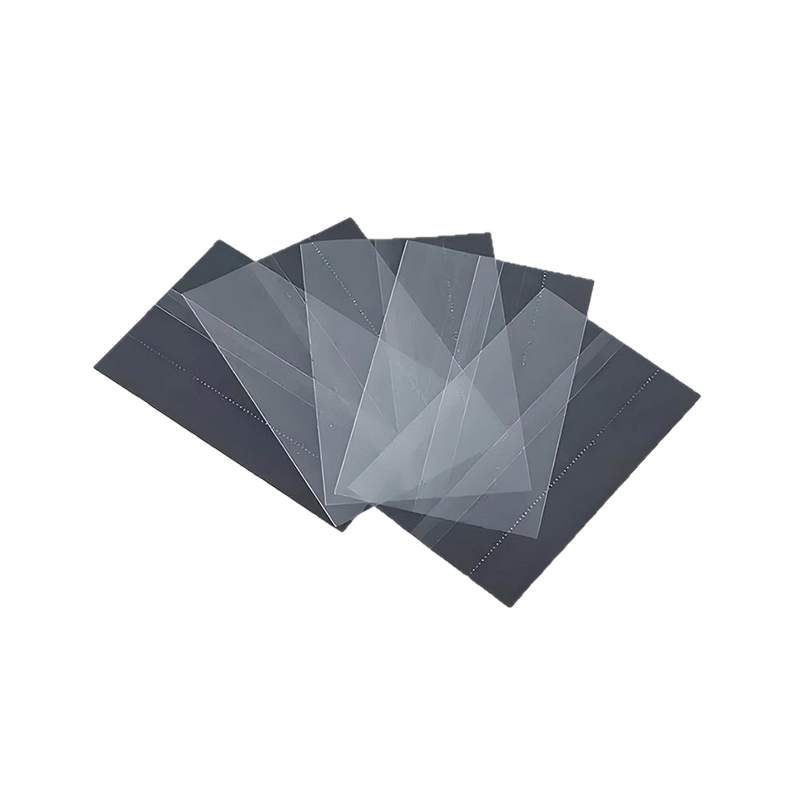
PVC shrink film is a thermoplastic packaging film made from polyvinyl chloride. When exposed to controlled heat, the film contracts in one or more directions and conforms closely to the shape of the product beneath it. In label packaging, a printed sleeve or band can be placed around a bottle, container, or other item and then heated so that it forms a neat, close-fitting covering. In industrial applications, the film can also be used as an outer protective layer for components, profiles, stationery, toys, and other goods.
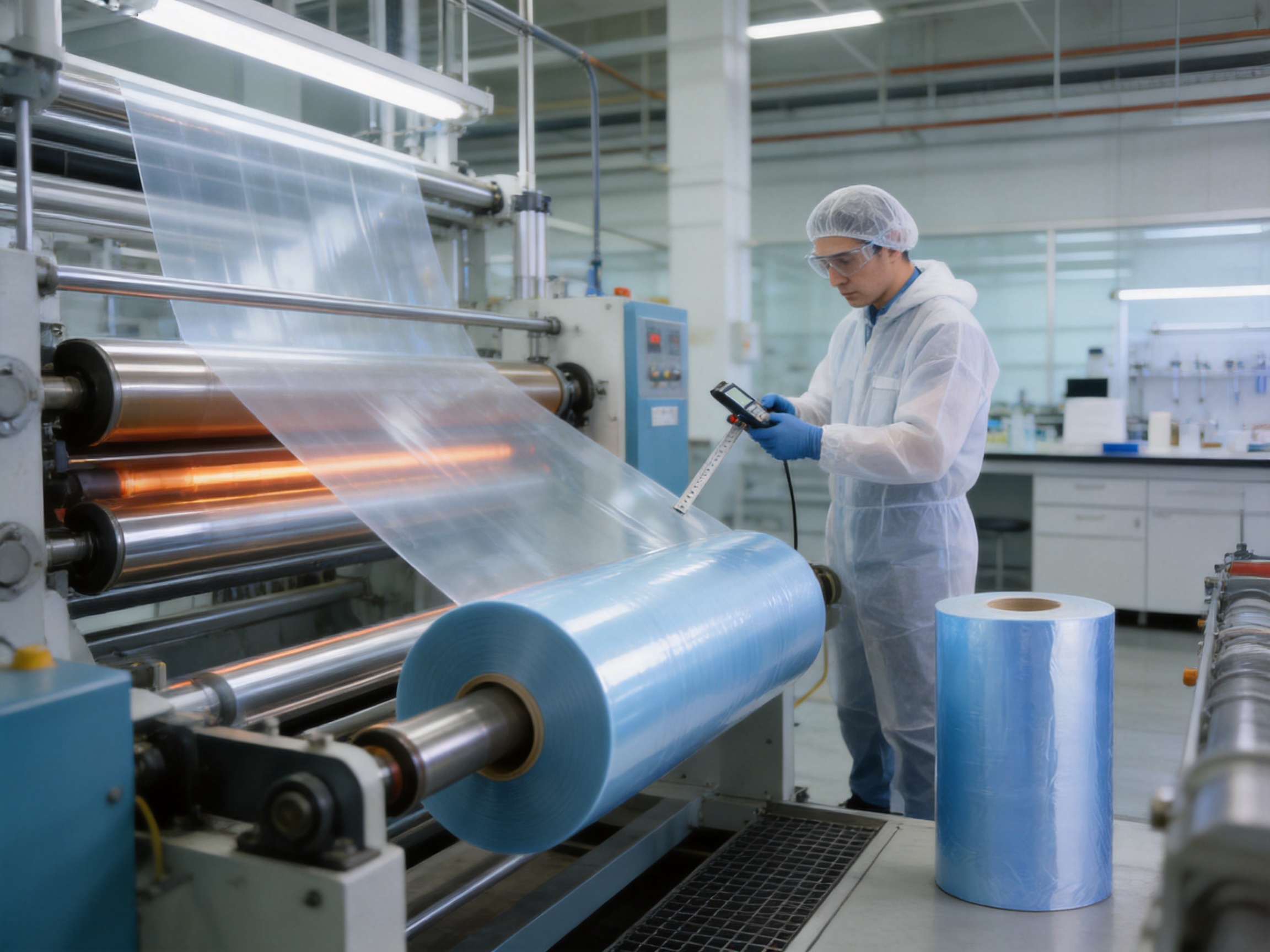
The manufacturing process described for this product is PVC calendering. In calendering, prepared PVC material is processed through a series of heated rollers that control the film’s thickness, surface condition, and overall uniformity. This method is well established for producing flexible and semi-rigid polymer films. Proper control of temperature, roller pressure, material formulation, and line speed helps produce a smooth surface that is suitable for printing, shrinking, sealing, and general packaging conversion.
Unlike ordinary non-shrink plastic wrap, PVC shrink film is engineered to contract when heated. This contraction is a central feature of the product because it enables the film to follow the shape of irregular or cylindrical packages. The result is a tight and visually consistent covering that can improve shelf presentation while reducing the opportunity for dust, scuffing, or handling damage to affect the packaged item.
Why PVC Shrink Film Remains a Mainstream Choice
PVC shrink film continues to be used because it offers a balanced combination of price, processability, print quality, stiffness, and shrink performance. Some alternative films may provide advantages in specialized areas, such as food-contact suitability, environmental positioning, or high-speed automated processing. However, for customers whose main requirements are economical label packaging and straightforward heat-shrink application, PVC can remain a highly competitive option.
One of its strongest commercial advantages is its relatively low cost. Material cost is an important consideration in high-volume label and wrapping applications, where even small differences in film consumption can influence the total packaging budget. PVC shrink film allows manufacturers to create a finished sleeve or protective layer without necessarily moving to a more expensive material structure. This is especially useful for products that require attractive presentation but are sold in cost-sensitive markets.
Another major advantage is its wide processing window. The product can shrink at approximately 80–100 °C, which is lower than the operating range associated with some other shrink-film systems. A lower shrink temperature can reduce the complexity of the heating process and make it easier for operators to use basic equipment. It may also help businesses begin production without purchasing a complete automatic shrink tunnel or specialized high-energy machinery.
The low processing threshold does not mean that heating can be uncontrolled. Operators should still select suitable temperature settings, maintain a consistent distance between the heat source and the film, and avoid overheating localized areas. A properly controlled process produces smoother shrinkage and reduces the risk of holes, wrinkles, distortion, or uneven tension. Nevertheless, the ability to use a standard heat gun gives small and medium-volume customers considerable flexibility.
Key Product Advantages
Excellent Printability
The film has a smooth and even surface that supports clear graphic reproduction. This is important for bottle labels, battery labels, retail sleeves, and other applications in which packaging graphics are part of the product’s visual identity. Good printability helps reproduce text, logos, illustrations, bar codes, and decorative elements with strong colour fidelity. When the sleeve shrinks around the package, a well-printed surface can retain a crisp and professional appearance.
High print quality is particularly valuable for products that compete at the point of sale. A label must often communicate product information within a small area while also creating visual distinction among competing brands. A smooth PVC surface can support detailed designs and rich colour coverage, allowing converters to produce attractive label sleeves without relying on complicated secondary decoration processes.
Printability also contributes to production efficiency. A consistent film surface helps reduce variations during printing and can make it easier to maintain repeatable colour and registration. Although the final printing system must be selected according to the ink, artwork, and production line, the film’s surface characteristics make it a traditional choice for printed shrink labels.
Useful Shrinkage Performance
The stated shrinkage rate is approximately 50–60 per cent. This provides substantial contraction for sleeve labels and protective wrapping applications. A high shrinkage capability allows the film to adapt to products with changing diameters, tapered sections, or moderately irregular profiles. It can also help create a close-fitting package that looks cleaner than a loose or oversized covering.
Good shrinkage must be considered together with the shape and dimensions of the packaged product. Before full production, users should test the film on the intended container or component. Test runs help confirm the required film width, overlap, heating temperature, shrink direction, and sealing method. These checks are especially important where a package has handles, shoulders, sharp corners, deep recesses, or heat-sensitive components.
The film is also described as having good adhesion and a smooth seal. In practical use, a neat seal helps keep the sleeve or wrapping in position after processing. It can improve the finished appearance and support basic protection against dust and handling. The exact sealing method will depend on the package design and converting equipment, but consistent film quality is an important starting point.
High Rigidity and Stiffness
PVC shrink film offers a comparatively firm hand and high rigidity. After shrinking, this stiffness helps the finished package maintain an upright, structured appearance. Instead of appearing soft or sagging, a properly processed sleeve can remain close to the product and provide a more stable visual form. This is useful for retail bottles, containers, stationery products, toys, and other goods that benefit from a firm exterior presentation.
Rigidity can also make the film easier to handle during certain packaging operations. Narrow strips and sleeves can retain their shape before heating, while finished packages can have improved resistance to minor deformation during ordinary handling. However, stiffness should not be confused with unlimited impact resistance. Product design, film thickness, heating conditions, and transport requirements must all be evaluated when determining whether PVC shrink film provides sufficient protection.
Low Equipment Investment
A significant advantage of this PVC shrink film is the possibility of using a standard heat gun for lower-volume applications. A heat gun can be suitable for sample production, manual packaging, repair packaging, short production runs, and operations with frequent product changes. Businesses can begin using shrink packaging without making the capital commitment required for a fully integrated automatic line.
For larger operations, the film may also be used with compatible shrink tunnels, semi-automatic equipment, or other controlled heating systems. As production volume increases, customers can improve consistency through fixtures, conveyor systems, temperature controls, and standardized operating procedures. The product therefore offers a practical path from manual packaging to more organized semi-automated production.
Manufacturing Process and Quality Considerations
The performance of PVC shrink film depends heavily on manufacturing consistency. A well-controlled calendering process helps ensure that the film has a stable thickness, smooth appearance, and predictable response to heat. Variations in thickness can affect shrinkage, stiffness, print handling, and material consumption. For this reason, production control begins with careful selection and preparation of raw materials.
During manufacturing, PVC material is compounded and prepared for forming. The formulation must be processed at suitable temperatures so that the material can pass through the calendering equipment without excessive degradation or incomplete fusion. The production team must balance heat, pressure, roller speed, and cooling conditions. These factors influence the final surface, thickness, transparency, flexibility, and shrink behaviour of the film.
Calendering offers a high degree of control over film formation. The material passes between rollers that progressively shape it into a continuous sheet. Roller gaps and line settings influence the final gauge, while surface conditions affect smoothness and visual quality. After forming, the film is cooled and wound into rolls suitable for storage, transportation, printing, or conversion into narrower widths.
Quality control should cover raw-material inspection, process monitoring, finished-film evaluation, and final packing. Important checks may include thickness, width, surface condition, visual clarity, colour, tensile performance, shrinkage response, sealing behaviour, and roll winding quality. The supplied information lists a thickness of 0.05 mm, customizable thickness, and a tensile-strength value of 20. Because the tensile-strength unit and test standard are not specified in the available product information, customers should confirm the applicable test method and unit before final technical approval.
Roll winding is also important. A film that is wound unevenly may telescope, wrinkle, or create feeding problems during printing and packaging. Proper tension control during winding helps maintain a stable roll structure. Clean edges and suitable packaging protect the film from dust, moisture, crushing, and other conditions that could affect its performance before use.
Company Manufacturing Strengths
Zhejiang Geruite Packaging Materials Co., Ltd. is located in Zhejiang Province, China, an area with a strong manufacturing base and an established packaging-materials supply chain. The company focuses on research, development, production, and sales within the packaging-materials sector. Its broader product portfolio includes BOPP tape, kraft paper tape, masking tape, high-temperature-resistant tape, metal tape, PE stretch film, PP strapping, and high-strength PET strapping.
This product range gives the company experience across several important packaging categories. Customers that purchase PVC shrink film may also require stretch film, strapping, adhesive tape, or other load-stabilization products. A supplier with knowledge of multiple packaging formats can help customers consider how different materials work together in a complete packaging operation. For example, shrink film may provide product-level presentation while stretch film and strapping secure cartons or pallets during transport.
The company states that it operates with advanced production equipment and a rigorous quality-control system. Quality management extends from raw-material procurement through production and final inspection. This type of full-process approach is important because packaging performance cannot be determined by the film alone. Consistent raw materials, stable processing conditions, controlled converting, and appropriate final inspection all contribute to reliable customer results.
The company also reports an annual output value of more than RMB 60 million. This indicates an established production and sales operation rather than a purely small-scale trading model. A developed production base can support repeat orders, customized dimensions, coordinated product planning, and communication with customers that require ongoing supply. Buyers should still confirm production capacity, lead time, packaging details, minimum order quantities, and technical documentation for each specific order.
Research and development are identified as important parts of the company’s ongoing strategy. Packaging markets continue to change as customers seek better print appearance, more efficient processing, improved material utilization, and suitable compliance documentation. Continued development can help a manufacturer optimize formulations, improve thickness consistency, expand width options, and respond to application-specific requirements.
Available Specifications
The standard material is PVC, with a stated thickness of 0.05 mm and customization available. Listed colours include light blue and transparent. The general width information gives a range of 3–80 mm, while the product information also states that customized widths can be made up to 150 cm per list or order requirement. Because the supplied specifications contain both narrow-width and large-width references, customers should clarify whether they require finished slit rolls, flat film, sleeves, or another converted format.
The product list also provides approximate length values for one jin of material at different widths. These values are useful as a general purchasing reference, but they should not replace confirmation of the actual net weight, core size, finished roll diameter, film thickness, and winding tolerance. The term “jin” is a traditional Chinese weight unit, commonly understood as approximately 0.5 kilogram, although commercial packing details should always be confirmed with the supplier.
| Specification Item | Available Information | Purchasing Consideration |
|---|---|---|
| Material | PVC | Confirm application suitability and regulatory requirements before use. |
| Standard thickness | 0.05 mm | Customized thickness may be available. |
| General width | Approximately 3–80 mm in listed formats | Confirm whether the requirement is for slit film, sleeve material, or another format. |
| Large customized width | Up to 150 cm according to the product information | Confirm production feasibility, roll format, and minimum order quantity. |
| Colour | Light blue and transparent | Confirm colour shade, transparency, and print requirements. |
| Shrinkage rate | Approximately 50–60 per cent | Test on the final product shape before mass production. |
| Shrink temperature | Approximately 80–100 °C | Set equipment according to film behaviour and product heat sensitivity. |
| Tensile strength | Listed as 20 | Confirm the unit and test standard before technical approval. |
Width and Length Selection
Selecting the correct width is essential for efficient shrink-film application. For a cylindrical bottle, the sleeve width must account for the height of the label area, the desired coverage, and any allowance needed for handling or sealing. For a flat or irregular object, the calculation may need to include the object’s perimeter, overlap, and shrink direction. Using an overly wide film can increase material consumption and create unnecessary folds, while an undersized film may fail to cover the intended area.
The listed length values show that the available running length decreases as film width increases for a fixed weight. For example, the product information lists approximately 240 metres for 3 cm-wide PVC film at one jin, approximately 180 metres for 4 cm-wide film, and approximately 140 metres for 5 cm-wide film. At 10 cm width, the listed length is approximately 70 metres. These figures allow buyers to compare approximate coverage, but actual yield depends on thickness, density, winding, trimming, and production tolerance.
For wider formats, the listed values continue to change according to width. The product information includes approximately 37 metres at 20 cm, 27 metres at 25 cm, 21 metres at 30 cm, 17 metres at 40 cm, 13 metres at 50 cm, and 7 metres at 80 cm for one jin. It also lists wider options up to 150 cm, with approximately 2.3 metres at that width. Customers should treat these values as indicative and request a formal specification sheet for quotation and production planning.
Width customization can be particularly useful for industrial components and protective wrapping. A business may need a narrow band for tamper indication, a medium-width sleeve for a bottle label, or a broad film format for covering profiles and construction-related materials. The ability to select a suitable width can reduce trimming waste and make manual or semi-automatic application easier.
Applications in Label Packaging
Bottled Beverage Labels
PVC shrink film has traditionally been used for bottled beverage labels because it can create a close-fitting, visually continuous sleeve around a container. The smooth surface supports printed graphics, while the shrink response allows the label to conform to bottle contours. This is useful for bottles with curved shoulders, recessed sections, or changing diameters that are difficult to decorate with a simple flat label.
When used for beverage packaging, the film should be evaluated according to the exact product design. The label may be positioned around the full body, used as a partial sleeve, or applied as a tamper-evident band. Printing, cutting, seaming, and heating conditions must be coordinated so that the finished label remains aligned and visually attractive. Regulatory and food-contact requirements must also be reviewed before use.
Health Supplement and Personal-Care Packaging
Health supplement containers and personal-care products often depend on strong shelf presentation. A printed PVC sleeve can provide a large decoration area for product information, colour schemes, instructions, and brand graphics. The film’s stiffness can help the package maintain a neat form, while its shrinkage can support a close fit around bottles and jars.
Personal-care packaging may include shampoo, lotion, cleaning, cosmetic, and household containers. The appropriate design depends on the container shape and the required level of protection. A sleeve can help reduce surface scuffing during handling and may serve as an outer decorative covering. However, the film should not automatically be assumed to provide tamper evidence or product-seal functionality unless the complete packaging design has been tested for that purpose.
Battery Shrink Labels
Batteries are another traditional application for PVC shrink labels. The film can form a printed outer covering around cylindrical or other compact battery formats. Clear graphics, colour fidelity, and a close fit are valuable because battery labels must communicate product information in a small area. The material’s rigidity can also help the finished package maintain a clean cylindrical appearance.
Battery applications require careful attention to heat exposure. Operators should verify that the heating process does not affect the battery, its terminals, its internal materials, or any safety-related component. The film should be tested with the complete battery design rather than evaluated only as a standalone material.
Disposable Tableware Packaging
PVC shrink film can be used for the outer packaging of disposable tableware and sterilized tableware products. It may help hold grouped items together, reduce exposure to dust, and improve the appearance of a retail pack. The material can be applied with relatively simple equipment, which is useful for packaging workshops and smaller producers.
Because PVC contains chlorine, this application requires particular caution. The film should not be treated as automatically suitable for direct food contact. Where tableware is intended for food service, the film should serve only an appropriate outer packaging function, and the complete package must comply with the applicable laws and customer requirements. Food-contact suitability should be confirmed through relevant documentation and testing rather than assumed from the product name.
Industrial and General Packaging Uses
Stationery and Toy Packaging
PVC shrink film can provide an attractive outer layer for stationery products, educational items, small toys, and gift sets. Its printability supports colourful graphics and product information, while its stiffness helps packaged items remain orderly on shelves. For products sold in groups, a shrink sleeve or band can keep components together during handling and transport.
For toys and children’s products, users must consider the material composition, applicable chemical restrictions, and the intended contact conditions. The product information specifically advises against direct contact with children’s products. Therefore, any use involving toys or children’s goods should be limited to a suitable external packaging role and reviewed against the regulations of the destination market.
Building Materials and Profiles
The film can be used for dust-proof wrapping of building materials, profiles, and related industrial products. During storage and transportation, an outer film layer can help reduce exposure to dust, light handling marks, and general warehouse contamination. Narrow or wide widths can be selected according to the shape and dimensions of the profile.
For long profiles, the user should evaluate film tension, shrink direction, product edges, and the possibility of puncture during application. Sharp corners may require a suitable wrapping method or an additional protective layer. The film’s rigidity can help maintain a firm covering, but the application should not create excessive stress that could tear the material or deform the packaged product.
Industrial Product Wrapping
Industrial components often require practical packaging rather than premium presentation. PVC shrink film can be useful where the objective is to group parts, reduce dust exposure, create a basic protective cover, or provide a clean shipping appearance. It may be applied manually with a heat gun or integrated into a more structured process where volumes justify additional equipment.
The film’s value proposition is strongest when the customer requires a straightforward, economical solution. It is not necessarily intended to replace heavy-duty barrier films, corrosion-protection systems, or specialized export packaging. Instead, it provides a cost-effective outer wrap for products whose main needs are appearance, grouping, light protection, and stable handling.
Comparison with Alternative Shrink-Film Options
Different shrink films are suited to different markets. Polyolefin films are often selected where greater flexibility, clarity, or broader food-packaging suitability is required. PET-based shrink materials may be used for high-performance label applications or where specific mechanical and heat characteristics are needed. PVC, by contrast, is often chosen for its low cost, printability, stiffness, and low-temperature processing.
Compared with a more expensive high-performance film, PVC can lower material and equipment costs. Its ability to shrink at approximately 80–100 °C can also reduce the initial investment for customers using manual or basic heating equipment. This creates a practical advantage for small and medium-volume users, product trials, regional production, and packaging operations that need flexibility rather than maximum automation speed.
Compared with some softer flexible films, PVC can offer a firmer finished appearance. The package may remain more upright and less prone to sagging when the film is correctly selected and processed. This stiffness is especially useful for bottle sleeves, battery labels, stationery, toys, and other retail packages where visual structure matters.
However, PVC is not the ideal choice for every application. Its chlorine content means that environmental, regulatory, recycling, and disposal considerations must be reviewed. Direct food contact and direct contact with children’s products are not recommended according to the supplied product information. For high-end, food-contact, or highly sustainability-sensitive applications, buyers may need to evaluate alternative materials.
| Evaluation Factor | PVC Shrink Film | Practical Implication |
|---|---|---|
| Material cost | Generally positioned as cost-effective | Useful for price-sensitive packaging programs. |
| Processing temperature | Approximately 80–100 °C | Can support heat-gun application and lower equipment investment. |
| Printability | Smooth surface and strong colour reproduction | Suitable for detailed label graphics and retail sleeves. |
| Rigidity | High stiffness and firm finished appearance | Helps reduce sagging and supports upright presentation. |
| Shrinkage | Approximately 50–60 per cent | Can conform to bottles and moderately irregular shapes. |
| Food-contact positioning | Not recommended for direct food contact | Review the complete packaging structure and applicable regulations. |
| Children’s-product positioning | Direct contact is not recommended | Use only as a suitable outer package after compliance review. |
| High-end applications | Not the primary positioning | Consider alternative materials for premium or specialized requirements. |
Processing Guidance
Before production, the packaging team should confirm the film width, thickness, shrink direction, roll length, and intended heating method. A sample trial should be performed on the actual product. The objective is to determine whether the film shrinks evenly, covers the correct area, produces an acceptable seal, and maintains the required print alignment.
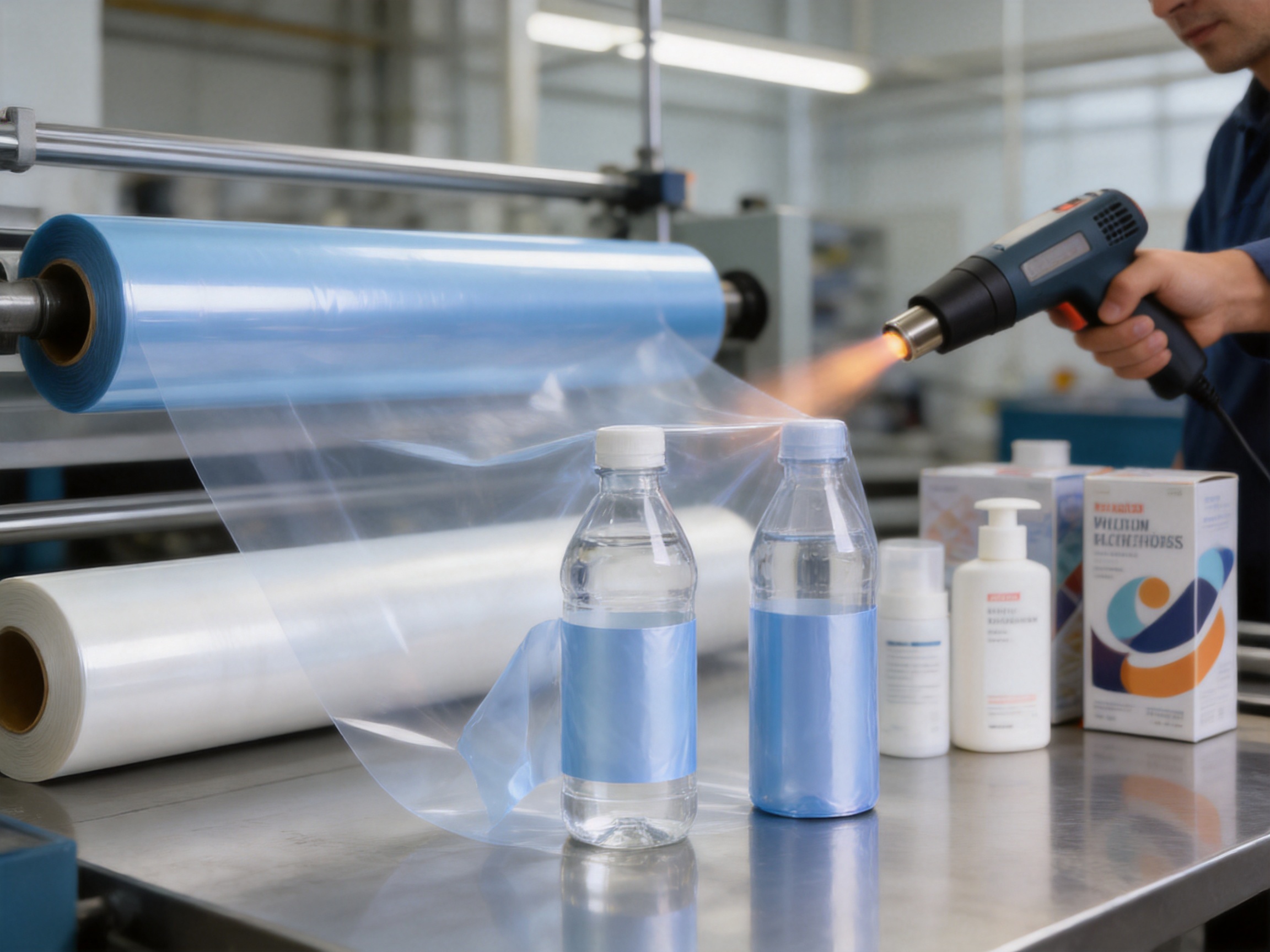
Manual application normally begins by cutting or placing the film around the product. The film should be positioned without unnecessary folds or trapped debris. The operator can then apply heat gradually, moving the heat gun continuously rather than holding it in one place. Even movement helps prevent local overheating and encourages uniform contraction around the package.
For cylindrical products, heating may begin around the central or more stable area before moving toward the shoulders and ends. For irregular products, the operator should observe how the film responds around corners, recesses, and protrusions. Excessive heating can cause distortion, holes, or a rough surface, while insufficient heating may leave loose areas and wrinkles.
When using automated or semi-automated equipment, line speed, tunnel temperature, airflow, and product spacing should be adjusted together. A higher tunnel temperature is not always the best solution because the film may shrink too quickly or the packaged product may be heat-sensitive. The best settings are normally established through controlled trials and recorded as part of the packaging work instruction.
Storage conditions also influence performance. Rolls should be stored in a clean, dry location away from excessive heat, direct sunlight, sharp objects, and heavy pressure. The film should remain in its protective packaging until required. Before use, operators should inspect rolls for damage, contamination, telescoping, loose winding, or other conditions that could interfere with feeding and application.
Safety, Compliance, and Responsible Use
PVC contains chlorine, and this characteristic must be considered when selecting the material. The supplied information states that direct contact with food and children’s products is not recommended. This is an important limitation. Buyers should evaluate the complete package, intended use, country of sale, customer specifications, and relevant chemical and packaging regulations before placing a production order.
For exports to Europe, compliance with REACH requirements is identified as a consideration. REACH compliance should be supported by appropriate supplier documentation, declarations, testing, and substance information where required. The presence of a general product description alone should not be treated as proof of compliance. Customers should request the documents needed for their specific market and application.
Packaging teams should also consider ventilation and safe operating procedures when using heat guns or shrink tunnels. Heating equipment can create hot surfaces and fire risks if used incorrectly. Operators should keep combustible materials away from the heat source, use suitable electrical equipment, follow workplace safety rules, and allow heated packages to cool before handling when necessary.
Environmental management should be addressed throughout the product life cycle. Users should minimize waste through suitable width selection, efficient cutting, and proper production control. Scrap film should be collected and handled according to local waste-management requirements. Where recycling or recovery systems are available, customers should determine whether the film can enter those systems and whether printed, contaminated, or mixed packaging affects acceptance.
Why Choose This Product for Small and Medium-Volume Packaging?
Small and medium-sized customers often need a packaging material that is easy to purchase, simple to process, and adaptable to different product sizes. They may not have the budget or floor space for a fully automated shrink line. They may also change product designs frequently or package several different items in modest quantities. PVC shrink film can meet these needs because it can be applied with relatively accessible equipment and is available in a range of widths.
The ability to use a heat gun reduces the entry barrier for testing and short-run production. A business can produce samples, evaluate package appearance, and refine the label design before committing to large equipment. If demand grows, the same general film concept may be integrated into a more controlled heating process. This flexibility helps reduce the risk associated with a new packaging launch.
The material is also suitable for customers that prioritize visual presentation. Its smooth surface, high colour fidelity, and firm finished appearance support packaging that looks organized and professional. For industrial customers, the same characteristics can be combined with basic dust protection and product grouping. This broad utility makes the film relevant to both consumer-facing and industrial packaging programs.
How the Supplier Supports Custom Requirements
Customization is important because packaging products rarely share identical dimensions. The supplied product information indicates that thickness can be customized and that larger widths may be available according to requirements. Customers can discuss the target product dimensions, desired coverage, application equipment, colour, printing needs, roll format, and expected monthly consumption with the supplier.
A technical inquiry should include the product shape, height, diameter or perimeter, required shrink area, desired overlap, heating method, and operating speed. If printing is required, the buyer should provide artwork specifications, colour expectations, text requirements, and any bar-code or variable-data needs. If the film will be used as a protective wrap, the inquiry should explain the product’s surface, edge condition, storage environment, and transport route.
Before mass production, customers should request samples or a trial roll where possible. Sample testing can identify whether the selected width is correct, whether the film shrinks uniformly, whether the colour matches expectations, and whether the finished package can withstand ordinary handling. It is also an opportunity to confirm whether the film’s stiffness is appropriate for the product.
For repeat orders, both parties should maintain an agreed specification. The document should identify material, thickness, width, colour, roll length or weight, core dimensions, winding direction, packaging method, inspection requirements, and tolerance. Clear specifications help reduce variation between production batches and make it easier to manage incoming inspection.
Quality Inspection Checklist
Incoming inspection should begin with the outer packaging. Buyers should check whether cartons, pallets, or protective wrapping show signs of water damage, crushing, contamination, or impact. Roll labels should be compared with the purchase order to confirm product type, width, thickness, quantity, and batch information.
Visual inspection should evaluate the film for holes, streaks, foreign matter, wrinkles, edge damage, uneven winding, excessive blocking, and unexpected colour variation. Transparent film should be checked for clarity and surface uniformity. Light-blue film should be compared with an approved sample or colour reference where colour consistency is important.
Dimensional checks should include film thickness and width. Testing several points across the roll can help identify whether the film is consistent from edge to edge. Shrink testing should be carried out using the actual equipment or a controlled laboratory method. The customer should record temperature, heating time, shrink direction, percentage of contraction, and visual results.
Functional testing should include sealing or adhesion where relevant. The finished package should be inspected for loose sections, excessive wrinkles, holes, edge lifting, uneven seams, and print distortion. If the film is used for industrial protection, the package should also be examined after handling, stacking, and simulated transport to determine whether the covering remains intact.
Purchasing and Order Planning
When requesting a quotation, customers should state whether they need standard material or a customized specification. The order should identify the required width and whether the width refers to a finished slit roll, flat film, sleeve width, or another measurement. The required thickness should also be stated clearly, particularly where a customer needs a value different from the standard 0.05 mm.
Quantity may be calculated by roll, kilogram, metre, carton, or another commercial unit. Because the listed specifications include length values for one jin, buyers should confirm the supplier’s actual sales unit and packing method. They should also clarify how weight is measured, whether the core is included, and what tolerances apply to net material weight and length.
Lead time may depend on whether the order uses a standard width and colour or requires custom production. Printed film, special slitting, unusual widths, and customized packaging may require additional preparation. Early communication helps the supplier assess production scheduling, raw-material availability, inspection requirements, and shipping arrangements.
Customers should also confirm the destination-market documentation required for the order. Depending on the application, this may include a technical data sheet, safety information, material declaration, REACH-related documentation, test reports, packaging details, or a certificate of origin. Documentation should be matched to the intended use rather than requested in general terms.
Four-Step Evaluation Method for Buyers
Step One: Define the Application
Identify whether the film will be used for a printed label, tamper-indication band, grouped package, dust-proof cover, or general industrial wrap. The intended function determines the required width, thickness, shrinkage, print performance, and protection level.
Step Two: Measure the Product
Record the product’s height, diameter, perimeter, corners, shoulders, recesses, and heat-sensitive areas. These measurements help determine whether the film can conform successfully and how much material is required for each package.
Step Three: Run a Heating Trial
Use the planned heat gun, tunnel, or other equipment to evaluate shrinkage. Begin with conservative settings and adjust temperature, distance, airflow, and speed gradually. Record the settings that produce the best appearance and fit.
Step Four: Confirm Compliance and Supply Details
Review material restrictions, destination-market rules, REACH considerations for European exports, packaging documentation, roll specifications, and repeat-order controls. Final approval should cover both technical performance and legal suitability.
PVC Shrink Film
Questions and Answers
What is PVC shrink film mainly used for?
PVC shrink film is mainly used for printed bottle labels, battery shrink labels, personal-care packaging, health supplement sleeves, stationery and toy packaging, disposable tableware outer packaging, and protective wrapping for building materials, profiles, and industrial products.
What temperature is required to shrink the film?
The stated shrinkage temperature is approximately 80–100 °C. The exact operating setting depends on the product shape, heating equipment, film thickness, line speed, and desired appearance. Users should conduct a trial before beginning full production.
Can the film be applied with a heat gun?
Yes. One of the product’s practical advantages is that it can be applied with a standard heat gun, particularly for small and medium packaging volumes, samples, manual packaging, and short production runs. Operators should use controlled, moving heat to avoid local overheating.
What shrinkage rate does the film provide?
The stated shrinkage rate is approximately 50–60 per cent. Actual results can vary according to shrink direction, temperature, heating time, product geometry, and the condition of the film.
Is the film suitable for direct food contact?
Direct food contact is not recommended according to the supplied product information. Customers should review the complete packaging structure and applicable regulations before using PVC film around food-related products.
Can the film be used directly on children’s products?
Direct contact with children’s products is not recommended. If the film is considered for outer packaging, the customer should verify chemical, safety, and market-specific requirements before approval.
Is PVC shrink film suitable for European export?
It may be considered for appropriate applications, but REACH requirements must be reviewed for exports to Europe. Customers should request relevant supplier declarations and supporting documentation for the specific material and intended use.
What standard thickness is available?
The listed standard thickness is 0.05 mm. Customized thickness may be available, subject to production feasibility, application requirements, and order quantity.
What widths can be ordered?
The listed information includes widths from approximately 3–80 mm and indicates that larger customized widths can be produced up to 150 cm according to requirements. Buyers should confirm the exact format, width tolerance, and roll configuration with the supplier.
What colours are available?
The listed colours are light blue and transparent. Customers requiring a specific shade, transparency level, or printed appearance should request samples and confirm the approved colour standard before production.
How should the film be stored?
Store rolls in a clean, dry place away from direct sunlight, excessive heat, moisture, sharp objects, and heavy pressure. Keep the film in its protective packaging until use and inspect each roll before feeding it into the packaging process.
Can the film be printed?
Yes. The film is described as having a smooth, even surface, excellent printability, and good colour fidelity. Printing tests should be performed with the selected inks, artwork, and production equipment before mass production.
What information should be included in a quotation request?
A quotation request should include material, thickness, width, colour, roll format, estimated quantity, application, printing requirements, core size, delivery destination, and any required compliance documents. Product dimensions and heating equipment information are also useful for technical evaluation.
Does the listed tensile-strength value include a test unit?
The product information lists tensile strength as 20 but does not identify the unit or test standard. Customers should request the applicable unit, testing direction, specimen dimensions, and standard before using this value for engineering calculations.
What makes this film cost-effective?
Its cost-effectiveness comes from the combination of economical PVC material, low-temperature shrink processing, strong printability, useful shrinkage, and the ability to use relatively simple equipment. These features can reduce both material and initial equipment costs for suitable applications.
Can the film be used on irregular products?
It can conform to many cylindrical or moderately irregular products because of its shrinkage capability. However, sharp corners, deep recesses, handles, and heat-sensitive components require testing. A sample trial should confirm coverage and appearance before production approval.
Conclusion
PVC shrink film offers a practical balance of cost, printability, shrink performance, stiffness, and processing simplicity. Its approximately 80–100 °C shrink range allows many users to begin with a standard heat gun, while its stated 50–60 per cent shrinkage rate supports close-fitting labels and protective wraps. The smooth surface helps reproduce detailed graphics, and the firm finished appearance can improve the presentation of bottles, batteries, stationery, toys, personal-care products, and industrial goods.
The product is especially well suited to customers seeking a value-oriented packaging solution for small and medium volumes. Its available widths, customizable thickness, transparent and light-blue options, and potential for larger customized formats allow the material to be adapted to different packaging designs. At the same time, customers should carefully confirm roll specifications, tensile-strength units, shrink conditions, and application-specific performance before ordering.
Zhejiang Geruite Packaging Materials Co., Ltd. supports this product with experience in packaging-material research, production, quality control, and related product categories such as adhesive tape, stretch film, and strapping. Its stated emphasis on advanced equipment, process control, final inspection, research, and customer service provides a foundation for repeatable supply and customized packaging support.
PVC shrink film is not intended for every market. Because PVC contains chlorine, direct food contact and direct contact with children’s products are not recommended, and European export applications require attention to REACH requirements. When these limitations are recognized and the film is used in an appropriate role, it remains a competitive option for label printing, product presentation, grouping, dust protection, and economical industrial wrapping.
For technical inquiries and customized orders, customers can contact Zhejiang Geruite Packaging Materials Co., Ltd. by telephone at +86-0571-83175630, +86-13336160217, or +86-18058115265, or by email at jeffrey@grtpk.com. The company address is No. 241, Yaojiafan, Zhangpanqiao, Shushan Street, Xiaoshan District, Hangzhou City, Zhejiang Province, China.
References
1. Zhejiang Geruite Packaging Materials Co., Ltd., PVC Shrink Film Product Information and Technical Specification Summary.
2. Zhejiang Geruite Packaging Materials Co., Ltd., Company Profile and Packaging Materials Product Portfolio.
3. General technical principles for thermoplastic film calendering, thickness control, roll winding, and heat-shrink processing.
4. General packaging engineering guidance for shrink-film selection, dimensional testing, heat application, sealing, and finished-package inspection.
5. European chemical-substance compliance guidance concerning REACH-related review of packaging materials and articles.
6. General workplace safety guidance for heat guns, shrink tunnels, heated surfaces, ventilation, and handling of thermoplastic packaging materials.
Product: PVC Shrink Film

CONTACT DETAILS
- Address:No. 241, Yaojiafan, Zhangpanqiao, Shushan Street, Xiaoshan District, Hangzhou City, Zhejiang Province, China
- TEL:+86-0571-83175630
- Phone:+86-13336160217
- Email:jeffrey@grtpk.com
- WeChat/WhatsApp:+86-18058115265
PRODUCTS
NEWS CENTER
MOBILE TERMINAL
Copyright© Zhejiang Geruite Packaging Materials Co., Ltd. All Rights Reserved.
Privacy Wholesale industrial packaging tape Manufacturers