


 English
 Español
 عربى

Reliable PET Double-Sided Tape for Clean, Flexible, and High-Performance Bonding
Content
- 1 Understanding the Construction of PET Double-Sided Tape
- 2 Key Product Specifications
- 3 Clean Removal and No-Residue Performance
- 4 Adhesion Options for Different Assembly Needs
- 5 Static Shear Resistance and Load Stability
- 6 Temperature Resistance up to 120°C
- 7 Advantages Compared with Conventional Double-Sided Tapes
- 8 Applications in Industrial Assembly
- 9 Use in Converting and Custom Die-Cut Products
- 10 Manufacturing Strengths and Quality Management
- 11 Raw Materials, Coating, and Process Control
- 12 Application Guidelines for Best Results
- 13 Storage, Packaging, and Handling
- 14 Quality, Customization, and Export Supply Capability
- 15 Why Choose a Specialized Packaging-Material Manufacturer?
- 16 Comparison of Application Benefits
- 17 Frequently Asked Questions
- 17.1 What is 6025R PET No Residue Double-Sided Tape?
- 17.2 What is the thickness of the tape?
- 17.3 Can the tape be removed without residue?
- 17.4 Is the tape suitable for permanent bonding?
- 17.5 What is the temperature resistance?
- 17.6 What does the static shear result mean?
- 17.7 Is the tape transparent?
- 17.8 Can the tape be converted into custom shapes?
- 17.9 What surfaces can be bonded?
- 17.10 How should the product be applied?
- 17.11 Where is the manufacturer located?
- 17.12 Can buyers request product support?
- 18 Conclusion
- 19 References
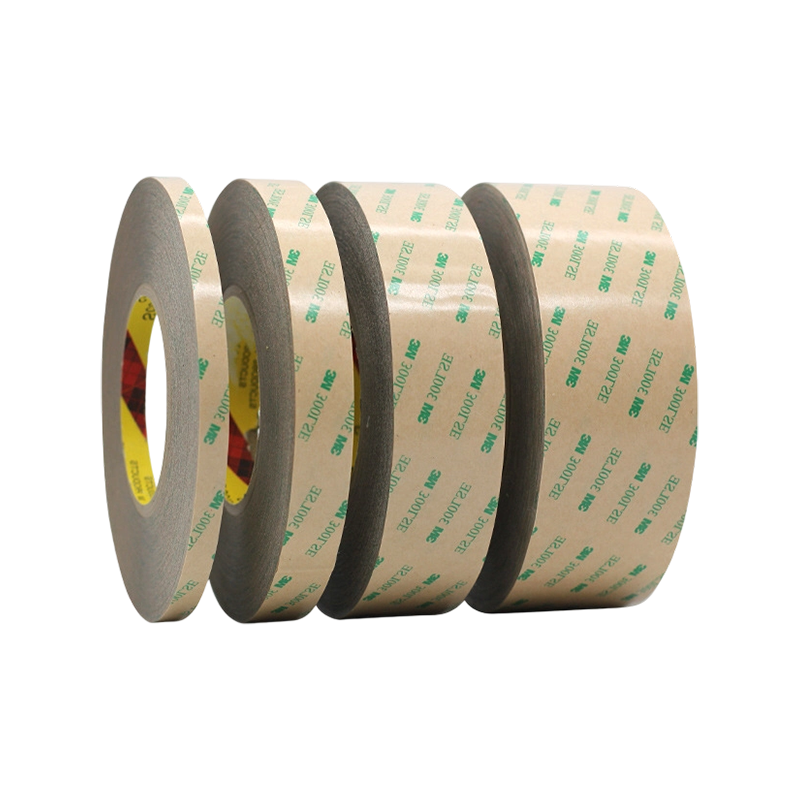
- 20 Product: 6025R PET No residue double-sided tape
In modern manufacturing, assembly, logistics, retail presentation, and product protection, double-sided tape is more than a simple joining material. It is an essential component that can influence appearance, production efficiency, durability, rework costs, and customer satisfaction. A well-designed tape must provide dependable adhesion while remaining clean, easy to process, and suitable for a wide range of substrates. It must also perform consistently under pressure, temperature changes, handling, and long-term storage.
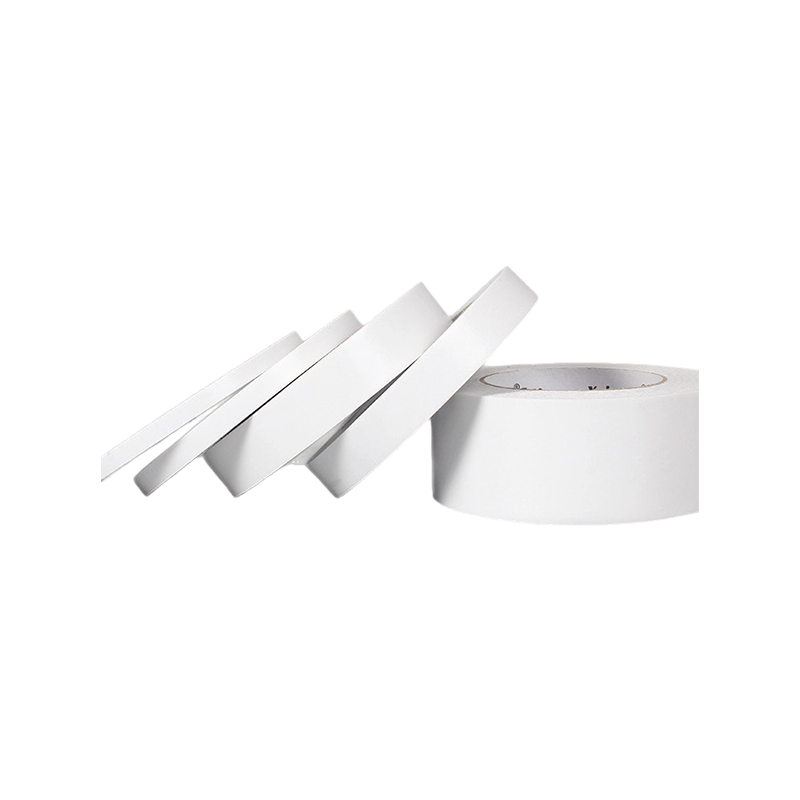
6025R PET No Residue Double-Sided Tape is developed for applications that require a balanced combination of adhesion, removability, dimensional stability, clean appearance, and production convenience. The tape uses a transparent PET carrier and a white release liner. Its coating thickness is controlled at 0.095 ± 0.005 mm, providing a practical profile for mounting, fixing, laminating, splicing, and general industrial assembly. Depending on the application requirement, the tape can offer removable adhesion in the range of 5–10 N/24 mm or permanent adhesion of at least 10 N/24 mm to a steel plate after 20 minutes of placement.
This combination makes the product suitable for manufacturers that need more than an ordinary adhesive layer. It is designed for applications where a clean surface, controlled bonding force, reliable shear resistance, and resistance to elevated temperatures are important. With a stated temperature resistance of 120°C and a static shear time of at least 1,440 minutes under the specified test conditions, the tape can support demanding assembly and packaging operations while helping users reduce residue-related problems.
The product is manufactured by Zhejiang Geruite Packaging Materials Co., Ltd., a Chinese packaging-materials enterprise specializing in adhesive tapes, stretch film, strapping products, and related packaging solutions. The company combines product development, production, quality control, and customer service in an integrated operating system. Its broad experience in packaging materials allows it to understand the practical requirements of converters, distributors, industrial users, and international buyers.
Understanding the Construction of PET Double-Sided Tape
Double-sided tape consists of an adhesive system coated onto both sides of a carrier or directly formed into a self-supporting adhesive layer. In the case of 6025R PET No Residue Double-Sided Tape, PET serves as the carrier. PET, or polyethylene terephthalate, is widely used in industrial adhesive products because it offers dimensional stability, mechanical strength, smoothness, and resistance to stretching during converting and application.
The PET carrier helps the tape maintain its shape during slitting, die-cutting, laminating, and placement. Compared with unsupported adhesive films, a PET-backed construction can be easier to handle when users need accurate positioning or clean release from the liner. The carrier also helps separate the two adhesive surfaces, providing a more controlled structure for applications where both sides must bond to different materials.
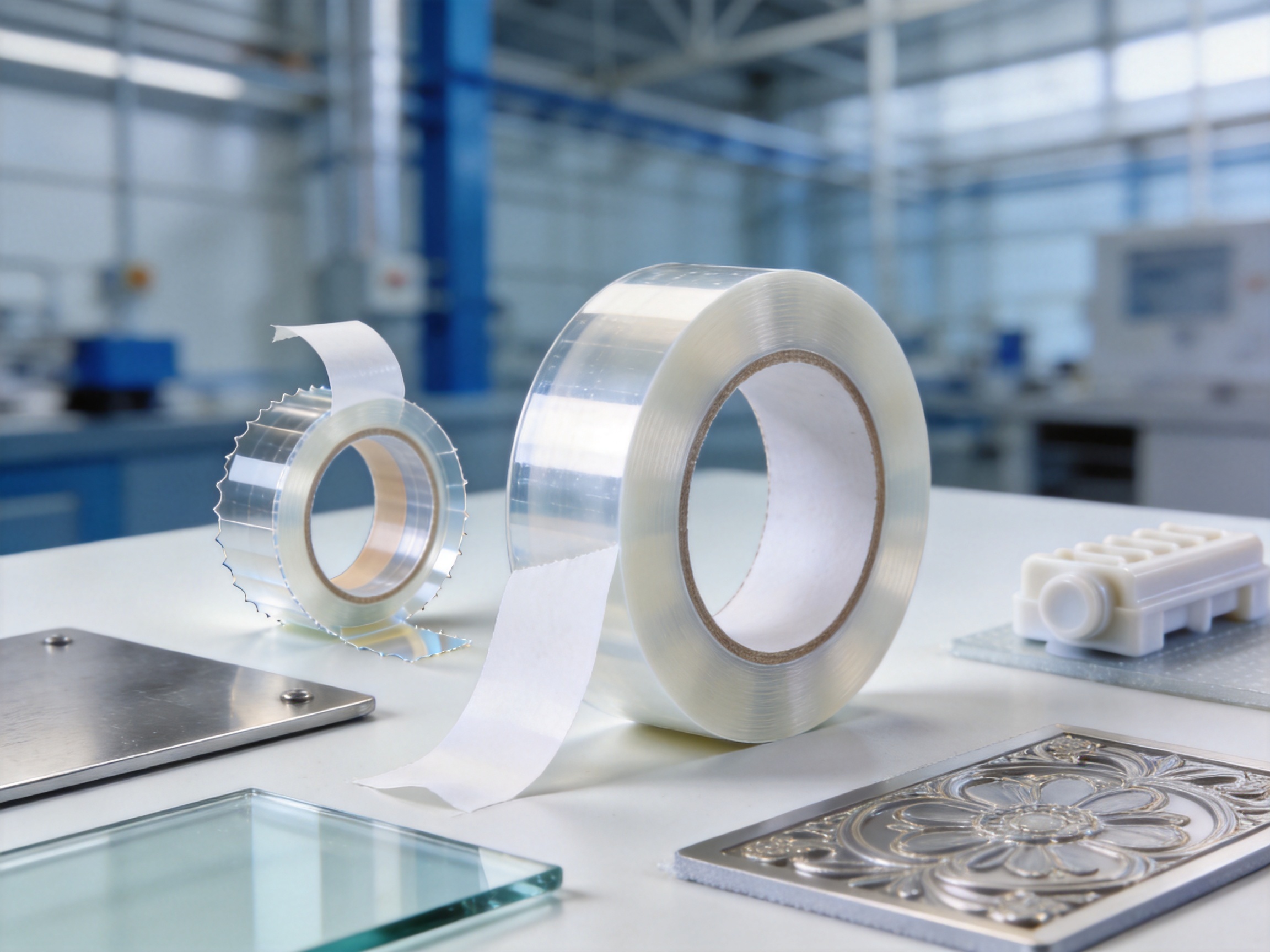
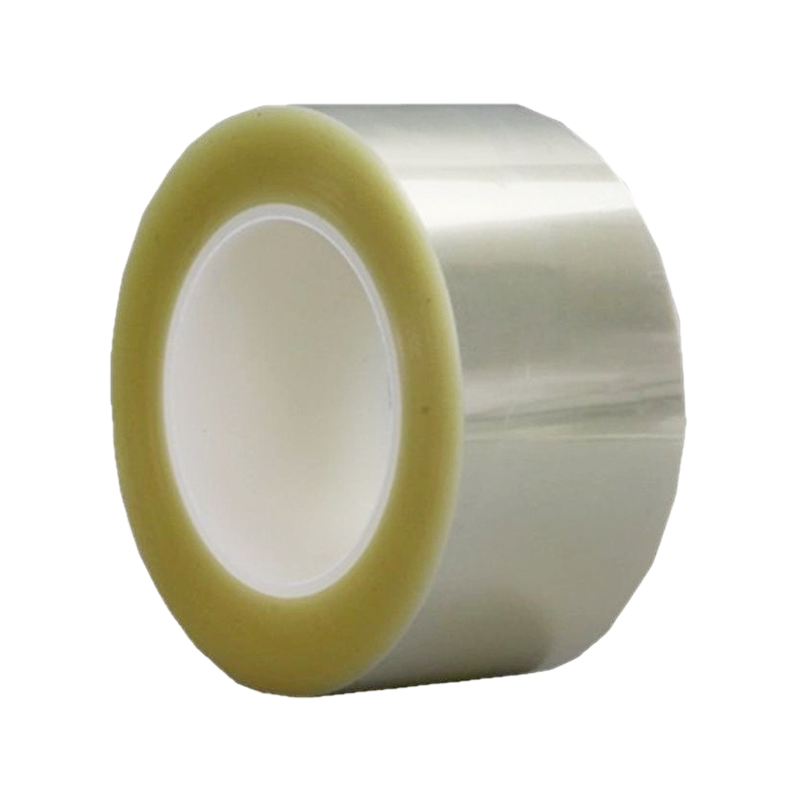
The tape is transparent. This is an important visual advantage for many applications. When the tape is applied beneath a clear component, a label, a decorative panel, or a product display element, the transparent carrier is less visually intrusive than an opaque carrier. A clean, low-visibility bond can help preserve the appearance of the finished product.
The white release liner protects the adhesive surface before use. It also provides a practical visual background during die-cutting, slitting, inspection, and manual application. The liner can be removed when the tape is ready for bonding, allowing the user to apply the product without exposing the adhesive prematurely to dust, moisture, or handling contamination.
The nominal coating thickness is 0.095 ± 0.005 mm. Thickness control is important because variations can influence roll winding, die-cutting accuracy, liner release, surface contact, and the final height of assembled parts. A controlled thickness helps converters produce more consistent rolls, strips, pads, and custom shapes.
Key Product Specifications
The following values are typical technical data supplied for the product. Actual performance can vary according to the materials being bonded, surface preparation, temperature, pressure, dwell time, application method, and storage conditions. Users should conduct application testing before commercial production.
| Property | Test Condition or Description | Unit | Typical Value | Reference Standard |
|---|---|---|---|---|
| Coating Thickness | Physical property | mm | 0.095 ± 0.005 | GB/T 7125-2014 |
| Adhesion to Steel Plate | 180° peel after 20 minutes of placement | N/24 mm | Removable: 5–10; Permanent: ≥10 | GB/T 2792-2014 |
| Static Shear Force | 24 mm × 24 mm, 1,000 g, 5.76 cm² | min | ≥1,440 | GB/T 4851-2014 |
| Initial Tack | 14° steel ball, inclined plane method | mm | ≤100 | GB/T 4852-2002 |
| Temperature Resistance | Specified temperature resistance | °C | 120 | GB/T 4851-2014 |
| Tape Color | Visual inspection | — | Transparent | Visual inspection |
| Release Liner | Visual inspection | — | White | Visual inspection |
These specifications show that the tape is designed to provide a useful balance between initial handling and final bonding. A removable version can be selected when components may need adjustment or removal, while a permanent version can be selected when long-term attachment is the priority. This flexibility allows the same general product concept to support different manufacturing requirements.
Clean Removal and No-Residue Performance
Residue is one of the most common concerns when removing adhesive tape. Excess adhesive left on a surface can create additional cleaning work, delay production, damage finishes, or reduce the appearance of a finished product. In some cases, residue may interfere with subsequent painting, printing, bonding, or inspection. A tape promoted for no-residue removal is particularly useful when temporary fixation or clean repositioning is required.
6025R is designed for applications that value a clean removal process. Its removable adhesion range of 5–10 N/24 mm provides a controlled level of bonding to the specified steel test surface. The actual removal result depends on the substrate, contact area, pressure, dwell time, temperature, peel angle, and storage period. Nevertheless, the removable option provides a practical starting point for users who need temporary attachment without relying on mechanical fasteners.
Clean removal can improve production efficiency in several ways. Operators may be able to reposition a component without replacing an entire assembly. Temporary protective materials may be removed after transport without extensive cleaning. Display and retail components can be updated while reducing damage to the underlying surface. In electronics, appliances, furniture, and interior decoration, the tape can help maintain a more refined appearance when visible fasteners are undesirable.
It is important to distinguish no-residue performance from unlimited removability. All pressure-sensitive adhesives are affected by surface energy, pressure, temperature, aging, and environmental exposure. For best results, the tape should be tested on the actual substrate and removed at a controlled angle and speed. Highly porous, dusty, oily, rough, freshly painted, or chemically sensitive surfaces may require special evaluation.
Adhesion Options for Different Assembly Needs
One of the notable advantages of this product is the availability of different adhesion directions. Removable adhesion is suitable for temporary mounting, positioning, protection, display work, and applications where future disassembly is expected. Permanent adhesion is suitable for parts that should remain securely attached throughout the service life of the product.
The removable adhesion value is specified at 5–10 N/24 mm under the stated peel test conditions. This range gives users a controlled bonding force rather than an unnecessarily aggressive attachment. A controlled force can be valuable when the tape is applied to finished surfaces, painted components, coated panels, printed materials, or other parts where damage must be minimized.
The permanent adhesion value is specified at 10 N/24 mm or higher. This level supports applications that require stronger attachment after the adhesive has contacted the substrate. Permanent bonding can reduce the need for screws, clips, staples, liquid adhesives, or other mechanical and chemical fastening methods. It can also help create a smoother and more compact finished assembly.
Adhesion should always be evaluated as a system rather than as an isolated tape property. The surface energy of the substrate, its roughness, cleanliness, flexibility, and chemical composition all influence final performance. Metals and glass often provide suitable smooth surfaces, while low-energy plastics, powder-coated materials, textured surfaces, and silicone-treated films may require special adhesive selection or surface treatment.
Static Shear Resistance and Load Stability
Peel adhesion measures the force required to separate the tape from a surface in a specific direction. Static shear measures the ability of the tape to resist a load that acts parallel to the bonded surface over time. Both properties matter in practical assembly. A tape may peel well but fail under sustained downward load if its shear resistance is insufficient.
Under the specified test condition of a 24 mm × 24 mm bonded area, a 1,000 g load, and a 5.76 cm² contact area, the product has a static shear time of at least 1,440 minutes. This indicates a strong ability to maintain the bond under the defined laboratory condition. The result is useful when the tape is used to hold components in place, support lightweight parts, or resist movement during storage and operation.
Static shear performance can also help reduce the risk of creep. Creep occurs when an adhesive gradually moves under a sustained load, especially at higher temperatures. The PET carrier contributes to dimensional stability, while the adhesive system is engineered to maintain contact under the specified test conditions. Users should still calculate the required safety factor for each application, especially when the bonded part is heavy, exposed to vibration, or installed overhead.
For practical engineering, the bonded area should be designed according to the load, temperature, expected service life, and surface quality. Increasing the contact area can improve load distribution. Rounded corners may reduce stress concentration, while clean, uniform pressure during application can improve the effective bonded area.
Temperature Resistance up to 120°C
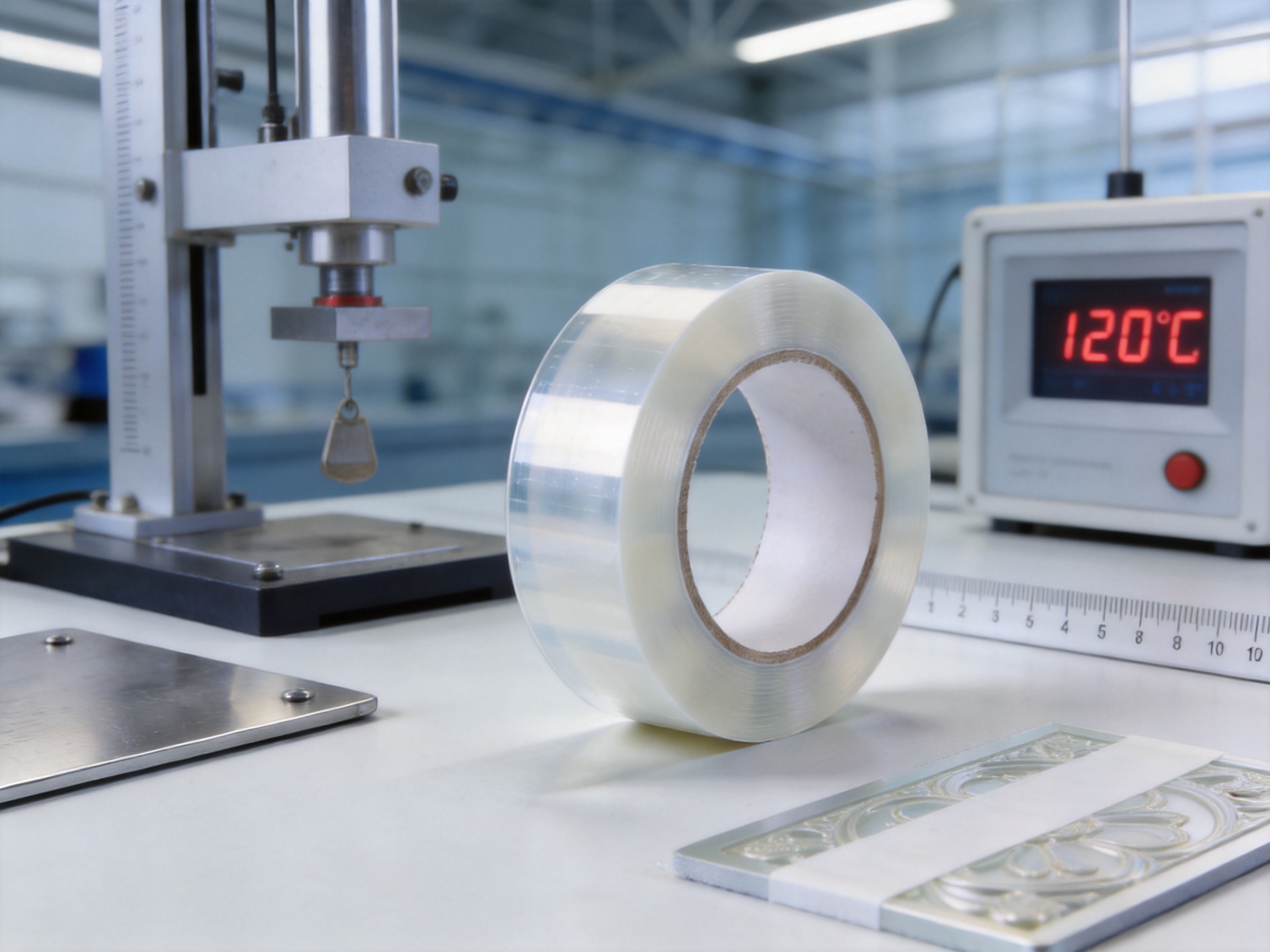
Industrial assembly environments can expose adhesive products to heat during processing, transportation, storage, or service. A tape that softens excessively may lose shear strength, move under load, or leave residue. 6025R has a stated temperature resistance of 120°C, making it suitable for many moderate-to-high temperature applications when the total conditions remain within the product’s tested range.
The 120°C rating can be valuable in appliance assembly, lighting components, industrial labeling, fixture mounting, packaging machinery, and other areas where short-term or continuous heat exposure may occur. It gives users more flexibility than a basic general-purpose tape that is intended only for room-temperature applications.
Temperature resistance should not be interpreted as a guarantee of identical performance at every time and temperature combination. Adhesive behavior is influenced by exposure duration, load, humidity, substrate expansion, and repeated heating and cooling cycles. For applications near the limit, users should test the complete assembly under realistic conditions rather than relying solely on a single temperature figure.
The tape can also help accommodate differences in thermal expansion between the PET carrier and bonded substrates. However, rigid assemblies exposed to repeated temperature changes may place stress on the adhesive interface. Proper product selection, adequate bond area, and controlled application pressure remain important.
Advantages Compared with Conventional Double-Sided Tapes
Conventional double-sided tapes may provide basic attachment, but they do not always offer the combination of clean appearance, controlled removability, dimensional stability, and heat performance required by modern production lines. The principal advantage of 6025R is its balanced design rather than dependence on only one performance characteristic.
First, the transparent PET carrier can provide a cleaner appearance than colored or heavily opaque carriers. This is especially useful when the tape is applied to transparent parts, decorative surfaces, product displays, and components where the adhesive must remain visually discreet.
Second, the product offers a removable adhesion option. Many aggressive permanent tapes are difficult to remove and can leave residue or damage the surface. A controlled removable version allows users to choose a more suitable bonding level for temporary or repositionable applications.
Third, the PET carrier supports dimensional stability during converting and use. Unsupported adhesive films can stretch or deform more easily during application. A stable carrier can improve cutting accuracy, alignment, and handling, particularly when the tape is converted into narrow rolls, strips, labels, or die-cut pieces.
Fourth, the product offers a stated temperature resistance of 120°C. This provides a wider operating range than ordinary tapes intended only for ambient conditions. The additional thermal capability may help manufacturers simplify material selection across several production steps.
Fifth, the static shear result of at least 1,440 minutes under the defined test condition indicates strong resistance to sustained loading. This can reduce the likelihood of gradual movement when the tape is used for mounting or holding components.
Finally, the tape is supported by a manufacturer with a broad packaging-materials portfolio. A company that produces BOPP tape, kraft paper tape, masking tape, high-temperature tape, metal tape, stretch film, PP strapping, and PET strapping can offer a more comprehensive understanding of packaging lines and material compatibility than a supplier focused on only one narrow product type.
Applications in Industrial Assembly
Double-sided PET tape is suitable for a wide variety of industrial assembly tasks. It can be used for attaching nameplates, badges, trims, lightweight panels, protective components, decorative materials, and selected interior parts. Its thin construction helps maintain a compact profile while providing a clean bond.
In appliance manufacturing, the tape may be considered for fixing decorative strips, labels, control-panel elements, insulation accessories, and lightweight fittings. The transparent carrier can help reduce visual interference, while the temperature resistance supports environments where components may experience moderate heat.
In electronics and electrical products, double-sided tape can assist with component positioning, cable management, display attachment, protective film fixation, and housing assembly. The product should be evaluated for compatibility with plastics, coatings, printed surfaces, and heat generated by the specific device.
In furniture and interior decoration, the tape can be used for temporary positioning, trim attachment, decorative panel installation, and display construction. Removable adhesion is helpful when a component must be adjusted during installation or removed for maintenance.
In signage and retail display production, a transparent tape can preserve the appearance of graphics and presentation surfaces. Die-cut pieces can be prepared for specific display components, reducing manual adhesive application and improving repeatability.
In logistics and packaging operations, the tape can be used for temporary holding, bundling accessories, securing inserts, attaching documentation pockets, and supporting presentation packaging. It is not a substitute for every structural packaging method, but it can complement cartons, stretch film, strapping, and protective materials.
Use in Converting and Custom Die-Cut Products
Many industrial customers do not use double-sided tape only in roll form. They may require narrow slit rolls, sheets, pads, tabs, circles, strips, frames, or complex die-cut shapes. PET-backed tape is well suited to converting because the carrier provides a stable base for controlled cutting and handling.
Custom die-cut parts can reduce labor by allowing operators to apply a ready-made adhesive component. They can also improve material utilization and reduce inconsistent hand cutting. A converter may produce parts according to a customer’s dimensions, liner format, packaging method, and application sequence.
Thickness consistency is especially important in die-cutting. If the coating thickness changes significantly across a roll, cutting depth and release behavior may become less predictable. The specified 0.095 ± 0.005 mm thickness provides a controlled basis for converting and helps support consistent product design.
For automated production, roll quality, edge cleanliness, winding tension, liner release, and splice management can affect line performance. These factors should be discussed with the supplier when the tape will be used in high-speed dispensing or robotic assembly. Properly matched roll dimensions can reduce downtime and simplify installation on application equipment.
Manufacturing Strengths and Quality Management
Zhejiang Geruite Packaging Materials Co., Ltd. focuses on the research, development, production, and sale of packaging materials and adhesive products. Its manufacturing system covers several related product categories, including BOPP tapes, kraft paper tapes, masking tapes, high-temperature resistant tapes, metal tapes, PE stretch film, PP strapping, and high-strength PET strapping.
This product range gives the company experience across different carriers, adhesive technologies, films, liners, and packaging formats. Such experience is valuable when customers need advice on selecting a tape for a specific packaging or assembly process. It also supports the development of complete packaging solutions rather than isolated products.
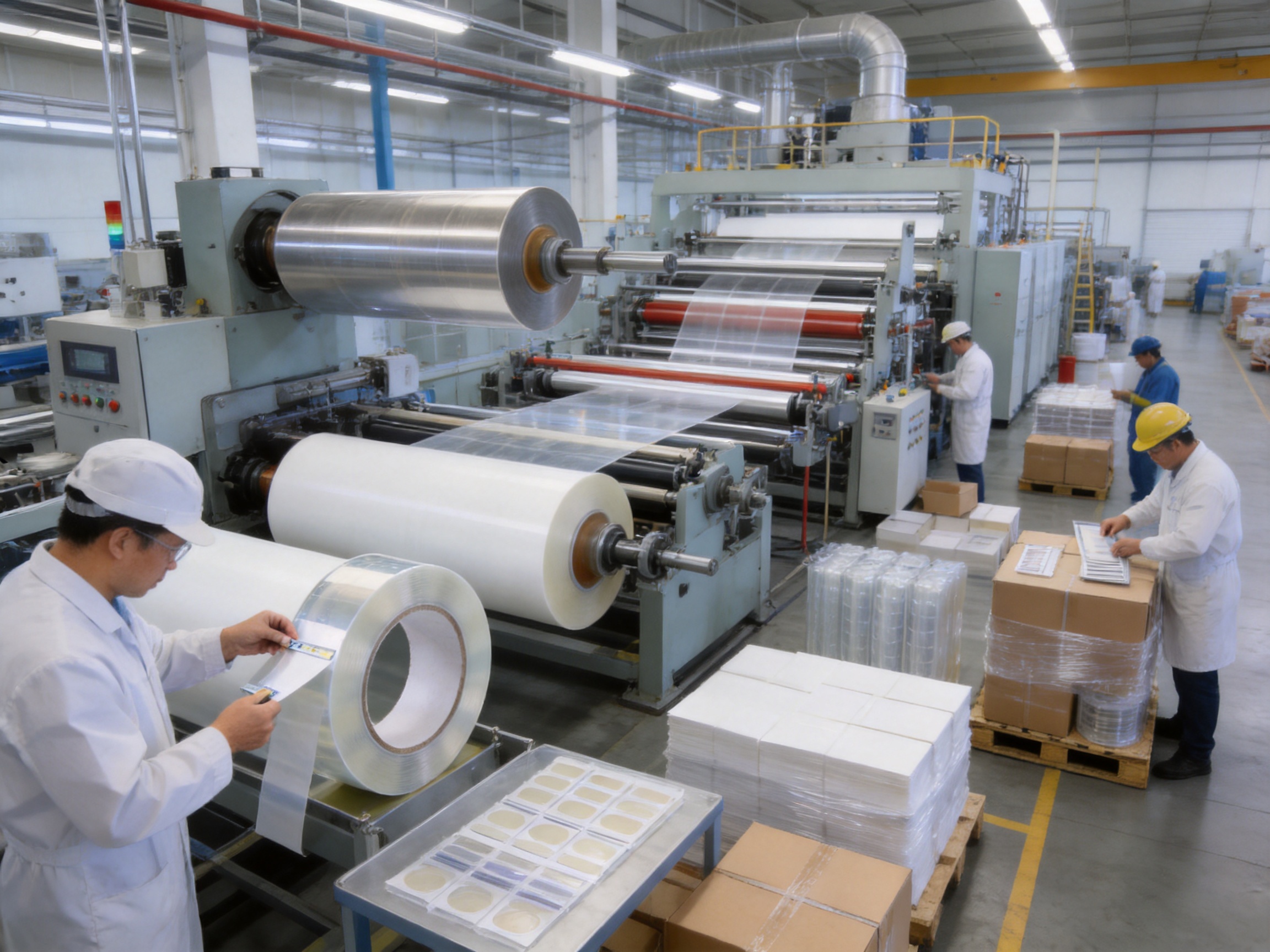
The company emphasizes quality control from raw-material procurement through production and final inspection. In adhesive tape manufacturing, each stage can affect the finished result. Raw materials influence adhesive performance, film strength, liner release, and appearance. Coating conditions influence thickness uniformity and bonding behavior. Slitting and winding influence roll quality. Final inspection helps identify deviations before shipment.
Advanced production equipment can improve process repeatability by controlling coating, drying, laminating, slitting, winding, and packaging operations. Process control is especially important for thin adhesive products, where small variations may affect application efficiency. A disciplined manufacturing system can also improve batch-to-batch consistency for customers who operate standardized production lines.
The company reports an annual output value exceeding RMB 60 million. This reflects an established operating scale and provides a foundation for serving different customer groups, including distributors, converters, industrial manufacturers, packaging companies, and export buyers.
Manufacturing strength is not limited to equipment. It also includes technical personnel, process documentation, inspection procedures, production planning, inventory management, and customer communication. A supplier that integrates these functions can respond more effectively to repeat orders, customized specifications, and application feedback.
Raw Materials, Coating, and Process Control
A reliable PET double-sided tape begins with suitable raw materials. The PET carrier must provide consistent thickness, tensile strength, surface quality, and dimensional stability. The adhesive must be formulated to provide the required balance between tack, peel adhesion, removability, shear resistance, and temperature performance. The release liner must protect the adhesive while offering controlled release during use.
Coating is a critical manufacturing step. The adhesive must be applied evenly across the carrier or coated structure. Excessive variation can create weak areas, thick edges, roll telescoping, or inconsistent die-cutting. Controlled coating conditions help maintain the target thickness and support predictable performance.
Drying and curing conditions must also be managed carefully. If the adhesive is not properly processed, residual components may influence odor, bonding, aging, or surface cleanliness. Appropriate process control helps stabilize the adhesive before it is slit and packaged.
Lamination and liner placement require accurate alignment. A liner that is poorly positioned or inconsistently released can slow production and create waste. Smooth winding and appropriate tension help protect the roll edges and reduce deformation during transportation.
Quality inspection may include visual checks, thickness measurement, adhesion testing, shear testing, tack testing, temperature evaluation, roll inspection, and packaging checks. The listed reference standards provide a framework for evaluating important performance characteristics. Customers with specialized requirements may also request additional testing based on their application.
Application Guidelines for Best Results
The bonded surfaces should be clean, dry, and free from dust, oil, grease, release agents, loose particles, and moisture. Contamination can reduce the actual contact area and prevent the adhesive from wetting the surface properly. Cleaning methods should be selected according to the substrate so that the surface is not damaged or left with a chemical film.
Application temperature should be considered. Pressure-sensitive adhesives generally bond more effectively when the adhesive and substrate are within a suitable temperature range. Very cold surfaces may reduce initial tack, while very hot surfaces may cause premature softening or movement. Users should validate the product under the lowest and highest expected conditions.
Uniform pressure is important. A roller, press, squeegee, or other suitable tool can help remove air pockets and establish consistent contact. Hand application can be effective for small parts, but operators should follow a repeatable procedure to reduce variation.
The release liner should be removed carefully and the adhesive should not be touched unnecessarily. Fingerprints, dust, and skin oils can affect the bond. If the tape is supplied in roll form, the leading edge should be protected from contamination and damage during storage and handling.
For removable applications, users should avoid leaving the tape under excessive load or extreme heat for longer than necessary. Removal should generally be performed slowly and at a controlled angle. Testing should include the actual surface finish, because painted and coated surfaces can vary considerably.
For permanent applications, sufficient dwell time may be needed before the assembly is placed under full load. The adhesive may continue to build adhesion after initial contact. Application engineers should establish the required waiting period through testing.
Storage, Packaging, and Handling
Adhesive tape should be stored in a clean, dry, and well-ventilated area. Direct sunlight, excessive heat, high humidity, dust, and contact with chemicals should be avoided. Rolls should remain in their original packaging until use whenever possible.
Extreme pressure or improper stacking can deform rolls and affect edge quality. Heavy objects should not be placed on top of tape cartons unless the packaging has been designed for that load. During transportation, cartons should be protected from water, impact, and uncontrolled temperature exposure.
Before production use, customers should inspect the outer packaging, roll edges, liner condition, and product identification. Any unusual odor, telescoping, blocking, liner separation, or physical damage should be reported to the supplier for evaluation.
Inventory should be managed using a first-in, first-out system. The recommended storage period depends on the specific product packaging and conditions. Buyers should confirm shelf-life information, storage requirements, and any application-specific recommendations with the manufacturer before placing the tape into long-term inventory.
Quality, Customization, and Export Supply Capability
International customers often require more than a standard roll. They may need custom widths, lengths, core sizes, packaging labels, carton markings, pallet configurations, or private specifications. A manufacturer with an established production and export structure can help coordinate these requirements.
Geruite’s broad product portfolio supports customers that purchase multiple packaging materials from one source. A buyer may combine adhesive tape with stretch film, PP strapping, PET strapping, or other packaging products. Consolidated sourcing can simplify supplier management, shipment planning, and product communication.
Customization should be based on clear technical information. Customers should provide the substrate type, required bond strength, removable or permanent requirement, operating temperature, expected load, roll dimensions, application equipment, packaging format, and estimated annual demand. The more complete the information, the easier it is to recommend a suitable configuration.
Sample testing is strongly recommended before mass production. A sample can be evaluated for peel adhesion, holding power, residue, appearance, application speed, liner release, and compatibility with the finished product. This process helps identify differences between laboratory performance and actual production conditions.
Why Choose a Specialized Packaging-Material Manufacturer?
A specialized manufacturer can provide benefits that are difficult to obtain from a general trading company. Direct manufacturing experience allows the supplier to understand process variables and respond to technical questions. It also makes it easier to track batch information, review quality records, and discuss improvements.
Specialization can support faster communication about product structure. Customers may need to know whether a tape uses a PET carrier, what liner is supplied, how the adhesive behaves on a particular surface, or whether the product can be slit or die-cut. A manufacturer familiar with its own process can answer these questions more accurately.
It also supports continuous improvement. Customer feedback about residue, edge lifting, roll handling, or application speed can be reviewed alongside production data. The supplier can then adjust material selection, coating conditions, converting parameters, or packaging methods where appropriate.
Geruite’s focus on research, development, production, and sales provides a basis for this type of cooperation. Its stated commitment to quality, technology investment, product optimization, and service improvement is aligned with the needs of customers seeking a long-term packaging-material partner.
Comparison of Application Benefits
| Application Requirement | Potential Benefit of 6025R PET Tape | Important Consideration |
|---|---|---|
| Temporary mounting | Removable adhesion option with a stated range of 5–10 N/24 mm | Test removal on the actual substrate and finish |
| Permanent attachment | Permanent adhesion of at least 10 N/24 mm to the specified steel test plate | Allow suitable dwell time before full loading |
| Clean appearance | Transparent tape carrier and white protective liner | Check visibility on colored, reflective, or textured surfaces |
| Long-term holding | Static shear time of at least 1,440 minutes under the defined condition | Calculate bonded area and safety factor for the application |
| Moderate heat exposure | Stated temperature resistance of 120°C | Evaluate duration, load, cycling, and humidity together |
| Converting and die-cutting | PET carrier and controlled thickness of 0.095 ± 0.005 mm | Confirm cutting tools, liner release, and roll dimensions |
| Packaging-line integration | Availability in roll formats and support from a packaging-material supplier | Confirm equipment compatibility and supply schedule |
Frequently Asked Questions
What is 6025R PET No Residue Double-Sided Tape?
It is a transparent PET-backed double-sided adhesive tape designed for clean, controlled bonding. It is available for applications requiring either removable or permanent adhesion performance, depending on the selected specification and use condition.
What is the thickness of the tape?
The stated coating thickness is 0.095 ± 0.005 mm. Customers should confirm whether this value refers to the adhesive coating configuration required for their order and whether total finished thickness, including the PET carrier and liner, is needed for their application.
Can the tape be removed without residue?
The product is designed for no-residue removal in suitable applications. Actual results depend on the substrate, surface finish, temperature, dwell time, pressure, load, and removal technique. Testing on the actual production surface is recommended.
Is the tape suitable for permanent bonding?
Yes. The permanent adhesion specification is at least 10 N/24 mm under the stated 180° peel test condition after 20 minutes of placement. The required bond area and dwell time should be determined according to the actual assembly.
What is the temperature resistance?
The stated temperature resistance is 120°C. This value should be evaluated together with exposure time, mechanical load, humidity, temperature cycling, and the characteristics of the bonded substrates.
What does the static shear result mean?
Static shear evaluates resistance to a load acting parallel to the bonded surface. Under the stated test condition, the product has a typical static shear time of at least 1,440 minutes. Application design should include an appropriate safety factor.
Is the tape transparent?
Yes. The tape is specified as transparent by visual inspection. The release liner is white.
Can the tape be converted into custom shapes?
PET-backed double-sided tape can generally be slit or die-cut into different formats. Customers should discuss dimensions, tolerances, liner requirements, core size, and production quantities with the supplier before ordering.
What surfaces can be bonded?
The tape may be considered for metals, glass, selected plastics, coated panels, printed materials, and other smooth surfaces. Compatibility depends on surface energy, cleanliness, roughness, flexibility, coating chemistry, and service conditions. Qualification testing is essential for critical applications.
How should the product be applied?
Clean and dry the surfaces, avoid touching the adhesive, apply consistent pressure, and allow adequate contact time before loading. For removable applications, remove the tape slowly and at a controlled angle.
Where is the manufacturer located?
Zhejiang Geruite Packaging Materials Co., Ltd. is located in Xiaoshan District, Hangzhou City, Zhejiang Province, China. The company serves customers through its packaging-material manufacturing and supply operations.
Can buyers request product support?
Yes. Buyers can provide information about the application, substrate, temperature, load, roll size, packaging, and annual demand to receive more appropriate product and supply recommendations.
Conclusion
6025R PET No Residue Double-Sided Tape is designed for manufacturers that need a clean, stable, and versatile adhesive solution. Its transparent PET construction supports a discreet appearance and controlled handling. Its removable and permanent adhesion options provide flexibility for temporary fixation, repositionable assembly, and long-term attachment. Its static shear performance, controlled thickness, initial tack, and stated 120°C temperature resistance make it suitable for a broad range of industrial and packaging-related uses.
The product’s advantages are strengthened by the manufacturing capabilities of Zhejiang Geruite Packaging Materials Co., Ltd. The company combines adhesive tape production with stretch film, strapping, and other packaging-material expertise. Its focus on raw-material control, production management, testing, and final inspection supports consistent supply for domestic and international customers.
For the best result, buyers should treat the tape as part of a complete bonding system. Surface preparation, application pressure, temperature, dwell time, bonded area, storage, and removal technique all affect performance. When these variables are properly controlled, 6025R can help improve assembly appearance, reduce residue-related cleaning, simplify converting, and support more efficient packaging and manufacturing operations.
As industries continue to seek lighter, cleaner, and more efficient fastening methods, PET double-sided tape remains an important alternative to screws, clips, liquid adhesives, and other traditional joining techniques. A well-controlled product supported by an experienced packaging-material manufacturer can provide the combination of performance and supply reliability required by modern production.
References
GB/T 7125-2014, Test method for the determination of adhesive tape coating thickness.
GB/T 2792-2014, Test method for adhesive force of pressure-sensitive adhesive tapes and films by peeling at an angle of 180°.
GB/T 4851-2014, Test method for holding power of pressure-sensitive adhesive tapes.
GB/T 4852-2002, Test method for initial adhesion of pressure-sensitive adhesive tapes by the inclined-plane rolling-ball method.
Technical product data supplied for 6025R PET No Residue Double-Sided Tape, including typical performance values, appearance, construction, and reference test standards.
Manufacturer information supplied for Zhejiang Geruite Packaging Materials Co., Ltd., including company capabilities, product categories, quality-control approach, and packaging-material manufacturing activities.
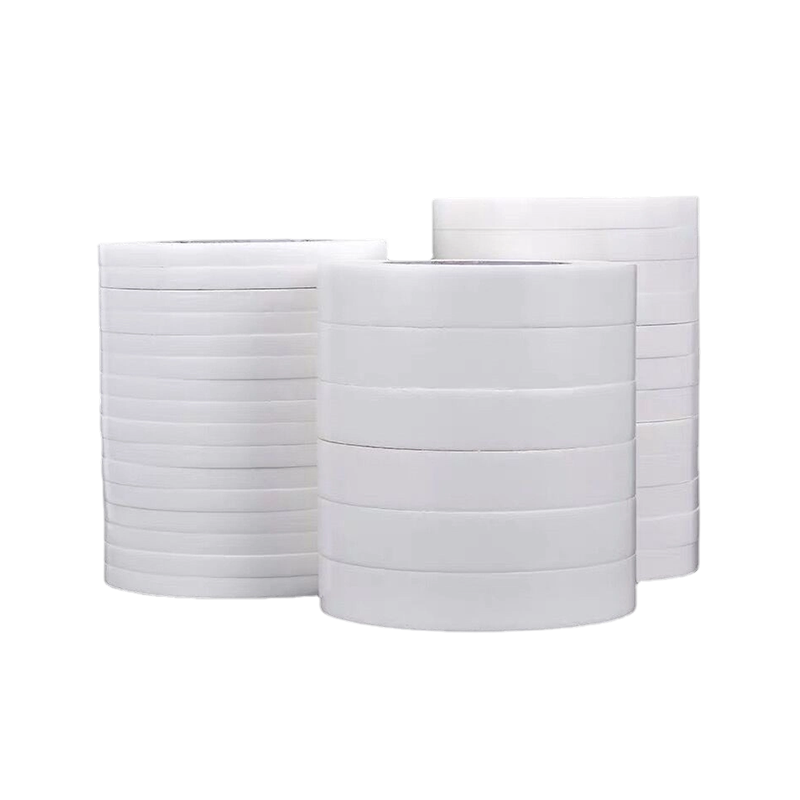
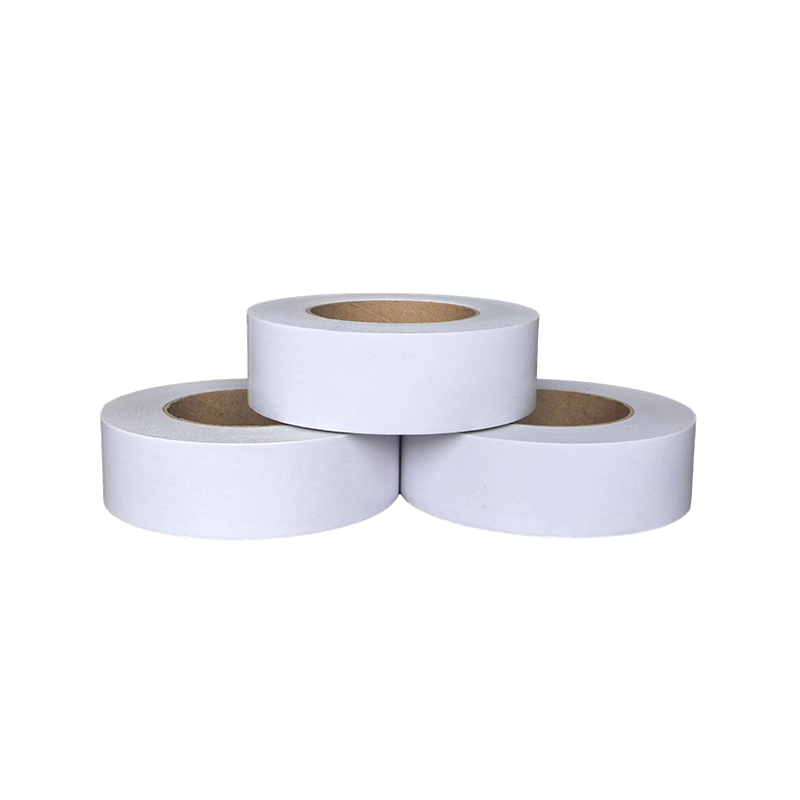
Product: 6025R PET No residue double-sided tape

CONTACT DETAILS
- Address:No. 241, Yaojiafan, Zhangpanqiao, Shushan Street, Xiaoshan District, Hangzhou City, Zhejiang Province, China
- TEL:+86-0571-83175630
- Phone:+86-13336160217
- Email:jeffrey@grtpk.com
- WeChat/WhatsApp:+86-18058115265
PRODUCTS
NEWS CENTER
MOBILE TERMINAL
Copyright© Zhejiang Geruite Packaging Materials Co., Ltd. All Rights Reserved.
Privacy Wholesale industrial packaging tape Manufacturers