


 English
  Español
  عربى
عربى 
PET Double-Sided Tape: High-Strength Bonding for Reliable Industrial Assembly
Content
- 1 What Is PET Double-Sided Tape?
- 2 Why the PET Carrier Matters
- 3 Core Advantages Compared with Conventional Double-Sided Tapes
- 4 Typical Product Specifications
- 5 Manufacturing Process and Quality Control
- 6 Applications in Electronics and Electrical Assembly
- 7 Applications in Industrial Manufacturing
- 8 Applications in Signage and Nameplates
- 9 Applications in Automotive Interior Components
- 10 How PET Double-Sided Tape Compares with Other Tape Constructions
- 11 Application Procedure for Best Results
- 12 Storage, Handling, and Shelf Life
- 13 Customization and Supply Capabilities
- 14 Why Manufacturing Discipline Creates a Competitive Advantage
- 15 Selection Guide for Buyers
- 16 Q&A: Frequently Asked Questions
- 16.1 What is the main advantage of PET double-sided tape?
- 16.2 Is PET double-sided tape suitable for permanent bonding?
- 16.3 Can it be used on plastic surfaces?
- 16.4 What is the typical thickness?
- 16.5 What color is PET double-sided tape?
- 16.6 How should the tape be stored?
- 16.7 How long is the shelf life?
- 16.8 Can the tape be die-cut?
- 16.9 Is PET double-sided tape waterproof?
- 16.10 Can it withstand high temperatures?
- 16.11 How can adhesion be improved?
- 16.12 How does PET tape compare with foam tape?
- 16.13 Can a manufacturer provide custom widths and roll formats?
- 17 Conclusion
- 18 References
- 19 Product: PET double-sided tape
PET double-sided tape is a high-performance bonding material designed for applications that require dependable adhesion, dimensional stability, and a clean, professional appearance. Unlike unsupported adhesive films or paper-based double-sided tapes, this product uses polyester film as its carrier. The PET carrier is coated on both sides with pressure-sensitive adhesive and protected by release liners until the tape is ready for use.
This construction gives PET double-sided tape a valuable balance of flexibility and mechanical strength. It can conform to many smooth substrates while resisting stretching, tearing, and deformation during handling. For manufacturers, converters, assemblers, sign producers, and packaging users, this means more controlled application, improved bonding consistency, and reduced risk that the tape will break before the job is complete.
Zhejiang Geruite Packaging Materials Co., Ltd. develops and supplies adhesive tapes and packaging materials for industrial and commercial customers. Its product portfolio includes BOPP tape, kraft paper tape, masking tape, high-temperature-resistant tape, metal tape, PE stretch film, PP strapping, PET strapping, and specialty adhesive products. Within this broader portfolio, PET double-sided tape serves customers that need a stronger and more stable alternative to conventional paper-carrier or low-strength double-sided tapes.
The product is suitable for electronics, interior trim, signage, nameplates, plastic and metal assembly, acrylic panel bonding, label backing, and many other applications where the appearance and integrity of the bonded substrates matter. Its performance can be adapted through adhesive selection, thickness, liner configuration, and converting format, allowing customers to select a solution according to their production requirements.
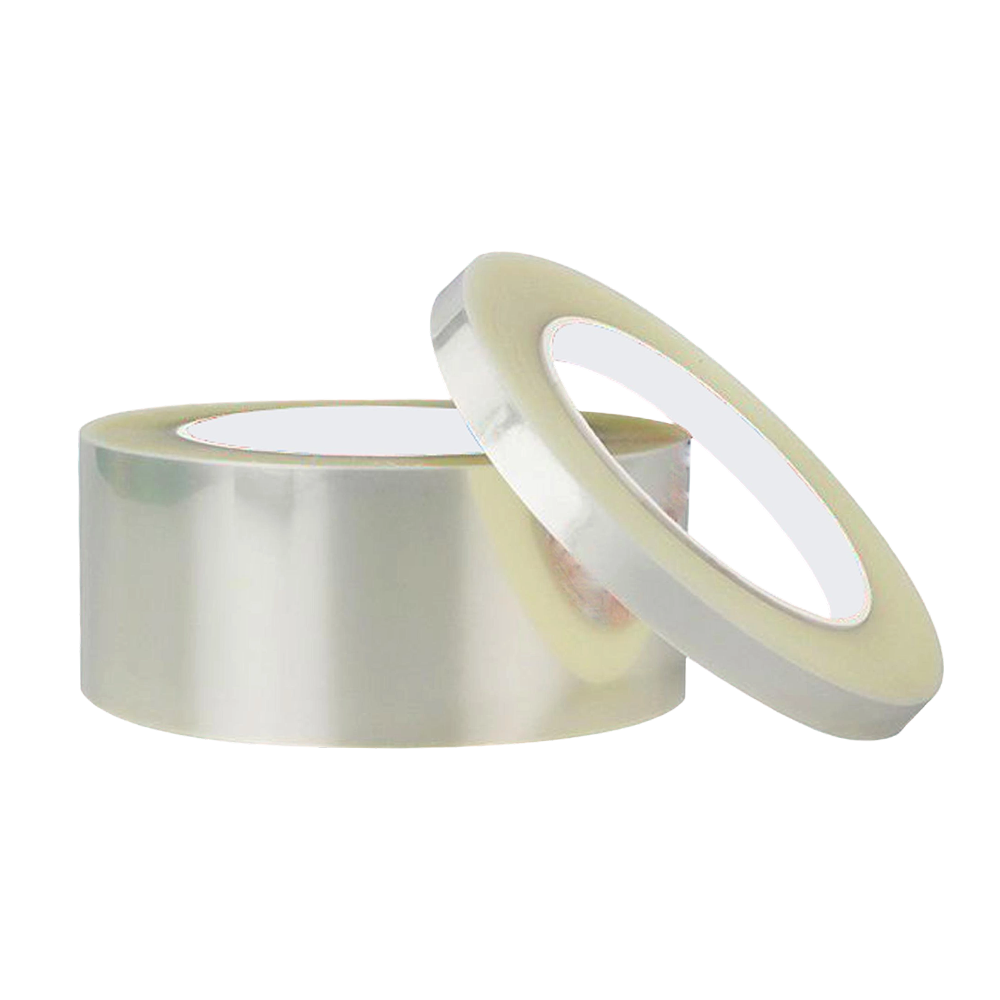
PET double-sided tape
What Is PET Double-Sided Tape?
PET double-sided tape is an adhesive tape made with a polyester film carrier coated on both sides with pressure-sensitive adhesive. PET, or polyethylene terephthalate, is a strong, stable polymer film commonly used when a tape must maintain its shape and resist mechanical damage. The adhesive layers create bonding surfaces on both sides, while release liners prevent contamination and premature sticking during storage and handling.
The tape normally consists of four principal elements: a release liner, an adhesive layer, the PET film carrier, and a second adhesive layer. Some products use one liner with different release characteristics on each side, while others use separate liners depending on the intended application and converting process. The specific construction may vary according to thickness, adhesive formulation, release requirements, and customer processing conditions.
The PET carrier is not intended to replace the adhesive. Instead, it supports the adhesive and provides structural reinforcement. When the tape is applied, the adhesive establishes contact with the substrate. The PET film helps the tape remain intact during unwinding, cutting, repositioning, installation, and removal. This is especially important in production environments where tape breakage can interrupt assembly or create waste.
Acrylic pressure-sensitive adhesive is commonly used for PET double-sided tape because it can provide good adhesion, aging resistance, and performance across a relatively broad range of temperatures. Depending on the specific grade, the adhesive may be optimized for high initial tack, long-term holding power, plastic surfaces, metal surfaces, acrylic panels, or other substrates.
Why the PET Carrier Matters
The carrier is one of the main factors that separates PET double-sided tape from many conventional alternatives. A paper carrier can be easy to tear and may offer limited dimensional stability. A foam carrier can provide thickness and cushioning but may compress, stretch, or require different processing conditions. Unsupported transfer adhesives can be very thin and conformable, but they may be more difficult to handle during high-speed conversion or precise placement.
PET film occupies an important middle ground. It provides a relatively thin and flat support while adding tensile strength and resistance to tearing. This makes the tape easier to manage when it is unwound from a roll, cut into pieces, laminated to another material, or applied to a narrow component.
The carrier also supports dimensional consistency. Polyester film has low thermal expansion compared with many less stable carrier materials. As a result, PET double-sided tape can maintain a more predictable shape when exposed to changes in temperature and humidity. This does not mean that every product is suitable for every extreme environment, but it does provide a reliable foundation for applications where movement or shrinkage could weaken the bond.
Another advantage is the smooth appearance of the carrier and adhesive construction. When applied correctly to a clean, suitable surface, the tape can lay flat with limited wrinkling. This is valuable for visible trim, signs, nameplates, decorative strips, and other products where a neat surface is part of the finished quality.
Core Advantages Compared with Conventional Double-Sided Tapes
High Tensile Strength
The PET film carrier gives the tape strong resistance to stretching and tearing. During application, operators can handle the tape without the carrier easily splitting. During removal, the tape is more likely to remain intact, which can simplify cleanup and reduce the chance of leaving separated fragments on the substrate.
For manufacturers, carrier strength also supports stable converting. Slitting, die-cutting, laminating, and roll processing can be performed with better control when the tape has a reinforced film structure. The exact processing performance depends on equipment settings and product thickness, but the PET carrier provides a dependable base for industrial conversion.
Dimensional Stability
Dimensional change can cause problems in precision assembly. If a tape stretches during placement or shrinks after installation, the bonded component may move or the adhesive layer may experience uneven stress. PET film helps limit these problems by maintaining a stable shape under ordinary changes in temperature and humidity.
This characteristic is useful when the tape is used to mount labels, decorative strips, rigid signs, electronic components, or plastic parts that must remain aligned. Stable dimensions can also improve the consistency of die-cut pieces and preformed adhesive components.
Reliable Adhesion
Acrylic pressure-sensitive adhesive can offer a combination of initial tack and long-term adhesion. Initial tack allows the tape to grip the substrate after placement, while final adhesion develops as the adhesive wets the surface over time. Applying firm, even pressure helps remove small air gaps and improves contact between the adhesive and the substrate.
The tape’s performance depends on surface energy, cleanliness, roughness, temperature, contact pressure, dwell time, and load. A strong tape cannot compensate for an oily, dusty, wet, or incompatible surface. Proper preparation is therefore essential to obtaining the intended result.
Clean and Professional Application
Because the PET carrier is smooth and relatively thin, the tape can produce a clean bond line when applied to suitable substrates. It is especially appropriate where visible fasteners, liquid adhesives, or mechanical clips would affect the appearance of the finished product.
In signage and nameplate applications, for example, the tape can help create a neat mounting surface without drilling holes. In interior trim applications, it can support a clean appearance while simplifying assembly compared with some mechanical attachment methods.
Resistance to Aging
PET film has good resistance to aging, ultraviolet exposure, and many common chemical influences. The actual environmental resistance is determined by both the PET carrier and the adhesive formulation. Under suitable conditions, the product can be used for indoor applications and selected semi-exposed environments where ordinary double-sided tapes may lose performance more quickly.
Users should evaluate the complete application rather than relying only on a general resistance statement. Outdoor exposure, high humidity, plasticizer migration, solvents, continuous heat, and heavy loads can all influence service life. Geruite can help customers select a suitable construction when the application requires a more specific performance balance.
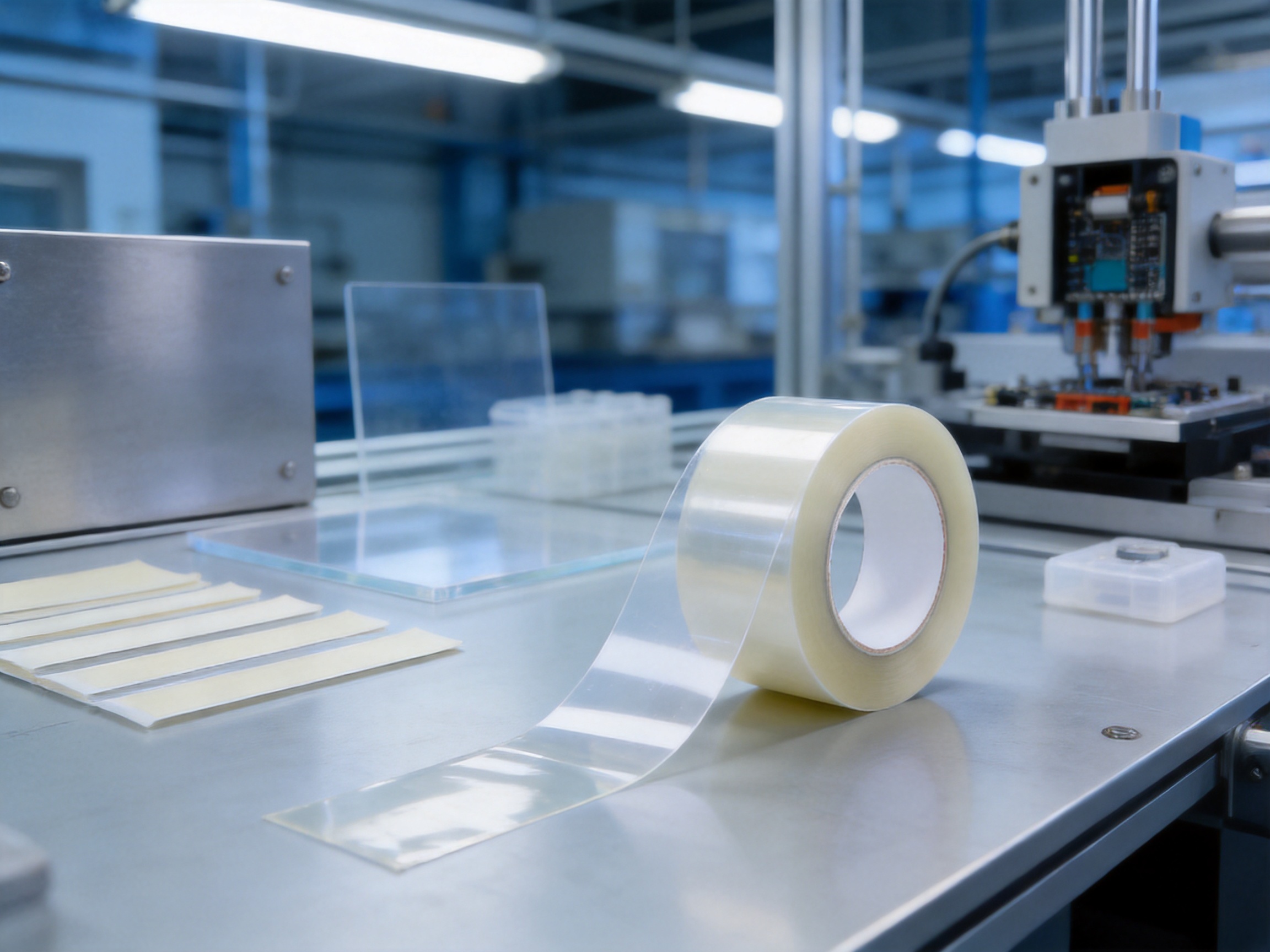
Typical Product Specifications
PET double-sided tape is available in a range of thicknesses and widths. A representative product specification lists a total tape thickness of 90 ± 5 micrometers. Other thickness options may be produced according to adhesive requirements, substrate irregularity, converting needs, and application design.
The carrier is polyester film, while the adhesive is generally acrylic pressure-sensitive adhesive. The product is typically transparent or translucent, helping it blend with clear, white, metallic, and colored substrates. The release liner protects the adhesive before application and can be selected to support manual or automated processing.
A representative temperature range is approximately -20°C to 120°C for short-term exposure, depending on the adhesive variant. This range should be treated as a general reference rather than a universal guarantee for every grade. Continuous exposure, applied load, substrate type, heating and cooling cycles, and surface contamination can significantly affect performance.
Under recommended storage conditions, the product generally offers a shelf life of approximately 12 to 24 months from the date of manufacture. Proper storage includes a cool, dry environment away from direct sunlight. A reference storage condition is approximately 20°C to 30°C with 40% to 60% relative humidity. Rolls should remain in their original packaging until use to reduce dust, moisture, and physical damage.
| Test Item | Typical Value | Reference Standard | Application Relevance |
| Tape Thickness | 90 ± 5 µm | GB/T 7125-2014 | Supports controlled bonding thickness and stable converting |
| Initial Tack, 14° | ≤ 180 mm | GB/T 4852-2002, Inclined Plane Method | Indicates initial adhesive contact behavior |
| Adhesion to Steel Plate | ≥ 10 N/25 mm | GB/T 2792-1998, Peel Test | Indicates peel adhesion on a standard metal surface |
| Adhesion to Steel Plate After Placement | ≥ 9 N/24 mm | GB/T 2792-2014 | Evaluates adhesion after placement using a PET reference construction |
| Holding Power | ≥ 120 minutes per 24 × 24 mm | GB/T 4851-2014 | Indicates resistance to movement under a sustained load |
Test values are typical reference data and should not be interpreted as a substitute for application testing. Different production lots, adhesive variants, substrates, environmental conditions, and test configurations may produce different results. Customers with demanding requirements should request a technical data sheet and conduct trials under actual operating conditions.
Manufacturing Process and Quality Control
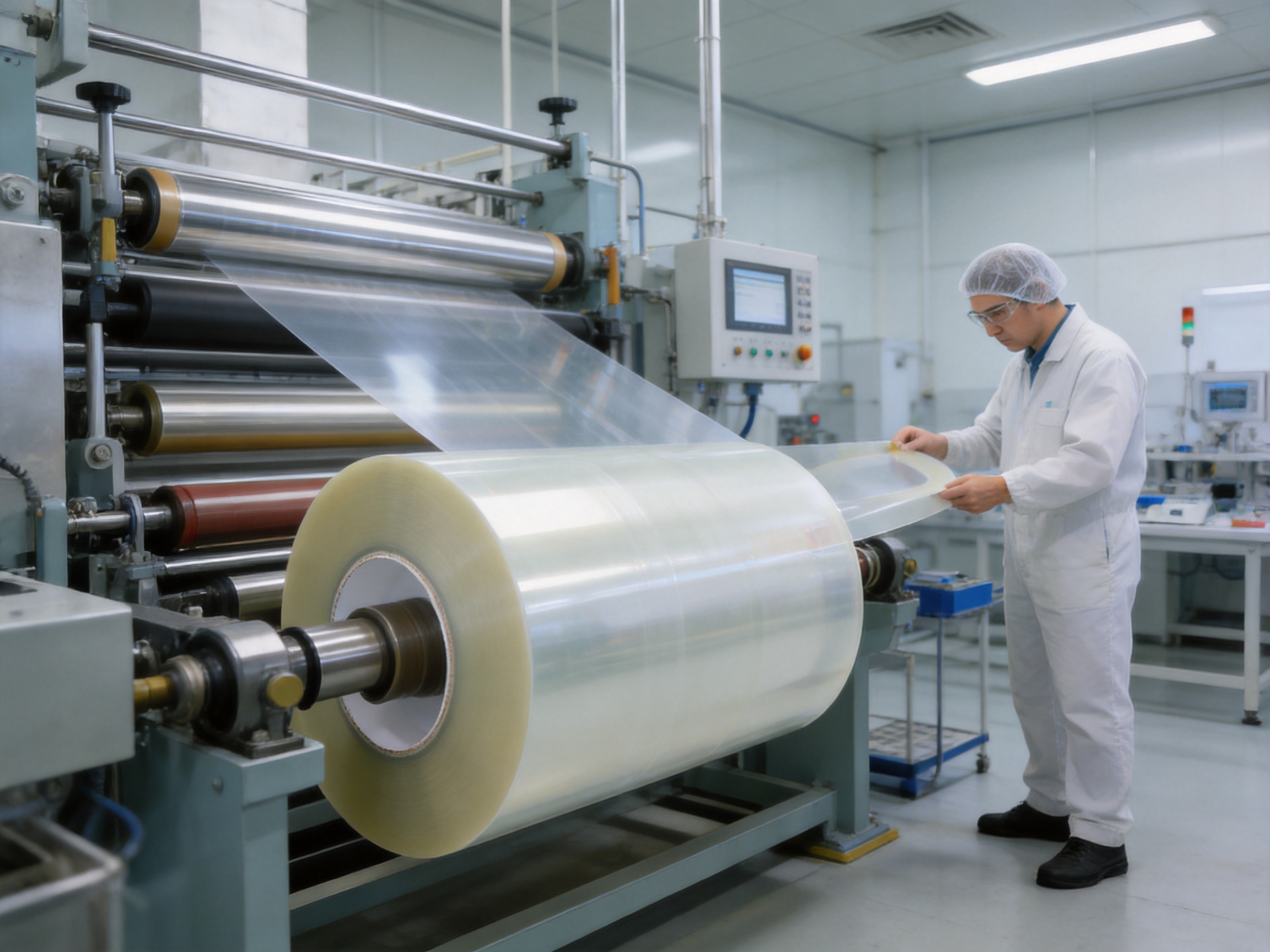
Consistent PET double-sided tape performance begins with controlled raw materials. The PET film, adhesive components, release liners, cores, and packaging materials must be selected according to the target construction. Variations in film thickness, surface treatment, adhesive viscosity, liner release force, or coating uniformity can affect the finished product.
Raw Material Inspection
Before production, incoming materials should be checked for identity, dimensions, appearance, packaging condition, and relevant performance characteristics. PET film may be examined for thickness uniformity, surface cleanliness, tensile behavior, and defects. Adhesive materials require attention to viscosity, solids content, color, storage history, and formulation consistency.
Release liners are also important. If the liner releases too easily, the tape may unwind or process incorrectly. If it releases with excessive force, the operator or automated equipment may have difficulty exposing the adhesive. A controlled liner system supports efficient application and helps protect the adhesive during storage.
Adhesive Preparation
The adhesive is prepared according to a controlled formulation and mixing procedure. Proper dispersion, filtration, and viscosity management help prevent particles, gels, or uneven coating defects. In acrylic pressure-sensitive adhesive production, temperature and mixing conditions influence the final coating behavior and bonding properties.
A stable adhesive preparation process allows the coating line to operate with fewer fluctuations. It also supports more consistent initial tack, peel adhesion, holding power, and appearance from one production run to the next. Process records and batch identification provide traceability for quality analysis and customer support.
Precision Coating
During coating, the adhesive is applied to the PET film or release liner at a controlled thickness. Coating uniformity is essential because excessive adhesive can affect edge quality, liner release, and processing, while insufficient adhesive may reduce contact and bonding strength.
Advanced coating equipment can control web tension, coating gap, line speed, drying conditions, and alignment. These controls help maintain a uniform adhesive layer across the web. Stable web handling is particularly important for thin PET carriers, which must be processed without wrinkles, lateral movement, or excessive tension.
Drying and Curing
After coating, the adhesive passes through controlled drying or curing zones. The purpose is to remove solvent or moisture when applicable and establish the desired adhesive properties. Temperature, airflow, residence time, and exhaust conditions must be coordinated to prevent under-drying, over-drying, bubbles, or residual odor.
A properly controlled drying process contributes to stable adhesion and storage performance. It also reduces the risk that the adhesive will transfer, block, or contaminate the liner during subsequent winding and storage.
Lamination
Once the adhesive layer is prepared, the PET film and release liner are laminated under controlled pressure and tension. Lamination must be even across the web so that the layers remain aligned and free from trapped air. A well-laminated structure supports smooth unwinding and predictable application.
For double-sided constructions, both adhesive faces must be protected. The liner arrangement can be customized depending on whether the tape will be used in rolls, sheets, die-cut parts, labels, or automated assembly. The selection of liner weight and release force is part of the product design rather than a minor packaging detail.
Slitting and Rewinding
After lamination, the master roll may be slit into narrower rolls. Precision slitting helps produce clean edges and consistent widths. Rewinding tension must be carefully controlled because excessive tension can deform the roll, while insufficient tension can cause telescoping, wrinkles, or loose edges.
Finished rolls are inspected for width, roll diameter, edge quality, telescoping, splices, surface contamination, and winding consistency. Packaging is then applied to protect the product during transport and storage.
Laboratory Testing and Final Inspection
Quality control should include both physical inspection and performance testing. Thickness measurement verifies construction consistency. Peel adhesion testing evaluates the force required to remove the tape from a standard steel plate. Holding-power testing evaluates resistance to sliding or separation under a defined load. Tack testing provides an indication of how quickly the adhesive establishes initial contact.
These tests are performed according to recognized methods, including GB/T 7125-2014, GB/T 4852-2002, GB/T 2792-1998, GB/T 2792-2014, and GB/T 4851-2014. Standardized procedures make it easier to compare production results and identify deviations.
Geruite’s broader manufacturing system emphasizes quality from raw material procurement through production and final inspection. Its focus on process control, equipment capability, and product traceability supports stable supply for customers purchasing adhesive tape and related packaging materials.
Applications in Electronics and Electrical Assembly
PET double-sided tape is widely suited to internal component fixation in electronic devices. It can be used for securing lightweight parts, attaching label backings, positioning small components, and mounting certain modules. Its thin profile helps conserve space, while the PET carrier supports clean handling during assembly.
In mobile devices, display-related components, control panels, and compact electronic products, the tape may be converted into narrow strips or die-cut shapes. Accurate dimensions are important because electronic components often have limited bonding areas and tight assembly tolerances.
The tape can also be used where a clean, non-mechanical attachment is preferred. It avoids the visible heads and holes associated with screws or rivets, and it can reduce the curing time associated with some liquid adhesives. However, the suitability of the adhesive must be confirmed for the specific plastic, coating, temperature cycle, and electrical environment.
Applications in Industrial Manufacturing
Industrial manufacturers use PET double-sided tape for permanent or semi-permanent bonding of plastic parts, metal parts, acrylic panels, trims, and product accessories. The tape can support rapid assembly and reduce the number of mechanical fastening steps.
When bonding rigid materials, surface preparation and pressure are critical. Smooth surfaces should be cleaned with a compatible agent and allowed to dry fully. Rough or textured surfaces may require a thicker adhesive construction or a different tape design to increase contact area. The tape should be pressed firmly across the entire bonding zone.
PET double-sided tape can also be used for splicing or joining certain materials during fabrication. Its strong carrier helps operators maintain control while aligning the components. The correct grade should be selected when the joint will experience peeling, vibration, shear, moisture, or elevated temperature.
Applications in Signage and Nameplates
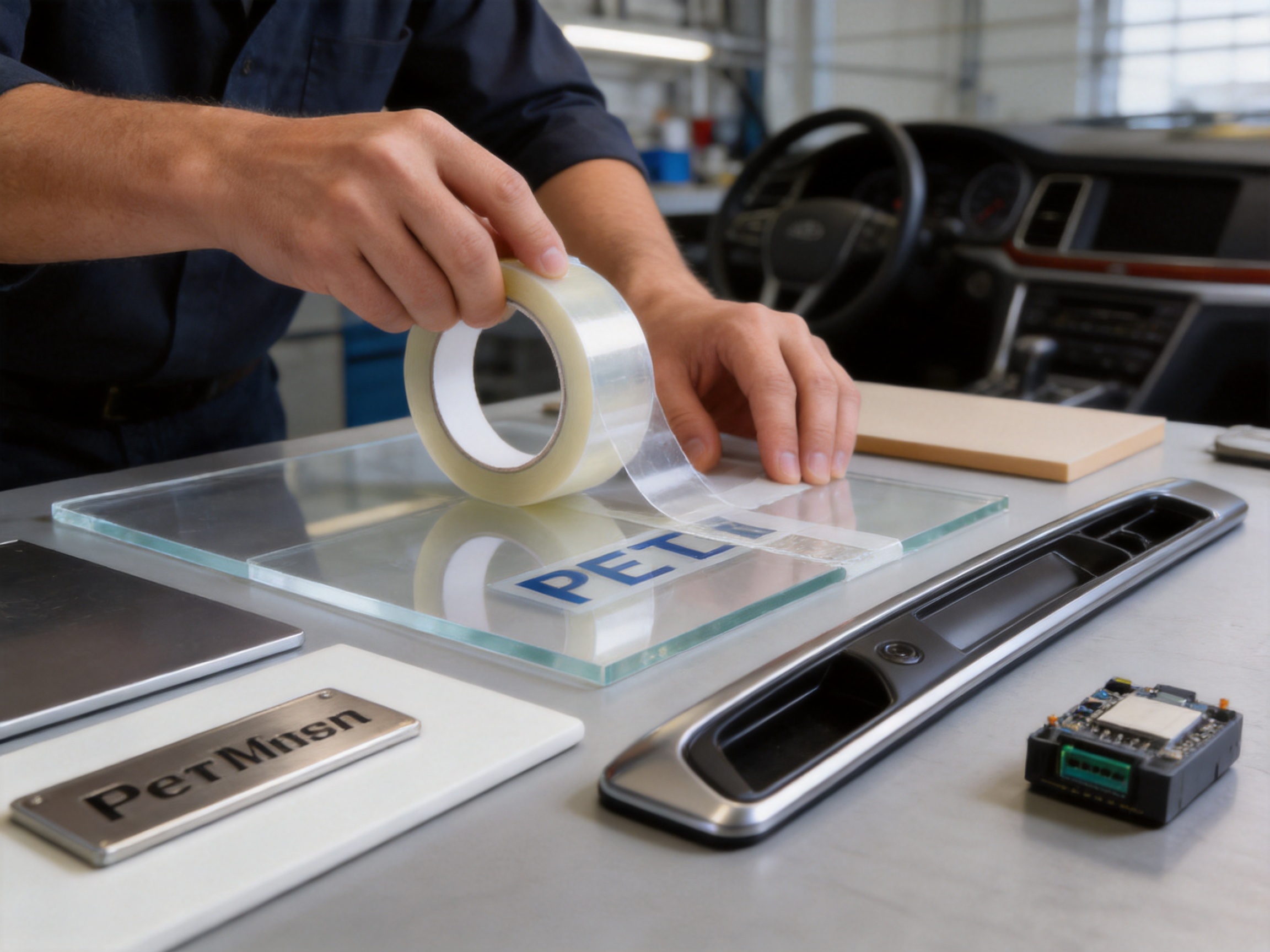
Sign manufacturers and nameplate producers often require a bonding method that is clean, discreet, and suitable for rigid substrates. PET double-sided tape can be applied to plastic, painted metal, aluminum, acrylic, and other materials after the surfaces have been prepared properly.
The transparent or translucent construction can reduce the visibility of the adhesive around the edges of a sign or label. A smooth film carrier can also help maintain a neat appearance beneath flat components. For outdoor signage, the complete construction must be evaluated for ultraviolet exposure, water, temperature changes, wind load, and the expansion rates of the sign and mounting surface.
Pre-laminated rolls or die-cut pieces can improve production efficiency. A converter may supply the tape in shapes that match the back of the nameplate, reducing manual trimming and helping operators position the product consistently.
Applications in Automotive Interior Components
Automotive interior assembly often requires clean, low-profile bonding for trim panels, decorative strips, emblems, and accessory components. PET double-sided tape can be considered for selected interior applications where the substrates and operating conditions are compatible with the adhesive.
The tape’s dimensional stability is useful when parts must remain aligned during installation. Its carrier strength also helps prevent tearing during application. Nevertheless, automotive environments can involve vibration, heat, humidity, plasticizer migration, and repeated temperature cycling. A product intended for these conditions should be tested on the actual substrates and under representative loads.
How PET Double-Sided Tape Compares with Other Tape Constructions
Compared with Paper-Based Double-Sided Tape
Paper-based double-sided tape may be economical and easy to tear by hand, making it suitable for light-duty applications and temporary work. However, paper carriers generally offer lower tensile strength and may be more vulnerable to moisture, stretching, or tearing during removal.
PET double-sided tape is a stronger choice when the tape must remain intact during handling, maintain a precise shape, or support a more demanding bond. The appropriate choice depends on the balance between cost, application speed, required strength, and environmental exposure.
Compared with Foam Double-Sided Tape
Foam tapes provide thickness, cushioning, and gap-filling capability. They can be valuable when two surfaces are uneven or when the bond must absorb some movement. However, foam may compress or expand, and its thickness can be unsuitable for low-profile assemblies.
PET double-sided tape is typically thinner and more dimensionally stable. It is appropriate for flat, close-fitting components where the user wants a strong adhesive layer without adding substantial bulk. It is not a universal replacement for foam tape, especially where large gaps or significant surface irregularities must be filled.
Compared with Transfer Adhesive
Transfer adhesive consists primarily of adhesive without a reinforcing carrier. It can provide excellent conformability and very thin bonding, but handling may be more difficult, especially for narrow strips, long lengths, or automated operations.
The PET carrier gives double-sided tape improved handling strength. This can be advantageous during die-cutting, placement, repositioning, and removal. The trade-off is that the tape may be less conformable than a carrierless adhesive film.
Compared with Mechanical Fasteners
Mechanical fasteners provide strong attachment and are useful when components must be removable, heavily loaded, or structurally secured. They may require holes, additional parts, tooling, and assembly time. They can also affect the appearance of the product.
PET double-sided tape offers a clean bonding alternative for suitable loads and substrates. It can simplify assembly and distribute stress over a larger area. It should not be used as the sole attachment method when the application involves safety-critical loads or conditions outside the tape’s tested capability.
Application Procedure for Best Results
Surface Preparation
Both substrates should be clean, dry, and free of dust, oil, grease, release agents, loose coatings, and fingerprints. Cleaning agents must be compatible with the surface. After cleaning, the surface should be allowed to dry completely before the liner is removed.
Some low-surface-energy plastics, powder-coated surfaces, textured materials, or contaminated metals may require additional treatment. Primer, abrasion, corona treatment, or another preparation method may improve adhesion, but these methods should be validated before production use.
Temperature and Application Conditions
Application is generally recommended at room temperature, approximately 15°C to 35°C. Applying the tape in a cold environment may reduce adhesive flow and initial tack. Excessive heat can change handling characteristics and may cause premature adhesion to tools or liners.
The tape and substrates should be conditioned in the application environment before bonding. This is particularly important when materials have been transported or stored in cold, hot, or humid conditions.
Placement and Pressure
Align the tape carefully before making full contact. Once the tape is positioned, apply firm and even pressure with a roller, squeegee, press, or clean hand tool. Pressure helps the adhesive wet the substrate and reduces small air pockets.
Do not touch the exposed adhesive unnecessarily. Finger oils and dust can reduce the effective bonding area. When the tape is supplied with a split liner or differential release liner, remove only the portion needed for the immediate step of the assembly.
Dwell Time and Loading
Initial adhesion develops quickly, but final bond strength may increase over time as the adhesive conforms to the substrate. Avoid applying heavy loads, peeling forces, or vibration immediately after installation unless the application has been validated for immediate use.
Where possible, allow a suitable dwell period before the bonded assembly is subjected to its full service load. The required time depends on the adhesive, substrate, temperature, pressure, and application geometry.
Storage, Handling, and Shelf Life
PET double-sided tape should be stored in a cool, dry place away from direct sunlight, heaters, open windows, chemical vapors, and excessive dust. A recommended storage environment is approximately 20°C to 30°C and 40% to 60% relative humidity.
Rolls should be stored upright or in the orientation recommended by the supplier. Avoid placing heavy objects on top of rolls, as pressure may deform the edges or create telescoping. Keep the original packaging closed until the material is ready for use.
Do not store the tape beside solvents, plasticizers, oils, or materials that may release contaminants. Temperature cycling and excessive humidity can influence liner release and adhesive behavior. If the product has been stored outside the recommended conditions, a production trial should be performed before use.
The typical shelf life is 12 to 24 months from the date of manufacture under recommended storage conditions. Older material may still appear normal but should be evaluated for adhesion, liner release, appearance, and processing behavior before being introduced into a critical application.
Customization and Supply Capabilities
Industrial users often require more than a standard roll. PET double-sided tape can be supplied in different widths, lengths, thicknesses, liner formats, and packaging configurations. Slitting can support narrow assembly lines, while sheets or die-cut pieces can simplify manual installation.
Customization may also involve adhesive selection. A high-tack grade may be appropriate for immediate grip, while another formulation may provide better long-term shear resistance or compatibility with a specific plastic. Transparent and translucent constructions can be selected according to appearance requirements.
Geruite’s experience across adhesive tapes, films, and strapping materials supports integrated sourcing for customers that purchase multiple packaging or bonding products. A supplier with a broad product portfolio can help coordinate tape selection with stretch film, strapping, carton sealing, and other packaging operations.
The company is located in Zhejiang Province, China, an important manufacturing region with established industrial supply chains. Its business covers research and development, production, and sales of packaging materials and high-performance tapes. The company reports annual output value exceeding RMB 60 million and maintains a quality-oriented approach from material procurement to final inspection.
For overseas customers, manufacturing scale and product range can support consolidated purchasing. Consistent communication about width, thickness, liner type, roll dimensions, packaging, labeling, and inspection requirements is essential for a successful supply program.
Why Manufacturing Discipline Creates a Competitive Advantage
In adhesive tape production, product quality is not determined by adhesive strength alone. A tape may have high peel adhesion but still perform poorly if its edges are uneven, its liner releases inconsistently, or its roll tension is unstable. Manufacturing discipline must address the complete product structure.
Geruite’s advantage is based on combining material knowledge with production control. The use of film carriers, adhesive coating, lamination, slitting, inspection, and packaging requires coordinated control across multiple stages. When each stage is managed carefully, customers receive a tape that is easier to process and more predictable in the field.
Quality control also reduces variation between batches. For customers running continuous assembly lines, batch consistency is important because changes in tack, thickness, or liner release can cause equipment adjustments, downtime, or rejected products. Reliable inspection and traceability help identify and manage these risks.
Another competitive advantage is application-oriented support. A tape should be selected according to the surface, load, temperature, aging requirements, and assembly method rather than by a single headline specification. A supplier that understands these factors can provide more useful recommendations and help reduce trial-and-error purchasing.
Selection Guide for Buyers
Before ordering PET double-sided tape, buyers should define the substrate materials. Important questions include whether the surfaces are metal, glass, acrylic, ABS, PVC, polycarbonate, painted material, powder coating, or another plastic. Surface energy and plasticizer content can strongly influence adhesion.
The required bonding area and load should also be considered. Peel, shear, tensile, vibration, and impact loads affect the design differently. A narrow strip may be sufficient for a lightweight label but unsuitable for a rigid panel exposed to repeated vibration.
Environmental conditions should be documented. Buyers should specify minimum and maximum temperature, humidity, ultraviolet exposure, chemical contact, cleaning agents, and expected service life. If the assembly will be exposed to high temperature or outdoor weather, a standard indoor product may not be sufficient.
Processing requirements are equally important. Determine whether the tape will be applied manually, by laminator, by roll-to-roll equipment, or as a die-cut component. Confirm the required width tolerance, roll diameter, core size, liner direction, splice policy, and packaging format.
Finally, request representative samples and perform trials using actual substrates. Test the tape after application and after environmental conditioning. A laboratory value measured on steel does not automatically predict performance on every plastic, coating, or textured surface.
Q&A: Frequently Asked Questions
What is the main advantage of PET double-sided tape?
The main advantage is the combination of strong double-sided adhesion with a high-tensile, dimensionally stable PET film carrier. The carrier resists stretching and tearing, helping the tape remain intact during application, conversion, and removal.
Is PET double-sided tape suitable for permanent bonding?
It can be suitable for permanent or semi-permanent bonding when the adhesive grade, substrate, load, and environment are compatible. The final decision should be based on actual application testing rather than the carrier material alone.
Can it be used on plastic surfaces?
Yes, PET double-sided tape can be used on selected plastic surfaces. However, plastics vary significantly in surface energy and may contain plasticizers or mold-release agents. Clean the surface carefully and test the selected adhesive grade before full production.
What is the typical thickness?
A representative specification is 90 ± 5 micrometers, but other thicknesses may be available. The correct thickness depends on the required bond line, surface smoothness, component tolerance, and converting process.
What color is PET double-sided tape?
The tape is typically transparent or translucent. The actual appearance may vary according to the PET film, adhesive, liner, and product construction.
How should the tape be stored?
Store it in a cool, dry place away from direct sunlight and chemical vapors. A recommended reference condition is approximately 20°C to 30°C with 40% to 60% relative humidity. Keep rolls in their original packaging until use.
How long is the shelf life?
The typical shelf life is approximately 12 to 24 months from the date of manufacture under recommended storage conditions. Material that has been stored improperly or beyond its stated shelf life should be tested before use.
Can the tape be die-cut?
Yes, the PET carrier provides useful handling strength for slitting and die-cutting. Die-cut performance depends on the tape thickness, liner construction, tool design, pressure, speed, and waste-removal method.
Is PET double-sided tape waterproof?
The PET film itself has good moisture resistance, but the complete tape construction is not automatically waterproof in every application. Edge exposure, adhesive chemistry, substrate condition, and continuous water immersion must be evaluated separately.
Can it withstand high temperatures?
Some adhesive variants can withstand short-term exposure from approximately -20°C to 120°C, but the exact limit depends on the product grade and service conditions. Continuous heat, load, and temperature cycling require specific testing.
How can adhesion be improved?
Clean and dry both substrates, remove oil and dust, apply the tape at an appropriate temperature, and use firm, even pressure. Allow sufficient dwell time before applying the full service load. For difficult substrates, consider surface treatment or a specialized adhesive grade.
How does PET tape compare with foam tape?
PET double-sided tape is generally thinner and more dimensionally stable, while foam tape provides greater thickness and gap-filling capability. PET is often preferred for flat, close-fitting assemblies; foam is often preferred for uneven surfaces or cushioning requirements.
Can a manufacturer provide custom widths and roll formats?
Custom widths, lengths, liner options, and packaging formats may be available depending on production requirements. Buyers should provide drawings or specifications covering width tolerance, core size, roll diameter, labeling, and packaging.
Conclusion
PET double-sided tape is a practical bonding solution for industrial users that need more than basic adhesion. Its polyester film carrier adds tensile strength, tear resistance, dimensional stability, and handling control, while the double-sided acrylic pressure-sensitive adhesive supports efficient bonding to many suitable substrates.
Compared with paper-based tape, it offers greater mechanical integrity. Compared with transfer adhesive, it is easier to handle and convert. Compared with foam tape, it provides a thinner and more stable construction for flat assemblies. These advantages make it suitable for electronics, signage, nameplates, industrial parts, acrylic panels, plastic components, metal assemblies, and automotive interior applications.
Performance depends on the complete system: adhesive formulation, PET thickness, liner design, surface preparation, application pressure, temperature, load, and storage conditions. Buyers should therefore select the product according to actual application requirements and verify performance through representative trials.
With experience in adhesive tapes, films, and strapping products, Zhejiang Geruite Packaging Materials Co., Ltd. offers a manufacturing platform designed to support both standard and customized requirements. Its emphasis on raw material control, coating, lamination, slitting, testing, and final inspection helps provide stable products for customers seeking dependable packaging and bonding materials.
For companies that value clean assembly, reliable handling, and consistent production performance, PET double-sided tape is a strong candidate for replacing less stable bonding methods. Properly selected and correctly applied, it can improve process efficiency while supporting the quality and appearance of the finished product.
References
GB/T 7125-2014, Test Method for Thickness of Pressure-Sensitive Adhesive Tapes.
GB/T 4852-2002, Pressure-Sensitive Adhesive Tapes—Determination of Initial Adhesion by Inclined Plane Method.
GB/T 2792-1998, Measurement of Peel Adhesion of Pressure-Sensitive Adhesive Tapes.
GB/T 2792-2014, Measurement of Peel Adhesion of Pressure-Sensitive Adhesive Tapes.
GB/T 4851-2014, Measurement of Holding Power of Pressure-Sensitive Adhesive Tapes.
Pressure-Sensitive Tape Council, Technical Principles of Pressure-Sensitive Adhesives.
General technical guidance for polyester film carriers, acrylic pressure-sensitive adhesives, release liners, and industrial adhesive tape converting.
Product: PET double-sided tape


CONTACT DETAILS
- Address:No. 241, Yaojiafan, Zhangpanqiao, Shushan Street, Xiaoshan District, Hangzhou City, Zhejiang Province, China
- TEL:+86-0571-83175630
- Phone:+86-13336160217
- Email:anqiaocun@163.com
PRODUCTS
NEWS CENTER
MOBILE TERMINAL
Copyright© Zhejiang Geruite Packaging Materials Co., Ltd. All Rights Reserved.
Privacy Wholesale industrial packaging tape Manufacturers