


 English
  Español
  عربى
عربى 
0.014 mm Ordinary Kraft Paper Tape for Reliable Industrial Packaging
Content
- 1 1. Product Overview
- 2 2. Construction and Material Design
- 3 3. Core Performance Advantages
- 4 4. Advantages Compared with Common Packaging Tape Alternatives
- 5 5. Applications in Logistics and E-Commerce
- 6 6. Warehouse, Office, and Industrial Uses
- 7 7. Manufacturing Process and Quality Control Strengths
- 8 8. Company Manufacturing and Service Strengths
- 9 9. Customization Possibilities
- 10 10. Correct Application Practices
- 11 11. Storage and Shelf-Life Protection
- 12 12. Purchasing Considerations for Industrial Buyers
- 13 13. Operational and Environmental Benefits
- 14 14. Why Choose a Specialized Packaging Material Manufacturer
- 15 15. Frequently Asked Questions
- 15.1 15.1 What is the main use of this kraft paper tape?
- 15.2 15.2 What does 0.014 mm refer to?
- 15.3 15.3 Can the tape be torn by hand?
- 15.4 15.4 Is the tape suitable for plastic or metal?
- 15.5 15.5 Is the tape waterproof?
- 15.6 15.6 Can the tape be customized?
- 15.7 15.7 Can it replace reinforced kraft paper tape?
- 15.8 15.8 What storage conditions are recommended?
- 15.9 15.9 What causes edge lifting?
- 15.10 15.10 Does the company supply other packaging products?
- 16 16. Conclusion
- 17 References
- 18 Product: 0.014MM Thickness Ordinary kraft paper tape
Packaging tape is a small but essential component of modern logistics. It holds cartons closed, protects products during movement, supports warehouse organization, and helps businesses present a neat and professional package to customers. When a tape is selected poorly, even a well-designed carton can open, split, or lose its structural integrity during storage and transportation. For this reason, packaging operations require a tape that combines dependable adhesion, practical handling, suitable strength, and consistent manufacturing quality.
The 0.014 mm Ordinary Kraft Paper Tape is designed as an economical and reliable solution for carton sealing, parcel fixing, office packaging, warehousing, and light industrial applications. It uses natural kraft paper as its backing material and is coated with a pressure-sensitive adhesive formulated to provide high initial tack. The result is a practical paper-based tape that bonds quickly to corrugated cardboard and other paper surfaces while remaining easy to tear by hand.
Unlike many conventional plastic packaging tapes, this kraft paper tape provides a natural appearance and a paper-based construction that supports recycling-oriented packaging programs. Its thin 0.014 mm structure helps reduce unnecessary material use while preserving the performance required for ordinary carton sealing. It is particularly suitable for companies that need dependable packaging performance without the cost or visual characteristics of heavier specialty tapes.
This article examines the product’s construction, performance, applications, production considerations, quality advantages, storage recommendations, customization possibilities, and the manufacturing strengths of Zhejiang Geruite Packaging Materials Co., Ltd. It also explains how the tape compares with common alternatives and why it can be an effective choice for logistics providers, warehouses, e-commerce sellers, offices, and industrial users.
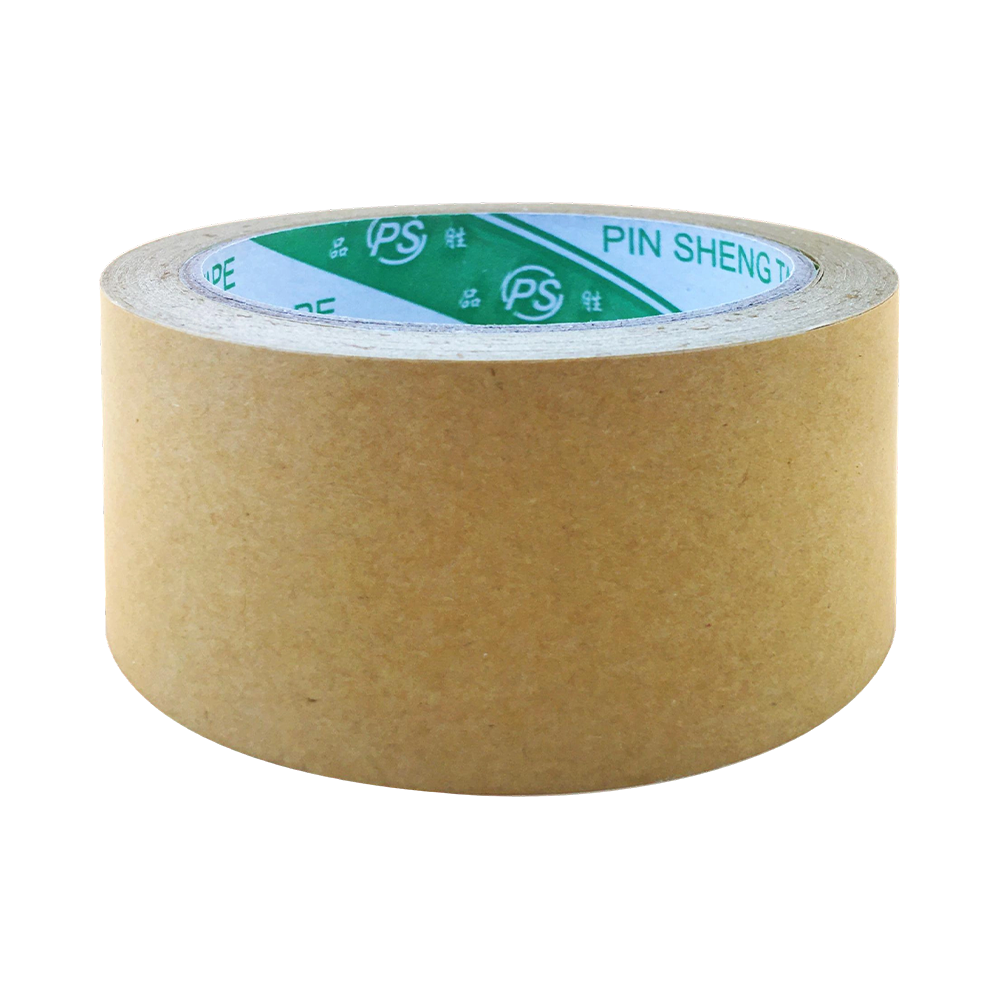
0.014MM Thickness Ordinary kraft paper tape
1. Product Overview
Ordinary kraft paper tape is a self-adhesive packaging material made from a natural kraft paper backing and a pressure-sensitive adhesive layer. The kraft paper provides the body of the tape, while the adhesive creates the bond between the tape and the package surface. Because the tape is intended primarily for paper-based packaging, its performance is optimized for corrugated cartons, paperboard, envelopes, document packages, and similar porous or semi-porous substrates.
The product has a nominal thickness of 0.014 mm. This lightweight construction is suitable for users who want a low-profile packaging tape that does not add excessive bulk to the package. It can be supplied in common widths such as 25 mm, 50 mm, and 60 mm, with additional sizes available according to customer requirements. Common roll lengths include 20 m and 50 m, while other lengths can be discussed for specific packaging equipment or application needs.
The tape normally has a natural kraft color. This appearance gives cartons a simple, professional, and environmentally conscious look. Depending on order requirements, customization options may include printed graphics, logos, wording, or color treatment. Customized kraft paper tape can therefore serve both a functional packaging purpose and a branding purpose.
| Parameter | Product Information |
|---|---|
| Product type | Ordinary kraft paper packaging tape |
| Backing material | Natural kraft paper |
| Nominal thickness | 0.014 mm |
| Common widths | 25 mm, 50 mm, 60 mm, and other customizable sizes |
| Common lengths | 20 m, 50 m, and other customizable lengths |
| Adhesive type | Rubber-based or hot-melt pressure-sensitive adhesive, depending on production specification |
| Standard color | Natural kraft |
| Primary application | Carton sealing, parcel fixing, paper packaging, and office use |
| Tearing method | Hand-tearable for convenient manual application |
2. Construction and Material Design
2.1 Natural Kraft Paper Backing
The backing is manufactured from natural kraft paper, a paper material recognized for its practical strength, textured appearance, and compatibility with paper packaging. Kraft paper has a useful balance of flexibility and resistance to ordinary stretching. This allows the tape to conform to carton surfaces while maintaining enough integrity to remain in place during normal handling.
The paper backing also provides a surface that is visually compatible with corrugated boxes. Instead of creating a sharp contrast between a brown carton and a glossy plastic tape, kraft paper tape can create a more unified package appearance. This is valuable for businesses that want a simple, natural, or environmentally responsible presentation.
Although the tape is thin, the backing is designed for everyday packaging conditions. It can withstand normal abrasion and handling associated with parcel movement, warehouse storage, and carton consolidation. It is not intended to replace reinforced strapping or heavy-duty filament tape in high-load applications, but it provides an efficient solution for ordinary box sealing and lightweight package fixation.
2.2 Pressure-Sensitive Adhesive
The adhesive layer is formulated to bond when pressure is applied. This means the user can place the tape on a carton seam and activate the bond by pressing the tape against the surface. High initial tack helps the tape attach quickly, which is important in fast-paced packing operations where packages must be sealed immediately after filling.
Depending on the required production specification, the adhesive may be rubber-based or hot-melt pressure-sensitive adhesive. These adhesive systems are commonly used in packaging tape applications because they can provide a practical combination of quick bonding, handling convenience, and stable performance on cardboard and paper surfaces.
Adhesive performance depends not only on the formulation but also on the condition of the surface, application pressure, temperature, humidity, and storage period. The best results are achieved when the carton surface is clean, dry, and free from oil, dust, loose fibers, or moisture. Correct application conditions allow the adhesive to make closer contact with the paper fibers and improve the reliability of the seal.
2.3 Thin 0.014 mm Profile
The 0.014 mm thickness gives the product a lightweight profile that can be advantageous in high-volume packaging operations. A thinner tape can occupy less space in storage, add less weight to each package, and support efficient roll handling. It can also produce a clean appearance without creating a bulky ridge along the carton seam.
Material efficiency is particularly important for businesses that seal thousands of cartons each day. Even a small reduction in material usage can affect purchasing costs, warehouse space, transport weight, and waste volume over time. The tape is therefore suitable for companies looking for a balance between basic packaging performance and controlled material consumption.
Thickness should always be matched to the intended application. The product is designed for ordinary carton sealing and paper-based packaging rather than the stabilization of exceptionally heavy goods, sharp-edged loads, or packages exposed to severe outdoor conditions. Selecting the correct tape for the actual load and environment is essential for safe packaging operations.
3. Core Performance Advantages
3.1 High Initial Tack
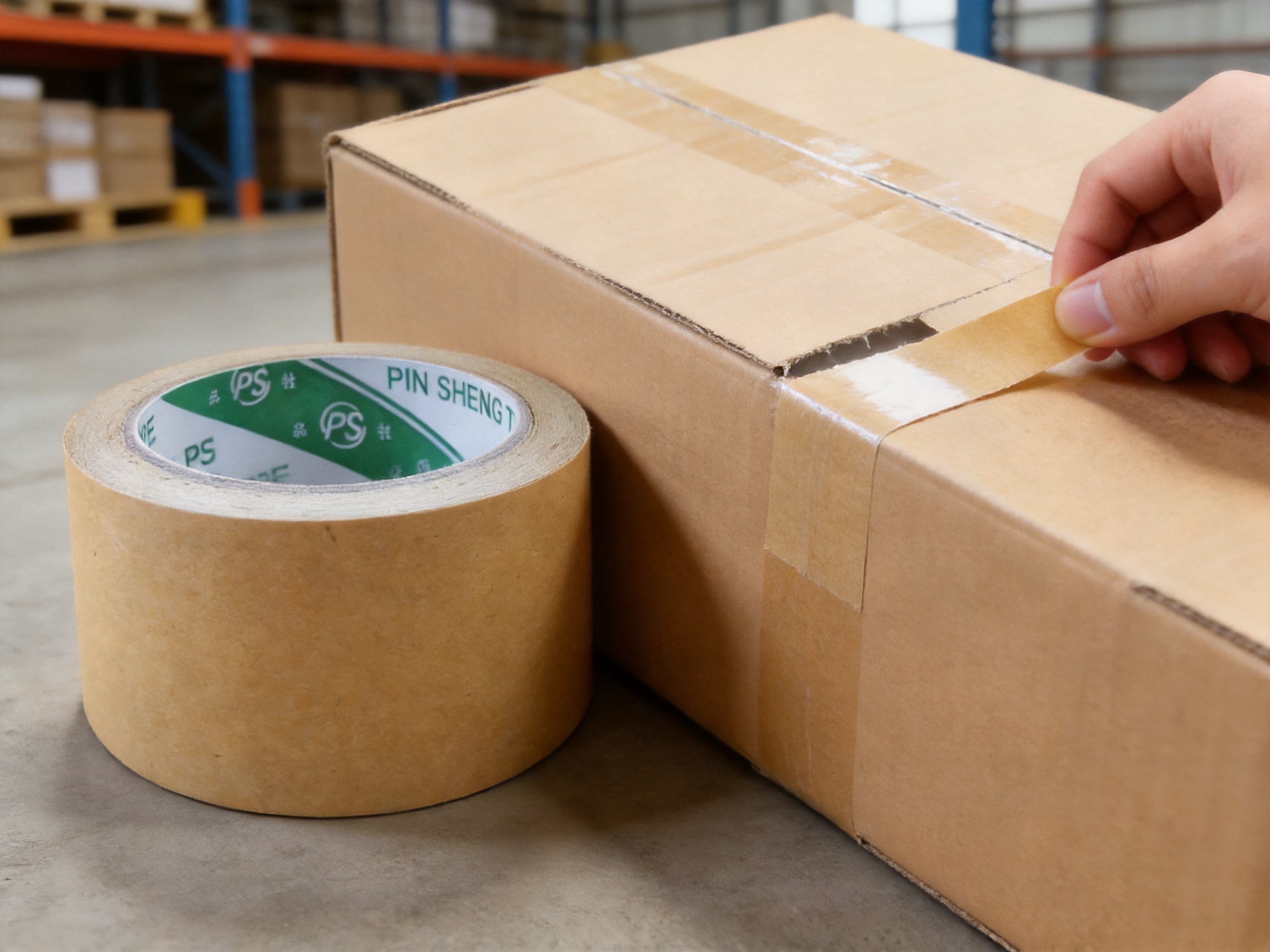
One of the main advantages of the tape is its high initial tack. When applied to a clean cardboard surface, the adhesive is able to create a firm bond with limited waiting time. This supports fast carton closure and helps prevent the tape from lifting at the edges immediately after application.
High initial tack is especially useful in e-commerce fulfillment centers, express delivery operations, and warehouses where workers must seal packages continuously. A tape that requires repeated pressing or extended curing can slow the packing line. By contrast, a high-tack tape allows the operator to close the carton, apply pressure along the seam, and move the package to the next stage with confidence.
The adhesive also helps compensate for the slightly textured surface of corrugated board. Cardboard is not perfectly smooth, and its fibers can vary from one carton to another. A suitable pressure-sensitive adhesive can flow into small surface irregularities and create a more complete contact area.
3.2 Easy Hand Tearing
The tape is designed for easy hand tearing, reducing the need for scissors, knives, or dedicated cutting equipment. This is a major convenience in small offices, workshops, fulfillment stations, and warehouses that need to seal packages at different locations.
Hand tearing improves flexibility because operators can cut the required length directly from the roll. It also reduces the number of tools present at the packing station. Fewer cutting tools can simplify work organization and lower the possibility of misplaced equipment or accidental injury associated with sharp blades.
The ability to tear the tape by hand in different directions is also useful for temporary fastening, labeling support, document packaging, and craft-related tasks. Users can quickly adjust the length without interrupting the workflow to find a cutter.
3.3 Durable Paper Backing
Although the tape is lightweight, its kraft paper backing provides useful resistance to ordinary stretching and abrasion. Once applied across a carton seam, the backing helps maintain the visual and physical continuity of the seal during routine handling.
Durability is important because packages are commonly moved several times before reaching the final recipient. A carton may pass through filling, palletizing, loading, unloading, sorting, shelving, and delivery. During these stages, the tape can experience rubbing, pulling, and contact with other packages. A suitable paper backing helps the seal remain intact under normal shipping conditions.
The tape is not positioned as a replacement for reinforced strapping, metal tape, or heavy-duty industrial binding products. Instead, its strength is its suitability for ordinary packaging tasks where users need a balanced product that is easy to apply, economical, and reliable.
3.4 Recyclable-Oriented Material Choice
The kraft paper construction aligns with the growing interest in paper-based and recyclable-oriented packaging systems. Many businesses are reviewing the amount of plastic used in packaging and are looking for alternatives that provide a more natural material profile.
Paper tape can be attractive for cartons that are intended to enter paper recycling streams. Its paper backing is compatible with the appearance and general material identity of corrugated boxes. Recycling outcomes can depend on local facilities, adhesive composition, contamination, and sorting practices, so users should evaluate the requirements of their own recycling system. Nevertheless, a kraft paper tape offers a practical step toward a more paper-focused packaging approach.
3.5 Economical Packaging Performance
The product is designed to provide essential carton-sealing performance without the complexity or cost of specialized reinforced tapes. Its common sizes and straightforward structure make it suitable for routine purchasing and high-volume consumption.
For many businesses, the most important packaging requirements are a secure seal, fast application, easy handling, and predictable supply. The ordinary kraft paper tape addresses these requirements while maintaining a practical price-oriented product concept. It can be used as a standard consumable across multiple departments, reducing the need to stock several different tapes for simple paper-based tasks.
4. Advantages Compared with Common Packaging Tape Alternatives
4.1 Compared with Conventional Plastic Carton Tape
Plastic carton tapes, including common polypropylene-based tapes, are widely used because they can offer good tensile strength and resistance to moisture. However, they may produce a glossy or visually contrasting appearance on kraft cartons. Some users also prefer to reduce plastic content or avoid combining paperboard with unnecessary plastic materials.
The kraft paper tape provides a more natural appearance and a paper-based backing. It can be especially attractive for brands that emphasize simple packaging, sustainable design, handmade goods, organic products, or environmentally conscious logistics. Its surface can also be suitable for certain writing, printing, or labeling applications when the selected specification supports those requirements.
Plastic tape may be preferable in wet environments or on certain smooth surfaces, while kraft paper tape is optimized for dry paper-based packaging. The appropriate choice depends on the specific conditions, but the paper option offers clear advantages where recyclability-oriented presentation and carton compatibility are priorities.
4.2 Compared with Reinforced Kraft Paper Tape
Reinforced kraft paper tape normally contains additional fibers or strengthening elements and is intended for heavier cartons or demanding sealing conditions. It can provide greater tensile performance, but it may also be more expensive, less flexible, and more difficult to tear by hand.
The 0.014 mm ordinary kraft paper tape is a more economical option for normal cartons, lightweight parcels, office packages, and general warehouse work. Users do not need to pay for reinforcement when the package does not require heavy-duty support. This makes the product suitable for businesses that want to match tape performance to actual packaging requirements.
4.3 Compared with Masking Tape
Masking tape is designed mainly for temporary holding, painting protection, labeling, and light bundling. It may not provide the same carton-sealing purpose as a dedicated packaging tape. Kraft paper packaging tape is formulated specifically for adhesion to cardboard and paper surfaces, making it more appropriate for parcel closure and box seam sealing.
While some masking tapes can be removed more easily, they may not offer the same combination of initial tack and packaging durability. The ordinary kraft paper tape is a better choice when the primary goal is to keep a carton securely closed through normal logistics handling.
4.4 Compared with Stretch Film
Stretch film is used to wrap pallets, bundle products, and provide external load stabilization. It cannot replace carton tape for closing individual box flaps. Kraft paper tape and stretch film serve different functions and can be used together in a complete packaging system.
For example, a warehouse may use kraft paper tape to seal each carton and stretch film to stabilize several cartons on a pallet. This combination provides internal package closure and external unit-load protection without using one material for a task it was not designed to perform.
4.5 Compared with Strapping Band
PP or PET strapping is designed to apply tension around heavy cartons, pallets, or bundled products. It offers a different level of load containment and is often applied with tensioning tools or strapping machines. Kraft paper tape is faster and simpler for ordinary carton seams, but it should not be used as a substitute for structural strapping on heavy or unstable loads.
The advantage of the kraft tape is convenience. It can be applied manually, torn without cutting tools, and used at any workstation. Strapping is more suitable when the load requires compression, pallet stabilization, or resistance to substantial outward force.
5. Applications in Logistics and E-Commerce
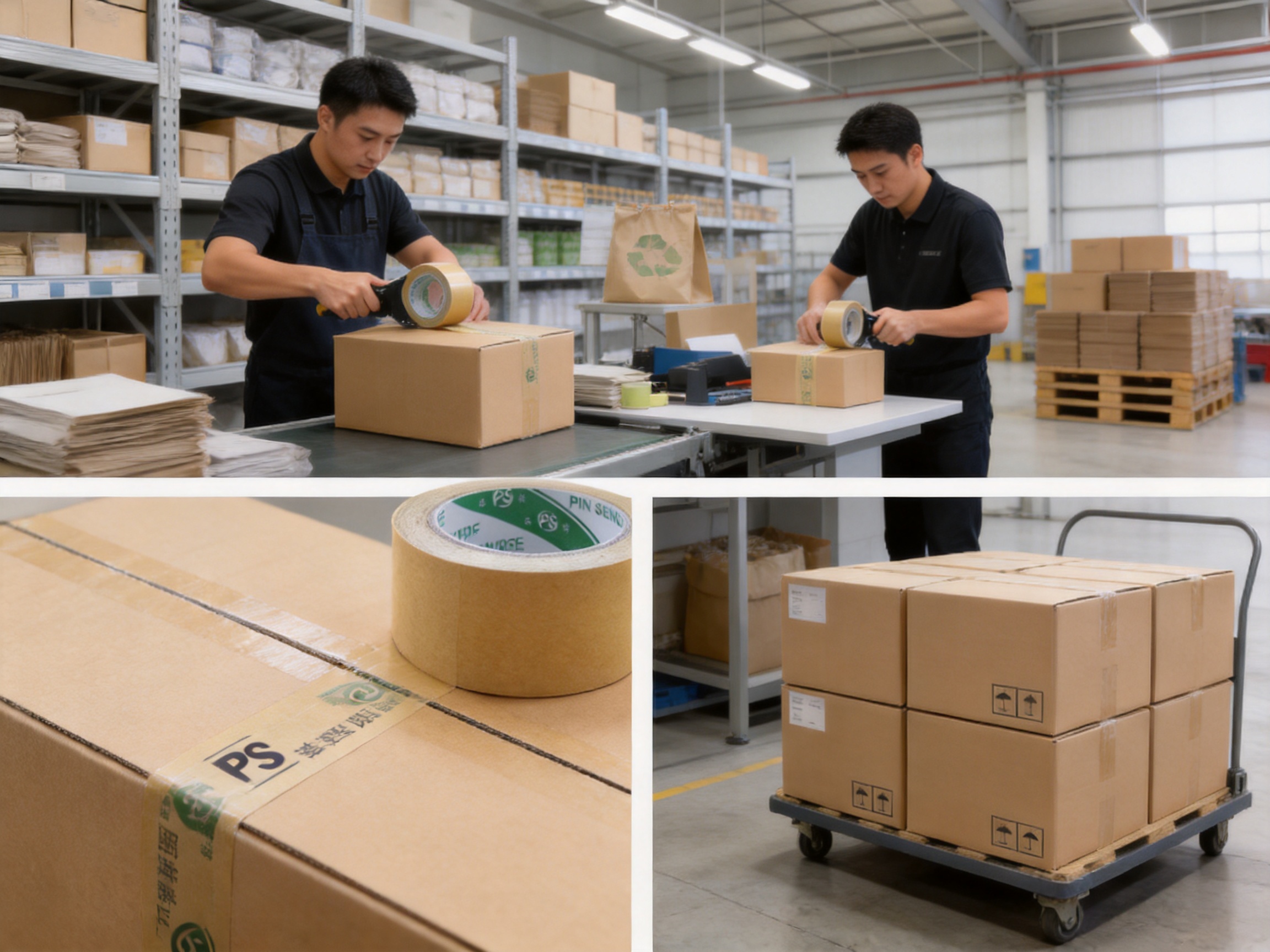
Logistics and express delivery companies need packaging consumables that support speed, consistency, and reliable sealing. The ordinary kraft paper tape can be applied to cartons of different sizes and used for standard parcel preparation. Its high initial tack helps workers close cartons quickly, while its hand-tearable construction reduces dependency on cutting tools.
In e-commerce fulfillment, packaging stations often process products with different dimensions every day. A flexible roll of kraft paper tape can be used for small parcels, medium shipping boxes, document cartons, and internal package grouping. The natural appearance also provides a clean presentation for online orders delivered directly to consumers.
The tape is suitable for sealing the central seam of a carton, reinforcing a light side seam, closing return packages, or securing paper inserts and documentation. It may also be used to cover temporary labels or hold protective paper in position during transportation.
For logistics operations, correct surface preparation is important. Dust from corrugated board can reduce adhesion, and damp cartons can weaken the bond. Operators should apply the tape with enough pressure to ensure full contact, especially at the ends of the strip and across uneven carton flaps.
6. Warehouse, Office, and Industrial Uses
6.1 Warehouse Management
In warehouses, the tape can be used for carton sealing, temporary fastening, label covering, sample identification, and internal packaging fixation. Its natural color allows it to blend with cartons, while its hand-tearable structure enables quick use during stock preparation or repacking.
Warehouse employees may need to reopen and reseal packages during inspection, picking, inventory counting, or order consolidation. A manual tape that can be applied without specialized equipment provides flexibility in these situations. It is also useful for short-term fastening where permanent industrial bonding is unnecessary.
6.2 Office Packaging
Offices can use the tape to seal document envelopes, archive boxes, small parcels, stationery packages, and internal shipments. Because the tape is easy to tear, it is convenient for occasional users who do not maintain a dedicated packaging station.
The kraft appearance can create a neat and understated look on paper envelopes and cartons. It can also support craft projects, gift packaging, paper model work, and general maintenance tasks where a paper-based adhesive tape is preferred.
6.3 Industrial Auxiliary Packaging
In light industrial environments, the tape can support internal material fixation, component grouping, lightweight material splicing, and temporary protection during production or transfer. It is useful when materials must be held together briefly before entering a more permanent packaging or assembly process.
Industrial users should evaluate the surface, temperature, vibration, load, and storage duration before selecting the tape. The product is intended primarily for paper surfaces and ordinary packaging conditions. Heavy mechanical loads, extreme temperatures, prolonged outdoor exposure, and smooth non-porous materials may require a different adhesive tape or a mechanical fastening method.
7. Manufacturing Process and Quality Control Strengths
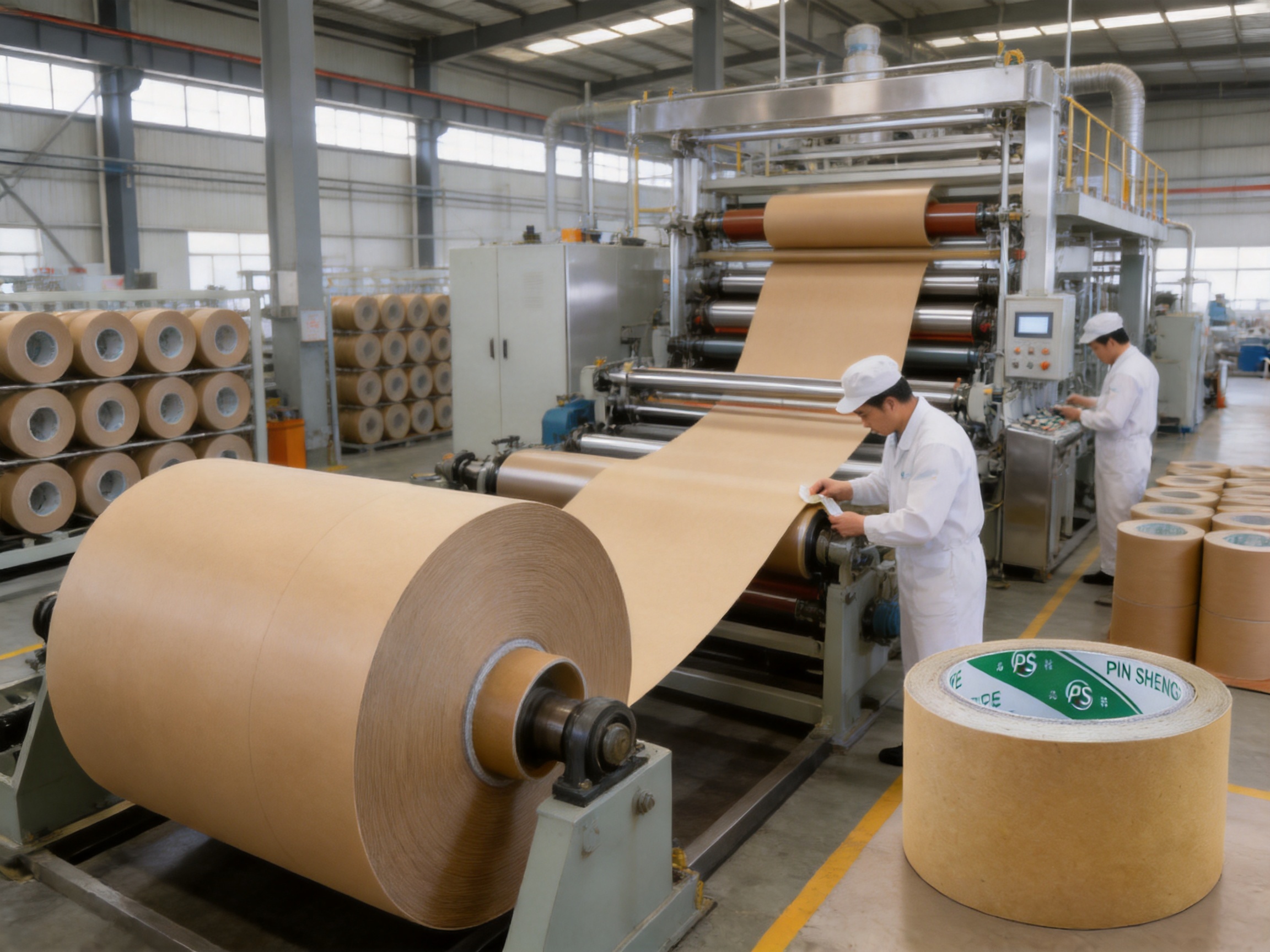
A packaging tape’s final performance depends on more than its listed thickness and width. The quality of the kraft paper, adhesive preparation, coating uniformity, drying or cooling conditions, slitting accuracy, rewinding tension, and final inspection all influence how the tape performs in actual use. Zhejiang Geruite Packaging Materials Co., Ltd. focuses on the research, development, production, and sales of packaging tapes and related materials, including BOPP tape, kraft paper tape, masking tape, high-temperature-resistant tape, metal tape, PE stretch film, PP strapping, and PET strapping.
7.1 Raw Material Management
Stable raw materials are the foundation of stable tape production. The company’s quality approach begins with material procurement and selection. Kraft paper must provide the required balance of flexibility, surface consistency, and ordinary handling strength. Adhesive materials must be suitable for pressure-sensitive coating and compatible with the intended application.
Material control helps reduce variation between production batches. When the backing thickness, adhesive properties, and roll structure remain consistent, customers can operate their packaging lines with fewer adjustments. This is particularly important for wholesalers and industrial buyers who require repeat orders with predictable performance.
7.2 Adhesive Coating Control
Adhesive coating is a critical production stage. The coating must be applied evenly across the kraft paper backing so that the tape provides consistent adhesion from one edge to the other. Uneven coating can lead to weak areas, excessive adhesive transfer, poor unwinding, or inconsistent tack.
Controlled coating conditions help maintain the intended product specification. Production parameters may include coating weight, line speed, temperature, viscosity, drying or cooling conditions, and web tension. Managing these variables supports a uniform adhesive layer and helps protect the balance between strong bonding and practical handling.
7.3 Slitting and Rewinding
After coating, the jumbo material is converted into customer-ready rolls through slitting and rewinding. Accurate slitting is important because uneven edges can create application problems, waste, or poor package appearance. Rewinding tension must also be controlled to ensure that rolls are neither too loose nor excessively compressed.
Well-formed rolls unwind smoothly and maintain a stable shape during storage and use. This is valuable for both manual users and customers who place rolls into dispensers or semi-automatic packaging equipment. Consistent roll dimensions also make it easier for distributors to manage cartons, shelves, and inventory systems.
7.4 Inspection and Final Verification
Quality control should continue through final inspection and packing. Typical checks for kraft paper tape may include backing appearance, thickness, width, length, roll formation, edge quality, adhesive coverage, initial tack, unwinding behavior, and bonding performance on representative paper surfaces.
Final verification helps identify issues before the product leaves the factory. It also supports customer confidence by ensuring that the supplied tape corresponds with the agreed specification. For customized orders, inspection can include printed pattern alignment, color consistency, logo clarity, and roll labeling.
7.5 Integrated Packaging Material Capability
A significant strength of the company is its broader product range. In addition to kraft paper tape, it produces or supplies multiple packaging categories, including adhesive tapes, shrink film, stretch film, and strapping products. This integrated capability allows customers to source several packaging materials from one experienced supplier.
A single-source approach can simplify communication, purchasing, shipment coordination, and product matching. For example, a customer may require kraft paper tape for carton seams, PE stretch film for pallet wrapping, and PET or PP strapping for load stabilization. A supplier with knowledge of all these materials can help organize a more coordinated packaging solution.
8. Company Manufacturing and Service Strengths
Zhejiang Geruite Packaging Materials Co., Ltd. is located in Zhejiang Province, China, an important manufacturing region with developed industrial infrastructure and broad supply-chain resources. The company has focused on packaging materials since its establishment and has developed a product portfolio serving logistics, express delivery, household goods, electronics, construction and decoration, industrial manufacturing, cargo stabilization, and packaging protection.
The company emphasizes product quality as a core operating principle. Its production philosophy covers the full process from raw material procurement to manufacturing and final inspection. This approach is important for adhesive products because small changes in material quality or coating conditions can affect tack, adhesion, unwinding, and storage stability.
Advanced production equipment supports the company’s ability to manufacture different packaging products and specifications. Equipment capability is valuable not only for production volume but also for repeatability. Customers purchasing packaging tape in commercial quantities need rolls that remain consistent across batches, especially when the tape is distributed to multiple warehouses or used in standardized packing procedures.
The company reports an annual output value exceeding RMB 60 million, reflecting a substantial operating base and experience in the packaging materials sector. Its product range and manufacturing focus allow it to serve both routine packaging needs and customized requirements.
Service is another important part of the company’s value. Customers may need assistance with width, length, printing, color, adhesive selection, packing format, or product matching. A supplier that understands the relationship between the product specification and the application can help buyers avoid over-specification, under-specification, and unnecessary operating costs.
For international customers, supplier reliability includes communication, production organization, order follow-up, packing protection, and delivery coordination. These factors can influence the total purchasing experience just as much as the tape’s basic performance. A professional manufacturing partner can help customers establish a stable supply of frequently used packaging consumables.
9. Customization Possibilities
The standard product is supplied in natural kraft color and common roll sizes, but packaging operations often have specific requirements. Width and length can be customized to suit carton dimensions, dispenser designs, packing methods, or purchasing plans.
Custom printing is another possible option. Printed kraft paper tape can display a company name, handling instruction, warning message, recycling statement, product slogan, or logo. This can help reinforce brand identity while the package is being transported through warehouses, delivery networks, and customer-facing channels.
Color customization may also be considered when users need to distinguish product lines, departments, package categories, or handling instructions. However, customization should be evaluated against the intended adhesive and printing performance. Customers should confirm the required artwork, repeat distance, color expectations, roll dimensions, and packaging method before production.
For large-volume buyers, customized specifications can improve operational efficiency. A roll length selected for a specific packing process may reduce roll changes. A width matched to the carton seam may improve coverage. A printed message may reduce the need for additional labels. These benefits can make customized tape more than a visual branding product; it can become part of a coordinated packaging workflow.
10. Correct Application Practices
10.1 Surface Preparation
Before applying the tape, the carton or paper surface should be dry, clean, and free from oil, dust, loose particles, and excessive moisture. Corrugated boxes should be stored in a condition that prevents them from absorbing water or becoming soft. Dirty or damp surfaces can prevent the adhesive from forming sufficient contact.
10.2 Application Pressure
The tape should be pressed firmly along the full contact area. Particular attention should be given to the beginning and end of the strip, because edge lifting often begins where the tape has not been fully pressed down. A hand roller or firm manual pressure can improve contact on rough or uneven carton surfaces.
10.3 Temperature and Humidity
The recommended application environment is approximately 15°C to 35°C with relative humidity of 40% to 70%. These conditions help maintain practical adhesive performance and reduce the risk of poor bonding caused by cold, excessive moisture, or extreme dryness.
When the tape has been stored in a low-temperature environment, allowing it to return gradually to a moderate temperature may improve application performance. Pre-warming the tape or the packaging area can be useful in colder conditions, provided that the material is not exposed to excessive heat.
10.4 Surface Compatibility
The product is designed mainly for paper-based surfaces. It is suitable for corrugated cardboard, paperboard, envelopes, and related packaging materials. Long-term fixation on smooth, non-porous materials such as plastic or metal is not recommended unless the application has been specifically tested and approved.
Where plastic, metal, glass, coated board, dusty recycled cardboard, or other unusual substrates are involved, users should conduct a small adhesion test before beginning full production. Testing helps confirm whether the tape is appropriate for the surface and the expected storage or transport conditions.
11. Storage and Shelf-Life Protection
Proper storage helps preserve the adhesive and backing. Rolls should be kept in a cool, dry place away from direct sunlight, high heat, rain, and condensation. Excessive heat can accelerate adhesive aging, while moisture can affect the paper backing and carton compatibility.
Packaging tape should remain in its original protective packaging until it is ready for use. Rolls should be stored in an orderly position to prevent crushing, edge damage, or deformation. Heavy objects should not be placed on top of the tape cartons.
Warehouse inventory should follow a first-in, first-out approach whenever practical. This helps reduce unnecessary storage time and ensures that older stock is used before newer stock. Before use, operators should inspect rolls for visible damage, moisture exposure, abnormal odor, adhesive contamination, or deformation.
Storage conditions are especially important for paper-based tape because the backing can respond to changes in humidity. Maintaining a stable indoor environment helps preserve roll shape, unwinding behavior, and application consistency.
12. Purchasing Considerations for Industrial Buyers
Industrial buyers should begin by identifying the actual packaging task. Important questions include the carton material, package weight, sealing method, required holding period, transportation route, storage environment, and whether the package will be exposed to moisture or extreme temperatures.
Buyers should then confirm the required tape width and roll length. A 50 mm or 60 mm width may be appropriate for many standard carton seams, while narrower 25 mm tape may be useful for lighter packages, document envelopes, or small-item applications. The preferred roll length depends on consumption rate, dispenser capacity, storage limitations, and the desired frequency of roll replacement.
Thickness should also be evaluated in relation to the application. The 0.014 mm product is intended for ordinary packaging and lightweight fixation. If the cartons are unusually heavy, the contents create strong outward pressure, or the package will experience severe handling, a reinforced tape or strapping solution may be more appropriate.
Buyers should request confirmation of adhesive type, backing material, production tolerance, packaging format, and customization details. Sample testing under actual conditions is recommended before large-scale adoption. Testing can include carton closure, edge lifting, repeated handling, temperature exposure, storage duration, and removal or re-opening requirements.
| Buyer Requirement | Recommended Evaluation |
|---|---|
| Fast manual packing | Check initial tack, hand-tear performance, and unwinding behavior |
| High-volume carton sealing | Confirm roll length, dispenser compatibility, and batch consistency |
| Paper-based sustainability goals | Review kraft backing, packaging system compatibility, and local recycling conditions |
| Brand presentation | Evaluate natural color, printing quality, artwork, and logo visibility |
| Heavy or unstable packages | Consider reinforced tape, PP strapping, PET strapping, or stretch film in addition to tape |
| Cold or humid storage | Conduct application tests under the expected environmental conditions |
| Custom packaging line | Match tape width, length, core, and roll dimensions to equipment requirements |
13. Operational and Environmental Benefits
The environmental value of packaging tape should be considered as part of the entire packaging system. The kraft paper backing supports a paper-oriented package design and can reduce reliance on plastic tape for applications where plastic resistance is not necessary. Its natural appearance can also help communicate a more responsible packaging intention to customers.
The product’s thin construction may contribute to material efficiency when it is correctly matched to the application. Lower material use can reduce the total amount of packaging consumables required over a large number of shipments. However, material reduction should never compromise the security of the package. A failed seal can cause product damage, returns, repacking, and additional waste.
Hand-tearability can also provide operational benefits. When workers do not need to use a separate cutting tool for every strip, the packing station can become simpler and faster. Reduced tool dependence may help lower small equipment costs and improve workflow organization.
Businesses should assess local recycling rules before making specific recycling claims. Paper backing, adhesive type, printing ink, carton contamination, and recycling facility processes can all affect the final outcome. The most reliable approach is to combine suitable paper-based materials with clean packaging practices and guidance from the relevant recycling system.
14. Why Choose a Specialized Packaging Material Manufacturer
Buying tape from a specialized packaging material manufacturer can provide advantages over selecting an unverified general supplier. A specialized manufacturer understands adhesive coating, paper backing behavior, roll conversion, packaging requirements, and the relationship between product specifications and application results.
Zhejiang Geruite Packaging Materials Co., Ltd. has developed experience across several packaging material categories. This breadth gives the company a wider understanding of how tapes, films, and strapping products work together. It can be useful for customers who want to build a complete packaging program rather than purchase isolated products from unrelated sources.
The company’s focus on research, development, production, and sales supports an integrated customer relationship. Product questions can be connected with manufacturing knowledge, while customization requests can be evaluated against actual production capabilities. This helps reduce communication gaps between technical requirements and finished goods.
Quality control throughout procurement, production, and final inspection is also important for long-term supply. Packaging tape is often purchased repeatedly, and buyers need confidence that future orders will maintain the same essential characteristics. Consistent manufacturing processes support smoother warehouse operations, fewer adjustments, and more predictable packaging results.
The company’s location in Zhejiang provides access to an established industrial environment and supporting manufacturing resources. Combined with its packaging product portfolio and reported annual output value of more than RMB 60 million, this forms a foundation for serving domestic and international customers with standard and customized packaging materials.
15. Frequently Asked Questions
15.1 What is the main use of this kraft paper tape?
The main use is sealing corrugated cartons and paper-based packages. It can also be used for parcel fixing, document envelopes, warehouse labeling support, temporary fastening, craft work, and light industrial packaging.
15.2 What does 0.014 mm refer to?
It refers to the nominal thickness of the tape. The thickness describes the overall thin profile of the product and helps buyers compare material specifications. Actual performance also depends on backing quality, adhesive formulation, coating uniformity, and application conditions.
15.3 Can the tape be torn by hand?
Yes. The tape is designed for convenient hand tearing, which helps users apply it without scissors, knives, or dedicated cutting equipment in many ordinary packaging situations.
15.4 Is the tape suitable for plastic or metal?
The tape is designed primarily for paper-based surfaces such as cardboard and paperboard. Long-term fixation on smooth, non-porous materials like plastic or metal is not recommended unless testing confirms suitable adhesion for the specific application.
15.5 Is the tape waterproof?
The product is not presented as a waterproof tape. Kraft paper backing is best suited to dry, ordinary packaging conditions. Packages exposed to rain, condensation, high humidity, or prolonged outdoor storage may require a different tape or additional protective packaging.
15.6 Can the tape be customized?
Common widths and lengths can be customized, and printing or dyeing options may be available according to order requirements. Buyers should confirm artwork, color, roll dimensions, adhesive specification, minimum order quantity, and packaging details before production.
15.7 Can it replace reinforced kraft paper tape?
It can replace reinforced kraft paper tape for many ordinary carton-sealing applications where extreme tensile strength is not required. For heavy cartons, high internal pressure, pallet stabilization, or severe handling, reinforced tape or strapping may be more appropriate.
15.8 What storage conditions are recommended?
The tape should be stored in a cool, dry place away from direct sunlight and high heat. A moderate environment of approximately 15°C to 35°C and 40% to 70% relative humidity is recommended for application. Rolls should be protected from moisture, crushing, and deformation.
15.9 What causes edge lifting?
Edge lifting may result from dust, oil, moisture, an uneven carton surface, insufficient application pressure, low temperature, excessive humidity, or unsuitable substrate material. Cleaning the surface and pressing the tape firmly across the full seam can improve bonding.
15.10 Does the company supply other packaging products?
Yes. The company’s product range includes BOPP tape, kraft paper tape, masking tape, high-temperature-resistant tape, metal tape, PE stretch film, PP strapping, and high-strength PET strapping. This allows customers to consider several packaging material requirements through one supplier.
16. Conclusion
The 0.014 mm Ordinary Kraft Paper Tape is a practical packaging solution for businesses that need dependable carton sealing, easy hand application, and a natural paper-based appearance. Its high initial tack supports quick bonding, while the kraft paper backing offers useful resistance to ordinary stretching and abrasion. The tape is lightweight, economical, and suitable for logistics, e-commerce, warehousing, offices, and light industrial applications.
Its main advantages over common alternatives include a paper-based construction, compatibility with cardboard packaging, hand-tearable handling, a natural appearance, and efficient material use. It is not intended to replace heavy-duty strapping, reinforced tapes, or specialized moisture-resistant products, but it performs effectively when selected for ordinary dry paper-based packaging conditions.
Manufacturing consistency is central to the product’s value. Zhejiang Geruite Packaging Materials Co., Ltd. applies an integrated approach covering material procurement, production, coating, conversion, inspection, and customer service. Its broader portfolio of adhesive tapes, stretch films, and strapping products further supports customers seeking coordinated packaging solutions.
For buyers, the best results come from matching tape specifications with the actual carton, load, climate, and workflow. Clean surfaces, adequate pressure, suitable temperature, and proper storage all contribute to reliable performance. When these factors are managed correctly, this ordinary kraft paper tape can provide an efficient, professional, and sustainable-oriented way to seal everyday packages.
References
1. Product specification information for 0.014 mm Ordinary Kraft Paper Tape, including backing material, thickness, common sizes, adhesive characteristics, applications, and storage guidance.
2. Packaging material selection principles for corrugated carton sealing and paper-based parcel protection.
3. General pressure-sensitive adhesive application practices for clean, dry paper and cardboard surfaces.
4. Industrial packaging workflow considerations for logistics, warehousing, e-commerce fulfillment, and office shipping.
5. General guidance on paper-based packaging materials, material efficiency, and recycling-oriented packaging design.
6. Company information regarding Zhejiang Geruite Packaging Materials Co., Ltd., its packaging material product range, manufacturing focus, quality control approach, and service capabilities.
Product: 0.014MM Thickness Ordinary kraft paper tape

LATEST POST
Let’s create something amazing together
contact us

CONTACT DETAILS
- Address:No. 241, Yaojiafan, Zhangpanqiao, Shushan Street, Xiaoshan District, Hangzhou City, Zhejiang Province, China
- TEL:+86-0571-83175630
- Phone:+86-13336160217
- Email:anqiaocun@163.com
PRODUCTS
NEWS CENTER
MOBILE TERMINAL
Copyright© Zhejiang Geruite Packaging Materials Co., Ltd. All Rights Reserved.
Privacy Wholesale industrial packaging tape Manufacturers