


 English
  Español
  عربى
عربى 
PE and Metallocene Stretch Film Master Rolls for Flexible Industrial Packaging
Content
- 1 Understanding Stretch Film Master Rolls
- 2 Material Structure and the Role of Metallocene Technology
- 3 Core Product Advantages
- 4 Product Specifications
- 5 Manufacturing Process and Quality Control
- 6 Advantages Compared with Conventional Fixed-Size Stretch Film
- 7 Applications Across Industrial Sectors
- 8 Processing Guidance for Converters
- 9 Storage and Handling Recommendations
- 10 Why Manufacturing Capability Matters
- 11 Customization and Customer Cooperation
- 12 Operational and Environmental Efficiency
- 13 Recommended Selection Procedure
- 14 Frequently Asked Questions
- 14.1 What is a stretch film master roll?
- 14.2 What material is used in this product?
- 14.3 Can the film be used directly without slitting?
- 14.4 What thicknesses are available?
- 14.5 What widths are available?
- 14.6 Can the film be supplied in different colors?
- 14.7 Is the film suitable for automatic wrapping machines?
- 14.8 What are the main benefits of metallocene material?
- 14.9 How should the master roll be stored?
- 14.10 How should converters prepare for slitting?
- 14.11 Can the film be used for sharp-edged products?
- 14.12 Why purchase a master roll instead of finished rolls?
- 15 Conclusion
- 16 References
- 17 Product: PE + Metallocene Materials Stretch film master roll
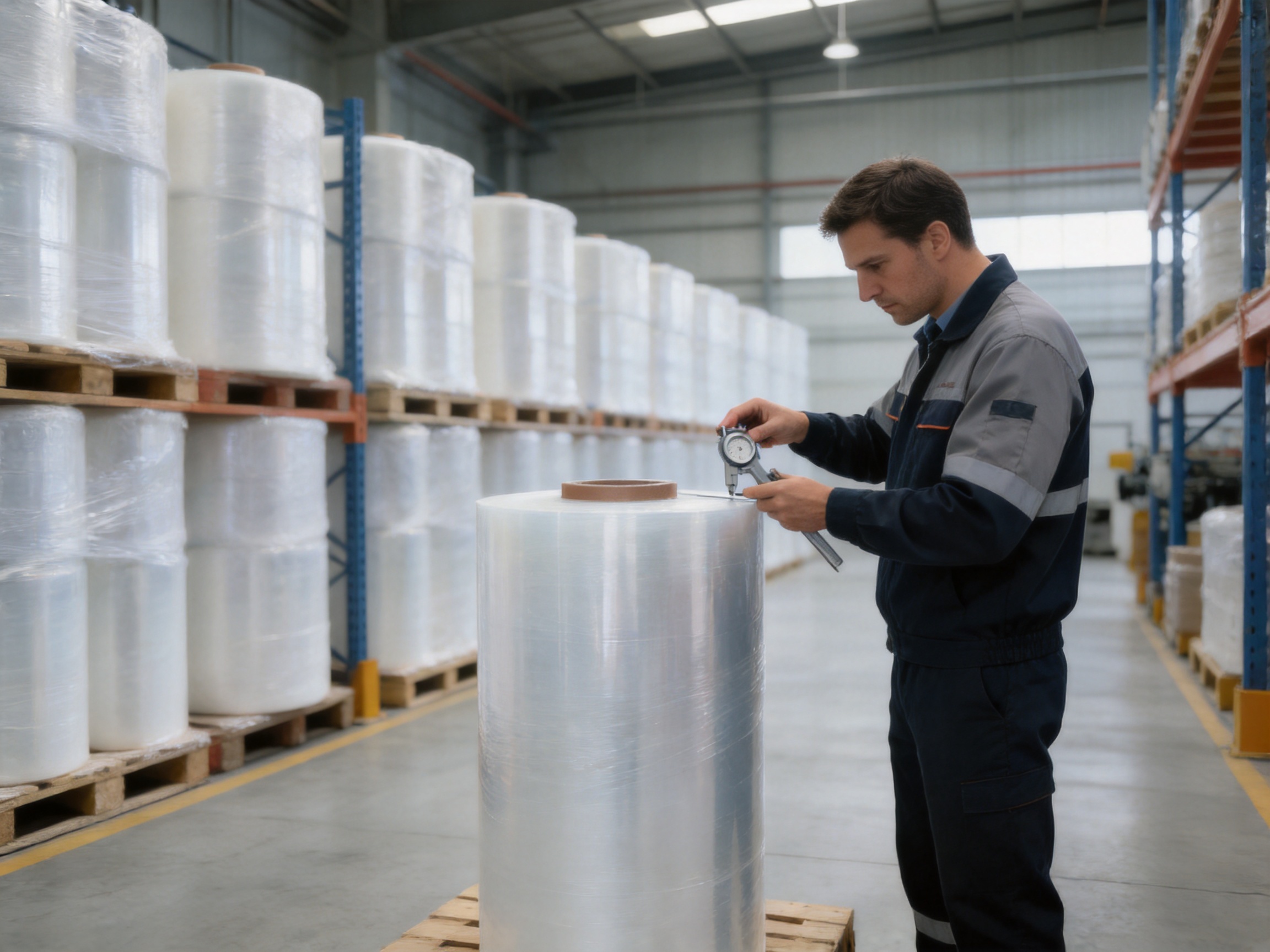
Stretch film is one of the most widely used materials for securing, protecting, and consolidating goods throughout modern supply chains. It is used in warehouses, manufacturing plants, distribution centers, export operations, retail packaging facilities, and many other industrial environments. While standard finished rolls are suitable for routine wrapping tasks, many professional users require a more flexible format that can be converted into different widths, lengths, and finished roll configurations. For these customers, a stretch film master roll offers a practical and cost-efficient foundation for packaging production.
The PE and metallocene materials stretch film master roll is designed specifically for customers that have their own slitting, rewinding, converting, or packaging capabilities. Supplied in large jumbo rolls, the product gives processors greater control over final dimensions and packaging formats. Instead of purchasing multiple fixed-size products, converters can purchase a uniform master roll and produce the finished roll sizes required by their markets, machinery, and customers.
Manufactured from polyethylene combined with a metallocene copolymer, this stretch film is designed to balance stretchability, toughness, puncture resistance, cling performance, and transparency. The material is suitable for direct use in pallet wrapping and load stabilization, while also supporting downstream processing into retail, commercial, or application-specific products. Its flexible specification range makes it appropriate for logistics, warehousing, industrial manufacturing, building materials, paper products, metal products, and many other sectors.
For companies seeking a dependable packaging material supplier, the value of a master roll extends beyond the film itself. Product consistency, raw material control, extrusion capability, quality inspection, customization, production capacity, and technical service all influence the final result. Zhejiang Geruite Packaging Materials Co., Ltd. combines packaging material manufacturing experience with a broad product portfolio that includes stretch film, BOPP tape, kraft paper tape, masking tape, high-temperature tape, metal tape, PP strapping, and high-strength PET strapping.
Understanding Stretch Film Master Rolls
A stretch film master roll is a large-format roll of film manufactured for subsequent conversion or industrial use. Rather than being produced only as a finished hand roll or machine roll, the master roll is supplied in a jumbo format that can be slit into narrower rolls or rewound into customer-specific configurations. This format is particularly valuable for packaging converters, regional distributors, contract packagers, and manufacturers with their own processing equipment.
The master roll concept separates film production from final product configuration. Film production can be completed in an efficient, continuous process, while slitting and rewinding can take place according to the exact needs of a particular application. This division provides more flexibility than purchasing a large inventory of finished rolls in many different specifications.
For example, one customer may require narrow rolls for manual wrapping, another may need wider rolls for machine wrapping, and a third may want custom lengths for resale. A properly manufactured master roll can support all of these requirements, provided that the film thickness, width, roll weight, core dimensions, and performance characteristics are suitable for the converting equipment.
Master rolls are also beneficial for users with non-standard packaging requirements. Some industrial products have unusual pallet sizes, irregular shapes, sharp corners, or specific wrapping procedures. Fixed-size commercial rolls may create excessive waste or require repeated purchasing of different product types. A master roll allows the customer to create the final format closer to the point of use.
The product described here is available in common widths of approximately 500 millimeters to 1000 millimeters, with a listed height range of 45 centimeters and 50 centimeters. Thickness can be customized within a range of approximately 0.015 millimeters to 0.045 millimeters. Length and weight can also be adjusted according to the application scenario, processing equipment, and customer requirements.
Material Structure and the Role of Metallocene Technology
The primary substrate of the stretch film is polyethylene, a material widely used in industrial packaging because of its balance of flexibility, chemical stability, moisture resistance, and processing suitability. The film specification combines pure polyethylene with a metallocene copolymer to enhance toughness and overall performance.
Metallocene polyethylene is produced using a catalyst system that allows manufacturers to control polymer structure more precisely than with many conventional resin systems. This control can contribute to improved film uniformity, stronger mechanical performance, better puncture resistance, and more consistent stretching behavior. In stretch film applications, these qualities are important because the film must elongate under tension without tearing or losing its ability to hold a load securely.
The use of metallocene material does not mean that the film is intended only for one type of packaging equipment. Instead, it provides a performance foundation that can support both manual and automatic wrapping applications when the film specification is selected correctly. The appropriate balance of thickness, stretch level, cling, and toughness depends on the load, wrapping speed, pre-stretch equipment, environmental conditions, and required containment force.
The film is manufactured as a multilayer co-extruded structure. In a co-extrusion process, different polymer layers are combined during film production to create a single integrated film. Each layer can contribute to a particular performance requirement. For example, one layer may support tensile strength, another may improve puncture resistance, and another may contribute to cling or surface behavior.
Multilayer construction provides an opportunity to optimize the film more effectively than a simple single-layer structure. It can help balance opposing requirements such as strength and flexibility, cling and clean release, or stretchability and load retention. A film that is too soft may be difficult to process, while a film that is too rigid may fail to conform to irregular loads. A controlled multilayer structure helps create a more useful performance balance.
The combination of polyethylene and metallocene copolymer also supports reliable processing. Uniform resin distribution and stable film thickness are important for downstream slitting. If the film varies significantly across its width, the converted rolls may have uneven edges, inconsistent tension, or unstable unwinding behavior. Consistent film formation therefore contributes not only to packaging performance but also to converting efficiency.
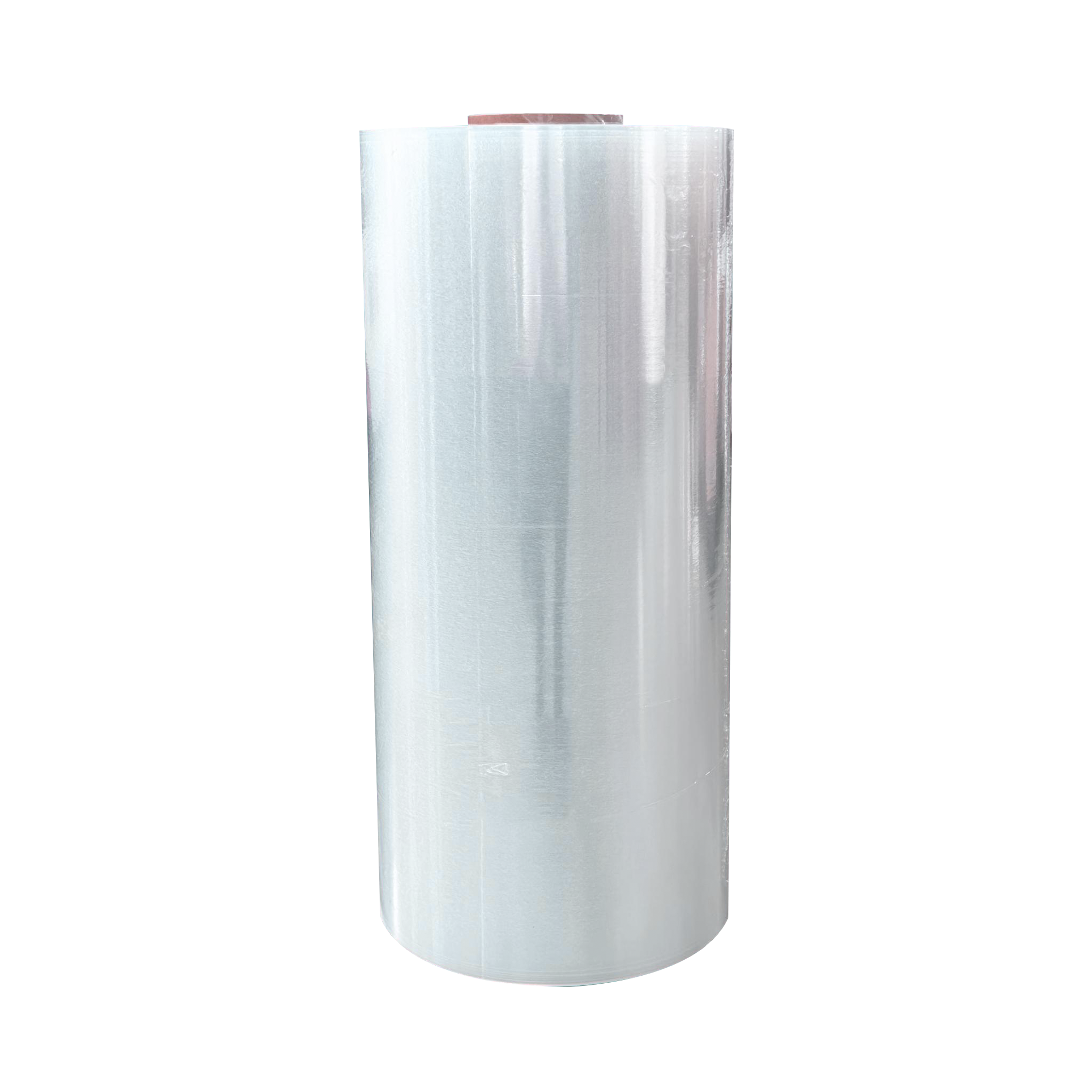
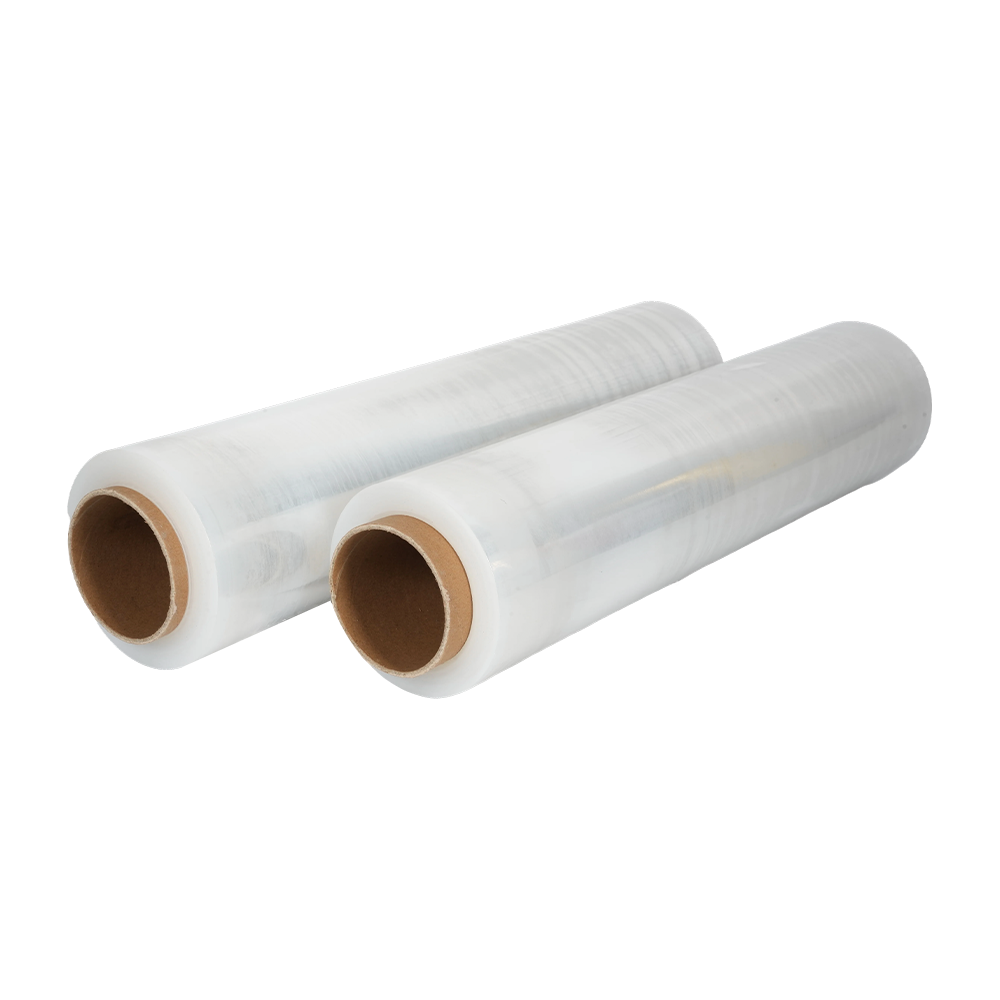
PE + Metallocene Materials Stretch film master roll
Core Product Advantages
Flexible Slitting and Customization
The most important advantage of a master roll is its adaptability. Customers can slit the jumbo roll into different widths according to their own production plans. This is valuable for packaging converters that serve several industries or sell multiple sizes of finished stretch film.
Customization may include finished width, roll length, roll weight, core inner diameter, winding format, and packaging method. Subject to production and equipment requirements, customers can create a product range without maintaining separate inventories of many original film types. The result is greater flexibility in response to changing orders and seasonal demand.
Customized slitting is also useful when a customer has packaging machinery with specific width requirements. Automatic wrapping systems may be designed for particular roll sizes, while manual packaging teams may prefer lighter and narrower rolls. A master roll provides a common material source for both types of finished products.
Cost Efficiency for Bulk Users
Purchasing film in jumbo-roll form can reduce the cost associated with repeated small-batch purchasing, individual retail packaging, and multiple product changeovers. Large-roll production generally makes more efficient use of manufacturing time and packaging resources. For converters with suitable machinery, these efficiencies may result in a lower material cost per finished roll.
Master rolls can also reduce the cost of maintaining a broad product inventory. Instead of storing many finished sizes, a converter may stock a smaller number of master roll specifications and convert them when needed. This approach can make purchasing and inventory planning more manageable, particularly for distributors serving customers with changing or non-standard requirements.
Cost efficiency should be evaluated across the entire production process rather than by purchase price alone. Important factors include yield during slitting, edge trim, changeover time, roll stability, downtime, packaging labor, storage space, and rejected product. A stable, uniform master roll can support better overall economics because it reduces avoidable processing problems.
Waste Reduction
Fixed-size packaging materials often create waste when the selected roll does not match the actual dimensions of the product or pallet. Excess material may be used simply because the roll is available in a standard size. In other cases, the customer may need to cut or discard unused film after wrapping.
By converting the master roll into application-specific dimensions, users can make closer use of the amount of film required. Narrower or shorter rolls may be produced for smaller loads, while wider or heavier rolls can be prepared for demanding industrial applications. This on-demand approach helps minimize surplus material and can improve the efficiency of packaging operations.
Waste reduction also applies to inventory. When packaging products are made only after customer orders are confirmed, there is less risk of finished rolls becoming obsolete because of changes in product specifications, labeling, or market demand.
Stretchability and Load Retention
Stretch film must elongate under controlled tension and then maintain sufficient recovery to hold products together. The polyethylene and metallocene formulation is designed to provide reliable stretchability while maintaining toughness. This balance is essential for securing palletized loads during storage, handling, and transportation.
A film with good stretch performance can conform closely to the shape of cartons, bags, containers, or bundled materials. Close conformity helps reduce movement between individual units. When the film is applied correctly, it creates a containment force that helps maintain load stability during forklift handling, vehicle vibration, acceleration, braking, and changes in direction.
Stretch performance is affected by film thickness, wrapping speed, applied tension, pre-stretch ratio, temperature, and the geometry of the load. The master roll can be customized to support the customer’s intended process, but final performance also depends on proper machine adjustment and wrapping technique.
Puncture Resistance and Toughness
Industrial loads are not always smooth or uniform. Building materials, paper products, metal components, furniture parts, and manufactured goods may have corners, edges, or surfaces that challenge the film. Puncture resistance helps the film withstand contact with these features during wrapping and handling.
The metallocene copolymer component contributes to the toughness required for demanding applications. A tough film is less likely to split suddenly when tension is applied or when the wrapped load experiences movement. This can reduce rework, film consumption, and the risk of load exposure.
Puncture resistance does not eliminate the need for correct packaging design. Loads with extremely sharp edges may require corner protectors, edge boards, cushioning materials, or a thicker film specification. Nevertheless, a strong base film gives the packaging system a better starting point.
Cling and Secure Wrapping
Cling performance allows adjacent layers of stretch film to adhere to one another, helping the wrapped package remain closed and stable. Effective cling is important because it reduces the likelihood that the film will loosen or unwind after application.
The balance of cling should match the application. Excessive cling may make handling difficult or cause the film to attract dust, while insufficient cling may reduce load security. A well-designed multilayer structure can help manage surface behavior while preserving film strength and processability.
High Transparency
The film is available in transparent form, and its high clarity allows operators to identify labels, barcodes, package contents, and load conditions without removing the wrapping. Visual inspection is valuable in warehouses and distribution centers because workers can check whether cartons are damaged, whether labels are visible, and whether the load appears complete.
Transparent film also supports efficient inventory management. Warehouse staff can often recognize product categories and package markings through the film, reducing unnecessary unwrapping. When color coding is preferred, the product can also be supplied in colors such as red, yellow, blue, black, white, and other customized options.
Product Specifications
The following table summarizes the principal specifications provided for the PE and metallocene materials stretch film master roll. Actual specifications should be confirmed according to the customer’s equipment, application, and required finished product.
| Parameter | Available Specification or Description | Application Consideration |
|---|---|---|
| Product type | Stretch film master roll | Suitable for slitting, rewinding, direct wrapping, or further processing |
| Primary material | Polyethylene with metallocene copolymer | Supports toughness, stretchability, and puncture resistance |
| Film structure | Multilayer co-extruded LLDPE film | Provides controlled performance across different layers |
| Common width range | Approximately 500 mm to 1000 mm | Final width can be selected according to converting requirements |
| Listed height options | 45 cm and 50 cm | Suitable for common industrial wrapping formats |
| Thickness | Approximately 0.015 mm to 0.045 mm | Selection depends on load weight, sharpness, and wrapping method |
| Length and weight | Customizable | Can be matched to application and equipment capacity |
| Colors | Transparent, red, yellow, blue, black, white, and others | Color may support identification, privacy, or product grouping |
| Performance features | Stretchability, cling, toughness, puncture resistance, and clarity | Supports load retention and downstream processing |
| Processing compatibility | Manual and automatic wrapping systems, subject to specification | Core dimensions, roll weight, and machine settings must be verified |
Manufacturing Process and Quality Control
Raw Material Selection
Manufacturing performance begins with the selection and control of raw materials. Polyethylene resin and metallocene copolymer must be selected according to the required film properties, thickness, clarity, stretch behavior, and processing conditions. Consistent raw materials help produce a stable film that performs predictably during extrusion and conversion.
Raw material control is particularly important for master rolls because the product may later be slit into many finished rolls. Any variation in the original film can be multiplied across a large number of downstream products. For this reason, the production process must focus on uniformity from the beginning.
A professional quality system typically includes supplier evaluation, incoming material inspection, batch identification, controlled storage, and production traceability. These procedures help manufacturers identify the source of any variation and support more reliable communication with customers.
Multilayer Co-Extrusion
The film is produced using multilayer co-extrusion technology. In this process, polymer materials are heated and conveyed through extrusion units before being combined into a layered film structure. The molten polymer passes through a controlled die system, where it is formed into a continuous film with the desired width and thickness profile.
Process stability is essential during co-extrusion. Temperature, pressure, material flow, cooling conditions, winding tension, and line speed must be carefully managed. Variations in these conditions can influence film gauge, transparency, surface properties, mechanical strength, and roll appearance.
A well-controlled co-extrusion line can help produce a film with consistent thickness across its width. This consistency is especially important for slitting operations because uneven thickness may lead to telescoping rolls, loose edges, unstable unwinding, or inconsistent tension during conversion.
The multilayer design also allows the manufacturer to adjust the film’s performance more precisely. The formulation can be developed to provide a suitable balance between cling, stretch, strength, and puncture resistance rather than relying on one material to deliver every property.
Cooling and Film Formation
After leaving the die, the film must be cooled and stabilized. Cooling conditions influence the final molecular orientation and physical behavior of the film. Proper cooling helps maintain a clear appearance and supports the desired combination of flexibility and strength.
Film formation must be controlled carefully because the product is intended for both direct packaging and downstream slitting. A surface defect that may be minor in a single finished roll can become a significant issue when the master roll is converted into hundreds or thousands of smaller rolls. Continuous monitoring helps reduce such risks.
Winding and Roll Formation
Once the film has been formed, it is wound into a master roll under controlled tension. Winding tension must be high enough to create a stable roll but not so high that the film is compressed, distorted, or difficult to unwind. Proper roll formation supports transport, storage, slitting, and machine use.
Roll alignment is another important consideration. A well-aligned master roll has clean edges and a consistent profile. Poor alignment may cause edge damage, telescoping, or difficulties when the roll is mounted on a slitting or wrapping machine.
The core inner diameter and maximum roll weight must be matched to the customer’s equipment. Before ordering, customers should confirm the core specification, shaft configuration, lifting method, and equipment load capacity. These details are essential for safe and efficient handling.
Inspection and Testing
Quality inspection should cover both physical appearance and functional performance. Typical inspection points include film thickness, width, roll weight, transparency, surface condition, tensile behavior, elongation, puncture resistance, cling, winding quality, and packaging condition.
Thickness measurement helps verify that the film falls within the specified range and that the gauge remains consistent across the roll. Width measurement confirms that the master roll is suitable for the customer’s slitting plan. Visual inspection can identify wrinkles, gels, contamination, holes, edge damage, or other defects.
Functional testing can help assess whether the film stretches smoothly, resists tearing, clings effectively, and retains its integrity under tension. Testing conditions should reflect the intended application whenever possible. A film used for light cartons may require a different performance profile from a film used for heavy metal products or high-speed automatic wrapping.
Geruite emphasizes quality as a central part of its manufacturing philosophy. The company applies quality control from raw material procurement through production and final inspection. This approach is important for customers that depend on consistent material performance across repeated shipments and large production runs.
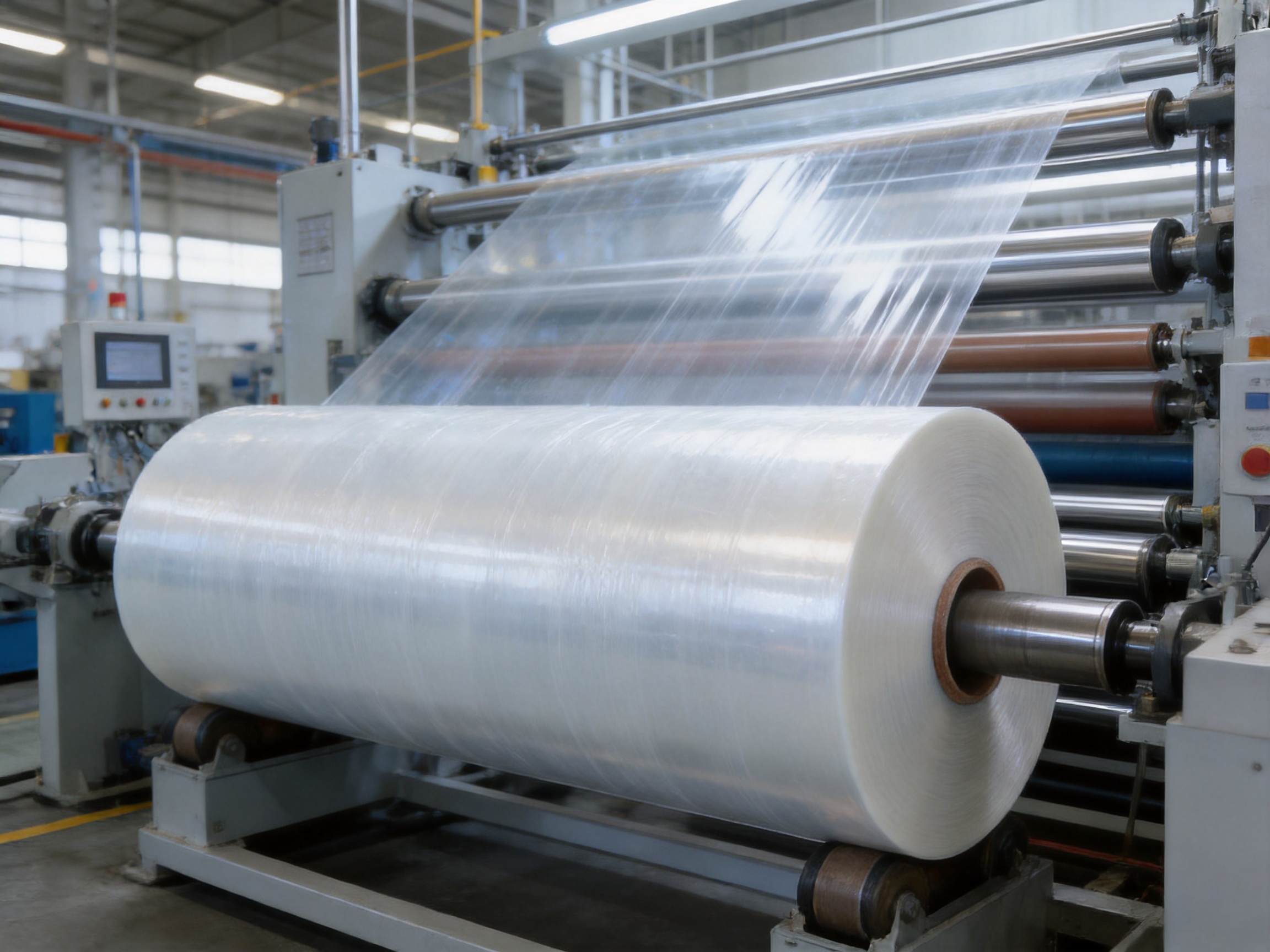
Advantages Compared with Conventional Fixed-Size Stretch Film
Conventional fixed-size stretch film is often sold as a finished product with a predetermined width, length, roll weight, and packaging format. This can be convenient for users with standard requirements, but it may be less suitable for converters or manufacturers that need flexibility.
The master roll offers a broader customization pathway. A customer can select the finished format after purchasing the base film, which makes it easier to serve different applications from one production source. This is a major advantage for distributors and packaging companies that need to respond quickly to customer-specific orders.
Another advantage is the potential to improve material utilization. Finished fixed-size rolls may contain more film than necessary for a particular task, or they may be too short for an efficient wrapping cycle. Slitting and rewinding allow the user to create a more suitable relationship between roll dimensions and packaging requirements.
The master roll may also provide better control over private-label or resale products. A converter can create finished rolls with its own packaging design, labeling, length, and market positioning. This flexibility can support product differentiation without requiring the converter to purchase a separate base film for every finished product category.
Compared with lower-quality conventional films, a polyethylene and metallocene formulation may provide improved resistance to puncture and splitting. This can be especially valuable when wrapping heavy loads, irregular products, or items that experience significant movement during transportation.
Compared with films that rely on excessive thickness to achieve strength, a well-engineered multilayer film may offer a more balanced performance profile. The goal is not simply to make the film thicker, but to combine material selection, layer structure, extrusion control, and processing characteristics in a way that supports reliable load retention with efficient material use.
Applications Across Industrial Sectors
Logistics and Warehousing
Warehouses use stretch film to consolidate cartons, bags, containers, and other products on pallets. Stable loads are easier to move with forklifts and pallet trucks, and they are less likely to shift during staging or transportation. The master roll format is useful for large warehouses that consume substantial quantities of film or operate their own conversion equipment.
High transparency supports warehouse identification. Labels, barcodes, warning marks, and product descriptions can remain visible through the film. Colored film may be used when different departments, destinations, product classes, or handling conditions need to be visually distinguished.
Packaging Converters and Distributors
Packaging converters are among the most suitable users of stretch film master rolls. These companies can purchase jumbo rolls, slit them into marketable sizes, and supply finished products to retailers, industrial customers, logistics providers, or regional distributors.
The ability to customize length, width, and roll weight allows converters to serve different customer segments without carrying a very large number of base materials. It can also shorten the response time for special orders and reduce the need to outsource small or unusual production runs.
Distributors can benefit from the ability to create local product configurations. Market preferences differ by region, and customers may expect specific roll dimensions or packaging styles. A master roll supports localized product preparation while maintaining a consistent material source.
Automatic and Manual Wrapping
The film can be used with automatic or manual wrapping systems when the finished roll specification is correctly matched to the equipment. Automatic lines require stable unwinding, consistent tension, reliable film strength, and suitable roll dimensions. Manual wrapping requires a manageable roll weight and a film that stretches smoothly under operator control.
For automatic systems, customers should verify maximum roll diameter, core inner diameter, roll width, machine shaft dimensions, pre-stretch capability, and required film thickness. For manual use, the key factors may include roll weight, ease of handling, tear resistance, cling, and the amount of force needed to stretch the film.
Building Materials
Building materials often require protection against dust, moisture, surface contamination, and movement during transportation. Products such as panels, profiles, pipes, bags, boards, and bundled components can be consolidated with stretch film. Depending on the load, additional edge protection or cushioning may be needed.
The film can help keep grouped materials together while reducing exposure to ordinary warehouse dust and handling contamination. Colored or opaque film may be selected when product privacy, light reduction, or visual identification is important.
Paper and Printing Products
Paper rolls, cartons, printed materials, and other paper products can be sensitive to moisture, dirt, and physical movement. Stretch film can be used to stabilize bundles and palletized paper products while allowing labels and shipping marks to remain visible.
Because paper products may have sharp edges or substantial weight, the film thickness and wrapping pattern should be selected carefully. A stronger specification can reduce the risk of tearing during handling, while corner protection can help distribute tension around sharp edges.
Metal Products
Metal parts, profiles, pipes, sheets, and fabricated components may be heavy, irregularly shaped, or exposed to rough handling. Stretch film can provide bundling and surface protection, particularly when combined with straps, edge protectors, or other packaging materials.
For metal products with sharp edges, film selection should emphasize toughness and puncture resistance. The wrapping process should avoid concentrating excessive tension on a single corner. When required, protective pads or specialized wrapping patterns can help preserve film integrity.
Bulk Cargo Protection
Large goods and bulk cargo can benefit from stretch film as a secondary protective layer. It may help limit dust, reduce exposure to ordinary moisture, and keep components grouped during storage and transportation. The film is not a replacement for weatherproof packaging in severe outdoor conditions, but it can be a useful part of a broader protection system.
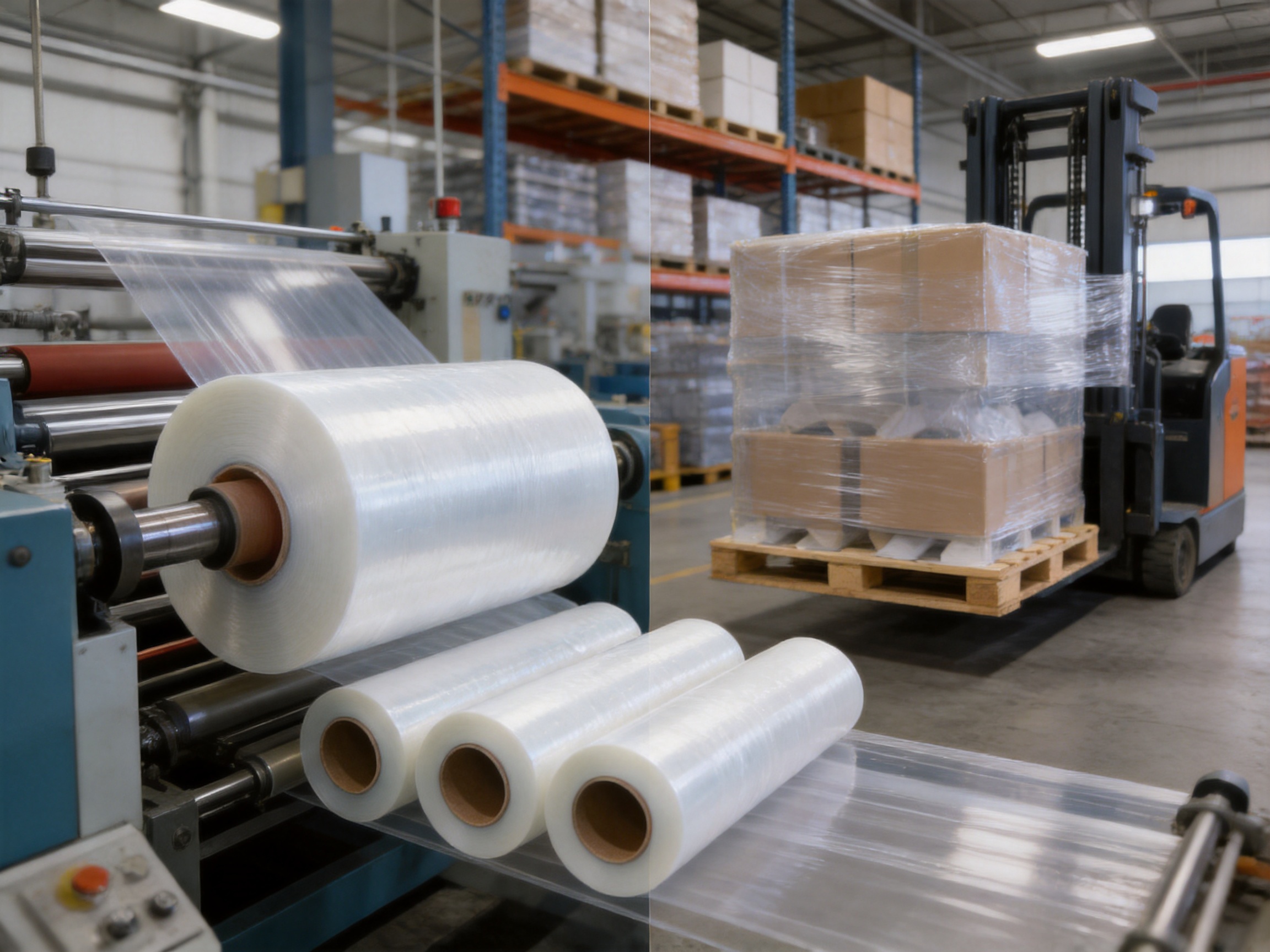
Processing Guidance for Converters
Before processing a master roll, the converter should inspect the outer packaging and verify that the roll has not been damaged during transport. The roll should be checked for visible deformation, loose edges, contamination, moisture exposure, or signs of excessive heat. Any unusual condition should be documented before the roll is placed into production.
Slitting blades should be clean, sharp, and properly aligned. Dull or contaminated blades may create rough edges, stretching, tearing, or inconsistent finished widths. Clean cutting equipment also helps prevent foreign particles from being transferred to the film surface.
Slitting tension should be adjusted according to film thickness, width, winding speed, and roll structure. Excessive tension can deform the roll or affect unwinding, while insufficient tension may produce loose or unstable rolls. Trial production is recommended when a new film specification or a new finished roll format is introduced.
Core inner diameter must match the shaft or mandrel of the slitting and rewinding equipment. The finished roll should also remain within the equipment’s maximum diameter and weight limits. Proper core compatibility reduces installation problems and supports safe machine operation.
Edge quality is an important indicator of conversion performance. Finished rolls should have even edges, stable winding, and no significant telescoping. If edge problems occur, the converter should review blade condition, web alignment, tension settings, roll hardness, and film thickness consistency.
Finished rolls should be packaged to protect them from dust, moisture, crushing, and direct sunlight. Packaging should also provide enough support for stacking and transportation. The type of packaging can be customized depending on whether the rolls are intended for industrial use, retail distribution, export shipment, or internal production.
Storage and Handling Recommendations
Stretch film should be stored indoors in a dry, cool, and clean environment. Direct sunlight and high temperatures should be avoided because prolonged heat and ultraviolet exposure may affect polymer performance, surface properties, and appearance.
Rolls should remain in their original protective packaging until they are needed for production. If the packaging is opened, the exposed material should be protected from dust and humidity. Storage areas should be free from sharp objects, chemical contamination, and excessive mechanical impact.
Master rolls can be heavy and should be handled using suitable lifting equipment. Operators should follow the facility’s safety procedures when moving, lifting, mounting, or stacking rolls. The roll should not be dropped, dragged across rough surfaces, or stored in a position that may deform the edges.
Stock rotation is recommended. Older material should generally be used before newer material, provided that it has been stored correctly and remains within the customer’s internal quality requirements. A clear batch identification and inventory system can help maintain traceability.
Before use, the customer should confirm that the film, core, roll weight, and roll dimensions are compatible with the intended machine. The wrapping system should be adjusted gradually, beginning with moderate tension and speed before optimizing the settings for productivity and containment performance.
Why Manufacturing Capability Matters
Packaging film performance is influenced by more than the nominal resin type or thickness. Manufacturing capability determines whether the film can consistently deliver the specified properties across the full width and length of a master roll. This is why customers should evaluate the supplier’s production systems, quality controls, technical experience, and ability to manage customized orders.
A manufacturer with experience in several packaging material categories can understand how stretch film interacts with tapes, straps, cartons, pallets, and other packaging components. This broader perspective can help customers develop more complete load stabilization and protection solutions rather than selecting film in isolation.
Zhejiang Geruite Packaging Materials Co., Ltd. is located in Hangzhou, Zhejiang Province, China, an area with a strong manufacturing base and extensive industrial supply chains. The company focuses on research, development, production, and sales of packaging materials for domestic and international customers.
The company’s product range includes PE stretch film, BOPP tape, kraft paper tape, masking tape, high-temperature resistant tape, metal tape, PP strapping, and high-strength PET strapping. This portfolio allows the company to support different stages of packaging, from surface sealing and bundling to pallet stabilization and cargo protection.
Geruite reports an annual output value exceeding RMB 60 million. This scale reflects an established commercial and manufacturing operation capable of supporting regular production, product development, and customer service. For buyers, production scale can be valuable when consistent supply and repeat-order stability are important.
The company emphasizes a quality philosophy that covers raw material procurement, production, and final inspection. Such an approach supports product consistency and helps address the different requirements of logistics companies, industrial manufacturers, distributors, and packaging converters.
Customization and Customer Cooperation
Customization begins with a clear understanding of the customer’s application. Important questions include the weight and shape of the load, pallet dimensions, wrapping speed, manual or automatic application, required transparency or color, desired roll weight, core specification, shipping conditions, and expected monthly consumption.
For converters, the discussion should also cover slitting equipment, maximum master roll diameter, blade configuration, finished roll widths, finished roll lengths, packaging style, and target markets. This information helps the manufacturer recommend a suitable film structure and supply format.
Thickness selection should be based on actual packaging demands rather than choosing the thickest available film by default. Light loads may be adequately protected with a thinner specification, while heavy or sharp-edged loads may require greater thickness and stronger containment. The right choice can improve both performance and material efficiency.
Color selection may serve practical or commercial purposes. Transparent film is useful when product visibility and barcode reading are important. Black or white film may be selected for privacy or visual uniformity. Red, yellow, blue, and other colors can support warehouse organization, destination coding, or brand-neutral product differentiation.
Length and weight customization is also important. A roll that is too heavy may be inconvenient for manual handling, while a roll that is too light may require frequent replacement on an automatic line. A properly matched roll size can help improve operator comfort, line efficiency, and overall packaging productivity.
Operational and Environmental Efficiency
Reducing packaging waste is both an economic and operational objective. When the film format is matched closely to the load and wrapping method, less unused material may be generated. Customized master roll processing supports this objective by allowing converters to produce lengths and widths that better reflect actual customer requirements.
Material efficiency can also be improved through stable film quality. If a film tears frequently, operators may apply extra layers as a precaution, increasing consumption. If the film has inconsistent thickness or unstable cling, the wrapper may need to repeat the wrapping cycle. Reliable performance can therefore reduce unnecessary film usage.
Efficient load stabilization may also reduce product damage during transportation. When cartons or components remain properly grouped, the risk of falling, shifting, abrasion, and package deformation may be reduced. Fewer damaged shipments can lead to lower replacement costs and better customer satisfaction.
Stretch film should be managed responsibly after use. Recycling options depend on local collection systems, contamination levels, polymer identification, and the availability of suitable recycling facilities. Companies should follow applicable waste management procedures and avoid mixing used film with incompatible materials when recycling is available.
Environmental performance should be considered across the full packaging system. Using the correct thickness, avoiding unnecessary overlap, optimizing wrapping patterns, and reducing damaged goods may all contribute to a more efficient operation. The master roll format gives professional users greater control over these variables.
Recommended Selection Procedure
The first step is to define the load. Record the pallet length, width, height, total weight, surface condition, edge sharpness, and stability before wrapping. Note whether the goods are cartons, bags, bundles, rolls, metal components, construction products, or mixed loads.
The second step is to define the wrapping process. Determine whether the finished film will be applied manually, with a semi-automatic wrapper, or with a fully automatic machine. Record the wrapping speed, pre-stretch ratio, required number of revolutions, and available roll dimensions.
The third step is to select the film thickness and material configuration. A thinner film may be appropriate for stable and lightweight products, while a thicker or tougher specification may be more suitable for heavy, irregular, or sharp-edged loads. The polyethylene and metallocene formulation offers a flexible basis for this selection.
The fourth step is to verify the master roll and core specifications. Confirm width, roll weight, outer diameter, inner diameter, winding direction if relevant, and maximum equipment capacity. These details should be agreed before production to prevent compatibility issues.
The fifth step is to conduct a trial. The trial should evaluate film stretch, cling, tear resistance, load containment, wrapping efficiency, finished roll quality, and storage behavior. Results should be reviewed under realistic operating conditions rather than based only on visual inspection.
The final step is to establish a repeat-order specification. Once the film performs successfully, the customer and manufacturer should retain the confirmed material, thickness, width, roll weight, color, packaging, and inspection requirements. A stable specification supports consistent future purchasing.
Frequently Asked Questions
What is a stretch film master roll?
A stretch film master roll is a large jumbo roll of stretch film supplied for subsequent slitting, rewinding, reprocessing, or direct industrial wrapping. It allows customers with suitable machinery to create finished rolls in different widths, lengths, and weights.
What material is used in this product?
The product uses polyethylene with a metallocene copolymer for enhanced toughness. It is described as a multilayer co-extruded linear low-density polyethylene film designed to provide stretchability, puncture resistance, cling, and transparency.
Can the film be used directly without slitting?
Yes, the master roll may be used directly for certain industrial unitizing and palletizing applications if its dimensions and weight are compatible with the wrapping equipment. However, many customers purchase it specifically for slitting or conversion into finished roll formats.
What thicknesses are available?
The listed thickness range is approximately 0.015 millimeters to 0.045 millimeters. The correct thickness depends on load weight, product shape, edge sharpness, wrapping speed, and the required level of containment force.
What widths are available?
Common widths range from approximately 500 millimeters to 1000 millimeters, with listed height options of 45 centimeters and 50 centimeters. Final dimensions should be confirmed according to the customer’s equipment and application.
Can the film be supplied in different colors?
Yes. Available colors include transparent, red, yellow, blue, black, white, and other options subject to customer requirements. Transparent film supports product visibility, while colored film can support identification, privacy, or warehouse organization.
Is the film suitable for automatic wrapping machines?
It can be suitable for automatic wrapping machines when the finished roll width, core diameter, roll weight, stretch characteristics, and film thickness are matched to the machine. Customers should provide equipment details before ordering and conduct a production trial when necessary.
What are the main benefits of metallocene material?
Metallocene material can support improved toughness, more consistent stretching, stronger puncture resistance, and reliable film uniformity. These characteristics are useful when the film must hold irregular or demanding loads without splitting easily.
How should the master roll be stored?
The roll should be stored indoors in a dry, cool environment away from direct sunlight, high temperatures, moisture, sharp objects, and chemical contamination. It should remain in protective packaging until use and be handled with suitable lifting equipment.
How should converters prepare for slitting?
Converters should inspect the roll, verify core compatibility, use clean and sharp blades, align the web correctly, and adjust tension gradually. Finished rolls should be checked for edge quality, stable winding, correct width, and acceptable unwinding performance.
Can the film be used for sharp-edged products?
The metallocene-enhanced formulation provides toughness and puncture resistance, but very sharp edges may still require corner protectors, edge boards, cushioning, or a thicker film. The wrapping pattern and tension should be adjusted to prevent excessive stress at individual corners.
Why purchase a master roll instead of finished rolls?
A master roll is advantageous for customers that have converting capabilities or non-standard requirements. It can reduce per-unit purchasing costs, support flexible finished product sizes, simplify inventory planning, and reduce waste caused by unsuitable fixed dimensions.
Conclusion
The PE and metallocene materials stretch film master roll is a flexible industrial packaging solution for customers that need greater control over film dimensions, processing, and distribution. Its multilayer co-extruded LLDPE structure combines polyethylene with metallocene copolymer to support stretchability, toughness, puncture resistance, cling, and clarity.
Compared with fixed-size finished rolls, the master roll format offers important advantages for converters, distributors, warehouses, and industrial users. It supports customized slitting, bulk purchasing, reduced inventory complexity, lower material waste, and a wider range of finished product configurations. It can be processed for manual or automatic wrapping and applied to palletized loads, bulk cargo, building materials, paper goods, metal products, and general industrial shipments.
Product performance depends on the complete manufacturing and application system. Raw material selection, multilayer co-extrusion, film cooling, thickness control, winding tension, roll alignment, inspection, and packaging all contribute to the quality of the finished master roll. Customers must also select the correct thickness, width, roll weight, core diameter, and wrapping settings for their equipment and loads.
Zhejiang Geruite Packaging Materials Co., Ltd. brings together packaging material manufacturing experience, a diversified product portfolio, quality control from raw material procurement through final inspection, and the ability to support customized customer requirements. Its focus on research, production, service, and long-term product improvement makes it a suitable partner for buyers seeking dependable stretch film and complementary packaging materials.
For companies aiming to improve packaging flexibility and operating efficiency, a properly specified stretch film master roll can provide a practical foundation. By combining suitable material technology with controlled processing and correct application, users can achieve secure load retention, reduced packaging waste, improved production planning, and more adaptable supply to their own customers.
References
1. ASTM International. Standard practices and test methods for plastic film mechanical properties, thickness measurement, and packaging performance.
2. Association of Plastic Recyclers. General guidance for the collection, identification, and management of polyethylene film packaging.
3. European Committee for Standardization. Packaging and transport-unit stability principles for palletized loads.
4. Plastics industry technical literature. Polyethylene film processing, multilayer co-extrusion, winding, slitting, and converting practices.
5. Industrial packaging engineering references. Stretch film selection, containment force, load stabilization, and warehouse handling procedures.
6. Manufacturer-provided product specifications for PE and metallocene materials stretch film master rolls.
Product: PE + Metallocene Materials Stretch film master roll

LATEST POST
Let’s create something amazing together
contact us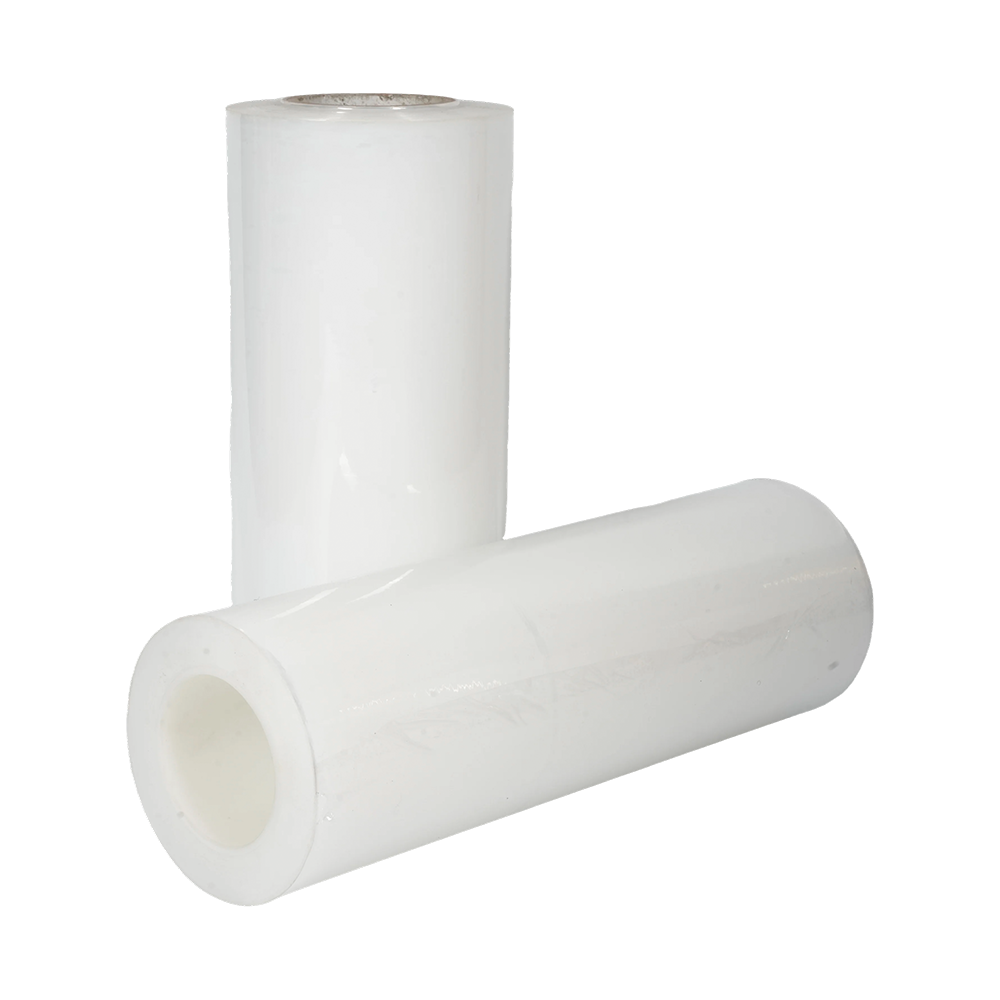

CONTACT DETAILS
- Address:No. 241, Yaojiafan, Zhangpanqiao, Shushan Street, Xiaoshan District, Hangzhou City, Zhejiang Province, China
- TEL:+86-0571-83175630
- Phone:+86-13336160217
- Email:anqiaocun@163.com
PRODUCTS
NEWS CENTER
MOBILE TERMINAL
Copyright© Zhejiang Geruite Packaging Materials Co., Ltd. All Rights Reserved.
Privacy Wholesale industrial packaging tape Manufacturers