


 English
  Español
  عربى
عربى 
DS-32 OPP Double-Sided Tape: Performance, Manufacturing Excellence, and Industrial Applications
Content
- 1 Introduction
- 2 Product Overview
- 3 How OPP Double-Sided Tape Works
- 4 Performance Advantages
- 5 Advantages Compared with Generic Alternatives
- 6 Advanced Manufacturing Process
- 7 Quality Control and Testing Strengths
- 8 Applications Across Multiple Industries
- 9 Application Guidelines
- 10 Manufacturing and Service Capabilities
- 11 Purchasing Considerations
- 12 Sustainability and Operational Efficiency
- 13 Why Process Consistency Matters
- 14 Q&A
- 14.1 What is DS-32 OPP double-sided tape?
- 14.2 What does OPP mean?
- 14.3 What are the main technical values of DS-32?
- 14.4 Is DS-32 suitable for paper and printed materials?
- 14.5 Can DS-32 replace mechanical fasteners?
- 14.6 How should the tape be applied?
- 14.7 Does strong initial tack mean the tape has reached final adhesion?
- 14.8 What industries can use this product?
- 14.9 Can the product be customized?
- 14.10 How should the tape be stored?
- 14.11 Why is testing on the actual substrate necessary?
- 14.12 What other products does the manufacturer supply?
- 15 Conclusion
- 16 References
- 17 Product: DS-32 OPP double-sided tape
Introduction
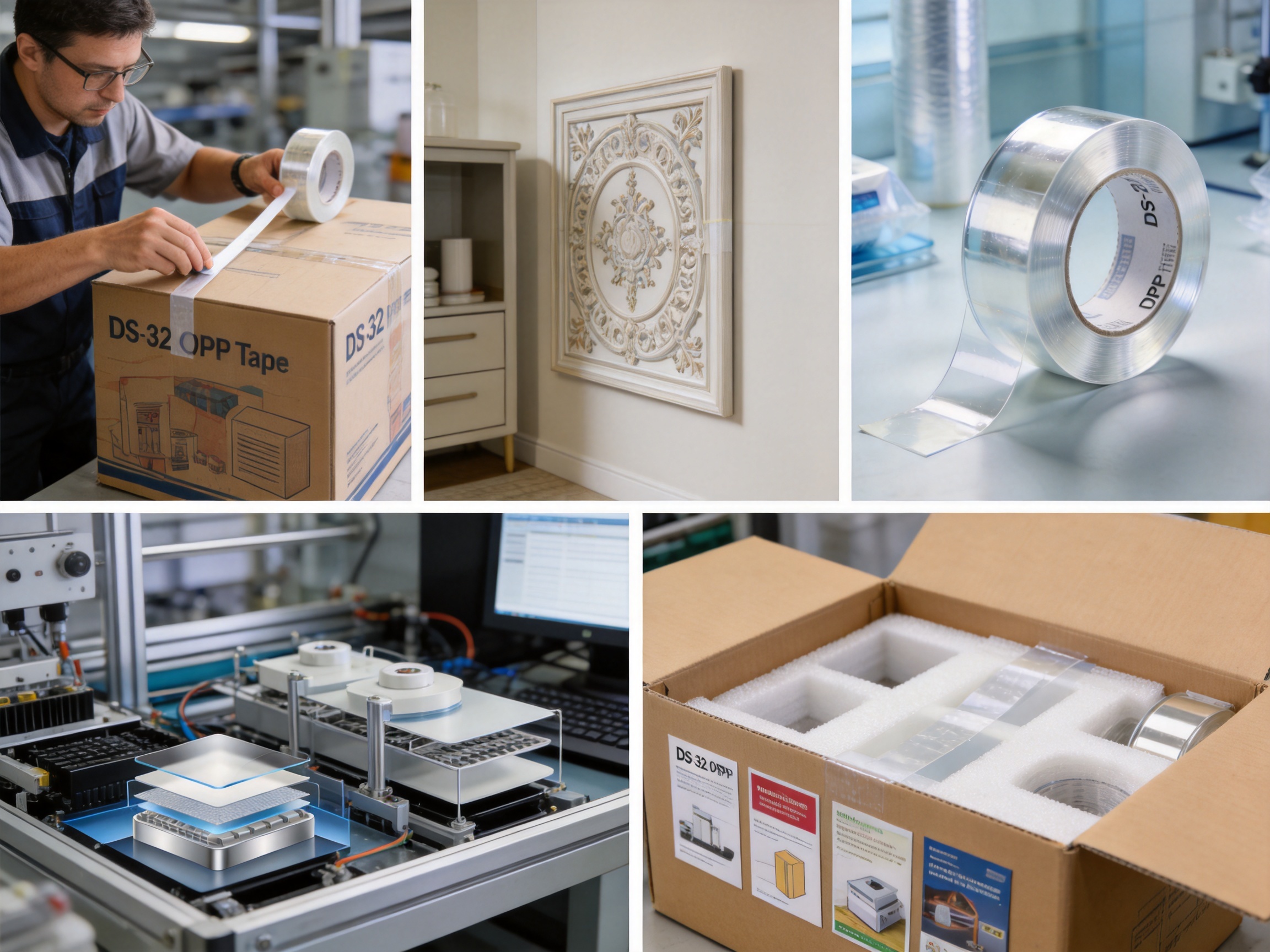
Double-sided tape has become an essential bonding solution across packaging, manufacturing, electronics, household goods, construction, decoration, logistics, and many other industries. Instead of relying on liquid adhesives, mechanical fasteners, or permanent fixtures, manufacturers can use a pressure-sensitive double-sided tape to create a clean, efficient, and visually unobtrusive bond. The tape can join two surfaces while reducing assembly time, simplifying production, and supporting attractive finished products.
DS-32 OPP double-sided tape is designed for applications that require reliable adhesion while helping protect the substrate from tearing. Its construction combines an oriented polypropylene, or OPP, carrier with pressure-sensitive adhesive layers. With a typical total thickness of 90±5 microns, the tape offers a practical balance between conformability, handling convenience, bonding strength, and production efficiency.
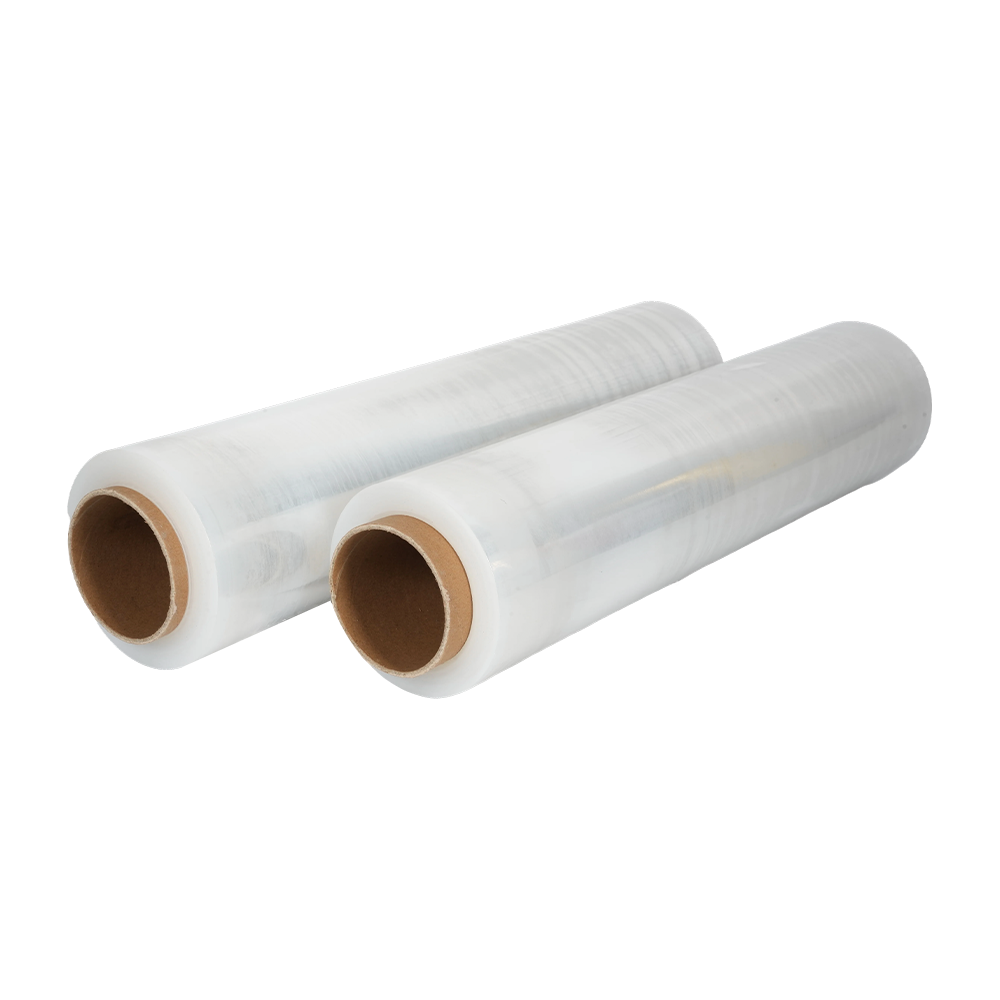
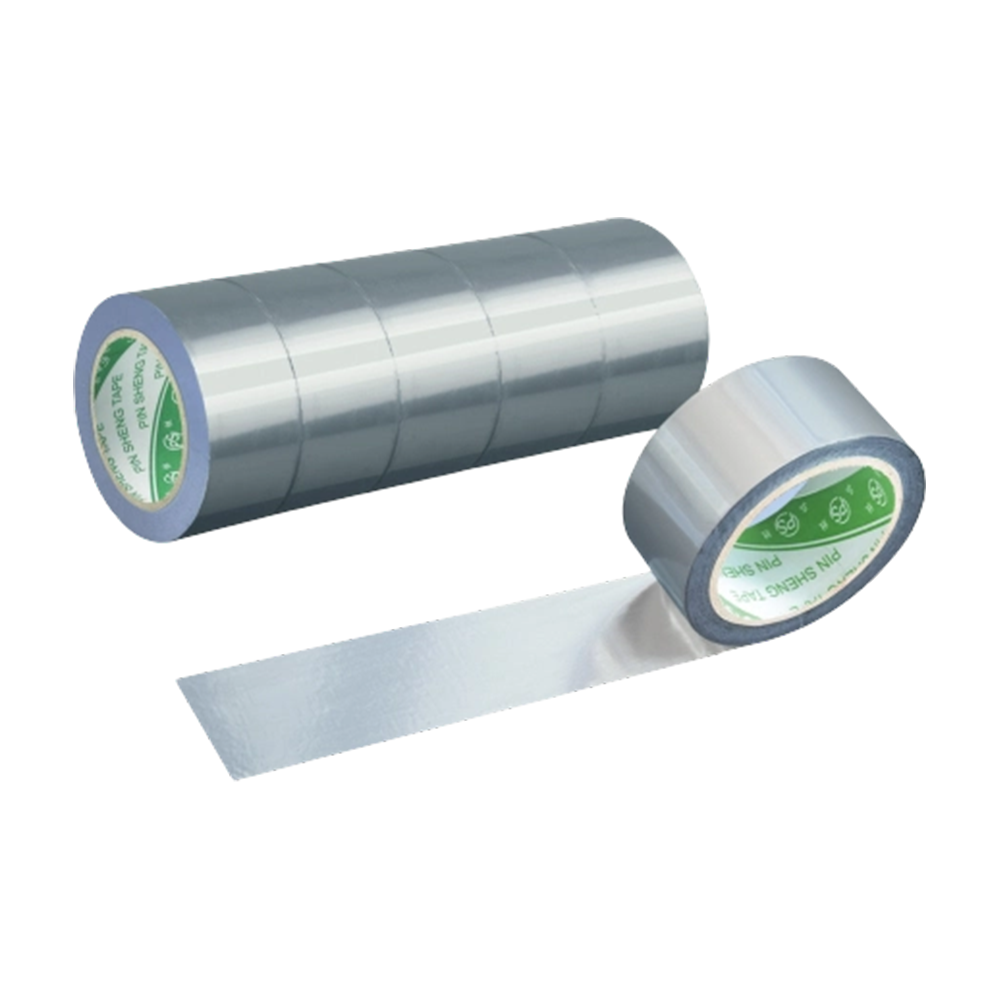
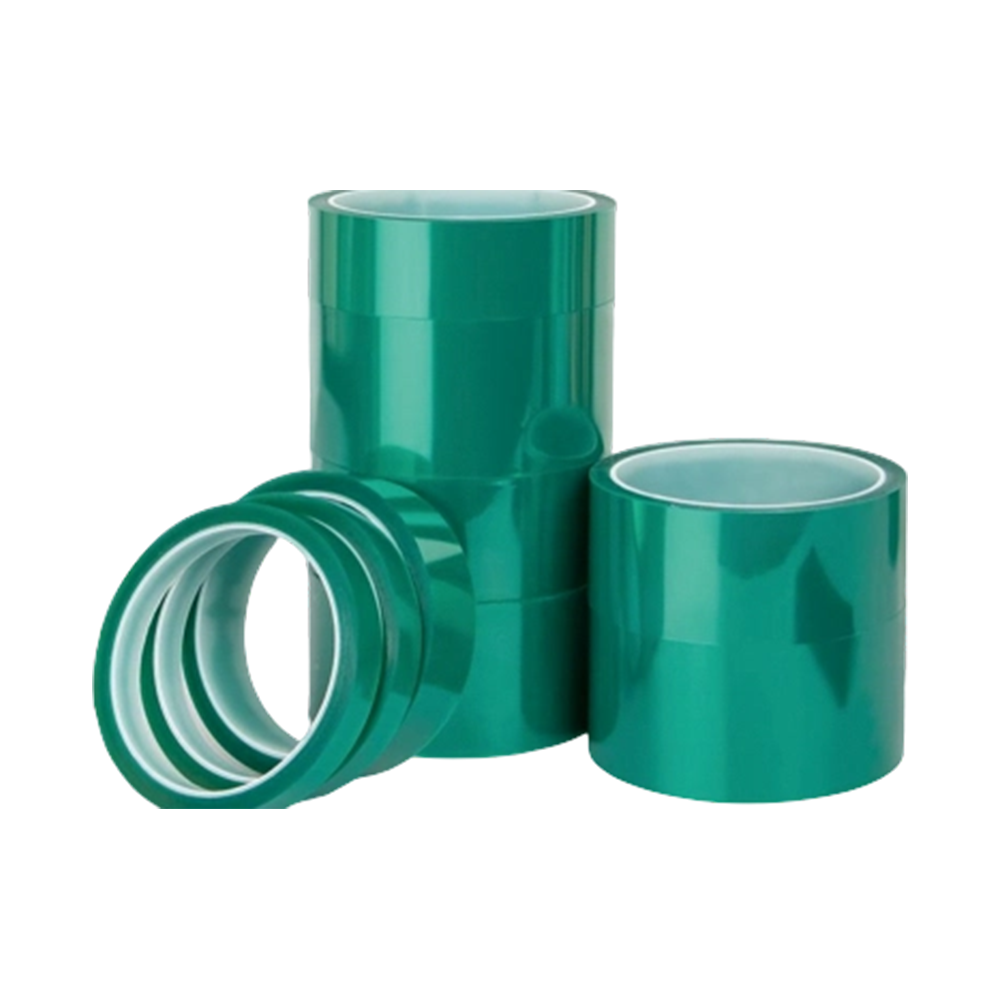
The product is manufactured by Zhejiang Geruite Packaging Materials Co., Ltd., a packaging materials manufacturer based in Hangzhou, Zhejiang Province, China. The company produces a broad range of adhesive tapes, packaging films, and strapping products for industrial and commercial customers. Its product portfolio includes BOPP tape, kraft paper tape, masking tape, high-temperature resistant tape, metal tape, PE stretch film, PP strapping, and high-strength PET strapping.
This article examines the structure, technical performance, manufacturing approach, application value, quality-control considerations, and competitive advantages of DS-32 OPP double-sided tape. It also explains how buyers can evaluate this type of tape and select suitable specifications for different production environments.
Product Overview
DS-32 OPP double-sided tape belongs to the double-sided adhesive tape category. The product is intended to bond materials together when the finished assembly should remain neat, lightweight, and free from visible mechanical attachment points. Since adhesive is applied to both sides of the carrier, the tape can be placed between two substrates to create a concealed bond.
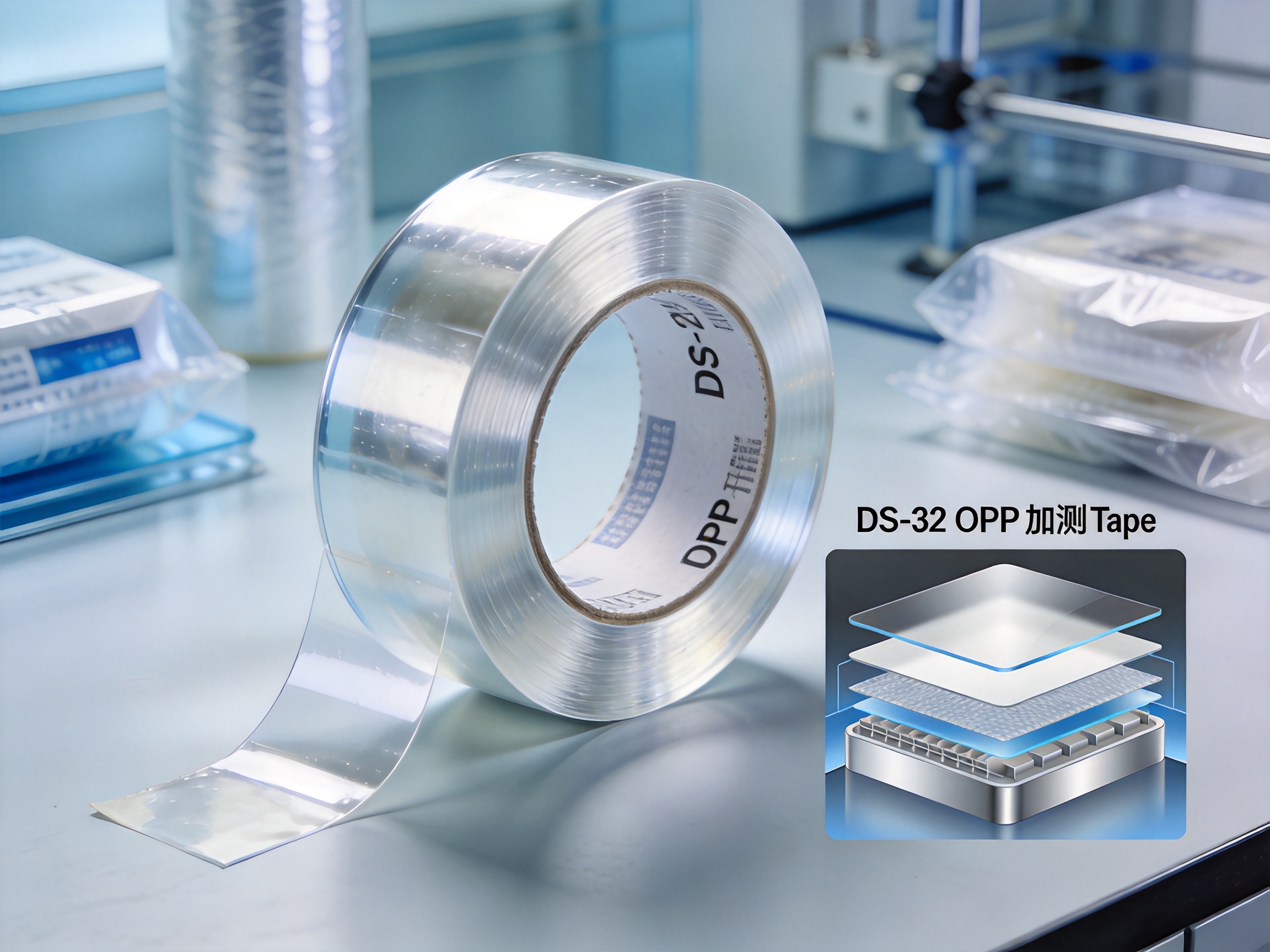
The principal carrier is OPP film. OPP is valued in tape production because it is lightweight, dimensionally stable, smooth, and suitable for conversion into rolls, sheets, strips, and die-cut components. The film provides a consistent foundation for adhesive coating and helps the tape maintain its shape during handling and application.
The product has a typical thickness of 90±5 microns. Thickness is an important factor in double-sided tape selection. A tape that is too thin may not provide enough adhesive volume or handling strength for the intended assembly. A tape that is too thick may create an unwanted step between surfaces, increase material consumption, or affect the appearance of the finished product. The 90-micron design is suitable for many general-purpose industrial bonding applications where a relatively low-profile bond is preferred.
According to the supplied technical information, DS-32 is suitable for product bonding requiring a substrate non-tearing. This feature is particularly important when the tape is applied to paper, printed materials, films, labels, packaging components, decorative surfaces, and other substrates that may be damaged by excessive peel force or unsuitable adhesive systems.
The tape is evaluated using recognized Chinese national standards, including GB/T7125-2014 for thickness, GB/T4852-2002 for initial tack using the inclined plane method, GB/T2792-1998 and GB/T2792-2014 for adhesion to steel plate, and GB/T4851-2014 for holding power. These references provide structured testing methods that help manufacturers and customers assess consistency and performance.
Key Technical Values
| Test Item | Typical Value | Reference Standard | Application or Significance |
| Tape Thickness | 90±5 microns | GB/T7125-2014 | Supports low-profile bonding and consistent converting |
| Initial Tack at 14 degrees | ≤180 mm | GB/T4852-2002, Inclined Plane Method | Indicates the adhesive’s initial contact behavior |
| Adhesion to Steel Plate | ≥10 N/25 mm | GB/T2792-1998, Peel Test | Indicates peel adhesion under the specified test condition |
| Adhesion to Steel Plate | ≥9 N/24 mm | GB/T2792-2014 | Tested after 20 minutes of placement with 25-micron PET |
| Holding Power | ≥120 minutes per 24×24 mm | GB/T4851-2014 | Indicates resistance to sliding under the specified load and condition |
These values should be interpreted as product specifications under defined laboratory conditions rather than universal guarantees for every substrate or environment. Bond performance can vary according to surface energy, cleanliness, temperature, pressure, dwell time, humidity, coating condition, and the weight or stress applied to the finished assembly. Proper qualification testing is therefore recommended before large-scale use.
How OPP Double-Sided Tape Works
A double-sided tape normally consists of a carrier, adhesive layers on both sides, and a release liner or other protective material. The carrier contributes dimensional stability and handling strength. The adhesive provides the actual bonding function. The release liner protects the adhesive during storage and is removed immediately before application.
When DS-32 is pressed onto a substrate, the adhesive flows into microscopic irregularities on the surface. This increases the effective contact area between the tape and the substrate. Pressure helps the adhesive wet the surface, while sufficient dwell time allows the bond to develop further. The second substrate is then placed over the exposed adhesive and pressed into position.
Pressure-sensitive adhesive tape does not normally require water, solvent activation, heat curing, or mixing before use. This can simplify production compared with liquid adhesive systems. Operators can cut or dispense the tape, remove the release liner, position the component, and apply pressure. The resulting process can be clean, repeatable, and easy to integrate into manual, semi-automatic, or automated assembly.
The OPP carrier also helps separate the two adhesive layers. This is useful during converting because the tape can be slit into narrower rolls, cut into sections, or processed into custom shapes. Depending on customer requirements, adhesive tape manufacturers may supply jumbo rolls, log rolls, narrow rolls, sheets, or die-cut pieces.
Substrate Compatibility
The tape is intended for bonding applications where the substrate should not tear. This makes it relevant to materials that require controlled peel behavior. Examples may include paperboard, printed packaging, labels, decorative films, promotional products, envelopes, lightweight plastic components, foam materials, and certain laminated surfaces.
However, no adhesive tape can be assumed to work identically on every material. Highly textured, dusty, oily, low-energy, or heavily coated surfaces may require testing or surface preparation. Some plastics contain additives that migrate to the surface and reduce adhesion over time. Recycled paper and fiber-based substrates can also vary significantly in absorbency, surface strength, and coating quality.
For best results, the bonding surfaces should be dry, clean, and free from dust, oil, release agents, and loose particles. Smooth surfaces generally allow more complete adhesive contact. Where appropriate, the operator should apply firm, even pressure and allow sufficient time before the assembly is exposed to heavy load.
Performance Advantages
Balanced Thickness for Low-Profile Bonding
A 90±5-micron thickness gives DS-32 a balanced profile for many general-purpose applications. The tape is substantial enough to handle during converting and application, while remaining thin enough to reduce the visible build-up between bonded components. This is advantageous for packaging, labels, display materials, and assembled products where a clean appearance matters.
Low-profile tape can also help maintain the original geometry of a product. Thick adhesive layers may create uneven surfaces, affect folding lines, or alter the position of decorative components. A controlled thickness makes it easier for converters and assembly teams to design repeatable products.
Reliable Peel Adhesion
The stated adhesion to steel plate is at least 10 N/25 mm under the GB/T2792-1998 peel-test reference. A second stated value is at least 9 N/24 mm under GB/T2792-2014 after 20 minutes of placement, with 25-micron PET used in the test arrangement. These values indicate a strong level of adhesive contact under the specified test conditions.
Peel adhesion is especially relevant when a bonded component may be lifted, opened, pulled, or separated from an edge. A suitable peel value helps reduce the likelihood of premature lifting during normal handling. Nevertheless, actual application performance depends on the surface and the direction of force. A bond that performs well under peel may behave differently under shear, cleavage, impact, or repeated flexing.
Useful Initial Tack
Initial tack describes the adhesive’s ability to make an early bond when it first contacts a surface. DS-32 has an initial tack value of ≤180 mm at 14 degrees according to the inclined plane method. The result provides a standardized indication of how the adhesive behaves during initial contact.
Appropriate initial tack can support efficient assembly. The tape can remain in position while the operator aligns the second component, reducing movement during production. At the same time, the specified value should be interpreted with the test method in mind. Initial tack is not identical to final adhesion, and a tape may continue to build bond strength after placement.
Holding Power Under Load
The stated holding power is at least 120 minutes per 24×24 mm under GB/T4851-2014. Holding power reflects resistance to sliding or creep under a defined load and test arrangement. It is important when the bonded parts are exposed to sustained shear stress rather than a single pulling force.
For example, a component mounted vertically may place continuous downward force on the tape. A packaging insert may experience pressure while stored or transported. A decorative strip may be exposed to repeated vibration or movement. Holding power data helps engineers determine whether the adhesive is a suitable candidate for these conditions, although application-specific validation remains necessary.
Substrate-Friendly Bonding
One of the product’s stated application benefits is suitability for bonding where substrate non-tearing is required. This can be valuable when the bonded material is thin, printed, laminated, or otherwise vulnerable to surface damage. Excessively aggressive products may remove fibers, ink, coating, or surface layers when the assembly is repositioned or separated.
A substrate-friendly design can help reduce production waste and improve the appearance of finished goods. It may also make the product more suitable for temporary positioning, packaging components, promotional displays, and applications where the customer values clean removal or reduced substrate damage.
Advantages Compared with Generic Alternatives
Customers evaluating double-sided tape often compare products based on price alone. However, the lowest purchase price does not necessarily result in the lowest total cost. Tape that varies in thickness, has inconsistent coating, or performs poorly on the target substrate may cause rework, rejected products, production stoppages, and customer complaints.
DS-32 offers several practical advantages over an unspecified generic double-sided tape. First, it is supported by defined technical values and named testing references. This gives purchasing and engineering teams a clearer basis for comparison. Instead of selecting a product only by appearance or nominal thickness, buyers can examine peel adhesion, initial tack, holding power, and thickness tolerance.
Second, the product is designed around a controlled OPP carrier. OPP film can provide a clean and stable structure for converting. Compared with an inconsistent or poorly processed carrier, a controlled film can support better roll handling, more uniform slitting, and more predictable placement.
Third, the stated thickness tolerance of 90±5 microns gives customers a defined range for product design and process control. Dimensional consistency is important in automated dispensing, die cutting, lamination, and high-volume assembly. A stable tape thickness can help reduce variation in feed length, cutting depth, finished-product height, and component alignment.
Fourth, the product combines adhesion and holding-power data. Some low-cost tapes may provide strong initial stick but fail under sustained load. Others may hold well after a long dwell period but be difficult to position during assembly. The DS-32 specification provides information about both early contact behavior and resistance to movement under load.
Fifth, DS-32 is part of a broader packaging-material product range. Customers purchasing multiple packaging products may benefit from working with one supplier for adhesive tape, stretch film, and strapping materials. Consolidated sourcing can simplify communication, specification management, shipment coordination, and quality feedback.
These advantages should not be understood as a claim that DS-32 is suitable for every application or superior in every performance category. Specialty products may be more appropriate for high temperatures, outdoor exposure, extreme chemical contact, very high shear loads, or difficult low-surface-energy plastics. The appropriate comparison is always based on the actual application requirements.
Advanced Manufacturing Process
Raw Material Selection
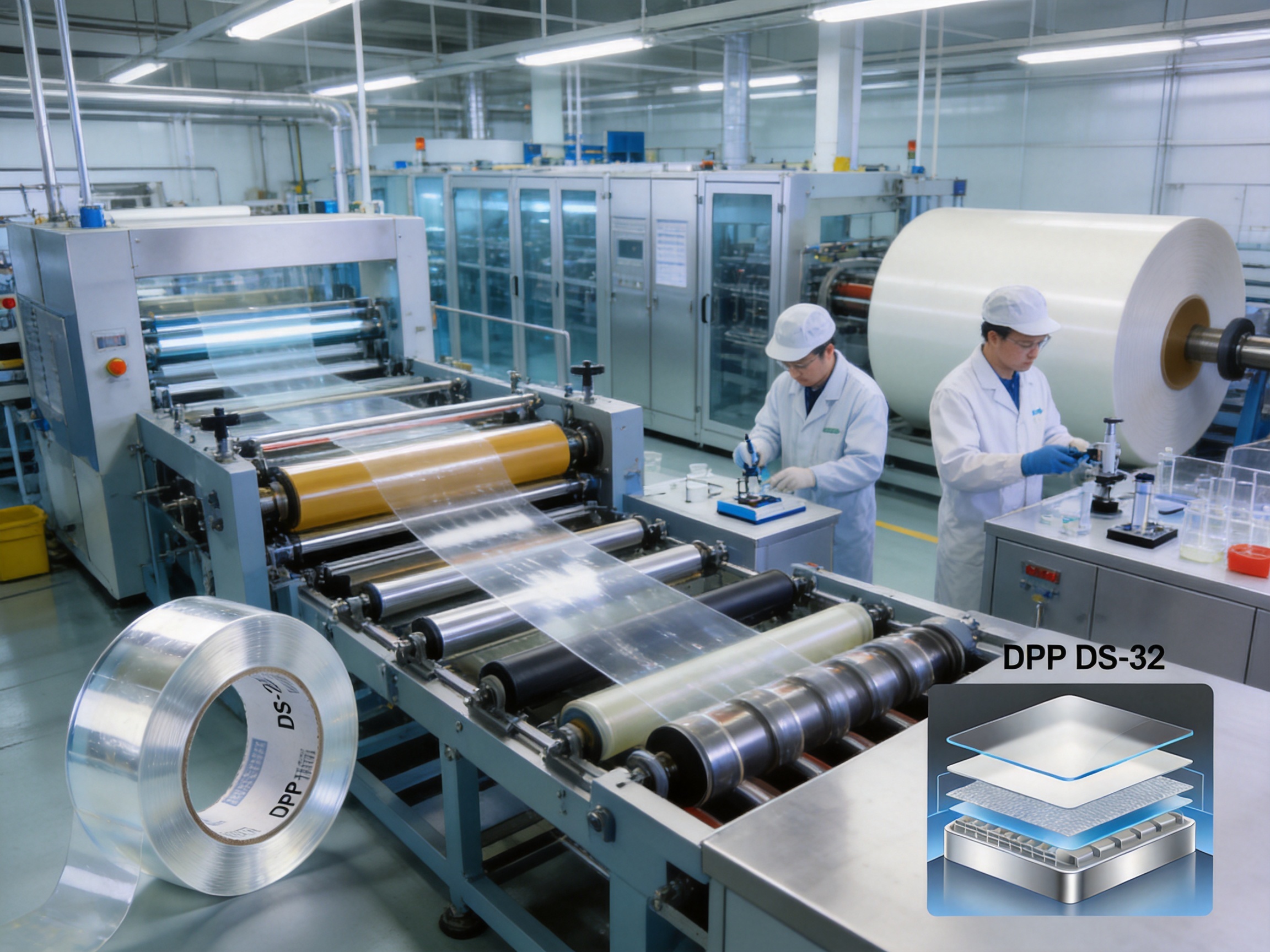
Manufacturing quality begins with raw materials. The OPP carrier must have suitable thickness, surface characteristics, dimensional stability, and mechanical properties. Adhesive raw materials must be selected according to the required tack, peel adhesion, holding power, coating behavior, and aging performance. Release materials must protect the adhesive without causing excessive transfer, wrinkling, or difficult liner removal.
A professional manufacturer evaluates incoming materials before they enter production. Inspection may include thickness measurement, appearance checks, roll-width verification, surface examination, and sampling against internal requirements. Establishing control at this stage helps prevent defects from moving into coating and converting operations.
Adhesive Preparation
Adhesive preparation requires accurate formulation, controlled mixing, and appropriate filtration. The process must produce a uniform adhesive with stable viscosity and consistent solids content. If the adhesive is not mixed adequately, the finished tape may show differences in tack, peel strength, color, or coating appearance.
Depending on the adhesive technology and production design, the preparation stage may involve controlled temperature, mixing speed, agitation time, and filtration. These parameters help reduce undispersed particles, bubbles, and formulation variation. Consistent adhesive preparation is essential because even a high-quality film carrier cannot compensate for uneven adhesive performance.
Precision Coating
During coating, adhesive is applied to the carrier or an appropriate processing surface. Coating equipment must control the amount of adhesive deposited across the web. Important variables include coating speed, web tension, adhesive viscosity, coating gap, drying or curing conditions, and environmental factors.
Uniform coating is directly related to product consistency. Excessive coating can increase thickness and create edge contamination, blocking, or liner-release problems. Insufficient coating can reduce adhesion and produce weak areas. Cross-web uniformity is also important because narrow rolls converted from different parts of a jumbo roll should perform in a similar manner.
Advanced manufacturing depends not only on equipment but also on process discipline. Operators and technicians monitor production conditions, record key parameters, and investigate deviations. When a problem is identified, corrective action can be taken before a large quantity of nonconforming material is produced.
Drying, Stabilization, and Lamination
After adhesive coating, the web may pass through controlled drying or stabilization stages, depending on the adhesive system. The objective is to achieve the intended adhesive condition without damaging the carrier. Temperature, airflow, residence time, and web speed must be coordinated carefully.
Once the adhesive layer has reached the required condition, a release liner or second protective layer can be laminated to the adhesive surface. Lamination must be uniform and free from wrinkles, bubbles, telescoping, and excessive tension. A well-controlled liner helps protect the tape during storage and enables clean release during application.
Slitting and Converting
Large adhesive-tape rolls are commonly converted into smaller rolls or custom formats. Slitting requires accurate knives, stable web tension, and careful alignment. Poor slitting can produce uneven edges, loose winding, telescoped rolls, adhesive transfer, or inconsistent widths.
For customers using automated equipment, roll geometry can be just as important as adhesive performance. A roll that unwinds unevenly may cause feeding errors or line stoppages. A roll with excessive edge damage may create contamination. Professional converting practices help ensure that the tape arrives ready for efficient use.
Additional converting services may include sheet cutting, strip cutting, roll-length customization, core selection, custom packaging, and die cutting. These options can reduce the customer’s need to process jumbo material and can support specialized assembly designs.
Packaging and Storage Preparation
Finished tape must be protected from dust, moisture, excessive heat, and physical damage. Packaging should help preserve roll shape and prevent the adhesive from being exposed prematurely. Clear product identification also supports traceability and warehouse management.
Storage conditions influence pressure-sensitive tape performance. In general, tape should be stored in a clean, dry environment away from direct sunlight, extreme temperatures, and chemicals. Rolls should remain in their original packaging until use. Customers should also rotate inventory according to a controlled first-in, first-out system and confirm shelf-life guidance with the supplier.
Quality Control and Testing Strengths
Zhejiang Geruite Packaging Materials Co., Ltd. describes quality as a central principle of its operations. The company uses production equipment and a quality-control system covering raw-material procurement, manufacturing, and final inspection. This structured approach is important for adhesive tape because quality defects may not always be visible during a simple visual inspection.
Thickness testing verifies whether the finished tape remains within the stated 90±5-micron range. This measurement can be performed at multiple locations across the roll or production batch to identify variation. A thickness check is useful for product consistency, customer process design, and converting accuracy.
Initial tack testing provides information about early adhesive contact. The inclined plane method uses a defined test arrangement to compare adhesive behavior in a repeatable manner. This helps the manufacturer monitor whether changes in raw materials or coating conditions are affecting the adhesive’s initial performance.
Peel adhesion testing measures the force required to remove the tape from a steel plate under specified conditions. The supplied specification includes values based on two reference standards and test arrangements. Comparing results to established requirements helps identify insufficient coating, contamination, poor adhesive preparation, or other process issues.
Holding-power testing evaluates the tape’s resistance to movement when subjected to a defined load. This test is particularly useful for monitoring the balance between adhesive cohesion and adhesion. A tape may have good initial tack yet show poor holding power if the adhesive softens or creeps under stress. Regular testing can help ensure that the product maintains an appropriate performance balance.
Quality control should also include appearance inspection. Operators may check for wrinkles, bubbles, foreign particles, edge damage, telescoping, uneven winding, liner defects, and adhesive transfer. While appearance alone does not prove performance, visible defects can indicate process instability and may interfere with customer converting.
Batch records and traceability further strengthen quality management. If a customer reports an issue, the manufacturer can review raw-material information, production parameters, inspection results, and packaging records. This supports faster investigation and more effective corrective action.
Applications Across Multiple Industries
Packaging and Carton Assembly
Double-sided tape is widely used in packaging for mounting inserts, attaching decorative elements, securing labels, fixing promotional components, and bonding lightweight packaging structures. DS-32 can be considered where a clean appearance and low-profile bond are required.
In carton production, the tape may be applied to paperboard, coated board, printed sheets, or laminated components. Because packaging materials can vary in surface strength and coating, the converter should test both the tape and the finished package. Application pressure and dwell time should be consistent to ensure repeatable results.
Labels and Printed Materials
Printed materials require careful adhesive selection because inks, varnishes, and coatings can affect surface energy and adhesion. A double-sided tape can be used to mount signs, attach promotional cards, assemble folders, or bond paper-based components.
The substrate-friendly application positioning of DS-32 may be valuable when users want to reduce tearing or damage during handling. However, the final result depends on the strength of the printed surface and the relationship between adhesive strength and substrate strength. Testing should include removal from the actual printed material rather than relying only on steel-plate data.
Household Products
Manufacturers of household goods may use double-sided tape to attach decorative strips, labels, lightweight panels, protective pads, or small accessories. The tape can help eliminate visible screws, staples, and liquid adhesive residue. This supports a cleaner product appearance and may simplify assembly.
Household applications often involve curved surfaces, textured materials, and variable temperatures. Designers should confirm whether the tape can conform to the geometry and withstand the expected service conditions. For heavily loaded or safety-critical attachments, mechanical reinforcement may be required.
Electronics and Accessories
In electronics-related assembly, thin double-sided tape may be used for component positioning, label attachment, cable management, protective material fixation, or mounting lightweight accessories. A low-profile tape can help conserve space and maintain a neat internal arrangement.
Electronic applications may involve heat, plasticizers, electromagnetic considerations, or strict cleanliness requirements. DS-32 should be tested under the actual temperature range and with the precise materials used in the product. Specialty electronic-grade tape may be preferable where flame resistance, high-temperature resistance, or long-term aging performance is required.
Construction and Decoration
Double-sided tape can support temporary positioning, decorative trim attachment, sign mounting, surface protection, and lightweight installation work. It can reduce the need for drilling and help preserve the appearance of finished surfaces.
Construction environments may expose tape to dust, rough surfaces, humidity, temperature fluctuation, and uneven substrates. Surface preparation becomes especially important. DS-32 is best evaluated for suitable indoor or controlled applications unless the manufacturer has confirmed performance for outdoor exposure or severe environmental conditions.
Logistics and Product Protection
Packaging operations frequently require quick attachment of documents, labels, separators, protective sheets, and internal components. Double-sided tape can improve workflow efficiency because it is ready to use and does not require curing equipment.
In logistics, the finished package may encounter vibration, compression, impact, and temperature changes. The tape should therefore be selected according to the weight and stress of each component. For heavy cargo stabilization, the company’s PP or PET strapping products may be more appropriate than double-sided tape, while DS-32 can support lighter attachment and assembly tasks.
Application Guidelines
Surface Preparation
Before applying DS-32, inspect the surfaces for dust, oil, moisture, fibers, release agents, and loose coatings. Clean surfaces generally provide better adhesive contact. If a cleaning agent is used, allow the surface to dry completely before applying the tape.
Porous materials may require special evaluation because adhesive can penetrate the surface or bond primarily to loose fibers. Very smooth surfaces may provide good contact, but contamination can have a substantial effect. Coated, painted, printed, and laminated materials should be tested as supplied rather than assumed to behave like their base material.
Application Pressure
Apply firm, even pressure across the entire bonding area. Pressure helps the adhesive wet the substrate and reduces air gaps. A roller or flat applicator can be useful for achieving consistent contact in production environments.
Applying pressure only to the center of the tape may leave the edges insufficiently bonded. Edge lifting is more likely when the tape is narrow, the substrate is curved, or the finished part is exposed to repeated handling. Uniform application reduces these risks.
Dwell Time
Adhesion may increase after application as the adhesive gradually conforms to the surface. Where possible, allow a suitable dwell period before applying the full service load. The supplied test data includes adhesion measured after 20 minutes of placement under a defined condition, demonstrating why placement time can be relevant to evaluation.
Production teams should establish a practical dwell-time requirement based on the actual adhesive, substrate, temperature, and load. If immediate handling is unavoidable, the assembly should be tested under the real process conditions.
Temperature and Environment
Temperature affects pressure-sensitive adhesive behavior. At lower temperatures, some adhesives become less flexible and may wet the surface more slowly. At higher temperatures, the adhesive may become softer and more susceptible to creep. Humidity can also affect paper-based materials, liners, and surface coatings.
Customers should qualify DS-32 within the expected storage, application, and service temperature range. If the product will be used outdoors, near chemicals, or in a high-temperature manufacturing process, additional testing and product consultation are recommended.
Roll Handling
Keep the tape in its original packaging until it is needed. Avoid dropping rolls or placing heavy objects on them. Store rolls upright or in the orientation recommended by the supplier. Protect the material from direct sunlight, moisture, and contamination.
When dispensing the tape, avoid touching the adhesive with bare hands. Fingerprints, skin oils, dust, and fibers can reduce bonding performance. Operators should use clean gloves when required by the application and maintain a clean work area.
Manufacturing and Service Capabilities
The manufacturer’s location in Zhejiang Province places it within a major Chinese manufacturing region with developed industrial infrastructure and supply-chain resources. This environment supports access to raw materials, converting equipment, logistics services, engineering resources, and packaging-industry customers.
The company focuses on research, development, production, and sales of packaging materials and adhesive products. This combination allows it to understand both material performance and practical customer requirements. Tape buyers often need more than a standard roll; they may require a particular width, length, core size, packaging format, or delivery schedule.
A supplier with multiple product categories can also help customers coordinate packaging systems. For example, a customer may purchase double-sided tape for internal assembly, BOPP tape for carton sealing, stretch film for pallet wrapping, and PET strapping for heavy-load stabilization. Although each product serves a different function, coordinated sourcing can simplify procurement.
The company reports an annual output value exceeding RMB 60 million. This indicates an established commercial operation with a significant presence in packaging-material production. For buyers, an established manufacturer may offer stronger production planning, broader technical experience, and greater capacity for repeat orders than a small trading-only supplier.
Service quality is also important for international customers. Product specifications, sample evaluation, packaging requirements, lead-time planning, export documentation, and after-sales communication all affect the success of a supply relationship. Zhejiang Geruite Packaging Materials Co., Ltd. presents itself as a packaging-solution provider serving customers in multiple industries and markets.
Purchasing Considerations
Before placing a large order, customers should define the intended application in practical terms. Important questions include the substrate type, bonding area, component weight, expected load direction, temperature range, humidity, required service life, removal requirements, application speed, and packaging format.
The required tape width should be selected according to the load and the available bonding area. A wider tape generally provides more adhesive contact, but the correct choice depends on product design and cost targets. Narrow rolls may be suitable for strips and small components, while wider formats may be preferred for laminating sheets or panels.
Customers should also clarify whether the tape will be supplied in standard rolls, custom widths, sheets, or die-cut shapes. Custom converting can improve production efficiency by reducing on-site cutting and handling. However, custom formats require accurate drawings, tolerance information, packaging specifications, and sample approval.
Sample testing is strongly recommended. The evaluation should use production-intent substrates, coatings, and application equipment. Test samples should be examined immediately after application and after an appropriate aging period. Where the product will experience sustained load, the evaluation should include shear or holding tests.
Quality documentation may include a technical data sheet, batch information, inspection records, packaging details, and a certificate of analysis when available. Customers with strict quality systems should discuss documentation expectations before ordering.
Sustainability and Operational Efficiency
Adhesive tape can contribute to operational efficiency by reducing curing time, simplifying assembly, and minimizing equipment requirements. Unlike some liquid adhesive processes, pressure-sensitive tape does not normally require mixing tanks, application nozzles, solvent management, or curing ovens. This can help reduce process complexity and improve workplace cleanliness.
The low-profile construction may also reduce material use compared with thicker bonding systems, depending on the application. Accurate dispensing and controlled cutting can reduce waste. Custom slit rolls or die-cut pieces may further improve material utilization by delivering the tape in the exact format required by the production line.
Environmental performance depends on the complete product system, including the OPP carrier, adhesive chemistry, release liner, packaging, and disposal route. Customers should review recycling and waste requirements for their market. Where recycling is important, the compatibility of tape with the finished package should be considered, especially when the tape is applied to paperboard, plastic films, or mixed-material structures.
Operational sustainability also includes reducing defective products and rework. A stable tape specification and consistent production process can support better yield. When the tape bonds reliably on the intended substrate, manufacturers may spend less time correcting loose components, misaligned parts, or damaged surfaces.
Why Process Consistency Matters
Adhesive tape may appear simple, but its performance is influenced by many connected variables. A small change in carrier thickness, adhesive viscosity, coating weight, drying conditions, liner release, or winding tension can affect how the final product behaves.
Process consistency is therefore a major differentiator between a professionally manufactured tape and an unverified generic product. Customers need rolls that perform similarly from batch to batch. Consistency makes it easier to set application pressure, line speed, dispensing length, and quality limits.
A controlled manufacturing process also supports troubleshooting. If a customer observes reduced adhesion, the manufacturer can compare the reported issue with production records and test results. Potential causes may include substrate contamination at the customer’s plant, changes in surface coating, storage conditions, application temperature, or a production deviation.
Zhejiang Geruite Packaging Materials Co., Ltd. emphasizes equipment investment, quality control, research, and product development. These strengths are relevant because adhesive tape production requires both machinery and technical management. Equipment provides repeatability, while experienced personnel determine the appropriate process settings and respond to variation.
Q&A
What is DS-32 OPP double-sided tape?
DS-32 is a double-sided pressure-sensitive adhesive tape using an OPP carrier. It is designed for concealed bonding and is suitable for applications where the substrate should be protected from tearing. The stated typical thickness is 90±5 microns.
What does OPP mean?
OPP means oriented polypropylene. It is a lightweight polymer film used as a carrier in adhesive tape because it can provide dimensional stability, smoothness, and suitable converting characteristics.
What are the main technical values of DS-32?
The supplied values include a thickness of 90±5 microns, initial tack of ≤180 mm at 14 degrees, adhesion to steel plate of ≥10 N/25 mm under one referenced peel test, adhesion to steel plate of ≥9 N/24 mm under another referenced condition, and holding power of ≥120 minutes per 24×24 mm.
Is DS-32 suitable for paper and printed materials?
It may be suitable for many paper-based and printed-material applications, particularly where substrate non-tearing is important. Because paper strength, ink, varnish, and coating vary, users should test the tape on the exact material used in production.
Can DS-32 replace mechanical fasteners?
It can replace some staples, screws, clips, or other attachment methods in lightweight applications. It should not automatically replace mechanical fastening in safety-critical, heavily loaded, high-temperature, or structurally demanding applications without engineering validation.
How should the tape be applied?
Apply it to a clean, dry, and stable surface. Use even pressure across the bonding area, remove the release liner carefully, align the second substrate, and press the assembly firmly. Allow suitable dwell time before applying the full service load.
Does strong initial tack mean the tape has reached final adhesion?
No. Initial tack describes early contact behavior, while final adhesion may continue to develop after application. Temperature, pressure, dwell time, surface condition, and substrate type all influence the final bond.
What industries can use this product?
Potential industries include packaging, logistics, household goods, electronics accessories, construction and decoration, printed materials, labels, promotional products, and general industrial assembly.
Can the product be customized?
Customers should discuss available widths, roll lengths, cores, packaging formats, sheets, strips, and die-cut options with the manufacturer. Customization depends on production capability, order quantity, drawings, and application requirements.
How should the tape be stored?
Store the tape in a clean, dry location away from direct sunlight, excessive heat, moisture, and chemicals. Keep it in its original packaging until use and avoid physical damage to the rolls.
Why is testing on the actual substrate necessary?
Steel-plate test results provide standardized reference information, but real substrates can differ in surface energy, roughness, coatings, porosity, contamination, and strength. Testing on the actual production material gives a more realistic indication of bond performance.
What other products does the manufacturer supply?
The manufacturer’s broader portfolio includes BOPP tape, kraft paper tape, masking tape, high-temperature resistant tape, metal tape, PE stretch film, PP strapping, and high-strength PET strapping. These products support different packaging, protection, bundling, and stabilization functions.
Conclusion
DS-32 OPP double-sided tape is a practical bonding material for manufacturers seeking a clean, low-profile, and efficient alternative to liquid adhesives or visible mechanical fastening. Its OPP carrier, 90±5-micron thickness, defined adhesion values, initial tack specification, and holding-power requirement provide a structured basis for product selection.
The tape’s stated suitability for applications requiring substrate non-tearing gives it particular relevance to paper-based products, printed materials, packaging components, decorative surfaces, labels, and lightweight assemblies. Its performance profile may also support household, electronics-related, logistics, and general industrial applications when the service conditions are appropriate.
Compared with an unspecified generic tape, DS-32 offers the advantage of documented technical values and standardized test references. Consistent thickness, controlled coating, stable converting, and quality inspection can help customers improve production repeatability and reduce the hidden costs associated with rework or defective bonding.
The manufacturing strengths of Zhejiang Geruite Packaging Materials Co., Ltd. include a broad packaging-material portfolio, production and research capabilities, quality management from raw materials through final inspection, and experience serving diverse industrial requirements. Its location in Zhejiang provides access to an established manufacturing and logistics environment.
As with any pressure-sensitive adhesive product, successful application depends on matching the tape to the substrate and service conditions. Customers should confirm the required width, load, temperature, dwell time, storage conditions, and removal behavior. Application trials using actual production materials are the best way to establish suitability.
When properly selected and applied, DS-32 can help manufacturers create reliable bonds while maintaining an efficient, clean, and professional assembly process.
References
GB/T7125-2014. Test method reference for adhesive tape thickness measurement.
GB/T4852-2002. Test method reference for initial tack using the inclined plane method.
GB/T2792-1998. Test method reference for peel adhesion of adhesive tape to steel plate.
GB/T2792-2014. Test method reference for adhesion to steel plate after a defined placement period.
GB/T4851-2014. Test method reference for holding power of adhesive tape.
Technical product information supplied for DS-32 OPP double-sided tape.
Corporate information supplied for Zhejiang Geruite Packaging Materials Co., Ltd.
Product: DS-32 OPP double-sided tape



CONTACT DETAILS
- Address:No. 241, Yaojiafan, Zhangpanqiao, Shushan Street, Xiaoshan District, Hangzhou City, Zhejiang Province, China
- TEL:+86-0571-83175630
- Phone:+86-13336160217
- Email:anqiaocun@163.com
PRODUCTS
NEWS CENTER
MOBILE TERMINAL
Copyright© Zhejiang Geruite Packaging Materials Co., Ltd. All Rights Reserved.
Privacy Wholesale industrial packaging tape Manufacturers