


 English
  Español
  عربى
عربى 
Handheld Transparent PET Plastic Steel Belt for Reliable Industrial Packaging
Content
- 1 Understanding the PET Plastic Steel Belt Series
- 2 How PET Strapping Is Manufactured
- 3 Core Performance Advantages
- 4 Advantages Over Competing Strapping Materials
- 5 Model Selection and Technical Specifications
- 6 Applications Across Industrial and Commercial Packaging
- 7 Application Method and Joint Security
- 8 Quality Control and Manufacturing Strengths
- 9 Storage, Transportation, and Workplace Practices
- 10 Sustainability and Material Efficiency
- 11 Why the Series Is Well Suited to Professional Packaging Operations
- 12 Frequently Asked Questions
- 12.1 What is a PET plastic steel belt?
- 12.2 What do the numbers 1608, 1610, 1910, and 2512 mean?
- 12.3 Which model should be selected for a particular package?
- 12.4 Can the belt be applied manually?
- 12.5 Is PET strapping safer than steel strapping?
- 12.6 Can PET strapping be used outdoors?
- 12.7 Is the transparent color purely cosmetic?
- 12.8 Can the belt be used for food packaging?
- 12.9 Does PET strapping rust?
- 12.10 How should the belt be joined?
- 12.11 Is PET strapping recyclable?
- 12.12 What quality checks are important when purchasing the product?
- 13 Conclusion
- 14 References
- 15 Product: 1608/1610/1910/2512 Handheld Transparent P+E+T Plastic Steel Belt
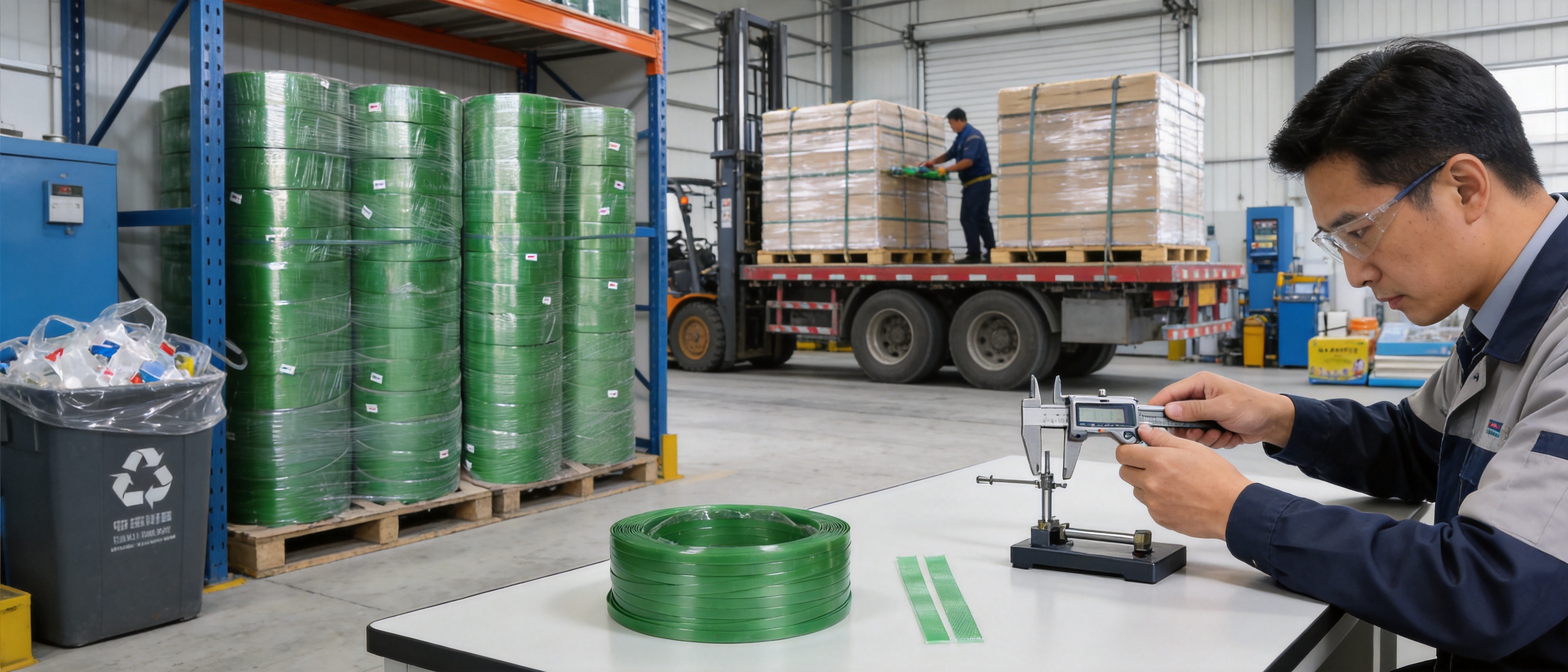
Modern packaging operations require strapping materials that can secure products firmly without adding unnecessary weight, creating avoidable safety risks, or increasing handling complexity. The 1608/1610/1910/2512 handheld transparent PET plastic steel belt series is designed to meet these practical requirements. Manufactured from 100% virgin Polyethylene Terephthalate, this product combines the strength and load-retention characteristics associated with traditional steel strapping with the lighter weight, flexibility, and safer handling of a polymer-based material.
The series is intended for manual and light-duty mechanized packaging applications involving cartons, textiles, printed products, plastic goods, electronic components, and other products that require dependable external bundling. Its transparent appearance offers a clean visual presentation and allows operators to identify labels, surfaces, and packaged contents more easily. At the same time, its smooth surface and processed edges make it more comfortable to handle than many conventional metallic strapping materials.
With multiple width and thickness combinations, the series gives packaging users the ability to select a suitable balance between tensile performance, flexibility, roll convenience, and cost efficiency. The 1608, 1610, 1910, and 2512 designations generally indicate different dimensional combinations, including widths of approximately 16, 19, and 25 millimeters and thicknesses of approximately 0.8, 1.0, and 1.2 millimeters. This range allows the same product family to serve light and medium-duty packaging requirements across different industries.
Understanding the PET Plastic Steel Belt Series
PET strapping is a high-performance packaging material made from Polyethylene Terephthalate. PET is a thermoplastic polymer known for its strength, dimensional stability, chemical resistance, and relatively low weight. When processed into strapping, the material is stretched in a controlled direction to improve molecular orientation. This process aligns polymer chains along the length of the belt, helping it achieve higher tensile strength and improved resistance to impact and tension-related failure.
The term “plastic steel belt” describes the functional role of the product rather than its composition. The material is not made of steel. Instead, it is engineered to provide a practical alternative to steel strapping in selected applications. It offers sufficient strength for securing many light and medium-duty loads while being easier to transport, cut, bend, and apply manually.
The handheld transparent PET belt series is particularly suitable where packaging operators need material that can be dispensed directly from compact coils. Unlike large industrial strapping systems that require dedicated automated lines, handheld rolls can be carried to the load, measured as needed, and applied with manual tools or lightweight pneumatic equipment. This makes the series useful in warehouses, distribution centers, printing facilities, textile factories, workshops, and general manufacturing environments.
The transparent finish also distinguishes this series from opaque colored strapping. Although color does not determine mechanical performance by itself, transparency can support a cleaner appearance and help users see product labels or surfaces below the belt. It may also be preferred for retail-facing packages, printed matter, or goods where the packaging material should remain visually unobtrusive.
How PET Strapping Is Manufactured
Virgin Raw Material Selection
The product is manufactured from 100% virgin PET resin. The selection of virgin material provides a consistent starting point for production and helps reduce variability in strength, appearance, surface quality, and processing behavior. Consistency is especially important for strapping because the belt must maintain reliable performance throughout a roll and from one production batch to another.
Virgin PET also helps support a clean and uniform transparent appearance. Recycled inputs can be useful in many packaging applications, but their quality may vary depending on source, sorting, contamination, and previous processing history. For applications requiring a stable appearance and predictable mechanical properties, virgin PET offers a controlled material foundation.
Material Preparation and Melt Processing
Before extrusion, PET resin must be prepared carefully. PET is sensitive to moisture during high-temperature processing. Excess moisture can cause hydrolytic degradation, which may reduce molecular weight and weaken the finished product. A disciplined manufacturing process therefore includes appropriate material storage and drying before the resin enters the extrusion system.
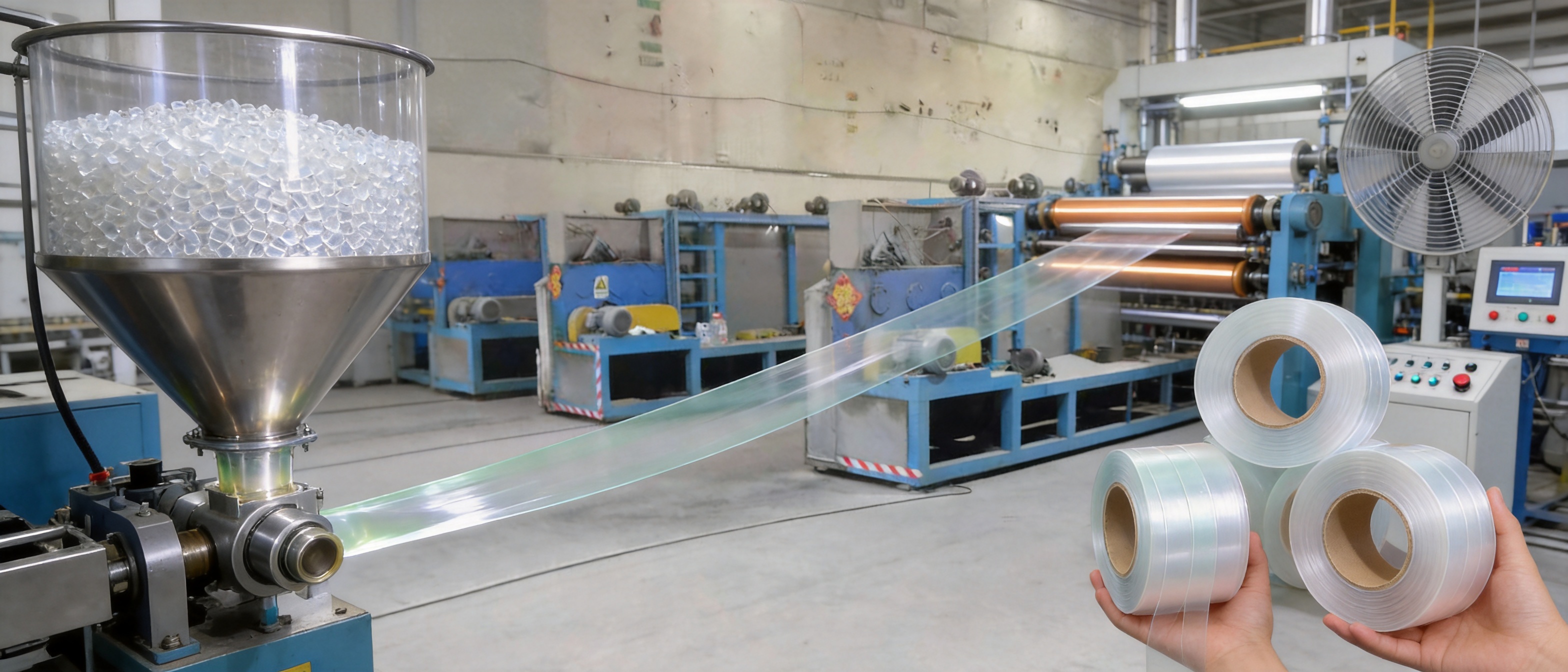
During melt processing, the prepared resin is heated until it reaches a controlled molten state. Temperature, residence time, screw operation, and filtration must be managed carefully. Excessive heat or prolonged residence time may affect the polymer, while insufficient melting can cause inconsistent flow and surface defects. Stable process control supports uniform belt dimensions and dependable tensile performance.
Advanced production equipment helps maintain consistent conditions along the extrusion line. Automated or closely monitored temperature zones, calibrated pressure controls, precision dies, and stable cooling systems allow manufacturers to produce a continuous belt with a controlled width and thickness. These controls are essential when supplying several model sizes within one product family.
Extrusion and Dimensional Formation
After melting, the PET material is formed through a specialized die into a continuous strip. The die geometry directly influences the initial width, thickness, and edge profile of the belt. Proper die design and maintenance help create a smooth surface and reduce dimensional fluctuations.
Dimensional accuracy is important for both performance and ease of use. A belt that is too thin may not provide the intended holding force, while excessive thickness can reduce flexibility and increase material consumption. Width variation may affect tool compatibility, joint formation, and load distribution. The listed reference specification for the 16 millimeter model is a width of 16 millimeters ± 0.5 millimeters and a thickness of 0.8 millimeters ± 0.05 millimeters.
Manufacturers can use in-process checks to monitor width and thickness during production. Such checks may involve calibrated measuring equipment, operator inspections, and documented quality records. Maintaining dimensional consistency helps ensure that the finished coil performs predictably with manual tensioners, sealers, buckles, or other compatible joining systems.
Uniaxial Stretching and Molecular Orientation
One of the most important stages in PET strapping production is controlled stretching. The freshly formed strip is drawn in the machine direction, causing the polymer molecules to become more aligned along the length of the belt. This molecular orientation increases the efficiency with which the material transfers tensile loads.
The stretching ratio, temperature, line speed, and cooling conditions must be balanced carefully. Insufficient orientation may result in lower tensile performance, while excessive or poorly controlled stretching can create brittleness, uneven shrinkage, or unstable dimensions. A well-controlled process produces a belt that offers both strength and practical toughness.
The result is a monocellular or uniaxially oriented structure designed to resist pulling forces along the direction in which the strap is applied. This is especially valuable during transportation, when packages may experience vibration, impact, shifting, and temporary shock loads. The material must hold tension without breaking suddenly or losing its ability to restrain the load.
Surface Treatment, Cooling, and Edge Processing
Following orientation, the belt is cooled and stabilized. Cooling helps preserve the desired dimensions and reduces the risk of distortion. The surface is then inspected for smoothness, continuity, and visible defects. A smooth surface supports easier threading through manual tools and reduces friction-related problems during application.
Edge quality is also significant. Rough or sharp edges can make manual application uncomfortable and may create unnecessary cut hazards. Properly processed edges improve operator safety and help prevent damage to the packaged goods. This advantage is particularly relevant in textile, printing, and light manufacturing environments where workers may apply large quantities of strapping by hand.
Slitting, Winding, and Roll Formation
Once the belt has passed dimensional and surface checks, it is wound into handheld rolls. Winding tension must be controlled so that the roll remains compact and stable without becoming difficult to unwind. Poor winding can lead to telescoping, tangling, uneven dispensing, or damage to the belt edges.
Handheld roll packaging is designed to make the material convenient to move between workstations. Operators can access a roll when needed without requiring a large dispenser or fixed packaging line. The roll format also supports inventory management because different models can be identified and stored according to width, thickness, and intended application.
Quality inspection continues through the winding stage. Visual checks can identify surface marks, color variation, contamination, or winding problems. Mechanical samples may be tested for tensile strength, elongation, and joint compatibility. This combination of process monitoring and finished-product inspection helps maintain stable product performance.
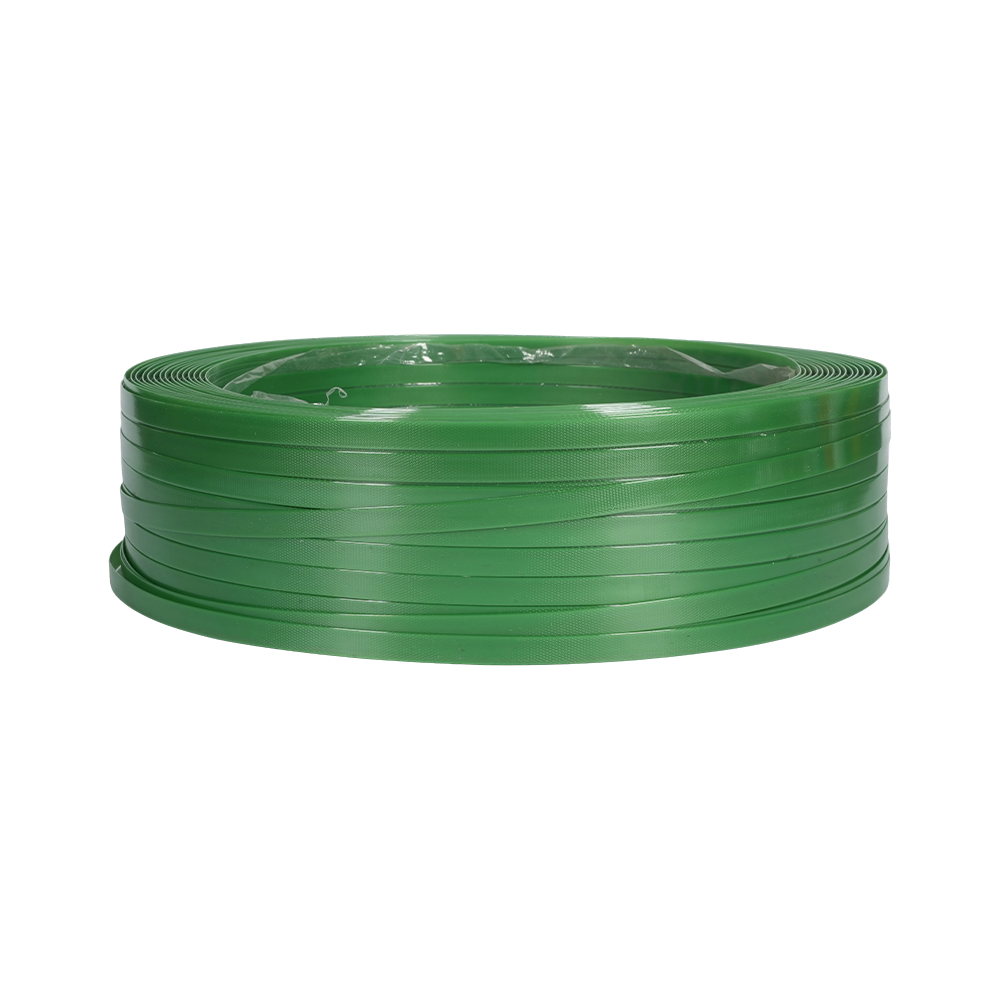
1608/1610/1910/2512 Handheld Transparent P+E+T Plastic Steel Belt
Core Performance Advantages
High Tensile Strength with Practical Toughness
The primary purpose of PET strapping is to retain a load under tension. The 1608/1610/1910/2512 series is engineered to deliver a strong balance between tensile strength and toughness. Typical tensile strength for PET strapping may range from approximately 300 to 500 MPa, depending on the model, processing conditions, and test method. The supplied product information identifies breaking elongation at approximately 24 percent.
Tensile strength indicates the maximum stress the belt can withstand before breaking, while elongation describes how much it can stretch under load. A useful packaging belt should not be rigid and brittle. It should accommodate limited movement, vibration, and impact without failing immediately. The combination of strength and moderate elongation allows PET strapping to absorb some dynamic forces while continuing to hold the package together.
This balance is valuable during loading, unloading, stacking, and transportation. A carton may be subjected to sudden movement when a forklift starts or stops, or a textile bundle may shift slightly as it is handled. A belt with appropriate toughness can tolerate these normal events more effectively than a material that has high initial strength but limited impact resistance.
Low Weight and Efficient Handling
PET strapping is significantly lighter than steel strapping used for comparable general packaging tasks. Lower weight reduces the effort required to carry rolls, move inventory, and apply the belt around a load. It also reduces the amount of packaging material transported from the factory to the customer and from the warehouse to the packing station.
For manual operations, the weight advantage can improve productivity. Workers can move more rolls during a shift, position the belt around irregular cartons more easily, and complete packaging tasks without relying on heavy dispensing equipment. The lighter format may also support more flexible workstation layouts.
Although the belt is lightweight, it is not intended to be selected solely on the basis of mass. Users should match the width and thickness to the load weight, dimensions, surface condition, stacking method, and expected transportation environment. A suitable model provides efficient material use without compromising load stability.
Flexible and Easy to Thread
The polymer structure gives the belt a degree of flexibility that supports convenient manual application. Operators can bend it around corners, pass it under or around cartons, and thread it through a sealing tool without the stiffness associated with many metallic materials. This is useful when packaging loads are irregular, compact, or positioned in areas where access is limited.
Flexibility also helps the belt conform to the shape of the package. Better contact can distribute pressure more evenly and reduce the likelihood of localized damage to carton edges or product surfaces. When combined with edge protection, the belt can provide secure bundling while maintaining a clean package appearance.
Safer Handling Than Conventional Metal Strapping
Steel strapping can present handling challenges because its edges may be sharp, its springback can be difficult to control, and cutting a tensioned strap can release stored energy. PET strapping is not risk-free, and operators must still follow appropriate safety procedures, but its smooth surface, processed edges, lighter weight, and flexible character can reduce several common handling difficulties.
The belt is easier to bend and position before tension is applied. It does not rust, and it is less likely to create metallic burrs during ordinary handling. These qualities can improve the working environment for employees who perform repetitive packaging operations. Training remains important: workers should use compatible tools, wear suitable protective equipment, and avoid standing in the potential release path of any tensioned strap.
Resistance to Moisture and Climatic Variation
PET strapping is largely unaffected by ordinary moisture exposure. It does not absorb water in the same manner as many paper-based packaging materials, and it does not rust like steel. This makes it suitable for logistics environments in which packages may encounter humidity, condensation, or short-term exposure to damp conditions.
The belt can maintain stable performance across a range of normal climatic conditions when stored and used correctly. However, all polymer products should be protected from prolonged direct sunlight, excessive heat, and conditions outside the intended application range. Proper storage in a cool, dry indoor environment helps preserve its appearance and mechanical properties.
Chemical Compatibility
PET is chemically inert toward many common packaged goods and does not normally react with ordinary cartons, textiles, printed materials, plastic products, or light electronic components. This characteristic makes it a practical choice for general industrial packaging.
Compatibility should always be evaluated when the belt will contact aggressive chemicals, solvents, high-temperature surfaces, or unusual substances. The product is designed primarily for packaging and bundling applications, not for use as a chemical containment component. Nevertheless, for common warehouse and manufacturing products, its chemical stability is a useful advantage over materials that may corrode, stain, or react with moisture.
Clean and Transparent Appearance
The transparent finish provides a neat, unobtrusive appearance. It allows labels, printed graphics, and product surfaces to remain visible beneath the belt. For printed matter, promotional materials, textiles, and consumer-facing cartons, this can help preserve the visual presentation of the package.
Transparency also supports quick visual inspection. Workers may be able to see whether the belt is correctly positioned, whether a label remains readable, or whether the load surface has shifted. Minor color differences between production batches may occur, but such variations do not necessarily affect performance when the material remains within its mechanical and dimensional specifications.
Advantages Over Competing Strapping Materials
Comparison with Steel Strapping
Steel strapping remains valuable for demanding heavy-duty applications, but it is heavier, less flexible, and more susceptible to corrosion. It may require greater care during cutting, tensioning, and removal. For light and medium-duty cartons, textiles, printed products, and plastic goods, steel can provide more capacity than necessary while increasing material weight and handling effort.
The PET series offers a more practical alternative where extreme steel-level performance is not required. It provides strong tensile retention with lower weight, easier bending, and better resistance to rust. It is also more comfortable for manual application and may reduce the risk of scratching or denting packaged surfaces.
Steel can also lose efficiency when exposed to moisture or corrosive environments. PET does not rust, making it advantageous for ordinary humid storage and transportation conditions. However, users should not automatically replace steel in applications involving very heavy loads, sharp-edged industrial products, high-temperature exposure, or specialized regulatory requirements. Correct material selection is always essential.
Comparison with Polypropylene Strapping
Polypropylene strapping is commonly used for light-duty bundling. It is flexible and economical, but its tensile strength, creep resistance, and load retention may be lower than those of PET in applications requiring stronger restraint. Under sustained tension or changing temperature conditions, PP may be more prone to elongation and tension loss.
PET strapping generally provides a stronger and more stable solution for cartons and bundles that need dependable retention during longer transportation or stacking periods. It remains light and relatively easy to use while offering a higher-performance profile than many basic PP straps.
For very light packages, PP may remain an appropriate choice because its lower strength can be sufficient and its flexibility may be beneficial. The PET series is positioned for users who need a stronger material without moving to the weight, rigidity, and handling demands of steel.
Comparison with Cord and Textile Strapping
Textile straps and composite cords can be useful for specific load shapes and heavy-duty applications. However, their surfaces, tensioning behavior, and joining methods differ from those of smooth PET belts. The flat profile of PET provides broad contact with cartons and bundles, helping distribute restraint across the package.
For books, magazines, fabric bolts, and corrugated cartons, a flat belt can provide a more uniform appearance and effective bundling. It is also straightforward to identify by width and thickness, which simplifies product selection and inventory control.
Balanced Cost and Performance
The best packaging material is not necessarily the strongest material available. It is the material that meets the required performance level with the lowest practical total cost. The PET series supports this approach by offering multiple specifications for different load conditions. Users can select a lighter model for modest loads or a wider and thicker model when greater holding force is required.
Lower product weight can reduce handling costs, while handheld roll packaging can reduce equipment requirements. The belt’s resistance to rust and moisture-related deterioration can also reduce waste caused by damaged strapping. When applied with suitable tools and correct tension, PET can provide a reliable balance between purchase cost, labor efficiency, package protection, and transport performance.
Model Selection and Technical Specifications
The product family includes the 1608, 1610, 1910, and 2512 models. The numbers generally communicate the approximate width and thickness: the first two digits indicate the nominal width in millimeters, while the final two digits indicate the approximate thickness in tenths of a millimeter. For example, 1608 represents approximately 16 millimeters in width and 0.8 millimeters in thickness, while 2512 represents approximately 25 millimeters in width and 1.2 millimeters in thickness.
| Model | Approximate Width | Approximate Thickness | Typical Positioning |
| 1608 | 16 mm | 0.8 mm | Light-duty cartons, printed matter, textiles, and general bundling |
| 1610 | 16 mm | 1.0 mm | Light to medium-duty loads requiring additional thickness |
| 1910 | 19 mm | 1.0 mm | Medium-duty cartons and wider load-contact requirements |
| 2512 | 25 mm | 1.2 mm | Higher restraint needs within the intended handheld PET application range |
The table provides general model guidance rather than a substitute for load testing. Actual performance depends on belt tension, joint efficiency, package geometry, load weight, pallet configuration, transportation conditions, and the quality of the tools used. Customers should confirm the required specification with the supplier when packaging fragile, high-value, unstable, or unusually heavy goods.
| Parameter | Specification |
| Material | 100% virgin Polyethylene Terephthalate |
| Appearance | Transparent with a smooth surface |
| Reference model specification | 16 mm width ± 0.5 mm; 0.8 mm thickness ± 0.05 mm |
| Typical tensile strength range | Approximately 300–500 MPa, depending on model and test conditions |
| Typical breaking elongation | Approximately 24% |
| Packaging format | Handheld coils for convenient access, handling, and storage |
| Joining equipment | Manual tools or lightweight pneumatic tools, selected for the belt specification |
Choosing the Appropriate Width
Width affects the contact area between the belt and the package. A wider belt can distribute restraint over a larger surface area and may be suitable for broad bundles, larger cartons, or loads where edge pressure must be controlled. The 19 millimeter and 25 millimeter options can provide a broader load-contact profile than the 16 millimeter option.
Narrower belts may be more convenient for compact cartons, smaller bundles, and applications where the strap must pass through limited spaces. They may also reduce material use when the packaging requirement is modest. Width selection should therefore consider not only strength, but also package dimensions, corner conditions, tool compatibility, and the desired visual appearance.
Choosing the Appropriate Thickness
Thickness influences the belt’s cross-sectional area, resistance to tearing, and overall load-retention capacity. A 0.8 millimeter belt can be suitable for lighter cartons and bundles, while 1.0 millimeter or 1.2 millimeter options may be preferred when additional restraint is required.
Increasing thickness may improve performance, but it can also affect flexibility, roll length, material consumption, and tool settings. The strongest available model is not always the most efficient choice. Selecting a specification that matches the actual load helps control cost and ensures that the belt remains easy to apply.
Applications Across Industrial and Commercial Packaging
Corrugated Cartons
PET strapping is suitable for reinforcing lightweight and corrugated cartons during storage and transportation. It can help keep carton flaps closed, prevent bundles from separating, and stabilize packages that may otherwise shift during handling. Its smooth surface can be used with appropriate edge protection when the carton board is vulnerable to compression.
For stacked cartons, the belt can provide additional cohesion around a group of packages. Operators should ensure that tension is sufficient to stabilize the load without crushing the carton. Corner protectors may be used where concentrated pressure could damage the box or where the package will be stacked for an extended period.
Textiles and Garments
Textile rolls, fabric bolts, garment bundles, and soft goods often require restraint without excessive surface damage. The flexible PET belt can be wrapped around these products and tightened to maintain a compact bundle. Its transparent appearance is visually unobtrusive and may be preferred when the package is displayed or inspected before shipment.
Because textiles can compress under pressure, users should avoid excessive tension. A wider model or suitable protective layer may help distribute pressure. The correct approach depends on fabric type, bundle density, moisture conditions, and the expected handling method.
Books, Magazines, and Printed Matter
Printed materials are frequently bundled for distribution, warehousing, and delivery. Books, magazines, brochures, catalogs, and promotional products can be held together with PET strapping while keeping labels and printed surfaces visible. The clean appearance of transparent material can support a professional presentation.
Operators should apply only the tension needed to prevent movement. Excessive tension may leave marks on paper products, especially when bundles are stored for long periods. Flat positioning, corner protection, and correct model selection can help maintain both package integrity and product appearance.
Plastic Products and Light Electronic Components
Plastic parts, molded products, small appliances, and light electronic components may be bundled for internal movement or shipment. PET strapping can stabilize boxes, trays, and grouped items without introducing metallic contact. Its chemical stability and non-corrosive character are useful when the packaged items must remain clean and free from rust-related contamination.
Electronic products should still be protected against shock, static electricity, moisture, and abrasion according to their specific requirements. PET strapping is a secondary packaging component and should be used alongside suitable cushioning, cartons, bags, or separators where needed.
Warehouse and Distribution Operations
The handheld format is practical in warehouses with multiple packing locations or changing load sizes. Rolls can be supplied to individual stations, carried to large or awkward packages, and stored without occupying the space required by bulky automated equipment. This flexibility may be especially valuable for businesses that handle varied products rather than a single high-volume package format.
Distribution centers can also use different models for different load categories. A standard operating procedure may identify the 1608 model for light cartons, the 1610 and 1910 models for medium packages, and the 2512 model for applications requiring a broader or thicker belt. Final selection should be based on internal testing and documented packaging requirements.
Application Method and Joint Security
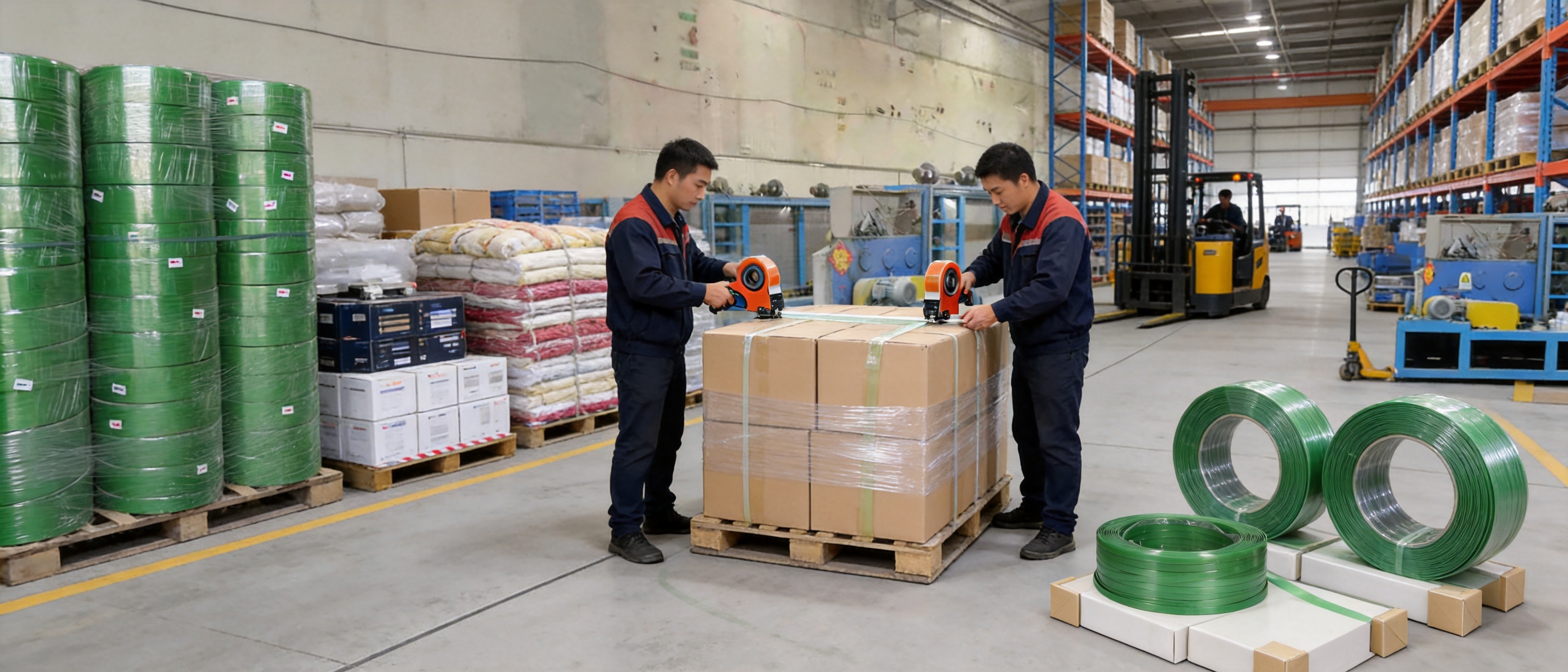
Correct application is essential because the performance of a strapping material depends not only on its tensile properties but also on the quality of the finished joint. A strong belt with a poorly formed joint may fail prematurely. Workers should use tools designed for the selected width and thickness and follow the tool manufacturer’s operating instructions.
Preparing the Package
Before strapping, the package should be arranged so that the contents are stable and the outer surfaces are reasonably even. Loose items should be consolidated, carton flaps should be closed, and sharp corners should be covered when necessary. If the belt is applied around a palletized load, the pallet should be level and the goods should not extend in a way that creates an unstable overhang.
Operators should determine the direction and number of straps required. Long cartons may need straps placed at intervals along the length, while compact bundles may require one or two belts around the center. The objective is to prevent movement without placing excessive stress on the product or package.
Wrapping and Tensioning
The belt should be guided smoothly around the load without twisting. Twisting can reduce the effective contact area and create uneven stress. The belt should lie flat against the package and pass through the tool in the correct direction.
Tension should be applied gradually. The operator should stop when the load is stable and the package remains undamaged. Excessive tension can crush cartons, deform plastic products, mark printed matter, or cause a sudden release if the belt or joint is overloaded. Insufficient tension may allow the load to shift during transport.
Sealing and Inspecting the Joint
Depending on the selected tool and packaging method, the belt may be joined with a friction-welded joint, metal seal, buckle, or another compatible fastening system. The joint must be appropriate for PET strapping and for the required load level. After sealing, the operator should check that the belt is properly engaged and that the joint is not visibly damaged.
A simple inspection should confirm that the belt is flat, the joint is centered and secure, the package has not been crushed, and no sharp or loose section remains. If the joint slips or the belt breaks during a controlled test, the operator should review tool settings, belt compatibility, tension level, and application technique before continuing production.
Quality Control and Manufacturing Strengths
A dependable PET strapping product requires more than a suitable resin formula. It depends on control throughout raw material preparation, extrusion, orientation, cooling, winding, packaging, and final inspection. The manufacturer’s stated production philosophy emphasizes quality control from raw material procurement through production and final testing.
Process Consistency
Process consistency is necessary to produce a belt with stable width, thickness, tensile strength, elongation, transparency, and winding quality. Variations in temperature, draw ratio, cooling, or line speed can influence the final product. A professional manufacturing system therefore combines experienced personnel with appropriate equipment and documented process parameters.
Consistent production also supports reliable customer operations. When packaging teams know that a specified model will run smoothly through their tools and provide repeatable joint performance, they can reduce adjustments, interruptions, and material waste.
Inspection of Raw Materials
Raw material inspection helps verify the quality and identity of PET resin before production begins. Material should be protected against contamination and moisture. Storage conditions should be managed so that resin quality remains stable until it is dried and processed.
Using 100% virgin PET provides a clearly defined material basis. This can simplify process control and support a stable transparent appearance. It also helps the manufacturer establish consistent production parameters for each belt specification.
Dimensional and Visual Inspection
Width and thickness are critical inspection items. A belt that remains within the specified dimensional tolerance is more likely to fit the intended tools and produce predictable load distribution. Visual inspection can identify surface defects, dark particles, bubbles, scratches, edge damage, and winding problems.
While minor appearance variations may occur between production batches, they should not affect performance when the product remains within its applicable specifications. Customers requiring especially strict visual consistency can communicate their requirements before production so that suitable inspection criteria can be established.
Mechanical Testing
Mechanical testing may include tensile strength, elongation, joint efficiency, and resistance to breakage under controlled conditions. Tensile testing helps confirm the load-bearing capability of the belt, while elongation testing provides information about its ability to stretch before failure.
Testing results should be interpreted according to the relevant test method, specimen preparation, environmental conditions, and belt model. Values from different laboratories or methods may not be directly comparable. For this reason, users should evaluate the product in the actual packaging system, including the selected tool and joint method.
Production Capacity and Customer Support
The manufacturer reports an annual output value exceeding RMB 60 million and maintains a business covering research, development, production, and sales of packaging materials. Its product portfolio includes BOPP tape, kraft paper tape, masking tape, high-temperature tape, metal tape, PE stretch film, PP strapping, and high-strength PET strapping.
This broader product capability can be valuable to customers seeking coordinated packaging procurement. A business that understands tapes, films, and strapping can help evaluate how different packaging components work together. For example, PET strapping may be combined with stretch film, carton sealing tape, corner protectors, or other materials to create a complete load-stabilization system.
The company’s location in Zhejiang Province places its production and commercial operations within one of China’s developed manufacturing regions. Access to established industrial infrastructure, supply networks, technical labor, and logistics services can support efficient production and delivery. The stated focus on research, process improvement, and service development further supports its role as a packaging material partner for domestic and international customers.
Storage, Transportation, and Workplace Practices
Recommended Storage Conditions
PET strapping should be stored indoors in a cool, dry environment. Rolls should be kept away from prolonged direct sunlight, extreme heat, open flames, and sources of contamination. Stable storage conditions help preserve transparency, dimensional stability, and mechanical performance.
Rolls should be placed on a clean, level surface or stored in a manner that prevents crushing and deformation. Heavy objects should not be stacked directly on top of handheld coils. If rolls are stored for an extended period, inventory should be rotated according to a first-in, first-out system where appropriate.
Protection from Direct Sunlight
Although PET has useful environmental resistance, prolonged ultraviolet exposure can affect many polymers over time. Direct sunlight may cause discoloration or gradual changes in performance, especially in outdoor storage. The recommended indoor storage environment reduces this risk.
If the material must be transported or temporarily held outdoors, it should be protected with suitable covering. Packaging should not be removed earlier than necessary, and rolls should not be placed near hot machinery, steam lines, or other heat sources.
Safe Manual Use
Operators should be trained in the safe use of tensioners, sealers, cutters, and pneumatic tools. Hands should be kept clear of the joint and tensioning mechanism. Workers should not stand directly in line with a tensioned belt, and they should inspect the package before cutting or removing any strap.
Appropriate gloves and eye protection may be recommended depending on the work environment. Tools should be maintained, and damaged or incompatible tools should not be used. A clean, properly adjusted tool improves joint quality and helps reduce the risk of unexpected belt release.
Transportation and Package Protection
During transportation, PET rolls should be protected from crushing, contamination, moisture accumulation, and excessive heat. Cartons or protective packaging should be loaded securely so that rolls do not shift or fall. The transparent belt itself should not be used as a lifting handle for heavy rolls unless the roll packaging has been specifically designed for that purpose.
Sustainability and Material Efficiency
PET strapping contributes to material efficiency through its combination of strength and low weight. A relatively light belt can secure many common industrial loads, reducing the amount of material needed compared with heavier alternatives. Reduced material mass can also lower the energy required for handling and transportation.
PET is a recyclable polymer in suitable recycling systems. At the end of its service life, used strapping should be collected and separated from general waste whenever local infrastructure permits. Recycling outcomes depend on contamination, collection systems, sorting practices, and regional regulations.
Responsible sustainability decisions should consider the complete packaging system. The correct belt specification reduces overuse, while proper application reduces breakage and waste. Users should avoid selecting a thicker model than necessary, but they should also avoid choosing a belt that cannot safely retain the load. A failed strap may create damaged products, rework, and additional waste.
The use of virgin PET in this series provides consistency and performance predictability. Customers with specific recycled-content or environmental requirements should discuss available options, certification needs, and end-of-life arrangements with the supplier before placing an order.
Why the Series Is Well Suited to Professional Packaging Operations
The 1608/1610/1910/2512 series is designed around the practical needs of packaging teams. It is not limited to one narrow product type or one specialized machine. Instead, it offers several dimensions, handheld roll convenience, compatibility with manual or lightweight pneumatic tools, and a performance profile suitable for many light and medium-duty applications.
Its main competitive advantage is balance. The belt is stronger than many basic light-duty plastic straps, lighter and easier to handle than steel, and more visually unobtrusive than many colored packaging materials. Its moisture resistance, chemical stability, smooth surface, and flexible structure add value in warehouses and factories where packaging speed, safety, and appearance all matter.
The manufacturing process further strengthens the product proposition. Controlled PET preparation, specialized extrusion, uniaxial stretching, cooling, edge processing, precision winding, and quality inspection work together to produce a belt with predictable properties. A manufacturer with experience across multiple packaging categories can also provide broader application knowledge rather than treating the belt as an isolated commodity.
For customers purchasing packaging materials in wholesale quantities, supplier capability is particularly important. Stable production, product range, quality systems, technical communication, and responsive service can affect the total value of a packaging program. The company’s established product portfolio and reported annual output value indicate a substantial operating base for serving varied customer requirements.
Frequently Asked Questions
What is a PET plastic steel belt?
A PET plastic steel belt is a strapping material made from Polyethylene Terephthalate rather than metal. It is called a plastic steel belt because it is engineered to provide strong load restraint similar to steel in selected packaging applications while offering lower weight, greater flexibility, and easier handling.
What do the numbers 1608, 1610, 1910, and 2512 mean?
The numbers generally indicate approximate belt dimensions. The first two digits represent nominal width in millimeters, and the final two digits represent approximate thickness in tenths of a millimeter. Thus, 1608 is approximately 16 millimeters wide and 0.8 millimeters thick, while 2512 is approximately 25 millimeters wide and 1.2 millimeters thick.
Which model should be selected for a particular package?
Selection depends on package weight, dimensions, stacking arrangement, transportation conditions, number of straps, and the required tension. The 1608 model may be appropriate for lighter applications, while thicker or wider models can provide additional restraint. Users should conduct application testing or request technical guidance when packaging unstable, valuable, fragile, or unusually heavy loads.
Can the belt be applied manually?
Yes. The series is supplied in handheld coils and is intended for use with manual tools or lightweight pneumatic tools that match the belt specification. The tool must be correctly adjusted for the selected width and thickness, and the finished joint should be inspected before the package is released for shipment.
Is PET strapping safer than steel strapping?
PET strapping is generally easier and more comfortable to handle because it is lighter, flexible, smooth, and non-rusting. However, it still stores tension when applied and must be handled responsibly. Operators should receive training, use suitable tools and protective equipment, and remain clear of the potential release path.
Can PET strapping be used outdoors?
It can tolerate ordinary moisture and many normal climatic conditions, but prolonged direct sunlight and excessive heat should be avoided. For best storage life and performance, rolls should be kept indoors in a cool, dry environment. Outdoor use should be evaluated according to exposure duration and local conditions.
Is the transparent color purely cosmetic?
No. The transparent appearance provides a clean visual effect and can allow labels, graphics, and product surfaces to remain visible. It may also make it easier to inspect belt placement. Mechanical performance depends primarily on material quality, dimensions, molecular orientation, and processing conditions rather than appearance alone.
Can the belt be used for food packaging?
The belt is described for external bundling and reinforcement of packaged goods. It should not be assumed to be suitable for direct food contact unless the supplier provides the required compliance documentation for the intended market and application. Users should confirm all regulatory requirements before selecting it for food-related packaging.
Does PET strapping rust?
No. PET is a polymer and does not rust like steel. This makes it useful in humid storage and transportation environments where corrosion could stain products or reduce the appearance of metal strapping.
How should the belt be joined?
The belt should be joined with a compatible manual or lightweight pneumatic tool using the appropriate friction weld, seal, buckle, or other approved fastening method. Joint quality is critical. The operator should verify that the belt is flat, properly tensioned, and securely fastened before shipment.
Is PET strapping recyclable?
PET strapping can be recyclable through suitable collection and processing systems. Recycling depends on local infrastructure and the condition of the used material. Users should separate the belt from other waste streams where practical and follow applicable regional recycling procedures.
What quality checks are important when purchasing the product?
Important checks include material consistency, width, thickness, surface condition, edge quality, tensile strength, elongation, roll winding, packaging integrity, and joint performance. Customers with specialized requirements should request relevant technical data and evaluate the belt using their own packaging tools and load conditions.
Conclusion
The 1608/1610/1910/2512 handheld transparent PET plastic steel belt series provides a balanced solution for light and medium-duty industrial packaging. Made from 100% virgin PET and processed through controlled extrusion and uniaxial stretching, it delivers a useful combination of tensile strength, toughness, flexibility, low weight, moisture resistance, chemical stability, and clean appearance.
Compared with steel, it is lighter, easier to handle, and resistant to rust. Compared with basic polypropylene strapping, it offers a stronger and more stable option for applications that demand improved load retention. Its handheld roll format supports flexible packaging operations, while its range of dimensions helps users match the belt to different carton, textile, printed-product, and general industrial requirements.
The product’s value is supported by manufacturing discipline. Careful resin preparation, melt processing, dimensional control, molecular orientation, cooling, edge treatment, winding, and final inspection are essential to producing dependable PET strapping. Combined with experience in tapes, films, PP strapping, and other packaging materials, these capabilities position the manufacturer to serve customers seeking reliable products and coordinated packaging solutions.
When the appropriate model is selected, applied with a compatible tool, and stored correctly, the PET belt can help improve package stability, operator convenience, material efficiency, and overall shipment protection. It is a practical alternative for businesses that need more performance than light plastic strapping can provide but do not require the weight and handling demands of steel.
References
1. Product technical information for the 1608/1610/1910/2512 handheld transparent PET plastic steel belt series.
2. General principles of Polyethylene Terephthalate processing, molecular orientation, and polymer strapping manufacture.
3. Packaging engineering practices for tensioned strapping, joint formation, load stabilization, and corner protection.
4. Industrial guidance on the storage, handling, and workplace use of plastic and metal strapping materials.
5. General recycling and material-efficiency principles for PET packaging products.
Product: 1608/1610/1910/2512 Handheld Transparent P+E+T Plastic Steel Belt

LATEST POST
Let’s create something amazing together
contact usFeatured Products
-
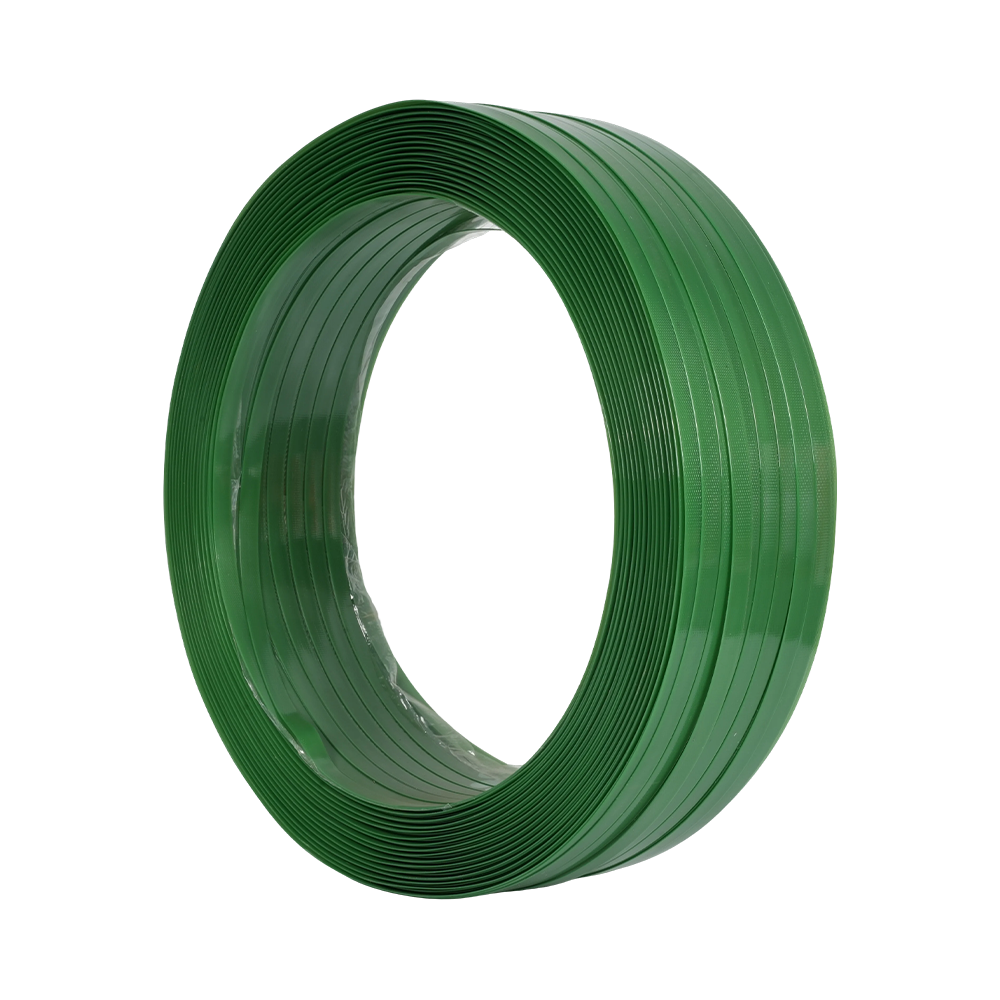
1608/1610/1910/2512 Handheld Opaque PET Plastic Steel Belt
-
1608/1610/1910/2512 Handheld Transparent P+E+T Plastic Steel Belt
-
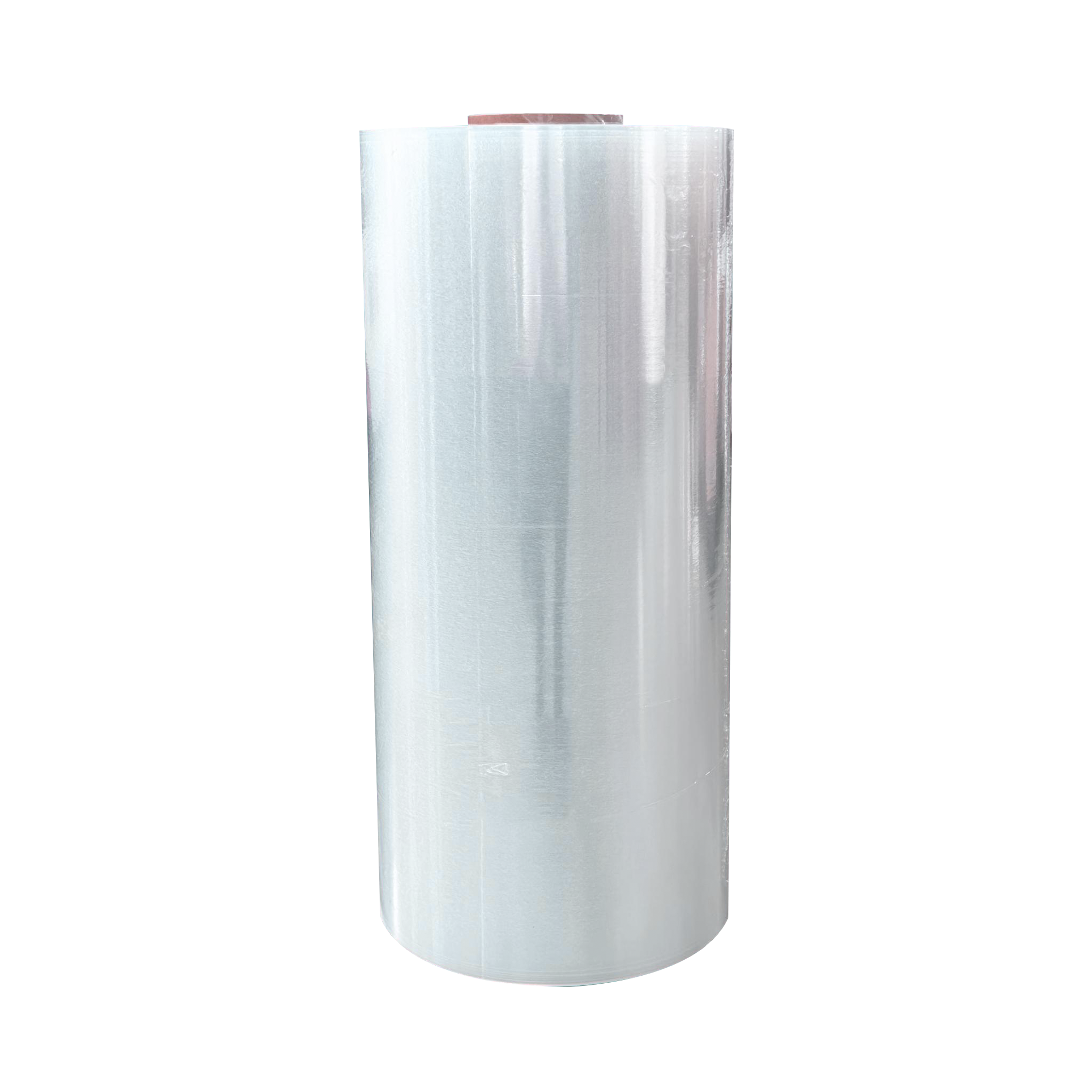
Transparent machine stretch film
-
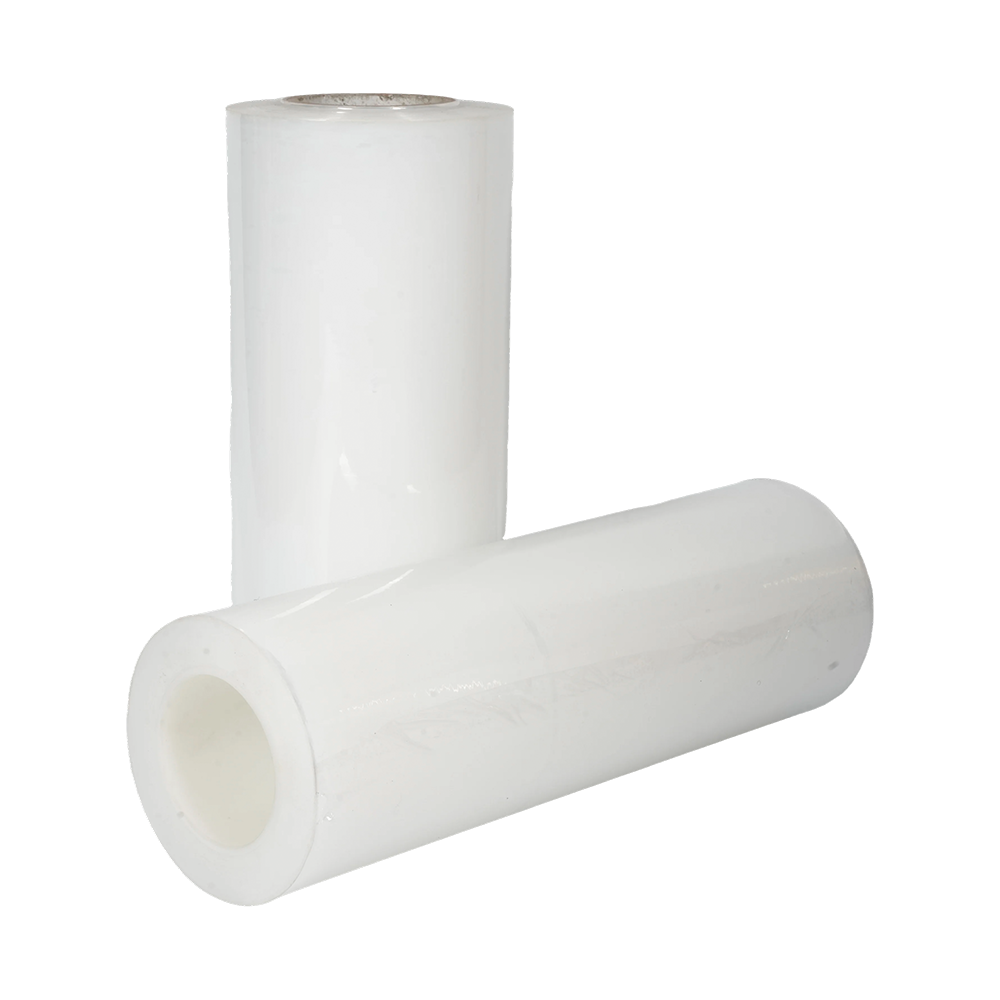
Transparent Protective Film Rolls, Clear PE Stretch Film
-
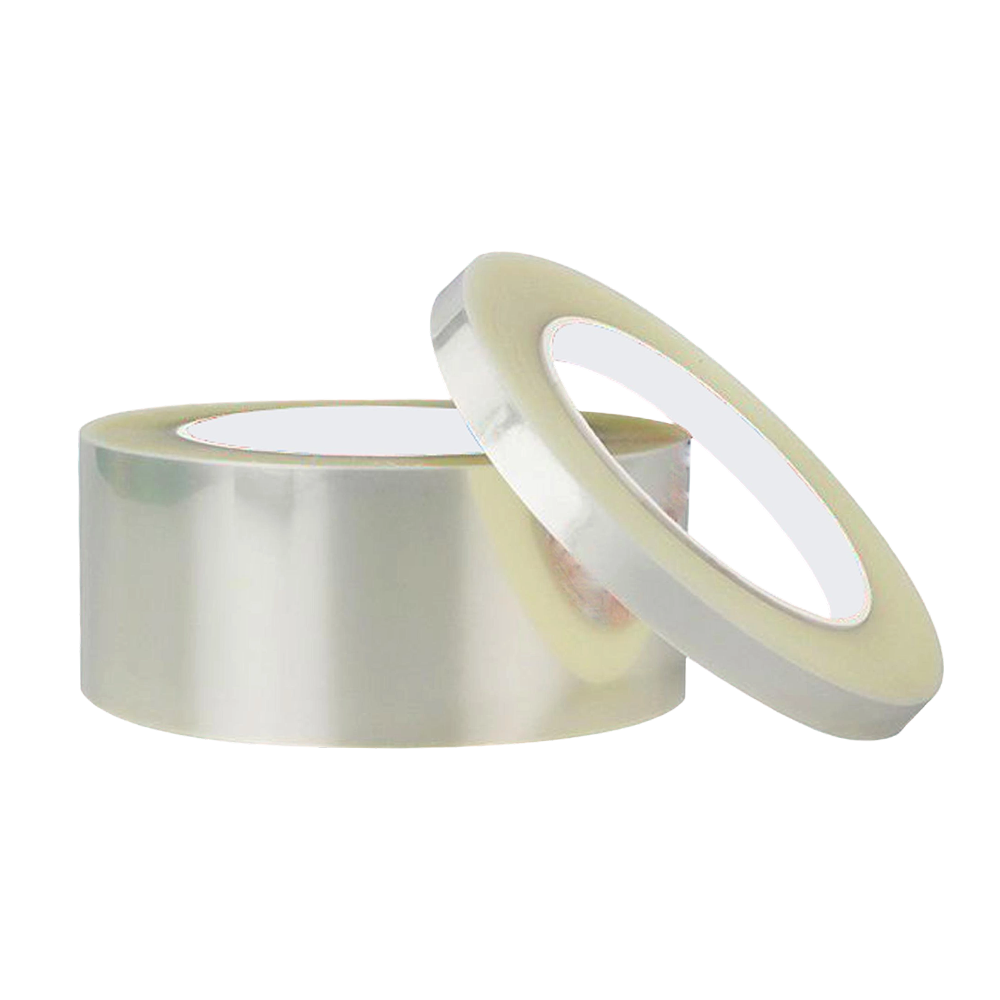
PET double-sided tape
-
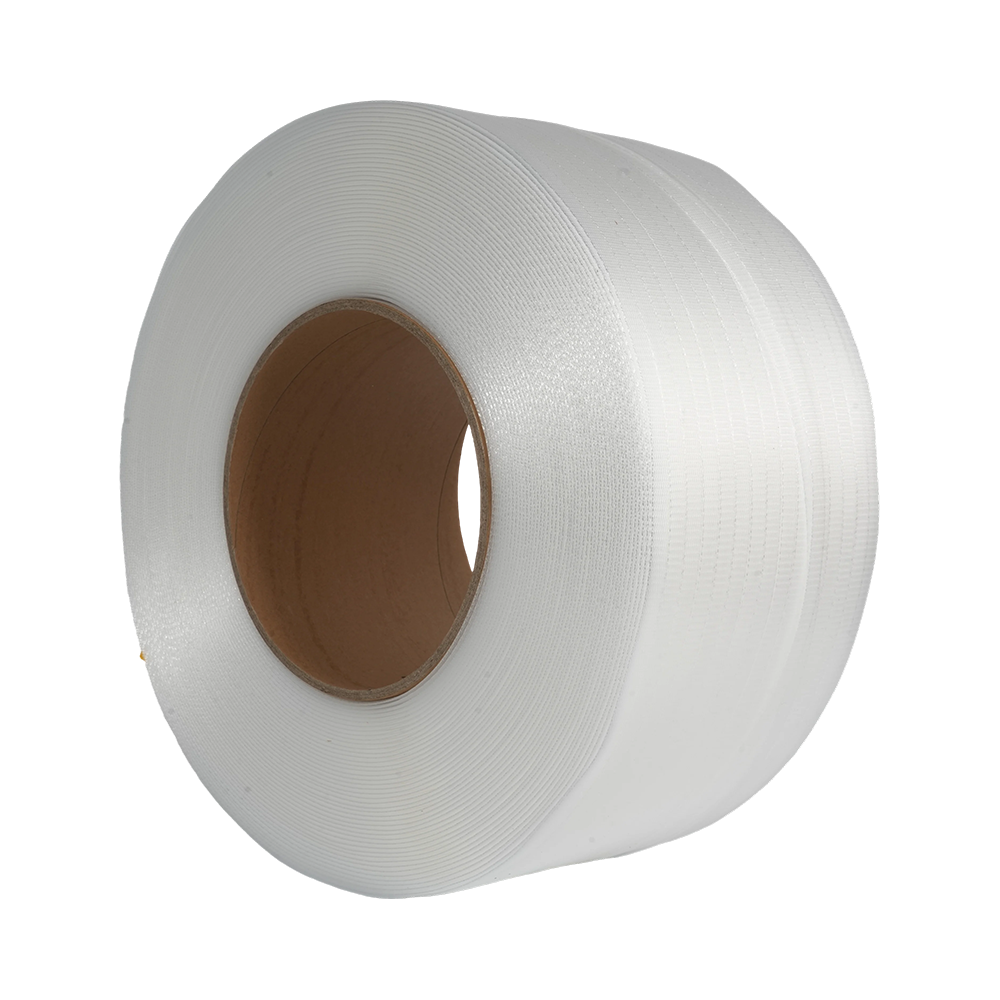
Transparent Strapping Band, Clear PP Packing Strap For Pelletizing Machine
CONTACT DETAILS
- Address:No. 241, Yaojiafan, Zhangpanqiao, Shushan Street, Xiaoshan District, Hangzhou City, Zhejiang Province, China
- TEL:+86-0571-83175630
- Phone:+86-13336160217
- Email:anqiaocun@163.com
PRODUCTS
NEWS CENTER
MOBILE TERMINAL
Copyright© Zhejiang Geruite Packaging Materials Co., Ltd. All Rights Reserved.
Privacy Wholesale industrial packaging tape Manufacturers