


 English
 Español
 عربى

Metal Carton Sealer: A Durable Solution for High-Volume Packaging Operations
Content
- 1 Why the Choice of Carton Sealer Matters
- 2 Product Overview
- 3 Metal Construction for Extended Service Life
- 4 Clean and Precise Tape Cutting
- 5 Consistent Tape Application
- 6 Ergonomic Design for Repetitive Work
- 7 Performance in Demanding Environments
- 8 Advantages Over Conventional Plastic Sealers
- 9 Application Areas
- 10 Manufacturing Strengths and Quality Focus
- 11 Process Control from Materials to Finished Product
- 12 How to Select the Correct Configuration
- 13 Recommended Operating Method
- 14 Maintenance and Service-Life Management
- 15 Total Cost of Ownership
- 16 Integration with Other Packaging Materials
- 17 Customer Value and Supply Capability
- 18 Quality, Appearance, and Professional Presentation
- 19 Q&A
- 19.1 What is a metal carton sealer used for?
- 19.2 How is it different from a plastic carton sealer?
- 19.3 What tape core does this dispenser use?
- 19.4 What tape widths are supported?
- 19.5 Is the metal carton sealer suitable for more than 500 cartons per day?
- 19.6 Can it be used in cold stores or damp areas?
- 19.7 What material is the product made from?
- 19.8 Does the dispenser reduce tape waste?
- 19.9 How should the tool be maintained?
- 19.10 Is a metal dispenser always better than a plastic dispenser?
- 19.11 What information should buyers provide when requesting a quotation?
- 20 Conclusion
- 21 References
- 22 Product: Metal Carton Sealer
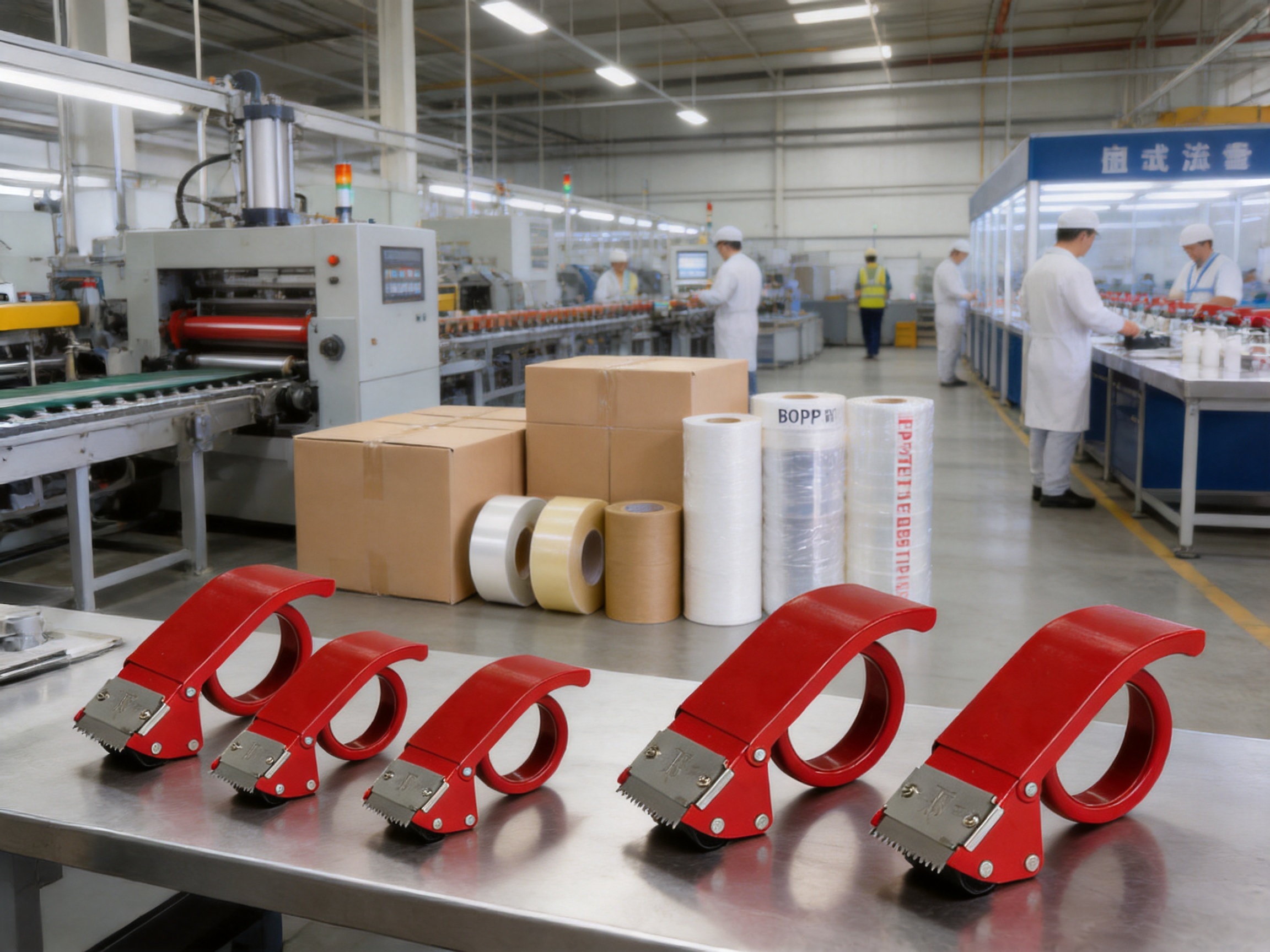
Carton sealing is one of the final steps in a packaging process, but it has a direct influence on product protection, warehouse efficiency, transport safety, and the professional appearance of every shipment. A carton may contain a high-value product, yet the entire package can be weakened by uneven tape application, an incomplete seal, a damaged carton sealer, or a poorly cut tape edge. For businesses that close hundreds of cartons every day, the choice of sealing tool is therefore more important than it may initially appear.
The Metal Carton Sealer is designed for demanding packaging environments where reliability, consistent performance, and long service life are essential. It combines a strong metal construction, a durable blade holder, controlled tape application, and an ergonomic operating design. Compared with ordinary plastic carton sealers, it is intended to provide better resistance to impact, pressure, repeated use, and challenging working conditions.
This product is suitable for production lines, export packaging, logistics operations, heavy-duty carton sealing, cold stores, and other environments in which a hand tool must perform repeatedly without frequent replacement. Its practical value is not limited to the purchase price. A durable metal sealer can help reduce tool replacement, minimize interruptions, stabilize sealing quality, and support a more efficient total packaging process.
Manufactured and supplied by Zhejiang Geruite Packaging Materials Co., Ltd., the Metal Carton Sealer forms part of a wider packaging product portfolio that includes adhesive tapes, stretch films, strapping materials, and related packaging accessories. The company’s experience in packaging materials enables it to understand the relationship between sealing tools, tapes, carton surfaces, transport conditions, and production requirements.
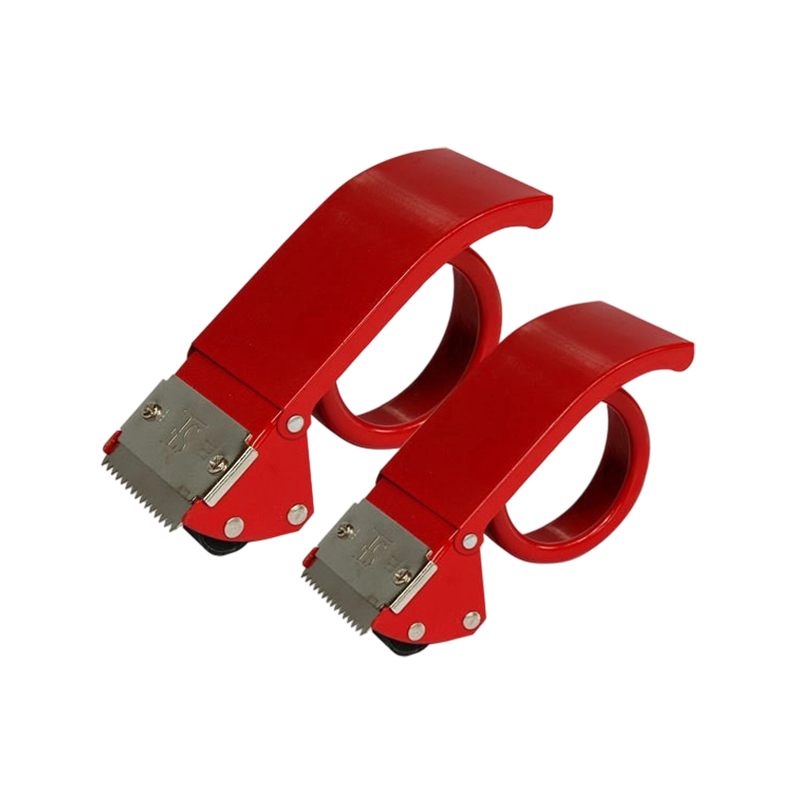
Metal Carton Sealer
Why the Choice of Carton Sealer Matters
Many packaging operations begin with a simple assumption: a carton sealer is only a low-cost accessory, so any basic model should be sufficient. This assumption can be acceptable for occasional household use, but it becomes costly in a commercial environment. A tool used hundreds of times per day is exposed to repeated mechanical stress. Its frame, tape roller, blade holder, fasteners, and handle are all subject to wear.
When a lightweight plastic sealer begins to deform or loosen, several problems may appear. The tape may no longer run straight. The operator may need to apply greater pressure. The cutting blade may tear rather than cut cleanly. The handle may become uncomfortable during extended use. Operators may also compensate for these problems by using excessive tape, pressing the tool against the carton, or repeating the sealing action.
These small inefficiencies accumulate across a production shift. They can increase material consumption, slow down carton throughput, create inconsistent package appearance, and contribute to operator fatigue. If a damaged tool causes a carton to be sealed incorrectly, the consequences may extend to product contamination, moisture exposure, transit damage, customer complaints, or failed packaging inspections.
The Metal Carton Sealer addresses these risks through a more robust construction and a design intended for repetitive commercial use. Its metal body provides structural support, while the rigid frame helps maintain the intended relationship between the tape roll, application surface, and cutting mechanism. This allows the operator to work with a more stable tool and achieve a more consistent result from carton to carton.
Product Overview
The Metal Carton Sealer is a handheld dispenser for applying and cutting carton-sealing tape. It is designed around a 76 mm tape core diameter and supports tape widths in the approximately 4.0–6.0 cm range, depending on the selected configuration. The supplied product information includes iron versions suitable for tape widths of 4–5 cm and 5.5–6 cm. Powder blue plastic versions are also listed for the same tape-width ranges, allowing buyers to select the construction and size that best match their application.
The featured product is the metal version, intended for demanding applications in which durability is a priority. The listed net weight is approximately 0.2 kg, providing a balance between portability and structural strength. The tool is compact enough for handheld use while still offering the reinforcement expected from a metal-bodied dispenser.
Product specifications should be confirmed before ordering because tape width, body configuration, and available color or material options may vary by model. The key specifications supplied for this product are summarized below.
| Item | Specification |
|---|---|
| Product name | Metal Carton Sealer |
| Product category | Dispenser |
| Primary application | Carton and box sealing |
| Body material listed | Iron for the metal configuration |
| Other construction options described | Metal-body configurations may include cast aluminum or stainless steel elements, depending on model |
| Supported tape width | Approximately 4.0–6.0 cm |
| Tape core diameter | 76 mm |
| Net weight | Approximately 0.2 kg |
| Available width configurations | 4–5 cm and 5.5–6 cm |
| Application environments | Production lines, export packaging, logistics, heavy-duty sealing, and damp or cold-store environments |
The combination of compact dimensions and metal reinforcement makes the dispenser suitable for businesses that require a practical tool rather than a disposable accessory. It can be used at packing stations, on production lines, in distribution centers, and in shipping departments where the same sealing action is performed continuously throughout the day.
Metal Construction for Extended Service Life
The central advantage of this carton sealer is its metal construction. The supplied product description explains that the cast aluminum or stainless steel body is resistant to impact and pressure and can offer a service life five to ten times longer than plastic carton sealers under suitable working conditions. The specification table identifies iron as the material for the listed metal model, so the exact body material should be verified according to the selected configuration. Regardless of the specific metal used, the purpose of the design is the same: to provide a stronger and more stable structure than a basic plastic alternative.
Metal construction is particularly valuable when the tool is frequently placed on worktables, moved between stations, or exposed to accidental drops. A plastic frame may crack, flex, or lose alignment after repeated impacts. A rigid metal frame is better able to retain its shape and support the working components. This does not make the dispenser indestructible, and correct operation remains important, but it provides a higher level of mechanical durability for commercial use.
Pressure resistance is also important. During carton sealing, the operator applies force to keep the tape in contact with the carton surface. If the tool body flexes, some of that force is lost, and the tape may not be applied evenly. A stable metal body helps transfer operating pressure more consistently. It also supports smooth movement across the carton, particularly when sealing thicker corrugated board or when the tape requires firm contact to achieve proper adhesion.
Durability has a direct effect on purchasing decisions. A plastic sealer may have a lower initial cost, but frequent replacement can increase the annual cost of ownership. Replacement tools also create operational disruption. Each new tool may feel slightly different, require adjustment, or produce a different cutting result. A metal sealer can help reduce this fluctuation by delivering a longer period of stable performance.
For high-volume users, the relevant comparison is not simply the price of one dispenser against another. It is the total cost associated with purchase, replacement, downtime, inconsistent sealing, operator adjustment, and wasted tape. A stronger tool can be a cost-optimization measure when it is used intensively.
Clean and Precise Tape Cutting
A professional carton seal requires more than tape adhesion. The tape must also be cut cleanly at the end of the sealing stroke. The Metal Carton Sealer uses a metal blade holder designed to support clean, precise cuts. The stated benefit is a reduction in fraying and curled tape edges, helping each carton present a neat and controlled appearance.
A clean cut improves the visual quality of the package and can also make handling easier. Loose or curled tape ends may catch on adjacent cartons, shelving, protective film, clothing, or conveyor components. They can also make a carton appear unfinished or poorly sealed. In export packaging and customer-facing shipments, these details may influence how a company’s quality standards are perceived.
The cutting mechanism is especially relevant during high-volume work. If the blade does not cut correctly, an operator may need to pull the tape by hand, use scissors, or repeat the cut. These extra actions reduce productivity and may create an uneven tape edge. A durable metal blade holder helps maintain the position and support of the cutting component so that the intended cutting action remains more consistent over time.
Operators should still use the tool correctly. The tape should be installed with the adhesive side facing the carton, the roll should rotate freely, and the cutting area should be kept clear of adhesive buildup and debris. A sharp and properly aligned blade performs best when the tape is guided smoothly rather than pulled at an extreme angle.
Consistent Tape Application
Carton sealing quality depends on the relationship between tape tension, application pressure, movement speed, and carton surface condition. If tension varies significantly, the tape may form creases, bubbles, or loose sections. If the operator presses too hard, the tape may stretch or the carton surface may be damaged. If the frame is unstable, it can be difficult to maintain a straight sealing path.
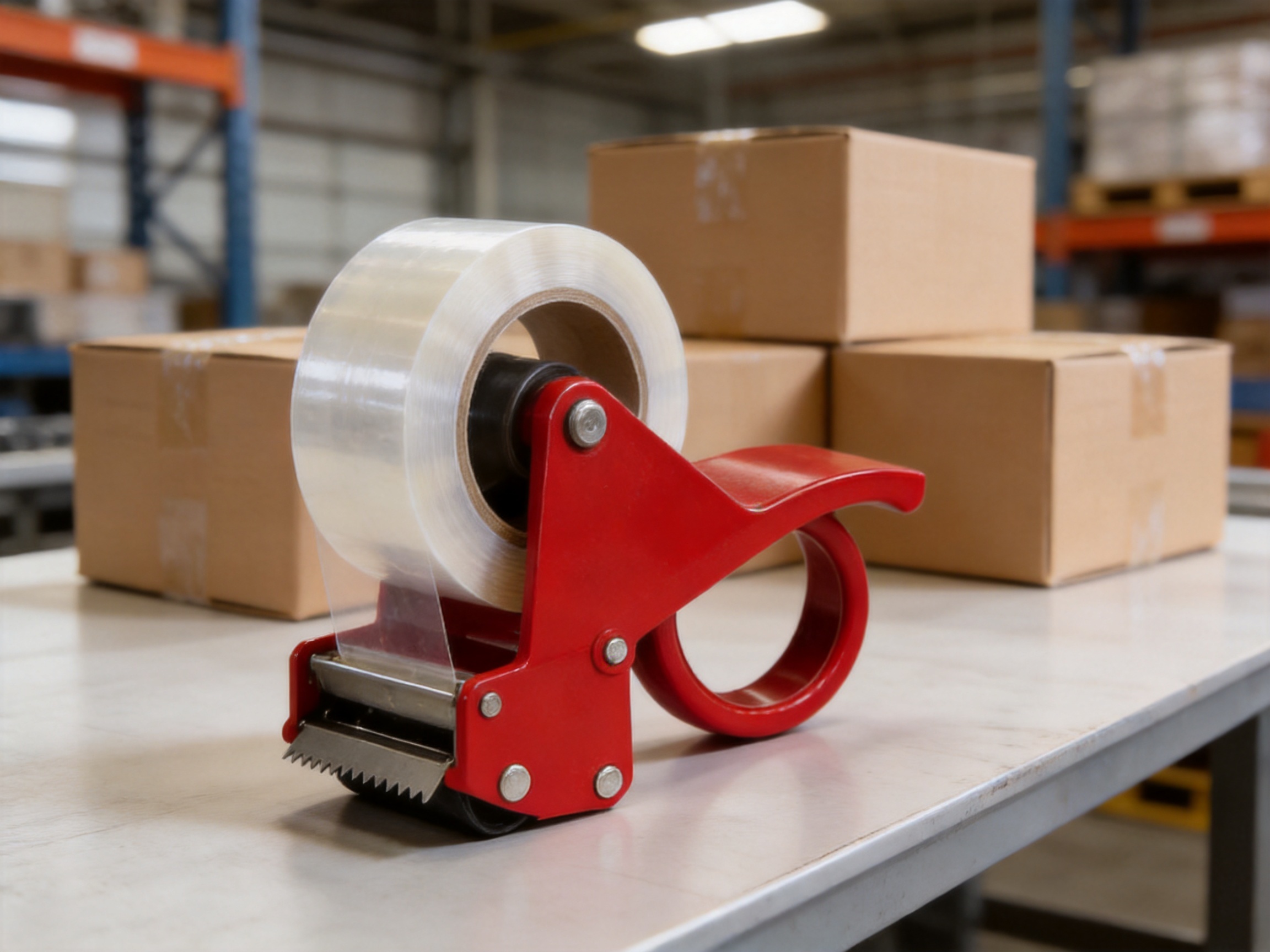
The Metal Carton Sealer is designed to support consistent tension during application. Its structural rigidity helps the tool maintain a stable position as it moves over the carton. The operator can apply the tape with a controlled motion instead of constantly correcting the dispenser. This is useful when appearance and repeatability are important, particularly in export packaging and production environments with defined quality standards.
Even tape application can improve the functional performance of a sealed carton. A smooth strip distributes adhesive contact along the joint between the carton flaps. It reduces the likelihood of open edges, trapped air pockets, and weak areas. When the carton is exposed to vibration, stacking pressure, or handling during transport, a uniformly applied tape strip provides a more dependable closure.
Consistent tension also supports efficient material use. Excessive slack can leave wrinkles and require additional tape. Excessive tension can stretch the tape and reduce the effective coverage of the adhesive layer. A well-constructed dispenser helps the operator find a repeatable application rhythm, which can contribute to lower tape waste across a large number of cartons.
Ergonomic Design for Repetitive Work
Packaging work often involves hundreds or thousands of repeated movements. A tool that is technically strong but uncomfortable can still reduce productivity and contribute to operator fatigue. The Metal Carton Sealer includes an ergonomic handle designed to fit comfortably in the palm during repeated use.
Hand comfort matters because carton sealing is normally performed with a combination of gripping, pushing, pulling, and wrist rotation. If the handle is too narrow, too sharp, or poorly balanced, the operator may grip it more tightly than necessary. Over time, this can create discomfort in the fingers, palm, wrist, or forearm. A suitably shaped handle allows the operator to maintain control with less unnecessary force.
The compact weight of approximately 0.2 kg also supports portability. The dispenser can be carried between stations without adding significant load to the operator’s equipment. At the same time, the metal structure provides enough substance to resist the flimsy feel sometimes associated with lightweight plastic tools.
Ergonomics is not a substitute for safe working practices. Operators should use a comfortable stance, keep the wrist in a natural position, and avoid forcing the tool through a jammed or misaligned tape roll. Workstation height and carton placement should also be adjusted to reduce excessive bending and reaching. When the tool design and working environment are both considered, repetitive sealing can become more efficient and sustainable.
Performance in Demanding Environments
The Metal Carton Sealer is intended for applications where a standard household-grade dispenser may not provide sufficient reliability. The product description specifically identifies production lines sealing more than 500 cartons per day, export packaging, heavy-duty carton sealing, and damp environments such as cold stores.
In a production line, the dispenser may be used continuously by one operator or by several operators across different shifts. This creates a need for dependable mechanical performance and straightforward operation. A durable metal frame can help the tool withstand repeated use, while a stable cutting mechanism supports consistent output throughout the working day.
Export packaging often involves strict visual and functional requirements. Cartons may be inspected by customers, freight handlers, quality teams, or customs-related personnel. A straight tape line, clean cut, and secure closure can contribute to a professional packaging standard. Although the carton sealer is only one part of the complete packaging system, it directly influences the final appearance of every sealed box.
Heavy-duty sealing may involve thicker cartons, stronger tapes, larger packages, or products that place greater stress on the carton closure. In these cases, the tool must provide enough rigidity for controlled application. The operator must also select a tape with suitable adhesion, tensile strength, width, and temperature resistance. The dispenser supports the application process but cannot compensate for unsuitable tape or a damaged carton.
Damp and cold environments present additional challenges. Moisture can affect carton surfaces and adhesive performance, while low temperatures may make some tapes less flexible or less immediately tacky. A metal-bodied tool is less susceptible to the deformation associated with a soft or fragile plastic frame. However, the tool should be dried and maintained after exposure to moisture, and the selected tape should be appropriate for the operating temperature.
Advantages Over Conventional Plastic Sealers
Plastic carton sealers remain useful for low-volume applications, occasional shipping, and situations where the tool is not exposed to significant mechanical stress. Their light weight and low purchase cost can be attractive. However, they may not be the most economical choice for continuous industrial use.
The first advantage of the metal model is structural durability. Metal components generally provide better resistance to impact, pressure, and repeated loading than thin plastic components. This is important when the dispenser is used throughout the day or transported between multiple packaging stations.
The second advantage is service life. The product description indicates a potential service life five to ten times longer than plastic carton sealers, depending on usage and maintenance. A longer service life reduces the frequency of replacement and helps keep the packaging process standardized.
The third advantage is cutting consistency. A metal blade holder is designed to maintain a secure foundation for the cutting mechanism. This can reduce fraying, curling, and incomplete cuts, especially when the tool is used frequently.
The fourth advantage is application stability. A rigid body is less likely to flex while the operator is applying pressure. This supports more consistent tape tension and reduces the possibility of wrinkles, creases, or raised sections.
The fifth advantage is suitability for demanding environments. Industrial production lines and damp storage areas can expose tools to conditions beyond the intended use of basic plastic models. A metal sealer offers a more appropriate construction for these requirements, provided that it is selected, used, and maintained correctly.
| Comparison point | Metal carton sealer | Basic plastic carton sealer |
|---|---|---|
| Frame rigidity | High structural stability for repeated commercial use | May flex more under pressure, depending on design |
| Impact resistance | Better suited to frequent handling and accidental knocks | More vulnerable to cracking or deformation in some models |
| Service-life potential | Designed for extended use and lower replacement frequency | Often more suitable for light or occasional use |
| Cutting support | Metal blade holder supports clean, controlled cuts | Cutting performance may decline faster with intensive use |
| Tape application | Rigid structure supports stable tension and straight movement | Flexing may make consistent application more difficult |
| High-volume suitability | Appropriate for production lines and frequent carton sealing | May require more frequent replacement in high-volume work |
| Initial purchase cost | May be higher, but can offer lower total cost over time | Usually lower at the point of purchase |
| Best use case | Industrial, export, logistics, heavy-duty, and repetitive applications | Low-volume, occasional, or general-purpose sealing |
The correct choice depends on the operating environment. A plastic dispenser may remain suitable for a small office or occasional online seller. For a business sealing more than 500 cartons per day, the metal version offers a stronger argument because replacement frequency, downtime, and quality variation become more significant.
Application Areas
Production and Assembly Lines
On a production line, the carton sealer must support a defined workflow. Cartons may arrive at regular intervals, and the operator must complete the sealing step without delaying upstream or downstream operations. The Metal Carton Sealer is suitable for this environment because it is portable, quick to operate, and designed for repeated use.
Line managers can improve results by assigning a standard tape specification, setting a consistent carton orientation, and training operators in the same sealing method. The use of a durable dispenser helps maintain consistency across shifts and reduces the likelihood that one station will operate with a worn or damaged tool.
Export Packaging
Export cartons may experience long transport distances, changes in temperature and humidity, vibration, stacking pressure, and multiple handling points. The tape closure must therefore be applied securely and neatly. The Metal Carton Sealer helps operators create a controlled seal with a clean cut, supporting both package protection and presentation quality.
Exporters should also consider carton board strength, tape adhesion, edge protection, pallet configuration, and strapping requirements. The dispenser is an important part of the process, but the complete packaging system must be engineered for the weight and fragility of the contents.
Warehousing and Distribution
Distribution centers often handle a wide variety of cartons and shipment volumes. A robust hand dispenser can be useful at receiving stations, repacking areas, returns departments, and dispatch lines. Its compatibility with tape on a 76 mm core allows it to work with commonly used packaging tape formats, subject to the selected tape width and tool configuration.
In a warehouse, tools are frequently shared and moved. A durable body can better tolerate this type of working environment. A clear maintenance routine and designated storage location can further extend service life and reduce lost-tool incidents.
Cold Stores and Damp Areas
Cold stores and damp packaging areas can be challenging for both tools and tapes. The Metal Carton Sealer is described as suitable for damp environments such as cold stores because of its robust construction. Users should nevertheless select tape designed for low-temperature or moisture-exposed surfaces and allow the tool to dry when it is removed from the cold area.
Condensation should not be ignored. If a cold tool is moved rapidly into a warm, humid environment, moisture may form on metal surfaces. Wiping the tool and storing it in a dry location can help limit corrosion and preserve the movement of its components.
Manufacturing Strengths and Quality Focus
The performance of a packaging tool depends not only on its design but also on the consistency of its manufacturing. Zhejiang Geruite Packaging Materials Co., Ltd. operates in Zhejiang Province, a major manufacturing region in China with an established industrial supply chain. The company focuses on the research, development, production, and sales of packaging materials and related products.
The company’s broader product range includes BOPP tapes, kraft paper tapes, masking tapes, high-temperature-resistant tapes, metal tapes, PE stretch film, PP strapping, and high-strength PET strapping. This product diversity is valuable because carton sealing is rarely an isolated activity. Customers often require several packaging materials for carton closure, pallet stabilization, surface protection, bundling, and transport preparation.
A supplier with knowledge across these categories can evaluate packaging requirements more broadly. For example, a customer may need a carton sealer compatible with a particular tape width, a stretch film for pallet loads, and PET or PP strapping for additional reinforcement. A coordinated supplier relationship can simplify procurement and improve compatibility between products.
The company states that it is equipped with advanced production equipment and a rigorous quality control system. Its quality approach covers raw material procurement, production, and final inspection. This process-based approach is important for a metal carton sealer because reliable performance depends on the interaction of multiple components. The frame, handle, tape holder, roller, blade holder, fasteners, and other parts must work together with suitable alignment and tolerance.
Raw material control helps establish a consistent foundation for production. Metal quality, surface condition, component strength, and dimensional stability can influence the finished tool. During manufacturing, forming, machining, assembly, and finishing processes must be managed so that components fit correctly and move as intended. Final inspection provides an additional opportunity to identify visible defects, incomplete assembly, poor alignment, or other issues before shipment.
The stated annual output value of more than RMB 60 million reflects an established business operation with meaningful production capacity. For buyers, capacity can be important when ordering packaging products in volume. It may support more reliable supply planning, repeat orders, private-label discussions, and coordinated purchasing across product categories.
Manufacturing strength is also reflected in the company’s emphasis on research and development. Packaging requirements continue to change as customers seek lower material consumption, better transport protection, improved operator safety, and more efficient workflows. Continued product optimization helps a manufacturer respond to these requirements rather than relying only on established designs.
Process Control from Materials to Finished Product
A high-quality carton sealer begins with suitable materials. For a metal model, the selected metal must provide the required combination of strength, weight, manufacturability, and resistance to normal handling conditions. Material selection should also consider how the frame will be formed, how components will be attached, and how the finished surface will be protected.
The next stage is component production. The body and supporting parts must be produced to dimensions that allow the tape roll to rotate freely and the blade holder to remain correctly positioned. If the tape path is misaligned, the operator may experience uneven tension or difficulty controlling the tool. If the cutting assembly is not securely mounted, the cut may become inconsistent.
Assembly quality is equally important. A well-made frame can still perform poorly if fasteners are loose, rollers are not aligned, or the handle is not securely fitted. A controlled assembly process helps ensure that each unit meets the intended functional standard before it reaches the customer.
Surface treatment and finishing can contribute to appearance, handling comfort, and protection. Smooth edges are important for operator safety. A well-finished handle is more comfortable during repeated use, while a properly treated metal surface can help reduce the effects of ordinary handling and environmental exposure.
Functional inspection should include the movement of the tape roll, the stability of the tape path, the operation of the cutting mechanism, and the condition of the handle. Packaging suppliers can also evaluate whether the tool is correctly identified according to tape width and configuration. These checks help prevent avoidable problems during customer use.
Quality control should not be understood as a single inspection at the end of production. It is more effective when integrated across the manufacturing process. Incoming materials, in-process operations, assembly, finished-product inspection, and packaging should all contribute to a consistent result. This approach supports the reliability expected from a professional packaging tool.
How to Select the Correct Configuration
The first selection factor is tape width. The supplied information identifies configurations for tape widths of 4–5 cm and 5.5–6 cm. Buyers should choose a dispenser that matches the actual width of the tape being used. A mismatch may cause the roll to sit incorrectly or prevent the tool from applying the full width of tape smoothly.
The second factor is the tape core. This product is specified for a 76 mm tape core diameter. The selected tape should be compatible with this dimension so that it rotates properly on the dispenser. If the core is too small or too large, the roll may bind, wobble, or fail to sit securely.
The third factor is application intensity. Occasional users may prioritize low weight and low initial cost, while production lines and distribution centers should consider durability, service life, and operating comfort. The Metal Carton Sealer is most appropriate when the tool is expected to withstand repeated commercial use.
The fourth factor is the working environment. Cold, damp, dusty, or high-traffic areas may require a stronger tool and a tape selected for the relevant conditions. Buyers should communicate the operating environment to the supplier when requesting a quotation or confirming a product configuration.
The fifth factor is compatibility with the overall packaging process. If cartons are also stabilized with stretch film or strapping, the sealing tool should fit naturally into the workflow. The company’s wider product portfolio may allow customers to source complementary packaging materials from one supplier.
Recommended Operating Method
Before use, inspect the dispenser for loose parts, damaged edges, contamination, or abnormal movement. Confirm that the tape width and core diameter match the tool. Install the roll so that the adhesive side faces the carton when the tape is drawn across the box.
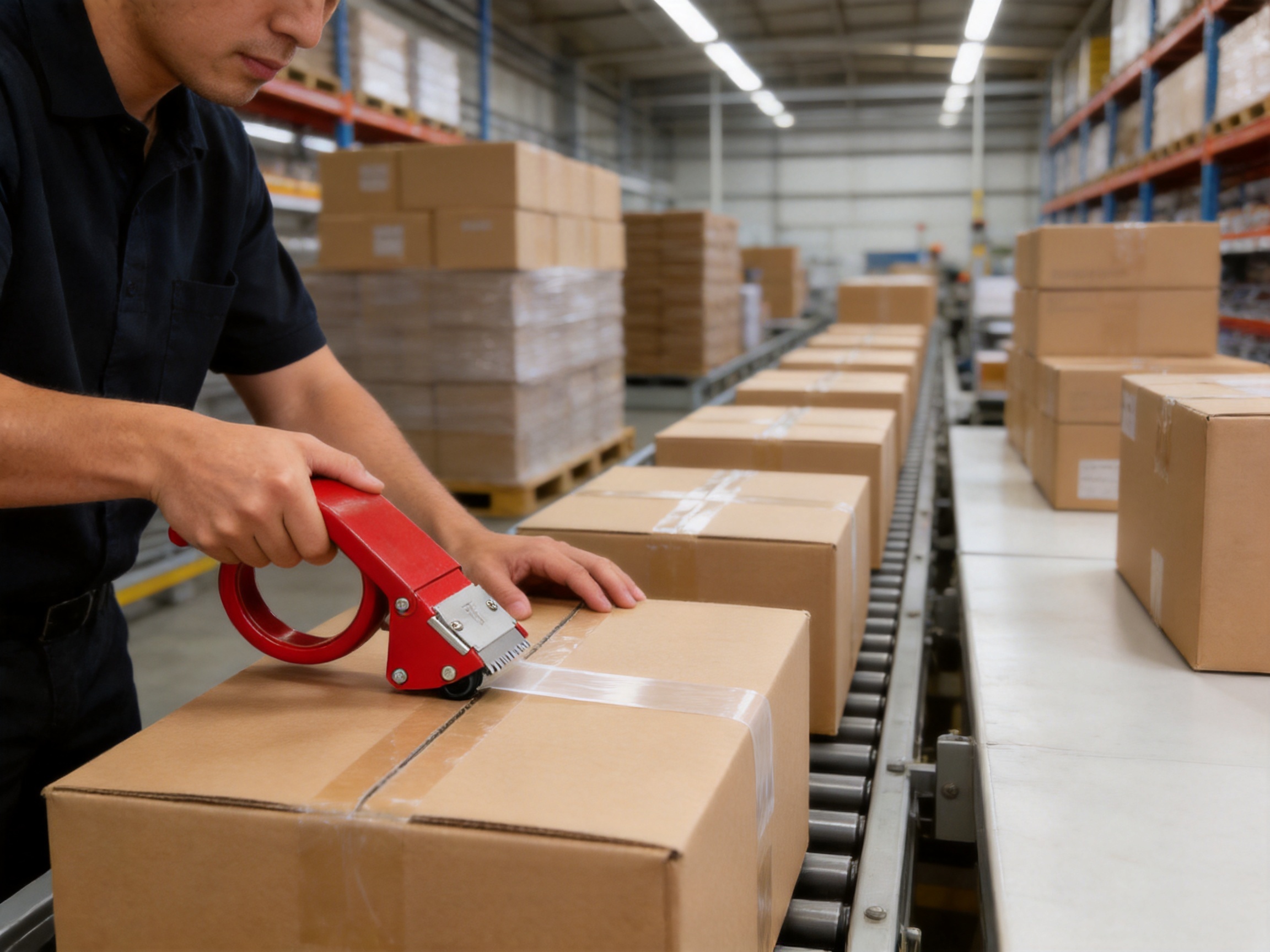
Place the tape at the beginning of the carton seam and press the tool forward with a steady motion. Maintain moderate, consistent pressure and allow the roller to keep the tape in contact with the carton surface. Avoid sudden changes in direction, excessive pulling, or twisting the dispenser while the tape is being applied.
At the end of the sealing path, use the cutting mechanism in a controlled manner. Do not place fingers near the blade. If the tape does not cut cleanly, stop and inspect the blade area rather than pulling forcefully. Adhesive residue, damaged tape, or a misaligned roll may be responsible for the problem.
After use, store the tool in a dry location where it will not be struck by heavy objects. Remove accumulated adhesive when necessary, using a cleaning method suitable for the tool’s surface. Do not use excessive force to scrape the blade holder or other components. Periodic inspection is especially important in high-volume environments.
Maintenance and Service-Life Management
A durable metal tool can provide long service, but maintenance remains essential. The tape path should be kept free from adhesive buildup because residue can increase friction and interfere with smooth roll movement. The blade area should be inspected regularly for trapped tape fragments, dust, or other debris.
Operators should check whether the handle remains secure and whether the frame shows signs of bending, corrosion, or impact damage. Rollers should rotate smoothly without excessive play. If the tool begins to apply tape unevenly, the problem should be investigated promptly instead of allowing poor sealing to continue across a large batch of cartons.
Tool storage also affects service life. Leaving a metal dispenser in a wet area can encourage corrosion, while storing it under heavy equipment can bend or damage its components. A designated tool location helps prevent unnecessary impact and makes it easier to identify a missing or defective unit.
Training is another form of maintenance. Operators who understand the correct tape path, cutting action, and pressure level are less likely to misuse the dispenser. Standardized training can reduce premature wear and create more consistent package quality between workers and shifts.
Total Cost of Ownership
The purchase price is only one part of the financial evaluation of a carton sealer. A more complete calculation includes replacement frequency, downtime, tape waste, operator time, maintenance, quality problems, and the consequences of poorly sealed cartons.
Suppose a plastic sealer is replaced several times a year because its frame cracks, its blade holder loosens, or its handle becomes uncomfortable. Each replacement may be inexpensive, but the business must still spend time ordering, receiving, checking, and distributing the new tools. If the replacement tools perform differently, operators may need to adapt to them. During this period, sealing quality can fluctuate.
A metal dispenser may require a higher initial investment, but its longer service life can reduce the number of replacement events. Its structural stability can also help reduce inconsistencies in tape application. For high-volume packaging, these benefits may outweigh the difference in purchase price.
The most suitable evaluation method is to compare the cost per usable period or cost per sealed carton, not simply the price per unit. Businesses can monitor tool life, cartons sealed, tape consumption, downtime, and defect rates. This data can help determine whether the metal model delivers the expected economic benefit in a particular operation.
Integration with Other Packaging Materials
The Metal Carton Sealer is used with carton-sealing tape, but its performance is part of a larger packaging system. Zhejiang Geruite Packaging Materials Co., Ltd. supplies several types of packaging materials that may be used alongside carton sealers.
BOPP tape can provide a practical closure for general corrugated cartons. Kraft paper tape may be selected where a paper-based appearance or specific sustainability objectives are important. Masking tape serves different temporary holding and surface-protection applications, while high-temperature-resistant tape may be needed in specialized manufacturing environments.
Stretch film can stabilize grouped cartons or pallet loads after individual boxes have been sealed. PP strapping and high-strength PET strapping can add compression and load containment for heavier or more demanding shipments. Protective films and bags can help shield products from dust, moisture, scratches, and handling damage.
Using the correct combination of materials is essential. A strong dispenser cannot make unsuitable tape perform well, and excellent tape cannot compensate for a damaged carton or incorrect application. Packaging engineers and purchasing teams should consider the carton material, product weight, transport route, storage temperature, humidity, stacking requirements, and expected handling conditions.
Customer Value and Supply Capability
For buyers, product quality is only one aspect of a successful supplier relationship. Consistent communication, product availability, technical understanding, and after-sales support also matter. A packaging-material supplier that understands different tape and film categories can provide more useful guidance than a supplier focused on one isolated item.
Zhejiang Geruite Packaging Materials Co., Ltd. describes itself as a packaging solution provider with experience in product research, development, production, and sales. Its location in Zhejiang provides access to a developed manufacturing environment and a broad industrial network. The company’s stated commitment to quality, production control, and product development supports its ability to serve customers in logistics, household goods, electronics, construction, industrial manufacturing, cargo stabilization, and packaging protection.
For wholesale and industrial buyers, the ability to discuss repeat orders and related products can simplify supply-chain management. Buyers should provide the expected monthly volume, preferred tape width, core diameter, working temperature, carton type, and intended application when requesting product information. This helps ensure that the selected dispenser and tape are properly matched.
Before placing a large order, customers may wish to confirm samples, packaging details, available configurations, inspection procedures, lead times, and shipping arrangements. Clear technical communication at the beginning of the relationship can reduce misunderstandings and help establish an efficient procurement process.
Quality, Appearance, and Professional Presentation
Packaging quality is often judged visually before the contents are examined. A carton with a straight tape line, smooth closure, cleanly cut edge, and consistent appearance communicates organization and care. This is particularly important for products sent to customers, distributors, retail locations, or international buyers.
The Metal Carton Sealer supports this professional presentation by helping the operator apply tape with consistent tension and cut it cleanly. The tool does not replace operator skill, but it provides a more stable platform for achieving repeatable results. In high-volume operations, repeatability is often more valuable than an occasional perfect seal produced by a less reliable tool.
Consistent appearance can also assist internal quality control. When sealing is standardized, supervisors can identify unusual wrinkles, gaps, loose ends, or misaligned strips more easily. This allows corrective action before a large number of cartons leave the facility.
Q&A
What is a metal carton sealer used for?
A metal carton sealer is used to apply and cut packaging tape on corrugated cartons and boxes. It is suitable for sealing shipping cartons, export packages, production-line cartons, warehouse shipments, and other packages that require a secure tape closure.
How is it different from a plastic carton sealer?
The metal version is designed with a more rigid and durable structure. It offers better resistance to impact and pressure, supports more stable tape application, and is intended to provide a longer service life under repeated use. Plastic sealers may remain suitable for occasional or low-volume applications.
What tape core does this dispenser use?
The supplied specification identifies a 76 mm tape core diameter. Buyers should confirm the core size of their tape before ordering to ensure proper compatibility.
What tape widths are supported?
The listed range is approximately 4.0–6.0 cm. Specific configurations are identified for tape widths of 4–5 cm and 5.5–6 cm. The correct model should be selected according to the actual tape width.
Is the metal carton sealer suitable for more than 500 cartons per day?
Yes. The product is described as suitable for production lines sealing more than 500 cartons per day. Its metal structure, rigid frame, durable blade holder, and ergonomic handle are intended to support high-volume use.
Can it be used in cold stores or damp areas?
It is described as suitable for damp environments such as cold stores. Users should select tape appropriate for low temperatures and moisture, wipe condensation from the tool, and store it in a dry place after use.
What material is the product made from?
The supplied specification lists iron for the metal configuration. The product description also refers to cast aluminum or stainless steel body options in the broader metal-sealer design. Buyers should confirm the exact material according to the selected model and configuration.
Does the dispenser reduce tape waste?
It can help reduce waste by supporting consistent tension, straight application, and clean cutting. Actual tape consumption also depends on carton dimensions, operator technique, tape quality, and the required overlap.
How should the tool be maintained?
Keep the tape path and cutting area free from adhesive residue and debris. Check the roller, handle, frame, and blade holder regularly. Store the tool in a dry location and investigate uneven application or incomplete cutting as soon as these problems appear.
Is a metal dispenser always better than a plastic dispenser?
Not necessarily. The best choice depends on the application. A plastic model may be adequate for occasional use, while a metal model is generally more appropriate for high-volume, heavy-duty, export, production-line, and demanding environmental applications.
What information should buyers provide when requesting a quotation?
Buyers should provide the required tape width, tape core diameter, daily carton volume, carton type, operating temperature, humidity conditions, intended industry, order quantity, and any packaging or labeling requirements. This information helps the supplier recommend a suitable configuration.
Conclusion
The Metal Carton Sealer is designed for businesses that expect more from a packaging dispenser than a low initial purchase price. Its metal construction provides improved resistance to impact and pressure, while the rigid frame supports stable tape application. The metal blade holder is intended to deliver clean cuts with fewer frayed or curled edges, and the ergonomic handle helps operators work more comfortably during repetitive sealing.
These features make the tool suitable for production lines, export packaging, warehouses, logistics operations, heavy-duty carton sealing, and damp or cold-store environments. For users sealing more than 500 cartons per day, the potential service-life advantage can make a significant difference to replacement costs, quality consistency, and workflow reliability.
The product also reflects the importance of choosing a supplier with manufacturing depth. Zhejiang Geruite Packaging Materials Co., Ltd. combines packaging-material experience with stated capabilities in research and development, production, quality control, and final inspection. Its broad portfolio of tapes, films, and strapping products allows customers to consider carton sealing as part of a complete packaging solution.
When selecting a dispenser, buyers should match the tool to the tape width, 76 mm core diameter, carton type, operating volume, and environmental conditions. With the correct configuration, proper operating technique, and routine maintenance, the Metal Carton Sealer can become a dependable part of a professional packaging operation and a practical measure for controlling long-term packaging costs.
References
1. Product information supplied for the Metal Carton Sealer, including material, dimensions, tape core diameter, weight, supported tape widths, applications, and operating benefits.
2. Company information supplied for Zhejiang Geruite Packaging Materials Co., Ltd., including product portfolio, manufacturing activities, quality-control approach, research and development focus, and production capacity.
3. General principles of industrial packaging operations, including carton sealing, tape application, packaging ergonomics, material compatibility, and total cost of ownership.
4. General guidance for corrugated carton handling, export packaging, warehouse operations, pallet stabilization, and transport protection.
Product: Metal Carton Sealer

LATEST POST
Let’s create something amazing together
contact us
CONTACT DETAILS
- Address:No. 241, Yaojiafan, Zhangpanqiao, Shushan Street, Xiaoshan District, Hangzhou City, Zhejiang Province, China
- TEL:+86-0571-83175630
- Phone:+86-13336160217
- Email:jeffrey@grtpk.com
- WeChat/WhatsApp:+86-18058115265
PRODUCTS
NEWS CENTER
MOBILE TERMINAL
Copyright© Zhejiang Geruite Packaging Materials Co., Ltd. All Rights Reserved.
Privacy Wholesale industrial packaging tape Manufacturers