


 English
  Español
  عربى
عربى 
Clear LDPE Protective Plastic Sheeting Film for Construction and Industrial Surface Protection
Content
- 1 Product Overview
- 2 Key Technical Parameters
- 3 Why Clear Protective Film Matters on Construction Sites
- 4 Advantages Over Ordinary Protective Covering Materials
- 5 Application Scenarios
- 6 Material Science Behind LDPE Protective Film
- 7 Manufacturing Process and Quality Strengths
- 8 Competitive Value for Distributors and Project Buyers
- 9 Selection Guidance by Thickness
- 10 Installation and Handling Best Practices
- 11 Safety and Usage Notes
- 12 How the Film Supports Cleaner and More Efficient Jobsites
- 13 Role in Packaging and Industrial Material Protection
- 14 Quality Control Points Buyers Should Consider
- 15 Company Manufacturing Strengths
- 16 Environmental and Practical Waste Considerations
- 17 Frequently Asked Questions
- 17.1 What is Clear Construction Building Protective Plastic Sheeting Film made from?
- 17.2 What are the common thickness options?
- 17.3 Why is clear film better than opaque covering in many jobs?
- 17.4 Can the film protect against water?
- 17.5 Is this film suitable for outdoor use?
- 17.6 Is the product flame-retardant?
- 17.7 Can workers walk on this film?
- 17.8 How should the film be secured?
- 17.9 Can the film be customized?
- 17.10 What makes this product competitive?
- 18 Conclusion
- 19 References
- 20 Product: Clear Construction Building Protective Plastic Sheeting Film
Modern construction, renovation, logistics, and industrial operations all share one common challenge: how to protect valuable surfaces, equipment, materials, and work areas from dust, moisture, paint, debris, and everyday jobsite wear without adding unnecessary labor cost. Clear Construction Building Protective Plastic Sheeting Film is designed to answer that need with a practical combination of transparency, flexibility, barrier performance, puncture resistance, and economical coverage.
This product is a clear low-density polyethylene film used as a temporary protective barrier in construction sites, interior renovation projects, industrial facilities, material storage areas, and outdoor protection tasks. It is not intended to replace structural waterproofing, load-bearing membranes, or permanent building envelope materials. Instead, its strength lies in fast deployment, wide coverage, easy handling, and reliable day-to-day protection. For contractors, facility managers, distributors, and packaging buyers, this type of film is an essential consumable that helps reduce cleanup time, minimize rework, and protect project value.
The film’s clear appearance is one of its most important advantages. Unlike opaque sheets that hide the surface underneath, clear LDPE sheeting allows workers to see covered floors, equipment, furniture, windows, cabinets, materials, and labels. This visibility improves inspection efficiency and reduces the risk of mistakenly removing or damaging protected items. It also allows supervisors to identify contamination, moisture accumulation, or surface condition without repeatedly lifting the film.
Zhejiang Geruite Packaging Materials Co., Ltd. supplies this protective film as part of a broader range of packaging and protection materials, including adhesive tapes, PE stretch film, PP strapping, PET strapping, kraft paper tapes, masking tapes, high-temperature resistant tapes, and metal tapes. With experience in packaging material production and a focus on stable quality control, the company supports customers who need dependable protective materials for construction, decoration, logistics, industrial manufacturing, and cargo stabilization.
Clear Construction Building Protective Plastic Sheeting Film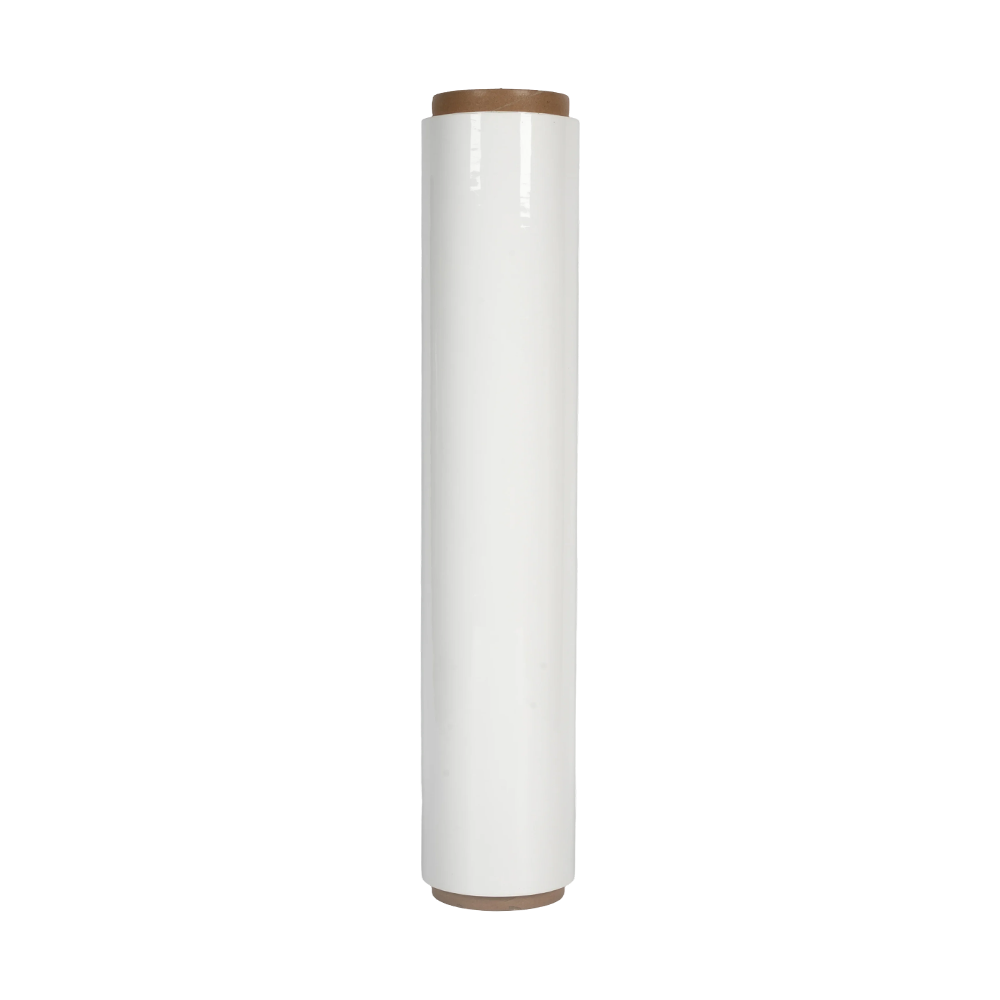
Product Overview
Clear Construction Building Protective Plastic Sheeting Film is made from low-density polyethylene, commonly known as LDPE. LDPE is valued in the protective film industry because it offers a flexible balance of softness, elongation, water resistance, and processability. When converted into sheeting film, it can cover large surfaces quickly while remaining light enough for manual cutting, folding, rolling, and installation.
The product is commonly available in thicknesses such as 0.05 mm, 0.08 mm, and 0.12 mm, corresponding approximately to 2 mil, 3 mil, and 4.5 mil. These thickness options allow users to select the right level of protection for different scenarios. A thinner film may be suitable for light dust protection during short indoor tasks, while a heavier grade is better for renovation, flooring protection, temporary enclosure, material covering, or jobsites where puncture and tear resistance are more important.
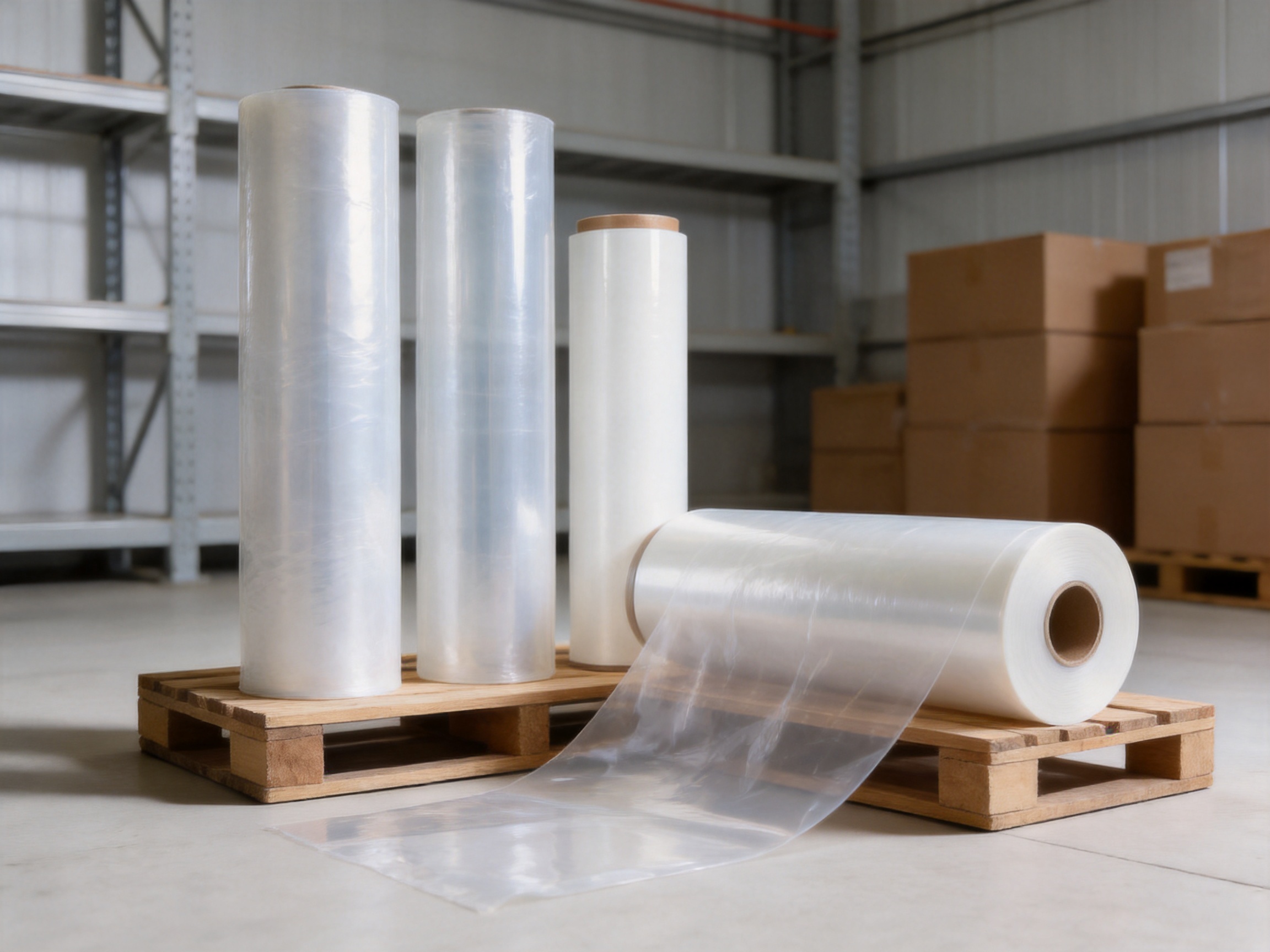
Standard widths include 1.5 m, 2 m, 3 m, 4 m, and 6 m, with customization available. Standard roll lengths include 30 m, 50 m, 100 m, and 200 m. This range is valuable because construction and industrial users rarely work with one fixed surface size. Wide rolls are useful for covering floors, walls, equipment, storage piles, or temporary enclosures, while narrower rolls are easier to handle in corridors, rooms, workshops, and residential renovation areas.
The product is clear in color and provides dust-proof, water-resistant, moisture-barrier, puncture-resistant, and tear-resistant performance for common jobsite conditions. It can be secured with appropriate tape, battens, staple guns, or weights depending on the application and surface. Some grades may include corona treatment to improve adhesion when printing or bonding with certain adhesives is required.
Key Technical Parameters
| Parameter | Value | Practical Benefit |
| Base Material | Low-Density Polyethylene LDPE | Flexible, water-resistant, and easy to process into wide protective sheeting |
| Common Thickness | 0.05 mm, 0.08 mm, 0.12 mm | Supports light, medium, and heavier-duty protection requirements |
| Approximate Mil Conversion | 2 mil, 3 mil, 4.5 mil | Helps international buyers compare specifications easily |
| Standard Widths | 1.5 m, 2 m, 3 m, 4 m, 6 m | Suitable for floors, furniture, walls, machinery, and large work areas |
| Standard Roll Lengths | 30 m, 50 m, 100 m, 200 m | Allows flexible selection for small projects, large jobsites, and industrial use |
| Color | Clear | Enables visual inspection of protected surfaces and covered materials |
| Key Properties | Dust-proof, water-resistant, moisture-barrier, puncture and tear resistant | Reduces contamination, cleanup labor, and surface damage during temporary work |
| Workability | Manual cutting, tool cutting, taping, stapling, weighting | Simple installation without specialized machinery |
| Typical Use | Construction, renovation, industrial storage, temporary enclosure, floor protection | One product can serve multiple protection and covering tasks |
Why Clear Protective Film Matters on Construction Sites
Construction sites are dynamic environments. Workers move tools, materials, ladders, scaffolding, paint buckets, plaster, cement slurry, insulation, timber, metal parts, and electrical components through the same areas repeatedly. Even when the primary construction work is well managed, dust and debris can easily settle on finished surfaces. Paint splatter can reach windows, floors, cabinets, doors, carpets, appliances, and fixtures. Moisture from cleaning, plastering, rain exposure, or wet materials can affect stored goods and installed surfaces.
Protective plastic sheeting creates a controlled barrier between the work environment and the object being protected. It does not eliminate the need for careful site management, but it greatly reduces exposure. By covering surfaces before work begins, contractors can prevent many problems instead of correcting them after damage occurs. This approach improves jobsite efficiency because less time is spent cleaning and repairing, and more time is spent completing productive work.
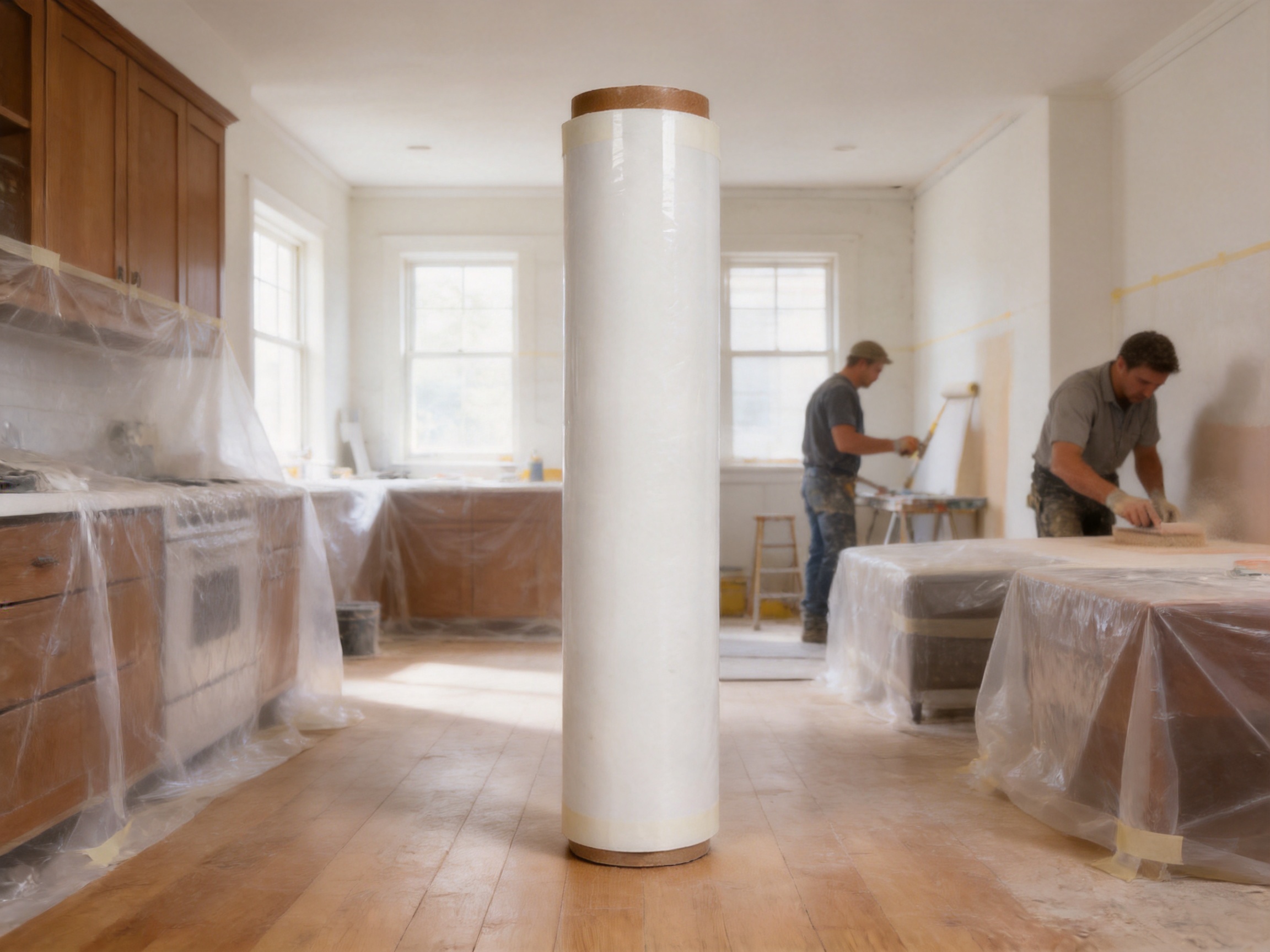
Clear LDPE sheeting is particularly useful when different trades are working in sequence. For example, after flooring is installed, painters, electricians, cabinet installers, and decorators may still need access to the room. A clear protective film helps protect the floor while still allowing workers and supervisors to see the surface below. If a defect, scratch, water mark, or alignment issue appears, it can be identified quickly without removing all protection.
In renovation projects, the value of protection is even more obvious. Existing furniture, carpets, appliances, cabinets, and walls often remain inside the work area. Dust from sanding, drilling, cutting, and demolition can spread quickly. Plastic sheeting can separate occupied areas from work zones, cover valuable items, and limit the movement of dust. This improves customer satisfaction because the work area remains cleaner and the risk of accidental contamination is reduced.
Advantages Over Ordinary Protective Covering Materials
Protective covering can be made from cloth, paper, cardboard, nonwoven fabric, tarpaulin, foam sheets, or various plastic films. Each material has a place, but clear LDPE protective sheeting offers a strong combination of advantages that makes it highly versatile.
High Clarity for Inspection and Identification
One of the clearest differences between this film and many competing protective materials is visibility. Opaque coverings can protect surfaces, but they also hide them. This can create problems in active jobsites where workers need to confirm floor type, locate installed components, identify stored materials, inspect machinery, or check whether moisture has entered a covered area.
Clear Construction Building Protective Plastic Sheeting Film allows visual monitoring without repeated removal. This saves time and helps preserve protection integrity. Every time a covering is lifted, it may shift, tear, collect dust, or expose the surface underneath. Transparent film reduces that disturbance.
Balanced Tear and Puncture Resistance
Construction protection does not require the same mechanical strength as a structural membrane, but it does need enough resistance to handle normal site conditions. The film’s stable LDPE formulation and manufacturing process provide consistent puncture and tear resistance for common use. It can withstand ordinary handling, covering, cutting, folding, taping, and temporary surface protection tasks.
Compared with very thin economy films, the available 0.08 mm and 0.12 mm options provide better durability. This is important in high-traffic areas, around stored materials, or when covering equipment with corners and irregular shapes. A film that tears too easily can increase waste and labor cost because workers must repair or replace it frequently.
Water, Moisture, and Dust Barrier Performance
LDPE is inherently resistant to liquid water and many common water-based substances. As a result, the film can help protect against dust, paint mist, debris, moisture, cement slurry, plaster, and water-based paint in ordinary temporary conditions. This barrier performance is valuable during painting, plastering, cleaning, material storage, and outdoor covering.
Compared with paper-based coverings, plastic sheeting performs better when exposed to moisture. Paper can absorb water, weaken, wrinkle, or transfer moisture to the protected surface. Clear LDPE film forms a non-absorbent layer that helps keep liquids and contaminants away from the covered object.
Lightweight and Cost-Effective Coverage
A major reason plastic sheeting is so widely used is the amount of area it can cover relative to its weight. Large rolls can be transported, stored, and deployed efficiently. Workers can carry rolls to different rooms, cut pieces to size, and cover wide areas without heavy equipment.
This lightweight nature also contributes to cost efficiency. Compared with heavier reusable coverings, disposable or semi-disposable plastic sheeting can be a better choice when dust, paint, or contamination levels are high. The material can be used for the duration of the task and then removed, helping reduce cleaning time and avoid contaminating reusable covers.
Flexible Thickness and Size Selection
Not every job requires the same level of protection. A short interior painting job may only need light dust and splatter protection. A construction site with repeated worker movement may require thicker film. Industrial equipment storage may need wide rolls and longer lengths. By offering multiple thicknesses, widths, and roll lengths, the product allows buyers to match the specification to the application rather than overpaying for unnecessary thickness or underprotecting with inadequate film.
Compatibility With Tapes and Fasteners
The film can be secured with suitable adhesive tapes, staple guns, battens, or weights. This is an important practical advantage because installation methods vary by surface and environment. On smooth indoor surfaces, tape may be sufficient. For outdoor or windy use, edges may need stronger fastening. For temporary enclosure, battens or frame supports may be used.
Because Zhejiang Geruite Packaging Materials Co., Ltd. also produces a wide range of adhesive tapes, customers can benefit from compatible packaging and protection solutions. For example, film and tape are often used together for masking, sealing temporary barriers, securing edges, and covering furniture or floors.
Application Scenarios
Construction Surface Protection
In new construction, many surfaces are installed before the project is fully complete. Windows, doors, stairs, floors, walls, and fixtures may need to be protected from dust, scratches, paint splatter, plaster, cement slurry, and debris. Clear LDPE sheeting provides a quick covering solution that can be cut and installed on demand.
When covering windows or doors, clarity allows light transmission and visibility. When covering floors or stairs, the film helps reduce contamination during later work stages. When covering walls or materials, it protects against dust accumulation and moisture exposure.
Interior Renovation
Renovation work often takes place in homes, offices, hotels, shops, schools, and other occupied or partially occupied environments. The challenge is not only to complete the work but also to protect existing property. Clear plastic sheeting can cover furniture, carpets, cabinets, appliances, countertops, and stored items. It can also form temporary partitions to limit dust migration from the work zone to clean areas.
For painting and sanding, the film provides a barrier against overspray, drips, dust, and residue. For cabinet or appliance protection, it allows workers to see the shape and location of covered items, reducing accidental impacts.
Industrial Protection
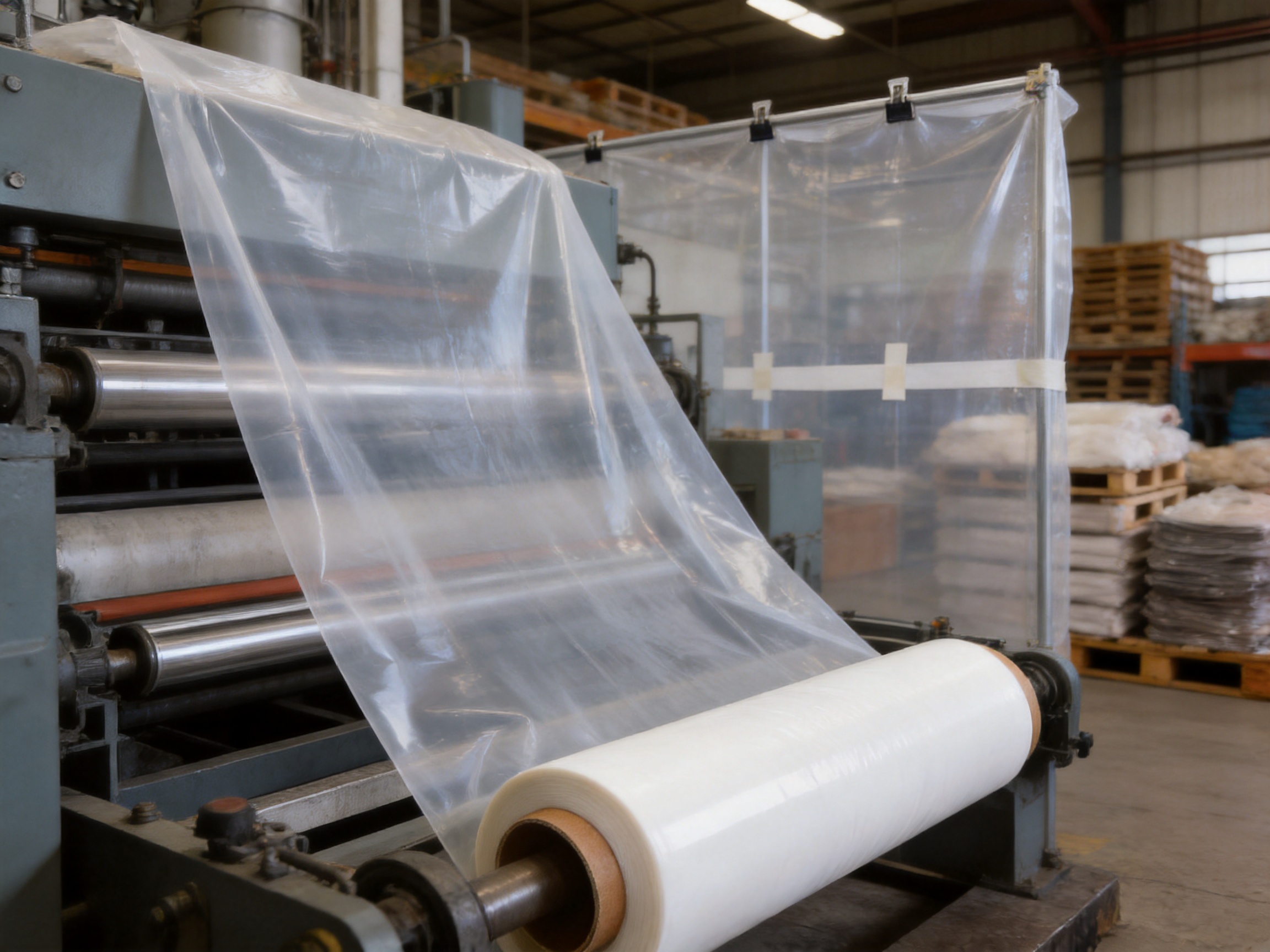
Factories, warehouses, and workshops often need temporary protection for machinery, equipment, spare parts, raw materials, and semi-finished goods. Dust and moisture can affect product quality or machine cleanliness. Clear LDPE sheeting can cover machinery during maintenance, protect stored inventory, or separate areas during cleaning and repair operations.
Because the film is lightweight and available in wide rolls, it can cover large machines or material stacks efficiently. Its clarity helps workers identify what is under the cover without removing it. In production environments where time and organization matter, this visibility is a practical benefit.
Temporary Enclosure
Plastic sheeting is commonly used to create temporary enclosures for dust control, weather protection, greenhouse use, site fencing, or temporary work-zone separation. Clear film helps maintain visibility and light transmission, which is useful when workers need to observe activity on both sides of the barrier.
For outdoor use, the edges must be secured properly to prevent wind uplift and tearing. Battens, appropriate tape, clips, or weights may be required depending on the wind condition and installation method. Prolonged UV exposure can gradually embrittle ordinary LDPE film, so project duration and replacement intervals should be considered.
Floor Protection
Floors are among the most frequently damaged surfaces during construction and renovation. Workers may carry tools, paint, ladders, tiles, boards, and equipment across finished surfaces. Clear sheeting can be laid over floors or carpets during high-traffic periods or material handling. It reduces direct contact with dirt, paint, moisture, and debris.
For floor applications, the film should be installed safely. It must not create slipping or tripping hazards. Edges should be secured where appropriate, and the film should not be used as a walking surface over empty spaces. It is a surface protection material, not a structural support.
Material Science Behind LDPE Protective Film
Low-density polyethylene is a thermoplastic polymer with a branched molecular structure. This structure gives LDPE its familiar flexibility, toughness, and ease of processing. In film form, LDPE can stretch and conform to irregular shapes better than more rigid plastics. It also provides resistance to water and many common substances encountered in construction and packaging environments.
For protective sheeting, the key performance factors include thickness uniformity, tensile behavior, puncture resistance, tear propagation resistance, clarity, roll flatness, winding quality, and surface condition. A good film must be easy to unwind, cut, spread, and secure. It should not have excessive gels, holes, weak spots, or inconsistent thickness. Manufacturing control is therefore essential.
Clarity is affected by resin selection, processing temperature, cooling conditions, film thickness, and formulation stability. A clear film does not need optical-grade transparency, but it should allow practical visibility of covered surfaces and objects. Consistent clarity improves user confidence because workers can inspect without removing protection.
Puncture and tear resistance depend on material formulation, thickness, extrusion control, and roll handling. A film with uneven thickness may fail at thin points. A film with poor winding may wrinkle or crease, making installation more difficult. These details demonstrate why manufacturing quality matters even for a product that appears simple.
Manufacturing Process and Quality Strengths
Zhejiang Geruite Packaging Materials Co., Ltd. is located in Zhejiang Province, China, a region known for developed manufacturing capability and a strong industrial supply chain. The company focuses on research, development, production, and sales of packaging materials, including tapes, films, and strapping products. Its experience across multiple packaging categories supports a practical understanding of how protective materials are used in logistics, construction, decoration, electronics, household goods, and industrial manufacturing.
The production of clear LDPE protective sheeting typically begins with controlled raw material selection. Resin quality has a direct influence on film stability, clarity, strength, and process consistency. By managing raw material procurement carefully, the company helps ensure that finished rolls meet expected performance standards.
During film extrusion, LDPE resin is heated, melted, and formed into film. Process parameters such as temperature, pressure, die condition, cooling, line speed, and winding tension must be controlled. Stable processing helps produce uniform thickness and reliable mechanical performance. For a construction protective film, consistency is especially important because users expect predictable strength across the whole roll.
After extrusion, the film may be wound into rolls of specified length and width. Good winding quality makes a major difference during use. Rolls that are wound too loosely may telescope, deform, or become difficult to transport. Rolls that are wound too tightly or unevenly may create wrinkles and handling problems. Controlled winding supports easier unwinding, cutting, and installation at the jobsite.
Some grades can be corona treated to improve surface energy. Corona treatment is often used when printing, labeling, or adhesive bonding performance needs improvement. While not every protective sheeting application requires corona treatment, the availability of this option shows flexibility in production and product configuration.
Quality control extends from raw material inspection to production monitoring and final checking. The company’s quality philosophy treats quality as the lifeline of the enterprise. This approach is essential for buyers who need repeatable supply rather than inconsistent one-time shipments. For distributors and project contractors, stable roll dimensions, thickness, color, and performance reduce complaints and improve planning.
The company’s broader product portfolio also indicates integrated manufacturing knowledge. Adhesive tapes, PE stretch film, PP strapping, and PET strapping all require attention to tensile strength, elongation, adhesion, winding, roll appearance, and packaging. These capabilities support the company’s ability to serve customers looking for complete packaging and protection solutions rather than isolated products.
Competitive Value for Distributors and Project Buyers
For distributors, the value of a protective film is not only in its material specification but also in marketability, reliability, packaging efficiency, and supplier stability. Clear Construction Building Protective Plastic Sheeting Film fits a broad customer base because it is used in construction, renovation, industrial protection, storage, temporary enclosure, and floor covering. This wide applicability helps distributors serve multiple industries with one product category.
For project buyers, the key value is reduced risk. Surface damage, paint contamination, dust cleanup, and moisture exposure can create unexpected costs. A small investment in protective sheeting can prevent rework, customer complaints, and schedule delays. Because the film is lightweight and available in wide rolls, it can be deployed quickly by general labor without specialized tools.
Compared with many low-end films, the product’s stable formulation, thickness options, and puncture and tear resistance provide a more dependable working experience. Extremely thin films may appear cheaper per roll, but they may tear during installation, require double layering, or fail before the project is complete. A more reliable film can reduce total use cost even when the initial unit price is not the lowest.
Compared with heavier tarpaulins or reusable covers, clear LDPE sheeting offers better visibility, lower weight, faster cutting, and more economical large-area coverage. Reusable covers are useful for certain heavy-duty applications, but they can be expensive, bulky, difficult to clean, and less suitable when contamination is heavy. Plastic sheeting is practical where fast, clean, temporary protection is the priority.
Compared with paper or cardboard, LDPE film provides superior water resistance and easier wrapping around irregular shapes. Paper products may be preferred for breathability or paint absorption in some cases, but they can fail when exposed to moisture. Clear plastic sheeting is especially effective when the user needs a moisture and dust barrier.
Selection Guidance by Thickness
0.05 mm Film for Light-Duty Protection
The 0.05 mm option is suitable for light-duty indoor use where the main concerns are dust, paint mist, and short-term covering. It is easy to handle and economical for large areas. Typical uses may include covering furniture during painting, protecting stored items from dust, or creating temporary indoor barriers for low-abrasion tasks.
Users should avoid choosing this thickness for rough surfaces, heavy traffic, sharp objects, or demanding outdoor use. If the film is likely to be pulled, stepped on repeatedly, or exposed to corners and tools, a thicker grade may be more cost-effective.
0.08 mm Film for General-Purpose Protection
The 0.08 mm option offers a balanced choice for many construction and renovation tasks. It provides improved strength compared with lighter film while remaining flexible and easy to install. This thickness is often suitable for covering floors, stairs, furniture, cabinets, appliances, materials, and equipment in moderate working conditions.
For distributors, this thickness can be an attractive general-purpose stock item because it meets the needs of many customers. It is neither too light for common jobsite use nor unnecessarily heavy for standard temporary protection.
0.12 mm Film for Heavier Temporary Protection
The 0.12 mm option is better suited for more demanding temporary protection where puncture and tear resistance are important. It may be used in high-traffic areas, industrial covering, outdoor material protection, temporary enclosure, and tasks involving irregular surfaces or longer project duration.
Although thicker film costs more per square meter, it may reduce replacement frequency and failure risk. In professional projects, preventing damage is often more important than saving a small amount on material cost.
Installation and Handling Best Practices
Proper installation helps users get the best performance from protective plastic sheeting. Before covering a surface, remove sharp debris, loose nails, metal scraps, stones, or objects that may puncture the film. If covering furniture or equipment, pay attention to sharp corners and protrusions. Padding may be added where necessary.
Measure the surface area and cut the film with enough overlap for secure fastening. Overlap between sheets helps prevent dust and liquid from passing through gaps. For floors, secure edges with suitable tape where safe and appropriate. Avoid loose edges that may create trip hazards.
When using film outdoors, secure all edges and corners carefully. Wind can lift plastic sheeting quickly, especially wide rolls. Use battens, weights, clips, ropes, or suitable tapes according to the structure and weather conditions. Do not rely on light fastening in windy environments.
When using the film as a temporary enclosure, support it with a stable frame or attachment points. The film itself is not structural. Avoid stretching it excessively, as overstretching may reduce tear resistance. If access openings are needed, cut them cleanly and reinforce edges if the opening will be used repeatedly.
When removing the film after use, fold contaminated surfaces inward to reduce dust spread. Dispose of used material according to local waste management rules. If the film has been contaminated by paint, chemicals, or construction residue, handle it according to the relevant site safety requirements.
Safety and Usage Notes
This product is a plastic film and is not flame-retardant. It must be kept away from open flames, welding sparks, hot work, high-temperature equipment, and other ignition sources. It should not be used in areas requiring certified flame-retardant sheeting unless a suitable flame-retardant grade is specifically supplied and verified.
The film is for surface protection only. It is not a load-bearing material and must not be used as a platform, safety net, fall protection device, structural waterproofing layer, or permanent roofing membrane. Workers should not walk on film suspended over gaps or empty spaces.
For outdoor use, weather resistance must be considered. Prolonged exposure to ultraviolet radiation can cause ordinary LDPE film to become brittle over time. Project managers should inspect film condition regularly and replace it if signs of embrittlement, cracking, or tearing appear.
Storage conditions also affect performance. Rolls should be stored in a cool, dry place away from direct sunlight, sharp objects, open flames, and excessive heat. Proper storage helps maintain flexibility and appearance until use.
How the Film Supports Cleaner and More Efficient Jobsites
A clean jobsite is not only about appearance. Cleanliness affects safety, productivity, customer perception, and final project quality. Dust, paint, moisture, and debris can slow down work, damage finishes, contaminate equipment, and create disputes between contractors and clients. Protective sheeting is a simple tool that supports better site management.
By covering surfaces before messy work begins, teams can reduce the need for aggressive cleaning afterward. This is especially important for delicate surfaces such as finished wood, polished stone, carpets, glass, painted walls, and installed cabinets. Some contaminants are difficult to remove completely, and cleaning may damage the surface. Prevention is often safer than correction.
The film also helps separate work stages. For example, materials can be stored under plastic sheeting while dusty work continues nearby. Machinery can be covered during maintenance or construction inside an industrial building. Furniture can remain in a room while painting or ceiling repair is performed. Temporary barriers can divide clean and dirty zones.
Because the film is clear, it supports organization. Workers can still identify covered items, read labels, and check surface conditions. This is a real advantage in busy environments where hidden objects may be forgotten, moved incorrectly, or damaged by accident.
Role in Packaging and Industrial Material Protection
Although the product is described as construction building protective sheeting, its usefulness extends into packaging-related applications. Many industrial and logistics operations require temporary covering during storage, transport preparation, or warehouse organization. Clear LDPE film can cover pallets, raw materials, machinery, components, and finished goods to protect against dust and moisture.
In facilities that also use stretch film, adhesive tape, and strapping, protective sheeting becomes part of a complete packaging system. Stretch film stabilizes pallet loads, strapping secures heavier cargo, tape seals cartons or attaches protective layers, and LDPE sheeting covers large surfaces or irregular items. Zhejiang Geruite Packaging Materials Co., Ltd. is positioned to understand these combined needs because its product range includes all of these categories.
For buyers who source multiple consumables, working with a supplier that understands tapes, films, and strapping can simplify procurement. It can also improve product matching. For example, the tape used to secure plastic sheeting must be chosen based on surface type, required adhesion, residue concerns, indoor or outdoor use, and removal conditions. A packaging material manufacturer with broad product experience can support more informed selection.
Quality Control Points Buyers Should Consider
When evaluating protective plastic sheeting, buyers should look beyond basic price. Important quality points include thickness accuracy, width accuracy, roll length, clarity, odor, appearance, puncture resistance, tear behavior, roll winding, packaging condition, and batch consistency. These factors directly affect user satisfaction.
Thickness accuracy is critical because it influences strength and cost. If a film is thinner than specified, it may tear more easily and provide less protection. Width and length accuracy affect coverage planning and cost calculation. Roll appearance and winding quality influence ease of use. Film with wrinkles, uneven edges, or poor winding can waste time at the jobsite.
Clarity should be consistent enough for inspection. Small variations may be acceptable for construction use, but heavily cloudy or contaminated film reduces the advantage of transparency. Puncture and tear performance should match the intended application. For heavier use, buyers should choose thicker grades rather than relying on lightweight film.
Supplier reliability is also important. Projects require materials on schedule. Inconsistent supply can delay work or force buyers to use unsuitable alternatives. A manufacturer with advanced production equipment, quality control procedures, and experience in packaging materials can provide more dependable support.
Company Manufacturing Strengths
Zhejiang Geruite Packaging Materials Co., Ltd. has developed its business around packaging material research, production, and sales. Located in Hangzhou, Zhejiang Province, the company benefits from the region’s industrial foundation, supply chain resources, and manufacturing expertise. Its main products include BOPP tapes, kraft paper tapes, masking tapes, high-temperature resistant tapes, metal tapes, PE stretch film, PP strapping, high-strength PET strapping, and protective film products.
The company emphasizes quality as a foundation for long-term development. This philosophy is reflected in attention to raw material procurement, production control, and final inspection. For customers, this means the company is not merely selling commodity rolls but providing practical materials intended to meet real working conditions.
Its annual output value has reached over RMB 60 million, showing a meaningful production scale and market presence. Scale matters in packaging materials because stable capacity supports large orders, repeat orders, and distributor programs. At the same time, the ability to offer customized widths and specifications helps serve different regional standards and project requirements.
The company’s product diversity is another strength. Customers in construction, logistics, decoration, industrial manufacturing, household goods, and electronics often require several packaging and protection materials at the same time. A supplier with tapes, films, and strapping products can support more complete purchasing solutions and reduce communication complexity.
Looking forward, the company continues to focus on technological improvement, product optimization, and service enhancement. For protective film customers, this commitment supports ongoing improvements in formulation stability, roll quality, application suitability, and customer support.
Environmental and Practical Waste Considerations
Plastic sheeting is widely used because it is effective, light, and economical, but responsible use is important. Users should select the right thickness for the job to avoid unnecessary waste. Using film that is too thin may cause tearing and replacement, while using film that is much thicker than needed may consume excess material. Proper specification is both economical and responsible.
Clean LDPE film may be recyclable in some recycling systems, depending on local facilities and contamination level. However, construction film is often contaminated with dust, paint, plaster, or debris, which may limit recycling options. Users should follow local waste management rules and separate material where practical.
Reducing damage and rework also has an environmental benefit. If protective sheeting prevents floors, furniture, equipment, or building materials from being damaged and replaced, the total environmental impact of the project may be reduced. Protection materials should therefore be viewed as part of a broader resource-saving strategy when used correctly.
Frequently Asked Questions
What is Clear Construction Building Protective Plastic Sheeting Film made from?
It is made from low-density polyethylene, also known as LDPE. This material is flexible, water-resistant, lightweight, and suitable for wide protective film applications.
What are the common thickness options?
Common thicknesses include 0.05 mm, 0.08 mm, and 0.12 mm, which are approximately 2 mil, 3 mil, and 4.5 mil. Different thicknesses are selected according to the required protection level.
Why is clear film better than opaque covering in many jobs?
Clear film allows workers to inspect and identify covered surfaces, furniture, equipment, materials, or labels without removing the protection. This saves time and helps maintain a cleaner barrier.
Can the film protect against water?
Yes, the LDPE film is water-resistant and can act as a barrier against liquid water, moisture, dust, paint splatter, plaster, and common water-based substances under temporary protection conditions.
Is this film suitable for outdoor use?
It can be used outdoors for temporary covering, but edges must be secured carefully against wind. Prolonged ultraviolet exposure may cause gradual embrittlement, so the film should be inspected and replaced as needed.
Is the product flame-retardant?
No. This film is not flame-retardant. It must be kept away from open flames, welding sparks, hot work, and high-temperature sources.
Can workers walk on this film?
The film can be laid over floors for temporary surface protection, but it should not create slipping hazards and must not be used over empty spaces. It is not load-bearing and is not a structural safety material.
How should the film be secured?
It can be secured with suitable tape, staple guns, battens, clips, or weights depending on the application. Outdoor use requires stronger fastening to prevent wind uplift.
Can the film be customized?
Standard widths include 1.5 m, 2 m, 3 m, 4 m, and 6 m, and customization is available. Roll lengths can also be selected according to project or market needs.
What makes this product competitive?
Its advantages include high clarity, balanced puncture and tear resistance, water and dust barrier performance, lightweight handling, cost-effective coverage, multiple thickness and size options, and support from an experienced packaging material manufacturer.
Conclusion
Clear Construction Building Protective Plastic Sheeting Film is a practical and versatile LDPE film designed for temporary protection in construction, renovation, industrial, storage, and enclosure applications. Its value comes from a strong balance of clarity, flexibility, barrier performance, puncture and tear resistance, lightweight handling, and specification flexibility.
For contractors and renovation teams, it helps protect finished surfaces, furniture, floors, doors, windows, appliances, and work areas from dust, moisture, paint, and debris. For industrial users, it covers machinery, materials, and storage zones while maintaining visibility. For distributors, it is a high-demand consumable that serves multiple markets and project types.
Compared with many ordinary protective materials, clear LDPE sheeting offers better visibility than opaque covers, better moisture resistance than paper-based materials, easier handling than heavy tarpaulins, and more reliable performance than ultra-thin economy films when the correct thickness is selected. It helps reduce cleanup time, protect project value, and improve jobsite organization.
Backed by Zhejiang Geruite Packaging Materials Co., Ltd.’s packaging material manufacturing experience, quality control focus, advanced production equipment, and broad product portfolio, the film offers buyers a dependable option for both individual projects and ongoing supply programs. When selected, installed, and stored correctly, it becomes a simple but powerful tool for efficient protection and cleaner working environments.
References
1. Brydson, J. A. Plastics Materials. Butterworth-Heinemann.
2. Harper, C. A. Handbook of Plastics, Elastomers, and Composites. McGraw-Hill.
3. Rosato, D. V., Rosato, D. V., and Rosato, M. G. Plastic Product Material and Process Selection Handbook. Elsevier.
4. ASTM International. Standard Terminology and Test Methods Related to Plastic Film and Sheeting.
5. Piringer, O. G. and Baner, A. L. Plastic Packaging Materials for Food: Barrier Function, Mass Transport, Quality Assurance, and Legislation. Wiley-VCH.
6. Strong, A. B. Plastics: Materials and Processing. Pearson.
Product: Clear Construction Building Protective Plastic Sheeting Film

LATEST POST
Let’s create something amazing together
contact usFeatured Products
-
Clear Construction Building Protective Plastic Sheeting Film
-
Transparent Protective Film Rolls, Clear PE Stretch Film
-
High viscosity, Tearable by hand Plastic-free kraft paper tape
-
White Plastic Strapping Tape, PP Manual Strapping Band
-
Transparent Strapping Band, Clear PP Packing Strap For Pelletizing Machine
-
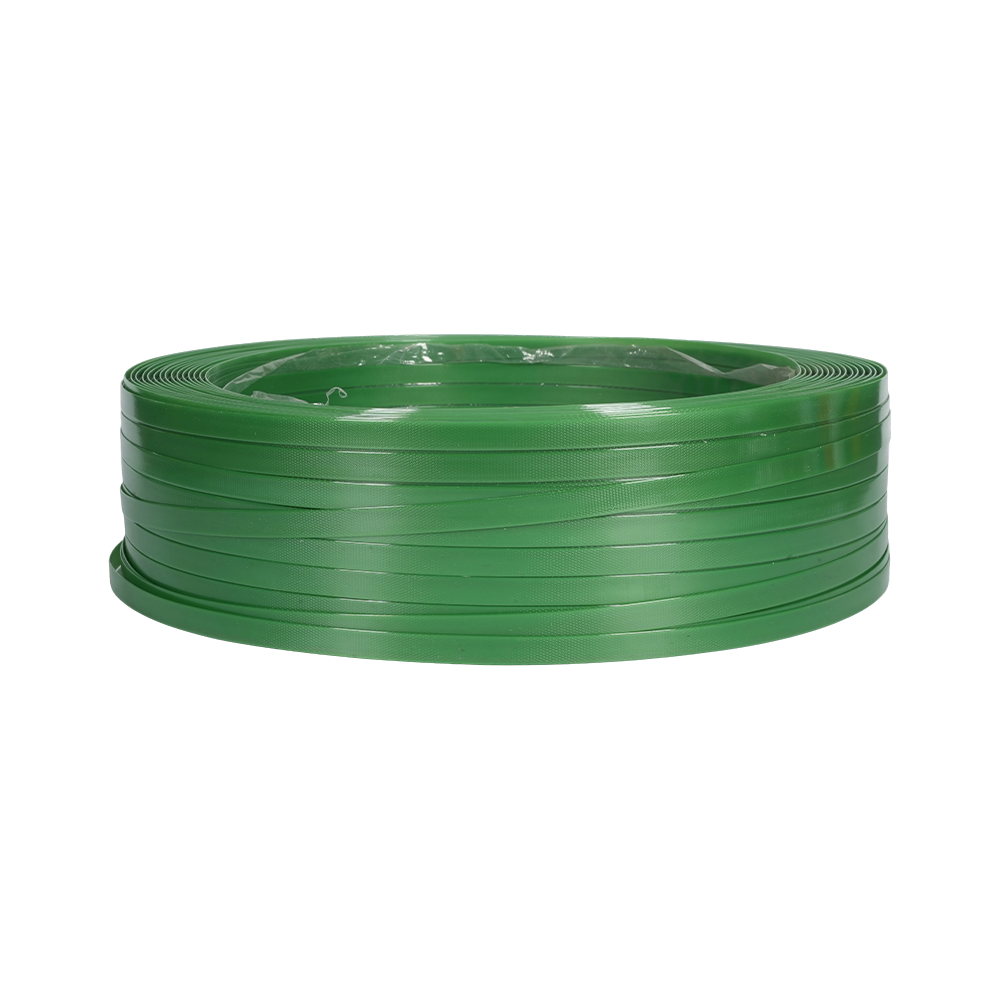
1608/1610/1910/2512 Handheld Transparent P+E+T Plastic Steel Belt
CONTACT DETAILS
- Address:No. 241, Yaojiafan, Zhangpanqiao, Shushan Street, Xiaoshan District, Hangzhou City, Zhejiang Province, China
- TEL:+86-0571-83175630
- Phone:+86-13336160217
- Email:anqiaocun@163.com
PRODUCTS
NEWS CENTER
MOBILE TERMINAL
Copyright© Zhejiang Geruite Packaging Materials Co., Ltd. All Rights Reserved.
Privacy Wholesale industrial packaging tape Manufacturers