


 English
  Español
  عربى
عربى 
Industrial-Grade Ordinary Striped Fiberglass Tape for Secure Packaging and Bundling
Content
- 1 Product Overview
- 2 Core Construction and Material Design
- 3 Key Technical Specifications
- 4 Advantages Over Conventional Packaging Tapes
- 5 Application Scenarios
- 6 Manufacturing Strength Behind the Product
- 7 Why Buyers Choose This Fiberglass Tape
- 8 Comparison with Other Reinforcement Methods
- 9 Best Practices for Application
- 10 Industries That Benefit from the Product
- 11 Company Manufacturing Advantages
- 12 Environmental and Economic Considerations
- 13 Quality Evaluation Before Purchase
- 14 Frequently Asked Questions
- 14.1 What is 319-36 Ordinary Striped Fiberglass Tape used for?
- 14.2 What makes this tape stronger than ordinary packaging tape?
- 14.3 Can the tape be used in low-temperature environments?
- 14.4 Is the tape suitable for lithium battery pack bundling?
- 14.5 How should the surface be prepared before application?
- 14.6 Can the tape be cut by hand?
- 14.7 What is the typical tensile strength?
- 14.8 How should the tape be stored?
- 14.9 Why choose this product from Zhejiang Geruite Packaging Materials Co., Ltd.?
- 15 Conclusion
- 16 References
- 17 Product: 319-36 Ordinary striped fiberglass tape
In modern packaging, logistics, assembly, and industrial handling, the need for reliable securing materials continues to grow. Ordinary packaging tape is often sufficient for light cartons and everyday sealing, but demanding applications require a tape with greater tensile strength, better dimensional stability, and stronger resistance to tearing. 319-36 Ordinary Striped Fiberglass Tape is designed for these higher-performance requirements. Built with a glass fiber backing and a pressure-sensitive adhesive system, it provides a practical balance of strength, adhesion, rigidity, and handling efficiency.
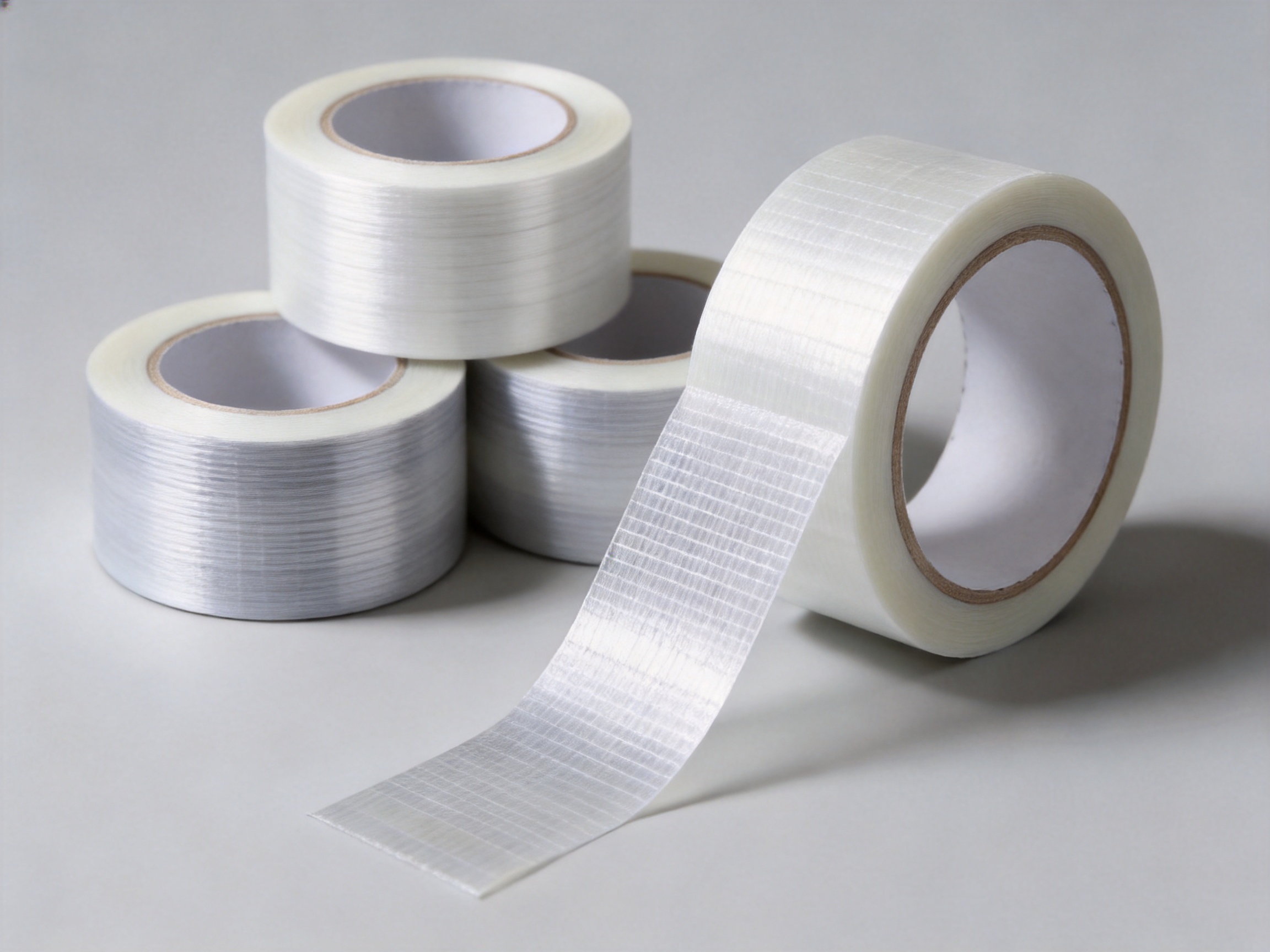
This product belongs to the fiberglass tape category and is particularly suitable for industrial packaging, heavy-duty carton reinforcement, cargo bundling, pallet stabilization, logistics protection, and specialized securing applications. Its crosswise striped fiberglass structure gives it a recognizable appearance while also contributing to its mechanical performance. Compared with many conventional film tapes, paper tapes, and standard BOPP tapes, this product offers higher tensile strength and stronger resistance to tearing under load.
Zhejiang Geruite Packaging Materials Co., Ltd. manufactures this tape as part of its broader range of high-performance packaging materials, including adhesive tapes, strapping bands, and films. The company’s manufacturing strength lies in its focus on raw material control, stable coating processes, product consistency, and application-oriented quality inspection. For buyers who require dependable industrial packaging tape, 319-36 Ordinary Striped Fiberglass Tape offers a combination of strength, usability, and cost-effective performance.
319-36 Ordinary striped fiberglass tape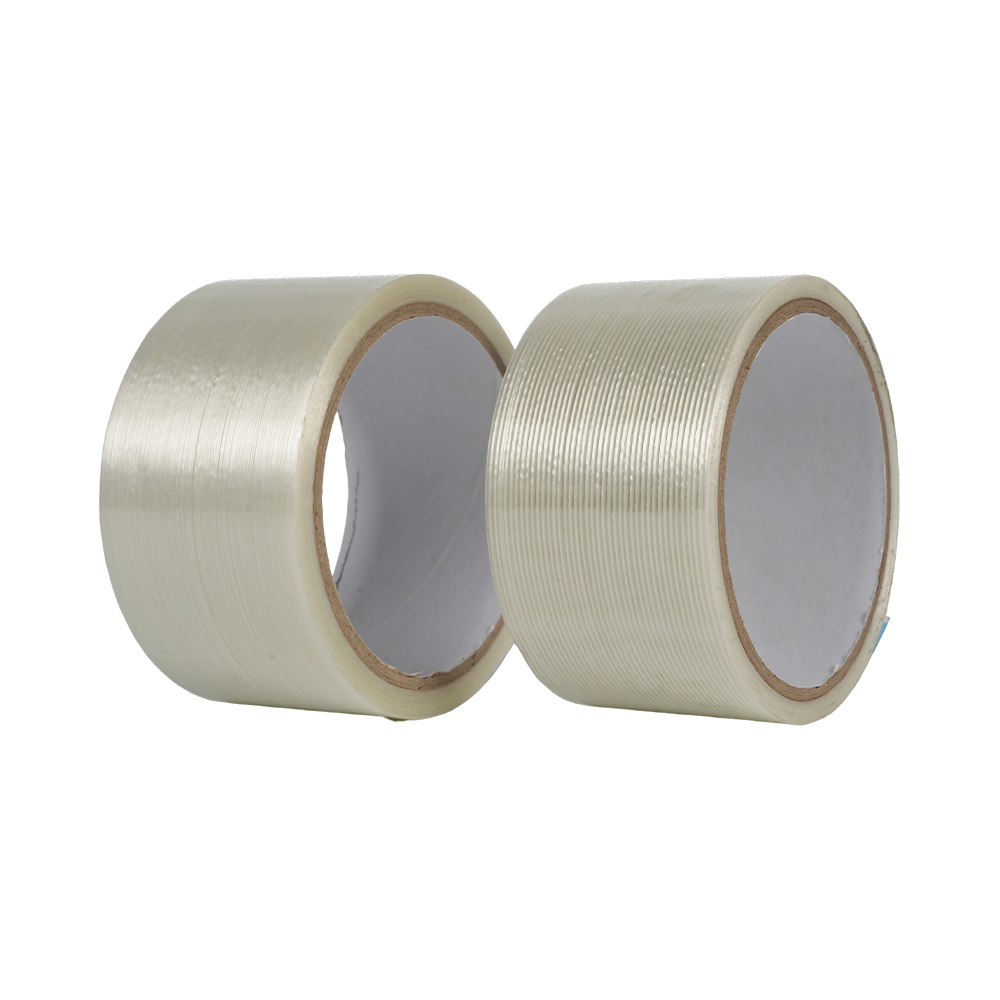
Product Overview
319-36 Ordinary Striped Fiberglass Tape is an industrial adhesive tape manufactured using glass fiber as the reinforcing backing material. The backing is coated with a pressure-sensitive adhesive, allowing the tape to bond to surfaces without the need for heat activation, solvent activation, or additional fastening tools. Once applied to a clean and dry surface, the tape provides strong holding power and dependable reinforcement.
The most visible feature of this tape is its ordinary striped fiberglass structure. The crosswise stripe pattern supports mechanical stability and improves handling during use. In industrial environments, operators often need tapes that can be applied quickly, remain stable under tension, and resist accidental tearing during bundling or transport. The striped glass fiber construction helps the tape perform in these conditions.
With a typical total thickness of 0.135 mm, 180-degree peel strength of 27.3 N/25 mm, tensile strength of 650 N/in, and elongation at break of 5%, this tape is engineered for applications where strength is more important than stretchability. Its relatively low elongation is advantageous in reinforcement tasks because the tape does not stretch excessively under stress. This helps maintain package shape and prevents loosening after application.
The tape is typically natural white or light gray, making it suitable for industrial packaging where appearance must remain clean and professional. Its rigid substrate facilitates controlled application and supports one-handed handling in many work environments. This is especially useful in warehouses, production lines, assembly stations, and logistics centers where time efficiency matters.
Core Construction and Material Design
The performance of fiberglass tape begins with the selection of its backing material. Glass fiber is valued in industrial materials because it provides high tensile strength, dimensional stability, and resistance to deformation. Unlike ordinary plastic film backings that may stretch under force, glass fiber reinforcement helps the tape maintain its structure when used to secure heavy cartons, bundle items, or reinforce loaded packages.
The backing of 319-36 Ordinary Striped Fiberglass Tape uses a glass fiber structure with a reinforcing stripe texture. This texture is not only visual; it contributes to the tape’s strength distribution and handling characteristics. The stripe arrangement helps reduce uncontrolled tearing and provides a more stable user experience during application.
The adhesive layer is pressure-sensitive, meaning the tape bonds through contact pressure. This feature is important for industrial use because it simplifies operation. Workers do not need special curing equipment, heating devices, or complicated preparation steps. The tape can be cut to the required length and pressed onto the target surface, provided that the surface is clean, dry, and free of oil or grease.
The adhesive system is designed to deliver a balance between initial tack and holding power. Initial tack is important when the tape must grab the surface quickly, especially during bundling or carton sealing. Holding power is equally important because the tape must remain bonded during storage, handling, transport, and exposure to changing environmental conditions.
Key Technical Specifications
The technical values of a tape help buyers and engineers understand whether it is suitable for a specific application. The following table summarizes the typical performance data of 319-36 Ordinary Striped Fiberglass Tape.
| Test Item | Reference Standard | Typical Value |
| Total Thickness | GB/T7125-2014 | 0.135 mm |
| Initial Tack | GB/T4852-2002 | No. 28 steel ball |
| 180° Peel Strength | GB/T2792-2014 | 27.3 N/25 mm |
| Tensile Strength | GB/T7753-87 | 650 N/in |
| Elongation at Break | GB/T7753-87 | 5% |
The total thickness of 0.135 mm provides a practical balance between durability and ease of application. A tape that is too thick may become difficult to bend around package edges, while a tape that is too thin may not provide enough strength for heavy-duty reinforcement. This thickness supports industrial usability without unnecessary bulk.
The initial tack value, measured by the No. 28 steel ball test, indicates good surface-grabbing ability. This is important in fast-moving packaging environments where the operator needs the tape to stay in place immediately after contact.
The 180-degree peel strength of 27.3 N/25 mm reflects the tape’s ability to resist peeling forces after bonding. Peel strength is especially relevant when cartons are stacked, moved, or exposed to vibration during transport. A higher peel value helps reduce the risk of tape lifting from the package surface.
The tensile strength of 650 N/in is one of the product’s most important characteristics. This high tensile strength allows the tape to secure heavier loads and reinforce packaging structures more effectively than many general-purpose tapes. The 5% elongation at break further indicates that the tape maintains its shape and resists stretching under force.
Advantages Over Conventional Packaging Tapes
Many packaging operations still rely on standard BOPP tape, masking tape, kraft paper tape, or low-strength film tape. These products have useful roles, but they may not be suitable for applications involving high tension, heavy cartons, sharp package edges, or long-distance logistics stress. 319-36 Ordinary Striped Fiberglass Tape provides clear advantages in these more demanding situations.
Higher Tensile Strength
The glass fiber backing gives the tape substantially higher tensile resistance than ordinary plastic film tapes. In practical terms, this means the tape can withstand greater pulling force before breaking. For heavy-duty packaging, pallet reinforcement, and bundling applications, high tensile strength is essential. When packages are moved by forklifts, stacked in warehouses, or transported by trucks, ships, or air cargo systems, the securing materials must resist sudden force and vibration.
Compared with common packaging tape, fiberglass tape is less likely to snap under load. This reduces the risk of package failure and product damage. For companies handling heavy goods or fragile industrial components, stronger tape can contribute directly to lower loss rates and more reliable shipment outcomes.
Better Tear Resistance
The reinforced striped glass fiber structure improves resistance to tearing. Conventional film tape may tear once a small cut or puncture appears, especially when the tape is under tension. Fiberglass reinforcement helps prevent tear propagation, allowing the tape to remain functional even under demanding conditions.
This tear resistance is valuable in warehouse environments where packages may contact corners, pallets, tools, or other cartons. It is also useful in bundling pipes, profiles, rods, battery packs, lightweight components, or irregularly shaped items.
Improved Dimensional Stability
Dimensional stability means the tape resists stretching, shrinking, or deforming after application. The 5% elongation at break shows that the tape does not stretch excessively. This helps packages remain tight and stable after being secured.
With ordinary stretchable tapes, the applied tension may gradually relax. This can cause bundles to loosen or cartons to lose reinforcement. Fiberglass tape helps maintain tension more effectively, supporting reliable long-term holding performance.
Reliable Adhesion on Various Surfaces
The pressure-sensitive adhesive provides consistent bonding on many packaging surfaces. It is suitable for heavy-duty cartons, industrial packaging materials, and many general surfaces used in logistics and assembly. For surfaces such as plastics, coatings, or specialty materials, testing before full-scale use is recommended to confirm compatibility.
The balance between initial tack and holding power makes the tape suitable for both manual and production-line application. It adheres quickly, remains stable, and supports efficient packaging workflows.
Low-Temperature Adaptability
Packaging materials may be stored or transported in cold environments. Some adhesive tapes become brittle, lose tack, or lift from the surface when exposed to low temperatures. 319-36 Ordinary Striped Fiberglass Tape is designed to maintain flexibility and adhesive performance in low-temperature conditions with minimal performance degradation.
This makes it useful for logistics, winter storage, cold-region transportation, and packaging operations where temperature fluctuation is common.
Application Scenarios
319-36 Ordinary Striped Fiberglass Tape is designed for practical industrial use. Its value is most visible in applications where ordinary sealing tape does not provide enough strength or stability.
Industrial Packaging
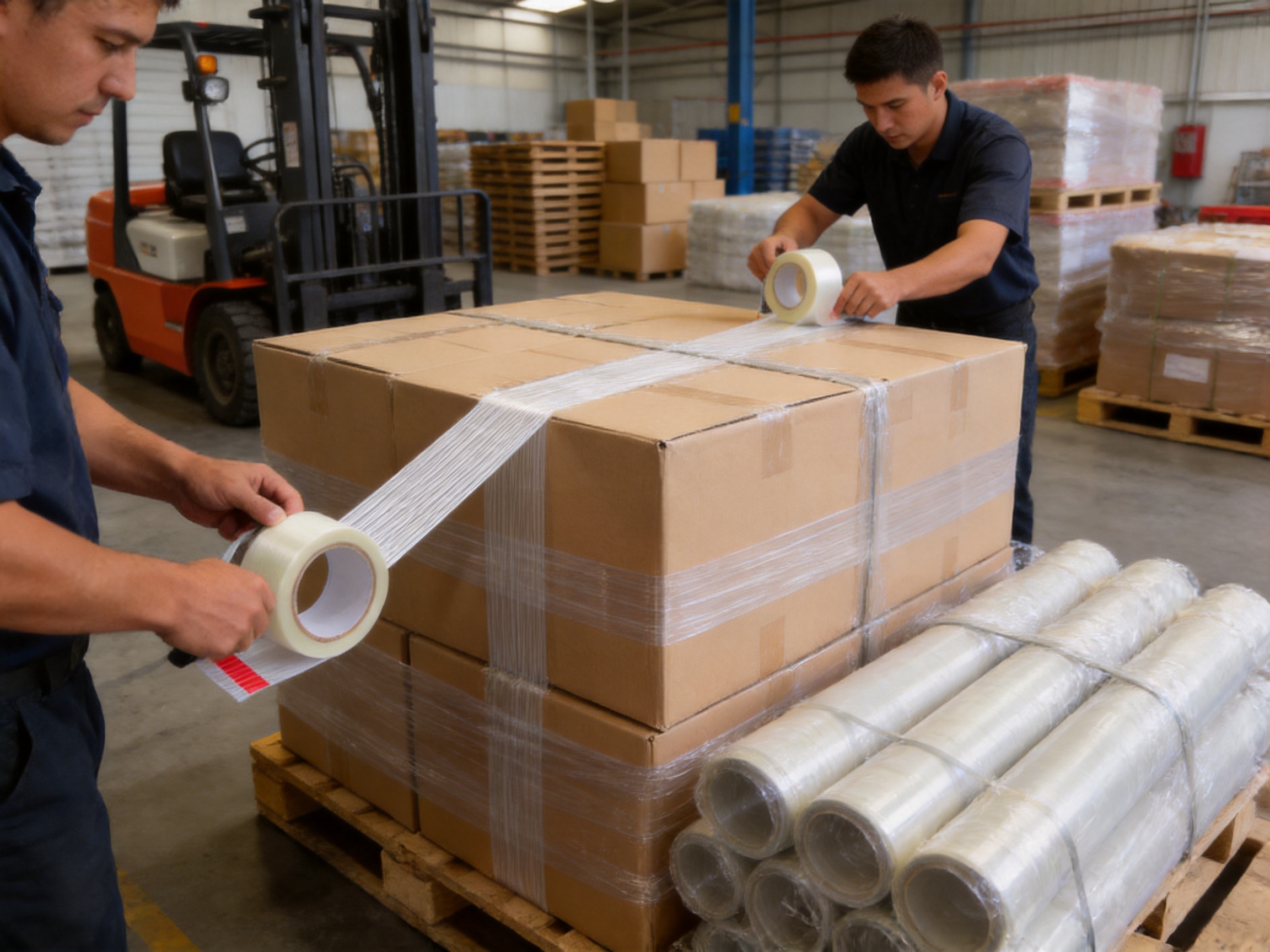
In industrial packaging, cartons often contain heavy parts, metal components, tools, electronic assemblies, hardware, machine accessories, or other dense products. Standard carton sealing tape may close the carton, but it may not provide enough reinforcement for edges, seams, and stress points. Fiberglass tape can be used to strengthen carton sides, reinforce bottom seams, and prevent package failure during handling.
The high tensile strength of the tape supports secure sealing of heavy-duty cartons. It also helps stabilize cartons placed on pallets, especially when used together with stretch film or strapping bands.
Logistics and Transportation
During transportation, packages experience vibration, compression, friction, acceleration, braking force, and repeated loading and unloading. These conditions can weaken ordinary tape. Fiberglass tape provides stronger resistance to mechanical stress, making it suitable for cargo reinforcement and transport protection.
It can be used to secure package edges, bind grouped cartons, reinforce shipping boxes, stabilize cargo, and prevent accidental opening. In export packaging, where packages may travel long distances and pass through multiple handling stages, stronger tape contributes to safer delivery.
Pallet Stabilization
Palletized goods are commonly secured with stretch film, strapping bands, corner protectors, and adhesive tapes. Fiberglass tape can serve as an additional reinforcement material for pallet stabilization. It can hold protective materials in place, reinforce carton layers, and secure lightweight components before wrapping.
Because the tape has high tensile strength and low elongation, it helps prevent shifting and loosening. This is especially important when pallets contain mixed products, irregular cartons, or items that require additional stabilization.
Battery Pack Bundling
The product can be used for bundling and securing lithium battery packs in specialized industrial applications, provided that compatibility with specific battery chemistries, insulation requirements, and production standards is verified. Battery-related applications often require stable, clean, and controlled materials. Fiberglass tape can provide mechanical bundling support, but engineering evaluation is necessary before use in any safety-critical battery assembly.
Manufacturers should test adhesion, thermal behavior, electrical requirements, chemical compatibility, and long-term aging performance according to the requirements of the specific battery system.
General Fixation and Temporary Bundling
Beyond heavy-duty packaging, this tape is also useful for general fixation tasks. It can be applied to temporarily bundle pipes, hold lightweight materials, secure parts during processing, or reinforce items before final packaging. Its rigidity makes it easy to apply in controlled lengths, and its strength makes it more dependable than ordinary utility tape.
In production workshops, it can support temporary holding, assembly preparation, and internal logistics. In maintenance environments, it can assist in grouping or securing materials before transport or storage.
Manufacturing Strength Behind the Product
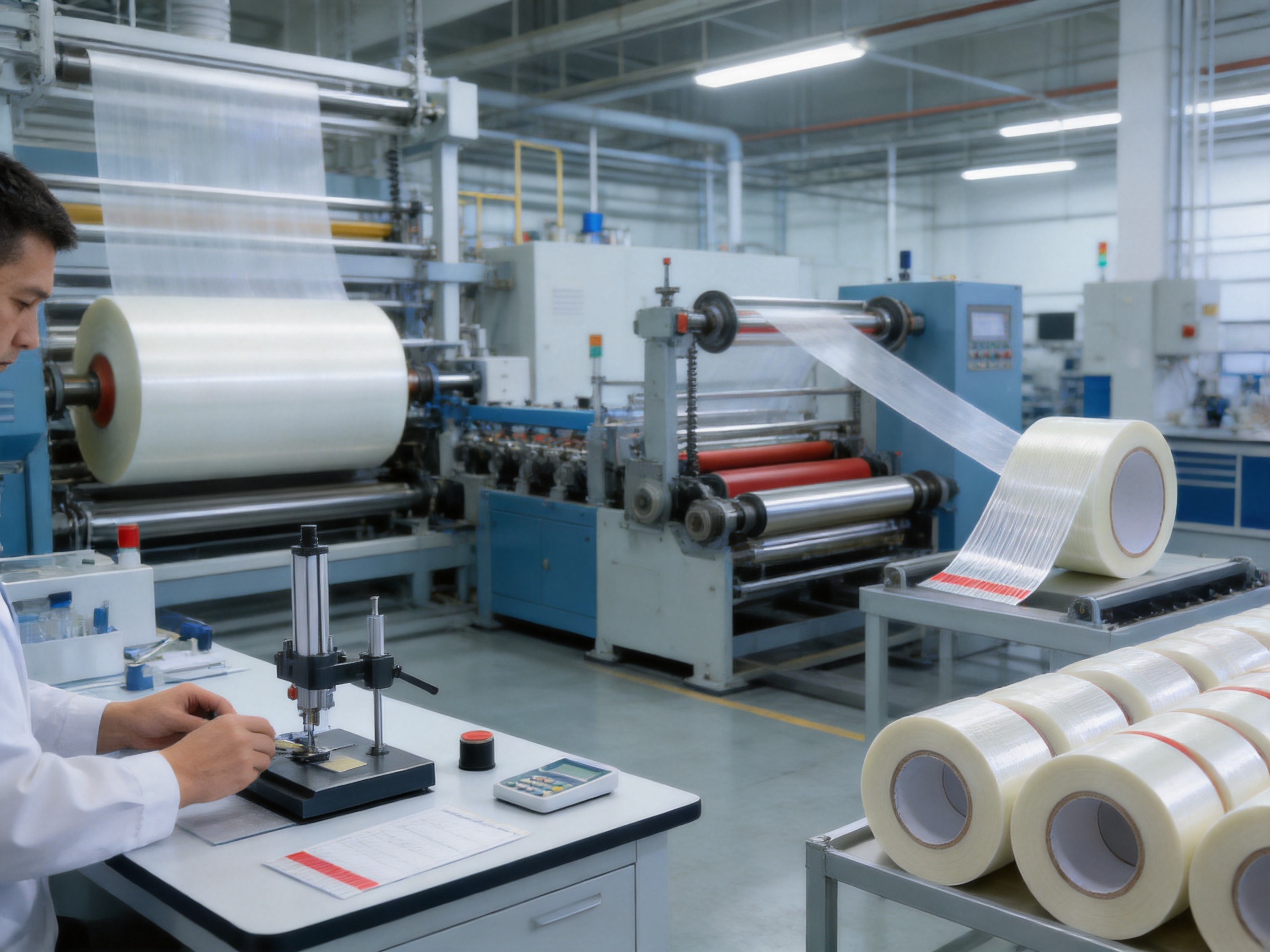
The performance of an industrial tape depends not only on raw materials but also on manufacturing control. Zhejiang Geruite Packaging Materials Co., Ltd. focuses on the research, development, production, and sales of packaging materials and high-performance tapes. Its product range includes BOPP tapes, kraft paper tapes, masking tapes, high-temperature resistant tapes, metal tapes, PE stretch film, PP strapping, and high-strength PET strapping.
This broad product foundation gives the company practical experience across adhesive coating, backing material selection, film handling, slitting, winding, packaging, and quality inspection. For fiberglass tape production, this experience helps ensure consistent thickness, adhesion, tensile performance, and roll appearance.
Raw Material Selection
Stable tape performance begins with controlled raw materials. The glass fiber backing must have suitable strength, texture, and uniformity. The adhesive must provide the required tack, peel strength, and holding power. Zhejiang Geruite Packaging Materials Co., Ltd. emphasizes raw material procurement control to support consistent product quality.
For industrial users, consistency is critical. A single strong roll is not enough; every batch must perform reliably. Controlled raw material selection helps reduce variation between rolls and batches, improving customer confidence in long-term use.
Coating Process Control
The adhesive coating process determines how evenly the adhesive is distributed across the fiberglass backing. Uneven coating may lead to weak spots, inconsistent peel strength, edge lifting, or adhesive transfer. A stable coating process supports smooth unwinding, reliable bonding, and predictable application performance.
Advanced coating control also helps maintain the tape’s total thickness. For 319-36 Ordinary Striped Fiberglass Tape, the typical total thickness is 0.135 mm. Maintaining this value within a controlled range allows the tape to provide consistent strength and handling characteristics.
Drying, Curing, and Adhesive Stability
After coating, the adhesive layer must be processed under controlled conditions to achieve stable performance. Temperature, line speed, drying balance, and winding tension can all affect the final tape. Proper process control helps ensure that the adhesive bonds well to the backing and retains suitable pressure-sensitive properties.
For industrial adhesive tapes, adhesive stability affects shelf life, application performance, and long-term holding power. A well-controlled manufacturing process helps reduce problems such as adhesive ooze, poor unwind, insufficient tack, and unstable bonding.
Slitting and Rewinding Precision
After coating and processing, master rolls must be slit into customer-required widths and rewound into finished rolls. Slitting precision affects edge quality, roll appearance, and usability. Poor slitting may produce rough edges, loose winding, uneven roll tension, or tape breakage during application.
Precision slitting and controlled rewinding help operators apply the tape smoothly. For industrial users, this improves efficiency and reduces downtime. A clean roll edge also improves professional appearance and reduces waste during packaging operations.
Quality Inspection System
Zhejiang Geruite Packaging Materials Co., Ltd. maintains a quality-oriented production approach. A rigorous quality control system covers stages from raw material procurement to production and final inspection. Key performance indicators for fiberglass tape include thickness, initial tack, peel strength, tensile strength, elongation, roll appearance, winding condition, and adhesive uniformity.
Quality inspection is especially important for customers who use tape in high-volume packaging operations. When tape quality is stable, workers can apply it confidently, machines experience fewer interruptions, and packaging outcomes become more predictable.
Why Buyers Choose This Fiberglass Tape
Industrial buyers usually evaluate tape based on strength, adhesion, reliability, cost efficiency, supply stability, and manufacturer capability. 319-36 Ordinary Striped Fiberglass Tape offers advantages in each of these areas.
Performance-Oriented Design
This product is not a general-purpose household tape. It is designed for industrial securing and reinforcement. The glass fiber backing, pressure-sensitive adhesive, crosswise stripe texture, high tensile value, and low elongation all support demanding packaging tasks.
For buyers seeking a stronger alternative to conventional carton sealing tape, this product provides a clear upgrade path without requiring complex equipment changes.
Practical Handling
The tape’s rigidity supports easy handling. It can be cut to the desired length, and tearing along the stripe direction is easier than with many fully reinforced tapes. This can improve operator efficiency in manual packaging environments.
One-handed application is often possible in routine bundling and reinforcement tasks, depending on tape width and working conditions. This handling convenience matters in fast-paced warehouses and production lines.
Broad Compatibility with Packaging Systems
The tape can be used alongside cartons, stretch film, strapping bands, pallet protection materials, and other packaging solutions. Zhejiang Geruite Packaging Materials Co., Ltd. also produces related packaging materials, which allows customers to source multiple packaging products from a supplier familiar with integrated packaging needs.
For example, a logistics customer may use stretch film for pallet wrapping, PET strapping for heavy load securing, and fiberglass tape for carton reinforcement. A supplier with broad packaging expertise can better understand how these products work together.
Reliable Manufacturer Support
The company is located in Zhejiang Province, China, a region with strong manufacturing resources and a developed supply chain. Its annual output value has reached over RMB 60 million, indicating stable production capacity and market participation. The company’s focus on quality, equipment, and service supports long-term customer cooperation.
For international buyers, manufacturer stability is an important factor. A product must not only meet technical needs; it must also be available consistently, packed properly, and supported by responsive service.
Comparison with Other Reinforcement Methods
Industrial packaging can be reinforced in many ways. Common methods include ordinary tape, reinforced paper tape, strapping bands, stretch film, staples, glue, and corner protectors. Each method has advantages, but fiberglass tape fills a specific and valuable role.
Compared with Ordinary BOPP Tape
BOPP tape is economical and widely used for carton sealing. However, it has limited tensile strength and may stretch or tear under heavy load. Fiberglass tape provides stronger reinforcement and better resistance to breaking. For heavy cartons or high-risk shipments, fiberglass tape is usually more dependable.
Compared with Kraft Paper Tape
Kraft paper tape is useful for eco-conscious packaging and carton sealing. Some paper tapes can be strong, especially water-activated reinforced versions. However, paper backing may be more sensitive to moisture and tearing than fiberglass backing. Fiberglass tape offers strong tensile performance and resistance to deformation, making it suitable for industrial reinforcement where moisture and mechanical stress may be concerns.
Compared with Strapping Bands
PP and PET strapping bands are excellent for securing heavy loads and palletized goods. However, they require tensioning tools or machines and may not be suitable for small reinforcement points or quick localized bonding. Fiberglass tape is easier to apply for spot reinforcement, carton seam strengthening, and temporary bundling. In many operations, fiberglass tape and strapping bands are complementary rather than competitive.
Compared with Stretch Film
Stretch film is ideal for wrapping pallets and protecting goods from dust and movement. However, it does not provide the same localized tensile reinforcement as fiberglass tape. Fiberglass tape can strengthen specific areas before stretch wrapping, improving total load stability.
Compared with Staples or Mechanical Fasteners
Staples and mechanical fasteners provide strong closure but may damage contents, create safety hazards, or require additional equipment. Fiberglass tape offers a non-penetrating reinforcement method. It bonds to the surface without puncturing the package, making it suitable for many cartons and sensitive products.
Best Practices for Application
Correct application helps maximize tape performance. Even a high-quality industrial tape may fail if applied to dirty, wet, oily, dusty, or incompatible surfaces. Users should follow proper preparation and handling procedures.
Surface Preparation
Before applying the tape, ensure that the target surface is clean, dry, and free from oil, grease, dust, loose fibers, and moisture. Contaminants can reduce adhesive contact and lead to lifting or failure.
For coated cartons, plastic surfaces, painted materials, or specialty substrates, adhesion testing is recommended before full-scale use. Different surface energies and coatings can affect pressure-sensitive adhesive performance.
Application Pressure
Pressure-sensitive adhesive requires firm contact pressure to develop bonding strength. After positioning the tape, press it firmly along the full length. Use hand pressure, a roller, or suitable application equipment to improve adhesive wet-out on the surface.
Avoid touching the adhesive surface with fingers before application, as skin oils may reduce bonding strength.
Length and Placement
Cut the tape to the required length according to package size and reinforcement needs. For carton reinforcement, apply the tape across seams, edges, or stress points. For bundling, wrap the tape with sufficient overlap to secure the items firmly.
Do not overstretch or force the tape around extremely sharp corners without testing. Although the tape has strong tensile properties, proper placement improves overall performance.
Storage Conditions
Store the tape at room temperature, away from direct sunlight, moisture, and extreme heat. Proper storage helps preserve adhesive properties and prevents roll deformation. Keep rolls in original packaging until use when possible.
Inventory should be rotated on a first-in, first-out basis to maintain freshness and predictable performance.
Industries That Benefit from the Product
The versatility of 319-36 Ordinary Striped Fiberglass Tape makes it useful across multiple industries. Its strength, controlled adhesion, and stability support a range of packaging and assembly operations.
Logistics and Express Delivery
Logistics companies handle high volumes of packages under time pressure. Packages may pass through sorting systems, conveyor belts, trucks, storage hubs, and delivery stations. Reinforcement tape can reduce the chance of carton opening and improve shipment integrity.
Electronics and Electrical Products
Electronic products often require stable packaging and careful handling. Fiberglass tape can reinforce cartons containing components, appliances, or devices. For direct contact with electronic assemblies or battery systems, technical evaluation should be conducted to verify suitability.
Industrial Manufacturing
Manufacturers use packaging materials not only for shipping finished goods but also for internal movement of parts and semi-finished products. Fiberglass tape can secure bundles, reinforce work-in-process packaging, and support temporary fixation during production.
Construction and Decoration Materials
Construction-related products such as profiles, pipes, panels, hardware, and fittings may require strong bundling. The tape’s tensile strength and tear resistance make it useful for grouping lightweight to medium-weight materials before transportation or storage.
Household Goods and General Merchandise
Household goods, furniture accessories, tools, and mixed merchandise often require reinforced packaging to withstand distribution. Fiberglass tape can provide additional strength where ordinary tape may be insufficient.
Company Manufacturing Advantages
Zhejiang Geruite Packaging Materials Co., Ltd. has developed its business around packaging materials and adhesive tape production. Its location in Zhejiang Province provides access to a strong manufacturing ecosystem, logistics network, and skilled industrial resources. This supports both product development and stable delivery.
The company emphasizes quality as the lifeline of the enterprise. This philosophy is important in the packaging industry because customers rely on tapes, films, and strapping products to protect goods throughout the supply chain. A small failure in packaging material can result in product damage, customer complaints, and additional cost. Therefore, stable quality is not optional; it is essential.
The company’s production capability covers a wide range of packaging solutions. This allows it to understand different packaging challenges and recommend suitable product combinations. For customers, this can simplify sourcing and improve packaging system efficiency.
Its advanced production equipment supports consistent manufacturing. In adhesive tape production, equipment stability affects coating uniformity, drying efficiency, tension control, slitting accuracy, and final roll quality. By investing in production capability, the company improves its ability to supply reliable industrial packaging tape.
The company also focuses on professional service. Packaging buyers may require technical data, sample testing, product recommendations, customized sizes, or shipping support. A responsive supplier helps customers reduce purchasing risk and select materials more confidently.
Environmental and Economic Considerations
Industrial packaging decisions are increasingly influenced by cost, waste reduction, product protection, and operational efficiency. While fiberglass tape is stronger than many common tapes, it should be used strategically. Because of its high strength, users may need less tape in certain reinforcement applications compared with weaker alternatives. This can help reduce repeated wrapping, rework, and package failure.
Product damage during transport is a hidden environmental and economic cost. When goods are damaged, companies may need to replace products, ship again, discard materials, and use additional labor. Stronger packaging reinforcement can help reduce these losses. By improving shipment security, fiberglass tape contributes to more efficient supply chains.
From an operational perspective, a dependable tape can also reduce downtime. If operators experience frequent tape breakage, poor adhesion, or roll defects, packaging speed decreases. A stable fiberglass tape supports smoother workflows and better labor efficiency.
Quality Evaluation Before Purchase
Buyers should evaluate industrial tape according to both laboratory data and real application conditions. Technical values provide a useful starting point, but packaging surfaces, load weight, climate, storage time, and handling methods can affect final performance.
Before large-scale purchasing, users may conduct sample trials on actual cartons or materials. Testing should include adhesion after application, holding performance after storage, resistance to lifting at edges, tensile behavior during bundling, and performance after transportation simulation.
For special applications such as battery pack bundling, electronics packaging, or low-temperature logistics, additional testing is recommended. Compatibility with product materials, safety standards, insulation requirements, and aging conditions should be verified.
Frequently Asked Questions
What is 319-36 Ordinary Striped Fiberglass Tape used for?
It is used for industrial packaging, heavy-duty carton sealing, cargo bundling, pallet stabilization, logistics reinforcement, temporary fixation, and selected specialized securing applications. It is designed for situations where ordinary packaging tape may not provide enough tensile strength or tear resistance.
What makes this tape stronger than ordinary packaging tape?
The tape uses a glass fiber backing with a reinforcing striped structure. Glass fiber provides high tensile strength and dimensional stability, allowing the tape to resist breaking and stretching under load better than many standard film tapes.
Can the tape be used in low-temperature environments?
Yes, the tape is designed to maintain flexibility and adhesive properties in low-temperature conditions with minimal performance degradation. However, users should test performance under their specific temperature and surface conditions before full-scale use.
Is the tape suitable for lithium battery pack bundling?
It may be used for bundling and securing lithium battery packs, but compatibility must be verified for each specific battery chemistry, production process, safety requirement, and operating environment. Testing is necessary before use in battery-related applications.
How should the surface be prepared before application?
The surface should be clean, dry, and free from oil, grease, moisture, dust, and loose particles. Good surface preparation improves adhesive contact and helps the tape achieve stronger bonding performance.
Can the tape be cut by hand?
The tape can be cut to the desired length. Tearing along the stripe direction is easier than uncontrolled tearing, but for clean and precise application, cutting tools may be preferred in professional packaging operations.
What is the typical tensile strength?
The typical tensile strength is 650 N/in according to GB/T7753-87. This value reflects the tape’s suitability for heavy-duty securing and reinforcement applications.
How should the tape be stored?
It should be stored at room temperature, away from direct sunlight, moisture, and extreme heat. Proper storage helps preserve adhesive stability and roll quality.
Why choose this product from Zhejiang Geruite Packaging Materials Co., Ltd.?
The company has experience in producing adhesive tapes, strapping bands, stretch films, and other packaging materials. Its strengths include raw material control, advanced production equipment, quality inspection, broad product capability, and professional service support.
Conclusion
319-36 Ordinary Striped Fiberglass Tape is a strong, practical, and reliable industrial adhesive tape designed for demanding packaging and bundling applications. Its glass fiber backing provides high tensile strength, tear resistance, and dimensional stability, while its pressure-sensitive adhesive offers dependable bonding on suitable surfaces. With typical values such as 0.135 mm total thickness, 27.3 N/25 mm peel strength, 650 N/in tensile strength, and 5% elongation at break, the tape is well suited for heavy-duty carton reinforcement, logistics protection, pallet stabilization, and industrial fixation.
Compared with ordinary packaging tapes, this product offers stronger load resistance, better tear control, and improved stability under tension. It can work alongside stretch film, strapping bands, and other packaging materials to create more secure packaging systems.
Behind the product is the manufacturing capability of Zhejiang Geruite Packaging Materials Co., Ltd., a company focused on high-performance tapes and packaging materials. Through raw material control, coating process management, precision slitting, quality inspection, and broad packaging expertise, the company supports customers seeking dependable industrial packaging solutions.
For businesses that need stronger reinforcement, safer transport, and more consistent packaging performance, 319-36 Ordinary Striped Fiberglass Tape is a practical choice that combines material strength, application convenience, and professional manufacturing support.
References
GB/T7125-2014, Test Method for Thickness of Adhesive Tapes.
GB/T4852-2002, Test Method for Initial Tack of Pressure-Sensitive Adhesive Tapes by Rolling Ball.
GB/T2792-2014, Test Method for 180-Degree Peel Strength of Pressure-Sensitive Adhesive Tapes.
GB/T7753-87, Test Method for Tensile Strength and Elongation of Adhesive Tapes.
Pressure-Sensitive Tape Council, Technical Guide to Pressure-Sensitive Adhesive Tape Performance.
Handbook of Adhesion Technology, Industrial Adhesive Materials and Applications.
Packaging Technology and Science, Studies on Reinforced Tapes and Transport Packaging Performance.
Product: 319-36 Ordinary striped fiberglass tape

LATEST POST
Let’s create something amazing together
contact us


CONTACT DETAILS
- Address:No. 241, Yaojiafan, Zhangpanqiao, Shushan Street, Xiaoshan District, Hangzhou City, Zhejiang Province, China
- TEL:+86-0571-83175630
- Phone:+86-13336160217
- Email:anqiaocun@163.com
PRODUCTS
NEWS CENTER
MOBILE TERMINAL
Copyright© Zhejiang Geruite Packaging Materials Co., Ltd. All Rights Reserved.
Privacy Wholesale industrial packaging tape Manufacturers