


 English
  Español
  عربى
عربى 
Transparent PP Strapping Band for Pelletizing Machines: Performance, Manufacturing Quality, and Industrial Packaging Value
Content
- 1 Introduction to Transparent Polypropylene Strapping
- 2 Product Overview and Intended Function
- 3 Core Technical Specifications
- 4 Why Polypropylene Is Suitable for Industrial Strapping
- 5 Performance Advantages Over Less Specialized Alternatives
- 6 Manufacturing Process and Technical Control
- 7 Company Manufacturing Strengths
- 8 Applications in Pelletizing and Granular-Material Packaging
- 9 Comparison With Other Strapping Materials
- 10 Machine Compatibility and Operating Performance
- 11 Storage, Handling, and Installation Recommendations
- 12 Quality and Sustainability Considerations
- 13 Recommended Selection Method
- 14 Common Operating Problems and Solutions
- 15 Purchasing and Supplier Cooperation
- 16 Q&A: Frequently Asked Questions
- 16.1 Q1: What material is used to manufacture the transparent strapping band?
- 16.2 Q2: Which widths are available?
- 16.3 Q3: What thickness range is offered?
- 16.4 Q4: Is this product suitable for automatic packaging lines?
- 16.5 Q5: Why is transparency useful in packaging?
- 16.6 Q6: What is the standard coil length?
- 16.7 Q7: How can strap breakage be reduced?
- 16.8 Q8: Why do packages become loose after strapping?
- 16.9 Q9: How should the strap be stored?
- 16.10 Q10: Can this strap be used with pallets?
- 16.11 Q11: Is PP strapping better than PET or steel strapping?
- 16.12 Q12: What should be inspected before full production?
- 16.13 Q13: Does the company offer other packaging materials?
- 16.14 Q14: Can the product be customized?
- 17 Conclusion
- 18 References
- 19 Product: Transparent Strapping Band, Clear PP Packing Strap For Pelletizing Machine
Introduction to Transparent Polypropylene Strapping
Packaging stability is essential wherever products must be transported, stored, palletized, or transferred between production stages. In plastic pellet production, chemical processing, feed manufacturing, grain handling, and general logistics, a package can lose its integrity when the securing material stretches excessively, breaks under impact, or fails to bond correctly. A reliable strapping band must therefore provide a carefully balanced combination of tensile strength, controlled elongation, flexibility, surface smoothness, dimensional stability, and machine compatibility.
The Transparent PP Packing Strap for Pelletizing Machines is designed to meet these requirements through the use of polypropylene, commonly identified as PP. It is a clear strapping band intended for automatic and semi-automatic packaging systems, including equipment used in pelletizing and granular-material production lines. Its transparent appearance provides a practical visual benefit: operators can inspect the packaged material, labels, and package condition without removing or cutting the strap.
Unlike ordinary low-strength bundling materials, this product is developed for consistent machine operation and sustained load performance. Its low elongation helps preserve tension after application, while its impact and fatigue resistance help reduce the possibility of loosening during handling and transportation. The smooth surface is also important because strapping passes over rollers, guides, tensioning components, and sealing or welding mechanisms at production speed.
Manufactured by Zhejiang Geruite Packaging Materials Co., Ltd., the strap forms part of a broader portfolio of packaging materials that includes adhesive tapes, shrink film, stretch film, PP strapping, and high-strength PET strapping. The company combines material selection, extrusion-based production, dimensional control, coiling, inspection, and packaging management to supply a dependable product for industrial customers.
This article examines the product’s structure, operating advantages, applications, technical specifications, manufacturing considerations, quality-control strengths, and practical use requirements. It also explains how transparent PP strapping compares with less specialized alternatives and why correct matching between the band, package, and machine is essential for reliable results.
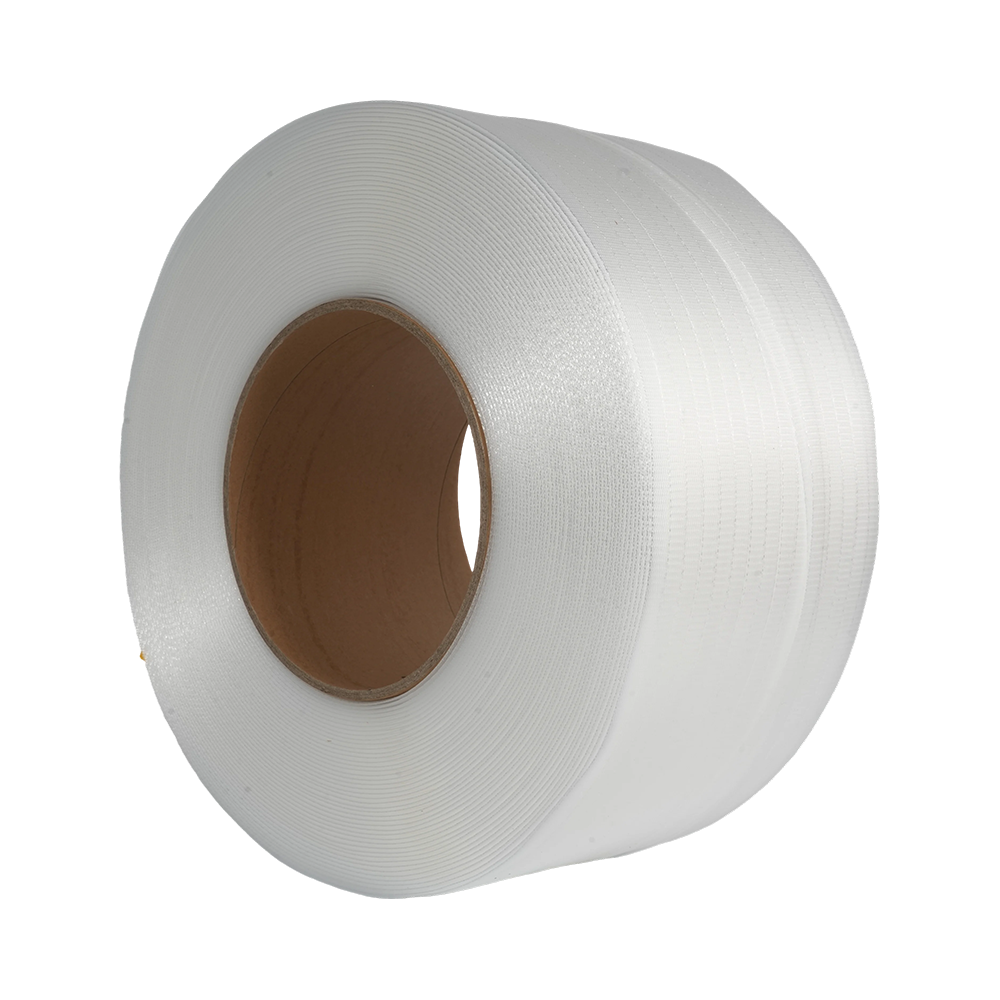
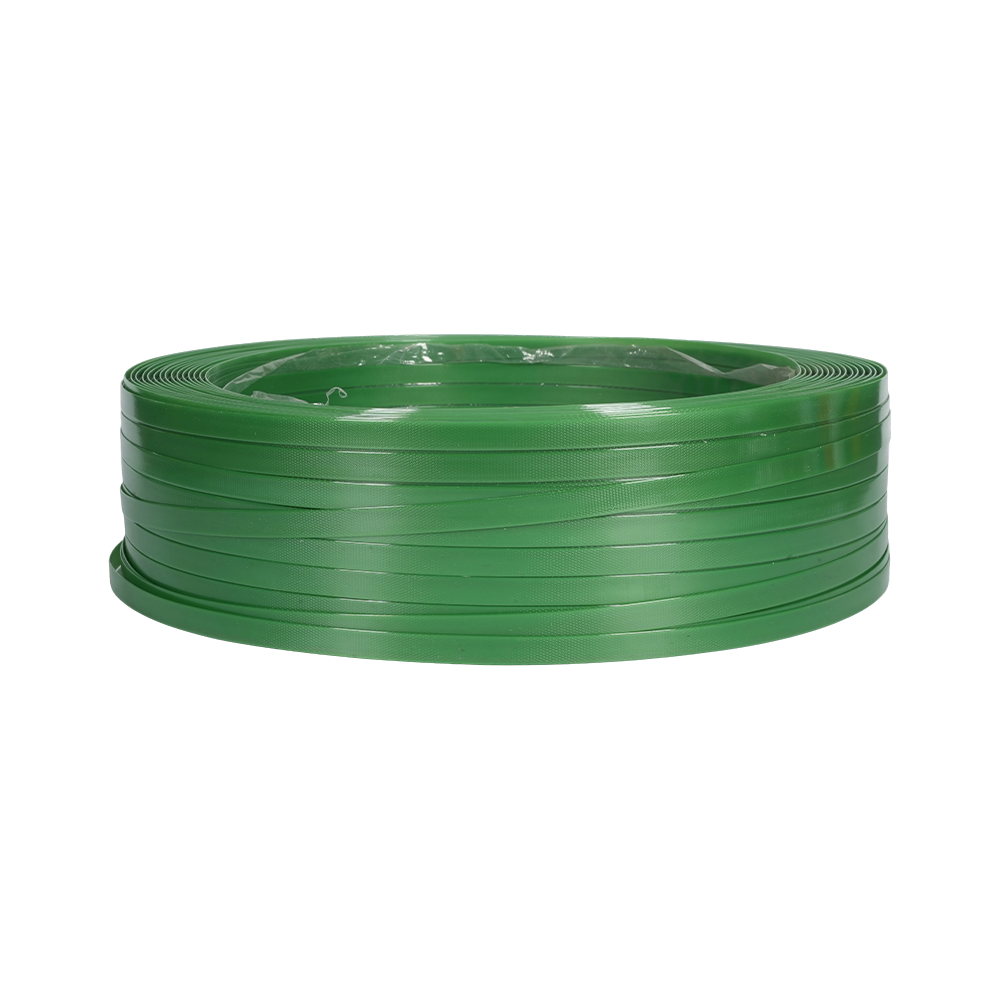
Transparent Strapping Band, Clear PP Packing Strap For Pelletizing Machine
Product Overview and Intended Function
Transparent PP strapping is a thermoplastic band produced from polypropylene resin and formed into a continuous, wound coil. In a packaging line, the strap is fed from the roll, tensioned around a package or bundle, and joined by a suitable sealing process. Depending on the machine design, the joint may be produced by heat welding, friction welding, or another compatible method.
The main purpose of the strap is to hold a package together during movement and storage. In pelletizing applications, bags, cartons, woven sacks, or other containers may hold PE pellets, PP pellets, engineering plastic granules, recycled plastic particles, or similar bulk materials. These packages can shift when lifted, stacked, loaded, or transported. A properly tensioned strap helps maintain the original arrangement and reduces the risk of package deformation or separation.
The strap is available in widths of 9 mm, 12 mm, and 15 mm, with customized dimensions available for specific equipment or load requirements. Thickness ranges from 0.4 mm to 0.8 mm. These dimensions allow users to select a suitable balance between material consumption, tensile performance, machine compatibility, and package size.
The standard coil length is 1,000 meters per roll. A consistent coil length helps production planners estimate consumption and schedule roll replacement. Uniform winding is especially important in automatic and semi-automatic systems because an irregular coil can create feeding resistance, sudden tension changes, breakage, or jamming.
The clear color is not merely an aesthetic choice. It allows labels, printed information, package markings, and the general condition of the contents to remain visible. This can be useful in warehouses where different grades or colors of pellets are stored in adjacent areas. It may also support faster identification during quality checks, inventory operations, and dispatch preparation.
Core Technical Specifications
The following specifications describe the standard product configuration. Actual performance can depend on strap width, thickness, machine settings, package design, joint quality, ambient temperature, and the properties of the material being secured.
| Parameter | Standard Value | Practical Significance |
|---|---|---|
| Material | Polypropylene (PP) | Provides a lightweight combination of strength, flexibility, moisture resistance, and chemical resistance. |
| Width | 9 mm, 12 mm, 15 mm; customizable | Allows adaptation to different packages, machines, and load requirements. |
| Thickness | 0.4 mm to 0.8 mm | Supports adjustment of strength, stiffness, material consumption, and machine feeding behavior. |
| Tensile Strength | At least 300 MPa | Provides resistance against pulling forces during tensioning and transportation. |
| Break Elongation | Up to 25% | Helps the strap retain applied tension while allowing controlled flexibility. |
| Temperature Range | -10°C to 80°C | Indicates the stated operating range for common storage and packaging environments. |
| Coil Length | 1,000 m per roll, standard | Supports extended production runs and simplifies consumption planning. |
| Color | Clear | Maintains visibility of package contents, labels, and markings. |
These specifications should be used as a starting point for application selection rather than as a substitute for a packaging trial. A heavy pallet of dense pellets may require a wider or thicker band than a light carton. Similarly, a machine designed for one strap width may not feed another width correctly, even if the material strength appears suitable.
Why Polypropylene Is Suitable for Industrial Strapping
Polypropylene is widely used in packaging because it provides a useful combination of low density, strength, flexibility, and processability. Compared with heavier metal solutions, PP strapping is lightweight and easier to handle. Compared with some low-grade plastic bands, a properly manufactured PP strap offers better dimensional consistency and more predictable tension behavior.
PP is also resistant to moisture and many common acids and alkalis. This property is valuable in industrial settings where packages may be stored in warehouses with variable humidity or handled near chemical, agricultural, feed, or polymer-processing operations. Resistance to moisture helps prevent the strap from becoming a source of corrosion or staining, as can occur with certain metal alternatives.
The material’s low density reduces the total weight added to a package. This can improve manual handling and reduce unnecessary transport weight. At the same time, the strap can provide sufficient tensile performance for many secondary packaging and pallet-stabilization applications.
Polypropylene also responds well to extrusion processing. It can be melted, formed into a continuous band, cooled, oriented, and wound into a roll. With correct control of resin quality, melt temperature, die conditions, cooling, drawing, thickness, and winding tension, manufacturers can produce a strap with uniform dimensions and stable feeding characteristics.
Another advantage is recyclability. The product is made from PP and is described as meeting RoHS requirements. Users should manage recycling according to local waste regulations and should separate the strap from contaminated materials when necessary. Recyclability can support a more responsible packaging program, especially for high-volume manufacturers that consume large quantities of strapping each month.
Performance Advantages Over Less Specialized Alternatives
1. Improved Tension Retention
One of the principal advantages of this transparent PP strapping band is its controlled elongation. When a band stretches excessively during application, it may lose effective tension after the package settles or after repeated handling. The stated break elongation of no more than 25 percent reflects a design emphasis on controlled flexibility rather than unlimited stretch.
Low elongation does not mean that the strap is rigid or brittle. Instead, the objective is to balance flexibility with the ability to maintain tension. This is particularly important when securing pellet bags or granular products that may shift slightly within their containers. A strap that retains tension can reduce package looseness, movement, and loss of shape during transport.
2. Resistance to Impact and Repeated Loading
Packages are exposed to impacts when they are transferred by forklift, placed on pallets, loaded into vehicles, or moved across conveyors. They may also experience repeated vibration during road, rail, or sea transport. The product is designed to resist impact and fatigue so that the strap can continue to support the package after these stresses occur.
Compared with a basic bundling band intended only for light manual use, an industrial PP strap with stronger and more stable physical properties offers a greater margin against accidental damage. This does not eliminate the need for suitable tension and correct joint formation, but it can reduce failure risk when packages encounter normal handling shocks.
3. Better Visibility Than Opaque Strapping
Clear strapping provides a visual advantage over colored or opaque alternatives. Operators can more easily inspect product labels, batch information, package printing, and visible contamination. The strap is less likely to obscure important information on the outside of a bag, carton, or palletized unit.
Visibility can also support quality control. If a package is damaged, leaking, contaminated, or incorrectly labeled, the condition may be noticed without removing the band. In operations involving multiple pellet grades or formulations, this can help reduce identification errors and simplify warehouse inspection.
4. Smooth Surface and Reduced Equipment Wear
In automatic packaging, the strap travels through guides, rollers, tensioning units, and sealing assemblies. A rough, uneven, or contaminated surface can increase friction and contribute to feeding resistance. Over time, inconsistent friction may also increase wear on machine components.
The smooth surface of this product is intended to support stable movement through the equipment. By minimizing unnecessary friction at contact points, it can help reduce surface abrasion, guide interference, and excessive stress on rollers. Operators still need to clean and inspect the machine regularly, but a well-finished strap can contribute to smoother operation.
5. Compatibility With Automatic and Semi-Automatic Systems
The strap is designed for use with most automatic and semi-automatic strapping machines, including systems integrated into pelletizing lines. Machine compatibility depends on the selected width, thickness, core configuration, feeding direction, tension capacity, and welding method. When these factors are correctly matched, the strap can support repeatable packaging cycles and reduce the need for manual intervention.
Compared with a general-purpose band that must be manually cut and fastened, machine-compatible PP strapping can improve throughput and reduce labor requirements. It can also produce more consistent strap placement and tension, which is difficult to achieve when every package is secured by hand.
6. Uniform Coil Winding
Coil quality is sometimes overlooked when users compare packaging materials. However, poor winding can cause as many operating problems as poor material strength. A strap that crosses over itself, forms loose loops, or has inconsistent edge alignment can feed irregularly into a high-speed system.
Uniform coiling helps the band unwind in a predictable manner. This reduces the possibility of sudden tension spikes, entanglement, machine stoppage, and premature breakage. It also allows the full nominal length of the roll to be used more effectively.
Manufacturing Process and Technical Control
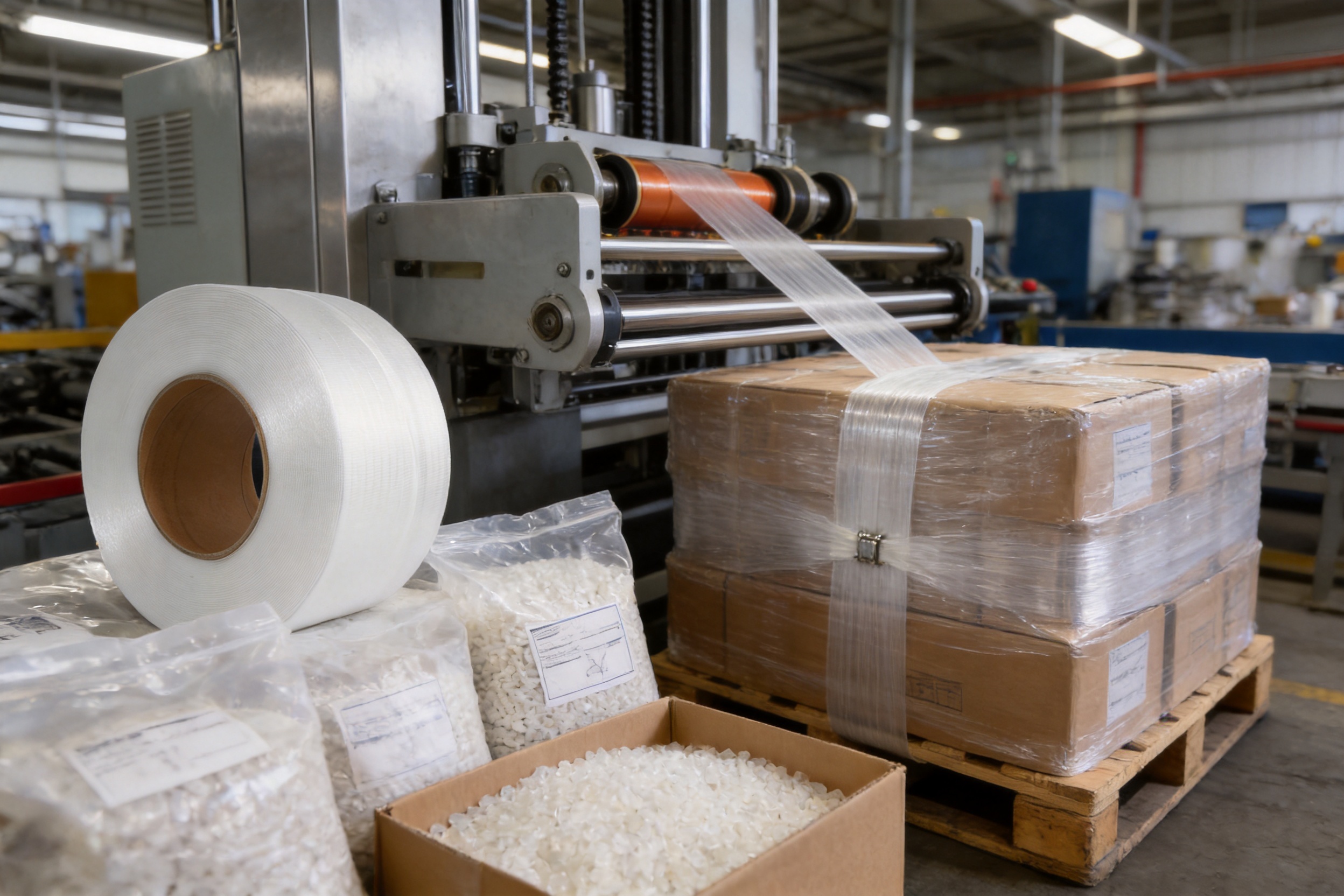
The performance of a strapping band depends not only on the polymer selected but also on how the material is processed. Zhejiang Geruite Packaging Materials Co., Ltd. focuses on the research, development, production, and sales of packaging materials. Its manufacturing approach includes attention to raw-material selection, production stability, dimensional control, finished-product inspection, and packaging consistency.
Raw-Material Selection
Production begins with polypropylene resin and any approved formulation components required to achieve the target properties. Raw materials must be selected according to melt-processing behavior, strength requirements, color clarity, stability, and application conditions. In industrial strapping, inconsistent resin quality can lead to variation in thickness, surface appearance, tensile strength, and elongation.
A controlled purchasing and incoming-material process helps prevent unsuitable materials from entering production. Material identification, supplier evaluation, storage conditions, and batch management are important parts of this stage. Keeping raw materials dry and protected from contamination also supports more stable extrusion performance.
Extrusion and Melt Preparation
Polypropylene is processed through an extrusion system in which the resin is heated and transformed into a uniform melt. The extruder must maintain suitable temperature zones and stable pressure so that the polymer flows consistently toward the forming die. Excessive temperature can affect material stability, while insufficient melting can create uneven flow or visible defects.
Stable melt preparation is important for clear strapping because clarity and surface appearance can reveal processing problems. Variations in the melt may produce haze, streaks, bubbles, thickness differences, or weak areas. Process monitoring helps manufacturers maintain a consistent band structure across the length of the roll.
Die Forming and Dimensional Control
After melt preparation, the polymer passes through a die that forms it into a continuous band. The die design and operating conditions influence the strap’s width, thickness, edge profile, and surface uniformity. A properly maintained die helps reduce edge defects and supports accurate dimensions.
Width and thickness must be controlled because these measurements directly affect machine compatibility and load performance. A band that is too wide may not fit correctly in the guide path. A band that is too narrow may not provide the intended contact area or could move laterally during tensioning. Thickness variation can cause inconsistent strength and irregular feeding through the welding unit.
Cooling and Orientation
After forming, the hot strap is cooled under controlled conditions. Cooling must be sufficiently uniform to prevent deformation, internal stress, or unstable dimensions. The strap may then pass through drawing or orientation stages that align polymer molecules and improve tensile performance in the machine direction.
Orientation is one of the factors that can help PP strapping achieve a favorable strength-to-weight ratio. It must be controlled carefully, however, because excessive orientation can make a product overly stiff or reduce performance in other directions. The manufacturing objective is a balanced structure that supports tensile strength, impact resistance, controlled elongation, and reliable machine behavior.
Surface and Edge Finishing
The surface of the band should be smooth enough to travel across equipment without unnecessary friction. Edges must also be formed consistently so they do not catch on guides or create localized stress concentrations. Surface finishing is particularly important in automated systems because even a small defect can become a repeated source of feeding problems over thousands of cycles.
Visual inspection can identify scratches, inclusions, bubbles, discoloration, edge damage, and other irregularities. For a clear strap, the transparency of the product makes certain visual defects easier to detect before shipment.
Coiling and Roll Formation
Once the strap reaches the required dimensions and physical condition, it is wound into coils. Winding tension, alignment, roll density, and edge placement must be controlled to create a stable roll. Excessive winding tension can deform the coil or make unwinding difficult, while insufficient tension can produce loose layers and irregular feeding.
Uniform coiling is a key manufacturing strength because it connects material quality with machine performance. A roll that appears acceptable in a static inspection may still cause problems if its layers are not properly aligned. A controlled winding process reduces the risk of tangling, slippage, and sudden resistance as the strap enters the machine.
Inspection and Quality Assurance
Quality assurance should cover both physical properties and operating characteristics. Typical checks may include width, thickness, appearance, coil length, tensile strength, elongation, and winding condition. For industrial customers, batch consistency is particularly important because a change in strap behavior can require machine readjustment and interrupt production.
Zhejiang Geruite Packaging Materials Co., Ltd. states that it operates a rigorous quality-control system extending from raw-material procurement through production and final inspection. This process-oriented approach is valuable because packaging performance is influenced by every stage, not only by the final visual appearance of the roll.
The company’s broader packaging-material portfolio also supports technical experience across related products. Its product range includes BOPP tape, kraft paper tape, masking tape, high-temperature-resistant tape, metal tape, PE stretch film, PP strapping, and high-strength PET strapping. Experience with multiple packaging substrates can help the manufacturer understand different requirements for adhesion, tensile performance, elongation, puncture resistance, machine processing, and storage.
Company Manufacturing Strengths
Zhejiang Geruite Packaging Materials Co., Ltd. is located in Zhejiang Province, China, an established manufacturing region with a strong industrial supply chain. The company has concentrated on packaging materials since its establishment and has developed capabilities covering product research, production, sales, and customer support.
Its manufacturing strength is based on several connected elements. First, the company maintains a product-development focus rather than treating packaging materials as simple commodity items. Different applications require different combinations of strength, thickness, surface behavior, transparency, flexibility, and processing compatibility. A development-oriented approach makes it possible to adjust product specifications for particular machinery and load conditions.
Second, the company emphasizes production equipment and process control. Stable equipment is necessary for continuous extrusion, accurate thickness, clean surfaces, and consistent winding. Preventive maintenance and process monitoring help reduce variation and support reliable output.
Third, the company applies quality control across the complete production path. Incoming material verification, in-process inspection, and final product checks work together to identify problems earlier. This is especially important for customers using automated equipment, where a small variation in strap dimensions can cause repeated stoppages.
Fourth, the company has experience serving multiple industries. Its packaging products are used in logistics and express delivery, household goods, electronics, construction and decoration, industrial manufacturing, cargo stabilization, and packaging protection. This broad application background gives the manufacturer exposure to different packaging pressures and customer requirements.
The company reports an annual output value exceeding RMB 60 million. This indicates an established commercial and manufacturing base capable of supporting ongoing production and supply relationships. For industrial purchasers, supplier continuity is important because packaging materials are often consumed every day and must be available according to production schedules.
Finally, the company presents continuous improvement and research investment as part of its future direction. For PP strapping users, ongoing development may include improvements in clarity, dimensional accuracy, machine feeding, joint performance, recycled-content options, packaging efficiency, and application-specific strength.
Applications in Pelletizing and Granular-Material Packaging
Plastic Pellet Production Lines
The most direct application is the strapping of bags, cartons, or palletized units containing PE and PP pellets. Pelletizing plants often operate continuously, and packaging must keep pace with production. A strap compatible with automatic or semi-automatic equipment can help maintain throughput while reducing manual handling.
Pellets can shift within a bag or container when the package is moved. The strap helps consolidate the unit, especially when multiple bags are placed on a pallet or when cartons are grouped for shipment. Clear material also allows the package label and visible contents to remain accessible to operators.
Chemical Products
Granular chemical materials may require protection from package movement, moisture exposure, and rough handling. PP’s resistance to moisture and many acids and alkalis makes it suitable for a range of secondary packaging situations. The correct package liner, bag material, and storage method must still be selected according to the chemical properties of the contents.
Feed and Grain Industries
Feed, grain, seed, and other agricultural products are often packed in sacks or woven bags that require additional stabilization. Strapping can help secure grouped bags during warehousing and transportation. The strap is especially useful when packages are stacked and moved by pallet truck or forklift.
In these environments, storage conditions may vary. The stated temperature range of -10°C to 80°C covers many ordinary warehouse and transport environments, although users should evaluate extreme conditions, direct heat, prolonged outdoor exposure, and the temperature of the package at the time of strapping.
Cartons, Pallets, and Logistics Bundles
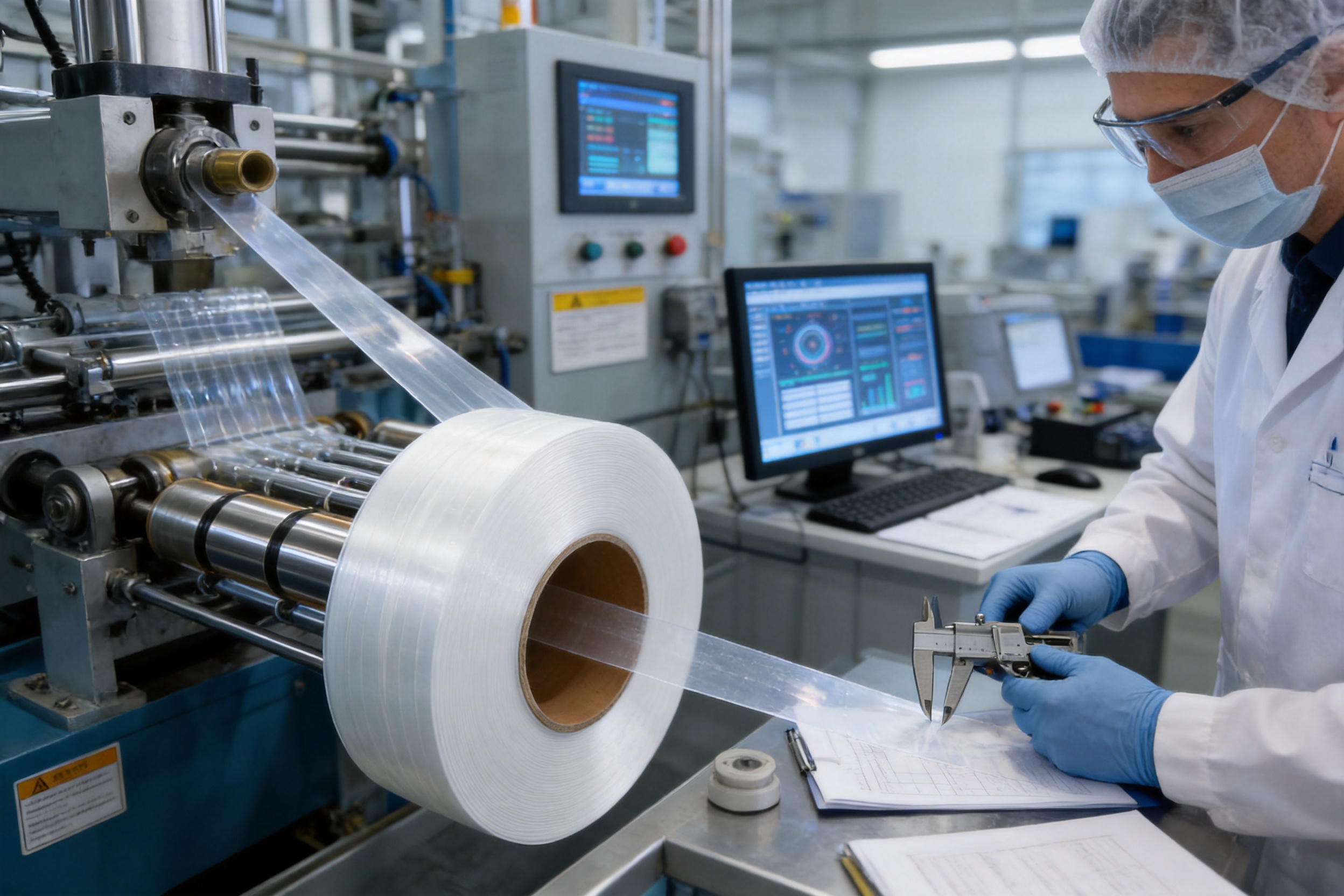
The product can also be used for auxiliary bundling of cartons and pallets. It may hold several boxes together, stabilize a pallet load, or provide an additional layer of protection beneath stretch film. Using both stretch film and strapping can be effective when the load requires surface containment as well as directional reinforcement.
For smaller cartons or lighter bundles, a 9 mm strap may be appropriate. Larger or heavier units may benefit from 12 mm or 15 mm widths and a greater thickness. The final selection should consider package geometry, corner protection, tension level, joint strength, and the expected handling environment.
Comparison With Other Strapping Materials
PP Strapping Compared With Low-Grade Plastic Band
Low-grade plastic band may appear economical at the time of purchase, but inconsistent thickness, poor winding, unstable elongation, or weak joints can create hidden costs. These costs include machine downtime, product damage, rework, wasted material, and labor for troubleshooting.
A more controlled PP strap offers better predictability. Consistent dimensions help the band pass through guides and welders more reliably. Stable tensile behavior helps the operator set machine tension with greater confidence. Uniform coiling reduces the risk that an inexpensive roll will become expensive through repeated stoppages.
PP Strapping Compared With PET Strapping
PET strapping generally provides high stiffness and strong load retention for demanding applications. It may be preferred for heavy, rigid loads such as bricks, timber, or dense industrial products. PP strapping, by contrast, is often lighter, more flexible, and suitable for moderate-duty packaging and high-volume machine applications.
The correct choice depends on the load rather than on a simple hierarchy of materials. For pellet bags, cartons, and grouped packages where controlled flexibility and economical operation are important, PP can provide an appropriate balance. For exceptionally heavy loads or applications requiring very high residual tension, PET may be more suitable.
PP Strapping Compared With Steel Strap
Steel strap offers high strength and stiffness, but it is heavier and may have sharp edges. It can also corrode under certain storage conditions and requires greater care during handling. PP strapping is lighter, does not rust, and is generally easier to apply with automatic or semi-automatic equipment.
For products that do not require the extreme load capacity of steel, PP can reduce handling risk and simplify packaging operations. It is especially useful when the package or container could be damaged by a rigid metal strap.
Clear PP Strapping Compared With Colored Strapping
Colored strapping can support visual branding or quick color coding, but it may hide package printing and reduce visibility of labels. Clear PP strapping is advantageous where inspection, identification, and product visibility are priorities.
For pellet production and warehouse operations, transparency can help operators confirm package identity without removing the strap. It can also preserve a cleaner appearance when the strap is applied around printed cartons or labeled bags.
Machine Compatibility and Operating Performance
Good strap performance depends on the relationship between the product and the packaging machine. Before placing an order, users should verify the supported width, thickness, coil structure, feeding direction, core dimensions, tension range, and welding method. A strap should not be selected solely by nominal width or tensile strength.
Automatic and semi-automatic machines are sensitive to feeding resistance. The roll must unwind smoothly, and the strap must remain aligned as it moves through the guides. If the strap is too thick for the machine path, it may fail to enter the welding head. If it is too thin, it may slip, fold, or fail to achieve the intended joint quality.
Machine tension should be adjusted according to the package and strap specification. Excessive tension can stretch or break the band, deform bags, damage carton edges, or overload the equipment. Insufficient tension can leave the package loose and allow movement during transportation.
Welding parameters are also important. Heat-welding and friction-welding systems require different settings, and the correct parameters depend on strap thickness, machine design, ambient temperature, and cycle time. A good strap cannot compensate for an incorrectly adjusted welding unit. The operator should confirm that the joint is properly fused and that the sealed area does not show incomplete bonding, excessive melting, or brittle damage.
Regular machine maintenance supports the advantages of the product. Guides should be cleaned to remove dust, pellet fragments, and polymer residue. Rollers should be checked for damage or contamination. The cutter, heater, friction plate, tensioning mechanism, and sensor system should be inspected according to the machine manufacturer’s maintenance schedule.
Storage, Handling, and Installation Recommendations
Strapping rolls should be stored in a cool, dry location away from prolonged direct sunlight. Excessive heat may affect roll shape or material behavior, while direct ultraviolet exposure can affect the appearance and long-term performance of polymer products. Rolls should remain protected from water, oil, dust, and chemicals that could contaminate the surface.
Rolls should be placed on a stable surface and protected against impacts. Dropping a roll can deform the edges or create internal winding problems that may not be immediately visible. Damaged rolls should be inspected before installation.
Before use, the operator should confirm that the strap width and thickness match the machine settings. The roll must be installed in the correct direction and positioned securely on the dispenser. Incorrect installation can cause uneven unwinding, crossovers, or feeding interruptions.
The machine should be tested at a moderate operating speed before full production begins. Operators should observe the strap path, tension response, weld appearance, and package compression. If the strap breaks during testing, tension should be reduced and the strap path should be examined for sharp edges, obstruction, or misalignment.
When packages become loose after strapping, the operator should first inspect the tension value and then verify the heating or friction-welding parameters. A weak joint may be caused by insufficient heat, excessive heat, incorrect friction, contamination, or an unsuitable cycle time. The package itself may also be too flexible or unevenly filled for the selected strap tension.
Quality and Sustainability Considerations
Packaging buyers increasingly evaluate more than price per roll. They also consider production reliability, material consumption, waste generation, worker safety, transport efficiency, and end-of-life handling. A stable PP strap can support these objectives by reducing breakage, avoiding unnecessary rework, and improving the usable length of each roll.
The lightweight nature of PP reduces the mass of packaging material compared with heavier alternatives. Its recyclability provides an additional environmental benefit when collection and recycling systems are available. Users should keep used PP straps separated from incompatible materials where practical and should follow local recycling requirements.
Meeting RoHS requirements is also relevant for customers with internal compliance policies or export-market obligations. RoHS compliance concerns the restriction of certain hazardous substances in applicable products and materials. Buyers should request current compliance documentation when a particular market or project requires formal verification.
Sustainability also depends on correct product selection. Using a strap that is much heavier than necessary can increase material consumption, while using one that is too light can cause breakage and waste. Selecting the narrowest or thinnest suitable specification, while maintaining required package stability, is usually more efficient than choosing solely by the lowest unit price.
Recommended Selection Method
A structured selection process helps users obtain reliable results. First, identify the package type and contents. Pellet bags, cartons, woven sacks, and pallet loads have different shapes and levels of rigidity. The package weight and the possibility of internal movement should also be recorded.
Second, measure the machine’s supported strap dimensions. Confirm the accepted width, thickness, roll or core configuration, and joining system. If a custom width or thickness is required, provide the machine details to the supplier before production.
Third, assess the transportation environment. A package moved only inside a dry warehouse experiences less stress than one transported over long distances through vibration, temperature changes, and repeated loading operations. The strap specification should reflect the highest normal stress expected during the distribution cycle.
Fourth, select the initial width and thickness. The available 9 mm, 12 mm, and 15 mm widths provide a practical range for light to heavier secondary packaging. Thickness from 0.4 mm to 0.8 mm allows further adjustment of strength and stiffness.
Fifth, conduct a production trial. The trial should include normal machine speed, representative packages, the intended tension level, and the actual welding settings. The results should be evaluated after immediate packaging and after simulated handling or storage.
Finally, establish a repeat-order specification. Once the preferred size and machine settings have been confirmed, recording the exact product dimensions and batch requirements can reduce future variation and simplify purchasing.
Common Operating Problems and Solutions
Frequent Strap Breakage
Frequent breakage can result from excessive machine tension, incorrect strap thickness, sharp edges in the guide path, damaged rollers, poor roll installation, or package corners that concentrate stress. The first step is to lower the tension to a controlled level and inspect the complete strap path. The selected strap should also be checked against the load weight and machine specification.
Loose Packages After Application
Loose packages may be caused by insufficient tension, excessive strap relaxation, poor joint formation, uneven package filling, or movement of the product after strapping. Operators should check tension, confirm that the welding area is clean, and adjust heat or friction parameters. Corner protectors may be useful where the strap cuts into carton edges or fails to distribute pressure evenly.
Uneven or Tangled Coil
If the coil unwinds unevenly, operators should inspect the roll for deformation, crossed layers, damaged edges, or incorrect installation direction. The dispenser should be aligned with the machine inlet, and any obstruction in the guide path should be removed. Rolls that have been dropped or stored under excessive pressure may need to be quarantined for inspection.
Weak Welded Joint
A weak joint may appear when the strap surfaces are contaminated, the machine temperature is incorrect, the friction cycle is too short, or the pressure is insufficient. The operator should inspect the welded area and compare it with a correctly formed sample. Machine settings should be changed gradually rather than all at once.
Feeding Resistance
Feeding resistance can be caused by an unsuitable strap dimension, poor coil winding, dirty guides, excessive roll drag, or misalignment between the dispenser and machine. Cleaning the guides and checking the roll position are simple first actions. If the issue continues, the strap width and thickness should be compared with the machine’s design limits.
Purchasing and Supplier Cooperation
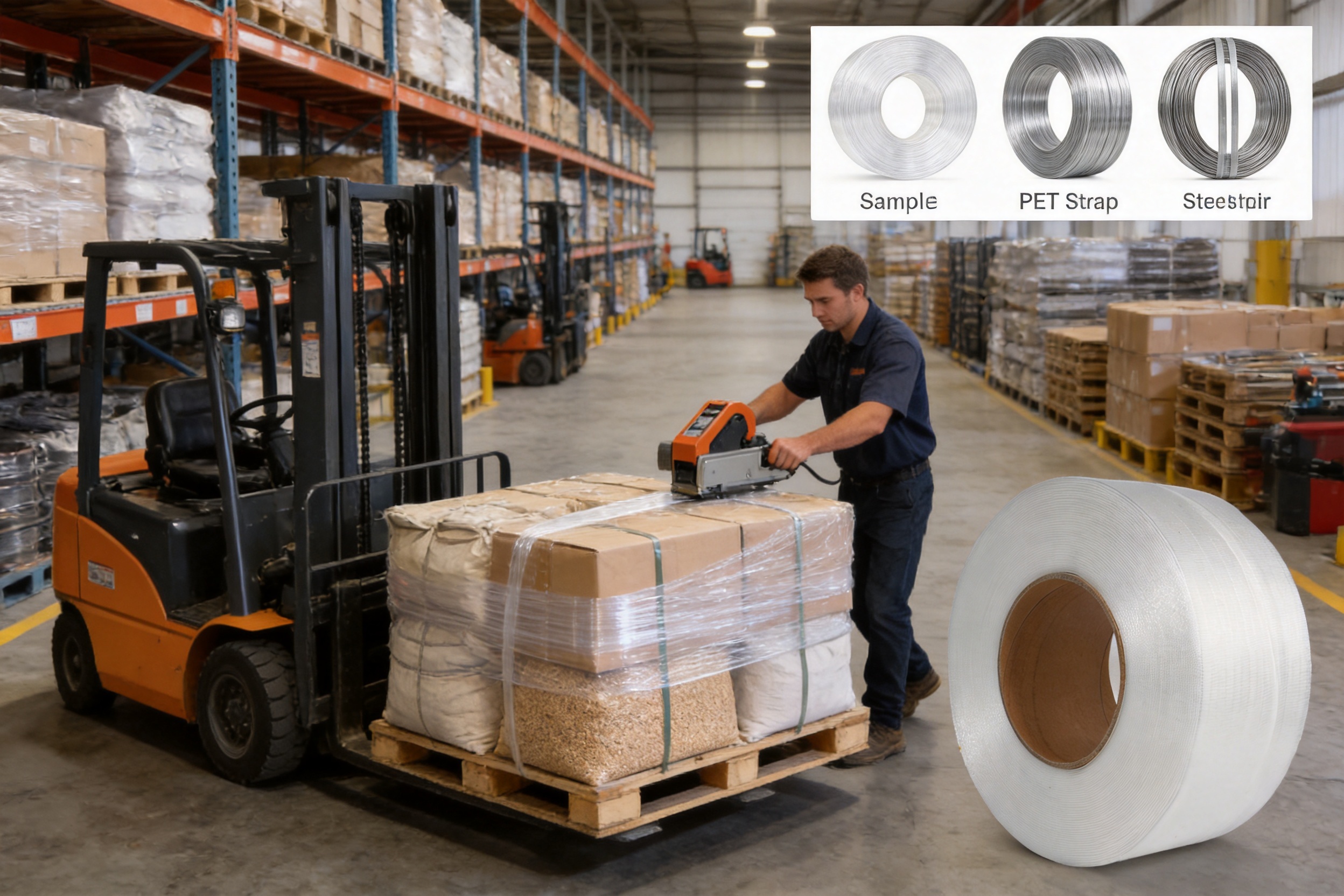
For regular industrial consumption, buyers should evaluate the supplier’s ability to maintain consistent specifications over time. Important questions include whether the supplier can provide the required widths and thicknesses, whether custom dimensions are possible, how batches are identified, and what inspection records are available.
Packaging customers should also discuss coil length, core or roll requirements, packaging method, palletization, lead time, and shipment protection. Clear agreement on these details helps prevent receiving a material that is technically strong but inconvenient for the customer’s equipment.
Zhejiang Geruite Packaging Materials Co., Ltd. can support customers through its broad packaging-material experience and manufacturing base. Its range of PP strapping, PET strapping, adhesive tapes, and films allows customers to discuss complete packaging systems rather than isolated materials. For example, a pellet producer may require PP strapping for bundle stability, stretch film for pallet containment, and adhesive tape for carton closure.
Technical communication is especially valuable for customized products. Customers should provide the machine model or operating requirements, package dimensions, load weight, expected temperature range, target tension, and transportation conditions. This information allows the manufacturer to recommend a more appropriate width and thickness instead of relying on a general-purpose selection.
Q&A: Frequently Asked Questions
Q1: What material is used to manufacture the transparent strapping band?
The band is made from polypropylene, or PP. This material provides a lightweight balance of tensile strength, flexibility, moisture resistance, chemical resistance, and processability. It is also recyclable and is described as meeting RoHS standards.
Q2: Which widths are available?
Standard widths include 9 mm, 12 mm, and 15 mm. Customized widths may be available for specific machines or package requirements. The machine guide path should be checked before selecting a non-standard size.
Q3: What thickness range is offered?
The stated thickness range is 0.4 mm to 0.8 mm. Thicker strap generally provides greater material mass and may support heavier loads, but the correct selection depends on machine compatibility and package conditions.
Q4: Is this product suitable for automatic packaging lines?
Yes. It is designed for most automatic and semi-automatic strapping machines, including systems used with pelletizing machines. Compatibility should still be confirmed based on width, thickness, coil configuration, feed direction, tension range, and welding method.
Q5: Why is transparency useful in packaging?
Transparency keeps package contents, labels, printed information, and markings visible. It allows operators to inspect packages more quickly and can help identify product grades or damage without removing the strap.
Q6: What is the standard coil length?
The standard coil length is 1,000 meters per roll. Customers with different machine requirements or production schedules should discuss alternative roll configurations before ordering.
Q7: How can strap breakage be reduced?
Check whether the machine tension is too high, confirm that the strap thickness matches the package load, inspect guides and rollers for sharp edges, and verify that the roll is installed correctly. The strap should not be forced through a machine path designed for another dimension.
Q8: Why do packages become loose after strapping?
Possible causes include insufficient tension, an improperly formed weld, unsuitable heat or friction settings, uneven package filling, or excessive movement of the contents. Adjust the machine gradually and inspect the joint to determine whether the problem is tension-related or sealing-related.
Q9: How should the strap be stored?
Store the rolls in a cool, dry area away from prolonged direct sunlight, water, oil, dust, and damaging chemicals. Keep the rolls supported so they do not deform, and avoid dropping them during handling.
Q10: Can this strap be used with pallets?
Yes. It can be used for auxiliary bundling of cartons and pallets, provided the selected specification is suitable for the load and the machine. For large or heavy pallet loads, users may combine strapping with stretch film and corner protection.
Q11: Is PP strapping better than PET or steel strapping?
There is no universal material that is best for every load. PP is lightweight, flexible, recyclable, and suitable for many moderate-duty packaging applications. PET may be preferable for heavier loads requiring greater stiffness, while steel may be selected for exceptionally demanding applications. Product weight, package design, machine capability, and transport conditions should determine the choice.
Q12: What should be inspected before full production?
Inspect the roll condition, width, thickness, feeding direction, machine alignment, tension setting, strap path, and joint quality. A short trial using representative packages can reveal problems before the material is used in a long production run.
Q13: Does the company offer other packaging materials?
Yes. The company’s product portfolio includes BOPP tape, kraft paper tape, masking tape, high-temperature-resistant tape, metal tape, PE stretch film, PP strapping, and high-strength PET strapping. This range supports different packaging, bundling, stabilization, and protection requirements.
Q14: Can the product be customized?
The listed widths include a customizable option, and customers should discuss required dimensions, coil length, packaging format, and machine specifications with the supplier. Customization should be confirmed through a technical quotation and sample evaluation.
Conclusion
Transparent PP Strapping Band for Pelletizing Machines is a practical solution for securing pelletized materials, granular products, cartons, and palletized loads. Its polypropylene construction provides a useful combination of lightweight handling, moisture resistance, chemical resistance, controlled flexibility, and recyclability. The stated tensile strength of at least 300 MPa and break elongation of no more than 25 percent support the product’s focus on tension retention and industrial reliability.
Its clear appearance offers an additional operational benefit by preserving visibility of package labels and contents. The smooth surface is intended to reduce friction and equipment wear, while uniform coiling supports more stable feeding through automatic and semi-automatic machines. Available widths of 9 mm, 12 mm, and 15 mm, together with thicknesses from 0.4 mm to 0.8 mm, provide flexibility for different packaging requirements.
The product’s value also depends on manufacturing discipline. Controlled raw-material selection, stable extrusion, accurate die forming, managed cooling and orientation, surface finishing, dimensional inspection, and uniform winding all contribute to the final performance of the strap. Zhejiang Geruite Packaging Materials Co., Ltd. strengthens this product offering through its experience in packaging-material research, production, quality control, and supply across multiple industrial sectors.
Compared with poorly controlled plastic bands, the product offers more predictable feeding, tension behavior, and coil performance. Compared with steel, it is lighter and easier to handle. Compared with PET, it offers a more flexible and often more economical solution for moderate-duty loads. The best result is achieved when the strap size, machine settings, welding parameters, package structure, and transportation conditions are evaluated together.
For manufacturers seeking reliable secondary packaging for pelletizing lines and related industries, a transparent PP strap can provide an effective balance between performance, visibility, operating efficiency, and material responsibility. Proper storage, machine maintenance, and application testing will help users obtain the full benefit of the product.
References
1. Zhejiang Geruite Packaging Materials Co., Ltd. Product Information for Transparent PP Packing Strap for Pelletizing Machines.
2. Zhejiang Geruite Packaging Materials Co., Ltd. Corporate Information and Packaging Materials Product Portfolio.
3. General principles of polypropylene processing, extrusion, orientation, and packaging-material quality control.
4. General industrial practices for automatic and semi-automatic strapping-machine operation and maintenance.
5. General packaging engineering principles for load stabilization, pallet security, transport handling, and polymer-strap selection.
6. General guidance concerning RoHS compliance, recyclable polypropylene packaging, and responsible material management.
Product: Transparent Strapping Band, Clear PP Packing Strap For Pelletizing Machine

LATEST POST
Let’s create something amazing together
contact usFeatured Products
-
Transparent Strapping Band, Clear PP Packing Strap For Pelletizing Machine
-
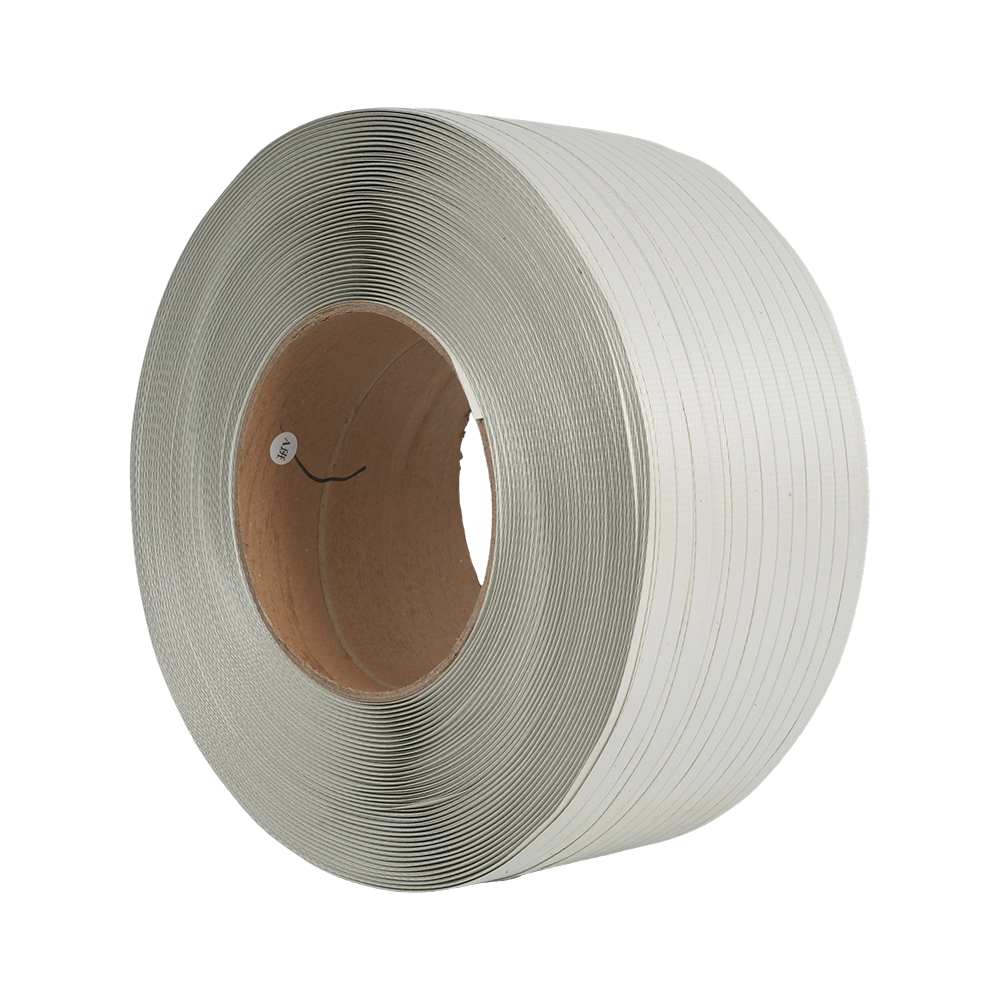
White Plastic Strapping Tape, PP Manual Strapping Band
-
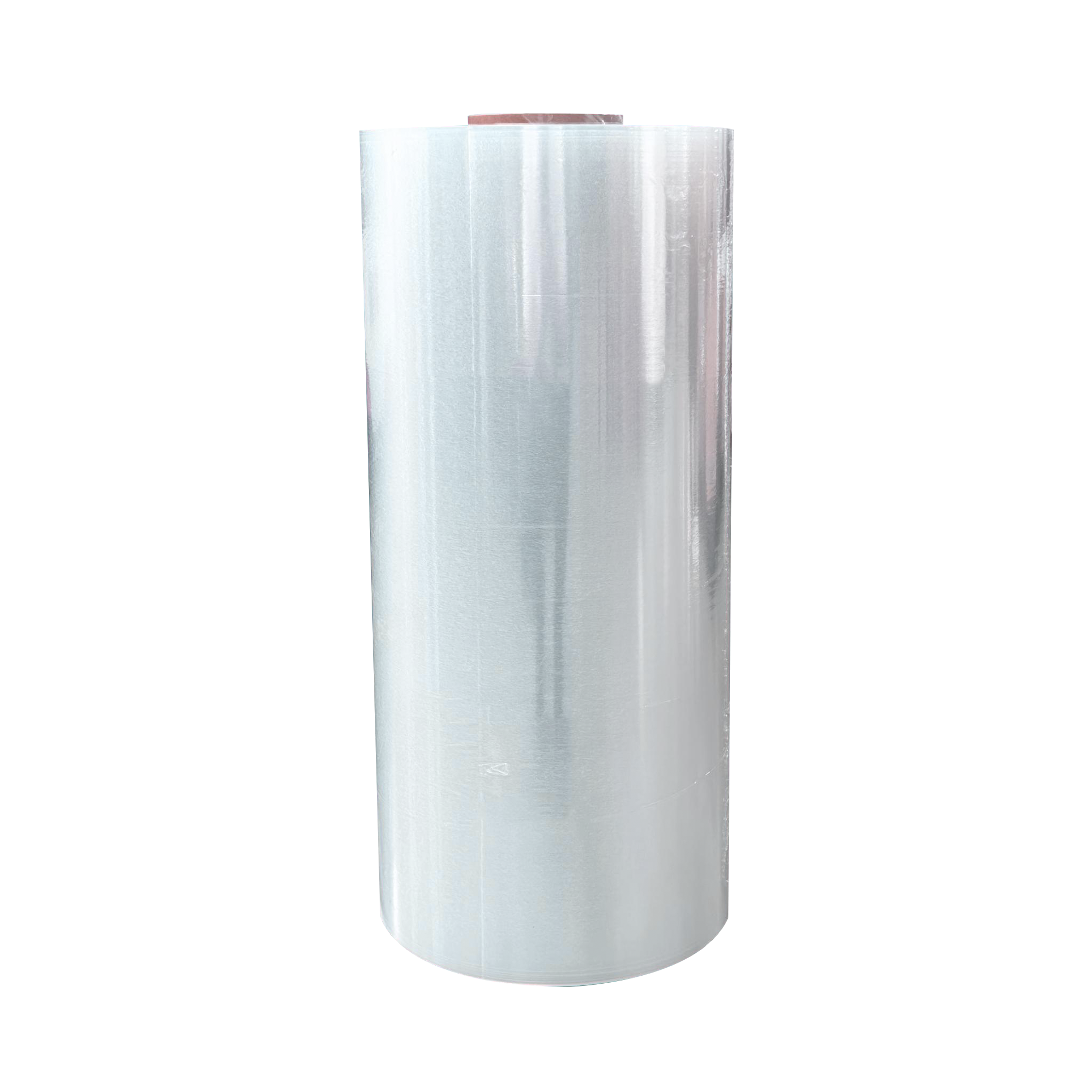
Transparent machine stretch film
-
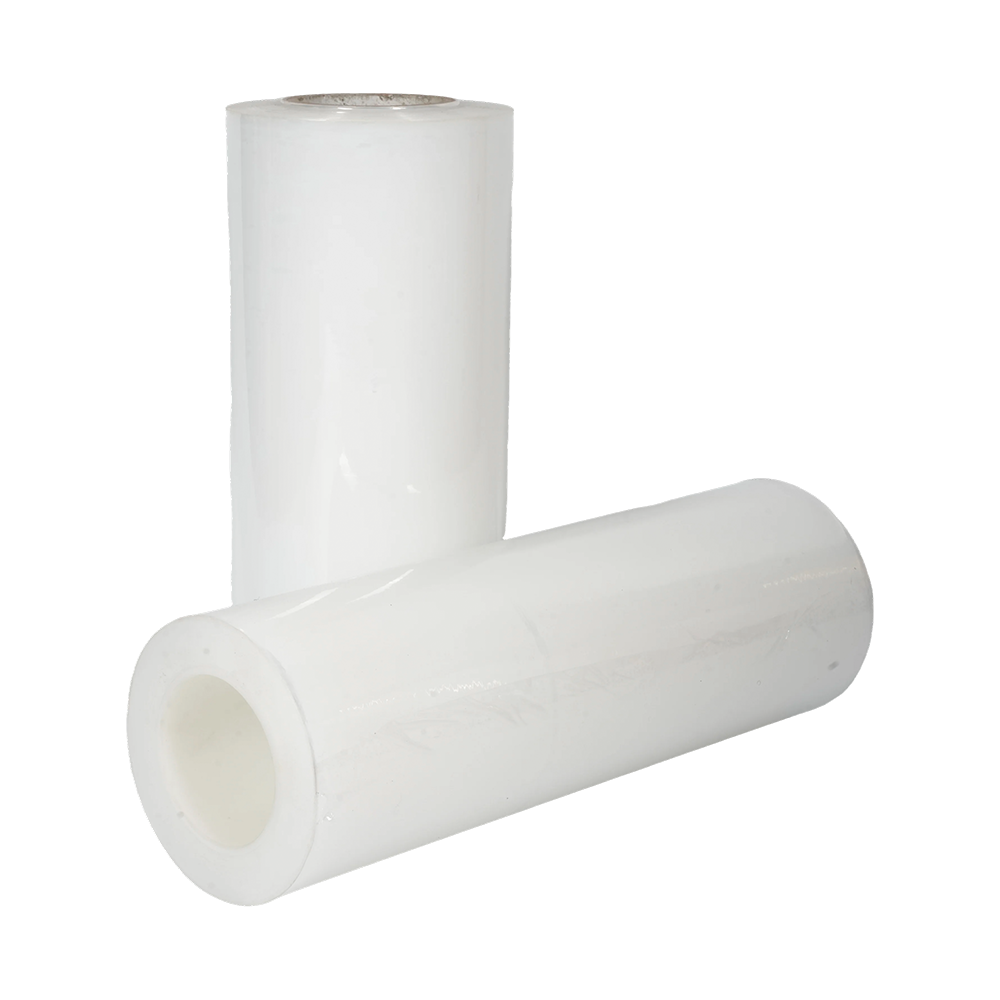
Transparent Protective Film Rolls, Clear PE Stretch Film
-
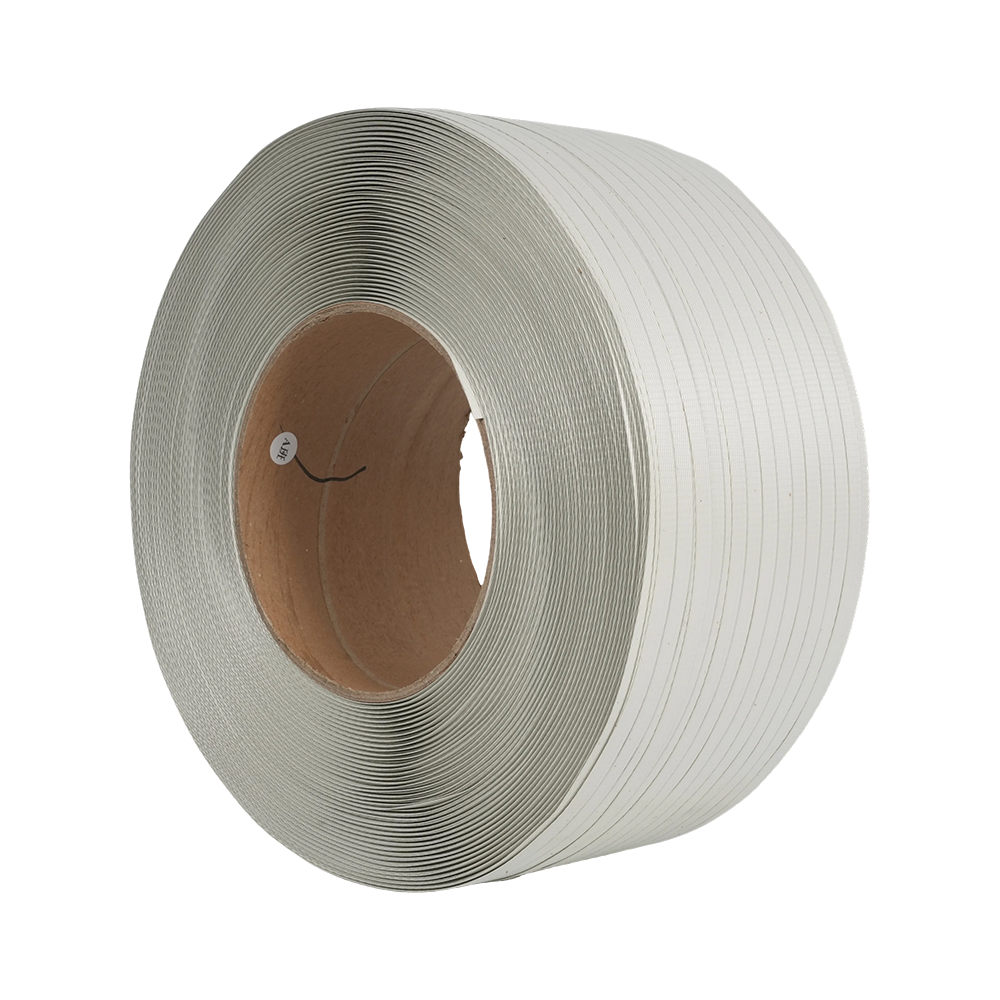
White PP Machine-Grade Strapping
-
1608/1610/1910/2512 Handheld Transparent P+E+T Plastic Steel Belt
CONTACT DETAILS
- Address:No. 241, Yaojiafan, Zhangpanqiao, Shushan Street, Xiaoshan District, Hangzhou City, Zhejiang Province, China
- TEL:+86-0571-83175630
- Phone:+86-13336160217
- Email:anqiaocun@163.com
PRODUCTS
NEWS CENTER
MOBILE TERMINAL
Copyright© Zhejiang Geruite Packaging Materials Co., Ltd. All Rights Reserved.
Privacy Wholesale industrial packaging tape Manufacturers