


 English
  Español
  عربى
عربى 
Transparent Machine Stretch Film for Efficient, Stable, and Protective Pallet Packaging
Content
- 1 Understanding Transparent Machine Stretch Film
- 2 Product Specifications
- 3 Core Advantages Over Conventional Packaging Methods
- 4 Material Engineering and Performance Characteristics
- 5 Advanced Manufacturing and Quality Control Strengths
- 6 Comparison with Alternative Packaging Methods
- 7 Industrial Application Scenarios
- 8 How to Select the Correct Specification
- 9 Recommended Machine Wrapping Procedure
- 10 Usage and Storage Recommendations
- 11 Business and Supply Advantages
- 12 Why Transparency Matters in Industrial Logistics
- 13 Environmental and Operational Considerations
- 14 Quality Evaluation Before Large-Scale Adoption
- 15 Frequently Asked Questions
- 15.1 What is transparent machine stretch film used for?
- 15.2 Can this film be applied manually?
- 15.3 What material is the film made from?
- 15.4 What thicknesses are available?
- 15.5 What roll heights are available?
- 15.6 Can length and roll weight be customized?
- 15.7 Does the film protect products from water?
- 15.8 Can it replace strapping?
- 15.9 Can the film wrap irregular items?
- 15.10 How should the film be stored?
- 15.11 How can film consumption be reduced?
- 15.12 What makes this product suitable for automated packaging?
- 16 Conclusion
- 17 References
- 18 Product: Transparent machine stretch film
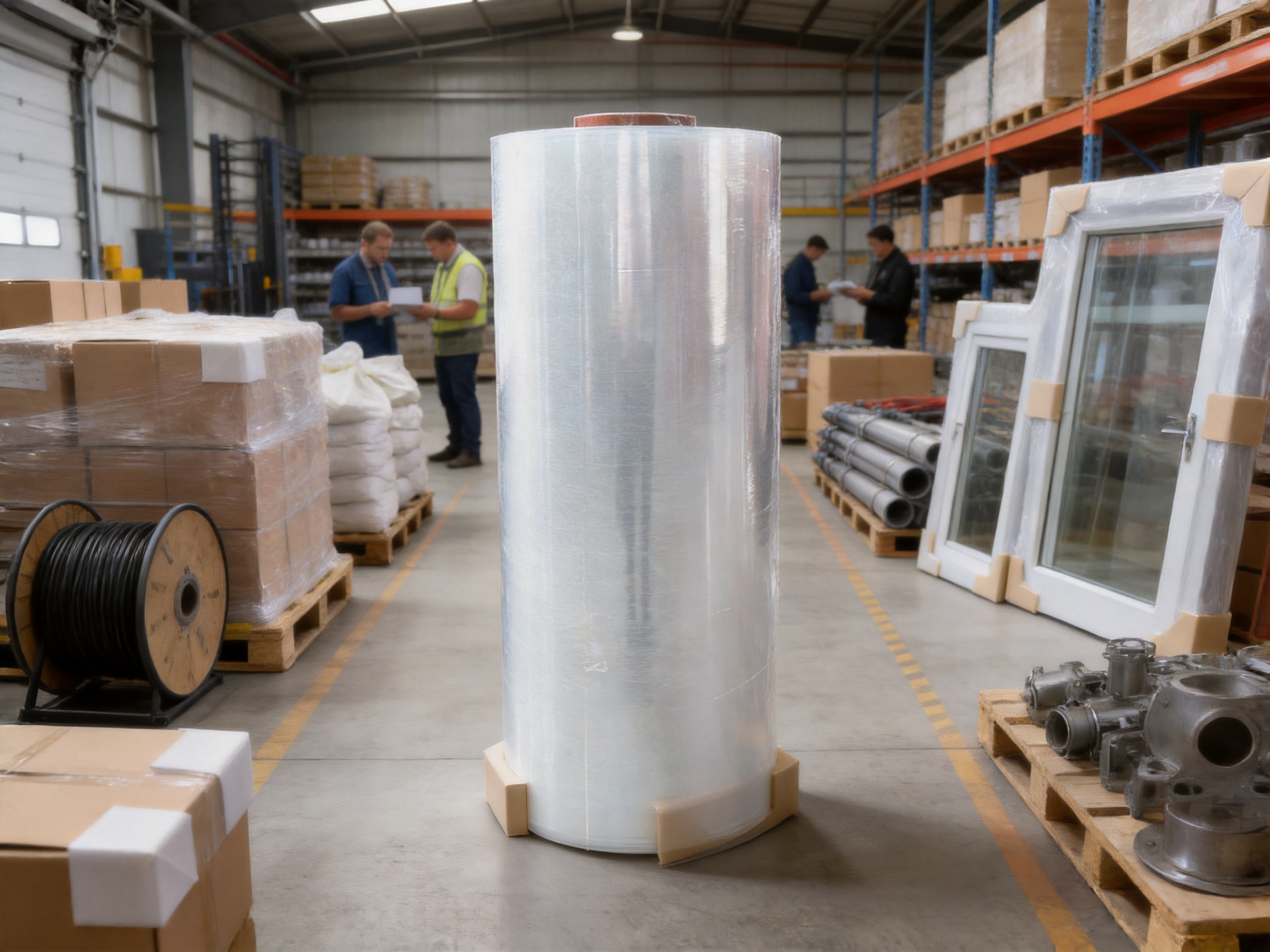
Modern logistics depends on packaging materials that can secure products efficiently while protecting them from dust, moisture, oil, abrasion, vibration, and movement. Among the materials used for industrial unitization, transparent machine stretch film has become an important solution for manufacturers, warehouses, distributors, exporters, and logistics operators. Designed for use with mechanical wrapping equipment, this type of film creates a tight, continuous protective layer around palletized and irregularly shaped products.
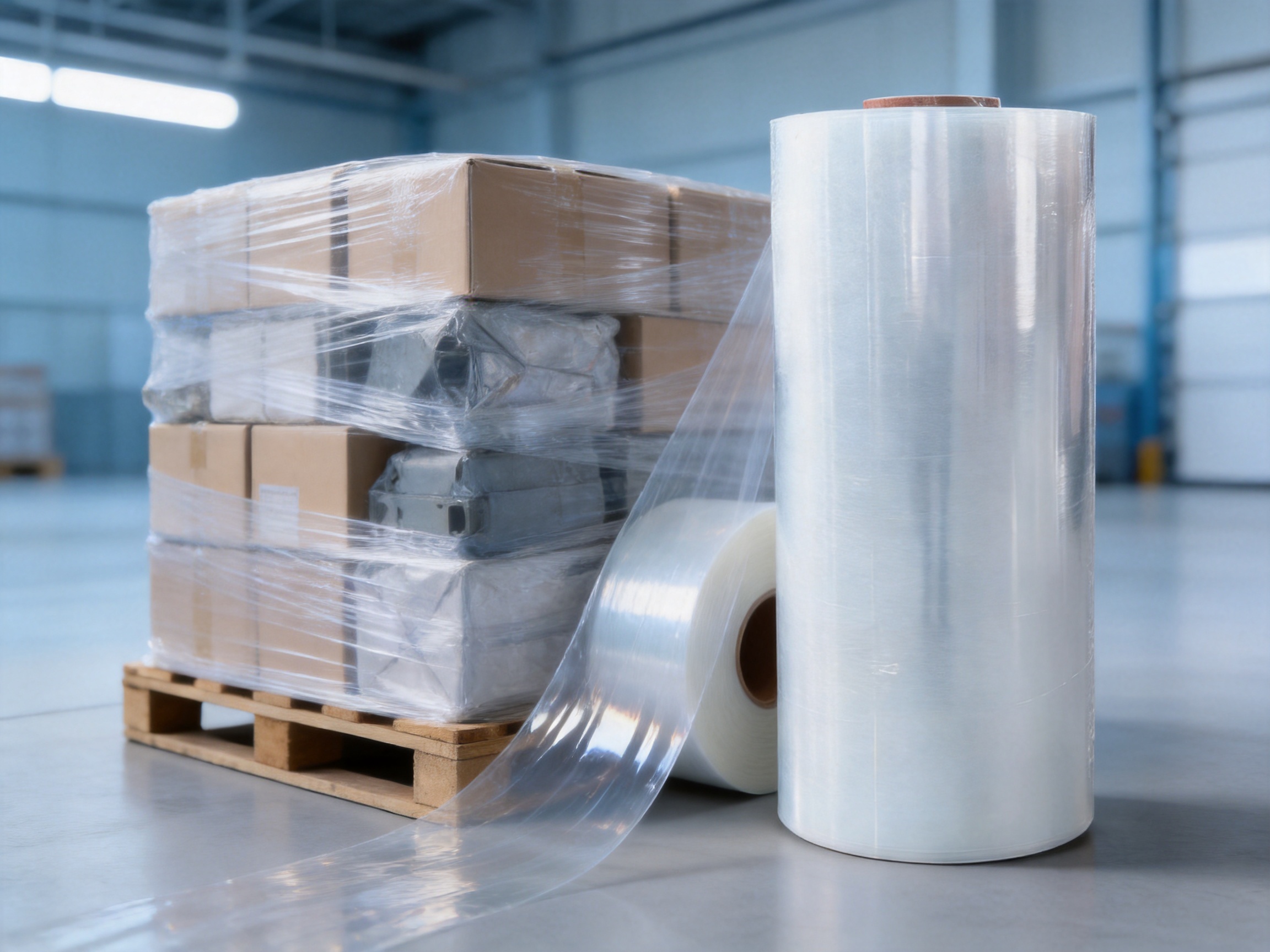
Transparent machine stretch film is manufactured from high-elasticity polyethylene, combined with a metallocene copolymer to enhance toughness and performance. During wrapping, the film is mechanically stretched and applied in overlapping layers. Its elastic recovery helps maintain tension around the load, reducing the possibility of cartons scattering, shifting, leaning, or toppling during storage and transportation.
Unlike rigid packaging materials, stretch film conforms closely to the shape of the products it covers. It can be used for regular cartons, bagged goods, metal components, pipes, cable reels, doors, window frames, and other items with uneven contours. Its transparent appearance also allows users to identify package labels, product conditions, and pallet contents without removing the wrapping.
Produced by Zhejiang Geruite Packaging Materials Co., Ltd., this machine stretch film is designed for commercial and industrial packaging applications requiring consistent tension, reliable load stabilization, flexible protection, and efficient machine operation. With customizable length and weight, multiple height options, and a thickness range from 0.015 mm to 0.045 mm, the product can be selected according to load weight, pallet dimensions, stacking height, and application conditions.
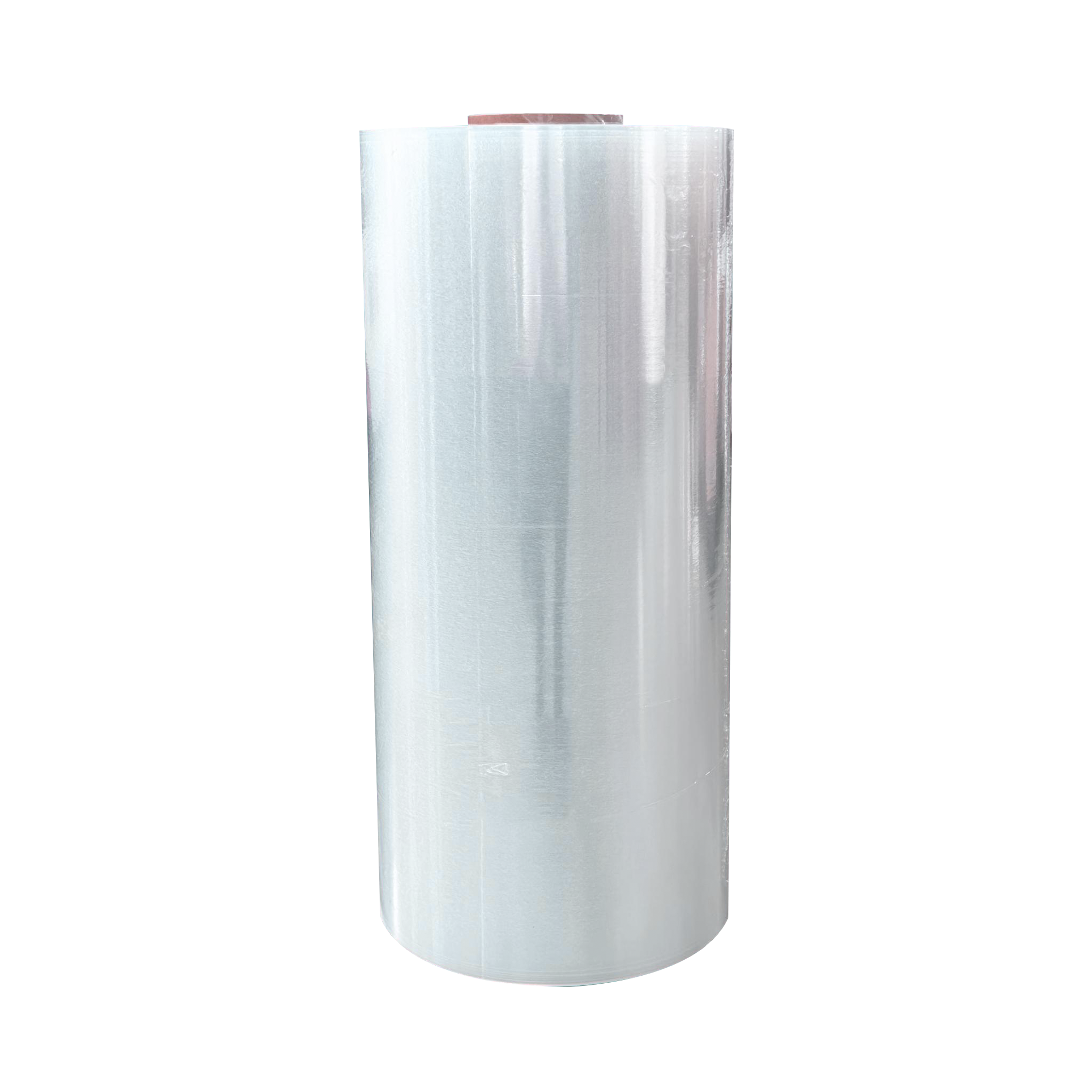
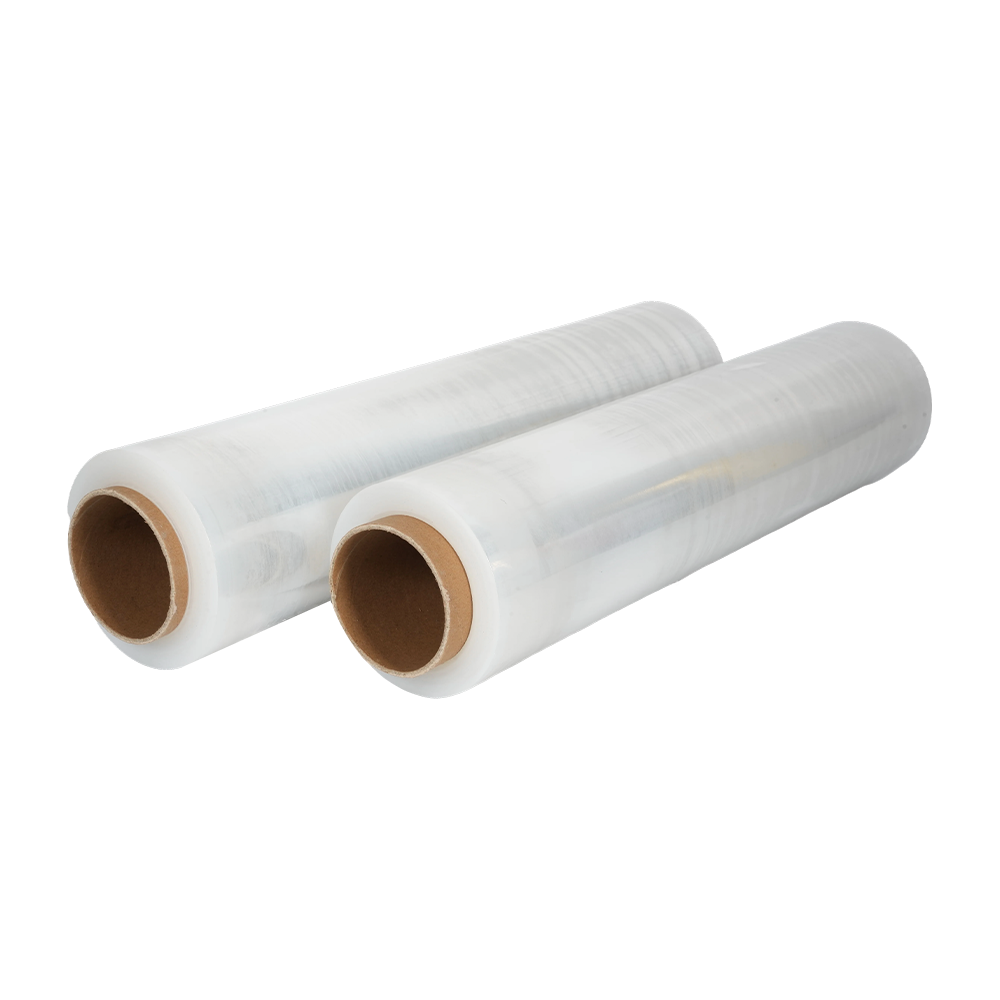
Transparent machine stretch film
Understanding Transparent Machine Stretch Film
Machine stretch film is a thin, elastic packaging film intended to be dispensed and stretched by a wrapping machine. It is commonly used to unitize goods on pallets, meaning that separate boxes, bags, or components are held together as one stable transport unit. The film is wrapped around the load with controlled tension, creating compression and friction between the products and the pallet.
The material is primarily based on polyethylene, a polymer widely used in packaging because of its flexibility, toughness, moisture resistance, and relatively low weight. In this product, pure polyethylene is combined with a metallocene copolymer. The copolymer helps improve toughness and contributes to the film’s ability to withstand handling, stretching, and movement during logistics operations.
When exposed to mechanical tension, the film elongates. After application, its recovery memory helps it maintain a close fit around the load. This combination of stretchability and recovery is essential for producing a stable package. A film that stretches easily but loses tension quickly may fail to hold the load firmly, while a film that is excessively rigid may require greater wrapping force and may be more vulnerable to tearing.
The product is transparent and suitable for general industrial packaging. Transparency is valuable in warehouses and distribution centers because workers can inspect pallet contents without opening the package. It also allows barcodes, shipping marks, labels, and product colors to remain visible, supporting identification and inventory control.
Product Specifications
The film is available in standard height options of 45 centimeters and 50 centimeters. These dimensions are suitable for many automated and semi-automated wrapping systems. The thickness range extends from 0.015 millimeters to 0.045 millimeters, allowing users to select a lighter or heavier specification according to the required holding force and protection level.
| Parameter | Specification | Packaging Significance |
|---|---|---|
| Material | Pure polyethylene and metallocene copolymer | Provides flexibility, toughness, stretchability, and recovery |
| Height | 45 cm and 50 cm | Supports compatibility with different wrapping machines and load sizes |
| Thickness | 0.015 mm to 0.045 mm | Allows selection according to load weight and protection requirements |
| Length and weight | Customizable | Can be adjusted for application scenarios, machine settings, and purchasing plans |
| Color | Transparent | Maintains visibility of products, labels, and pallet contents |
| Primary application | Machine wrapping of pallets and irregular items | Improves packaging speed, uniformity, and labor efficiency |
The ability to customize roll length and weight is particularly useful for industrial users. Different wrapping machines have different roll capacity requirements, and various pallet sizes consume different quantities of film. Customization can help customers coordinate the film with their existing equipment, warehouse procedures, and purchasing schedules.
Core Advantages Over Conventional Packaging Methods
Improved Packaging Efficiency
One of the most important advantages of machine stretch film is its compatibility with automated wrapping equipment. Manual wrapping often requires several workers to walk around a pallet while pulling and overlapping film. This process can be physically demanding, inconsistent, and time-consuming, especially when a facility handles large quantities of goods.
With a dedicated wrapping machine, the film can be applied at a controlled speed and tension. The machine rotates the pallet or moves the film carriage around the load, depending on the equipment design. The result is a more repeatable wrapping cycle with less manual intervention. Businesses can increase output without adding the same level of labor resources.
Improved efficiency is especially valuable in distribution centers, manufacturing plants, cold-chain preparation areas, export warehouses, and high-volume shipping operations. Faster wrapping reduces waiting time between production and dispatch. It may also help prevent bottlenecks at the end of a production line.
Reliable Load Stabilization
During transportation, palletized products are exposed to acceleration, braking, turning, vibration, impact, and changes in direction. If individual cartons or bags are not held together securely, they may shift relative to one another. In severe cases, the load can lean, collapse, or fall from the pallet.
Machine stretch film applies a balanced constrictive force around the load. The overlapping layers create friction and help bind the products into a unified package. When the film is correctly selected and applied, it helps maintain the original arrangement of the goods throughout handling and transportation.
The film is suitable for regular loads such as stacked cartons, as well as selected irregular items. For example, pipes, cable reels, door frames, window frames, and metal components may be difficult to secure using only boxes or rigid containers. Stretch film can conform to their contours and help hold bundled products together.
Protection from Environmental Conditions
Warehouse and transport environments may expose products to dust, humidity, oil droplets, and general surface contamination. Transparent machine stretch film forms a continuous outer layer that helps reduce direct exposure to these conditions. It is not intended to replace specialized waterproof packaging, but it provides useful everyday protection during storage and logistics operations.
The dustproof function is particularly helpful in open warehouses, manufacturing areas, construction supply storage, and distribution facilities where airborne particles may settle on exposed cartons or equipment. Moisture resistance can help protect packaging surfaces and reduce the risk of contamination caused by incidental humidity or light splashing.
For products that may encounter oil or greasy handling environments, the film can provide a barrier between the load surface and external contaminants. This can be beneficial for industrial components, metal parts, machinery accessories, and workshop supplies.
Protection of Product Surfaces
The film is soft and flexible compared with rigid strapping, wire, or rough outer packaging. When applied correctly, it helps protect finished surfaces from scratches, abrasions, and direct contact with dust. This is important for doors, window frames, furniture components, coated metal parts, and other products where appearance matters.
Because the film follows the product contour, it can cover corners, edges, and gaps without requiring complex cutting or fitting. However, sharp protrusions should always be removed or protected before wrapping. A sharp edge can puncture even a strong stretch film and may compromise the stability of the complete load.
Visibility and Identification
Transparent packaging allows personnel to see the products inside the wrapped unit. This supports warehouse organization, inventory checking, shipment verification, and receiving inspections. Labels and barcodes remain visible in many applications, reducing the need to unwrap goods simply to confirm their identity.
Visibility also supports quality control. If cartons become crushed, wet, displaced, or damaged, the condition may be observed through the film before the pallet is opened. This can help operators identify handling problems earlier in the logistics process.
Material and Cost Efficiency
Stretch film is lightweight and can cover a large surface area using relatively little material. Mechanical pre-stretching and controlled application can improve material utilization compared with loosely applied manual wrapping. The correct combination of film thickness, tension, overlap, and wrapping pattern can provide sufficient stabilization without unnecessary consumption.
Cost-effectiveness does not simply depend on the lowest price per roll. It should be evaluated through the total packaging cost, including labor, wrapping speed, film consumption, product damage, rework, storage requirements, and transportation efficiency. A film that performs consistently on a wrapping machine may create better overall value than a low-cost film that tears frequently or requires excessive layers.
Material Engineering and Performance Characteristics
Polyethylene Base Material
Polyethylene is valued in packaging for its combination of flexibility, toughness, chemical resistance, and low density. It can be formed into thin films while maintaining useful mechanical properties. In stretch film applications, the polyethylene base provides the elasticity required for wrapping and recovery.
The film’s flexibility allows it to adapt to different package shapes. Instead of forming a rigid shell around the load, it creates a tensioned membrane. This makes the material suitable for products with variable dimensions and for pallets containing mixed carton sizes.
Metallocene Copolymer Enhancement
The addition of metallocene copolymer is intended to enhance toughness and support dependable film performance. In practical terms, improved toughness may help the film resist puncture, splitting, and tearing during stretching and handling. It also contributes to a more reliable balance between thinness and mechanical strength.
This material structure is useful for industrial packaging because the film must withstand more than simple wrapping. It is pulled under tension, overlapped across multiple passes, exposed to pallet corners, and handled during machine installation. The film must also retain enough integrity to protect the load after wrapping is complete.
Elasticity and Recovery Memory
Stretchability allows the film to extend during application, while recovery memory helps it remain tight after wrapping. This is one of the key differences between stretch film and ordinary plastic sheeting. Ordinary sheeting may cover a load, but it may not create the same level of tension or unitizing force.
For optimum performance, the film’s elasticity must be matched to the machine’s settings and the characteristics of the load. Excessive tension may deform cartons or damage fragile products, while insufficient tension may produce a loose package. Proper equipment calibration is therefore an important part of the packaging process.
Advanced Manufacturing and Quality Control Strengths
Zhejiang Geruite Packaging Materials Co., Ltd. focuses on the research, development, production, and sales of packaging materials and industrial tapes. Its product range includes BOPP tape, kraft paper tape, masking tape, high-temperature resistant tape, metal tape, PE stretch film, PP strapping, and high-strength PET strapping. This broad product background gives the company experience across multiple packaging technologies and application environments.
The company operates in Zhejiang Province, a major manufacturing region with established industrial supply chains, technical resources, and logistics infrastructure. Its location supports access to raw materials, production equipment, engineering capabilities, and domestic and international transportation services.
Raw Material Control
Stable film performance begins with consistent raw materials. Polyethylene and metallocene copolymer must be selected and managed according to the required film characteristics. Variations in raw material quality may influence clarity, elongation, toughness, recovery, and sealing or bonding behavior between layers.
A disciplined procurement and incoming inspection process helps manufacturers reduce these variations. Raw materials can be checked against purchasing specifications before entering production. This approach supports more consistent output and helps ensure that the finished film performs predictably on customer equipment.
Film Forming and Thickness Management
During film production, the polymer is processed into a thin, continuous film. Thickness uniformity is important because thin areas can become weak points, while excessive thickness can increase material consumption and cost. Careful control of processing conditions, die performance, cooling, and winding helps create a more stable film structure.
The available thickness range of 0.015 mm to 0.045 mm provides flexibility for different industrial requirements. Lightweight applications may use a thinner specification, while heavier or more demanding loads may require a thicker film. Selection should always be based on the actual product weight, pallet arrangement, corner conditions, transport distance, and expected handling intensity.
Winding and Roll Formation
Roll quality affects machine compatibility. A roll should be wound evenly, with stable edges and consistent tension. Poor winding may cause telescoping, wrinkles, uneven feeding, or film breaks during machine operation. Correct roll formation also supports accurate installation and smooth unwinding.
Customized length and weight can be coordinated with the customer’s equipment and operating pattern. This may reduce the frequency of roll changes and help maintain a more consistent workflow. It can also simplify purchasing plans for customers who use standardized wrapping programs across multiple facilities.
Inspection and Process Discipline
The company emphasizes quality control from raw material procurement through production and final inspection. A process-based approach helps identify potential problems at multiple stages rather than relying only on a final visual check. Inspection may include evaluation of appearance, thickness, clarity, roll condition, tensile behavior, elongation, and overall suitability for the intended application.
Consistent quality control is especially important for machine stretch film because automated packaging lines depend on predictable material behavior. A film that changes significantly from roll to roll can require repeated machine adjustments and may cause interruptions. Stable production supports smoother customer operations and more reliable packaging results.
According to the supplied company information, the business has achieved annual output value exceeding RMB 60 million. This indicates an established operating scale and experience in serving packaging material markets. Its continuing investment in research, product optimization, and service development supports its role as a packaging material supplier for customers with varied industrial requirements.
Comparison with Alternative Packaging Methods
Compared with Manual Stretch Wrapping
Manual wrapping can be practical for occasional shipments, small loads, or facilities without wrapping equipment. However, it often produces differences in tension from one worker to another. The operator may apply too little film in one area and too much in another. The process can also require considerable physical movement and repetitive effort.
Machine stretch film is optimized for mechanical application. Wrapping machines can control film tension, rotation speed, overlap, and the number of layers. This improves repeatability and reduces labor intensity. For high-volume operations, the difference in productivity can be significant.
Compared with Strapping Alone
Strapping provides concentrated holding force at specific points around a load. It is useful for bundling cartons, timber, pipes, and other products, but straps may not cover the entire outer surface. They may also leave gaps through which dust and moisture can enter.
Stretch film distributes pressure around a larger area and provides a continuous protective layer. It can help keep loose packaging units together while also protecting their surfaces. In some applications, stretch film and strapping are used together. The strap provides additional structural support, while the film controls dust, surface contact, and smaller movements.
Compared with Shrink Film
Shrink film generally requires heat to contract around a product. This can create a tight package, but it also requires heating equipment and careful temperature control. Heat-sensitive products, labels, coatings, or components may not be suitable for heat-shrink processing.
Machine stretch film does not require heat during application. It is stretched mechanically and wrapped around the load. This can simplify the packaging line, reduce thermal exposure, and allow faster changeovers for some operations. It is especially suitable when the primary requirement is pallet stabilization rather than a fully sealed retail package.
Compared with Rigid Outer Packaging
Wooden crates, corrugated sleeves, and rigid containers may offer strong protection, but they can add considerable weight, volume, labor, and disposal requirements. They may also be difficult to adapt to irregular load shapes.
Stretch film is lightweight, flexible, and easy to apply to varying dimensions. It can be used as a standalone protective layer or combined with corner boards, top sheets, edge protectors, cartons, and pallets when greater protection is required.
Industrial Application Scenarios
Palletized Carton Packaging
The most common application is stabilizing cartons stacked on pallets. The film wraps around the cartons and pallet base, helping prevent the layers from separating during forklift movement, truck transportation, and warehouse storage.
For mixed cartons, operators should arrange heavier products toward the bottom and maintain a relatively even load profile. The film can then be applied with sufficient overlap to secure the complete unit. Corner protection may be added where carton edges are vulnerable to compression or puncture.
Bagged Goods and Soft Packages
Bagged goods may shift more easily than rigid cartons because their surfaces can deform. Stretch film helps contain the bags and reduce outward movement. The wrapping pattern should be selected according to the load shape and the need to avoid excessive compression.
Products such as agricultural supplies, construction materials, chemicals in suitable outer bags, and industrial powders may benefit from film wrapping when they are stored or shipped on pallets. The film also helps keep the outer surfaces cleaner during handling.
Pipes and Cable Reels
Pipes, tubing, and cable reels may be long, cylindrical, or difficult to place inside standard cartons. Stretch film can be used to bundle smaller items or protect the outside of larger units. It conforms to curved surfaces and can work with additional straps or end protectors.
When wrapping cable reels or other heavy cylindrical products, users should confirm that the film is not being used as the only means of preventing rolling or sliding. Appropriate pallets, chocks, straps, or other load-control measures may be necessary.
Doors, Windows, and Frames
Doors, windows, and frame components often have finished surfaces that need protection from dust and abrasion. Transparent stretch film can cover the surface while keeping product identification visible. It is suitable for bundling multiple frames or protecting individual units during internal movement and delivery.
Edges and corners should be checked before wrapping. If the product contains sharp metal corners, glass edges, fasteners, or protruding hardware, protective pads should be added to prevent puncture or localized pressure damage.
Metal Components and Industrial Parts
Metal parts may be heavy, irregular, and susceptible to contamination from handling environments. Stretch film can help hold components together and reduce exposure to dust or oil. Depending on the product and storage period, additional anti-corrosion materials may be required because ordinary stretch film is not a substitute for specialized corrosion protection.
Long-Term Storage
For warehouse storage, the film helps maintain load organization and provides a barrier against ordinary dust and incidental moisture. It can make stored pallets easier to identify and move. Storage areas should still be clean, ventilated, and controlled according to the product requirements.
How to Select the Correct Specification
Consider Load Weight
Heavier loads generally require a stronger wrapping system. The appropriate film thickness, number of layers, tension, and wrapping pattern should be considered together. A thicker film is not automatically the best choice, because the entire packaging system must be balanced against product sensitivity and machine capability.
Evaluate Load Shape
Uniform rectangular pallets are usually easier to wrap than loads with gaps, overhangs, sharp corners, or uneven heights. Irregular loads may require additional passes around the lower, middle, and upper sections. Edge protectors or top sheets can improve the result.
Check Stacking Height
Tall loads may need more attention to vertical stability. The film should engage the pallet and extend high enough to secure the upper layers without crushing the top cartons. Users should test the wrapping pattern under realistic transport conditions before standardizing it.
Match the Film to the Machine
Before ordering, customers should confirm roll height, core dimensions, maximum roll weight, film thickness compatibility, and machine pre-stretch settings. The 45-centimeter and 50-centimeter height options support different machine and load configurations, while customized length and weight may help meet specific equipment requirements.
Consider Transportation Conditions
A pallet traveling a short distance inside a warehouse may require less stabilization than one shipped internationally by truck, rail, or sea. Road vibration, repeated loading, temperature changes, humidity, and transshipment all influence packaging requirements. Film selection should reflect the entire journey rather than only the initial wrapping stage.
Recommended Machine Wrapping Procedure
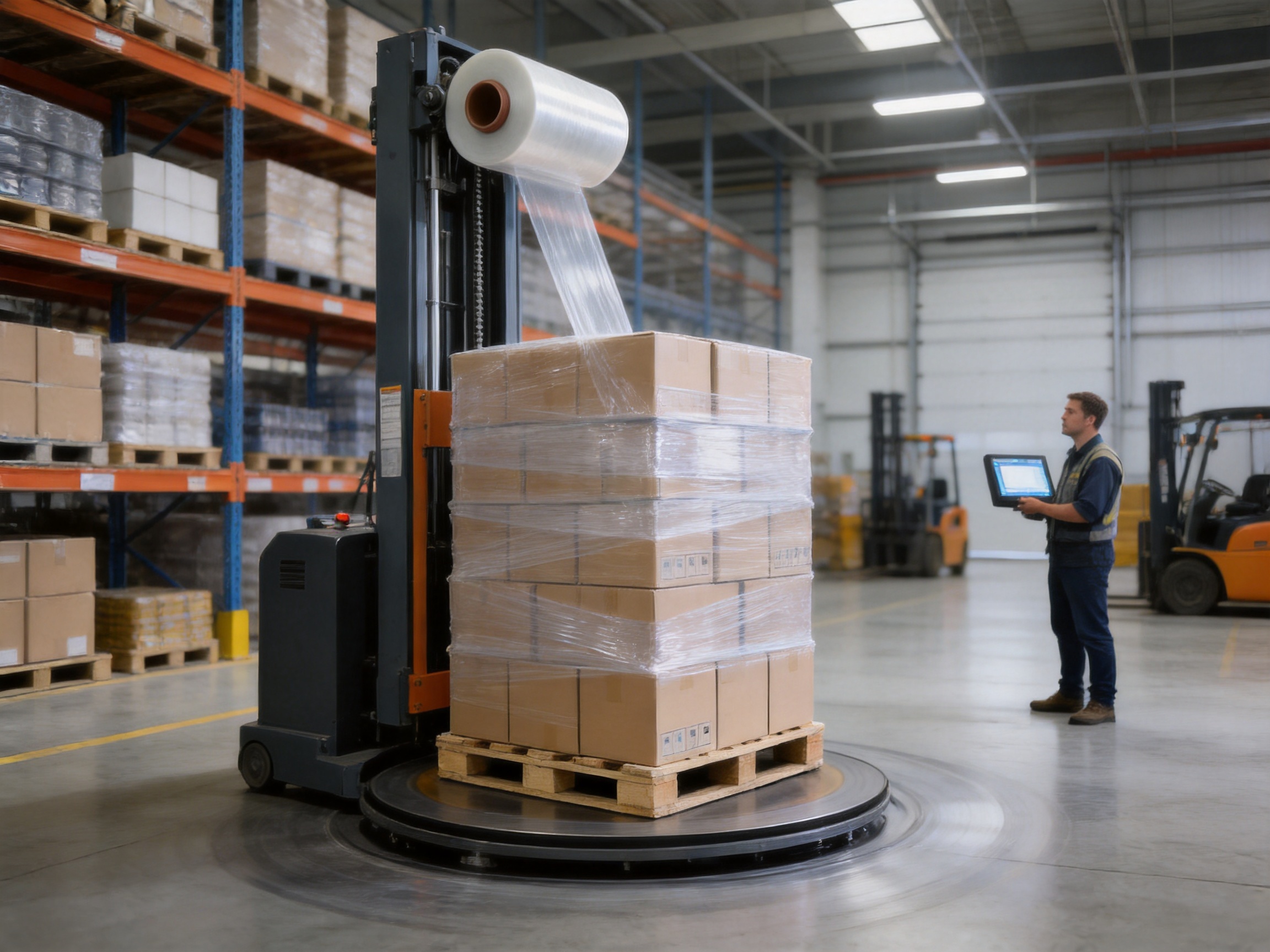
Before beginning, inspect the pallet and load. Confirm that the cartons or products are positioned securely and that no item extends dangerously beyond the pallet edge. Remove or cover sharp protrusions that could puncture the film.
Install the roll according to the wrapping machine manufacturer’s instructions. Ensure that the film unwinds in the correct direction and that the roll is centered on the film carriage. Incorrect installation can cause wrinkling, uneven tension, or feeding problems.
Attach the film to the pallet or a secure lower section of the load. Begin wrapping at a controlled speed, allowing the film to overlap sufficiently. The first few rotations should establish a stable base. If the pallet is vulnerable to shifting, additional film may be applied around the lower section.
Continue upward while maintaining consistent film tension. Avoid excessive force that could deform cartons or damage fragile products. The machine should distribute the film evenly rather than concentrating it in one narrow area.
Wrap the upper section according to the load profile. For tall or unstable loads, additional passes near the top may improve stability. For low or dense loads, the operator may use a wrapping pattern that emphasizes the base and middle section.
Complete the cycle by securing and cutting the film according to the equipment design. Inspect the finished pallet for loose areas, exposed sharp edges, film tears, excessive wrinkles, or visible product displacement. If necessary, adjust tension, overlap, rotation speed, or the number of layers.
Usage and Storage Recommendations
Machine Use
A dedicated wrapping machine is recommended because it provides more consistent tension and packaging results than manual application. Machine settings should be adjusted gradually. Users should test the film with representative loads rather than relying only on theoretical calculations.
Film tension, pre-stretch ratio, carriage speed, turntable speed, overlap, and the number of rotations all influence performance. These settings should be matched to the film specification and the product. Fragile cartons may require lower tension, while dense and stable loads may tolerate higher tension.
Sharp Edge Protection
Pallet edges and product corners should be free of sharp protrusions. Cardboard corner boards, edge protectors, foam pads, or other suitable materials can be used where necessary. Protecting vulnerable areas improves film integrity and reduces the risk of package failure.
Storage Conditions
Store the film in a cool, dry place away from direct sunlight and high-temperature environments. The recommended storage temperature is between 15°C and 25°C. Avoid placing heavy objects on top of film rolls, and keep the rolls in their original protective packaging until use whenever possible.
Long exposure to direct sunlight, excessive heat, moisture, or contamination may affect the film’s appearance and handling properties. Rolls should be stored horizontally or according to the supplier’s recommended method, with care taken to prevent edge damage.
Handling Before Use
Allow film rolls exposed to significantly different temperatures to reach the operating environment before use. Sudden temperature changes may influence flexibility and winding behavior. Inspect each roll before installation for crushed edges, telescoping, loose winding, or visible contamination.
Business and Supply Advantages
For industrial customers, product quality is only one part of the purchasing decision. Supply reliability, customization, communication, technical support, and quality consistency are equally important. Zhejiang Geruite Packaging Materials Co., Ltd. combines a range of packaging products with production and sales experience, allowing customers to discuss stretch film alongside tapes, strapping, and other packaging materials.
This broader product capability can simplify sourcing for companies that require several packaging materials. A customer may use stretch film for pallet unitization, BOPP tape for carton sealing, PP strapping for bundling, and PET strapping for heavier loads. Working with a supplier familiar with the complete packaging process may make it easier to coordinate material selection.
The company’s quality-centered operating philosophy emphasizes control from raw material procurement to final inspection. This is important for customers that need repeatable results across regular shipments. Product specifications can be discussed according to application scenario, including film thickness, roll length, roll weight, and machine compatibility.
Its location in Hangzhou, Zhejiang Province, places the company within a developed industrial and logistics environment. The company serves packaging needs related to logistics, express delivery, household goods, electronics, construction and decoration, industrial manufacturing, cargo stabilization, and packaging protection.
Why Transparency Matters in Industrial Logistics
Transparent film offers practical benefits beyond appearance. Warehouse workers can inspect the load without cutting the film, which reduces unnecessary rework. Shipping departments can verify pallet contents before dispatch. Receivers can identify product labels and assess visible damage without immediately opening the package.
Transparency also supports organized inventory management. When several pallet types are stored in the same area, visible labels and product forms help staff locate the correct unit. This can be especially useful where pallets are wrapped soon after production and remain unopened until shipment.
In addition, transparent wrapping maintains a clean and professional appearance. The film creates a uniform outer surface around different carton shapes, making palletized products easier to handle and present in warehouses, distribution centers, and customer receiving areas.
Environmental and Operational Considerations
Responsible packaging decisions should consider both material use and operational performance. Stretch film is lightweight, and controlled machine application can help reduce excessive wrapping. Using the thinnest suitable specification, applying only the necessary number of layers, and preventing avoidable film damage can improve material efficiency.
Operators should avoid wrapping a load repeatedly simply because the first wrapping cycle was poorly configured. Correct pallet arrangement, suitable tension, consistent overlap, and proper machine maintenance can reduce waste. Training workers to recognize film breaks, loose tails, and unstable wrapping patterns also contributes to better resource management.
Used film should be collected and handled according to local recycling and waste-management requirements. Because the film is polyethylene-based, it may be suitable for recycling in areas with appropriate collection systems, provided it is kept sufficiently clean and separated from incompatible materials.
Packaging sustainability should also include the prevention of product damage. If better load stabilization prevents cartons from falling or goods from being damaged during transportation, the overall material and resource loss may be reduced. The most appropriate solution is therefore one that balances film consumption, protection, labor, transport efficiency, and end-of-life handling.
Quality Evaluation Before Large-Scale Adoption
Customers should evaluate machine stretch film under actual operating conditions. Laboratory values provide useful guidance, but practical performance also depends on pallet geometry, product surface, machine type, transport conditions, and operator settings.
A packaging trial can compare film breakage, wrapping time, film consumption, pallet stability, surface protection, and ease of machine operation. The test should include representative product weights and load arrangements. If the company ships different products, separate tests may be required for light cartons, heavy cartons, irregular items, and mixed pallets.
During testing, users should inspect the load immediately after wrapping and after simulated movement. They should look for leaning, layer separation, carton deformation, film punctures, loose upper sections, and movement at the pallet base. These observations help determine whether the selected thickness and wrapping pattern are suitable.
Procurement teams should also evaluate consistency between rolls. A reliable industrial supplier should be able to provide clear specifications and maintain stable production quality. For ongoing orders, customers may request agreed inspection criteria, packaging standards, roll identification, and communication procedures for technical issues.
Frequently Asked Questions
What is transparent machine stretch film used for?
It is used primarily to stabilize and protect palletized goods during storage, handling, and transportation. It can wrap cartons, bagged goods, industrial parts, pipes, cable reels, door frames, window frames, and other regular or irregular products.
Can this film be applied manually?
It is optimized for use with dedicated wrapping machines. Manual application may be possible in certain situations, but machine use is recommended for consistent tension, uniform overlap, improved productivity, and reduced labor intensity.
What material is the film made from?
The product is made from pure polyethylene combined with a metallocene copolymer. This material structure provides flexibility, stretchability, recovery memory, and enhanced toughness for industrial wrapping applications.
What thicknesses are available?
The available thickness range is 0.015 millimeters to 0.045 millimeters. The appropriate thickness depends on product weight, pallet configuration, stacking height, transport conditions, and the required level of puncture and holding performance.
What roll heights are available?
The listed height options are 45 centimeters and 50 centimeters. Customers should confirm machine compatibility and load dimensions before selecting a height.
Can length and roll weight be customized?
Yes. Length and weight can be customized according to the customer’s application scenario. Customization may be coordinated with machine capacity, pallet size, wrapping frequency, and purchasing requirements.
Does the film protect products from water?
The film provides moisture-resistant and dust-resistant protection for many ordinary storage and logistics conditions. It should not be considered a replacement for fully waterproof packaging or specialized environmental protection where products are exposed to prolonged rain, immersion, condensation, or extreme humidity.
Can it replace strapping?
Stretch film and strapping serve different purposes. Film provides distributed containment and surface protection, while strapping supplies concentrated binding force. Depending on the load, they may be used separately or together.
Can the film wrap irregular items?
Yes. Its flexibility allows it to conform to pipes, cables, doors, windows, frames, and other irregular products. Sharp corners and protrusions should be covered or protected before wrapping.
How should the film be stored?
Store it in a cool, dry place away from direct sunlight and high temperatures. The recommended storage temperature is between 15°C and 25°C. Protect rolls from moisture, dust, crushing, and edge damage.
How can film consumption be reduced?
Use the correct thickness, pre-stretch setting, overlap, tension, and number of layers. Keep the pallet arrangement stable, protect sharp edges, maintain the wrapping machine, and train operators to identify inefficient wrapping patterns.
What makes this product suitable for automated packaging?
Its high-elasticity polyethylene structure, recovery memory, available machine-oriented roll heights, and customizable roll length and weight support mechanical application. Consistent roll formation and process control are also important for reliable automated operation.
Conclusion
Transparent machine stretch film is a practical and adaptable solution for industrial pallet unitization. It combines flexible polyethylene construction, enhanced toughness, mechanical stretchability, recovery memory, and transparent visibility. These characteristics help stabilize loads, protect surfaces, reduce exposure to dust and moisture, and improve packaging efficiency.
Compared with manual wrapping, the product is better suited to high-volume operations that require repeatable tension and reduced labor involvement. Compared with strapping alone, it provides more comprehensive surface coverage. Compared with shrink film, it can be applied without heat. Compared with rigid outer packaging, it offers a lightweight and flexible method for handling varied shapes and sizes.
The product’s performance is supported by a manufacturing approach that emphasizes material control, film thickness management, roll formation, process discipline, and final inspection. Zhejiang Geruite Packaging Materials Co., Ltd. also provides a broader range of packaging tapes and strapping materials, enabling customers to evaluate stretch film as part of an integrated packaging system.
For the best results, users should select thickness and roll specifications according to the load, match the film to the wrapping machine, protect sharp edges, test representative pallets, and store the product under recommended conditions. When these practices are followed, transparent machine stretch film can improve load stability, operational efficiency, product protection, and overall packaging cost control.
References
1. Polyethylene Film Packaging Principles: Material Flexibility, Toughness, and Moisture Resistance.
2. Industrial Pallet Unitization Practices: Load Stability, Wrapping Patterns, and Transport Protection.
3. Mechanical Stretch Wrapping Equipment: Tension Control, Pre-Stretch Settings, and Machine Operation.
4. Packaging Material Quality Management: Raw Material Inspection, Thickness Control, Roll Formation, and Final Testing.
5. Warehouse and Logistics Packaging Guidelines: Dust Protection, Moisture Control, Product Identification, and Safe Storage.
6. Zhejiang Geruite Packaging Materials Co., Ltd. Product and Company Information supplied for this article.
7. General Polyethylene Packaging and Recycling Considerations for Industrial Film Applications.
Product: Transparent machine stretch film

Featured Products
-
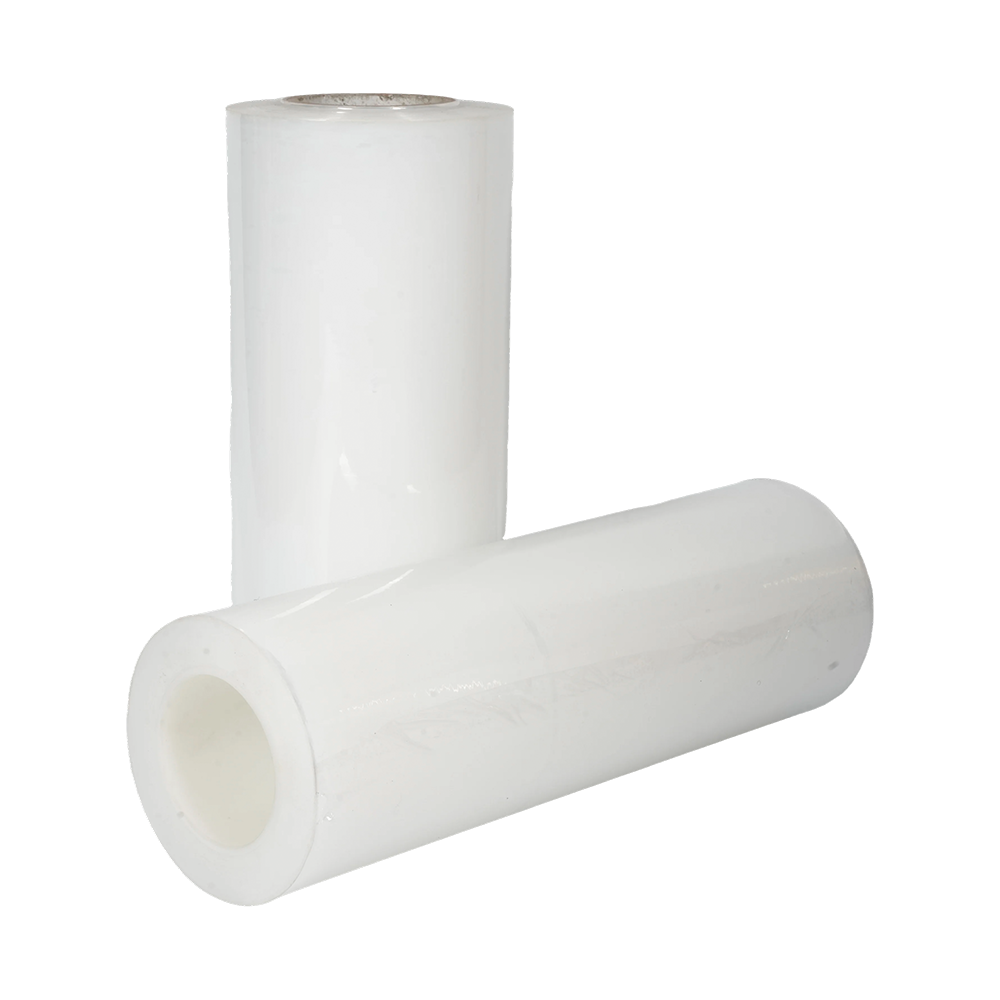
Transparent Protective Film Rolls, Clear PE Stretch Film
-
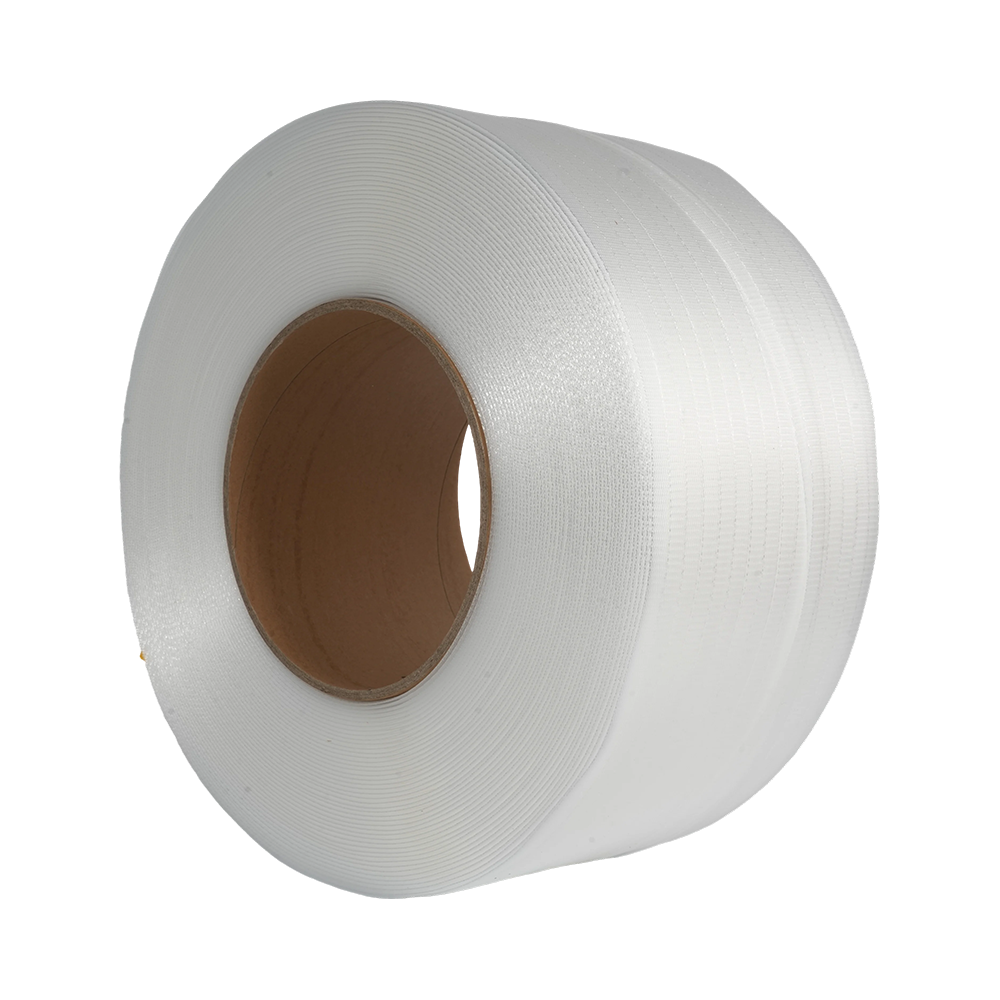
Transparent Strapping Band, Clear PP Packing Strap For Pelletizing Machine
-
Transparent machine stretch film
-
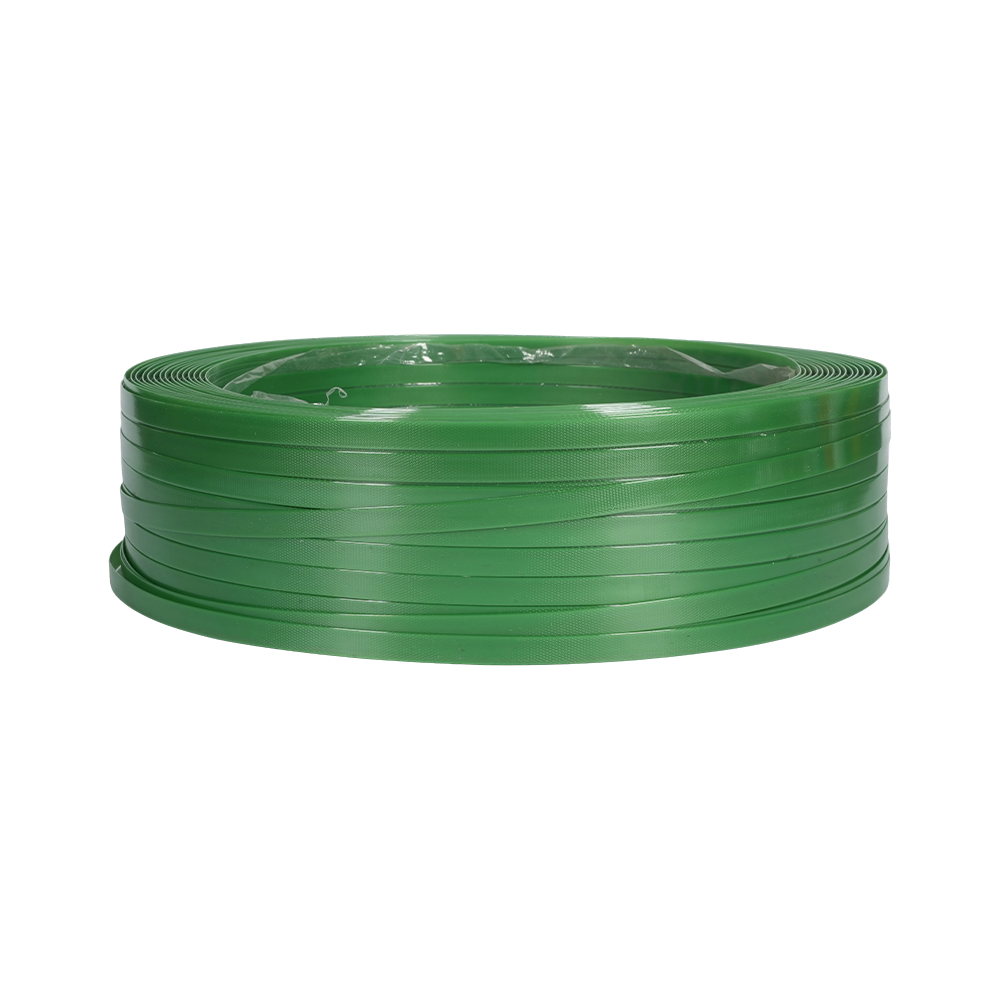
1608/1610/1910/2512 Handheld Transparent P+E+T Plastic Steel Belt
-
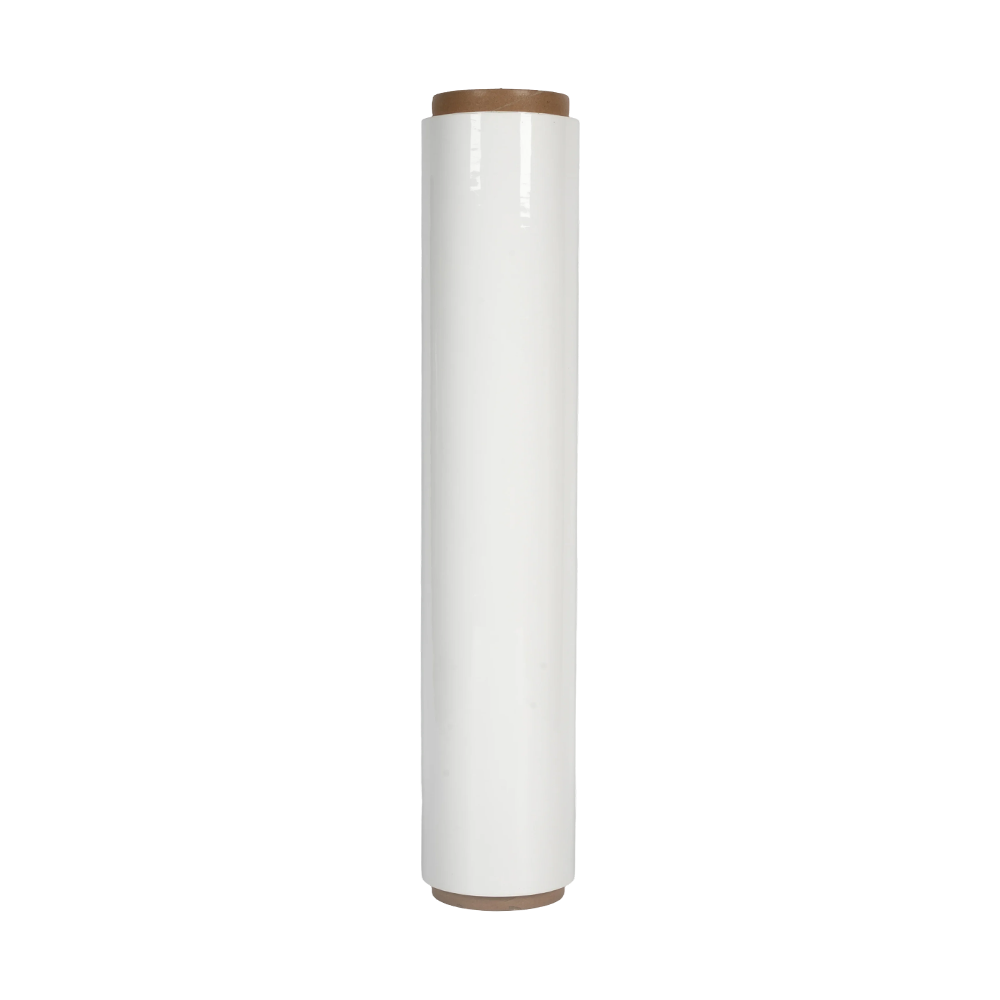
Clear Construction Building Protective Plastic Sheeting Film
-
PE Hand-held stretch wrap
CONTACT DETAILS
- Address:No. 241, Yaojiafan, Zhangpanqiao, Shushan Street, Xiaoshan District, Hangzhou City, Zhejiang Province, China
- TEL:+86-0571-83175630
- Phone:+86-13336160217
- Email:anqiaocun@163.com
PRODUCTS
NEWS CENTER
MOBILE TERMINAL
Copyright© Zhejiang Geruite Packaging Materials Co., Ltd. All Rights Reserved.
Privacy Wholesale industrial packaging tape Manufacturers