


 English
  Español
  عربى
عربى 
PE and Metallocene Stretch Film Master Roll for Flexible Industrial Packaging
Content
- 1 Product Overview
- 2 Core Material: PE with Metallocene Copolymer
- 3 Key Advantages Over Conventional Competitor Products
- 4 Technical Specification Table
- 5 Manufacturing Process and Quality Control Strengths
- 6 Why Master Roll Format Matters
- 7 Applications in Logistics and Warehousing
- 8 Applications in Processing and Distribution
- 9 Applications in Production Line Integration
- 10 Applications in Bulk Cargo Protection
- 11 Cost Efficiency and Waste Reduction
- 12 Product Performance in Real Packaging Conditions
- 13 Storage and Usage Recommendations
- 14 Company Manufacturing Strengths
- 15 Comparison with Fixed-Size Finished Stretch Film
- 16 Environmental and Operational Considerations
- 17 Customization Options
- 18 Purchasing Considerations
- 19 Q&A Section
- 19.1 What is a PE and metallocene stretch film master roll?
- 19.2 How is a master roll different from a standard finished roll?
- 19.3 Why is metallocene added to the PE film?
- 19.4 What thicknesses are available?
- 19.5 Can the film be supplied in different colors?
- 19.6 Who should use this product?
- 19.7 Can it be used with automatic wrapping machines?
- 19.8 How does this product help reduce waste?
- 19.9 What are the main application industries?
- 19.10 How should the master roll be stored?
- 20 Conclusion
- 21 References
- 22 Product: PE + Metallocene Materials Stretch film master roll
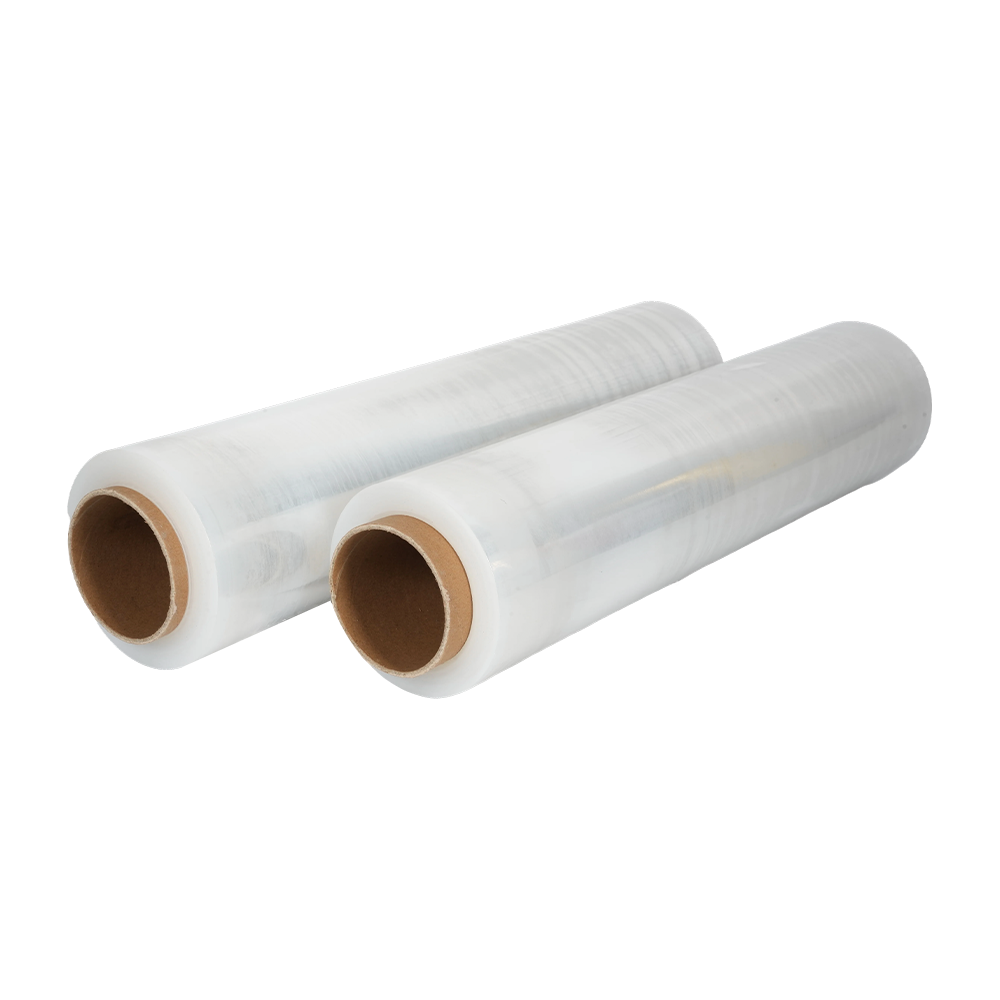
Modern industrial packaging depends on materials that can protect goods, stabilize loads, reduce waste, and adapt to many production environments. Among these materials, PE and metallocene stretch film master roll has become an important solution for packaging converters, logistics operators, warehouses, manufacturers, and distributors that require flexible sizing and reliable load containment. Supplied in large jumbo-roll form, this stretch film master roll is designed for customers who need to slit, rewind, reprocess, or directly apply stretch film according to their own operational requirements.
Unlike fixed-size hand rolls or machine rolls, a stretch film master roll gives users greater control over width, length, weight, color, and final application format. It is especially valuable for companies with non-standard packaging requirements, local manufacturers with slitting equipment, and distributors who repackage films into finished retail or industrial rolls. By purchasing a master roll, customers can reduce unit cost, minimize surplus material, and improve production flexibility.
The product is made from pure polyethylene, mainly multilayer co-extruded linear low-density polyethylene, enhanced with a metallocene copolymer. This material combination improves toughness, puncture resistance, stretchability, and cling performance. In demanding packaging environments where loads vary in shape, weight, and surface texture, these properties help maintain secure wrapping and reduce film breakage during handling, storage, and transport.
Zhejiang Geruite Packaging Materials Co., Ltd. manufactures and supplies this PE and metallocene stretch film master roll as part of its broader packaging material portfolio. The company is located in Hangzhou City, Zhejiang Province, China, a region known for advanced manufacturing capability and a mature industrial supply chain. With long-term experience in packaging materials such as BOPP tape, kraft paper tape, masking tape, high-temperature tape, metal tape, PE stretch film, PP strapping, and PET strapping, the company combines production know-how with rigorous quality control to support stable product performance.
PE + Metallocene Materials Stretch film master roll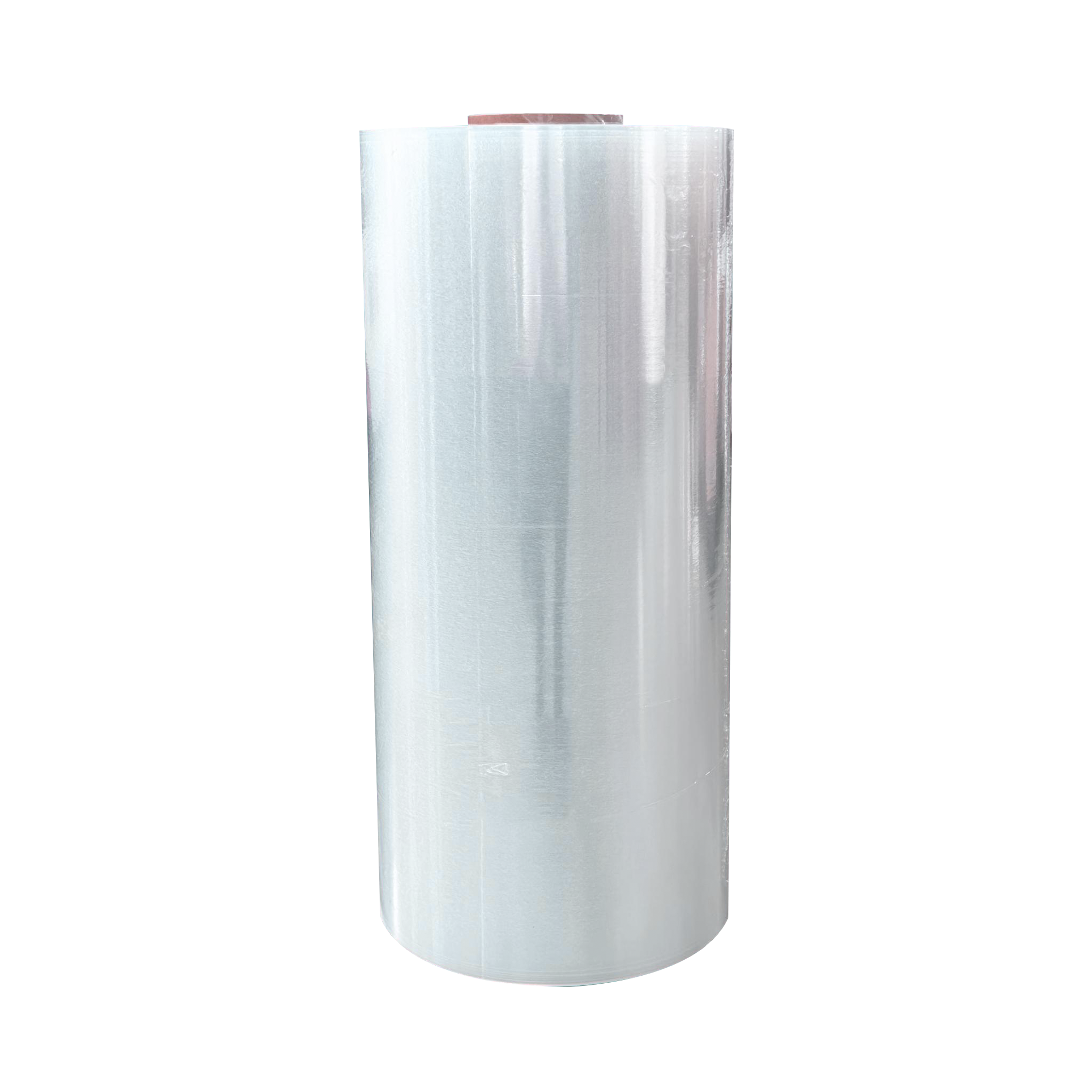
Product Overview
The PE and metallocene stretch film master roll is a jumbo roll stretch wrap product intended for industrial-scale use and downstream processing. It can be slit into different widths, rewound into smaller rolls, or used in continuous packaging systems depending on the equipment and requirements of the customer. Its master-roll format makes it suitable for converters, packaging distributors, large warehouses, logistics centers, and factories that need large-volume film supply.
The product belongs to the stretch wrap category and is designed for unitizing, palletizing, bundling, dust protection, moisture protection, and cargo stabilization. It is commonly used in logistics and warehousing, building material packaging, paper product packaging, metal product bundling, production line packaging, and industrial distribution. Because the master roll can be customized according to customer requirements, it supports both standardized operations and special packaging projects.
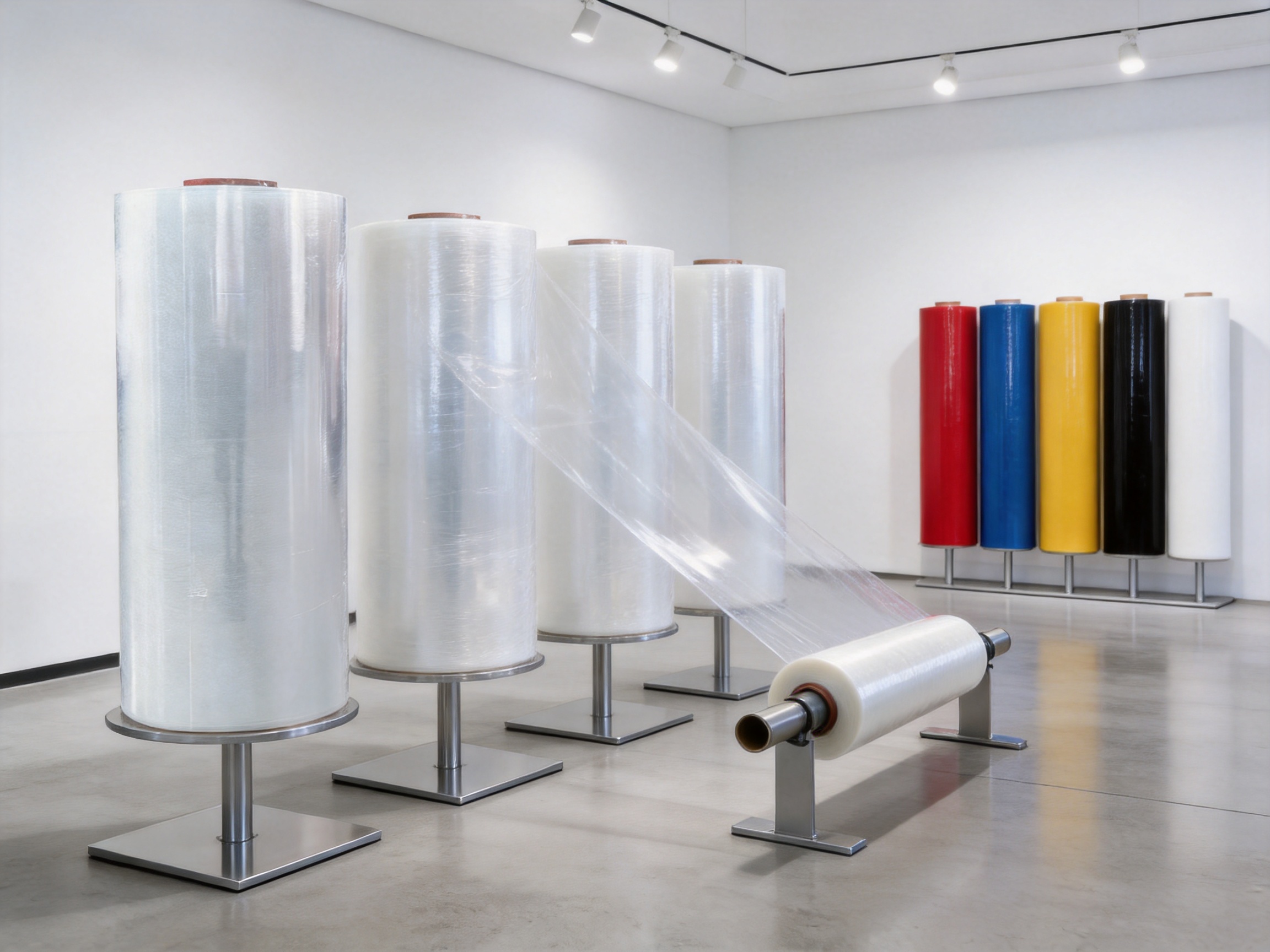
Its common width range is approximately 500 mm to 1000 mm, while the product information also lists available heights of 45 cm and 50 cm for common finished formats. Thickness can range from 0.015 mm to 0.045 mm, allowing users to select thinner film for lighter applications or thicker film for heavier loads and higher puncture resistance. Length and weight are customizable according to the customer’s application scenario, and colors can include transparent, red, yellow, blue, black, white, and other options.
The master roll is not simply a larger version of regular stretch film. Its value lies in its ability to become multiple final products or to serve multiple packaging lines from one bulk supply source. Customers can use one jumbo roll to produce hand stretch film, machine stretch film, narrow-width bundling film, or private-label finished rolls. This flexibility can be a competitive advantage for packaging distributors and industrial users that want to respond quickly to changing market or production demands.
Core Material: PE with Metallocene Copolymer
The performance of stretch film depends heavily on resin selection, film structure, extrusion control, cooling stability, and winding quality. This product uses pure polyethylene combined with a metallocene copolymer. Polyethylene provides the base flexibility, clarity, and stretch behavior required for packaging film. Metallocene technology further improves mechanical consistency, impact resistance, elongation, and puncture resistance.
Metallocene linear low-density polyethylene is known for its uniform molecular structure. Compared with conventional polyethylene resins, metallocene-based materials can offer better tensile strength, improved tear resistance, and enhanced toughness at lower thickness levels. For stretch film, this means that the film can maintain strong load-holding ability while potentially reducing material consumption.
In industrial packaging, film failure often occurs because of sharp pallet corners, irregular product surfaces, or uneven load movement during transportation. A stretch film enhanced with metallocene copolymer helps resist puncture and tearing when the film is stretched around difficult load profiles. This can reduce the frequency of film breaks during wrapping and help maintain stability after the goods leave the packaging station.
The use of multilayer co-extruded LLDPE film also improves performance balance. Different layers can be designed to support cling, strength, stretch, and surface properties. For example, one layer may help the film adhere to itself after wrapping, while another layer contributes toughness or clarity. This multilayer approach enables the product to meet diverse performance requirements without depending on excessive thickness alone.
Key Advantages Over Conventional Competitor Products
One of the major advantages of this PE and metallocene stretch film master roll is its customization potential. Many competitors supply only fixed-width, fixed-length finished rolls. While these rolls are suitable for standard applications, they are less efficient for customers with changing requirements or specialized packaging lines. A master roll allows customers to slit the film to the exact width needed for each application, reducing waste caused by over-wide film or mismatched roll sizes.
Another advantage is cost efficiency. Purchasing finished stretch film rolls often includes the cost of slitting, rewinding, packaging, labeling, and distribution. By purchasing master rolls, converters and large users can perform some of these processes internally and reduce the cost per unit. For customers with high-volume demand, this saving can become significant over time.
The product also offers improved performance consistency compared with low-grade or mixed-material films. Because it uses pure PE and metallocene copolymer, the film has a more predictable stretch profile and stronger toughness. Lower-quality competitor films may use inconsistent recycled material or unstable resin blends, leading to uneven thickness, reduced clarity, weak cling, or frequent breakage. A more consistent substrate helps downstream slitting and rewinding operations run smoothly.
Waste reduction is another important benefit. When companies purchase fixed-size rolls, they may need to store multiple specifications to cover different packaging needs. If demand changes, certain roll sizes may remain unused. With master rolls, users can slit and rewind according to real-time requirements, helping reduce obsolete inventory and leftover film.
The product’s transparency is valuable for inventory management and logistics. Clear film allows labels, barcodes, carton markings, and product details to remain visible. Some applications may require colored film for identification, concealment, branding, or product separation, and the availability of multiple colors gives customers more flexibility than many standard films.
Finally, the film’s processing compatibility sets it apart. Stable thickness, uniform stretchability, and reliable winding are critical for customers who reprocess master rolls. If a master roll has poor tension control or inconsistent film properties, slitting may create edge problems, wrinkles, telescoping, or roll instability. This product is designed to support downstream processing by maintaining a uniform substrate with consistent mechanical behavior.
Technical Specification Table
| Parameter | Specification | Practical Benefit |
| Product Type | PE and metallocene stretch film master roll | Suitable for slitting, rewinding, direct industrial wrapping, and resale processing |
| Main Material | Pure polyethylene with metallocene copolymer | Improves toughness, puncture resistance, and stretch performance |
| Film Structure | Multilayer co-extruded LLDPE film | Balances cling, strength, clarity, and elongation |
| Common Width Range | 500 mm to 1000 mm | Supports multiple downstream slitting formats |
| Common Finished Heights | 45 cm and 50 cm | Meets typical hand-roll and machine-roll packaging applications |
| Thickness Range | 0.015 mm to 0.045 mm | Allows selection for light-duty, medium-duty, or heavy-duty packaging |
| Length and Weight | Customizable according to customer application | Reduces inventory mismatch and supports production planning |
| Available Colors | Transparent, red, yellow, blue, black, white, and others | Useful for identification, concealment, classification, and branding |
| Key Properties | Stretchability, puncture resistance, cling, clarity, toughness | Enhances load stability and packaging reliability |
| Typical Applications | Logistics, warehousing, converters, production lines, bulk cargo protection | Serves diverse industrial and commercial packaging needs |
Manufacturing Process and Quality Control Strengths
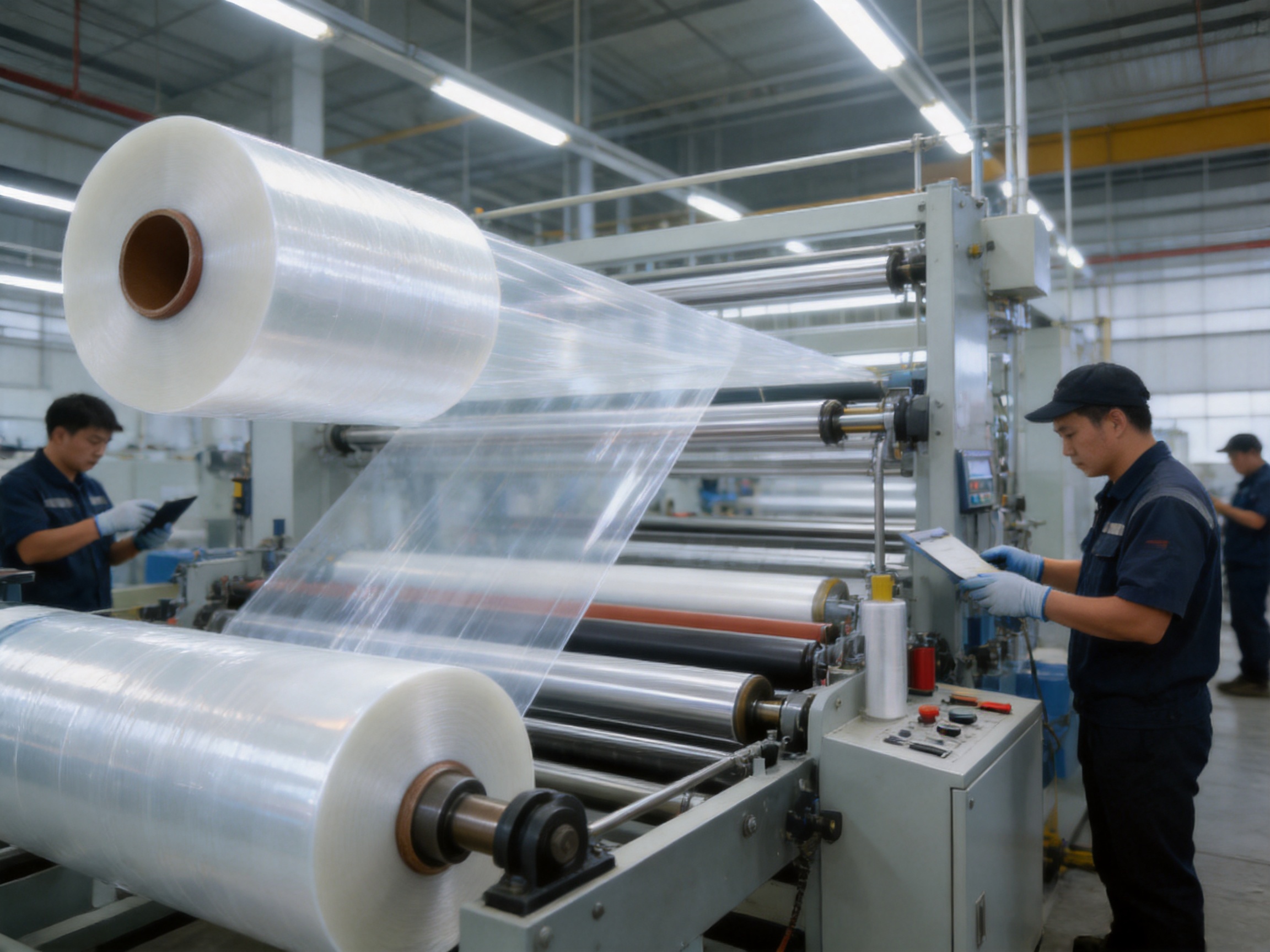
The quality of a stretch film master roll begins with raw material selection. Zhejiang Geruite Packaging Materials Co., Ltd. emphasizes quality as the lifeline of the enterprise, and this philosophy is reflected in the production of stretch film. For PE and metallocene stretch film, the correct resin formulation is essential. The company selects suitable polyethylene and metallocene copolymer materials to obtain stable stretch, toughness, clarity, and cling properties.
The multilayer co-extrusion process is an important manufacturing advantage. During co-extrusion, different polymer layers are formed simultaneously and combined into a unified film structure. This method allows the film to achieve a balance of performance properties that would be difficult to obtain from a single-layer structure. The process requires accurate control of extrusion temperature, melt flow, layer distribution, and cooling conditions.
Thickness control is especially important for master roll stretch film. If the film is too thin in certain areas, it may tear during stretching. If it is too thick in other areas, material is wasted and roll tension may become uneven. Advanced production equipment helps maintain consistent gauge across the film width. This consistency is important not only for final wrapping performance but also for downstream slitting and rewinding.
Cooling and film formation also influence clarity and mechanical performance. Proper cooling helps stabilize film structure and reduce optical defects. High transparency is beneficial for customers who need to scan barcodes, check product labels, or identify contents without removing the wrapping. For colored film, stable pigment dispersion and process control help maintain uniform color appearance.
Winding quality is another key factor in master roll production. A jumbo roll must be wound with suitable tension so it remains stable during storage, shipping, and subsequent processing. If winding is too loose, the roll may deform. If it is too tight, the film may block, stretch prematurely, or create difficulties during unwinding. The company’s focus on production control helps ensure that rolls are suitable for industrial handling and conversion.
Quality inspection occurs at multiple stages, from raw material checking to production monitoring and final inspection. Typical inspection concerns include thickness uniformity, roll weight, film appearance, stretch behavior, cling strength, puncture resistance, and roll edge condition. By controlling these factors, the company helps customers reduce production interruptions and packaging defects.
The company’s broader manufacturing experience across tape, strapping, and film products also strengthens its understanding of packaging systems. Customers often need more than a single product; they need compatible materials for carton sealing, bundling, pallet stabilization, and cargo protection. A manufacturer with experience in multiple packaging material categories can better understand how stretch film interacts with adhesive tape, strapping band, and other packaging components.
Why Master Roll Format Matters
The master roll format is particularly valuable in a market where customers expect flexible packaging dimensions and fast response. A factory that uses only standard finished rolls may need to purchase many specifications. This increases inventory cost and storage complexity. A master roll allows the same bulk film source to be converted into different widths and lengths, improving operational flexibility.
For packaging converters, master rolls are essential raw materials. They can be slit and rewound into smaller rolls for retail, wholesale, or industrial customers. A converter can produce private-label rolls, machine rolls, hand rolls, mini rolls, or specialty-width rolls based on market demand. Because the base film has consistent stretchability and toughness, the downstream products can maintain reliable performance.
For manufacturers with internal packaging operations, master rolls can support continuous production. If a plant operates multiple packaging lines, each line may require a different roll size. Instead of purchasing separate finished rolls, the manufacturer can process master rolls according to production schedules. This can reduce procurement complexity and improve packaging material availability.
For distributors, master rolls help improve product variety without requiring excessive stock of finished goods. A distributor can keep master rolls in inventory and convert them into popular specifications as orders arrive. This approach reduces the risk of holding slow-moving roll sizes and supports more responsive customer service.
For large warehouses and logistics operators, master rolls can support pallet wrapping operations where film consumption is high. Depending on equipment compatibility, master roll material may be converted for automatic or semi-automatic wrapping machines. Stable film properties help maintain packaging line efficiency and reduce downtime caused by film breaks.
Applications in Logistics and Warehousing
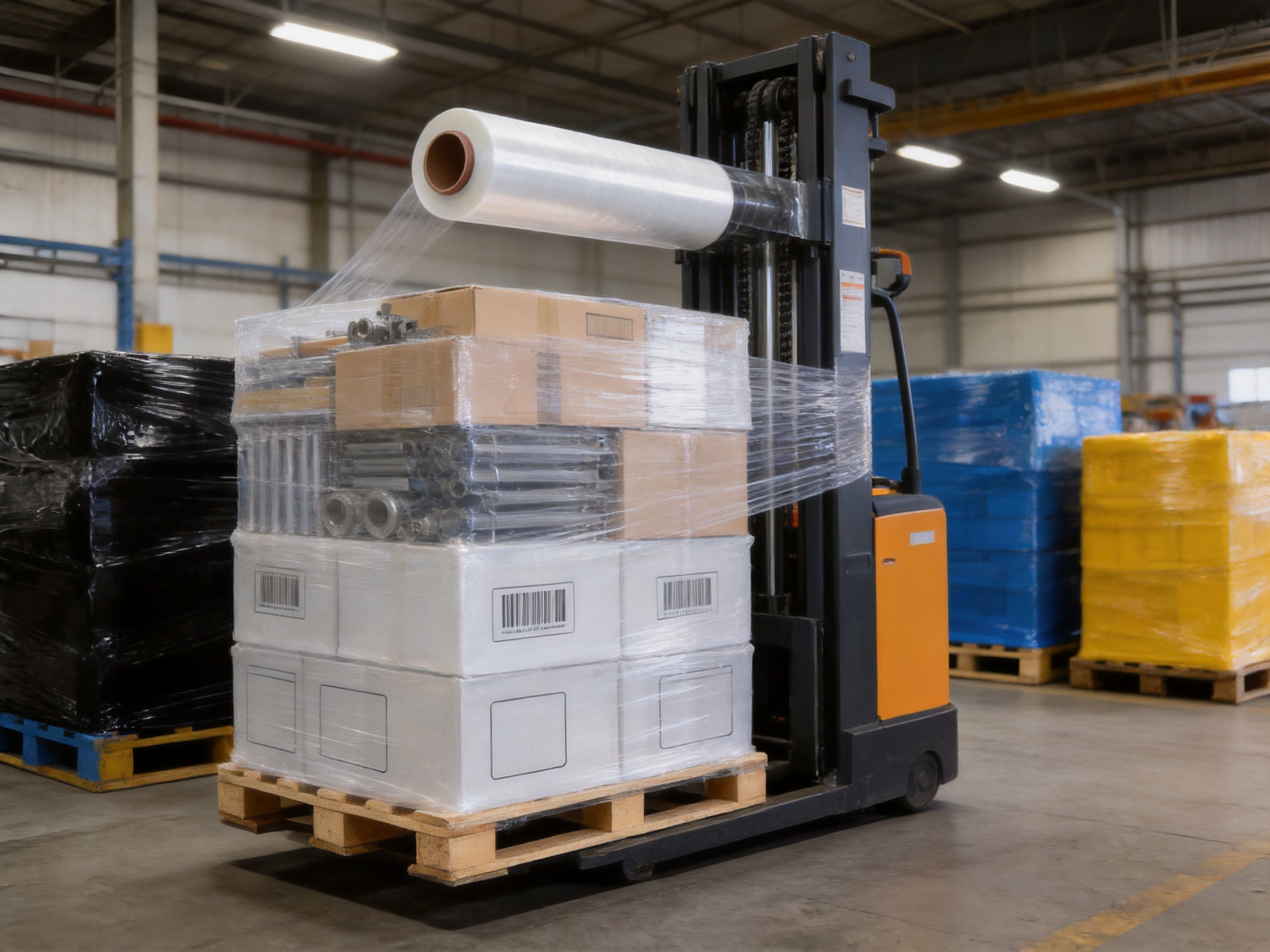
Logistics and warehousing operations rely on stretch film to unitize goods and maintain pallet stability. A pallet may contain cartons, bags, containers, drums, or irregular items. During storage and transport, the load may experience vibration, shifting, compression, and handling impacts. Stretch film helps hold the load together and reduces the chance of product damage or collapse.
The PE and metallocene stretch film master roll is suitable for high-volume logistics facilities because it provides strong stretchability and puncture resistance. When wrapped around palletized goods, the film applies containment force that keeps products in position. The metallocene-enhanced toughness helps the film withstand corners and edges that may puncture weaker films.
Transparency is also useful in logistics. Operators can read labels, barcodes, and shipping marks through the film, reducing the need to unwrap goods for identification. This improves warehouse efficiency and helps prevent picking or shipping errors. When colored film is used, it can support product classification, route identification, security concealment, or inventory separation.
In large distribution centers, film reliability directly affects productivity. Frequent film breaks slow down wrapping operations and increase labor cost. A consistent master roll that can be converted into machine-compatible rolls helps reduce interruptions. When wrapping machines run continuously, stable film performance becomes an important part of overall packaging efficiency.
Applications in Processing and Distribution
Packaging converters and distributors are among the most important users of stretch film master rolls. These businesses purchase jumbo rolls, slit them into smaller widths, rewind them into specific lengths, and package them for resale. The ability to transform one master roll into multiple finished products allows converters to serve different market segments efficiently.
A converter may supply hand stretch film for manual warehouse use, machine stretch film for automated packaging lines, narrow bundling film for small products, and colored film for special identification needs. The PE and metallocene master roll supports this business model because it offers consistent mechanical properties and flexible customization.
For distributors, the product helps manage inventory more effectively. Instead of storing many roll sizes, they can keep master rolls and process them as orders are confirmed. This is especially useful when customer demand changes seasonally or when clients request non-standard specifications. The master roll format helps distributors remain competitive by offering customized service without excessive inventory burden.
Because the product can be supplied in different colors, thicknesses, lengths, and weights, distributors can develop differentiated product lines. Transparent film may be used for general cargo visibility. Black film may be used for concealment and security. Red, yellow, or blue film may be used for product categorization, brand recognition, or warehouse coding systems.
Applications in Production Line Integration
Manufacturing plants often require packaging materials that can integrate smoothly into production lines. Whether the product is food-related packaging, building material units, electronic components, household goods, paper products, or industrial parts, stable wrapping performance is important for efficiency and safety.
The PE and metallocene stretch film master roll can be converted into rolls suitable for automatic wrapping machines, semi-automatic machines, or manual wrapping processes. Its consistent stretchability supports controlled film application, while puncture resistance helps protect against breakage caused by product edges. Good cling properties help the film adhere to itself after wrapping, reducing the need for additional fastening.
In production environments, downtime is costly. If film breaks repeatedly, operators must stop the line, rethread the film, and inspect the load. A stronger, more consistent film helps reduce these interruptions. This is one reason why the metallocene-enhanced material provides a practical advantage over lower-grade films.
Production line integration also requires predictable roll dimensions and winding quality. Rolls must fit equipment core sizes, loading systems, and maximum weight capacity. Before purchase, customers should verify the core inner diameter and maximum equipment load capacity. This helps ensure that the master roll or converted rolls can be used safely and efficiently.
Applications in Bulk Cargo Protection
Bulk cargo protection is another important application area. Industries such as building materials, paper, metal products, plastic products, and industrial components often require bundling, dust-proofing, and moisture protection. Stretch film provides a flexible protective layer that can conform to different shapes and sizes.
Building materials may have rough surfaces, sharp edges, or heavy weight. A film with good puncture resistance and toughness helps prevent tearing during wrapping and handling. Paper products may require dust protection and moisture resistance while still allowing identification. Metal products may need bundling support and surface protection during storage and transport.
Because the film is available in thicker specifications up to 0.045 mm, customers can select stronger options for heavier or more demanding loads. For lighter products, thinner film may be sufficient and can reduce material consumption. This ability to match thickness to application helps optimize cost and performance.
Colored film can also be useful for bulk cargo. Black or opaque film may conceal valuable goods, while bright colors can improve visual identification in busy warehouses. Transparent film remains a preferred choice when product labels and contents must remain visible.
Cost Efficiency and Waste Reduction
Cost efficiency is one of the strongest reasons to choose a stretch film master roll. In packaging operations, film consumption can be significant, especially for palletized goods and high-volume shipping. Even a small reduction in film cost per unit can produce meaningful savings over time.
Purchasing master rolls can reduce per-unit material cost because customers buy in large-roll format. The master roll eliminates some costs associated with finished-roll processing and packaging. For converters, the master roll is a raw material that can be transformed into multiple saleable products. For large users, it provides a way to customize film supply and reduce procurement cost.
Waste reduction is closely related to customization. If a company uses a film width that is too large for the load, unnecessary material is consumed with every wrap. If the film width is too small, more revolutions may be required, increasing labor and material use. By slitting the master roll into appropriate widths, users can align film size with actual packaging needs.
Inventory waste is another concern. Standard finished rolls may become obsolete if customer requirements change. A master roll reduces this risk because it can be processed into different specifications later. This flexibility is particularly important for distributors and converters serving diverse customer groups.
The improved toughness of the PE and metallocene film can also reduce waste caused by film breaks. Every break creates scrap material and slows down operations. Stronger film that resists puncture and tearing helps improve material utilization. In automated packaging lines, fewer breaks also mean higher throughput and less operator intervention.
Product Performance in Real Packaging Conditions
Stretch film performance should be evaluated not only by laboratory properties but also by real packaging behavior. In actual use, film must stretch around corners, maintain cling, resist puncture, and hold loads under movement. The PE and metallocene master roll is designed to meet these practical requirements.
Stretchability allows the film to elongate during wrapping. This elongation creates tension, which provides containment force. If the film has insufficient stretch, it may not hold the load tightly. If it stretches unevenly, wrapping may become unstable. The use of LLDPE and metallocene copolymer supports balanced elongation and strength.
Puncture resistance is critical when wrapping irregular goods. Pallet corners, carton edges, metal parts, wooden crates, and building materials can damage weak film. Metallocene-enhanced toughness helps the film resist puncture and continue holding the load even when pressure points occur.
Cling properties help the film layers adhere to each other. Good cling reduces film tail lifting and helps maintain a neat finished pallet. It can also reduce the need for tape or additional securing methods in some applications. However, cling must be balanced so that the film unwinds properly and does not block excessively in roll form.
Clarity supports operational visibility. In warehouses, operators often need to scan labels or inspect goods quickly. Clear stretch film improves efficiency by allowing identification without removing packaging. For applications requiring concealment, colored or opaque film options are available.
Storage and Usage Recommendations
Proper storage and handling help maintain stretch film performance. The master roll should be stored in a dry, cool indoor environment away from direct sunlight and high temperatures. Excessive heat or ultraviolet exposure can accelerate material degradation, reduce mechanical performance, and affect cling behavior.
Rolls should be stored on stable surfaces and protected from physical damage. Because master rolls can be heavy, handling equipment should be suitable for the roll weight and dimensions. Operators should avoid dropping rolls or damaging edges, as edge defects can create problems during slitting or unwinding.
Before slitting, cutting blades should be clean, sharp, and correctly aligned. Dull or contaminated blades can create rough edges, dust, or film tearing. Clean slitting improves roll appearance and helps maintain film performance during subsequent use.
Customers should verify equipment compatibility before purchase. This includes core inner diameter, roll width, roll weight, maximum load capacity, and unwinding direction. Matching the master roll to equipment requirements helps avoid production delays and safety risks.
During use, operators should adjust wrapping tension according to load type and film thickness. Excessive tension may cause film breakage or product compression, while insufficient tension may result in unstable pallets. Selecting the proper thickness and wrapping method helps achieve the best balance of protection and cost.
Company Manufacturing Strengths
Zhejiang Geruite Packaging Materials Co., Ltd. has developed its business around research, production, and sales of high-performance tapes and packaging materials. Its product range includes adhesive tape, strapping band, stretch film, and other industrial packaging materials. This broad product structure allows the company to serve customers in logistics, express delivery, household goods, electronics, construction and decoration, industrial manufacturing, cargo stabilization, and packaging protection.
The company is located in Xiaoshan District, Hangzhou City, Zhejiang Province, China. This region provides access to a strong manufacturing base, skilled labor, industrial suppliers, and transportation networks. For customers, this location can support efficient production coordination and export supply.
One of the company’s strengths is its emphasis on quality management. From raw material procurement to production and final inspection, the company aims to maintain stable performance and meet diverse customer needs. In stretch film production, this means careful control of resin selection, extrusion parameters, thickness, winding, and finished roll inspection.
Another strength is its experience across multiple packaging categories. A customer who buys stretch film may also need BOPP tape for carton sealing, kraft paper tape for paper-based packaging, masking tape for surface protection, PP strapping for light-duty bundling, or PET strapping for heavier cargo. A supplier with a wide packaging portfolio can help customers coordinate materials and simplify procurement.
The company’s annual output value has reached over RMB 60 million, showing its production capacity and market recognition. As the packaging industry continues to demand stronger, thinner, more efficient, and more customizable materials, the company continues to invest in technological research and development, optimize its product structure, and improve service levels.
Comparison with Fixed-Size Finished Stretch Film
Fixed-size finished stretch film remains useful for many small users. However, for large-volume users, converters, and distributors, master roll format offers several clear advantages. Finished rolls are convenient but less flexible. Master rolls require processing capability but provide better control and lower long-term cost.
In a fixed-roll purchasing model, customers must forecast exact roll sizes in advance. If demand changes, they may end up with unsuitable inventory. With master rolls, customers can respond to actual orders and packaging requirements more easily. This improves supply chain agility.
Finished rolls also limit customization. If a customer needs a special width, length, color, or weight, they may face minimum order restrictions or long lead times. Master rolls make it easier for converters to produce non-standard formats. This is important in markets where customers increasingly request tailored packaging solutions.
Another difference is material efficiency. Finished rolls may not match every load dimension. Master-roll slitting enables better matching between film width and load size. This reduces unnecessary overlap and supports more economical wrapping.
Performance consistency is also critical. Some low-cost finished films may be made from variable material sources. The PE and metallocene master roll, with pure polyethylene and performance-enhancing copolymer, is designed for more stable mechanical properties. This helps both direct users and converters maintain product quality.
Environmental and Operational Considerations
Packaging materials must balance protection, cost, and environmental responsibility. Stretch film helps prevent product damage, which is itself an important environmental benefit because damaged goods require replacement, reshipping, and additional resources. A strong film that stabilizes loads effectively can reduce losses throughout the supply chain.
Material reduction is another important consideration. Because metallocene-enhanced film can provide strong toughness and stretch performance, customers may be able to select optimized thicknesses for specific applications. Using the correct thickness helps avoid overpackaging while still maintaining safety.
Waste reduction through on-demand slitting also supports better resource use. Instead of storing many fixed sizes and discarding unsuitable inventory, customers can process master rolls according to actual demand. This improves material utilization and reduces surplus.
Operational efficiency also contributes to sustainability. Fewer film breaks mean less scrap and less energy wasted through repeated machine stoppages. Stable wrapping reduces rework, improves transport safety, and lowers the risk of product damage.
Customization Options
The PE and metallocene stretch film master roll can be customized according to customer application scenarios. Customization may include width, thickness, roll weight, length, and color. This flexibility is important because packaging requirements vary widely across industries.
For lightweight cartons, a thinner film may be suitable. For heavy building materials or metal products, a thicker film may provide better puncture resistance and containment. For high-speed packaging lines, roll weight and winding quality may be optimized for machine compatibility. For retail resale, converters may specify roll dimensions that meet market preferences.
Color customization also creates value. Transparent film is widely used for general cargo because it keeps labels visible. Black or white film may be selected for concealment or visual uniformity. Red, yellow, and blue film can be used for classification, route coding, warehouse zoning, or promotional differentiation.
Customers should communicate their application conditions clearly when selecting specifications. Useful information includes load type, pallet dimensions, product weight, wrapping method, storage environment, transport distance, equipment model, and desired roll format. With this information, the supplier can recommend appropriate specifications.
Purchasing Considerations
When purchasing PE and metallocene stretch film master roll, buyers should evaluate both material performance and supplier capability. Important product factors include thickness, width, roll weight, stretch ratio, puncture resistance, cling, clarity, color, and winding quality. The lowest price may not always provide the best value if the film breaks frequently or fails to secure loads.
Supplier capability is equally important. A reliable supplier should maintain stable raw material quality, consistent production control, and dependable delivery. Zhejiang Geruite Packaging Materials Co., Ltd. combines packaging material manufacturing experience with quality-focused production management, making it suitable for customers who require dependable industrial packaging supply.
Buyers should also consider downstream processing requirements. If the roll will be slit, the film must have good edge quality, stable tension, and uniform thickness. If it will be converted into retail rolls, appearance and roll formation become important. If it will be used for automated wrapping, machine compatibility and film consistency are critical.
Before confirming an order, customers may request samples or technical discussion to ensure that the product matches their application. This is especially important for special thicknesses, colors, or machine-use conditions. Proper specification selection helps maximize packaging performance and cost savings.
Q&A Section
What is a PE and metallocene stretch film master roll?
It is a large jumbo roll of stretch film made from pure polyethylene and metallocene copolymer. It is designed for industrial users, converters, and distributors who need to slit, rewind, reprocess, or customize stretch film into different final roll sizes.
How is a master roll different from a standard finished roll?
A standard finished roll is already slit and rewound into a fixed size for direct use. A master roll is supplied in a larger format and can be processed into various widths, lengths, and roll weights. This gives customers greater flexibility and can reduce cost for high-volume users.
Why is metallocene added to the PE film?
Metallocene copolymer improves toughness, puncture resistance, elongation, and film consistency. It helps the stretch film resist tearing around pallet corners, irregular products, and heavy loads.
What thicknesses are available?
The product can be supplied in thicknesses from 0.015 mm to 0.045 mm. Thinner film is suitable for lighter packaging, while thicker film is better for heavier loads and demanding cargo protection.
Can the film be supplied in different colors?
Yes. Available colors include transparent, red, yellow, blue, black, white, and other customized options. Transparent film is useful for visibility, while colored film can support identification, concealment, classification, or branding.
Who should use this product?
It is suitable for packaging converters, distributors, logistics centers, warehouses, factories, and industrial users with high-volume or non-standard stretch film requirements.
Can it be used with automatic wrapping machines?
Yes, after being converted into suitable roll dimensions, it can be used with various automatic or manual wrapping systems. Customers should confirm core size, roll weight, roll width, and equipment capacity before purchase.
How does this product help reduce waste?
Because users can slit and rewind the master roll according to actual needs, they can reduce unnecessary material use and avoid surplus inventory of unsuitable fixed-size rolls.
What are the main application industries?
Major applications include logistics, warehousing, packaging conversion, production line packaging, building materials, paper products, metal products, industrial goods, and palletized cargo protection.
How should the master roll be stored?
It should be stored indoors in a dry, cool environment, away from direct sunlight and high temperature. Proper storage helps maintain film strength, cling, and overall performance.
Conclusion
PE and metallocene stretch film master roll is a practical and high-value packaging material for customers who require flexibility, strength, and cost efficiency. Its master-roll format supports customized slitting, rewinding, and downstream processing, making it ideal for converters, distributors, warehouses, logistics operators, and manufacturers with diverse packaging needs.
The combination of pure polyethylene, multilayer co-extruded LLDPE structure, and metallocene copolymer provides reliable stretchability, puncture resistance, cling, clarity, and toughness. Compared with many conventional fixed-size or lower-grade competitor films, it offers stronger customization potential, better material efficiency, improved processing compatibility, and more stable packaging performance.
Zhejiang Geruite Packaging Materials Co., Ltd. supports this product with advanced manufacturing processes, strict quality control, broad packaging material experience, and a commitment to continuous improvement. For customers seeking a dependable stretch film solution that can reduce cost, minimize waste, and support demanding industrial packaging operations, this PE and metallocene stretch film master roll is a strong choice.
References
1. Robertson, G. L. Food Packaging: Principles and Practice. CRC Press.
2. Soroka, W. Fundamentals of Packaging Technology. Institute of Packaging Professionals.
3. Yam, K. L. The Wiley Encyclopedia of Packaging Technology. Wiley.
4. Selke, S. E. M., Culter, J. D., and Hernandez, R. J. Plastics Packaging: Properties, Processing, Applications, and Regulations. Hanser Publications.
5. ASTM International. Standard Test Methods for Tensile Properties of Thin Plastic Sheeting.
6. ASTM International. Standard Test Methods for Puncture Resistance and Elastic Behavior of Plastic Film and Sheeting.
Product: PE + Metallocene Materials Stretch film master roll

LATEST POST
Let’s create something amazing together
contact us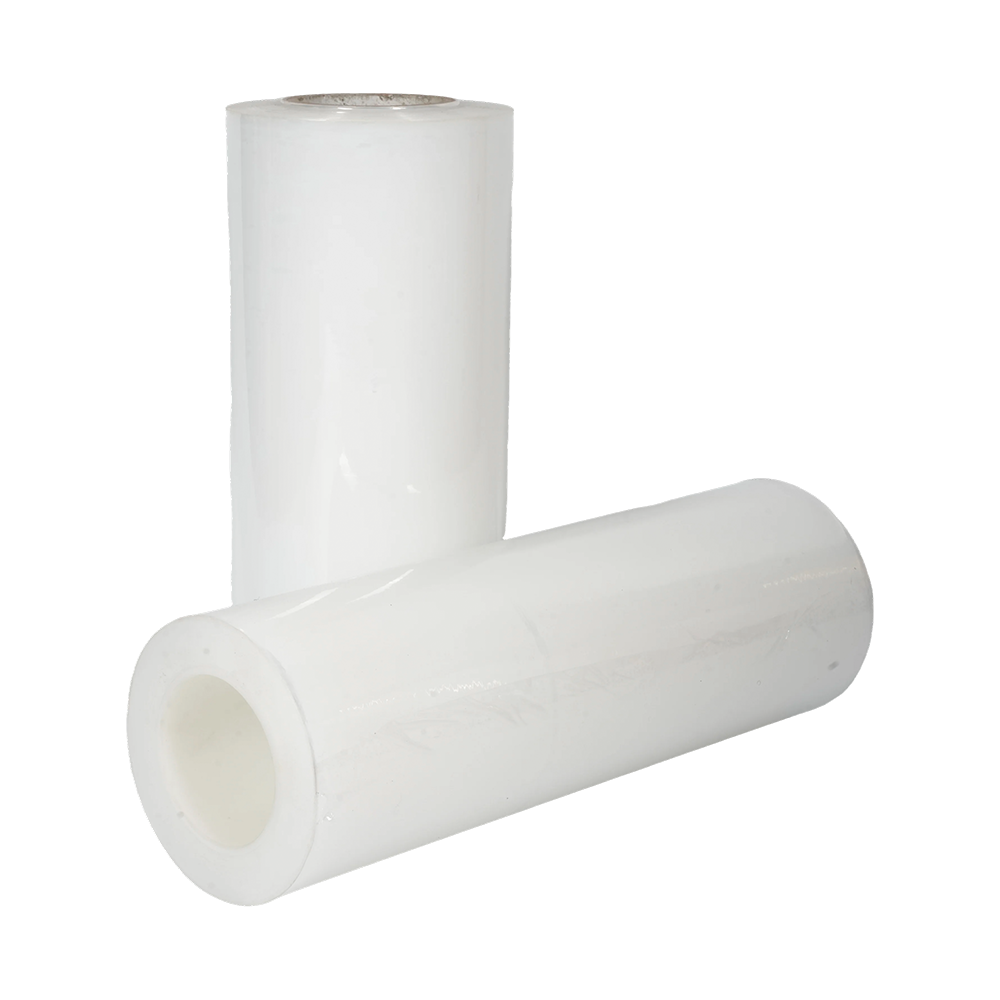

CONTACT DETAILS
- Address:No. 241, Yaojiafan, Zhangpanqiao, Shushan Street, Xiaoshan District, Hangzhou City, Zhejiang Province, China
- TEL:+86-0571-83175630
- Phone:+86-13336160217
- Email:anqiaocun@163.com
PRODUCTS
NEWS CENTER
MOBILE TERMINAL
Copyright© Zhejiang Geruite Packaging Materials Co., Ltd. All Rights Reserved.
Privacy Wholesale industrial packaging tape Manufacturers