


 English
  Español
  عربى
عربى 
Transparent Machine Stretch Film for High-Performance Pallet Unitization
Content
- 1 Understanding Transparent Machine Stretch Film
- 2 Core Product Specifications
- 3 Material Advantages: Polyethylene and Metallocene Toughness
- 4 Advantages Over Conventional Competitor Films
- 5 Efficiency and Labor Savings Through Machine Application
- 6 Reliable Stabilization During Transport
- 7 Comprehensive Protection Against Dust, Moisture, and Oil
- 8 Wide Applicability for Regular and Irregular Products
- 9 Manufacturing Strength Behind Product Consistency
- 10 Why Consistent Thickness Matters
- 11 Clarity and Transparency in Warehouse Management
- 12 Cost-Effectiveness Beyond the Roll Price
- 13 Recommended Application Scenarios
- 14 How to Select the Right Film Thickness
- 15 Best Practices for Machine Wrapping
- 16 Storage and Handling Recommendations
- 17 Integration With Other Packaging Materials
- 18 Quality Control From Raw Material to Finished Roll
- 19 Environmental and Operational Efficiency Considerations
- 20 Competitive Value for Export and Domestic Logistics
- 21 Company Strength and Packaging Expertise
- 22 Practical Benefits for Different Users
- 23 Frequently Asked Questions
- 23.1 What is transparent machine stretch film used for?
- 23.2 How is machine stretch film different from hand stretch film?
- 23.3 Why is transparency important?
- 23.4 What material is used in this stretch film?
- 23.5 What thickness options are available?
- 23.6 Can it be used for irregularly shaped goods?
- 23.7 Does stretch film damage product surfaces?
- 23.8 How should the film be stored?
- 23.9 How does machine stretch film reduce packaging cost?
- 23.10 Why choose a manufacturer with advanced production and quality control?
- 24 Conclusion
- 25 References
- 26 Product: Transparent machine stretch film
In modern logistics, every pallet is expected to do more than simply hold goods. It must remain stable through lifting, stacking, vibration, braking, humidity changes, warehouse handling, and long-distance transportation. Transparent machine stretch film is designed for this exact challenge. It converts loose cartons, bagged goods, irregular components, and palletized products into secure unit loads that are easier to move, store, protect, and inspect.
Transparent machine stretch film is an industrial packaging film made primarily from high-elasticity polyethylene, strengthened with advanced metallocene copolymer technology for improved toughness, puncture resistance, and stretch recovery. It is optimized for mechanical wrapping equipment, allowing the film to be stretched consistently and applied with controlled tension. This creates a tight, uniform protective layer around palletized goods without damaging product surfaces.
Compared with manual wrapping film or low-grade commodity film, transparent machine stretch film provides higher wrapping efficiency, better load stability, improved material utilization, and more consistent packaging results. It is especially suitable for manufacturers, logistics centers, warehousing operations, and export packaging applications where speed, reliability, and cost control are equally important.
Zhejiang Geruite Packaging Materials Co., Ltd. produces packaging materials for demanding industrial use, including PE stretch film, adhesive tapes, BOPP tapes, kraft paper tapes, masking tapes, high-temperature resistant tapes, metal tapes, PP strapping, and high-strength PET strapping. With advanced production equipment, strict quality control, and extensive experience in packaging material manufacturing, the company provides transparent machine stretch film that supports efficient pallet protection and stable logistics performance.
Transparent machine stretch film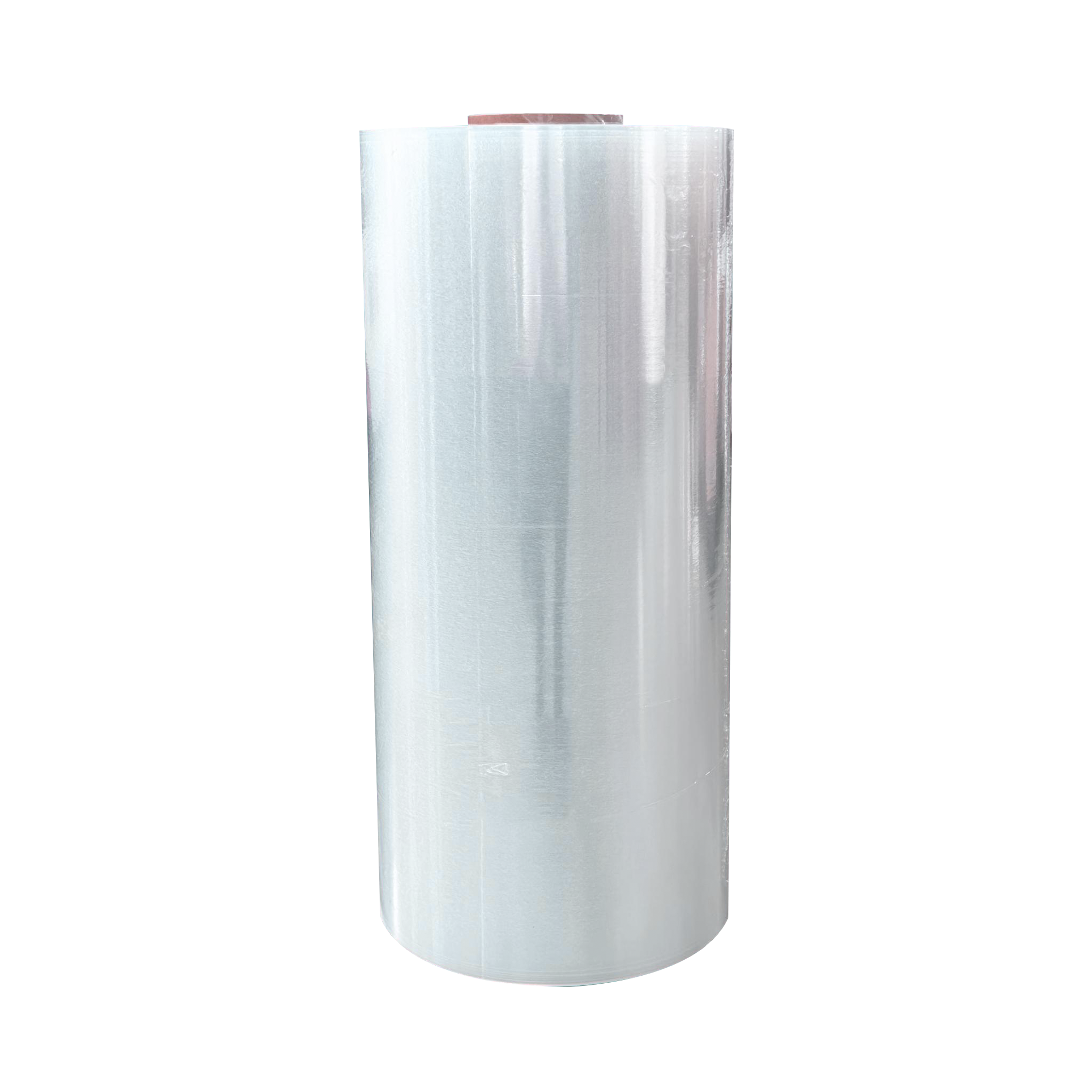
Understanding Transparent Machine Stretch Film
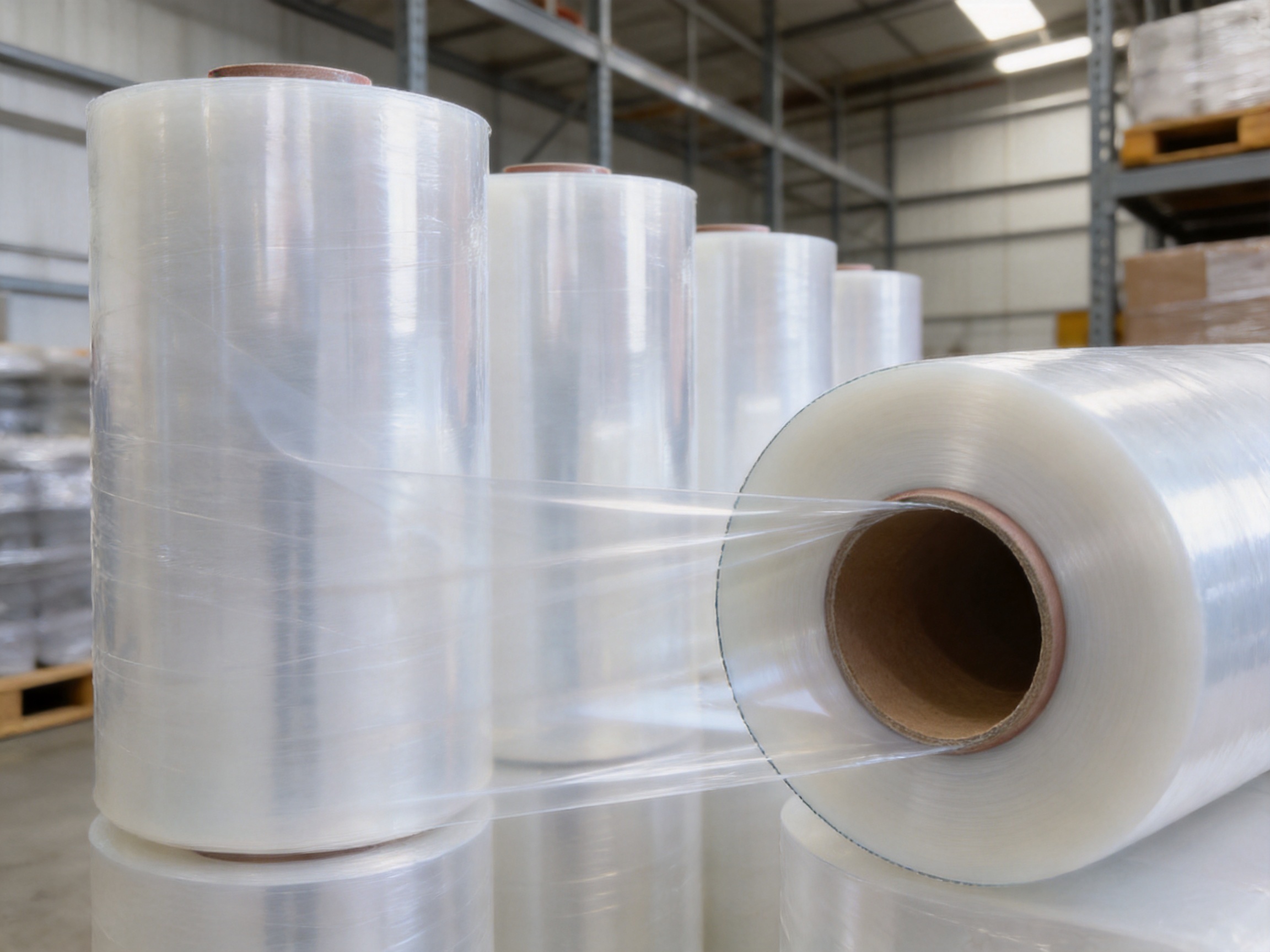
Transparent machine stretch film is a stretchable plastic film used mainly to wrap goods on pallets. Unlike shrink film, which typically requires heat to contract around products, stretch film relies on mechanical elongation and elastic recovery. When the film is stretched by a wrapping machine and applied around a load, it attempts to return toward its original length. This recovery force creates holding tension, binding the products together and securing them to the pallet.
The transparent appearance of the film is important in industrial operations. It allows operators, warehouse workers, and quality inspectors to view labels, barcodes, carton markings, product information, and pallet condition without removing the packaging. This improves inventory visibility and reduces handling errors, especially in high-volume distribution environments.
Machine stretch film differs from hand stretch film in both design and application. Hand film is applied manually and usually requires lower stretch force because operators must pull it by hand. Machine film is engineered for wrapping equipment that can apply higher, more consistent pre-stretch levels. This makes machine stretch film more efficient for heavy-duty or repetitive pallet wrapping because it can cover more pallets with less labor and more uniform tension.
The product described here is suitable for palletized transport packaging, irregular item protection, storage protection, and logistics applications. It can be used around cartons, bagged goods, pipes, cable reels, door frames, window frames, metal components, and other products that require protective bundling. Its soft and flexible structure helps prevent scratches and abrasions during wrapping, making it suitable for both regular and irregular product shapes.
Core Product Specifications
The following table summarizes the key technical information for transparent machine stretch film. Specifications can be selected according to product weight, pallet height, transport distance, storage environment, and wrapping machine configuration.
| Parameter | Specification | Practical Value |
| Material | Pure polyethylene plus metallocene copolymer | Provides elasticity, toughness, puncture resistance, and stable wrapping performance |
| Film Height | 45 cm and 50 cm | Suitable for common machine wrapping systems and pallet sizes |
| Thickness | 0.015 mm to 0.045 mm | Allows selection from lightweight wrapping to heavy-duty load stabilization |
| Length and Weight | Customizable according to application scenario | Supports different wrapping machine requirements and operating costs |
| Color | Transparent | Enables barcode scanning, label visibility, and easy load inspection |
| Application Method | Mechanical wrapping equipment | Improves wrapping speed, tension control, and packaging consistency |
| Main Functions | Dustproof, moistureproof, oil-resistant, load stabilizing | Protects goods during storage, handling, and transportation |
Material Advantages: Polyethylene and Metallocene Toughness
The performance of transparent machine stretch film begins with material selection. Polyethylene is widely used in packaging because it is flexible, lightweight, chemically stable, and capable of forming strong films. When used as a stretch film base material, polyethylene provides elongation, cling, and recovery memory, allowing the film to stretch and then hold goods tightly after application.
The addition of metallocene copolymer technology improves the mechanical behavior of the film. Metallocene-based materials are known for uniform molecular structure, improved toughness, and enhanced resistance to puncture and tearing. In practical packaging, this means the film can better withstand sharp carton edges, irregular load profiles, pallet corners, vibration, and transport pressure.
Many low-quality stretch films may appear similar at first glance, but their performance can vary significantly during machine wrapping. Inferior films may break frequently, stretch unevenly, lose tension quickly, or puncture at corners. These problems cause downtime, material waste, unstable pallets, and increased labor intervention. A high-quality polyethylene film reinforced with metallocene copolymer helps reduce these risks by maintaining consistent film integrity under stretching and wrapping stress.
Another important characteristic is recovery memory. When the film is stretched during wrapping, it should not simply become loose after application. It must maintain a balanced constrictive force around the load. Good recovery memory allows the film to grip the palletized goods securely, helping prevent cartons or products from shifting during transport.
Advantages Over Conventional Competitor Films
Transparent machine stretch film offers several advantages over conventional or lower-grade competitor films. The first advantage is stable machine compatibility. Machine wrapping systems require films that can withstand controlled pre-stretching and high-speed application. If a film has inconsistent thickness or weak areas, it may tear during operation. A well-manufactured machine stretch film supports smoother wrapping, fewer roll changes, and reduced line interruptions.
The second advantage is improved load stabilization. During logistics, a pallet may experience repeated vibration, forklift impact, tilting, braking force, and compression from stacking. If the film does not provide balanced holding force, goods can shift, lean, or collapse. This product is designed to create uniform multi-layer coverage and reliable tension, helping palletized goods remain stable through dynamic transportation.
The third advantage is material efficiency. When a film has strong elongation and puncture resistance, operators can use appropriate pre-stretch settings to cover more loads with less film. This can reduce packaging material consumption per pallet. Cheaper films may require more layers to achieve the same holding force, which can increase total packaging cost despite a lower unit price.
The fourth advantage is surface protection. Some packaging methods, such as rope tying, rigid strapping without edge protection, or rough wrapping materials, may damage cartons or product surfaces. Transparent machine stretch film is soft and flexible. It conforms to the contours of goods without scratching or abrading them, making it useful for finished products, painted components, doors, windows, pipes, and cable reels.
The fifth advantage is visibility. Opaque packaging may hide important markings, causing delays during warehouse sorting or customs inspection. Transparent film keeps labels visible and allows quick confirmation of pallet contents. This supports better traceability in logistics networks and reduces the need to cut open packaging for inspection.
The sixth advantage is versatility. While many packaging films are only effective for regular cartons, this stretch film can also wrap irregularly shaped products. Its flexible nature allows it to follow complex surfaces, bundle long components, and protect goods that cannot be easily boxed.
Efficiency and Labor Savings Through Machine Application
One of the strongest reasons to use transparent machine stretch film is the improvement in packaging efficiency. Manual wrapping requires workers to walk around the pallet multiple times, bend near the base, pull the film by hand, and maintain tension manually. This process can be slow, physically demanding, and inconsistent. In high-volume operations, manual wrapping also increases fatigue and the risk of uneven packaging quality.
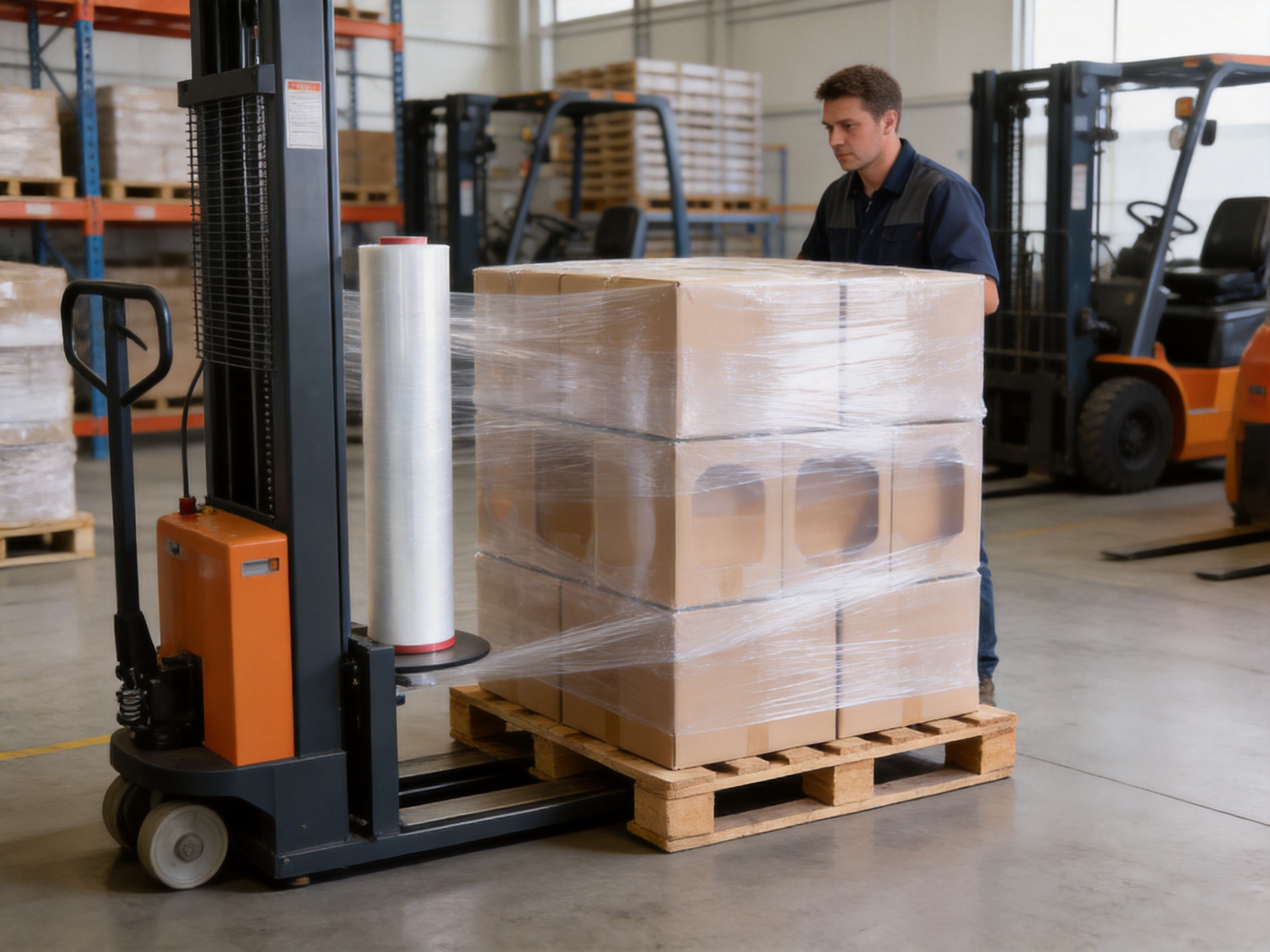
Machine application changes the process. A dedicated wrapping machine rotates the pallet or moves the film carriage around the load while controlling film tension and overlap. This enables repeatable wrapping patterns and consistent stretch. Operators can focus on loading pallets, checking settings, and moving finished goods rather than manually applying every layer.
By using machine stretch film, companies can significantly reduce labor intensity. A wrapping machine can complete repetitive pallet wrapping tasks more quickly and consistently than manual labor. This is especially valuable in factories, warehouses, export packaging departments, beverage plants, building material suppliers, e-commerce distribution centers, and logistics hubs.
Machine wrapping also improves safety and ergonomics. Manual wrapping can require twisting, pulling, and bending motions that may contribute to worker fatigue. Automated or semi-automated wrapping reduces these movements. This can help companies improve workplace efficiency while supporting safer operating conditions.
Efficiency is not only about speed. It is also about predictability. When every pallet is wrapped with similar tension, overlap, and coverage, downstream handling becomes easier. Forklift operators can move loads with greater confidence, warehouse teams can stack goods more reliably, and logistics managers can reduce the risk of shipment damage.
Reliable Stabilization During Transport
Transport damage is often caused by load movement. Even if individual cartons are strong, a pallet can fail if the entire load shifts. Road vibration, container movement, forklift handling, warehouse ramps, and sudden vehicle stops can create forces that push goods out of alignment. Once cartons begin to lean, the problem can become worse throughout the journey.
Transparent machine stretch film helps prevent this by creating a unified load. It binds cartons or goods together and connects them to the pallet. The film tension holds items inward while multiple layers distribute force across the load. This stabilizing effect is crucial for maintaining pallet shape and reducing the risk of collapse.
The product provides balanced constrictive force, which means the holding tension is not concentrated in one area only. Balanced wrapping helps reduce deformation of cartons while maintaining secure containment. This is important for goods that require protection but cannot tolerate excessive compression.
For heavy or tall pallets, selecting the correct film thickness and wrapping pattern is essential. Thicker film or additional layers may be used for high loads, sharp edges, or long-distance transport. For lighter goods, thinner film can provide sufficient protection while reducing material consumption. The available thickness range from 0.015 mm to 0.045 mm gives users flexibility to match packaging strength with real operating needs.
Comprehensive Protection Against Dust, Moisture, and Oil
In addition to load stabilization, transparent machine stretch film provides environmental protection. Warehouses and transport environments may expose goods to dust, humidity, oil mist, dirt, and handling contamination. A wrapped pallet is better protected against these factors than an uncovered load.
The film forms an external barrier that helps keep carton surfaces cleaner during storage and transit. This is especially useful for export shipments, long-term warehousing, and goods moving through multiple logistics stages. Dust accumulation can affect product appearance, barcode readability, and customer perception. Stretch film helps maintain a cleaner external package.
Moisture resistance is also important. While stretch film is not a complete waterproof system for all conditions, it provides a useful protective layer against light moisture exposure and humidity. This can help reduce the risk of carton softening, label damage, or surface contamination during normal logistics operations.
Oil resistance is valuable in industrial environments where goods may be stored near machinery, metal parts, lubricants, or manufacturing areas. The film helps shield packaged products from oil stains and surface contamination. For companies shipping industrial components, building materials, or machinery-related goods, this protective feature supports better delivery quality.
Wide Applicability for Regular and Irregular Products
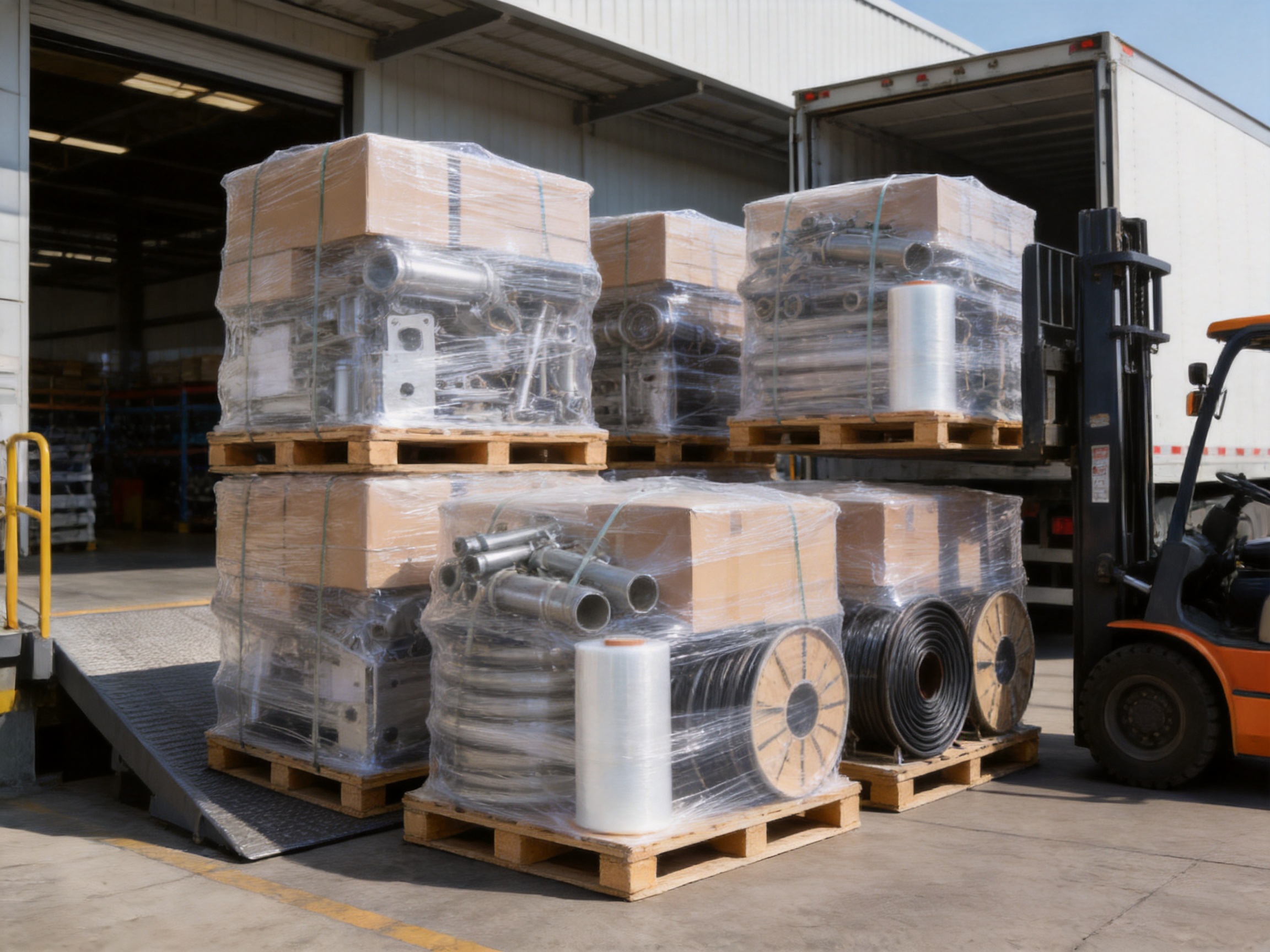
Transparent machine stretch film is widely used for standard palletized cartons, but its value extends beyond regular box packaging. Because the material is flexible, it can wrap irregular items such as pipes, cable reels, door and window frames, metal components, and long profiles. These products may not fit neatly into cartons or may require additional bundling before transportation.
For pipes and long materials, stretch film can help bundle groups together and protect surfaces from dust and scratches. For cable reels, it can help secure loose cable ends and provide external protection. For doors and windows, it can wrap frames without applying hard pressure points that might cause scratches. For metal components, it can help reduce surface contamination during movement and storage.
This wide applicability makes the film useful for factories that handle diverse products. Instead of using many different packaging methods for different shapes, companies can standardize part of their packaging process around machine stretch film. This simplifies purchasing, inventory, training, and packaging workflow.
Manufacturing Strength Behind Product Consistency
High-performance stretch film depends on more than raw materials. Manufacturing control is equally important. Zhejiang Geruite Packaging Materials Co., Ltd. focuses on the research, development, production, and sales of high-performance tapes and packaging materials. Its experience across multiple packaging categories supports a strong understanding of industrial packaging demands.
The company operates in Zhejiang Province, China, a region known for developed manufacturing, supply chain resources, and industrial capability. This location supports access to materials, equipment, technical talent, and logistics infrastructure. These advantages help the company respond to customer requirements and maintain stable production capacity.
Advanced production equipment is essential for stretch film quality. During film manufacturing, thickness control, winding quality, film clarity, roll consistency, and mechanical strength must be carefully managed. If film thickness varies too much, the film may stretch unevenly or break during machine wrapping. If winding is poor, rolls may cause feeding problems. If raw material blending is unstable, the film may have weak spots or inconsistent tension behavior.
A rigorous quality control system helps prevent these issues. From raw material procurement to production and final inspection, every stage influences final product performance. Raw materials must meet required specifications. Production conditions must be controlled. Finished rolls must be inspected for appearance, dimensions, weight, thickness, and practical usability. This quality mindset helps ensure that customers receive film that performs reliably in real packaging environments.
The company’s annual output value has reached over RMB 60 million, reflecting production scale and market recognition. Scale matters in industrial packaging because customers often require continuous supply, stable quality, and the ability to handle repeat orders. A manufacturer with strong output capacity can better support factories and logistics operations that depend on packaging material availability.
Why Consistent Thickness Matters
Thickness is one of the most important specifications in stretch film. However, thickness alone does not determine quality. A 0.020 mm high-quality film may outperform a thicker low-grade film if it has better material structure, stretchability, and puncture resistance. Still, consistent thickness across the roll is essential for predictable wrapping.
In machine wrapping, film is stretched under controlled tension. If one area of the film is thinner than expected, it may tear. If another area is too thick, it may stretch differently and create uneven containment force. These inconsistencies can affect load stability and machine operation.
The available thickness range of 0.015 mm to 0.045 mm allows users to select film based on practical requirements. Lightweight loads may require less thickness, while heavy, sharp, or irregular loads may need stronger film. The ability to customize length and weight according to customer application scenarios also helps optimize production efficiency and packaging cost.
Clarity and Transparency in Warehouse Management
Transparent film offers practical advantages in warehouse management. Pallet labels, shipping marks, barcodes, and product codes remain visible after wrapping. Workers can scan, check, and sort goods without removing the film. This is especially important for fast-moving warehouses where time spent identifying goods directly affects operational efficiency.
Transparency also helps with visual inspection. Warehouse staff can quickly identify damaged cartons, shifted loads, wet surfaces, or incorrect pallet contents. In export packaging and customer delivery, visible goods can reduce disputes because the condition of the pallet can be checked more easily before shipment.
For companies using automated warehouse systems, barcode visibility is particularly important. If film is cloudy, uneven, or excessively wrinkled over labels, scanning may become difficult. High-clarity transparent stretch film helps maintain readable markings and supports smoother inventory control.
Cost-Effectiveness Beyond the Roll Price
When selecting stretch film, some buyers focus mainly on the price per roll. However, the true cost of stretch film should be evaluated by cost per wrapped pallet, load stability, labor efficiency, damage reduction, machine downtime, and material waste. A lower-priced film may become more expensive if it tears frequently, requires more layers, causes pallet failures, or slows production.
Transparent machine stretch film improves cost-effectiveness in several ways. First, machine compatibility reduces labor input and increases packaging speed. Second, strong stretchability allows better material utilization. Third, improved puncture resistance reduces film breakage and waste. Fourth, stable load containment can reduce damage claims and rework. Fifth, consistent roll quality supports smoother machine operation.
For industrial users, these savings can be significant. A factory wrapping hundreds or thousands of pallets per month can reduce overall packaging cost by improving film yield and reducing downtime. Even small improvements in material usage per pallet can create meaningful long-term savings.
Cost-effectiveness also includes inventory management. Customizable roll length and weight allow customers to match film rolls to machine settings, storage space, and handling preferences. Proper roll specifications can reduce changeover frequency and improve operator productivity.
Recommended Application Scenarios
Transparent machine stretch film is suitable for many industrial and commercial packaging scenarios. One major use is palletized transport packaging. Cartons, bagged goods, bottled products, household items, electronic goods, and packaged components can be wrapped together to prevent scattering and shifting during movement.
Another important scenario is irregular item protection. Products such as pipes, cable reels, door frames, window frames, and metal profiles often require flexible packaging that can adapt to their shape. Stretch film provides bundling and surface protection without the rigidity of boxes or the pressure concentration of strapping alone.
Storage protection is another common application. Goods stored in warehouses may accumulate dust or be exposed to humidity. Wrapping pallets with transparent stretch film helps keep goods cleaner and more organized during long-term storage.
Logistics and transportation are perhaps the most demanding applications. During vehicle transit, loads may experience vibration and movement. Stretch film helps prevent load shifting and reduces the chance of goods becoming damaged before arrival.
How to Select the Right Film Thickness
Selecting the right film thickness depends on load weight, pallet height, product shape, edge sharpness, storage duration, and transport conditions. Thin films are suitable for light and regular loads where the primary goal is dust protection and basic containment. Medium films are suitable for general industrial pallet wrapping. Thicker films are recommended for heavy loads, tall pallets, irregular products, or goods with sharper edges.
For example, a pallet of lightweight cartons may perform well with a thinner film if the cartons are uniform and the transport distance is short. A pallet of metal components or heavy bagged materials may require thicker film or additional wraps at the base and top. A tall pallet may need reinforced wrapping to prevent leaning.
Operators should also consider pre-stretch settings on the wrapping machine. Higher pre-stretch can improve film yield, but it must be compatible with film strength and load requirements. Excessive tension can damage goods or cause film breakage, while insufficient tension can result in loose pallets. The best result comes from matching film specification, machine setting, and load characteristics.
Best Practices for Machine Wrapping
To achieve consistent results, transparent machine stretch film should be used with dedicated wrapping equipment. The machine should be properly maintained, and rollers should be clean and aligned. Film should be loaded correctly to prevent feeding problems or uneven tension.
Operators should ensure that the pallet is stable before wrapping. Goods should be stacked neatly, and weight should be distributed evenly. Pallet edges should be free from sharp protrusions that may puncture the film. If sharp corners cannot be avoided, edge protectors or adjusted wrapping patterns may be used.
Wrapping should usually begin at the pallet base to lock the load to the pallet. Additional reinforcement at the bottom helps prevent the load from sliding during forklift handling. The film should then move upward with appropriate overlap, covering the sides evenly. The top section may require extra wraps if the load is tall or unstable.
After wrapping, the finished pallet should be checked for film breaks, loose tails, excessive wrinkles, and load movement. A properly wrapped pallet should feel stable when handled, with film tension distributed evenly across the load.
Storage and Handling Recommendations
Stretch film should be stored in a cool, dry place away from direct sunlight and high-temperature environments. Recommended storage temperature is between 15 degrees Celsius and 25 degrees Celsius. Proper storage helps maintain film elasticity, clarity, and mechanical performance.
Exposure to excessive heat can affect roll shape, cling behavior, and film consistency. Direct sunlight may also contribute to material degradation over time. Moisture, dust, and rough handling can damage roll surfaces and create problems during machine operation.
Rolls should be stored upright or according to recommended handling practices to avoid deformation. Damaged roll edges may cause film tearing during unwinding. Operators should handle rolls carefully and keep storage areas clean.
Integration With Other Packaging Materials
Transparent machine stretch film is often used together with other packaging materials. For example, cartons may be sealed with BOPP tape before being palletized. Heavy loads may be reinforced with PP strapping or PET strapping. Kraft paper tape, masking tape, high-temperature resistant tape, or metal tape may be used in specific production and packaging processes before final pallet wrapping.
Zhejiang Geruite Packaging Materials Co., Ltd. offers multiple packaging material categories, allowing customers to source complementary products from a packaging-focused manufacturer. This can simplify procurement and improve compatibility between packaging systems.
In many industrial packaging designs, stretch film provides external containment, while tape seals individual boxes and strapping adds heavy-duty reinforcement. When these materials are selected correctly, the entire packaging system becomes stronger and more efficient.
Quality Control From Raw Material to Finished Roll
Reliable machine stretch film requires disciplined quality control throughout production. Raw material quality affects film strength, clarity, elasticity, and puncture resistance. Production parameters influence thickness uniformity, surface quality, and roll formation. Finished product inspection confirms whether the film meets customer expectations.
A strong quality system may include checks for material purity, film width, thickness tolerance, roll weight, appearance, tensile behavior, elongation, puncture resistance, and winding quality. These controls help ensure that the film performs well on customer wrapping machines.
The company’s commitment to quality is reflected in its approach to every stage of manufacturing. By striving for excellence from raw material procurement to final inspection, it helps customers reduce packaging uncertainty and improve operational confidence.
Environmental and Operational Efficiency Considerations
Efficient stretch film use can contribute to responsible material management. When film has strong stretchability and toughness, users may achieve required load containment with less material. Reducing unnecessary layers helps lower plastic consumption while maintaining packaging safety.
Machine wrapping also supports more controlled material use than inconsistent manual wrapping. Because machine settings can be standardized, companies can reduce overwrapping and improve repeatability. This is important for both cost control and resource efficiency.
Correct film selection is essential. Using a film that is too weak may lead to excessive consumption because operators add more layers for safety. Using a film that is too thick for light loads may waste material. The best approach is to match film gauge and wrapping pattern to actual load requirements.
Competitive Value for Export and Domestic Logistics
Export shipments often involve longer transportation chains, including factory handling, trucking, warehousing, customs inspection, port movement, container loading, sea freight, unloading, and inland delivery. Each stage adds risk. Transparent machine stretch film helps protect goods through these complex movements by stabilizing the pallet and shielding products from dust and moisture exposure.
Domestic logistics also benefits from strong pallet wrapping. Fast delivery schedules, warehouse transfers, and frequent forklift handling can challenge load stability. A reliable stretch film reduces the chance of cartons falling, labels being damaged, or goods arriving in poor condition.
Compared with packaging methods that require more labor or more complex preparation, machine stretch film offers a practical balance of speed, protection, and cost. This makes it suitable for companies that need scalable packaging performance.
Company Strength and Packaging Expertise
Zhejiang Geruite Packaging Materials Co., Ltd. has built its business around packaging materials that serve logistics, express delivery, household goods, electronics, construction and decoration, industrial manufacturing, cargo stabilization, and packaging protection. This broad market exposure gives the company practical insight into different packaging challenges.
The company emphasizes research, development, production, and sales of high-performance tapes and packaging materials. Its product range demonstrates manufacturing diversity and technical capability. By producing tapes, stretch film, and strapping products, the company understands how different packaging materials work together in real industrial applications.
The company believes that quality is the lifeline of the enterprise. This philosophy is important in packaging because defective material can cause immediate operational problems for customers. A roll of film that breaks repeatedly can stop a wrapping line. A weak pallet wrap can lead to damaged goods. A poorly wound roll can waste operator time. Strong quality control helps avoid these issues.
With advanced production equipment and a rigorous quality control system, the company aims to provide stable product performance and meet diverse customer needs. Its continued investment in technological research and development, product structure optimization, and service improvement supports its goal of becoming a trustworthy packaging material partner for customers worldwide.
Practical Benefits for Different Users
For manufacturers, transparent machine stretch film helps improve the final stage of production. Finished goods can be quickly palletized and prepared for storage or shipment. Stable wrapping reduces the risk of damage after products leave the production line.
For logistics companies, the film supports safer movement and easier identification of goods. Transparent packaging allows labels and barcodes to remain visible, while secure wrapping reduces load shifting during transit.
For warehouses, the film helps keep goods organized and clean. Wrapped pallets are easier to stack, move, and track. Dustproof and moisture-resistant properties support better storage conditions.
For exporters, transparent machine stretch film helps maintain pallet integrity through long-distance shipping. It can reduce the chance of product scattering, carton contamination, and handling-related damage.
For companies handling irregular products, the film provides a flexible packaging option that adapts to complex shapes without requiring custom boxes for every item.
Frequently Asked Questions
What is transparent machine stretch film used for?
Transparent machine stretch film is used to wrap palletized goods and secure them during storage and transportation. It prevents goods from scattering, shifting, or toppling, while also providing dustproof, moisture-resistant, and oil-resistant protection.
How is machine stretch film different from hand stretch film?
Machine stretch film is designed for use with wrapping machines. It can tolerate higher and more consistent stretching, making it suitable for fast, repeatable, and efficient pallet wrapping. Hand stretch film is applied manually and is generally used for lower-volume operations.
Why is transparency important?
Transparency allows labels, barcodes, carton markings, and product information to remain visible after wrapping. This improves inventory management, inspection efficiency, and warehouse sorting accuracy.
What material is used in this stretch film?
The film is made from pure polyethylene with metallocene copolymer added for enhanced toughness. This combination provides stretchability, puncture resistance, recovery memory, and reliable load containment.
What thickness options are available?
The available thickness range is 0.015 mm to 0.045 mm. The proper thickness should be selected based on cargo weight, pallet height, product shape, and transportation conditions.
Can it be used for irregularly shaped goods?
Yes. The film is suitable for irregular items such as pipes, cable reels, door frames, window frames, metal components, and other products that require flexible protective bundling.
Does stretch film damage product surfaces?
The film is soft and flexible, so it generally does not scratch or abrade product surfaces during wrapping. It is suitable for protecting finished goods and components when used correctly.
How should the film be stored?
It should be stored in a cool, dry place away from direct sunlight and high temperatures. The recommended storage temperature is between 15 degrees Celsius and 25 degrees Celsius.
How does machine stretch film reduce packaging cost?
It reduces cost by improving wrapping speed, reducing labor input, supporting better material utilization, lowering film breakage, and helping prevent transport damage.
Why choose a manufacturer with advanced production and quality control?
Stretch film performance depends on thickness consistency, raw material quality, winding quality, and mechanical strength. A manufacturer with advanced equipment and strict quality control can provide more reliable film for industrial wrapping operations.
Conclusion
Transparent machine stretch film is a practical and high-value packaging material for modern pallet unitization. It provides reliable load stabilization, efficient machine application, dustproof and moisture-resistant protection, surface-friendly wrapping, and clear visibility for labels and product identification. Its polyethylene structure, enhanced with metallocene copolymer technology, supports toughness, stretchability, and recovery memory for demanding logistics environments.
Compared with ordinary competitor films, this product offers stronger machine compatibility, better wrapping consistency, improved material efficiency, and broader applicability. It is suitable for regular cartons, bagged goods, irregular products, pipes, cables, door and window frames, metal components, storage protection, and transport packaging.
Zhejiang Geruite Packaging Materials Co., Ltd. supports the product with advanced manufacturing equipment, rigorous quality control, broad packaging material expertise, and a commitment to stable performance. For companies seeking to improve packaging efficiency, reduce labor intensity, protect goods during transportation, and control total packaging cost, transparent machine stretch film is an effective and dependable solution.
References
Yam, K. L. Encyclopedia of Packaging Technology. Wiley.
Robertson, G. L. Food Packaging: Principles and Practice. CRC Press.
Soroka, W. Fundamentals of Packaging Technology. Institute of Packaging Professionals.
Selke, S. E. M., Culter, J. D., and Hernandez, R. J. Plastics Packaging: Properties, Processing, Applications, and Regulations. Hanser Publishers.
Hanlon, J. F., Kelsey, R. J., and Forcinio, H. E. Handbook of Package Engineering. CRC Press.
Product: Transparent machine stretch film

LATEST POST
Let’s create something amazing together
contact usFeatured Products
-
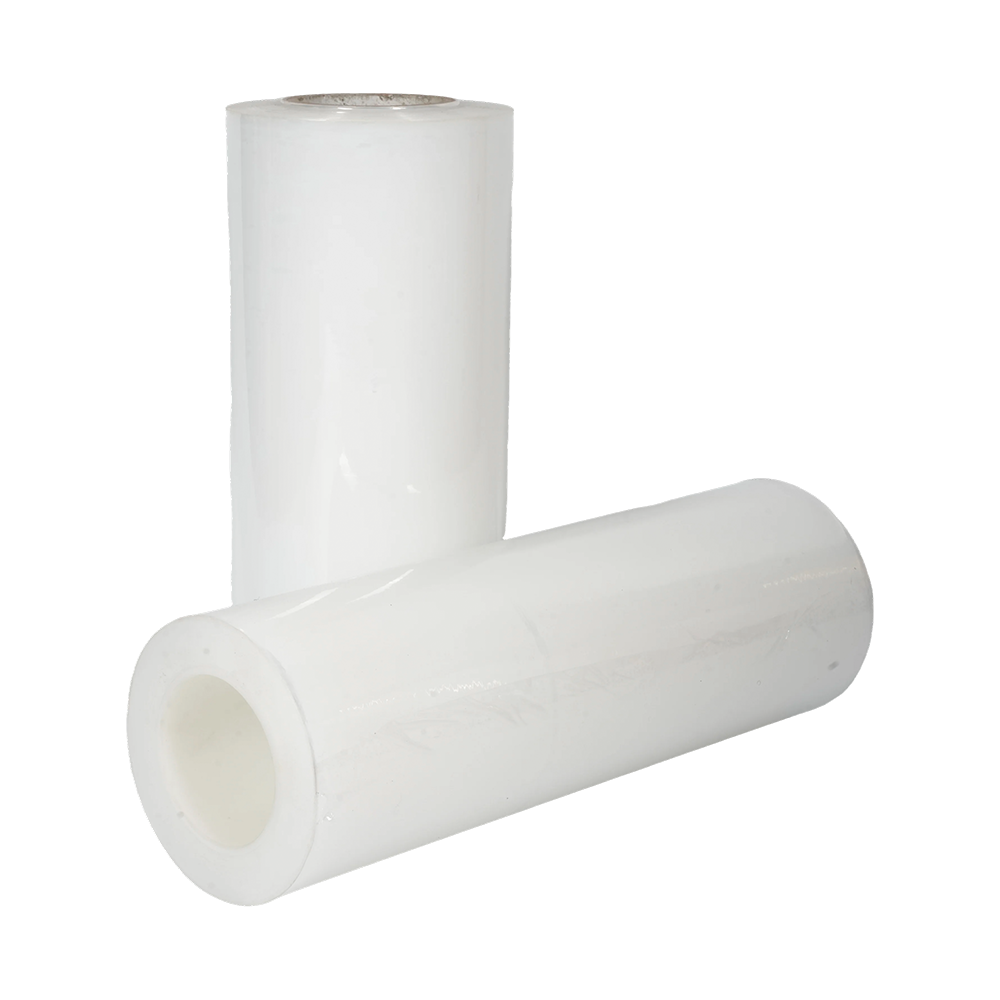
Transparent Protective Film Rolls, Clear PE Stretch Film
-
Transparent Strapping Band, Clear PP Packing Strap For Pelletizing Machine
-
Transparent machine stretch film
-
High-temperature resistant masking tape, crepe paper tape
-
High viscosity, Tearable by hand Plastic-free kraft paper tape
-
PE + Metallocene Materials Stretch film master roll
CONTACT DETAILS
- Address:No. 241, Yaojiafan, Zhangpanqiao, Shushan Street, Xiaoshan District, Hangzhou City, Zhejiang Province, China
- TEL:+86-0571-83175630
- Phone:+86-13336160217
- Email:anqiaocun@163.com
PRODUCTS
NEWS CENTER
MOBILE TERMINAL
Copyright© Zhejiang Geruite Packaging Materials Co., Ltd. All Rights Reserved.
Privacy Wholesale industrial packaging tape Manufacturers