


 English
  Español
  عربى
عربى 
Lace/Wavy Double-Sided Tape for High-Strength Industrial Bonding
Content
- 1 Product Overview: What Makes Lace/Wavy Double-Sided Tape Different
- 2 Core Performance Advantages
- 3 Typical Product Specifications
- 4 Advantages Over Conventional Competing Bonding Solutions
- 5 Manufacturing Strengths Behind the Product
- 6 Company Capability and Industrial Reliability
- 7 Application Field: Automotive Interior and Functional Assembly
- 8 Application Field: Electronics and Device Manufacturing
- 9 Application Field: Construction and Decoration
- 10 Application Field: Signage and Advertising
- 11 Application Field: Packaging Support and Industrial Manufacturing
- 12 How to Select the Right Lace/Wavy Double-Sided Tape
- 13 Surface Preparation and Application Guidelines
- 14 Storage and Shelf Life
- 15 Customization Possibilities
- 16 Why Manufacturing Consistency Matters More Than Claims
- 17 Environmental and Efficiency Considerations
- 18 Practical Design Recommendations
- 19 Role in Modern Industrial Assembly
- 20 Frequently Asked Questions
- 20.1 What is lace/wavy double-sided tape?
- 20.2 How is it different from ordinary double-sided tape?
- 20.3 What base materials are available?
- 20.4 Which adhesive types can be used?
- 20.5 What thickness is commonly available?
- 20.6 What temperature range can the tape generally withstand?
- 20.7 Where is this tape commonly used?
- 20.8 How should surfaces be prepared before application?
- 20.9 What is the recommended application temperature?
- 20.10 How much pressure should be applied?
- 20.11 How should the tape be stored?
- 20.12 What is the standard shelf life?
- 20.13 Can the tape be customized?
- 20.14 Why choose Zhejiang Geruite Packaging Materials Co., Ltd. as a supplier?
- 21 Conclusion
- 22 References
- 23 Product: Lace/wavy double-sided tape
In modern industrial assembly, bonding is no longer a simple matter of placing one surface against another. Manufacturers increasingly need adhesive solutions that can compensate for irregular surfaces, absorb vibration, distribute stress, support lightweight design, and remain reliable under demanding use conditions. Lace/wavy double-sided tape is developed for precisely these requirements. With a distinctive lace or wave-pattern structure and pressure-sensitive adhesive coating, this tape offers a practical alternative to conventional flat adhesive tapes, liquid glues, screws, rivets, and mechanical fasteners in many applications.
Unlike ordinary double-sided tape that relies only on a flat adhesive layer, lace/wavy double-sided tape uses a patterned structure to improve surface engagement and enhance functional performance. The wave or lace geometry increases effective contact area, helps fill slight gaps, and promotes more even pressure distribution during bonding. These characteristics make it especially suitable for metal, plastic, foam, textile, decorative panel, electronic component, automotive interior, signage, and construction applications.
Zhejiang Geruite Packaging Materials Co., Ltd. manufactures and supplies industrial adhesive products and packaging materials with a strong emphasis on quality control, process stability, and product adaptability. The company’s experience in adhesive tape, BOPP tape, kraft paper tape, masking tape, high-temperature resistant tape, metal tape, PE stretch film, PP strapping, and PET strapping gives it a broad understanding of industrial bonding, packaging protection, and material performance. This manufacturing background supports the production of lace/wavy double-sided tape with consistent adhesive coating, stable base material selection, and reliable roll conversion.
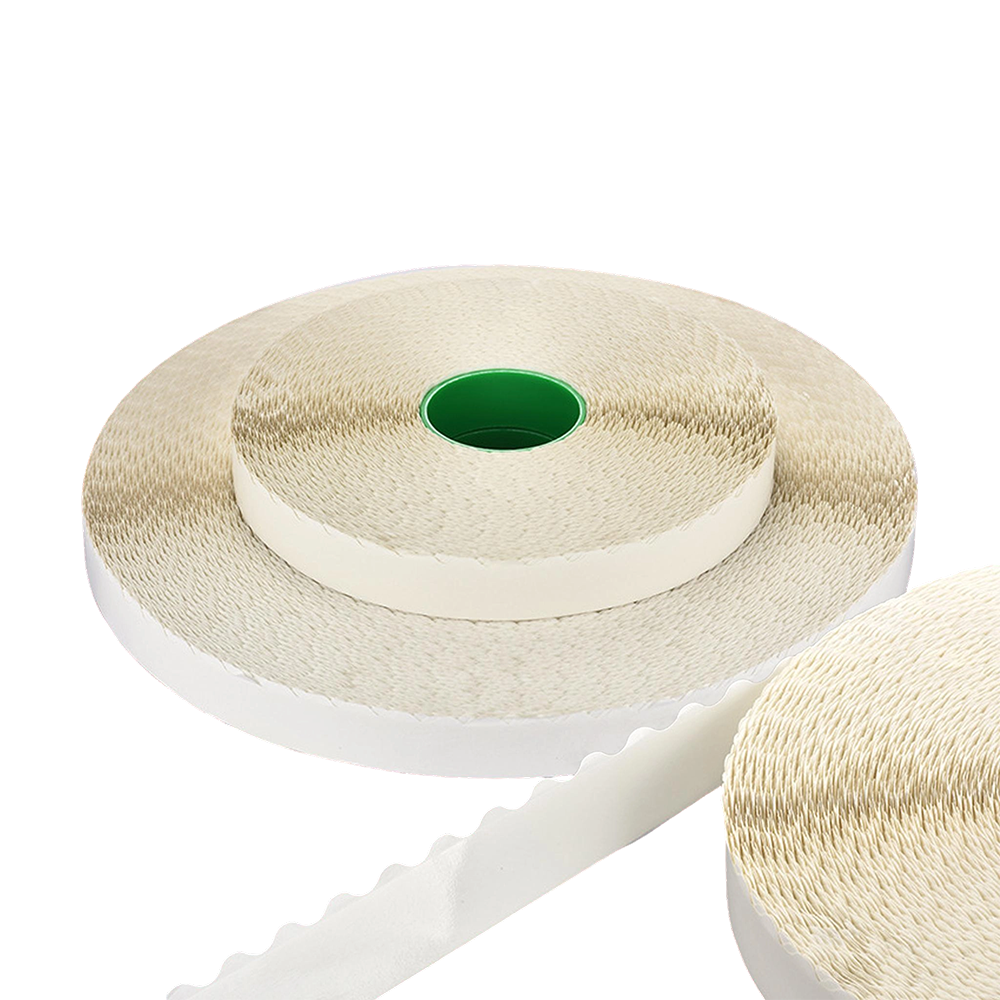
Product Overview: What Makes Lace/Wavy Double-Sided Tape Different
Lace/wavy double-sided tape is an industrial-grade bonding tape designed with a special patterned structure. The pattern may appear as a lace-like open structure, a wave-like profile, or a textured bonding layer depending on the selected base material and production configuration. The tape is coated with pressure-sensitive adhesive on both sides, enabling instant bonding when pressure is applied. It is engineered to bond different substrates, including metal, plastic, foam, textiles, glass, composite materials, painted surfaces, and decorative panels.
The fundamental advantage of this product lies in its combination of adhesion, cushioning, and stress management. A flat tape may work well on smooth surfaces, but when materials have slight unevenness, gaps, texture, or movement, a flat structure may not maintain full contact. Lace/wavy double-sided tape addresses this issue by adapting more effectively to imperfect surfaces. The structural pattern provides a degree of flexibility and compression, allowing the adhesive to engage the surface more efficiently.
This makes the product highly valuable in assembly processes where performance and appearance are both important. For example, automotive interior trim requires a clean appearance without visible screws. Electronic display frames require thin, stable bonding with shock absorption. Decorative wall panels require secure installation without damaging the visible surface. Signage production requires fast bonding and dimensional stability. In all these cases, lace/wavy double-sided tape can provide a balanced solution.
The tape can typically be produced with base materials such as flexible foam, non-woven fabric, or PET film. Each base material supports a different performance profile. Foam provides excellent cushioning and gap filling. Non-woven fabric offers flexibility, conformability, and tear resistance. PET film provides dimensional stability and a thinner, cleaner profile. Adhesive options include acrylic pressure-sensitive adhesive and rubber-based pressure-sensitive adhesive. Acrylic adhesive is often chosen for aging resistance, temperature stability, and long-term bonding, while rubber-based adhesive is valued for strong initial tack and quick adhesion.
Core Performance Advantages
Enhanced Bonding Through Structural Contact
The lace or wave pattern expands the effective contact area between the tape and the substrate. In practical bonding, the actual adhesive contact area often determines final performance. A surface may look smooth, but under magnification it contains peaks, valleys, scratches, coatings, dust-prone zones, and microscopic irregularities. A conventional flat tape may touch only the high points of the surface at first, leaving small unbonded areas. The patterned structure of lace/wavy double-sided tape improves surface accommodation, helping the adhesive enter small uneven zones and create a more secure bond.
This structural advantage can reduce the risk of edge lifting, early detachment, and localized stress failure. When the tape is pressed onto a surface, the wave or lace profile allows controlled compression. Pressure is not concentrated in a single rigid layer; instead, it is distributed across multiple contact points. The result is a bond that can tolerate slight surface variation and environmental movement more effectively than many ordinary tapes.
Improved Vibration Dampening
Many industrial components experience vibration during service. Vehicles, machines, electronic devices, door panels, display units, and signage installed in outdoor environments all face some form of movement. A rigid bonding method may transmit vibration directly from one component to another, resulting in noise, loosening, cracking, or fatigue. Lace/wavy double-sided tape offers a more resilient interface between components. Its flexible base and patterned structure can absorb part of the shock and reduce concentrated stress.
This vibration dampening function is especially important in automotive and electronics applications. In an automobile interior, repeated vibration may cause trim pieces to rattle or separate. In electronic equipment, sensitive components may require cushioning against drop impact or continuous micro-vibration. In signage, wind and temperature changes may produce movement that weakens ordinary adhesive systems. Lace/wavy double-sided tape provides a practical bonding layer that contributes to both fixation and shock control.
Wide Material Compatibility
Industrial users often need to bond different materials together. A metal bracket may need to attach to a plastic shell. A foam pad may need to bond to a painted panel. A textile layer may need to be fixed to a rigid board. Different substrates have different surface energy, stiffness, porosity, and thermal expansion behavior. Lace/wavy double-sided tape is designed to adapt to a wide range of materials, including metal, plastic, foam, textiles, paperboard, decorative materials, and construction panels.
The availability of acrylic and rubber-based pressure-sensitive adhesives gives users more flexibility. Acrylic adhesive is suitable for applications that require stronger environmental stability and aging resistance. Rubber-based adhesive can provide aggressive initial tack, which is useful for fast assembly and materials that are harder to wet out. By selecting the correct adhesive formula and base material, the tape can be tailored for different bonding conditions.
Gap Filling and Surface Conformability
Real-world surfaces are rarely perfect. Slight curvature, texture, coating thickness variation, molded plastic ribs, embossed surfaces, and small assembly tolerances can create bonding challenges. Lace/wavy double-sided tape is useful because its structure can bridge small gaps and conform to uneven surfaces. Typical thickness options from around 0.5 mm to 3 mm allow users to choose the right product according to gap size, pressure requirement, and cushioning demand.
A thinner tape may be preferred for decorative or electronic assemblies where a low profile is important. A thicker foam-based version may be preferred for wall panels, automotive trims, acoustic materials, or components that require cushioning. This range gives designers more freedom and helps reduce dependence on mechanical fastening or liquid adhesive processes.
Typical Product Specifications
The following table summarizes common specification options for lace/wavy double-sided tape. Actual specifications can be adjusted according to customer requirements, production process, substrate characteristics, and application conditions.
| Specification Item | Common Options | Performance Purpose |
|---|---|---|
| Base Material | Flexible foam, non-woven fabric, PET film | Determines cushioning, conformability, dimensional stability, and thickness profile |
| Adhesive Type | Acrylic or rubber-based pressure-sensitive adhesive | Provides instant tack, long-term holding power, and material compatibility |
| Thickness Range | Usually 0.5 mm to 3 mm | Supports gap filling, shock absorption, and assembly tolerance compensation |
| Temperature Resistance | Generally stable from -20℃ to 80℃ | Suitable for many indoor, transportation, packaging, and industrial environments |
| Color Options | Black, white, gray, or customized colors | Helps match product appearance and end-use requirements |
| Application Surfaces | Metal, plastic, foam, textiles, decorative panels, signage boards | Supports multi-material industrial assembly |
| Recommended Application Temperature | 15℃ to 35℃ | Promotes proper adhesive wet-out and stable initial bonding |
| Standard Shelf Life | 24 months under proper storage | Supports inventory planning and production continuity |
Advantages Over Conventional Competing Bonding Solutions
Compared with Ordinary Flat Double-Sided Tape
Ordinary flat double-sided tape can be effective on smooth, clean, and stable surfaces. However, when surfaces are rough, textured, curved, or subject to vibration, flat tape may struggle to maintain consistent contact. Lace/wavy double-sided tape offers better adaptability because its pattern increases the chance of meaningful contact across the bonding interface. This can improve adhesion strength and reduce the probability of partial lifting.
Another limitation of ordinary flat tape is limited cushioning. If two bonded parts move relative to each other, a flat tape may experience concentrated shear or peel stress. The lace/wavy structure provides a more forgiving layer that can absorb some movement. This does not mean the tape should be used outside its engineering limits, but it does mean that it can outperform simple flat tape in dynamic or slightly uneven conditions.
Compared with Liquid Adhesives
Liquid glue can provide strong bonding, but it often requires dispensing equipment, curing time, ventilation control, and cleanup. It may overflow, stain the surface, or create inconsistent bond lines if applied manually. Lace/wavy double-sided tape is cleaner and more convenient. It is supplied in roll or die-cut form, ready for application. Workers can apply it quickly, remove the release liner, position the component, and apply pressure.
Because the tape has a defined thickness, it creates a more predictable bond line than many hand-applied liquid adhesives. This is important in electronics, decorative assembly, signage, and automotive trim, where appearance and dimensional control matter. The instant tack of pressure-sensitive adhesive also shortens assembly time, reducing waiting periods and improving production efficiency.
Compared with Screws, Rivets, and Mechanical Fasteners
Mechanical fasteners are strong and familiar, but they require drilling, punching, or molded fastening points. These processes may weaken substrates, create visible marks, increase component weight, and add labor steps. In appearance-sensitive products, fastener heads may be unacceptable. Lace/wavy double-sided tape enables hidden bonding. It can improve aesthetics while reducing the need for holes and secondary finishing.
Mechanical fasteners also concentrate stress at specific points. Over time, these points can loosen or crack, especially in plastic or composite components. Tape bonding distributes load over a larger area. The wave or lace structure further supports stress distribution, helping the assembly resist localized failure. For lightweight components, decorative panels, signage, and interior trim, this distributed bonding approach can offer excellent practical value.
Compared with Low-Cost General Tapes
Low-cost general tapes may appear economical at first, but they can create hidden costs if they fail in service. Rework, product returns, customer complaints, production stoppages, and field repairs can quickly exceed the savings from a cheaper tape. Lace/wavy double-sided tape is designed as a performance-oriented solution. Its structural bonding, cushioning, and adaptable base material options provide greater application security.
For manufacturers focused on stable quality, the goal is not simply to choose the lowest unit price. The goal is to select a bonding material that reduces risk over the full product life cycle. Zhejiang Geruite Packaging Materials Co., Ltd. supports this approach by emphasizing stable production, controlled raw material procurement, and inspection procedures that help customers maintain consistent performance from batch to batch.
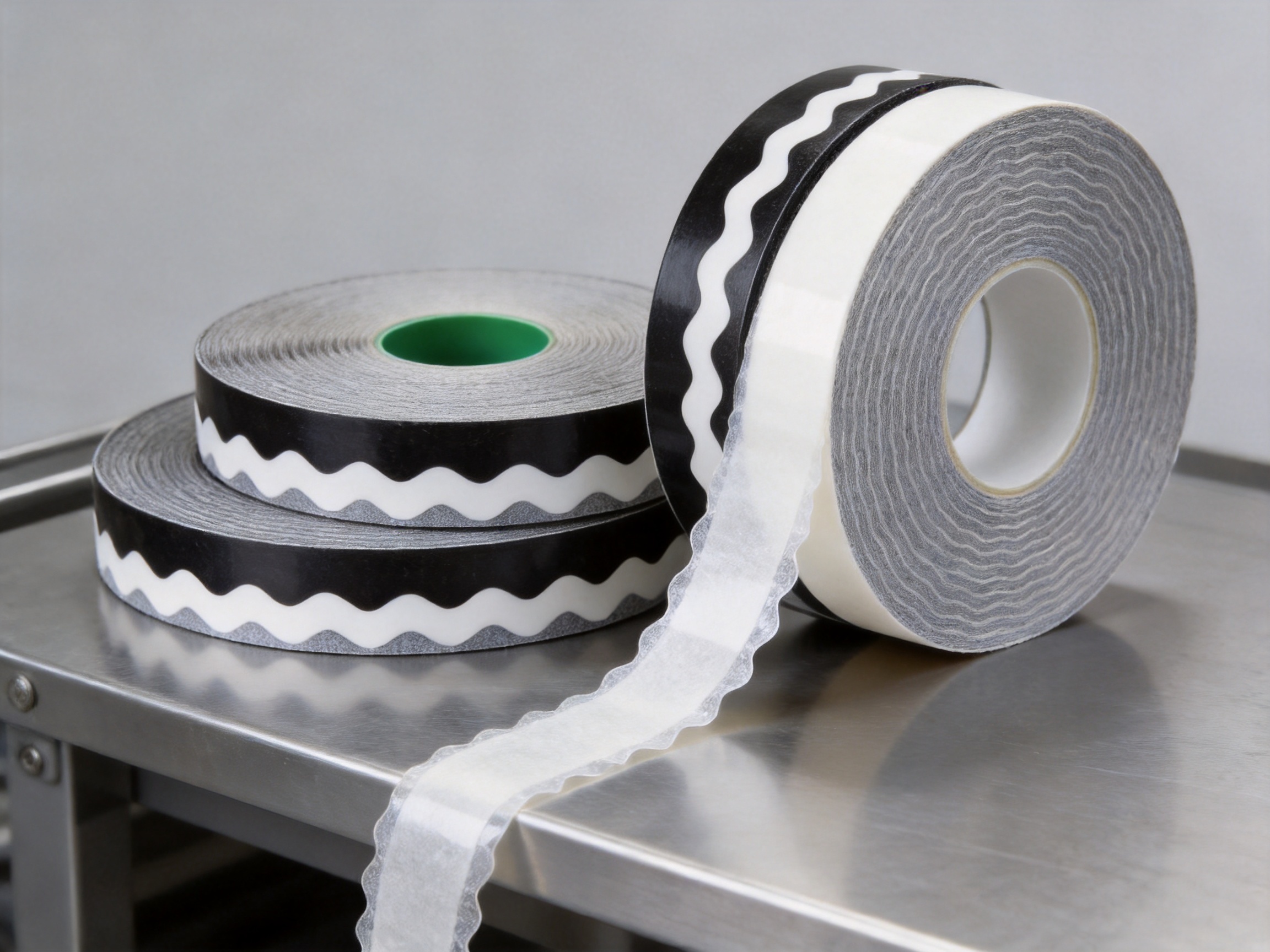
Manufacturing Strengths Behind the Product
Material Selection and Raw Material Control
High-quality adhesive tape begins with carefully selected raw materials. The base material must have suitable thickness, flexibility, strength, and surface characteristics. The adhesive must match the intended bonding surfaces and environmental conditions. Release liners must peel smoothly without damaging the adhesive layer. Zhejiang Geruite Packaging Materials Co., Ltd. focuses on raw material control as an essential part of tape manufacturing. By managing material selection from the beginning, the company can improve consistency in adhesion, coating quality, thickness, and final roll appearance.
For lace/wavy double-sided tape, raw material control is particularly important because the structural design must remain stable throughout coating, drying, lamination, winding, cutting, storage, and application. If the base material is too weak, it may deform. If the adhesive is not properly matched, it may fail to wet the substrate. If the release liner is unstable, it may affect conversion and application. The company’s broader experience across packaging tapes, stretch films, and strapping products contributes to a practical understanding of polymer behavior, adhesive performance, and roll material handling.
Precision Coating Process
The coating process is one of the most important stages in double-sided tape production. Adhesive must be applied evenly to achieve consistent bonding performance. Uneven coating can lead to weak spots, adhesive overflow, poor release, or unstable thickness. Advanced coating control allows the adhesive layer to remain uniform across the width and length of the product. This improves both appearance and functional reliability.
For lace/wavy double-sided tape, precision coating must work together with the patterned structure. The adhesive needs to cover the intended bonding areas without destroying the functional geometry. Proper coating weight, viscosity control, drying temperature, and line speed all influence the final result. Zhejiang Geruite Packaging Materials Co., Ltd. applies manufacturing discipline to help ensure that the tape delivers dependable performance for industrial users.
Lamination and Structural Stability
Double-sided tape usually requires lamination between adhesive layers, base materials, and release liners. In a patterned tape, lamination must preserve structure while ensuring secure layer integration. Too much pressure may flatten the pattern excessively. Too little pressure may produce poor contact between layers. Controlled lamination helps achieve the correct balance of bonding, flexibility, and dimensional stability.
This stage is essential for the product’s gap-filling and vibration-dampening behavior. If the structure is inconsistent, performance can vary from one section to another. A stable lamination process helps customers receive tape that behaves predictably during assembly. Predictability is especially important in automated or semi-automated production lines where workers rely on repeatable peel, placement, and bonding properties.
Slitting, Rewinding, and Roll Conversion
After coating and lamination, the tape must be converted into usable roll widths or custom forms. Slitting quality affects edge cleanliness, liner stability, adhesive exposure, and ease of use. Poorly slit tape can cause edge ooze, telescoping, uneven unwinding, or liner breakage. Zhejiang Geruite Packaging Materials Co., Ltd. recognizes that conversion quality is not a minor detail; it directly affects production efficiency at the customer’s facility.
Reliable rewinding ensures proper roll tension. If tension is too high, the tape structure may compress or deform. If tension is too low, rolls may loosen during transport or application. Proper roll formation supports long-distance shipping, warehouse storage, and smooth dispensing. This is particularly important for industrial buyers who require stable supply and predictable handling.
Quality Inspection and Performance Verification
Quality control is central to the company’s manufacturing philosophy. Adhesive tape performance can be evaluated through tests such as peel adhesion, holding power, tack, thickness measurement, temperature exposure, roll appearance inspection, and release liner behavior. While specific testing methods may vary according to product type and customer requirement, the underlying goal is consistent: ensure that each batch meets expected performance standards.
For lace/wavy double-sided tape, inspection should pay attention not only to adhesive strength but also to structural uniformity, thickness consistency, surface cleanliness, and liner release. These factors determine how well the tape performs in real applications. A tape that looks acceptable but has inconsistent release or uneven thickness can slow down assembly and cause waste. Strong quality inspection reduces these risks.
Company Capability and Industrial Reliability
Zhejiang Geruite Packaging Materials Co., Ltd. is located in Hangzhou, Zhejiang Province, China, a region known for developed manufacturing resources and strong industrial support. The company has long focused on packaging materials and adhesive products, covering research, development, production, and sales. Its product range includes BOPP tapes, kraft paper tapes, masking tapes, high-temperature resistant tapes, metal tapes, PE stretch film, PP strapping, and high-strength PET strapping.
This broad product portfolio gives the company a comprehensive view of packaging protection, bundling, cargo stabilization, surface masking, bonding, and industrial handling. The manufacturing of lace/wavy double-sided tape benefits from this accumulated knowledge. Adhesive performance, substrate selection, roll handling, storage stability, and customer customization are all connected to the company’s wider technical experience.
The company places strong emphasis on quality as the lifeline of the enterprise. From raw material procurement to production and final inspection, process discipline is used to support stable product performance. Its annual output value has reached over RMB 60 million, reflecting significant production capacity and market recognition. For buyers, this capacity is important because industrial adhesive materials must be supplied continuously, not only as trial samples but as repeatable production batches.
Another strength is service orientation. Industrial customers often need more than a standard catalog product. They may need advice on thickness, adhesive type, roll width, liner selection, color, storage, application pressure, or surface preparation. A manufacturer with broad packaging and adhesive experience can help customers select a more suitable specification and reduce trial-and-error costs. This practical support is a key advantage when comparing suppliers.
Application Field: Automotive Interior and Functional Assembly
Automotive assembly places high demands on bonding materials. Components must resist vibration, temperature changes, humidity, repeated touch, and long service life requirements. Interior trim parts, seal fixing strips, damping pads, decorative elements, cable routing components, insulation materials, and small brackets may all benefit from double-sided adhesive solutions. Lace/wavy double-sided tape is particularly useful because it combines bonding and cushioning.
Interior trim installation often involves plastic parts, painted surfaces, leather-like materials, textile layers, foam backing, or composite panels. These surfaces may not be perfectly flat. A tape with gap-filling capability can improve assembly reliability. The wave or lace structure helps manage stress when the vehicle is moving, reducing the risk of rattling or detachment. Because the tape is hidden after assembly, it also supports a clean interior appearance.
Seal fixing is another valuable use. Seals must remain in position while adapting to compression and movement. A flexible double-sided tape can hold seals during assembly and service. For vibration-damping components, the tape’s cushioning behavior can contribute to noise reduction and improved user comfort. While the tape should always be validated according to the exact automotive part and environmental requirement, its structure makes it a strong candidate for many interior applications.
Application Field: Electronics and Device Manufacturing
Electronics manufacturing requires clean, precise, and reliable bonding. Display frames, battery cushioning pads, speaker meshes, insulation layers, component supports, and internal foam pads often rely on adhesive tape. Lace/wavy double-sided tape can be used where bonding must also provide shock absorption or tolerance compensation. Its controlled thickness helps maintain assembly spacing, while its pressure-sensitive adhesive allows fast processing.
Display frame mounting is a typical example. Frames require stable adhesion and neat appearance. Mechanical fasteners may take up space or create visible features. Liquid adhesives may require curing time and may overflow into sensitive areas. A double-sided tape solution can simplify assembly. If the device may experience drops or vibration, the cushioning behavior of a foam or patterned tape can help protect the bonded interface.
Battery cushioning is another important application. Batteries may expand slightly, move under impact, or require stable positioning inside a device housing. A soft double-sided tape can provide fixation while reducing direct shock transfer. Component shock absorption also matters in consumer electronics, industrial controls, and portable devices. By selecting a suitable thickness and adhesive system, manufacturers can improve assembly speed and functional reliability.
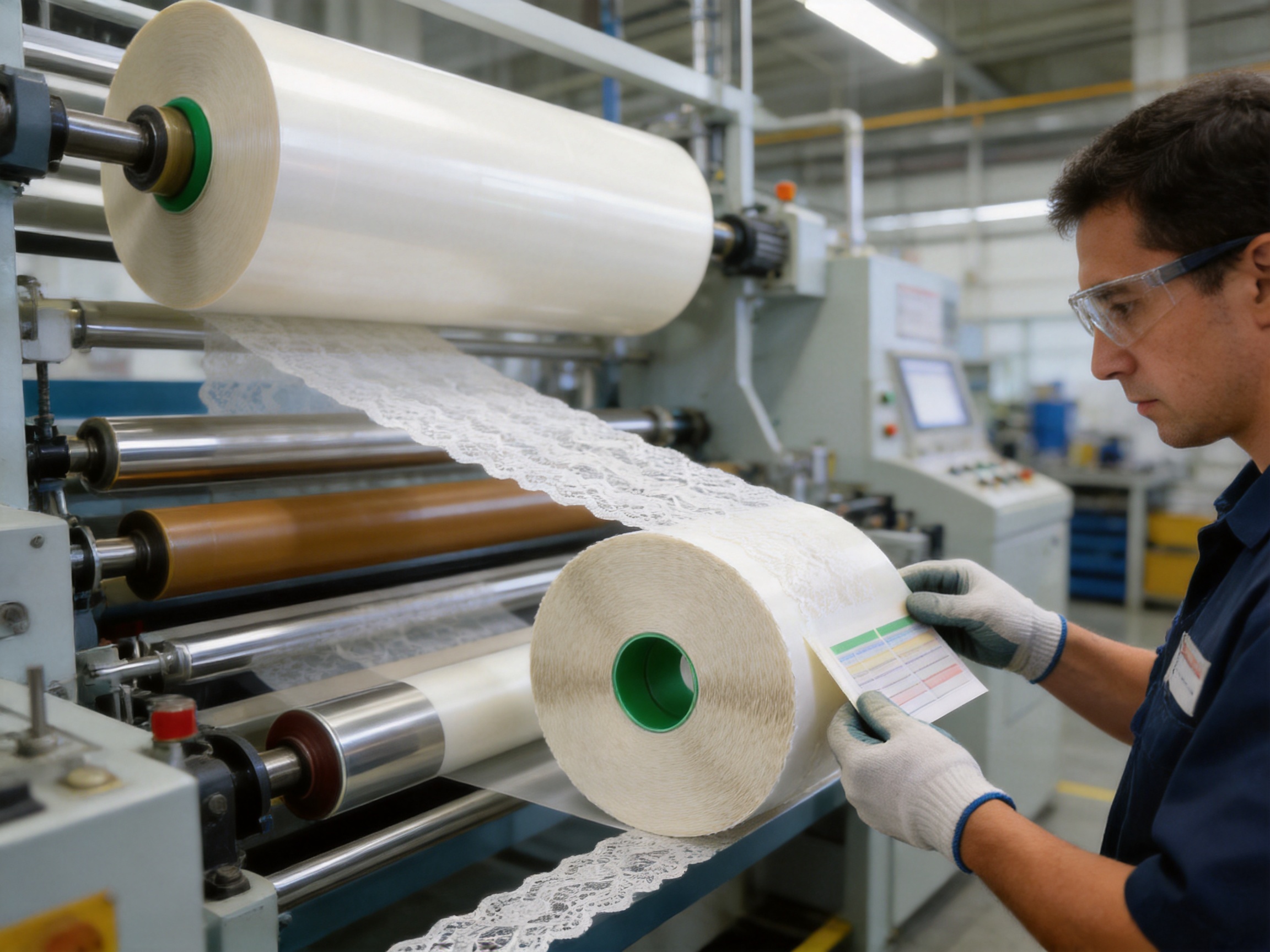
Application Field: Construction and Decoration
Construction and decoration applications often involve large surfaces, uneven substrates, and appearance-sensitive installation. Wall panels, skirting boards, acoustic materials, decorative strips, mirror backing materials, and lightweight boards can be installed with adhesive tape when conditions are appropriate. Lace/wavy double-sided tape offers advantages because it can conform to small surface irregularities and provide a clean, hidden fixing method.
Wall panel installation can be challenging because walls may have slight unevenness. A tape with some thickness and compressibility helps bridge minor gaps between the panel and wall. Skirting board fixing also benefits from a clean installation method that avoids visible nails or screws. Acoustic materials often require a tape that can bond porous or textured surfaces while contributing to vibration or sound-related performance. The patterned structure of this tape supports such needs better than many thin flat tapes.
In decoration work, speed and cleanliness are major advantages. Workers can apply pre-cut tape strips, align the component, and press it into place. This reduces mess and waiting time compared with liquid adhesive. It can also reduce damage to the surface compared with drilling or nailing. For commercial spaces, retail interiors, exhibition displays, and renovation projects, these benefits can shorten installation time and improve finish quality.
Application Field: Signage and Advertising
Signage and advertising production depends on fast, clean, and durable bonding. Display boards, sign backing materials, dimensional letters, decorative panels, foam boards, plastic sheets, and metal nameplates often require secure attachment. Lace/wavy double-sided tape can provide strong bonding while helping to accommodate material movement caused by temperature variation, handling, and installation conditions.
Dimensional letters are a good example. These letters are often made of acrylic, metal, PVC, foam, or composite materials. Visible screws may reduce appearance quality, and liquid glue can be messy or slow. Double-sided tape allows clean hidden mounting. The wave or lace structure helps create a more reliable bond on backing surfaces that may not be perfectly smooth. It also distributes stress more evenly across the letter or sign component.
Display boards and exhibition materials often need rapid assembly and disassembly planning. While permanent removal depends on substrate and adhesive choice, tape bonding can greatly improve production speed. It also enables more consistent bond lines compared with manual glue application. For advertising manufacturers producing repeated batches of signs, stable tape quality can directly improve workflow efficiency.
Application Field: Packaging Support and Industrial Manufacturing
Although lace/wavy double-sided tape is not limited to packaging, it can support many packaging-related and industrial manufacturing tasks. It can be used to attach foam pads, protective liners, labels, spacer materials, reinforcement strips, cushioning blocks, or temporary assembly aids. In industrial production, tapes often serve not only as final bonding materials but also as process tools that hold components during assembly, transport, or finishing.
Zhejiang Geruite Packaging Materials Co., Ltd.’s background in industrial packaging tape, shrink film, stretch film, strapping, and other packaging materials supports an understanding of how tapes perform in logistics and manufacturing environments. Products used in packaging must resist handling, compression, vibration, and changing warehouse conditions. This experience contributes to the development of adhesive materials that are practical, not merely theoretical.
For industrial users, the value of a tape lies in how it performs throughout the whole process: storage, unwinding, cutting, application, bonding, shipping, and final service. Lace/wavy double-sided tape is designed to provide reliability across these stages. Its pressure-sensitive adhesive simplifies use, while its patterned structure improves bonding performance where ordinary flat tape may not be enough.
How to Select the Right Lace/Wavy Double-Sided Tape
Choose the Base Material According to Function
The first selection factor is the base material. Foam-based tape is recommended when cushioning, gap filling, and vibration absorption are priorities. It is suitable for automotive trim, decorative panels, acoustic materials, and components installed on slightly uneven surfaces. Non-woven fabric tape is suitable when flexibility and conformability are important, especially for lightweight materials and curved surfaces. PET film tape is suitable when dimensional stability, thinner thickness, and cleaner die-cutting are required.
Choosing the correct base material prevents many bonding problems. If a surface has gaps but the tape is too thin and rigid, contact may be incomplete. If a component requires tight dimensional tolerance but the tape is too thick and compressible, alignment may suffer. The best tape is not always the thickest or strongest; it is the tape that matches the application’s mechanical, environmental, and assembly requirements.
Choose the Adhesive According to Substrate and Environment
Acrylic adhesive and rubber-based adhesive each have advantages. Acrylic pressure-sensitive adhesive often provides better long-term aging resistance, temperature stability, and resistance to environmental exposure. It is suitable for applications where durability and stable performance are important. Rubber-based adhesive usually provides strong initial tack and fast bonding, especially useful for quick assembly and some lower surface energy materials.
Substrate surface energy matters. Metals and glass often allow easier adhesive wet-out than certain plastics. Textiles and foams may absorb or deform. Painted surfaces may vary depending on coating chemistry. Users should test adhesive compatibility before mass production. Zhejiang Geruite Packaging Materials Co., Ltd. can support customers by discussing application details and helping identify suitable product configurations.
Choose Thickness According to Gap and Load
Thickness affects performance. A 0.5 mm tape may be suitable for low-profile assembly where surfaces are relatively smooth. A 1 mm to 2 mm tape may provide balanced gap filling and cushioning. A 3 mm tape may be used where more spacing, vibration absorption, or uneven surface compensation is needed. However, thicker tape is not automatically better. Excessive thickness may increase movement under load or create visible spacing.
The load direction also matters. Peel forces are generally more challenging for pressure-sensitive adhesive tapes than shear forces. Design should maximize bonded area and minimize peel stress. Rounded corners, proper edge coverage, and adequate pressure can improve bonding reliability. If the assembly will carry high weight or safety-critical loads, engineering validation is essential.
Surface Preparation and Application Guidelines
Proper application is essential for achieving the best performance. Even a high-quality tape may fail if applied to dirty, oily, wet, or dusty surfaces. Before bonding, surfaces should be clean, dry, and free of oil, grease, dust, release agents, loose paint, and other contaminants. For many substrates, wiping with a suitable cleaning method can improve adhesion. The surface must be fully dry before tape application.
The recommended application temperature is generally 15℃ to 35℃. At low temperatures, pressure-sensitive adhesive becomes less able to flow into the surface texture, reducing initial tack. At excessively high temperatures, adhesive handling may become difficult. Applying tape within the recommended temperature range helps ensure proper adhesive wet-out and stable initial bond formation.
Pressure is another critical factor. Pressure-sensitive adhesive requires pressure to create intimate contact with the surface. After placing the tape, apply firm pressure for about 10 to 20 seconds, or according to application requirements. Rollers, presses, or hand pressure tools may be used depending on component size. Full bond strength may develop over time as the adhesive continues to wet the surface.
Users should also avoid touching the adhesive surface with fingers, as skin oils can reduce adhesion. The release liner should be removed carefully to avoid stretching or contaminating the tape. Components should be aligned accurately before final pressure is applied, because repositioning may reduce adhesive performance. For critical applications, sample testing under real conditions is recommended before full-scale use.
Storage and Shelf Life
Lace/wavy double-sided tape should be stored in a cool, dry place away from direct sunlight, high temperature, high humidity, and chemical contamination. Storage conditions affect adhesive stability, liner release, roll appearance, and long-term performance. Excessive heat may soften adhesive and cause edge ooze. High humidity may affect paper liners or some substrates. Direct sunlight may accelerate aging.
Under proper storage conditions, the standard shelf life is generally 24 months. Inventory should be managed according to first-in, first-out principles. Rolls should remain in original packaging until use, especially in dusty or humid environments. If tape has been stored for a long period, users should test adhesion and unwinding behavior before using it in critical production.
Customization Possibilities
Industrial users often require customized tape specifications. Width, length, thickness, color, adhesive type, release liner, core size, roll format, and die-cut shape may all influence production efficiency. Lace/wavy double-sided tape can commonly be supplied in black, white, gray, or customized colors. Color can be important for appearance-sensitive applications, edge visibility, inspection contrast, or matching with the bonded component.
Custom slitting allows the tape to fit specific assembly lines or component dimensions. Narrow widths may be used for trims or letters, while wider rolls may be used for panels or foam materials. Die-cut forms can improve application speed and reduce waste. For electronics, automotive parts, and signage, die-cut tape shapes may be especially useful because they reduce manual cutting and improve repeatability.
Zhejiang Geruite Packaging Materials Co., Ltd. is positioned to support wholesale and industrial customers with production capacity and technical communication. Its broad product range and manufacturing experience help it respond to different bonding and packaging needs. For customers seeking stable supply, customization support, and consistent product quality, these capabilities provide practical purchasing advantages.
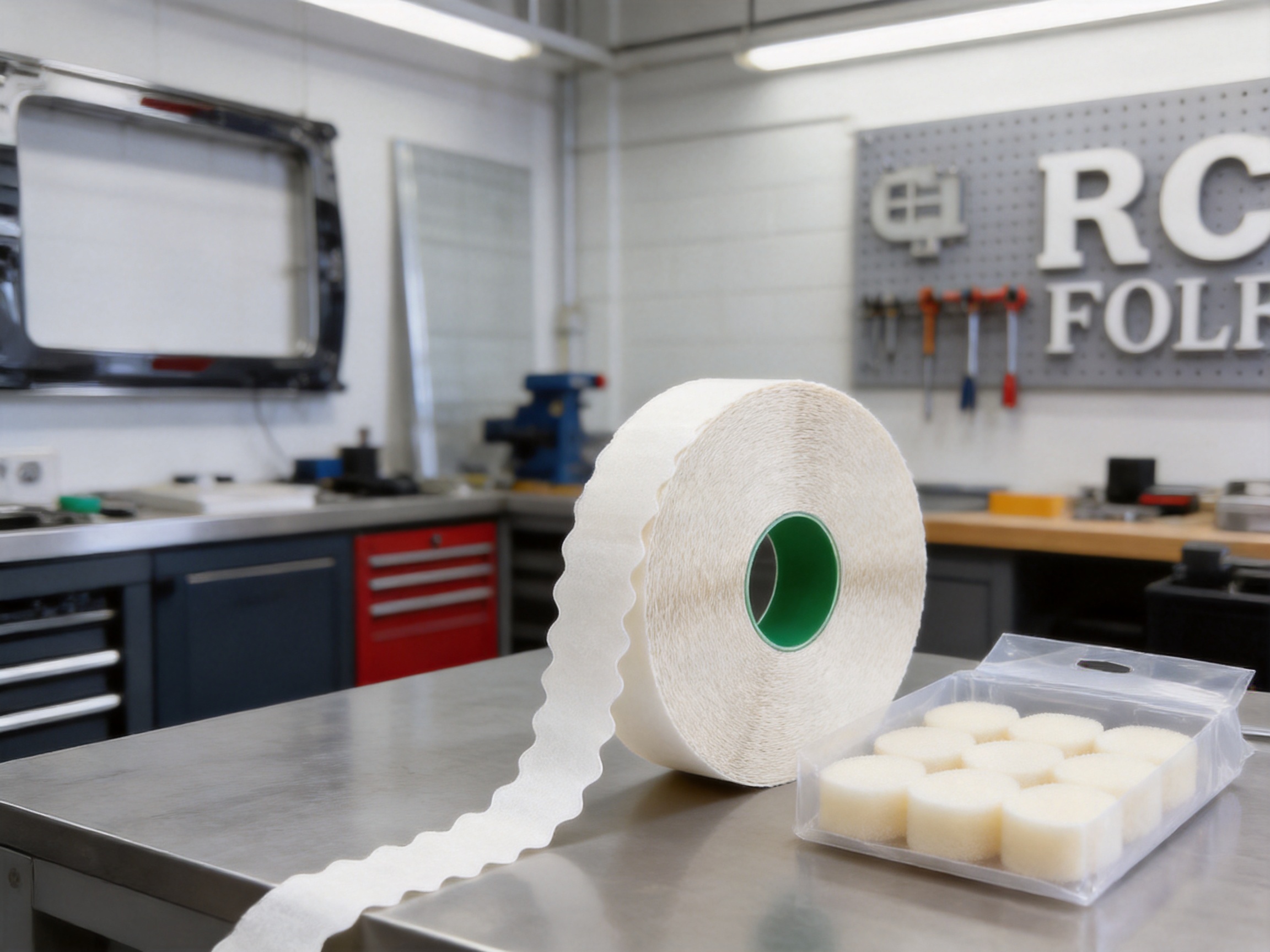
Why Manufacturing Consistency Matters More Than Claims
Many adhesive products are described with strong marketing claims, but industrial buyers need consistent performance rather than exaggerated promises. A tape must unwind properly, cut cleanly, bond reliably, and perform predictably under the intended conditions. Manufacturing consistency is therefore one of the most important advantages a supplier can offer. If each batch behaves differently, customers must adjust application pressure, cutting equipment, storage expectations, or assembly design, increasing operational cost.
Lace/wavy double-sided tape depends on controlled structure and adhesive uniformity. If the wave or lace pattern varies significantly, bonding performance can vary. If adhesive coating weight changes, peel strength and holding power may change. If the liner release force is unstable, workers may experience application delays. Zhejiang Geruite Packaging Materials Co., Ltd. emphasizes rigorous quality control across production stages, which supports the product’s reliability in industrial use.
Consistency also affects customer confidence. When a product is used in automotive interiors, electronics, decoration, or signage, failure may occur after the product has already reached the end user. At that stage, repair is much more expensive than prevention. A stable manufacturer helps reduce such risks by supplying tape that meets defined expectations over repeated orders.
Environmental and Efficiency Considerations
Lace/wavy double-sided tape can contribute to cleaner and more efficient production. Compared with liquid adhesives, tape application often reduces solvent odor, drying time, overflow, and cleanup requirements. It can simplify workstations and reduce the need for curing fixtures. This supports faster production cycles and cleaner assembly environments.
Compared with mechanical fasteners, tape may reduce drilling waste, noise, tool wear, and component damage. It can also support lightweight design by replacing some screws, clips, or brackets in appropriate applications. Lightweight and clean assembly methods are increasingly valued in automotive, electronics, signage, and decorative product manufacturing.
Efficiency also comes from reduced rework. A tape that conforms to uneven surfaces and absorbs vibration can reduce early failures caused by poor contact or stress concentration. While proper design and testing remain necessary, the structural advantages of lace/wavy double-sided tape can improve the overall reliability of many bonded assemblies.
Practical Design Recommendations
To maximize bonding performance, designers should provide sufficient bonding area. A larger contact area distributes load and improves long-term holding power. Narrow strips may be suitable for light trim, but heavier components require wider tape or multiple strips. Rounded tape corners may reduce edge lifting. Avoid designs where the tape is constantly peeled away from the surface, as peel stress is more damaging than shear stress.
For outdoor or high-humidity applications, adhesive selection and substrate testing become more important. Temperature cycling may cause different materials to expand and contract at different rates. The tape’s flexibility can help absorb some movement, but severe mismatch may still require design adjustment. For high-load or safety-related applications, engineering validation is essential.
When bonding plastics, users should consider whether the plastic contains plasticizers, release agents, low surface energy polymers, or textured surfaces. Some materials may require surface treatment or primer. When bonding painted metals, coating type and cure condition can affect adhesion. When bonding foams or textiles, surface strength may determine whether the tape fails adhesively or whether the substrate itself tears.
Role in Modern Industrial Assembly
Industrial assembly is moving toward cleaner, faster, and more flexible production methods. Adhesive tape supports this transition by replacing or supplementing traditional fastening systems. Lace/wavy double-sided tape represents a more functional category within adhesive tapes because it does more than simply stick. It also cushions, fills gaps, adapts to surface texture, and distributes stress.
As products become thinner, lighter, and more visually refined, hidden bonding becomes increasingly important. Consumers expect smooth surfaces without exposed screws. Manufacturers expect faster assembly and fewer process steps. Engineers expect materials that can handle movement and real-world conditions. This product addresses all of these needs in a practical form that can be supplied as rolls or converted parts.
The combination of pressure-sensitive adhesive convenience and structural performance makes lace/wavy double-sided tape valuable across multiple industries. It is not a universal solution for every bonding challenge, but it is a highly versatile option for applications requiring conformability, cushioning, and clean assembly.
Frequently Asked Questions
What is lace/wavy double-sided tape?
Lace/wavy double-sided tape is a pressure-sensitive adhesive tape with a special lace or wave-pattern structure. It is coated with adhesive on both sides and used to bond materials such as metal, plastic, foam, textiles, decorative panels, and signage components.
How is it different from ordinary double-sided tape?
Ordinary double-sided tape usually has a flat structure. Lace/wavy double-sided tape has a patterned design that increases effective contact area, improves conformability, helps fill small gaps, and provides better vibration dampening. This makes it more suitable for uneven surfaces and dynamic environments.
What base materials are available?
Common base materials include flexible foam, non-woven fabric, and PET film. Foam is useful for cushioning and gap filling, non-woven fabric provides flexibility and conformability, and PET film offers dimensional stability and a thinner profile.
Which adhesive types can be used?
The tape can be made with acrylic or rubber-based pressure-sensitive adhesive. Acrylic adhesive is often preferred for long-term durability and temperature stability, while rubber-based adhesive offers strong initial tack and fast bonding.
What thickness is commonly available?
The typical thickness range is about 0.5 mm to 3 mm. The correct thickness depends on surface condition, required gap filling, vibration absorption, assembly tolerance, and appearance requirements.
What temperature range can the tape generally withstand?
The tape is generally stable from -20℃ to 80℃, depending on specific material construction and application conditions. For demanding environments, customers should test the tape under real operating conditions.
Where is this tape commonly used?
Common applications include automotive interior trim, seal fixing, vibration-damping component bonding, display frame mounting, battery cushioning, electronic component shock absorption, wall panel installation, skirting board fixing, acoustic material bonding, display board assembly, sign backing, and dimensional letter reinforcement.
How should surfaces be prepared before application?
Surfaces should be clean, dry, and free of oil, dust, grease, release agents, and loose particles. Proper surface preparation is essential for strong adhesion and long-term reliability.
What is the recommended application temperature?
The recommended application temperature is generally 15℃ to 35℃. Applying the tape within this range helps the adhesive wet the surface properly and build strong initial adhesion.
How much pressure should be applied?
Firm pressure should be applied for approximately 10 to 20 seconds, depending on the application. Pressure helps the adhesive make intimate contact with the surface and improves bonding strength.
How should the tape be stored?
It should be stored in a cool, dry place away from direct sunlight, high temperature, high humidity, and chemical contamination. Proper storage helps maintain adhesive stability and roll quality.
What is the standard shelf life?
The standard shelf life is generally 24 months under proper storage conditions. Older inventory should be tested before use in critical applications.
Can the tape be customized?
Yes. Width, thickness, color, adhesive type, base material, roll length, liner, and die-cut shape can often be customized according to customer requirements and production capability.
Why choose Zhejiang Geruite Packaging Materials Co., Ltd. as a supplier?
The company has experience in adhesive tapes and packaging materials, advanced production equipment, quality control processes, and a broad product portfolio. Its manufacturing discipline supports stable product performance, customization, and reliable supply for industrial customers.
Conclusion
Lace/wavy double-sided tape is a practical and high-performance bonding solution for industrial users who require more than simple adhesion. Its structural pattern increases effective contact area, improves surface conformability, supports gap filling, distributes stress, and helps dampen vibration. These advantages allow it to outperform many ordinary flat tapes in applications involving uneven surfaces, movement, cushioning needs, and appearance-sensitive assembly.
Compared with liquid adhesives, it offers cleaner handling, defined thickness, faster processing, and reduced curing concerns. Compared with screws and rivets, it enables hidden bonding, reduces surface damage, and distributes stress more evenly. Compared with low-cost general tapes, it provides stronger application reliability and lower long-term risk when properly selected and applied.
Zhejiang Geruite Packaging Materials Co., Ltd. strengthens the value of this product through manufacturing experience, raw material control, coating expertise, lamination stability, slitting precision, quality inspection, and customer-oriented customization. With a product range covering adhesive tapes, stretch film, strapping, and industrial packaging materials, the company understands the practical demands of manufacturing, logistics, decoration, electronics, automotive, and signage industries.
For buyers seeking a double-sided tape that combines adhesion, cushioning, gap compensation, and industrial reliability, lace/wavy double-sided tape offers a well-balanced choice. When selected according to base material, adhesive type, thickness, substrate, and service environment, it can improve assembly efficiency, enhance product appearance, and reduce failure risk across a wide range of applications.
References
1. Benedek, I. Pressure-Sensitive Adhesives and Applications. CRC Press.
2. Petrie, E. M. Handbook of Adhesives and Sealants. McGraw-Hill Education.
3. Skeist, I. Handbook of Adhesives. Springer.
4. Kinloch, A. J. Adhesion and Adhesives: Science and Technology. Chapman and Hall.
5. Mittal, K. L. Adhesion Measurement of Films and Coatings. VSP.
6. Creton, C. Pressure-Sensitive Adhesives: An Introductory Course. MRS Bulletin.
7. ASTM International. Standard Test Methods for Pressure-Sensitive Adhesive Tapes.
8. China Adhesives and Tape Industry Association. Technical Materials on Adhesive Tape Manufacturing and Application.
Product: Lace/wavy double-sided tape

CONTACT DETAILS
- Address:No. 241, Yaojiafan, Zhangpanqiao, Shushan Street, Xiaoshan District, Hangzhou City, Zhejiang Province, China
- TEL:+86-0571-83175630
- Phone:+86-13336160217
- Email:anqiaocun@163.com
PRODUCTS
NEWS CENTER
MOBILE TERMINAL
Copyright© Zhejiang Geruite Packaging Materials Co., Ltd. All Rights Reserved.
Privacy Wholesale industrial packaging tape Manufacturers