


 English
  Español
  عربى
عربى 
High-Temperature Resistant Masking Tape for Precision Industrial Processes
Content
- 1 Product Overview and Industrial Positioning
- 2 Core Construction: Crepe Paper Backing and Acrylic Adhesive
- 3 Key Product Specifications
- 4 Advantages Over Conventional Masking Tapes
- 5 Clean Paint Lines and Reduced Rework
- 6 Heat Resistance for Baking, Curing, and Thermal Processing
- 7 Manufacturing Process Strengths
- 8 Quality Control and Consistency
- 9 Customization as a Competitive Advantage
- 10 Application in Automotive and Metal Spraying
- 11 Application in Furniture, Wood Products, and Decorative Finishing
- 12 Application in Electronics and Electrical Manufacturing
- 13 Application in Powder Coating and Baking Processes
- 14 General Industrial Bundling, Positioning, and Identification
- 15 Surface Preparation and Application Best Practices
- 16 Common Problems and Practical Solutions
- 17 Why Manufacturer Capability Matters
- 18 Comparison with Alternative Masking Materials
- 19 Sustainability and Efficient Material Use
- 20 Purchasing Considerations for Industrial Users
- 21 Q&A Section
- 21.1 Q1: What is high-temperature resistant masking tape used for?
- 21.2 Q2: What is the tape made of?
- 21.3 Q3: What is the standard thickness?
- 21.4 Q4: Can the width be customized?
- 21.5 Q5: What temperature can the tape withstand?
- 21.6 Q6: Will the tape leave adhesive residue?
- 21.7 Q7: Why does tape sometimes lift at the edges during heating?
- 21.8 Q8: Is this tape suitable for curved surfaces?
- 21.9 Q9: How should the surface be prepared before application?
- 21.10 Q10: Why choose this product instead of ordinary masking tape?
- 22 Conclusion
- 23 References
- 24 Product: High-temperature resistant masking tape, crepe paper tape
High-temperature resistant masking tape, also known as crepe paper tape, is an essential industrial masking material designed for clean paint lines, reliable surface protection, and stable performance under elevated temperatures. In production environments where ordinary masking tapes may shrink, lift, scorch, or leave adhesive residue, this specialized tape provides a practical balance of heat resistance, conformability, easy hand tearing, and controlled adhesion. It is widely used in automotive refinishing, metal coating, furniture spraying, electronic component masking, PCB processing, powder curing, baking, and general industrial protection.
The product is made with specially treated crepe paper as the backing and coated with acrylic pressure-sensitive adhesive. This combination gives the tape several important advantages: the crepe paper backing conforms well to slightly curved or irregular surfaces, while the acrylic adhesive offers consistent tack, aging resistance, and clean removal when used within recommended process conditions. With a standard thickness of 0.14 mm and customizable widths from 5 mm to 500 mm, the tape can be tailored for narrow edge masking, broad surface protection, complex shape masking, and high-efficiency production-line use.
In modern manufacturing, masking tape is no longer a simple consumable. It directly affects painting quality, production efficiency, rework rate, surface cleanliness, and customer satisfaction. A tape that performs poorly can create blurred paint edges, coating seepage, adhesive transfer, lifting during baking, or surface damage after removal. A properly engineered high-temperature masking tape, however, helps operators achieve repeatable results across different substrates, coating systems, and thermal environments.
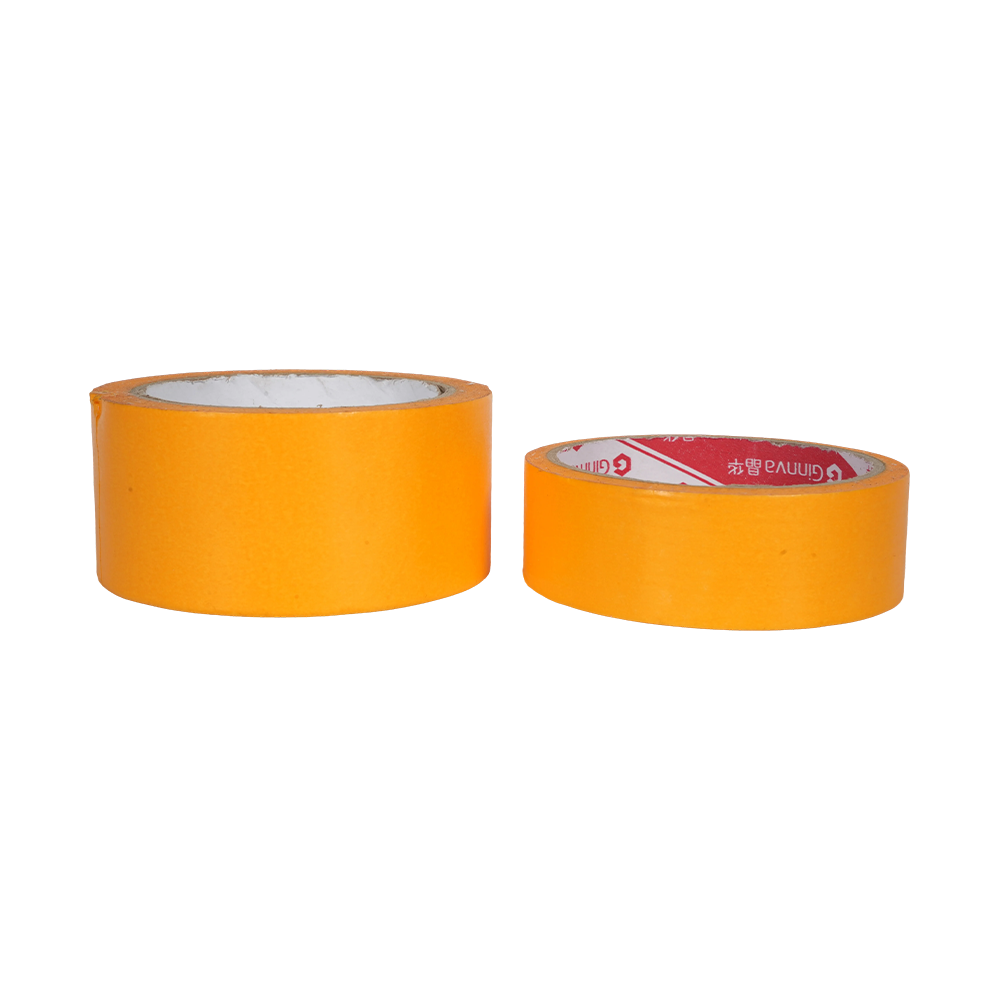
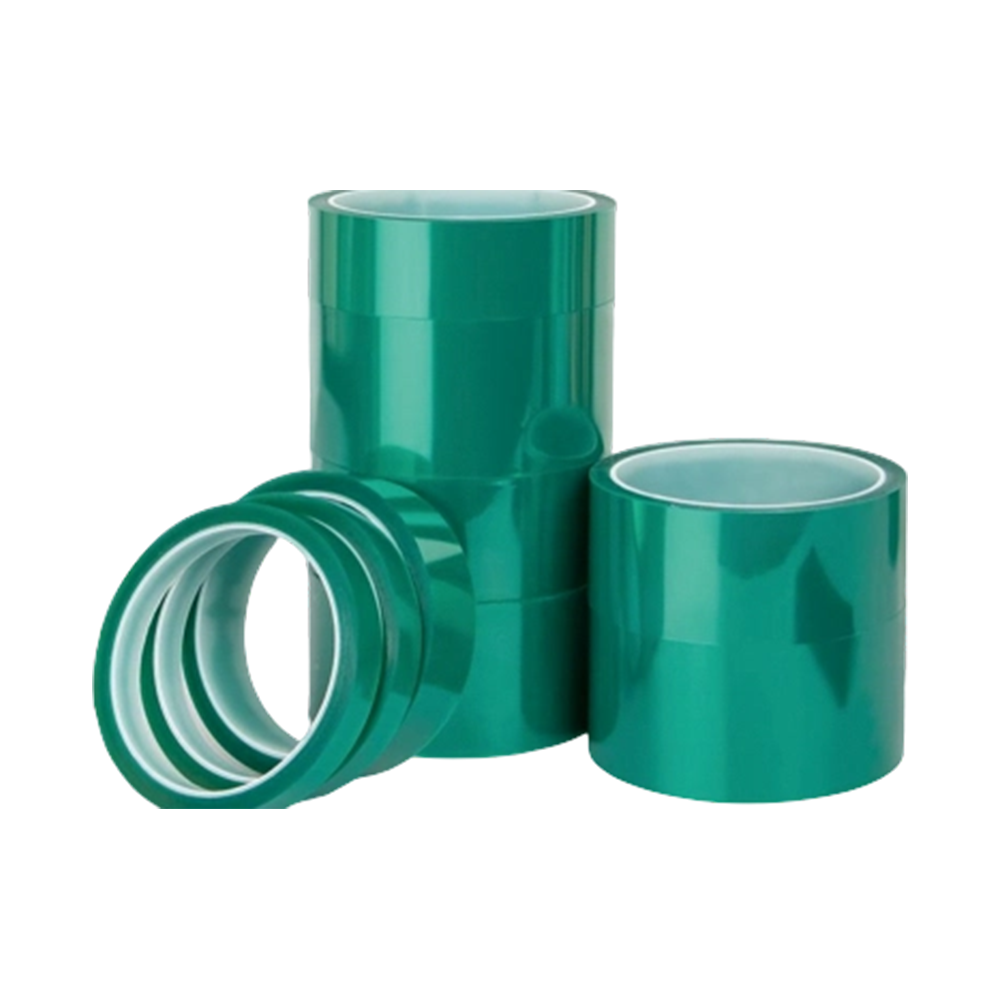
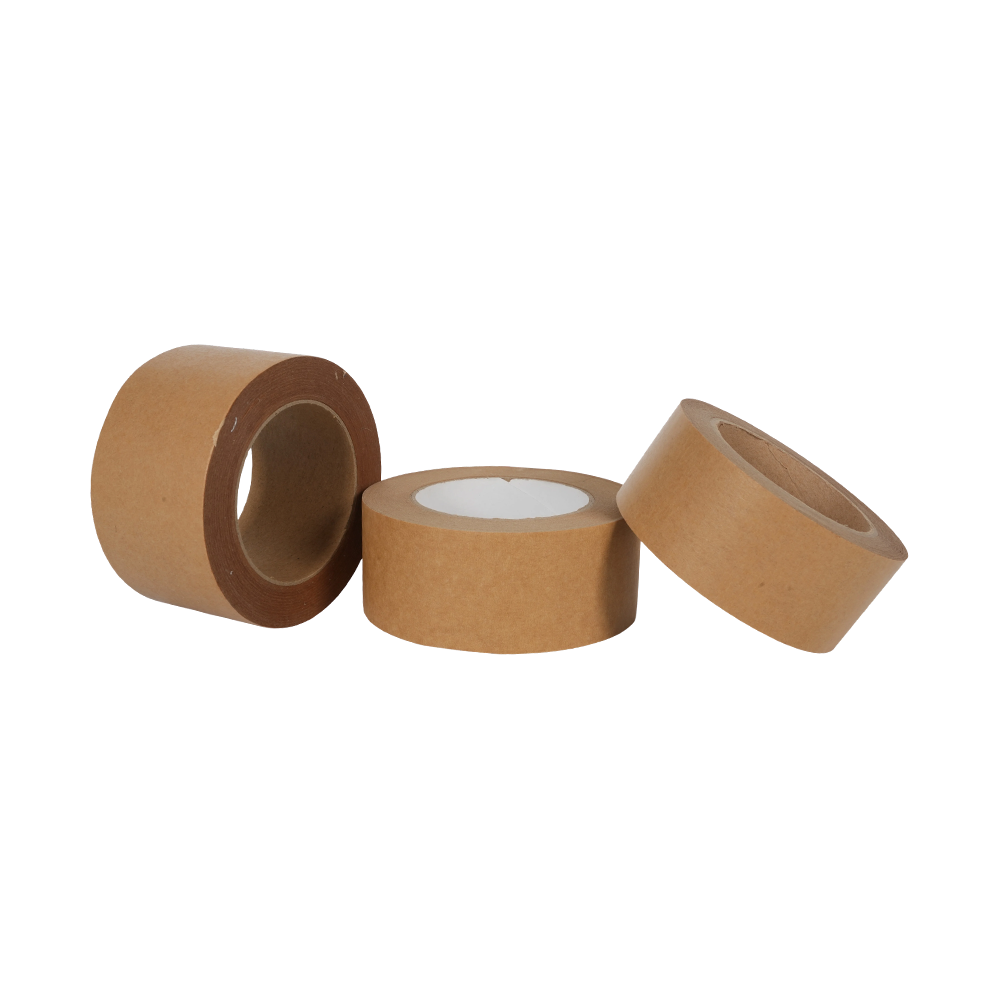
High-temperature resistant masking tape, crepe paper tape
Product Overview and Industrial Positioning
This high-temperature resistant masking tape is positioned as a professional-grade solution for applications that require reliable adhesion, clean masking boundaries, and controlled performance at elevated temperatures. Unlike general-purpose paper tapes used for low-demand household or decoration work, this product is manufactured for industrial processes where consistency matters. Its structure is simple but technically refined: a specially treated crepe paper base provides mechanical strength and flexibility, while an acrylic adhesive layer provides stable bonding to the target surface.
The tape is especially suitable for users who need a masking material that can be applied quickly, removed efficiently, and customized according to production requirements. Its width range from 5 mm to 500 mm allows it to serve both fine-detail masking and large-area protection. Narrow rolls can be used for curves, seams, and precision edges, while wider rolls are suitable for panels, housings, frames, and industrial components. The standard 0.14 mm thickness provides a practical compromise between durability and ease of handling: it is thick enough to provide reliable masking and paper strength, yet not so thick that it becomes difficult to tear, fold, or apply along edges.
Temperature resistance can be adjusted through process control and formulation selection. Depending on the specific model, the tape may be suitable for environments ranging from normal room-temperature work to elevated-temperature processes such as baking, curing, powder coating, or soldering-related protection. This flexibility makes the product useful for customers with different process windows, from light industrial finishing to more demanding thermal masking.
Core Construction: Crepe Paper Backing and Acrylic Adhesive
The performance of a masking tape depends heavily on the interaction between its backing and adhesive. In this product, specially treated crepe paper provides the base structure. Crepe paper has a slightly wrinkled, elastic texture, which gives it better conformability than flat paper. This is important because industrial parts are rarely perfectly flat. Automotive components may have curves and edges, metal workpieces may include holes or raised sections, and furniture parts may include profiles, corners, or decorative shapes. A tape that cannot conform may lift at the edges, allowing paint or powder to seep underneath.
The crepe paper base also enables easy hand tearing. In many workshops, operators must apply tape quickly without reaching for scissors or cutting tools every time. Hand tearability improves efficiency, especially during repetitive masking work. Good tear behavior also helps reduce jagged tape ends and uneven application, both of which may influence the quality of the masking boundary.
The acrylic pressure-sensitive adhesive is another key feature. Acrylic adhesives are known for good aging resistance, weather resistance, and balanced adhesion. Compared with lower-grade adhesives that may soften excessively under heat or transfer residue after removal, acrylic systems can be formulated to provide stable holding power and relatively clean removal under proper operating conditions. The adhesive provides enough initial tack for quick placement and enough holding power to resist edge lifting during processing. At the same time, it is designed to be removable after the masking operation, helping reduce cleaning time and surface contamination.
Key Product Specifications
| Parameter | Specification | Industrial Benefit |
| Product Type | High-temperature resistant masking tape, also known as crepe paper tape | Suitable for professional masking, protection, and temporary fixing |
| Backing Material | Specially treated crepe paper | Good flexibility, hand tearability, toughness, and surface conformity |
| Adhesive | Acrylic pressure-sensitive adhesive | Balanced initial tack, stable holding power, aging resistance, and cleaner removal |
| Standard Thickness | 0.14 mm | Practical balance of strength, masking bulk, and handling comfort |
| Width Range | Customizable from 5 mm to 500 mm | Supports precision edge masking and large-area surface protection |
| Temperature Resistance | Available in varying grades depending on manufacturing process | Allows selection according to actual thermal conditions |
| Common Color | Natural crepe paper color, usually off-white or light yellow | Provides visual contrast for alignment and demarcation |
| Main Applications | Spraying, powder coating, electronics protection, baking, curing, temporary fixing | Useful across automotive, electronics, furniture, metal processing, and general industry |
Advantages Over Conventional Masking Tapes
Many standard masking tapes are designed for short-term use in room-temperature conditions. They may be adequate for simple painting or packaging tasks, but they often struggle in demanding industrial environments. When exposed to heat, cheap masking tapes may lose adhesion, harden, shrink, or leave glue on the substrate. Some tapes may tear during removal, forcing workers to spend additional time cleaning fragments from the surface. Others may allow paint bleed because their edges do not seal well enough.
This high-temperature resistant masking tape is engineered to address these common weaknesses. Its specially treated crepe paper backing helps reduce failure caused by poor conformability. The tape can follow curved surfaces more effectively than flat paper tapes, improving edge contact and reducing the risk of coating seepage. Its acrylic adhesive is designed to maintain stable bonding during the masking process while supporting cleaner removal when the process is completed on time and within recommended temperature conditions.
Another advantage is the availability of adjustable temperature resistance grades. In industrial purchasing, one tape does not fit every process. A workshop that only performs mild drying may not need the same heat resistance as a factory using high-temperature powder curing. By offering different process-based grades, users can select a product that matches performance requirements without unnecessarily overspending on an overly specialized material. This makes the tape competitive not only in performance but also in cost efficiency.
Custom width production is another major competitive benefit. Competitor products may be limited to standard sizes, forcing users to overlap multiple strips or cut tape manually. Overlapping increases labor time, creates inconsistent edges, and may cause coating defects. Custom widths from 5 mm to 500 mm allow customers to improve workflow and material utilization. Precision widths are especially useful for electronics, narrow paint separation lines, small component masking, and detailed work. Wider rolls help reduce application time on large areas, improving production efficiency.
Clean Paint Lines and Reduced Rework
One of the most important purposes of masking tape is to create a clean boundary between treated and untreated areas. In spraying and coating, the quality of the paint line affects the appearance and perceived value of the final product. A blurred or irregular edge may require sanding, retouching, repainting, or even rejection of the workpiece. Rework wastes coating material, labor, machine time, and delivery capacity.
The crepe paper backing and adhesive design help the tape seal effectively along the application line. When properly pressed onto a clean and dry surface, the tape reduces the possibility of paint creep beneath the edge. Its moderate unwind force helps operators apply the tape smoothly without excessive stretching or sudden snapping. The natural light color also provides clear visual contrast, allowing workers to check alignment quickly.
For automotive parts, furniture, metal products, and industrial housings, sharp paint separation is often a visible quality requirement. In multi-color spraying, any defect at the boundary becomes obvious. A stable masking tape improves repeatability, especially across batch production. When the tape performs consistently from roll to roll, operators can maintain the same application technique and process timing, reducing variability and improving output quality.
Heat Resistance for Baking, Curing, and Thermal Processing
High-temperature resistance is one of the defining characteristics of this tape. In many coating and finishing processes, the workpiece is exposed to heat after masking. This may occur during paint drying, powder coating curing, oven baking, or heat treatment. A tape that performs well at room temperature may fail once the temperature rises. Failure may include edge lifting, backing deformation, adhesive flow, adhesive residue, or paper scorching.
This product is available with varying temperature resistance levels depending on process design. In typical high-temperature masking applications, users may choose models suitable for conditions such as 80°C, 120°C, 150°C, or up to around 180°C, depending on the exact tape grade and required exposure time. The correct selection should always consider both peak temperature and dwell time. A brief exposure to a high temperature is not the same as prolonged baking, and each process must be matched with an appropriate tape specification.
The benefit of adjustable thermal grades is practical. It allows a manufacturing facility to standardize tape selection according to actual processes. For example, a light-duty drying line may choose a moderate-grade tape, while a powder curing line may require a higher heat-resistant model. This avoids using unsuitable low-end tape that causes defects, while also preventing unnecessary material cost in applications that do not require the highest rating.
Manufacturing Process Strengths
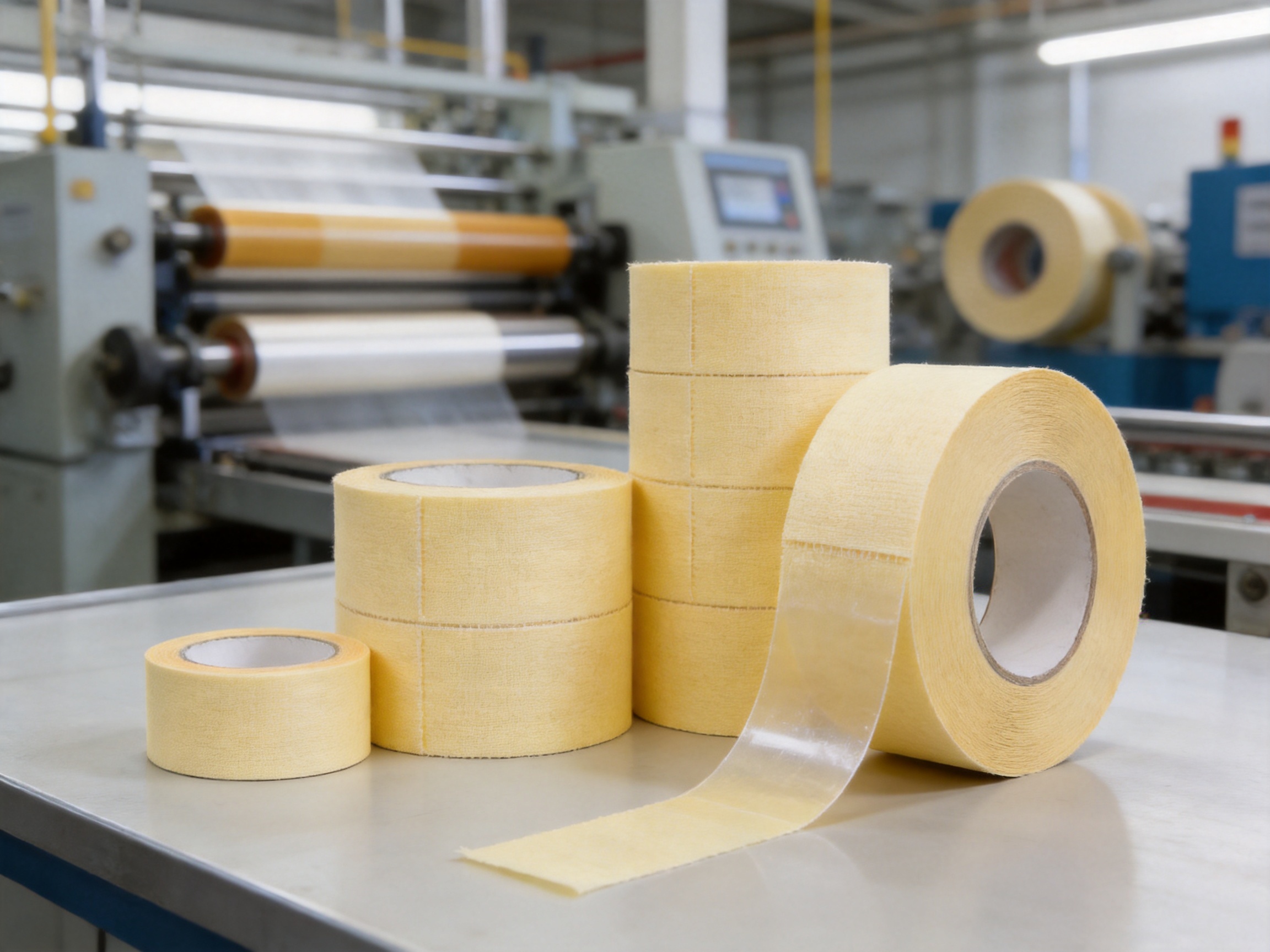
The performance of high-temperature resistant masking tape is created through controlled manufacturing rather than by raw materials alone. Zhejiang Geruite Packaging Materials Co., Ltd. focuses on the research, development, production, and sales of packaging and industrial tape materials. Its experience with BOPP tapes, kraft paper tapes, masking tapes, high-temperature tapes, metal tapes, PE stretch film, PP strapping, and PET strapping provides a broad technical foundation in coating, slitting, winding, adhesive handling, and quality control.
In the manufacturing process, the crepe paper backing must be selected and treated to achieve the desired combination of tensile strength, flexibility, and heat behavior. Paper that is too weak may tear during application or removal. Paper that is too stiff may not conform well to curves. Paper that is not properly treated may absorb adhesive unevenly or behave unpredictably in humid or heated environments. Controlled backing treatment helps create a stable base for adhesive coating.
The adhesive coating process is equally important. Acrylic adhesive must be applied evenly across the width of the web. Uneven coating can cause inconsistent adhesion, leading to areas that lift too easily or areas that bond too aggressively. Proper coating control helps maintain uniform tack, peel strength, and holding power. After coating, drying or curing conditions must be managed carefully so the adhesive layer reaches the intended performance level without damaging the paper backing.
Slitting and rewinding also influence the customer experience. Cleanly slit edges reduce fuzz, dust, and uneven application. Accurate roll width ensures the tape matches customer requirements, especially in applications requiring narrow tolerances. Stable winding tension prevents roll deformation, telescoping, or excessive unwind force. For industrial users, these details are not cosmetic; they directly affect line efficiency, operator comfort, and masking accuracy.
Quality Control and Consistency
Quality control is essential for any tape used in industrial processes. A roll of masking tape may appear simple, but its performance depends on measurable properties such as thickness, adhesion, tensile strength, elongation, unwind force, heat resistance, residue behavior, and dimensional accuracy. Zhejiang Geruite Packaging Materials Co., Ltd. emphasizes quality as a core principle and applies inspection throughout raw material selection, production, and final product evaluation.
Incoming material control helps ensure that crepe paper, adhesive, cores, and packaging materials meet defined requirements. During production, process monitoring helps maintain coating weight, drying conditions, winding tension, and slitting accuracy. Final inspection may include visual checks, roll dimension measurement, adhesion testing, and evaluation of application behavior. For high-temperature grades, thermal performance testing is especially important because tape failure under heat can create serious quality problems for the customer.
Consistent product quality gives customers confidence in repeat purchases. In a production environment, changing tape behavior from batch to batch can create uncertainty. Operators may need to adjust pressure, application angle, removal timing, or baking conditions. A stable supplier reduces this burden by delivering tape that performs predictably. This is one of the important advantages of working with an experienced manufacturer rather than relying on inconsistent low-cost sources.
Customization as a Competitive Advantage
Customization is one of the most valuable strengths of this masking tape. The ability to produce widths from 5 mm to 500 mm provides substantial flexibility. Narrow tapes are ideal for fine lines, curved edges, electronic component masking, and small areas where precision is more important than coverage. Medium-width tapes are suitable for general industrial painting, furniture finishing, and metal product masking. Wide tapes are useful for protecting larger panels or covering sections quickly before spraying or baking.
Custom size production helps reduce waste. If a customer needs a 23 mm masking line but only has access to 18 mm or 25 mm standard rolls, the result may be either insufficient coverage or unnecessary material usage. Custom width selection allows more accurate matching to process requirements. Over a long production run, this can reduce consumption and improve labor efficiency.
Customization also supports process optimization. A manufacturer can combine different tape widths in a masking workflow: narrow rolls for edges, wider rolls for surfaces, and specialty grades for heated sections. This allows each material to be used where it provides the greatest value. Compared with competitors that offer only limited standard specifications, a supplier with broad customization capability can better support industrial users with diverse products and changing order requirements.
Application in Automotive and Metal Spraying
Automotive and metal spraying applications demand reliable masking because surface defects are highly visible. Whether used on automotive parts, machinery housings, metal frames, or fabricated components, masking tape must resist paint penetration and remain stable during drying or baking. High-temperature resistant masking tape supports these needs by providing good adhesion to clean surfaces and enough flexibility to follow curves and edges.
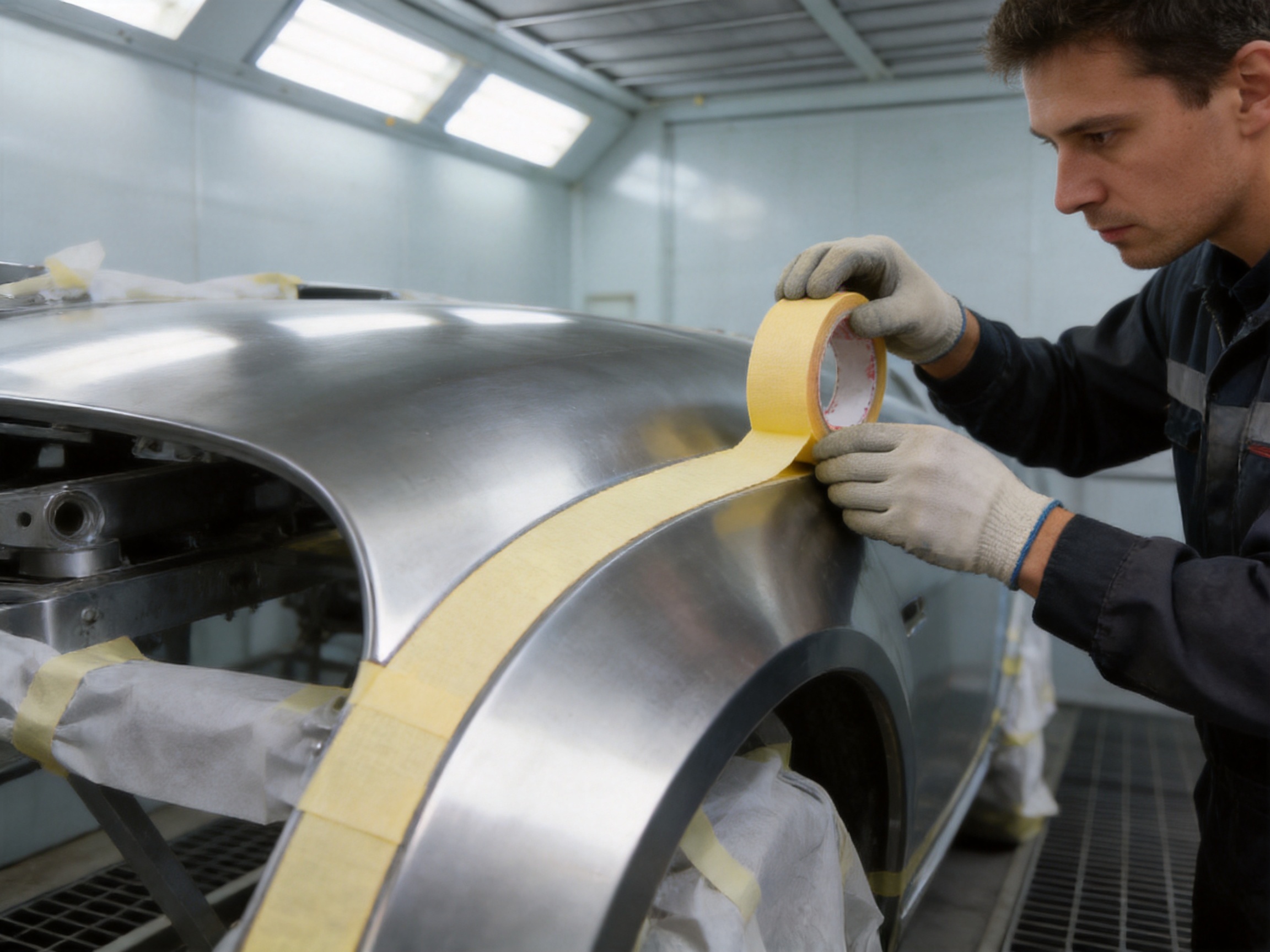
In automotive refinishing or component painting, workers often need to mask around contours, openings, joints, and trim areas. Crepe paper tape can be applied in sections, lightly stretched, and pressed down to follow the shape of the part. This helps create accurate paint boundaries and reduces the risk of lifting. After the coating process, the tape can be removed to reveal a clean line, provided it is removed within the recommended time and process conditions.
For metal spraying, surface cleanliness is especially important. Oil, dust, rust powder, or moisture can reduce adhesion and cause lifting during baking. The tape performs best when applied to dry, clean, and properly prepared surfaces. With suitable pressure during application, the adhesive wets the surface more effectively and provides stronger edge contact. This is particularly important before powder coating or baking, where heat may amplify any weakness in the bond.
Application in Furniture, Wood Products, and Decorative Finishing
Furniture and decorative products often require attractive color separation and surface protection. Masking tape may be used on wooden panels, laminated parts, painted surfaces, metal fittings, or decorative profiles. The tape must provide clean edges while avoiding surface damage during removal. The acrylic adhesive system helps offer balanced adhesion, while the crepe backing improves handling on edges and curved shapes.
In furniture finishing, workers may apply stains, paints, varnishes, or coatings in multiple layers. Masking tape can protect areas that should remain untreated or separate different coating colors. Because wood and decorative surfaces vary widely in porosity, texture, and finish, users should always test tape compatibility on sensitive materials before full-scale production. Some freshly painted or delicate surfaces may require careful selection of adhesive strength and removal timing.
The customizable width range is useful in this industry. Thin tapes can create decorative stripes or protect narrow trim, while wider rolls can cover broader edges or panels. The tape’s hand tearability helps operators work quickly in manual finishing environments. For workshops producing varied designs, flexible tape sizing can help reduce inventory complexity while improving masking quality.
Application in Electronics and Electrical Manufacturing
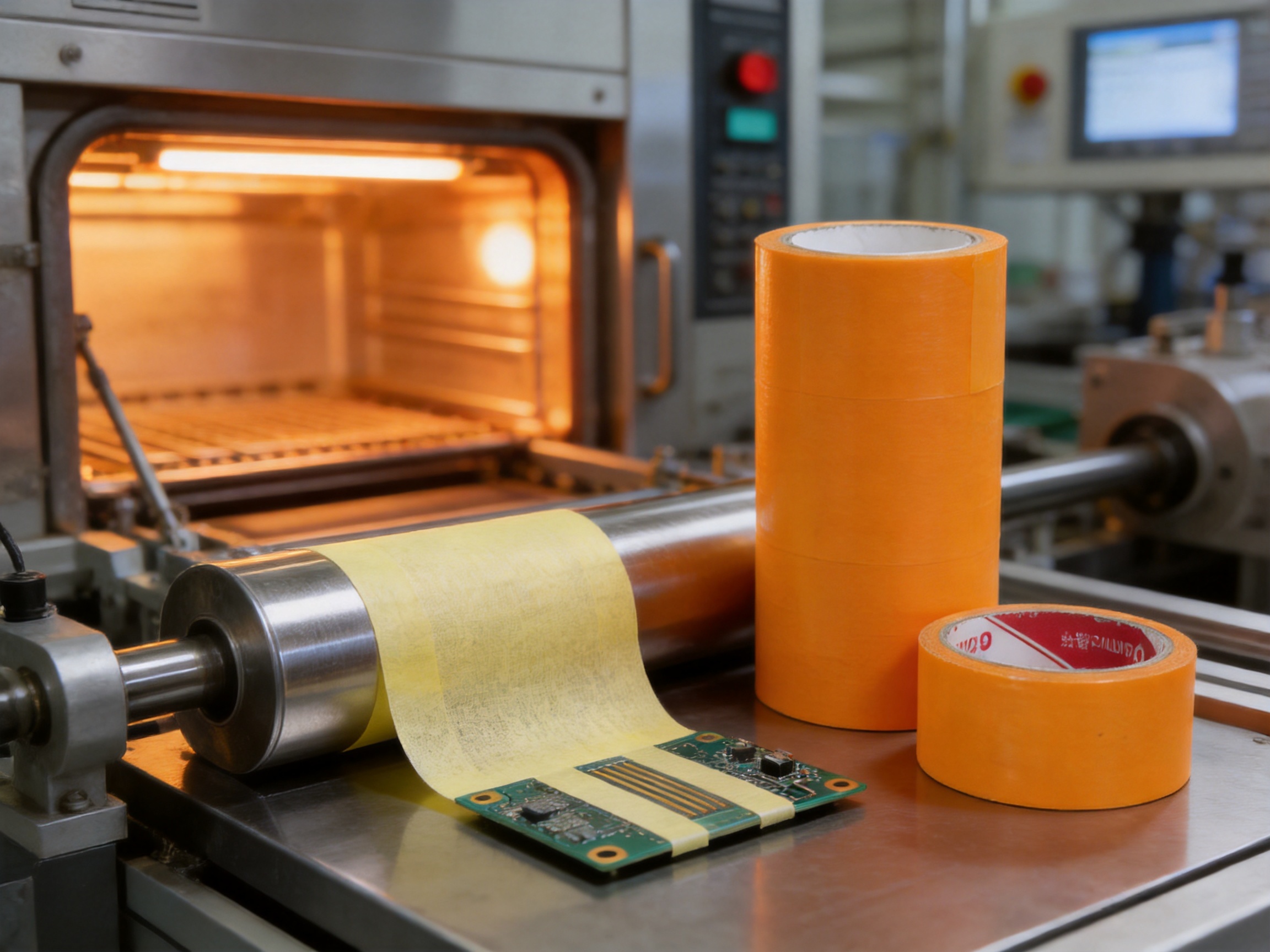
Electronics manufacturing involves masking tasks that require precision and clean removal. High-temperature resistant masking tape may be used for temporary protection of solder points, component areas, connectors, or regions that must not be exposed to certain process conditions. During PCB-related processes such as wave soldering or reflow-related protection, the tape’s heat resistance and adhesive stability are important.
Electronic components and circuit boards may be sensitive to contamination. Adhesive residue can interfere with electrical performance, assembly quality, or appearance. Therefore, correct tape selection and process control are essential. The acrylic adhesive provides a more stable option than many low-grade adhesives, but users should still verify compatibility with specific surfaces, temperatures, and exposure times.
Narrow custom widths are particularly valuable in electronics. A 5 mm or similarly narrow tape can protect small sections without covering surrounding areas unnecessarily. Accurate slitting and clean edges help reduce debris and improve application precision. In production settings where many small masking operations are repeated, a reliable tape can reduce operator errors and improve throughput.
Application in Powder Coating and Baking Processes
Powder coating and baking place strong demands on masking materials. The tape must remain attached during powder application and heating, yet remove cleanly afterward. Heat can soften or change adhesive behavior, while electrostatic powder processes may challenge edge sealing. A high-temperature masking tape selected for the correct thermal grade can protect non-coating areas and support cleaner finished parts.
During powder curing, the process temperature and dwell time should be compared with the tape’s technical data. If the tape’s temperature rating is lower than the actual process condition, edge lifting, paper brittleness, or adhesive residue may occur. Choosing a model with a suitable safety margin is recommended. For example, if a process operates near the upper limit of a tape’s capability, selecting a higher-grade version may improve reliability and reduce rework risk.
The tape should be applied before powder coating to clean, dry surfaces. Operators should press firmly along edges to ensure contact. After curing and cooling to a safe handling temperature, the tape should be removed carefully, usually at a consistent angle. Removing tape too late after prolonged dwell time may increase residue risk, especially if the substrate, coating, and temperature conditions are challenging.
General Industrial Bundling, Positioning, and Identification
Although the product is primarily designed for masking and heat-resistant protection, it can also be used for temporary bundling, positioning, identification, or light-duty fastening where temperature resistance is needed. In workshops, temporary fixing is often necessary before assembly, coating, inspection, or shipment within a production area. The tape’s hand tearability and moderate adhesion make it convenient for these tasks.
For identification, the natural paper color can be written on with suitable markers in many cases, allowing temporary labels or process notes. This is useful in batch production, repair work, sampling, and quality inspection. However, for long-term labeling or outdoor exposure, specialized labeling materials may be more appropriate. The tape is best used as a temporary industrial aid rather than a permanent marking solution.
In light-duty fastening, the tape can hold small items or protect edges temporarily. It should not be used as a structural fastening material or as a substitute for strapping, mechanical fixtures, or load-bearing tapes. Zhejiang Geruite Packaging Materials Co., Ltd. also produces strapping and packaging films, which may be more suitable for cargo stabilization and heavy packaging tasks. This broad product range allows customers to source complementary materials from one supplier.
Surface Preparation and Application Best Practices
Even a well-designed masking tape needs correct application to deliver its best performance. The most common causes of tape failure include dirty surfaces, oil contamination, moisture, insufficient application pressure, wrong temperature grade, excessive dwell time, and incompatible substrates. By following basic application practices, users can significantly improve masking results.
The surface should be clean, dry, and free from oil, dust, release agents, silicone, rust powder, or loose coating. If solvent cleaning is used, the surface must be allowed to dry completely before tape application. Applying tape over solvent residue can reduce adhesion or create bubbles during heating. On rough or porous surfaces, extra pressure may be needed to achieve adequate contact, and testing should be performed before large-scale use.
During application, operators should avoid touching the adhesive side with dirty hands. The tape should be placed smoothly and pressed down along the entire edge. For curved surfaces, applying the tape in shorter sections may reduce wrinkles and improve edge sealing. Although crepe paper has some flexibility, excessive stretching should be avoided because it may cause the tape to pull back or lift later.
For high-temperature processes, the tape should be selected according to actual temperature and time conditions. Users should consider peak temperature, duration, substrate type, coating chemistry, and removal timing. After the process, the tape should generally be removed as soon as practical within the recommended window. Prompt removal helps reduce the chance of adhesive residue, especially after heat exposure.
Common Problems and Practical Solutions
Adhesive residue is one of the most common concerns in masking operations. Residue may result from excessive temperature, prolonged dwell time, incompatible surfaces, or surface contamination. To reduce this risk, users should select the correct tape grade, prepare the surface properly, avoid unnecessary extended application time, and remove the tape after the process is complete. Sensitive surfaces should be tested before production.
Edge lifting is another common issue. It often occurs when the tape is applied with insufficient pressure, when the surface is dusty or oily, or when the process temperature exceeds the tape’s capability. The solution is to improve surface cleaning, press the tape firmly, use shorter sections on curves, and choose a higher temperature-resistant grade if necessary.
Wrinkling or uneven application can happen on curved or irregular parts. The crepe paper backing helps with conformity, but the tape should still be applied carefully. Operators can apply it gradually, smoothing the tape as they move along the surface. For tight curves, narrower tape may perform better than wider tape because it can follow the curve with less stress.
Tearing during removal may occur if the tape is exposed beyond its recommended conditions or if removal is too abrupt. Allowing the workpiece to cool to a suitable temperature and removing the tape at a steady angle can improve results. If the process requires severe temperature exposure, a higher-grade tape should be selected.
Why Manufacturer Capability Matters
Industrial customers often evaluate tape based on price per roll, but the true cost of masking includes labor, defect rate, cleaning time, downtime, and final product quality. A cheaper tape that causes rework can become much more expensive than a properly engineered tape. Manufacturer capability therefore plays a major role in total value.
Zhejiang Geruite Packaging Materials Co., Ltd. is located in Zhejiang Province, China, an area known for a strong manufacturing base and supply chain development. The company focuses on packaging materials and industrial tapes, including BOPP tape, kraft paper tape, masking tape, high-temperature resistant tape, metal tape, PE stretch film, PP strapping, and PET strapping. This product diversity reflects experience in adhesive coating, film and paper conversion, slitting, winding, and industrial packaging solutions.
The company emphasizes advanced production equipment and a rigorous quality control system. From raw material procurement to production and final inspection, process discipline supports stable tape performance. Its annual output value has reached over RMB 60 million, demonstrating production capacity and market recognition. For customers, this means the supplier is not merely trading tape but manufacturing and controlling the product through technical processes.
Strong manufacturing capability also supports customization. Customers may request special widths, temperature grades, roll formats, or performance targets. A capable manufacturer can evaluate these needs and adjust production accordingly. This is especially important for industrial users with repeat orders, because consistent supply and specification stability are essential for production planning.
Comparison with Alternative Masking Materials
Different masking materials are available, including ordinary paper tape, polyester tape, polyimide tape, aluminum foil tape, vinyl tape, and specialized die-cut masks. Each material has its place. However, high-temperature resistant crepe paper masking tape offers a particularly useful balance for many industrial applications.
Compared with ordinary masking tape, it provides better suitability for heated environments and more controlled adhesive performance. Compared with high-end polyimide tape, it is generally more economical and easier to use for large-area masking where extreme temperature resistance is not required. Compared with aluminum foil tape, it is easier to tear by hand and more flexible for many painting applications. Compared with vinyl tape, crepe paper tape often provides better paint edge definition and heat-process compatibility in selected applications.
This balanced performance makes the product attractive for customers who need reliable high-temperature masking without moving to unnecessarily expensive specialty films. The tape can serve as a practical middle-to-high-performance option: stronger and more heat-resistant than standard paper masking tape, but more cost-effective and easier to handle than some extreme-temperature specialty materials.
Sustainability and Efficient Material Use
Industrial sustainability is not only about material composition; it also includes waste reduction, process efficiency, and fewer rejected products. A reliable masking tape contributes to sustainability by reducing rework, lowering scrap rates, and helping factories use coatings and cleaning materials more efficiently. When paint lines are clean and residue is minimized, fewer parts require correction.
Custom widths also support efficient material use. Instead of using a tape that is wider than necessary, customers can choose a width closer to the actual masking requirement. This reduces waste over repeated production cycles. Wider rolls can reduce overlap and application time, while narrow rolls can prevent unnecessary coverage of areas that do not need masking.
Durable performance during high-temperature processing also reduces the need for double masking. Some users compensate for weak tape by applying multiple layers, but this increases material consumption and labor. A properly selected high-temperature masking tape can provide the required performance with a more efficient application method.
Purchasing Considerations for Industrial Users
When selecting high-temperature resistant masking tape, buyers should provide detailed process information. Important details include substrate material, surface condition, coating type, maximum temperature, exposure time, required tape width, removal timing, and whether residue tolerance is strict. The more accurately the process is described, the easier it is to select the correct tape grade.
Buyers should avoid choosing tape based only on the maximum advertised temperature. Heat resistance depends on both temperature and time, and it may also be influenced by surface type and coating chemistry. A tape that performs well for short exposure may not perform the same way during a long baking cycle. Sample testing under real production conditions is recommended before large orders.
Roll width and thickness should also be considered. A 0.14 mm standard thickness is suitable for many applications, but width selection should match the masking design. Narrow widths are useful for curves and precision lines, while wide widths improve coverage speed. Customers should also evaluate unwind force, hand tearability, edge quality, and packaging condition.
Q&A Section
Q1: What is high-temperature resistant masking tape used for?
It is used for masking, surface protection, paint separation, temporary fixing, and process protection in applications such as spraying, powder coating, baking, curing, electronics manufacturing, automotive painting, furniture finishing, and metal surface treatment.
Q2: What is the tape made of?
The tape is made of specially treated crepe paper coated with acrylic pressure-sensitive adhesive. The crepe paper provides flexibility and hand tearability, while the acrylic adhesive provides balanced tack, holding power, and aging resistance.
Q3: What is the standard thickness?
The standard thickness is 0.14 mm. This thickness provides a useful balance between strength, ease of handling, masking performance, and convenient tearing.
Q4: Can the width be customized?
Yes. The tape can be custom-produced in widths from 5 mm to 500 mm. This allows customers to choose narrow widths for precision masking and wider rolls for larger protective areas.
Q5: What temperature can the tape withstand?
The tape is available in varying temperature resistance grades depending on the manufacturing process and product model. Some applications may require moderate heat resistance, while others may need performance suitable for higher-temperature baking or curing. Users should select the grade according to actual peak temperature and exposure time.
Q6: Will the tape leave adhesive residue?
The acrylic adhesive is designed for cleaner removal when used correctly. However, residue may occur if the tape is exposed to excessive temperature, left on the surface too long, applied to an incompatible substrate, or used on a dirty or oily surface. Proper surface preparation and timely removal are important.
Q7: Why does tape sometimes lift at the edges during heating?
Edge lifting may be caused by insufficient application pressure, contamination on the surface, rough or curved substrates, or use of a tape grade that does not match the process temperature. Cleaning the surface, pressing the tape firmly, applying in sections on curves, and selecting a higher temperature grade can help.
Q8: Is this tape suitable for curved surfaces?
Yes. The crepe paper backing provides flexibility and conformity. For tight curves, narrower tape and section-by-section application usually provide better results. Operators should smooth the tape by hand and avoid excessive stretching.
Q9: How should the surface be prepared before application?
The surface should be clean, dry, and free from oil, dust, moisture, release agents, and loose particles. If solvent cleaning is used, the solvent must fully evaporate before tape application.
Q10: Why choose this product instead of ordinary masking tape?
This product offers better suitability for high-temperature industrial processes, more stable adhesion, better conformability, customizable widths, and improved clean-removal performance compared with many ordinary masking tapes. It is designed for manufacturing environments where masking quality and process reliability matter.
Conclusion
High-temperature resistant masking tape is a practical and high-value material for industrial masking, coating, electronics protection, baking, curing, and temporary process fixing. Its specially treated crepe paper backing provides flexibility, toughness, and easy hand tearing, while the acrylic adhesive provides balanced adhesion, weather resistance, and cleaner removal under proper conditions. With a standard thickness of 0.14 mm, customizable widths from 5 mm to 500 mm, and adjustable temperature resistance grades, the tape can be adapted to diverse industrial needs.
Its advantages over many conventional masking tapes include better heat-process reliability, sharper paint lines, improved conformity to curved surfaces, reduced residue risk, and greater customization flexibility. These benefits help reduce rework, improve coating quality, support operator efficiency, and lower total production cost. For manufacturers in automotive, metal processing, furniture, electronics, powder coating, and general industrial fields, selecting the right masking tape can directly improve finished product quality.
Zhejiang Geruite Packaging Materials Co., Ltd. strengthens the value of this product through advanced production equipment, broad experience in packaging materials, controlled manufacturing processes, and a commitment to quality. From raw material selection to adhesive coating, slitting, rewinding, and inspection, manufacturing discipline supports stable performance. For customers seeking a dependable high-temperature masking solution, this crepe paper tape offers a strong balance of performance, customization, and industrial practicality.
References
1. Pressure Sensitive Tape Council. Pressure Sensitive Adhesive Tape Technical Guide.
2. Satas, D. Handbook of Pressure Sensitive Adhesive Technology. Van Nostrand Reinhold.
3. Benedek, I. Pressure-Sensitive Adhesives and Applications. CRC Press.
4. Petrie, E. M. Handbook of Adhesives and Sealants. McGraw-Hill Education.
5. Mittal, K. L. Adhesion Measurement of Films and Coatings. VSP Publishing.
6. Pizzi, A., and Mittal, K. L. Handbook of Adhesive Technology. CRC Press.
Product: High-temperature resistant masking tape, crepe paper tape


CONTACT DETAILS
- Address:No. 241, Yaojiafan, Zhangpanqiao, Shushan Street, Xiaoshan District, Hangzhou City, Zhejiang Province, China
- TEL:+86-0571-83175630
- Phone:+86-13336160217
- Email:anqiaocun@163.com
PRODUCTS
NEWS CENTER
MOBILE TERMINAL
Copyright© Zhejiang Geruite Packaging Materials Co., Ltd. All Rights Reserved.
Privacy Wholesale industrial packaging tape Manufacturers