


 English
  Español
  عربى
عربى 
High-Performance PE Hand-Held Stretch Wrap for Secure Industrial Packaging
Content
- 1 What Is PE Hand-Held Stretch Wrap?
- 2 Core Operating Principle
- 3 Principal Advantages of Hand-Held Stretch Wrap
- 4 How It Compares with Alternative Packaging Materials
- 5 Material Construction and Specification Options
- 6 Applications Across Multiple Industries
- 7 Manufacturing Process and Quality Control Strengths
- 8 Why Choose an Experienced Packaging Material Manufacturer?
- 9 Recommended Selection Guide
- 10 Correct Application Procedure
- 11 Storage, Handling, and Safety Recommendations
- 12 Efficiency and Cost Considerations
- 13 Quality and Customer Service Approach
- 14 Frequently Asked Questions
- 14.1 What is PE hand-held stretch wrap mainly used for?
- 14.2 Can this film be used without a wrapping machine?
- 14.3 What widths are available?
- 14.4 What thickness should I choose?
- 14.5 Is the film adhesive?
- 14.6 Can it wrap irregularly shaped products?
- 14.7 Is the film transparent?
- 14.8 Can the length and roll weight be customized?
- 14.9 How should unused rolls be stored?
- 14.10 Can stretch wrap replace strapping completely?
- 14.11 What makes an experienced manufacturer valuable?
- 14.12 Who manufactures this PE hand-held stretch wrap?
- 15 Conclusion
- 16 References
- 17 Product: PE Hand-held stretch wrap
Modern logistics and industrial packaging require more than a simple covering material. A packaging film must hold products together, resist handling and storage conditions, protect surfaces from contamination, and remain practical for workers who need to package goods quickly. PE hand-held stretch wrap is designed to meet these requirements through a combination of flexibility, stretchability, cling performance, and easy manual operation.
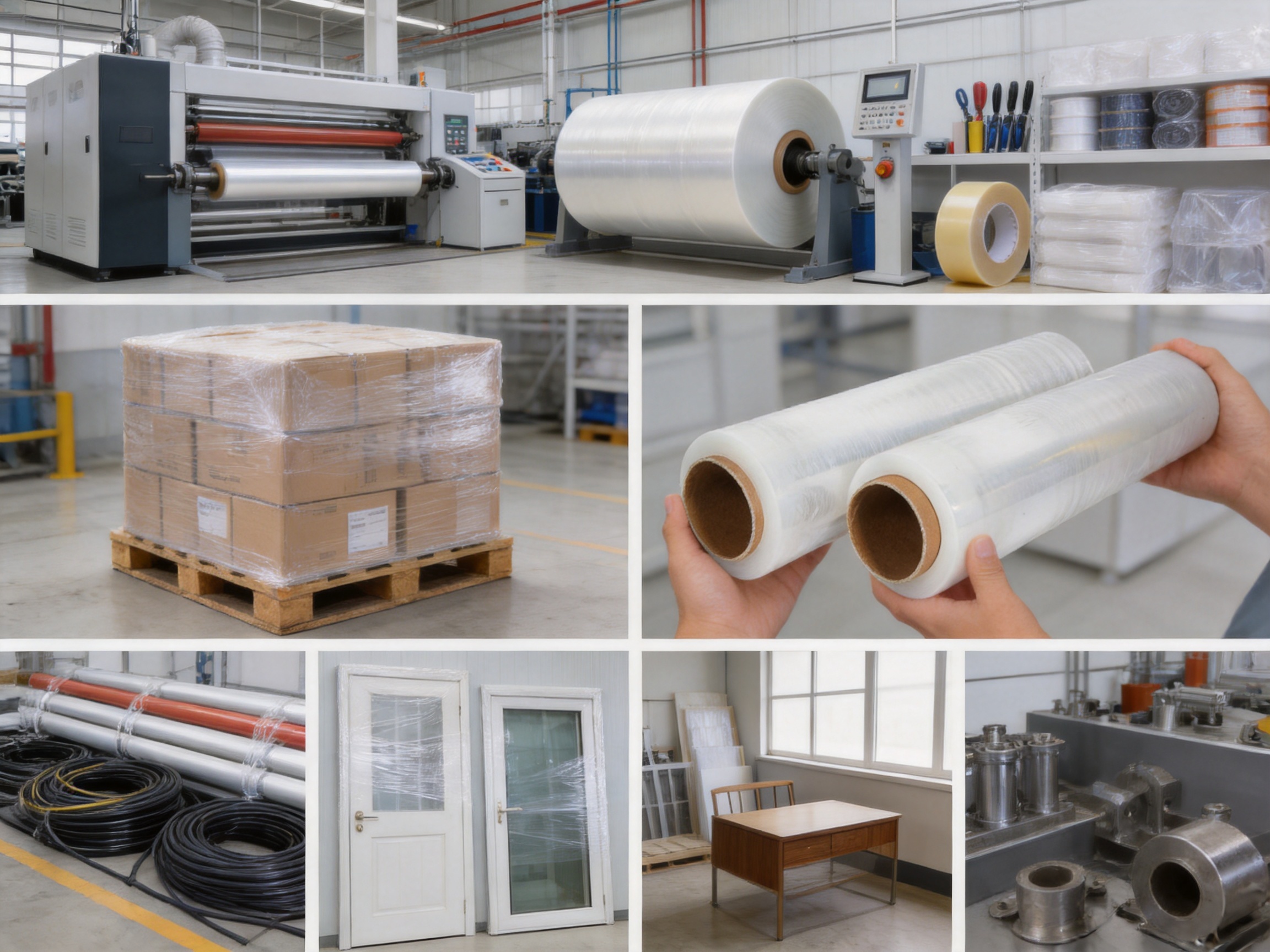
Used for wrapping carton pallets, bundles, equipment, building materials, furniture, pipes, cables, doors, windows, and many other products, hand stretch film creates a stable unit around a load. It conforms closely to the shape of the packaged goods and helps reduce movement, scattering, dust accumulation, moisture exposure, and oil contamination. Because it can be torn and applied manually without special equipment, it is suitable for warehouses, logistics facilities, workshops, distribution centers, and commercial packaging operations.
As a polyethylene-based packaging material, this stretch wrap combines a lightweight structure with practical mechanical performance. The film can be selected according to the required width, thickness, length, weight, and packaging method. Transparent construction allows users to identify the contents of a wrapped package without removing the film, which is particularly valuable in storage and inventory environments.
For buyers seeking a dependable packaging material, the value of hand-held stretch wrap lies in its balance of protection, productivity, adaptability, and cost control. It offers the restraint needed for transport while avoiding the complexity of automated wrapping systems. When produced under controlled conditions and matched correctly to the packaging application, it can become an important part of a complete industrial packaging program.
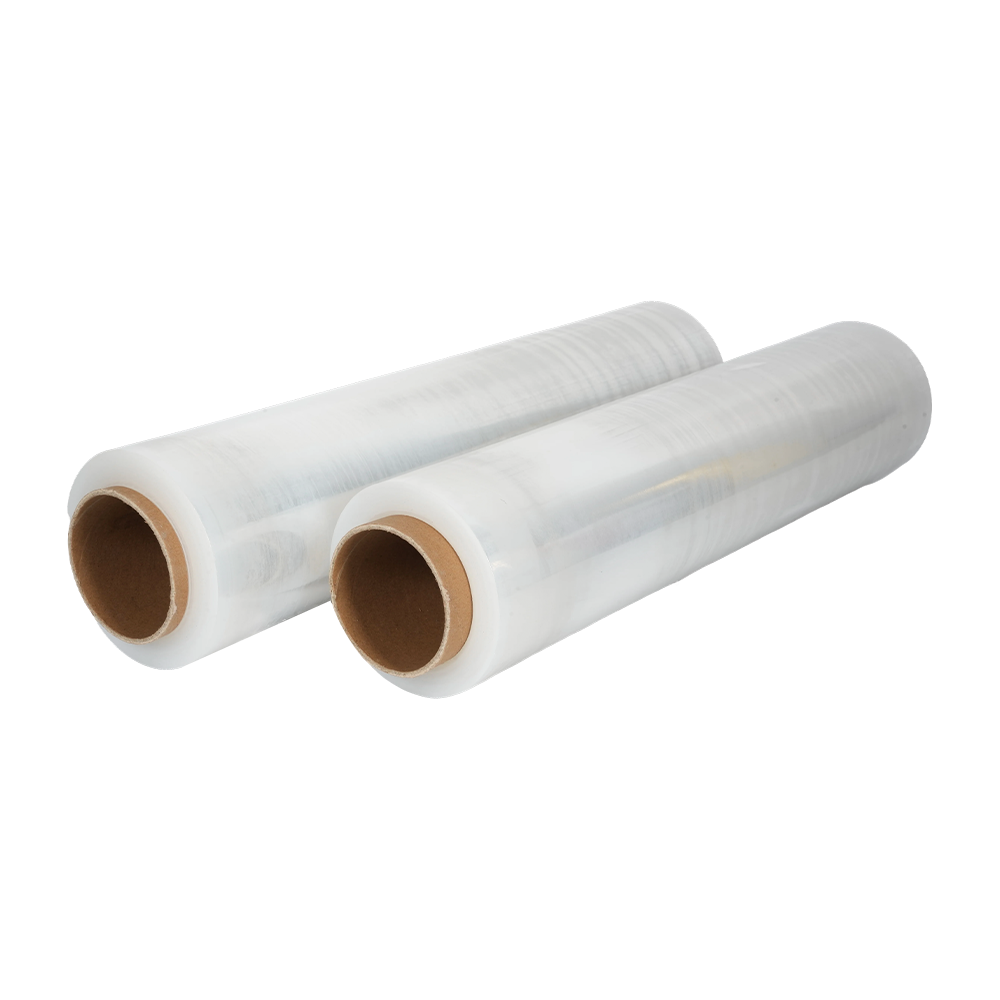
PE Hand-held stretch wrap
What Is PE Hand-Held Stretch Wrap?
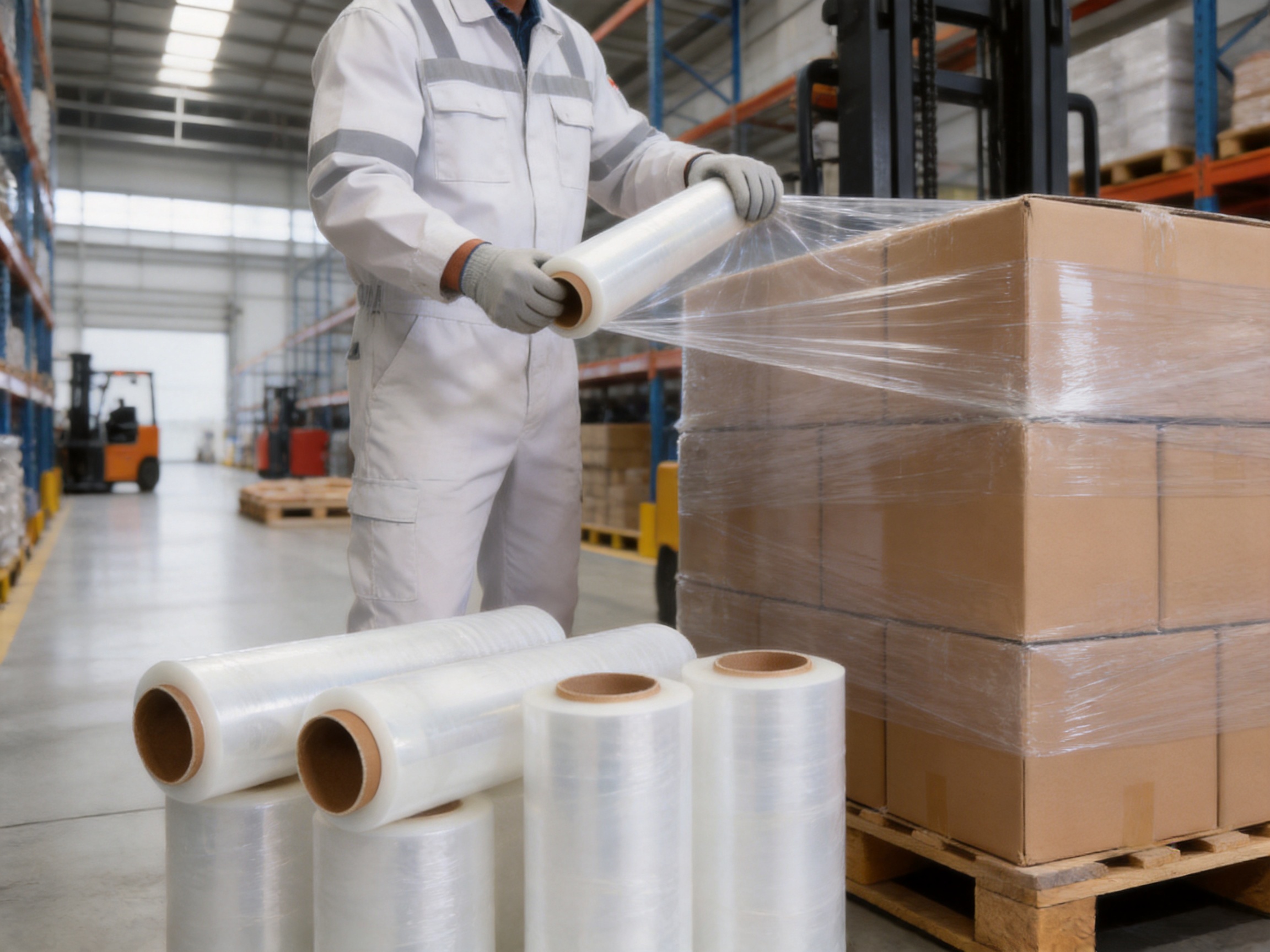
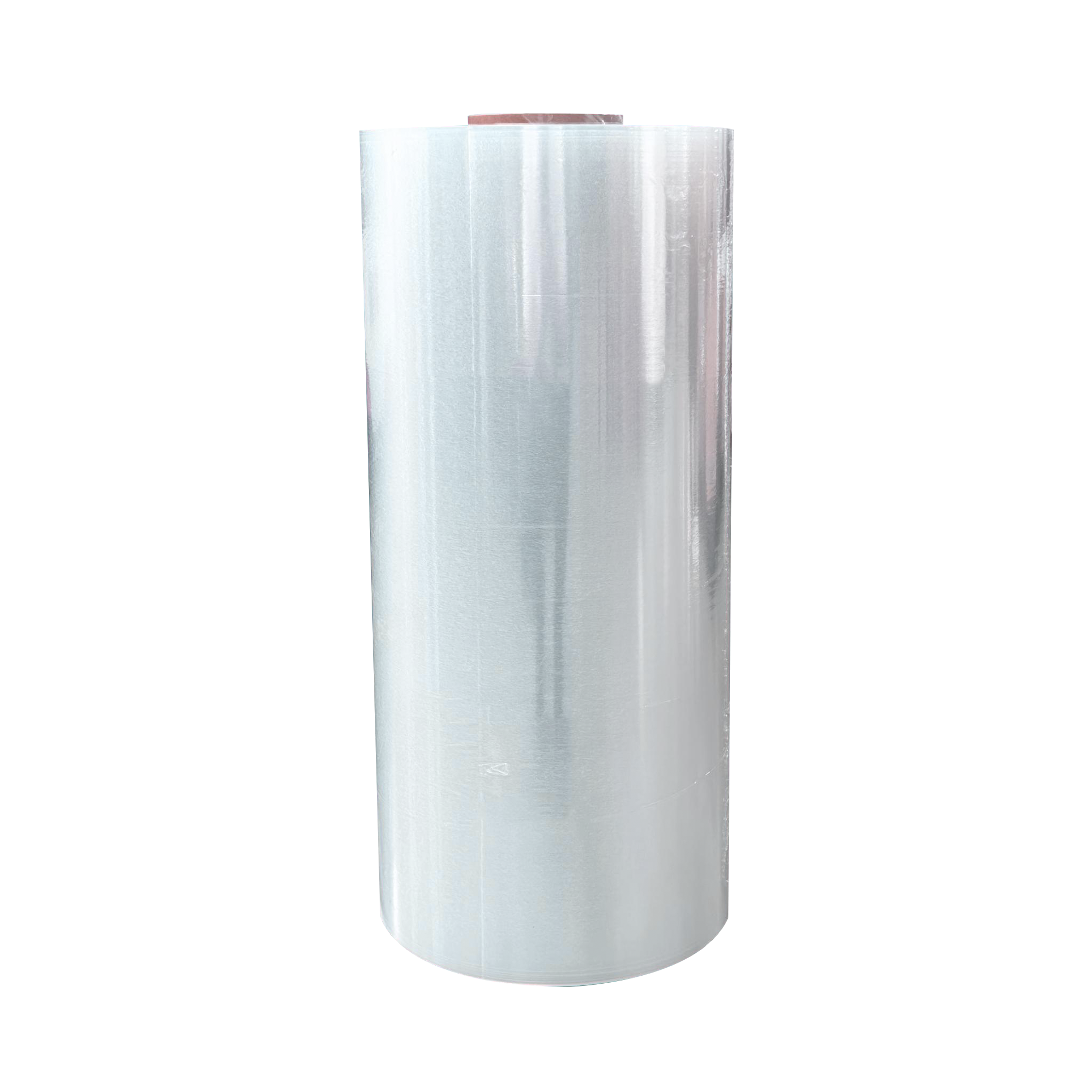
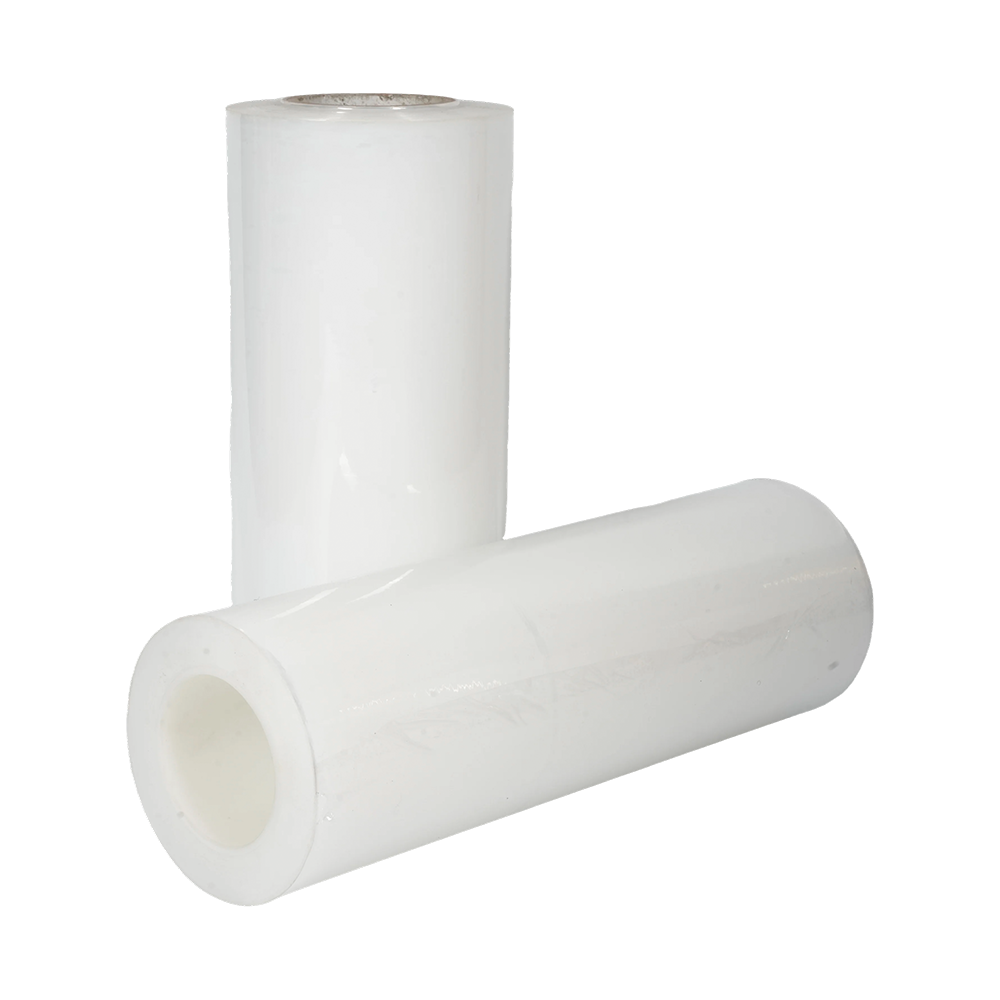
PE hand-held stretch wrap is a flexible polyethylene film used to manually wrap and stabilize products or palletized loads. During application, the operator pulls the film around the load, allowing it to stretch and conform to the outside surface. The film’s elastic recovery and cling properties help maintain tension around the package, reducing the risk that cartons or individual items will shift during movement.
The product is generally supplied in rolls that can be handled directly by an operator. Common widths include 30 centimeters, 45 centimeters, and 50 centimeters, while the supplied product information identifies 45 centimeters and 50 centimeters as standard height options. Length and weight can be customized according to the customer’s usage scenario. Thickness may range from 0.015 millimeters to 0.045 millimeters, with 15–25 microns commonly used for many standard applications.
The exact specification should be selected according to the shape, weight, surface condition, sharpness, and handling requirements of the load. Light cartons may require a different film structure from heavy industrial parts. Irregular products may need additional wrapping passes, while smooth, uniform loads can often be stabilized efficiently with fewer layers. This flexibility enables one product family to serve a wide range of packaging needs.
Unlike rigid strapping materials, stretch film surrounds the load and distributes holding pressure over a broad surface area. Unlike shrink film, it does not normally require heating equipment for ordinary manual use. Unlike bulky protective covers, it can closely follow the contours of irregular goods. These characteristics make it a practical choice for applications where speed, convenience, and adaptable load restraint are important.
Core Operating Principle
The effectiveness of hand stretch wrap comes from the interaction of several material properties. First, the film can elongate when pulled. Second, it creates tension as it is wrapped around the load. Third, its cling characteristics help adjacent layers remain in contact. Together, these properties allow the operator to create a continuous wrapping structure around cartons or products.
The film does not need to be applied with a complicated machine. The operator starts at a stable section of the load, anchors the film, and moves around the package while maintaining suitable tension. Overlapping layers can be used at the top, bottom, corners, and other areas that require additional support. At the end of the process, the film can be torn or cut manually, depending on the roll design and work practice.
Correct application is essential. Excessive pulling may cause unnecessary film consumption or distortion of sensitive packaging. Insufficient tension may result in poor load stability. Operators should also avoid sharp protrusions that could puncture the film. When the film specification and wrapping technique are properly matched, a relatively light material can provide effective unitization for a wide variety of goods.
Principal Advantages of Hand-Held Stretch Wrap
Strong Load Fixation
The primary purpose of stretch wrap is to secure the load. When applied around a pallet or bundle, the film helps keep cartons together and limits movement caused by vibration, turning, loading, unloading, and repeated handling. This is particularly important when goods travel through multiple transportation stages or are stored on racks and warehouse floors.
By creating a unified package, the film can reduce the likelihood of cartons scattering from the pallet. It also helps maintain the original arrangement of products, making the load easier to inspect and handle. Stable unitization can support more orderly warehouse operations and may reduce the time required for reorganization after transport.
Dust, Moisture, and Oil Protection
The film forms an external barrier around the packaged goods. Although it should not be treated as a substitute for specialized waterproof packaging, it helps reduce direct exposure to dust, airborne particles, incidental moisture, and oil contamination. This is useful in warehouses, workshops, construction environments, and industrial facilities where packages may remain in storage for extended periods.
For electronics, building materials, furniture components, metal parts, and other products that should remain clean before installation or final delivery, an external film layer can provide valuable temporary protection. The barrier also helps keep the outside of cartons cleaner, supporting easier identification and handling.
Surface-Safe Conformability
Flexible PE film follows the shape of a package rather than forcing the product into a rigid enclosure. This is a major advantage when packaging irregular products such as pipes, cables, doors, windows, profiles, and mixed bundles. The film can pass around corners and changes in shape while maintaining contact with the surface.
When used correctly, its soft and flexible structure reduces the risk of scratching that may occur with rough or rigid packaging components. For finished surfaces, polished items, painted materials, and large commercial products, this surface-friendly quality is an important consideration.
Manual Convenience
Hand-held stretch wrap is designed for direct use by packaging personnel. It does not require an electrical supply, compressed air, heating tunnel, or dedicated wrapping machine. This makes it appropriate for small and medium production environments, temporary packaging stations, warehouses with changing layouts, and applications where products vary significantly in size.
Manual use also simplifies maintenance. There are fewer mechanical components to service, and packaging teams can begin work without a lengthy equipment setup. Rolls can be moved to the product location, which is useful when loads are too large or too irregular to transport to a fixed wrapping machine.
Transparent Product Visibility
Transparent film permits visual inspection of the wrapped load. Labels, carton markings, product colors, and general package conditions remain easier to identify than they would be under an opaque covering. This can support inventory checks, shipment verification, and warehouse organization.
Transparency is also useful when businesses want to protect goods without concealing them completely. Workers can often confirm the condition or identity of the product while leaving the protective wrap in place.
Adaptability to Different Load Shapes
Many packaging materials perform best on regular rectangular cartons. Stretch film is more adaptable because it can be wrapped around both uniform and irregular loads. It can bundle long items, cover exposed surfaces, and connect separate pieces into a more manageable unit.
For irregular products, the operator can adjust the wrapping direction, overlap, and number of layers. This adaptability makes the material suitable for industrial parts, construction materials, household goods, doors, windows, furniture, cables, and other products that do not fit neatly into standard boxes.
How It Compares with Alternative Packaging Materials
Businesses commonly compare stretch wrap with adhesive tape, strapping bands, shrink film, woven covers, and other protective packaging materials. Each material has a different function, and stretch film is not intended to replace every alternative. Its competitive strength is its ability to combine load stabilization and surface coverage in one lightweight, manually applied product.
| Packaging Material | Typical Function | Relative Strength of Hand Stretch Wrap |
| PE hand-held stretch wrap | Load unitization, temporary protection, bundling | Flexible, transparent, manually applied, suitable for regular and irregular loads |
| Adhesive tape | Sealing cartons, joining surfaces, labeling | Stretch wrap covers and stabilizes a larger load area rather than only closing a seam |
| PP strapping | High-tension bundling and carton restraint | Stretch wrap provides broader surface contact and can offer dust and moisture shielding |
| Shrink film | Close-fitting packaging after heat application | Hand stretch wrap avoids the need for heating equipment in many manual applications |
| Rigid protective covers | Large-area external protection | Stretch wrap conforms more closely to irregular shapes and requires less storage space |
Compared with adhesive tape, stretch wrap is better suited to surrounding and stabilizing a pallet or bundle. Tape remains valuable for sealing carton flaps, but a tape strip alone cannot normally provide the same continuous external restraint. Compared with strapping, stretch wrap spreads pressure across the load and adds a protective film layer. Strapping may still be preferred for exceptionally heavy, rigid, or high-tension applications, while stretch film is advantageous when surface coverage and flexibility are priorities.
Compared with shrink film, hand stretch wrap offers simpler operation because it can generally be applied without heat. This can reduce equipment requirements and make the packaging process easier to establish at temporary or distributed workstations. Compared with rigid covers, it can use less storage space and adapt more easily to different product dimensions.
The best packaging solution may combine several materials. For example, adhesive tape can seal individual cartons, stretch film can unitize the pallet, and PP or PET strapping can add reinforcement to a particularly heavy load. The benefit of stretch wrap is that it performs multiple supporting functions while remaining easy to handle.
Material Construction and Specification Options
Polyethylene Base
The product is made from pure polyethylene, a material widely used in packaging because of its flexibility, light weight, and practical resistance to everyday handling. The PE base supports the film’s ability to stretch around products and maintain a close-fitting outer layer.
Material consistency is important. Variations in film thickness, elongation, surface properties, or roll winding can influence the user experience. Stable raw material selection and controlled processing help create a film that unwinds predictably and performs more consistently from roll to roll.
Width Selection
Width affects wrapping speed, coverage, and operator control. Narrower film may be convenient for smaller bundles or detailed wrapping, while wider film can cover larger surfaces more quickly. Common widths include 30 centimeters, 45 centimeters, and 50 centimeters. The 45-centimeter and 50-centimeter options are especially suitable for general pallet and industrial packaging work.
Width should be selected according to the dimensions of the load and the strength of the operator. An excessively wide roll may be less comfortable for some manual tasks, while a roll that is too narrow may require more turns to cover a large load. A well-matched width contributes to productivity and helps reduce unnecessary film consumption.
Thickness Selection
Available thickness is specified from 0.015 millimeters to 0.045 millimeters. In many standard packaging applications, 15–25 microns may provide an appropriate balance between flexibility and protection. Thicker film can be considered for heavier loads, rough surfaces, longer storage periods, or applications with a greater risk of puncture.
Thickness should not be considered in isolation. Load shape, wrapping tension, overlap, handling conditions, and the number of layers all affect final performance. A thinner film applied correctly may perform efficiently on a suitable load, while a thicker film may be required for sharp-edged or high-risk products.
Length and Roll Weight
Length and weight can be customized according to the customer’s usage scenario. High-volume operations may prefer longer rolls to reduce roll changes, while smaller workstations may prioritize lighter rolls that are easier for individual operators to carry. Roll dimensions should also be compatible with the selected dispenser or manual handling method.
Customization allows packaging managers to consider daily consumption, labor patterns, storage capacity, shipment frequency, and customer requirements. A practical roll configuration can improve workflow without forcing every user to purchase the same standard format.
Transparent Appearance
Transparent film is the standard color option identified for this product. It supports visual identification and allows printed carton information to remain visible. Light-colored variations may also be considered for particular applications, but transparent film is especially useful when inventory recognition and shipment inspection are important.
Applications Across Multiple Industries
Logistics and Pallet Transportation
In logistics operations, carton pallets are exposed to vibration, impacts, changes in direction, and repeated transfers between vehicles and warehouses. Hand stretch wrap helps hold the cartons together as a single handling unit. It can also help protect the exterior of the load from dust and incidental contamination during transit.
Workers can wrap completed pallets at the dispatch area or secure individual groups of cartons before loading. Because the film is transparent, shipping labels and product markings remain easier to inspect. For facilities with varied pallet sizes, manual wrapping provides the flexibility to adjust the application to each load.
Warehousing and Inventory Storage
Stored goods may be exposed to dust, humidity, oil mist, accidental contact, and frequent handling. A film layer can help preserve the cleanliness and order of cartons and products during the storage period. It can also hold partial cartons or mixed items together, reducing the risk of separation.
For electronics, building materials, spare parts, and seasonal inventory, the film can provide temporary external protection without permanently sealing the product inside a rigid package. When goods need to be inspected, the transparent wrap allows staff to identify the contents before deciding whether to remove it.
Industrial Manufacturing
Factories often need to bundle components at different production stages. Pipes, cables, profiles, metal parts, plastic components, and finished assemblies may have unusual shapes that make conventional cartons impractical. Hand stretch wrap can provide a flexible outer layer while allowing the operator to adjust the number of wrapping passes to the shape and weight of the bundle.
It can also be used to protect semi-finished goods while they move between production areas. Keeping components grouped together may reduce handling time and simplify internal logistics. Where a product has a sensitive surface, the film can provide temporary separation from dust and contact with other materials.
Construction and Building Materials
Doors, windows, panels, profiles, trim, and other building products often require protection before installation. Their dimensions can vary considerably, and some finished surfaces must be kept clean and free from abrasion. Stretch wrap can surround the items without requiring a custom rigid container for every size.
For construction supply warehouses, the film may be used to bundle components for delivery to a project site. It can help keep sets of related items together and provide a temporary barrier against dust during storage and transport.
Furniture and Commercial Products
Furniture, fixtures, display materials, and large commercial products may need temporary protection while being moved through showrooms, warehouses, or delivery vehicles. Hand stretch film can cover broad surfaces and hold protective layers in place. Its transparency allows the product to remain recognizable, which is beneficial for order verification and showroom management.
Operators should ensure that the product surface is clean and that the film is not pulled excessively against delicate finishes. The objective is stable coverage without unnecessary pressure or abrasion.
Household Goods and General Distribution
Distributors handling mixed household goods can use stretch wrap to combine cartons, secure open bundles, or stabilize irregular consignments. The material is particularly convenient when package sizes change throughout the day and a single fixed packaging format would be inefficient.
Manufacturing Process and Quality Control Strengths
The reliability of a stretch film depends not only on its basic material but also on how consistently it is manufactured. Zhejiang Geruite Packaging Materials Co., Ltd. focuses on the research, development, production, and sales of packaging materials, including PE stretch film, BOPP tape, kraft paper tape, masking tape, high-temperature-resistant tape, metal tape, PP strapping, and high-strength PET strapping.
This broad product experience provides an important manufacturing advantage. A company that works across multiple packaging categories can evaluate stretch film within the wider context of load stabilization, carton sealing, bundling, and protective packaging. Customers may therefore obtain complementary materials from a supplier familiar with the practical interaction between films, tapes, and strapping products.
Raw Material Management
Quality begins with the selection and control of polyethylene raw materials. Material procurement should consider consistency, cleanliness, process suitability, and the performance requirements of the final application. Stable raw materials support more uniform film formation and help reduce variation in thickness, appearance, and mechanical behavior.
A disciplined procurement process also helps manufacturers respond to different customer requirements. Standard packaging film, heavy-duty wrapping film, and customized roll formats may require different production parameters. Careful material planning allows these products to be manufactured according to their intended use rather than treated as identical items.
Controlled Film Production
During film production, the polyethylene material is processed into a continuous film with controlled dimensions and surface characteristics. The manufacturing team must manage factors that influence film uniformity, stretching behavior, winding quality, and cling performance. Consistent production conditions are especially important because operators expect the film to unwind smoothly and maintain predictable tension during manual application.
Advanced production equipment supports repeatable processing and helps the company maintain stable output across different product specifications. Equipment capability is valuable not simply because it increases production volume, but because it provides better control over the manufacturing process and improves the ability to meet customized requirements.
Thickness and Dimensional Inspection
Thickness consistency is a key quality consideration. Uneven film may create weak areas, inconsistent stretching, or unpredictable puncture resistance. Quality control procedures should therefore verify that the film remains within the specified thickness range and that the finished roll matches the customer’s order.
Other dimensional checks may include roll width, length, winding condition, core compatibility, and overall appearance. These inspections help ensure that the product can be installed and used efficiently at the customer’s packaging station.
Surface and Cling Performance
The film’s surface must support practical layer-to-layer contact without creating an unnecessarily difficult unwinding experience. Adequate cling helps adjacent layers remain connected after wrapping, while controlled surface behavior allows the operator to manage the roll during application.
Performance checks may include visual inspection, manual application trials, and evaluation of the film’s ability to remain in position around representative loads. These checks are important because a film can meet a thickness requirement yet still provide a poor user experience if it does not handle consistently.
Roll Winding and Packaging
Roll quality affects both productivity and material utilization. A well-wound roll should remain stable during transport and unwind smoothly during use. Loose edges, telescoping, wrinkles, or damaged cores can interrupt work and create waste. Proper finished-product packaging helps protect the roll from dust, moisture, and contamination before it reaches the customer.
The recommended practice is to keep unused rolls sealed until required. This protects the film’s surface properties and reduces the possibility of dust contamination during storage.
Final Inspection and Customer Adaptation
The company emphasizes quality control from raw material procurement through production and final inspection. This approach is important for packaging materials because customers often use them in repetitive, high-volume processes where small inconsistencies can become significant over time.
Customer requirements may involve width, thickness, roll length, weight, packaging format, and intended application. A manufacturing system capable of supporting customization can help businesses select a configuration that matches their equipment, workforce, load type, and consumption pattern. This is a practical advantage over suppliers that offer only a limited range of fixed specifications.
Why Choose an Experienced Packaging Material Manufacturer?
Choosing a stretch film supplier involves more than comparing the price of one roll. Buyers should also consider production consistency, customization capability, technical understanding, product range, quality control, and long-term service. An experienced manufacturer can help identify the correct specification and respond more effectively when a customer’s packaging needs change.
Zhejiang Geruite Packaging Materials Co., Ltd. is located in Zhejiang Province, China, a region with a developed manufacturing industry and strong industrial supply chains. The company has focused on packaging material research and innovation since its establishment and has built experience in the production and sales of multiple packaging products.
Its product portfolio includes packaging tapes and strapping materials in addition to PE stretch film. This breadth enables the company to serve customers looking for coordinated packaging solutions rather than a single isolated item. A logistics company may require stretch film and carton-sealing tape. An industrial manufacturer may need stretch film together with PP or PET strapping. A distributor may require several packaging formats for different product lines.
The company states that its annual output value has exceeded RMB 60 million. This indicates an established operating scale and the ability to support ongoing manufacturing activity. More importantly, the company describes a quality philosophy that treats product quality as central to its business, with attention to raw material procurement, production, and final inspection.
Its commitment to research and development also supports continued product improvement. Packaging requirements evolve as supply chains become more demanding, products become more varied, and customers seek better material utilization. A manufacturer that invests in process optimization and product structure can be better positioned to support these changes.
Recommended Selection Guide
Before ordering PE hand-held stretch wrap, buyers should evaluate the complete packaging application. The following questions can help determine a suitable specification.
What Is the Load Weight?
Heavier loads generally require stronger fixation and may benefit from thicker film, additional layers, or reinforcement at the top and bottom. Lightweight cartons may use a thinner specification if the load is stable and the surfaces are not sharp.
Is the Load Regular or Irregular?
Regular palletized cartons are usually straightforward to wrap. Irregular products may require more flexible application techniques and additional attention to protrusions, corners, and unsupported areas. Pipes, cables, doors, windows, and metal parts should be evaluated individually before selecting a wrapping pattern.
How Long Will the Product Be Stored?
Short-term transport and extended warehouse storage may have different requirements. Longer storage periods can increase the importance of protection from dust, moisture, heat, and handling. Film thickness and the number of layers should be selected accordingly.
Will the Load Be Exposed to Sharp Edges?
Sharp corners and protruding components can puncture or tear film. Where such risks cannot be removed, the customer may need a thicker film, edge protectors, inner cushioning, or a different packaging combination. The film should not be expected to compensate for an inherently dangerous load shape without additional protection.
How Will Operators Apply the Film?
Manual wrapping depends on operator comfort, roll weight, working height, and the available space around the load. A roll that is too heavy or too wide may slow the process. The best specification balances coverage and handling convenience.
Is Visibility Important?
Transparent film is appropriate when labels, colors, and product information should remain visible. It is particularly useful for inventory management, shipment checking, and mixed-load identification.
Correct Application Procedure
Before wrapping, inspect the load and remove loose debris from the surface. Clean surfaces help the film maintain better contact and reduce the chance that dust or particles will interfere with the wrapping process. Sharp protrusions should be covered, repositioned, or otherwise protected.
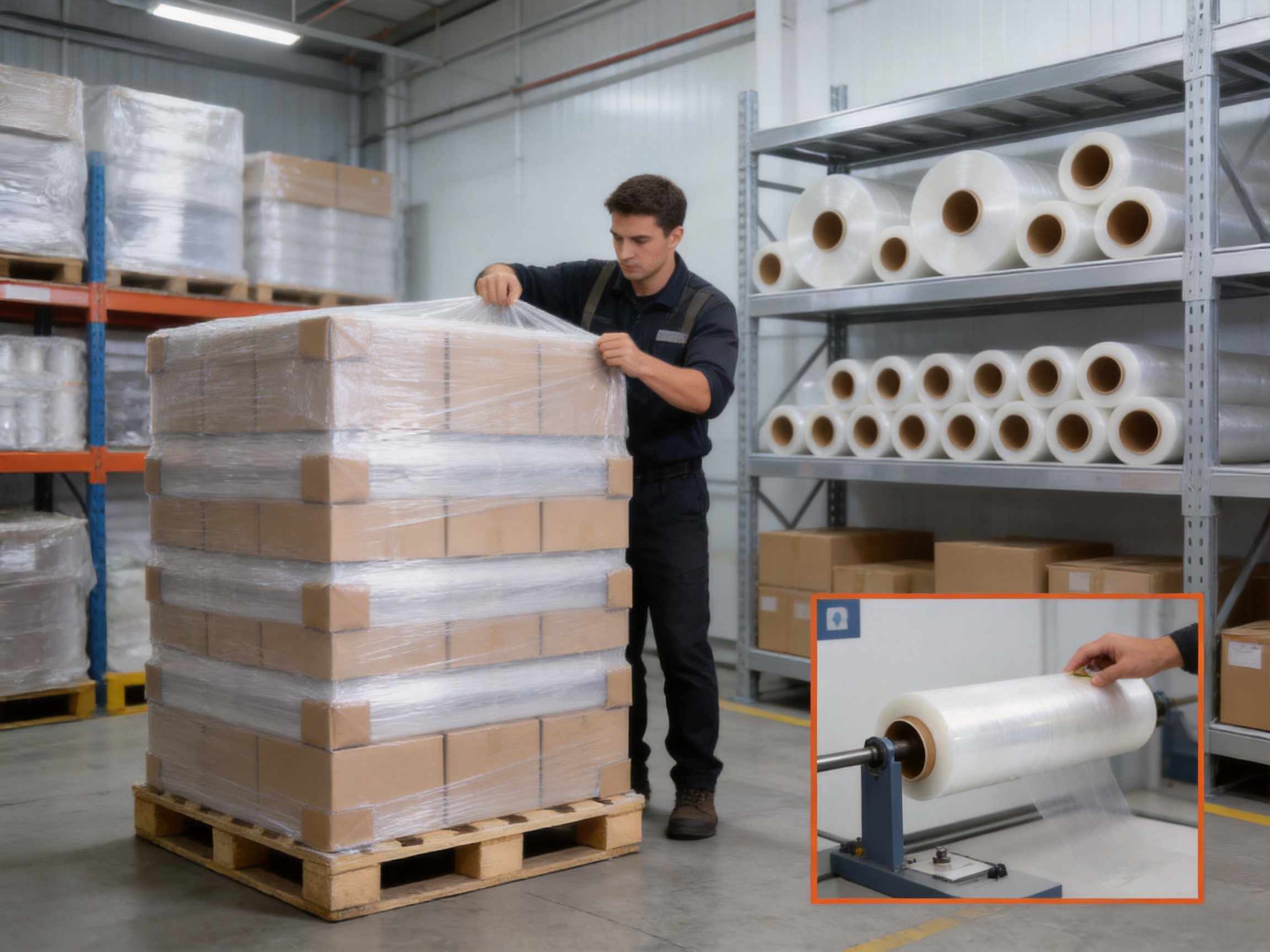
Place the load on a stable surface and begin at a lower section where the film can be anchored securely. Keep the roll aligned with the load and apply steady tension. Walk around the package or rotate the load when appropriate, maintaining an even overlap between successive passes.
Pay special attention to the base of the pallet because this area helps connect the cartons to the pallet platform. Continue upward while keeping the film close to the load. For irregular products, change direction as necessary to follow the shape, but avoid creating loose pockets that may catch during handling.
Additional passes may be added around corners, upper sections, lower sections, or areas carrying concentrated weight. Once sufficient stability has been achieved, finish the wrap at a secure location and tear or cut the film as appropriate. Pressing the final section against the wrapped surface can help keep the end from becoming loose.
Operators should receive basic training in tension control, overlap, load inspection, and safe movement around pallets. A simple and consistent procedure can improve packaging quality and reduce unnecessary material use.
Storage, Handling, and Safety Recommendations
Unused stretch film should be stored in a cool, dry place away from direct sunlight and high-heat sources. The recommended storage temperature is 15°C–25°C. Keeping the product within a moderate temperature range helps preserve its intended handling and surface characteristics.
Rolls should remain in their original packaging or sealed protective packaging until use. This helps prevent dust contamination and protects the film from unnecessary environmental exposure. Rolls should be handled carefully to avoid crushing the edges or damaging the core.
Do not place heavy objects on top of stretch film rolls. Avoid dragging rolls across rough floors, and use suitable storage racks or pallets. When moving large quantities, workers should follow the facility’s lifting and handling procedures.
Stretch film is a packaging material, not a load-bearing lifting device. It should never be used as a substitute for certified lifting straps, safety restraints, or structural support. Loads should be placed on stable pallets and arranged so that the weight is distributed as evenly as possible.
Packaging personnel should also keep hands clear of pinch points when wrapping near pallet edges or mechanical equipment. If a load is unstable before wrapping, it should be stabilized through proper stacking or auxiliary packaging rather than relying solely on film tension.
Efficiency and Cost Considerations
Film cost should be assessed according to the total packaging result rather than only the purchase price per roll. A product with consistent winding, suitable stretchability, and reliable cling may reduce interruptions, excessive overlap, and repeated wrapping. This can lower material waste and improve labor productivity.
Customization of length and weight can also support cost control. High-volume users may benefit from longer rolls that reduce changeover frequency. Smaller operations may prefer lighter rolls that improve operator comfort and reduce handling difficulty. Selecting the correct width and thickness can prevent the use of more material than the load actually requires.
Transparent film may contribute to operational efficiency by reducing the need to unwrap packages for identification. When product markings remain visible, workers can check inventory and shipment details more quickly. In a busy warehouse, these small time savings can accumulate across many loads.
Another consideration is damage prevention. A stable, protected load is less likely to experience scattering, contamination, or handling-related surface damage. Avoiding even a small number of damaged shipments may provide greater financial value than choosing a lower-cost but less suitable packaging material.
Quality and Customer Service Approach
Packaging materials directly affect the customer’s daily operations, so supplier communication is important. Customers should be able to discuss load type, application conditions, preferred dimensions, storage requirements, and expected consumption. This information helps the manufacturer recommend a more suitable film configuration.
A responsive supplier should also be able to manage repeat orders and specification consistency. Once a customer has approved a roll width, thickness, length, and packaging format, maintaining those parameters is important for production planning and operator familiarity.
Zhejiang Geruite Packaging Materials Co., Ltd. presents itself as a packaging solution provider with a focus on quality, innovation, production capability, and professional service. Its location in Hangzhou, Zhejiang Province, provides access to a region recognized for manufacturing activity and industrial logistics. The company’s stated goal is to continue optimizing its product structure, improving service levels, and serving customers in global markets.
Frequently Asked Questions
What is PE hand-held stretch wrap mainly used for?
It is mainly used to wrap and stabilize carton pallets, bundles, industrial parts, and large products during transportation and storage. It also provides temporary protection against dust, moisture, and oil contamination.
Can this film be used without a wrapping machine?
Yes. The product is designed for manual application. Operators can tear and use the film without electrical equipment or heating tools. A manual dispenser may be used if desired, but the basic product does not require a dedicated machine.
What widths are available?
Common widths include 30 centimeters, 45 centimeters, and 50 centimeters. The listed product information specifically identifies 45 centimeters and 50 centimeters as available height options. Custom requirements should be confirmed before ordering.
What thickness should I choose?
The stated thickness range is 0.015–0.045 millimeters. A 15–25 micron film is commonly suitable for standard applications, while heavier loads, sharp surfaces, or longer storage periods may require a thicker specification or additional wrapping layers.
Is the film adhesive?
The film is described as having cling properties rather than functioning like conventional adhesive tape. Its layers remain in contact through surface cling and wrapping tension. It is not intended to seal carton flaps in the same way as pressure-sensitive tape.
Can it wrap irregularly shaped products?
Yes. Its flexibility allows it to conform to pipes, cables, doors, windows, metal parts, furniture, and other irregular products. Sharp protrusions should be protected before wrapping to prevent punctures.
Is the film transparent?
Yes. The listed color is transparent. This allows users to inspect the general condition of the load and identify labels or product information without removing the wrapping.
Can the length and roll weight be customized?
Yes. Length and weight can be customized according to the customer’s usage scenario. Buyers should provide information about daily consumption, preferred roll size, operator requirements, and packaging equipment if applicable.
How should unused rolls be stored?
Store the rolls in a cool, dry place away from direct sunlight and high heat. The recommended temperature is 15°C–25°C. Keep the packaging sealed when the film is not in use to help prevent dust contamination and preserve its surface properties.
Can stretch wrap replace strapping completely?
Not in every application. Stretch wrap is excellent for flexible load unitization and broad surface protection, but extremely heavy or high-tension loads may also require PP or PET strapping. The correct choice depends on load weight, shape, transport conditions, and handling requirements.
What makes an experienced manufacturer valuable?
An experienced manufacturer can support consistent production, specification customization, quality inspection, and coordinated packaging solutions. A supplier with experience in stretch film, tapes, and strapping can also help customers select complementary materials for complete load protection.
Who manufactures this PE hand-held stretch wrap?
The product is supplied by Zhejiang Geruite Packaging Materials Co., Ltd., located at No. 241, Yaojiafan, Zhangpanqiao, Shushan Street, Xiaoshan District, Hangzhou City, Zhejiang Province, China. The company produces a range of packaging materials, including PE stretch film, adhesive tapes, PP strapping, and PET strapping.
Conclusion
PE hand-held stretch wrap is a practical and versatile solution for securing and protecting products during transport, storage, and internal handling. Its polyethylene construction provides flexibility and stretchability, while its cling properties help maintain contact between overlapping layers. Transparent appearance, manual operation, adjustable specifications, and suitability for irregular products make it useful across logistics, warehousing, manufacturing, construction, furniture, and commercial packaging.
Compared with packaging materials that perform only one function, hand stretch film combines load fixation with broad external coverage. It can stabilize carton pallets, reduce scattering, help limit dust and moisture exposure, and protect product surfaces without requiring a complex wrapping system. Its performance can be further improved through correct thickness selection, appropriate wrapping tension, adequate overlap, and proper load preparation.
The manufacturing capability behind the product is equally important. Zhejiang Geruite Packaging Materials Co., Ltd. applies a quality-focused approach covering raw material procurement, production, process control, and final inspection. Its broad portfolio of tapes, films, and strapping materials supports a complete understanding of industrial packaging requirements. Production equipment, customization capability, and experience in packaging material development enable the company to serve different customer scenarios.
For businesses seeking a dependable packaging partner, the most effective approach is to evaluate the entire application rather than selecting film by price alone. Load weight, shape, storage period, handling conditions, roll dimensions, and operator workflow should all be considered. With a suitable specification and consistent manufacturing quality, PE hand-held stretch wrap can help improve load stability, reduce packaging inconvenience, and support safer and more efficient logistics operations.
References
1. Internal product information for PE Hand-Held Stretch Wrap, including material, dimensions, thickness, color, and customization options.
2. Internal technical description of hand stretch film applications in logistics, warehousing, industrial packaging, and commercial protection.
3. General principles of polyethylene film processing, stretch packaging, and manual load unitization.
4. Packaging handling and storage guidance supplied for the product, including temperature, sealing, surface preparation, and sharp-edge precautions.
5. Company information regarding Zhejiang Geruite Packaging Materials Co., Ltd., its product portfolio, manufacturing focus, quality-control approach, and development strategy.
Product: PE Hand-held stretch wrap

LATEST POST
Let’s create something amazing together
contact us

CONTACT DETAILS
- Address:No. 241, Yaojiafan, Zhangpanqiao, Shushan Street, Xiaoshan District, Hangzhou City, Zhejiang Province, China
- TEL:+86-0571-83175630
- Phone:+86-13336160217
- Email:anqiaocun@163.com
PRODUCTS
NEWS CENTER
MOBILE TERMINAL
Copyright© Zhejiang Geruite Packaging Materials Co., Ltd. All Rights Reserved.
Privacy Wholesale industrial packaging tape Manufacturers