


 English
 Español
 عربى

Transparent Machine Stretch Film for Stable, Efficient, and Protective Pallet Packaging
Content
- 1 What Is Transparent Machine Stretch Film?
- 2 How the Film Stabilizes a Pallet Load
- 3 Core Product Advantages
- 4 Material Structure and Performance
- 5 Specification Selection
- 6 Applications Across Multiple Industries
- 7 Manufacturing Strengths of the Supplier
- 8 Advantages Compared with Less Specialized Alternatives
- 9 Recommended Machine Wrapping Procedure
- 10 Storage and Handling of Unused Film
- 11 Quality, Service, and Customization
- 12 Environmental and Operational Considerations
- 13 Why Choose a Specialized Packaging Material Manufacturer?
- 14 Purchasing Checklist for Machine Stretch Film
- 15 Questions and Answers
- 15.1 What is transparent machine stretch film mainly used for?
- 15.2 Can this film be applied by hand?
- 15.3 What material is the film made from?
- 15.4 What thicknesses are available?
- 15.5 What film heights are available?
- 15.6 Can the roll length and weight be customized?
- 15.7 Does transparent film protect goods from moisture?
- 15.8 Can stretch film prevent all pallet movement?
- 15.9 How should unused film be stored?
- 15.10 Why is metallocene copolymer included in the material structure?
- 15.11 How does machine wrapping reduce labor costs?
- 15.12 What information should be provided when requesting a quotation?
- 16 Conclusion
- 17 References
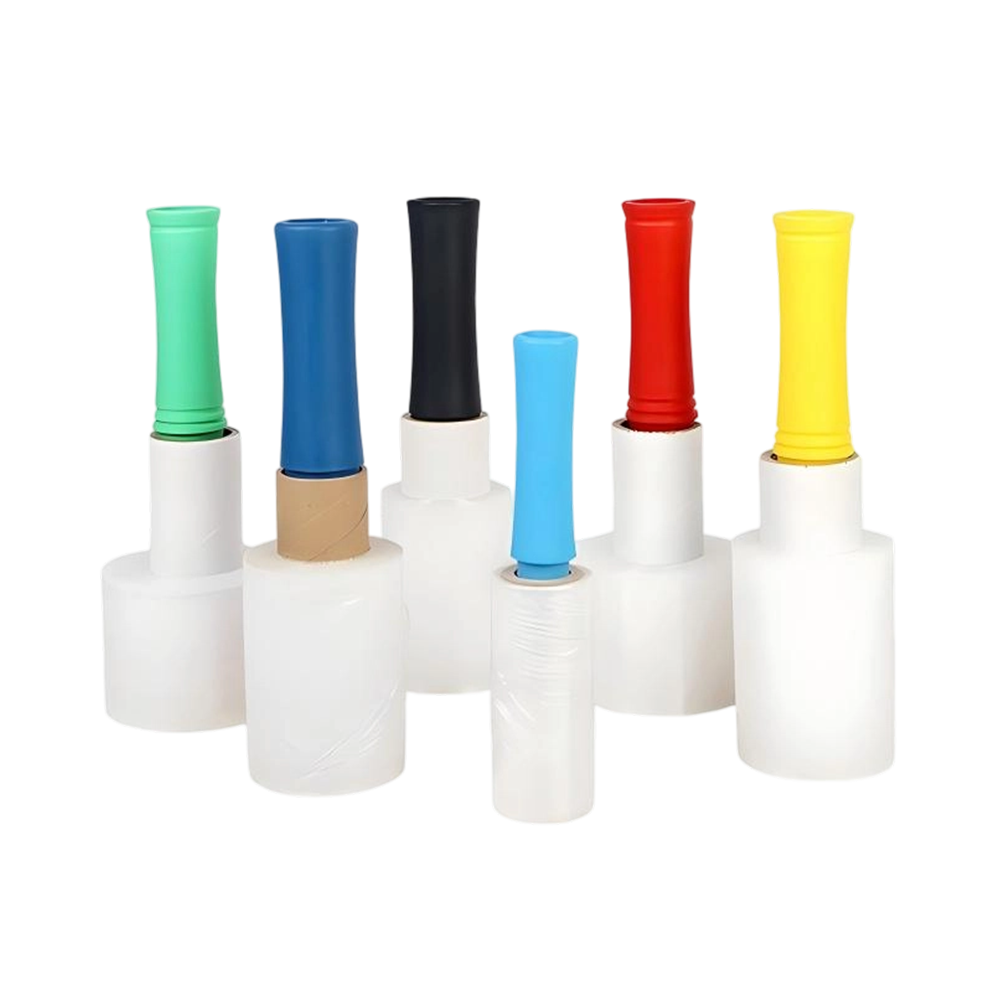
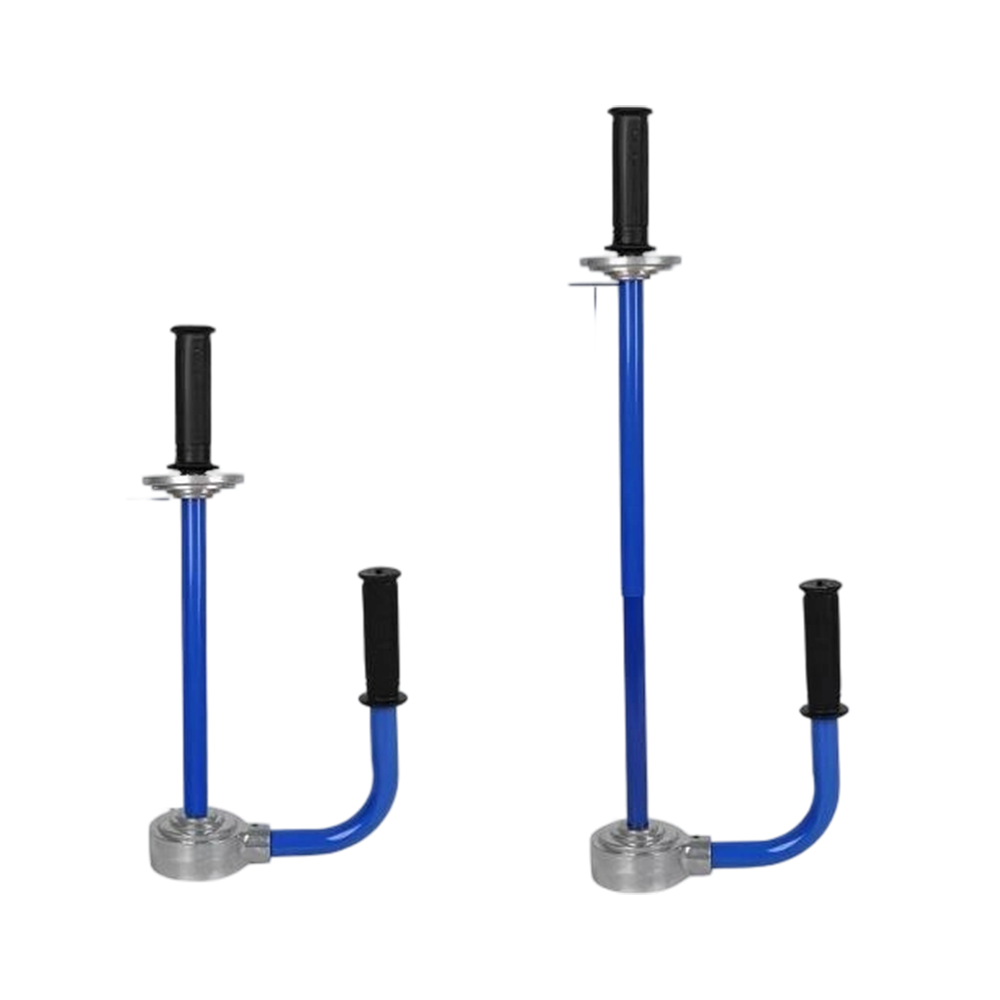
- 18 Product: Transparent machine stretch film
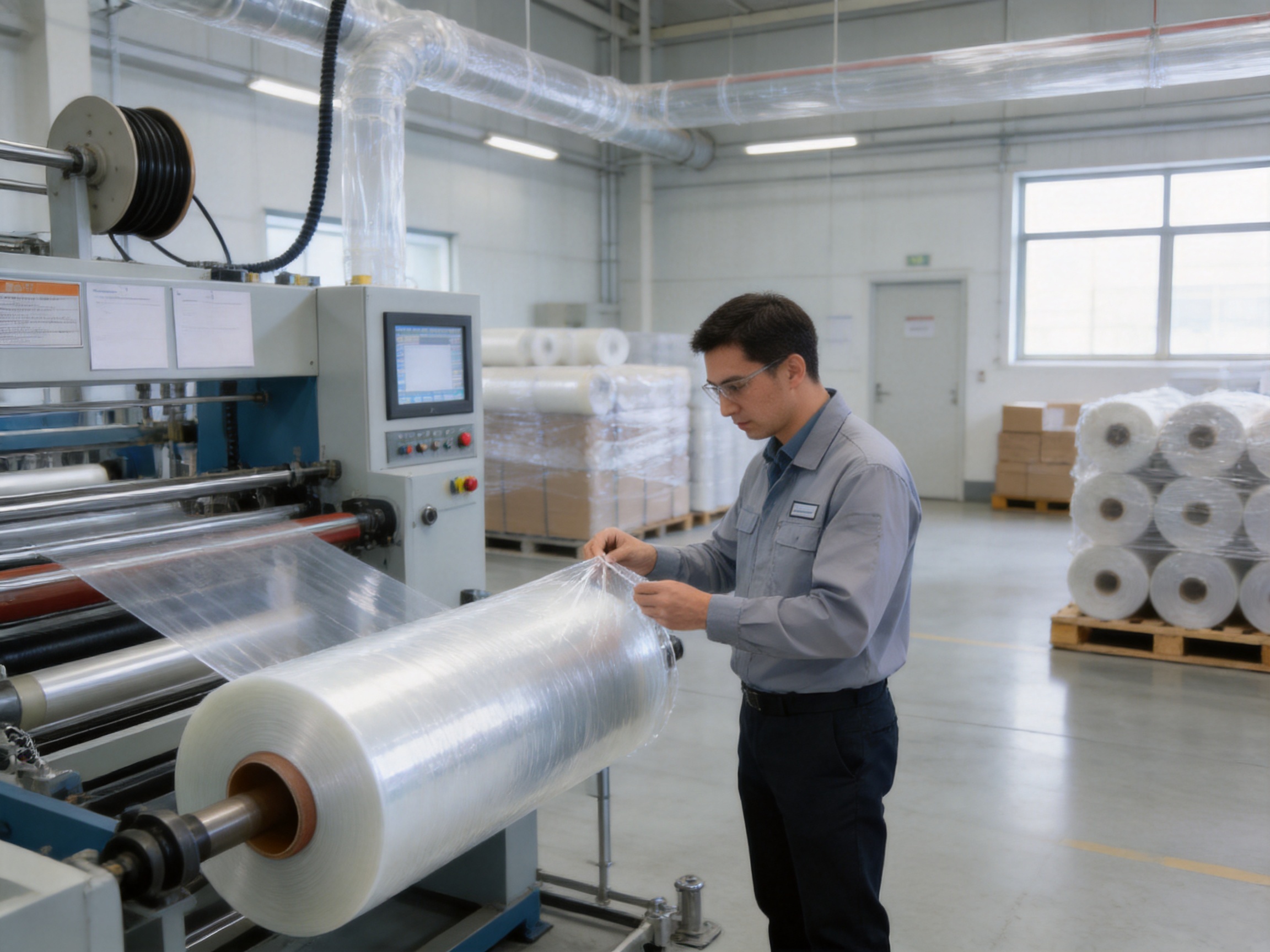
Modern logistics operations require packaging materials that do more than simply cover a load. A reliable stretch film must hold cartons together, resist tearing during application, protect goods from dust and moisture, and maintain stable tension throughout transportation and storage. It must also work efficiently with automated equipment so that packaging teams can increase output without continuously adding labor. Transparent machine stretch film is designed to meet these demands through a combination of high-elasticity polyethylene, controlled thickness, strong recovery memory, and compatibility with mechanical wrapping systems.
This industrial packaging film is developed primarily for pallet unitization, but its uses extend well beyond standard cartons. It can secure bagged products, industrial components, cable reels, pipes, doors, windows, metal parts, and other irregularly shaped items. By forming a tightly controlled protective layer around products, it helps reduce scattering, shifting, toppling, dust contamination, moisture exposure, and surface abrasion. Its transparent appearance also allows operators to inspect labels, product conditions, and pallet contents without removing the wrapping.
Zhejiang Geruite Packaging Materials Co., Ltd. manufactures and supplies this type of stretch film as part of a broader portfolio of industrial packaging materials. The company combines polyethylene-based film technology, production experience, quality control, customization capability, and packaging application knowledge to serve customers in logistics, warehousing, manufacturing, construction, household goods, electronics, and other industries.
What Is Transparent Machine Stretch Film?
Transparent machine stretch film is a flexible polyethylene film engineered for use with powered or semi-automatic wrapping equipment. During application, the wrapping machine stretches the film before it is laid around a pallet or product. The film then attempts to recover toward its original dimensions, creating a controlled constrictive force around the load. This force helps hold individual cartons or components together as one stable unit.
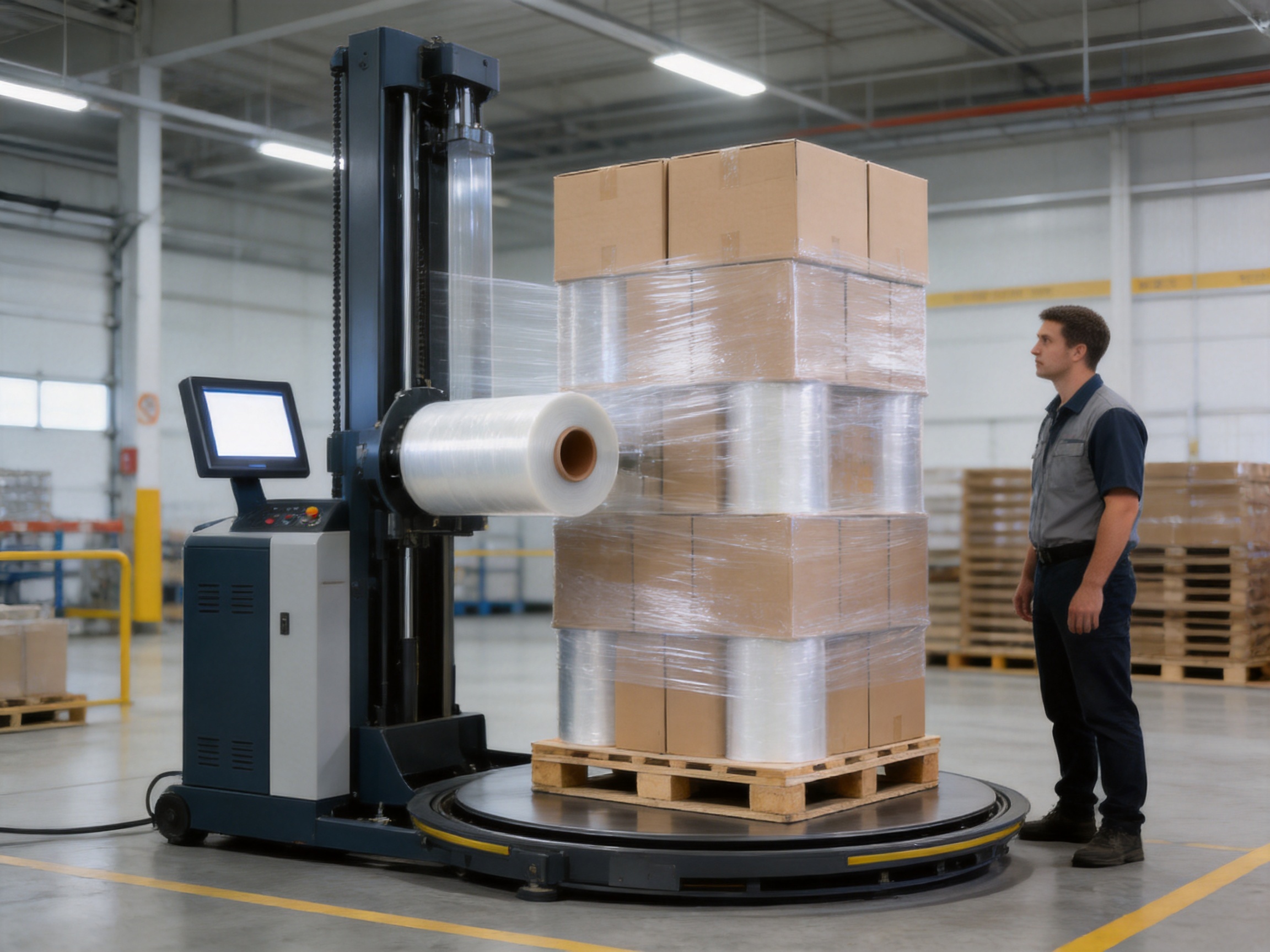
Unlike ordinary hand stretch film, machine stretch film is optimized for consistent mechanical application. A wrapping machine can regulate film tension, rotation speed, overlap, and the number of layers more accurately than manual wrapping. As a result, the packaging process can achieve more uniform load containment and more predictable material consumption.
The film is transparent, allowing visual access to the wrapped goods. Warehouse personnel can often identify product labels, pallet contents, carton markings, or possible external damage without cutting open the package. This feature is valuable in distribution centers where goods may be inspected, counted, scanned, or transferred multiple times before reaching their final destination.
The supplied product uses pure polyethylene combined with a metallocene copolymer to improve toughness. Available heights include 45 centimeters and 50 centimeters, while thickness options range from 0.015 millimeters to 0.045 millimeters. Length and roll weight can be customized according to the customer’s application scenario. These specifications allow buyers to select a suitable film structure for different pallet weights, product shapes, stacking heights, and wrapping machine settings.
How the Film Stabilizes a Pallet Load
A pallet load may appear stable when it is stationary, but transportation introduces vibration, acceleration, braking, cornering, impact, and repeated movement. Cartons can slide across one another, bags may lean outward, and tall stacks can become unstable. Stretch film helps address these risks by creating horizontal and vertical containment around the load.
When the film is stretched around the pallet, the elastic material applies inward pressure. Each overlapping layer contributes to the overall holding effect. The bottom section can be wrapped around the pallet or lower cartons to anchor the load, while the upper sections bind the stacked products together. With the correct machine settings, the operator can create a balance between holding force and film usage.
The film’s recovery memory is important to this process. After stretching, high-elasticity polyethylene attempts to contract. This contraction maintains tension around the load instead of allowing the film to become loose immediately after application. A stable tension profile helps keep the packaging intact during handling and reduces the likelihood of gaps developing between the film and the goods.
For irregular products, the film can conform to changing contours more effectively than rigid packaging materials. It can pass around pipes, cable reels, door frames, windows, metal components, and other shapes while maintaining contact with the product surface. Although sharp edges should be protected or removed before wrapping, the flexibility of the film makes it suitable for many products that are difficult to package with fixed-size boxes or rigid covers.
Core Product Advantages
Efficient Machine Application
The primary advantage of this product is its compatibility with dedicated wrapping machines. Mechanical application reduces the physical workload associated with pulling, stretching, and rotating film manually. It also enables faster packaging cycles, which is particularly important for high-volume distribution centers, factories, fulfillment facilities, and export packing lines.
Machine application can improve repeatability. Once the machine is programmed for a particular type of load, it can reproduce similar wrapping speed, tension, overlap, and cycle structure. This consistency helps reduce variation between operators and makes it easier for production managers to establish standard packaging procedures.
Faster wrapping can increase throughput without requiring the same increase in staffing. The reduction in manual work may also help reduce fatigue, repetitive strain, and packaging-related labor intensity. In operations where hundreds or thousands of pallets are prepared each day, these benefits can have a meaningful effect on productivity and operating cost.
Reliable Load Stabilization
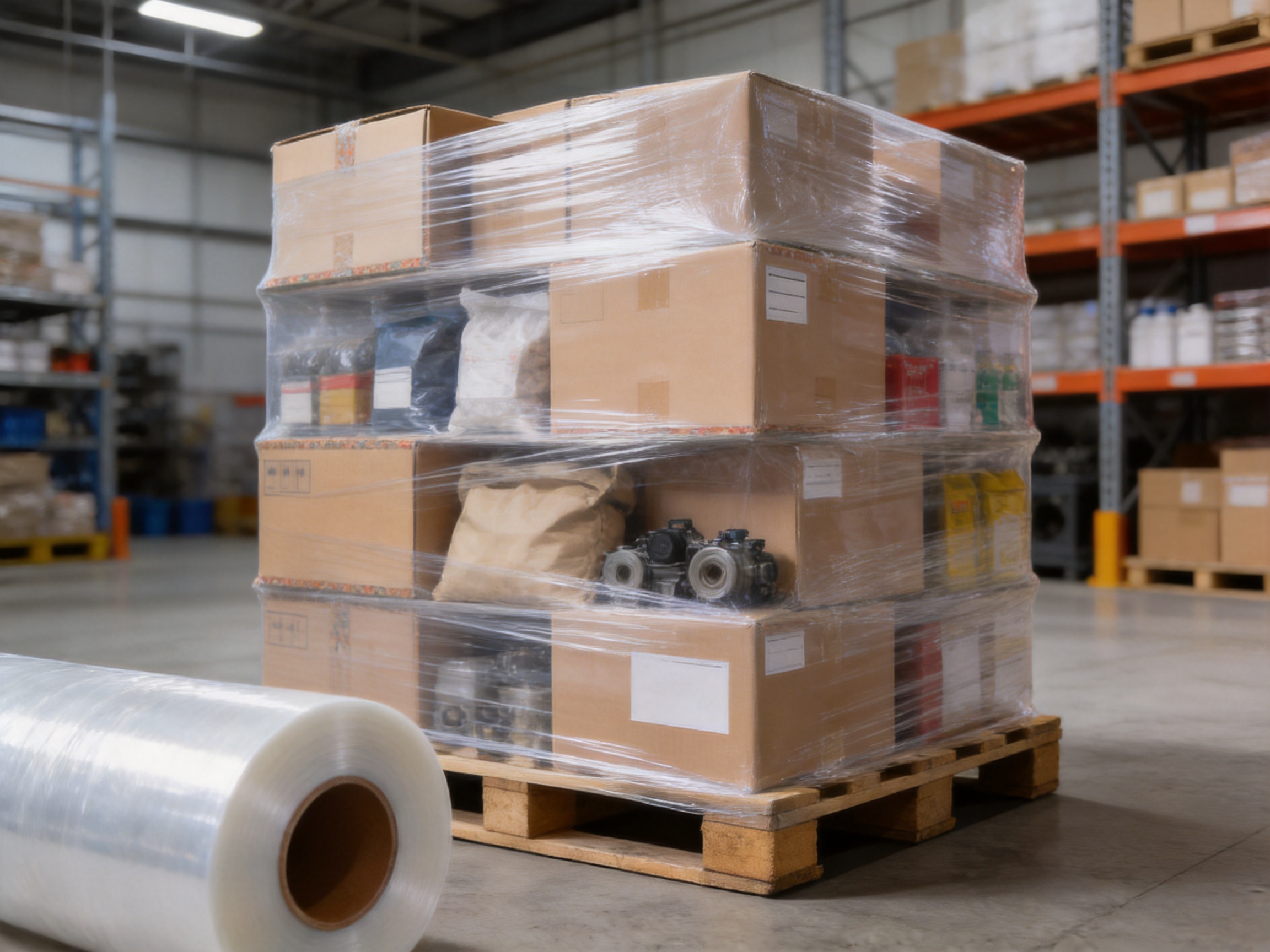
The film provides balanced constrictive force around palletized goods. Its purpose is not merely to cover the products but to bind them into a unified shipping unit. When the film is selected and applied correctly, it helps prevent cartons from scattering, leaning, shifting, or toppling during storage and transportation.
Stable load containment is especially important for mixed cartons, bagged materials, lightweight packages, and tall pallet configurations. A well-wrapped load is easier to move with a forklift or pallet truck because the individual items are less likely to separate during lifting. It is also easier to stage in a warehouse, load onto a vehicle, or transfer through a distribution center.
The balance between film thickness, stretch level, number of layers, and machine tension should be matched to the cargo. Heavy products, sharp-edged packages, and tall stacks may require a different specification from lightweight cartons. The availability of thickness options from 0.015 millimeters to 0.045 millimeters supports this type of application-based selection.
Protection Against Environmental Exposure
Stretch film forms a barrier around the wrapped goods. It helps protect products against dust, light moisture exposure, and oil contamination that may occur during storage or logistics handling. This is useful in warehouses, production areas, loading zones, and transportation environments where products may be exposed to airborne particles or incidental contact with moisture and oils.
The film is not intended to replace specialized waterproof packaging in every application. However, as an external protective layer, it can help reduce the contact between the goods and common warehouse contaminants. It can also help keep cartons, bags, and component bundles together while reducing the risk that external dirt will enter gaps between individual packages.
For long-term storage, the wrapped load should still be kept in an appropriate environment. The recommended storage temperature for unused film is between 15°C and 25°C, and the rolls should be protected from direct sunlight and high-temperature conditions. Proper storage helps preserve film performance before application.
Soft Surface Contact
Some packaging materials can scratch, mark, or abrade sensitive product surfaces when they are pulled tightly around the goods. The soft and flexible nature of polyethylene stretch film allows it to contact many product surfaces without causing the same type of friction associated with rigid straps or rough wrapping materials.
This property is beneficial for painted components, finished metal parts, doors, windows, furniture-related products, appliances, and other items where external appearance matters. The film can hold products together while providing a comparatively gentle contact layer. Operators should still verify compatibility when wrapping especially sensitive surfaces or materials that may react to prolonged contact with plastic films.
Transparent Product Visibility
Transparency is a practical advantage throughout the supply chain. Workers can often see the approximate condition and arrangement of the load without removing the film. Labels, colors, barcodes, carton markings, and product groupings remain visible, supporting inventory checks and warehouse identification.
Transparent wrapping can also improve security awareness. A broken layer, displaced carton, or visible product intrusion may be noticed more quickly than it would be behind an opaque covering. While stretch film is not a substitute for tamper-evident packaging, its clear appearance supports visual inspection during receiving, storage, and dispatch.
Material Efficiency and Cost Control
A machine stretch film system can improve material utilization by controlling film tension and overlap. Manual wrapping often produces inconsistent stretch, excessive overlapping, or uneven coverage. Mechanical equipment can apply the correct amount of film more consistently, helping reduce avoidable waste.
Cost effectiveness should be evaluated as a complete packaging system rather than by comparing the price of one roll alone. Film consumption, wrapping speed, labor, rejected loads, product damage, handling time, and storage efficiency all affect the total cost. A film that performs reliably at an appropriate gauge can provide better value than a cheaper material that requires extra layers or creates unstable loads.
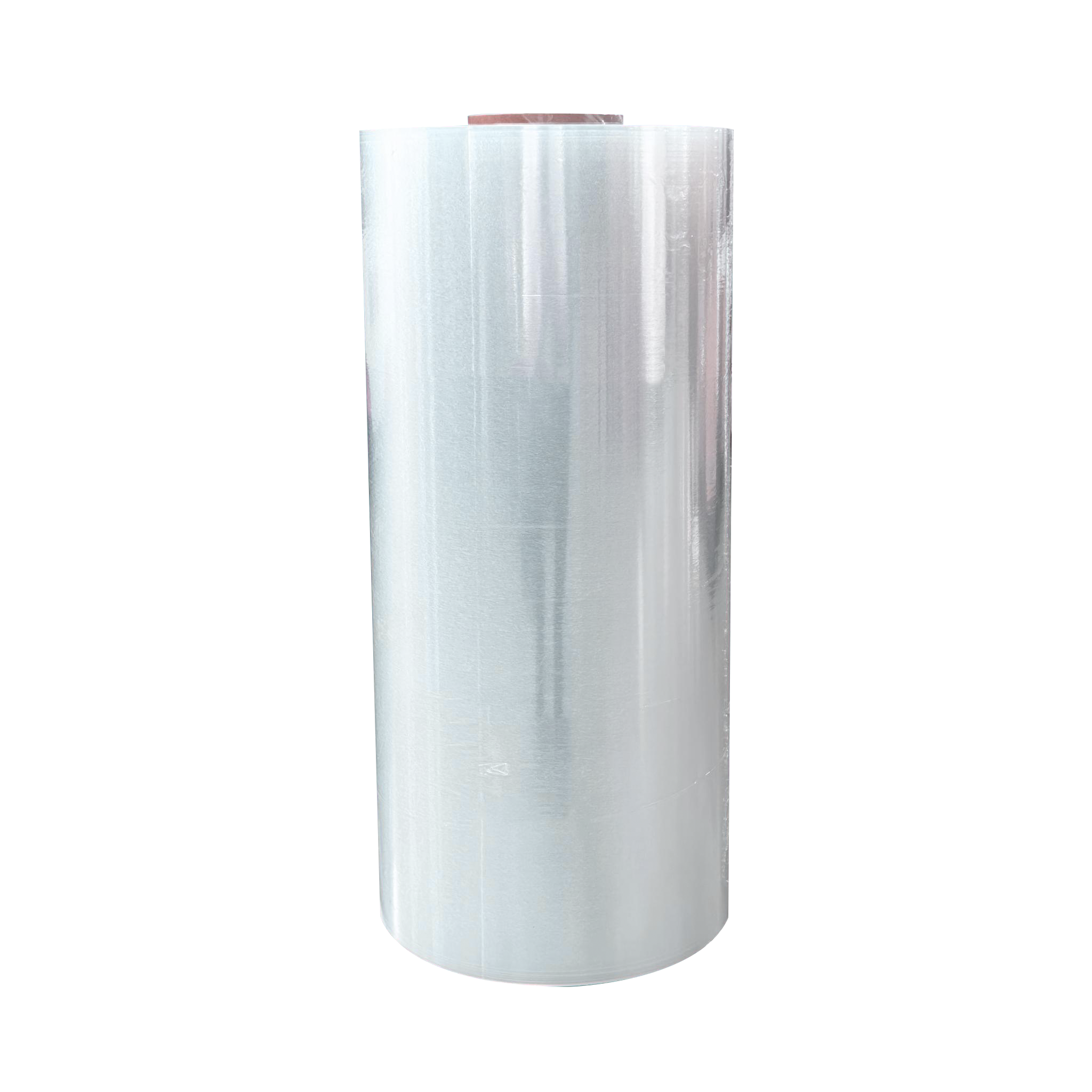
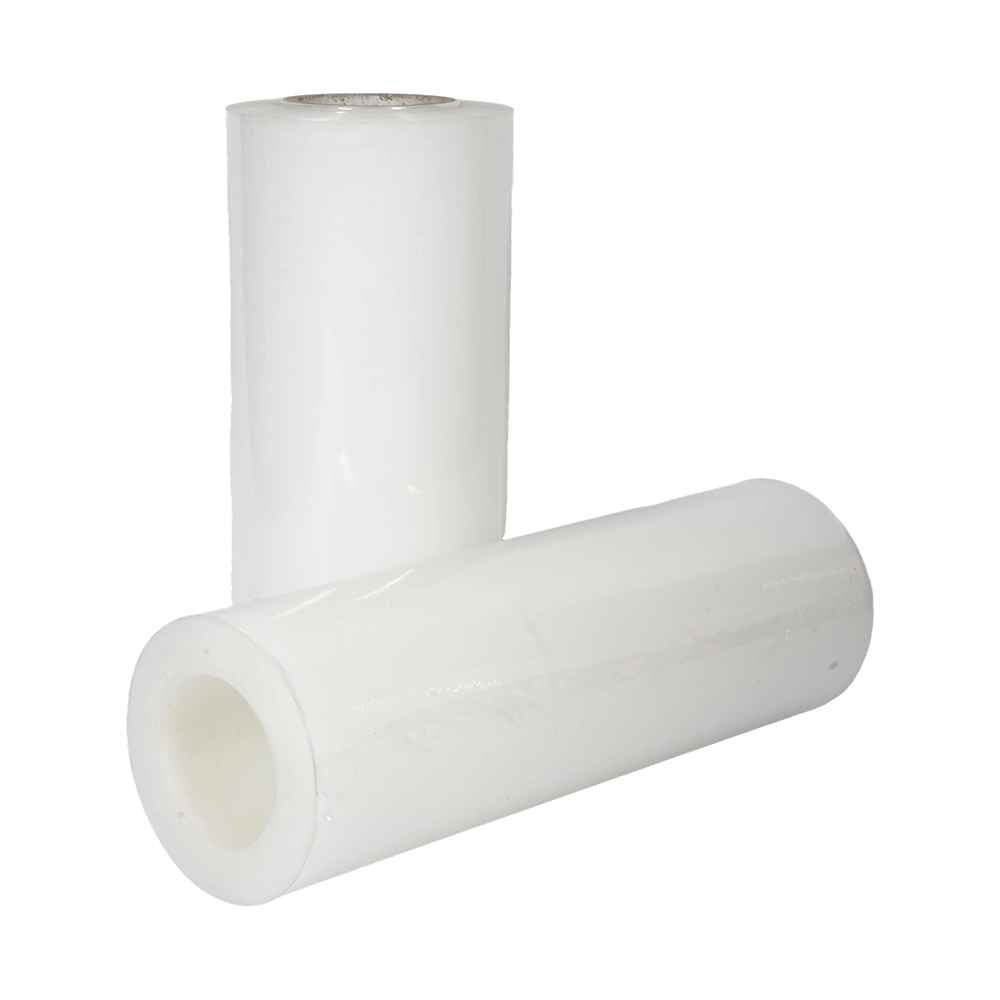
Transparent machine stretch film
Material Structure and Performance
Polyethylene Base Material
The product is made from pure polyethylene with a metallocene copolymer added to enhance toughness. Polyethylene is widely used in flexible packaging because it combines low weight, flexibility, moisture resistance, and processability. These characteristics make it suitable for films that must stretch around products and remain intact during handling.
The polyethylene base also supports soft surface contact. Rather than using a hard or abrasive material, the film forms a flexible skin around the load. Its performance depends on the selected thickness, formulation, machine tension, wrapping pattern, and product geometry.
Metallocene-Enhanced Toughness
The metallocene copolymer component is used to improve the toughness of the film. In practical terms, enhanced toughness can support resistance to tearing and puncture propagation when the film encounters normal handling stresses. This is important when the wrapped load contains corners, uneven surfaces, or products that place localized pressure on the film.
Toughness does not eliminate the need for careful preparation. Sharp protrusions can puncture any flexible film if they are not covered, rounded, or repositioned. Before wrapping, operators should inspect pallet edges and product surfaces, remove unnecessary sharp projections, and use edge protection where appropriate.
Elasticity and Recovery Memory
Stretch film must extend during application and then retain sufficient recovery force afterward. The product is designed with high elasticity and recovery memory so that it can remain tight around the wrapped load. The exact performance depends on the film thickness and the settings of the wrapping equipment.
High elasticity can allow a smaller amount of film to cover a larger area, but the film should not be overstretched beyond the recommended operating range. Excessive tension can damage the film, distort cartons, or compress delicate goods. Insufficient tension, on the other hand, may result in loose wrapping and poor containment. Correct machine calibration is therefore a central part of successful application.
Specification Selection
Choosing the correct stretch film specification begins with understanding the load. Important factors include total weight, pallet dimensions, stacking height, product shape, edge sharpness, surface friction, transport distance, warehouse conditions, and the type of wrapping machine available.
| Parameter | Available Specification | Application Consideration |
|---|---|---|
| Material | Pure polyethylene with metallocene copolymer | Suitable for flexible wrapping, toughness, and recovery performance |
| Film height | 45 cm or 50 cm | Select according to machine compatibility and load dimensions |
| Thickness | 0.015 mm to 0.045 mm | Match thickness to load weight, geometry, and required containment |
| Length and roll weight | Customizable | Adapt to customer equipment, wrapping frequency, and application scenario |
| Color | Transparent | Maintains visibility of labels, cartons, and wrapped products |
Film Height
The available 45-centimeter and 50-centimeter heights cover common machine wrapping requirements. The correct width should correspond to the wrapping machine’s film carriage, the dimensions of the pallet, and the height of the products being wrapped. A suitable film height helps provide efficient coverage while reducing unnecessary empty film area.
Film Thickness
Thickness influences puncture resistance, containment capacity, material consumption, and cost. The thinnest option may be appropriate for lighter loads with smooth surfaces and moderate handling requirements. A thicker option may be more suitable for heavier loads, rough packaging, long-distance transportation, or products with more demanding containment needs.
Thickness alone does not determine performance. Resin formulation, stretching behavior, machine settings, load arrangement, and the number of wraps all contribute to the final result. Buyers should evaluate the complete wrapping system rather than selecting a gauge solely on the basis of nominal thickness.
Customized Length and Weight
Length and roll weight can be customized according to the customer’s application scenario. This flexibility is useful for companies with different machine capacities, production volumes, pallet sizes, or warehouse workflows. A high-volume operation may prefer longer rolls to reduce roll changes, while another customer may require a roll size that matches equipment limitations or operator handling requirements.
Customization can also support private specifications for distributors, contract packers, and industrial users. Before confirming an order, customers should provide information about the wrapping machine, core requirements, preferred roll dimensions, expected monthly consumption, and typical load types.
Applications Across Multiple Industries
Palletized Cartons
The most common use is stabilizing cartons stacked on pallets. The film unifies separate boxes, helps prevent outward movement, and provides an external barrier during transportation. It is suitable for consumer products, household goods, packaged components, industrial supplies, and distribution shipments.
Bagged Goods
Bagged goods can be difficult to stabilize because bags may deform, slide, or settle unevenly. Stretch film can provide external containment around the grouped bags, helping reduce movement during forklift handling and vehicle transit. The wrapping pattern should be adjusted to provide sufficient support without crushing the contents.
Pipes and Cable Reels
Pipes, cable reels, and other cylindrical or elongated products often require bundling before transport. The flexible film can conform to curved surfaces and help hold multiple items together. For products with hard edges or high point pressure, protective corners or additional internal supports may be appropriate.
Doors and Window Frames
Doors, windows, and frame assemblies may have large surfaces and irregular profiles. Stretch film can help protect these items from dust and incidental contact while keeping related components together. Because finished surfaces may be sensitive, the product should be tested on the intended material before large-scale use.
Metal Components
Metal parts and fabricated components can be bundled using stretch film to simplify handling and reduce exposure to warehouse contamination. The film can also help keep smaller components together on pallets. Where sharp edges are present, edge protection is necessary to avoid punctures.
Long-Term Storage
For goods held in storage, stretch film helps reduce dust accumulation and protects grouped products from casual contact. Transparent wrapping makes periodic inspection easier. The storage area should remain cool, dry, and appropriately ventilated, and the packaged goods should be kept away from conditions that could degrade the product or the film.
Logistics and Vehicle Transportation
During vehicle transit, loads experience vibration and changes in direction. Stretch film contributes to load integrity by applying continuous pressure around cartons and components. It can reduce the likelihood of load shift, although pallets should still be arranged correctly, and additional restraints should be used when required by the cargo or transportation regulations.
Manufacturing Strengths of the Supplier
Zhejiang Geruite Packaging Materials Co., Ltd. focuses on the research, development, production, and sales of packaging materials. Its product range includes BOPP tapes, kraft paper tapes, masking tapes, high-temperature-resistant tapes, metal tapes, PE stretch film, PP strapping, and high-strength PET strapping. This broad portfolio gives the company experience across several packaging methods rather than limiting its knowledge to a single product category.
The company is located in Zhejiang Province, a major manufacturing region in China with developed industrial infrastructure and a strong supply network. Its location supports access to raw materials, processing resources, equipment services, transportation connections, and a broad base of industrial customers.
Integrated Product Development
An integrated approach to packaging materials allows the company to consider how stretch film interacts with tape, strapping, cartons, pallets, and handling equipment. Customers may require more than one packaging product to complete a shipping system. A supplier with experience in multiple categories can help customers compare the roles of film, strapping, and adhesive products according to the load and distribution environment.
For machine stretch film, product development involves more than producing a clear plastic sheet. The formulation, film thickness, roll dimensions, stretch properties, toughness, winding quality, and equipment compatibility all influence user performance. The company’s focus on research and innovation supports continued improvement of these factors.
Production Equipment and Process Control
According to the company profile, Geruite is equipped with advanced production equipment and a rigorous quality control system. Production control is important for maintaining stable film thickness, uniform roll winding, consistent appearance, and repeatable mechanical performance.
Film manufacturing typically requires careful control of material preparation, extrusion, cooling, stretching behavior, slitting, winding, and final packing. Variations in any of these stages can affect how the film performs on a wrapping machine. Uneven thickness may influence tension, poor winding may cause telescoping or feed problems, and inconsistent edges may interfere with stable application.
A disciplined process therefore helps ensure that the film supplied to customers remains consistent from roll to roll. Stable quality reduces the need for operators to make frequent machine adjustments and supports more predictable consumption across production shifts.
Raw Material and Final Inspection
The company emphasizes quality control from raw material procurement through production and final inspection. This full-process approach is important because film performance depends on both the resin formulation and the manufacturing conditions used to convert it into finished rolls.
Raw material checks can help confirm that the selected polyethylene and metallocene copolymer meet the intended formulation requirements. In-process checks can monitor appearance, dimensions, winding condition, and other production characteristics. Final inspection can verify that the finished rolls are suitable for shipment and customer use.
Quality control is particularly important for industrial buyers purchasing in large quantities. A pallet packaging operation depends on continuity. If one batch behaves differently from another, the customer may experience changes in tension, film breakage, wrapping cycles, and material consumption. Consistent manufacturing helps lower this operational uncertainty.
Annual Output and Supply Capability
The company reports an annual output value of more than RMB 60 million. This indicates an established manufacturing and commercial operation with experience supporting ongoing customer demand. For buyers, a stable supplier can be valuable when packaging materials are used continuously and must be replenished according to a predictable schedule.
Supply capability includes more than production volume. It also involves order communication, specification confirmation, customization, inspection, packaging, shipment coordination, and after-sales support. Geruite’s focus on professional service is intended to support customers from product selection through delivery and application.
Advantages Compared with Less Specialized Alternatives
Transparent machine stretch film offers several advantages over manual wrapping film, rigid external covers, and poorly matched low-cost alternatives. The most important advantage is system compatibility. When the film is designed for mechanical stretching, the customer can take better advantage of automated equipment and standardized wrapping cycles.
Compared with manual wrapping, machine application generally offers improved speed, more consistent tension, lower physical effort, and better repeatability. Manual wrapping may still be useful for occasional, low-volume, or unusual loads, but high-throughput operations can benefit from the productivity of a wrapping machine.
Compared with rigid covers, stretch film conforms more closely to the shape of the load and requires less storage space before use. It can wrap different pallet heights and irregular shapes without requiring a custom-made outer case for every product. Its light weight also reduces the amount of packaging material added to the shipment.
Compared with an unsuitable low-grade film, a formulation using polyethylene and metallocene copolymer may provide better toughness and more reliable handling when the product is selected and applied correctly. A stronger or better-controlled film can reduce interruptions caused by premature breaks, excessive film use, or loose wrapping.
Compared with opaque wrapping materials, transparent film provides better visibility. This can simplify warehouse identification, improve inspection, and reduce the need to unwrap products for basic visual checks.
These advantages should be evaluated through actual application trials. No film is ideal for every load, and the best result depends on matching the material to the equipment, product, environment, and transport conditions.
Recommended Machine Wrapping Procedure
Before starting, inspect the pallet and the products. Remove sharp protrusions where possible and apply corner guards or edge protection if the load contains points that may puncture the film. Ensure the pallet is properly arranged, cartons are aligned, and unstable items are corrected before wrapping.
Install the roll according to the wrapping machine manufacturer’s instructions. Confirm that the roll height, core, and weight are compatible with the film carriage. Check that the film can unwind smoothly and that the equipment is clean and free from obstructions.
Set the initial tension, carriage speed, turntable speed, overlap, and wrapping height. Use conservative settings for the first trial, especially when the load contains delicate cartons or sensitive surfaces. The correct setting should provide firm containment without excessive compression or film breakage.
Attach the film to the pallet or use the machine’s standard film-starting method. Wrap the lower section sufficiently to anchor the load, then move upward with consistent overlap. The bottom and top areas may require additional attention because these zones often influence the overall stability of the pallet.
After the cycle is complete, inspect the load from multiple sides. Look for loose areas, open gaps, film tears, displaced cartons, or excessive compression. If the load is unstable, adjust the film specification or machine settings rather than simply adding random layers.
Cut and secure the film tail so that it does not create a loose flap. A properly finished pallet is easier to handle and less likely to catch on neighboring goods or equipment.
Storage and Handling of Unused Film
Store unused film in a cool, dry location. The recommended storage temperature is between 15°C and 25°C. Keep rolls away from direct sunlight, high-temperature environments, heaters, and other heat sources. Excessive heat can affect the physical properties of flexible packaging materials and may alter their behavior during application.
Keep rolls in their original protective packaging until they are ready for use. Store them on a stable surface that prevents deformation. Avoid dropping or striking the rolls, as damaged edges can create feeding problems or cause the film to break during wrapping.
Use clean handling practices. Dirt, oil, moisture, and sharp contact points can affect film appearance and performance. If a roll has visible damage, unusual telescoping, crushed edges, or contamination, it should be inspected before being placed on a production machine.
Rotate stock according to the customer’s internal inventory policy. Keeping clear records of receipt dates, batch information, and application results can help identify performance trends and support efficient purchasing decisions.
Quality, Service, and Customization
Industrial packaging customers often need a supplier that can provide more than standard catalog dimensions. Their equipment, pallet sizes, production schedules, and transportation requirements may vary. Customizable length and roll weight allow the film to be adapted to different operating conditions.
Geruite’s product and service approach is based on professional packaging support. Customers can discuss the intended application, cargo type, preferred film height, thickness, roll configuration, and expected order volume. This information helps establish a more suitable specification than choosing a product solely by appearance or price.
Customization is especially useful for companies operating multiple wrapping machines. Different machines may have different carriage limits, roll capacities, or tension controls. A roll configuration that works well on one line may not be ideal for another. Confirming the equipment details in advance can reduce installation issues and improve operational efficiency.
Quality also includes communication and order consistency. A supplier should provide clear product specifications, maintain agreed production standards, and support customers when application questions arise. For customers using stretch film as a regular production input, these service factors can influence the total value of the relationship.
Environmental and Operational Considerations
Efficient packaging should protect the product while using a reasonable amount of material. Machine wrapping can help achieve this balance through controlled pre-stretching, uniform overlap, and repeatable wrapping cycles. Reducing unnecessary film consumption may lower packaging waste and transportation weight.
Customers should avoid applying excessive layers simply because the load has not been properly arranged. Correct pallet stacking, suitable corner protection, and calibrated tension can often improve performance more effectively than adding large amounts of film. Packaging trials should evaluate load stability, film usage, breakage rate, and product protection together.
At the end of its service life, polyethylene film should be managed according to local waste and recycling policies. Clean post-use film may be suitable for collection and recycling in regions with appropriate infrastructure. Contaminated or mixed packaging may require a different disposal route. Customers should consult local regulations and their waste management provider.
The product’s environmental benefit is therefore connected not only to its resin type but also to how efficiently it is applied, how much waste is generated, and whether used material can be recovered. Good packaging engineering can reduce unnecessary consumption while maintaining safe load containment.
Why Choose a Specialized Packaging Material Manufacturer?
A specialized manufacturer understands that packaging materials are process components. Stretch film affects machine settings, labor, pallet stability, warehouse handling, transport performance, and product protection. A supplier focused on packaging materials is more likely to consider these connected requirements than a seller that treats film as a generic commodity.
Geruite’s broader portfolio demonstrates experience with multiple forms of industrial packaging, including adhesive tapes, strapping products, PE stretch film, and related materials. This product knowledge can help customers develop a more coordinated packaging system. For example, stretch film may stabilize the load while PET or PP strapping provides additional longitudinal support, and adhesive tape may seal individual cartons.
The company’s research, manufacturing, inspection, and service capabilities support customers seeking reliable supply and customized specifications. Its location in Zhejiang provides access to an established manufacturing environment, while its reported annual output value reflects experience serving a range of industrial requirements.
For international buyers, the combination of production capability, product variety, customization, and communication is important. A packaging material must arrive in the correct format, perform consistently on the intended equipment, and remain available as the customer’s production needs grow.
Purchasing Checklist for Machine Stretch Film
Before placing an order, identify the type and average weight of the loads to be wrapped. Record pallet dimensions, product height, surface shape, carton quality, edge conditions, and expected transport distance.
Confirm the wrapping machine model and film carriage requirements. Check compatible film height, roll diameter, core dimensions, maximum roll weight, and the machine’s available tension or pre-stretch settings.
Choose a preliminary thickness range based on the load rather than selecting the thinnest option automatically. Test the film on representative pallets and record film consumption, breaks, containment force, wrapping cycle time, and final load stability.
Discuss customization requirements for roll length and weight. Consider whether longer rolls will reduce changeover time or whether lighter rolls are easier for the machine and warehouse team to handle.
Ask for clear product specifications and establish inspection expectations. For recurring orders, maintain batch records and compare performance over time.
Finally, confirm storage conditions and delivery planning. Film should be delivered and stored in a manner that protects the rolls from heat, moisture, sunlight, impact, and contamination.
Questions and Answers
What is transparent machine stretch film mainly used for?
It is mainly used to stabilize and protect palletized cartons, bagged goods, industrial components, and other loads during storage and transportation. It can also wrap irregular products such as pipes, cable reels, doors, windows, and metal components.
Can this film be applied by hand?
The product is optimized for use with mechanical wrapping equipment. Manual application may be possible in some situations, but a dedicated wrapping machine is recommended for consistent tension, uniform coverage, improved speed, and reduced labor intensity.
What material is the film made from?
It is made from pure polyethylene with a metallocene copolymer used to enhance toughness. The polyethylene structure provides flexibility, stretchability, and recovery performance for machine wrapping applications.
What thicknesses are available?
Available thicknesses range from 0.015 millimeters to 0.045 millimeters. The appropriate thickness depends on cargo weight, pallet height, product shape, edge conditions, transport requirements, and wrapping machine settings.
What film heights are available?
The standard listed heights are 45 centimeters and 50 centimeters. Customers should confirm the required height according to their wrapping machine and pallet dimensions.
Can the roll length and weight be customized?
Yes. Length and weight can be customized according to the customer’s application scenario. Equipment limitations, packaging volume, roll-change frequency, and handling preferences should be considered when determining the final configuration.
Does transparent film protect goods from moisture?
It helps provide a moisture-resistant external barrier and can reduce exposure to light moisture, dust, and oil during storage and logistics. It should not be treated as a complete substitute for specialized waterproof packaging in applications involving heavy water exposure or immersion.
Can stretch film prevent all pallet movement?
No packaging film can eliminate every transportation risk. Proper film selection and application can reduce load shifting and improve containment, but pallets must also be stacked correctly and secured according to the cargo and transportation conditions.
How should unused film be stored?
Store it in a cool, dry place away from direct sunlight and high temperatures. The recommended storage temperature is between 15°C and 25°C. Keep the rolls protected from impact, contamination, and deformation.
Why is metallocene copolymer included in the material structure?
It is included to improve toughness. Enhanced toughness can support better resistance to normal tearing and puncture stresses during wrapping and handling, although sharp protrusions should still be covered or removed.
How does machine wrapping reduce labor costs?
A wrapping machine performs the stretching, rotation, and application process with limited manual intervention. This can increase packaging speed, reduce repetitive physical work, and allow one operator to manage more packaging activity than manual wrapping alone.
What information should be provided when requesting a quotation?
Useful information includes the wrapping machine type, required film height, preferred thickness, roll core and weight limits, pallet dimensions, typical cargo weight, load shape, expected monthly usage, and any customization requirements.
Conclusion
Transparent machine stretch film is an important component of efficient industrial pallet packaging. Its high-elasticity polyethylene structure, metallocene-enhanced toughness, recovery memory, transparent appearance, and flexible surface contact help stabilize goods while providing practical protection from dust, moisture, oil, vibration, and handling-related movement.
The product is particularly valuable when used with dedicated wrapping equipment. Mechanical application can improve speed, reduce manual labor, create more consistent tension, and control material consumption. Available heights of 45 centimeters and 50 centimeters, thicknesses from 0.015 millimeters to 0.045 millimeters, and customizable roll length and weight allow the film to serve varied application scenarios.
Zhejiang Geruite Packaging Materials Co., Ltd. supports this product with experience in packaging material research, development, manufacturing, quality control, customization, and supply. Its broader portfolio of tapes, strapping products, and protective packaging materials provides a foundation for developing coordinated packaging solutions for logistics, warehousing, manufacturing, construction, electronics, household goods, and industrial production.
For customers seeking a reliable machine stretch film, the best purchasing decision should consider the entire packaging system. Load characteristics, machine compatibility, thickness, film tension, storage conditions, transportation demands, and supplier consistency all influence final performance. When these factors are properly matched, transparent machine stretch film can improve pallet stability, protect product appearance, streamline warehouse operations, and contribute to more efficient packaging costs.
References
1. Company Product Specification, Transparent Machine Stretch Film, Zhejiang Geruite Packaging Materials Co., Ltd.
2. Company Information and Manufacturing Profile, Zhejiang Geruite Packaging Materials Co., Ltd.
3. General Principles of Unit Load Stabilization for Distribution and Transportation Packaging.
4. Industrial Packaging Film Handling, Storage, and Machine Application Practices.
5. Polyethylene Film Materials and Flexible Packaging Performance Guidelines.
6. Warehouse Packaging Efficiency and Mechanical Pallet Wrapping Procedures.
7. General Quality Control Practices for Extruded and Converted Flexible Packaging Materials.
Product: Transparent machine stretch film

CONTACT DETAILS
- Address:No. 241, Yaojiafan, Zhangpanqiao, Shushan Street, Xiaoshan District, Hangzhou City, Zhejiang Province, China
- TEL:+86-0571-83175630
- Phone:+86-13336160217
- Email:jeffrey@grtpk.com
- WeChat/WhatsApp:+86-18058115265
PRODUCTS
NEWS CENTER
MOBILE TERMINAL
Copyright© Zhejiang Geruite Packaging Materials Co., Ltd. All Rights Reserved.
Privacy Wholesale industrial packaging tape Manufacturers