


 English
 Español
 عربى

Industrial Performance Guide to OPP Double-Sided Tape for Reliable Product Bonding
Content
- 1 Understanding OPP Double-Sided Tape
- 2 Key Performance Profile
- 3 Advantages of the 90-Micron OPP Construction
- 4 How DS-32 Compares with Other Bonding Options
- 5 Recommended Application Areas
- 6 Surface Preparation and Application Method
- 7 Manufacturing Strengths and Quality Approach
- 8 Quality Control Recommendations for Buyers
- 9 Storage, Converting, and Packaging Considerations
- 10 Application Validation and Failure Prevention
- 11 Environmental and Safety Considerations
- 12 Purchasing and Customization Questions
- 13 Q&A: DS-32 OPP Double-Sided Tape
- 13.1 What is DS-32 OPP double-sided tape used for?
- 13.2 What does OPP mean in this product?
- 13.3 How thick is the tape?
- 13.4 Does the tape have strong adhesion?
- 13.5 What does the holding-power value mean?
- 13.6 Can it be applied to plastic?
- 13.7 Is it suitable for heavy structural bonding?
- 13.8 How can users improve bonding performance?
- 13.9 Can the tape be converted into custom widths or shapes?
- 13.10 Who manufactures the product?
- 14 Conclusion
- 15 References
- 16 Product: DS-32 OPP double-sided tape
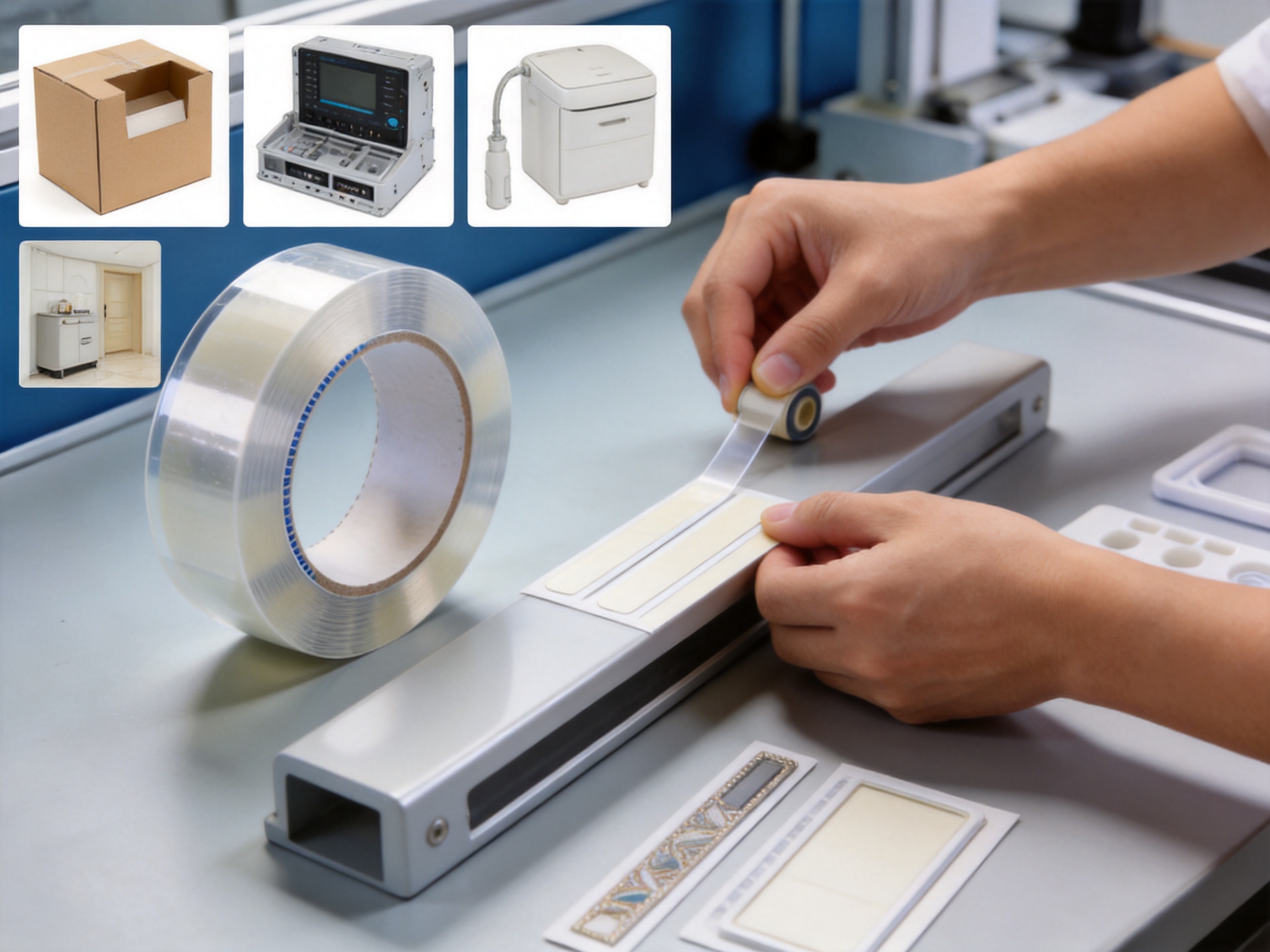
Double-sided tape has become an important joining material for manufacturers that need clean, efficient, and visually discreet bonding. Instead of using mechanical fasteners, liquid adhesives, or permanent fixtures, a pressure-sensitive adhesive tape can join two surfaces through a thin, controlled layer. This approach supports faster assembly, reduces the need for drilling or curing, and can help create a neat finished appearance. For many industrial and commercial applications, the selection of the tape backing, adhesive system, coating uniformity, release liner, and converting quality directly affects the reliability of the finished product.
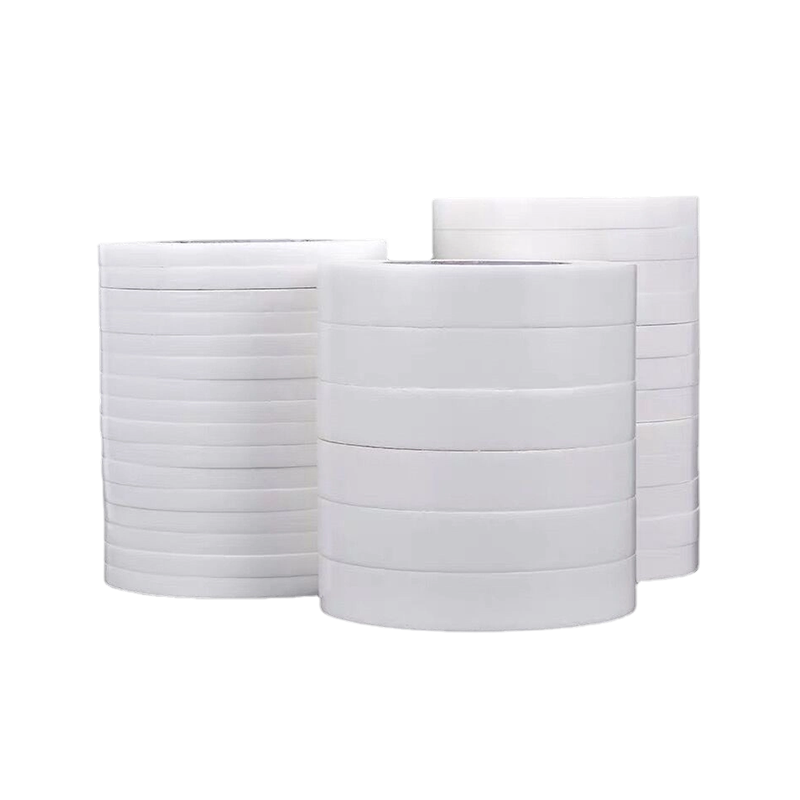
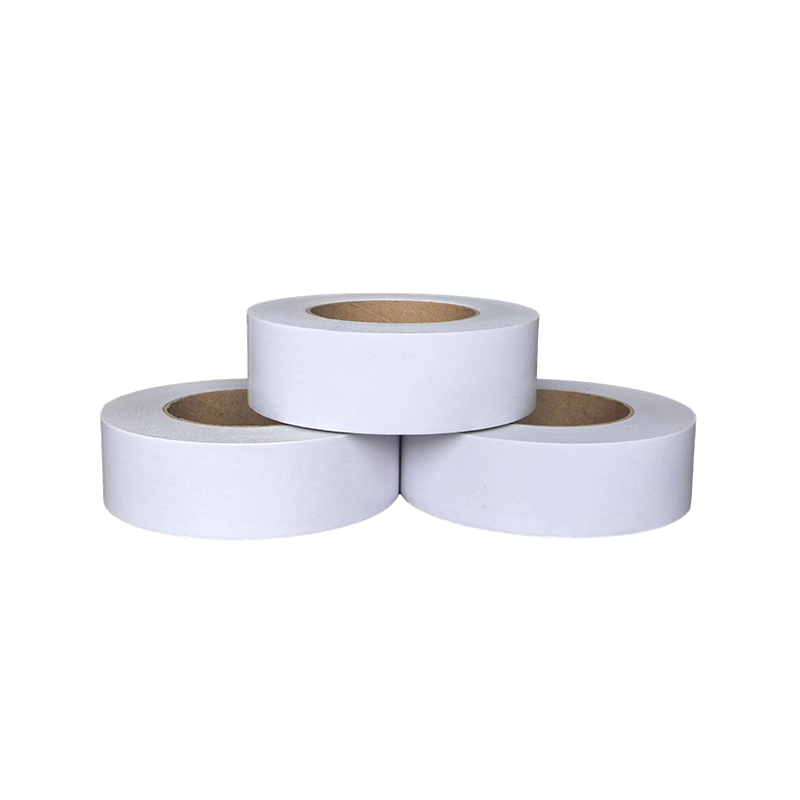
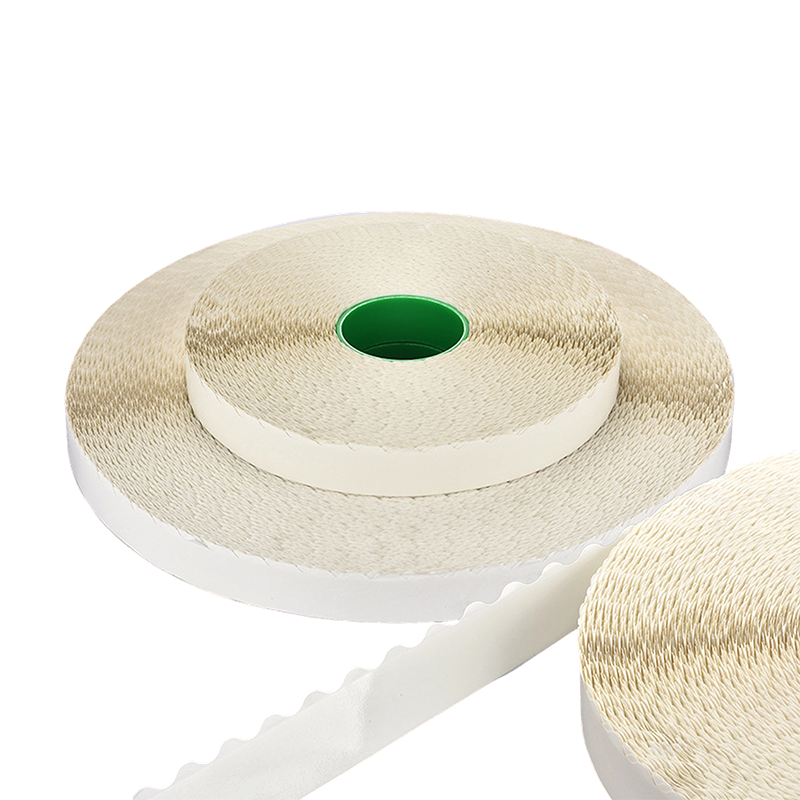
DS-32 OPP double-sided tape is designed for product bonding applications in which the substrate should resist tearing during handling and assembly. Its typical total thickness is 90±5 microns, providing a balance between conformability, discreet appearance, and practical handling strength. The tape is evaluated through recognized test methods for thickness, initial tack, adhesion to steel, and holding power. These test results give purchasers and production engineers useful reference points when comparing double-sided tape products for industrial bonding.
Manufactured by Zhejiang Geruite Packaging Materials Co., Ltd., DS-32 is part of a broader packaging-material product range that includes adhesive tapes, stretch film, strapping products, and protective packaging materials. The company combines material research, production, quality inspection, and customer service to support the needs of packaging, logistics, electronics, household goods, construction, decoration, and industrial manufacturing customers.
Understanding OPP Double-Sided Tape
OPP, or oriented polypropylene, is a polypropylene film that has been mechanically oriented to improve its dimensional characteristics and handling performance. In a double-sided tape construction, the OPP film acts as the central carrier or substrate. Adhesive is applied to both sides of this carrier, and a release liner is normally used to protect the adhesive surfaces before application.
The carrier has an important role in the finished tape. It helps maintain the tape’s shape during unwinding, cutting, laminating, and installation. It also provides a controlled film layer between the two adhesive coatings. Compared with unsupported adhesive transfer films, an OPP-backed double-sided tape can be easier to handle, position, cut, and apply in production environments where operators need dimensional stability.
A 90-micron tape is relatively thin compared with many foam-backed or heavily coated bonding products. This allows it to sit discreetly between joined components. Thin construction can be particularly valuable where a product designer wants to avoid a visible step, raised edge, or excessive spacing between surfaces. At the same time, the tape must provide sufficient adhesive coating and carrier integrity to support the intended application.
Because every bonding project involves different materials, surface energies, temperatures, pressures, and load directions, tape selection should not be based on thickness alone. The correct evaluation should consider the materials being joined, the size of the bonding area, the expected load, the environmental conditions, and the time required before the product is moved or packed.
Key Performance Profile
DS-32 OPP double-sided tape is specified with several typical performance values. These figures are reference data rather than a guarantee for every application. Actual results can vary according to surface cleanliness, substrate type, application pressure, temperature, dwell time, tape width, bond area, and testing conditions.
| Test Item | Typical Value | Reference Standard | Practical Significance |
|---|---|---|---|
| Tape Thickness | 90±5 microns | GB/T 7125-2014 | Supports a thin, discreet bond line and controlled converting performance |
| Initial Tack at 14° | ≤180 mm | GB/T 4852-2002, inclined plane method | Indicates the adhesive’s initial grabbing behavior under the specified test condition |
| Adhesion to Steel Plate | ≥10 N/25 mm | GB/T 2792-1998, peel test | Provides a reference for peel adhesion under the applicable test method |
| Adhesion to Steel Plate | ≥9 N/24 mm | GB/T 2792-2014, after 20 minutes, tested with 25-micron PET | Shows a further peel-adhesion reference after a defined placement period |
| Holding Power | ≥120 minutes per 24×24 mm | GB/T 4851-2014 | Indicates resistance to sliding or creep under the specified test setup |
These values help create a common technical language between a tape supplier and a buyer. A purchasing team can use them as initial screening criteria, while an engineering team can conduct application-specific trials before approving the tape for mass production. Standardized testing is valuable because it reduces ambiguity, but the test result should always be interpreted in relation to the intended use.
Advantages of the 90-Micron OPP Construction
Controlled Bond-Line Thickness
A controlled thickness is useful when two components need to be joined without creating a bulky interface. DS-32 has a typical thickness of 90±5 microns, which gives manufacturers a defined adhesive layer for repeatable processing. In automated or semi-automated assembly, predictable thickness can help reduce variation in part positioning and finished-product appearance.
A consistent tape profile can also support accurate die cutting, slitting, and roll conversion. When tape thickness varies excessively, the resulting parts may be difficult to dispense or may produce inconsistent pressure during lamination. The specified tolerance provides a reference for production planning and incoming quality inspection.
Discreet Appearance
Many consumer, commercial, and industrial products require a clean appearance. Exposed screws, rivets, staples, or liquid adhesive marks may not be acceptable on the final product. A thin double-sided tape can remain hidden between components, helping create a smooth exterior surface and reducing visual interruption.
The visual advantage is especially relevant for labels, trim pieces, decorative panels, signage components, lightweight accessories, and assembled packaging parts. The tape is not necessarily visible after installation, allowing the product designer to maintain a simple surface design.
Practical Handling
OPP-backed tape is generally easier to handle than unsupported adhesive films because the carrier adds structure. Operators can unwind the material, cut it into lengths, and place it on a component with greater control. The liner also protects the adhesive before use and can be removed at the final stage of assembly.
Handling efficiency can influence production costs. A tape that is easy to position may reduce rework, shorten assembly time, and minimize adhesive contamination on tools or fixtures. These benefits depend on the application method, but they are important when comparing double-sided tape with wet adhesives or less stable bonding materials.
Balanced Initial Tack and Adhesion
Initial tack describes how readily an adhesive begins to grip a surface when first contacted. The DS-32 specification includes an inclined-plane initial-tack value of no more than 180 mm at 14 degrees under the referenced method. The test result should not be interpreted as a universal performance value for all substrates, but it provides a controlled indicator of early adhesive behavior.
The product also has a typical steel-plate peel adhesion value of at least 10 N/25 mm under GB/T 2792-1998. A second reference value of at least 9 N/24 mm is provided under GB/T 2792-2014 after 20 minutes of placement and testing with 25-micron PET. Together, these values indicate that the tape is designed to deliver meaningful adhesion after application, subject to appropriate surface preparation and process control.
Resistance to Movement Under Load
Holding power is important when a bonded component is exposed to a sustained load. The DS-32 reference value is at least 120 minutes per 24×24 mm under GB/T 4851-2014. This test relates to resistance against movement under a defined condition. It does not mean that every bonded assembly will remain fixed for the same duration under every temperature, load, or substrate condition.
For production engineers, the holding-power result is a starting point for evaluating possible creep resistance. Final approval should include a test using the actual materials and loading direction. A vertical load, peel force, impact force, or repeated vibration may produce different results from a standardized laboratory setup.
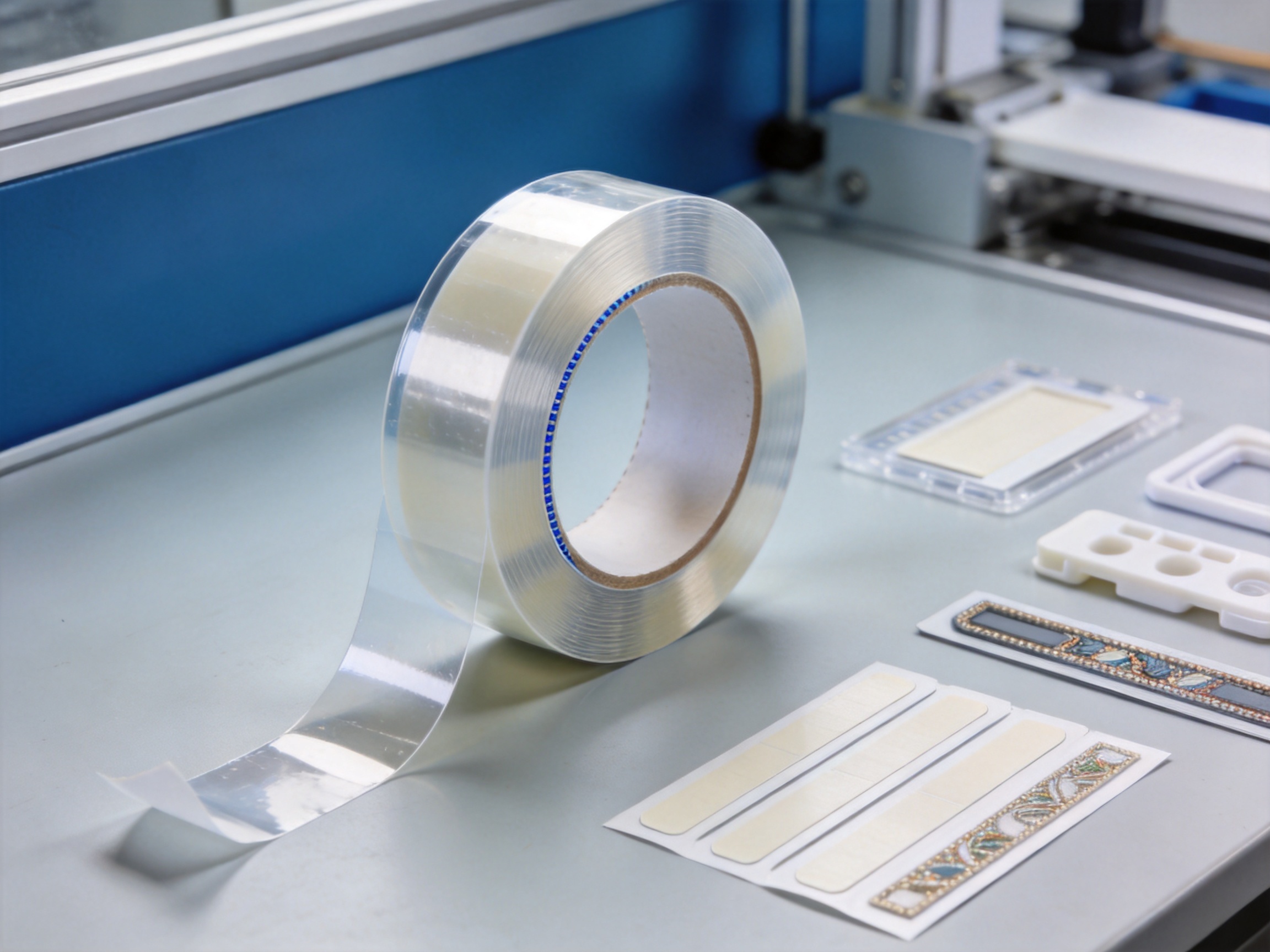
How DS-32 Compares with Other Bonding Options
Compared with Mechanical Fasteners
Mechanical fasteners provide strong point attachment, but they can require holes, tools, additional components, and visible access points. Drilling or punching can weaken thin substrates and may create alignment challenges. Double-sided tape distributes the bond over an area rather than concentrating force at a screw or rivet location.
DS-32 can be advantageous where a product requires a smooth appearance or where drilling is undesirable. It may also reduce assembly steps by eliminating the need to handle separate fasteners. However, mechanical fasteners may be preferable for heavy structural loads, high-temperature conditions, removable assemblies, or applications where inspection requires a visible attachment method.
Compared with Liquid Adhesives
Liquid adhesives can provide strong bonds, but they often require dispensing equipment, curing time, mixing, ventilation, or careful control of adhesive volume. Excess adhesive may spread beyond the joint and create appearance or cleaning problems. Double-sided tape arrives in a pre-coated form, allowing the bonding material to be applied with less mess and more consistent coverage.
The tape format can support immediate handling after application, although maximum bond development may require time and suitable pressure. It also avoids the need for on-site mixing or wet-film thickness control. Liquid adhesives may still be preferred for irregular gaps, high-temperature environments, chemical exposure, or very demanding structural applications.
Compared with Transfer Tape
Transfer tape contains adhesive without a permanent film carrier. It can conform well to surfaces and is useful when a very flexible adhesive layer is required. However, unsupported transfer adhesive can be more difficult to handle, especially during manual application or high-speed converting.
The OPP carrier in DS-32 adds handling stability and helps preserve the tape’s form during application. This can be an advantage for manufacturers that need clean die-cut parts, controlled roll converting, or straightforward hand application. The best choice depends on whether flexibility or handling stability is the primary requirement.
Compared with Foam Tape
Foam tape is useful when surfaces are uneven or when gap filling and cushioning are required. Its thickness can absorb irregularities, compensate for expansion, and provide shock absorption. However, foam products can create a thicker bond line and may not suit applications requiring a very low-profile attachment.
DS-32 offers a thinner OPP construction for applications where the joining surfaces are reasonably smooth and the design benefits from a discreet bond. It is not intended to replace foam tape in every situation. Instead, it provides a practical option for flat or moderately smooth substrates where controlled thickness and clean handling are important.
Recommended Application Areas
Packaging and Carton Components
Double-sided tape can be used to attach labels, decorative elements, inserts, lightweight panels, and other packaging components. The thin construction helps maintain a neat package appearance without adding excessive bulk. It can also support promotional packaging, presentation boxes, and specialty cartons where visible liquid adhesive is not desirable.
Packaging designers should evaluate the surface coating of the carton, including varnishes, laminations, inks, and low-surface-energy finishes. A trial should confirm that the tape adheres to the actual packaging board rather than only to a laboratory steel panel.
Electronics and Small Component Assembly
Electronics manufacturing often requires the attachment of lightweight components, labels, protective parts, cable-management items, or decorative elements. A thin double-sided tape can help maintain compact product dimensions. The OPP carrier may also support precise placement during assembly.
Before approval, the engineering team should examine temperature exposure, plasticizer migration, surface cleanliness, and compatibility with the specific housing or component material. Electronic assemblies may include plastics with different surface energies, and a material that bonds well to metal may not bond equally well to every plastic.
Household Goods
Household products frequently include lightweight trims, hooks, labels, edge coverings, decorative strips, and organizational accessories. A pressure-sensitive double-sided tape can simplify assembly and support a clean product appearance. The bond area should be sized according to the component weight and expected handling forces.
Household applications can involve repeated contact, humidity, cleaning, and temperature changes. These conditions should be included in validation testing. When the final product is expected to carry a significant load or remain attached for a long period, a safety factor and application-specific qualification are essential.
Construction and Decoration
In construction and interior decoration, double-sided tape may be used for lightweight decorative pieces, temporary positioning, trim, signage, and installation aids. Its ability to create a visually clean attachment can be useful where exposed fasteners would reduce the quality of the finished surface.
Construction substrates vary widely. Painted walls, coated metal, glass, wood panels, plastics, and composite boards may have different porosity, texture, dust levels, and surface energy. DS-32 should be tested on the exact substrate and under the actual temperature and humidity conditions expected at the job site.
Industrial Manufacturing
Industrial assembly lines can use double-sided tape for component positioning, protective part attachment, trim bonding, and secondary fixing. The tape can be converted into rolls, sheets, strips, or die-cut shapes to match the production process. This makes it possible to integrate the adhesive into manual, semi-automatic, or automated assembly workflows.
For industrial use, process repeatability is often as important as adhesive strength. A supplier should be able to provide consistent thickness, stable winding, reliable release performance, and predictable coating quality. These factors affect line speed, material waste, operator training, and finished-product consistency.
Surface Preparation and Application Method
Clean the Bonding Surfaces
Dust, oil, moisture, release agents, and loose particles can reduce adhesion. The bonding surfaces should be clean and dry before application. A suitable cleaning method depends on the substrate. Some surfaces may be cleaned with a compatible solvent, while others may require a lint-free cloth, air cleaning, or a manufacturer-approved treatment.
Cleaning should not damage paint, print, plastic, or surface coatings. If a solvent is used, the operator should confirm that it does not soften the substrate or leave a residue. A small compatibility test is recommended before production use.
Check Surface Flatness
Thin tape performs best when the surfaces are reasonably smooth and provide sufficient contact area. Rough, porous, dusty, or highly textured surfaces may reduce the effective bonding area. If gaps are present, a thicker or foam-based product may be more appropriate.
Components should be checked for warping, edge curl, burrs, and dimensional variation. Uneven parts may create local stress concentrations that cause edge lifting or premature failure.
Apply Adequate Pressure
Pressure helps the adhesive wet out against the substrate. After the liner is removed, the tape should be placed carefully and pressed uniformly across the full bonding area. A roller, press, squeegee, or controlled fixture can improve consistency compared with light finger contact alone.
Pressure should be applied without stretching the tape. Excessive stretching can create recovery forces that pull the bonded component away from the substrate. The operator should also avoid trapping air bubbles, especially on smooth visible surfaces.
Allow Appropriate Dwell Time
Initial contact does not always represent the final bond condition. Adhesive contact can develop over time as the adhesive wets the surface. The specified adhesion reference for DS-32 includes a 20-minute placement period in one test condition, demonstrating why dwell time should be considered in process design.
If the assembled product is moved, packed, or loaded immediately, the bond may not have reached its intended level of contact. Production trials should determine whether a waiting period, fixture, or temporary support is required before subsequent handling.
Control Temperature and Humidity
Application temperature can influence adhesive flow, tack, and surface wetting. Very cold conditions may reduce initial tack, while excessive heat can soften the adhesive or alter the behavior of the bonded materials. High humidity may affect porous substrates, packaging boards, and surfaces that are not fully dry.
The tape should be stored and applied according to a controlled procedure developed through supplier consultation and application testing. Environmental qualification is particularly important when the final product will be used outdoors, in refrigerated areas, near heat sources, or in humid locations.
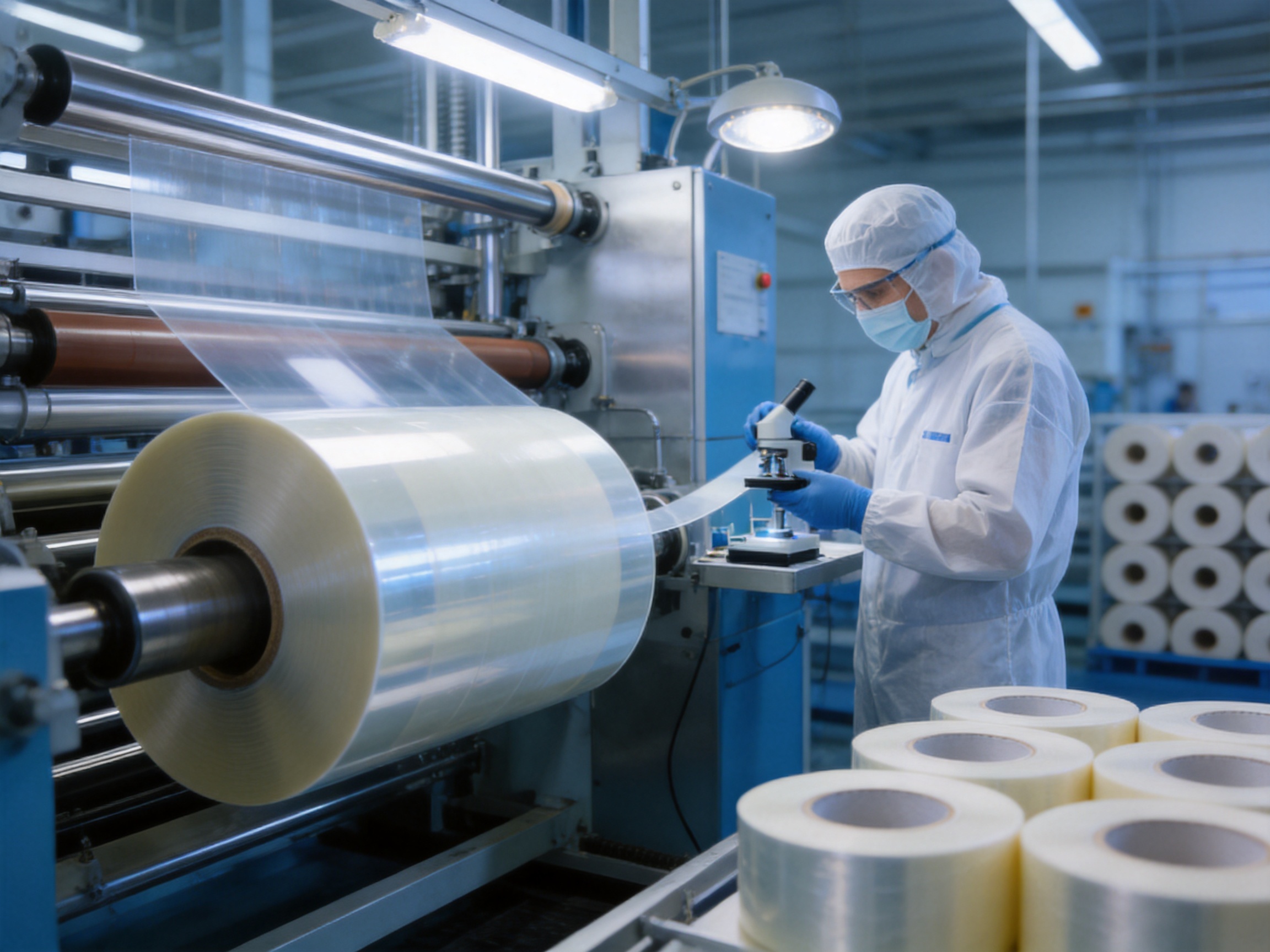
Manufacturing Strengths and Quality Approach
Zhejiang Geruite Packaging Materials Co., Ltd. is located in Xiaoshan District, Hangzhou, Zhejiang Province, China. Zhejiang is a major manufacturing region with established industrial infrastructure, supply networks, and technical resources. The company has developed its business around packaging materials and adhesive products, serving customers in logistics, express delivery, household goods, electronics, construction, decoration, industrial manufacturing, cargo stabilization, and packaging protection.
The company’s business scope covers research and development, production, and sales. Its product portfolio includes BOPP tapes, kraft paper tapes, masking tapes, high-temperature resistant tapes, metal tapes, PE stretch film, PP strapping, and high-strength PET strapping. This broad product base gives the company experience across multiple packaging-material categories rather than relying on a single product type.
Material and Process Coordination
Double-sided tape quality depends on the coordination of several stages. The carrier film must be suitable for the intended coating and converting process. The adhesive must be applied evenly on both sides. The release liner must protect the adhesive while allowing controlled removal. Slitting, rewinding, and packaging must preserve the tape’s shape and usability.
A company that manages these stages within an integrated manufacturing system can respond more effectively to customer requirements. For DS-32, the stated thickness specification and performance references create a framework for controlling the finished product. Production teams can use these criteria to monitor material consistency, while customers can use them for incoming inspection and application qualification.
Advanced Production Equipment
Geruite reports that it is equipped with advanced production equipment and a rigorous quality control system. In practical terms, advanced equipment in adhesive-tape manufacturing may support accurate coating, tension control, drying or processing stability, slitting precision, winding uniformity, and efficient roll handling. The exact equipment configuration should be confirmed for a specific order, but the manufacturing principle is clear: stable process conditions are essential to stable tape performance.
Equipment capability alone does not guarantee product quality. It must be supported by trained operators, documented procedures, preventive maintenance, in-process inspection, and final testing. When these elements work together, the manufacturer can reduce variation between production lots and provide more dependable material for customers’ assembly lines.
Quality from Raw Material to Final Inspection
The company emphasizes control from raw-material procurement through production and final inspection. This approach is important because defects can enter at multiple points. Variations in film, adhesive, liner, coating weight, roll tension, or slitting can influence the final result.
A disciplined quality system typically includes incoming-material checks, production monitoring, laboratory testing, roll appearance inspection, core and winding checks, and traceable packaging. Performance testing against recognized standards adds another layer of control. For DS-32, thickness, initial tack, steel adhesion, and holding power are particularly relevant indicators.
R&D and Product Improvement
Packaging and adhesive applications continue to change. Customers may require thinner materials, improved converting efficiency, better appearance, more stable supply, or compatibility with new substrates. Research and development allow a manufacturer to adjust products and processes in response to these needs.
Geruite states that it intends to increase investment in technological research and development, optimize its product structure, and improve service levels. For buyers, this forward-looking approach is valuable when they need more than a standard commodity product. A responsive supplier can assist with product selection, trial planning, packaging formats, and application feedback.
Production Scale and Supply Capability
The company reports annual output value of more than RMB 60 million. This figure indicates an established operating scale and a substantial presence in the packaging-materials sector. Production scale can support broader product availability, purchasing coordination, and the ability to serve different customer segments.
However, buyers should still confirm specific factors for each project, including minimum order quantity, lead time, roll dimensions, packaging configuration, sample availability, export documentation, and production capacity during peak demand. A well-defined purchasing process helps align the supplier’s capabilities with the customer’s delivery schedule.
Quality Control Recommendations for Buyers
Customers purchasing DS-32 should define their quality requirements before placing a large order. The technical values supplied for the product can become part of an incoming inspection plan, but additional requirements may be necessary for a specific application.
| Control Area | Recommended Check | Why It Matters |
|---|---|---|
| Roll appearance | Check for wrinkles, telescoping, damaged edges, contamination, and uneven winding | Supports smooth dispensing and reduces application defects |
| Thickness | Measure representative samples using a suitable thickness gauge | Confirms the 90±5-micron reference range |
| Adhesion | Test on the intended substrate and compare with approved samples | Steel-plate results may not represent every production material |
| Release liner | Evaluate liner removal, edge lifting, and adhesive transfer | Important for manual and automated application |
| Holding performance | Conduct a load test using the actual bond area and orientation | Helps assess creep and movement under real conditions |
| Storage condition | Record temperature, humidity, packaging integrity, and storage duration | Protects product consistency before use |
Sampling plans should be agreed between the buyer and supplier. A single test roll may not represent an entire shipment, while excessively frequent testing may be impractical for routine production. The best inspection plan balances risk, order size, application criticality, and historical supplier performance.
Storage, Converting, and Packaging Considerations
Double-sided tape should be stored in its original protective packaging whenever possible. Rolls should be protected from dust, direct sunlight, excessive heat, moisture, and contact with chemicals. They should not be crushed under heavy loads, since deformation can affect winding quality and dispensing.
Before converting, the rolls should be inspected for edge damage, telescoping, wrinkles, and changes in appearance. Slitting equipment should be adjusted to avoid excessive pressure or heat. Dull knives can create ragged edges, while unsuitable winding tension can cause roll deformation.
When tape is die cut, the converter should evaluate liner strength, adhesive squeeze-out, cut depth, waste removal, and part release. A cutting process that penetrates too deeply into the liner may make the parts difficult to handle. A cut that is too shallow may produce incomplete separation.
Packaging should protect the finished rolls or die-cut parts from contamination and compression. Labels should identify product type, batch information, dimensions, and quantity where required. Traceability is especially important for industrial customers that need to investigate a bonding issue or compare material from different lots.
Application Validation and Failure Prevention
Before full-scale production, the tape should be tested on the actual components. The trial should use the planned cleaning procedure, application pressure, dwell time, and environmental conditions. Test panels made from generic steel may provide useful baseline information, but they cannot fully predict performance on coated cardboard, textured plastic, painted metal, or wood.
Common causes of bonding failure include contaminated surfaces, insufficient pressure, inadequate contact area, excessive substrate roughness, excessive load, edge exposure, temperature extremes, and premature handling. A structured trial can identify these factors before they become production problems.
Failure analysis should examine whether the adhesive separated from the substrate, split internally, remained on the liner, or failed because the substrate itself tore or distorted. The failure mode provides useful information. Adhesive residue on one surface may indicate a surface-energy or preparation issue, while cohesive failure may indicate that the adhesive or bond area was overloaded.
Designers should avoid placing the entire load on a narrow edge. A larger overlap area generally distributes force more effectively. Where possible, the joint should favor shear loading rather than direct peel. Corners and exposed edges should be evaluated carefully because they may experience concentrated lifting forces.
Environmental and Safety Considerations
DS-32 should be evaluated according to the environmental conditions of the finished product. A tape intended for indoor packaging may not be suitable for prolonged outdoor exposure, high humidity, severe temperature changes, or contact with aggressive chemicals. Product qualification should reflect the real service environment rather than relying only on standard laboratory results.
Users should follow workplace procedures for cutting, dispensing, and handling rolls. Operators should be trained to use appropriate tools and avoid contact with moving machinery. If cleaning agents or primers are used, their safety instructions and compatibility information should be reviewed separately.
Packaging-material selection can also contribute to material efficiency. A thin tape may reduce the amount of adhesive and backing material required for a given bonding task compared with a thicker product, although the correct choice must always be based on performance and product safety. Waste reduction can be supported through accurate die cutting, optimized roll widths, proper storage, and controlled application.
Purchasing and Customization Questions
Industrial buyers should provide detailed information when requesting a quotation or sample. Useful information includes the substrates to be bonded, surface coatings, component dimensions, required tape width, roll length, expected load, application temperature, final-use environment, packaging format, and estimated annual demand.
The supplier should be asked whether the tape can be supplied in specific widths, log rolls, sheets, strips, or die-cut shapes. Buyers should also confirm core size, outer diameter, liner type, labeling, carton configuration, and pallet requirements. These details influence line compatibility and total logistics cost.
For export orders, customers should confirm product documentation, inspection records, packing lists, shipping marks, and any destination-specific requirements. Communication is easier when both parties agree on technical terminology and identify which values are typical, minimum, maximum, or guaranteed.
Q&A: DS-32 OPP Double-Sided Tape
What is DS-32 OPP double-sided tape used for?
It is designed for product bonding applications where a thin, discreet, OPP-backed double-sided tape is required. Potential uses include packaging components, lightweight industrial parts, labels, decorative pieces, household products, electronics accessories, and construction or decoration components. The exact suitability depends on the substrate, load, environment, and assembly method.
What does OPP mean in this product?
OPP means oriented polypropylene. In this tape construction, the OPP film serves as the carrier between two adhesive layers. It provides a controlled backing that supports handling, converting, and positioning during assembly.
How thick is the tape?
The typical total thickness is 90±5 microns, measured with reference to GB/T 7125-2014. Buyers should confirm whether the stated thickness includes the release liner or refers to the tape construction without the liner, according to the supplier’s technical specification.
Does the tape have strong adhesion?
The supplied technical information lists a typical steel-plate adhesion value of at least 10 N/25 mm under GB/T 2792-1998. It also lists at least 9 N/24 mm under GB/T 2792-2014 after 20 minutes of placement, tested with 25-micron PET. These results indicate a meaningful adhesion reference, but actual performance depends on the bonded materials and application conditions.
What does the holding-power value mean?
The stated holding power is at least 120 minutes per 24×24 mm under GB/T 4851-2014. This represents resistance to movement under the specified standardized test setup. It should not be treated as a universal service-life prediction. Application-specific load and environmental testing remain necessary.
Can it be applied to plastic?
It may be suitable for some plastic substrates, but plastics vary considerably in surface energy, texture, additives, and plasticizer content. A sample test should be performed on the exact plastic grade and surface finish. Cleaning and pressure conditions should match the intended production process.
Is it suitable for heavy structural bonding?
It is primarily a product-bonding tape, not a universal replacement for structural fasteners or engineered structural adhesives. Heavy loads, safety-critical joints, high temperatures, repeated vibration, or significant peel forces require careful engineering review and validation. A thicker or specialized adhesive system may be more suitable for demanding structural applications.
How can users improve bonding performance?
Clean and dry the surfaces, ensure adequate contact area, apply uniform pressure, avoid stretching the tape, prevent air bubbles, and allow suitable dwell time before loading. Store the material properly and test the complete assembly under expected environmental conditions.
Can the tape be converted into custom widths or shapes?
OPP double-sided tape can commonly be slit, rewound, sheeted, or die cut, subject to equipment and order requirements. Customers should discuss width tolerances, core dimensions, roll length, liner behavior, and die-cut geometry with the supplier before finalizing a converting specification.
Who manufactures the product?
DS-32 OPP double-sided tape is supplied by Zhejiang Geruite Packaging Materials Co., Ltd., located in Hangzhou, Zhejiang Province, China. The company produces a range of adhesive tapes and packaging materials and supports customers through research, production, quality management, and sales services.
Conclusion
DS-32 OPP double-sided tape offers a practical combination of thin construction, controlled handling, measurable adhesion, and holding-power performance. Its 90±5-micron profile supports discreet bonding, while the OPP carrier helps provide dimensional stability during application and converting. Standardized reference data for thickness, initial tack, steel adhesion, and holding power gives buyers a useful starting point for product comparison and quality control.
The main advantage of this tape is not simply its adhesive strength. Its value also comes from the balance between bond-line thickness, handling convenience, appearance, production efficiency, and compatibility with a wide range of lightweight product-bonding tasks. Compared with mechanical fasteners, liquid adhesives, transfer tapes, and foam tapes, it can provide a clean and efficient solution when the application requires a thin, area-based bond.
Zhejiang Geruite Packaging Materials Co., Ltd. strengthens this product offering through its experience in adhesive tapes and packaging materials, integrated research and production capabilities, advanced equipment, and quality-control focus from raw materials through final inspection. Its broader product portfolio and stated commitment to research and development support its role as a packaging-material partner for industrial and commercial customers.
For the best result, users should treat the published technical figures as starting references and complete a trial using the actual substrates, load, temperature, pressure, dwell time, and environmental conditions. With appropriate engineering validation and controlled application, DS-32 can help manufacturers create reliable, clean, and efficient product-bonding processes.
References
GB/T 7125-2014. Test method for thickness measurement of adhesive tapes and related pressure-sensitive adhesive products.
GB/T 4852-2002. Pressure-sensitive adhesive tapes—measurement of initial tack using the inclined plane method.
GB/T 2792-1998. Measurement of peel adhesion for pressure-sensitive adhesive tapes.
GB/T 2792-2014. Measurement of peel adhesion for pressure-sensitive adhesive products under specified test conditions.
GB/T 4851-2014. Measurement of holding power for pressure-sensitive adhesive tapes.
Zhejiang Geruite Packaging Materials Co., Ltd. Product technical information for DS-32 OPP double-sided tape.
Zhejiang Geruite Packaging Materials Co., Ltd. Corporate information concerning adhesive tape, packaging-material production, quality management, and research and development.
Product: DS-32 OPP double-sided tape

LATEST POST
Let’s create something amazing together
contact us
CONTACT DETAILS
- Address:No. 241, Yaojiafan, Zhangpanqiao, Shushan Street, Xiaoshan District, Hangzhou City, Zhejiang Province, China
- TEL:+86-0571-83175630
- Phone:+86-13336160217
- Email:jeffrey@grtpk.com
- WeChat/WhatsApp:+86-18058115265
PRODUCTS
NEWS CENTER
MOBILE TERMINAL
Copyright© Zhejiang Geruite Packaging Materials Co., Ltd. All Rights Reserved.
Privacy Wholesale industrial packaging tape Manufacturers