


 English
 Español
 عربى

Plastic Carton Sealer: A Lightweight, Affordable Solution for Everyday Packaging
Content
- 1 What Is a Plastic Carton Sealer?
- 2 Core Product Specifications
- 3 Advantages Over Conventional Metal Carton Sealers
- 4 Designed for the Needs of Small and Medium-Sized E-Commerce Sellers
- 5 Applications in Different Work Environments
- 6 Colour Coding as a Management Tool
- 7 Ergonomic and Workflow Benefits
- 8 Manufacturing Strengths Behind the Product
- 9 Material and Construction Considerations
- 10 How to Use the Plastic Carton Sealer
- 11 Maintenance and Safe Use
- 12 Procurement Benefits for Wholesale Buyers
- 13 Comparison with Other Packaging Methods
- 14 Limitations and Correct Product Positioning
- 15 Why Choose an Established Packaging Manufacturer?
- 16 Frequently Asked Questions
- 16.1 What type of product is the Plastic Carton Sealer?
- 16.2 What tape width can it accommodate?
- 16.3 Is the dispenser suitable for one-handed operation?
- 16.4 Who is the product designed for?
- 16.5 Is it suitable for heavy industrial use?
- 16.6 What is the main advantage over a metal carton sealer?
- 16.7 Are different colours available?
- 16.8 Does the carton sealer require electricity?
- 16.9 Can it be used with stretch film or strapping?
- 16.10 What is the listed net weight?
- 16.11 Is the blade replaceable?
- 16.12 Can the product be customized?
- 16.13 How should the tool be maintained?
- 16.14 Why is this product useful for bulk purchasing?
- 17 Conclusion
- 18 References
- 19 Product: Plastic Carton Sealer
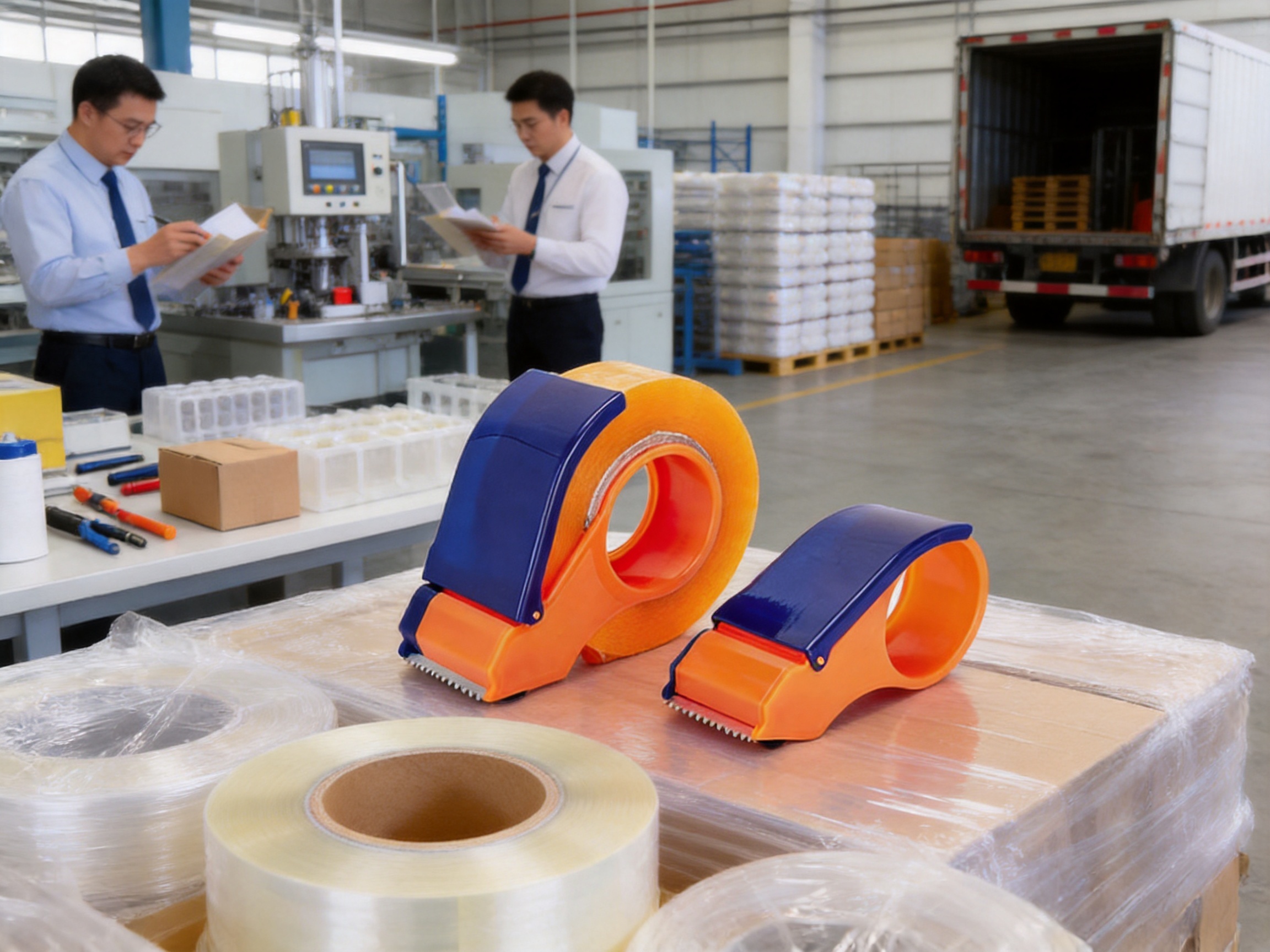
Efficient carton sealing is essential for e-commerce businesses, warehouses, logistics teams, retailers, manufacturers, and temporary packing operations. A reliable sealing tool helps employees close cartons quickly, apply tape consistently, and prepare parcels for storage or shipment. However, not every packaging environment requires a heavy-duty metal dispenser designed for continuous industrial use. Many businesses need a practical, economical, and easy-to-use tool for light- to medium-frequency sealing tasks.
The Plastic Carton Sealer is designed for precisely this type of application. It combines a lightweight plastic structure, a serrated cutting blade, compatibility with tape up to 50 millimetres wide, and a simple one-handed operating method. Its purpose is not to replace reinforced metal dispensers in the most demanding production environments. Instead, it provides an accessible and cost-effective option for businesses that value affordability, easy handling, colour management, and rapid deployment across a team.
For small and medium-sized e-commerce sellers, temporary relocation projects, trade fair installations, retail backrooms, office moves, and low-to-medium frequency packing stations, this carton sealer offers a balanced combination of performance and economy. It is straightforward enough for new employees to use immediately, economical enough to purchase in quantity, and available in multiple colours for workplace organization.
The product is manufactured by Zhejiang Geruite Packaging Materials Co., Ltd., a Chinese packaging materials manufacturer with experience in adhesive tapes, stretch film, strapping products, and related packaging solutions. The company’s expertise in packaging materials supports the development of practical tools that complement everyday packing operations.
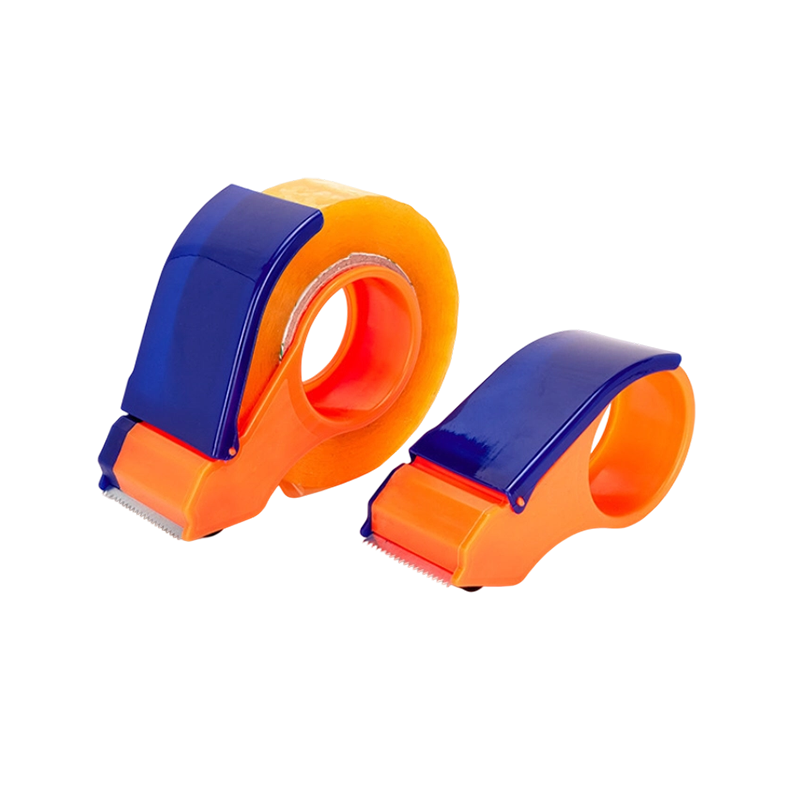
Plastic Carton Sealer
What Is a Plastic Carton Sealer?
A plastic carton sealer is a handheld dispensing and cutting tool used to apply pressure-sensitive packaging tape to cartons and then cut the tape cleanly. The operator places a roll of tape onto the dispenser, guides the tape across the carton seam, and uses the integrated serrated blade to separate the tape after sealing.
Unlike automatic case-sealing machinery, a handheld carton sealer does not require electrical power, compressed air, a conveyor line, or complicated adjustments. It is operated manually and can be used wherever a carton needs to be closed. This makes it particularly useful for flexible workstations, small packing rooms, mobile packing operations, and businesses whose daily order volume changes significantly.
The plastic construction keeps the tool economical and easy to handle. A metal dispenser may be suitable for high-frequency industrial use, but it can represent a larger investment when a company needs dozens or hundreds of tools. The plastic alternative allows businesses to equip more employees without substantially increasing packaging costs.
The product is designed for packaging tape with a maximum suitable width of 50 millimetres. This format is widely used for closing shipping cartons, storage boxes, moving cartons, retail packages, and general corrugated cases. The serrated blade supports the normal cutting requirements associated with everyday carton sealing.
Core Product Specifications
The following table summarizes the available product information.
| Specification | Details |
|---|---|
| Product Type | Plastic carton sealer |
| Category | Packaging tape dispenser |
| Primary Material | Plastic |
| Suitable Tape Width | Up to 50 millimetres |
| Net Weight | 300 grams as listed in the product information |
| Product Size Information | 50; customization available |
| Product Dimensions | Approximately 45–48 millimetres and 50–60 millimetres, according to the supplied specification |
| Blade Type | Serrated cutting blade |
| Operation | Manual, one-handed use |
| Colour Options | Available in a variety of colours |
| Recommended Application | Lightweight sealing and low-to-medium frequency packaging |
The product description emphasizes a lightweight operating experience of less than 200 grams, while the listed product information gives a net weight of 300 grams. This difference may relate to a particular product configuration, packaging calculation, component variation, or data version. Buyers requiring precise weight information for procurement, shipping, or ergonomic evaluation should confirm the final specification with the manufacturer before placing an order.
This clarification does not change the main practical benefit of the tool: it is intended to be easier to handle and more economical than many conventional metal carton sealers. Its plastic body is designed for accessible everyday use rather than extreme-duty industrial abuse.
Advantages Over Conventional Metal Carton Sealers
Lower Purchase Cost
One of the most significant advantages of the plastic carton sealer is its economical purchase price. The product description indicates that it may cost approximately one-third as much as a metal carton sealer. The exact difference depends on order volume, configuration, packaging, and market conditions, but the basic cost advantage is important for organizations that need multiple tools.
In a small packing room, a single dispenser may be sufficient. In a growing e-commerce operation, however, employees may work at several tables or packing stations at the same time. Purchasing a metal dispenser for every workstation can create a meaningful expense. A lower-cost plastic design makes it more practical to provide one tool for each employee or station.
Lower unit cost also simplifies replacement. In a busy workplace, tools may occasionally be misplaced, damaged, or left at another workstation. Replacing an affordable dispenser is less disruptive than replacing a higher-cost industrial tool. Businesses can maintain a small stock of spare units without tying up excessive capital in inventory.
Easy Team-Wide Deployment
The low cost of the plastic carton sealer allows businesses to standardize the sealing process across an entire team. Instead of sharing one dispenser between several employees, each worker can have immediate access to a dedicated tool. This reduces waiting, unnecessary movement, and interruptions during busy packing periods.
Dedicated tools are particularly helpful in operations where several people prepare different orders simultaneously. Each worker can keep a dispenser at their station, reducing the risk of lost time caused by searching for equipment. The result is a simpler workflow that supports more consistent carton closing.
For temporary projects, the same advantage applies. A company preparing for a trade fair, office move, seasonal sale, or short-term fulfilment campaign can equip a temporary workforce quickly without investing in a large quantity of expensive equipment.
Lightweight Handling
A handheld carton sealer should be comfortable to hold and simple to control. The plastic construction supports a lower-weight design and makes the tool suitable for repeated short sealing tasks. An operator can hold the dispenser in one hand while stabilizing the carton with the other hand.
Lightweight handling is valuable for businesses where employees seal a moderate number of cartons throughout the day but do not require continuous high-speed machine operation. It may also benefit workers who need to move between shelves, packing benches, loading areas, or temporary workstations.
The product is not promoted as a substitute for automated machinery or heavy-duty metal equipment in extreme-volume facilities. Its advantage is more practical: it provides sufficient functionality for ordinary sealing activities without adding unnecessary weight or complexity.
One-Handed Operation
The tool is designed for simple one-handed operation. This is important because carton sealing normally requires the operator to hold, align, or rotate the box while applying tape. A dispenser that can be controlled with one hand leaves the other hand available to guide the carton.
One-handed use can also make the process more intuitive for new employees. The basic workflow is easy to understand: position the tape, pull the dispenser along the carton seam, apply the required pressure, and use the serrated blade to cut the tape. Because the tool does not rely on electronic controls or complicated settings, users can normally begin working after a short demonstration.
No Complicated Learning Curve
Many packaging tools require adjustment, calibration, or specialized operating knowledge. The plastic carton sealer is intended to be more direct. Its serrated blade meets ordinary cutting needs, and the manual design minimizes the number of operating steps.
This simplicity is valuable in workplaces with changing staff, temporary employees, part-time workers, or seasonal labour. Training can focus on safe blade handling, correct tape placement, and appropriate carton pressure rather than on complex machine controls.
Simple tools can also reduce training costs. A supervisor can demonstrate correct operation at the packing station, observe a few practice cartons, and then allow the operator to continue independently. This supports quick onboarding while maintaining a consistent packing method.
Designed for the Needs of Small and Medium-Sized E-Commerce Sellers
Small and medium-sized e-commerce businesses often face a different set of packaging requirements from large distribution centres. They may process several hundred orders per day, but their order volume can vary by season, promotion, product launch, or holiday period. They need equipment that is affordable during ordinary periods and easy to scale during peak periods.
The plastic carton sealer is suited to businesses handling fewer than approximately 500 orders per day, according to the product positioning. This does not mean that the tool cannot be used in other environments. Rather, it identifies the type of operation in which the balance between price, simplicity, and performance is most attractive.
For an online retailer, every packing station may need a tape dispenser. If a company has ten stations, buying ten economical plastic tools may be more practical than purchasing a small number of expensive metal tools and asking employees to share them. The result is a more organized packing room and fewer interruptions.
The product is also useful for businesses that are still developing their fulfilment process. A start-up may not yet know how many orders it will process, which carton sizes will become standard, or how many employees will work at each station. Affordable manual tools provide flexibility while the business gathers operational data and plans future equipment investments.
When order volumes eventually become high enough to justify automatic sealing equipment, the plastic carton sealer can continue to serve as a backup, maintenance tool, overflow station accessory, or solution for irregularly sized cartons. It can therefore remain useful during a gradual transition to more advanced packaging machinery.
Applications in Different Work Environments
E-Commerce Packing Stations
The primary application is closing corrugated shipping cartons. Operators can use the dispenser to apply packaging tape along the top seam and other areas requiring reinforcement. It is suitable for general parcel preparation in warehouses, online retail fulfilment rooms, and small distribution centres.
Temporary Relocations
Office moves, warehouse reorganizations, shop renovations, and household relocation projects often require a large number of boxes to be closed quickly. These projects may last only a few days or weeks, making a lower-cost tool more appropriate than a heavy industrial dispenser. The plastic carton sealer can be distributed among workers and collected when the project is complete.
Trade Fair and Exhibition Set-Ups
Trade fair teams frequently pack promotional materials, displays, printed documents, samples, and equipment. During installation and dismantling, staff may need to seal cartons in locations where permanent packaging machinery is unavailable. A portable manual dispenser is easy to carry, store, and use on site.
Retail Backrooms
Retailers can use the tool to close replenishment cartons, return packages, seasonal merchandise boxes, and internal transfer cartons. Its colour options may help distinguish tools assigned to different departments, stores, or packaging tasks.
General Warehouse Operations
Warehouses handling moderate carton volumes can place dispensers at multiple packing locations. Colour coding can support simple equipment management, especially where several teams work in the same facility.
Light Manufacturing and Assembly
Manufacturers may use the tool for finished-product cartons, spare parts packaging, sample shipments, and internal component transfers. It is particularly appropriate where carton sealing is important but does not occur continuously at an automated production speed.
Colour Coding as a Management Tool
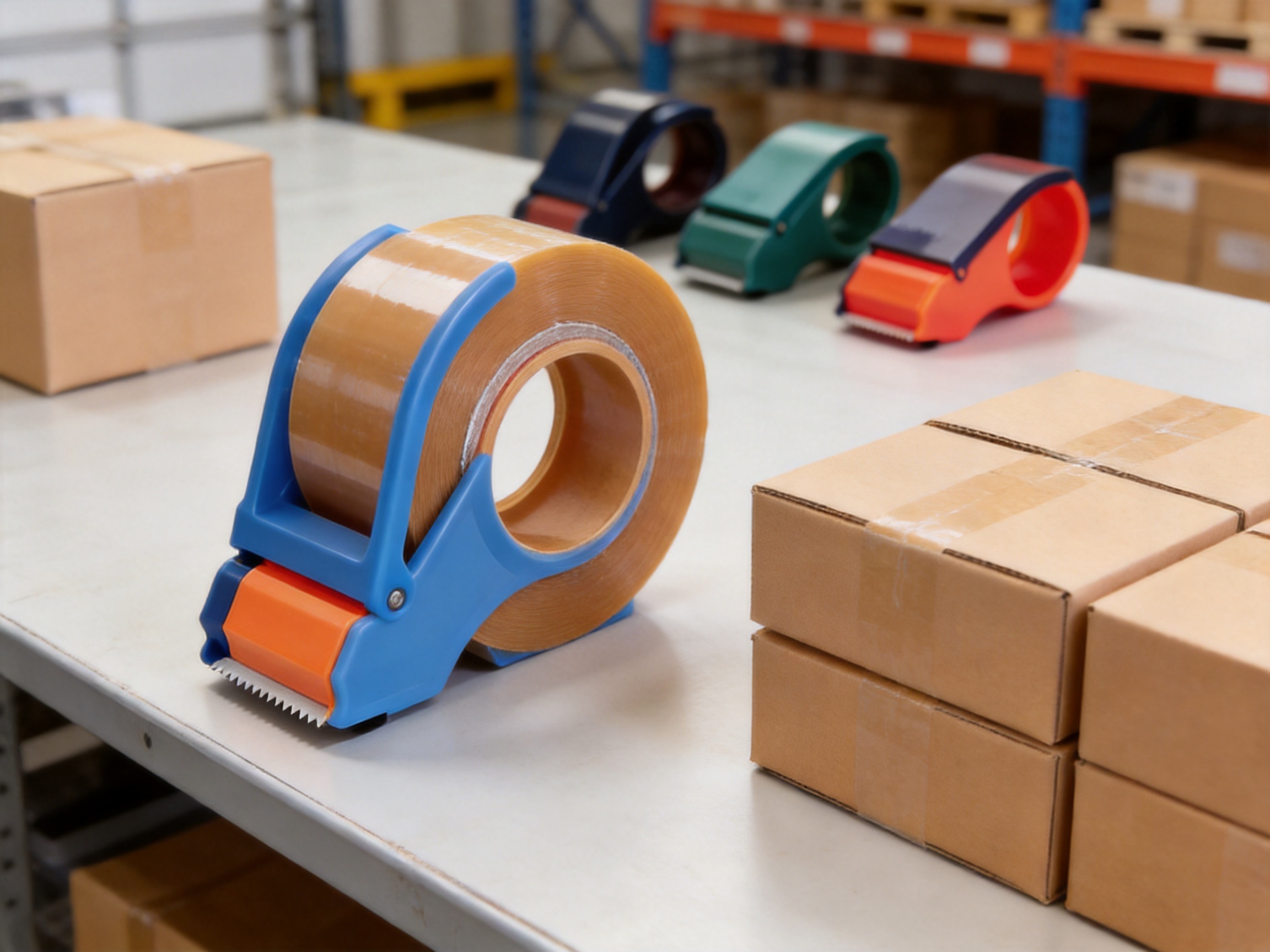
Packaging tools are often treated as interchangeable, but colour can provide practical operational value. The plastic carton sealer is available in a variety of colours, allowing businesses to assign particular colours to departments, shifts, workstations, or product categories.
For example, a warehouse may assign blue dispensers to outbound shipping, red dispensers to returns, and green dispensers to internal storage. A multi-site company may use one colour for each branch. In a training environment, a different colour could be reserved for new employees or temporary project teams.
Colour coding can make it easier to identify tools that have been moved from their assigned locations. It may also reduce confusion where different tape types are used for different applications. Although colour does not replace formal inventory control, it provides a fast visual reference at the workstation.
From a procurement perspective, colour variety also makes it possible to purchase the same basic tool for several departments while preserving an identifiable visual distinction. This supports standardization without requiring completely different product designs.
Ergonomic and Workflow Benefits
Ergonomics in packaging does not always require sophisticated machinery. A simple tool that is easy to grip, guide, and operate can make a meaningful difference in daily work. The plastic carton sealer is designed to be picked up and used without extensive preparation.
Its manual format allows operators to adjust their movement to the carton size and packing arrangement. Unlike fixed machinery, it can be used at a bench, on a pallet, beside a storage rack, or in a temporary location. This flexibility supports workspaces where cartons are not presented in a uniform orientation.
One-handed operation can also help workers maintain control over lightweight cartons. The free hand can hold down a carton flap, stabilize the box, or rotate the package after sealing one side. A more coordinated process can reduce awkward pauses and improve the appearance of the finished package.
Good operating technique remains important. Users should keep the tape aligned with the carton seam, avoid excessive pulling force, and use the blade carefully. The tool is intended for appropriate packaging tape and ordinary carton sealing, not for cutting heavy materials, wire, strapping, or products other than tape.
Manufacturing Strengths Behind the Product
Experience in Packaging Materials
Zhejiang Geruite Packaging Materials Co., Ltd. operates within the packaging materials sector and produces a broad range of tapes and packaging products. Its product portfolio includes BOPP tapes, kraft paper tapes, masking tapes, high-temperature-resistant tapes, metal tapes, PE stretch film, PP strapping, and high-strength PET strapping.
This product range gives the company practical knowledge of the needs faced by packaging users. A carton sealer is not an isolated accessory; it is part of a larger packaging system involving tape selection, carton structure, stretch wrapping, strapping, load stabilization, and shipment protection.
Experience across these categories can support more informed product development. The manufacturer can consider how a dispenser will be used with common packaging tapes, how operators handle cartons, and what characteristics matter in logistics and warehouse environments.
Research and Product Innovation
The company describes research, development, production, and sales as core parts of its business. Continued product improvement is important in packaging because customers seek tools that reduce labour, simplify handling, and control cost.
For the plastic carton sealer, product development focuses on practical value rather than unnecessary complexity. The tool is designed to provide the essential functions of tape dispensing and cutting while maintaining an accessible price. This type of focused innovation is especially relevant to smaller companies that cannot justify advanced automated equipment.
Product innovation may also involve material selection, mould design, blade integration, dimensional accuracy, colour consistency, and packaging efficiency. Each of these factors affects how the product performs in real-world use and how easily it can be manufactured at scale.
Modern Production Equipment
The manufacturer reports that it is equipped with advanced production equipment. For a plastic handheld tool, production equipment may include plastic processing machinery, moulding systems, assembly equipment, cutting or blade-fitting stations, inspection tools, and packaging lines.
Stable equipment helps control repeatability across production batches. Consistent dimensions are important because the dispenser must accept the intended tape width, allow the roll to rotate correctly, and support comfortable handling. Controlled production also helps ensure that components fit together properly and that the serrated blade is positioned for practical use.
Advanced equipment alone does not guarantee product quality, but it provides the foundation for repeatable manufacturing. When combined with defined procedures and inspection checkpoints, it enables a supplier to serve both small and large orders with greater consistency.
Quality Control from Materials to Final Inspection
The company emphasizes quality control from raw material procurement through production and final inspection. This full-process approach is important because performance can be affected by many stages of manufacturing.
Material inspection helps ensure that the plastic used for the dispenser meets the intended requirements for strength, moulding, appearance, and dimensional stability. Production monitoring helps identify defects during forming or assembly. Final inspection provides an opportunity to check the finished tool before it is packed and shipped.
Relevant inspection points may include visual appearance, body integrity, tape compatibility, component alignment, blade installation, operating movement, and packaging condition. For buyers, a systematic quality process offers greater confidence that repeated orders will maintain a consistent standard.
Production Capacity and Business Scale
The company reports an annual output value of more than RMB 60 million. This indicates an established manufacturing operation with the capacity to support a broad customer base and multiple product categories.
A supplier with broader production resources may be better positioned to handle bulk orders, repeat procurement, colour requirements, and packaging customization. It may also offer a more stable supply relationship than a small workshop focused on a single product with limited capacity.
For distributors and wholesalers, manufacturing scale can be especially important. They may need regular replenishment, consistent product specifications, and reliable communication regarding production schedules. A supplier experienced in packaging materials can support these requirements more effectively.

Material and Construction Considerations
The main body of the product is made from plastic. Plastic is well suited to a lightweight, economical dispenser because it can be formed into ergonomic shapes and produced efficiently in volume. It also allows colour variation without requiring a completely different design.
The choice of plastic should be understood in relation to the intended application. The product description openly positions the sealer as adequate, user-friendly, and affordable rather than as an extreme-durability tool. This honest positioning helps buyers choose the right product for the right workload.
In light- and medium-duty applications, a plastic body can provide sufficient performance for routine carton sealing. In environments involving constant high-speed operation, severe impacts, unusually heavy tape tension, or rough handling, a reinforced metal tool or automated case sealer may be more suitable.
The serrated blade is designed to meet everyday tape-cutting requirements. It should be used only for separating packaging tape and handled with appropriate care. Operators should keep fingers away from the cutting edge, avoid allowing the tool to become accessible to unsupervised children, and store it safely when not in use.
How to Use the Plastic Carton Sealer
Step One: Select Compatible Tape
Use a packaging tape roll with a width of no more than 50 millimetres. The tape should be suitable for carton sealing and should rotate smoothly on the dispenser. Before beginning a large packing run, test the tape on a sample carton to confirm adhesion and handling.
Step Two: Load the Tape
Place the tape roll onto the dispenser according to the product’s intended orientation. The adhesive side should face the carton when the tape is pulled across the seam. Confirm that the roll turns freely and that the tape path is not twisted.
Step Three: Position the Carton
Align the top flaps of the carton and press them into the desired closed position. If necessary, use the free hand to hold the flaps together while positioning the tape at the beginning of the seam.
Step Four: Apply the Tape
Pull the dispenser smoothly along the carton seam. Apply enough pressure for the tape to contact the corrugated surface without stretching it excessively. Maintaining a consistent direction can improve the appearance and reliability of the seal.
Step Five: Cut the Tape
At the end of the sealing path, tilt or move the dispenser so that the serrated blade cuts the tape. Keep fingers away from the blade and do not use the cutting edge on materials for which it was not designed.
Step Six: Inspect the Seal
Press down any loose tape edges and inspect the carton. The tape should be firmly attached along the seam, with no major gaps or lifted sections. If the package will experience rough transport, additional tape strips or a different packaging method may be required.
Maintenance and Safe Use
Although the plastic carton sealer is simple to operate, routine care can extend its useful life. Remove adhesive residue from accessible surfaces using a method compatible with the plastic material. Do not use aggressive chemicals without confirming that they will not damage the body.
Inspect the serrated blade regularly. If the blade becomes damaged, loose, or excessively contaminated with adhesive, stop using the tool until it has been safely serviced or replaced. A damaged blade may cut tape poorly and may create an unnecessary safety risk.
Store the dispenser in a dry location away from extreme heat, direct sunlight, and heavy objects that could deform the body. Do not throw the tool into a carton where it may be damaged or create a hazard for another worker.
Supervisors should provide basic instruction before assigning the tool to a new operator. Training should cover tape loading, correct sealing direction, blade awareness, storage, and the limitations of the product. The tool should not be used as a substitute for strapping tools, stretch-film dispensers, or cutting devices intended for other materials.
Procurement Benefits for Wholesale Buyers
Wholesale buyers often evaluate more than the price of an individual unit. They consider packaging quantity, colour availability, repeat supply, specification consistency, and the supplier’s ability to support future orders. The plastic carton sealer offers several characteristics that can be attractive in bulk procurement.
First, the economical design can support high-volume purchasing. Distributors may stock multiple colours or package the product with compatible packaging tape. E-commerce suppliers may include the tool in fulfilment starter kits for small businesses.
Second, the simple construction makes product education easier. Sales teams can explain the main use case quickly: load the tape, apply it to a carton seam, and cut the tape using the serrated blade. This straightforward value proposition can be communicated to warehouses, retailers, movers, offices, and online sellers.
Third, the product complements a broad packaging portfolio. A supplier already selling BOPP tape, kraft tape, stretch film, or strapping can offer the carton sealer as an associated accessory. This creates opportunities for bundled sales and one-stop procurement.
Finally, colour options may help distributors serve customers with different workplace organization requirements. Colour-coded packaging tools can be marketed not only as a visual preference but also as a practical management feature.
Comparison with Other Packaging Methods
| Packaging Method | Main Strength | Best-Suited Environment | Limitations Compared with the Plastic Carton Sealer |
|---|---|---|---|
| Plastic carton sealer | Low cost, simple operation, easy deployment | Small and medium e-commerce operations, temporary packing, general carton sealing | Not intended for extreme-duty or automated high-volume use |
| Metal carton sealer | Greater resistance to heavy, frequent use | High-frequency manual packing and demanding warehouse applications | Usually more expensive and potentially heavier |
| Automatic case sealer | High throughput and process automation | Large production lines and continuous carton handling | Higher investment, less portable, requires installation and maintenance |
| Manual tape application without a dispenser | Lowest equipment requirement | Very occasional carton sealing | Slower, less consistent, and more difficult to cut neatly |
| Strapping tool | High-strength load stabilization | Heavy cartons, pallets, and bundled loads | Not a direct replacement for adhesive tape sealing |
This comparison shows that product selection should be based on workload and application rather than on a simple assumption that the most robust tool is always the best choice. A plastic sealer is valuable because it delivers the essential function at an accessible cost for appropriate users.
Limitations and Correct Product Positioning
A responsible product evaluation should recognize limitations as well as advantages. The plastic carton sealer is not presented as an extreme-durability device. Businesses that seal thousands of cartons per shift, apply unusually high tape tension, or operate in harsh industrial conditions may require a metal dispenser or automated system.
Similarly, the tool is not designed to replace strapping equipment. Strapping is used when a load requires additional compression or reinforcement. Adhesive tape is generally used to close carton flaps and protect the package opening. The correct packaging method depends on carton weight, transport conditions, product shape, and handling requirements.
The listed dimensions and weight should also be confirmed before procurement if the tool must fit a specific workstation, automated accessory, storage system, or shipping package. The supplied information includes a 300-gram net weight and dimension ranges, while the promotional description emphasizes a very lightweight design. Final technical confirmation is advisable for projects with strict specification requirements.
These limitations do not reduce the product’s usefulness. They help buyers match the dispenser with realistic operating conditions. When used within its intended range, the tool offers a practical balance between affordability, convenience, and everyday functionality.
Why Choose an Established Packaging Manufacturer?
Purchasing from an established packaging manufacturer can simplify supplier management. A company with experience in tapes, films, strapping, and related products is familiar with the quality expectations of logistics, warehousing, manufacturing, and retail customers.
Zhejiang Geruite Packaging Materials Co., Ltd. is located in Zhejiang Province, China, a region known for its developed manufacturing infrastructure and active industrial economy. The company has built its business around packaging material research, development, production, and sales.
Its stated quality philosophy places emphasis on the complete manufacturing chain, beginning with raw material procurement and continuing through production and final inspection. This approach is relevant to buyers who need stable product performance across repeated orders.
The company also identifies professional service and product innovation as important business priorities. For international buyers, these capabilities can support specification discussions, bulk-order planning, packaging requirements, and product selection across several packaging categories.
Frequently Asked Questions
What type of product is the Plastic Carton Sealer?
It is a handheld manual dispenser designed to apply packaging tape to cartons and cut the tape with an integrated serrated blade.
What tape width can it accommodate?
The supplied specification states that it is suitable for tape up to 50 millimetres wide. Buyers should confirm the final compatible roll dimensions before ordering a specialized tape format.
Is the dispenser suitable for one-handed operation?
Yes. The product is designed to be operated with one hand, leaving the other hand available to stabilize or rotate the carton.
Who is the product designed for?
It is particularly suitable for small and medium-sized e-commerce sellers, general warehouses, retail backrooms, temporary relocation projects, trade fair installations, offices, and other low-to-medium frequency packing environments.
Is it suitable for heavy industrial use?
The product is designed for practical everyday sealing rather than extreme durability. Facilities with continuous high-volume packaging or severe operating conditions should consider reinforced metal dispensers or automated case-sealing equipment.
What is the main advantage over a metal carton sealer?
The main advantages are lower purchase cost, easier large-scale deployment, lower handling burden, and simple operation. The product description indicates that the price may be approximately one-third that of a metal carton sealer, although actual pricing depends on order size and configuration.
Are different colours available?
Yes. The product is available in a variety of colours. Buyers can use colour differences to organize tools by department, station, product category, or work team.
Does the carton sealer require electricity?
No. It is a manual tool and does not require electricity, batteries, compressed air, or a fixed installation.
Can it be used with stretch film or strapping?
No. It is intended for adhesive packaging tape. Stretch film requires a stretch-film dispenser, while PP or PET strapping requires dedicated strapping equipment.
What is the listed net weight?
The supplied product information lists a net weight of 300 grams. The product description also refers to an operating weight of less than 200 grams. Because these figures differ, buyers should confirm the final product configuration and measurement method with the manufacturer.
Is the blade replaceable?
The supplied information identifies a serrated blade but does not confirm whether it is replaceable. Buyers who require replaceable blades should request specific maintenance and spare-part information before purchase.
Can the product be customized?
The supplied information includes the statement “50, customizable,” suggesting that certain product or size requirements may be customizable. The exact scope of customization should be confirmed with the manufacturer, including colour, packaging, dimensions, branding, and order quantity.
How should the tool be maintained?
Keep the tool clean, remove adhesive buildup carefully, inspect the blade, store it away from excessive heat and moisture, and replace or service the tool if the body or cutting edge becomes damaged.
Why is this product useful for bulk purchasing?
Its economical price makes it practical to equip multiple employees or workstations. Bulk buyers can also use colour coding to manage equipment across teams and departments.
Conclusion
The Plastic Carton Sealer is a practical solution for businesses that need dependable everyday carton sealing without the cost and weight associated with many metal dispensers. Its plastic body, one-handed operating method, serrated blade, compatibility with tape up to 50 millimetres, and range of colour options make it suitable for flexible packaging environments.
Its strongest competitive advantage is the balance between function and affordability. Small and medium-sized e-commerce sellers can provide a tool for each packing station. Temporary project teams can deploy multiple units without a large equipment investment. Retailers, offices, warehouses, and trade fair operators can use the dispenser wherever cartons must be closed quickly and simply.
The product is also supported by the manufacturing capabilities of Zhejiang Geruite Packaging Materials Co., Ltd. The company’s experience in adhesive tape, stretch film, strapping, and packaging materials provides a broad understanding of the industries that use carton-sealing tools. Its stated investment in production equipment, research, quality control, and professional service supports consistent product development and supply.
As with any packaging tool, correct application is essential. The plastic carton sealer should be selected for light- to medium-frequency use and should not be confused with heavy-duty metal equipment or automated case-sealing machinery. When matched with the right workload, it offers a user-friendly, economical, and easily managed approach to carton sealing.
For organizations seeking a straightforward dispenser that can be purchased in quantity, operated with minimal training, and integrated into a wider packaging supply program, this product represents a practical choice.
References
1. Product information supplied for the Plastic Carton Sealer, including material, tape width, weight, dimensions, application, and colour availability.
2. Company information supplied for Zhejiang Geruite Packaging Materials Co., Ltd., including manufacturing capabilities, product categories, quality-control approach, and company development objectives.
3. General principles of manual carton sealing, packaging tape application, and warehouse workflow organization.
4. General workplace guidance concerning safe handling of serrated cutting tools and manual packaging equipment.
5. General packaging industry practices relating to adhesive tape, corrugated cartons, stretch film, PP strapping, and PET strapping.
Product: Plastic Carton Sealer

Featured Products
-
Water-Activated Reinforced Kraft Paper
-
Aluminum Foil Adhesive Tape
-
High viscosity, Tearable by hand Plastic-free kraft paper tape
-
Clear Construction Building Protective Plastic Sheeting Film
-

1608/1610/1910/2512 Handheld Opaque PET Plastic Steel Belt
-
1608/1610/1910/2512 Handheld Transparent P+E+T Plastic Steel Belt
CONTACT DETAILS
- Address:No. 241, Yaojiafan, Zhangpanqiao, Shushan Street, Xiaoshan District, Hangzhou City, Zhejiang Province, China
- TEL:+86-0571-83175630
- Phone:+86-13336160217
- Email:jeffrey@grtpk.com
- WeChat/WhatsApp:+86-18058115265
PRODUCTS
NEWS CENTER
MOBILE TERMINAL
Copyright© Zhejiang Geruite Packaging Materials Co., Ltd. All Rights Reserved.
Privacy Wholesale industrial packaging tape Manufacturers