


 English
 Español
 عربى

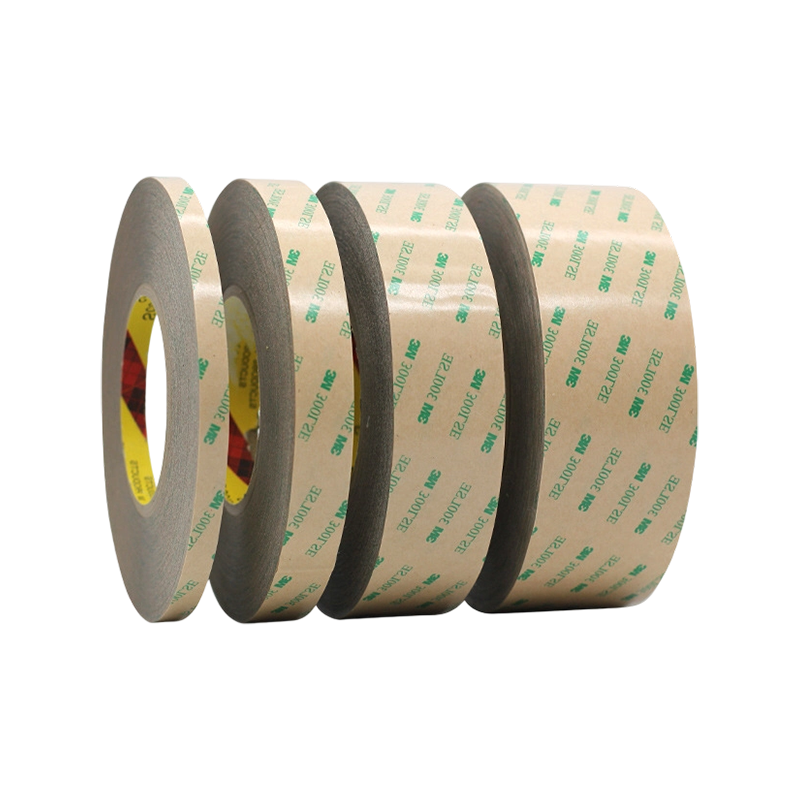
Industrial Double-Sided OPP Tape for Reliable Product Bonding
Content
- 1 Introduction
- 2 What Is DS-32 OPP Double-Sided Tape?
- 3 Technical Specifications
- 4 Key Advantages of OPP Double-Sided Tape
- 5 Applications Across Industrial and Commercial Markets
- 6 How DS-32 Compares with Alternative Double-Sided Tapes
- 7 Manufacturing Strengths and Quality Management
- 8 Correct Application Procedure
- 9 Purchasing Considerations for Distributors and Manufacturers
- 10 Environmental and Operational Efficiency
- 11 Company Capabilities and Customer Support
- 12 Recommended Qualification Testing
- 13 Q&A
- 13.1 What type of tape is DS-32?
- 13.2 What is the primary application of this tape?
- 13.3 Is DS-32 suitable for heavy structural bonding?
- 13.4 What does the 90 ± 5 micron thickness mean?
- 13.5 What does initial tack describe?
- 13.6 What is the listed peel-adhesion performance?
- 13.7 What does the holding-power value mean?
- 13.8 Can the tape be used on plastic surfaces?
- 13.9 Can DS-32 be die-cut?
- 13.10 How should the tape be applied?
- 13.11 How should the tape be stored?
- 13.12 Why should customers test the tape on their own materials?
- 13.13 What information should be supplied when requesting a quotation?
- 14 Conclusion
- 15 References
- 16 Product: DS-32 OPP double-sided tape
Introduction
Double-sided tape has become an essential bonding material in modern packaging, manufacturing, assembly, retail presentation, and product protection. Unlike single-sided adhesive tape, which joins one surface to another through an exposed adhesive layer, double-sided tape creates a clean and efficient bonding interface between two materials. This makes it particularly valuable when manufacturers need a neat appearance, fast application, consistent adhesion, and minimal mechanical fastening.
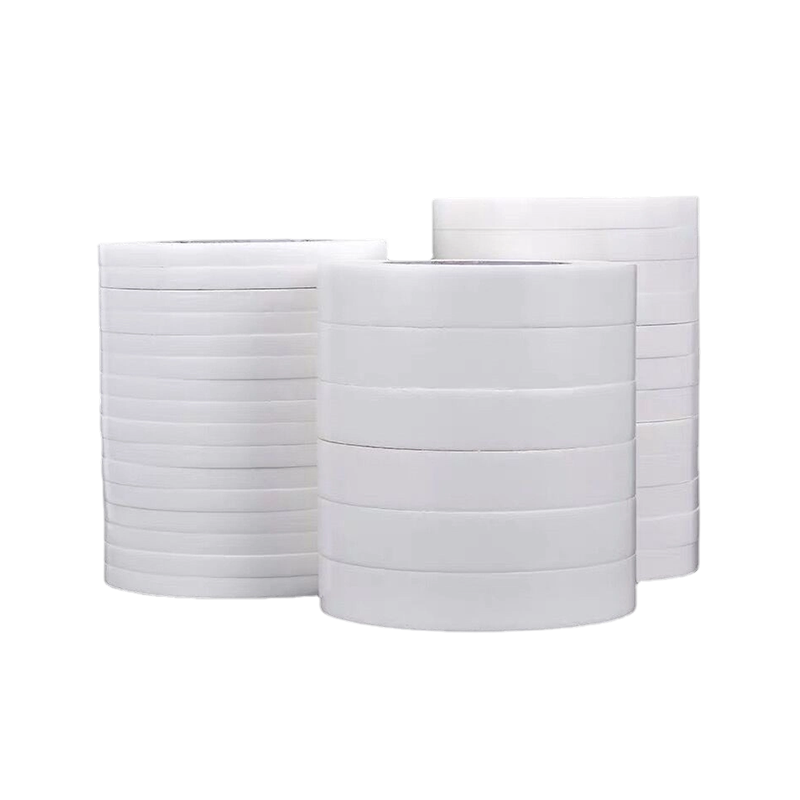
DS-32 OPP double-sided tape is designed for product bonding applications that require dependable adhesion while reducing the risk of substrate tearing. Its structure combines an OPP-based carrier with adhesive layers on both sides, providing a practical balance between flexibility, handling strength, initial tack, holding power, and clean application. With a typical total thickness of 90 ± 5 microns, the tape is suitable for many industrial and commercial bonding tasks where a moderate-profile adhesive solution is preferred.
The product is manufactured and supplied by Zhejiang Geruite Packaging Materials Co., Ltd., a packaging materials producer based in Hangzhou, Zhejiang Province, China. The company’s product portfolio covers adhesive tapes, strapping products, stretch film, protective film, bags, and related packaging solutions. Its manufacturing and quality-control capabilities support the production of materials for logistics, express delivery, household goods, electronics, construction, decoration, industrial manufacturing, cargo stabilization, and packaging protection.
For buyers comparing double-sided OPP tape with competing products, the most important considerations include adhesive consistency, thickness control, bonding performance, substrate compatibility, production stability, and supply reliability. DS-32 is positioned as a practical industrial solution that addresses these factors through defined technical specifications and standardized testing.
What Is DS-32 OPP Double-Sided Tape?
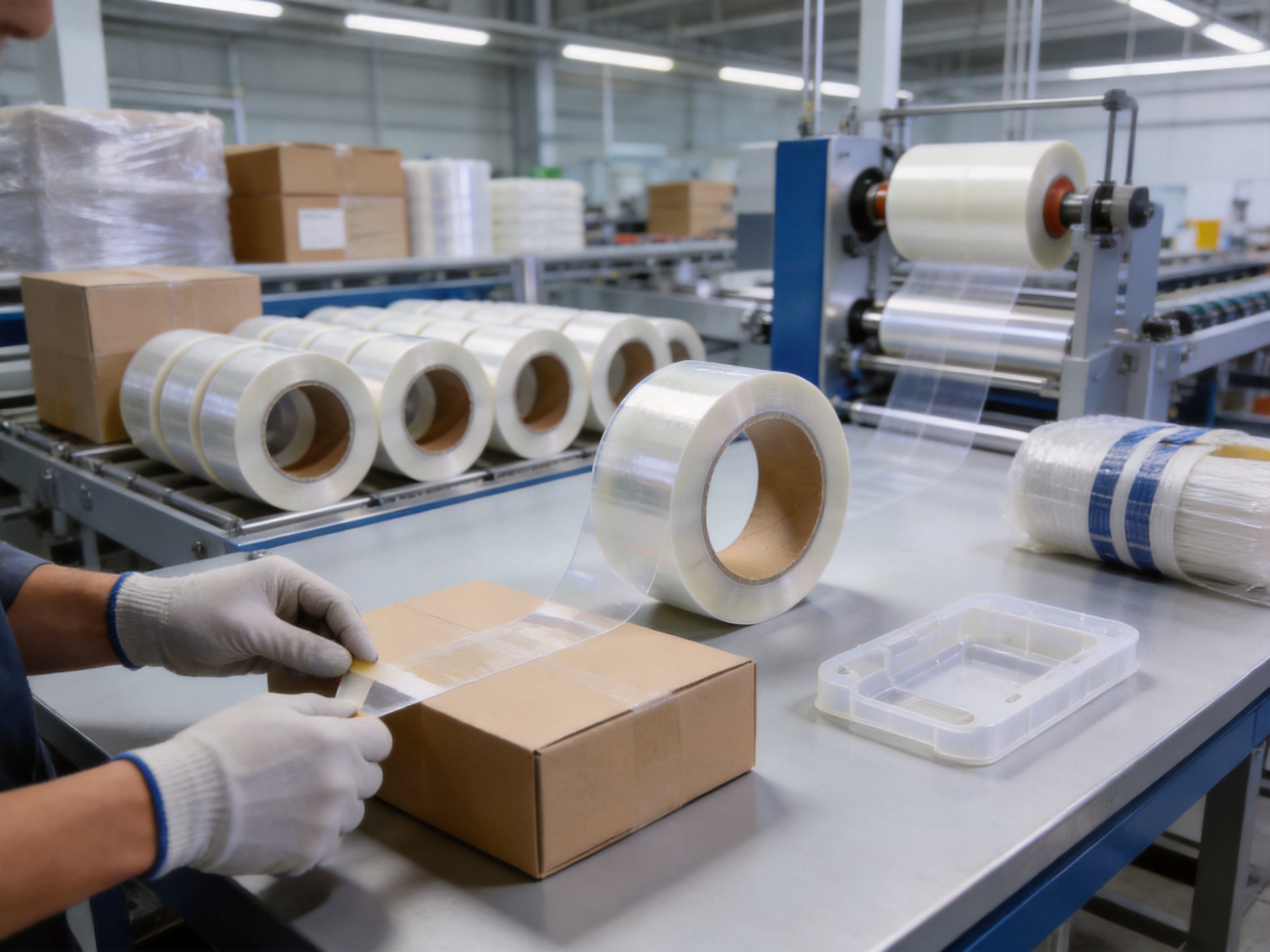
DS-32 is an OPP double-sided tape intended for bonding products and components that require a non-tearing substrate. OPP, or oriented polypropylene, is a film material known for its light weight, dimensional stability, smooth surface, and useful tensile characteristics. When used as a carrier in double-sided tape, OPP can support efficient converting, slitting, die-cutting, labeling, and manual or automated application.
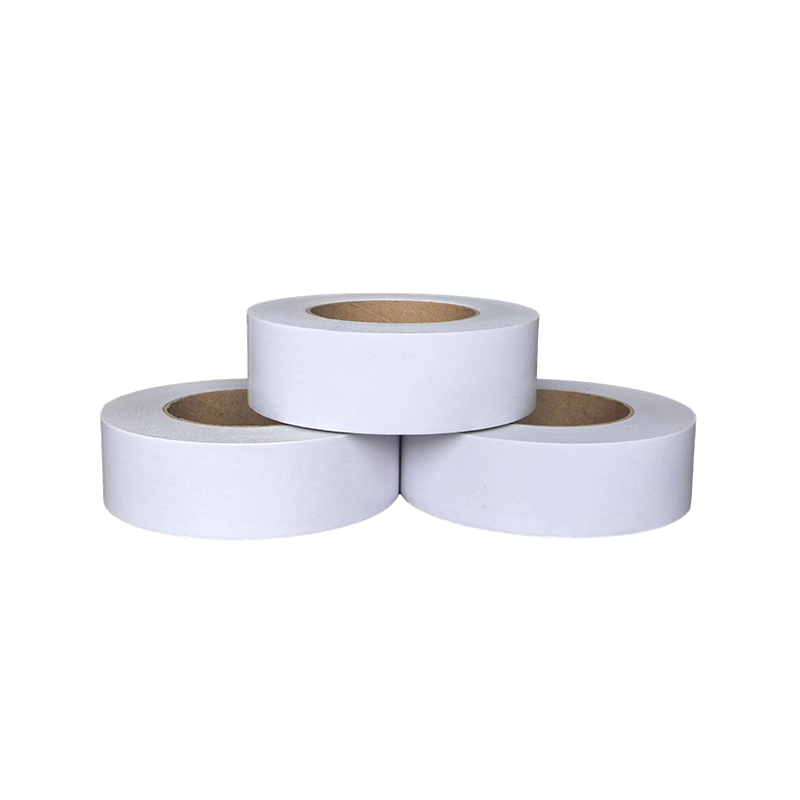
The tape contains adhesive on both sides of the OPP carrier. One side is applied to the first surface, while the release liner protects the second adhesive layer until the product is ready for final assembly. This configuration allows the tape to be supplied in rolls, sheets, die-cut pieces, or other converted formats, depending on customer requirements and downstream equipment.
With a nominal thickness of 90 microns, DS-32 offers a relatively slim bonding layer compared with thicker foam-based or highly cushioned adhesive products. This makes it useful where the bonded parts must remain close together and where excessive thickness could interfere with fit, appearance, folding, stacking, or packaging efficiency.
The tape is not presented as a universal replacement for every adhesive technology. Different applications may require foam tape, transfer adhesive, hot-melt adhesive, solvent-based adhesive, water-based adhesive, or specialty high-temperature tape. The value of DS-32 lies in its suitability for general product bonding applications where a thin OPP carrier, double-sided adhesive construction, and stable industrial performance are required.
Basic Product Characteristics
DS-32 has a typical tape thickness of 90 ± 5 microns according to GB/T7125-2014. Thickness control is important because variation can influence roll length, die-cutting accuracy, assembly fit, perceived product quality, and the amount of adhesive applied to a surface.
The product records an initial tack value of no more than 180 millimeters at 14 degrees Celsius under the inclined plane method specified in GB/T4852-2002. Initial tack describes the ability of the adhesive to form an immediate bond when contact pressure is limited. A controlled tack level can help the tape adhere effectively while still allowing practical handling during positioning.
Adhesion to a steel plate is specified at 10 N/25 millimeters or higher under GB/T2792-1998. A separate specification records adhesion of 9 N/24 millimeters or higher under GB/T2792-2014 after 20 minutes of placement, tested with 25-micron PET. These figures provide reference points for peel performance and help purchasers compare product behavior under defined test conditions.
Holding power is listed at 120 minutes or higher for a 24 × 24 millimeter test area under GB/T4851-2014. Holding power indicates how well the adhesive resists sliding or separation under a defined load over time. This is particularly relevant when bonded parts are exposed to sustained stress after application.
Technical Specifications
| Test Item | Typical Value | Reference Standard | Application or Significance |
|---|---|---|---|
| Tape Thickness | 90 ± 5 microns | GB/T7125-2014 | Suitable for product bonding requiring a substrate that resists tearing |
| Initial Tack at 14°C | ≤ 180 millimeters | GB/T4852-2002, inclined plane method | Indicates initial adhesive contact behavior |
| Adhesion to Steel Plate | ≥ 10 N/25 millimeters | GB/T2792-1998, peel test | Reference value for peel adhesion |
| Adhesion to Steel Plate | ≥ 9 N/24 millimeters | GB/T2792-2014, after 20 minutes using 25-micron PET | Reference value for adhesion after placement |
| Holding Power | ≥ 120 minutes | GB/T4851-2014 | Indicates resistance to movement under a defined load |
Test values should be understood as technical reference data rather than a guarantee that every application will produce identical results. Actual performance may vary according to the type of substrate, surface energy, cleanliness, roughness, temperature, humidity, pressure, dwell time, storage conditions, and the amount of stress placed on the bonded joint.
Key Advantages of OPP Double-Sided Tape
1. A Thin and Practical Bonding Structure
One of the main advantages of DS-32 is its 90-micron construction. A thin double-sided tape can help manufacturers maintain a compact product profile and reduce the visual impact of the bonding material. In applications involving labels, nameplates, paper components, lightweight plastic parts, promotional materials, packaging inserts, and product accessories, a slim tape can be easier to integrate than a thicker cushioning tape.
Thickness also affects converting efficiency. A controlled, moderate thickness supports consistent slitting and may help reduce adjustment problems when the tape is processed into narrow rolls or die-cut shapes. For high-volume operations, dimensional consistency can contribute to predictable material consumption and fewer interruptions caused by irregular winding or cutting.
Compared with thicker foam-based double-sided tapes, OPP tape generally provides less cushioning and conformability. However, this difference can be an advantage when the application calls for a flat, low-profile bond rather than gap filling. Buyers should select the tape construction according to the physical relationship between the surfaces being joined.
2. Support for Non-Tearing Substrate Applications
The listed application specifically identifies product bonding situations requiring a substrate that does not tear easily. This characteristic is important when the tape must be processed, repositioned, die-cut, or applied to products where carrier integrity matters.
A carrier with useful tensile stability can help reduce unwanted stretching during slitting and application. It can also support cleaner removal of the release liner and more precise handling during automated or semi-automated assembly. For converters, substrate integrity is especially important because a torn or distorted tape web can cause waste, equipment stoppage, uneven placement, or inconsistent finished dimensions.
In comparison with very soft or highly extensible tape constructions, an OPP carrier can provide a more controlled handling experience. This does not mean that the tape is suitable for every curved, irregular, or highly flexible surface. Instead, its strength is most evident in applications where controlled positioning and a stable tape web are more important than extreme conformability.
3. Balanced Initial Tack
Initial tack is a key factor in production efficiency. When a tape has adequate initial adhesion, an operator or machine can place a component and obtain immediate contact without waiting for a long curing process. This is useful in packaging lines, product assembly, display preparation, and other operations where a high number of units must be processed quickly.
The DS-32 specification of no more than 180 millimeters under the stated inclined-plane test provides a defined indication of tack behavior. A controlled level can be beneficial because extremely aggressive initial tack may make repositioning difficult, increase the risk of placement errors, or cause premature bonding to tools and protective liners.
Actual tack depends strongly on contact pressure and surface condition. A clean, smooth, high-energy surface usually permits better adhesive contact than a dusty, oily, rough, or low-energy surface. For this reason, users should evaluate the tape with the exact substrates and process conditions used in production.
4. Reliable Peel Adhesion
Peel adhesion is important when the bonded materials may be pulled apart from an edge or subjected to forces that gradually lift the tape. DS-32 records a steel-plate adhesion value of at least 10 N/25 millimeters under one listed test method and at least 9 N/24 millimeters under another specified condition.
These values indicate that the product is designed to provide meaningful adhesive contact rather than merely temporary positioning. Strong peel adhesion can reduce the likelihood of edge lifting, component detachment, and premature failure when the tape is correctly applied to compatible surfaces.
Comparisons between suppliers should be made carefully. Peel values are meaningful only when the test width, substrate, dwell time, peel angle, peel speed, temperature, and test standard are comparable. A larger numerical value from a different test setup does not automatically represent better real-world performance. DS-32 provides defined reference conditions that can support more disciplined purchasing and qualification decisions.
5. Useful Holding Power
Holding power measures resistance to movement over time. In practical applications, this can be relevant when a bonded item is exposed to constant weight, vibration, vertical loading, or shear forces. The listed holding-power performance of at least 120 minutes under GB/T4851-2014 demonstrates that the adhesive is intended to resist gradual displacement under a defined test condition.
Holding power is particularly important for product components that are not only peeled but also loaded in a downward or sideways direction. Examples may include lightweight fixtures, packaging accessories, protective elements, identification components, and assembled parts that remain under stress after application.
Users should remember that holding power is affected by temperature. Many pressure-sensitive adhesives soften at elevated temperatures and become less flexible at low temperatures. Testing in the intended operating environment is therefore recommended, especially for products exposed to outdoor conditions, refrigerated storage, heated warehouses, vehicle interiors, or industrial equipment.
Applications Across Industrial and Commercial Markets
Packaging and Product Presentation
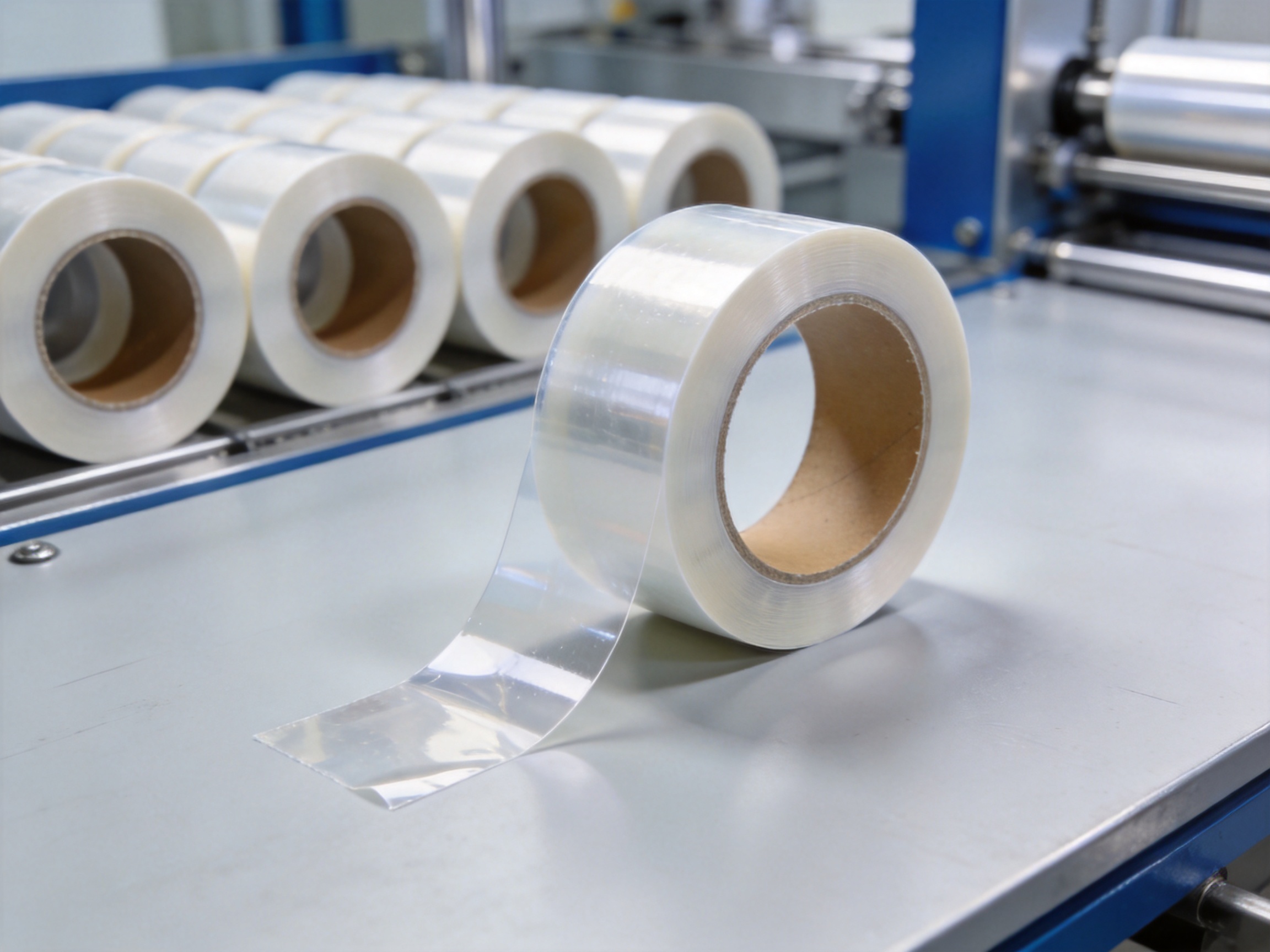
Double-sided OPP tape is widely used where packaging components must be attached without visible mechanical fasteners. It can help secure paperboard elements, product information cards, decorative components, labels, promotional materials, and lightweight inserts.
In retail packaging, appearance is often as important as mechanical performance. A concealed adhesive bond can create a cleaner presentation than staples, clips, or exposed single-sided tape. The slim structure of DS-32 can help preserve the appearance of cartons, pouches, gift packaging, product sleeves, and point-of-sale materials.
Packaging designers may also use double-sided tape to attach temporary or permanent components during final assembly. The tape can support fast production without the drying time associated with liquid glue. This may simplify line layout and reduce the need for adhesive mixing, liquid dispensing, or curing equipment.
Logistics and Express Delivery Materials
Logistics and express delivery operations depend on efficient packaging processes. Although carton sealing is usually performed with single-sided pressure-sensitive tape or hot-melt adhesive systems, double-sided tape can be useful for attaching documentation pockets, labels, protective pads, handling instructions, promotional materials, and internal packaging components.
In high-volume distribution environments, tape must be easy to unwind, cut, position, and apply. The OPP carrier can support clean handling, while the double-sided adhesive structure helps keep the applied material visually neat. When used with suitable surfaces and sufficient application pressure, DS-32 can contribute to faster preparation of parcels and packaged goods.
Electronics and Light Industrial Assembly
Electronic and light industrial products often require low-profile bonding for labels, nameplates, insulating elements, wire-management accessories, protective components, and non-structural parts. A thin OPP tape can be useful where the assembly must remain compact and where a visible fastener would affect product appearance.
Before using the tape in electronics, the manufacturer or assembler should verify electrical, thermal, outgassing, plasticizer, and long-term aging requirements. DS-32 is described through its general bonding and packaging characteristics; applications involving sensitive electronic components may require additional qualification testing.
Household Goods
Household products frequently include decorative strips, identification labels, hooks, lightweight fittings, protective pads, and packaging accessories. Double-sided tape can support clean assembly and reduce the need for screws, staples, or liquid adhesives in suitable applications.
Surface compatibility is particularly important in household goods because surfaces may include coated metal, painted plastic, polypropylene, polyethylene, glass, wood, paper, fabric, or textured finishes. Each substrate has different surface energy and roughness. Product trials should therefore be conducted before large-scale production.
Construction and Decoration
In construction and interior decoration, double-sided tape may be used for temporary positioning, lightweight decorative elements, trim attachment, signs, protective materials, and installation aids. DS-32 may be appropriate for selected non-structural tasks where the surfaces are clean and the loading is within the tape’s capability.
It should not be treated as a substitute for mechanical anchoring or a certified structural adhesive where safety-critical loads are involved. The installer should consider surface preparation, environmental exposure, load direction, temperature, humidity, and the required service life.
Manufacturing and Product Assembly
Manufacturers can use double-sided tape to simplify assembly steps and reduce the need for drilling, riveting, stapling, or liquid adhesive application. This can be especially valuable for lightweight parts and products where a clean appearance and rapid throughput are priorities.
For production engineers, the tape’s ability to be supplied in rolls or converted formats may support process customization. Narrow rolls can be used for linear bonding, while die-cut pieces can be produced for repeatable placement on standard components. Converting requirements should be discussed with the supplier so that width, core size, roll length, liner type, packaging, and tolerances align with the customer’s equipment.
How DS-32 Compares with Alternative Double-Sided Tapes
Compared with Foam Double-Sided Tape
Foam tape provides thickness, cushioning, and the ability to compensate for some surface irregularities. It may be preferable when two surfaces have different heights or when vibration absorption is required. However, foam tape usually occupies more space and may be less suitable for applications requiring a very thin bond line.
DS-32 offers a more compact OPP-based structure. Its advantages include lower profile, controlled carrier handling, and suitability for flat or relatively smooth surfaces. The choice between OPP and foam should be based on whether the application prioritizes dimensional stability and thinness or cushioning and gap filling.
Compared with Paper-Based Double-Sided Tape
Paper carriers can be easy to tear by hand and may be convenient for temporary mounting, craft applications, and certain packaging tasks. However, a paper carrier may not provide the same resistance to stretching, moisture exposure, or converting stress as a film carrier.
OPP-based tape can offer more stable handling during machine processing and slitting. DS-32 may therefore be a better fit when the application requires a non-tearing carrier and consistent web behavior. Paper tape may still be preferable where easy manual tearing or short-term indoor use is the primary requirement.
Compared with Transfer Adhesive
Transfer adhesive has no separate film carrier and can conform closely to surfaces. It may provide a very thin bond line and is often used for labels, graphics, and specialized laminations. On the other hand, carrierless adhesive can be more difficult to handle, slit, die-cut, or reposition during assembly.
DS-32 provides a physical OPP carrier that supports handling and processing. This makes it useful where operators or machines need a more stable tape web. The trade-off is that the tape is not as thin as a pure transfer adhesive and may be less conformable on complex surfaces.
Compared with High-Performance Specialty Tapes
Specialty tapes may be engineered for high temperatures, outdoor exposure, extreme chemical resistance, difficult low-energy plastics, or demanding automotive and electronics applications. Such products may outperform general-purpose tape in highly specialized environments, but they can also involve higher material costs and more complex qualification requirements.
DS-32 is positioned as an industrial packaging and product-bonding material. Its competitive value comes from the balance between performance, practical handling, standard thickness, and broad applicability. It can be an efficient choice when the application does not require a specialized high-temperature, structural, or outdoor-rated adhesive system.
Manufacturing Strengths and Quality Management
The performance of double-sided tape depends not only on the adhesive formulation but also on the consistency of the carrier, coating process, drying or curing conditions, winding, slitting, storage, and final inspection. A supplier’s manufacturing system is therefore a major factor in product reliability.
Zhejiang Geruite Packaging Materials Co., Ltd. focuses on the research, development, production, and sales of packaging materials. Its broader product range includes BOPP tapes, kraft paper tapes, masking tapes, high-temperature resistant tapes, metal tapes, PE stretch film, PP strapping, and high-strength PET strapping. This product diversity indicates experience across multiple adhesive and packaging-material categories.
Raw Material Control
Stable raw materials are essential for consistent tape performance. Carrier film, adhesive components, release liners, cores, and packaging materials must be selected and controlled according to the intended application. Variations in film thickness, surface treatment, adhesive viscosity, or liner release force can affect the finished product.
A disciplined purchasing and incoming-inspection process helps identify material variation before it enters production. Basic checks may include appearance, thickness, width, adhesion behavior, liner release, roll condition, and packaging integrity. More advanced checks may be applied according to customer requirements and product category.
Coating and Lamination Control
Double-sided tape production requires the adhesive to be applied evenly across the carrier. Coating weight and uniformity influence tack, peel adhesion, holding power, thickness, and the overall feel of the tape. Uneven coating may lead to weak areas, edge lifting, transfer problems, or inconsistent die-cutting.
A well-controlled manufacturing line monitors coating conditions such as web tension, coating speed, adhesive viscosity, drying or curing temperature, and line pressure. Lamination between the carrier, adhesive, and release liner must also be controlled to prevent wrinkles, bubbles, telescoping, or poor release performance.
Slitting and Rewinding
After coating and lamination, master rolls are converted into customer-specific widths and lengths. Slitting quality affects edge cleanliness, roll stability, unwinding behavior, and dimensional accuracy. Poorly controlled slitting can create adhesive contamination, uneven edges, loose winding, or roll deformation.
For industrial customers, reliable roll construction is important because production interruptions can be costly. Consistent winding tension and suitable packaging help protect the tape during transport and storage. The supplier’s experience with BOPP tape, stretch film, strapping, and other roll-based products can support efficient converting and packing practices.
Laboratory and Final Inspection
Quality control should continue through final inspection. Relevant checks for DS-32 may include thickness, appearance, initial tack, peel adhesion, holding power, width, roll length, liner condition, and packaging. The listed GB/T test methods provide defined references for selected performance characteristics.
Testing against recognized standards helps create a common technical language between manufacturer and buyer. It also supports batch comparison, customer qualification, complaint investigation, and process improvement. For large-volume customers, certificates of analysis, retained samples, batch records, and agreed inspection plans can provide additional supply assurance.
Continuous Improvement and Product Development
The company states that it invests in technological research and development, product optimization, and service improvement. In the packaging-materials industry, continuous improvement may involve better coating uniformity, improved roll handling, more efficient production, lower material waste, upgraded inspection procedures, and expanded customization capabilities.
Research and development can also focus on adapting adhesive products to changing customer requirements. These requirements may include lower odor, improved removability, stronger adhesion to difficult substrates, different temperature ranges, thinner constructions, customized widths, or more sustainable packaging options. Product development should always be supported by application testing and measurable performance data.
Correct Application Procedure
Surface Preparation
Before applying DS-32, surfaces should be clean, dry, and free from dust, oil, grease, moisture, and loose particles. Contaminants can prevent the adhesive from making full contact with the substrate and may result in edge lifting or premature failure.
For smooth nonporous surfaces, cleaning with an appropriate compatible solvent may improve adhesion. The cleaning method must not damage the substrate or leave a residue. Porous, dusty, waxed, or heavily textured surfaces may require additional preparation or a different adhesive technology.
Application Temperature
The tape should be applied within a temperature range suitable for the adhesive and the substrates. If the materials are too cold, the adhesive may become less wetting and may not establish sufficient contact. If the materials are excessively hot, the tape may become difficult to handle or may bond too aggressively during positioning.
Cold-storage conditions should be considered before use. Rolls brought from a cold environment may need time to reach the application area’s temperature. Similarly, tapes intended for warm or humid conditions should be tested under those conditions before production release.
Pressure and Dwell Time
Firm, even pressure helps the adhesive conform to the surface and removes small air gaps. A roller, press, or suitable application tool can help produce consistent results. Hand-applied tape should be rubbed or pressed evenly across the full bonding area rather than touched only at the edges.
Although pressure-sensitive tape can bond immediately, final adhesion may increase after a dwell period. Where possible, the bonded parts should remain undisturbed after application. A production trial can determine the minimum handling time and the time required before the assembly is exposed to its full service load.
Storage and Handling
Double-sided tape should be stored in its original packaging in a clean, dry, and well-ventilated area. Excessive heat, direct sunlight, high humidity, dust, and chemical exposure should be avoided. Rolls should be protected from crushing, impact, and deformation.
Proper stock rotation helps ensure that older material is used according to the supplier’s recommended storage period. Before production use, operators should inspect rolls for telescoping, wrinkles, damaged packaging, contamination, or unusual adhesive transfer.
Purchasing Considerations for Distributors and Manufacturers
Define the End Use
Buyers should first identify whether the tape is needed for permanent bonding, temporary positioning, packaging assembly, labeling, decoration, or component mounting. The intended function determines the required balance between tack, peel adhesion, holding power, removability, and aging resistance.
Confirm Substrate Compatibility
Supplier data commonly uses steel plates as a standard test substrate because steel provides a consistent reference surface. Real products may use paper, cardboard, coated metal, glass, ABS, PET, PVC, polypropylene, polyethylene, wood, or painted surfaces. Adhesion on the final substrate may be higher or lower than the steel-plate result.
Representative samples should be tested using the actual substrate, surface finish, and production process. Testing should include the intended load, temperature, humidity, storage period, and handling sequence whenever possible.
Review Dimensions and Converting Requirements
Industrial buyers may require specific widths, lengths, core diameters, roll diameters, release liners, or die-cut shapes. These specifications should be confirmed before ordering. Dimensional requirements affect production planning, packaging, freight efficiency, and compatibility with application equipment.
Evaluate Batch Consistency
For repeat orders, consistency is as important as one-time performance. Buyers may request technical data sheets, sample rolls, test reports, production references, and agreed quality standards. A clear specification can reduce misunderstandings related to thickness, adhesion, color, release force, packaging, and roll construction.
Consider Supply Capability
A supplier with a broad packaging-material product range may be able to coordinate multiple products for the same customer. Geruite’s stated portfolio includes adhesive tapes, stretch film, strapping, and other packaging materials. This can be useful for distributors and industrial buyers seeking a broader packaging supply relationship rather than isolated purchases.
Environmental and Operational Efficiency
Material efficiency is an important consideration in packaging production. A thin tape can reduce the amount of material used per bonded unit compared with thicker constructions, although the correct performance must always be maintained. Reducing rework, product failures, and application waste can also improve overall operational efficiency.
Double-sided tape may help reduce the use of mechanical fasteners and liquid adhesives in suitable applications. It can simplify equipment requirements and eliminate certain drying or curing steps. These benefits may contribute to faster assembly and cleaner work areas.
Environmental decisions should include the complete product system. The OPP carrier, adhesive, release liner, packaging, production energy, transport, and end-of-life pathway all affect the environmental profile. Customers with specific sustainability requirements should discuss recycled content, liner options, packaging reduction, waste handling, and applicable regulatory requirements with the supplier.
Because recycling systems differ by region, users should not assume that every tape component will be accepted in ordinary recycling streams. Separation, collection, and disposal practices should follow local regulations and the requirements of the finished product manufacturer.
Company Capabilities and Customer Support
Zhejiang Geruite Packaging Materials Co., Ltd. is located in Hangzhou, Zhejiang Province, an area with a well-developed manufacturing base and established industrial supply chains. The company reports an annual output value of more than RMB 60 million and describes its business as covering research, development, production, and sales.
The company’s manufacturing focus includes a broad selection of packaging materials. This range supports knowledge sharing across product categories, including adhesive coating, film processing, roll converting, packaging design, and quality inspection. For customers, this may create opportunities to source complementary products such as BOPP packaging tape, kraft paper tape, masking tape, stretch film, PP strapping, PET strapping, and protective materials.
Professional service is particularly important when an adhesive product must be qualified for a specific substrate or production line. A capable supplier can help clarify technical parameters, sample requirements, packaging options, delivery schedules, and quality documentation. Customers should provide as much application information as possible, including substrate type, bonding area, load direction, temperature, humidity, expected service life, and application method.
The company states that quality is treated as a central business principle, with attention given to raw-material procurement, production, and final inspection. This quality-oriented approach is important because adhesive performance can be affected by small changes in formulation, coating weight, web tension, storage conditions, and converting accuracy.
Recommended Qualification Testing
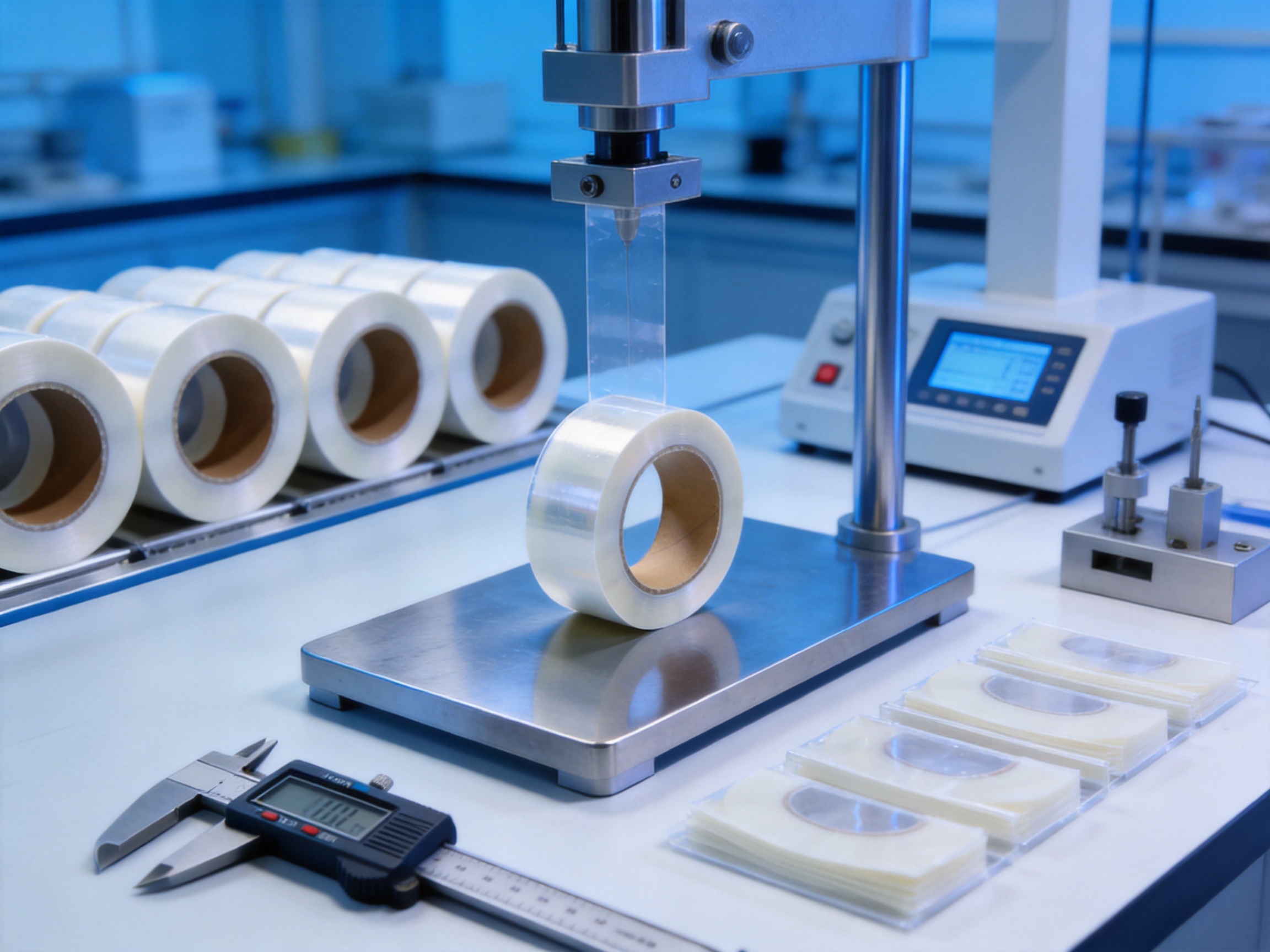
Before approving DS-32 for full production, customers should perform a controlled qualification program. The first step is to test the tape on the exact materials used in the final product. Samples should be prepared using the same cleaning method, application pressure, bonding area, and assembly sequence used on the production line.
Peel testing can help evaluate edge-lifting resistance, while shear or holding-power testing can provide information about resistance to sliding. Initial tack can be assessed during placement, and aging trials can show whether adhesion changes after exposure to temperature, humidity, vibration, or storage time.
It is also useful to examine the tape after application and removal. Inspectors can look for adhesive residue, carrier tearing, surface damage, bubbles, wrinkles, edge lifting, and incomplete contact. If the tape is die-cut, the cut edge and liner release should be inspected as well.
Qualification results should be recorded and compared with an agreed acceptance standard. This creates a reference for future batches and helps distinguish product-related issues from substrate, process, or environmental problems.
Q&A
What type of tape is DS-32?
DS-32 is an OPP-based double-sided pressure-sensitive tape designed for product bonding. It has adhesive on both sides of an OPP carrier and a typical total thickness of 90 ± 5 microns.
What is the primary application of this tape?
The stated application is product bonding that requires a substrate resistant to tearing. It may be used in packaging, product assembly, labels, decoration, household goods, logistics accessories, and other suitable industrial applications.
Is DS-32 suitable for heavy structural bonding?
It should not automatically be considered a structural adhesive. The tape is intended for product bonding and packaging-related applications. Heavy, safety-critical, high-temperature, or load-bearing applications require specific engineering evaluation and may require a specialty tape or mechanical fastening system.
What does the 90 ± 5 micron thickness mean?
It means the typical total tape thickness is approximately 90 microns, with a stated tolerance of plus or minus 5 microns under the referenced test method. Actual measurements can depend on the test procedure and production batch.
What does initial tack describe?
Initial tack describes the adhesive’s ability to establish contact shortly after the tape is applied. DS-32 has a listed initial-tack value of no more than 180 millimeters at 14 degrees Celsius under the inclined-plane method.
What is the listed peel-adhesion performance?
The product is listed at 10 N/25 millimeters or higher under GB/T2792-1998 and 9 N/24 millimeters or higher under GB/T2792-2014 after 20 minutes of placement using 25-micron PET. These results should be compared only with data measured under equivalent conditions.
What does the holding-power value mean?
The holding-power specification is at least 120 minutes under GB/T4851-2014 for a 24 × 24 millimeter test area. It indicates resistance to movement under a defined test load and test condition.
Can the tape be used on plastic surfaces?
It may be suitable for some plastic surfaces, but performance depends on the plastic type, surface energy, additives, texture, cleanliness, and temperature. Low-energy plastics such as some polyethylene or polypropylene surfaces may require special evaluation or surface treatment.
Can DS-32 be die-cut?
The OPP carrier can support converting operations such as slitting and die-cutting, subject to the customer’s equipment and design. Die-cut shape, liner type, adhesive behavior, and tolerances should be confirmed through samples and production trials.
How should the tape be applied?
Apply the tape to a clean, dry surface, use firm and even pressure, remove the protective liner without touching the exposed adhesive unnecessarily, and position the second substrate carefully. Allow sufficient dwell time before applying the full service load.
How should the tape be stored?
Store it in its original packaging in a clean, dry, well-ventilated place away from direct sunlight, excessive heat, moisture, dust, and chemical exposure. Rolls should be protected from crushing and deformation.
Why should customers test the tape on their own materials?
Standard steel-plate test data provides a consistent reference but cannot represent every real-world substrate. Actual performance may change because of surface energy, coatings, roughness, contamination, temperature, humidity, pressure, and load direction.
What information should be supplied when requesting a quotation?
Customers should provide the intended application, substrate types, tape width, roll length, core requirements, estimated order volume, application temperature, expected load, service environment, packaging needs, and any required inspection or documentation.
Conclusion
DS-32 OPP double-sided tape is a practical industrial bonding material designed around a thin, stable, non-tearing carrier and balanced adhesive performance. Its 90 ± 5 micron thickness, defined initial-tack behavior, peel-adhesion references, and holding-power specification make it suitable for structured evaluation across packaging, product assembly, household goods, logistics, decoration, and selected manufacturing applications.
Its principal advantages over thicker or less stable alternatives include a low-profile construction, useful carrier integrity, controlled handling, and suitability for efficient roll converting. Compared with foam, paper, transfer, and specialty high-performance tapes, DS-32 occupies a balanced position for general product bonding where the application does not require extreme cushioning, structural loading, or specialized environmental resistance.
The product’s value is supported by the broader capabilities of Zhejiang Geruite Packaging Materials Co., Ltd. The company combines research and development, production, sales, quality management, and a wide portfolio of adhesive and packaging materials. Its experience with BOPP tapes, stretch film, strapping products, masking tapes, kraft paper tapes, protective materials, and related products provides a foundation for serving customers with varied packaging needs.
Successful use depends on correct product selection, surface preparation, application pressure, environmental evaluation, and qualification testing. When these factors are controlled, DS-32 can help manufacturers and distributors achieve clean, efficient, and consistent bonding while supporting streamlined packaging and assembly operations.
References
GB/T 7125-2014, Test Method for Thickness of Adhesive Tapes and Related Adhesive Products.
GB/T 4852-2002, Pressure-Sensitive Adhesive Tapes: Initial Tack Testing by the Inclined Plane Method.
GB/T 2792-1998, Measurement of Peel Adhesion for Pressure-Sensitive Adhesive Tapes.
GB/T 2792-2014, Measurement of Peel Adhesion for Pressure-Sensitive Adhesive Tapes and Related Materials.
GB/T 4851-2014, Measurement of Holding Power for Pressure-Sensitive Adhesive Tapes.
Technical Product Information, DS-32 OPP Double-Sided Tape, Zhejiang Geruite Packaging Materials Co., Ltd.
General principles of pressure-sensitive adhesive tape application, substrate preparation, and quality-control evaluation.
Packaging-material manufacturing and converting practices for adhesive tapes, films, and strapping products.
Product: DS-32 OPP double-sided tape

CONTACT DETAILS
- Address:No. 241, Yaojiafan, Zhangpanqiao, Shushan Street, Xiaoshan District, Hangzhou City, Zhejiang Province, China
- TEL:+86-0571-83175630
- Phone:+86-13336160217
- Email:jeffrey@grtpk.com
- WeChat/WhatsApp:+86-18058115265
PRODUCTS
NEWS CENTER
MOBILE TERMINAL
Copyright© Zhejiang Geruite Packaging Materials Co., Ltd. All Rights Reserved.
Privacy Wholesale industrial packaging tape Manufacturers