


 English
 Español
 عربى

Industrial BOPP Packing Tape: Reliable Clear Sealing for Modern Packaging Operations
Content
- 1 Understanding Clear BOPP Packing Tape
- 2 Product Specifications and Functional Characteristics
- 3 Why OPP Backing Is Important
- 4 Adhesive Performance for Carton Sealing
- 5 Advantages Compared with Alternative Packaging Tapes
- 6 Manufacturing Process and Quality Control
- 7 Manufacturing Strengths of the Supplier
- 8 Applications Across Different Industries
- 9 Selecting the Correct Thickness
- 10 Application Procedures for Best Results
- 11 Storage and Handling Recommendations
- 12 How Logo Printing Adds Commercial Value
- 13 Environmental and Material Efficiency Considerations
- 14 Quality Assurance for Procurement Teams
- 15 Comparison with Kraft Paper Tape
- 16 Comparison with Specialty Industrial Tapes
- 17 Comparison with Low-Quality General-Purpose Tape
- 18 Recommended Customer Segments
- 19 Frequently Asked Questions
- 19.1 What is the main material used in this packing tape?
- 19.2 What thicknesses are available?
- 19.3 Is the tape completely transparent?
- 19.4 Can a company print its own logo on the tape?
- 19.5 What surfaces can the tape seal?
- 19.6 Can the tape be used in an automatic carton sealing machine?
- 19.7 What application temperature is recommended?
- 19.8 How should the tape be stored?
- 19.9 Is thicker tape always stronger or better?
- 19.10 Can logo tape be considered a security seal?
- 19.11 What other packaging materials does the supplier offer?
- 19.12 How can buyers select the correct product?
- 20 Conclusion
- 21 Supplier Information
- 22 References
- 23 Product: 40UM-55UM Thickness clear packing tape rolls with logo
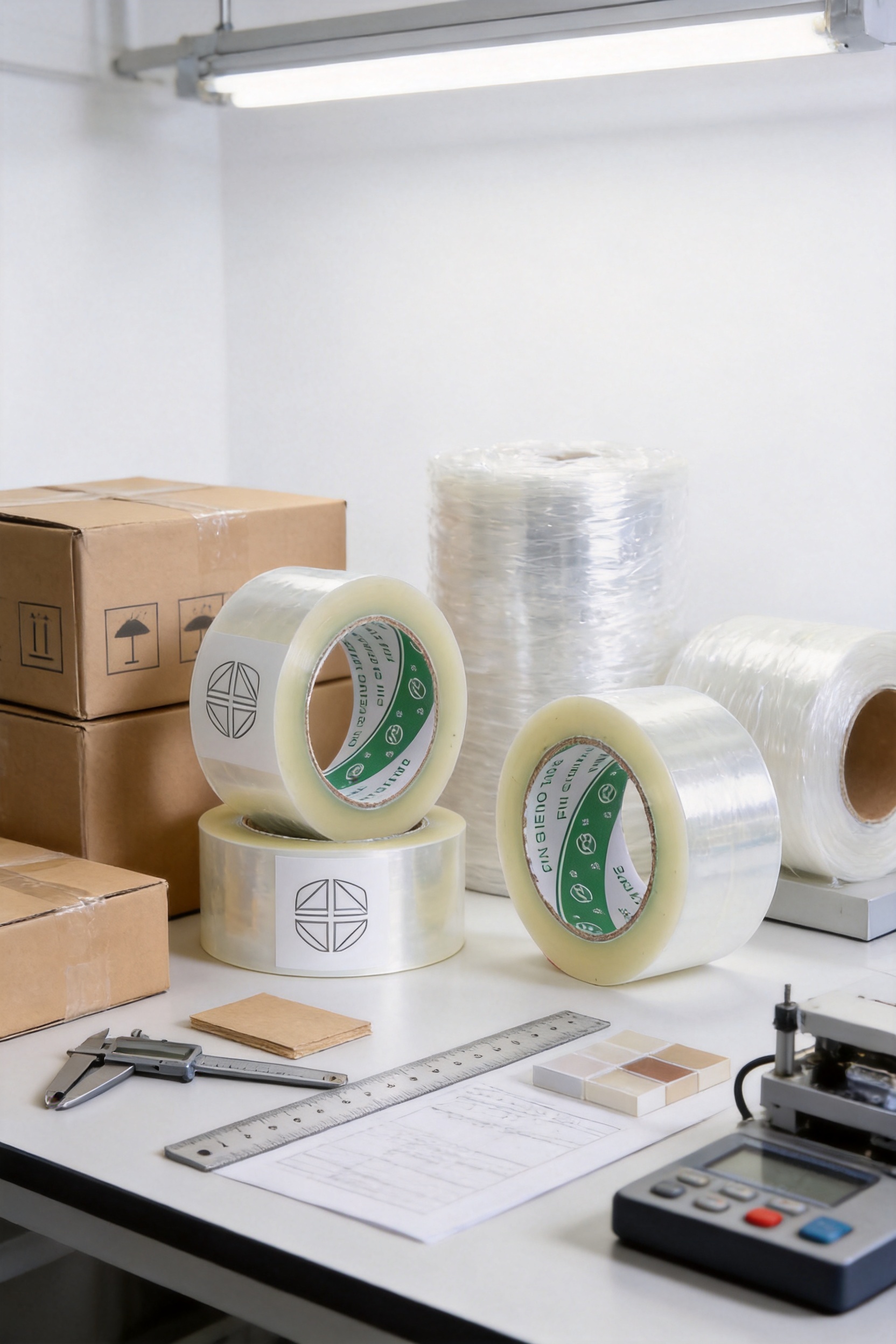
Packaging performance directly affects product protection, warehouse efficiency, transportation safety, and customer perception. Among the many materials used in logistics and manufacturing, clear BOPP packing tape remains one of the most practical and widely adopted solutions for carton sealing, bundling, temporary fixation, and general packaging maintenance. Its combination of strength, transparency, convenient application, and cost efficiency makes it suitable for businesses ranging from small offices to high-volume distribution centers.
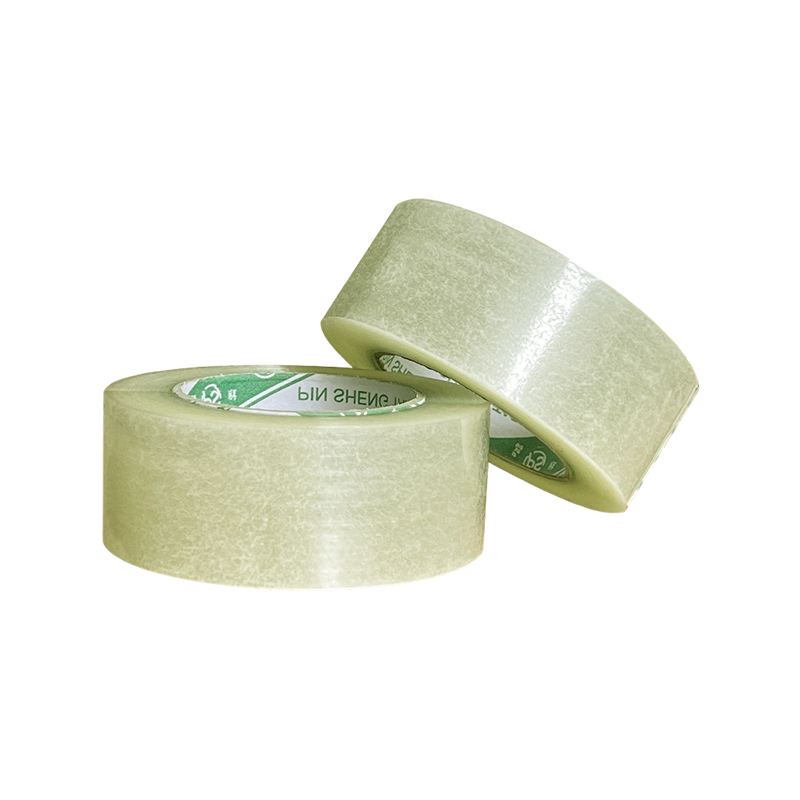
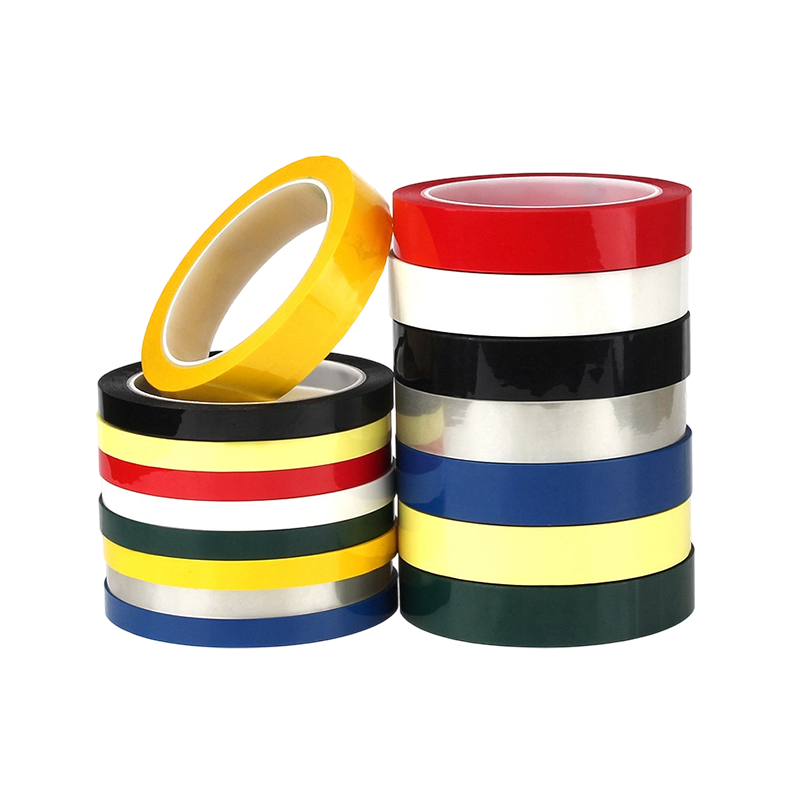
The 40µm–55µm clear packing tape rolls with logo described in this article are designed for professional packaging applications that require dependable adhesion and consistent handling. The tape uses an OPP, or biaxially oriented polypropylene, backing coated with pressure-sensitive acrylic adhesive. It can be supplied in transparent, yellow, red, blue, and other colors, while custom surface printing allows companies to add logos, handling instructions, warning messages, or other brand-related information.
This product is manufactured and supplied by Zhejiang Geruite Packaging Materials Co., Ltd., a packaging materials producer based in Hangzhou, Zhejiang Province, China. The company develops and supplies BOPP tape, kraft paper tape, masking tape, high-temperature resistant tape, metal tape, PE stretch film, PP strapping, PET strapping, and related packaging materials. Its manufacturing capabilities, quality control procedures, product variety, and customization services enable it to serve logistics, warehousing, manufacturing, retail, construction, household goods, and other industries.
Understanding Clear BOPP Packing Tape
BOPP packing tape is produced from a polypropylene film that has been stretched in two directions. This orientation process improves the film’s tensile strength, dimensional stability, and resistance to stretching during application. The resulting backing is lightweight but durable, with a smooth surface that provides a clean appearance and supports high-quality printing when logo customization is required.
After film production, one side of the backing is coated with pressure-sensitive adhesive. This adhesive is designed to bond when pressure is applied, eliminating the need for water, heat, solvents, or other activation methods. An operator can simply place the tape over a carton seam and press it into position. This straightforward application process is a major reason why BOPP packing tape is used in manual packing stations, semi-automatic machines, and fully automated packaging lines.
The clear version allows carton markings, labels, printed designs, and product information to remain visible. This is particularly useful when businesses want to seal a box without covering important identification details. Transparency can also give packages a clean and professional appearance while allowing printed logo tape to combine brand visibility with practical carton closure.
In the 40µm–55µm thickness range, the tape offers a practical balance between material consumption and packaging performance. Thinner grades can help reduce overall packaging costs and are suitable for standard cartons and light-to-medium applications. Thicker grades provide additional body, handling strength, and resistance for heavier cartons, rougher transportation conditions, or applications in which a more robust tape is preferred.
Product Specifications and Functional Characteristics
| Parameter | Specification or Description |
| Backing material | OPP substrate, commonly produced from biaxially oriented polypropylene film |
| Adhesive | Pressure-sensitive acrylic adhesive, with formulations selected for reliable carton sealing |
| Thickness range | 40µm–55µm |
| Common appearance | Transparent or clear tape |
| Other available colors | Yellow, red, blue, and other colors subject to production requirements |
| Customization | Logo, text, handling instructions, and other surface printing options |
| Typical uses | Carton sealing, warehouse packaging, shipping, office use, temporary fixation, and manufacturing support |
| Application method | Manual application, compatible tape dispenser, or packaging equipment |
The product’s specified thickness range allows buyers to select a grade according to carton weight, surface condition, sealing method, and expected transportation stress. Selecting the correct thickness is important because tape performance depends not only on adhesive strength but also on the mechanical support provided by the film backing.
Adhesion is another essential characteristic. The pressure-sensitive adhesive is intended to provide strong bonding to common packaging surfaces, especially corrugated cardboard. It can also adhere to certain plastics and other smooth or semi-smooth materials when the surface is clean and suitable. Actual performance may vary according to carton fiber quality, recycled content, dust, humidity, surface coatings, and application temperature.
The tape is supplied in rolls that can be configured for different widths and lengths. Common widths include approximately 48 millimeters, 50 millimeters, and 60 millimeters, although other dimensions may be discussed according to equipment requirements and customer needs. Roll dimensions can be adapted for hand-held dispensers, carton sealing machines, or specific packaging line specifications.
Why OPP Backing Is Important
The backing is the structural foundation of packing tape. A pressure-sensitive adhesive may create the initial bond, but the film must withstand pulling, handling, carton movement, and application tension. OPP backing is widely selected because it combines low weight with useful tensile strength and dimensional stability.
During carton sealing, the tape is often pulled from the roll under tension. A suitable OPP backing helps the tape unwind smoothly while reducing the risk of excessive elongation or premature tearing. Once applied, the film supports the carton seam and helps keep the two flaps together during sorting, storage, loading, and delivery.
Clear OPP film also offers visual advantages. It maintains visibility of the box surface and does not introduce the opaque appearance associated with some paper-backed products. This feature is useful when cartons carry barcodes, shipping information, product names, or warehouse identification marks that must remain easy to read.
Compared with low-quality films, a properly manufactured OPP backing can provide better consistency from one roll to another. Uniform thickness helps packaging equipment operate more reliably, while stable dimensions reduce irregular edges, wrinkling, and uneven application. These details become especially important in high-volume operations where small inconsistencies can cause repeated line interruptions.
Adhesive Performance for Carton Sealing
The adhesive system is designed to offer a balance between initial tack and holding power. Initial tack refers to how quickly the tape bonds when first applied. Holding power refers to its ability to remain attached over time under load or stress. Both characteristics are important in packaging because a tape that sticks immediately but loses grip quickly is not reliable, while a tape with slow bonding can create problems on fast-moving packing lines.
When the tape is pressed onto a carton seam, the adhesive flows into small surface irregularities in the cardboard. This contact area supports the bond. For best results, the operator should apply firm and even pressure, especially along the edges of the seam. A compatible dispenser can help maintain consistent tension and pressure, resulting in cleaner and more repeatable sealing.
Acrylic adhesive technology is commonly valued for its aging resistance and stable performance across a range of ordinary packaging conditions. It can be suitable for warehouse and logistics applications where cartons may remain sealed for days or weeks before final delivery. The exact performance will depend on the adhesive formulation, substrate quality, temperature, humidity, and load placed on the carton.
The product is intended for common packaging surfaces such as corrugated cardboard and selected plastics. Highly dusty, oily, wet, waxed, heavily coated, or extremely rough surfaces may reduce adhesion. For demanding applications, buyers should confirm the product specification and conduct a practical trial using the intended carton materials and storage conditions.
Advantages Compared with Alternative Packaging Tapes
Balanced Cost and Performance
One of the strongest advantages of clear BOPP packing tape is its balance between material cost and sealing performance. It provides useful strength and reliable adhesion without the higher material consumption associated with some heavy-duty specialty tapes. For companies that seal thousands or millions of cartons, even a small reduction in tape cost per package can produce meaningful savings over an annual operating cycle.
The 40µm–55µm range enables buyers to avoid using one grade for every application. A lighter grade can be selected for standard cartons, while a thicker grade can be used where additional support is needed. This ability to match tape thickness to actual packaging requirements helps reduce unnecessary material use without compromising closure reliability.
Easy and Fast Application
Unlike water-activated paper tape, pressure-sensitive BOPP tape does not require a water dispenser, heating system, or separate activation step. It can be applied immediately after unwinding from the roll. This is particularly valuable in fulfillment centers, express delivery operations, and manufacturing environments where operators need to close packages quickly.
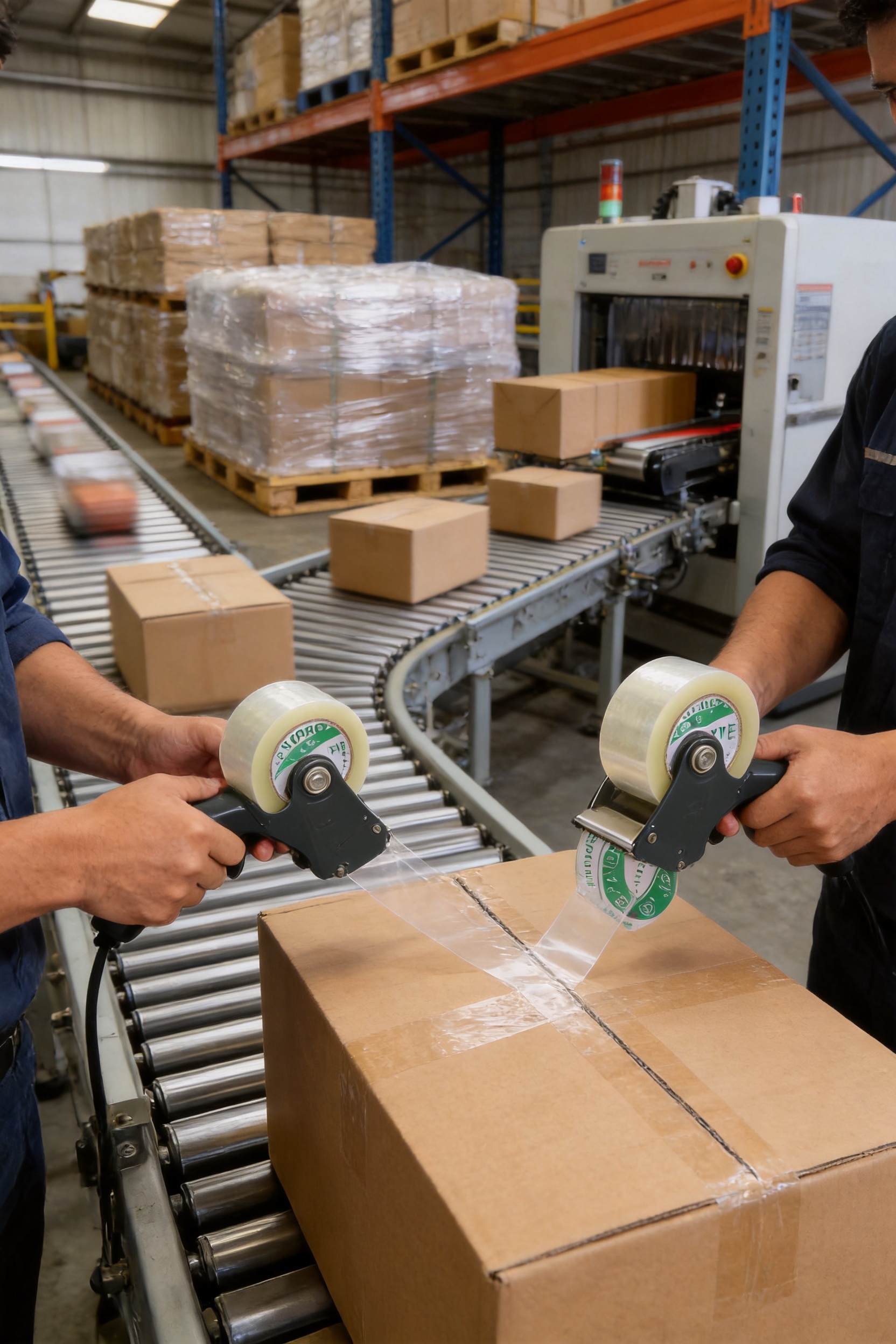
The tape is compatible with hand-held dispensers and many carton sealing machines. A dispenser can cut the tape to the desired length, protect the operator’s hands, and improve application speed. In automated lines, consistent roll dimensions and controlled unwinding support stable production performance.
Clean Appearance and Visibility
Clear tape creates a neat appearance and keeps carton information visible. It can be used over printed carton surfaces without completely hiding the underlying graphics. When logos are printed on the tape, the transparent background can provide brand exposure while still allowing parts of the carton to remain visible.
This clean appearance is useful for consumer goods, e-commerce shipments, export cartons, and internal warehouse packaging. It helps maintain a consistent presentation without requiring a separate label for every sealing point.
Broad Surface Compatibility
BOPP packing tape is suitable for many conventional packaging surfaces. It performs effectively on common corrugated cartons and may also adhere to certain plastics, paperboard, and smooth packaging materials. This broad compatibility allows companies to standardize their packing supplies across several product lines.
Standardization can simplify purchasing, inventory management, operator training, and equipment setup. Instead of managing several unrelated sealing products, a business may use selected BOPP tape grades for most daily carton sealing work while reserving specialty tapes for unusual conditions.
Custom Printing and Brand Communication
Custom logo printing creates an additional benefit beyond carton closure. Printed tape can communicate brand identity, reinforce professional presentation, and make packages easier to recognize during warehouse handling. It can also carry messages such as “Fragile,” “This Side Up,” “Keep Dry,” or “Check Seal,” subject to the selected design and printing process.
Logo tape may discourage casual package interference because the printed design can make unauthorized opening more noticeable. It should not be described as a complete security seal unless it is specifically engineered and tested for that purpose, but it can provide a visible indication if the tape has been cut, removed, or replaced.
Manufacturing Process and Quality Control
Reliable packing tape depends on controlled manufacturing at every stage. The process begins with selection and inspection of raw materials, including OPP film, adhesive components, paper cores, packaging materials, and printing inks where applicable. Consistent raw materials provide a stable foundation for thickness, color, adhesion, and roll appearance.
Film Preparation
The OPP film must be prepared with consistent width, thickness, surface quality, and winding characteristics. Film inspection can identify visible defects, wrinkles, contamination, uneven edges, or other irregularities that may affect coating and converting. Uniform film is particularly important for customers using automatic equipment, because variations can lead to unstable tracking or inconsistent unwinding.
Adhesive Coating
During coating, pressure-sensitive adhesive is applied to the film in a controlled layer. Coating uniformity affects the amount of adhesive available at the carton interface and therefore influences tack, holding power, and overall product consistency. Excessive coating may increase cost, create oozing, or cause handling problems, while insufficient coating may reduce adhesion.
Manufacturing controls may include monitoring coating weight, line speed, drying conditions, web tension, and the cleanliness of the production environment. Stable process conditions help ensure that the finished tape behaves consistently from the beginning to the end of a production run.
Drying and Curing
After adhesive application, the coated film passes through a controlled drying or curing process. This stage helps remove carrier components when required and allows the adhesive to reach the intended physical condition. Temperature, airflow, residence time, and equipment settings must be managed carefully because excessive heat can affect the film, while insufficient drying can influence odor, adhesion, or roll stability.
Slitting and Rewinding
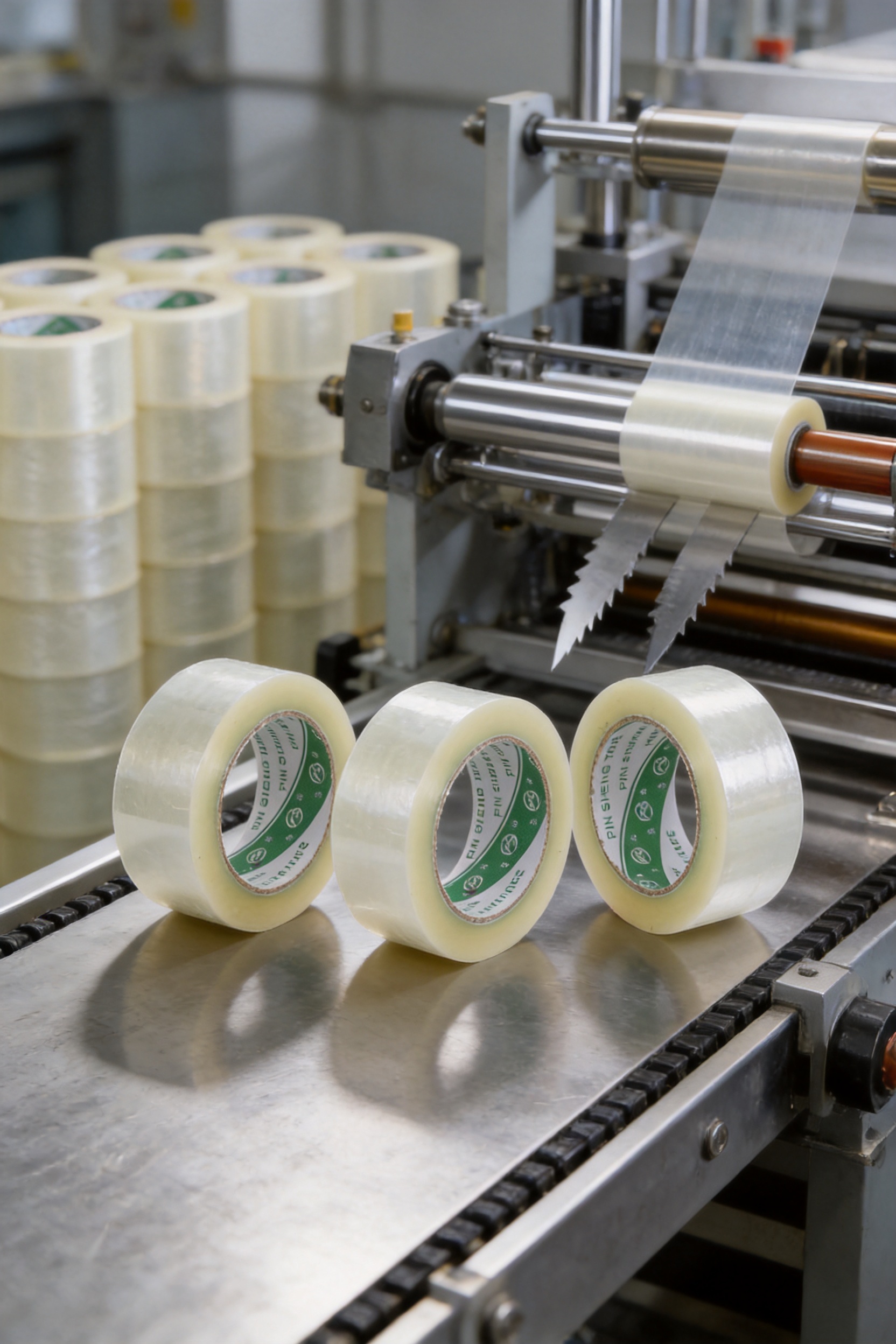
Large coated rolls are converted into narrower rolls through slitting and rewinding. This process determines the final width, roll length, edge quality, winding tightness, and core positioning. Accurate slitting is essential for applications that use dispensers or automated carton sealers.
Proper rewinding helps prevent telescoping, loose edges, uneven roll faces, and irregular unwinding. A well-converted roll should unwind smoothly without excessive noise, sudden tension changes, or adhesive transfer to the wrong surface. These characteristics support operator productivity and reduce waste during packaging.
Printing and Logo Customization
For printed tape, the artwork must be reviewed before production. The customer may specify logo size, repeat distance, colors, text, warning symbols, and approximate positioning. Printing quality depends on ink selection, surface treatment, registration accuracy, drying, and the condition of the film.
Geruite’s customization service allows customers to use printed tape for brand recognition and packaging communication. Before mass production, customers should confirm artwork files, color expectations, print repeat, roll direction, tape width, and any requirements for barcode or text readability. A preproduction sample or approved proof can reduce the risk of misunderstandings.
Inspection and Packing
Finished rolls may be inspected for appearance, width, thickness, winding condition, adhesion, tensile behavior, and packaging integrity. Inspection requirements can be adjusted according to the product grade and customer application. Rolls are then packed to protect them from moisture, dust, compression, and unnecessary exposure during storage and transportation.
The company’s quality philosophy covers raw material procurement, production control, and final inspection. This systematic approach is important because packaging tape is a high-volume consumable: a small defect repeated across many rolls can create significant operational disruption for the buyer.
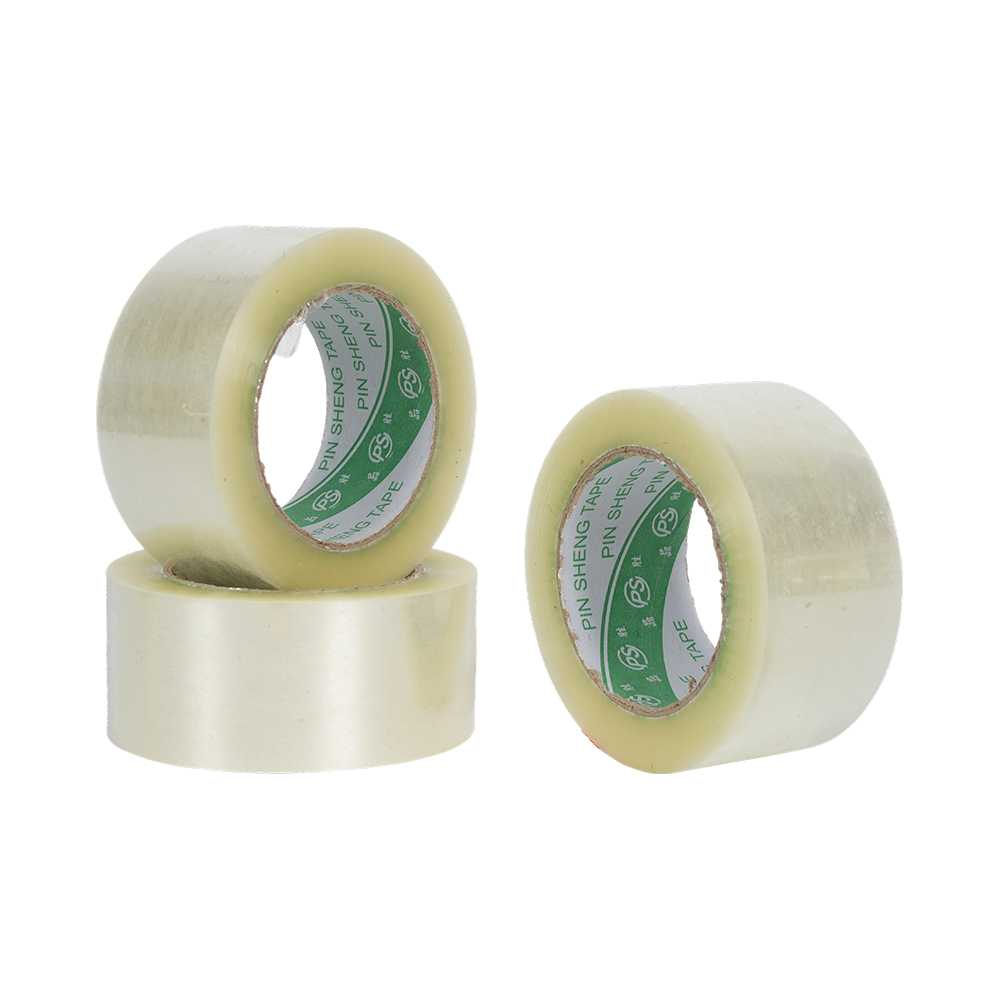
40UM-55UM Thickness clear packing tape rolls with logo
Manufacturing Strengths of the Supplier
Zhejiang Geruite Packaging Materials Co., Ltd. is located in Xiaoshan District, Hangzhou City, Zhejiang Province, China. Zhejiang is recognized for its developed manufacturing base, supplier networks, technical workforce, and export-oriented industrial activity. This location supports access to raw materials, production services, logistics channels, and related packaging industries.
The company focuses on research, development, production, and sales of packaging materials. Its product portfolio includes BOPP adhesive tape, kraft paper tape, masking tape, high-temperature resistant tape, metal tape, PE stretch film, PP strapping, and PET strapping. This broad range allows the company to understand packaging systems as a whole rather than treating carton tape as an isolated product.
For buyers, a diversified product portfolio can simplify sourcing. A customer may require carton tape, stretch film, and strapping for the same warehouse or export program. Working with one experienced packaging supplier can reduce communication steps, coordinate product specifications, and support more consistent purchasing schedules.
The company reports annual output value exceeding RMB 60 million. While financial scale alone does not determine product quality, it indicates an established operating structure and the ability to serve recurring commercial demand. Customers should still evaluate specifications, samples, testing records, production capacity, and delivery performance according to their own procurement requirements.
Another important strength is the company’s emphasis on quality as a continuous process. Packaging tape quality begins before coating and continues through converting, inspection, packing, and shipment. A supplier that manages the full production chain can respond more effectively to requests involving thickness, width, color, printed design, roll length, packaging format, and application conditions.
Applications Across Different Industries
Logistics and Express Delivery
Parcel distribution centers need sealing materials that are fast to apply, easy to store, and dependable during sorting and transportation. Clear BOPP tape can be used to close cartons, reseal selected packages, reinforce seams, and secure lightweight packaging components. Its compatibility with manual dispensers and automated equipment makes it suitable for different levels of operational scale.
Printed tape can also help identify parcels belonging to a specific company or fulfillment program. In facilities handling many customers, recognizable tape can support visual organization, although it should be used together with proper labels, barcodes, and inventory procedures.
Warehousing and Inventory Management
Warehouses use packing tape when preparing outbound cartons, consolidating products, closing opened cases, and reinforcing packages for storage. A consistent tape supply helps operators maintain standard procedures across shifts and locations.
Clear tape can be applied over labels or carton markings when the information must remain visible. Colored tape may be used for basic visual classification, such as identifying departments, product categories, destinations, or handling priorities. Any color-coding system should be documented so that all warehouse personnel interpret it consistently.
E-Commerce Fulfillment
E-commerce packaging often requires a professional appearance combined with efficient processing. Logo-printed tape can help create a recognizable unboxing experience while closing cartons securely. It is suitable for businesses that want branding to appear on shipping packages without printing every carton in full color.
For online retailers, package presentation can influence customer perception. Neat, evenly applied tape communicates attention to detail and can complement printed cartons, labels, inserts, and protective materials.
Manufacturing and Assembly
Manufacturing plants use tape for more than final shipping. It may be used for temporary fixation, bundling, component positioning, work-in-process identification, and protection of lightweight parts. BOPP tape can support these tasks when the required bond is temporary or moderate and when the surface is compatible.
Because the product is available in different widths, thicknesses, and colors, production departments can select a format suitable for specific workstations. However, applications involving high temperature, chemical exposure, electrical insulation, or permanent structural bonding should use a tape specifically designed and tested for those conditions.
Office and Household Packaging
Clear packing tape is also useful in offices, schools, retail stores, moving operations, and households. Common uses include sealing document cartons, closing storage boxes, repairing packaging, securing lightweight items, and preparing parcels for shipment.
A small hand dispenser can improve safety and convenience by controlling the tape and providing a cutting edge. Users should avoid tearing thick tape rapidly by hand because the roll edge or sudden release may cause cuts or discomfort.
Selecting the Correct Thickness
Thickness selection should be based on carton weight, box construction, shipping distance, surface condition, storage duration, and application method. The 40µm grade may be appropriate for lightweight cartons, internal movement, and applications where reducing material consumption is a priority. Mid-range grades can offer a general-purpose balance for everyday shipping cartons.
Grades closer to 55µm may be preferred for heavier packages, rough handling, longer distribution routes, or cartons that require additional tape body. Thicker tape is not automatically the best choice for every package, because total performance also depends on adhesive quality, carton strength, seam design, application pressure, and environmental conditions.
| Application consideration | Suggested evaluation focus |
| Lightweight cartons | Lower thickness, adequate tack, clean application, and material efficiency |
| Medium-weight shipping cartons | Balanced thickness, holding power, roll length, and dispenser compatibility |
| Heavy or export cartons | Higher thickness, carton seam strength, transportation stress, and environmental exposure |
| Automated sealing lines | Width accuracy, roll winding, unwind behavior, core dimensions, and machine compatibility |
| Printed logo tape | Artwork accuracy, print durability, color consistency, and repeat distance |
| Cold or humid conditions | Application temperature, carton moisture, adhesive suitability, and trial testing |
Buyers should evaluate actual samples on the cartons used in production. Laboratory values are useful, but practical trials reveal how the tape behaves on real cardboard, under the intended packing speed, and in the actual warehouse environment.
Application Procedures for Best Results
Before applying the tape, inspect the carton surface. It should be dry and reasonably free from dust, oil, loose fibers, and other contamination. If the carton has been stored in a humid area, allow it to reach a suitable condition before sealing. Moisture can weaken cardboard and may reduce effective adhesive contact.
Close the carton flaps so that the seam is aligned. Pull a suitable length of tape and place it over the center of the seam. Apply firm, even pressure along the tape, particularly over the areas where the flaps meet. If the package is long or heavy, use an appropriate sealing pattern or additional strips according to the packaging procedure.
When using a dispenser, maintain a steady movement so the tape remains flat and centered. Excessive pulling can stretch the film or cause the tape to lift at the end. Insufficient pressure may leave air gaps or reduce contact with rough cardboard.
The recommended application temperature is approximately 10°C to 35°C. Lower temperatures may reduce adhesive flow and initial tack, while excessive heat may influence adhesive softness, roll handling, or storage stability. If the tape must be applied outside this range, the buyer should conduct trials under the actual conditions.
After application, allow the package to remain undisturbed long enough for the adhesive to establish contact. Avoid applying tape to visibly wet or heavily contaminated surfaces. For critical export or high-load packaging, combine appropriate tape with strong cartons, correct internal cushioning, and a suitable sealing method.
Storage and Handling Recommendations
Store tape in a cool, dry environment away from direct sunlight, heaters, boilers, and other heat sources. Excessive heat can accelerate adhesive aging, cause oozing, deform the backing, or affect roll stability. Direct sunlight may also influence film appearance and printed colors over extended periods.
Keep cartons of tape protected from dust and moisture. Store rolls in their original packaging until they are needed. Avoid placing heavy objects on top of tape cases because compression may deform the rolls or cores. Where possible, store rolls on a stable surface rather than directly on a damp floor.
Use older inventory first when a controlled stock rotation system is available. Storage life depends on formulation, packaging, and conditions, so buyers should follow the supplier’s product-specific recommendations. Before large-scale use, inspect rolls for edge damage, telescoping, blocking, unusual odor, or visible adhesive contamination.
Handle rolls carefully during internal transportation. Dropping cases or striking roll edges may make the tape difficult to dispense. If a roll has been damaged, test it before introducing it into an automated packaging line.
How Logo Printing Adds Commercial Value
Custom printed tape turns an ordinary sealing material into a packaging communication tool. A logo repeated across a carton can increase brand visibility during storage, delivery, and customer receipt. It may also help recipients identify the package quickly when several shipments arrive together.
Businesses can use printed tape to create a consistent visual identity across plain cartons. This can be especially useful for small and medium-sized enterprises that want branded packaging but do not want to purchase fully printed boxes in multiple sizes.
Logo tape may also support operational messages. For example, a design can include handling instructions, department names, inspection reminders, or return-processing information. Text should be large enough to read at the intended viewing distance, and the artwork should not interfere with the tape’s practical sealing function.
Printing requirements should be confirmed before production. Important points include tape width, logo dimensions, number of colors, ink durability, repeat length, printing orientation, roll direction, and packaging quantity. Customers should provide clear artwork and approve a digital proof or physical sample where appropriate.
Environmental and Material Efficiency Considerations
Packaging decisions increasingly consider material efficiency, waste reduction, and responsible purchasing. BOPP tape is lightweight, and selecting an appropriate thickness can help avoid unnecessary material consumption. A company that matches tape specifications to carton requirements may reduce waste while preserving package integrity.
Efficient application also reduces waste. Correctly adjusted dispensers, trained operators, and standardized carton sealing patterns can prevent excessive tape overlap or unnecessary extra strips. Automated equipment may further improve consistency in high-volume environments.
Material selection should be assessed together with the entire packaging system. A stronger carton may require less reinforcement, while a poorly designed carton may consume more tape without achieving reliable protection. Buyers should consider the interaction between tape, cardboard, stretch film, strapping, labels, and internal protective materials.
Disposal and recycling practices depend on local facilities and the composition of the used package. Businesses should consult local waste-management requirements and packaging policies. Where recycling is available, separating materials according to local guidelines can support more effective recovery.
Quality Assurance for Procurement Teams
Procurement teams should request a clear product specification before placing a bulk order. The specification should identify backing material, adhesive type, thickness, width, roll length, core size, color, print design, packaging method, and tolerance requirements where applicable.
Sample evaluation should include unwinding behavior, adhesion to the intended cartons, ease of cutting, appearance, print quality, and performance after storage. For customers using machines, samples should be tested on the actual equipment at normal production speed.
Quality checks may include measuring thickness, width, roll length, adhesive performance, tensile strength, and visual appearance. The testing method should be agreed between supplier and buyer when consistent reporting is important. For customized tape, the buyer should also verify logo dimensions, color consistency, print registration, and repeat distance.
Supply continuity is another important consideration. A packaging operation may depend on stable delivery of tape every week or month. Buyers should discuss production lead time, minimum order quantity, sample approval, export packaging, shipping documentation, and procedures for handling quality concerns.
Geruite’s range of tapes and related packaging products gives it the potential to support both single-product orders and broader packaging programs. Customers can communicate their carton types, packing process, environmental conditions, and performance objectives so that the supplier can recommend a suitable product configuration.
Comparison with Kraft Paper Tape
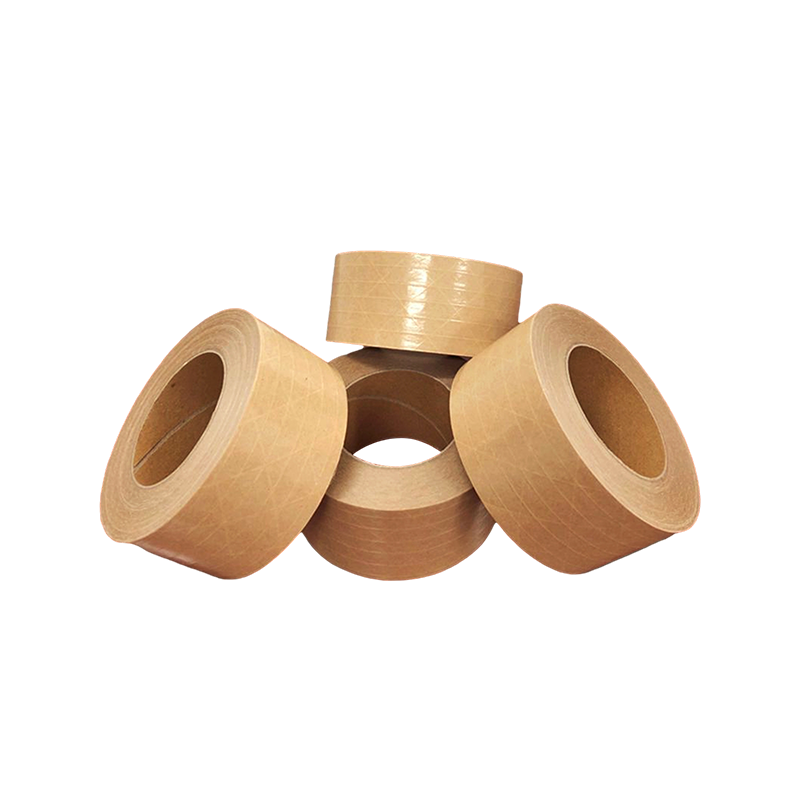
Kraft paper tape offers advantages such as a paper appearance, writability, and, in some cases, easier tearing. It may be preferred when a paper-based presentation or manual identification is important. However, clear BOPP tape generally provides a smoother, more transparent film appearance and is widely suited to high-volume carton sealing.
BOPP tape can be advantageous when the customer wants the carton graphics or labels to remain visible. It is also commonly selected for low unit cost, roll efficiency, and compatibility with standard packaging equipment. The best choice depends on the package design, branding objectives, handling environment, and sustainability requirements.
Comparison with Specialty Industrial Tapes
Specialty tapes may be required for high-temperature exposure, aggressive chemical environments, electrical insulation, outdoor durability, or permanent bonding. These products often use more specialized backings and adhesive systems and may cost more than general-purpose packing tape.
Clear BOPP packing tape is designed primarily for packaging and related general-purpose applications. Its advantage is practicality: it provides suitable performance for everyday carton sealing without adding the cost or complexity of a specialty product. When the application exceeds ordinary packaging conditions, buyers should select a product engineered for the specific challenge.
Comparison with Low-Quality General-Purpose Tape
Low-cost tape can appear attractive during initial purchasing, but inconsistent thickness, weak adhesive, poor winding, or irregular widths can increase waste and labor costs. Operators may need to apply additional strips, replace broken rolls, clean adhesive residue, or stop equipment because of poor unwinding.
A controlled 40µm–55µm product can offer better predictability when the manufacturing process, raw materials, coating, slitting, and inspection are managed consistently. The true cost of tape should therefore include material consumption, application time, packaging failures, equipment interruptions, and customer complaints rather than only the purchase price per roll.
Recommended Customer Segments
This product is suitable for wholesalers, importers, logistics companies, e-commerce fulfillment centers, carton manufacturers, moving companies, retailers, factories, office-supply distributors, and businesses that consume significant quantities of packaging tape.
It is also appropriate for companies seeking private-label or customized packaging materials. Logo printing can help distributors offer differentiated products to their own customers, while end users can create a consistent branded packing process.
Customers with several packaging requirements may also benefit from the supplier’s broader portfolio. BOPP tape can be combined with PE stretch film for pallet wrapping, PP or PET strapping for load stabilization, kraft tape for selected applications, and protective materials for general shipment preparation.
Frequently Asked Questions
What is the main material used in this packing tape?
The main backing material is OPP film, commonly produced from biaxially oriented polypropylene. One side of the film is coated with pressure-sensitive acrylic adhesive.
What thicknesses are available?
The listed thickness range is 40µm to 55µm. The appropriate thickness depends on carton weight, surface condition, transportation requirements, application method, and the buyer’s preferred balance between strength and material efficiency.
Is the tape completely transparent?
The common type is transparent or clear. Other colors, including yellow, red, and blue, can also be supplied according to product requirements. Clear tape is useful when carton markings, labels, and printed graphics need to remain visible.
Can a company print its own logo on the tape?
Yes. Custom logos and other surface printing can be discussed. Customers should provide approved artwork and confirm tape width, colors, logo size, repeat distance, and printing orientation before production.
What surfaces can the tape seal?
The tape is primarily intended for corrugated cardboard and other common packaging surfaces. It can adhere to certain plastics and smooth materials, but surface cleanliness and material compatibility should be verified before large-scale use.
Can the tape be used in an automatic carton sealing machine?
It may be suitable for compatible carton sealing equipment, provided the roll width, core dimensions, winding direction, length, and unwind characteristics match the machine. A trial on the actual equipment is recommended before mass production.
What application temperature is recommended?
The recommended application temperature is approximately 10°C to 35°C. Lower temperatures may reduce adhesive performance. Applications outside this range should be evaluated through testing under actual conditions.
How should the tape be stored?
Store it in a cool, dry place away from direct sunlight, heat sources, moisture, and excessive pressure. Keep the tape in its original packaging until use and avoid dropping or crushing the rolls.
Is thicker tape always stronger or better?
Not necessarily. Thickness is one factor in performance. Adhesive quality, backing strength, carton construction, surface condition, application pressure, and environmental exposure also matter. A properly selected thinner grade may be sufficient for light cartons, while heavier packages may benefit from a thicker grade.
Can logo tape be considered a security seal?
Printed tape can make unauthorized opening more visible, but it should not automatically be treated as a tamper-evident security product. Businesses requiring formal security protection should request a product specifically designed and tested for tamper indication.
What other packaging materials does the supplier offer?
The company’s product range includes BOPP tape, kraft paper tape, masking tape, high-temperature resistant tape, metal tape, PE stretch film, PP strapping, and PET strapping. Availability and specifications should be confirmed for each project.
How can buyers select the correct product?
Buyers should provide carton material, package weight, box dimensions, application method, expected shipping conditions, desired tape width and length, thickness preference, color, printing requirements, and estimated order volume. Sample testing can then be used to confirm suitability.
Conclusion
40µm–55µm clear BOPP packing tape with logo is a versatile sealing material for modern packaging operations. Its OPP backing provides a useful combination of strength, light weight, transparency, and dimensional stability, while the pressure-sensitive adhesive supports fast and convenient application. The product can be used for carton sealing, logistics, warehousing, manufacturing support, office packaging, household storage, and e-commerce fulfillment.
Its principal advantages over less specialized alternatives include balanced cost efficiency, broad application compatibility, clean appearance, multiple thickness options, compatibility with dispensers and packaging equipment, and the ability to add customized logos or messages. These features make it practical for businesses that need dependable daily packaging performance at commercial volumes.
The supplier’s strengths include a broad packaging-material portfolio, integrated attention to raw material and production control, customization capability, established manufacturing operations in Zhejiang, and experience serving multiple industries. By combining product selection with appropriate application procedures, storage conditions, quality checks, and carton design, customers can improve packaging consistency and reduce avoidable waste.
For companies seeking a dependable packaging tape supplier, the most effective purchasing process begins with a clear technical specification and real-world sample testing. When the tape thickness, adhesive performance, roll dimensions, printing design, and packaging format are matched to the intended operation, clear BOPP packing tape can provide an efficient and professional solution for everyday sealing requirements.
Supplier Information
Supplier: Zhejiang Geruite Packaging Materials Co., Ltd.
Address: No. 241, Yaojiafan, Zhangpanqiao, Shushan Street, Xiaoshan District, Hangzhou City, Zhejiang Province, China.
Telephone: +86-0571-83175630.
Additional telephone contacts: +86-13336160217 and +86-18058115265.
Email: jeffrey@grtpk.com.
The supplier provides packaging materials for logistics and express delivery, household goods, electronics, construction and decoration, industrial manufacturing, cargo stabilization, packaging protection, and related applications.
References
1. ASTM International. Standard terminology and test methods relating to pressure-sensitive adhesive products and packaging materials.
2. International Organization for Standardization. Quality management principles and guidance for consistent manufacturing processes.
3. Pressure Sensitive Tape Council. Test methods and technical guidance for pressure-sensitive tape performance.
4. Technical information supplied for the 40µm–55µm clear OPP packing tape with custom logo printing.
5. Product and company information supplied by Zhejiang Geruite Packaging Materials Co., Ltd.
Product: 40UM-55UM Thickness clear packing tape rolls with logo

LATEST POST
Let’s create something amazing together
contact us
CONTACT DETAILS
- Address:No. 241, Yaojiafan, Zhangpanqiao, Shushan Street, Xiaoshan District, Hangzhou City, Zhejiang Province, China
- TEL:+86-0571-83175630
- Phone:+86-13336160217
- Email:jeffrey@grtpk.com
- WeChat/WhatsApp:+86-18058115265
PRODUCTS
NEWS CENTER
MOBILE TERMINAL
Copyright© Zhejiang Geruite Packaging Materials Co., Ltd. All Rights Reserved.
Privacy Wholesale industrial packaging tape Manufacturers