


 English
 Español
 عربى

0.03–0.06 mm Protective Film for Reliable Surface Protection
Content
- 1 1. The Role of Protective Film in Modern Packaging
- 2 2. Product Overview and Main Specifications
- 3 3. Core Advantages of the Protective Film
- 4 4. Why Thickness Matters
- 5 5. Adhesive Control and Application Performance
- 6 6. Manufacturing Process and Quality Strengths
- 7 7. Competitive Advantages in Practical Use
- 8 8. Industry Applications
- 9 9. Correct Application Procedure
- 10 10. Storage and Handling Recommendations
- 11 11. How to Choose the Right Protective Film
- 12 12. Sustainability and Material Efficiency Considerations
- 13 13. Supplier Capability and Manufacturing Partnership
- 14 14. Frequently Asked Questions
- 14.1 Q1: What is 0.03–0.06 mm protective film used for?
- 14.2 Q2: Is the film suitable for every surface?
- 14.3 Q3: What is the difference between low-tack and medium-tack film?
- 14.4 Q4: Will the protective film leave residue?
- 14.5 Q5: Can the film be used outdoors?
- 14.6 Q6: How long should the film remain on the product?
- 14.7 Q7: Can the film be customized?
- 14.8 Q8: Is transparent film better than opaque protection?
- 14.9 Q9: Can protective film replace cushioning materials?
- 14.10 Q10: How should rolls be stored?
- 14.11 Q11: What information should be provided when requesting a quotation?
- 14.12 Q12: Why is manufacturing consistency important?
- 15 15. Conclusion
- 16 References
- 17 Product: 0.03-0.06 Products protective film
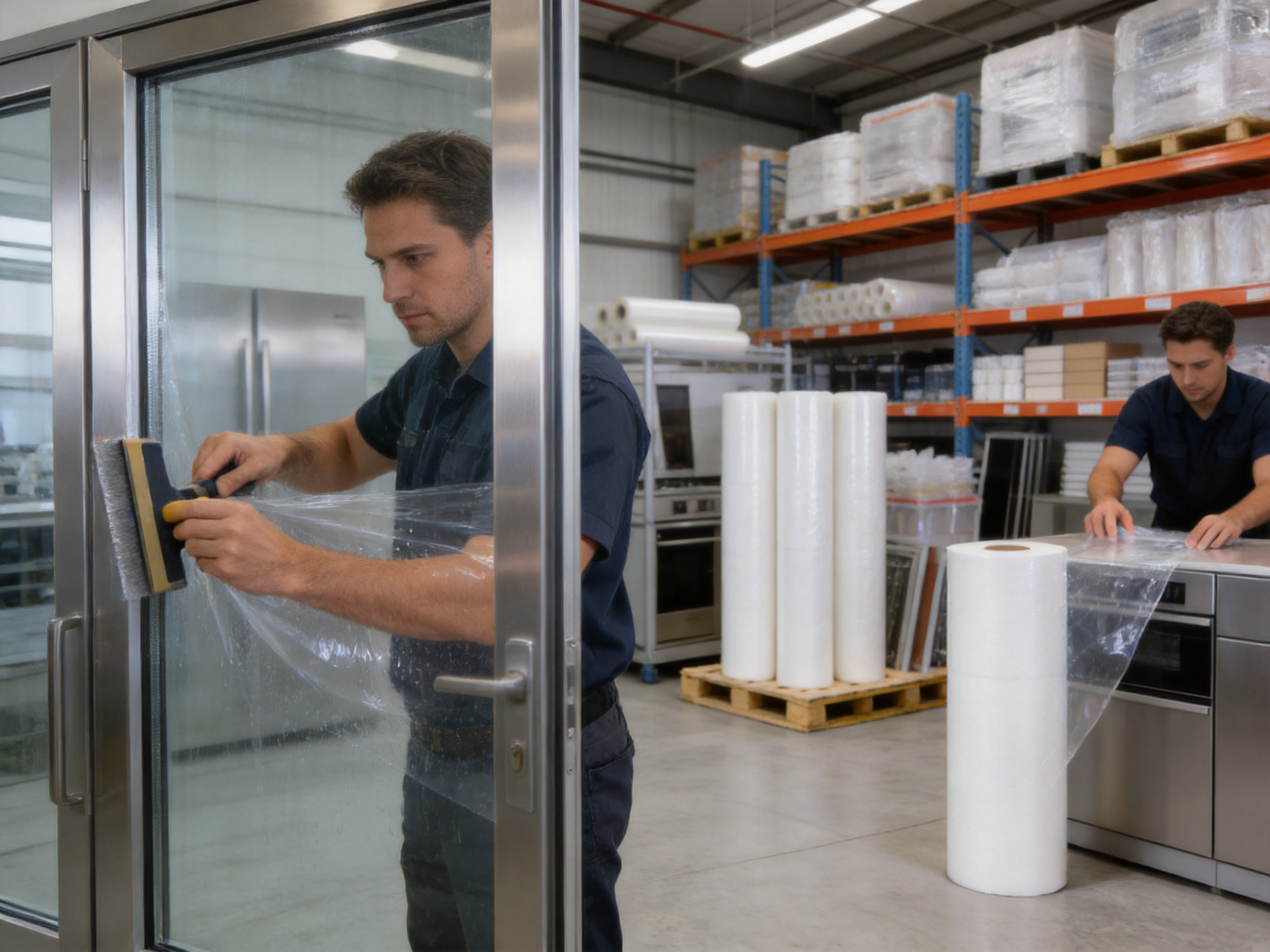
Protective film is an essential packaging and surface-care material for manufacturers, fabricators, distributors, installers, and households that need to keep products clean and visually presentable during handling. A well-designed film creates a temporary barrier between a finished surface and the surrounding environment, helping reduce the risk of dust, oil, abrasion, fingerprints, and minor scratches before the product reaches its final destination.
The 0.03–0.06 mm protective film described in this article is developed for practical, temporary protection across a broad range of smooth and regularly shaped surfaces. It can be used on glass, metal, plastic, instrument panels, appliance exteriors, polished materials, door and window components, and other substrates that require protection during production, transportation, storage, installation, renovation, or relocation. Its transparent construction allows the protected surface to remain visible, while its controlled adhesive performance supports convenient application and clean removal.
For buyers, the value of protective film is not determined by thickness alone. Film quality depends on the interaction between the base material, adhesive layer, coating uniformity, winding quality, transparency, surface compatibility, and manufacturing control. A film that is too aggressive may leave residue or become difficult to remove. A film that is too weak may lift at the edges or fail during transportation. The objective is to provide balanced adhesion: strong enough to remain in position during normal handling, but controlled enough to peel away without damaging or contaminating the substrate.
1. The Role of Protective Film in Modern Packaging
Finished surfaces are often vulnerable immediately after processing. A polished stainless steel sheet can be scratched by another sheet during stacking. A plastic housing can collect dust or develop scuff marks while moving through an assembly line. A glass panel can become covered with fingerprints before installation. A painted or decorated component may be exposed to friction, oil, moisture, and packaging particles during storage.
Protective film provides a simple and efficient way to reduce these risks. Applied directly to the surface, the film forms a temporary separation layer. It helps prevent direct contact with packaging materials, worktables, conveyor systems, gloves, tools, and adjacent products. It also reduces the amount of cleaning required before the next manufacturing or installation stage.
In many industries, surface appearance has a direct effect on product value. A minor scratch may cause a component to be downgraded, reworked, returned, or rejected by a customer. Protective film is therefore more than an accessory. It is a practical quality-preservation tool that supports production efficiency and helps manufacturers deliver goods in the intended condition.
The 0.03–0.06 mm thickness range is suitable for applications that require a flexible, lightweight, and economical temporary barrier. The film is thick enough to provide basic protection against everyday friction, dust, and minor handling contact while remaining easy to process and remove. For different products and surface conditions, thickness, width, and adhesive strength can be selected or adjusted according to application requirements.
2. Product Overview and Main Specifications
This protective film generally uses polyethylene, commonly known as PE, or polyvinyl chloride, commonly known as PVC, as the base material. The selected substrate influences flexibility, transparency, tensile behavior, surface feel, processing characteristics, and application suitability. Different materials can be considered depending on the surface to be protected and the expected handling environment.
The standard product range highlighted here includes a common thickness of 0.03–0.06 mm. Other thicknesses may be available for specific requirements, with a broader practical range extending from approximately 0.03 mm to 0.15 mm. Custom slitting allows the master roll to be converted into widths appropriate for sheets, panels, profiles, components, packaging operations, or manual application.
| Parameter | Specification | Application Significance |
| Product type | Temporary surface protective film | Helps reduce dust, oil, friction, and minor scratches during handling |
| Common thickness | 0.03–0.06 mm | Balances flexibility, coverage, handling convenience, and basic protection |
| Optional thickness range | Approximately 0.03–0.15 mm | Allows selection according to substrate and protection requirements |
| Base material | PE or PVC, depending on specification | Supports different performance and surface-compatibility requirements |
| Adhesive level | Low-tack or medium-tack options | Helps match adhesion to the surface and expected service period |
| Appearance | High-transparency construction | Allows visual inspection of the protected surface |
| Width | Custom slitting available | Supports different product dimensions and application methods |
| Removal period | Recommended within six months | Helps maintain predictable peeling performance |
These specifications should be treated as a practical starting point rather than a substitute for application testing. Surface energy, texture, coating composition, temperature, humidity, storage time, and application pressure can all influence performance. A responsible purchasing process should include sample evaluation on the actual substrate whenever the surface is valuable, delicate, coated, newly finished, or chemically sensitive.
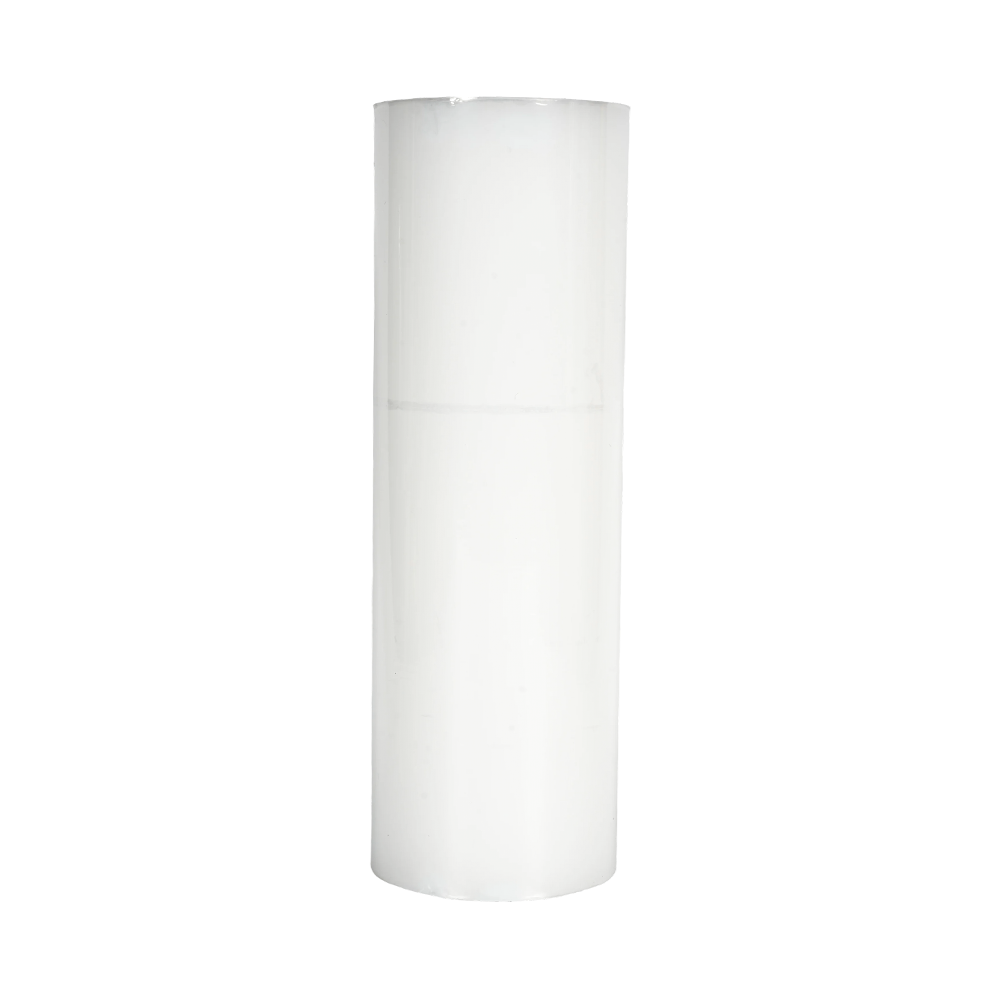
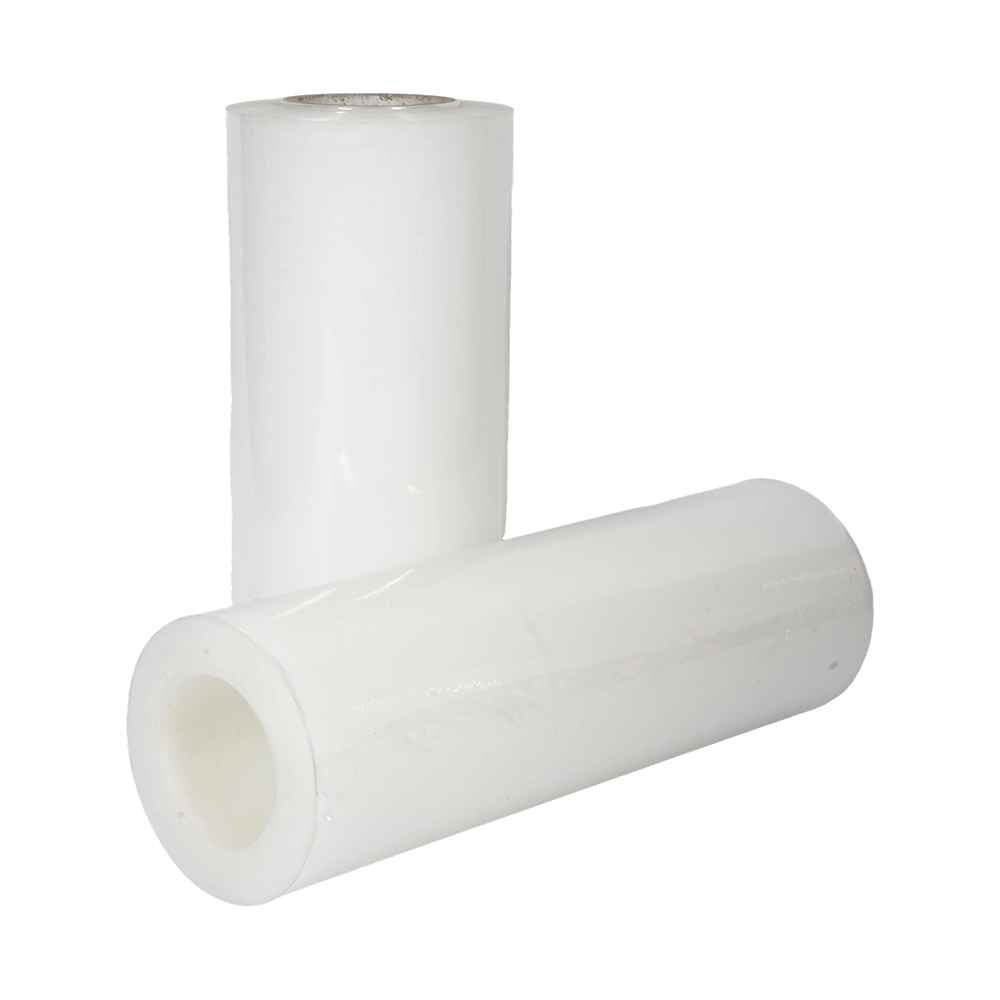
0.03-0.06 Products protective film
3. Core Advantages of the Protective Film
3.1 Balanced Surface Compatibility
One of the most important advantages of a protective film is its ability to adhere to a surface without creating unnecessary risk. Common application materials include glass, metal, plastic, stainless steel, polished stone, painted panels, door and window components, and appliance exteriors. These surfaces differ significantly in smoothness, hardness, surface energy, and coating composition.
A controlled adhesive system helps the film conform to the selected substrate while avoiding excessive bonding force. Low-tack options may be suitable for highly smooth surfaces, short protection periods, or situations where clean removal is the highest priority. Medium-tack options may be considered when the film must remain in place during longer handling, transportation, or assembly operations.
Compared with generic plastic wrapping that is not designed for direct surface contact, purpose-made protective film offers a more predictable relationship between adhesion and removal. This is especially valuable when the substrate has a decorative coating, polished finish, printed layer, or carefully controlled appearance.
3.2 Easy Removal and Lower Residue Risk
Protective film is intended to be temporary. Its usefulness depends not only on how well it stays attached, but also on how cleanly it can be removed when protection is no longer needed. A suitable adhesive formulation and a consistent coating process help support smooth peeling and reduce the possibility of adhesive transfer.
Clean removal can reduce post-processing labor. Workers may not need to use aggressive solvents or spend excessive time scraping away adhesive contamination. This can protect the underlying finish and help maintain a more efficient production sequence. However, removal performance is affected by temperature, exposure time, sunlight, humidity, surface chemistry, and storage conditions. Following the recommended application period remains important.
3.3 Transparent Protection
High transparency is useful in production environments because it allows the operator, inspector, installer, or customer to view the protected surface without removing the film. Product identification, color confirmation, printed markings, and visible defects can often be checked while the film remains in place.
Transparent protection is particularly useful for glass, decorative panels, display components, polished metal, appliance surfaces, and electronic housings. It can reduce unnecessary peeling and reapplication during quality inspection, thereby preserving the protective layer until the product is ready for final presentation or installation.
3.4 Flexible and Lightweight Construction
A film thickness of 0.03–0.06 mm provides a useful balance between coverage and handling convenience. The material can be applied around regular shapes and cut or slit for different product sizes. Compared with rigid protective boards or bulky cushioning materials, film generally occupies less storage space and adds less packaging weight.
Its lightweight construction can support more efficient packing and easier manual handling. Rolls can be positioned near production lines, applied by hand or with suitable dispensing equipment, and removed without requiring heavy tools. For high-volume operations, these features can contribute to faster workflow and more consistent product presentation.
3.5 Basic Resistance to Everyday Handling Risks
The film is designed to buffer physical friction and isolate the surface from common contaminants. It can help reduce the effect of dust, dirt, fingerprints, minor scuffs, and light contact during normal processing and storage. It is not intended to replace heavy-duty cushioning, impact protection, thermal barriers, or specialized chemical-resistant films. Its strength lies in providing practical temporary coverage for routine handling risks.
This distinction is important when comparing products. A buyer should select a film based on the actual hazard. For light surface contact, a transparent low- or medium-tack film may be efficient and economical. For sharp edges, heavy impact, outdoor exposure, high temperatures, or long-term storage, a different protective system may be required.
4. Why Thickness Matters
Thickness influences the balance between protection, flexibility, cost, and ease of application. A thinner film may be economical and easy to conform to smooth surfaces, but it can be more sensitive to tearing or puncture during rough handling. A thicker film may offer greater physical support and handling robustness, although it can require more material, occupy more volume, and behave differently during peeling or forming.
The 0.03–0.06 mm range is appropriate for many standard temporary protection tasks. At the lower end of the range, the film can be useful where surfaces are smooth, the handling period is short, and a lightweight solution is preferred. At the upper end, additional body and resistance may be useful during transportation, stacking, assembly, or longer handling cycles.
Thickness should not be evaluated independently from adhesive strength. A thick film with unsuitable adhesive may still fail to perform on a particular surface. Similarly, a thin film with excellent coating uniformity and appropriate adhesion may provide better practical results than a thicker but poorly matched alternative.
Manufacturing accuracy is also important. Variations across the film width can affect winding, application, edge behavior, and visual appearance. Controlled extrusion, coating, drying, slitting, and inspection processes help maintain a more consistent product from roll to roll.
5. Adhesive Control and Application Performance
The adhesive layer is central to protective film performance. It must provide enough contact to prevent lifting, shifting, or premature detachment, while remaining removable at the end of the protection period. The appropriate adhesive level depends on the substrate, surface finish, application temperature, expected storage duration, and amount of movement or friction.
Low-tack film is generally considered when the surface is smooth and sensitive, the protection period is relatively short, or the customer places a high priority on easy removal. It may be suitable for glass, polished surfaces, finished panels, and components that will be unpacked soon after delivery.
Medium-tack film may be considered for products that will experience more movement, extended storage, or transportation vibration. It can provide a stronger hold while still being designed for temporary removal. Before full-scale use, operators should confirm that the adhesive does not react adversely with coatings, printing inks, plasticizers, finishes, or surface treatments.
Application pressure also affects bonding. If the film is applied unevenly, air pockets, wrinkles, or loose edges may develop. A clean, dry surface and steady application pressure help improve contact. On large panels, application from one edge toward the other can reduce trapped air and help create a more uniform appearance.
6. Manufacturing Process and Quality Strengths
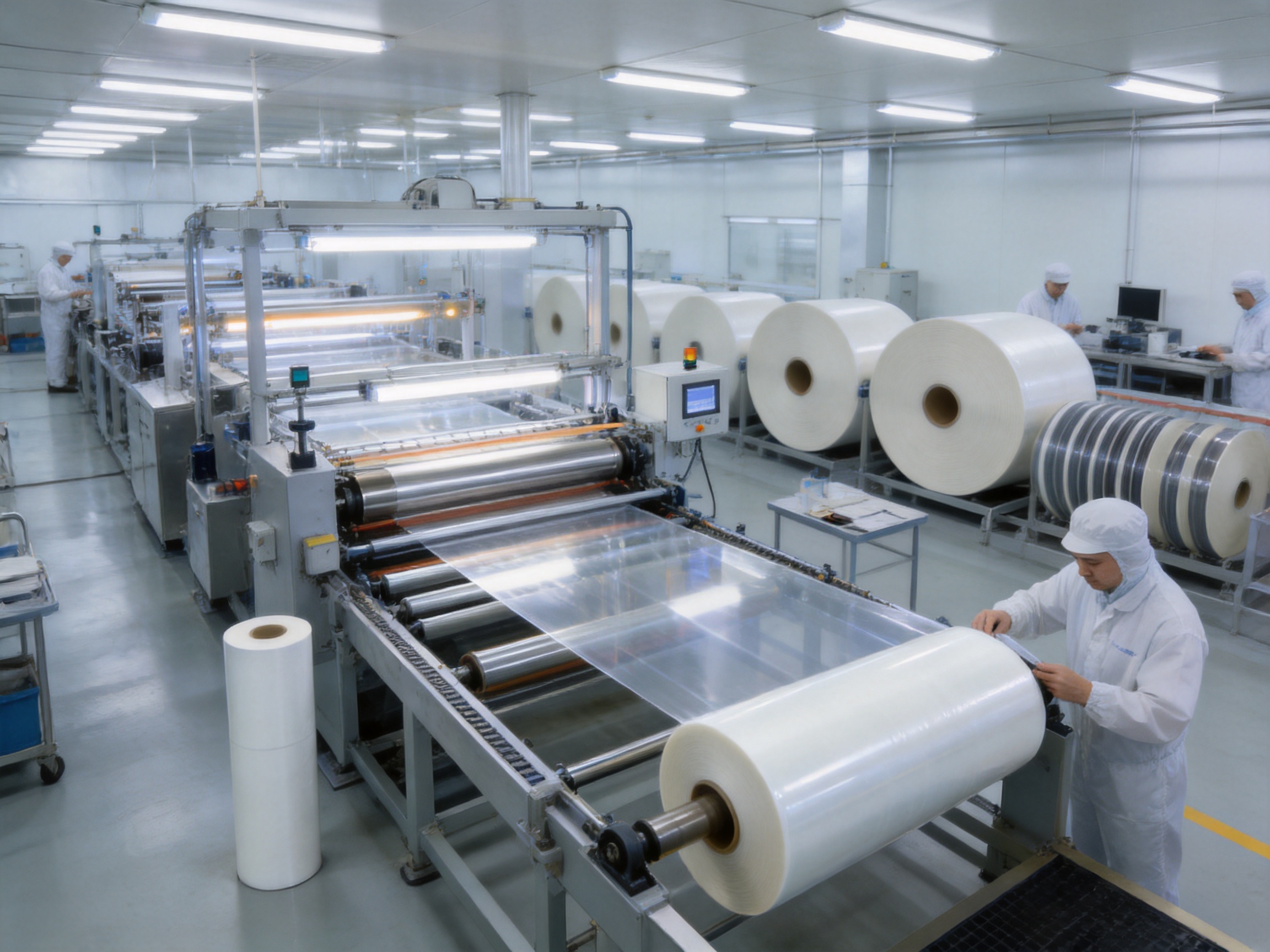
Reliable protective film begins with disciplined manufacturing rather than a single production step. The overall process may include raw material selection, substrate preparation, film formation, adhesive formulation, coating, drying or curing, inspection, slitting, winding, packaging, and final quality verification. Each stage influences the finished roll.
6.1 Raw Material Selection
Polymer quality affects clarity, flexibility, strength, thickness stability, and processing behavior. Adhesive raw materials influence tack, peel performance, residue risk, and aging behavior. A structured material-selection process helps the manufacturer match the film construction to the intended use rather than relying on a one-size-fits-all formulation.
Material control should include supplier evaluation, incoming inspection, batch identification, and storage management. Protecting raw materials from moisture, contamination, heat, and excessive pressure helps preserve their processing characteristics before production begins.
6.2 Film Formation
During film formation, the polymer is processed into a continuous sheet with controlled thickness and width. Temperature, extrusion conditions, cooling, tension, and line speed must be managed carefully. Stable processing supports better transparency and reduces the risk of wrinkles, gels, uneven gauge, bubbles, or visible defects.
For protective film, appearance is an important quality characteristic. Since the film is often used on visually important products, haze, streaks, contamination, and inconsistent clarity can reduce customer confidence. Continuous observation and suitable inspection equipment help identify problems before the material reaches the slitting stage.
6.3 Adhesive Coating
The adhesive is applied to the film in a controlled layer. Coating weight, viscosity, line speed, drying conditions, and coating uniformity all affect final performance. Excessive adhesive may increase residue risk or make removal difficult. Insufficient or uneven adhesive may lead to edge lifting, bubbles, and unstable attachment.
Advanced manufacturing depends on repeatability. A controlled coating line, accurate process settings, clean production conditions, and documented inspection procedures can help deliver consistent low-tack and medium-tack products. This consistency is especially valuable for industrial customers that need predictable performance across many rolls or production batches.
6.4 Drying, Curing, and Conditioning
After coating, the film may pass through controlled drying or curing stages. The purpose is to stabilize the adhesive layer and achieve the required handling and bonding properties. Insufficient drying can create odor, transfer, blocking, or unstable adhesion. Excessive heat may affect the polymer, adhesive, or transparency.
Conditioning and controlled cooling also influence winding quality. The film must be sufficiently stable before it is wound into rolls, packaged, and transported. Properly managed conditioning can reduce telescoping, wrinkles, blocking, and deformation during storage.
6.5 Slitting and Rewinding
Custom slitting is a practical advantage for customers with different product dimensions. A master roll can be converted into narrower rolls that match panels, sheets, profiles, components, or dispensing equipment. Slitting accuracy affects edge quality, roll stability, application convenience, and material waste.
Rewinding tension must be carefully controlled. Rolls that are too loose may shift or collapse, while rolls that are too tight may deform the film or affect unwinding. Clean cutting and careful edge inspection help ensure that the finished rolls are ready for manual or machine-assisted application.
6.6 Inspection and Quality Assurance
A rigorous quality system should address raw materials, in-process conditions, finished film, packaging, and traceability. Typical checks may include thickness, width, transparency, surface appearance, winding condition, adhesion behavior, peel performance, and basic tensile or elongation characteristics where applicable.
Quality assurance is strengthened when inspection results are documented and linked to production batches. This allows technical teams to identify trends, investigate customer feedback, and improve process settings. It also gives industrial buyers greater confidence that repeat orders can meet the same general requirements.
Zhejiang Geruite Packaging Materials Co., Ltd. operates with advanced production equipment and a quality control approach covering raw material procurement, production, and final inspection. Its business focuses on packaging materials and adhesive products, including protective film, stretch film, BOPP tape, kraft paper tape, masking tape, high-temperature tape, metal tape, PP strapping, and PET strapping. This broader product experience supports an understanding of packaging workflows and the different protection requirements found in logistics, manufacturing, construction, electronics, and household applications.
7. Competitive Advantages in Practical Use
Protective film products should be compared according to performance suitability, not only price per roll. A lower-cost product may become more expensive if it causes residue, frequent replacement, surface damage, application delays, or excessive waste. The product described here offers several practical advantages when appropriately matched to the application.
7.1 More Targeted Than General Wrapping Materials
General plastic wrapping can cover an item, but it is not always designed to adhere directly to a finished surface. It may shift, create loose edges, or fail to protect the exact contact area. Surface protective film is manufactured for direct application and controlled removal, making it more targeted for panels, sheets, glass, and components.
7.2 Better Visibility Than Opaque Protection
Opaque paper, foam, or boards can protect against contact but may conceal the product. Transparent film allows the operator to identify the substrate, inspect visible features, and confirm product condition without removing the protective layer. This is useful in warehouses, production lines, showrooms, and installation sites.
7.3 Lower Material Burden Than Rigid Protection
Rigid boards and thick cushioning may provide stronger mechanical protection, but they can increase packaging volume, weight, and labor. For applications where the primary concern is dust, light friction, fingerprints, and minor scratches, a thin protective film can provide a more efficient solution.
7.4 Flexible Customization
The availability of low-tack and medium-tack options, multiple thickness choices, and custom slitting makes it easier to match the product to different surfaces and workflows. This flexibility can be more valuable than a standardized film that performs acceptably on one material but poorly on another.
7.5 Support from an Integrated Packaging Manufacturer
A supplier with experience across tapes, films, strapping, and related packaging materials can often help customers consider the complete packaging process. Protective film may need to work together with stretch film, cartons, strapping, adhesive tape, edge protection, or internal separators. A broader packaging perspective can help reduce incompatibility and improve the final packing method.
8. Industry Applications
8.1 Industrial Manufacturing
Metal sheets, plastic components, instrument panels, and finished assemblies may be exposed to repeated contact during fabrication and assembly. Protective film can be applied before cutting, bending, machining, transport between workstations, or final packing, provided the process conditions are compatible with the selected film.
For stainless steel, aluminum, coated metal, and decorative panels, protection against minor scuffs and fingerprints can help preserve appearance. The film can also make it easier to separate stacked products and reduce direct contact between adjacent surfaces.
8.2 Electronics and Appliances
Electronic housings, display components, control panels, and appliance exteriors often require clean presentation. Transparent film can help reduce scratches and dust accumulation during transportation and storage. It also allows labels, colors, and visible features to remain identifiable while the product is still protected.
Because electronic components may contain sensitive coatings, printed surfaces, or plastics that react with certain adhesive systems, compatibility testing is particularly important. A sample should remain on the actual material for a representative period before full production use.
8.3 Glass, Doors, and Windows
Glass panels and door or window components can be vulnerable to fingerprints, dust, construction debris, and light abrasion before installation. A transparent film can help maintain a cleaner appearance while allowing installers to check the condition of the glass or frame.
On large sheets, careful application technique is important. The surface should be clean and dry, and the operator should avoid trapping dirt beneath the film. Edges should be managed so that they do not lift during transportation or installation.
8.4 Stainless Steel and Polished Materials
Polished metal and decorative surfaces are often selected for their visual quality. Small scratches or smudges can be highly visible under strong lighting. Temporary film can reduce contact during fabrication, packing, delivery, and installation.
Removal timing should be planned. Leaving any adhesive film in place longer than recommended, particularly under elevated temperatures or direct sunlight, may change removal behavior. The product should be tested on polished or chemically treated surfaces before broad use.
8.5 Furniture and Household Products
During moving, renovation, or installation, furniture panels and appliance exteriors may contact walls, floors, tools, blankets, and other items. Protective film can provide a lightweight temporary barrier against everyday dust and light friction while preserving the visible finish.
For household products, convenience is important. The film should be easy to apply, easy to identify, and easy to remove when the work is completed. Transparent construction helps users see whether the surface remains clean without repeatedly exposing it to the surrounding environment.
8.6 Construction and Interior Decoration
Construction sites contain dust, grit, moisture, tools, and frequent movement. Protective film can be useful for door panels, window components, stainless steel sheets, decorative surfaces, and selected flooring or wall materials during installation. It should not be regarded as a substitute for heavy-duty site protection where sharp objects, impact, welding sparks, or aggressive chemicals are present.
9. Correct Application Procedure
9.1 Clean the Surface
Before application, remove dust, oil, moisture, release agents, loose particles, and other contamination. The surface should be dry and sufficiently cool for the adhesive system. Applying film over dirt can trap particles and create visible marks. Applying it over oil or moisture may reduce adhesion and encourage lifting.
9.2 Select the Appropriate Adhesion Level
Choose low-tack or medium-tack film according to the surface and protection period. When the substrate is delicate, newly coated, highly polished, or chemically sensitive, begin with the lower adhesion option and conduct a controlled test. When transportation or extended handling is expected, a medium-tack option may provide better stability if compatibility is confirmed.
9.3 Apply Evenly
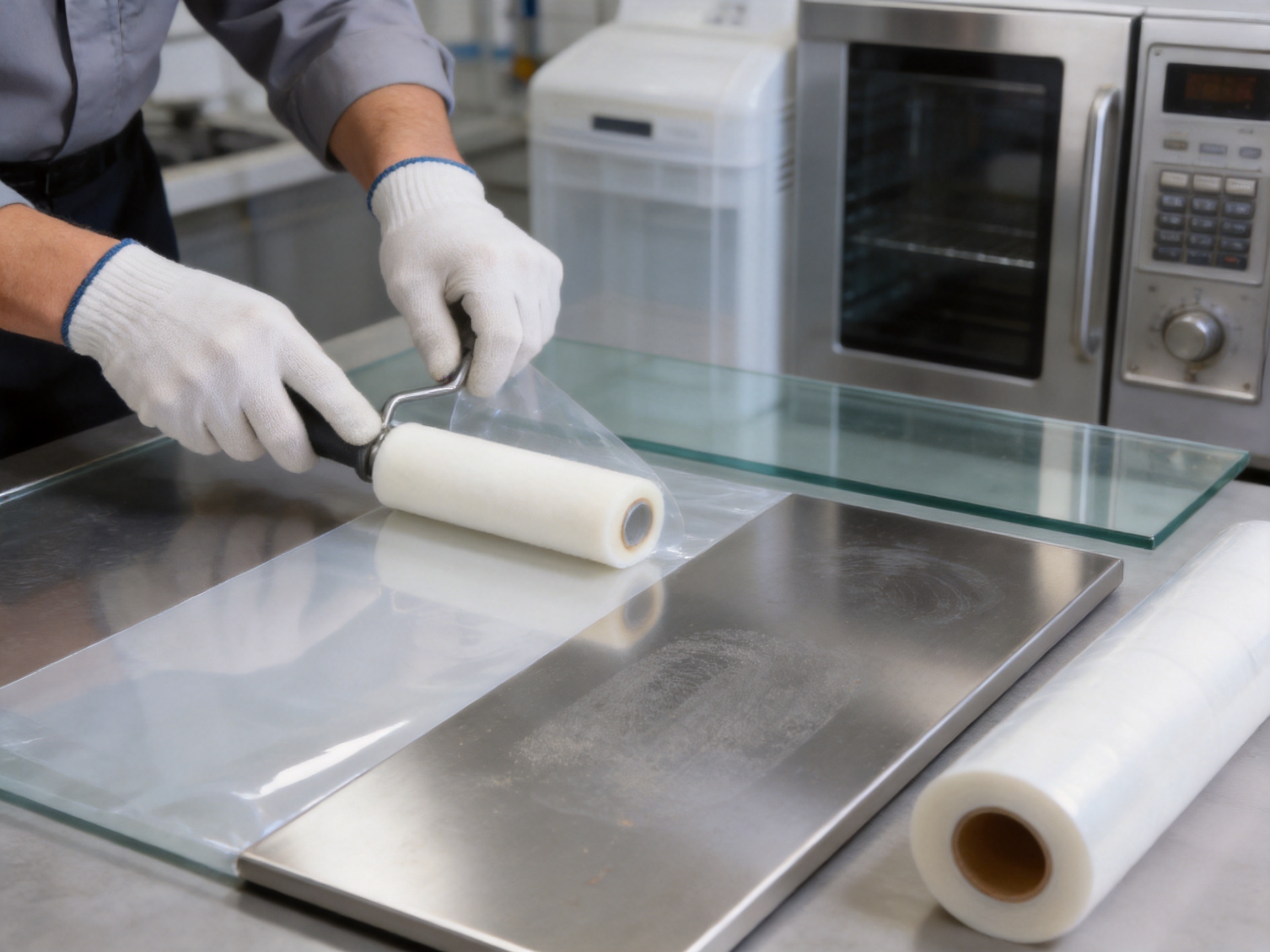
Align one edge first and apply the film gradually. Use a clean squeegee, roller, or suitable application tool when appropriate. Work from one side toward the other to reduce wrinkles and trapped air. Avoid stretching the film excessively, because tension can cause shrinkage, edge lifting, or distortion after application.
9.4 Inspect the Finished Application
After application, check the edges, corners, seams, bubbles, wrinkles, and areas of incomplete contact. Correct defects promptly. A small lifted edge can collect dust or catch on adjacent packaging materials during transportation.
9.5 Remove Carefully
When the product is ready for installation, delivery, or final presentation, peel the film steadily at a controlled angle. Avoid using sharp tools directly on the substrate. If the film has been exposed to unusual temperature, humidity, sunlight, or an extended storage period, removal should be performed carefully and tested first on a less visible area.
10. Storage and Handling Recommendations
Protective film should be stored in a cool, dry, and clean location away from direct sunlight. Excessive heat may affect the film or adhesive. High humidity may influence packaging integrity and surface condition. Heavy pressure on stored rolls can cause deformation, blocking, or difficulty during unwinding.
Rolls should remain in their original packaging until they are needed. They should be placed on stable supports rather than dropped or dragged. Contact with sharp edges, solvents, oils, and chemically active materials should be avoided. Stock should be managed according to a first-in, first-out principle so that older material is used within a reasonable period.
Before production use, rolls should be allowed to reach the application environment when necessary. Sudden temperature changes can lead to condensation or temporary changes in film behavior. Maintaining consistent storage and application conditions supports more predictable results.
The recommended removal period is within six months of application. This recommendation helps reduce the risk that prolonged adhesion, environmental exposure, or aging will make peeling more difficult. The actual period may vary with the substrate, adhesive type, temperature, sunlight, and humidity, so application testing and field observation remain advisable.
11. How to Choose the Right Protective Film
Purchasers should begin by identifying the surface rather than selecting a film solely by thickness. Important questions include whether the surface is glass, metal, plastic, painted, polished, printed, textured, or chemically treated. The surface finish can determine whether low-tack or medium-tack adhesion is appropriate.
The next consideration is the protection period. A film intended for several days in an indoor production area may require different characteristics from a film used for weeks or months during transportation and installation. Longer exposure increases the importance of environmental conditions and removal planning.
Handling intensity also matters. Products that remain stationary may need only basic dust and scratch protection. Products moved frequently, stacked, loaded, unloaded, or exposed to vibration may require stronger film body, more stable winding, and an adhesive level that resists edge lifting.
Width and roll length should match the application process. Custom slitting can reduce the need for unnecessary trimming and help improve material utilization. However, the selected width should still allow sufficient overlap or complete coverage where required.
Buyers should request samples and evaluate clarity, application feel, edge stability, peeling force, residue, surface appearance, and aging behavior. Testing should use the actual substrate and, when possible, the actual storage and transportation conditions. A short laboratory test cannot always reproduce the effects of sunlight, heat, moisture, pressure, or long-term contact.
12. Sustainability and Material Efficiency Considerations
Protective film is a thin material, and its efficient use begins with selecting the correct width and thickness. Overly wide film creates waste, while an unsuitable thin film may tear and require repeated replacement. Custom slitting and application planning can help reduce unused edges and unnecessary layers.
Material efficiency also depends on preventing product damage. If a film helps avoid scratches, rework, rejected goods, and replacement shipments, it may contribute to lower overall resource consumption in the packaging process. The sustainability benefit should therefore be evaluated across the product life cycle rather than by film weight alone.
Disposal requirements depend on the base polymer, adhesive construction, local waste systems, and contamination level. Users should follow applicable regulations and facility procedures. Where recycling is available, clean and properly separated film may be easier to manage than mixed packaging waste. Product selection, collection, and disposal should be considered together.
13. Supplier Capability and Manufacturing Partnership
A reliable supplier should provide more than a nominal thickness specification. Customers benefit from clear communication about base material, adhesive level, width tolerance, packaging, storage recommendations, sample testing, and production lead time. Technical support is particularly valuable when the film will be used on new coatings, delicate surfaces, or high-value products.
Zhejiang Geruite Packaging Materials Co., Ltd. is based in Hangzhou, Zhejiang Province, China, an important manufacturing region with a developed industrial and logistics network. The company focuses on research, development, production, and sales of packaging materials. Its product portfolio includes adhesive tapes, stretch film, strapping, and protective film solutions.
The company emphasizes quality control throughout raw material procurement, production, and final inspection. Its annual output value has exceeded RMB 60 million, reflecting an established operating scale. For customers, this type of manufacturing foundation can support more stable supply, product customization, and coordinated packaging procurement.
Its experience in multiple packaging categories is also useful for customers that need a complete protection system. A production line may require protective film for the product surface, stretch film for unitizing, adhesive tape for carton closure, and PET or PP strapping for load stabilization. Coordinating these materials through one experienced supplier can simplify communication and improve packaging consistency.
The company’s stated long-term direction includes continued investment in research and development, product optimization, service improvement, and international customer support. These priorities are relevant to protective film buyers because surface protection requirements continue to vary across electronics, construction, appliances, metal processing, logistics, and household applications.
14. Frequently Asked Questions
Q1: What is 0.03–0.06 mm protective film used for?
It is used as a temporary barrier to reduce dust, oil, fingerprints, light friction, and minor scratches on surfaces such as glass, metal, plastic, stainless steel, appliance exteriors, instrument panels, and decorative components. It is commonly applied during manufacturing, transportation, storage, installation, renovation, and moving.
Q2: Is the film suitable for every surface?
No single protective film is suitable for every surface. The product is intended for many smooth or regularly shaped surfaces, but compatibility depends on the substrate, coating, surface energy, temperature, humidity, and application period. A sample test is recommended before full-scale use, especially on painted, printed, polished, coated, or chemically treated materials.
Q3: What is the difference between low-tack and medium-tack film?
Low-tack film uses a lighter adhesive force and is often considered for smooth or sensitive surfaces where easy removal is important. Medium-tack film provides a stronger hold and may be useful during longer handling or transportation. The correct choice depends on the surface and the expected exposure conditions.
Q4: Will the protective film leave residue?
The film is designed for clean removal when properly matched to the surface and removed within the recommended period. Residue risk can increase when the film is applied to a contaminated surface, exposed to high heat or direct sunlight, left in place for too long, or used on an incompatible coating. Testing is the best way to confirm performance.
Q5: Can the film be used outdoors?
The basic product is intended primarily for temporary protection during processing, transportation, storage, installation, and normal handling. Outdoor use may expose the film to ultraviolet radiation, rain, heat, cold, and wind, which can change adhesion and removal performance. Outdoor applications should be discussed and tested separately.
Q6: How long should the film remain on the product?
Removal within six months of application is recommended. The appropriate period depends on the surface, adhesive type, temperature, humidity, sunlight, and handling environment. Shorter periods may be preferable for sensitive surfaces or demanding conditions.
Q7: Can the film be customized?
Custom slitting is available for width requirements, and different thicknesses or adhesive levels may be considered according to the application. Customers should provide information about the substrate, product dimensions, protection period, storage conditions, and handling method when requesting a specification.
Q8: Is transparent film better than opaque protection?
Transparent film is advantageous when users need to inspect the surface, identify the product, confirm color, or view markings without removing the protection. Opaque materials may provide other benefits, such as light blocking or stronger cushioning. The best option depends on the primary risk and inspection needs.
Q9: Can protective film replace cushioning materials?
No. Protective film is intended for surface protection against dust, light friction, and minor scratches. It does not replace foam, corrugated inserts, edge protectors, pallets, or other materials required for impact, vibration, compression, or heavy-load protection.
Q10: How should rolls be stored?
Store the rolls in a cool, dry location away from direct sunlight, excessive heat, moisture, chemicals, and heavy pressure. Keep them in their original packaging until use, avoid dropping or dragging them, and organize inventory so older stock is used appropriately.
Q11: What information should be provided when requesting a quotation?
Useful information includes the substrate material, surface finish, product dimensions, required width, approximate thickness, adhesive preference, expected application period, indoor or outdoor conditions, application method, estimated quantity, and packaging requirements. Samples or photographs of the actual surface can also support technical evaluation.
Q12: Why is manufacturing consistency important?
Inconsistent thickness, adhesive coating, transparency, or winding can cause wrinkles, bubbles, edge lifting, difficult application, or unpredictable removal. Controlled production and documented inspection help improve repeatability across rolls and support stable performance in industrial operations.
15. Conclusion
0.03–0.06 mm protective film provides a practical balance of flexibility, transparency, lightweight handling, and basic surface protection. Its controlled adhesive options make it suitable for a variety of smooth surfaces, while custom slitting supports different product dimensions and packaging workflows.
The main advantages are easy application, clear visibility, temporary protection from dust and minor friction, and convenient removal when the film is used under suitable conditions. Compared with general wrapping materials, it offers a more targeted solution for direct surface contact. Compared with rigid protective packaging, it can reduce material bulk and handling effort when heavy impact protection is not required.
Performance ultimately depends on correct product selection and disciplined use. Surface cleaning, application technique, environmental control, storage, and timely removal are all essential. Buyers should evaluate the film on the actual substrate and consider thickness, adhesive level, protection period, roll width, and transportation conditions together.
With advanced production equipment, broad packaging-material experience, and quality control covering procurement, manufacturing, and final inspection, Zhejiang Geruite Packaging Materials Co., Ltd. is positioned to support customers seeking dependable protective film and related packaging products. For manufacturers, distributors, construction teams, logistics operators, and household users, the right protective film can help preserve product appearance, reduce handling damage, improve workflow efficiency, and support more professional delivery.
References
1. ASTM International. General Principles for Evaluating Plastic Film Thickness, Appearance, and Mechanical Performance.
2. ASTM International. Standard Practices for Measuring Peel Adhesion and Tack of Pressure-Sensitive Materials.
3. International Organization for Standardization. Quality Management Principles and Process Control Guidance.
4. International Organization for Standardization. Packaging and Environmental Considerations for Plastic Materials.
5. Technical literature on polyethylene and polyvinyl chloride film processing, adhesive coating, slitting, and roll handling.
6. Manufacturer-provided product information for 0.03–0.06 mm temporary surface protective film.
Product: 0.03-0.06 Products protective film

LATEST POST
Let’s create something amazing together
contact us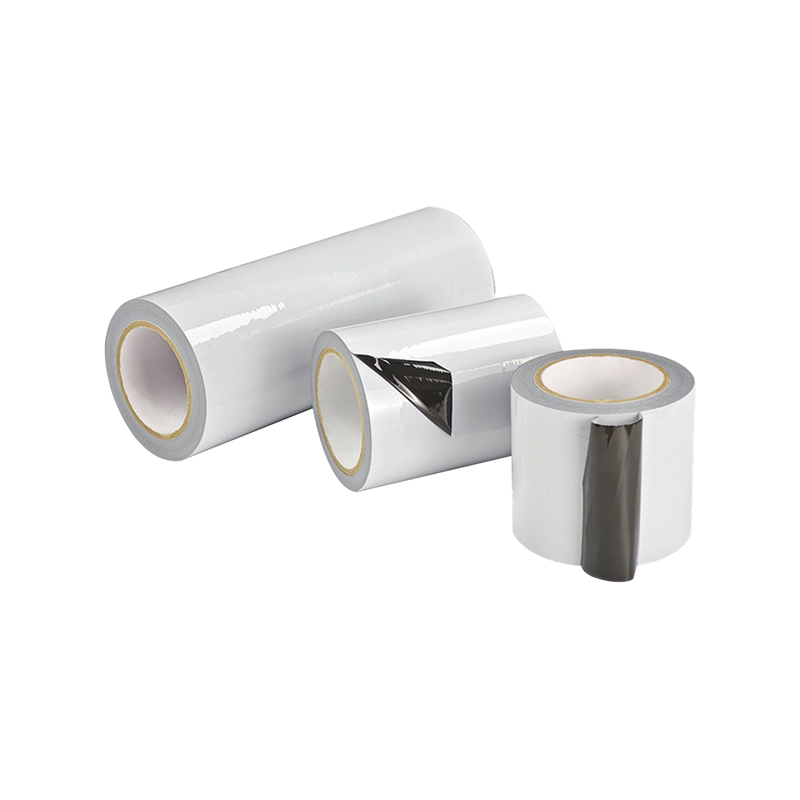
CONTACT DETAILS
- Address:No. 241, Yaojiafan, Zhangpanqiao, Shushan Street, Xiaoshan District, Hangzhou City, Zhejiang Province, China
- TEL:+86-0571-83175630
- Phone:+86-13336160217
- Email:jeffrey@grtpk.com
- WeChat/WhatsApp:+86-18058115265
PRODUCTS
NEWS CENTER
MOBILE TERMINAL
Copyright© Zhejiang Geruite Packaging Materials Co., Ltd. All Rights Reserved.
Privacy Wholesale industrial packaging tape Manufacturers