


 English
  Español
  عربى
عربى 
High-Temperature Resistant Masking Tape for Precision Industrial Protection
Content
- 1 Understanding High-Temperature Resistant Masking Tape
- 2 Key Product Specifications
- 3 Construction of the Tape
- 4 Temperature Resistance and Process Reliability
- 5 Advantages Compared with Ordinary Masking Tape
- 6 Manufacturing Process and Quality Approach
- 7 Application Areas
- 8 Recommended Application Procedure
- 9 How This Product Supports Production Efficiency
- 10 Company Manufacturing Strengths
- 11 Storage and Handling Recommendations
- 12 Quality Control Points for Buyers
- 13 Q&A: Common Questions About the Tape
- 13.1 Q1: What is high-temperature resistant masking tape used for?
- 13.2 Q2: What is the standard thickness?
- 13.3 Q3: What widths are available?
- 13.4 Q4: Can one roll withstand every high-temperature process?
- 13.5 Q5: Why does adhesive residue sometimes remain after removal?
- 13.6 Q6: Why do the tape edges lift during heating?
- 13.7 Q7: Is the tape suitable for curved surfaces?
- 13.8 Q8: Can the tape be used on freshly painted surfaces?
- 13.9 Q9: Is acrylic adhesive resistant to solvents?
- 13.10 Q10: Is the product suitable for PCB wave soldering or reflow soldering?
- 13.11 Q11: How can operators achieve a sharper paint line?
- 13.12 Q12: Can the tape replace permanent industrial fastening?
- 14 Conclusion
- 15 References
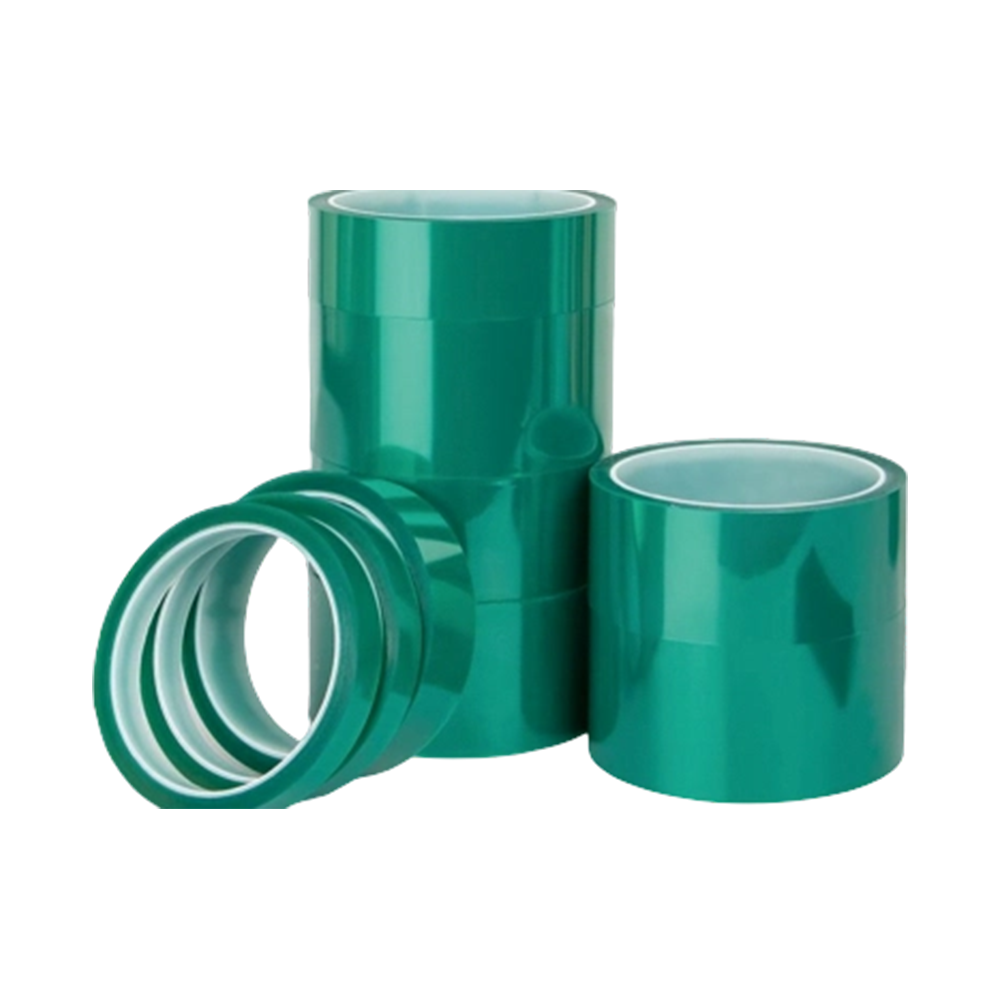
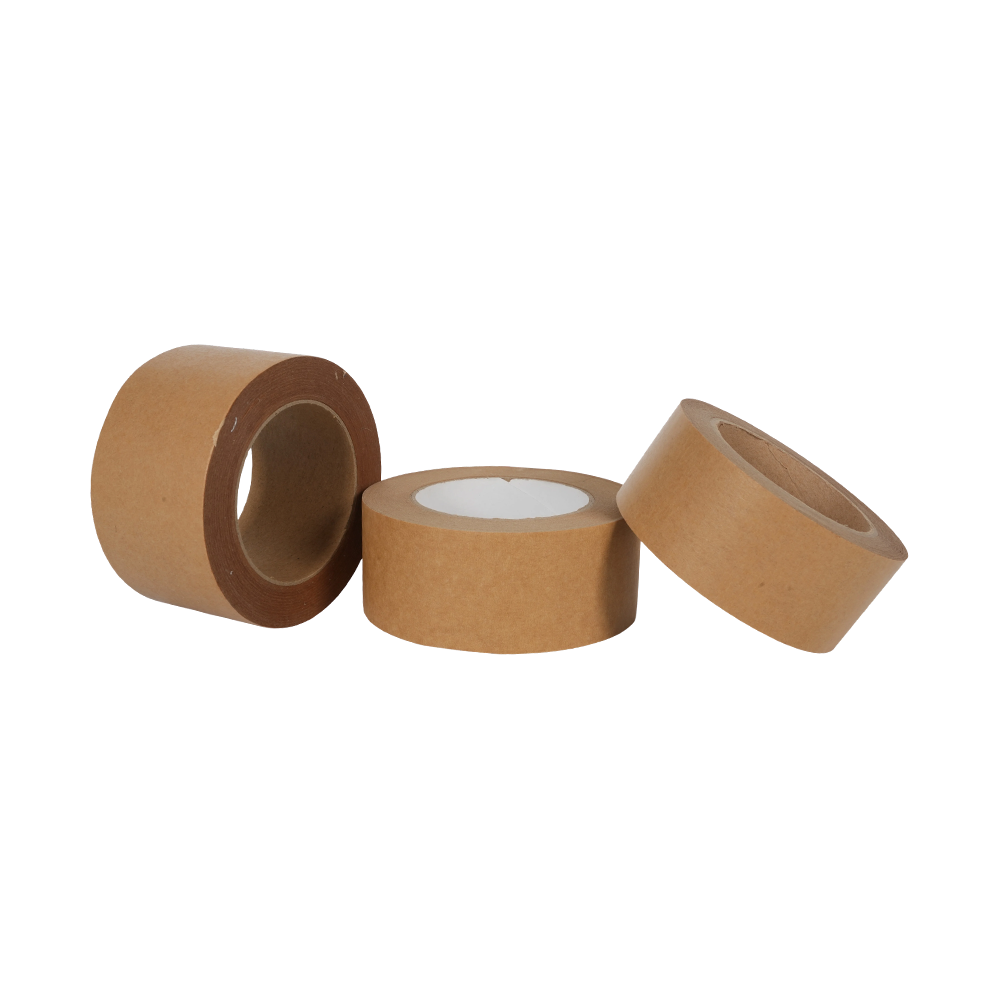
- 16 Product: High-temperature resistant masking tape, crepe paper tape
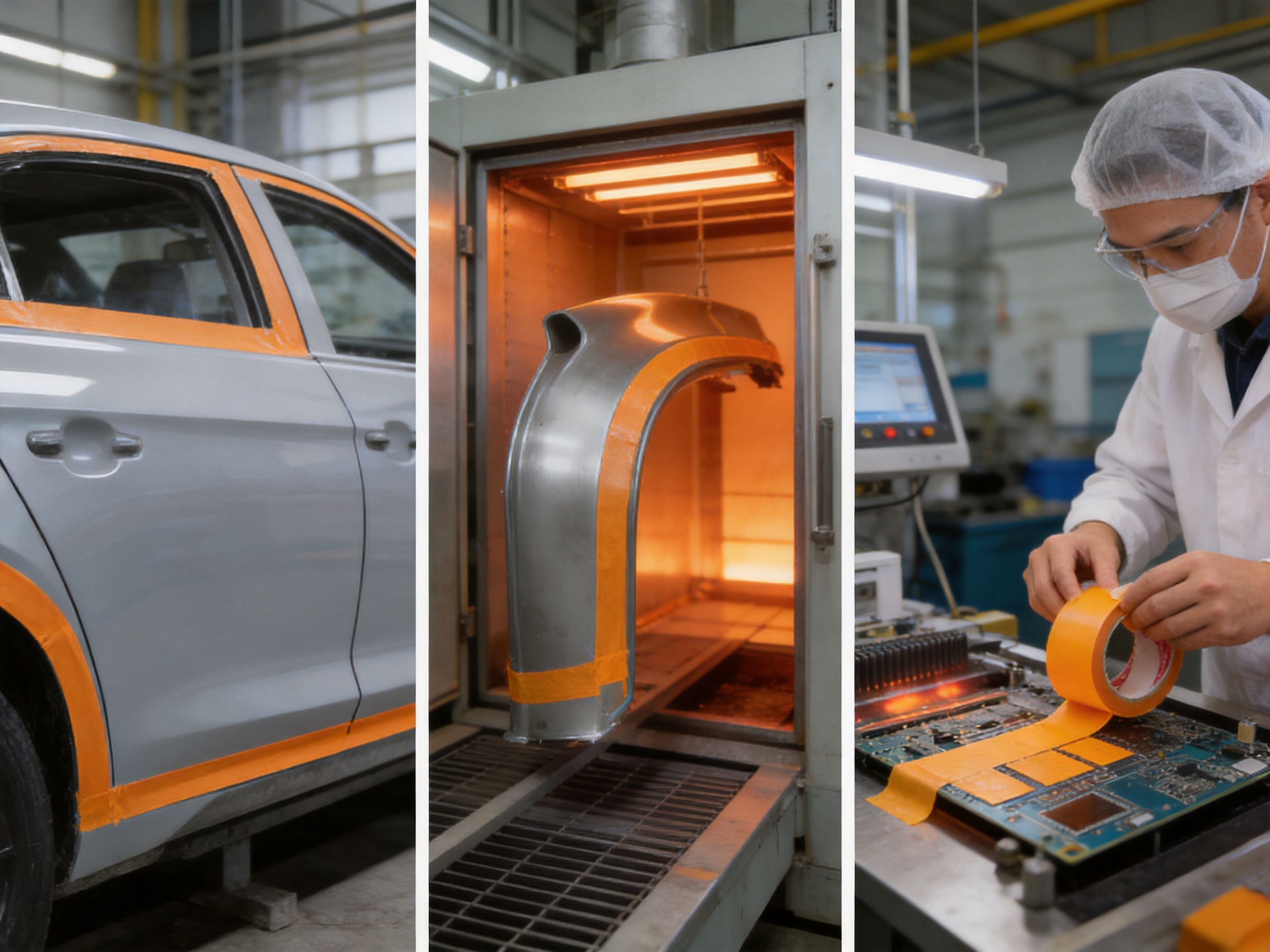
High-temperature resistant masking tape, also known as crepe paper tape, is an essential consumable for industrial masking, surface treatment, painting, electronics protection, baking, and temporary fixing. Although masking tape may appear simple, its performance depends on the coordinated design of the backing material, adhesive system, coating process, thickness control, temperature resistance, unwind behavior, and removal characteristics. A tape that performs well at room temperature may fail when exposed to heat, solvents, paint, powder coating, or prolonged processing cycles. For this reason, choosing the correct masking tape is an important part of maintaining production quality and reducing rework.
The product discussed in this article is manufactured from specially treated crepe paper coated with acrylic pressure-sensitive adhesive. Its standard thickness is 0.14mm, while its width can be customized from 5mm to 500mm. Depending on the manufacturing process and selected specification, the tape can be supplied in different temperature-resistance grades, including options designed for working conditions within approximately 80°C to 180°C. The exact temperature performance should always be confirmed through the relevant technical datasheet before use.
Designed for clean masking, reliable temporary protection, and convenient removal, this tape provides a practical balance between flexibility and holding power. It is suitable for curved and flat surfaces, narrow masking lines, industrial paint separation, electronic component protection, high-temperature baking, powder coating, and many light-duty bundling or positioning operations.
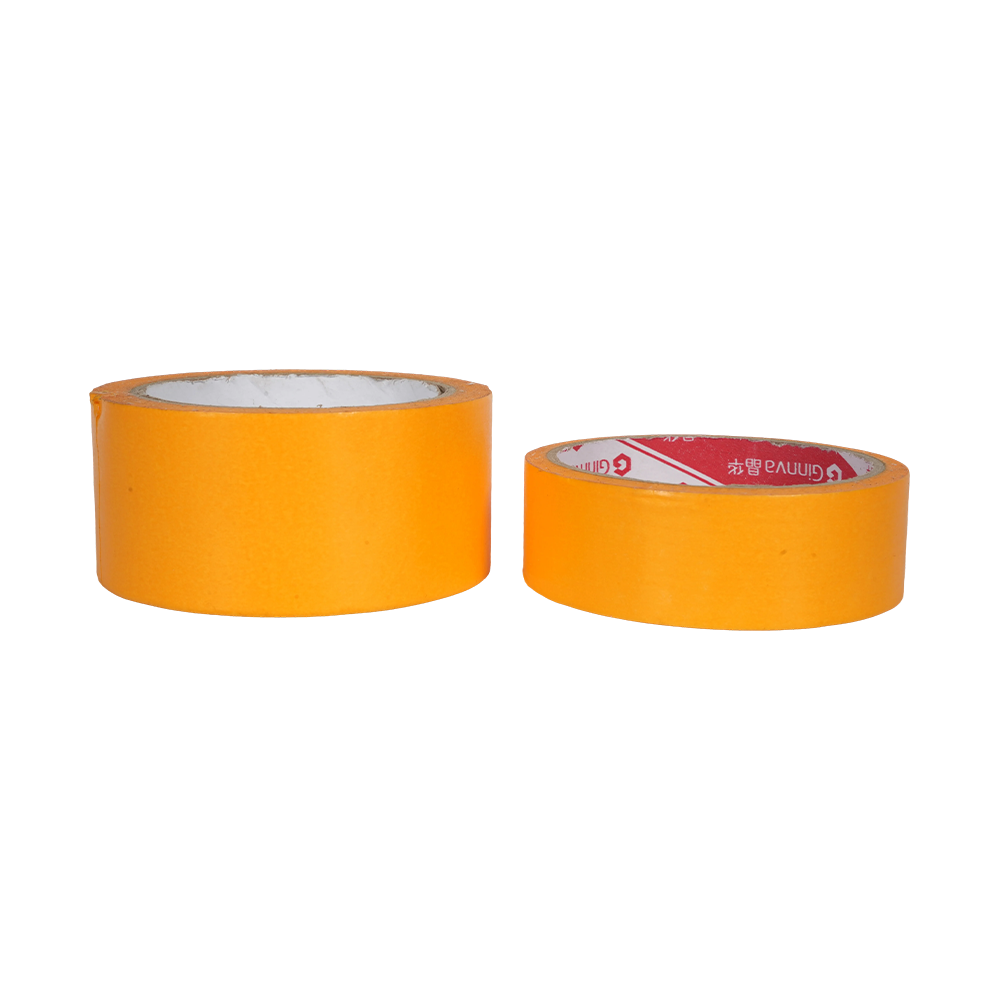
High-temperature resistant masking tape, crepe paper tape
Understanding High-Temperature Resistant Masking Tape
High-temperature resistant masking tape is a pressure-sensitive tape engineered to remain attached and functional when exposed to elevated temperatures for a defined period. Its primary purpose is not permanent bonding. Instead, it temporarily covers or protects selected areas while another process is performed on the exposed surface. After the process is complete, the tape should be removable without excessive tearing, adhesive transfer, or damage to the protected substrate.
The tape uses a crepe paper backing. Crepe paper has a naturally textured structure that allows it to conform to moderate curves and irregular surfaces more effectively than many flat paper backings. It can also be torn by hand in many production environments, reducing the need for cutting tools. Special treatment improves the backing’s toughness, tear resistance, dimensional stability, and suitability for elevated-temperature applications.
The adhesive is an acrylic pressure-sensitive adhesive. This adhesive system is designed to provide balanced initial tack and holding power while offering resistance to aging and selected solvents. The adhesive must be strong enough to maintain contact during spraying, handling, baking, or heat exposure, yet removable enough to minimize residue when the masking operation is completed.
Unlike ordinary household masking tape, high-temperature resistant masking tape is developed for more demanding industrial conditions. It must maintain edge contact, resist lifting, tolerate thermal stress, and create a clear boundary between treated and untreated areas. These requirements are especially important in automotive refinishing, metal coating, furniture finishing, electronic assembly, and industrial production lines.
Key Product Specifications
| Parameter | Specification or Description |
|---|---|
| Product name | High-temperature resistant masking tape, also known as crepe paper tape |
| Category | Painter’s tape and industrial masking tape |
| Backing material | Specially treated crepe paper |
| Adhesive | Acrylic pressure-sensitive adhesive |
| Standard thickness | 0.14mm |
| Custom width | 5mm to 500mm |
| Temperature resistance | Different grades available according to processing and model |
| Typical temperature range | Approximately 80°C to 180°C, depending on the selected model and exposure time |
| Color | Generally natural crepe paper color, such as off-white or light yellow |
| Removal behavior | Designed for convenient removal and reduced adhesive residue under suitable conditions |
| Typical applications | Painting, spraying, powder coating, baking, electronics protection, positioning, and light-duty fastening |
The specifications above describe the standard product concept. Industrial users should select the exact grade according to substrate type, temperature, exposure time, paint or coating chemistry, surface cleanliness, and removal requirements. Temperature resistance is not determined by temperature alone. The duration of exposure, heating rate, cooling conditions, pressure, and surface energy can all affect the final result.
Construction of the Tape
Specially Treated Crepe Paper Backing
The backing is the structural foundation of the tape. It must be flexible enough to follow curves and contours, but strong enough to resist premature tearing during unwinding, application, and removal. The crepe structure provides controlled extensibility, allowing the tape to adapt to small changes in surface shape without immediately wrinkling.
For industrial masking, the backing must also support a clean edge. Excessive stretching can deform the edge and affect the sharpness of the paint line, while insufficient flexibility can produce wrinkles, tunnels, or gaps. A properly treated crepe paper backing offers a useful balance: it can be smoothed over a curved area while retaining enough stability for accurate masking.
The paper backing also contributes to hand-tearability. In many workshops, operators need to apply short pieces, adjust tape length, or create temporary sections quickly. A backing that tears in a controlled way can improve productivity and reduce dependence on scissors or knives. This is particularly useful when workpieces have different shapes or when masking is performed directly at the production station.
Acrylic Pressure-Sensitive Adhesive
The acrylic adhesive is formulated to create reliable contact with the substrate without requiring a separate liquid coating or curing step during use. Once pressure is applied, the adhesive wets the surface and forms an attachment. This makes the tape convenient for manual application and suitable for many production environments.
Adhesive performance involves more than maximum bonding strength. An industrial masking tape must balance initial tack, holding power, shear resistance, removability, aging resistance, and residue control. Excessive initial tack may make repositioning difficult or increase the chance of surface damage. Insufficient tack may allow paint, powder, air, or heat to enter beneath the tape edge. The acrylic adhesive is intended to provide balanced performance across these requirements.
Its resistance to aging and selected solvents supports use in applications where the tape may remain in place during preparation, coating, drying, baking, or handling. Nevertheless, no adhesive is universally compatible with every surface or chemical. Testing is recommended when the tape will be applied to delicate coatings, low-energy plastics, freshly painted surfaces, powder-coated finishes, rubber, or materials containing plasticizers.
Standard 0.14mm Thickness
The standard thickness of 0.14mm is designed to balance handling convenience and masking performance. A tape that is too thin may be difficult to handle, vulnerable to tearing, or less capable of resisting paint penetration at the edge. A tape that is too thick may create an excessive paint step, occupy more space, or be less convenient for detailed masking.
At 0.14mm, the tape can provide sufficient body for manual application while remaining conformable. It is suitable for ordinary masking lines, moderate curves, temporary surface protection, and a range of industrial process tasks. If a particular operation requires greater mechanical strength, wider coverage, or a different edge profile, customized construction and width selection may be evaluated.
Temperature Resistance and Process Reliability
Temperature resistance is one of the main differences between general-purpose masking tape and high-temperature resistant masking tape. During spraying, curing, baking, soldering, or powder coating, a tape may experience rapid temperature changes and prolonged heat exposure. These conditions can soften the adhesive, reduce holding power, increase edge lifting, or cause adhesive residue if the product is not correctly selected.
This product family is available in different temperature-resistance grades according to manufacturing adjustments and customer requirements. Certain models may be suitable for lower-temperature industrial work, while other versions are designed for higher-temperature conditions. The stated working range may extend approximately from 80°C to 180°C depending on the model and defined exposure period. Because temperature performance is specification-dependent, users should consult the product datasheet rather than applying a general temperature assumption to every roll.
A reliable high-temperature masking tape should maintain adequate adhesion during the process and remain removable afterward. It should resist excessive shrinkage, edge lifting, adhesive migration, and backing failure. These characteristics are especially important when a painted or coated surface must have a sharp boundary. If the tape moves or lifts during treatment, coating may enter the protected area and create additional finishing work.
Temperature resistance should be evaluated together with process time. A tape that performs well for a short bake may not provide the same results after a long cycle. Similarly, a gradual heating process can produce different adhesive behavior from a rapid temperature increase. Cooling is also relevant because contraction of the substrate and tape may create stress at the edge. Industrial users should therefore test the complete heating and cooling cycle whenever the application is critical.
Advantages Compared with Ordinary Masking Tape
Improved Performance in Heated Environments
The most direct advantage is the ability to operate in elevated-temperature environments more reliably than standard room-temperature masking tape. Ordinary tape may lose adhesion, curl, shrink, or leave residue when exposed to heat. A high-temperature grade is manufactured and adjusted for more demanding process conditions, reducing the likelihood of premature failure when the correct specification is selected.
Better Edge Definition
Sharp paint lines are essential in two-color finishing, decorative coating, automotive refinishing, metal treatment, and industrial marking. The flexible crepe paper backing can conform to the surface while the acrylic adhesive helps maintain contact along the edge. This combination supports a cleaner separation between coated and uncoated areas than a poorly matched general-purpose tape.
Lower Risk of Adhesive Residue
Residue can increase cleaning time and may damage sensitive finishes. The product is designed to provide controlled removability under appropriate conditions. When the tape is applied to a clean, dry, compatible surface and removed within the recommended time, it can help reduce adhesive transfer. This is not an absolute guarantee for every substrate, because surface energy, coating condition, dwell time, and heat exposure all influence residue behavior.
Conformability on Curved Surfaces
Many industrial workpieces include corners, rounded sections, seams, or shallow contours. The crepe structure provides flexibility and controlled stretch, allowing operators to follow moderate curves more easily. This is an advantage over rigid masking materials that may bridge across a contour and leave an opening underneath.
Broad Width Customization
Widths from 5mm to 500mm can be custom-produced. Narrow widths are useful for precise lines, small electronic components, and restricted masking zones. Wider rolls can cover larger panels, protect broad areas, or reduce the number of parallel strips needed. This range gives manufacturers greater freedom to match the tape to the workpiece rather than adapting the workpiece to a limited standard roll size.
Efficient Manual Application
The tape can be applied by hand, torn conveniently, and smoothed onto the surface without complex equipment. This improves flexibility for small production batches, maintenance operations, workshops, and applications where workpieces vary from one order to another. The moderate unwind force also supports controlled application and helps operators dispense the required length without excessive pulling.
Manufacturing Process and Quality Approach
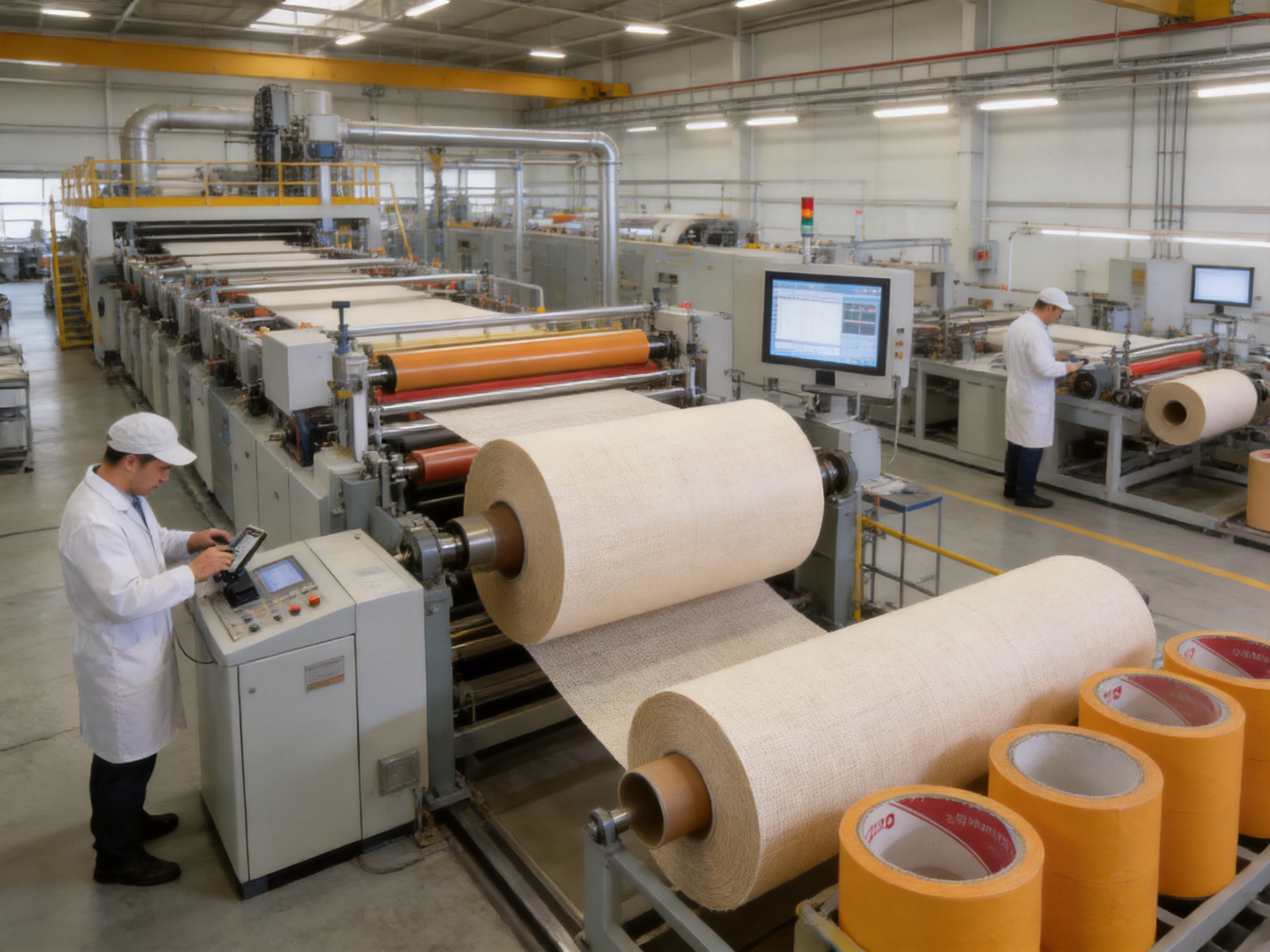
Consistent masking tape performance depends on process control from raw material selection through final inspection. Zhejiang Geruite Packaging Materials Co., Ltd. operates as a manufacturer of adhesive tapes and packaging materials in Zhejiang Province, China. The company’s product portfolio includes BOPP tape, kraft paper tape, masking tape, high-temperature resistant tape, metal tape, PE stretch film, PP strapping, and PET strapping.
The company states that it uses advanced production equipment and a rigorous quality control system. In the manufacture of high-temperature masking tape, this type of quality approach is important because small variations in backing treatment, adhesive coating, drying, slitting, or winding can affect the finished roll. Consistency is necessary for customers who use tape across repeated production batches.
Backing Material Preparation
The manufacturing process begins with specially treated crepe paper selected for toughness, tear resistance, flexibility, and surface suitability. The backing must accept the adhesive evenly while maintaining enough strength for coating and converting. Treatment conditions are controlled to achieve the desired balance between conformability and mechanical stability.
Backing preparation can affect how the tape behaves on curved surfaces, how cleanly it tears, and how well it maintains a straight edge. If the backing is too brittle, it may split during application. If it is too soft or unstable, the roll may telescope, wrinkle, or produce inconsistent masking lines. Careful preparation helps establish the foundation for later coating and slitting operations.
Adhesive Formulation and Coating
The acrylic pressure-sensitive adhesive is applied to the crepe paper backing in a controlled coating process. Uniform coating is essential. Too little adhesive may result in poor contact or edge lifting, while excessive adhesive can increase residue, create uneven unwind behavior, or affect the dimensions of the finished roll.
Process adjustments can be used to create different temperature-resistance grades. These adjustments may involve the adhesive formulation, coating conditions, drying profile, or related production parameters. The goal is to produce a tape that matches a defined working environment rather than claiming that one construction is appropriate for every temperature and process.
Drying and curing control are also important. The adhesive must reach a stable condition before the coated material is converted into finished rolls. Inadequate drying may affect adhesion and residue, while excessive thermal treatment may alter the backing or adhesive properties. A controlled production environment helps maintain repeatable performance from roll to roll.
Slitting and Width Customization
After coating and stabilization, the jumbo material can be slit into customer-specified widths. The available width range of 5mm to 500mm allows the manufacturer to serve both precision masking and broad surface-protection requirements. Slitting accuracy affects edge quality, roll appearance, application convenience, and the ability to create consistent paint lines.
Clean slitting is especially important for narrow rolls. Uneven edges can make a narrow tape difficult to position and may create gaps during application. For wide rolls, stable winding and proper tension control are necessary to prevent telescoping, loose layers, or deformation during storage and transportation.
Winding, Packaging, and Inspection
The finished tape is wound into rolls with attention to tension, alignment, and unwind behavior. The product is designed to provide moderate unwind force, allowing operators to pull the tape smoothly while avoiding unnecessary stretching. Proper winding also helps protect the edges during handling and shipment.
Quality inspection may include checks of thickness, width, appearance, adhesion, tack, tear behavior, roll formation, and temperature performance according to the applicable product specification. For a high-temperature masking tape, inspection should be connected to the intended application. A tape intended for a higher-temperature process should be evaluated under representative conditions rather than judged only by room-temperature adhesion.
The company’s quality philosophy covers raw material procurement, production, and final inspection. This full-process approach is valuable because final product quality cannot be created by inspection alone. Stable materials and controlled manufacturing parameters are necessary to reduce variation before the rolls reach the customer.
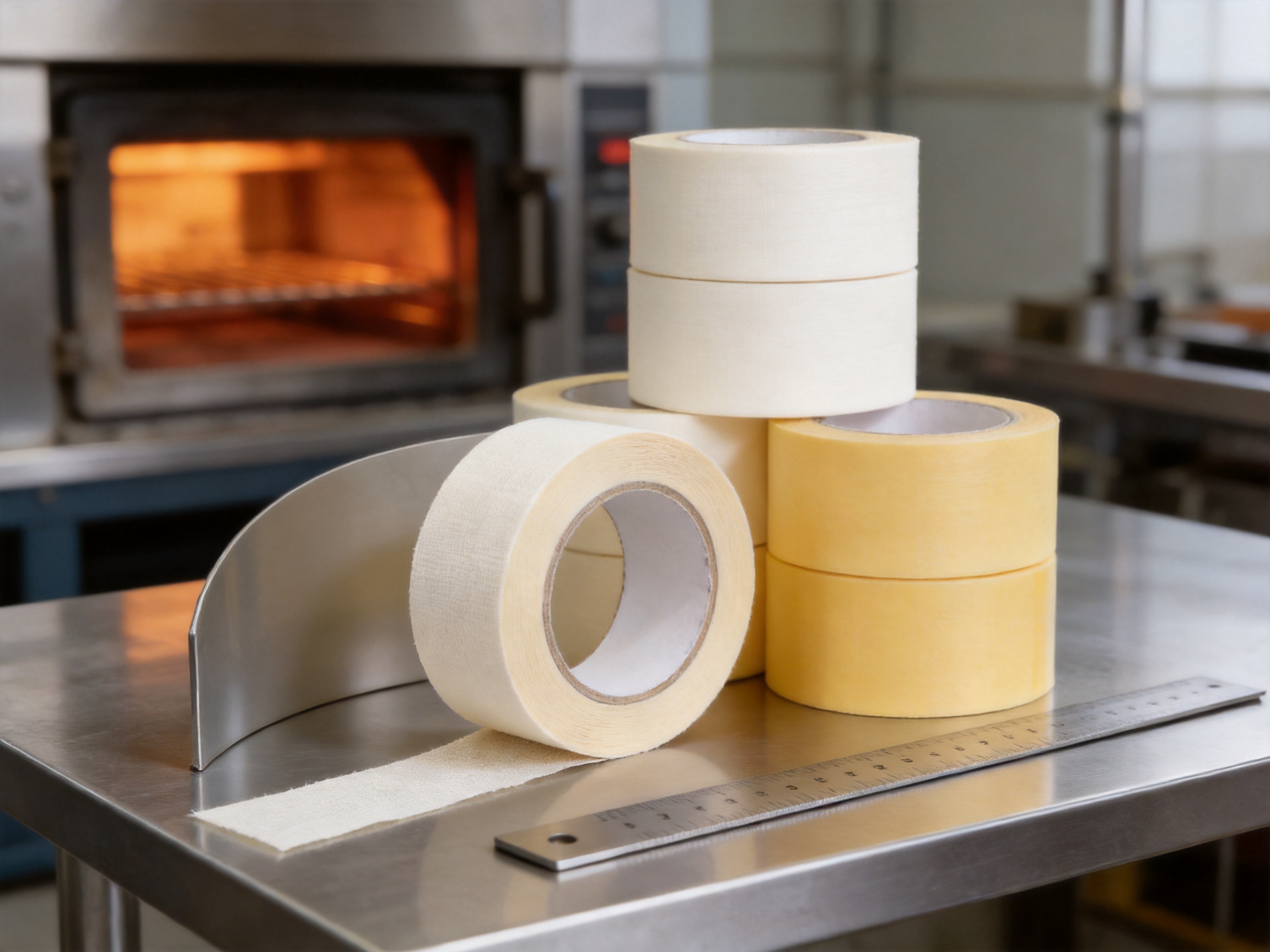
Application Areas
Automotive Painting and Refinishing
Automotive parts often require multiple colors, protective masking, or separation between painted and unpainted zones. The tape can be applied to panels, trim areas, metal parts, and selected components before spraying or surface treatment. Its flexible backing follows moderate curves, while the adhesive helps hold the edge during handling and coating.
For automotive work, the correct temperature grade and removal time should be selected according to the paint system and curing cycle. Operators should apply the tape to a clean surface, press the edge firmly, and remove it using a controlled angle after the process has reached the appropriate stage.
Furniture and Metal Surface Treatment
Furniture manufacturers and metal processors frequently need to protect hardware, edges, decorative zones, threaded areas, or sections that must remain untreated. The tape can be used during spraying, powder coating, drying, and finishing. Its customizable widths make it suitable for both narrow details and larger panels.
For powder coating, the application must be evaluated against the complete curing cycle. The selected grade should be compatible with the process temperature and duration. When masking sharp corners or complex shapes, short sections may be easier to apply than one long piece because they reduce wrinkling and improve control.
Electronics and Electrical Manufacturing
Electronics production often involves temporary protection of components, solder points, contact areas, connectors, and other zones that should not receive coating or treatment. The tape can be considered for selected masking tasks during soldering, wave soldering, reflow-related operations, or other heated processes, provided that the specific grade has been verified for the actual thermal profile.
Electronic components and circuit boards can be sensitive to contamination and adhesive residues. Testing is therefore particularly important. Users should confirm compatibility with the board surface, soldering materials, cleaning chemicals, and exposure time before introducing the tape into a high-volume process.
Powder Curing and Baking
During powder curing or industrial baking, areas may need temporary protection from powder, paint, or heat-treatment effects. High-temperature masking tape can create a barrier around selected sections, helping manufacturers maintain the intended design and reduce post-process correction.
Because baking conditions can vary significantly, users should evaluate heating rate, peak temperature, dwell time, cooling time, and the shape of the workpiece. A tape grade that is suitable for one oven cycle may not be suitable for another. Product datasheet confirmation and a production trial are recommended for critical work.
General Industrial Positioning and Fixing
In addition to masking, the tape can be used for temporary positioning, identification, light-duty fastening, and holding components during a process. It is useful where moderate heat resistance is required but a permanent bonding solution is unnecessary. Its hand-tearable backing and flexible width options support quick adjustments on the production floor.
The tape should not be treated as a replacement for structural fastening, safety-critical attachment, or permanent bonding. Its intended role is temporary protection and light-duty fixing. The load, temperature, surface condition, and removal schedule should be considered before use.
Recommended Application Procedure
1. Inspect the Surface
The surface should be clean, dry, and free of oil, dust, loose particles, moisture, and release agents. Contamination can reduce contact between the adhesive and substrate. On painted or coated surfaces, verify that the finish is fully cured and firmly attached before masking.
2. Select the Correct Grade
Choose the temperature-resistance grade according to the actual process temperature and exposure time. Consider the complete cycle, including heating and cooling. If the process involves solvents, aggressive coatings, or unusual substrates, select the tape only after compatibility testing.
3. Choose an Appropriate Width
Use a narrow width for precise lines and small protected areas, and a wider width for broad coverage. The available customization range from 5mm to 500mm allows the tape to be matched to the masking pattern. Selecting the correct width can reduce overlapping strips and improve productivity.
4. Apply with Moderate Tension
Apply the tape smoothly without excessive stretching. Slight tension may help the tape follow a curve, but excessive tension can cause the tape to contract later and create gaps. Press the tape firmly along the edge, especially on textured, curved, or irregular areas.
5. Seal the Edge
Run a finger, soft applicator, or suitable pressing tool along the masking edge to establish full contact. This step is important before spraying, powder application, or heating. Air pockets and lifted edges can allow coating to pass beneath the tape.
6. Observe the Dwell Time
Do not leave the tape in place longer than necessary. Extended dwell time, direct sunlight, heat, and chemical exposure may increase the possibility of residue or difficult removal. The recommended removal window should be established through the product datasheet and application testing.
7. Remove Carefully
After the process is completed, remove the tape steadily rather than pulling violently. A controlled removal angle can help protect the underlying finish and reduce tearing. If the tape has been exposed to high heat, allow the workpiece to reach a suitable handling temperature unless the process instructions specify otherwise.
How This Product Supports Production Efficiency
Masking tape affects more than the masking step itself. A tape that applies smoothly can reduce operator fatigue and shorten preparation time. A tape that maintains its edge can reduce paint correction, scraping, cleaning, and rework. A tape that removes cleanly can help move the workpiece more quickly to the next production stage.
Custom width production can also improve material utilization. When the width closely matches the required masking area, operators may use fewer overlapping strips. This can reduce the number of seams where paint or powder might penetrate. It can also make the masking pattern easier to inspect before processing.
Consistent unwind force contributes to repeatable application. If a roll unwinds unpredictably, the operator may stretch the tape, create wrinkles, or lose alignment. Moderate and stable unwind behavior supports a more controlled workflow, particularly when long strips are applied by hand.
The combination of acrylic adhesive, treated crepe paper, selectable temperature grades, and customized sizing gives manufacturers a practical product platform. Instead of using one ordinary tape for every task, customers can select a construction suited to the temperature, surface, geometry, and process requirements of each application.
Company Manufacturing Strengths
Zhejiang Geruite Packaging Materials Co., Ltd. is located in Hangzhou, Zhejiang Province, China. Zhejiang is a major manufacturing region with an established industrial supply chain and strong production capabilities. The company focuses on the research, development, production, and sales of adhesive tapes and packaging materials.
Its product range covers industrial tapes and flexible packaging products used in logistics, express delivery, household goods, electronics, construction, decoration, industrial manufacturing, cargo stabilization, and packaging protection. This broad product experience gives the company an understanding of different packaging and industrial handling requirements.
The company emphasizes product quality as a central operating principle. Its stated quality approach includes control from raw material procurement to production and final inspection. Such integration can help reduce variation and improve product stability, especially for customers that purchase repeated shipments or use tape in standardized production lines.
The company also reports an annual output value exceeding RMB 60 million. This indicates an established manufacturing operation with the capacity to serve industrial customers while continuing to develop its product structure. Capacity alone does not determine suitability, but it can support supply continuity, customized production, and coordinated customer service.
For high-temperature masking tape buyers, the company’s combination of material knowledge, adhesive tape production, converting capability, and packaging experience is relevant. The ability to adjust temperature-resistance grades and produce widths between 5mm and 500mm supports customers with different technical requirements. Product selection should still be based on samples, datasheets, and application trials for each specific process.
Storage and Handling Recommendations
Store the tape in a clean, dry, and ventilated location. Avoid excessive heat, direct sunlight, moisture, dust, and contact with chemicals. Rolls should remain in their original packaging until needed. Proper storage helps protect the adhesive and backing from premature aging.
Do not place heavy objects on top of rolls or store them in a way that deforms the edges. Damaged edges can affect application and may cause tearing. Rolls should be handled carefully during transportation and moved in a manner that prevents impact and compression.
Before production use, allow the tape to reach the working environment if it has been stored under significantly different temperature conditions. A short conditioning period can help ensure that the backing and adhesive behave more consistently during application.
Inventory should be managed according to the manufacturer’s recommended shelf-life guidance. Older material should generally be used before newer material, provided that the rolls remain within specification and show no signs of contamination, edge damage, adhesive leakage, or backing deterioration.
Quality Control Points for Buyers
Purchasers should request the technical datasheet for the exact model rather than relying only on a general product name. The datasheet should identify temperature resistance, recommended exposure time, thickness, width tolerance, adhesive characteristics, storage conditions, and any relevant limitations.
Sample testing should be performed on the actual substrate. Stainless steel, painted metal, glass, plastic, powder-coated surfaces, circuit boards, and composite materials can have very different surface energies and finishes. Results from one substrate should not automatically be transferred to another.
Testing should include application, heating, coating or treatment, cooling, and removal. Inspect the edge for lifting, coating penetration, shrinkage, tearing, adhesive transfer, and surface damage. If the production process includes cleaning solvents, those chemicals should be included in the evaluation.
Buyers should also review roll dimensions and packaging requirements. Width, length, core size, outer diameter, carton configuration, and labeling can affect warehouse handling and production equipment. Customized specifications should be confirmed in writing before mass production.
Q&A: Common Questions About the Tape
Q1: What is high-temperature resistant masking tape used for?
It is used to temporarily protect selected areas during spraying, painting, powder coating, baking, heat treatment, electronic assembly, and other industrial processes. It can also support temporary positioning, identification, and light-duty fixing where some temperature resistance is needed.
Q2: What is the standard thickness?
The standard thickness is 0.14mm. This thickness provides a balance between easy handling, flexibility, masking coverage, and sufficient backing body for common industrial applications.
Q3: What widths are available?
Widths can be custom-produced from 5mm to 500mm. Narrow rolls are suitable for precision lines and small components, while wider rolls can protect larger surfaces and reduce the number of overlapping strips.
Q4: Can one roll withstand every high-temperature process?
No. Temperature resistance depends on the specific product model, processing conditions, and exposure period. The product family includes different grades, with certain models designed for conditions that may fall approximately between 80°C and 180°C. The exact datasheet should be checked before use.
Q5: Why does adhesive residue sometimes remain after removal?
Residue may be related to the substrate’s surface energy, surface contamination, prolonged dwell time, heat exposure, ultraviolet exposure, or incompatibility between the adhesive and the finish. Apply the tape to a clean, dry surface, use the correct grade, and remove it within the recommended time. Sensitive surfaces should always be tested first.
Q6: Why do the tape edges lift during heating?
Edge lifting may occur when the temperature exceeds the selected grade, when the tape is applied to a contaminated surface, when insufficient pressure is used, or when the substrate changes dimension during heating. Select a higher-rated model if appropriate, clean the surface, press the edges firmly, and confirm the complete thermal cycle through testing.
Q7: Is the tape suitable for curved surfaces?
The crepe paper backing offers flexibility and some controlled stretch, making it suitable for moderate curves and contours. For complex shapes, apply the tape in shorter sections, smooth it gradually, and avoid excessive tension that could cause later contraction.
Q8: Can the tape be used on freshly painted surfaces?
Fresh paint may be soft, under-cured, or chemically unstable. Applying tape too soon can cause marking, lifting, or residue. Confirm that the coating is sufficiently cured and perform a compatibility test before full-scale application.
Q9: Is acrylic adhesive resistant to solvents?
The acrylic adhesive offers resistance to selected solvents and aging, but compatibility depends on the specific chemical, concentration, temperature, and exposure duration. If the tape will contact a solvent or coating chemical, conduct a representative trial before production use.
Q10: Is the product suitable for PCB wave soldering or reflow soldering?
It may be suitable for selected electronic masking applications when the exact model has been verified for the thermal profile and process chemistry. PCB materials and components can be sensitive, so users should test adhesion, residue, outgassing, and removal performance under actual operating conditions.
Q11: How can operators achieve a sharper paint line?
Use a suitable width, apply the tape to a clean and dry surface, avoid wrinkles, press the edge firmly, and prevent excessive stretching. The tape should remain stable during spraying or coating. Removal timing and angle can also influence the final edge quality.
Q12: Can the tape replace permanent industrial fastening?
No. The product is intended for temporary masking, positioning, protection, and light-duty fixing. It should not be used as a structural, safety-critical, or permanent fastening method unless the specific application has been separately engineered and approved.
Conclusion
High-temperature resistant masking tape provides an effective solution for industrial processes that require temporary protection, clean separation lines, and reliable removal after heat or surface treatment. Its specially treated crepe paper backing offers flexibility, conformability, tensile strength, and convenient hand-tearability. The acrylic adhesive provides balanced tack and holding power while supporting aging and selected solvent resistance.
The standard 0.14mm thickness, customizable width range from 5mm to 500mm, and availability of different temperature-resistance grades make the product adaptable to varied production requirements. Compared with ordinary masking tape, it is better suited to controlled elevated-temperature applications, curved surfaces, industrial painting, powder coating, electronics protection, and baking processes.
Zhejiang Geruite Packaging Materials Co., Ltd. supports this product through experience in adhesive tapes and packaging materials, process-based product development, customized converting, advanced production equipment, and quality control from raw materials through final inspection. Its location in Zhejiang provides access to a developed manufacturing environment, while its broader product portfolio supports experience across industrial and packaging applications.
The best results depend on selecting the correct grade, preparing the substrate, applying the tape with suitable pressure, controlling dwell time, and removing it correctly. Before large-scale use, customers should verify performance against the actual surface, temperature, chemical exposure, and production cycle. When properly matched to the application, this crepe paper masking tape can help improve edge quality, protect treated areas, reduce residue-related rework, and increase production efficiency.
References
1. Product specification information for high-temperature resistant masking tape supplied by Zhejiang Geruite Packaging Materials Co., Ltd.
2. Technical information on specially treated crepe paper backings and acrylic pressure-sensitive adhesives provided in the product description.
3. Industrial masking tape application principles covering surface preparation, edge sealing, temperature exposure, dwell time, and controlled removal.
4. General pressure-sensitive adhesive evaluation practices for adhesion, residue, aging, substrate compatibility, and temperature performance.
5. Manufacturing and company information provided for Zhejiang Geruite Packaging Materials Co., Ltd., including product categories, quality-control practices, production capabilities, and packaging-material applications.
Product: High-temperature resistant masking tape, crepe paper tape


CONTACT DETAILS
- Address:No. 241, Yaojiafan, Zhangpanqiao, Shushan Street, Xiaoshan District, Hangzhou City, Zhejiang Province, China
- TEL:+86-0571-83175630
- Phone:+86-13336160217
- Email:anqiaocun@163.com
PRODUCTS
NEWS CENTER
MOBILE TERMINAL
Copyright© Zhejiang Geruite Packaging Materials Co., Ltd. All Rights Reserved.
Privacy Wholesale industrial packaging tape Manufacturers