


 English
  Español
  عربى
عربى 
High-Temperature Masking Tape for Precision Industrial Protection
Content
- 1 Product Overview: What High-Temperature Masking Tape Is
- 2 Why Industrial Users Need a Reliable High-Temperature Masking Solution
- 3 Core Material Structure
- 4 Technical Specification Table
- 5 Key Advantages Over Ordinary Masking Tapes
- 6 Manufacturing Strength and Process Control
- 7 Applications in Spraying and Surface Treatment
- 8 Applications in Electronics and Electrical Manufacturing
- 9 Applications in High-Temperature Baking and Powder Curing
- 10 Practical Application Guidelines
- 11 How This Tape Supports Cost Reduction
- 12 Comparison with Common Alternatives
- 13 Company Capabilities Behind the Product
- 14 Quality Control Points Buyers Should Consider
- 15 Frequently Asked Questions
- 15.1 Q1: What is high-temperature resistant masking tape mainly used for?
- 15.2 Q2: What materials are used in this tape?
- 15.3 Q3: What is the standard thickness?
- 15.4 Q4: Can the width be customized?
- 15.5 Q5: What temperature can the tape withstand?
- 15.6 Q6: Why does adhesive residue sometimes remain after removal?
- 15.7 Q7: What should be done if the tape edge lifts during heating?
- 15.8 Q8: Is the tape suitable for curved surfaces?
- 15.9 Q9: Can this tape be used in electronics manufacturing?
- 15.10 Q10: How does this product compare with ordinary masking tape?
- 16 Selection Recommendations
- 17 Conclusion
- 18 References
In modern industrial production, a masking tape is no longer a simple strip of adhesive paper used only for temporary covering. In painting, powder coating, electronics assembly, baking processes, component protection, and surface finishing, the quality of the masking material can directly influence the sharpness of paint lines, the cleanliness of the finished surface, the stability of production, and the cost of rework. High-temperature resistant masking tape, also known as crepe paper tape, is designed for these demanding environments. It combines a specially treated crepe paper backing with acrylic pressure-sensitive adhesive, creating a tape that offers heat resistance, flexible application, clean removal, and reliable masking performance.
This article provides a detailed overview of high-temperature resistant masking tape made with special crepe paper and acrylic adhesive. It discusses its structure, core advantages, technical specifications, manufacturing considerations, application value, and competitive strengths. It also explains how a professional packaging material manufacturer can support consistent quality through advanced production processes, strict quality control, and custom manufacturing capabilities. For buyers, engineers, production managers, and distributors, understanding these details helps in selecting a tape that performs reliably under real industrial conditions.
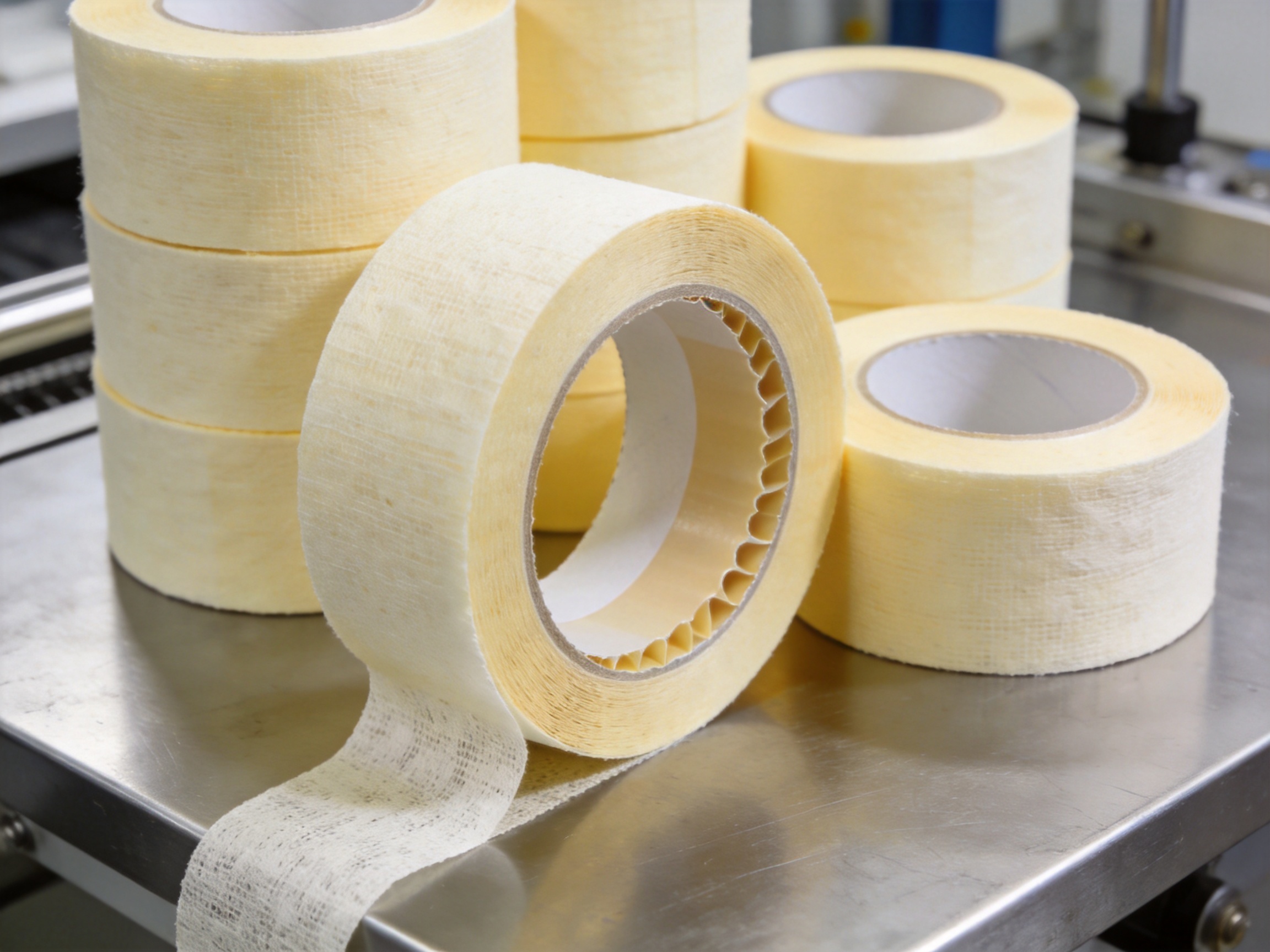
Product Overview: What High-Temperature Masking Tape Is
High-temperature resistant masking tape is a pressure-sensitive adhesive tape using specially treated crepe paper as the backing material. The crepe paper backing is coated with acrylic adhesive to create a tape that can adhere to a variety of surfaces while remaining removable after the production process. Compared with ordinary paper tape, this product is engineered to perform in environments where heat, surface treatment, paint curing, or short-term thermal exposure may be involved.
The tape is commonly used in painting and spraying operations, electronic component protection, powder coating, general industrial masking, temporary fixing, and high-temperature baking processes. Its standard thickness is 0.14 mm, which provides a practical balance between handling strength, conformability, and masking performance. The available width range from 5 mm to 500 mm allows the tape to be supplied for fine-line masking, broad surface coverage, component protection, bundling, positioning, or customized processing.
The product can be manufactured in different heat-resistance grades depending on processing requirements. For example, certain models may be suitable for moderate elevated temperatures, while others may be formulated and processed for higher-temperature environments such as 80°C to 180°C within defined exposure periods. This adjustable temperature resistance is one of the product’s most important features because industrial users often face different thermal profiles, process durations, substrates, and removal conditions.
The crepe paper backing provides flexibility and a degree of stretch, helping the tape conform to uneven, curved, or shaped surfaces. The acrylic adhesive offers balanced tack, holding power, solvent resistance, weather resistance, and aging resistance. Together, the backing and adhesive system are designed to produce sharp paint lines, reduce paint bleed, prevent edge lifting, and minimize adhesive residue when removed under appropriate conditions.
Why Industrial Users Need a Reliable High-Temperature Masking Solution
Industrial masking may appear simple, but the consequences of poor tape performance can be costly. If the tape edge lifts during painting, overspray can enter protected zones. If the adhesive softens or transfers during heat exposure, the finished surface may require cleaning, polishing, or complete rework. If the backing tears during removal, operators lose time removing fragments from the substrate. If the tape cannot conform to curves or corners, gaps and wrinkles may cause defects. Therefore, a professional masking tape must be evaluated not only by price, but also by process stability and final surface quality.
In automotive parts painting, metal fabrication, furniture finishing, electronic assembly, and industrial coating lines, repeatability is essential. A tape that performs well one day but fails under slightly different temperature or dwell conditions can disrupt production schedules. High-temperature resistant crepe paper masking tape addresses this need by offering controlled adhesion, reliable backing strength, thermal adaptability, and customized dimensions. These qualities help manufacturers maintain consistent results across batches and reduce the hidden costs of defective masking.
Another important factor is labor efficiency. Operators prefer a tape that unwinds smoothly, tears easily by hand, adheres quickly, and removes without excessive force. A tape that is difficult to tear or apply can slow production. A tape that sticks too aggressively may damage surfaces or leave residue. A tape that sticks too weakly may detach during processing. The best masking tape balances these performance characteristics so that users can apply it quickly and trust its holding power during the required process window.
Core Material Structure
Specially Treated Crepe Paper Backing
The backing of this high-temperature resistant masking tape is specially treated crepe paper. Crepe paper is widely valued in masking applications because of its flexibility, hand-tearability, and ability to conform to curved surfaces. The creping structure gives the paper controlled stretch and softness, making it easier to apply along edges, contours, and irregular surfaces than many flat paper or filmic materials.
Special treatment enhances the paper’s toughness, tear resistance, and stability. For high-temperature applications, backing quality is particularly important. Ordinary paper may become brittle, shrink excessively, or fail during removal after thermal exposure. A treated crepe paper backing helps maintain integrity during application, process exposure, and removal. It also supports sharp paint demarcation by providing a stable edge when applied with sufficient pressure.
Acrylic Pressure-Sensitive Adhesive
The adhesive system uses acrylic pressure-sensitive adhesive. Acrylic adhesive is valued for its balanced adhesion, weather resistance, aging resistance, and solvent tolerance. In industrial environments, surfaces may be exposed to heat, paint solvents, curing cycles, or outdoor conditions. Acrylic adhesive can provide stable performance across a wider range of conditions than many general-purpose adhesive systems.
The adhesive must perform several tasks at once. It must wet the surface quickly during application, resist lifting during processing, tolerate elevated temperature within the rated range, and release cleanly afterward. The correct adhesive formulation can reduce residue risk while still providing enough holding power for masking. This balance is one of the defining advantages of a well-engineered masking tape.
0.14 mm Standard Thickness
The standard thickness of 0.14 mm gives the tape practical body and handling strength without making it too bulky. Thickness affects masking edge quality, flexibility, tearability, conformability, and operator feel. A very thin tape may be difficult to handle or may not cover well over surface texture. A very thick tape may create a heavier edge or reduce flexibility. The 0.14 mm specification is suitable for a broad range of industrial masking tasks where stable application and clean removal are needed.
Custom Width from 5 mm to 500 mm
The available custom width range from 5 mm to 500 mm greatly increases the tape’s usefulness. Narrow widths can be used for detailed masking, fine curves, small components, and precise edge work. Medium widths are suitable for general painting, powder coating, and industrial protection. Wider widths can cover larger zones, reduce the number of tape passes, and improve application efficiency. Custom production allows buyers to match the tape to their exact workflow instead of adapting their process to a limited standard size.
Technical Specification Table
| Parameter | Specification | Practical Benefit |
| Product Type | High-temperature resistant masking tape, also known as crepe paper tape | Suitable for industrial masking, surface protection, and temporary fixing |
| Backing Material | Specially treated crepe paper | Provides flexibility, toughness, hand tearability, and conformity to curved surfaces |
| Adhesive Type | Acrylic pressure-sensitive adhesive | Offers balanced tack, holding power, weather resistance, and aging resistance |
| Standard Thickness | 0.14 mm | Balances masking performance, handling, and flexibility |
| Width Range | Customizable from 5 mm to 500 mm | Supports narrow precision masking and wide-area surface protection |
| Temperature Resistance | Available in varying grades according to manufacturing process | Allows selection for different elevated-temperature environments |
| Typical Color | Natural crepe paper tone, usually off-white or light yellow | Provides visible boundary lines during application |
| Removal Performance | Designed for clean removal under proper conditions | Helps reduce adhesive residue and rework |
| Application Areas | Painting, powder coating, electronics protection, baking, temporary positioning | Meets varied industrial production needs |
Key Advantages Over Ordinary Masking Tapes
Adjustable Temperature Resistance
One of the strongest advantages of this product is its adjustable temperature resistance. Many ordinary masking tapes are designed only for room-temperature painting or short-term indoor use. When exposed to elevated temperatures, such tapes may shrink, detach, char, harden, or leave adhesive residue. In contrast, this product can be produced in different grades according to process requirements. This allows users to choose a tape that matches the actual heat profile of their operation.
For industrial users, temperature resistance should not be considered only as a maximum number. Exposure duration, substrate type, surface cleanliness, oven airflow, coating chemistry, and removal timing all affect real performance. A tape that can be matched to specific temperature requirements helps reduce risk. By selecting a model with an appropriate safety margin, production teams can improve process reliability and avoid failures caused by using a general-purpose tape outside its intended range.
Clean Paint Lines and Reduced Bleeding
Sharp paint lines are essential in many industries. Whether masking a metal part, furniture surface, automotive component, or decorative panel, edge quality affects the professional appearance of the final product. The tape’s treated crepe paper backing and acrylic adhesive help create firm contact along the edge, reducing paint bleed when properly applied. The visible natural paper color also makes alignment easier during masking work.
Compared with lower-grade paper tapes that may wrinkle, curl, or fail to seal edges, this tape offers improved handling and boundary definition. It is particularly useful in jobs where operators must mask complex shapes or maintain consistent edges across multiple pieces. The ability to tear by hand also makes it convenient for fast production environments where cutting tools may slow down workflow.
Better Conformability on Curved Surfaces
Industrial surfaces are rarely perfectly flat. Parts may include curves, edges, grooves, corners, weld seams, and molded shapes. A stiff tape may lift at the edge or create wrinkles that allow paint or powder to enter protected areas. The crepe paper backing gives this tape natural flexibility and slight stretch, allowing it to conform more easily to non-flat surfaces.
This advantage is especially valuable in automotive part finishing, metal fabrication, appliance production, and furniture coating. Operators can apply the tape in sections, gently stretch it where needed, and smooth it down by hand to minimize bubbles and folds. Better conformability reduces the need for corrective work and improves masking consistency.
Balanced Adhesion and Removal
A good masking tape must hold securely but remove cleanly. If adhesion is too low, the tape may lift during spraying, curing, or movement. If adhesion is too high, it may damage delicate surfaces or leave adhesive residue. The acrylic adhesive used in this product is designed to provide balanced initial tack and holding power, supporting reliable temporary adhesion while allowing removal under proper conditions.
Compared with some low-cost tapes that rely on unstable adhesive formulations, this product emphasizes controlled performance. The adhesive is intended to resist aging and environmental influence, helping the tape remain functional during the application window. When the correct tape grade is selected and removal is performed promptly after processing, users can reduce cleaning time and improve finished-product quality.
Customizable Dimensions for Process Efficiency
Competitors may offer only a few standard sizes, forcing users to overlap multiple strips or cut tape manually. This can increase labor, create inconsistent coverage, and waste material. The ability to customize widths from 5 mm to 500 mm allows buyers to optimize material usage. Narrow rolls can support detailed masking, while wide rolls can cover larger protection zones with fewer applications.
Customization is not merely a convenience; it can improve production economics. When the tape width matches the workpiece and masking zone, operators use less material, spend less time applying tape, and reduce the chance of gaps. For distributors, custom widths can also support different customer segments and specialized application markets.
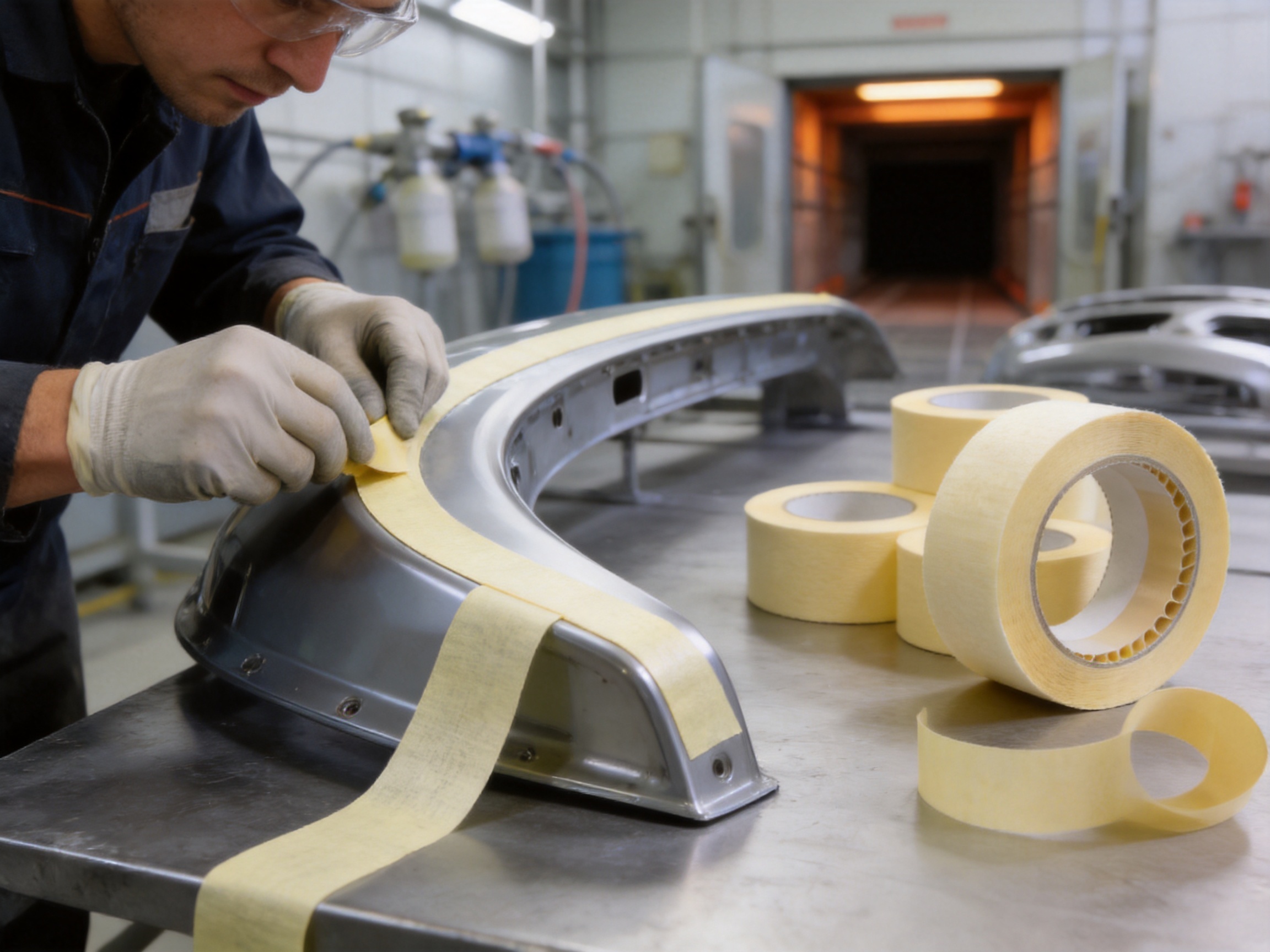
Manufacturing Strength and Process Control
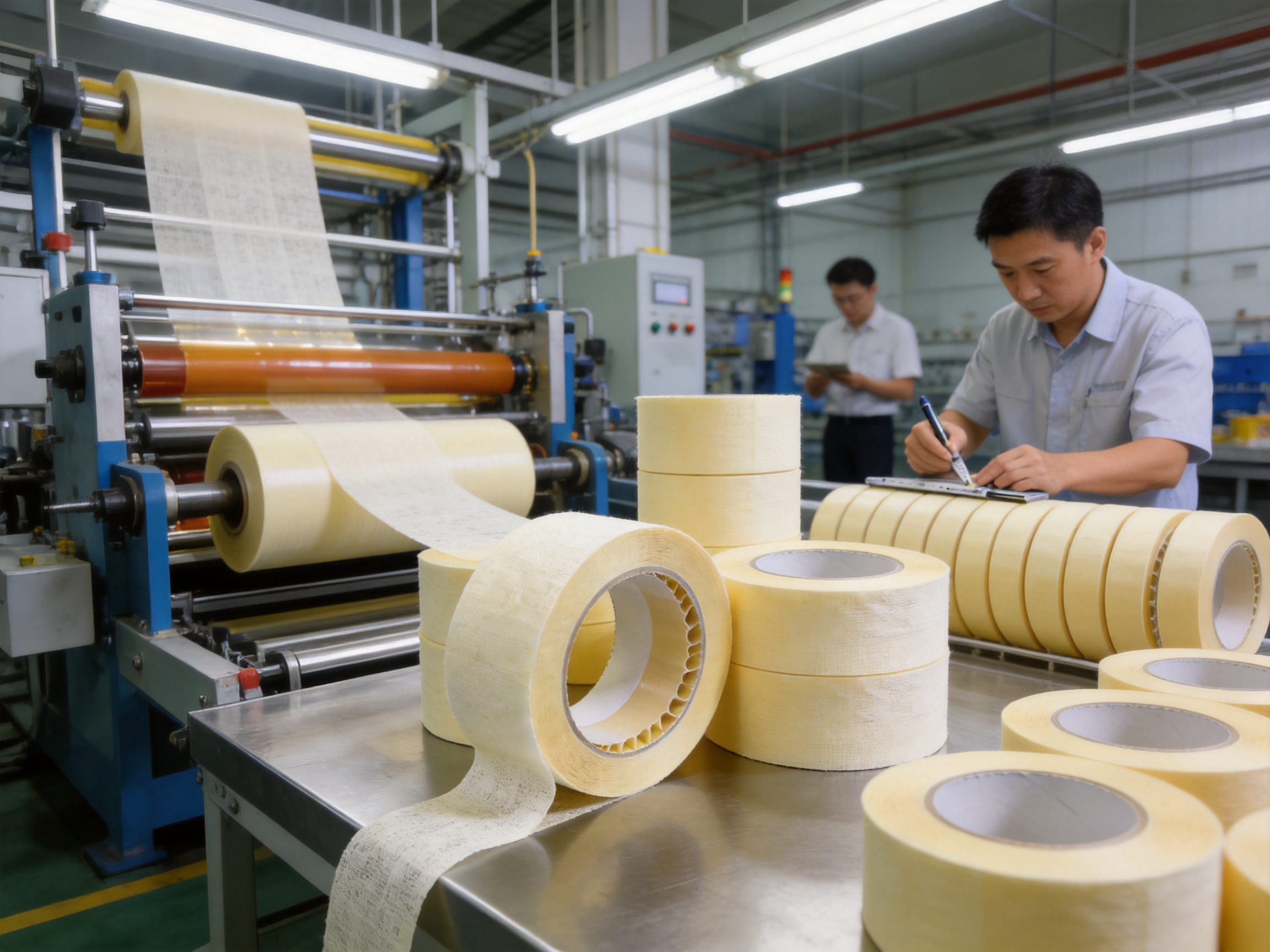
A high-performance masking tape depends on more than raw materials. Manufacturing process control determines whether the tape performs consistently from roll to roll and batch to batch. Zhejiang Geruite Packaging Materials Co., Ltd., located in Zhejiang Province, China, has developed its business around packaging materials, adhesive tapes, strapping products, and film products. Its product range includes BOPP tapes, kraft paper tapes, masking tapes, high-temperature resistant tapes, metal tapes, PE stretch film, PP strapping, and high-strength PET strapping. This broad manufacturing background supports comprehensive knowledge of coating, slitting, winding, packaging, and quality inspection.
The company’s manufacturing capability is supported by advanced production equipment and a strict quality control system. From raw material selection to production and final inspection, process discipline is essential. In masking tape production, the properties of the crepe paper backing, adhesive viscosity, coating uniformity, drying conditions, slitting accuracy, winding tension, and storage environment all influence final performance. A professional manufacturer must control these variables carefully to deliver stable quality.
Raw Material Selection
The first step in producing reliable masking tape is selecting suitable crepe paper and adhesive raw materials. The paper must have adequate strength, flexibility, surface properties, and heat tolerance. The adhesive must be compatible with the backing and must meet application requirements for tack, holding power, removal, and temperature resistance. Inconsistent raw materials can lead to variation in adhesion, tearing, edge quality, and residue behavior.
By emphasizing quality at the raw material stage, the manufacturer reduces the risk of unstable performance later. For customers, this means fewer unexpected failures and more predictable tape behavior. In industrial purchasing, consistency is often more valuable than minor price differences because defective tape can cause expensive rework or production stoppages.
Coating Uniformity
Adhesive coating is one of the most critical steps. If the adhesive layer is too thin, the tape may not adhere reliably. If it is too thick, it may increase residue risk, affect unwind, or create edge ooze. Uneven coating can cause inconsistent adhesion across the roll. Professional coating control ensures that the acrylic adhesive is applied evenly to the crepe paper backing, producing balanced tack and holding power.
Coating quality also affects paint-line sharpness. A uniform adhesive layer helps the tape edge seal properly when pressed onto the surface. In powder coating or baking environments, coating consistency contributes to reliable holding during temperature exposure. This is a key difference between industrial-grade masking tape and low-end alternatives.
Drying and Process Adjustment
For high-temperature resistant masking tape, process adjustment determines the final performance grade. Drying conditions, adhesive curing, backing treatment, and production parameters can be adjusted to achieve different temperature-resistance levels. This flexibility allows the manufacturer to supply tape for different application environments instead of offering a single general-purpose product.
Controlled drying and processing also help stabilize adhesive performance. Insufficient process control may leave residual moisture or solvent imbalance, causing odor, unstable adhesion, or poor aging behavior. Well-managed production helps ensure that the tape can be stored, applied, and removed reliably within its intended use conditions.
Slitting Accuracy and Winding Quality
After coating, the tape must be slit to the required width and wound into rolls. Slitting accuracy is vital, especially for narrow widths used in precision masking. Rough edges, inconsistent width, or poor winding can create application problems. A clean slit edge supports straight masking lines and reduces the chance of paper fibers interfering with paint boundaries.
Winding tension must also be controlled. If rolls are wound too tightly, adhesive transfer or deformation may occur. If wound too loosely, rolls may telescope or become difficult to handle. Proper winding supports smooth unwind force and convenient on-site application. For large custom widths, winding quality becomes even more important because roll stability affects operator efficiency.
Final Inspection and Quality Assurance
Final inspection confirms that the tape meets expected standards for appearance, width, thickness, adhesion, unwind, and other relevant properties. For high-temperature grades, performance testing may include heat exposure evaluation under defined conditions. A rigorous inspection system helps prevent defective rolls from reaching customers and supports long-term trust.
The company’s stated commitment to quality as the lifeline of the enterprise is important in this context. Industrial customers need suppliers who understand that tape is part of a production process, not just a commodity. Stable quality, responsive service, and technical communication can help customers select suitable tape models and reduce application problems.
Applications in Spraying and Surface Treatment
Spraying and surface treatment are among the most common uses for high-temperature masking tape. During painting, powder coating, staining, or finishing, some areas of the workpiece must be protected from coating material. The tape acts as a temporary barrier and defines the boundary between coated and uncoated zones. When removed, it should leave a clean edge without damaging the substrate.
In automotive parts painting, masking tape may be applied to metal, plastic, painted surfaces, trim areas, or components requiring color separation. The tape must remain attached during spraying and drying, while allowing removal after the process. Heat resistance becomes important when parts pass through curing ovens or baking stages. A high-temperature grade can help prevent edge lifting and adhesive breakdown.
In furniture manufacturing, the tape can be used to create clean decorative lines or protect hardware, edges, and unfinished areas. Furniture surfaces may include curves, corners, wood textures, coatings, and decorative laminates. The conformability of crepe paper helps operators mask these surfaces more effectively. Clean removal reduces the risk of surface contamination or extra sanding.
In metal fabrication, parts may undergo priming, painting, powder coating, or heat treatment. The tape can protect threaded areas, connection surfaces, nameplate zones, or regions where coating is not permitted. Because metal parts may be exposed to elevated temperatures, a tape with appropriate thermal resistance is more reliable than ordinary masking tape.
Applications in Electronics and Electrical Manufacturing
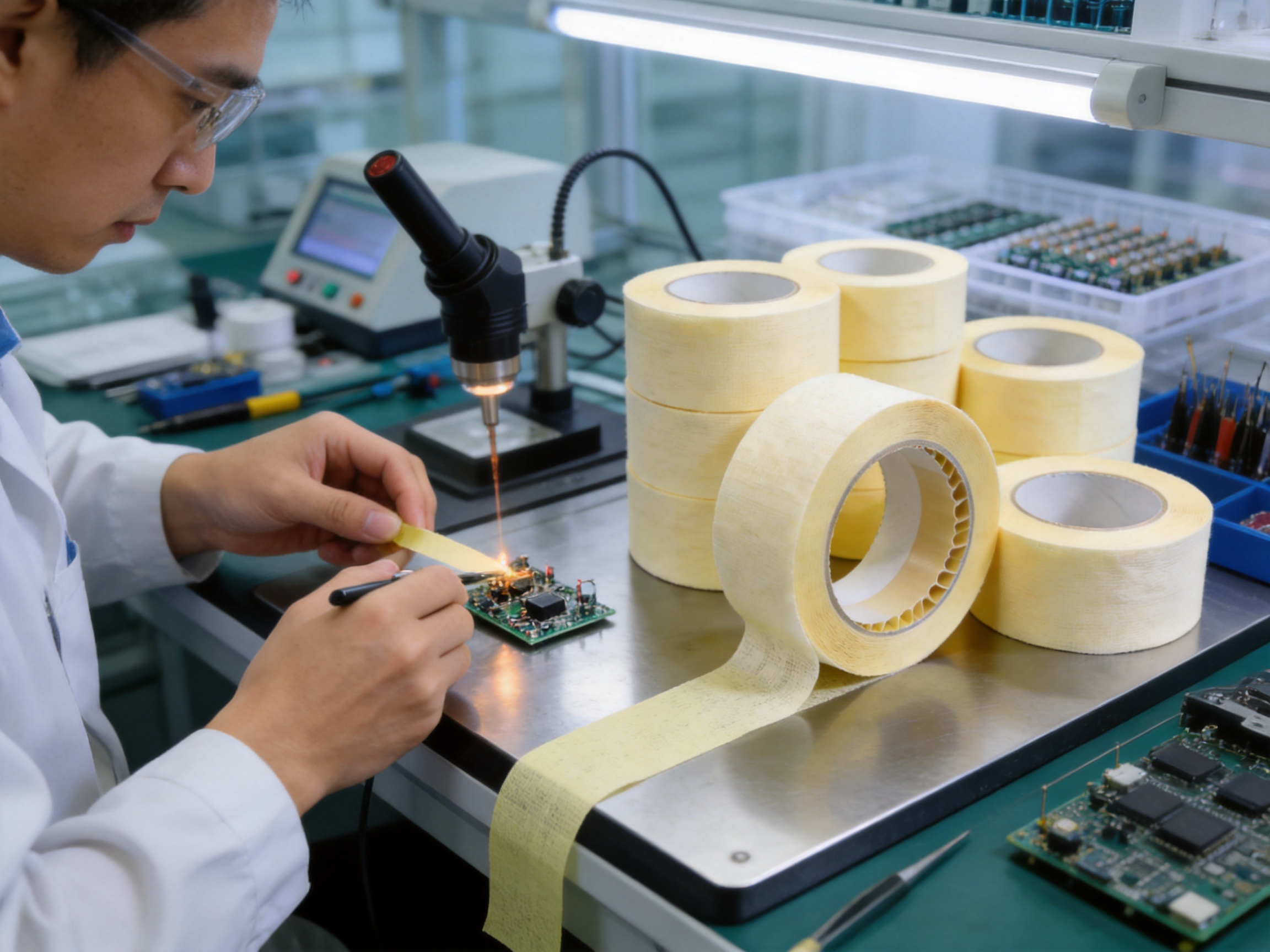
Electronics manufacturing often requires temporary protection of components, solder points, connectors, and selected areas of printed circuit boards. During wave soldering, reflow soldering, conformal coating, assembly, or testing, masking materials must resist heat and remain stable for a defined period. Although different electronics processes may require specialized tapes, high-temperature resistant crepe paper masking tape can be useful for temporary protection where its temperature rating and adhesive properties are suitable.
The acrylic adhesive’s balanced adhesion can help hold the tape in place without excessive residue when used correctly. However, electronics applications are sensitive, so users should always verify compatibility with the substrate, process temperature, dwell time, and cleanliness requirements. Trial testing is recommended before full-scale production. When properly matched, the tape can support efficient masking and protection in electrical and electronics operations.
For component protection, the tape’s hand-tearability and custom widths are valuable. Operators may need to mask small areas quickly, apply strips to irregular shapes, or protect temporary zones during processing. Narrow rolls can improve precision and reduce waste. The natural color of the tape helps operators visually confirm coverage before the next production step.
Applications in High-Temperature Baking and Powder Curing
Powder coating and baking processes place greater demands on masking materials than room-temperature painting. During powder curing, parts may be exposed to elevated temperatures for a defined time. Ordinary tapes may fail under these conditions by shrinking, curling, hardening, or leaving adhesive residue. High-temperature resistant masking tape is designed to offer improved stability when matched to the correct process grade.
In powder coating, the tape may be used to protect holes, threads, contact points, or areas requiring no coating. A reliable edge seal is important because powder particles can enter gaps if the tape lifts. During curing, the tape must maintain adhesion and structural integrity. After curing, it should be removable without excessive tearing or residue. Selecting a model with a temperature rating higher than the actual operating temperature provides a safety margin and improves process reliability.
In baking applications, the tape may temporarily protect surfaces from heat-related contamination or coating exposure. The correct application method is critical. The surface should be clean, dry, and free from oil. Operators should apply firm pressure to ensure full adhesive contact. Removal should be performed within the recommended time after processing to reduce residue risk.
Practical Application Guidelines
Surface Preparation
Before applying the tape, the surface should be clean, dry, and free from oil, dust, moisture, release agents, and loose particles. Surface contamination is one of the most common causes of tape lifting or poor adhesion. Even a high-quality tape cannot perform correctly if it is applied over oil or powder. Cleaning methods should be compatible with the substrate and process requirements.
Surface energy also affects adhesion. Some plastics or coated surfaces have low surface energy, making adhesion more difficult. In such cases, testing is recommended. For sensitive surfaces, users should verify that the adhesive will not stain, damage, or leave residue. The right tape selection depends on both process conditions and substrate characteristics.
Application Pressure
Pressure-sensitive adhesive requires pressure to achieve proper contact. Operators should press the tape firmly along the full length, especially at edges, corners, and curves. Insufficient pressure can leave small gaps that cause paint bleed or edge lifting. A roller, squeegee, or gloved hand may be used depending on the application.
When masking curved surfaces, the tape can be applied in shorter sections to reduce wrinkling. Slight stretching may help the crepe paper conform, but excessive stretching should be avoided because it may create tension that causes later lifting. Smooth application improves edge quality and overall process results.
Temperature and Dwell Time
The tape grade should be selected according to actual operating temperature and exposure duration. A tape rated for a certain temperature under defined conditions may not perform the same under longer dwell times or harsher process chemistry. Users should consider peak temperature, continuous exposure, oven ramp rate, cooling stage, and removal timing.
Whenever possible, choose a tape with a temperature resistance margin above the process temperature. For example, if the process reaches a certain elevated temperature, selecting a model rated higher than that temperature can provide added safety. However, exact selection should be based on product datasheets and application testing.
Removal Timing
Clean removal depends on tape grade, substrate, temperature exposure, dwell time, and removal method. In many applications, removing the tape promptly after the process and after safe handling conditions are reached can reduce residue risk. If tape remains on a surface for too long, especially after heat exposure, adhesive residue may become more likely.
Removal angle and speed also matter. Pulling the tape back at a low angle can reduce stress on the substrate and help prevent tearing. If residue occurs, evaluate surface cleanliness, temperature rating, dwell time, and adhesive compatibility. Adjusting one or more of these factors often resolves the issue.
How This Tape Supports Cost Reduction
The purchase price of tape is only one part of the total cost. In industrial production, the real cost includes application labor, material waste, rework, cleaning, downtime, rejected products, and customer complaints. A low-cost tape that fails during production can become far more expensive than a higher-quality product. High-temperature resistant masking tape helps reduce these hidden costs through stable performance and customized sizing.
Clean paint lines reduce touch-up work. Reliable adhesion reduces the chance of overspray or powder intrusion. Clean removal reduces cleaning labor. Hand tearability improves operator speed. Custom widths reduce waste and overlapping. Consistent roll quality supports predictable production planning. These advantages can improve both efficiency and final product quality.
For manufacturers working under tight delivery schedules, process reliability has strategic value. A tape that performs consistently helps production teams maintain throughput and reduce uncertainty. For distributors, offering a dependable industrial masking tape can strengthen customer relationships because buyers are more likely to reorder products that solve real production problems.
Comparison with Common Alternatives
Versus Ordinary General-Purpose Masking Tape
General-purpose masking tape may be suitable for simple indoor painting, labeling, or temporary bundling. However, it is often not designed for elevated temperature processes. Under heat, it may lose adhesion, harden, or leave residue. High-temperature resistant crepe paper masking tape provides better suitability for industrial painting, curing, and baking applications.
Versus Low-Cost Paper Tape
Low-cost paper tapes may have inconsistent backing quality, uneven adhesive coating, poor unwind, weak edges, or unstable adhesion. While their initial price may be attractive, performance failures can increase total cost. The high-temperature masking tape described here offers treated crepe paper, acrylic adhesive, controlled thickness, custom widths, and process-adjusted heat resistance, making it more suitable for demanding industrial use.
Versus Plastic Film Masking Tape
Film tapes may offer certain advantages such as moisture resistance or very smooth edges, but they may be less hand-tearable and may not conform in the same way as crepe paper. Crepe paper masking tape is easier to tear by hand and often easier to apply in general industrial environments. Its flexibility makes it practical for curved surfaces and quick manual operations.
Versus Specialty High-Temperature Tapes
Some specialty tapes, such as polyimide tapes or glass cloth tapes, may offer higher temperature resistance for extreme applications. However, they may be more expensive and may not be necessary for many painting, baking, or general industrial masking processes. High-temperature crepe paper masking tape provides a balanced solution where moderate to high heat resistance, paint-line quality, hand tearability, and cost efficiency are required.
Company Capabilities Behind the Product
Zhejiang Geruite Packaging Materials Co., Ltd. operates in the packaging materials sector with a focus on adhesive tapes, strapping bands, and film products. Located in Hangzhou, Zhejiang Province, China, the company benefits from a strong manufacturing environment and a developed industrial supply chain. Its annual output value has reached over RMB 60 million, reflecting substantial production activity and market recognition.
The company’s product portfolio includes BOPP tapes, kraft paper tapes, masking tapes, high-temperature resistant tapes, metal tapes, PE stretch film, PP strapping, and high-strength PET strapping. This range allows the company to serve logistics, express delivery, household goods, electronics, construction and decoration, industrial manufacturing, cargo stabilization, and packaging protection markets. Such diversity supports experience across different adhesive systems, backing materials, coating methods, and customer requirements.
For high-temperature masking tape, this manufacturing foundation is important. Tape performance depends on technical understanding of materials and process control. A manufacturer with broad packaging material experience can better manage product customization, production scheduling, quality inspection, and application support. Customers can also source related packaging products from the same supplier, improving purchasing efficiency.
The company emphasizes research, innovation, and quality control. This is especially relevant for industrial masking tape because customer needs vary widely. Some customers require narrow precision rolls, while others need wide surface protection. Some operate at moderate temperatures, while others need higher-temperature grades. Some apply tape to metal, while others use it on painted surfaces, plastics, or electronic components. A capable manufacturer can help match product features to actual use conditions.
Quality Control Points Buyers Should Consider
When purchasing high-temperature masking tape, buyers should evaluate more than basic specifications. Important quality factors include adhesive consistency, backing strength, heat-resistance grade, roll appearance, unwind force, width accuracy, edge quality, and removal behavior. These factors determine whether the tape will perform well during production.
Buyers should request or review product datasheets when exact temperature performance is required. They should test the tape under real process conditions before large-scale use, especially for sensitive substrates or high-value components. Testing should include application, process exposure, cooling, removal, and surface inspection. A tape that performs well in a simple room-temperature peel test may behave differently after heat exposure or coating contact.
Storage conditions also matter. Tape should generally be stored in a clean, dry environment away from direct sunlight, excessive heat, and humidity. Rolls should remain in original packaging until use. Poor storage can affect adhesive performance and unwind behavior. Proper inventory rotation helps ensure that older material is used first.
Frequently Asked Questions
Q1: What is high-temperature resistant masking tape mainly used for?
It is mainly used for industrial masking, painting, spraying, powder coating, surface treatment, electronics protection, high-temperature baking, temporary positioning, and light-duty fastening where heat resistance and clean removal are required.
Q2: What materials are used in this tape?
The tape uses specially treated crepe paper as the backing and acrylic pressure-sensitive adhesive as the adhesive layer. This combination provides flexibility, hand tearability, balanced adhesion, weather resistance, and improved heat performance compared with ordinary masking tapes.
Q3: What is the standard thickness?
The standard thickness is 0.14 mm. This thickness provides a useful balance between handling strength, conformability, masking performance, and easy application.
Q4: Can the width be customized?
Yes. The tape can be custom-produced in widths from 5 mm to 500 mm. This allows users to select narrow widths for precision masking or wider widths for larger surface protection.
Q5: What temperature can the tape withstand?
The tape can be produced in varying temperature-resistance grades depending on the manufacturing process. Some models may be suitable for elevated temperatures within a range such as 80°C to 180°C for defined periods. Exact temperature performance should be confirmed according to the product datasheet and application testing.
Q6: Why does adhesive residue sometimes remain after removal?
Residue may be caused by surface contamination, excessive dwell time, high temperature beyond the tape rating, incompatible substrate, or delayed removal. To reduce residue risk, apply the tape to a clean and dry surface, choose the correct heat-resistance grade, and remove the tape promptly after the process when appropriate.
Q7: What should be done if the tape edge lifts during heating?
First, confirm that the tape’s temperature rating is suitable for the actual process. Then check surface cleanliness and application pressure. Select a higher temperature grade if needed and press the tape firmly along the edges during application.
Q8: Is the tape suitable for curved surfaces?
Yes. The crepe paper backing provides flexibility and slight stretch, making it suitable for many curved or irregular surfaces. For best results, apply the tape in shorter sections, smooth it by hand, and avoid excessive stretching.
Q9: Can this tape be used in electronics manufacturing?
It can be used for certain temporary protection and masking tasks in electronics manufacturing when its temperature rating and adhesive properties match the process. Because electronics applications can be sensitive, testing is recommended before full production use.
Q10: How does this product compare with ordinary masking tape?
Compared with ordinary masking tape, this product offers better suitability for elevated-temperature environments, improved industrial masking performance, customizable widths, treated crepe paper backing, and acrylic adhesive designed for balanced adhesion and cleaner removal under proper conditions.
Selection Recommendations
To select the correct high-temperature masking tape, users should first define the process conditions. These include the highest temperature, exposure time, substrate material, coating or chemical contact, required masking edge quality, removal timing, and whether the surface is sensitive. With this information, buyers can choose a tape grade that matches actual use rather than relying only on general descriptions.
If the application involves only room-temperature painting, a moderate grade may be sufficient. If the application involves baking, powder curing, or soldering-related protection, a higher-grade product may be required. If the masking line is very narrow or detailed, a smaller custom width may improve control. If the protected area is broad, a wider roll may reduce labor and overlap.
Production teams should create a simple trial procedure before adopting the tape in full-scale operations. Apply the tape to representative surfaces, expose it to the actual process, remove it using the intended method, and inspect for edge quality, residue, substrate damage, and operator convenience. This practical testing gives more reliable results than evaluating the tape only by appearance or price.
Conclusion
High-temperature resistant masking tape made with specially treated crepe paper and acrylic adhesive is a practical, versatile, and efficient solution for industrial masking and temporary protection. Its core strengths include adjustable temperature resistance, reliable paint-line performance, good conformability, balanced adhesion, clean removal under proper conditions, standard 0.14 mm thickness, and custom widths from 5 mm to 500 mm. These features make it suitable for spraying, surface treatment, electronics protection, powder coating, baking, and general industrial applications.
Compared with ordinary masking tape, this product offers stronger value in environments where heat, precision, and process reliability matter. Compared with low-cost alternatives, it can reduce hidden costs related to rework, residue cleaning, edge failure, and production delays. Compared with more specialized high-temperature tapes, it provides a balanced option for many industrial users who need dependable performance without unnecessary complexity.
Behind the product, advanced manufacturing processes and strict quality control are essential. Professional raw material selection, uniform adhesive coating, controlled drying, accurate slitting, stable winding, and final inspection all contribute to reliable tape performance. Zhejiang Geruite Packaging Materials Co., Ltd. supports this product with broad experience in adhesive tapes, strapping bands, films, and packaging materials, providing customers with custom manufacturing capability and stable industrial supply.
For buyers seeking a masking tape that can handle elevated-temperature processes while delivering clean edges and efficient application, high-temperature resistant crepe paper masking tape is a strong choice. By selecting the correct grade, preparing the surface properly, applying adequate pressure, and removing the tape at the right time, users can achieve cleaner results, lower rework costs, and more stable production performance.
References
1. Pressure Sensitive Tape Council. Pressure Sensitive Adhesive Tape Technical Guide.
2. ASTM International. Standard Test Methods for Pressure-Sensitive Adhesive-Coated Tapes Used for Electrical and Electronic Applications.
3. Donatas Satas. Handbook of Pressure Sensitive Adhesive Technology.
4. Edward M. Petrie. Handbook of Adhesives and Sealants.
5. Industrial Coating and Surface Finishing Practice Manuals on Masking, Curing, and Process Protection.
6. Manufacturer Product Data and Application Guidance for Crepe Paper Masking Tapes and High-Temperature Adhesive Tapes.


CONTACT DETAILS
- Address:No. 241, Yaojiafan, Zhangpanqiao, Shushan Street, Xiaoshan District, Hangzhou City, Zhejiang Province, China
- TEL:+86-0571-83175630
- Phone:+86-13336160217
- Email:anqiaocun@163.com
PRODUCTS
NEWS CENTER
MOBILE TERMINAL
Copyright© Zhejiang Geruite Packaging Materials Co., Ltd. All Rights Reserved.
Privacy Wholesale industrial packaging tape Manufacturers