


 English
  Español
  عربى
عربى 
0.014MM Thickness Ordinary Kraft Paper Tape for Efficient Carton Sealing
Content
- 1 Product Overview
- 2 Key Product Specifications
- 3 Core Advantages of 0.014MM Thickness Ordinary Kraft Paper Tape
- 4 How This Tape Compares with Competing Packaging Tapes
- 5 Application Scenarios
- 6 Manufacturing Process and Quality Strengths
- 7 Company Manufacturing Strengths
- 8 Why Advanced Manufacturing Matters to Tape Buyers
- 9 Practical Usage Recommendations
- 10 Customization Possibilities
- 11 Cost Efficiency and Operational Value
- 12 Environmental and Packaging Design Considerations
- 13 Q&A Section
- 13.1 What is the main use of 0.014MM Thickness Ordinary Kraft Paper Tape?
- 13.2 Can this tape be torn by hand?
- 13.3 What surfaces does it bond to best?
- 13.4 What are the common widths and lengths?
- 13.5 Why choose kraft paper tape instead of plastic tape?
- 13.6 Is this tape suitable for heavy cartons?
- 13.7 How should the tape be stored?
- 13.8 Can the tape be printed?
- 13.9 What makes this product different from low-grade kraft paper tape?
- 13.10 Who manufactures this product?
- 14 Conclusion
- 15 References
- 16 Product: 0.014MM Thickness Ordinary kraft paper tape
In modern packaging operations, tape is more than a simple consumable. It is a sealing material, a productivity tool, a cost-control component, and a visible part of the customer experience. Among the many adhesive packaging materials used in logistics, warehousing, office packaging, and light industrial assembly, ordinary kraft paper tape remains one of the most practical choices for carton sealing and paper-based bonding. The 0.014MM Thickness Ordinary Kraft Paper Tape is designed for users who require a reliable, economical, hand-tearable, and environmentally conscious tape for daily packaging tasks.
This product uses natural kraft paper as the backing material and is coated with a high-tack pressure-sensitive adhesive, such as rubber-based or hot-melt adhesive. The result is a tape that bonds quickly to corrugated cardboard, paper cartons, envelopes, and other fiber-based surfaces. It provides strong initial tack, dependable holding power under normal shipping conditions, and convenient hand-tearing performance that helps workers complete sealing tasks quickly without relying on blades, scissors, or complex dispensers.
The product is particularly suitable for logistics packaging, e-commerce parcel sealing, warehouse carton management, office packaging, document envelope sealing, lightweight item bundling, and internal industrial packaging fixation. Its natural kraft appearance also supports a clean, simple, and recyclable packaging style, making it well suited for businesses that want to reduce excessive plastic use while maintaining reliable sealing performance.
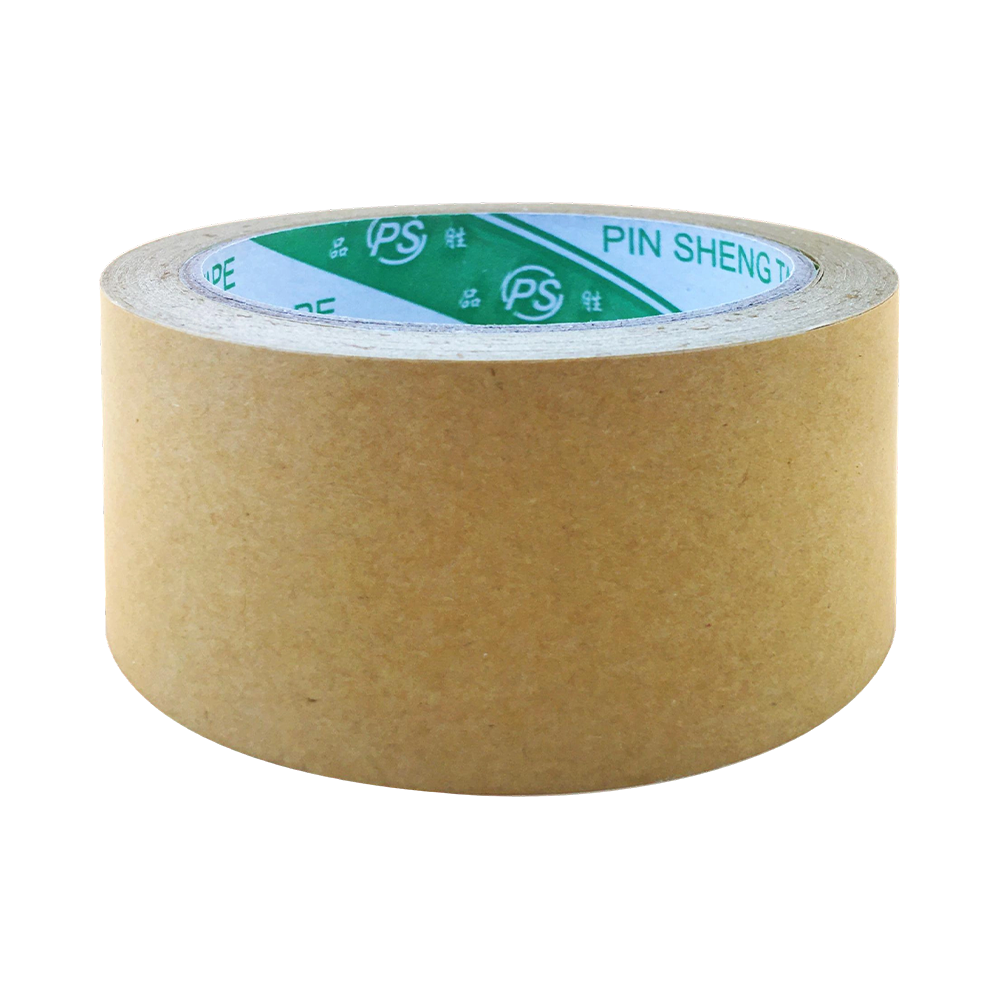
0.014MM Thickness Ordinary kraft paper tape
Product Overview
The 0.014MM Thickness Ordinary Kraft Paper Tape is a standard kraft paper packaging tape made with natural kraft paper backing and high-tack pressure-sensitive adhesive. Its structure is simple but effective: a paper base provides strength, flexibility, and tearability, while the adhesive layer provides fast bonding to carton surfaces. Compared with many plastic-based tapes, kraft paper tape offers a more paper-compatible sealing solution, especially when used on corrugated boxes and paper packaging.
The tape is typically supplied in natural kraft color, which blends well with brown cartons and gives packages a neat, unified appearance. Custom printing or dyeing options may also be available for customers who want the tape to carry warning messages, handling instructions, product identification, or decorative packaging elements. Common widths include 25MM, 48MM, 50MM, 60MM, and 72MM, while common roll lengths include 20M, 50M, and 100M. Customization can be arranged according to packaging line requirements, carton size, sealing style, and customer preference.
The 0.014MM thickness specification gives the tape a lightweight profile while maintaining practical bonding capability for general carton sealing and parcel fixing. It is designed for paper-based surfaces and works best when applied to clean, dry, dust-free, and oil-free substrates. Recommended application conditions are generally between 15°C and 35°C with 40% to 70% relative humidity. In lower temperatures, pre-warming the tape before use may improve adhesive activation and bonding performance.
Key Product Specifications
| Parameter | Value | Packaging Significance |
| Product Type | Ordinary kraft paper tape | Suitable for carton sealing, parcel fixing, and paper-based packaging |
| Base Material | Natural kraft paper | Provides hand-tearability, paper compatibility, and recyclable packaging appearance |
| Thickness | 0.014MM | Lightweight structure for economical daily packaging applications |
| Adhesive Type | Rubber-based or hot-melt pressure-sensitive adhesive | Supports quick bonding and high initial tack on corrugated surfaces |
| Common Widths | 25MM, 48MM, 50MM, 60MM, 72MM, customizable | Allows use with different carton sizes and packaging methods |
| Common Lengths | 20M, 50M, 100M, customizable | Supports small-scale manual use and higher-volume packaging operations |
| Appearance | Natural kraft color, optional printing or dyeing | Creates a clean carton look and supports branding or identification needs |
| Recommended Use | Carton sealing, envelope sealing, parcel reinforcement, temporary fastening | Meets common needs in logistics, warehousing, office, and light industry |
Core Advantages of 0.014MM Thickness Ordinary Kraft Paper Tape
High-Tack Adhesion for Secure Sealing
One of the most important performance requirements for any packaging tape is immediate adhesion. When workers seal cartons in a fast-paced warehouse or express delivery environment, they need the tape to grip quickly and stay in place. The high-tack adhesive used on this kraft paper tape is formulated to bond rapidly to paper and corrugated cardboard surfaces. This helps reduce edge lifting, detachment, and resealing work.
Compared with low-cost tapes that may curl, slide, or detach from dusty carton surfaces, a properly manufactured kraft paper tape offers a more stable seal on fiber-based packaging. The adhesive interacts effectively with the porous structure of cardboard, allowing it to anchor into the surface more readily than on smooth non-porous substrates. For carton sealing, this is a clear practical advantage.
Easy Hand-Tearable Design
Packaging productivity depends not only on adhesive strength but also on handling efficiency. A tape that requires scissors or cutting tools can slow down workers, create safety risks, and interrupt packing flow. This ordinary kraft paper tape is designed for easy hand tearing. Workers can tear it by hand in the required length and apply it immediately to the package.
The hand-tearable feature is especially useful in small warehouses, office environments, repair stations, fulfillment centers, retail back rooms, and craft applications where workers may not always have access to tape dispensers. It also helps reduce the risk of blade-related injuries and prevents accidental carton damage from knives.
Durable Kraft Paper Backing
The natural kraft paper backing provides a practical balance of flexibility, tensile performance, and surface durability. Under normal shipping conditions, it resists moderate stretching and abrasion, helping the tape maintain its sealing function during handling, stacking, and transportation. While it is not intended to replace heavy-duty reinforced tape for very heavy loads, it is an efficient and reliable solution for common carton sealing and lightweight to medium packaging tasks.
Kraft paper backing also has a major advantage in appearance. When used on brown corrugated cartons, it creates a uniform paper-to-paper look that is often considered cleaner and more professional than shiny plastic tape. For companies that prefer natural-looking packaging, this aesthetic benefit can be valuable.
Eco-Friendly Packaging Direction
Packaging buyers increasingly consider sustainability when selecting materials. Kraft paper tape is valued because it uses a paper backing and aligns better with paper-based packaging systems than many plastic tapes. When applied to paper cartons, it supports a more consistent material stream and reflects the growing preference for reduced plastic packaging.
Although recyclability depends on local recycling rules, adhesive formulation, and the full packaging structure, kraft paper tape is generally perceived as a more environmentally friendly choice than conventional plastic packaging tape. For brands that want to demonstrate responsible packaging decisions, switching from plastic sealing tape to kraft paper tape can be a practical step.

How This Tape Compares with Competing Packaging Tapes
Compared with Standard BOPP Tape
BOPP tape is widely used because it is economical, transparent, and suitable for many carton sealing applications. However, BOPP tape is plastic-based and usually requires a dispenser or cutting edge for efficient use. It can also create a shiny appearance that may not match the natural look of paper cartons. In contrast, ordinary kraft paper tape provides hand-tearability, a natural kraft appearance, and a paper-compatible surface.
For users focused on simple manual packing, recyclable packaging aesthetics, and easy tearing, kraft paper tape can offer advantages over standard BOPP tape. BOPP may still be preferred in applications requiring transparent appearance or certain moisture resistance, but kraft paper tape is often the better choice when the packaging goal is neat paper-based sealing with convenient handling.
Compared with Masking Tape
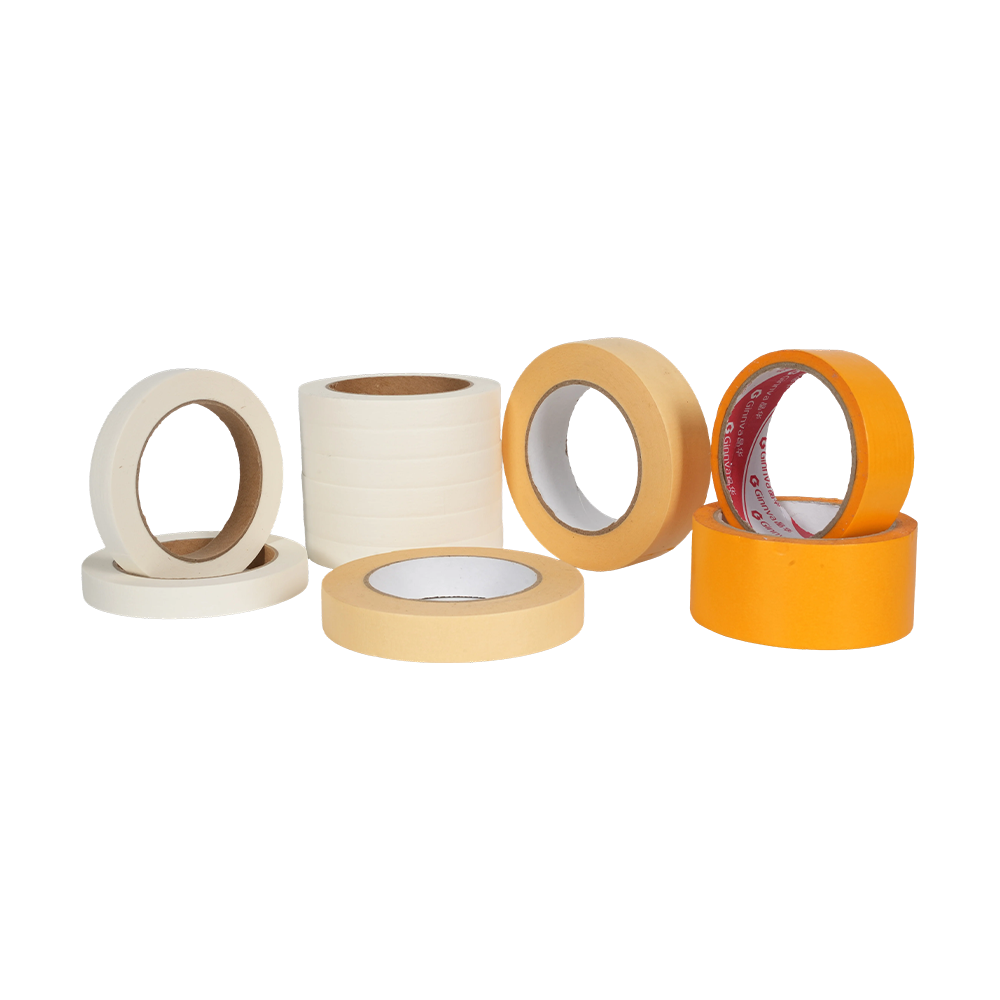
Masking tape is designed mainly for painting, surface protection, labeling, and temporary holding. While it is also paper-based and easy to tear, it is not always formulated for strong carton sealing. Its adhesive may be too light for shipping cartons, especially where edge lifting or transportation vibration is a concern. Ordinary kraft paper tape provides stronger packaging-oriented adhesion on cardboard surfaces.
For carton sealing, parcel fixing, and warehouse packaging, kraft paper tape offers a more suitable balance of tack, backing strength, and application purpose. Masking tape remains useful for temporary marking and masking jobs, but ordinary kraft paper tape is the more appropriate product for secure paper-package closure.
Compared with Reinforced Kraft Paper Tape
Reinforced kraft paper tape includes fiber reinforcement that increases tensile strength and makes it suitable for heavier cartons and high-security sealing. However, reinforced tape can be more expensive and may be less convenient to tear by hand depending on construction. The 0.014MM Thickness Ordinary Kraft Paper Tape is a more economical option for everyday packaging where extreme tensile strength is not required.
This makes ordinary kraft paper tape a practical choice for customers who want the look and paper compatibility of kraft tape without paying for reinforcement they do not need. For lightweight and standard cartons, envelopes, general parcels, and warehouse fastening, ordinary kraft paper tape can deliver dependable performance at a competitive cost.
Compared with Generic Low-Grade Paper Tape
Not all kraft paper tapes perform equally. Low-grade tapes may use inconsistent paper backing, uneven adhesive coating, poor winding tension, or adhesives that dry out quickly during storage. These problems can lead to weak tack, roll deformation, tearing difficulty, inconsistent widths, and unstable application performance.
The product described here is manufactured with attention to material selection, coating control, slitting accuracy, and quality inspection. This gives it a more reliable performance profile than generic low-grade alternatives. For users who care about stable packing speed, reduced tape waste, and fewer sealing failures, consistent production quality can be more valuable than the lowest purchase price.
Application Scenarios
Logistics and Express Delivery
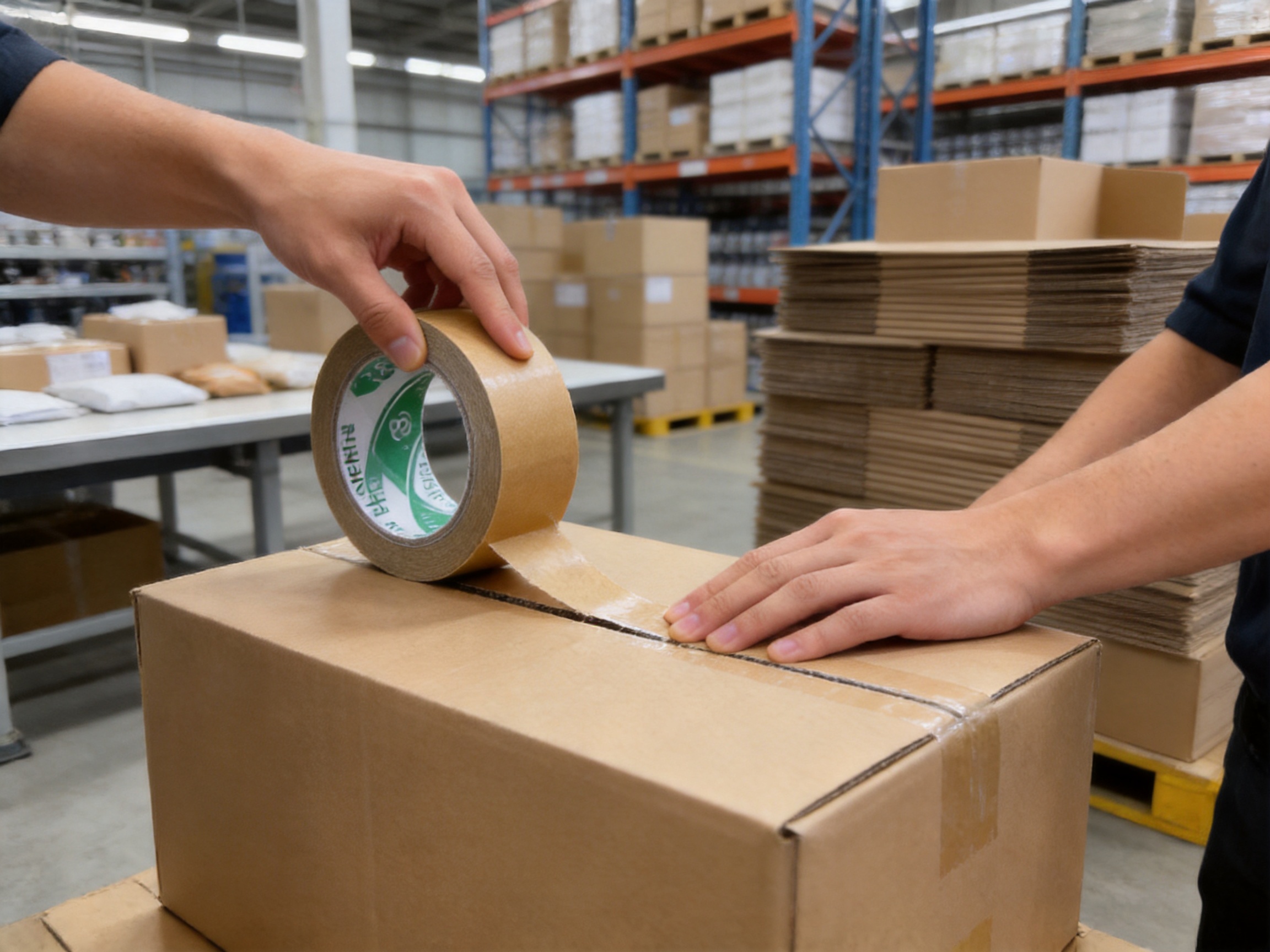
In logistics and express delivery, packaging materials must perform under pressure. Parcels are packed quickly, moved repeatedly, stacked, sorted, loaded, unloaded, and delivered through complex transportation networks. A weak seal can cause carton opening, item loss, product contamination, or customer complaints. The high initial tack of ordinary kraft paper tape helps workers close cartons efficiently and maintain sealing stability through normal distribution conditions.
The tape is especially useful for e-commerce sellers, courier preparation stations, subscription box companies, and small distribution centers that rely on manual packing. Because workers can tear it by hand, packing can continue even without a dedicated cutting device. This improves flexibility and reduces downtime.
Warehousing and Inventory Management
Warehouses often need tape not only for final shipment sealing but also for temporary carton closure, internal packaging reinforcement, label covering, product grouping, and short-term fastening. Kraft paper tape is suitable for many of these tasks because it bonds well to cartons and paper packaging. It can be used to close storage boxes, reinforce carton corners, attach paper notes, or secure lightweight internal materials.
The natural kraft color is also beneficial in warehouse environments because it does not create excessive visual clutter on brown cartons. If custom printing is used, the tape can help identify product batches, handling instructions, or internal control categories.
Office Packaging and Administrative Use
Offices frequently handle document envelopes, files, lightweight parcels, samples, promotional kits, and internal mail. Ordinary kraft paper tape is convenient for these needs because it is clean, easy to tear, and suitable for paper surfaces. Employees can seal envelopes or small cartons without using scissors, making it practical for administrative departments, schools, studios, design agencies, and small businesses.
The tape can also be used in craft projects and presentation packaging where a natural paper appearance is preferred. Its simple kraft look can support handmade, minimalist, or eco-style packaging designs.
Light Industrial Auxiliary Packaging
In light industrial settings, kraft paper tape can serve as an auxiliary packaging material for internal fixation, lightweight material splicing, component grouping, and temporary holding. It is useful when the application involves paper, cardboard, or other porous surfaces. For example, it may be used to secure protective paper wrapping, fix small parts inside a carton, or close inner boxes before outer packaging.
Because the product is not recommended for long-term fixation on smooth non-porous materials such as plastic or metal, users should evaluate surface type before selecting it for industrial bonding. When used on appropriate paper-based surfaces, it provides a good combination of handling convenience and bonding reliability.
Manufacturing Process and Quality Strengths
Raw Material Selection
Reliable kraft paper tape begins with dependable raw materials. The natural kraft paper backing must have suitable fiber structure, surface consistency, flexibility, and tear characteristics. If the paper is too weak, it may break during unwinding or application. If it is too stiff, it may not conform well to carton edges. If the surface is inconsistent, adhesive coating may become uneven.
Advanced manufacturing begins by selecting kraft paper that meets production requirements for thickness, strength, moisture balance, and surface quality. Adhesive raw materials are also selected according to tack, stability, coating behavior, and compatibility with paper surfaces. This careful selection helps ensure that the finished tape performs consistently from roll to roll.
Adhesive Preparation
The adhesive layer is central to tape performance. Rubber-based and hot-melt pressure-sensitive adhesives must be prepared under controlled conditions so they deliver high initial tack, stable bonding, and suitable coating viscosity. In modern production, adhesive preparation requires control of temperature, mixing uniformity, formulation ratio, and process timing.
A well-prepared adhesive improves the tape’s ability to bond quickly to carton surfaces. It also reduces common problems such as adhesive transfer, dry spots, weak edges, or excessive tack that makes unwinding difficult. When adhesive preparation is controlled properly, the finished tape becomes easier to apply, more stable in storage, and more reliable in use.
Precision Coating
After the kraft paper backing and adhesive are prepared, the adhesive is coated onto the paper surface. Coating uniformity is essential. If the adhesive layer is too thin in some areas, the tape may not seal reliably. If it is too thick in other areas, the tape may become difficult to unwind, waste adhesive, or leave residue. Precision coating technology helps maintain a stable adhesive layer across the full width and length of the material.
Consistent coating is one of the main factors that separates a dependable packaging tape from a low-grade alternative. It supports predictable adhesion, stable roll performance, and efficient converting. For customers, this means fewer failed seals, less tape waste, and a smoother packaging process.
Drying, Cooling, and Stabilization
Depending on the adhesive system and production method, coated tape materials may require drying, cooling, or stabilization before winding. This stage helps ensure that the adhesive reaches the correct condition for roll formation and later application. Improper drying or stabilization can cause blocking, odor, reduced tack, or uneven roll quality.
Controlled drying and cooling support adhesive consistency and backing stability. They also help prevent roll deformation, which can affect storage and dispensing. For high-volume packaging users, roll shape and unwind consistency are important because they directly influence packing speed and worker comfort.
Rewinding and Slitting
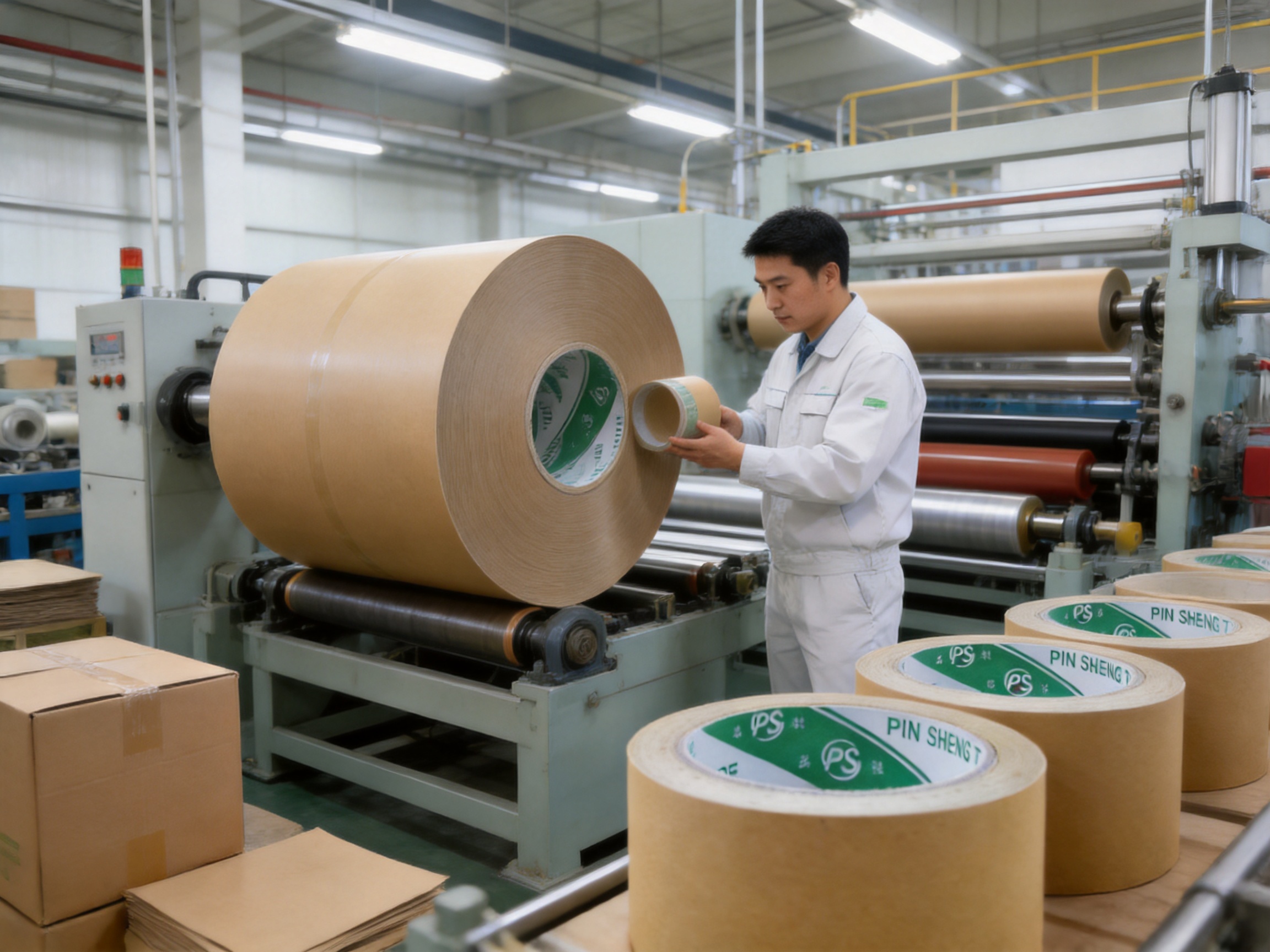
Once the jumbo roll is prepared, it is rewound and slit into customer-required widths and lengths. Common widths may include 25MM, 48MM, 50MM, 60MM, and 72MM, while common lengths may include 20M, 50M, and 100M. Accurate slitting ensures clean roll edges and consistent tape width. Poor slitting can produce frayed edges, uneven rolls, or tearing problems during use.
Rewinding tension is also important. If rolls are wound too tightly, they may deform or become difficult to unwind. If wound too loosely, the rolls may telescope, collapse, or become unstable during transportation. Advanced production control balances tension to produce rolls that store well and unwind smoothly.
Inspection and Quality Control
Quality control is essential in packaging material manufacturing because even small defects can affect many packages. A rigorous inspection system may include checks for appearance, thickness, width, length, adhesive uniformity, tack, unwind performance, roll shape, and packaging condition. By controlling each production stage, manufacturers can reduce batch variation and improve customer confidence.
The company behind this product emphasizes quality as the lifeline of its development. With advanced production equipment and a strict quality management approach, it controls the process from raw material procurement to production and final inspection. This helps ensure stable product performance and supports diverse customer requirements across logistics, household goods, electronics, construction, decoration, industrial manufacturing, cargo stabilization, and packaging protection.
Company Manufacturing Strengths
Zhejiang Geruite Packaging Materials Co., Ltd. is located in Zhejiang Province, China, an area known for developed manufacturing resources, strong supply chains, and active industrial growth. The company focuses on research, development, production, and sales of packaging materials, including BOPP tapes, kraft paper tapes, masking tapes, high-temperature resistant tapes, metal tapes, PE stretch film, PP strapping, and high-strength PET strapping.
This broad product portfolio gives the company a practical advantage. Customers often need more than one packaging material, and a supplier with experience across tape, film, and strapping can better understand complete packaging systems. A carton sealing tape must work together with stretch film, strapping, labels, corner protectors, and shipping cartons. A manufacturer with multi-category expertise can offer more informed material recommendations and more efficient supply coordination.
The company’s annual output value has reached over RMB 60 million, demonstrating its production scale and market acceptance. Scale matters in packaging materials because it supports stable supply, consistent quality, raw material procurement capability, and the ability to meet repeat orders. For customers in logistics and manufacturing, supply reliability is often as important as product performance. Running out of packaging tape can interrupt shipments, delay orders, and create operational stress.
The company’s emphasis on technological development and product optimization also supports long-term customer value. Packaging needs are changing as businesses seek stronger seals, faster application, lower waste, and more sustainable materials. A manufacturer committed to innovation can adjust product structures, improve adhesive systems, expand customization, and strengthen service levels as market expectations evolve.
Why Advanced Manufacturing Matters to Tape Buyers
From a distance, many rolls of tape look similar. However, the true difference appears during use. A well-manufactured tape unwinds smoothly, tears predictably, bonds quickly, and stays attached. A poorly manufactured tape may split, curl, detach, smell strongly, deform in storage, or produce inconsistent sealing results. These problems create hidden costs that are often greater than the small savings from buying the cheapest tape.
Advanced manufacturing reduces these hidden costs by improving stability. Stable thickness helps the tape perform predictably. Stable coating weight supports consistent adhesion. Stable roll tension improves handling. Stable raw materials reduce batch variation. Stable inspection standards catch problems before the tape reaches customers. For packaging operations, stability means fewer interruptions and more reliable output.
In manual packaging environments, worker experience also matters. A tape that is difficult to tear or unwind can slow workers and increase fatigue. A tape with inconsistent adhesion can force workers to use extra strips, increasing material consumption. By contrast, a tape that tears cleanly and seals efficiently helps workers maintain speed and confidence.
Practical Usage Recommendations
Prepare the Surface
For best adhesion, apply the tape to surfaces that are dry, clean, and free from oil, dust, moisture, and loose fibers. Corrugated cartons that have been stored in damp conditions may reduce bonding performance. If cartons are dusty, wiping or choosing a cleaner surface area can improve the seal. Surface preparation is a simple step that can significantly improve tape performance.
Apply Adequate Pressure
Pressure-sensitive adhesive requires pressure to create full contact with the surface. After placing the tape, press it firmly along the full sealing line, especially at carton edges and overlaps. Good pressure helps the adhesive flow into the carton surface texture and improves holding power. In busy packing lines, this step is sometimes overlooked, but it is important for reliable sealing.
Use Suitable Environmental Conditions
The recommended use environment is generally 15°C to 35°C with 40% to 70% relative humidity. Extremely low temperatures can reduce adhesive tack, while high heat or humidity may affect storage stability or paper backing behavior. If the tape is used in cold environments, pre-warming the roll before application may improve bonding.
Store Correctly
Store the tape in a cool, dry place away from direct sunlight, high heat, and excessive moisture. Proper storage helps prevent adhesive aging, paper deformation, and roll blocking. Rolls should be kept in their original packaging when possible and used within a reasonable shelf-life period according to supplier guidance.
Select the Right Surface
This product is designed mainly for paper-based surfaces. It is not recommended for long-term fixation on smooth, non-porous materials such as plastic or metal. On such surfaces, adhesive contact behavior may be different, and long-term holding power may be reduced. For plastic or metal bonding, users should consider a tape specifically designed for those substrates.
Customization Possibilities
Packaging operations vary widely, so tape specifications may need to be adjusted. Width customization allows customers to match tape size with carton flap width and package weight. Narrower tape can be economical for small boxes and envelope sealing, while wider tape can provide better coverage for larger cartons. Length customization affects roll change frequency and storage convenience. Longer rolls are useful for higher-volume operations, while shorter rolls may be better for office and occasional use.
Appearance customization is also valuable. Natural kraft color is the standard choice, but printing and dyeing can support brand communication, handling warnings, batch identification, or anti-tampering messages. Printed kraft paper tape can make packaging look more professional and can reinforce brand identity without requiring separate labels.
Adhesive customization may also be considered depending on application needs. Some customers prioritize high initial tack, while others may need improved storage stability, lower odor, or special performance under certain temperatures. Working with an experienced manufacturer helps customers select a tape structure that fits their packaging environment rather than relying on a generic solution.
Cost Efficiency and Operational Value
The value of kraft paper tape should not be measured only by roll price. True cost includes tape consumption per carton, labor time, resealing frequency, package failure rate, storage loss, and customer satisfaction. A tape with better adhesion may allow workers to use fewer strips. A tape that tears by hand may reduce tool handling time. A tape that matches carton surfaces well may lower the risk of complaints caused by opened packages.
Ordinary kraft paper tape offers a strong cost-performance balance for daily packaging. It is economical compared with reinforced tapes, more paper-compatible than many plastic tapes, and more suitable for carton sealing than many general-purpose masking tapes. For businesses with regular carton sealing needs, this balance can support both material efficiency and operational reliability.
In addition, kraft paper tape can contribute to a more consistent packaging image. A clean natural kraft seal can enhance the perceived care and professionalism of a shipment. In e-commerce, the package is often the first physical touchpoint between seller and buyer. A neat and secure seal helps create a positive impression before the product is even opened.
Environmental and Packaging Design Considerations
As packaging regulations, retailer requirements, and consumer expectations evolve, many businesses are reviewing their use of plastic packaging materials. Kraft paper tape is part of this broader shift toward paper-based, simplified, and more sustainable packaging systems. While no packaging material is impact-free, choosing a paper-backed tape can reduce reliance on plastic sealing materials and support a more natural packaging presentation.
For brands that ship in corrugated cartons, kraft paper tape can be visually and materially compatible with the box. This may simplify the overall package appearance and reduce the contrast between carton and seal. It can also support messaging around responsible packaging choices, especially when paired with recyclable cartons, minimal void fill, and right-sized packaging.
However, proper material selection is important. Sustainability should not come at the expense of package failure. A package that opens during transport may lead to product replacement, additional shipping, wasted goods, and higher environmental impact. Therefore, the best sustainable packaging choice is one that combines responsible material direction with dependable performance. This kraft paper tape supports that balance for suitable carton sealing applications.
Q&A Section
What is the main use of 0.014MM Thickness Ordinary Kraft Paper Tape?
It is mainly used for sealing cartons, fixing parcels, sealing document envelopes, reinforcing paper packages, and performing temporary fastening tasks in logistics, warehousing, office, and light industrial environments.
Can this tape be torn by hand?
Yes. One of its important advantages is hand-tearability. Users can tear it without scissors or cutting tools, which improves packing speed and convenience.
What surfaces does it bond to best?
It bonds best to paper-based surfaces such as corrugated cartons, kraft paper, paper envelopes, and similar porous packaging materials. It is not recommended for long-term fixation on smooth non-porous surfaces such as plastic or metal.
What are the common widths and lengths?
Common widths include 25MM, 48MM, 50MM, 60MM, and 72MM. Common lengths include 20M, 50M, and 100M. Custom sizes can be produced according to customer needs.
Why choose kraft paper tape instead of plastic tape?
Kraft paper tape offers a natural paper appearance, easy hand tearing, strong compatibility with cardboard surfaces, and a packaging style that aligns better with reduced plastic use. It is especially suitable for businesses that want secure carton sealing with a more paper-based presentation.
Is this tape suitable for heavy cartons?
It is suitable for general carton sealing and lightweight to medium packaging tasks under normal shipping conditions. For very heavy cartons or high-stress sealing, reinforced kraft paper tape or another heavy-duty packaging tape may be more appropriate.
How should the tape be stored?
It should be stored in a cool, dry place away from direct sunlight, high heat, and excessive humidity. Proper storage helps maintain adhesive quality and roll stability.
Can the tape be printed?
Yes. Custom printing or dyeing options may be available. Printed tape can be used for brand display, warning messages, product identification, or packaging decoration.
What makes this product different from low-grade kraft paper tape?
The difference lies in stable raw material selection, controlled adhesive preparation, uniform coating, accurate slitting, balanced rewinding tension, and quality inspection. These manufacturing strengths help provide more reliable adhesion, cleaner tearing, and more consistent roll performance.
Who manufactures this product?
The product is supplied by Zhejiang Geruite Packaging Materials Co., Ltd., a packaging materials manufacturer located in Zhejiang Province, China. The company produces multiple packaging material categories, including adhesive tapes, stretch film, PP strapping, and PET strapping.
Conclusion
The 0.014MM Thickness Ordinary Kraft Paper Tape is a practical and economical solution for everyday packaging needs. With natural kraft paper backing, high-tack pressure-sensitive adhesive, easy hand-tearability, and strong compatibility with corrugated cartons, it provides clear value for logistics, warehousing, office, e-commerce, and light industrial applications. It helps users seal packages efficiently, reduce reliance on cutting tools, create a clean kraft-paper appearance, and support packaging choices that align with sustainability trends.
Its advantages become even clearer when compared with competing options. It is easier to tear and more natural in appearance than many plastic tapes, stronger for carton sealing than typical masking tape, and more economical than reinforced kraft paper tape for general packaging tasks. When manufactured with controlled coating, careful slitting, stable rewinding, and strict inspection, ordinary kraft paper tape becomes a dependable consumable that supports smooth daily operations.
The manufacturer’s broader strengths in packaging material production, quality control, equipment capability, and multi-category product experience further enhance the value of this tape. For customers seeking a reliable supplier of carton sealing materials, the combination of product practicality and manufacturing stability is highly important. Whether used for e-commerce parcels, warehouse cartons, office envelopes, or internal packaging fixation, this kraft paper tape offers an effective balance of adhesion, convenience, appearance, and cost efficiency.
References
1. Pressure-Sensitive Tape Council. Pressure Sensitive Adhesive Tape Technology and Applications.
2. ASTM International. Standard Test Methods for Pressure-Sensitive Adhesive-Coated Tapes Used for Electrical and Electronic Applications.
3. Soroka, W. Fundamentals of Packaging Technology. Institute of Packaging Professionals.
4. Robertson, G. L. Food Packaging: Principles and Practice. CRC Press.
5. Hanlon, J. F., Kelsey, R. J., and Forcinio, H. E. Handbook of Package Engineering. CRC Press.
6. China Packaging Federation. Packaging Materials Industry Development and Application Reports.
Product: 0.014MM Thickness Ordinary kraft paper tape

LATEST POST
Let’s create something amazing together
contact us
CONTACT DETAILS
- Address:No. 241, Yaojiafan, Zhangpanqiao, Shushan Street, Xiaoshan District, Hangzhou City, Zhejiang Province, China
- TEL:+86-0571-83175630
- Phone:+86-13336160217
- Email:anqiaocun@163.com
PRODUCTS
NEWS CENTER
MOBILE TERMINAL
Copyright© Zhejiang Geruite Packaging Materials Co., Ltd. All Rights Reserved.
Privacy Wholesale industrial packaging tape Manufacturers