


 English
 Español
 عربى

PET Shrink Film for Premium Full-Wrap Labels and Sustainable Packaging
Content
- 1 Introduction: A Specialized Film for Modern Product Presentation
- 2 What Is PET Shrink Film?
- 3 Why High Shrinkage Matters for Irregularly Shaped Bottles
- 4 Appearance and Printing Advantages
- 5 Material Efficiency and Coverage Economics
- 6 Environmental Considerations and Recyclability
- 7 Applications Across Multiple Industries
- 8 Comparison with Common Competing Label Materials
- 9 Manufacturing Strengths and Quality Control
- 10 Processing and Application Guidance
- 11 Advantages of Working with an Experienced Packaging Manufacturer
- 12 Company Capabilities and Service Orientation
- 13 How to Select the Right PET Shrink Film
- 14 Frequently Asked Questions
- 14.1 What is PET shrink film mainly used for?
- 14.2 How much can PET shrink film shrink?
- 14.3 Why is PET suitable for irregularly shaped bottles?
- 14.4 What thickness is available?
- 14.5 Is PET shrink film transparent?
- 14.6 Can PET shrink film support premium printing?
- 14.7 How does PET compare with PVC shrink film?
- 14.8 Is PET shrink film recyclable?
- 14.9 Can PET shrink film be used for tamper evidence?
- 14.10 What information should be provided when requesting a quotation?
- 14.11 What quality checks are important before mass production?
- 15 Conclusion
- 16 References
- 17 Product: PET Shrink Film
Introduction: A Specialized Film for Modern Product Presentation
PET shrink film has become an important material for brands that need more than a basic label. It combines high shrinkage, excellent transparency, strong mechanical performance, and an attractive surface that can support premium printing and decorative effects. These properties make it especially valuable for bottles and containers with unusual curves, narrow necks, recessed sections, rounded shoulders, and other complex geometries that are difficult to cover with conventional pressure-sensitive labels or ordinary wrapping materials.
When heated during the sleeving process, PET shrink film contracts around the package and conforms closely to its three-dimensional shape. Rather than covering only a flat panel, it can form a continuous 360-degree label around the shoulder, body, base, and other contours of the container. This capability creates a clean, seamless appearance and gives designers much greater freedom when developing distinctive bottle shapes.
The material is particularly suitable for high-end beverages, cosmetics, personal care products, pharmaceutical and healthcare containers, and cultural or creative products. In these sectors, packaging is expected to perform several functions at once. It must protect printed information, provide space for branding and regulatory details, attract consumer attention, support efficient production, and increasingly meet environmental expectations. PET shrink film addresses these requirements through a balanced combination of appearance, dimensional adaptability, strength, and recyclability.
Zhejiang Geruite Packaging Materials Co., Ltd. supplies PET shrink film as part of a broader portfolio of industrial packaging materials. The company’s experience in tapes, stretch film, strapping products, and other packaging solutions supports a practical understanding of packaging operations, material handling, logistics, and production requirements. Its manufacturing philosophy emphasizes product consistency, process control, research and development, and responsive service for customers with different packaging needs.
This article explains how PET shrink film works, where it is used, how it compares with competing materials, what technical factors should be considered when selecting it, and how a professional manufacturer can help customers achieve stable results in production.
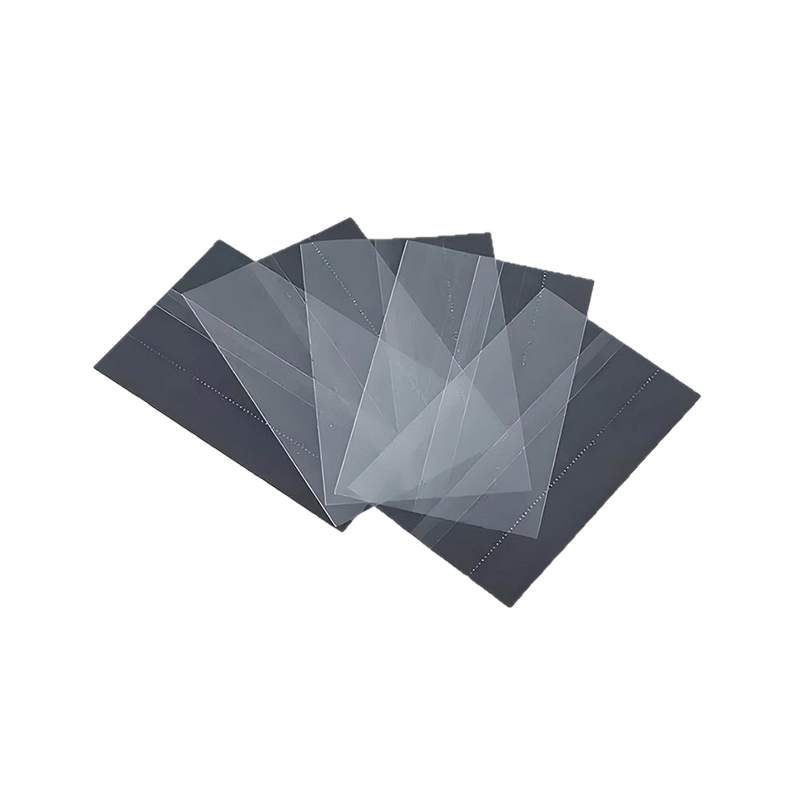
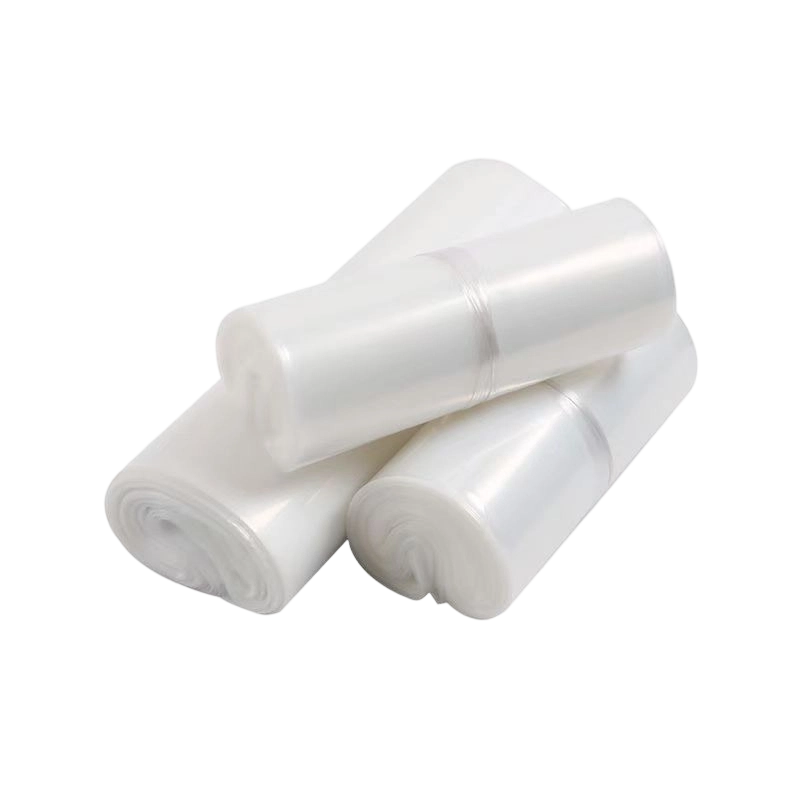
PET Shrink Film
What Is PET Shrink Film?
PET shrink film is a thermoplastic polyester film designed to shrink when exposed to controlled heat. PET is widely recognized for its clarity, strength, dimensional stability, and suitability for demanding packaging applications. In shrink-sleeve production, the film is printed, formed into a sleeve, placed over a bottle or container, and then heated. The heat activates the film’s shrinkage, allowing it to contract tightly around the package.
The supplied product uses PET as its primary material and is available in a transparent appearance. The standard thickness range is approximately 0.025–0.03 mm, with customized processing available according to customer requirements. This thickness provides a useful balance between printability, handling strength, coverage efficiency, and material consumption.
The film’s most important functional characteristic is its high shrinkage rate. Depending on the grade, processing conditions, and direction of shrinkage, the material can achieve shrinkage of up to approximately 75–80 percent. This exceptionally high shrinkage gives PET film a major advantage when a package has a complex design that cannot be effectively covered by a conventional flat label.
Shrinkage must be controlled carefully. A film that shrinks too little may wrinkle or fail to follow the contours of a container. A film that shrinks too aggressively under unsuitable conditions may distort printed graphics or create excessive stress around the label. For this reason, film selection should be combined with appropriate sleeve design, printing preparation, seaming, application equipment, and heating conditions.
| Property | Typical Product Information | Packaging Benefit |
|---|---|---|
| Material | PET polyester | Strong, clear, chlorine-free, and suitable for recyclable packaging systems |
| Thickness | 0.025–0.03 mm, customizable | Balances film consumption, handling performance, and printed appearance |
| Shrinkage | Up to approximately 75–80 percent, depending on grade and conditions | Conforms to complex bottle shapes and supports full-wrap labeling |
| Color | Transparent | Supports high-clarity graphics and attractive product visibility |
| Tensile performance | Strong | Improves resistance to handling, installation, and distribution stress |
| Surface appearance | High gloss and suitable for decorative finishes | Creates a premium shelf presence through color and special effects |
Why High Shrinkage Matters for Irregularly Shaped Bottles
Many modern products are deliberately designed with unusual packaging shapes. A beverage brand may use a sculpted bottle to create a memorable identity. A cosmetics manufacturer may select a curved container to communicate luxury or softness. A personal care product may include an ergonomic grip, tapered body, or decorative shoulder. While these shapes can be visually attractive, they create challenges for labeling.
A standard paper label or pressure-sensitive plastic label usually performs best on a relatively flat or gently curved surface. When it is applied to a container with deep curves, narrow sections, recessed areas, or changing diameters, the label may wrinkle, lift at the edges, bridge over recesses, or leave uncovered areas. Multiple label panels may be required, which can interrupt the design and increase application complexity.
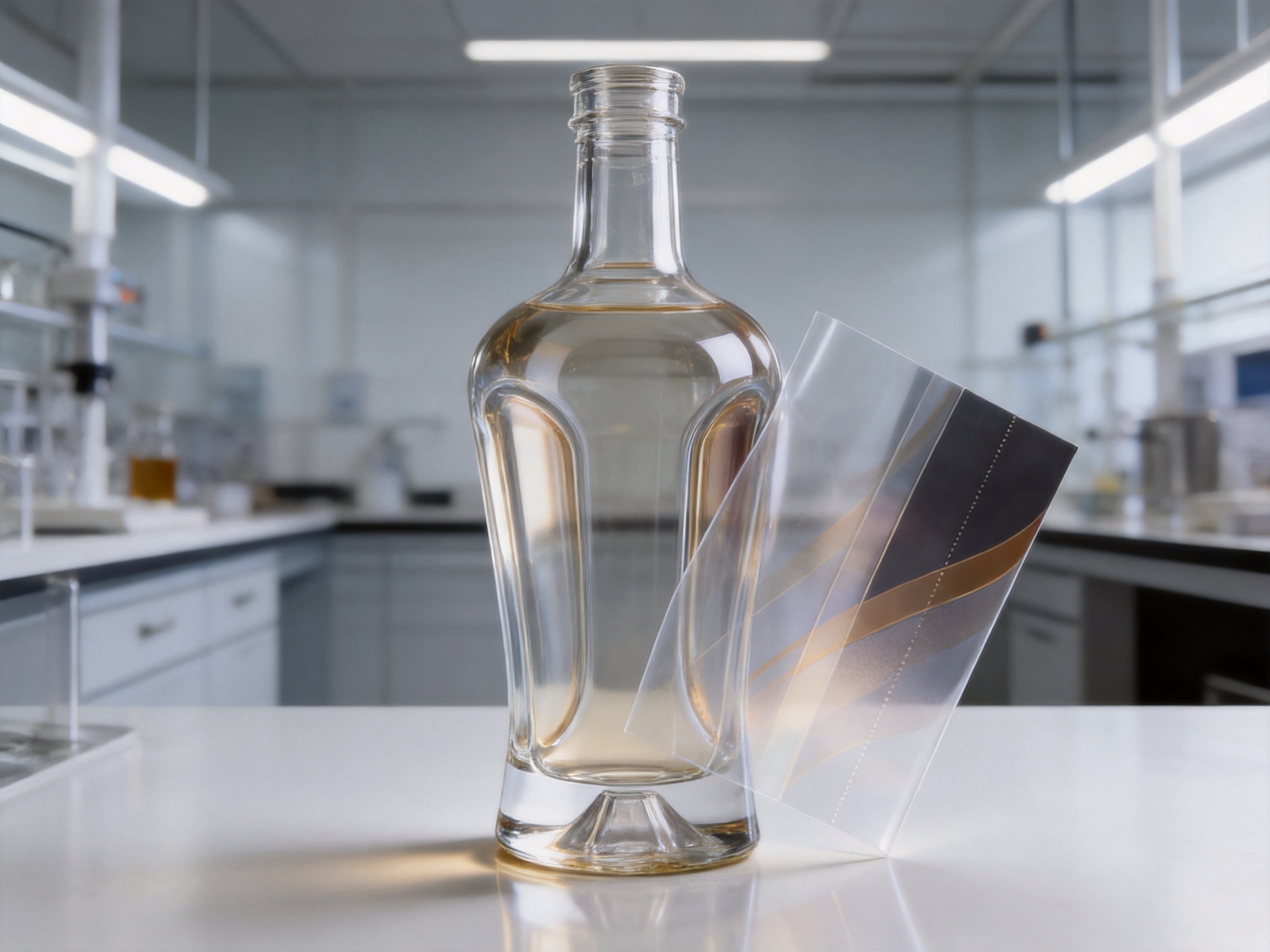
PET shrink film addresses this problem by acting as a flexible sleeve that contracts around the entire package. A correctly designed sleeve can cover the top shoulder, central body, lower section, and base transition in one continuous visual surface. This 360-degree coverage allows graphics to move around the bottle without obvious breaks and gives designers more usable space for brand communication.
The high shrinkage rate is particularly useful when the difference between the largest and smallest diameter of the container is substantial. During heating, the film can reduce significantly to follow the package profile. This makes it possible to use a single decorative sleeve on containers that would otherwise require several labels or a more complicated decoration process.
High shrinkage also supports visual consistency. A package can be designed with a continuous background color, repeating pattern, metallic effect, or panoramic illustration. When the sleeve conforms evenly, the design appears integrated with the bottle rather than attached as a separate flat label. This visual effect is highly valuable in crowded retail environments, where packaging must communicate quality within a short viewing time.
Coverage of the Shoulder, Body, and Base
One of the most important benefits of PET shrink film is the ability to cover areas that are difficult for ordinary labels. The shoulder of a bottle often curves sharply toward the neck, while the base may narrow or include a raised foot. A shrink sleeve can be engineered to accommodate these transitions, provided that the film grade, artwork, sleeve dimensions, and heating profile are properly matched.
Full-wrap coverage also creates a larger communication area. Brands can place front-panel graphics, side information, ingredients, instructions, barcodes, promotional messages, and compliance details around the container. This can be particularly useful for small bottles, where available label space is limited.
Improved Design Freedom
Packaging designers are no longer limited to rectangular labels or simple cylindrical containers. PET shrink film supports more creative bottle development because the decoration process can adapt to the shape. The film can follow flowing contours and present a unified surface even when the container includes several different radii.
This design freedom is valuable for premium beverages, limited-edition products, gift packaging, cosmetics, and products that depend heavily on visual differentiation. A distinctive bottle and a well-printed shrink sleeve can work together to create a strong identity that is difficult for competing products to imitate.
Appearance and Printing Advantages
Packaging is both a protective structure and a marketing tool. The visual quality of a label affects how consumers judge the product before they read the details. PET shrink film offers high transparency and a glossy surface that can enhance printed colors and create a clean, refined appearance.
Its transparency can be used in several ways. A transparent film may allow selected areas of the container to remain visible, helping consumers see the product or the bottle material beneath the label. It can also create layered visual effects when combined with colored containers, metallic components, or carefully designed artwork. Alternatively, the printed design can provide broad color coverage for a strong and consistent brand presentation.
High gloss improves the visual impact of bright colors, dark backgrounds, fine lines, and high-contrast graphics. When the film is printed with suitable inks and processed correctly, the finished sleeve can present crisp images and strong color reproduction. This is important for brands that use detailed illustrations, photographic elements, small text, or precise corporate colors.
Special Decorative Effects
PET shrink film can support a variety of decorative effects, including metallic, matte, and frosted appearances. These effects can be produced through combinations of printing technology, ink selection, surface treatment, and finishing methods. Metallic effects may be used to suggest premium quality or create visual highlights. Matte effects can deliver a softer, more understated appearance. Frosted effects may provide a translucent, elegant look while maintaining product visibility in selected areas.
Special effects can be used across the entire sleeve or limited to particular design elements. For example, a brand name may be printed with a metallic appearance while the remaining background uses a matte finish. A frosted window may be incorporated to reveal the product inside. These options allow packaging teams to create visual hierarchy and guide consumer attention toward important information.
High-speed printing compatibility is another important benefit for commercial production. As order volumes increase, customers need materials that can move through printing and converting operations efficiently. Stable film thickness, consistent surface quality, and predictable handling help support reliable printing results and reduce the likelihood of production interruptions.
Material Efficiency and Coverage Economics
Packaging material cost should not be evaluated only by price per kilogram. The more relevant question is how much usable packaging coverage can be produced from a given amount of material. PET has a density of approximately 1.38 g/cm³, which is lower than the density commonly associated with PVC shrink materials. Based on the supplied product information, PET can provide approximately 15 percent more coverage area than PVC for the same weight.
This difference can influence the cost per finished sleeve. If a film provides more area for the same mass, a converter may be able to produce more labels from each roll. The actual saving depends on sleeve dimensions, thickness, shrinkage requirements, waste levels, printing setup, and production efficiency, but the coverage advantage can contribute to a more economical packaging system.
Material efficiency also matters for logistics. More usable coverage per unit of weight can help reduce the total material mass required for a given production volume. Lower material consumption may support more efficient storage and transportation, although the final result must be assessed across the entire packaging process rather than by film density alone.
The 0.025–0.03 mm thickness range provides a practical starting point for many applications. Customers may require a different thickness for special container shapes, more demanding handling conditions, particular printing requirements, or specific production equipment. Custom processing allows the film to be adjusted to the requirements of the application rather than forcing every project into a single standard specification.
Environmental Considerations and Recyclability
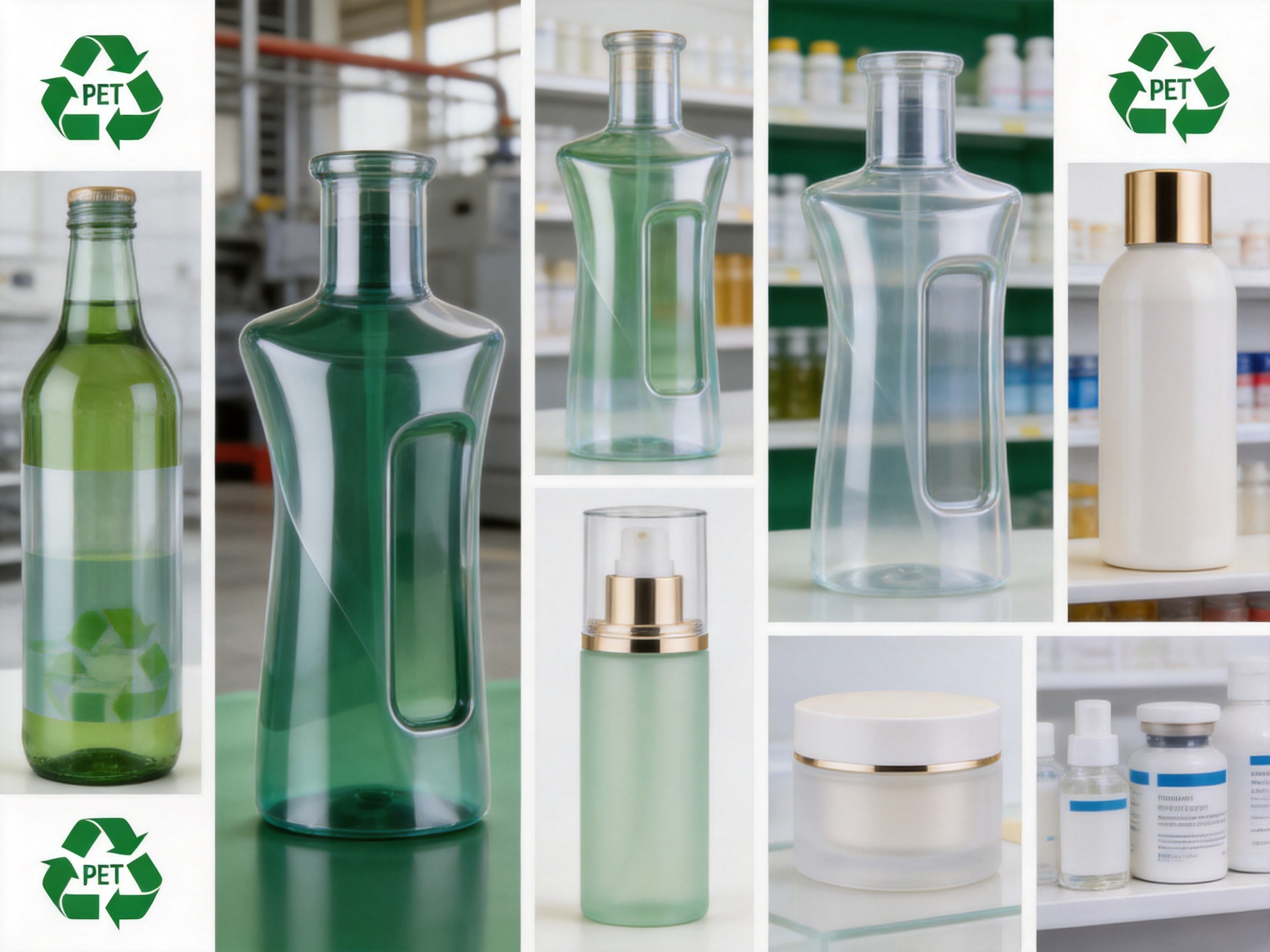
Sustainability has become a major factor in packaging decisions. Brand owners, retailers, regulators, and consumers increasingly expect packaging materials to reduce unnecessary environmental impact and support responsible end-of-life management. PET shrink film responds to several of these expectations because it is chlorine-free and recyclable.
The absence of chlorine is an important distinction when PET is compared with PVC-based shrink materials. PET avoids the chlorine content associated with PVC and can be more suitable for companies seeking to move toward packaging materials with a different environmental profile. However, responsible material selection still requires consideration of the entire product system, including inks, adhesives, closures, containers, sleeve removal, collection infrastructure, and recycling technology.
Recyclability should not be treated as an automatic result of selecting a single film. Package design must be compatible with the relevant recycling stream, and the sleeve may need to be removed or separated from the bottle depending on the local system. Brands should evaluate label coverage, perforation options, material combinations, printing components, and regional recycling requirements before finalizing a design.
Even with these considerations, PET shrink film can support sustainability-oriented packaging strategies. Its lower density than PVC, high coverage efficiency, chlorine-free composition, and recyclable material base provide useful advantages for brands that are reviewing their packaging portfolios. The best results come from combining an appropriate PET film with responsible design, efficient production, clear disposal guidance, and cooperation across the packaging supply chain.
Supporting Export-Oriented Packaging
International markets may apply different expectations to packaging materials, labeling systems, and recycling practices. A film that is accepted in one market may require additional evaluation in another. PET is widely recognized as an important packaging polymer and may be a practical option for export products that need a material with strong global familiarity and a recyclable profile.
For exporters, a consistent PET shrink film can also help maintain brand presentation across regions. A single sleeve design may be adapted with multilingual information, regional compliance details, or market-specific promotional graphics while retaining the same basic packaging structure.
Applications Across Multiple Industries
High-End Beverage Bottles
Premium beverage packaging often depends on the combination of bottle shape, label appearance, and shelf impact. PET shrink film can wrap around sculpted beverage bottles and provide space for detailed graphics, brand stories, product information, and decorative effects. Its high gloss and strong color reproduction support a polished appearance, while its shrinkage allows the label to follow the bottle’s contours.
The material is suitable for products such as specialty drinks, functional beverages, premium water, flavored beverages, and other products that use visually distinctive containers. For seasonal launches and limited editions, shrink sleeves can also provide an efficient way to introduce new artwork without changing the basic bottle design.
Cosmetic Packaging
Cosmetics frequently use containers with rounded shoulders, tapered bodies, narrow necks, or decorative contours. The packaging must communicate quality and style while presenting a large amount of product and regulatory information in a limited space. PET shrink film provides a continuous surface for branding and can support matte, metallic, and frosted visual treatments.
For cosmetic brands, the sleeve may also protect the container from minor surface scuffing during distribution. It can act as a tamper-evident feature when designed with an appropriate closure or neck band. Application details must be validated carefully to ensure that the sleeve does not interfere with caps, pumps, dispensers, or opening mechanisms.
Personal Care Products
Personal care containers often need strong visual differentiation because many competing products are displayed together. PET shrink film can cover irregularly shaped bottles used for shampoo, body wash, skincare, haircare, and related products. The large printable area makes it easier to communicate fragrance, ingredients, usage instructions, and brand identity in a coordinated design.
Because personal care products may be handled frequently in bathrooms, stores, warehouses, and homes, the film should be selected and tested for suitable resistance to normal handling, moisture exposure, and transportation conditions. Strong tensile performance supports stable processing and helps the finished sleeve maintain its appearance during distribution.
Pharmaceutical and Healthcare Bottles
Pharmaceutical and healthcare packaging requires accurate information, consistent printing, and dependable application. PET shrink film can be used for bottle sleeves, closure bands, and other forms of package decoration or tamper indication. The large surface area can accommodate dosage information, warnings, instructions, barcodes, and traceability details, subject to applicable regulatory requirements.
For these applications, appearance is important but accuracy and process control are essential. The film, inks, adhesives, and packaging components must be evaluated for compatibility with the product and the intended distribution conditions. Customers should confirm all relevant regulatory, functional, and material requirements before commercial production.
Cultural and Creative Products
Cultural products, gift items, collectibles, craft beverages, and creative goods often rely on packaging to establish a distinctive emotional connection. A shrink sleeve can provide a continuous canvas for artwork, illustrations, patterns, and storytelling. The ability to use unusual bottle shapes and decorative finishes makes PET film well suited to products that are designed to stand apart from standard retail packaging.
Comparison with Common Competing Label Materials
PET Shrink Film Compared with PVC Shrink Film
PVC shrink film has historically been used for some shrink-sleeve applications, but PET offers several important advantages for brands seeking high shrinkage, clarity, coverage efficiency, and an alternative environmental profile. PET is chlorine-free, recyclable, and has a density of approximately 1.38 g/cm³. It can also provide approximately 15 percent more coverage area than PVC for the same weight, according to the supplied product information.
PET is especially attractive when the package requires a high shrinkage rate of up to approximately 75–80 percent. This enables close conformity to irregular shapes and supports full-wrap decoration. Its clarity and high gloss also contribute to a premium appearance, while its strength helps the film withstand converting and distribution requirements.
Material selection should still be based on the full application. PVC may be preferred in some existing production systems or specific low-temperature applications, while PET may require equipment settings and heating conditions appropriate to its thermal behavior. A professional supplier can help evaluate the container geometry, sleeve dimensions, production line, and desired appearance before the customer changes materials.
PET Shrink Film Compared with Pressure-Sensitive Labels
Pressure-sensitive labels are convenient for many standard containers, but their performance can be limited on highly irregular shapes. A flat label may not conform smoothly to sharp transitions or deep curves. It may also leave large parts of the container undecorated. PET shrink film can cover a greater percentage of the package surface and provide a single integrated design.
Pressure-sensitive labels may remain advantageous when a product requires a small information label, variable data label, removable label, or application without heat. PET shrink film is more suitable when the objective is full-wrap coverage, high-impact graphics, tamper evidence, or decoration of a complex bottle. The choice should be based on the package design and manufacturing process rather than on one material being universally superior.
PET Shrink Film Compared with Paper Labels
Paper labels can create a natural or traditional appearance and may be appropriate for products that want a paper-based identity. However, paper labels are generally less adaptable to strong three-dimensional curves. They may also be more sensitive to moisture, abrasion, and surface irregularities depending on the paper grade and coating.
PET shrink film provides a smooth, continuous surface with high clarity and the ability to follow complex contours. It is particularly useful where the label must remain visually consistent around the entire container. For brands that want the appearance of paper, a suitable printed design or matte effect may be used on PET film, although the material will retain its own performance characteristics.
Manufacturing Strengths and Quality Control
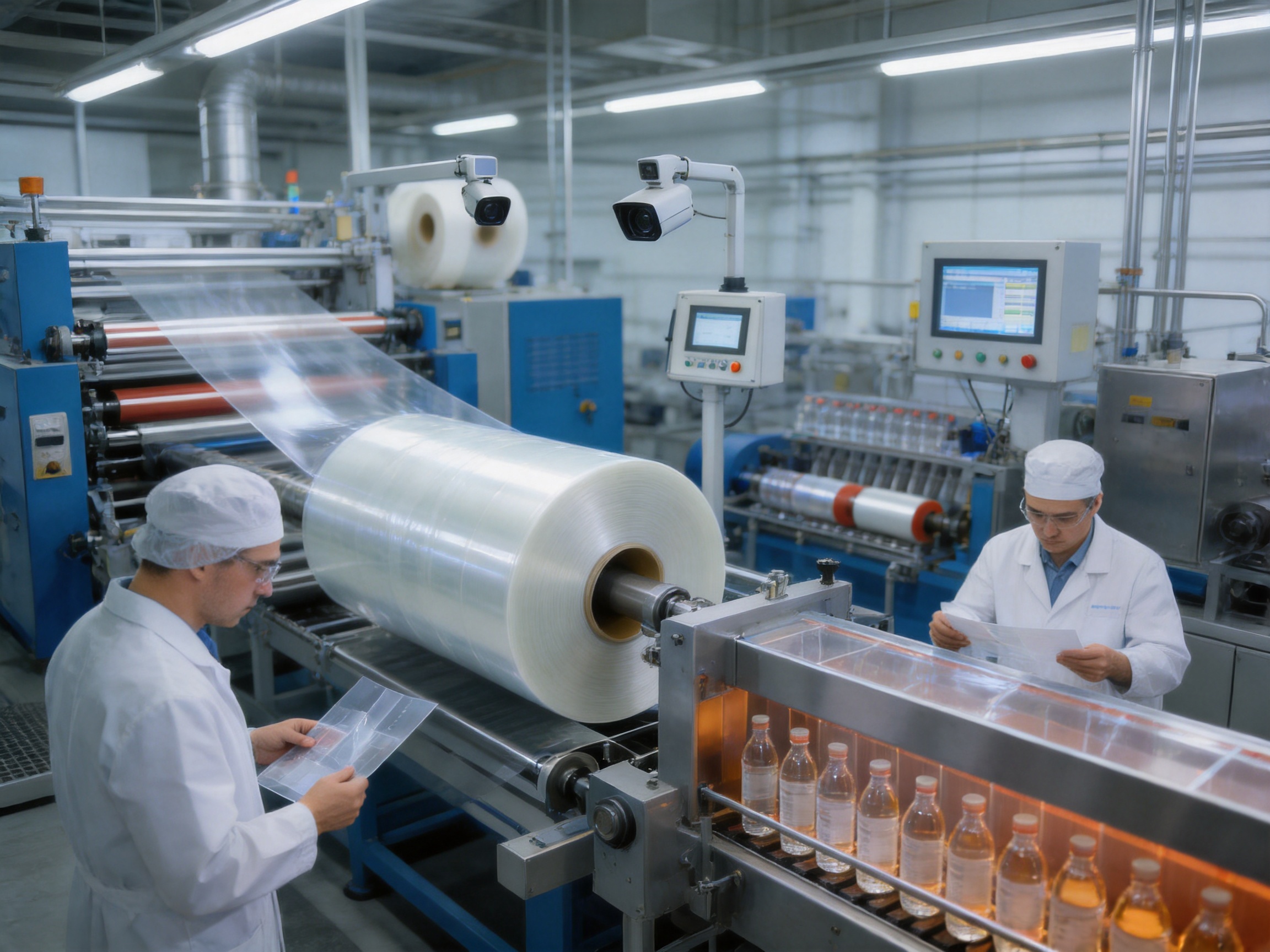
A reliable shrink film supplier must provide more than a material specification. The film must perform consistently from roll to roll, through printing, converting, sleeving, heating, transportation, and final use. Variations in thickness, surface condition, shrinkage behavior, or mechanical strength can create waste and affect the appearance of finished packaging.
Zhejiang Geruite Packaging Materials Co., Ltd. focuses on packaging material research, development, production, and sales. The company operates in Zhejiang Province, a major Chinese manufacturing region with a developed industrial base and strong supply-chain resources. Its wider product portfolio includes BOPP tapes, kraft paper tapes, masking tapes, high-temperature-resistant tapes, metal tapes, PE stretch film, PP strapping, and high-strength PET strapping.
This broad product experience is relevant to PET shrink film because packaging performance depends on the interaction between multiple materials and processes. A customer may use shrink film together with cartons, stretch film, strapping, adhesive tapes, protective materials, and logistics equipment. A supplier that understands these connected requirements can provide more practical recommendations for complete packaging operations.
Raw Material Management
Quality begins with material selection and incoming inspection. PET resin and related inputs must be controlled for consistency because raw material variation can influence optical clarity, mechanical performance, thickness stability, and thermal shrinkage. A rigorous procurement and inspection system helps reduce the risk of inconsistent film performance.
Raw material management should include supplier evaluation, batch identification, storage control, and inspection records. Proper storage is also important because moisture and contamination can affect polyester processing. Professional manufacturing procedures therefore treat material handling as part of the quality system rather than as a separate administrative task.
Film Forming and Thickness Control
The film-forming process must create a uniform sheet with controlled thickness and stable physical properties. Thickness uniformity is essential for printing, seaming, sleeve formation, and heating. If the film varies significantly across its width or length, shrinkage may become uneven and the finished sleeve may show wrinkles, distortion, or inconsistent coverage.
Advanced production equipment and process monitoring help manufacturers control film dimensions and surface quality. Depending on the production configuration, monitoring may include measurement of thickness, width, optical appearance, tensile performance, and thermal shrinkage. Maintaining stable process conditions supports predictable performance for converters and brand owners.
Surface and Optical Quality
Transparency and gloss are central to the visual value of PET shrink film. Dust, gels, scratches, haze, surface defects, or uneven treatment can reduce the quality of the printed sleeve. Quality control should therefore examine the film under suitable lighting and verify that the surface is appropriate for the intended printing process.
Optical quality is especially important for premium products. Even a small defect may become noticeable when the film is used over a large, dark, or high-gloss graphic. Consistent surface treatment can also improve ink adhesion and reduce printing variation.
Testing Shrinkage and Mechanical Performance
Thermal shrinkage testing helps determine whether the film will perform as expected during application. Testing should consider the intended heating method, temperature range, dwell time, sleeve dimensions, and bottle geometry. A laboratory result is useful, but production trials remain important because actual equipment conditions can differ from laboratory conditions.
Tensile strength and elongation are also relevant. The film needs enough strength to withstand roll handling, printing, slitting, seaming, sleeving, and transportation. At the same time, it must retain sufficient flexibility for uniform contraction around the container. Testing these properties helps manufacturers establish suitable processing recommendations.
Final Inspection and Traceability
Final inspection should confirm that finished rolls meet agreed specifications for dimensions, appearance, packaging, labeling, and quantity. Batch traceability supports efficient problem investigation if a customer reports an issue. It also helps manufacturers identify process trends and improve future production.
Geruite emphasizes quality control from raw material procurement through production and final inspection. This approach reflects the company’s stated belief that quality is the lifeline of the business. Its annual output value has reached more than RMB 60 million, demonstrating an established commercial manufacturing base and the ability to serve ongoing customer requirements.
Processing and Application Guidance
Container Evaluation
Before selecting a film grade, the container should be evaluated in detail. Important factors include the minimum and maximum diameter, shoulder angle, neck structure, base shape, surface material, cap design, and any grooves or protrusions. These details determine the required shrinkage, sleeve length, and heating conditions.
A smooth container may require less aggressive shrinkage than a strongly sculpted bottle. A container with a deep recess may need special attention to prevent bridging. If the package includes handles, dispensing pumps, or sharp edges, the sleeve design should allow adequate clearance and avoid damage during application.
Sleeve Dimension and Artwork Design
The sleeve must be sized according to the bottle’s circumference and the expected shrinkage. Artwork should account for distortion because graphics printed on a flat film may change proportion when the sleeve contracts around a curved container. Design teams should use accurate bottle drawings or three-dimensional mock-ups when preparing the artwork.
Important information should not be placed over areas where distortion is expected to be severe. Barcodes, small text, logos, and regulatory details should be positioned and tested carefully. A trial sleeve can reveal whether the artwork remains readable and visually balanced after shrinking.
Printing and Seaming
Printing conditions must be matched to the film surface and the selected ink system. Ink adhesion, drying, registration, color control, and resistance to handling should be verified before high-volume production. Seaming must also be uniform because an inconsistent seam can affect sleeve appearance and application stability.
High-speed printing requires stable web handling. Excessive tension, poor alignment, or unsuitable drying conditions may cause stretching, blocking, color variation, or film deformation. Experienced converters should establish controlled operating parameters and monitor the process throughout the production run.
Heat Application
The heating stage activates shrinkage and determines the final appearance of the sleeve. Steam tunnels, hot-air tunnels, or other systems may be used depending on the packaging line and product requirements. Temperature, airflow, tunnel speed, and exposure time must be adjusted to the film and container.
Insufficient heat may leave wrinkles or loose areas, while excessive heat may cause distortion, burn marks, uneven contraction, or damage to the container or printed design. Application trials are therefore necessary when changing bottle shapes, film thicknesses, sleeve dimensions, or equipment settings.
Advantages of Working with an Experienced Packaging Manufacturer
Choosing a packaging material supplier is a technical and commercial decision. Customers need confidence that the supplier can maintain consistent quality, communicate clearly, respond to customization requirements, and support future production growth. An experienced manufacturer can contribute at several stages of the project.
First, the supplier can help identify a suitable film specification. The customer may know the bottle size and desired appearance but may not know the ideal thickness, shrinkage level, roll format, or processing conditions. A manufacturer with knowledge of packaging materials can review the application and recommend a practical starting point.
Second, the supplier can support customization. The supplied PET shrink film is available in a thickness range of approximately 0.025–0.03 mm, with custom processing available. Customization may involve thickness, roll dimensions, surface requirements, packaging configuration, or other production details, subject to technical evaluation.
Third, a broad packaging product portfolio can simplify procurement. Customers that purchase adhesive tape, stretch film, strapping, and shrink film may benefit from coordinating specifications and delivery schedules with one packaging partner. This can reduce communication effort and help align packaging materials across warehouse and distribution operations.
Fourth, stable quality control reduces the risk of production losses. Film defects can lead to printing waste, rejected sleeves, machine downtime, and delayed delivery. A manufacturer that monitors raw materials, production conditions, and finished rolls provides a stronger basis for dependable supply.
Finally, long-term cooperation enables continuous improvement. Once a product has been used in production, the supplier and customer can review application results, material usage, shrinkage performance, and packaging efficiency. Adjustments may then be made to improve productivity, appearance, or cost control.
Company Capabilities and Service Orientation
Zhejiang Geruite Packaging Materials Co., Ltd. is based in Hangzhou, Zhejiang Province, China. The company has focused on research, innovation, production, and sales in the packaging materials field since its establishment. Its business serves applications including logistics and express delivery, household goods, electronics, construction and decoration, industrial manufacturing, cargo stabilization, and packaging protection.
The company’s manufacturing strength is supported by advanced production equipment and a structured quality management approach. Its stated process covers raw material procurement, production, and final inspection. This full-stage control is important for film products because the performance of the finished material is influenced by every stage of the manufacturing chain.
Geruite’s experience with BOPP tape, kraft paper tape, masking tape, high-temperature-resistant tape, metal tape, PE stretch film, PP strapping, and PET strapping also demonstrates knowledge of different packaging materials and end-use environments. The company can therefore approach PET shrink film as part of a broader packaging solution rather than as an isolated commodity.
The company reports an annual output value of more than RMB 60 million. Its stated development direction includes greater investment in technical research and development, optimization of the product structure, and improvement of service levels. For customers seeking a long-term packaging partner, these priorities are relevant because material requirements may evolve as products, markets, and sustainability expectations change.
How to Select the Right PET Shrink Film
The correct film should be selected according to the complete packaging application. The following questions can help buyers and packaging engineers define their requirements.
What Is the Container Geometry?
Measure the container at its widest and narrowest sections and identify all major curves, recesses, shoulders, and base transitions. The greater the shape variation, the more important the shrinkage profile and sleeve design become.
What Visual Effect Is Required?
Decide whether the packaging should be transparent, highly glossy, matte, frosted, metallic, or a combination of effects. The required appearance may influence the printing method, ink system, surface treatment, and film structure.
What Are the Production Conditions?
Review the printing equipment, seaming method, sleeving machine, heating tunnel, line speed, and expected production volume. A film that performs well on one production line may require different settings on another line.
What Are the Environmental and Market Requirements?
Confirm the applicable recycling expectations, packaging regulations, labeling rules, and customer requirements in the target market. PET’s chlorine-free and recyclable characteristics may support sustainability goals, but the complete package should still be evaluated for compatibility with local recycling systems.
What Level of Customization Is Needed?
Determine whether standard thickness and roll dimensions are suitable or whether custom processing is required. Early communication with the supplier can prevent unnecessary trials and help establish a more efficient route to commercial production.
Frequently Asked Questions
What is PET shrink film mainly used for?
PET shrink film is mainly used for full-wrap labels and sleeves on bottles and containers. It is particularly suitable for irregularly shaped beverage bottles, cosmetic containers, personal care packaging, pharmaceutical and healthcare bottles, and cultural or creative products.
How much can PET shrink film shrink?
The supplied PET shrink film can achieve shrinkage of up to approximately 75–80 percent, depending on the specific grade, direction, sleeve design, and application conditions. Actual performance should be confirmed through testing on the intended container and equipment.
Why is PET suitable for irregularly shaped bottles?
PET combines high shrinkage with strong mechanical performance and transparency. When heated, it can contract around complex curves and provide 360-degree coverage across the shoulder, body, and base areas of a container.
What thickness is available?
The stated thickness range is approximately 0.025–0.03 mm. Custom processing is available, so customers can discuss alternative specifications according to bottle design, printing requirements, handling conditions, and equipment.
Is PET shrink film transparent?
Yes. The supplied product is transparent and offers high clarity. This can be used to create clear windows, layered visual effects, or a clean background for printed graphics, depending on the artwork and printing process.
Yes. Its high gloss, transparency, and suitable printing surface support precise color reproduction and decorative effects such as metallic, matte, and frosted finishes. Printing trials should be carried out to confirm ink adhesion, drying, registration, and final appearance.
How does PET compare with PVC shrink film?
PET is chlorine-free, recyclable, and has a density of approximately 1.38 g/cm³. It can provide about 15 percent more coverage area than PVC for the same weight, according to the supplied information. PET can also achieve very high shrinkage and provides strong visual clarity.
Is PET shrink film recyclable?
PET is a recyclable material, but the recyclability of a finished package depends on the complete package design and the local recycling system. Brands should consider the bottle, sleeve, inks, adhesives, closures, separation requirements, and local regulations.
Can PET shrink film be used for tamper evidence?
It can be used in sleeve or closure-band designs that provide tamper indication, subject to appropriate engineering and regulatory evaluation. The sleeve must be designed so that opening or removal produces a visible change when tamper evidence is required.
What information should be provided when requesting a quotation?
Customers should provide the container dimensions, shape drawings or samples, required coverage area, film thickness preference, printing method, sleeve dimensions, roll requirements, expected order volume, application equipment, and target market. More complete information allows the supplier to recommend a more suitable specification.
What quality checks are important before mass production?
Important checks include thickness uniformity, transparency, surface appearance, tensile performance, shrinkage behavior, ink adhesion, sleeve dimensions, seam quality, heating response, barcode readability, and final appearance on the actual container. Production trials are recommended before large-scale manufacturing.
Conclusion
PET shrink film is a high-performance packaging material for brands that require complete coverage, strong visual impact, and reliable conformity to irregularly shaped containers. Its shrinkage rate of up to approximately 75–80 percent allows it to follow complex bottle contours and create a seamless 360-degree label. Its transparency, high gloss, color reproduction, and compatibility with metallic, matte, and frosted effects make it suitable for premium packaging presentation.
The material also provides practical efficiency benefits. With a density of approximately 1.38 g/cm³ and an estimated 15 percent greater coverage area than PVC for the same weight, PET can help reduce the material required for a given labeling project. Its chlorine-free and recyclable characteristics support packaging strategies that respond to changing environmental expectations, while its strong tensile performance supports converting, application, and distribution.
Compared with conventional flat labels, PET shrink film offers greater freedom for bottle design and more complete decoration of shoulders, bodies, bases, and other difficult areas. Compared with PVC shrink film, it provides a combination of high shrinkage, clarity, coverage efficiency, and a different environmental profile. The correct choice still depends on the entire packaging system, so testing and technical consultation remain important.
Zhejiang Geruite Packaging Materials Co., Ltd. combines PET shrink film with broader experience in tapes, stretch film, strapping, and packaging protection materials. Its manufacturing system emphasizes raw material control, advanced production equipment, process management, final inspection, research and development, and customer service. This combination allows the company to support customers not only with a film product but also with practical packaging knowledge and long-term supply capability.
For high-end beverages, cosmetics, personal care products, healthcare containers, and creative packaging, PET shrink film provides a strong foundation for a distinctive and efficient label system. When the shape is unconventional, the graphics must communicate premium value, or export markets require a recyclable alternative, PET shrink film is a compelling packaging solution.
References
1. Product technical information supplied for PET Shrink Film, including material, thickness, appearance, shrinkage, and application characteristics.
2. Company information supplied by Zhejiang Geruite Packaging Materials Co., Ltd., including manufacturing capabilities, product portfolio, quality control approach, and corporate development direction.
3. General principles of thermoplastic polyester film processing, shrink-sleeve design, thermal contraction, printing, and packaging application.
4. General packaging engineering guidance concerning container geometry, sleeve sizing, printing distortion, heat-tunnel operation, and production validation.
5. General sustainability considerations for recyclable packaging materials, polymer selection, package design, and regional recycling compatibility.
6. General comparison principles for PET, PVC, pressure-sensitive labels, and paper labels in full-wrap packaging applications.
Product: PET Shrink Film

LATEST POST
Let’s create something amazing together
contact us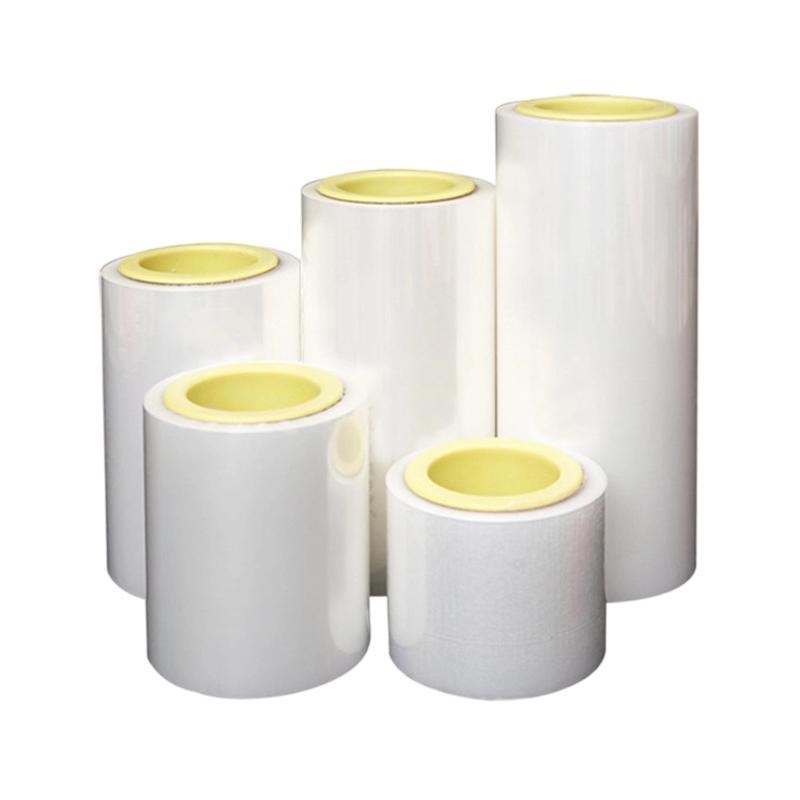
CONTACT DETAILS
- Address:No. 241, Yaojiafan, Zhangpanqiao, Shushan Street, Xiaoshan District, Hangzhou City, Zhejiang Province, China
- TEL:+86-0571-83175630
- Phone:+86-13336160217
- Email:jeffrey@grtpk.com
- WeChat/WhatsApp:+86-18058115265
PRODUCTS
NEWS CENTER
MOBILE TERMINAL
Copyright© Zhejiang Geruite Packaging Materials Co., Ltd. All Rights Reserved.
Privacy Wholesale industrial packaging tape Manufacturers