


 English
 Español
 عربى

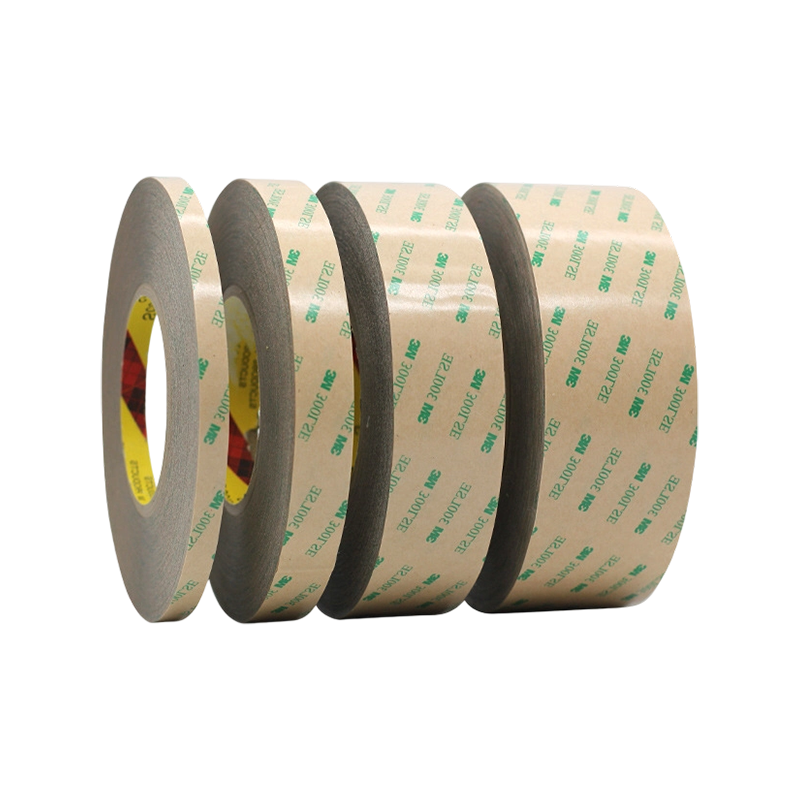
No-Residue Double-Sided PET Tape for Clean, Durable Industrial Bonding
Content
- 1 Why Clean-Removal Adhesive Tape Matters
- 2 Product Construction and Functional Design
- 3 Key Performance Characteristics
- 4 Advantages Over Conventional Double-Sided Tape Options
- 5 Applications Across Multiple Industries
- 6 Advanced Manufacturing and Quality Control
- 7 Company Strengths and Customer Support
- 8 Recommended Application Procedure
- 9 Storage and Handling Considerations
- 10 How to Select Between Removable and Permanent Faces
- 11 Q&A: No-Residue Double-Sided Tape
- 11.1 What is No-Residue Double-Sided Tape?
- 11.2 Why is PET used as the carrier?
- 11.3 Does the tape have the same adhesive performance on both sides?
- 11.4 What is the tape thickness?
- 11.5 What temperature can the tape withstand?
- 11.6 Can it be used on every type of surface?
- 11.7 Is the tape suitable for permanent bonding?
- 11.8 Can the tape be die cut?
- 11.9 How can residue be minimized during removal?
- 11.10 What industries can use this product?
- 11.11 How should a customer begin a product evaluation?
- 12 Why Choose an Experienced Packaging-Tape Manufacturer
- 13 Conclusion
- 14 References
- 15 Product: No-Residue Double-Sided Tape
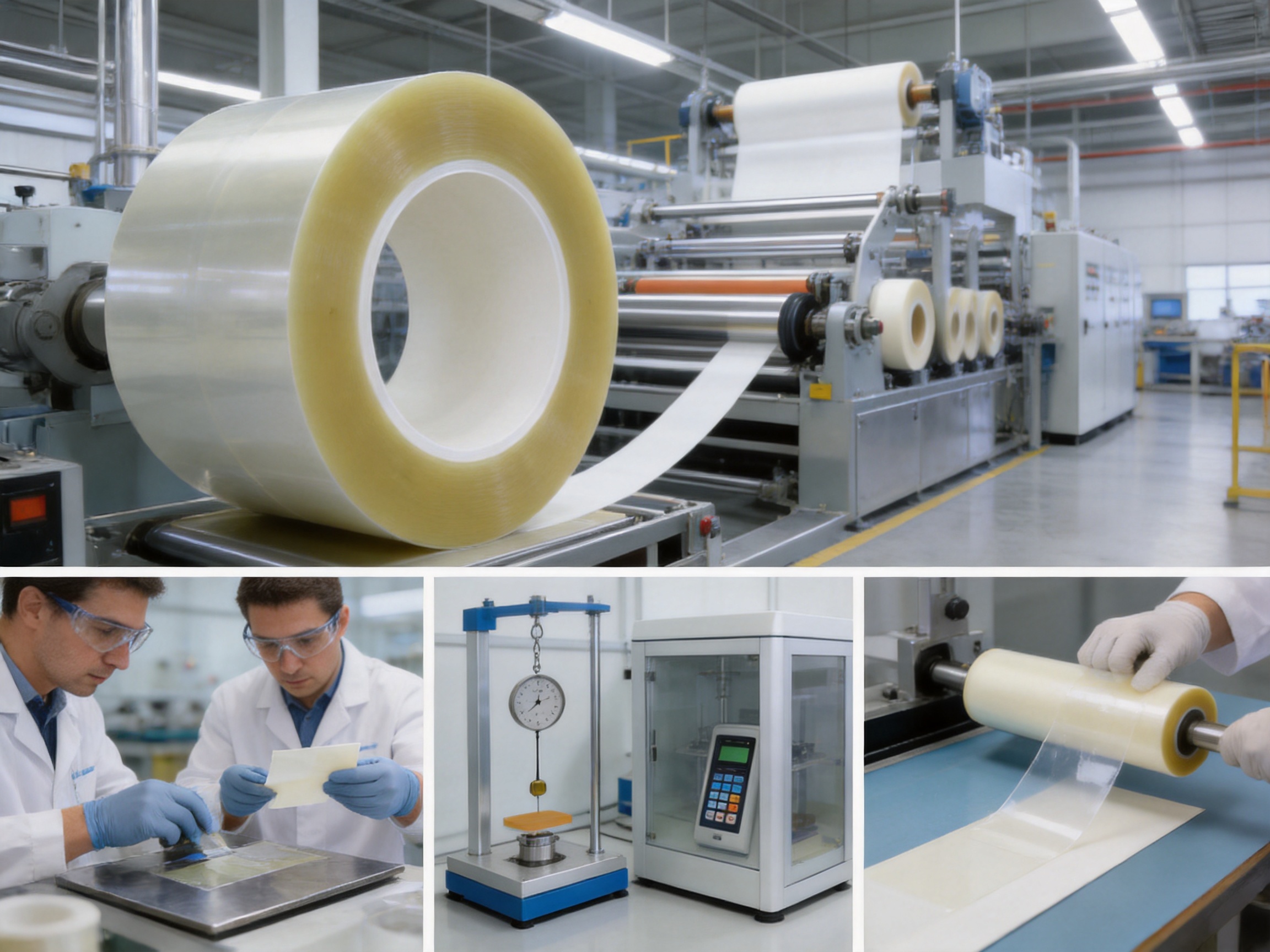
In modern manufacturing, packaging, electronics, signage, furniture, household goods, construction, and general industrial assembly, adhesive tape is often expected to perform several functions at the same time. It must provide reliable bonding, withstand handling and environmental stress, maintain a neat appearance, and allow components to be removed or repositioned without damaging the underlying surface. These requirements are especially important when the substrate is painted, polished, coated, printed, transparent, or otherwise difficult to repair.
No-Residue Double-Sided Tape is designed for applications in which clean removal is as important as initial adhesion. Built on a durable PET carrier and engineered with adhesive faces that can offer different adhesion characteristics, the tape combines practical holding performance with surface protection. After removal, the adhesive is designed to leave little or no visible residue when the tape is correctly selected, applied, and removed under suitable conditions.
Manufactured by Zhejiang Geruite Packaging Materials Co., Ltd., this double-sided tape reflects the company’s broader experience in adhesive tapes, stretch film, strapping materials, and protective packaging products. The product is suitable for customers seeking an industrial packaging tape supplier capable of supporting different applications, production volumes, and performance requirements.
Why Clean-Removal Adhesive Tape Matters
Traditional permanent double-sided tapes can provide strong adhesion, but they may also create difficulties during maintenance, replacement, product rework, or final unpacking. When a tape leaves adhesive behind, the residue can attract dust, interfere with subsequent bonding, damage coatings, or require additional cleaning. In some industries, a contaminated surface may need to be discarded rather than restored.
A clean-removal tape addresses these challenges by balancing adhesion and removability. The tape must remain stable during service but release from the substrate without excessive tearing, adhesive transfer, or surface damage. This balance requires careful control over the carrier, adhesive formulation, coating weight, curing conditions, release liner, and winding process.
No-Residue Double-Sided Tape is particularly useful where the appearance and integrity of the substrate are important. It can be considered for temporary fixing, protective assembly, mounting, display production, component positioning, sample preparation, product bundling, and other applications that may require later removal or replacement.
The value of a clean-removal adhesive is not limited to visual appearance. It can also reduce labor. A production operator who does not need to scrape or solvent-clean the substrate can complete an assembly task more quickly. A retailer or end user can remove temporary packaging materials with less risk of damaging the product. A maintenance team can replace a mounted component without spending excessive time preparing the surface for the next operation.
Product Construction and Functional Design
PET Carrier for Dimensional Stability
The tape uses PET as its carrier material. PET, or polyethylene terephthalate, is widely used in high-performance adhesive tapes because it offers good dimensional stability, tensile strength, smoothness, and resistance to stretching during handling. Compared with less stable film carriers, PET can help the tape maintain its shape during die cutting, slitting, application, and removal.
Dimensional stability is important when the tape is used for narrow strips, precision mounting, layered assemblies, or automated production. A carrier that stretches too easily can make accurate application difficult. It may also create uneven stress across the adhesive layer. A PET carrier helps provide a more controlled tape structure, allowing manufacturers and users to achieve consistent placement.
The PET base also supports a relatively clean and professional appearance. Since the product is specified as transparent, it can be used where the tape should remain visually discreet. This feature is valuable for transparent components, labels, displays, decorative elements, packaging inserts, and assemblies where an opaque tape would be noticeable.
Double-Sided Adhesive Structure
Double-sided tape contains adhesive on both sides of the carrier. This allows two surfaces to be joined without visible mechanical fasteners or bulky mounting components. Depending on the application, one side may be designed for easier removal while the other side provides more permanent bonding. The supplied performance information identifies removable and permanent faces, with adhesion to steel plates listed as 5–10 N/24 mm for the removable face and at least 10 N/24 mm for the permanent face under the stated test conditions.
This differentiated-face design is a practical advantage. It allows a manufacturer to attach a component securely while preserving the option to remove the tape from a selected surface. Such construction can be useful for temporary fixtures, protective elements, sample boards, display components, and applications in which one side must remain stable while the other side is eventually released.
The use of a white release liner provides a visible backing during storage and application. It helps operators distinguish the release side from the exposed adhesive side and can make the tape easier to handle before installation. Clear tape combined with a white liner also gives the product a neat and recognizable appearance during converting and assembly operations.
Controlled Thickness
The stated wear-layer thickness is 0.095 ± 0.005 mm according to the supplied product information and GB/T 7125-2014. A controlled thickness helps provide predictable bonding geometry and supports consistent application across batches. In precision work, thickness variation can affect the distance between joined surfaces, the pressure distribution during lamination, and the final appearance of the assembly.
A relatively thin double-sided tape can help reduce bulk. This is valuable when components must fit within a narrow tolerance or when the final product needs a clean, low-profile appearance. At the same time, the PET carrier gives the tape structure and handling strength that a very thin unsupported adhesive film may not provide.
Thickness is only one part of tape performance. The correct selection also depends on substrate type, surface energy, temperature, load direction, contact area, dwell time, and expected service life. However, a controlled nominal thickness gives engineers a reliable starting point when designing an assembly or comparing materials.
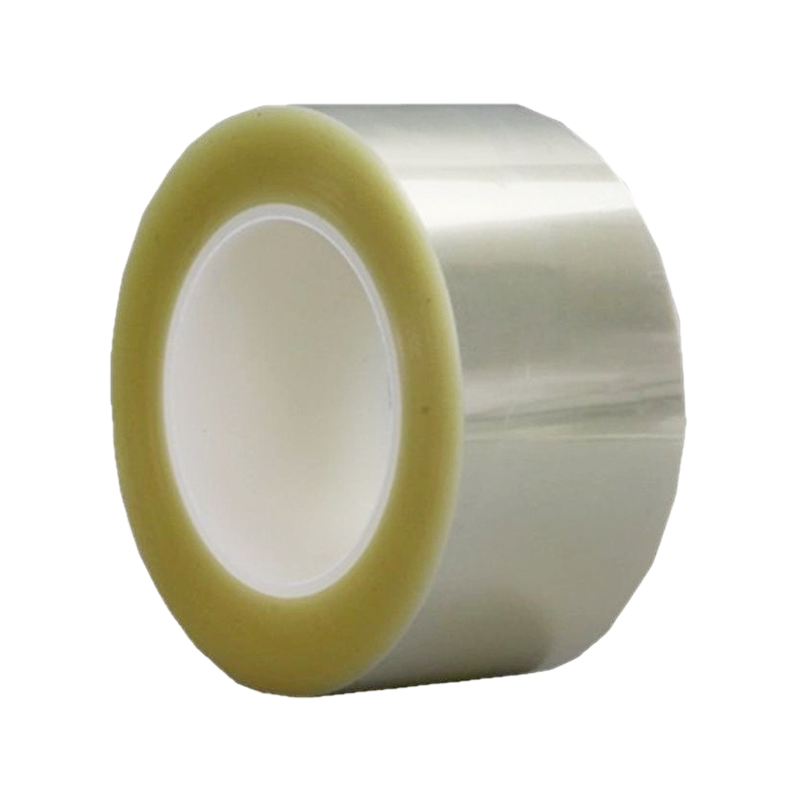
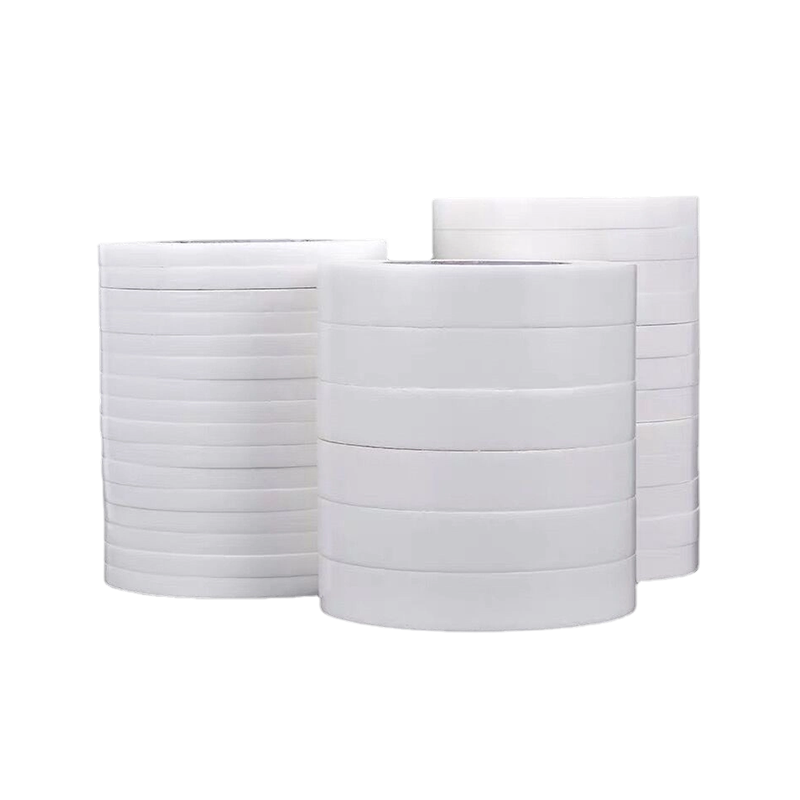
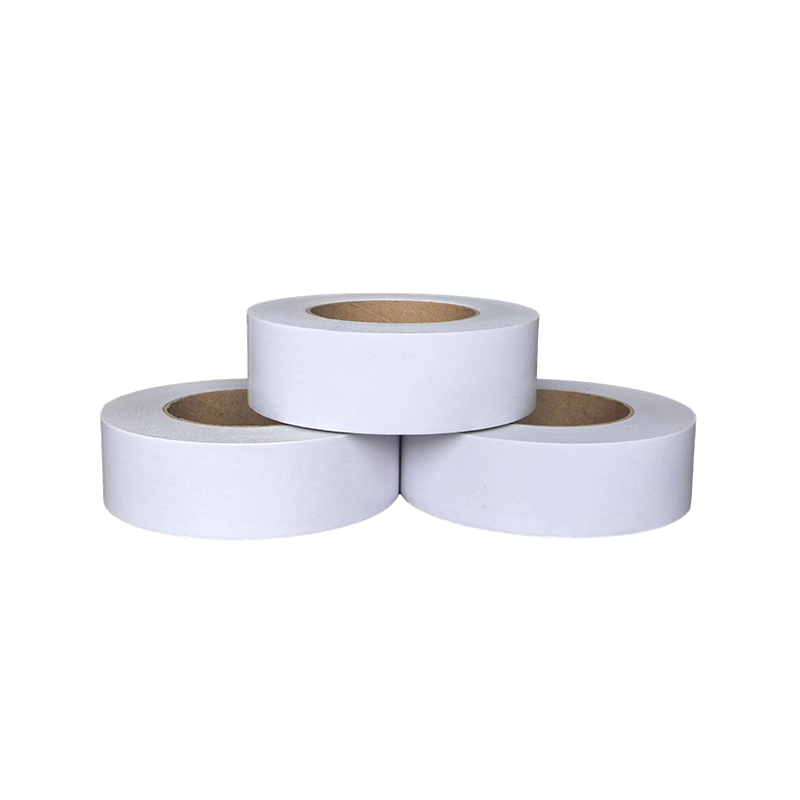
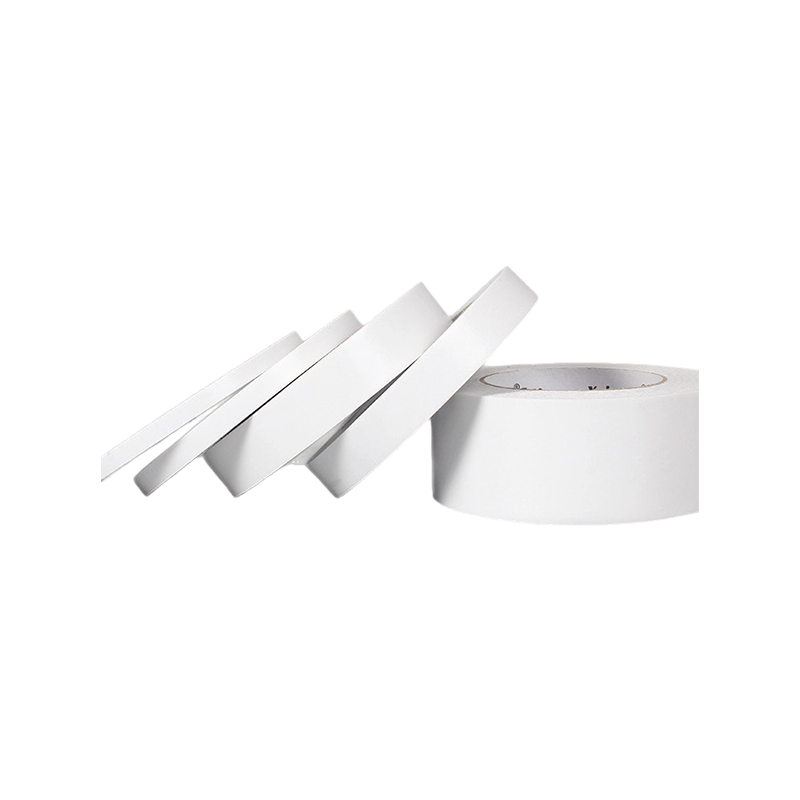
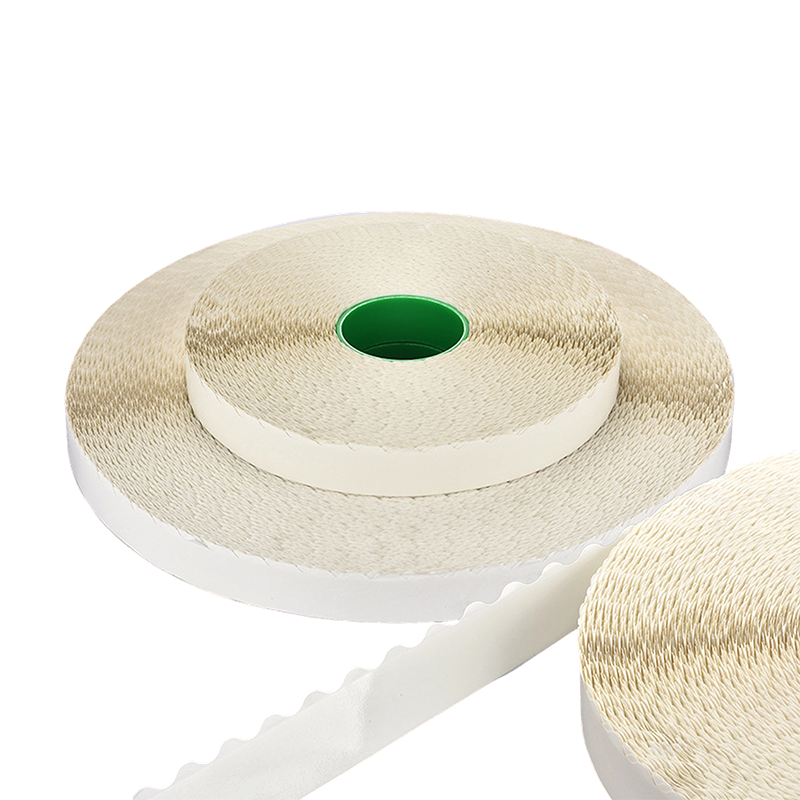
No-Residue Double-Sided Tape
Key Performance Characteristics
Adhesion to Steel
Adhesion to steel plates is commonly used as a reference measurement for comparing adhesive tape performance. The supplied data specifies a 180-degree peel test after the tape has remained on the steel plate for 20 minutes. Under this test, the removable face is listed at 5–10 N/24 mm, while the permanent face is listed at 10 N/24 mm or higher.
These values indicate that the product is designed to provide a useful distinction between the two adhesive faces. The removable side is intended to release more readily than the permanent side, while still offering sufficient holding power for suitable applications. The permanent side is intended to provide a stronger bond when a component must remain attached during handling or service.
Actual peel performance may vary depending on the surface. Steel is a standardized reference substrate, while real-world materials may include plastics, painted metal, paperboard, glass, wood, laminates, powder-coated surfaces, and textured materials. Customers should evaluate the tape on the actual substrate and under the expected application conditions before full-scale production.
Static Shear Performance
The supplied static shear test information specifies a 24 mm × 24 mm bonded area, a 1,000 g load, and a minimum duration of 1,440 minutes. Static shear measures the ability of an adhesive bond to resist sliding or downward movement under a sustained load. This characteristic is important when a mounted part is exposed to gravity, vibration, or a long holding period.
High static shear performance can reduce the risk of creep, in which the adhesive gradually deforms under constant stress. It is especially relevant for vertically mounted components, signs, fixtures, clips, panels, lightweight accessories, and packaging elements that remain attached for extended periods.
Shear results depend strongly on the size and shape of the bonded area. A larger bonded area generally distributes the load more effectively, while a narrow strip may experience higher stress concentration. Surface preparation, application pressure, dwell time, and temperature also influence the final result. The stated test value should therefore be used as a performance reference rather than as a universal load rating for every design.
Initial Tack
The initial adhesion or initial tack value is listed as no more than 100 mm using the No. 14 steel ball inclined-groove method under GB/T 4852-2002. Initial tack reflects how readily an adhesive begins to bond when it first contacts a surface, before the bond has developed through extended dwell time.
Controlled initial tack is useful in production. An adhesive with excessive tack may be difficult to reposition and can create problems during alignment. An adhesive with insufficient tack may not hold the component in place while the assembly process continues. The specified value indicates that the product is engineered with a controlled balance between immediate contact and practical handling.
Operators can improve initial bonding by applying firm and even pressure. Pressure helps the adhesive wet out the microscopic irregularities of the substrate, increasing the effective contact area. Clean, dry surfaces are also essential. Dust, oil, moisture, release agents, and fingerprints can reduce contact and cause premature failure.
Temperature Resistance
The stated temperature resistance is 120°C according to the supplied product information and GB/T 4851-2014. This rating suggests that the tape can be considered for applications involving elevated temperatures within the appropriate time and load limits.
Temperature resistance should not be interpreted as a guarantee of identical performance under every thermal condition. Adhesives can respond differently to short-term exposure, continuous exposure, heating and cooling cycles, pressure, humidity, and mechanical load. A tape that performs well at room temperature may soften at elevated temperature or become less flexible in cold conditions.
For this reason, customers should conduct application-specific testing when the tape will be used near ovens, heaters, lighting systems, vehicle interiors, industrial equipment, or other heat-producing components. Testing should include the actual substrate, bond size, load, exposure duration, and removal requirement.
Appearance and Surface Presentation
The adhesive tape is specified as transparent by visual inspection, and the release liner is specified as white. Transparency can provide a cleaner appearance when the tape is applied to clear or visually sensitive surfaces. It can also help reduce the visibility of the bond line in displays, labels, decorative components, and product assembly.
Appearance consistency is important for customers who convert the tape into rolls, strips, shapes, or die-cut parts. Variations in coating, contamination, liner alignment, or winding quality can affect the visual quality of the finished component. A controlled manufacturing process helps reduce such issues and supports more consistent downstream converting.
| Performance Item | Stated Value | Reference or Test Method | Practical Significance |
|---|---|---|---|
| Carrier and structure | PET double-sided adhesive tape | Product construction | Provides dimensional stability, handling strength, and a low-profile bonding format |
| Wear-layer thickness | 0.095 ± 0.005 mm | GB/T 7125-2014 | Supports controlled assembly thickness and consistent application |
| Removable-face adhesion to steel | 5–10 N/24 mm | 180-degree peel test after 20 minutes; GB/T 2792-2014 | Provides practical holding power with a focus on easier removal |
| Permanent-face adhesion to steel | At least 10 N/24 mm | 180-degree peel test after 20 minutes; GB/T 2792-2014 | Supports stronger attachment on the permanent side |
| Static shear | At least 1,440 minutes | 24 mm × 24 mm area, 1,000 g load; GB/T 4851-2014 | Indicates resistance to sliding under sustained load |
| Initial tack | No more than 100 mm | No. 14 steel ball inclined-groove method; GB/T 4852-2002 | Helps balance initial contact with application control |
| Temperature resistance | 120°C | GB/T 4851-2014 | Provides a reference for elevated-temperature applications |
| Adhesive color | Transparent | Visual inspection | Helps create a discreet bond line on suitable substrates |
| Release liner color | White | Visual inspection | Supports easy identification and handling before application |
Advantages Over Conventional Double-Sided Tape Options
Cleaner Removal
The most direct advantage is the focus on residue-free removal. Conventional permanent tapes may leave adhesive transfer when peeled away, especially after prolonged aging, heat exposure, or pressure. Removing this residue can require scraping, wiping, or chemical treatment. No-Residue Double-Sided Tape is intended to reduce this burden when used within suitable conditions.
Cleaner removal helps protect the appearance of the original surface. This is especially valuable for painted panels, coated metals, glass, plastic housings, furniture finishes, printed materials, and retail displays. It also helps reduce the risk that a temporary fastening operation will create permanent cosmetic damage.
Two Different Adhesion Functions
Many basic double-sided tapes are designed to provide similar adhesion on both sides. That construction may be suitable for permanent joining, but it is less flexible when an application requires one side to release more readily. The specified removable-face and permanent-face performance of this PET tape creates a more purposeful relationship between the two sides.
This can simplify product design. An engineer may be able to attach a component securely to one surface while keeping another surface serviceable or replaceable. A packaging designer may use the removable side for temporary positioning and the permanent side for a stable attachment. A display manufacturer may mount an element without committing every part of the assembly to permanent adhesion.
Low-Profile Assembly
Mechanical fasteners, clips, screws, and bulky mounting systems can increase product weight and alter the appearance of an assembly. Double-sided tape offers a thin bonding alternative. The stated 0.095 ± 0.005 mm thickness supports applications where a low-profile connection is preferred.
A low-profile bond can also help distribute stress over a larger area than a point fastener. This may reduce localized pressure on fragile components and create a smoother external surface. In decorative and consumer products, avoiding visible fasteners can improve design freedom and final appearance.
Efficient Application
Tape can be applied quickly compared with liquid adhesives that require mixing, curing, dispensing equipment, or drying time. A pre-coated roll is ready for converting and use. This can support cleaner production lines, reduce mess, and simplify operator training.
For automated operations, PET double-sided tape can be slit, laminated, die cut, or supplied in formats appropriate for machine application. The stable carrier helps maintain dimensional control during converting. Customers should discuss roll width, length, core size, liner configuration, and die-cut requirements with the supplier when planning automated production.
Reduced Surface Rework
Residue-free removal can lower the amount of rework associated with temporary assembly. If a component is misaligned, replaced, inspected, or repaired, the operator may be able to remove the tape and prepare the surface more quickly. This can be particularly useful in industries with frequent design changes, small-batch production, prototypes, seasonal displays, or serviceable products.
Reduced rework also contributes to material efficiency. When a surface can be restored instead of discarded, the customer may reduce waste and improve the utilization of components. The environmental benefit depends on the entire application and disposal process, but easier removal can support more flexible reuse and repair practices.
Applications Across Multiple Industries
Packaging and Logistics
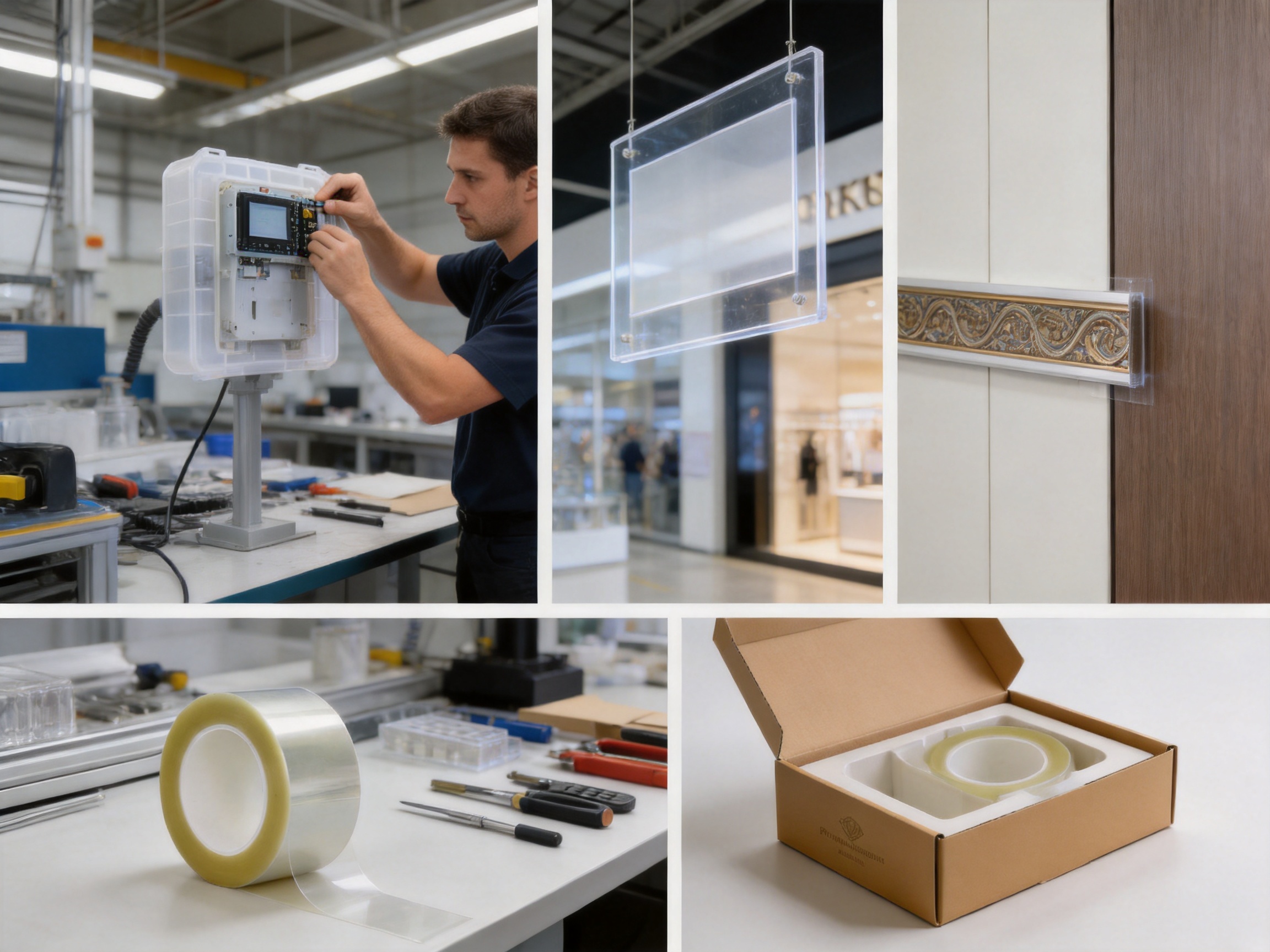
In packaging operations, double-sided tape can be used for temporary positioning, label mounting, insert placement, sample attachment, carton component fixing, and display-ready packaging. The clean-removal characteristic is useful when packaging must be removed without damaging the packaged product.
Logistics providers may also use adhesive tape for identification elements, temporary labels, protective pads, and internal packaging components. Since transport conditions can include vibration, temperature changes, and repeated handling, the bond should be tested against the actual package materials and expected duration.
Electronics and Electrical Products
Electronic products often contain components that require clean appearance, controlled thickness, and careful surface treatment. PET double-sided tape may be considered for mounting lightweight components, insulation layers, display elements, labels, bezels, cable-management parts, or temporary protective pieces.
Because electronics frequently involve plastics, coated metals, glass, and low-surface-energy materials, application testing is essential. The tape should not be selected solely on the basis of steel-plate test data. Engineers should evaluate adhesion, removability, outgassing requirements where relevant, temperature exposure, and compatibility with the component surface.
Household Goods and Furniture
Household products and furniture may require concealed mounting for trim, decorative panels, hooks, labels, edge elements, and accessories. The transparent tape can help preserve the appearance of visible surfaces, while the clean-removal concept can be valuable during installation, adjustment, or replacement.
Furniture finishes vary widely. Painted wood, laminates, varnishes, powder coatings, and plastics can react differently to adhesive contact. A small trial on an inconspicuous area is recommended before applying the product to a finished surface.
Construction and Decoration
In interior decoration, double-sided tape can assist with positioning lightweight decorative materials, signs, temporary guides, protective elements, and trim. It may also help installers hold a component in place while another fastening method is completed.
Construction environments can expose tape to dust, moisture, uneven surfaces, and temperature variation. Surface preparation becomes especially important. The product is best suited to applications whose load and environmental conditions are compatible with the tape’s tested performance.
Retail Displays and Signage
Retail displays often change frequently. Promotional graphics, shelf elements, product holders, and decorative pieces may need to be installed for a limited period and removed without damaging the display surface. A clean-removal double-sided tape can help retailers reduce the time required to refresh visual merchandising.
Transparency is also advantageous where the tape must remain visually discreet. However, the display designer should consider the weight of the mounted item, the direction of the load, the duration of installation, and the surface energy of the display material.
Industrial Manufacturing
Industrial manufacturers can use double-sided PET tape for component positioning, protective assembly, temporary fixation, gaskets, nameplates, labels, and bonding of lightweight parts. The product’s static shear reference may be relevant when a component must resist movement during storage or service.
In an industrial environment, process consistency is often as important as adhesive strength. A tape that can be applied cleanly and converted accurately may help reduce downtime and improve repeatability. Zhejiang Geruite Packaging Materials Co., Ltd. can support customers whose requirements extend beyond a standard roll, subject to product evaluation and production feasibility.
Advanced Manufacturing and Quality Control
Integrated Packaging-Materials Experience
Zhejiang Geruite Packaging Materials Co., Ltd. operates within the packaging-materials sector and produces a range of tapes and flexible packaging products. Its product portfolio includes BOPP tape, kraft paper tape, masking tape, high-temperature-resistant tape, metal tape, PE stretch film, PP strapping, and high-strength PET strapping.
This broad product scope is strategically valuable. Adhesive tape manufacturing requires knowledge of polymer films, adhesive coating, slitting, winding, packaging, and quality inspection. Experience with stretch film and strapping also gives the company a wider understanding of load stabilization, surface protection, package integrity, and the practical conditions faced by logistics and manufacturing customers.
Customers looking for more than a single adhesive product may benefit from working with a supplier that can discuss several packaging-material options. For example, a project may require double-sided tape for component attachment, stretch film for outer protection, and PET or PP strapping for load security. A supplier with multiple product categories can help coordinate the material selection process.
Raw-Material Control
Adhesive performance begins with raw-material selection. PET film, adhesive components, release liners, cores, and packaging materials must be evaluated for consistency and suitability. Variations in film thickness, surface treatment, adhesive viscosity, or liner release force can influence converting and final application.
A disciplined procurement and incoming-inspection system helps identify material variation before it reaches the coating or converting stage. This is especially important for industrial customers who require stable roll quality and predictable performance from one shipment to the next.
Coating and Lamination Control
The quality of a double-sided tape depends heavily on the uniformity of the adhesive layers. Coating equipment must distribute the adhesive evenly across the PET carrier while maintaining the target thickness and avoiding defects such as skips, bubbles, streaks, contamination, or edge irregularities.
Where the two faces have different functional characteristics, coating control becomes even more important. The removable side and permanent side must be produced with the intended balance of tack, peel adhesion, shear resistance, and release behavior. Lamination with the release liner must also be controlled so that the liner protects the adhesive during storage but can be removed smoothly during application.
Curing and Process Stability
Adhesive systems may require controlled drying, curing, or aging before they achieve their intended properties. Temperature, airflow, line speed, coating weight, and residence time can all affect the final tape. Proper process control helps ensure that the adhesive is neither under-cured nor over-processed.
Stable curing is important for clean removal. An adhesive that has not developed the intended structure may transfer or fail prematurely, while an adhesive that has aged excessively may become difficult to remove. Consistent processing therefore supports both holding performance and removability.
Slitting and Winding
After coating and curing, jumbo rolls are commonly slit into narrower rolls. Slitting quality affects the edge condition, width tolerance, telescoping behavior, roll hardness, and ease of unwinding. Poorly controlled slitting can create loose edges, uneven rolls, or difficult application.
Winding tension must also be managed carefully. Excessive tension can deform the roll or affect adhesive behavior, while insufficient tension can produce loose or unstable rolls. A professional converting process supports cleaner edges, more consistent roll geometry, and improved compatibility with manual or automated application.
Inspection and Testing
The supplied product information references testing for thickness, peel adhesion, static shear, initial tack, and temperature resistance. These tests provide a structured basis for product evaluation. By monitoring key physical and adhesive properties, the manufacturer can compare production results against internal requirements and applicable reference methods.
Quality control should be considered a continuous system rather than a final inspection alone. Monitoring raw materials, coating conditions, curing, slitting, packaging, and finished-roll performance helps identify the source of variation. This approach is important for customers who use adhesive tape in repeat production, where a small defect can affect a large number of units.
Company Strengths and Customer Support
Manufacturing Base in Zhejiang
Zhejiang is one of China’s important manufacturing regions, with strong capabilities in industrial production, materials processing, logistics, and export supply. Zhejiang Geruite Packaging Materials Co., Ltd. is located in Xiaoshan District, Hangzhou City, Zhejiang Province. Its location supports access to a developed industrial network and transportation infrastructure.
The company has built its business around research, development, production, and sales of packaging materials. Its stated annual output value has exceeded RMB 60 million, indicating an established operating scale and a substantial commercial presence in the packaging-materials field.
Product Development Orientation
Packaging requirements continue to change as manufacturers seek lighter materials, cleaner processing, better appearance, improved productivity, and more flexible supply. A supplier with an emphasis on product development can respond more effectively to applications that do not fit a standard specification.
For No-Residue Double-Sided Tape, development may involve optimizing the balance between removable and permanent faces, improving surface compatibility, refining liner handling, adjusting thickness, and producing custom widths or die-cut shapes. Any modification should be validated by testing because changing one property can affect another.
Quality as a Production Principle
The company describes quality as central to its operations. This principle is reflected in the need to control every stage, from raw-material procurement to production and final inspection. For adhesive tapes, quality is not visible only in the finished roll. It is also reflected in unwinding behavior, edge quality, coating uniformity, dimensional accuracy, adhesion consistency, and performance after storage.
A quality-focused supplier can help customers reduce the risks associated with inconsistent material. Stable tape performance supports smoother production, fewer line stoppages, lower rejection rates, and more predictable assembly results.
Application-Oriented Service
Adhesive tape selection should be based on the complete application rather than on one specification. Important questions include: What material is being bonded? Is the surface coated or untreated? How long must the tape remain in place? Will the load be tensile, shear, or peel? What temperature and humidity will be present? Does the tape need to be removed from one or both surfaces? Will the customer apply the tape manually or automatically?
A supplier that understands these questions can provide more useful technical communication. Zhejiang Geruite Packaging Materials Co., Ltd. serves customers across packaging, logistics, household products, electronics, construction, decoration, manufacturing, cargo stabilization, and packaging protection. This cross-industry experience can help inform product discussions and trial planning.
Recommended Application Procedure
Prepare the Surface
The substrate should be clean, dry, and free from dust, oil, grease, moisture, release agents, and loose particles. If a cleaning agent is used, the surface should be allowed to dry fully before application. Porous, rough, dusty, or contaminated surfaces may reduce contact and cause premature release.
Confirm Compatibility
Before production use, test the tape on the actual materials. Evaluate initial placement, peel strength, holding power, appearance, and removal after the intended dwell time. If the tape will be exposed to heat, humidity, chemicals, vibration, or outdoor conditions, include those factors in the trial.
Apply Even Pressure
Firm, even pressure helps the adhesive wet out the surface. A roller or suitable application tool can improve contact and reduce air pockets. The tape should not be applied over folds, wrinkles, loose coatings, or heavily contaminated areas.
Allow Suitable Dwell Time
Many pressure-sensitive adhesives develop stronger bonds over time. Although the tape may hold immediately, the final bond can depend on the dwell period. Customers should establish a practical waiting time before exposing the assembly to its full load, especially when the application involves sustained shear.
Remove Carefully
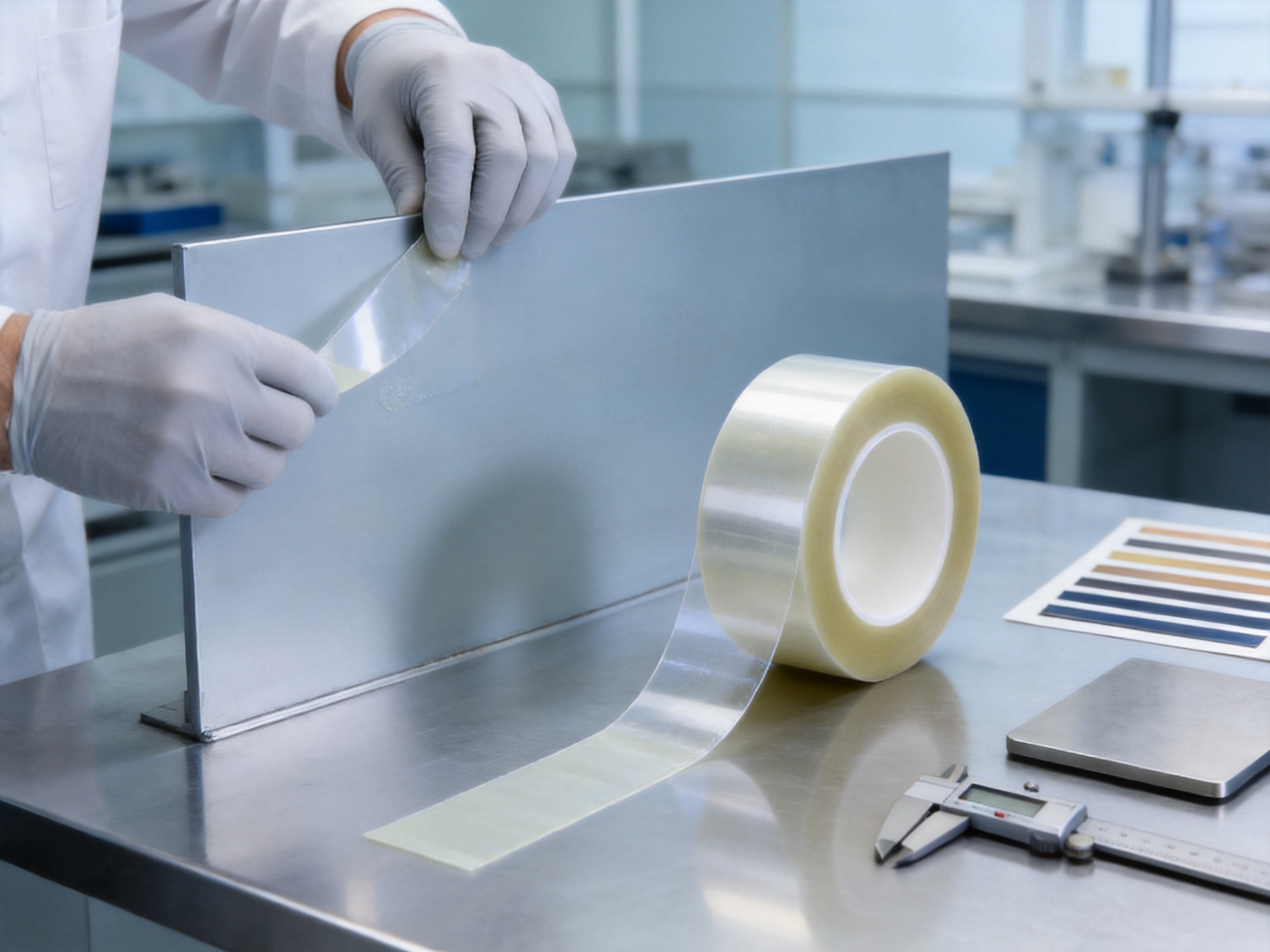
When removal is required, peel the tape slowly and at a controlled angle rather than pulling abruptly away from the surface. Slow removal can reduce stress on the substrate and lower the risk of adhesive transfer. If the tape has been exposed to heat, pressure, or an extended service period, removal behavior may differ from a short-term room-temperature trial.
Storage and Handling Considerations
Adhesive tape should be stored in a clean, dry environment away from direct sunlight, excessive heat, moisture, dust, and chemical vapors. Rolls should remain in their original packaging until required for use. They should be protected from crushing, deformation, and contamination.
Proper storage helps preserve adhesive performance and liner condition. Extreme temperature changes can affect tack, unwind behavior, and roll stability. Before applying the tape, allow the material to reach the working environment if it has been transported or stored under significantly different conditions.
Inventory should be managed on a first-in, first-out basis where appropriate. The customer should also follow any shelf-life or storage guidance supplied with the specific production batch. Long-term storage does not automatically produce failure, but adhesive products are best managed with controlled environmental conditions and regular inspection.
How to Select Between Removable and Permanent Faces
The removable face should generally be placed against the surface that may need to be restored, replaced, inspected, or protected from adhesive transfer. The permanent face should be used where the attached component is expected to remain stable for the required service period.
This arrangement is not universal because the best orientation depends on surface energy, load direction, texture, coating, and removal goals. A smooth, high-energy surface may produce different results from a low-energy plastic or a powder-coated panel. The intended orientation should therefore be confirmed through testing.
When the tape is used for temporary positioning, the removable face can make adjustment and later removal more convenient. When the product is used for a semi-permanent assembly, the stronger face can provide improved resistance to peel and shear on the primary mounting surface.
Q&A: No-Residue Double-Sided Tape
What is No-Residue Double-Sided Tape?
It is a double-sided adhesive tape made with a PET carrier and adhesive on both faces. It is designed for applications that require reliable bonding while reducing the likelihood of visible adhesive residue after removal under suitable conditions.
Why is PET used as the carrier?
PET provides dimensional stability, strength, smoothness, and controlled handling. These characteristics support accurate application, slitting, die cutting, and assembly, especially where a thin and stable tape structure is required.
Does the tape have the same adhesive performance on both sides?
No. The supplied performance information identifies a removable face with adhesion to steel of 5–10 N/24 mm and a permanent face with adhesion of at least 10 N/24 mm under the stated test conditions. The two faces are intended to provide different functional characteristics.
What is the tape thickness?
The stated wear-layer thickness is 0.095 ± 0.005 mm. The actual design thickness required for a project should be confirmed with the supplier because product constructions and converted formats can vary.
What temperature can the tape withstand?
The stated temperature resistance is 120°C according to the supplied product information. Customers should test the tape under the actual temperature, exposure time, load, humidity, and substrate conditions of the application.
Can it be used on every type of surface?
No adhesive tape is universally suitable for every surface. The tape should be tested on the actual substrate, especially when the surface is textured, porous, low-energy, freshly painted, powder coated, oily, or chemically treated.
Is the tape suitable for permanent bonding?
It can be considered for applications where the permanent face must provide stronger attachment. However, “permanent” should be understood in relation to the application conditions. The final result depends on load, surface preparation, temperature, humidity, aging, and bond area.
Can the tape be die cut?
The PET carrier and controlled structure may be suitable for converting into strips, shapes, tabs, or other die-cut forms. Die-cut feasibility depends on the desired geometry, thickness, liner, tolerances, and production volume. Customers should confirm requirements with the manufacturer.
How can residue be minimized during removal?
Use a clean, compatible substrate, apply the tape correctly, avoid excessive heat or load unless tested, and remove it slowly at a controlled angle. Residue performance should always be verified after the expected service duration.
What industries can use this product?
Potential industries include packaging, logistics, electronics, household goods, furniture, construction, decoration, retail displays, signage, industrial manufacturing, and product assembly. Suitability depends on the specific materials and performance requirements.
How should a customer begin a product evaluation?
The customer should provide information about the substrate, required bond duration, load type, temperature, humidity, application method, desired roll dimensions, and removal expectations. A trial using the actual materials is the best way to confirm suitability before mass production.
Why Choose an Experienced Packaging-Tape Manufacturer
Choosing adhesive tape is not only a matter of comparing nominal thickness or peel values. Supply reliability, converting capability, process control, technical communication, and product consistency can be equally important. A tape that performs well in a laboratory but varies significantly in production can create avoidable costs for the customer.
Zhejiang Geruite Packaging Materials Co., Ltd. combines adhesive-tape production with experience in stretch film, strapping, and other packaging materials. This broader capability supports a more complete understanding of industrial packaging requirements. The company’s focus on research, manufacturing, quality control, and service is designed to support customers from initial selection through regular supply.
For buyers, the primary advantages of No-Residue Double-Sided Tape are its PET carrier, controlled thickness, transparent appearance, differentiated adhesive faces, reference performance for peel and shear, and focus on clean removal. For manufacturers, the supporting advantages include a supplier with packaging-materials expertise, established production resources, and the ability to discuss customized formats and application requirements.
Conclusion
No-Residue Double-Sided Tape is a practical solution for applications that require a thin, discreet, and durable bond without sacrificing the possibility of clean removal. Its PET carrier provides dimensional stability and handling strength, while the two adhesive faces are designed to offer different adhesion functions. The stated performance data includes controlled thickness, measurable peel adhesion, static shear resistance, initial tack, and temperature resistance.
Compared with ordinary permanent double-sided tape, the product can provide greater flexibility where one surface must remain intact or where components may need to be replaced, repositioned, inspected, or removed. Its transparent appearance can also support a clean final design in packaging, electronics, displays, furniture, decoration, and industrial assembly.
The best results depend on correct surface preparation, appropriate application pressure, suitable dwell time, controlled storage, and application-specific testing. With its experience in adhesive tapes and related packaging materials, Zhejiang Geruite Packaging Materials Co., Ltd. is positioned to support customers seeking reliable industrial packaging tape products and practical material solutions.
References
1. Product performance information supplied for No-Residue Double-Sided Tape, including thickness, adhesion, static shear, initial tack, temperature resistance, color, and release-liner specifications.
2. GB/T 2792-2014, reference method for peel adhesion testing of pressure-sensitive adhesive tapes.
3. GB/T 4851-2014, reference method for static shear adhesion testing of pressure-sensitive adhesive tapes.
4. GB/T 4852-2002, reference method for initial adhesion testing using the inclined-groove method.
5. GB/T 7125-2014, reference method for measuring the thickness of adhesive tapes.
6. General technical principles for pressure-sensitive adhesive tape selection, surface preparation, application pressure, dwell time, storage, and removal.
Product: No-Residue Double-Sided Tape

CONTACT DETAILS
- Address:No. 241, Yaojiafan, Zhangpanqiao, Shushan Street, Xiaoshan District, Hangzhou City, Zhejiang Province, China
- TEL:+86-0571-83175630
- Phone:+86-13336160217
- Email:jeffrey@grtpk.com
- WeChat/WhatsApp:+86-18058115265
PRODUCTS
NEWS CENTER
MOBILE TERMINAL
Copyright© Zhejiang Geruite Packaging Materials Co., Ltd. All Rights Reserved.
Privacy Wholesale industrial packaging tape Manufacturers