


 English
  Español
  عربى
عربى 
PE and Metallocene Stretch Film Master Roll for High-Performance Industrial Packaging
Content
- 1 Product Overview: A Master Roll Built for Conversion and Industrial Use
- 2 Material Composition and Performance Logic
- 3 Key Product Specifications
- 4 Core Advantages Over Conventional Stretch Film
- 5 Advanced Manufacturing Processes Behind Consistent Quality
- 6 Company Strengths Supporting Product Reliability
- 7 Applications in Logistics and Warehousing
- 8 Applications in Processing and Distribution
- 9 Applications in Manufacturing and Production Lines
- 10 Applications for Bulk Cargo Protection
- 11 How This Product Helps Reduce Total Packaging Cost
- 12 Environmental and Material Efficiency Considerations
- 13 Storage and Handling Recommendations
- 14 Choosing the Right Specification
- 15 Competitive Advantages in the Industrial Packaging Market
- 16 Q&A Section
- 16.1 Q1: What is a stretch film master roll?
- 16.2 Q2: What makes PE + metallocene stretch film different from ordinary PE stretch film?
- 16.3 Q3: Who should choose a master roll instead of finished hand rolls or machine rolls?
- 16.4 Q4: Can the film be used directly for pallet wrapping?
- 16.5 Q5: What thickness should be selected?
- 16.6 Q6: Why is film transparency important?
- 16.7 Q7: What are the benefits of colored stretch film?
- 16.8 Q8: What should be checked before purchasing a master roll?
- 16.9 Q9: How should the film be stored?
- 16.10 Q10: Why choose Zhejiang Geruite Packaging Materials Co., Ltd. as a supplier?
- 17 Conclusion
- 18 References
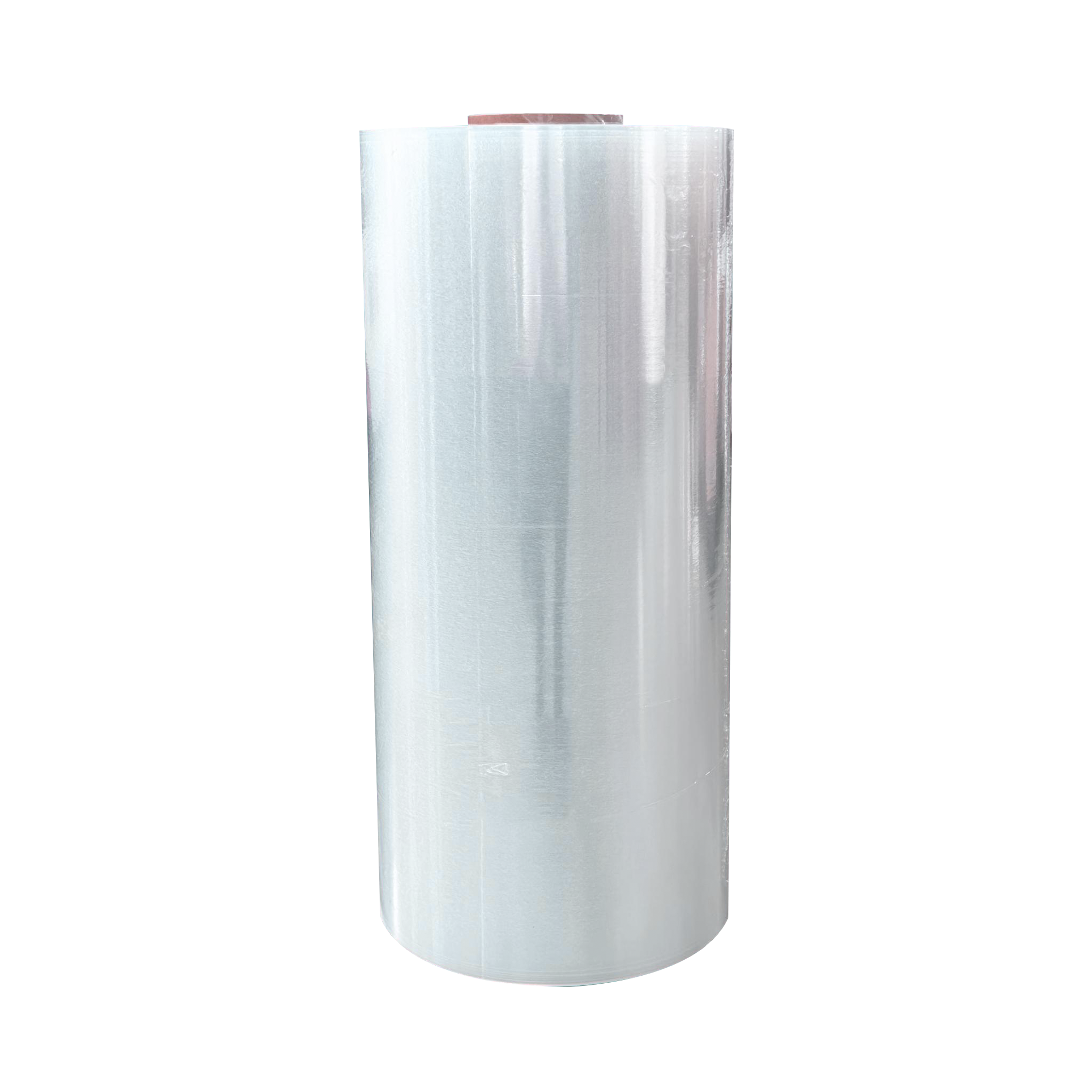
- 19 Product: PE + Metallocene Materials Stretch film master roll
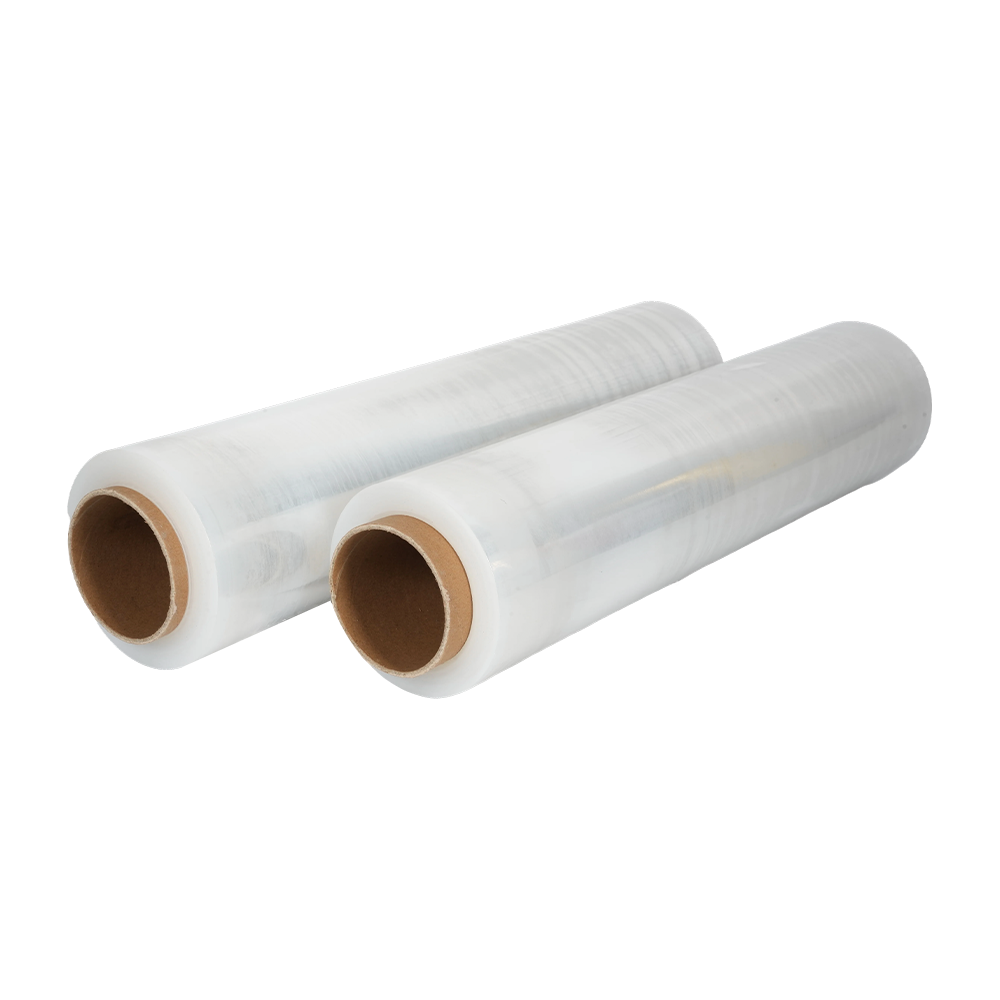
In modern industrial packaging, stretch film is more than a simple wrapping material. It is a load-stabilizing system, a cost-control tool, a protection layer, and an essential link between production, warehousing, transportation, and final delivery. The PE + metallocene materials stretch film master roll is designed for businesses that need reliable film performance, flexible converting options, and consistent packaging efficiency across demanding operations.
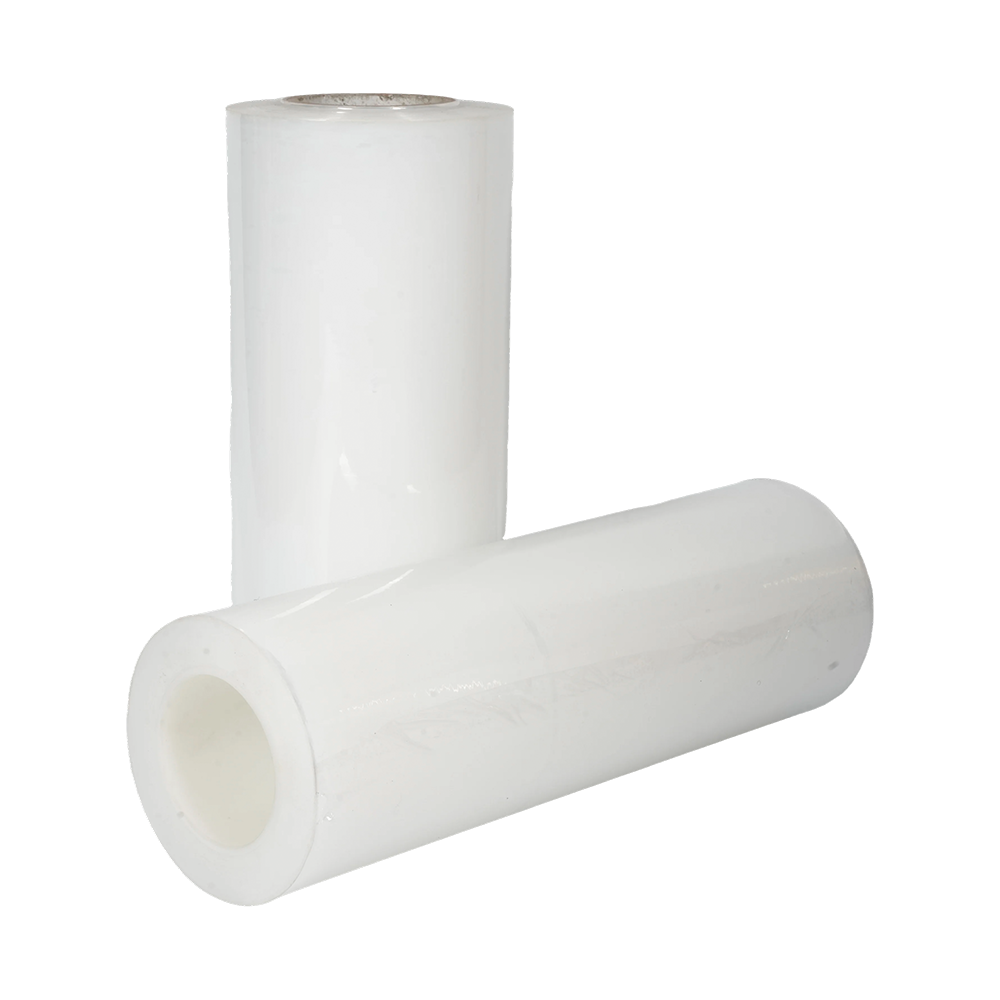
This product is supplied as a master roll, also known as a jumbo roll, which allows customers to slit or reprocess the film into specific widths, lengths, and roll weights according to their own application requirements. For packaging converters, distributors, large warehouses, manufacturing plants, and companies with non-standard packaging needs, the master roll format provides a practical way to reduce unit cost while increasing operational flexibility.
The film is made from pure polyethylene combined with metallocene copolymer technology, providing enhanced toughness, stretchability, puncture resistance, and clarity. Compared with ordinary stretch film made from standard LLDPE formulations, the addition of metallocene resin helps improve film strength at lower thicknesses. This means users can often achieve effective load retention with less material, supporting both cost efficiency and material reduction goals.
Zhejiang Geruite Packaging Materials Co., Ltd. manufactures this stretch film master roll as part of its broader portfolio of industrial packaging materials, including PE stretch film, adhesive tapes, PP strapping, and PET strapping. With advanced production equipment, strict quality control, and experience in industrial packaging applications, the company supports customers seeking stable supply, customizable specifications, and professional packaging material solutions.
PE + Metallocene Materials Stretch film master roll
Product Overview: A Master Roll Built for Conversion and Industrial Use
The PE + metallocene stretch film master roll is primarily intended for customers with subsequent slitting, rewinding, or reprocessing capabilities. Unlike finished hand rolls or machine rolls supplied in fixed dimensions, a master roll gives customers greater control over the final product format. It can be slit into narrow or wide rolls, rewound to different lengths, or converted into market-ready packaging film products for resale.
This flexibility is especially valuable for packaging converters and regional distributors. Instead of purchasing many separate finished roll sizes, they can purchase master rolls and produce different specifications according to demand. This reduces inventory pressure, simplifies procurement, and helps companies respond quickly to changing customer orders.
The product also serves large-scale users who consume stretch film continuously in logistics, manufacturing, and warehousing operations. When businesses operate wrapping stations with different machine types or product dimensions, fixed roll sizes may not always be ideal. A master roll allows users to customize film width and roll length to better match their packing lines, pallet sizes, load profiles, and handling methods.
Another important advantage is material efficiency. When film is cut only according to actual requirements, waste from unsuitable standard sizes can be reduced. This is particularly useful for companies packaging long, wide, irregular, or heavy goods such as building materials, metal products, paper products, household appliances, and industrial components.
Material Composition and Performance Logic
The stretch film master roll is produced from multilayer co-extruded Linear Low-Density Polyethylene, commonly known as LLDPE, with pure PE and metallocene copolymer components. LLDPE is widely used in stretch film because it combines flexibility, elongation, and tear resistance. The metallocene component further refines the molecular structure and enhances film performance.
Metallocene polyethylene is known for its uniform molecular distribution, which helps improve toughness, puncture resistance, and stretch consistency. In stretch film applications, these characteristics are highly important because the film must elongate under tension while still maintaining holding force around the load. If the film tears too easily, loses cling, or stretches unevenly, packaging reliability decreases.
Compared with conventional PE stretch films, PE + metallocene formulations can provide stronger performance at thinner gauges. This is significant because thickness reduction is one of the most direct ways to lower material consumption. For example, a film with enhanced toughness may allow users to select a thinner specification while still maintaining sufficient load stability. This can support both economic and environmental objectives.
The multilayer co-extrusion process also enables balanced properties across the film structure. Different layers may contribute to cling, strength, elasticity, or surface performance. By controlling layer ratios and processing conditions, the manufacturer can create film that performs consistently during slitting, rewinding, manual wrapping, or machine wrapping.
Key Product Specifications
The stretch film master roll can be customized according to application needs. Common heights include 45 cm and 50 cm, while the film thickness range is typically 0.015 mm to 0.045 mm. Widths may be selected according to customer requirements, and roll length and weight can be adjusted based on production line conditions, shipment requirements, and downstream converting equipment.
| Parameter | Available Value or Description | Packaging Significance |
| Material | Pure Polyethylene with metallocene copolymer | Improves toughness, stretch performance, and puncture resistance |
| Film Type | Multilayer co-extruded LLDPE stretch film | Provides stable performance and reliable load retention |
| Common Height | 45 cm and 50 cm | Suitable for common wrapping and converting requirements |
| Thickness Range | 0.015 mm to 0.045 mm | Supports light-duty to heavy-duty packaging applications |
| Length and Weight | Customizable | Allows adaptation to customer equipment and market demand |
| Available Colors | Transparent, red, yellow, blue, black, white, and others | Supports identification, privacy protection, branding, and sorting |
| Typical Use | Slitting, rewinding, pallet wrapping, resale conversion | Suitable for converters, distributors, and industrial users |
The availability of transparent and colored film expands the product’s application range. Transparent film is preferred when barcode scanning, label visibility, and content identification are necessary. Black or opaque film may be selected when privacy, anti-theft protection, or light shielding is required. Colored films can support warehouse classification, product grouping, inventory management, and shipment differentiation.
Core Advantages Over Conventional Stretch Film
1. Greater Customization Through Master Roll Supply
One of the most important advantages of this product is its master roll format. Finished stretch film rolls are convenient for direct use, but they limit the user to predetermined sizes. In contrast, master rolls give customers the freedom to slit film into customized widths and lengths. This is ideal for companies serving multiple industries or customers with varied wrapping requirements.
For example, a packaging converter may need to produce hand rolls for retail customers, machine rolls for automatic wrapping systems, and narrow rolls for bundling applications. With a master roll, all of these formats can be produced from the same base material. This improves production flexibility and reduces dependence on multiple finished product inventories.
2. Lower Per-Unit Cost for Bulk Users
Purchasing large master rolls can reduce per-unit film cost compared with buying smaller finished rolls. This is especially beneficial for distributors, converters, and high-volume industrial users. Bulk purchasing also reduces repeated packaging, handling, and ordering costs.
Cost efficiency is not only about the purchase price. It also involves material utilization, production continuity, labor efficiency, and logistics savings. By converting master rolls in-house or through local processing, companies can align film supply with actual consumption patterns and reduce unnecessary waste.
3. Enhanced Toughness from Metallocene Technology
The addition of metallocene copolymer gives the film an important performance advantage. Stretch film must resist punctures caused by pallet corners, cartons, irregular surfaces, metal edges, and shifting cargo. It must also stretch without sudden tearing. Metallocene-enhanced PE helps the film maintain integrity under stress.
This toughness advantage becomes especially valuable in logistics environments where goods are handled by forklifts, stacked in warehouses, transferred between vehicles, or exposed to vibration during transportation. A stronger film layer can reduce packaging failure, product damage, rewrapping labor, and customer complaints.
4. Stable Stretchability and Load Retention
Stretchability determines how far the film can elongate during wrapping, while load retention determines how well it continues to hold the goods after wrapping. A film that stretches well but loses tension quickly may not stabilize the pallet effectively. A film that is strong but does not stretch sufficiently may increase material usage or cause wrapping difficulties.
The PE + metallocene stretch film master roll is designed to provide a balanced combination of elongation, cling, and holding force. This makes it suitable for both manual and machine wrapping applications after proper slitting and rewinding.
5. High Transparency for Operational Visibility
Transparent stretch film allows operators to see package labels, product markings, barcodes, and shipping information without removing the film. This improves efficiency in warehousing, distribution, and delivery operations. It can also help reduce misidentification and handling errors.
For industries where product visibility is important, such as consumer goods, food packaging logistics, electronics, and export shipments, clarity is a practical performance feature. A transparent but strong film helps combine protection with traceability.
Advanced Manufacturing Processes Behind Consistent Quality
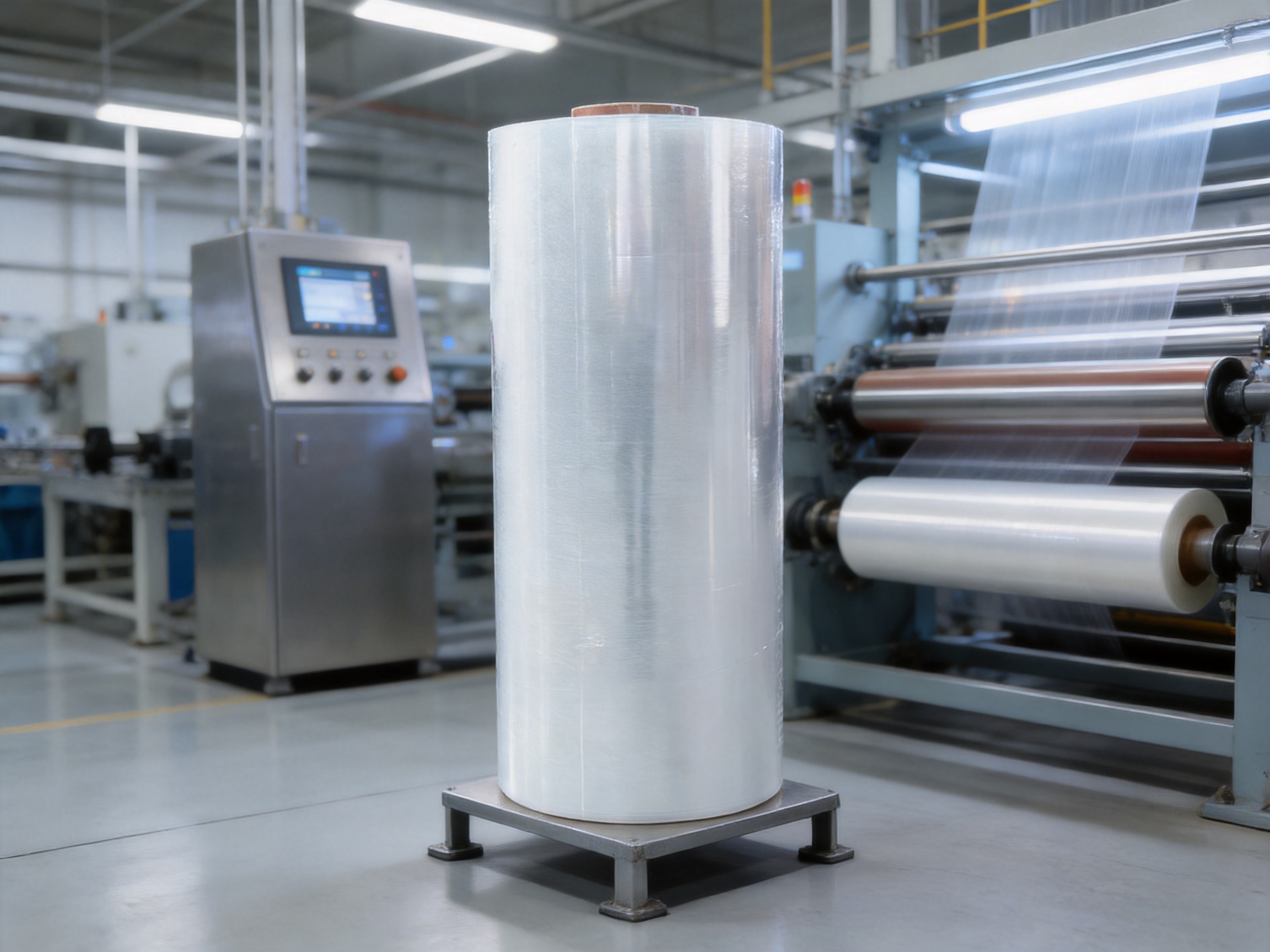
High-performance stretch film depends not only on raw material selection but also on manufacturing precision. Zhejiang Geruite Packaging Materials Co., Ltd. emphasizes stable production, strict process control, and quality inspection throughout the manufacturing chain. From raw material procurement to film extrusion, winding, testing, and final delivery, each stage affects the film’s final performance.
Raw Material Selection and Formula Control
The production process begins with carefully selected polyethylene and metallocene copolymer materials. Consistent raw materials help ensure stable film thickness, color, clarity, toughness, and cling. For industrial customers, consistency is extremely important because unstable film quality can cause machine wrapping problems, slitting defects, roll breakage, or unpredictable load retention.
Formula control is also critical. Different applications may require different balances of stretchability, puncture resistance, cling force, and tensile strength. By adjusting the resin composition and processing parameters, the manufacturer can produce films suitable for light packaging, general pallet wrapping, heavy-duty bundling, or converter-grade reprocessing.
Multilayer Co-Extrusion Technology
Multilayer co-extrusion enables several functional layers to be formed in one film structure. Each layer can contribute different performance characteristics. For instance, one layer may enhance cling, another may improve mechanical strength, and another may support smooth unwinding or surface stability.
This layered structure is a major advantage over simpler single-layer film. It allows the product to achieve balanced performance rather than relying on one material property alone. For master rolls, balanced performance is especially important because the film must remain stable during winding, storage, transportation, slitting, and final use.
Thickness Uniformity and Gauge Control
Thickness variation can create serious problems for stretch film users. If the film is too thin in some areas, it may tear during stretching or wrapping. If it is too thick in other areas, material cost increases and winding quality may become uneven. Uniform thickness helps ensure predictable performance.
During production, advanced extrusion and winding control help maintain consistent gauge across the roll. This benefits downstream converters because uniform film runs more smoothly through slitting machines and rewinding systems. It also helps industrial users apply a consistent wrapping force during palletization.
Winding Quality and Roll Structure
A master roll must be wound with proper tension and alignment. Poor winding can cause roll telescoping, wrinkles, edge damage, uneven unwinding, or difficulty during slitting. Since master rolls are large and heavy, winding quality directly affects safety and processing efficiency.
The product is manufactured with attention to roll compactness, edge neatness, and core compatibility. Customers are advised to confirm core inner diameter and equipment load capacity before purchasing, ensuring the master roll can be handled safely and processed efficiently.
Quality Inspection and Performance Verification
Quality control may include checks for thickness, width, appearance, transparency, stretch behavior, puncture resistance, roll weight, winding condition, and color consistency. These inspection steps help ensure that each batch meets customer expectations and application requirements.
For customers who depend on continuous packaging operations, reliable quality reduces downtime and unexpected material failure. In industrial packaging, film failure can lead to damaged goods, delayed shipments, increased labor, and higher total packaging cost. Consistent quality is therefore a major competitive strength.
Company Strengths Supporting Product Reliability
Zhejiang Geruite Packaging Materials Co., Ltd. is located in Zhejiang Province, China, a region recognized for strong manufacturing capability, developed supply chains, and efficient industrial logistics. The company focuses on research, development, production, and sales of packaging materials, serving industries such as logistics, express delivery, household products, electronics, construction, decoration, industrial manufacturing, cargo stabilization, and packaging protection.
The company’s product range includes BOPP tapes, kraft paper tapes, masking tapes, high-temperature resistant tapes, metal tapes, PE stretch film, PP strapping, and high-strength PET strapping. This broad product portfolio allows customers to source multiple packaging materials from a single supplier, improving procurement efficiency and packaging compatibility.
One of the company’s key strengths is its emphasis on quality as the foundation of long-term development. Packaging materials must perform reliably under real working conditions, not only in controlled testing environments. By maintaining rigorous quality control from raw material procurement through final inspection, the company helps ensure stable product performance.
The company’s production scale and experience also support reliable supply. With an annual output value reaching over RMB 60 million, it has the capability to serve bulk users, distributors, and industrial customers with ongoing demand. For customers purchasing stretch film master rolls, supply continuity is a critical factor because packaging materials are consumed daily and directly influence shipping schedules.
In addition to manufacturing capacity, the company’s professional service approach helps customers select suitable specifications. Film thickness, roll weight, color, width, core size, and application method should all be matched with actual operating conditions. A knowledgeable manufacturer can help customers avoid over-specification, under-specification, equipment mismatch, and unnecessary cost.
Applications in Logistics and Warehousing
Logistics and warehousing are among the most important application areas for stretch film. Palletized goods must remain stable during storage, forklift movement, truck loading, long-distance transportation, and unloading. If cartons shift or collapse, product damage and safety risks may occur.
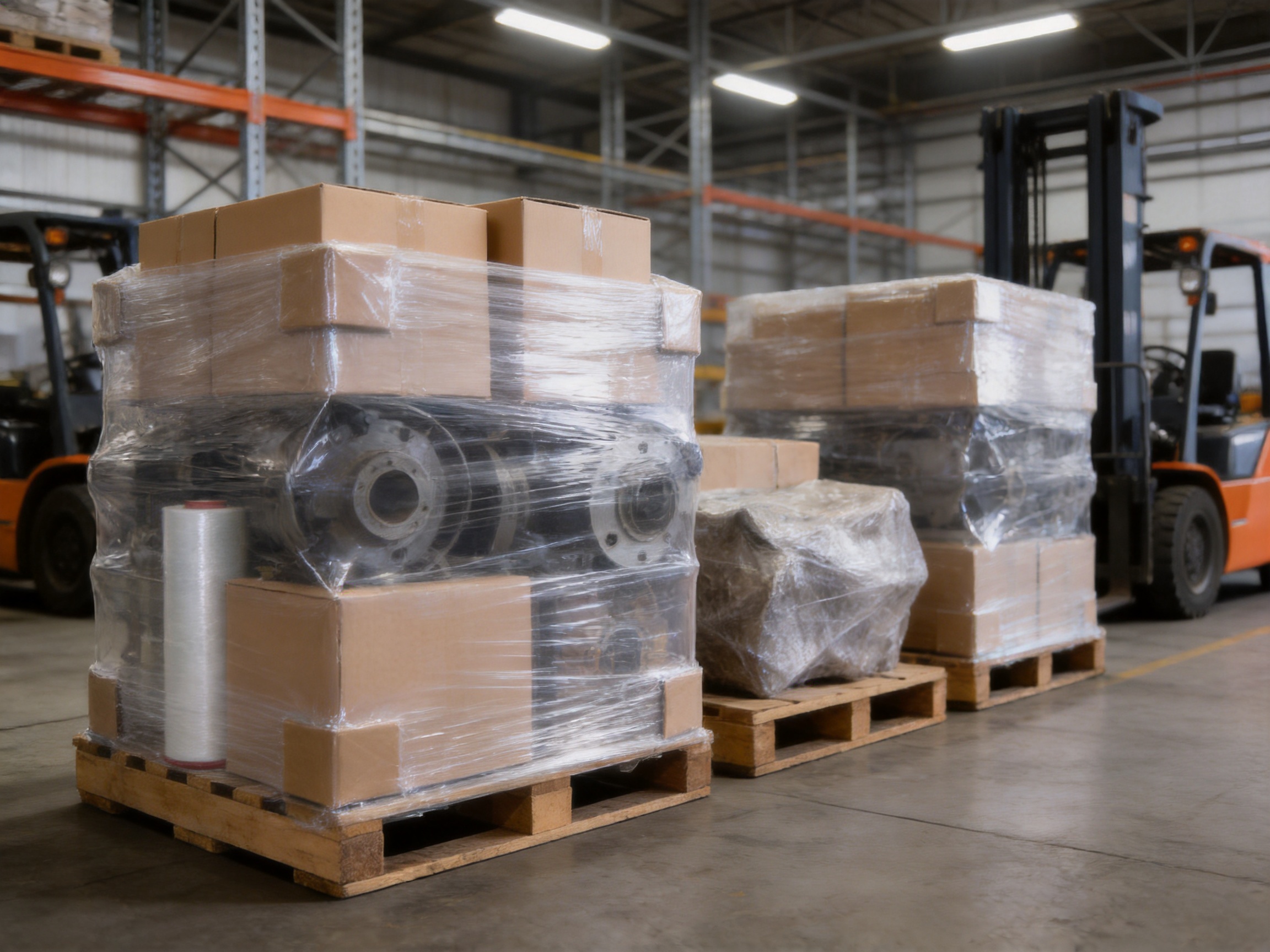
The PE + metallocene stretch film master roll supports secure pallet wrapping by providing stretchability, cling, and puncture resistance. After conversion into appropriate roll sizes, the film can be used with manual wrapping tools, semi-automatic machines, or automatic wrapping lines. Its clarity helps warehouse personnel identify goods, scan labels, and manage inventory without removing the wrap.
For large distribution centers, the master roll format offers additional value because film consumption is high and packaging requirements may vary. A warehouse may need different film widths for small cartons, standard pallets, oversized items, and bundled products. By using master rolls and converting them as needed, the operation can improve material flexibility.
Applications in Processing and Distribution
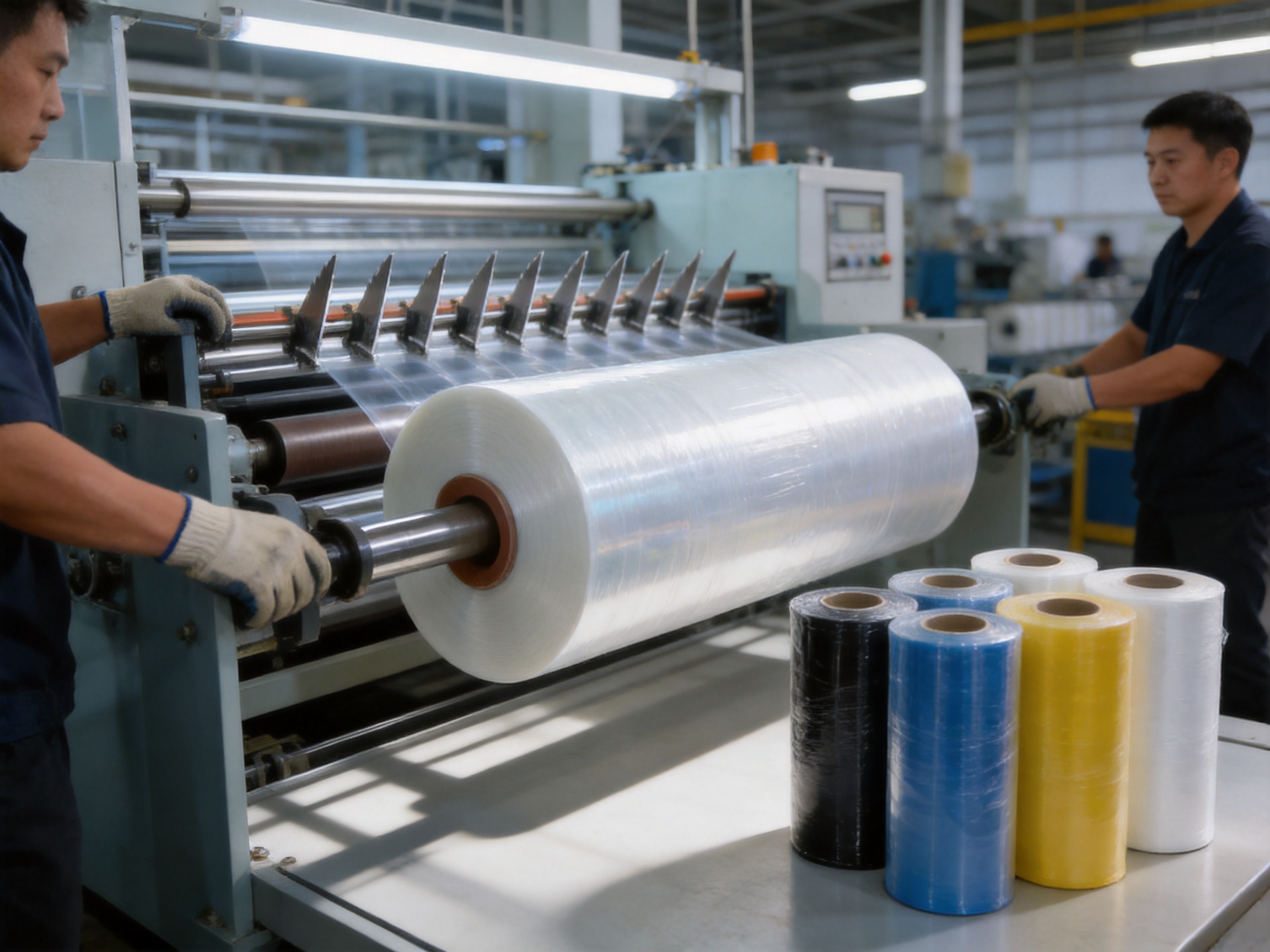
Packaging converters and distributors are important users of stretch film master rolls. These businesses often buy jumbo rolls, slit them into smaller rolls, rewind them to specific lengths, package them under customer requirements, and resell them to local markets. In this business model, the quality of the master roll directly determines the quality of the finished roll.
A converter needs film that slits cleanly, rewinds smoothly, maintains thickness uniformity, and performs reliably after conversion. If the master roll has inconsistent thickness, poor winding, or weak edges, conversion losses increase. The PE + metallocene stretch film master roll is designed with downstream processing compatibility in mind, helping converters improve yield and finished product quality.
Because available colors include transparent, red, yellow, blue, black, and white, distributors can serve different market segments. Transparent film may be sold for general packaging, black film for privacy protection, colored film for warehouse sorting, and white film for clean appearance or product grouping. This variety helps packaging suppliers expand their customer base.
Applications in Manufacturing and Production Lines
Manufacturing plants require packaging materials that support continuous output. Whether producing furniture, appliances, electronics, building materials, paper products, chemicals, or industrial components, manufacturers need reliable wrapping materials to protect goods after production.
The stretch film master roll can be converted for automatic production lines or manual packaging stations. Automatic wrapping machines typically require film rolls with consistent dimensions, stable unwinding, and reliable stretch behavior. Manual operations require film that is easy to handle, clings well, and resists tearing under operator-applied tension.
Production line compatibility is especially important when packaging speed is high. Film breakage during wrapping can stop the line, increase labor, and reduce efficiency. Metallocene-enhanced toughness helps reduce such interruptions by improving resistance to tearing and puncturing.
Applications for Bulk Cargo Protection
Some goods are difficult to package because they are heavy, irregular, sharp-edged, or large. Examples include building materials, metal products, paper rolls, plastic pipes, profiles, boards, and industrial parts. These goods may require bundling, dust protection, moisture resistance, and surface protection during handling.
The PE + metallocene stretch film master roll can be slit to suitable dimensions for these demanding applications. Wider film may be used for large surfaces, while narrower film may be used for bundling long products. Colored or opaque film can provide additional identification or privacy. The film’s puncture resistance is valuable when goods have corners or uneven surfaces.
For bulk cargo, wrapping performance affects both product safety and worker safety. Securely wrapped goods are easier to move, stack, and transport. Better load stability reduces the risk of shifting cargo, falling items, and handling accidents.
How This Product Helps Reduce Total Packaging Cost
Packaging cost is often evaluated only by material price, but the true cost includes many factors: film consumption per pallet, labor time, machine downtime, damaged goods, wasted film, inventory management, transportation cost, and customer claims. A stronger, more consistent stretch film can reduce total cost even if its raw material quality is higher.
First, metallocene-enhanced toughness may allow downgauging, meaning customers can use thinner film while maintaining adequate performance. This reduces material consumption per wrapped load. Second, better puncture resistance reduces film breakage, which lowers labor and downtime. Third, consistent roll quality improves converting yield for distributors and reprocessors.
The master roll format also reduces packaging and handling cost compared with purchasing many small finished rolls. It enables bulk procurement and local conversion. For companies with varied requirements, this can reduce slow-moving inventory and improve cash flow.
Environmental and Material Efficiency Considerations
Industrial packaging must balance protection with responsible material use. Stretch film plays an important role in preventing product damage, and damaged goods often have a larger environmental impact than the packaging itself. However, unnecessary film thickness and waste should still be minimized.
The PE + metallocene stretch film master roll supports material efficiency in several ways. Its enhanced strength can help reduce film thickness in appropriate applications. Its customizable slitting capability reduces surplus material caused by unsuitable fixed sizes. Its reliable performance reduces rejected rolls, rewrapping, and failed packaging.
Customers seeking improved sustainability should evaluate load requirements carefully and select the correct film thickness and wrapping method. Proper machine settings, pre-stretch ratios, wrapping patterns, and load containment testing can all help reduce excess film use while maintaining transport safety.
Storage and Handling Recommendations
Correct storage and handling are essential for preserving stretch film quality. The film should be stored in a dry, cool indoor environment away from direct sunlight, high temperatures, and moisture. Excessive heat may affect film properties, while prolonged sunlight exposure may accelerate material degradation.
Before slitting or rewinding, cutting blades should be clean and sharp. Dull blades may create uneven edges, micro-tears, or poor roll appearance. These edge defects can later cause tearing during wrapping. Equipment should be inspected to ensure proper tension control and alignment.
Customers should verify the core inner diameter, maximum roll weight, and handling capacity of their equipment before purchasing master rolls. Because jumbo rolls can be heavy, safe material handling equipment and trained operators are necessary. Proper storage orientation and roll protection can help prevent deformation and edge damage.
Choosing the Right Specification
Selecting the correct stretch film specification depends on several factors, including load weight, pallet shape, product sharpness, transportation distance, wrapping method, machine type, and desired appearance. A light carton load may require a thinner film, while heavy or irregular cargo may require a thicker film with higher puncture resistance.
For transparent packaging, clarity should be prioritized. For privacy protection, black or opaque film may be suitable. For inventory control, colored film may support faster sorting. For converters, roll width, roll weight, core size, and slitting performance are especially important.
Businesses should avoid choosing film only by thickness. Two films with the same thickness may perform differently depending on resin quality, metallocene content, layer structure, extrusion control, and winding quality. A high-quality thinner film can sometimes outperform a lower-quality thicker film.
Competitive Advantages in the Industrial Packaging Market
The PE + metallocene stretch film master roll stands out in the market because it combines material performance, conversion flexibility, and manufacturing consistency. Many ordinary stretch films may be suitable for simple wrapping, but industrial users often require more: stable unwinding, strong puncture resistance, reliable cling, customization, and batch consistency.
Compared with low-grade films, this product offers stronger protection and better processing compatibility. Compared with finished rolls, it offers greater flexibility and lower unit cost for customers with slitting capability. Compared with films made only from conventional PE, the metallocene-enhanced formulation provides improved toughness and downgauging potential.
The company’s broader packaging expertise also creates an advantage. Because it manufactures tapes, stretch films, and strapping materials, it understands how different packaging products work together in real logistics environments. This helps customers build complete packaging systems rather than buying isolated materials.
Q&A Section
Q1: What is a stretch film master roll?
A stretch film master roll is a large jumbo roll of stretch film supplied for further processing. Customers can slit, rewind, or convert it into smaller rolls with customized widths, lengths, and weights. It is commonly used by packaging converters, distributors, and large industrial users.
Q2: What makes PE + metallocene stretch film different from ordinary PE stretch film?
The metallocene copolymer component improves toughness, puncture resistance, and stretch consistency. This can help the film perform better under tension and around irregular loads. In many applications, it may also allow users to reduce thickness while maintaining packaging strength.
Q3: Who should choose a master roll instead of finished hand rolls or machine rolls?
A master roll is suitable for companies with slitting or rewinding equipment, packaging converters, distributors, and large users with variable packaging requirements. If a business needs many different roll sizes or wants to reduce unit cost through bulk purchasing, a master roll is often a practical choice.
Q4: Can the film be used directly for pallet wrapping?
Yes, after being converted into suitable roll dimensions, the film can be used for pallet wrapping, unitizing, bundling, and cargo protection. It can support manual wrapping, semi-automatic wrapping, and automatic wrapping machines depending on the final roll format.
Q5: What thickness should be selected?
The appropriate thickness depends on load weight, product shape, wrapping method, and transportation conditions. Lighter loads may use thinner film, while heavy, sharp, or irregular goods may require thicker film. The available range from 0.015 mm to 0.045 mm supports many different packaging needs.
Q6: Why is film transparency important?
Transparent film allows labels, barcodes, product markings, and package contents to remain visible. This supports warehouse identification, scanning, inventory control, and shipment verification without removing the wrap.
Q7: What are the benefits of colored stretch film?
Colored film can be used for product classification, warehouse sorting, shipment identification, privacy protection, and visual management. Black or opaque film can help conceal valuable goods, while bright colors can support quick recognition.
Q8: What should be checked before purchasing a master roll?
Customers should confirm the required film thickness, width, roll weight, core inner diameter, equipment load capacity, slitting machine compatibility, and intended application. Proper matching helps prevent processing problems and improves film utilization.
Q9: How should the film be stored?
The film should be stored indoors in a dry, cool place away from direct sunlight and high temperatures. Proper storage helps maintain stretch performance, cling properties, and roll condition.
Q10: Why choose Zhejiang Geruite Packaging Materials Co., Ltd. as a supplier?
The company offers manufacturing experience, advanced production equipment, strict quality control, customizable packaging material solutions, and a broad product portfolio. Its focus on stable product performance and professional service makes it a reliable partner for industrial packaging customers.
Conclusion
The PE + metallocene materials stretch film master roll is a practical and high-performance solution for modern industrial packaging. By combining pure polyethylene, metallocene copolymer technology, multilayer co-extrusion, and master roll flexibility, it provides strong advantages in toughness, stretchability, puncture resistance, clarity, customization, and cost control.
For converters and distributors, the product supports efficient slitting and rewinding into multiple finished roll formats. For logistics and warehousing operations, it helps stabilize palletized goods and protect shipments. For manufacturing plants, it contributes to continuous packaging efficiency and product protection. For bulk cargo industries, it offers flexible wrapping solutions for large and irregular goods.
Backed by the manufacturing strength, quality control systems, and packaging expertise of Zhejiang Geruite Packaging Materials Co., Ltd., this stretch film master roll is well suited for customers seeking reliable supply, customizable specifications, and strong industrial packaging performance. In a market where packaging failure can increase cost and risk, choosing a stable, tough, and adaptable film is a strategic decision.
References
1. Soroka, W. Fundamentals of Packaging Technology. Institute of Packaging Professionals.
2. Yam, K. L. The Wiley Encyclopedia of Packaging Technology. John Wiley and Sons.
3. Robertson, G. L. Food Packaging: Principles and Practice. CRC Press.
4. Han, J. H. Innovations in Food Packaging. Academic Press.
5. Selke, S. E. M., Culter, J. D., and Hernandez, R. J. Plastics Packaging: Properties, Processing, Applications, and Regulations. Hanser Publications.
Product: PE + Metallocene Materials Stretch film master roll

LATEST POST
Let’s create something amazing together
contact usFeatured Products

CONTACT DETAILS
- Address:No. 241, Yaojiafan, Zhangpanqiao, Shushan Street, Xiaoshan District, Hangzhou City, Zhejiang Province, China
- TEL:+86-0571-83175630
- Phone:+86-13336160217
- Email:anqiaocun@163.com
PRODUCTS
NEWS CENTER
MOBILE TERMINAL
Copyright© Zhejiang Geruite Packaging Materials Co., Ltd. All Rights Reserved.
Privacy Wholesale industrial packaging tape Manufacturers