


 English
  Español
  عربى
عربى 
Tamper-Evident Tape for Secure Packaging and Asset Protection
Content
- 1 Product Overview
- 2 How Tamper-Evident Tape Works
- 3 Key Advantages Over Ordinary Packaging Tape
- 4 Advantages Over Labels, Seals, and Other Security Methods
- 5 Manufacturing Strength Behind Reliable Performance
- 6 Production Process and Quality Control
- 7 Customization and Application Flexibility
- 8 Applications in Logistics and Express Delivery
- 9 Applications in Electronics, Industrial Manufacturing, and Quality Control
- 10 Applications in Documents, Retail, and Controlled Goods
- 11 Performance Considerations for Best Results
- 12 Why Manufacturer Capability Matters
- 13 Competitive Position in the Packaging Security Market
- 14 Using Tamper-Evident Tape as Part of a Complete Packaging Strategy
- 15 Q&A: Common Questions About Tamper-Evident Tape
- 15.1 What is tamper-evident tape used for?
- 15.2 How is it different from ordinary packaging tape?
- 15.3 What is the base material of this tape?
- 15.4 What colors are available?
- 15.5 What is the difference between full transfer and half transfer?
- 15.6 Can the tape be customized?
- 15.7 What is the standard roll length?
- 15.8 Which industries can use tamper-evident tape?
- 15.9 Does tamper-evident tape prevent all package theft?
- 15.10 How should users apply the tape for best results?
- 15.11 Why choose a professional packaging material manufacturer?
- 16 Conclusion
- 17 References
In modern logistics, warehousing, electronics, retail distribution, industrial manufacturing, and document control, packaging is no longer expected merely to hold products together. It must also protect value, verify integrity, discourage unauthorized access, and provide visible evidence when a package has been opened or manipulated. Tamper-evident tape is designed for this purpose. Built on a thermoplastic polyester, or PET, base material and engineered with full-transfer or half-transfer security performance, this tape provides a practical and highly visible method for protecting cartons, envelopes, pallets, containers, equipment, and sealed items during storage and transportation.
Zhejiang Geruite Packaging Materials Co., Ltd. manufactures tamper-evident tape as part of its broader portfolio of adhesive tapes, strapping materials, and packaging films. Located in Zhejiang Province, China, the company benefits from a strong manufacturing environment, a developed packaging supply chain, and years of experience in producing performance-oriented packaging materials. Its capabilities cover research, development, production, quality control, and sales, enabling it to support customers that need reliable packaging security solutions at industrial scale.
Compared with ordinary sealing tape, tamper-evident tape provides a decisive advantage: it does not simply seal a package; it communicates whether the seal has been disturbed. Once removed or lifted, the tape leaves a visible security message, pattern, or residue, depending on the transfer type. This makes unauthorized opening easier to detect, reduces uncertainty in transit, and improves accountability throughout the supply chain. For businesses facing product theft, substitution, counterfeiting, warranty disputes, confidential document leakage, or quality control risks, tamper-evident tape offers a cost-effective layer of protection.
Product Overview
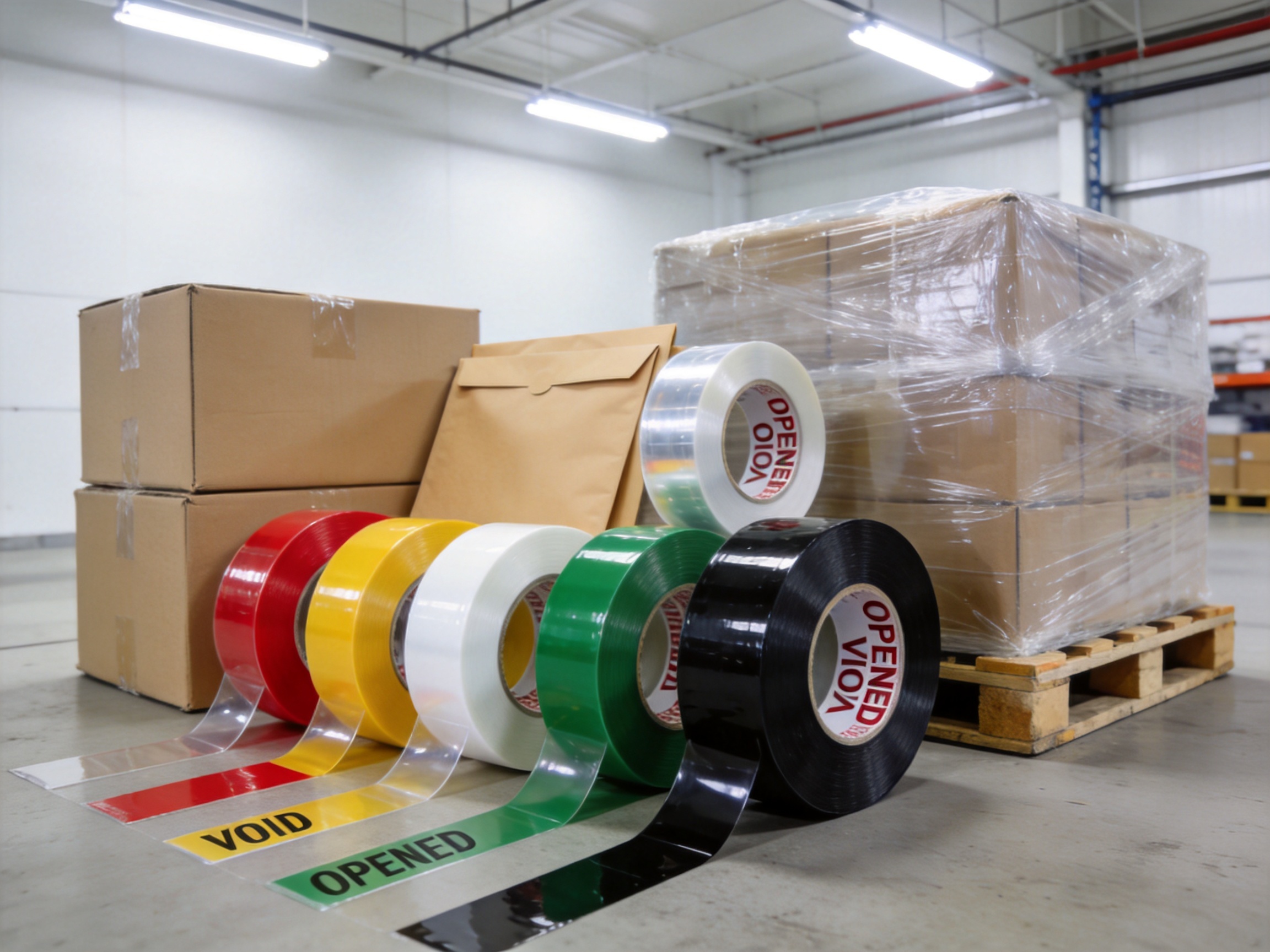
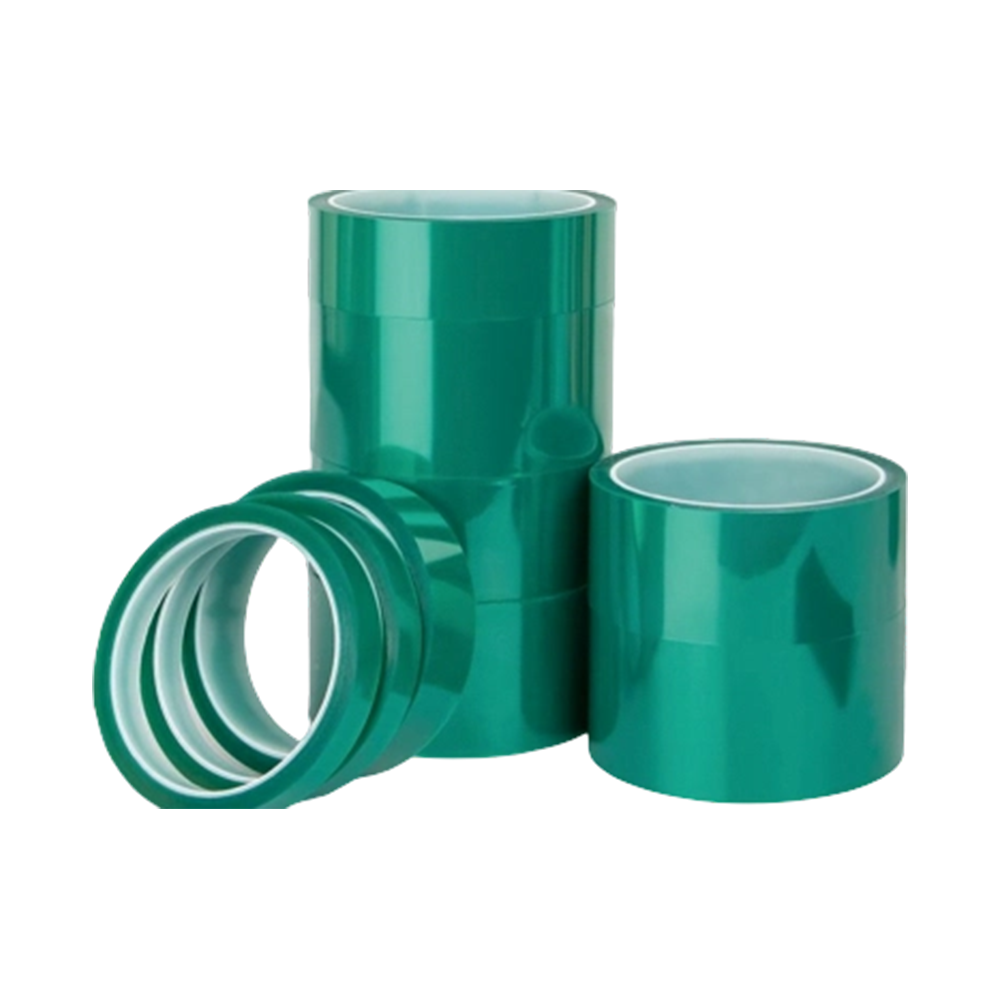
Tamper-evident tape is a security adhesive tape made with a PET base film and a specially designed adhesive and transfer structure. The tape can be produced in multiple colors, including clear, red, yellow, white, green, and black, allowing customers to select a style that matches their packaging requirements, security protocols, or corporate identification needs. It is available in full-transfer and half-transfer types, making it suitable for different application surfaces and security levels.
The product is supplied in a standard length of 50 meters and can be produced in widths ranging from 10 mm to 1200 mm, with custom widths available. This broad size range allows the tape to serve many purposes, from narrow seals for envelopes, small boxes, and electronic parts to wide-format security coverage for cartons, palletized loads, access panels, and industrial packaging. The ability to customize width is particularly valuable for manufacturers, logistics providers, and packaging integrators that require precise compatibility with automated or semi-automated packing operations.
Although tamper-evident tape is often used in packaging security, it is also useful in asset control and process management. It can be applied to containers, drawers, equipment doors, storage cabinets, cash boxes, sealed samples, inspection items, and controlled goods. When an authorized person breaks or removes the seal, the evidence is visible; when an unauthorized person attempts to open and reseal the item, the tape helps reveal that intervention. This makes the tape a simple but powerful tool for maintaining trust in the movement and handling of goods.
| Item | Specification | Application Value |
| Base Material | Thermoplastic Polyester PET | Provides dimensional stability, strength, and clean appearance |
| Available Colors | Clear, Red, Yellow, White, Green, Black | Supports visibility, coding, branding, and different security levels |
| Transfer Type | Full transfer or half transfer | Allows selection according to surface type and evidence requirement |
| Width Range | 10 mm to 1200 mm, with custom widths available | Fits small seals, cartons, wide panels, and industrial packaging lines |
| Standard Length | 50 m | Convenient for manual application, production use, and inventory planning |
How Tamper-Evident Tape Works
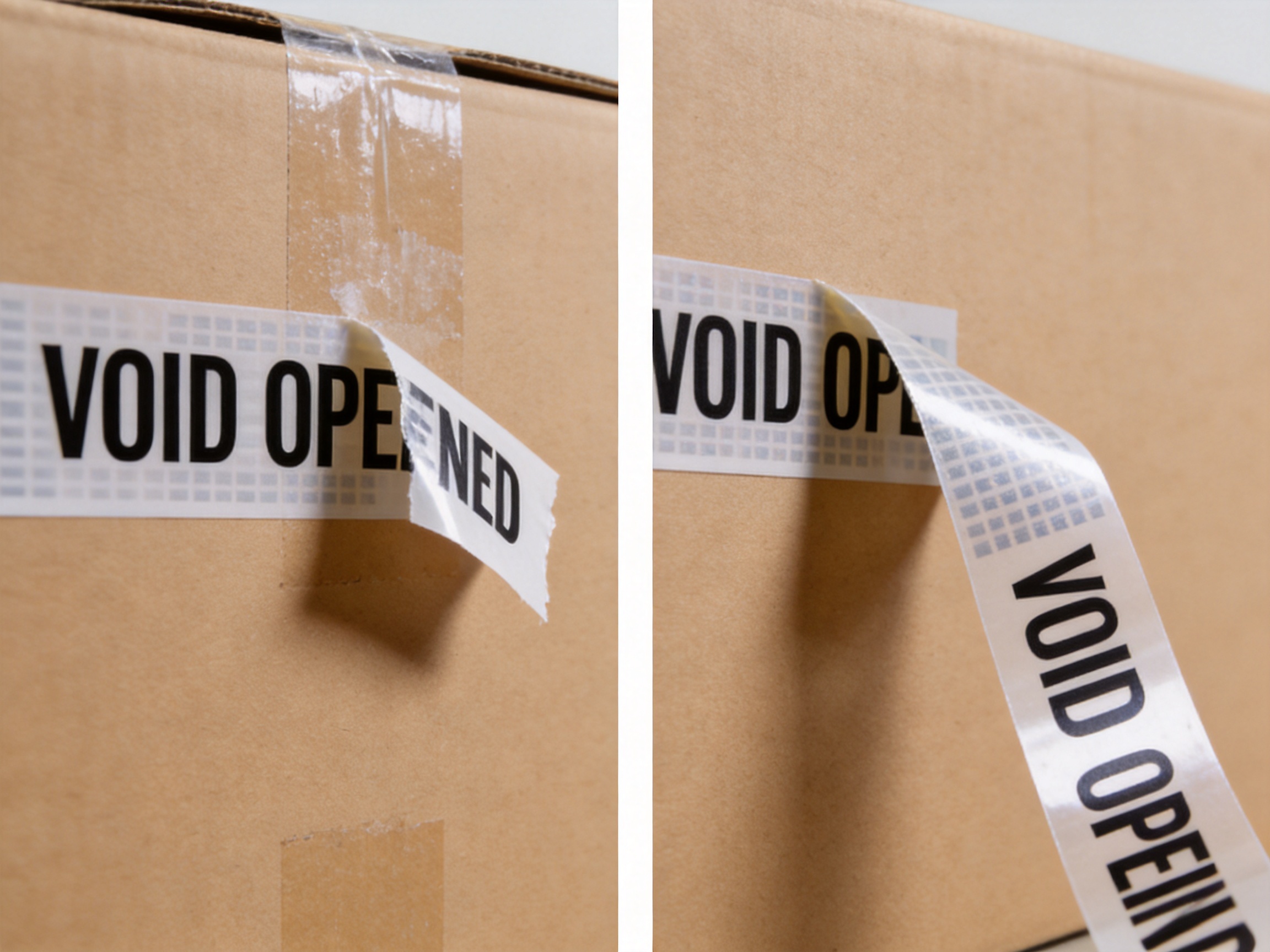
The main function of tamper-evident tape is to create a seal that cannot be removed cleanly without leaving signs of interference. A normal packaging tape may be peeled away, cut, heated, or replaced with limited visible evidence, especially if the package is handled by many parties. Tamper-evident tape is different because its structure is engineered to respond when lifted from the surface. The adhesive and film layers are designed so that removal produces a visible change, such as transferred residue, a warning message, or a broken pattern.
In a full-transfer tape, most or all of the security message or adhesive indication transfers onto the application surface after removal. This type is often selected when strong visual evidence is required. It is suitable for sealed cartons, logistics packages, product boxes, storage bags, and other surfaces where the user wants unmistakable proof that the seal has been disturbed. Full-transfer tape is generally favored for high-security packaging, high-value goods, confidential shipments, and cases where inspection teams must quickly determine whether a package has been opened.
In a half-transfer tape, part of the evidence remains on the surface while part remains on the tape film. This creates a dual indication of tampering and can be useful where the package surface needs less residue or where both the removed tape and the sealed item may need to be inspected. Half-transfer designs are often selected for smoother surfaces, controlled materials, equipment panels, and applications where evidence must be visible without excessive residue coverage. The availability of both full-transfer and half-transfer types gives customers flexibility not always offered by generic security tapes.
PET base film is well suited to tamper-evident tape because it has good tensile strength, dimensional stability, and resistance to deformation under normal packaging conditions. It supports precision coating and security layer formation, which are essential for consistent tamper performance. PET also offers a clean and professional appearance, making it appropriate for consumer packaging as well as industrial use. When combined with controlled adhesive technology, PET-based tamper-evident tape can provide both sealing strength and clear evidence of removal.
Key Advantages Over Ordinary Packaging Tape
The most obvious advantage of tamper-evident tape over ordinary adhesive tape is security visibility. Ordinary tape is designed mainly to close cartons or hold packaging materials together. It may be strong, transparent, or economical, but it does not necessarily reveal opening attempts. If someone cuts a normal tape line, replaces it with new tape, or removes it carefully with heat, the package may appear normal. Tamper-evident tape makes such interference more difficult to hide because removal changes the tape and the surface.
A second advantage is accountability. In long supply chains, products pass through manufacturers, warehouses, forwarders, customs points, carriers, distributors, and retail locations. When a package arrives damaged, short, opened, or substituted, it can be difficult to identify where the problem occurred. Tamper-evident tape helps create checkpoints. If the seal is intact at one stage and broken at another, managers can narrow the area of investigation. This improves process control and helps reduce disputes between suppliers, carriers, and customers.
A third advantage is deterrence. Security packaging does not need to stop every possible attack physically; it also needs to discourage casual or opportunistic tampering. A visible tamper-evident tape communicates that opening will be noticed. This psychological effect can reduce unauthorized access in warehouses, delivery networks, mailrooms, and retail backrooms. Compared with plain tape, which offers little warning, colored tamper-evident tape provides a clear sign that the package is being monitored.
A fourth advantage is professional presentation. Tamper-evident tape can be supplied in multiple colors and widths, allowing companies to match tape selection to risk level, product category, or internal packaging standard. Red may be used for high-security shipments, clear tape for discreet retail packaging, yellow or green for process coding, black for opaque coverage, and white for clean labeling areas. This practical color range allows the tape to support both operational security and visual organization.
A fifth advantage is compatibility with varied packaging needs. The width range from 10 mm to 1200 mm is broad enough for small-scale sealing and large industrial applications. Many competing products are available only in standard narrow widths, forcing users to adapt their process to the tape. Custom-width production allows the tape to adapt to the process instead. For customers with automated packaging lines, specific carton sizes, irregular sealing paths, or special security panels, this flexibility can reduce waste, improve productivity, and strengthen sealing consistency.
Advantages Over Labels, Seals, and Other Security Methods
Tamper-evident labels, plastic seals, metal seals, shrink bands, and security bags all have value, but tamper-evident tape offers a balance of coverage, ease of application, cost efficiency, and versatility. A small label may protect only one closure point, while tape can secure an entire carton seam or wrap around multiple package faces. This is particularly useful for cartons that could be opened along a long flap, side edge, or lid line. By covering a longer path, tape reduces the number of unprotected access points.
Plastic pull-tight seals and metal bolt seals are effective for containers, trucks, and cases with locking points, but they are not always practical for cardboard boxes, envelopes, product cartons, or smooth packaging surfaces. Tamper-evident tape can be applied directly to these common packaging materials without requiring holes, latches, or special hardware. This makes it easier to integrate into existing packing workflows and reduces the need for additional sealing accessories.
Security bags are useful for cash, documents, laboratory samples, or evidence, but they may be more expensive than sealing a standard package with security tape. For companies that already use cartons or envelopes, tamper-evident tape provides a security upgrade without completely changing the packaging format. It also gives purchasing departments more control over packaging cost because tape usage can be adjusted by length and width.
Shrink bands and films can provide evidence of opening around caps, boxes, or bundles, but they require heat equipment and specific packaging geometry. Tamper-evident tape is simpler to use because it can be applied manually or with compatible dispensers. For many industrial and logistics environments, this lower equipment requirement is a major advantage. Workers can apply the tape at packing benches, inspection stations, warehouse exits, or field locations without a heat tunnel or sealing machine.
Compared with many competing security solutions, tamper-evident tape also supports rapid visual inspection. A receiving clerk does not need to scan a code, break a seal, or use tools to verify whether the package appears intact. The evidence is visible on the tape line. This speed matters in high-volume operations where hundreds or thousands of packages must be checked daily. Simple inspection means better compliance, because workers are more likely to follow security procedures when they are easy to perform.
Manufacturing Strength Behind Reliable Performance
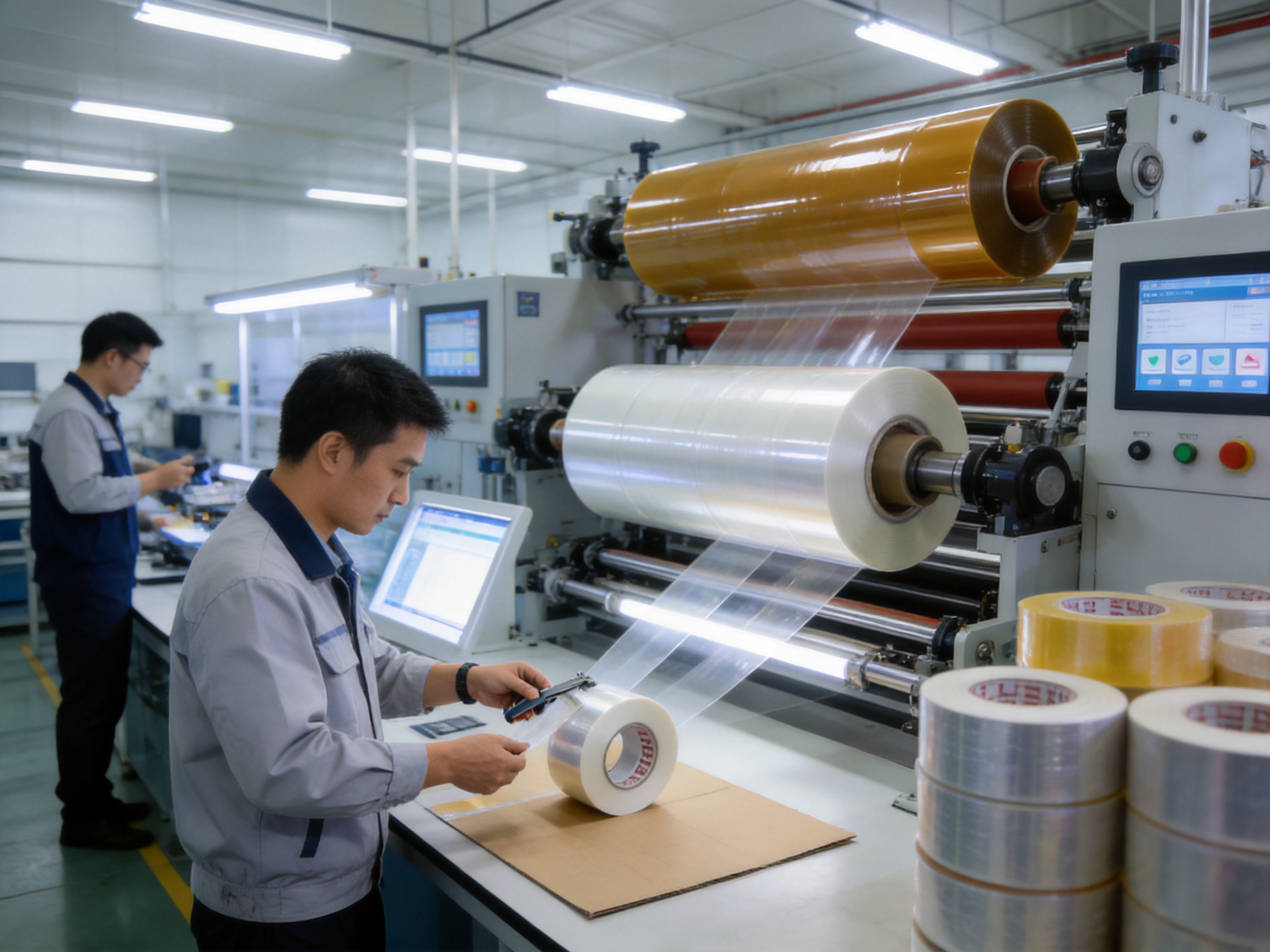
The performance of tamper-evident tape depends heavily on manufacturing precision. It is not enough to place adhesive on film. The release characteristics, transfer layer, adhesive coat weight, film tension, surface treatment, drying conditions, slitting accuracy, and winding quality must all be controlled. Zhejiang Geruite Packaging Materials Co., Ltd. focuses on packaging material production and applies a rigorous quality control approach from raw material procurement through final inspection. This manufacturing discipline supports stable tape performance across batches.
The company’s experience in multiple adhesive tape categories, including BOPP tapes, kraft paper tapes, masking tapes, high-temperature resistant tapes, metal tapes, and other packaging products, gives it a broad technical foundation. Different tapes require different adhesive systems, film behaviors, backing materials, and coating processes. Knowledge gained from these categories can support better process control for security tape production, especially in areas such as adhesion balance, unwind behavior, roll stability, and surface compatibility.
Advanced production equipment helps maintain uniform coating and consistent transfer behavior. In tamper-evident tape, the security message or transfer effect must appear predictably when removed. If the adhesive is too weak, the tape may fail during transportation. If it is too aggressive or poorly balanced, it may create application difficulties or inconsistent evidence. Controlled coating technology allows the tape to provide the intended combination of bond strength and tamper indication.
Material selection is another important factor. PET film must have suitable thickness consistency, surface quality, and mechanical strength. Adhesive components must be selected for performance on target packaging surfaces. Color materials must remain stable and visually clear. Release and transfer layers must be engineered so that the tape responds correctly when peeled. By managing raw material quality, the manufacturer reduces the risk of defects such as uneven adhesion, premature transfer, weak security message formation, telescoping rolls, edge lifting, or inconsistent unwind.
The company’s location in Zhejiang Province provides access to a strong manufacturing ecosystem, skilled labor, packaging industry resources, and transportation infrastructure. This supports efficient sourcing, production planning, and shipment handling. For customers, manufacturing strength is not only about equipment; it is also about the ability to deliver stable quality at scale. With an annual output value exceeding RMB 60 million, the company demonstrates the production capacity and market recognition needed to support long-term packaging material supply.
Production Process and Quality Control
A high-quality tamper-evident tape begins with incoming material inspection. PET film, adhesive materials, pigments, release agents, and related components must meet defined specifications before entering production. Inspection may include checks for film appearance, thickness, tensile properties, surface cleanliness, adhesive material consistency, and color accuracy. This step is essential because defects in base materials can create performance variations in the finished tape.
After material approval, the PET film may undergo surface preparation to improve bonding and coating uniformity. Surface energy control is important because adhesives and security layers must attach in specific ways. The tape must bond firmly enough during use, but it must also reveal evidence when removed. This controlled imbalance is the essence of tamper-evident technology. Precision in surface treatment helps create predictable release and transfer performance.
The security layer is then formed according to the required transfer type. In full-transfer products, the layer is designed to leave a strong visible mark on the application surface. In half-transfer products, the structure is balanced so evidence is divided between the surface and the removed film. The design must be consistent across the full roll width, especially for wide formats up to 1200 mm. Uneven coating across a wide web could result in some areas transferring properly while others do not, so production control is critical.
Adhesive coating follows strict process parameters. Coat weight, viscosity, line speed, drying temperature, and web tension must be managed carefully. If drying is insufficient, rolls may block or unwind poorly. If drying is excessive or coating is uneven, adhesion may decline or the transfer effect may become unreliable. Proper equipment and trained operators help maintain the correct balance. This is one area where an experienced packaging material manufacturer has a significant advantage over small or inconsistent producers.
After coating and drying, the tape is wound into master rolls. Winding quality affects storage, slitting, and application. Rolls must be tight enough to remain stable, but not so tight that adhesive layers deform or transfer prematurely. Edge alignment, tension control, and roll hardness are important. The master rolls are then slit into customer-specified widths. With a width range from 10 mm to 1200 mm, slitting precision is essential. Narrow rolls require clean edges and accurate dimensions; wide rolls require stable winding and flatness.
Finished rolls undergo quality inspection before shipment. Testing may include appearance checks, width measurement, length verification, adhesion evaluation, unwind testing, transfer effect confirmation, color review, and packaging inspection. For tamper-evident tape, the transfer test is especially important. The tape must be applied to a representative surface, allowed to bond under suitable conditions, and then removed to confirm that the evidence appears as intended. This practical test helps ensure that customers receive tape that performs reliably in real use.
Customization and Application Flexibility
One of the important strengths of this tamper-evident tape is customization. Many packaging operations have unique requirements, and standard tape sizes may not be efficient. A narrow 10 mm tape can be useful for small product boxes, document envelopes, or component packages. Medium-width rolls can secure cartons, retail boxes, or storage bins. Very wide rolls can be used for special panels, protective coverage, security laminations, or industrial sealing projects. The ability to produce custom widths gives buyers more freedom in packaging design.
Color selection also supports flexible use. Clear tamper-evident tape can preserve the appearance of printed cartons or labels while still adding security. Red tape is highly visible and suitable for warning seals, restricted goods, or high-value shipments. Yellow can indicate inspection status or caution. White can blend with clean packaging or provide a neutral appearance. Green may be used for process coding, approved shipments, or environmental product lines. Black can offer a strong visual barrier and opaque sealing effect.
Transfer type customization allows customers to choose how evidence appears after removal. Full transfer is suitable when the main priority is unmistakable surface evidence. Half transfer is suitable when the user wants evidence on both the removed tape and the sealed surface or when a less complete residue pattern is preferred. This choice should be made according to package material, inspection process, security level, and cleanup requirements.
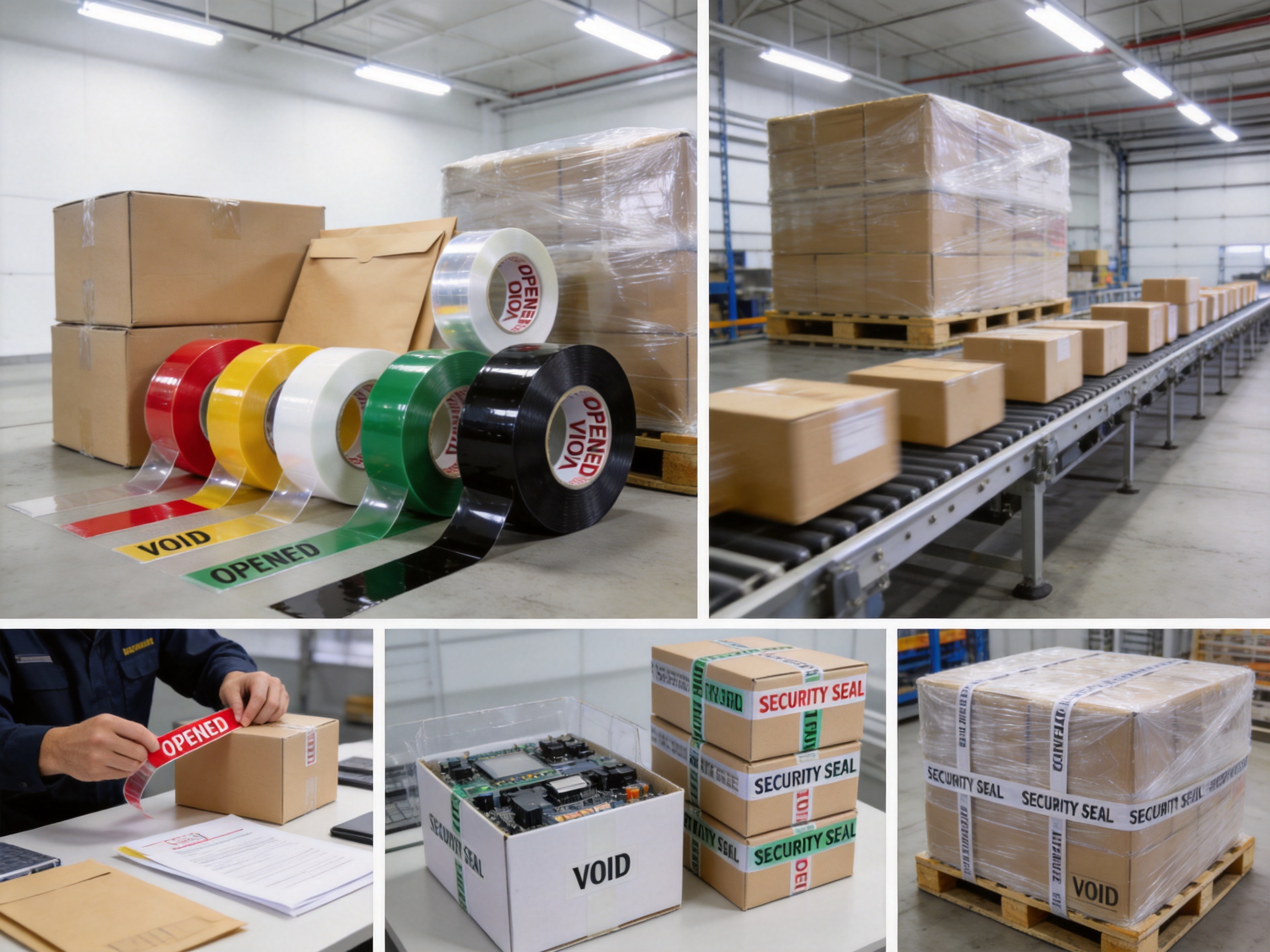
Tamper-evident tape can be used in manual packaging stations with handheld dispensers or applied in more controlled production environments. It can secure carton flaps, envelope openings, bag closures, bottle caps when used with compatible surfaces, access doors, storage containers, and equipment panels. It can also be combined with other packaging products, such as stretch film, strapping band, BOPP tape, or kraft paper tape, to create a layered packaging system. For example, a carton can be structurally sealed with standard tape and then protected with tamper-evident tape over critical opening points.
This layered approach is often more effective than relying on a single packaging material. Standard packaging tape provides carton closure strength, strapping band adds load security, stretch film stabilizes pallets, and tamper-evident tape verifies package integrity. Because Zhejiang Geruite Packaging Materials Co., Ltd. manufactures a wide range of packaging materials, it can understand how these products work together and support customers seeking integrated packaging solutions rather than isolated components.
Applications in Logistics and Express Delivery
Logistics and express delivery are among the most important application areas for tamper-evident tape. Packages handled in express networks may pass through sorting centers, trucks, temporary storage areas, and multiple personnel before reaching the recipient. Each transfer point creates a potential risk of accidental opening, deliberate tampering, theft, or package substitution. Tamper-evident tape provides a visible integrity indicator throughout this chain.
For e-commerce sellers, the tape helps protect customer trust. If a buyer receives a package with an intact security seal, confidence increases. If the seal is broken, the buyer and seller can immediately recognize that the package may have been interfered with. This can support faster claims handling and reduce uncertainty. For high-value products such as electronics, cosmetics, accessories, pharmaceuticals, spare parts, and branded goods, this evidence is especially important.
For courier companies and warehouse operators, tamper-evident tape helps improve internal control. Security-sealed packages can be inspected at dispatch, transfer, and delivery points. If damage or tampering is detected early, the package can be isolated and investigated. This reduces the risk of delivering compromised goods to customers and improves professional service quality.
In cross-border logistics, tamper-evident tape can also support customs and compliance control. While it does not replace official customs seals or regulatory documentation, it can add an extra layer of visual assurance. Export cartons, sample shipments, and documents can be sealed in a way that makes unauthorized access easier to identify. This is valuable for manufacturers, trading companies, and distributors that must maintain chain-of-custody confidence across long distances.
Applications in Electronics, Industrial Manufacturing, and Quality Control
Electronics and industrial manufacturing environments often require strict control over parts, assemblies, tools, and finished goods. Unauthorized access can cause quality issues, missing components, electrostatic damage, warranty disputes, or intellectual property risks. Tamper-evident tape can help seal component boxes, inspection samples, calibration equipment, replacement parts, and returned goods. When the tape is intact, staff can trust that the item has not been opened since the last approved checkpoint.
In production quality control, tamper-evident tape can be used to seal approved samples, retained samples, test materials, and nonconforming goods. This helps prevent confusion between inspected and uninspected items. A color-coded system can make the process even clearer. For example, red tape may identify restricted materials, green tape may identify approved samples, and white tape may identify items awaiting review. Because the tape is available in several colors, it can support visual management systems often used in factories.
For warranty and repair operations, tamper-evident tape can protect access points on packaging or equipment. If a returned product arrives with a broken seal, service personnel can determine that the item may have been opened after shipment or before inspection. This does not replace detailed diagnostics, but it provides an immediate visual clue that can guide warranty evaluation. It can also discourage unauthorized service attempts.
Industrial manufacturers shipping precision components, tools, mechanical parts, or specialized materials can use tamper-evident tape to protect cartons and containers. In many cases, the value of industrial goods is not only monetary; it also relates to production schedules. A missing or substituted part can delay an assembly line. Security tape helps reduce the risk of unnoticed interference and supports more reliable supply chain management.
Applications in Documents, Retail, and Controlled Goods
Documents remain important in finance, legal services, education, government administration, medical records, laboratory testing, and corporate management. Tamper-evident tape can seal envelopes, file boxes, evidence packages, document cartons, and archive containers. If someone opens a file package without authorization, the tape reveals evidence of interference. This makes it useful for confidential records, tender documents, contracts, certificates, and internal audit materials.
Retail businesses can use tamper-evident tape to protect high-value products, return shipments, promotional kits, and inventory transfers. Retail supply chains often involve movement from distribution centers to stores, between stores, and back to warehouses. A visible security seal helps employees verify whether cartons or packages have remained closed. It can also discourage unauthorized opening in backroom areas.
For controlled goods, including selected chemical products, laboratory samples, healthcare-related materials, and regulated components, tamper evidence supports procedural compliance. It does not replace legal packaging requirements where specific standards apply, but it can strengthen internal control. When used with written procedures, batch records, receiving logs, and responsible personnel, security tape becomes part of a broader integrity system.
Household goods and consumer products can also benefit from tamper-evident tape when sold through online channels. Customers increasingly expect packages to arrive safely and visibly intact. Security tape offers a simple way to demonstrate care in packaging and can reduce complaints related to suspected opening. For brands that want to improve perceived quality without dramatically increasing packaging complexity, tamper-evident tape is an efficient option.
Performance Considerations for Best Results
To obtain the best performance from tamper-evident tape, users should apply it to clean, dry, and suitable surfaces. Dust, oil, moisture, release coatings, rough fibers, and low-surface-energy plastics can affect adhesion and transfer results. Carton surfaces vary widely depending on paper quality, coating, recycled content, printing, and storage conditions. Before large-scale use, customers should test the tape on the actual package material under real operating conditions.
Application pressure is important. The tape should be pressed firmly along the entire sealing path to ensure proper contact between adhesive and surface. If the tape is only lightly placed, transfer evidence may be weaker or adhesion may be inconsistent. Using a roller, dispenser, or firm hand pressure can improve results. In cold environments, additional pressure or conditioning time may be needed because adhesives often bond more slowly at low temperatures.
Dwell time should also be considered. Many pressure-sensitive adhesives build bond strength after application. Immediate removal may not show the same transfer effect as removal after the tape has been applied for a longer period. For security applications, it is useful to understand how long the tape needs to bond before reaching its intended tamper-evident performance. This can be included in packing procedures.
Storage conditions affect tape quality. Rolls should generally be stored in clean, dry conditions away from excessive heat, direct sunlight, and contamination. Proper storage helps preserve adhesive performance, unwind behavior, and transfer consistency. Because the standard length is 50 meters, inventory planning is convenient, but users should still rotate stock and avoid exposing rolls to harsh conditions before use.
The choice between full transfer and half transfer should be based on the application. If a strong surface message is required, full transfer may be preferred. If evidence on both tape and surface is useful, half transfer may be more appropriate. Color choice should be based on visibility, package design, and internal coding. Width should cover the vulnerable opening point adequately; a tape that is too narrow may not protect the full seam, while a tape that is too wide may increase cost unnecessarily.
Why Manufacturer Capability Matters
Security tape is a performance product. Its value is measured not only by how it looks on the roll, but by how it behaves when someone attempts to remove it. This makes manufacturer capability especially important. A low-cost tape with inconsistent transfer behavior can create false confidence. If it removes cleanly from some surfaces or fails to leave evidence after transportation, the security function is compromised. Customers should therefore evaluate production consistency, quality control, customization capability, and technical understanding when choosing a supplier.
Zhejiang Geruite Packaging Materials Co., Ltd. has built its business around packaging materials and adhesive tape production. The company emphasizes product quality as its lifeline and applies strict control from raw material procurement to production and final inspection. This complete process approach is valuable because tamper-evident tape requires coordination between film, adhesive, transfer layer, color, slitting, and packaging. Weakness in any step can reduce final performance.
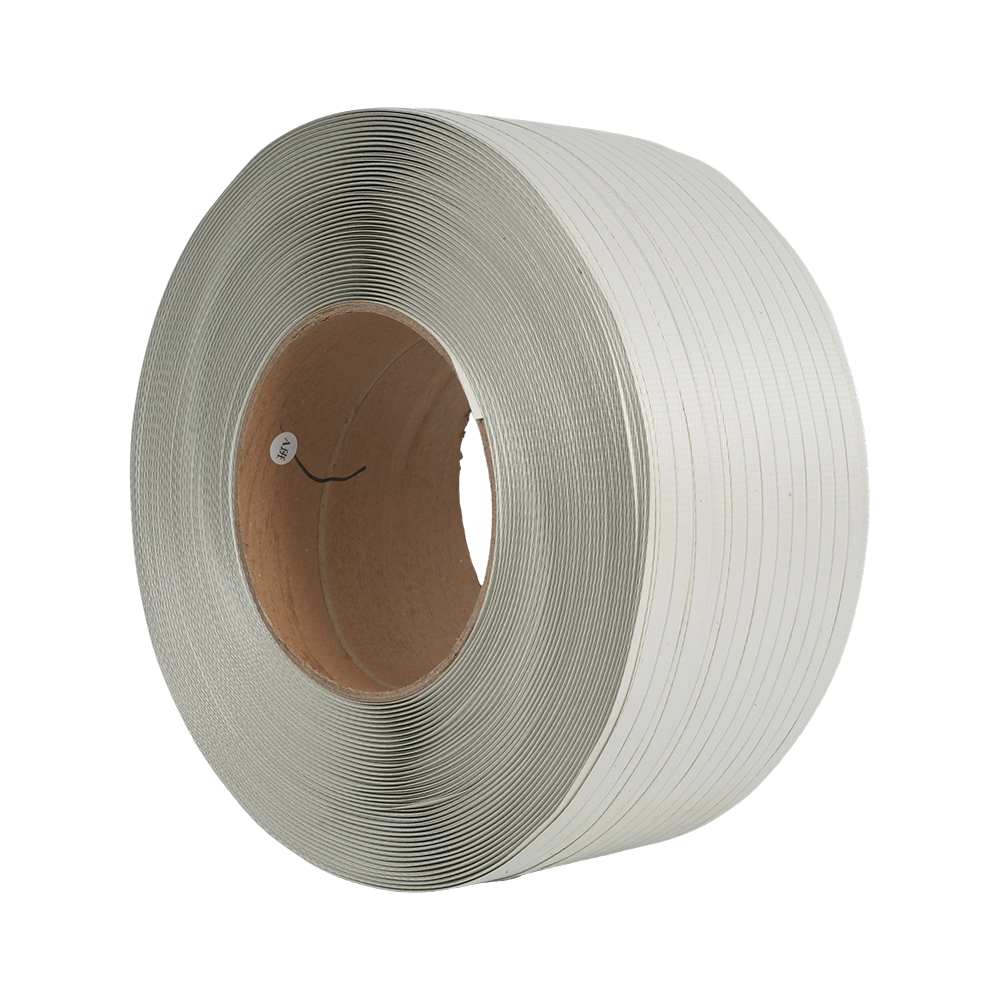
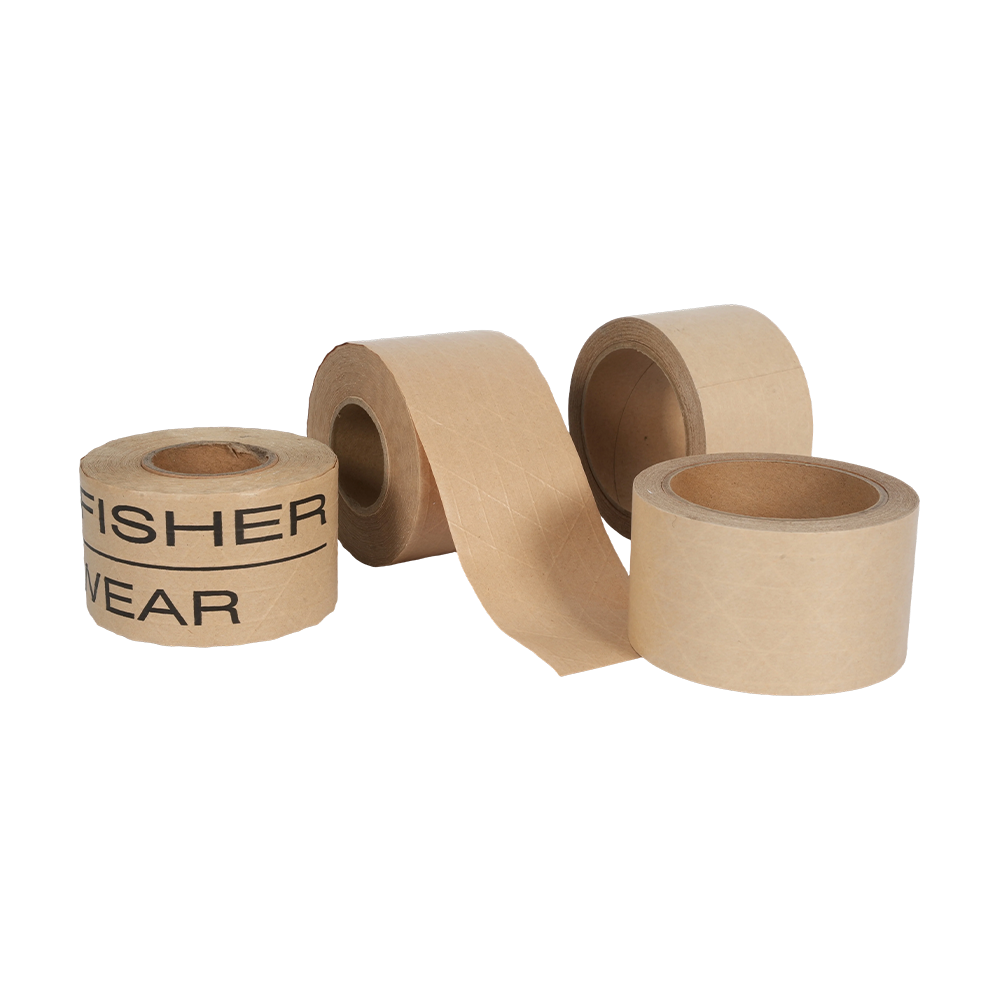
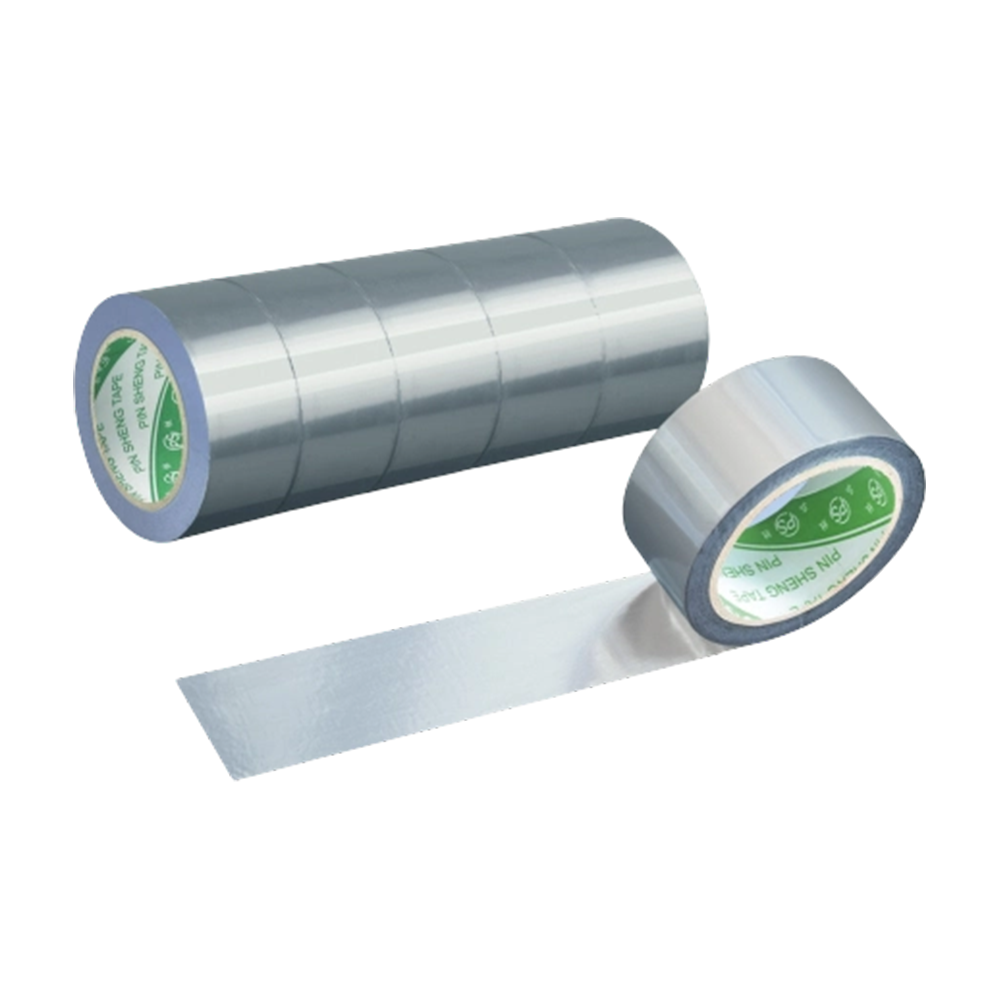
The company’s broad product range also supports customers with multiple packaging needs. In addition to tamper-evident tape, its product categories include BOPP tapes, kraft paper tapes, masking tapes, high-temperature resistant tapes, metal tapes, PE stretch film, PP strapping, and high-strength PET strapping. This means customers can source complementary materials from a manufacturer familiar with packaging protection, cargo stabilization, and adhesive technologies. For purchasing teams, working with a comprehensive packaging material producer can simplify supplier management.
Another strength is the company’s commitment to research, development, and product optimization. Packaging requirements continue to evolve. E-commerce growth, stricter supply chain control, sustainability concerns, automation, and higher customer expectations all influence tape design. A manufacturer that invests in technological improvement is better positioned to refine adhesive systems, improve coating quality, expand customization, and support changing customer needs.
Service capability is equally important. Customers may need advice on width selection, transfer type, color choice, surface testing, or combined packaging methods. A professional packaging material supplier can help identify practical solutions rather than simply selling standard rolls. This consultative approach is an advantage in industrial markets where packaging failures can cause cost, delay, and reputational damage.
Competitive Position in the Packaging Security Market
The market for packaging security includes a wide range of products, from basic warning labels to advanced electronic tracking devices. Tamper-evident tape occupies a strong position because it is simple, visible, scalable, and cost-effective. It does not require batteries, scanners, software, or specialized locks. It can be used by small businesses and large manufacturers alike. When produced with reliable materials and controlled manufacturing, it delivers a high security value relative to its cost.
Compared with many competitors that offer limited sizes or colors, this product’s availability in clear, red, yellow, white, green, and black provides greater selection. The width range from 10 mm to 1200 mm is also a major competitive advantage. It allows the tape to move beyond standard carton sealing into specialized industrial applications. Custom widths reduce compromise and help customers design packaging around actual risk points.
The choice of full-transfer and half-transfer structures gives the product another advantage. Some suppliers focus on only one transfer style, limiting customer options. By offering both, the manufacturer can support different surfaces, inspection methods, and residue preferences. This flexibility makes the tape suitable for logistics, electronics, documents, retail, manufacturing, and controlled goods.
Manufacturing experience further strengthens competitiveness. Tape that looks similar may perform differently because of coating precision, adhesive quality, and transfer layer design. Customers that have experienced inconsistent security tape understand the importance of stable batch-to-batch performance. The company’s quality-focused production system and experience in adhesive tapes and packaging materials support more dependable supply.
Finally, the product is backed by a company with broad packaging expertise, not a single-item trader. This matters because packaging security is often connected to carton strength, film wrapping, strapping, labeling, and handling conditions. A manufacturer that understands the broader packaging system can provide more practical recommendations and long-term support.
Using Tamper-Evident Tape as Part of a Complete Packaging Strategy
The strongest packaging systems are layered. Each material performs a specific function. Cartons provide structure, cushioning protects against impact, stretch film stabilizes pallet loads, strapping bands add compression and load security, and adhesive tapes close or reinforce packages. Tamper-evident tape adds integrity verification. It answers a critical question: has this package been opened or disturbed since it was sealed?
For high-value shipments, companies can apply tamper-evident tape over primary carton openings and then use stretch film or strapping for pallet security. If the pallet arrives with intact film but a broken carton security tape, the receiver can identify a potential issue. If the security tape is intact but external packaging is damaged, the receiver can inspect accordingly. This layered evidence improves decision-making at receiving points.
For internal inventory control, security tape can be used on storage bins, restricted shelves, sample containers, or tool boxes. Supervisors can quickly inspect whether seals are intact without opening every container. This saves time and improves compliance. Color coding can make status control even more efficient, especially in factories and warehouses with many material categories.
For customer-facing packaging, tamper-evident tape can improve trust. A package sealed with visible security tape communicates that the sender has taken additional care. In markets where counterfeit goods, substitution, or delivery disputes are common, this can help differentiate a seller from competitors that use only ordinary tape. The customer receives not only a product but also visible assurance of packaging integrity.
For companies building a packaging standard, tamper-evident tape should be included in written procedures. The procedure can define when to use the tape, which color and width to use, where to apply it, how much pressure to apply, how long to wait before shipment, and how receivers should inspect the seal. A good product becomes more effective when paired with a clear process.
Q&A: Common Questions About Tamper-Evident Tape
What is tamper-evident tape used for?
Tamper-evident tape is used to seal packages, cartons, envelopes, containers, equipment, documents, and controlled goods in a way that reveals visible evidence if the seal is removed or disturbed. It helps protect goods during shipping, storage, inspection, and handling.
How is it different from ordinary packaging tape?
Ordinary packaging tape mainly provides closure and holding strength. Tamper-evident tape provides closure plus visible evidence of opening. When removed, it leaves a security indication on the surface, the tape, or both, depending on whether it is full transfer or half transfer.
What is the base material of this tape?
The tape uses thermoplastic polyester, commonly known as PET, as the base material. PET offers strength, dimensional stability, and a clean surface suitable for precision coating and security tape construction.
What colors are available?
The available colors include clear, red, yellow, white, green, and black. These options support different visibility requirements, process codes, package designs, and security levels.
What is the difference between full transfer and half transfer?
Full-transfer tape leaves a more complete security indication on the application surface after removal. Half-transfer tape leaves evidence on both the surface and the removed film, or provides a partial transfer effect. The best choice depends on the surface, inspection method, and residue preference.
Can the tape be customized?
Yes. The tape is available in widths from 10 mm to 1200 mm, and custom widths can be produced. This allows customers to select dimensions suitable for small seals, standard cartons, wide industrial surfaces, or special packaging processes.
What is the standard roll length?
The standard length is 50 meters per roll. This length is convenient for manual packaging stations, warehouse use, production lines, and inventory control.
Which industries can use tamper-evident tape?
It is suitable for logistics, express delivery, e-commerce, electronics, industrial manufacturing, retail, document control, warehouse management, quality inspection, controlled goods, and packaging protection applications.
Does tamper-evident tape prevent all package theft?
No packaging material can prevent every possible attack. The main purpose of tamper-evident tape is to make unauthorized opening visible and difficult to conceal. It works best as part of a complete packaging and security process.
How should users apply the tape for best results?
Apply the tape to a clean, dry, suitable surface. Press it firmly along the full sealing area and allow adequate dwell time for bonding. Users should test the tape on their actual packaging materials before large-scale application.
Why choose a professional packaging material manufacturer?
Tamper-evident tape requires precise control of film, adhesive, transfer layer, coating, slitting, and inspection. A professional manufacturer with strong quality control and packaging expertise can provide more consistent performance and better customization support.
Conclusion
Tamper-evident tape is a practical and effective solution for companies that need more than ordinary package closure. It protects the integrity of goods by creating visible evidence when a seal is disturbed. With a PET base material, full-transfer and half-transfer options, multiple colors, a standard 50-meter length, and a wide customizable width range from 10 mm to 1200 mm, the product is suitable for many security and packaging applications.
Its advantages over ordinary tape are clear: visible tamper indication, stronger accountability, deterrence against unauthorized opening, better process control, and professional packaging presentation. Compared with labels, plastic seals, shrink bands, and other security methods, it offers a valuable combination of coverage, simplicity, scalability, and cost efficiency. It can be applied to cartons, envelopes, containers, documents, equipment, samples, retail packages, and industrial goods without requiring major changes to existing packaging operations.
The strength of the product is supported by the manufacturing capability of Zhejiang Geruite Packaging Materials Co., Ltd. The company’s focus on packaging materials, advanced production equipment, quality control system, broad product portfolio, and commitment to research and service enable it to supply reliable tape for demanding applications. Its experience in adhesive tapes, stretch film, and strapping materials also allows it to understand tamper-evident tape as part of a broader packaging protection strategy.
As supply chains become more complex and customers demand greater assurance, packaging security will continue to grow in importance. Tamper-evident tape provides an accessible and efficient way to strengthen trust at every stage of product movement. For manufacturers, logistics providers, retailers, and organizations handling valuable or controlled items, it is not merely a tape; it is a visible commitment to integrity, accountability, and professional packaging protection.
References
Pressure Sensitive Tape Council. Pressure Sensitive Adhesive Tape Technical Guide.
ASTM International. Standard Test Methods for Pressure-Sensitive Adhesive-Coated Tapes Used for Electrical and Electronic Applications.
ASTM International. Standard Practice for Conditioning Containers, Packages, or Packaging Components for Testing.
International Safe Transit Association. Packaged-Product Testing and Distribution Environment Guidance.
European Adhesive Tape Association. Technical Handbook for Self-Adhesive Tape Performance and Application.
Packaging Industry Research Council. Security Packaging Materials and Supply Chain Integrity Review.

LATEST POST
Let’s create something amazing together
contact us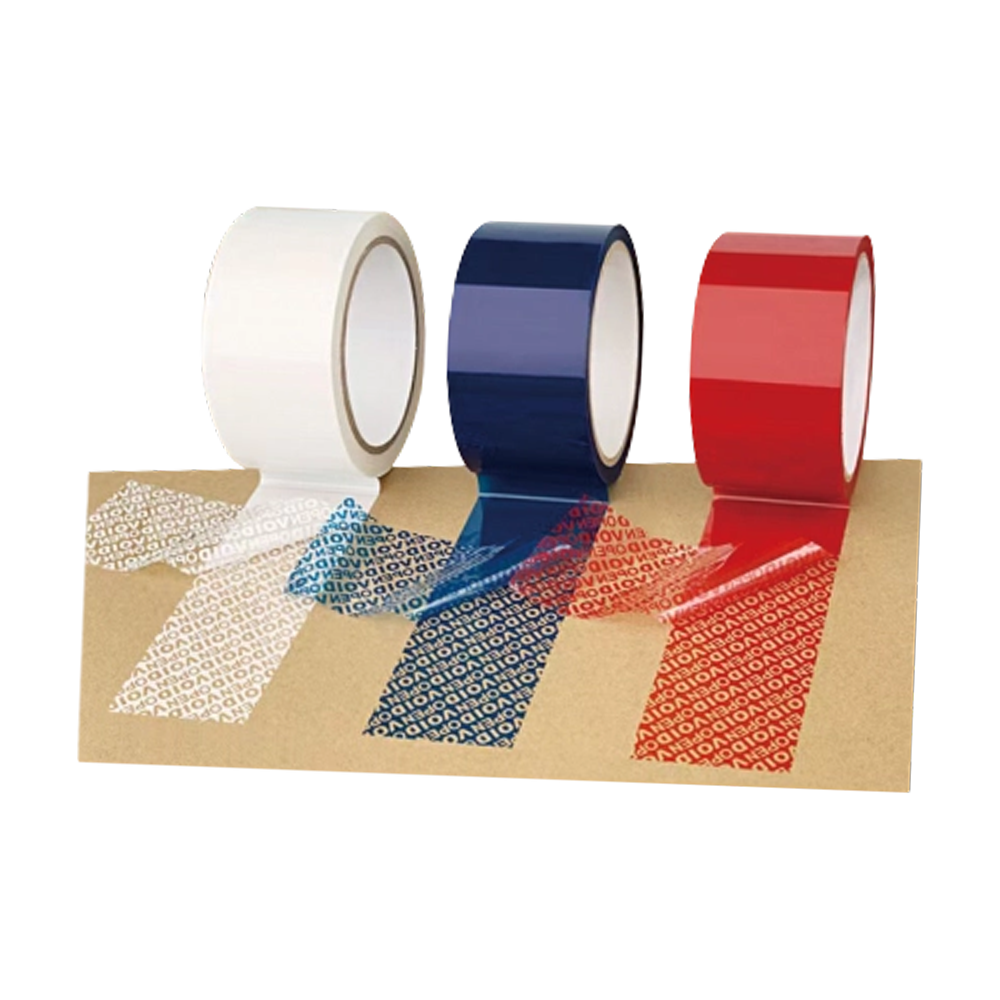

CONTACT DETAILS
- Address:No. 241, Yaojiafan, Zhangpanqiao, Shushan Street, Xiaoshan District, Hangzhou City, Zhejiang Province, China
- TEL:+86-0571-83175630
- Phone:+86-13336160217
- Email:anqiaocun@163.com
PRODUCTS
NEWS CENTER
MOBILE TERMINAL
Copyright© Zhejiang Geruite Packaging Materials Co., Ltd. All Rights Reserved.
Privacy Wholesale industrial packaging tape Manufacturers