


 English
 Español
 عربى

Handheld Opaque PET Plastic Steel Strapping: A Practical Guide to Strength, Selection, and Reliable Packaging
Content
- 1 Understanding Handheld Opaque PET Plastic Steel Strapping
- 2 Product Specifications and Available Options
- 3 Material Advantages of PET Strapping
- 4 Advantages Compared with Competing Strapping Materials
- 5 Thermal Fusion Sealing and Handheld Operation
- 6 Manufacturing Quality and Process Control
- 7 Company Strengths Supporting the Product
- 8 Application Areas
- 9 How to Select the Correct Specification
- 10 Recommended Operating Procedure
- 11 Storage and Handling Guidance
- 12 Product Sustainability and Resource Efficiency
- 13 Quality Assurance for Purchasing Teams
- 14 Frequently Asked Questions
- 14.1 What is opaque PET plastic steel strapping?
- 14.2 What widths and thicknesses are available?
- 14.3 What is the documented 1608 or 1610 specification?
- 14.4 How is the strap sealed?
- 14.5 Can it replace steel strapping in every application?
- 14.6 Why is the textured surface useful?
- 14.7 Is PET strapping suitable for outdoor storage?
- 14.8 How should users choose between 16mm, 19mm, and 25mm?
- 14.9 What should be checked if a thermal fusion joint fails?
- 14.10 What industries can use this product?
- 14.11 What makes the manufacturer suitable for packaging supply?
- 15 Conclusion
- 16 References
- 17 Product: 1608/1610/1910/2512 Handheld Opaque PET Plastic Steel Belt
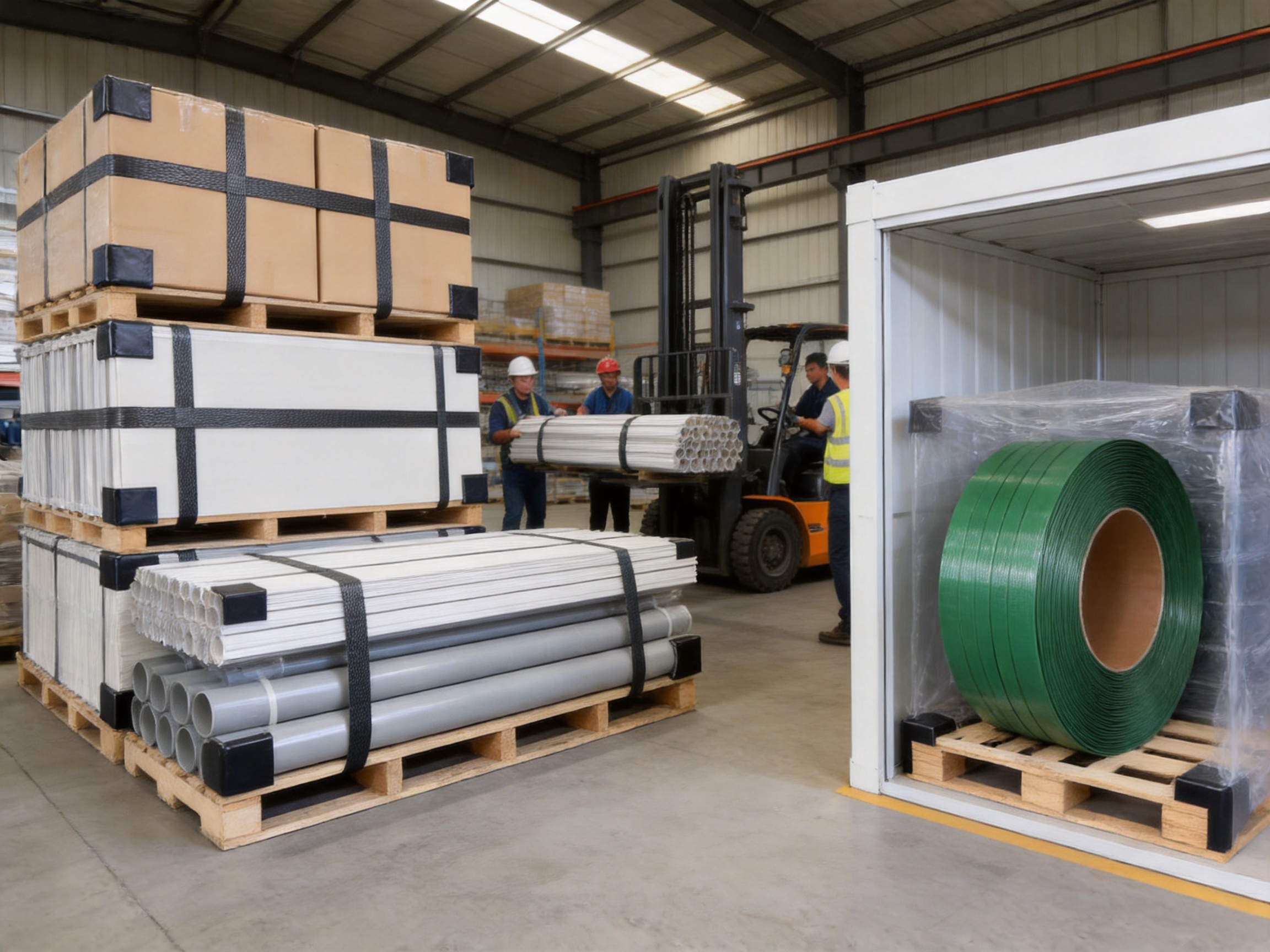
In modern logistics, warehousing, manufacturing, construction, and distribution operations, packaging strapping plays a critical role in keeping products stable from the moment they are assembled until they reach their final destination. A suitable strap must hold cartons, panels, pipes, profiles, palletized goods, and other loads securely while remaining practical for everyday operators. It must also withstand tensioning, storage, handling, transportation, and changing environmental conditions without losing its performance.
The 1608, 1610, 1910, and 2512 handheld opaque PET plastic steel strapping series is designed for these requirements. Manufactured from polyethylene terephthalate, commonly known as PET, the strapping combines tensile strength, controlled elongation, surface friction, and operational flexibility. It is intended for manual bundling operations and can be tensioned and sealed with compatible handheld tools. Thermal fusion sealing creates an integrated joint without requiring complicated production equipment.
The series provides several width and thickness options, including 16mm, 19mm, and 25mm widths and 0.8mm, 1.0mm, and 1.2mm thicknesses. This range allows users to select a suitable strap according to the weight, shape, dimensions, and handling conditions of the goods being packaged. The documented 16mm by 1.0mm specification is supplied with a width tolerance of ±0.5mm and a thickness tolerance of ±0.05mm.
Compared with conventional steel strapping, PET plastic steel strapping offers a lighter, safer, and more corrosion-resistant alternative for many general packaging applications. Compared with lower-grade plastic straps, it provides a stronger material structure and a more dependable response during tensioning. Its opaque textured surface also helps increase friction and reduce unwanted movement between the strap and the bundled load.
Understanding Handheld Opaque PET Plastic Steel Strapping
PET strapping is a high-performance plastic band used to unitize, secure, reinforce, and stabilize products. The term “plastic steel” reflects the balance between plastic processing advantages and a steel-like level of practical strength in packaging applications. It does not mean that the product contains steel. Instead, the strap is produced from PET resin and engineered to provide a combination of tensile performance, dimensional stability, and handling convenience.
The handheld series is designed for operations in which workers apply the strap using portable tensioning and sealing tools. This makes the product suitable for warehouses, distribution centers, small and medium-sized manufacturing facilities, construction material suppliers, and other locations where a fully automated strapping line may not be necessary.
The opaque appearance provides a solid, non-transparent surface that is suitable for general industrial packaging. The textured finish can improve contact between the strap and the packaged goods. This is particularly helpful when the strap is used around cartons, bundled panels, pipes, profiles, and other regularly shaped products that may be exposed to vibration or movement during transportation.
The strap can be tightened manually, and the joint can be created through thermal fusion. During this process, compatible handheld equipment heats and joins overlapping strap sections. When the process is correctly controlled, the resulting joint becomes an integrated connection that helps maintain package stability.
Product Specifications and Available Options
The 1608, 1610, 1910, and 2512 series covers multiple product combinations. The designation generally indicates the nominal width and thickness, allowing users and purchasing teams to identify suitable options quickly. The product family includes 16mm, 19mm, and 25mm widths, with thicknesses of 0.8mm, 1.0mm, and 1.2mm depending on the selected model.
Width affects the contact area between the strap and the packaged load. A wider strap can distribute pressure over a larger area and may be appropriate for broader packages or loads requiring increased surface coverage. Thickness influences material volume, rigidity, and resistance to applied tension. The correct combination should always be selected according to the actual cargo weight, package geometry, handling method, and required stability.
| Product or Parameter | Available Specification or Performance | Packaging Consideration |
|---|---|---|
| Material | Polyethylene terephthalate, or PET | Provides a balance of strength, flexibility, and dimensional stability |
| Nominal widths | 16mm, 19mm, and 25mm | Select according to load size, contact area, and packaging design |
| Nominal thicknesses | 0.8mm, 1.0mm, and 1.2mm | Select according to load weight and required tension capacity |
| Documented specification | 16mm width by 1.0mm thickness | Width tolerance ±0.5mm; thickness tolerance ±0.05mm |
| Tensile strength | Approximately 300–500MPa, depending on specification | Supports general bundling and load stabilization requirements |
| Elongation at break | Not more than 3% | Helps preserve package dimensions after tensioning |
| Surface | Opaque and textured | Improves friction and helps reduce strap slippage |
| Sealing method | Thermal fusion sealing | Creates an integrated joint with compatible handheld equipment |
The stated tensile strength range of approximately 300–500MPa varies according to the exact width and thickness selected. Buyers should not treat one value as applicable to every model. Instead, the final selection should be based on the product specification, package weight, expected tension, and operating environment.
The elongation at break is listed as no more than 3%. Controlled elongation is valuable because excessive stretching can allow a package to loosen after the strap is applied. A low and consistent elongation level helps the strap retain its dimensions and contributes to stable bundling during storage and transportation.
Material Advantages of PET Strapping
PET is widely used in packaging because it offers a useful combination of tensile strength, toughness, flexibility, and resistance to ordinary environmental conditions. In a strapping application, these properties help the material withstand manual tensioning and routine handling without becoming excessively brittle or difficult to process.
One of the major advantages of PET over traditional steel strapping is reduced weight. A PET strap can provide strong load restraint without adding the same level of dead weight associated with metal banding. Lower package weight can simplify manual handling and may help reduce the physical burden placed on warehouse operators.
PET also avoids many of the handling hazards associated with sharp-edged metal strap. Steel strap can create cutting risks during installation, removal, and disposal if it is not handled correctly. PET is generally easier to handle with appropriate workplace practices, although operators should still inspect strap edges and use suitable protective equipment.
Another important benefit is corrosion resistance. Steel strapping can be affected by moisture, salt, and certain storage conditions. PET does not rust, which makes it suitable for many indoor and outdoor storage situations where ordinary climatic exposure is expected. It remains necessary to avoid prolonged direct sunlight and contact with corrosive chemicals, but the material is well suited to general warehousing and logistics conditions.
PET strapping can also offer more forgiving handling characteristics than rigid metal banding. It can conform to many package shapes while maintaining useful tension. This flexibility is valuable when bundling lightweight industrial products, cartons, textiles, profiles, panels, and other goods that may be damaged by excessive point pressure.
Advantages Compared with Competing Strapping Materials
Comparison with Steel Strapping
Steel strapping remains appropriate for certain extremely heavy-duty applications, but it may be excessive for general warehousing, logistics, and lightweight industrial packaging. PET strapping provides a practical alternative where corrosion resistance, lower weight, safer manual handling, and thermal fusion sealing are more important than the maximum possible metal-band strength.
PET does not produce rust stains on packaged goods. This can be particularly helpful when products are stored in humid conditions or when the appearance of the finished package matters. PET also reduces the risk of sharp metal edges that may damage cartons, finished surfaces, or handling equipment.
In addition, PET strap can be sealed using thermal fusion tools rather than metal buckles or specialized mechanical joints. A correctly formed fused joint can provide a clean and integrated connection while simplifying the packing process. The operator does not need to manage loose metal seals for every package.
Comparison with Polypropylene Strapping
Polypropylene strapping is widely used for light-duty applications, but PET generally provides higher tensile strength and stronger dimensional stability. When a package must remain tightly bundled during storage, handling, and transport, PET can offer a more dependable performance margin than basic polypropylene strap.
PET is especially suitable when the package requires greater tension or when the load is exposed to vibration. Its low elongation helps reduce the possibility of excessive slack after application. Polypropylene may still be appropriate for very light cartons and short-distance handling, but PET is often preferred when stronger and more stable bundling is required.
Comparison with Low-Grade Plastic Straps
Not all plastic strapping products have the same material consistency, tensile performance, or thickness control. Lower-grade products may vary noticeably from one roll to another, creating problems during tensioning and sealing. A controlled PET product with defined width, thickness, and strength specifications offers purchasing teams a more reliable basis for standardizing packaging operations.
The opaque PET series is also designed with a textured surface. This feature can increase the coefficient of friction between the strap and the load, helping reduce slippage. Surface design is especially important when the product is used on smooth cartons, wrapped pallets, or bundled profiles that may shift under vibration.
These comparative advantages do not mean that one strap is suitable for every application. The correct material depends on load weight, package design, transportation conditions, required tension, and workplace equipment. PET is strongest as a versatile solution for general and medium-duty industrial packaging where a balance of strength, safety, cost control, and ease of use is required.
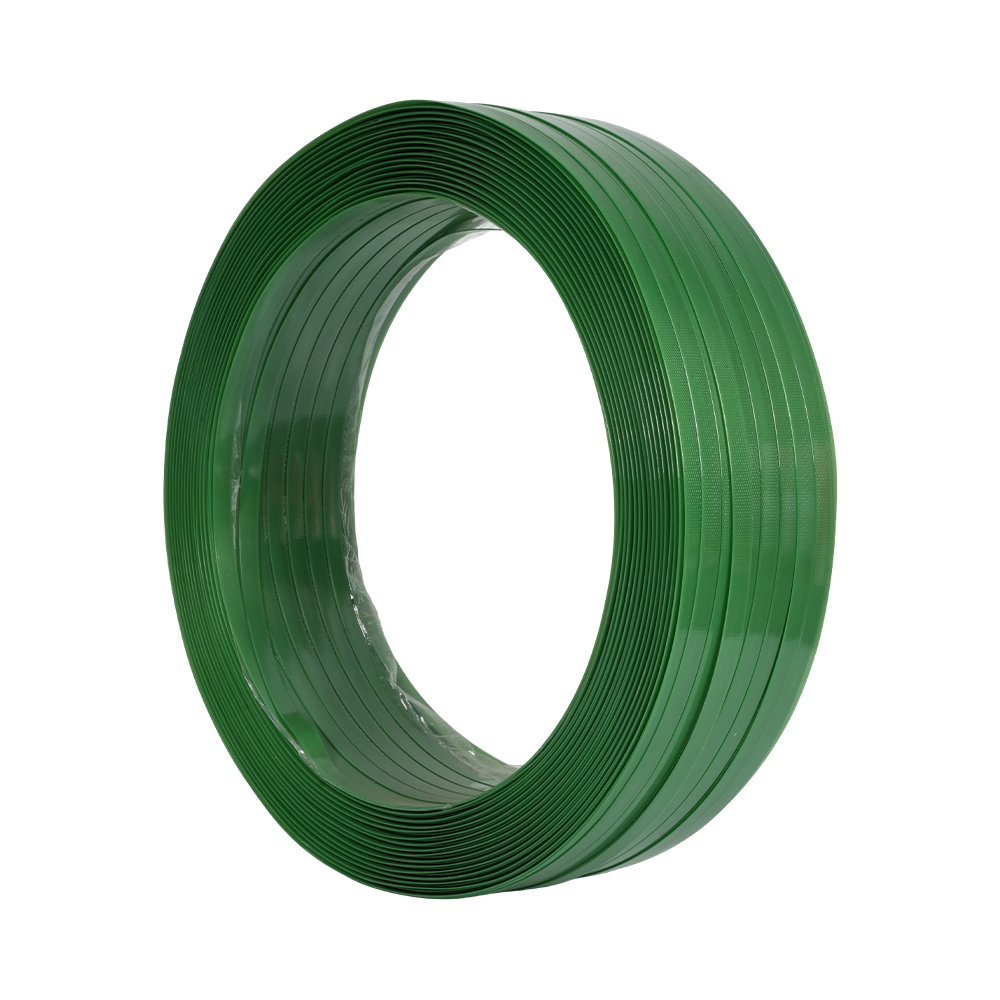
1608/1610/1910/2512 Handheld Opaque PET Plastic Steel Belt
Thermal Fusion Sealing and Handheld Operation
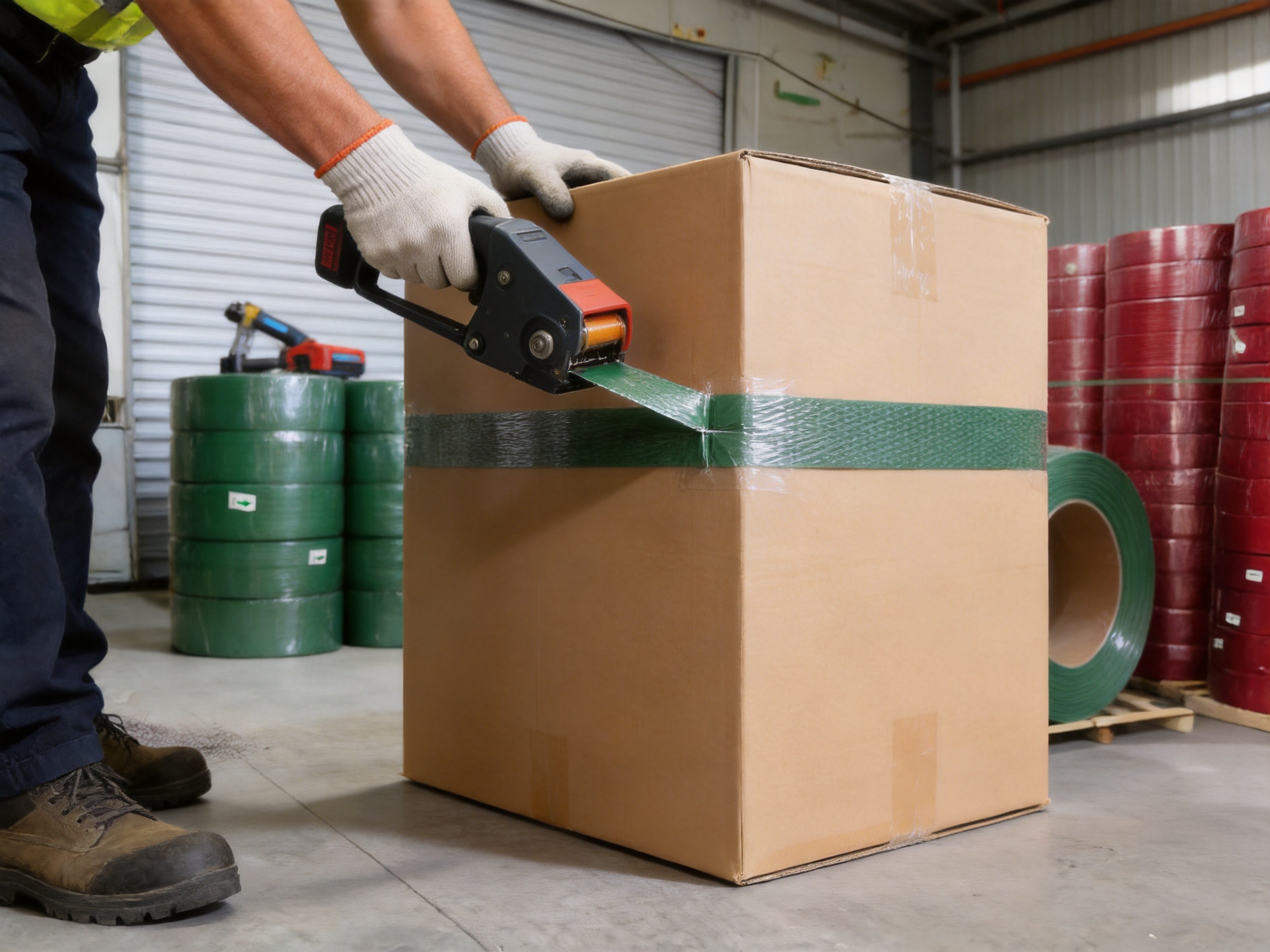
The handheld operation of this PET strapping series supports flexible packaging workflows. Workers can apply the strap directly to a load, tighten it with a portable tool, and seal the overlapping ends through thermal fusion. This process is appropriate for facilities that process different product sizes and do not want to dedicate every package to a fixed automated line.
Thermal fusion works by applying controlled heat to the overlapping PET strap surfaces. The material softens at the contact point, and pressure brings the surfaces together. As the joint cools, the fused area becomes an integrated connection. The actual strength of the joint depends on several factors, including tool temperature, heating time, pressure, strap cleanliness, overlap length, and operator technique.
Correct temperature control is essential. Insufficient heat may produce a weak or incomplete joint because the material does not soften adequately. Excessive heat may damage the strap, reduce joint quality, or deform the surface. Operators should follow the instructions for the selected tool and verify the quality of the first several joints during a production shift.
Joint inspection should be included in routine quality checks. A good joint should appear evenly fused rather than burned, excessively thin, or visibly separated. If the strap pulls apart during a controlled manual check, the operator should examine the tool temperature, pressure, heating time, strap alignment, and overlap length.
Handheld tools also provide operational flexibility. They can be moved between workstations, used on irregularly sized loads, and stored when not required. This makes the product useful for mixed production environments in which package dimensions and order quantities change frequently.
Manufacturing Quality and Process Control
Consistent strapping performance begins with material control. PET resin must be selected and processed carefully to produce a strap with reliable mechanical properties. Variations in raw material, moisture, extrusion conditions, cooling, stretching, or winding can affect final width, thickness, tensile strength, elongation, and sealing behavior.
The manufacturer’s stated quality approach covers the full production chain, from raw material procurement through production and final inspection. This whole-process approach is important because a strap may meet a nominal thickness requirement but still perform poorly if its molecular orientation, surface condition, or winding quality is inconsistent.
During production, width and thickness control help ensure that the strap can pass smoothly through compatible handheld tools. The documented 16mm by 1.0mm product has defined dimensional tolerances, giving customers a clear reference for incoming inspection and purchasing specifications.
Mechanical performance must also be considered. Tensile strength indicates how much pulling force the strap can withstand before breaking, while elongation indicates how much it stretches under load. These values should be evaluated together. A strap with high tensile strength but uncontrolled elongation may not provide the desired package stability, while a strap with low elongation but insufficient strength may fail during tensioning.
Surface condition is another important manufacturing consideration. A uniform opaque texture can support friction between the strap and the packaged item. Smoothness, edge quality, and surface consistency also affect how the strap moves through tools and how comfortably it can be handled by operators.
Winding quality matters because poorly wound rolls may telescope, loosen, or feed unevenly. A stable roll supports faster operation and reduces interruptions. It also helps prevent kinks that can weaken the strap or make it difficult to position around the load.
Final inspection should confirm that the finished product corresponds to the ordered specification. Basic checks may include width, thickness, appearance, roll condition, surface quality, and, where applicable, tensile or joint performance. Consistent inspection helps identify production deviations before the material reaches the customer.
The manufacturer reports advanced production equipment and a rigorous quality control system. It also reports an annual output value exceeding RMB 60 million, reflecting an established manufacturing and supply capability. For buyers, this type of production foundation can support more stable order fulfillment, product development, and technical communication than an informal or purely trading-based supply arrangement.
Company Strengths Supporting the Product
Zhejiang Geruite Packaging Materials Co., Ltd. operates in Zhejiang, China, a region known for its developed manufacturing base and established industrial supply chains. The company focuses on packaging materials and provides products for logistics, express delivery, household goods, electronics, construction and decoration, industrial manufacturing, cargo stabilization, and packaging protection.
Its product portfolio includes BOPP tape, kraft paper tape, masking tape, high-temperature-resistant tape, metal tape, PE stretch film, PP strapping, and high-strength PET strapping. This broad product range allows the company to understand packaging systems rather than treating strapping as an isolated component.
A diversified product portfolio can benefit customers that purchase several packaging materials from one source. For example, a warehouse may require PET strapping for load reinforcement, stretch film for pallet wrapping, and adhesive tape for carton closure. A supplier with experience across these product categories can help customers coordinate packaging materials according to their complete workflow.
The company emphasizes research, development, production, sales, quality management, and service. Its stated approach is to improve product structures, invest in technical development, and respond to different customer requirements. These capabilities are relevant to PET strapping because packaging operations often require adjustments in width, thickness, surface, roll format, or application method.
Professional service is also important for selecting a strap. Customers may know the approximate weight of a load but not the best combination of width and thickness. A knowledgeable supplier can help review load dimensions, transportation conditions, tensioning equipment, and sealing requirements before recommending a specification.
For international buyers, supplier reliability includes more than product performance. It also includes communication, order coordination, production planning, inspection, packaging, and after-sales response. A manufacturer with dedicated production and quality processes is better positioned to address these requirements over repeated purchasing cycles.
Application Areas
Warehousing and Logistics
PET strapping is suitable for securing cartons and grouping multiple packages into a single handling unit. Bundled cartons are easier to move with forklifts, pallet trucks, or manual handling equipment when the package structure remains stable. The strap can also support palletized loads by adding horizontal reinforcement around the outer layer.
In logistics operations, packages may experience vibration, impact, stacking pressure, and repeated transfers. A strap with controlled elongation and suitable tensile strength helps maintain the original package configuration. The textured surface can reduce movement when the strap contacts cartons or other packaging surfaces.
Lightweight Industrial Products
Manufacturers of textiles, household products, panels, profiles, and regularly shaped industrial goods can use PET strapping to combine multiple items into a single bundle. The strap can be applied directly around the products or around protective packaging, depending on the required finish and risk of surface marking.
For products with sensitive surfaces, operators should consider using edge protectors, corner boards, or suitable separators. These accessories distribute tension and reduce the possibility of localized pressure. PET strapping is strong and flexible, but no strap should be tensioned beyond what the product or package can safely withstand.
Construction Materials
The series can be used for temporary bundling of lightweight pipes, profiles, panels, and related construction materials. Bundling helps keep long products organized during storage and simplifies movement to the installation area. The material’s resistance to ordinary climatic conditions can be helpful in general storage environments.
Construction applications may expose packaging to dust, moisture, temperature changes, and rough handling. Operators should select the strap specification according to the size and mass of the bundle. Heavy or hazardous materials may require stronger systems, additional restraints, or specialized strapping equipment.
Pallet Load Reinforcement
PET strapping can supplement stretch film when a pallet requires additional stability. Stretch film helps contain and protect the load, while strapping can provide direct reinforcement around cartons or grouped products. Using both materials may be appropriate when the load has a tendency to separate, lean, or shift during transportation.
The strap should be positioned so that it supports the load without cutting into cartons or damaging the contents. Corner protection can be particularly useful for tall palletized loads, stacked boxes, and products with vulnerable edges.
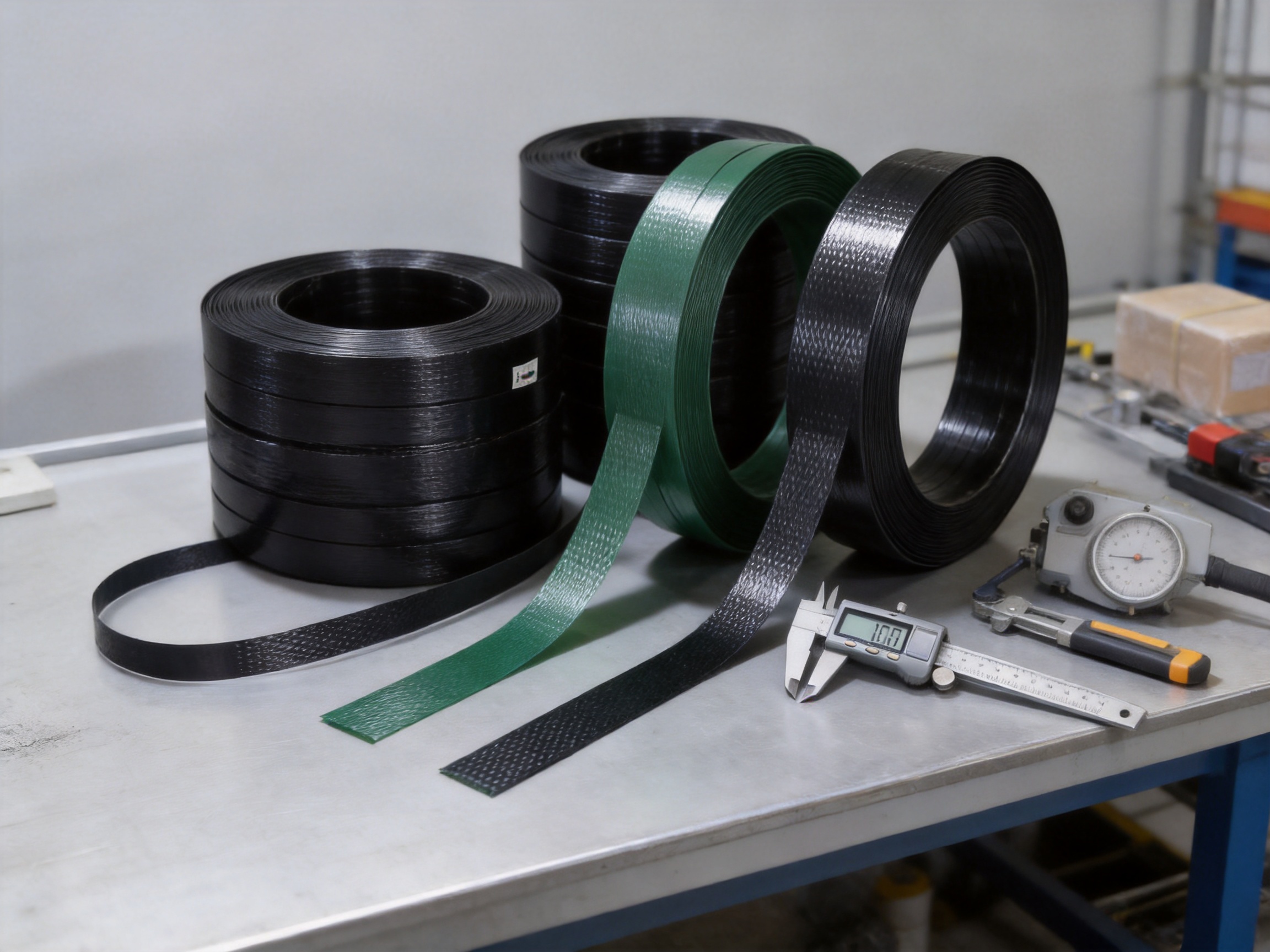
How to Select the Correct Specification
Specification selection should begin with the load rather than the strap alone. Buyers should record the approximate weight, dimensions, shape, center of gravity, stacking method, transportation distance, and expected handling conditions. They should also identify whether the strap is intended to hold a bundle together, reinforce a pallet, or prevent movement inside a shipping package.
For light cartons and small bundles, a narrower and thinner product may be sufficient. For larger packages, wider panels, or loads exposed to more vibration, a wider or thicker specification may provide a better performance margin. The 16mm, 19mm, and 25mm options offer flexibility for different packaging designs.
Users should also examine the compatibility of the strap with their handheld tools. The tool must be capable of tensioning the selected width and thickness, and its heating system must be suitable for PET thermal fusion. A mismatch may lead to poor feeding, inconsistent tension, or weak joints.
Environmental conditions should be included in the selection process. Indoor storage, covered outdoor storage, long-distance transport, high humidity, and chemical exposure can impose different requirements. The product is intended for general indoor and outdoor storage conditions, but prolonged direct sunlight and corrosive chemical contact should be avoided.
When the packaging application is new, customers should conduct a practical trial. The trial should include the heaviest expected load, the most difficult package shape, normal handling equipment, and the actual transportation route where possible. Operators can then assess tension retention, joint quality, strap positioning, edge protection, and package stability.
Recommended Operating Procedure
1. Inspect the Roll
Before use, inspect the roll for damage, contamination, deformation, or loose winding. Confirm that the width and thickness correspond to the work order. Damaged rolls should be isolated rather than introduced into production without evaluation.
2. Prepare the Load
Arrange the products so that the load is balanced and stable before applying the strap. Remove loose debris and ensure that corners or edges likely to contact the strap are protected when necessary. A strap is not a substitute for correct stacking.
3. Position the Strap
Place the strap around the designated part of the load. Keep it reasonably level and avoid twisting. The strap should contact the intended surfaces evenly so that tension is distributed rather than concentrated at one point.
4. Apply Tension
Use the handheld tensioning tool according to its operating instructions. Apply enough tension to stabilize the load, but do not over-tension the strap or compress fragile products. Excessive tension can deform cartons, damage product surfaces, or reduce joint reliability.
5. Create the Thermal Fusion Joint
Overlap the strap ends correctly and activate the thermal fusion function. Temperature, heating time, and pressure should be appropriate for the selected PET specification. Allow the joint to cool sufficiently before subjecting it to strong movement or impact.
6. Inspect the Finished Bundle
Check that the strap is straight, properly tensioned, and free from cuts or severe abrasions. Examine the fusion joint for uniformity. Confirm that the load does not move excessively when gently tested using normal workplace procedures.
7. Record Problems and Adjustments
If joint failures or strap breaks occur, record the load type, strap specification, tool settings, operator, and environmental conditions. Repeated failures may indicate incorrect material selection, unsuitable tool settings, excessive tension, poor overlap, or damaged strap.
Storage and Handling Guidance
PET strapping should be stored in a dry and ventilated location. Rolls should remain protected from prolonged direct sunlight, excessive heat, moisture accumulation, and corrosive chemicals. Proper storage helps preserve the strap’s mechanical and surface properties before use.
Rolls should be placed securely so that they cannot fall or deform. Heavy rolls should be moved with suitable handling equipment rather than lifted in a manner that could injure workers. The storage area should be organized so that different widths and thicknesses can be identified easily.
Before applying the strap, inspect its edges for smoothness. Sharp cuts, deep abrasions, or damaged sections should not be used around products or handled without care. Operators should wear appropriate workplace protection and follow the safety rules of the facility.
Unused strap should remain protected from contamination. Dust, oil, and chemical residues may affect friction, sealing, or appearance. Keeping the strap clean also helps maintain consistent operation through handheld equipment.
Although PET offers resistance to many ordinary environmental conditions, users should avoid treating it as universally chemical-proof. Contact with strong chemicals, prolonged ultraviolet exposure, or unusual temperature conditions should be evaluated through testing before large-scale use.
Product Sustainability and Resource Efficiency
PET strapping can contribute to packaging efficiency by providing strong load stabilization with relatively low material weight. Efficient bundling may reduce product movement, package damage, and the need for excessive secondary packaging. When the correct specification is selected, users can avoid applying more strap than the load requires.
The lower weight of PET compared with many metal alternatives may also simplify transportation and handling. Reduced package weight can support more efficient internal movement and may lower the physical effort required from workers. These benefits depend on correct application and responsible packaging design.
At the end of its useful life, PET strapping should be collected and managed according to local recycling and waste-handling systems. Recycling availability differs by region and may depend on contamination, collection volumes, and local processing infrastructure. Users should establish a clear procedure for separating used plastic strapping from general waste wherever practical.
Sustainability should be evaluated across the complete packaging system. A strap that prevents load damage and product loss may provide an important resource-saving benefit. At the same time, unnecessary over-packaging should be avoided. The best result comes from selecting the minimum reliable specification that meets the actual performance requirement.
Quality Assurance for Purchasing Teams
Purchasing teams should define the product specification clearly on every order. The purchase description should include material, width, thickness, color or opacity requirement, roll format, quantity, and any agreed inspection requirements. Clear specifications reduce the risk of receiving a visually similar product with different performance.
Incoming inspection can include visual checks, dimensional measurements, roll condition, and sample testing. Width and thickness should be compared with the agreed tolerance. If the strap is intended for thermal fusion, sample joints should be evaluated using the actual handheld tool and representative packaging material.
Batch consistency is especially important for customers operating multiple packing stations. When strap behavior changes from one delivery to another, operators may need to adjust tool settings, causing downtime and joint variation. Regular communication between the customer and manufacturer can help identify changes before they affect production.
Purchasers should also evaluate supplier capacity and service. Relevant factors include production equipment, quality control, product range, technical support, communication, lead-time management, and ability to handle repeat orders. The supplier’s experience with adhesive tapes, stretch film, PP strapping, and PET strapping can be valuable when a customer needs a coordinated packaging program.
Frequently Asked Questions
What is opaque PET plastic steel strapping?
It is a PET packaging strap with an opaque textured surface and strength characteristics intended for general industrial bundling. The term plastic steel describes its combination of plastic handling advantages and strong load-securing performance; it does not indicate that the strap is made from steel.
What widths and thicknesses are available?
The series includes 16mm, 19mm, and 25mm widths, with 0.8mm, 1.0mm, and 1.2mm thicknesses depending on the selected model. The exact combination should be confirmed before ordering.
What is the documented 1608 or 1610 specification?
The series naming identifies nominal dimensions. The supplied product information specifically documents a 16mm width and 1.0mm thickness, with a width tolerance of ±0.5mm and a thickness tolerance of ±0.05mm. Customers should confirm the exact designation and specification on the purchase order.
How is the strap sealed?
The strap is suitable for thermal fusion sealing with compatible handheld tools. The overlapping strap ends are heated and pressed together to form an integrated joint. Tool temperature, heating time, pressure, and overlap must be controlled correctly.
Can it replace steel strapping in every application?
No. PET is a strong and versatile alternative for many general and medium-duty applications, but extremely heavy, sharp, or specialized loads may require steel or another dedicated restraint system. Selection should be based on the load and transportation requirements.
Why is the textured surface useful?
The textured surface can increase friction between the strap and the packaged load. This helps reduce slippage and supports better bundle stability, particularly when the strap is used on cartons, pallets, panels, profiles, and other regularly shaped goods.
Is PET strapping suitable for outdoor storage?
It is suitable for general indoor and outdoor storage environments when properly handled. However, the strap should be protected from prolonged direct sunlight and corrosive chemicals. Unusual environmental conditions should be evaluated before use.
How should users choose between 16mm, 19mm, and 25mm?
The choice depends on load weight, package dimensions, contact area, required tension, and tool compatibility. Wider straps may distribute pressure over a larger area, while thicker straps may provide increased material strength and rigidity. Practical trials are recommended for new applications.
What should be checked if a thermal fusion joint fails?
Check tool temperature, heating time, pressure, overlap length, strap cleanliness, alignment, and cooling time. Also confirm that the selected strap is compatible with the tool and that the strap has not been damaged during storage or handling.
What industries can use this product?
Typical applications include warehousing, logistics, express delivery, industrial manufacturing, textiles, construction materials, palletized goods, lightweight panels, pipes, profiles, cartons, and regularly shaped products requiring temporary or permanent bundling.
What makes the manufacturer suitable for packaging supply?
The manufacturer focuses on packaging materials and supplies multiple product categories, including adhesive tapes, stretch film, PP strapping, and PET strapping. Its stated strengths include research and development, production capability, quality control, professional service, and experience serving varied packaging applications.
Conclusion
The 1608, 1610, 1910, and 2512 handheld opaque PET plastic steel strapping series provides a practical solution for organizations seeking reliable manual bundling. Its PET construction offers a useful balance of tensile strength, flexibility, low elongation, weather resistance, and corrosion resistance. The opaque textured surface supports friction and helps reduce slippage, while multiple width and thickness options allow users to adapt the strap to different load requirements.
Compared with steel strapping, PET can reduce package weight, simplify manual handling, and avoid rust. Compared with basic plastic strapping, it offers stronger load stabilization and better dimensional control for many industrial applications. Thermal fusion sealing further supports efficient operation by creating an integrated joint with compatible handheld tools.
Product performance depends on more than the material itself. Correct specification selection, suitable tool settings, proper tension, adequate overlap, sound joint formation, and appropriate storage are all essential. Customers should evaluate the complete packaging system and conduct practical trials where necessary.
The manufacturer’s packaging-material portfolio, production capabilities, quality management approach, and service focus provide an important foundation for consistent supply. With suitable application control, this PET strapping series can help warehouses, manufacturers, logistics providers, and construction-material suppliers improve bundle stability, handling efficiency, and packaging reliability.
References
1. Product specification information for 1608, 1610, 1910, and 2512 handheld opaque PET plastic steel strapping.
2. Manufacturer-provided information concerning PET strapping dimensions, tensile strength, elongation, surface texture, sealing method, storage, and applications.
3. Internal product information concerning width and thickness tolerances for the 16mm by 1.0mm specification.
4. General packaging engineering principles for load stabilization, strapping selection, thermal fusion sealing, and pallet reinforcement.
5. General material-handling guidance for PET packaging straps, warehouse storage, operator safety, and packaging quality inspection.
Product: 1608/1610/1910/2512 Handheld Opaque PET Plastic Steel Belt

LATEST POST
Let’s create something amazing together
contact usFeatured Products
-
1608/1610/1910/2512 Handheld Opaque PET Plastic Steel Belt
-
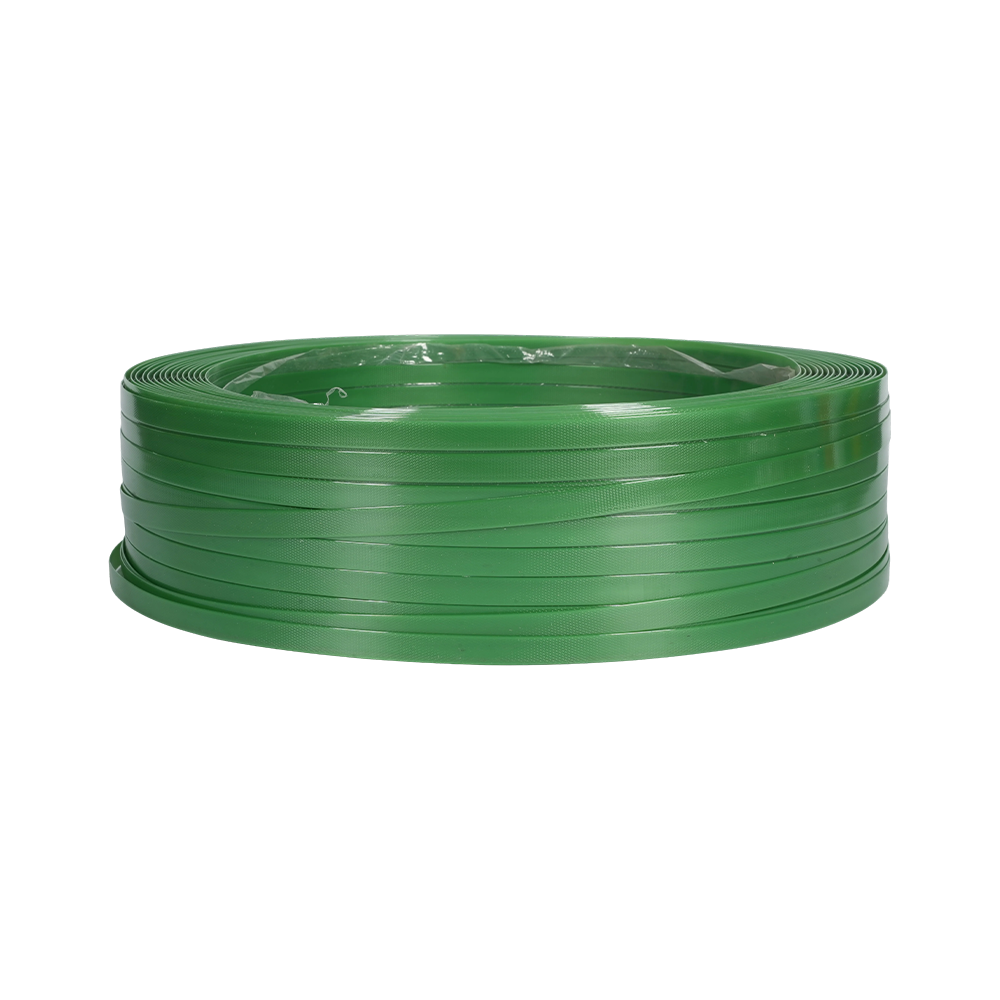
1608/1610/1910/2512 Handheld Transparent P+E+T Plastic Steel Belt
-
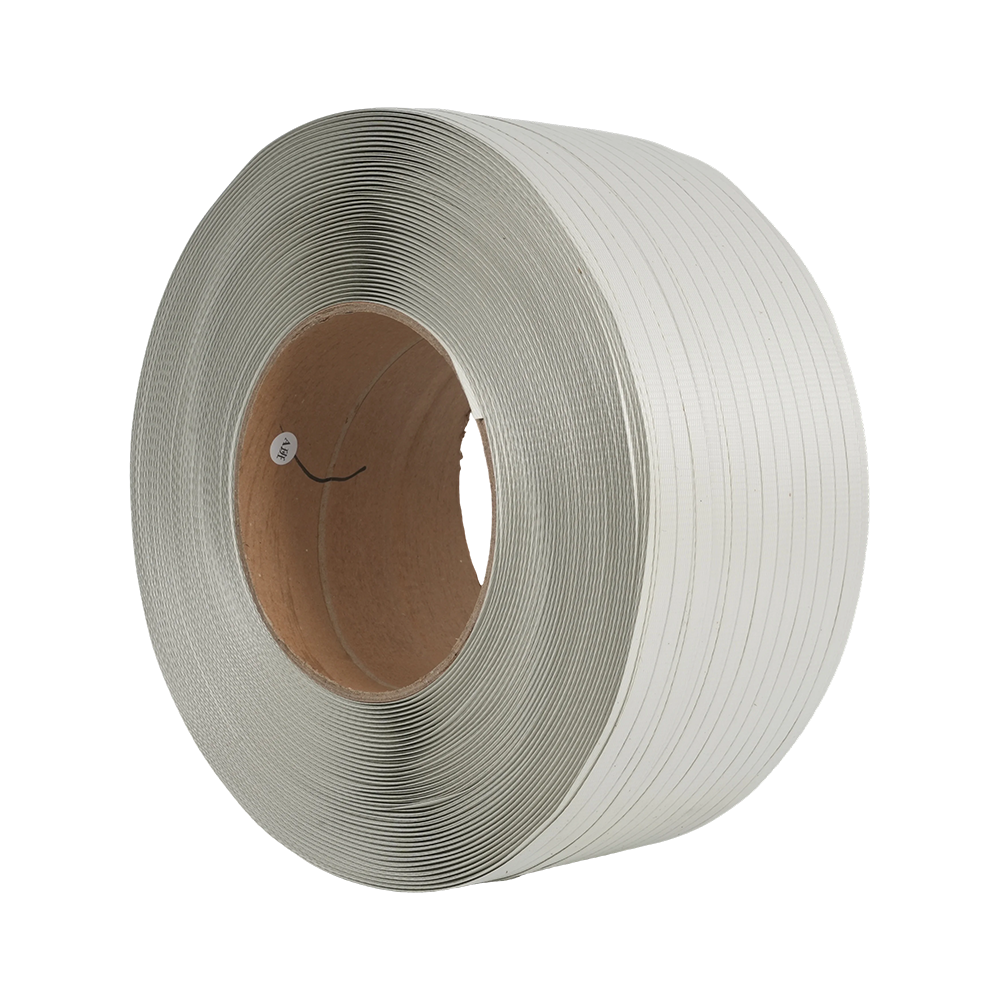
White Plastic Strapping Tape, PP Manual Strapping Band
-
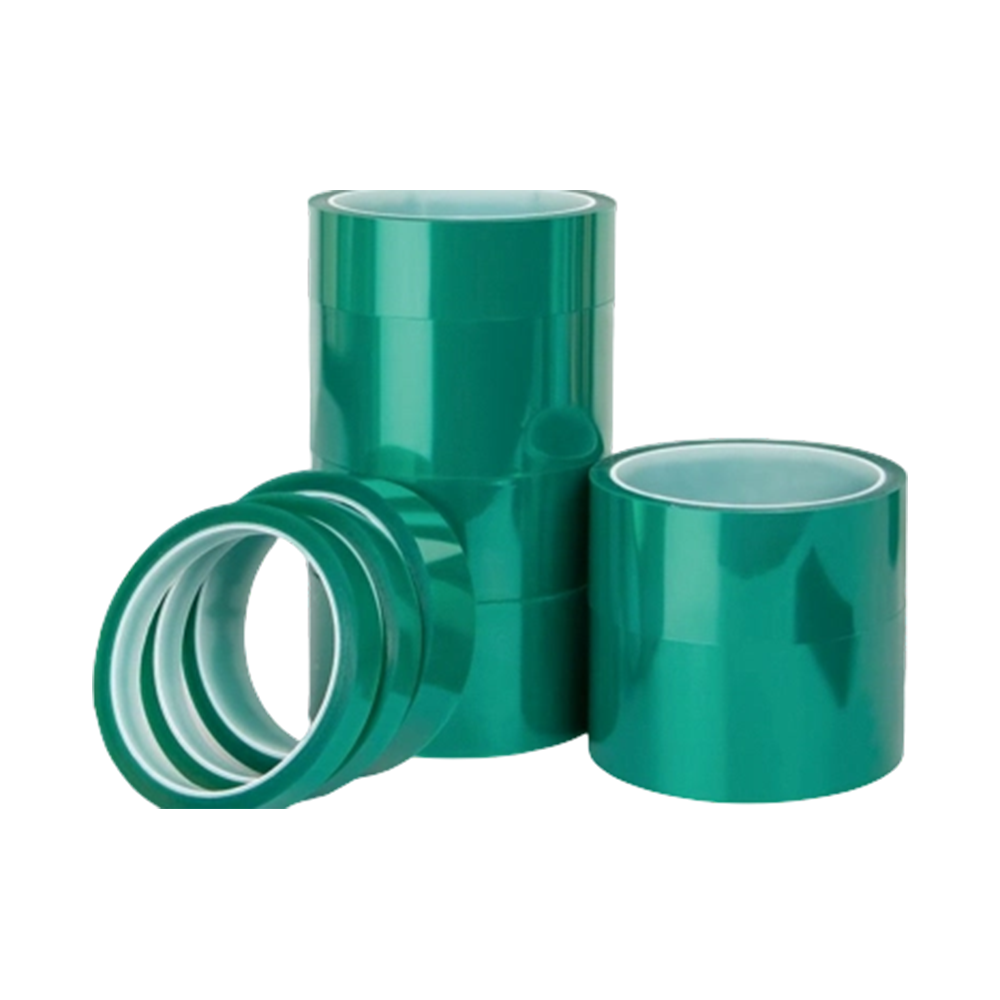
PET High-Temperature Tape
-
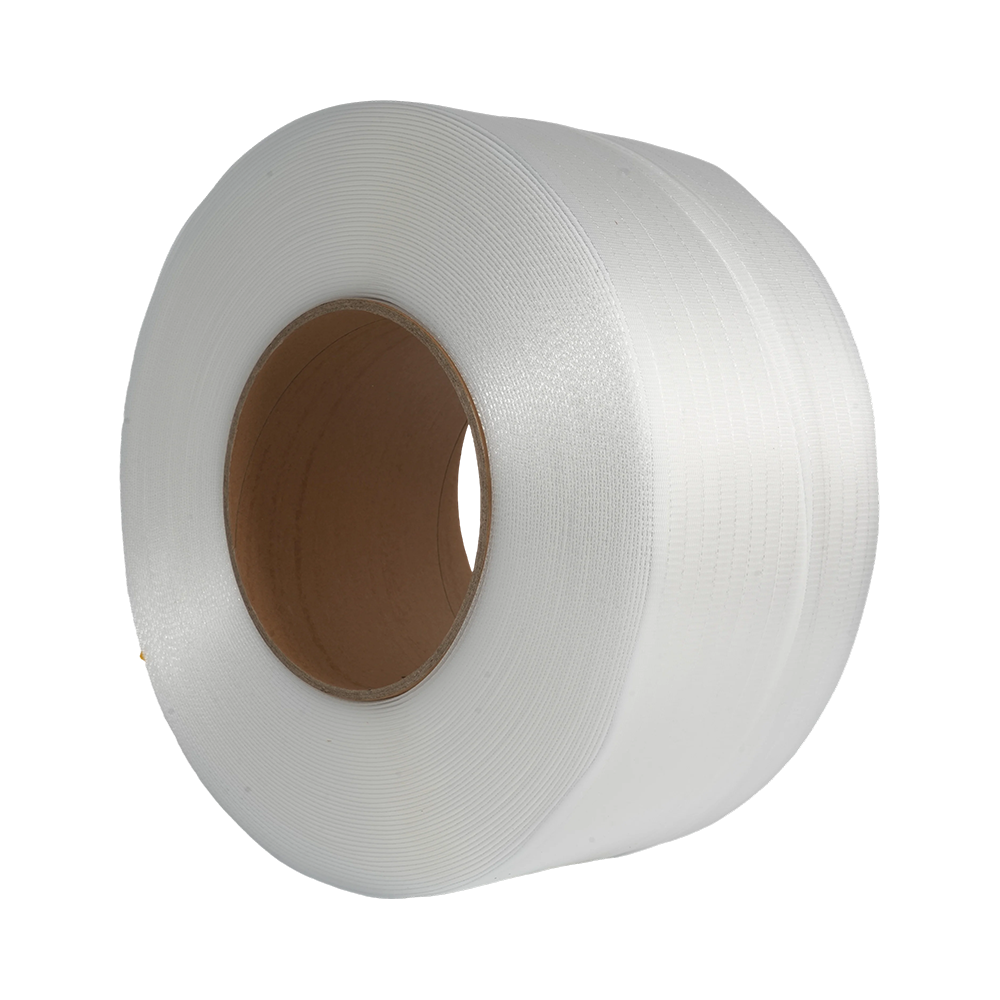
Transparent Strapping Band, Clear PP Packing Strap For Pelletizing Machine
-
High viscosity, Tearable by hand Plastic-free kraft paper tape
CONTACT DETAILS
- Address:No. 241, Yaojiafan, Zhangpanqiao, Shushan Street, Xiaoshan District, Hangzhou City, Zhejiang Province, China
- TEL:+86-0571-83175630
- Phone:+86-13336160217
- Email:jeffrey@grtpk.com
- WeChat/WhatsApp:+86-18058115265
PRODUCTS
NEWS CENTER
MOBILE TERMINAL
Copyright© Zhejiang Geruite Packaging Materials Co., Ltd. All Rights Reserved.
Privacy Wholesale industrial packaging tape Manufacturers