


 English
  Español
  عربى
عربى 
High-Temperature Resistant Masking Tape: Engineering Precision, Clean Removal, and Reliable Industrial Protection
Content
- 1 What Is High-Temperature Resistant Masking Tape?
- 2 Product Construction and Functional Design
- 3 Core Performance Advantages
- 4 Manufacturing Process and Quality Strengths
- 5 Advantages Compared with Alternative Masking Materials
- 6 Industrial Application Scenarios
- 7 Technical Specification Summary
- 8 Correct Application Procedure
- 9 Common Problems and Practical Solutions
- 10 Storage, Handling, and Shelf-Life Considerations
- 11 Why Manufacturing Experience Matters to Buyers
- 12 How to Select the Right Product for a Specific Process
- 13 Frequently Asked Questions
- 13.1 Q1: What is the main difference between high-temperature masking tape and ordinary painter’s tape?
- 13.2 Q2: What temperature can this tape withstand?
- 13.3 Q3: Can the tape be used for powder coating?
- 13.4 Q4: Can it be used during PCB wave soldering or reflow soldering?
- 13.5 Q5: Will the tape leave adhesive residue?
- 13.6 Q6: How can edge lifting be prevented?
- 13.7 Q7: Is the tape suitable for curved surfaces?
- 13.8 Q8: What widths are available?
- 13.9 Q9: Is the standard thickness adjustable?
- 13.10 Q10: What color is the tape?
- 13.11 Q11: Can the tape be used for heavy-duty bundling?
- 13.12 Q12: How should users test the tape before production?
- 14 Conclusion
- 15 References
- 16 Product: High-temperature resistant masking tape, crepe paper tape
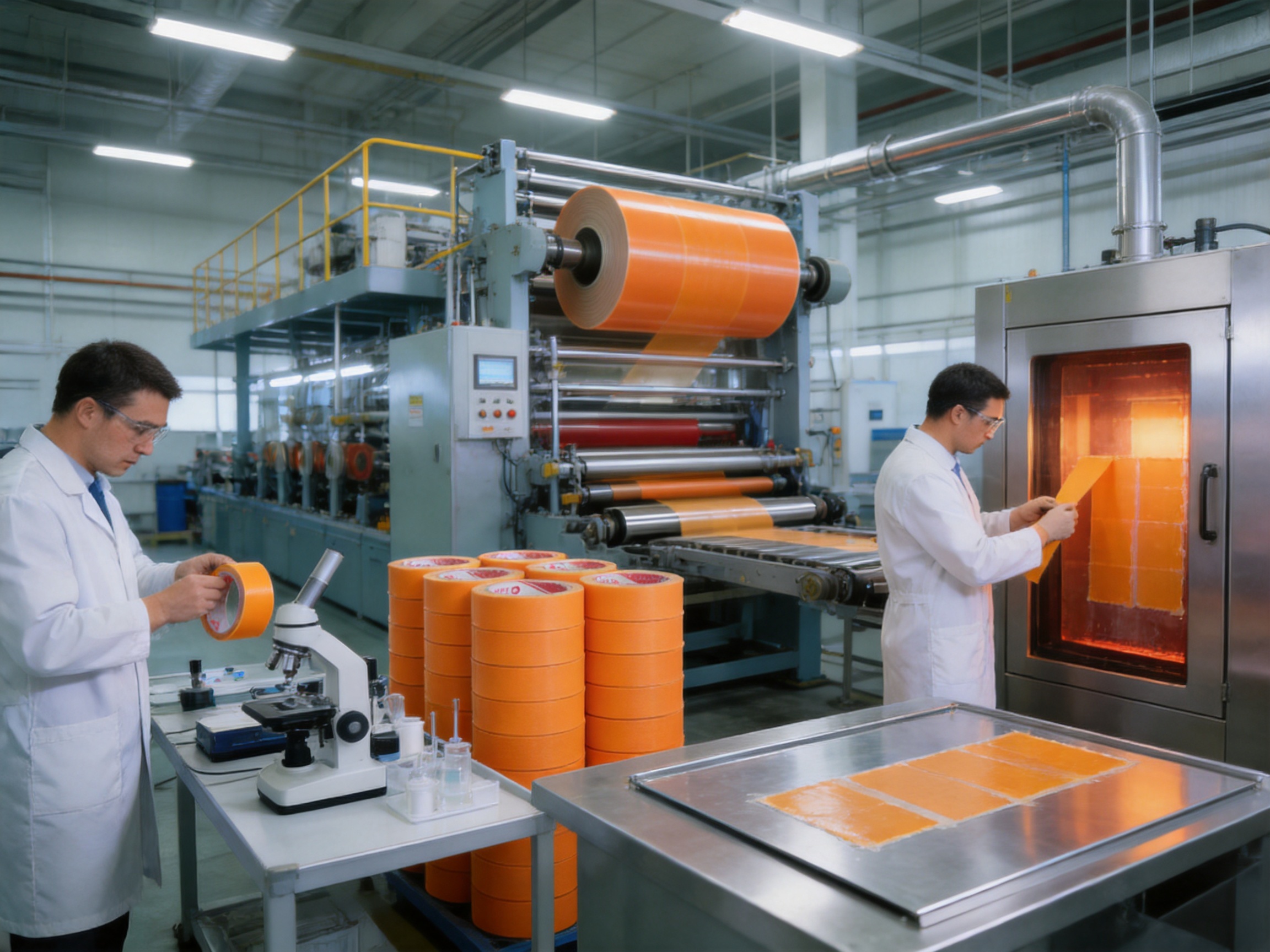
High-temperature resistant masking tape is an essential consumable for industrial processes that require temporary surface protection, sharp paint separation, reliable positioning, and clean removal after heating or finishing. Also known as crepe paper tape, this product combines a specially treated crepe paper backing with an acrylic pressure-sensitive adhesive. The result is a flexible, conformable, easy-to-tear tape designed to perform across a broad range of masking and light-duty fixing applications.
Modern manufacturing operations increasingly require masking materials that can tolerate heat without losing adhesion, shrinking excessively, lifting at the edges, or leaving unwanted residue. A conventional general-purpose masking tape may be suitable for room-temperature painting, but it may fail during powder coating, baking, heat treatment, soldering, or other elevated-temperature processes. High-temperature resistant masking tape is developed to address these more demanding conditions while preserving the handling advantages associated with paper-based tape.
The product described in this article is manufactured with a standard thickness of 0.14 mm and can be produced in customized widths from 5 mm to 500 mm. Its temperature-resistance performance can be adjusted through manufacturing and process controls, allowing different grades to serve different working environments. Depending on the selected model, the tape may be designed for elevated-temperature exposure within an approximate range of 80°C to 180°C for a defined period. Exact performance should always be confirmed through the relevant product datasheet and application testing.
For manufacturers, distributors, and professional users, the value of this tape extends beyond heat resistance. The backing must conform to curves, corners, and uneven surfaces. The adhesive must balance initial tack with holding power. The tape must unwind predictably, tear conveniently by hand, and remove without damaging the protected substrate. Its overall performance depends on the interaction of all these characteristics rather than on a single temperature rating.
What Is High-Temperature Resistant Masking Tape?
High-temperature resistant masking tape is a pressure-sensitive adhesive tape engineered for temporary masking and protection in environments where temperatures exceed ordinary room-temperature working conditions. Its primary construction consists of three functional elements: a crepe paper backing, an acrylic adhesive layer, and a wound roll structure that enables controlled dispensing and application.
The specially treated crepe paper backing provides flexibility, moderate stretch, tear resistance, and surface conformity. These characteristics allow the tape to follow curved panels, rounded corners, narrow edges, and irregular contours more effectively than a rigid film-based material. The paper backing also provides a clear visual contrast against many substrates, helping operators identify masking lines during application and inspection.
The acrylic pressure-sensitive adhesive is designed to adhere when pressure is applied, without requiring water, heat, or a separate curing step. It offers balanced initial adhesion and holding power, allowing the tape to remain in place during spraying, coating, baking, or temporary positioning. Acrylic adhesive also contributes to weather resistance, solvent resistance, and aging stability when properly matched to the application.
The term “high-temperature resistant” does not mean that every roll performs identically at every temperature. Different grades may be formulated or processed for different exposure conditions. Duration, substrate type, surface cleanliness, heating rate, cooling cycle, coating chemistry, and removal timing can all influence results. Therefore, responsible selection requires both a stated temperature specification and a clear understanding of the actual process conditions.
Product Construction and Functional Design
Specially Treated Crepe Paper Backing
The backing is produced from crepe paper that has been specially treated to improve its suitability for industrial masking. Ordinary paper can tear too easily, absorb moisture, lose strength, or fail to conform smoothly to a workpiece. Treated crepe paper is engineered to provide a more useful balance of flexibility and mechanical strength.
Its controlled stretch helps the operator apply tape around curves and across changing contours. The backing can be pressed down along an edge without immediately splitting, while its paper structure still permits clean hand tearing in many routine applications. This is important in production environments where operators must work quickly and cannot pause repeatedly to use a cutting tool.
The creped structure also contributes to conformability. When the tape is applied correctly, it can accommodate moderate changes in surface direction and maintain contact along the intended masking line. This helps reduce the formation of channels through which paint, coating powder, dust, or other process materials might migrate.
Acrylic Pressure-Sensitive Adhesive
The acrylic adhesive layer is selected to provide dependable contact with commonly used industrial substrates. The adhesive must develop sufficient initial tack to hold the tape during application, yet it must also maintain cohesive strength during heating and later removal. If the adhesive is too weak, the tape may lift or detach. If it is too aggressive or lacks internal strength, it may leave residue or damage a sensitive surface.
Acrylic adhesive is widely valued for its resistance to aging, weathering, and many environmental influences. It can offer stable performance over time and may be more suitable than less durable adhesive systems for applications involving elevated temperatures or extended storage. However, adhesive compatibility still depends on the specific surface. Painted metals, glass, plastics, rubber, powder-coated components, and unfinished materials can each interact differently with the adhesive.
Standard 0.14 mm Thickness
The standard thickness of 0.14 mm is intended to balance handling, masking performance, and material efficiency. A thinner tape can be easier to conform to small contours and may create a less noticeable transition at an edge. A thicker tape may offer additional body and handling strength but can be less flexible around tight curves and may increase material consumption.
At 0.14 mm, the tape is sufficiently substantial for many industrial masking operations while remaining manageable for manual application. Thickness uniformity is important because variations can affect roll handling, edge formation, adhesive contact, and the consistency of the finished masking line. Controlled coating and slitting processes are therefore essential to achieving predictable performance from roll to roll.
Customizable Widths from 5 mm to 500 mm
The available width range from 5 mm to 500 mm provides flexibility for both narrow-line masking and broad-area protection. Narrow widths can be useful for fine borders, electronic components, small painted details, and tightly defined separation lines. Wider rolls can cover larger panels, broad edges, fixtures, and areas where rapid protection is more important than detailed line definition.
Custom width production can also help reduce waste. Instead of applying several overlapping narrow strips, an operator may use a width selected for the actual masking area. This can lower application time, reduce the number of seams, and simplify inventory planning. Custom sizing is particularly valuable for manufacturers with repeatable workpiece dimensions or specialized production equipment.
Width customization should be evaluated together with roll length, core size, unwind direction, packaging format, and tolerance requirements. A suitable width is only one part of an effective tape specification. Industrial buyers should provide drawings, application samples, or detailed dimensional requirements when ordering custom-converted products.
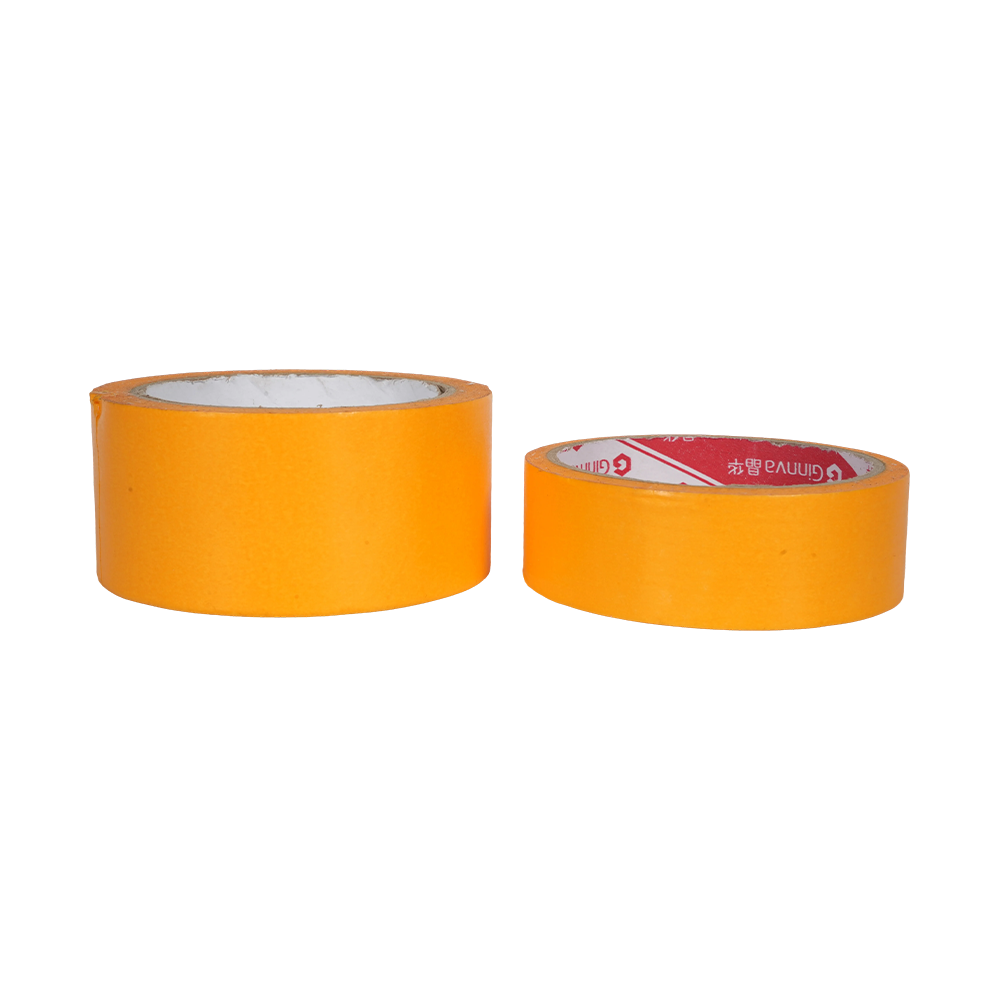
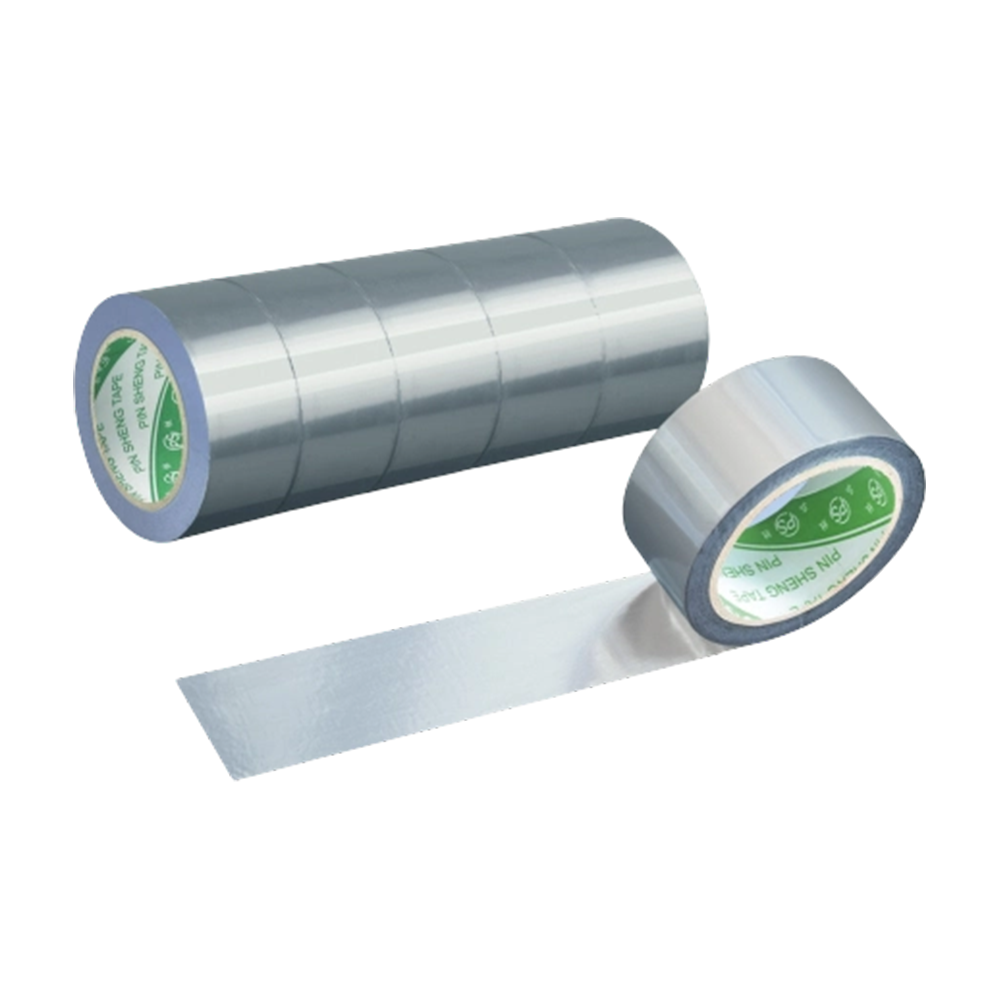
High-temperature resistant masking tape, crepe paper tape
Core Performance Advantages
Adjustable Temperature Resistance
One of the product’s principal advantages is the availability of different temperature-resistance grades. Through adjustments to the manufacturing process, the tape can be developed for different levels of thermal exposure. This makes it more adaptable than a single fixed-grade masking tape intended for only one general application.
Some users require masking at room temperature followed by a short heating cycle. Others need protection during paint baking, powder curing, soldering, or a more demanding heat-treatment operation. These environments may differ significantly in maximum temperature, dwell time, heating rate, and surface chemistry. A graded product range enables the user to select a tape that is better aligned with the actual process instead of overusing a premium specification or risking failure with an unsuitable low-temperature product.
Temperature resistance should be understood as a system property. The backing must retain enough strength to remain intact. The adhesive must maintain contact and resist excessive flow. The tape edge must remain sealed against process materials. After cooling, the tape should be removable within the recommended time without excessive tearing or residue. A tape that survives heat but becomes difficult to remove may not be an effective solution in production.
Sharp Paint Lines
Clean paint lines are a major reason professionals select high-temperature masking tape. A well-applied tape edge creates a temporary boundary that helps prevent paint, coatings, or finishing materials from reaching protected zones. The flexibility of the crepe paper backing allows the operator to follow contours, while the adhesive helps maintain edge contact during processing.
Sharp lines depend on more than the tape itself. The surface must be clean, dry, and free from oil, dust, loose particles, and moisture. The tape should be applied with consistent pressure, particularly along the edge. Excessive stretching can cause the tape to contract or distort, while insufficient pressure can leave small pathways beneath the edge. Spraying angle, coating viscosity, and removal timing also influence the final result.
Compared with ordinary paper masking tapes, a high-temperature grade can offer greater confidence when the workpiece is exposed to heat after application. Compared with some rigid film tapes, crepe paper can be easier to position around curved geometries and may be simpler to tear and remove manually. The best choice depends on the required line definition, surface shape, and process temperature.
Reduced Adhesive Residue
Low-residue removal is another important advantage. Industrial users often need to protect a finished surface without creating an additional cleaning operation. Excess adhesive residue can slow production, require solvents, create rework, or damage the appearance of a coated part.
The acrylic adhesive is designed to provide a balance between secure holding power and clean removability. When the tape is applied to a compatible, clean surface and removed within the recommended time, the risk of residue can be reduced. Removal should generally be performed in a controlled manner, using a suitable angle and steady speed rather than pulling abruptly away from the surface.
No adhesive tape can guarantee identical residue performance on every substrate and under every condition. Surface energy, coating age, temperature, ultraviolet exposure, pressure, contamination, and dwell time can all affect removal. For sensitive or valuable surfaces, a trial application should be completed before full-scale production.
Conformability on Curved Surfaces
Many industrial workpieces contain corners, arcs, flanges, recesses, and compound curves. A tape that performs well only on flat panels may create wrinkles or open channels when applied to these shapes. The crepe paper backing provides flexibility and a degree of controlled stretch, helping the tape conform to moderate curves.
For best results, operators should apply the tape in manageable sections. The tape should be smoothed from one point toward the next, with enough pressure to establish full contact. Slight stretching can help in some applications, but aggressive stretching should be avoided because it may create tension that causes edge lift during heating or after removal from the dispenser.
Convenient Hand Application
The product is designed for practical use on the factory floor. Its paper backing can generally be torn by hand, eliminating the need for a blade or scissors in many routine operations. This supports fast masking, reduces interruptions, and can improve operator productivity.
Moderate unwind force is also important. If a roll unwinds too easily, it may telescope, fold, or lose control during application. If it unwinds with excessive force, the operator may stretch the tape unintentionally or experience fatigue. A controlled unwind helps the user apply consistent lengths and maintain a straight masking line.
Manufacturing Process and Quality Strengths
Zhejiang Geruite Packaging Materials Co., Ltd. focuses on the research, development, production, and sales of packaging materials and adhesive tape products. Its product range includes BOPP tapes, kraft paper tapes, masking tapes, high-temperature resistant tapes, metal tapes, PE stretch film, PP strapping, and high-strength PET strapping. This broader product foundation supports an understanding of adhesive materials, backing substrates, converting, roll processing, and packaging applications.
The company is located in Zhejiang Province, China, an important manufacturing region with a strong industrial supply chain. Its facilities and operating model are centered on the production of packaging and adhesive materials for sectors including logistics, electronics, construction, household goods, industrial manufacturing, cargo stabilization, and surface protection.
Raw Material Selection
Consistent tape performance begins with raw material control. The crepe paper must provide suitable tensile strength, flexibility, tear behavior, and surface characteristics. The adhesive components must be matched to the intended holding power, temperature resistance, aging behavior, and removal requirements. Release characteristics, roll stability, and packaging materials also influence the final user experience.
A disciplined procurement and inspection process helps prevent inconsistent batches. Materials can be evaluated according to incoming specifications before entering production. Important considerations may include paper basis weight, moisture condition, coating compatibility, adhesive viscosity, solids content, and visual quality. Although the exact internal inspection procedures may vary by product grade, a controlled raw material system is fundamental to reliable manufacturing.
Backing Treatment and Adhesive Coating
The crepe paper backing requires appropriate treatment before adhesive coating. Treatment may improve surface integrity, support adhesive anchorage, and help the backing maintain useful mechanical properties during processing. Uniform treatment is important because weak areas can cause tearing, uneven coating, or poor performance during slitting and application.
Adhesive coating must be controlled across the full web width. Coating weight, coating uniformity, drying or curing conditions, and line speed can all influence the final tape. Uneven adhesive distribution may result in inconsistent tack, edge lifting, residue, or differences in unwind behavior. Process adjustments are particularly important when producing different temperature-resistance grades.
For a tape intended for elevated-temperature use, the adhesive must be processed so that it retains an appropriate balance of adhesion and cohesion. Excessive softness may increase residue or adhesive transfer, while insufficient wetting can reduce initial contact. The manufacturing process must therefore support a stable relationship between coating chemistry, drying conditions, paper properties, and final application requirements.
Temperature-Resistance Grade Development
The ability to offer varying temperature-resistance grades is a practical manufacturing strength. Instead of treating all applications as identical, the producer can adjust the process to meet different thermal requirements. This supports a more targeted product selection strategy for distributors and end users.
Grade development should consider not only peak temperature but also exposure time and process sequence. A tape exposed briefly to a high temperature may behave differently from a tape exposed to a lower temperature for several hours. Heating and cooling rates, contact with coatings, and the condition of the substrate can also affect results. Product datasheets and application-specific testing remain necessary for final approval.
Slitting and Width Conversion
After coating and stabilization, the tape can be converted into rolls of specified widths. Slitting quality directly influences edge smoothness, roll appearance, unwind behavior, and application performance. Poorly controlled slitting can create uneven edges, loose layers, telescoping, or difficulties during manual dispensing.
The capacity to produce widths from 5 mm to 500 mm demonstrates flexibility in converting and order fulfillment. Custom widths may be prepared for specialized industrial masking, component protection, narrow-line painting, or large-area surface coverage. Production planning must account for the required width tolerance, roll diameter, core specification, winding tension, and packaging method.
Quality Control and Final Inspection
Zhejiang Geruite Packaging Materials Co., Ltd. emphasizes a quality control system covering raw material procurement, production, and final inspection. Such a system is important because tape performance cannot be judged by appearance alone. A roll may look acceptable yet fail in adhesion, unwind, temperature exposure, or removal testing.
Typical quality evaluations for this category of tape may include thickness measurement, width measurement, visual inspection, adhesion assessment, holding power, tensile strength, elongation, tear behavior, unwind performance, and residue observation. Thermal testing may be conducted according to the requirements of the specific grade. The exact test methods and acceptance limits should be defined in the applicable technical documentation.
Final inspection also helps identify defects such as wrinkles, adhesive skips, edge damage, contamination, roll deformation, telescoping, and inconsistent winding. These checks support stable deliveries and reduce the risk of production interruptions for customers.
Advantages Compared with Alternative Masking Materials
Compared with General-Purpose Masking Tape
General-purpose masking tape is often optimized for low-temperature painting and short-term household or maintenance use. It may be economical for simple tasks, but it may not retain adhesion or edge integrity during industrial heating. High-temperature resistant masking tape offers a more suitable construction for processes involving elevated temperatures and more demanding removal requirements.
The principal advantage is application reliability. A temperature-rated product can reduce the risk of edge lift, coating penetration, shrinkage, and adhesive failure when the process exceeds ordinary ambient conditions. This can lower rework and help maintain consistent production quality.
Compared with Plastic Film Tape
Plastic film tapes can provide excellent moisture resistance, tensile strength, and smooth surfaces. However, some film backings are less convenient to tear by hand and may be less compliant on complex shapes. Crepe paper masking tape offers a useful alternative when conformability, fast manual application, and clear paint-line definition are priorities.
Paper-based tape can also be easier to write on or visually identify during production. In applications where the tape is removed after a defined process, the temporary nature and practical handling of crepe paper can be advantageous.
Compared with Metal Foil Tape
Metal foil tapes can provide strong thermal reflection, electrical conductivity, or vapor-barrier performance. They are appropriate for specialized functions, but they are not always the most efficient choice for paint masking or temporary protection. Foil can be more difficult to conform smoothly around curves and may require cutting tools for clean application.
High-temperature crepe paper tape is generally better suited to temporary masking, sharp coating boundaries, and manual industrial workflows where conductivity or a metal barrier is not required.
Compared with Liquid Masking Materials
Liquid masking products can cover irregular shapes and complex geometries, but they may require spraying, drying, curing, or later cleaning. These additional steps can increase labor and process time. Tape provides a preformed, immediately usable barrier that can be applied precisely to a defined area.
For repeatable edges and straightforward removal, tape is often easier to standardize. Operators can follow work instructions using marked positions, templates, or specified tape widths. This can improve process consistency, particularly in high-volume manufacturing.
Industrial Application Scenarios
Automotive Parts and Surface Treatment
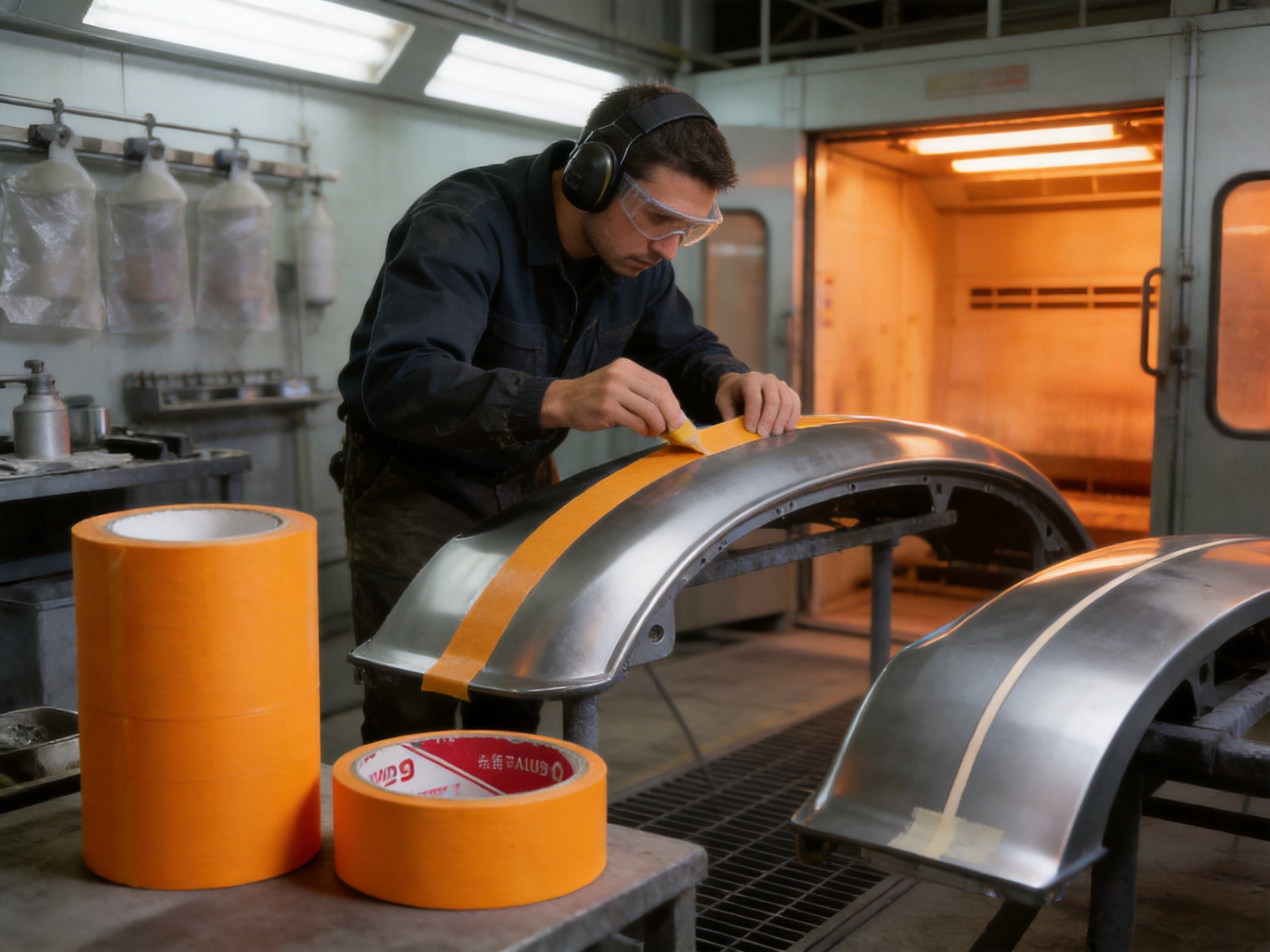
Automotive components often require multiple finishes, colors, or protected zones. Masking tape can be used to cover areas that should not receive paint, powder coating, primer, or other surface treatments. Its conformability is useful on body panels, brackets, trim components, and shaped metal parts.
During application, operators should ensure that the surface is free from oil, dust, polishing compounds, and moisture. The tape should be pressed firmly along the masking boundary. After coating and heating, removal should occur according to the process schedule to reduce residue and minimize the risk of coating edge damage.
Furniture and Metal Fabrication
Furniture manufacturers and metal fabricators may use the tape for color separation, temporary protection, finishing operations, and positioning. It can help maintain clean boundaries on metal frames, panels, hardware, and decorative components. The range of available widths allows users to select narrow tape for detailed work or broad tape for larger protected zones.
When used on prefinished surfaces, testing is especially important. The condition and age of the finish can influence adhesion and removal. A tape that performs well on bare steel may behave differently on a powder-coated or lacquered surface.
Powder Coating and Baking
Powder coating operations expose masked parts to elevated temperatures during curing. A suitable high-temperature masking tape can protect threads, contact areas, holes, edges, and non-coated sections during the curing cycle. The selected grade must match the curing temperature and dwell time.
Masking design should account for powder movement and air circulation. Edges must be firmly pressed, and overlapping sections should be arranged so that there are no open channels. After curing and cooling, the tape should be removed carefully to maintain a clean boundary.
Electronic Component Protection
In electronics manufacturing, temporary masking may be required to protect solder points, contacts, components, or selected areas of a printed circuit board. The tape can support protection during wave soldering, reflow soldering, or related thermal processes when the selected grade is compatible with the actual conditions.
Electronic assemblies are sensitive to contamination and residue. Users should verify adhesive compatibility, dielectric requirements, exposure duration, and removal performance before production use. Tape should not be applied where its adhesive, backing, or removal force could interfere with component function or inspection.
Heat Treatment and Industrial Baking
Parts may require temporary protection during drying, baking, or heat treatment. The tape can cover areas that must remain untreated, maintain identification marks, or hold lightweight protective materials in place. Its use is especially convenient when the masking pattern changes frequently and a reusable fixture is impractical.
In any thermal process, the tape should be regarded as a temporary consumable rather than a permanent high-temperature insulation system. It should be removed within the specified operating window, and the workpiece should be inspected after removal.
General Bundling, Fixing, and Identification
Although its primary role is masking, the tape can also support temporary positioning, light-duty bundling, and identification in industrial environments. It can hold components in place during short processing stages or help mark areas for later operations.
It should not be substituted for a structural strapping or load-bearing packaging material. PP strapping, PET strapping, stretch film, or other dedicated products should be used when the application involves significant weight, tension, impact, or long-term cargo stabilization.
Technical Specification Summary
| Parameter | Specification or Description |
| Product Name | High-temperature resistant masking tape, also known as crepe paper tape |
| Product Category | Painter’s tape and industrial masking tape |
| Backing Material | Specially treated crepe paper |
| Adhesive | Acrylic pressure-sensitive adhesive |
| Standard Thickness | 0.14 mm |
| Available Width | Customizable from 5 mm to 500 mm |
| Temperature Resistance | Various grades depending on manufacturing process and model |
| Indicative Temperature Range | Approximately 80°C to 180°C for defined exposure periods, subject to datasheet confirmation |
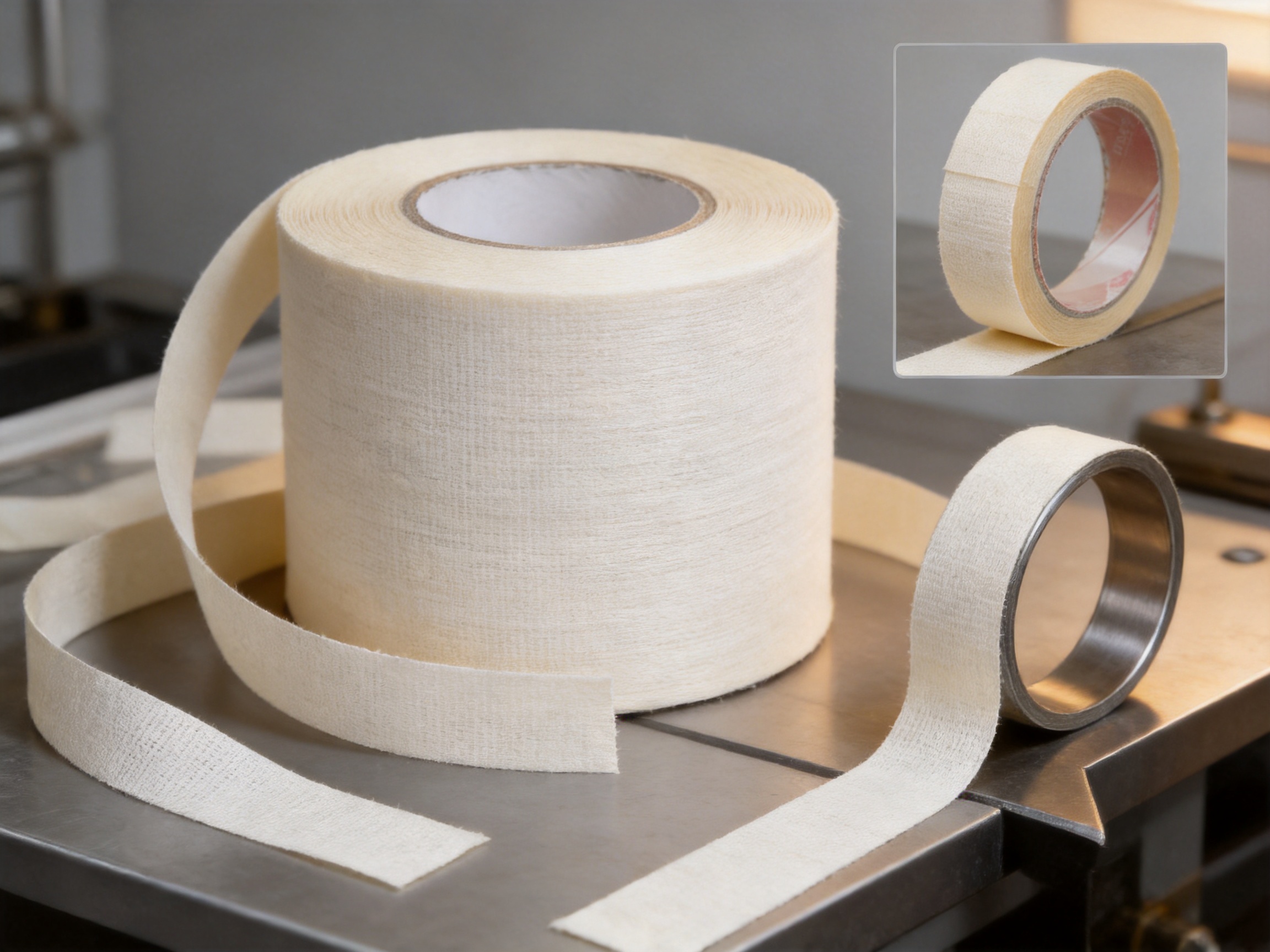
| Typical Color | Natural crepe paper color, commonly off-white or light yellow |
| Backing Characteristics | Flexible, conformable, tear-resistant, and suitable for curved surfaces |
| Adhesive Characteristics | Balanced initial tack and holding power, with solvent and aging resistance |
| Application Method | Manual or dispenser-assisted application with pressure |
| Removal | Designed for convenient removal with reduced residue under suitable conditions |
Correct Application Procedure
Step One: Inspect the Surface
Before application, inspect the substrate for oil, dust, moisture, loose particles, rust, release agents, and other contamination. Surface contamination can prevent the adhesive from making full contact and may cause early lifting. A dirty surface can also transfer contamination to the adhesive and increase residue during removal.
Cleaning should be performed using a method compatible with the substrate and the downstream process. The surface must be fully dry before tape is applied. If a cleaning solvent is used, any remaining solvent should evaporate before masking begins.
Step Two: Select the Correct Grade
Choose a tape according to the highest expected temperature, exposure duration, heating cycle, substrate, and removal schedule. Do not select a grade based solely on the maximum temperature number. A tape rated for a brief exposure may not be suitable for a prolonged bake at the same temperature.
Where the application is new, especially sensitive, or high-value, conduct a small trial. Apply the tape to a representative substrate, expose it to the actual process, and evaluate edge protection, adhesion, removal force, residue, and surface condition.
Step Three: Apply with Controlled Pressure
Unwind the tape smoothly and avoid excessive stretching. Position the tape along the intended boundary, then press it firmly onto the surface. Pay particular attention to edges, corners, overlaps, and transitions between flat and curved areas.
When masking a curve, apply the tape in shorter sections rather than forcing a long strip around the entire shape. Smooth the backing gradually to reduce wrinkles and trapped air. If the tape must overlap, ensure the overlap is pressed down securely and does not create a passage beneath the edge.
Step Four: Complete the Process within the Recommended Window
Once the tape is applied, proceed with spraying, coating, baking, soldering, or other processing within the approved dwell time. Prolonged exposure can change adhesive behavior, particularly on surfaces with high energy, roughness, heat, or chemical activity.
During heating, observe the workpiece where practical. If the application involves a new material or process, inspect a test piece first. Any sign of edge lift, bubbling, shrinkage, discoloration, or adhesive migration should be investigated before continuing with production.
Step Five: Remove Carefully
Remove the tape after the process according to the recommended timing. A steady pull at a suitable angle is generally preferable to a sudden, forceful pull. If the surface is still excessively hot, removal may be unsafe or may affect the coating. If the tape remains in place for too long after cooling, residue or increased removal force may occur.
After removal, inspect the masked boundary and the substrate. Check for coating penetration, adhesive transfer, surface discoloration, or damage. Document the results when qualifying a tape for repeat production.
Common Problems and Practical Solutions
Adhesive Residue after Removal
Residue may result from prolonged dwell time, excessive heat, direct sunlight, surface contamination, incompatible coatings, or a mismatch between adhesive strength and substrate. It can also occur when the tape is removed too aggressively or when the adhesive has softened during processing.
To reduce the risk, clean and dry the surface before application, select a compatible grade, avoid unnecessary storage on the workpiece, and remove the tape within the recommended window. For sensitive materials, test several grades and compare both holding performance and removal cleanliness.
Edge Lift during Heating
Edge lift can be caused by an insufficient temperature rating, poor surface preparation, inadequate application pressure, excessive stretching, sharp curves, or contamination. It may also indicate that the tape has been exposed beyond its intended duration.
Select a grade with a temperature rating above the actual process requirement, while considering exposure time. Press the tape firmly along the boundary and avoid applying excessive tension. On difficult shapes, use shorter pieces or a design that minimizes stress at the edge.
Tape Detachment from the Surface
Complete detachment may occur when the substrate has low surface energy, contains oil or moisture, or has a coating that is not compatible with the adhesive. High humidity, dust, vibration, and mechanical contact can also contribute.
Verify the substrate condition and perform a compatibility test. Apply enough pressure to establish contact, but do not rely on pressure to overcome heavy contamination. If the application is exposed to a particularly demanding environment, request a tape grade selected for that substrate and process.
Wrinkles and Air Bubbles
Wrinkles commonly develop when a tape is forced around a curve without controlled application. Air bubbles may appear when the backing is applied too quickly or when the surface is uneven. Both conditions can compromise the masking line.
Apply the tape gradually and smooth it with the fingers or a suitable soft applicator. For large areas, work from one edge toward the other. For curved surfaces, use short sections and allow the backing to conform naturally rather than pulling it tightly across the shape.
Tearing during Removal
Tearing can occur after excessive heating, prolonged dwell time, mechanical damage, or deep bonding to a rough surface. It may also happen if the tape is removed at an unsuitable angle or with excessive speed.
Where possible, begin removal at a clean corner or tab. Pull steadily and maintain control. If the tape has been damaged, remove it in smaller sections. A trial test can help determine the safest removal direction for a particular surface geometry.
Storage, Handling, and Shelf-Life Considerations
Adhesive tape should be stored in a clean, dry, and well-ventilated area. Rolls should be protected from direct sunlight, excessive heat, moisture, dust, and chemical vapors. Storage conditions can influence adhesive aging, backing moisture, roll stability, and unwind performance.
Rolls should remain in their original packaging until required for use. They should not be stacked in a way that deforms the edges or creates excessive pressure on the winding. If rolls are moved between environments with significantly different temperatures, allow them to acclimate before application.
Older stock should be managed according to a first-in, first-out system. Before using aged material, inspect the roll for discoloration, edge damage, blocking, loosened winding, unusual odor, or changes in unwind force. Application testing may be appropriate when the tape has been stored for an extended period or under nonstandard conditions.
Operators should handle rolls with clean hands or gloves when contamination could affect adhesion. Avoid placing rolls directly on dirty floors or near open containers of oils, solvents, or coating materials. Good storage practice protects the consistency achieved during manufacturing.
Why Manufacturing Experience Matters to Buyers
For buyers, selecting a tape manufacturer rather than purchasing an undifferentiated commodity can provide important advantages. A manufacturer with experience across adhesive tapes, stretch film, strapping, and packaging materials is more likely to understand the relationship between material selection, converting, packaging, and end-use requirements.
Zhejiang Geruite Packaging Materials Co., Ltd. has developed a product portfolio serving logistics, electronics, construction, industrial manufacturing, household goods, and packaging protection. This diverse market exposure supports the development of products for different performance levels and application environments.
The company reports an annual output value exceeding RMB 60 million and emphasizes investment in production equipment, quality control, product development, and service improvement. For customers, these capabilities can support more stable supply, customized widths, product consultation, and coordinated packaging-material procurement.
Customization is especially valuable when a customer has a defined workpiece, a specialized masking fixture, or a regular order schedule. A supplier able to discuss thickness, width, temperature grade, adhesive behavior, roll format, and packaging requirements can help create a more practical specification than a one-size-fits-all product.
Manufacturing strength should ultimately be evaluated through measurable performance, batch consistency, technical communication, and responsiveness. Samples, datasheets, test reports, and production trials remain important parts of the purchasing decision. A professional supplier should be prepared to clarify limitations as well as advantages.
How to Select the Right Product for a Specific Process
Begin by documenting the actual process rather than selecting tape based on a general application name. Record the maximum temperature, average temperature, exposure time, heating method, cooling method, substrate material, coating or chemical contact, required masking width, and removal timing.
Next, identify the most important performance objective. Some users prioritize a sharp paint line. Others require low residue, maximum holding power, conformity to a tight curve, clean removal from a delicate finish, or reliable performance during a soldering cycle. The best tape grade is the one that balances these needs for the complete process.
Consider whether the workpiece is flat, curved, rough, porous, coated, painted, polished, or contaminated by processing oils. Surface condition can have as much influence on performance as the tape specification. A high-temperature tape cannot compensate for a surface that prevents proper adhesive contact.
Determine the most efficient width. A narrow roll may provide greater precision, while a wider roll may reduce application time and overlap. Custom widths from 5 mm to 500 mm make it possible to align the product more closely with the geometry of the part and the operator’s workflow.
Finally, validate the selected tape under actual or simulated production conditions. Inspect the masking boundary, measure removal force where appropriate, examine residue, and compare the protected surface with an unmasked reference. Record the grade, batch, application date, process conditions, and results so that the specification can be repeated reliably.
Frequently Asked Questions
Q1: What is the main difference between high-temperature masking tape and ordinary painter’s tape?
High-temperature masking tape is designed for processes involving elevated temperatures and generally provides improved holding stability, edge performance, and removal behavior under those conditions. Ordinary painter’s tape may be intended primarily for room-temperature painting and short-term use. The exact difference depends on the product grade, so users should compare technical datasheets rather than rely only on the product name.
Q2: What temperature can this tape withstand?
Temperature resistance varies by model and manufacturing process. The available grades may cover different elevated-temperature environments, with an indicative range of approximately 80°C to 180°C for defined periods. The exact maximum temperature, exposure duration, and substrate conditions must be confirmed with the relevant product datasheet and validated through testing.
Q3: Can the tape be used for powder coating?
It can be suitable for powder coating and curing applications when the selected grade matches the curing temperature and dwell time. The tape must be applied to a clean surface, pressed firmly along all edges, and removed according to the recommended procedure. A production trial is strongly recommended before full-scale use.
Q4: Can it be used during PCB wave soldering or reflow soldering?
The tape may be suitable for selected electronic masking applications, including protection of solder points and components, provided the product grade is compatible with the thermal profile and electronic assembly requirements. Users should verify residue, insulation, outgassing, adhesion, and removal performance with representative components and boards.
Q5: Will the tape leave adhesive residue?
The acrylic adhesive is designed to support clean removal under suitable conditions, but residue can occur when the tape is applied to a contaminated or incompatible surface, exposed for too long, subjected to excessive heat, or removed improperly. Clean the substrate, select a compatible grade, and complete a trial test for sensitive surfaces.
Q6: How can edge lifting be prevented?
Choose a tape with a temperature rating that exceeds the actual operating condition, clean and dry the substrate, apply the tape with sufficient pressure, and avoid excessive stretching. Curved surfaces should be masked in manageable sections. Edges and overlaps require particular attention because incomplete contact can create pathways beneath the tape.
Q7: Is the tape suitable for curved surfaces?
Yes. The crepe paper backing offers flexibility and conformability, making it suitable for many curved and irregular surfaces. Apply it gradually, smooth it by hand, and avoid forcing a long strip around a tight curve. For complex shapes, shorter sections may produce a cleaner result.
Q8: What widths are available?
Widths can be custom-produced from 5 mm to 500 mm. Narrow widths are useful for detailed masking and precision lines, while wider formats can protect broad areas and reduce the number of overlapping strips. Other roll dimensions, core requirements, and packaging details should be discussed during order confirmation.
Q9: Is the standard thickness adjustable?
The standard thickness is 0.14 mm. If a different thickness is required for a special application, customers should communicate their technical needs to the manufacturer for confirmation. Thickness selection may affect flexibility, handling strength, edge behavior, and material consumption.
Q10: What color is the tape?
The tape is typically supplied in the natural crepe paper color, commonly off-white or light yellow. This color provides a visible contrast against many industrial surfaces and helps operators identify masking lines during application and inspection.
Q11: Can the tape be used for heavy-duty bundling?
It is suitable for temporary positioning, identification, and light-duty fixing where some temperature resistance is needed. It is not intended to replace PP strapping, PET strapping, stretch film, or other dedicated load-securing materials for heavy bundles or cargo stabilization.
Q12: How should users test the tape before production?
Apply the tape to a representative substrate using the intended application method. Expose it to the actual temperature and duration, process the part, and remove the tape according to the planned schedule. Inspect edge definition, adhesion, residue, tearing, surface damage, and overall appearance. Repeat the evaluation on different surfaces when the production range includes multiple materials.
Conclusion
High-temperature resistant masking tape is a practical solution for industrial users who need precise temporary protection during painting, coating, baking, soldering, and heat-treatment operations. Its specially treated crepe paper backing combines flexibility, toughness, tear resistance, and conformity to curved surfaces. Its acrylic adhesive provides balanced initial tack, holding power, aging resistance, and the potential for clean removal when properly matched to the substrate and process.
The standard 0.14 mm thickness supports convenient handling, while customizable widths from 5 mm to 500 mm provide flexibility for both detailed and broad-area masking. Adjustable temperature-resistance grades allow customers to select a product more closely aligned with their working environment instead of depending on a single general-purpose specification.
Compared with ordinary masking tape, the product offers greater suitability for elevated-temperature applications. Compared with rigid film or foil alternatives, it can provide easier hand application, improved conformability, and efficient paint-line definition. These advantages are supported by manufacturing controls involving backing treatment, adhesive coating, temperature-grade development, slitting, winding, inspection, and customer-specific conversion.
Zhejiang Geruite Packaging Materials Co., Ltd. brings experience in adhesive tapes and related packaging materials, supported by production capabilities, quality-control practices, product customization, and service for industrial customers. By combining material selection with process discipline, the company aims to provide stable and practical packaging and masking solutions for domestic and international markets.
For the best results, users should select the correct grade, prepare the substrate carefully, apply the tape with controlled pressure, respect the temperature and dwell-time limits, and remove it within the recommended window. When these principles are followed, high-temperature resistant crepe paper tape can contribute to cleaner finishes, reduced rework, smoother production, and more dependable temporary surface protection.
References
1. Pressure-Sensitive Tape Council, pressure-sensitive adhesive tape terminology and testing principles.
2. ASTM International, standard practices for evaluating pressure-sensitive tapes, adhesion, tensile strength, and peel performance.
3. International Organization for Standardization, quality management principles for manufacturing and process control.
4. Technical information supplied for high-temperature resistant masking tape, including product construction, dimensions, application guidance, and temperature-resistance classifications.
5. Industrial coating and surface-treatment practice guidelines relating to masking, powder curing, baking, and temporary surface protection.
Product: High-temperature resistant masking tape, crepe paper tape

LATEST POST
Let’s create something amazing together
contact us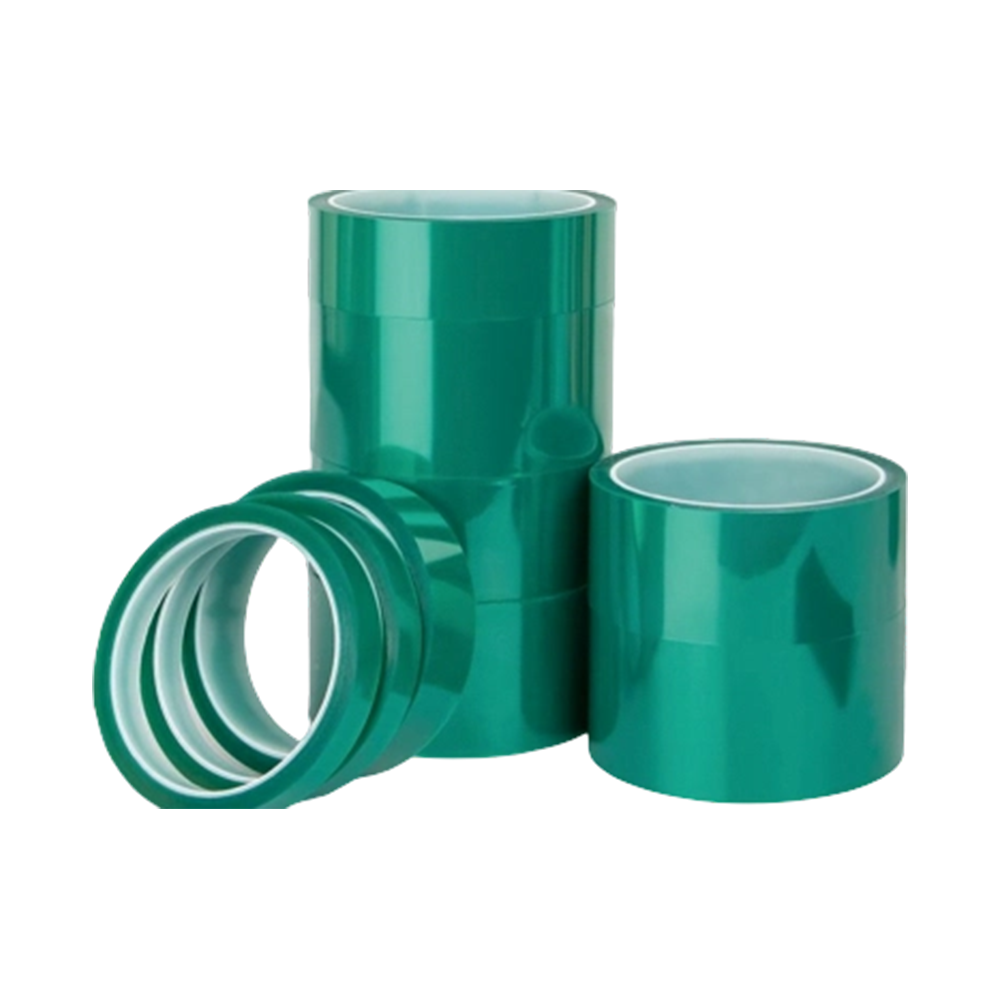
CONTACT DETAILS
- Address:No. 241, Yaojiafan, Zhangpanqiao, Shushan Street, Xiaoshan District, Hangzhou City, Zhejiang Province, China
- TEL:+86-0571-83175630
- Phone:+86-13336160217
- Email:anqiaocun@163.com
PRODUCTS
NEWS CENTER
MOBILE TERMINAL
Copyright© Zhejiang Geruite Packaging Materials Co., Ltd. All Rights Reserved.
Privacy Wholesale industrial packaging tape Manufacturers