


 English
  Español
  عربى
عربى 
Handheld Opaque PET Plastic Steel Strapping for Reliable Manual Packaging
Content
- 1 Understanding the 1608, 1610, 1910, and 2512 Series
- 2 Material Construction and Product Performance
- 3 Opaque Textured Surface for Better Load Control
- 4 Advantages Over Conventional Steel Strapping
- 5 Advantages Over Lower-Strength Plastic Straps
- 6 Manual Operation and Tool Compatibility
- 7 Manufacturing Quality and Process Control
- 8 Inspection and Quality Assurance
- 9 Company Manufacturing Strengths
- 10 Application Areas
- 11 Environmental Resistance and Storage Performance
- 12 Correct Specification Selection
- 13 Thermal-Fusion Sealing Quality
- 14 Safety Considerations for Operators
- 15 Operational Efficiency and Cost Considerations
- 16 Why Manufacturer Selection Matters
- 17 Maintenance of Packaging Operations
- 18 Best Practices for Storage and Use
- 19 Q&A: Frequently Asked Questions
- 19.1 What material is used to make this strapping?
- 19.2 What do the numbers 1608, 1610, 1910, and 2512 mean?
- 19.3 Can the strap be applied without an automated packaging line?
- 19.4 How is the strap sealed?
- 19.5 Is PET strapping stronger than ordinary plastic banding?
- 19.6 Is PET strapping a direct replacement for steel strap?
- 19.7 What is the tensile strength of the series?
- 19.8 What is the elongation at break?
- 19.9 Why does the strap have an opaque textured surface?
- 19.10 Which specification should be used for a pallet?
- 19.11 Can the strap be used outdoors?
- 19.12 How should damaged strap edges be handled?
- 19.13 How can joint quality be improved?
- 19.14 Can the manufacturer supply other packaging materials?
- 20 Conclusion
- 21 References
- 22 Product: 1608/1610/1910/2512 Handheld Opaque PET Plastic Steel Belt
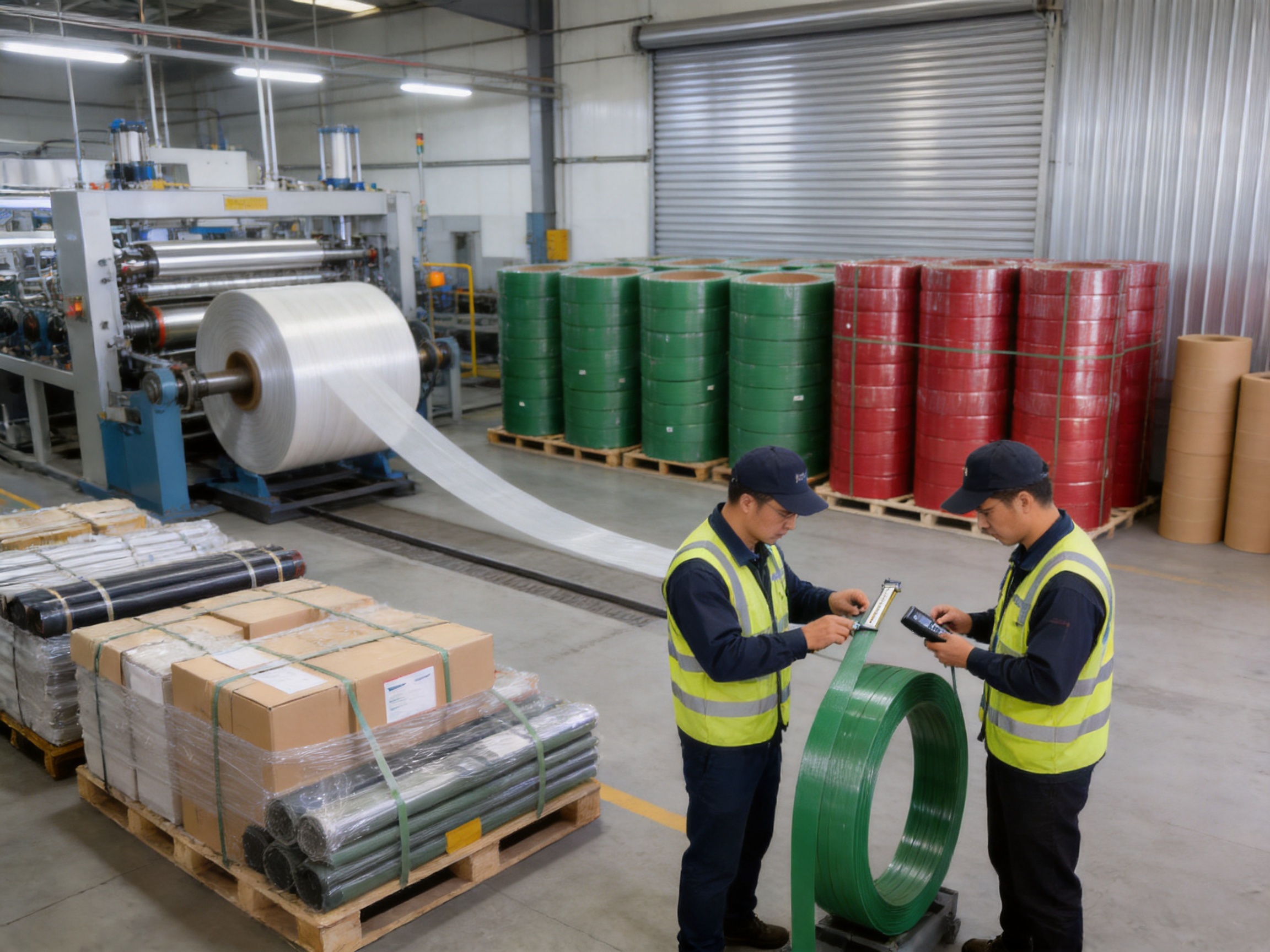
In modern logistics, warehousing, manufacturing, and distribution operations, effective load stabilization is essential for protecting products, improving handling efficiency, and reducing packaging-related losses. Strapping is one of the most practical solutions for grouping cartons, securing palletized goods, reinforcing bundled products, and holding long or regularly shaped items together during storage and transportation. Among the available strapping materials, polyethylene terephthalate, commonly known as PET, has become an important alternative to conventional steel banding and lower-strength plastic straps.
The 1608, 1610, 1910, and 2512 handheld opaque PET plastic steel strapping series is designed for manual bundling applications that require dependable tension, stable dimensions, and convenient thermal-fusion sealing. The series offers several combinations of width and thickness so that users can select a suitable strap according to cargo size, load weight, packaging configuration, and operating conditions. Its opaque textured surface, balanced mechanical properties, and compatibility with handheld tools make it suitable for general industrial packaging, warehousing, logistics, construction materials, and pallet reinforcement.
Compared with ordinary plastic bands, this PET strapping provides stronger load retention and greater dimensional stability. Compared with traditional steel strapping, it offers lighter handling, greater resistance to corrosion, and a safer working experience because it does not create sharp rusted edges in the same way as metal banding. These characteristics make it a practical choice for companies seeking a reliable and efficient packaging material without introducing unnecessarily complex equipment into their operations.
Understanding the 1608, 1610, 1910, and 2512 Series
The product series is identified by nominal width and thickness. The first two digits generally indicate the width in millimeters, while the final two digits indicate the approximate thickness in tenths of a millimeter. In practical terms, the series includes 16 mm wide strapping with thicknesses of 0.8 mm and 1.0 mm, 19 mm wide strapping with a thickness of 1.0 mm, and 25 mm wide strapping with a thickness of 1.2 mm.
This specification structure gives packaging operators a straightforward way to match the strap to the application. Narrower 16 mm strapping may be suitable for cartons, lightweight panels, textiles, and regularly shaped packages. The 19 mm option provides a wider contact area and can be selected for medium-duty unitizing tasks. The 25 mm by 1.2 mm configuration offers a broader and more substantial band for larger bundles, palletized loads, pipes, profiles, and other applications that benefit from increased contact width and material mass.
| Series | Nominal Width | Nominal Thickness | Typical Use Direction |
| 1608 | 16 mm | 0.8 mm | Lightweight cartons, textiles, and general bundling |
| 1610 | 16 mm | 1.0 mm | Light to medium-duty manual packaging |
| 1910 | 19 mm | 1.0 mm | Medium-width load stabilization and unitizing |
| 2512 | 25 mm | 1.2 mm | Broader heavy-duty bundling and pallet reinforcement |
The available combinations should not be treated as interchangeable in every situation. A strap that is appropriate for a compact carton may not be the best option for a tall pallet or a bundle with irregular pressure points. Selecting the correct width and thickness helps distribute pressure more evenly, reduce the risk of strap indentation, and improve the overall stability of the packaged load.
Material Construction and Product Performance
PET is a thermoplastic polymer widely used in packaging because it combines strength, flexibility, dimensional stability, and resistance to many common environmental influences. When processed into strapping, PET can provide a strong band that is sufficiently flexible for manual tensioning while maintaining the load after the strap has been applied and sealed.
The material is engineered to balance tensile performance and handling characteristics. Excessively rigid strapping can be difficult to apply around a package, while excessively soft strapping may lose tension or deform under load. The PET formulation and processing approach used for this series are intended to provide a practical middle ground: the strap can be fed, positioned, tensioned, and fused with handheld equipment, while remaining strong enough for general bundling and load-stabilization work.
The stated tensile strength range is approximately 300–500 MPa, depending on the selected specification and production conditions. This range indicates that the available products can be configured for different packaging requirements rather than being limited to one uniform performance level. The actual performance of a completed package also depends on strap width, strap thickness, tension level, joint quality, package geometry, friction between the strap and cargo, and the number of straps used.
Elongation at break is specified as no more than 3 percent. Low elongation helps the strap maintain its dimensions after tensioning and reduces excessive movement during handling. A strap with controlled elongation can contribute to more consistent package compression, particularly when the goods have a stable shape and the operator applies tension in a repeatable manner.
Opaque Textured Surface for Better Load Control
The strapping has an opaque appearance rather than a transparent or highly glossy finish. This design can make the strap easier to distinguish against many packaging surfaces, particularly when it is used on cardboard cartons, wrapped pallets, light-colored panels, or industrial products. The opaque appearance also gives the product a solid, industrial visual character that is commonly associated with heavy-duty packaging materials.
More importantly, the surface is textured to increase friction between the strap and the packaged goods. Increased surface friction can help reduce slippage when the band is placed around a bundle or pallet. This is especially useful when the outer surface of the goods is smooth, when multiple items are stacked together, or when the package is likely to experience vibration during transportation.
Surface texture does not replace correct tensioning or proper package design. However, it can support the effectiveness of those measures. When the strap remains in position and does not easily migrate across the load, the applied tension is more likely to continue acting in the intended direction. This can improve the consistency of the finished bundle and reduce the need for repeated adjustments.
The surface should be kept clean and free from oil, excessive dust, or foreign particles before sealing. Contamination may reduce friction or affect the quality of thermal fusion. For this reason, storage and handling practices are important parts of the overall packaging process.

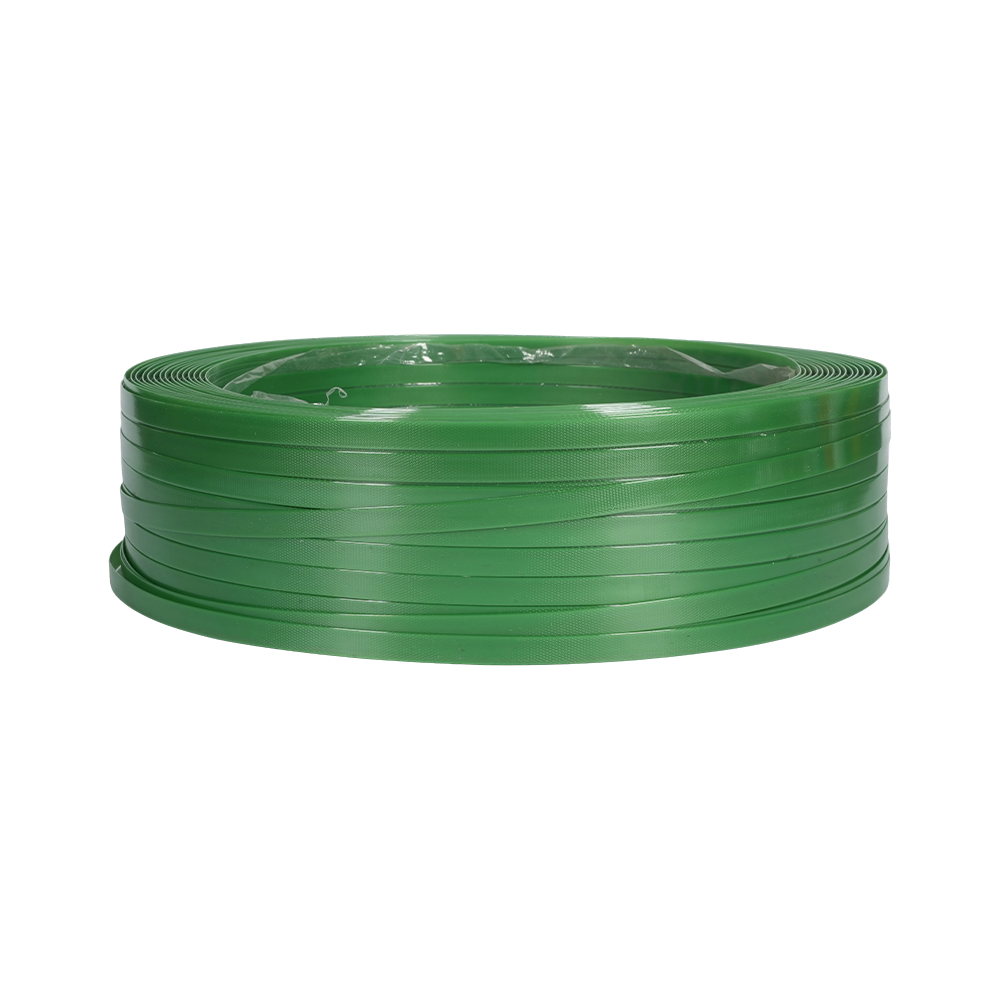
1608/1610/1910/2512 Handheld Opaque PET Plastic Steel Belt
Advantages Over Conventional Steel Strapping
The phrase “plastic steel belt” reflects the combination of a polymer material with a level of strength suitable for demanding packaging operations. PET strapping is not identical to steel and should not be selected on the assumption that it will perform in every application designed for metal banding. Nevertheless, for many general and medium-duty packaging tasks, it can provide significant operational advantages over conventional steel strap.
Lower Handling Weight
PET is considerably lighter than steel for comparable packaging functions. Lower material weight can make rolls easier to move, position, and load onto dispensing equipment. Manual operators may experience less fatigue when carrying and applying the strap throughout a shift. Lighter packaging materials can also contribute to lower handling effort in warehouses and distribution centers.
Reduced Corrosion Concerns
Steel strapping may corrode when exposed to moisture, humid storage areas, or certain chemical environments. PET does not rust, making it more suitable for applications where the packaged goods may be stored in variable climatic conditions. Although PET should still be protected from prolonged direct sunlight and harsh chemicals, its resistance to ordinary moisture and many general environmental conditions is a useful advantage.
Safer Cutting and Handling Characteristics
Metal strap can develop sharp edges during cutting or handling, and corroded metal may create additional safety concerns. PET strap must also be handled carefully, particularly when it is under tension, but it does not produce rusted metal edges. Operators should use appropriate cutting tools and follow safe procedures when releasing tension. The smoother handling characteristics of PET can nevertheless support a more comfortable and controlled packaging process.
Thermal-Fusion Sealing
PET strapping can be joined through thermal fusion using a compatible handheld tool. The tool heats and fuses the strap surfaces to create an integrated joint, avoiding the need for separate metal buckles in applications designed for fusion sealing. A correctly formed joint can provide a clean finish and reduce the number of loose components required at the packaging station.
More Convenient Outdoor and General Storage Use
Because PET is resistant to many normal weather conditions and general chemicals, it can be used in indoor warehouses and selected outdoor storage environments. The strap remains subject to the effects of prolonged ultraviolet exposure, extreme temperature, and chemical contact, so users should evaluate site conditions carefully. For ordinary logistics, construction-material storage, and general industrial bundling, its environmental resistance is often adequate.
Advantages Over Lower-Strength Plastic Straps
Not all plastic strapping products are designed for the same load requirements. Some lightweight plastic bands may be suitable for small cartons or simple temporary bundling, but they may not provide enough tensile strength or dimensional stability for larger packages. The PET series is intended to occupy a stronger performance category while remaining practical for manual operation.
Compared with lower-strength plastic strap, PET offers better resistance to tension-related deformation and improved retention around a stable load. Its lower elongation helps reduce the amount of slack that may develop after application. Its wider and thicker options also provide packaging managers with greater flexibility when working with different product dimensions.
The distinction is particularly important in logistics. A bundle can appear secure immediately after application but become unstable if the strap stretches excessively, shifts across the load, or loses contact with the package. PET’s combination of tensile strength, controlled elongation, and surface friction helps address these common weaknesses. The strap is not a substitute for proper packaging engineering, but it provides a stronger foundation for consistent unitizing.
Manual Operation and Tool Compatibility
The series is developed for handheld packaging operations. This makes it suitable for businesses that need dependable strapping but do not require a fully automated line. Manual application can be useful in small and medium-sized warehouses, mixed-product production environments, construction-material yards, distribution centers, and locations where package sizes change frequently.
A typical manual operation includes wrapping the strap around the package, positioning it at the desired location, applying tension with a handheld tool, and completing the joint through thermal fusion. The process can be adapted to different package shapes and may be performed at a packing bench, on a pallet, or directly at the storage location.
Handheld operation also provides greater control over individual packages. Operators can determine where the strap should be positioned, whether one or more bands are necessary, and how the tension should be distributed. This flexibility is valuable when goods do not conform to a single standardized package format.
At the same time, manual packaging quality depends on operator training and equipment condition. Tension should be sufficient to stabilize the load but not so high that it damages cartons, compresses fragile goods, or causes strap failure. The thermal-fusion tool should operate at an appropriate temperature and pressure so that the joint is fully integrated without burning, thinning, or deforming the strap excessively.
Recommended Manual Application Sequence
Before beginning, inspect the package and confirm that the selected strap width and thickness are appropriate for the cargo. Remove protruding objects that could cut the strap or create concentrated pressure. If necessary, use corner protectors or edge boards to distribute tension across sharp package edges.
Wrap the strap around the load while keeping it aligned with the intended banding path. Avoid twisting the strap because a twisted band may not lie flat against the package and can develop uneven stress. Feed the strap through the handheld tool according to the tool manufacturer’s operating instructions.
Apply tension gradually. Observe the package as tension increases, especially when the load includes cartons, foam products, panels, or other compressible materials. The strap should hold the items together without causing unnecessary deformation.
Complete the thermal-fusion joint using the correct temperature, heating time, and pressure. Allow the joint to cool and stabilize before moving the package. The finished joint should be visually inspected for proper fusion, alignment, and continuity. If the joint is incomplete, cut away the defective section and reseal the strap rather than relying on a questionable connection.
Manufacturing Quality and Process Control
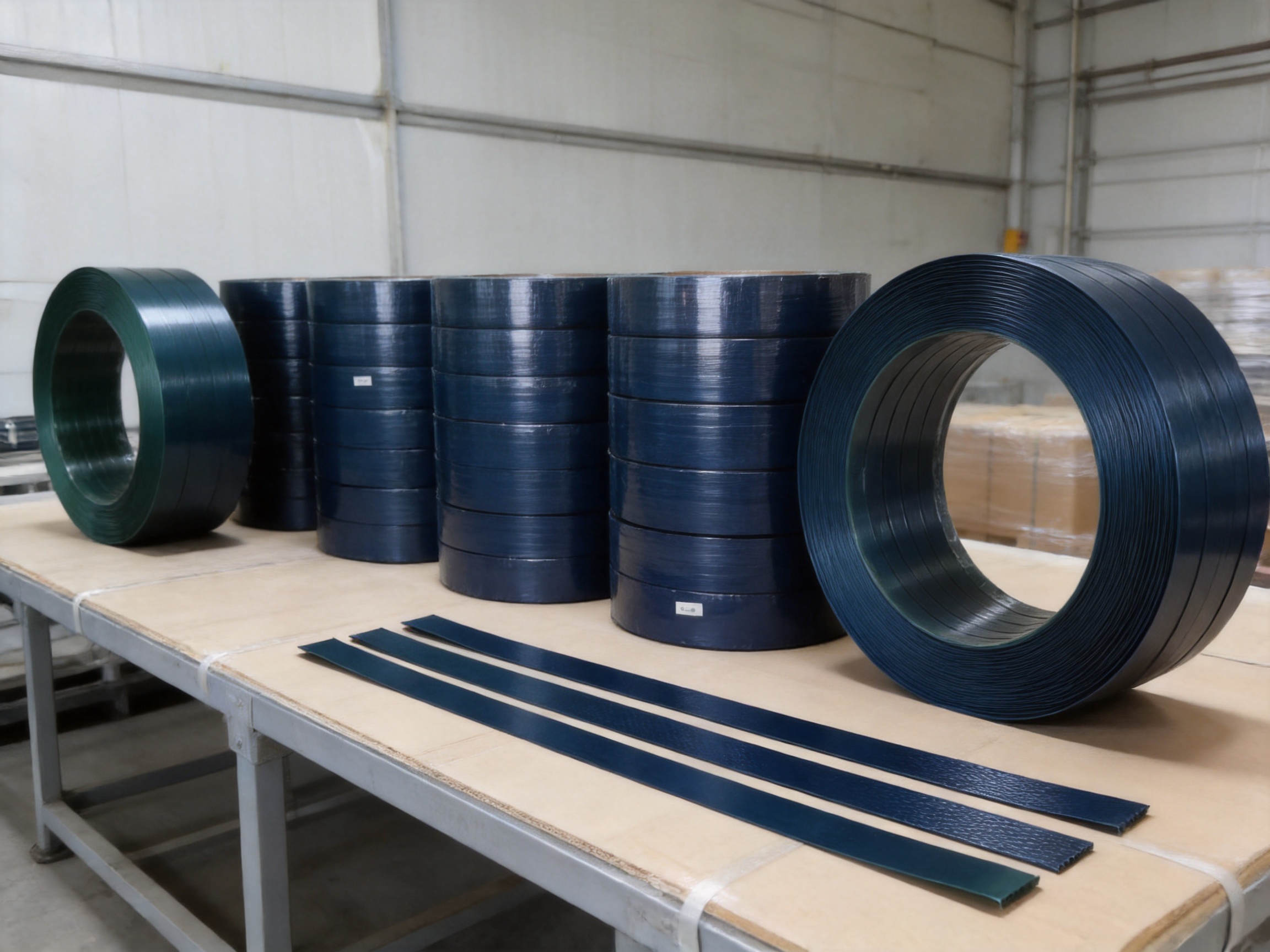
The performance of PET strapping begins with the quality of its raw materials and continues through every stage of processing. A professional packaging-material manufacturer must control material selection, drying, extrusion, orientation, surface treatment, cooling, winding, inspection, and final packing. Variation in any of these stages can affect width, thickness, tensile strength, elongation, surface texture, and sealing behavior.
Zhejiang Geruite Packaging Materials Co., Ltd. focuses on the research, development, production, and sales of packaging tapes and strapping materials. Its product range includes BOPP tapes, kraft paper tapes, masking tapes, high-temperature-resistant tapes, metal tapes, PE stretch film, PP strapping, and high-strength PET strapping. This broad packaging-material background provides an integrated understanding of how different films, tapes, and straps perform in actual supply-chain environments.
Manufacturing begins with controlled raw-material procurement. PET resin must be selected according to the desired mechanical and processing characteristics. Material consistency is important because variations in polymer quality, moisture content, or additive distribution may influence extrusion stability and final strap performance.
Drying and Moisture Management
PET is sensitive to moisture during high-temperature processing. If moisture is not properly controlled, hydrolytic degradation may reduce molecular weight and negatively influence mechanical performance. A controlled drying stage helps prepare the resin for extrusion and supports stable processing conditions.
Moisture management is not limited to the beginning of production. Storage conditions, transfer systems, and material-handling procedures also matter. Resin should be protected from unnecessary exposure to humid air, and the production environment should be managed to reduce contamination and uncontrolled moisture absorption.
Extrusion and Melt Filtration
During extrusion, the prepared PET material is heated and conveyed through the processing system to form a continuous sheet or profile. Stable temperature control and screw operation help maintain a uniform melt. Melt filtration can assist in removing unwanted particles that might create weak points, surface defects, or interruptions in the finished strap.
Uniform extrusion is essential for consistent width and thickness. If the profile varies significantly, tension may not be distributed evenly across the strap. Such variation can also affect how the material enters a handheld tool and how the thermal-fusion joint forms.
Orientation and Mechanical Strength Development
PET strapping commonly receives controlled orientation during processing. Stretching or drawing aligns polymer chains and helps develop the tensile properties needed for load stabilization. The degree and balance of orientation influence strength, elongation, flexibility, and dimensional stability.
The orientation process must be carefully controlled. Excessive orientation may make the strap too brittle or difficult to handle, while insufficient orientation may result in lower strength and greater elongation. A professional process therefore aims to establish a controlled relationship between tensile strength and practical flexibility.
Cooling and Surface Formation
After the strap has been formed and oriented, controlled cooling helps stabilize its dimensions. Cooling conditions can affect surface quality, internal stress, and final geometry. The textured opaque finish must remain consistent so that the strap provides a predictable contact surface during application.
Surface texture is developed through the design of the forming and finishing process. A consistent texture can contribute to friction between the strap and the package, while an uneven or damaged surface may create local weak points. Regular inspection helps identify surface defects before the product is wound and shipped.
Winding and Roll Quality
Winding is an important but sometimes overlooked stage of strapping production. A roll must be formed with sufficient tension and alignment to unwind smoothly. Poor winding can cause telescoping, tangling, uneven feeding, or interruptions at the packaging station.
Controlled winding helps ensure that the strap can be used efficiently with manual tools. The roll should remain stable during storage and transport, and the strap should be easy for operators to pull from the outside layer without sudden snags or excessive resistance.
Inspection and Quality Assurance
Quality assurance should combine process monitoring with final-product inspection. The objective is not merely to verify appearance but to ensure that the finished strap performs consistently in real packaging operations.
Dimensional inspection typically includes width and thickness measurement. For the 16 mm by 1.0 mm configuration, the stated dimensional specification is 16 mm ± 0.5 mm in width and 1.0 mm ± 0.05 mm in thickness. Similar control principles apply to the other series specifications. Maintaining dimensional tolerances supports reliable feeding, predictable tensioning, and consistent joint formation.
| Quality Item | Purpose of Inspection | Packaging Relevance |
| Width | Confirms dimensional consistency | Supports stable tool feeding and load coverage |
| Thickness | Verifies material volume and uniformity | Influences strength, stiffness, and fusion behavior |
| Tensile strength | Measures resistance to pulling force | Helps determine load-retention capability |
| Elongation | Measures stretch before break | Indicates dimensional stability after tensioning |
| Surface condition | Checks texture, smoothness, and defects | Affects friction, handling, and strap reliability |
| Thermal-fusion performance | Evaluates joint formation | Confirms that manual sealing can create a secure connection |
Tensile testing provides information about the strap’s ability to resist a pulling load. Elongation testing helps determine whether the strap remains dimensionally stable under tension. Visual inspection can identify cracks, edge damage, contamination, uneven texture, or winding defects that might not be immediately apparent through dimensional measurement alone.
Quality control should also include production records and traceability. Recording resin batches, processing conditions, inspection results, and packaging dates can help manufacturers identify trends and respond efficiently if a customer reports a performance concern. A disciplined quality system supports more consistent product delivery and gives customers greater confidence when using the strap across multiple shipments.
Company Manufacturing Strengths
Zhejiang Geruite Packaging Materials Co., Ltd. is located in Zhejiang Province, a major manufacturing region in China with developed industrial infrastructure and extensive supply-chain resources. The company has built its business around packaging materials and continues to invest in product development, manufacturing capability, and quality management.
The company reports an annual output value of more than RMB 60 million. This scale indicates an established production and sales operation rather than a small, single-product workshop. A broader manufacturing base can support product diversification, purchasing efficiency, technical experience, and more stable service for customers with multiple packaging requirements.
Its product portfolio covers adhesive tapes, stretch film, plastic strapping, and PET strapping. This range is beneficial for customers seeking coordinated packaging solutions. A buyer may require BOPP tape for carton sealing, stretch film for pallet wrapping, and PET strapping for additional load reinforcement. Working with a manufacturer familiar with all three functions can simplify technical communication and procurement planning.
The company emphasizes quality control from raw-material procurement through production and final inspection. This end-to-end approach is particularly important for PET strapping because final performance depends on the relationship between material chemistry, processing conditions, dimensions, surface finish, winding quality, and sealing behavior.
Research and development also play a role in maintaining product competitiveness. Packaging requirements vary by industry, and customers may need changes in width, thickness, color, roll length, surface properties, or application method. A manufacturer with experience across multiple packaging products is better positioned to evaluate these requirements and recommend a practical specification.
Professional service is another manufacturing strength. Product selection should be supported by clear technical information, including dimensions, performance expectations, recommended applications, storage conditions, and tool compatibility. Clear communication reduces the risk of choosing a strap that is too light for the cargo or unnecessarily heavy for the application.
Application Areas
Warehousing and Logistics
Warehouses use strapping to group products, stabilize cartons, and prepare goods for movement between storage zones or distribution facilities. PET strap can be applied to individual cartons, bundles of packaged goods, and palletized loads. Its textured surface can help reduce movement when packages are exposed to vibration or repeated handling.
In logistics operations, packages may be loaded onto trucks, moved by forklifts, transferred between warehouses, and exposed to changes in temperature and humidity. A stable strap helps keep the unit intact throughout these stages. Operators can select a suitable series according to package dimensions and expected handling intensity.
Carton and Case Bundling
Cartons are often grouped into sets for easier counting, storage, or shipment. A PET band around a group of cartons can reduce separation and make the bundle easier to move. Care should be taken to avoid over-tensioning, especially when carton walls are thin or the products inside are fragile.
Corner protectors may be useful when the carton edges are sharp or when the strap is applied with higher tension. These accessories distribute pressure and help prevent the strap from cutting into the packaging surface.
Textiles and Lightweight Industrial Products
Textile rolls, fabric bundles, foam panels, insulation materials, and other lightweight industrial products often need temporary or permanent bundling. PET strapping can hold regularly shaped goods together without the corrosion concerns associated with metal banding.
The appropriate strap should be selected according to the compressibility and surface characteristics of the product. Soft goods may require moderate tension and protective materials to prevent indentation, while rigid panels may benefit from wider strapping that spreads contact pressure.
Construction Materials
Construction products such as lightweight pipes, profiles, trim pieces, panels, and certain packaged building materials can be bundled using PET strapping. The material’s resistance to ordinary environmental conditions can be useful when goods are stored in covered yards or transported between construction sites.
Construction bundles may have irregular edges or concentrated pressure points. Operators should inspect the strap path and use edge protection where needed. The strap must not be dragged over sharp surfaces or applied across a location that could cut or puncture it.
Pallet Reinforcement
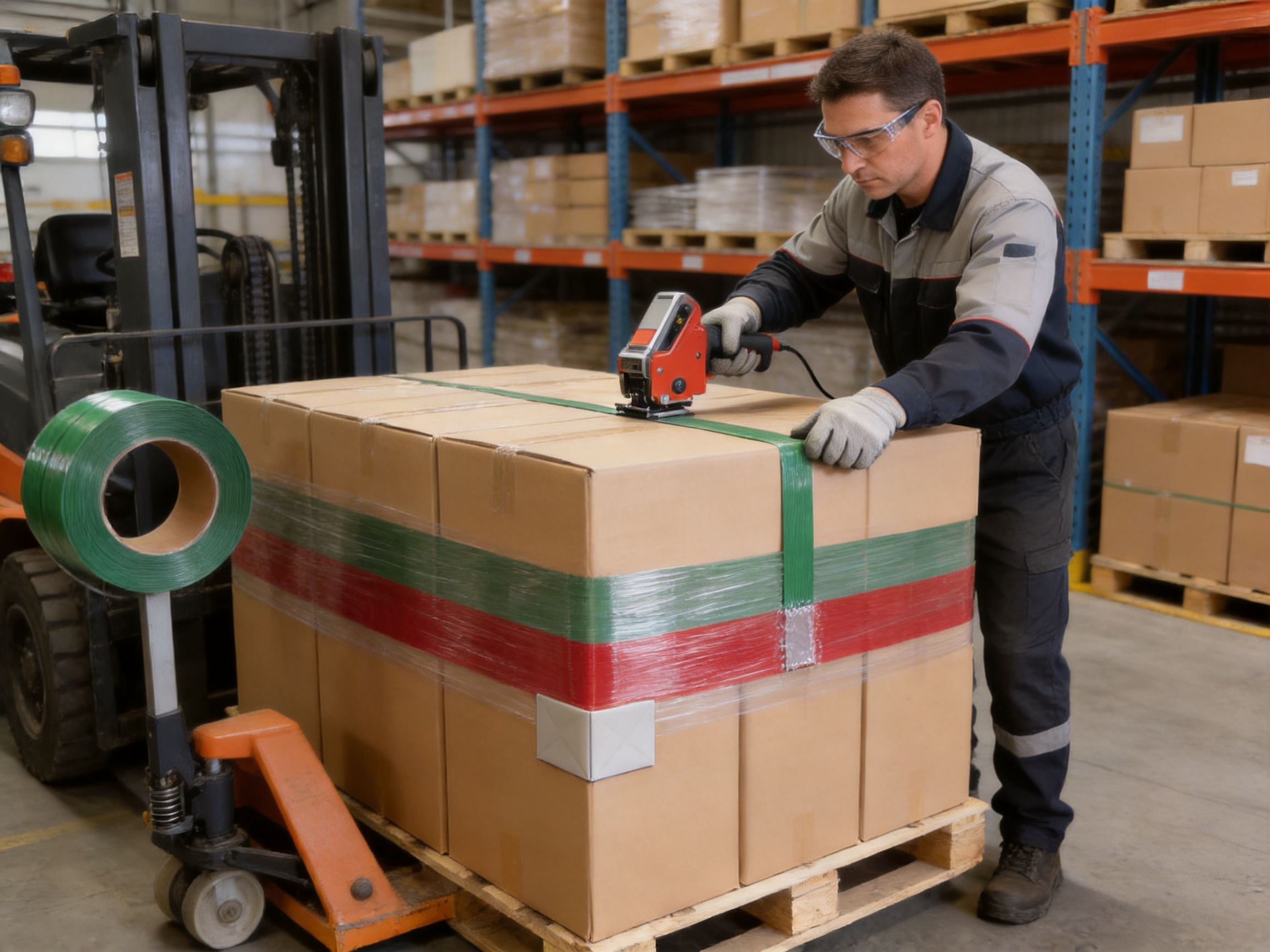
Stretch film is often used to stabilize pallet loads, but strapping can provide additional reinforcement. PET bands can help hold stacked cartons together, reduce outward movement, and improve the integrity of the pallet during forklift handling.
The number and placement of straps depend on pallet dimensions, load height, product weight, center of gravity, and transportation conditions. Cross-banding may be considered for certain loads, but the package design should always be evaluated as a whole. Strapping, film, corner boards, pallets, and cartons work together to produce the final load stability.
Environmental Resistance and Storage Performance
PET strapping is resistant to moisture and many general chemicals, making it suitable for a range of indoor and outdoor storage conditions. This does not mean that the material is immune to all environmental influences. Prolonged direct sunlight, severe heat, extreme cold, aggressive solvents, and repeated chemical exposure may affect polymer performance over time.
For general warehouse storage, the strap should be kept in a dry, ventilated location. Rolls should remain in their original packaging until required for use. This helps protect them from dust, accidental impact, and unnecessary exposure to sunlight. Storage areas should be organized so that rolls are not crushed under heavy objects or placed near sharp tools and corrosive materials.
Temperature changes should be considered when the strap is used outdoors. Very low temperatures can influence flexibility, while high temperatures may affect handling and sealing conditions. If the material has been stored in an especially cold or hot environment, allowing it to reach a moderate working temperature before use may help improve consistency.
First-in, first-out inventory management is recommended for packaging materials. Using older stock before newer stock reduces the chance of extended storage and helps maintain more predictable material performance. Rolls should be inspected before use for deformation, damaged edges, contamination, or signs of improper storage.
Correct Specification Selection
Choosing a PET strap should begin with the load rather than with the strap alone. Important factors include total cargo weight, package shape, surface condition, stacking pattern, center of gravity, expected vibration, handling method, storage duration, and transportation environment.
The 1608 specification, with a nominal width of 16 mm and thickness of 0.8 mm, may be considered for lighter bundling work where the package is stable and the tension requirement is moderate. The 1610 specification, with the same width and greater thickness, provides additional material mass for applications requiring stronger retention.
The 1910 specification provides a 19 mm contact width with a 1.0 mm thickness. Its broader surface may be advantageous when pressure distribution is important or when the package benefits from a larger band. The 2512 specification, at 25 mm by 1.2 mm, is the broadest and thickest option in the series and can be considered for larger bundles and pallet-reinforcement tasks.
These recommendations are general guidance rather than a substitute for testing. If the load is unusually heavy, fragile, irregular, high-value, or exposed to severe conditions, the packaging design should be validated through trial shipments or controlled compression and vibration testing.
Thermal-Fusion Sealing Quality
The strength of a strapped package depends not only on the strap itself but also on the quality of the joint. Thermal fusion creates a connection by heating compatible PET surfaces until they soften and bond under pressure. When the tool temperature, heating time, pressure, and cooling period are properly controlled, the joint can become an integrated part of the strap system.
A joint that is underheated may fail to fuse completely. A joint that is overheated may become excessively thin, brittle, burned, or distorted. The operator should follow the handheld-tool supplier’s recommended settings and adjust them according to strap thickness, ambient conditions, and equipment design.
After sealing, the joint should be checked visually. It should be properly aligned, evenly fused, and free from obvious gaps or burnt sections. Operators should avoid pulling aggressively on a newly formed joint before it has cooled. Cooling allows the fused area to regain sufficient strength and stability.
Tool maintenance is also important. Heating elements, clamps, tensioning mechanisms, and cutting components should be kept clean and inspected regularly. Worn components may create uneven pressure or insufficient heat, producing inconsistent joints even when the strap material is within specification.
Safety Considerations for Operators
Any strap under tension stores energy and should be treated carefully. Operators should keep their hands, face, and body away from the likely release path when cutting or releasing a tensioned strap. Eye protection and suitable work gloves are recommended, particularly in busy packaging areas or when handling large bundles.
Strap edges should be inspected before use. Although PET is generally safer to handle than steel, damaged or uneven edges can still cause cuts or abrasions. If the edge is cracked, deeply scored, or contaminated, the roll should be isolated for evaluation rather than used on a critical package.
Packages should not be lifted solely by the strap unless the packaging design and strap arrangement have been specifically evaluated for that purpose. Strapping is normally intended to stabilize or unitize the load, not necessarily to serve as a lifting sling. Forklift operators and warehouse personnel should follow established load-handling procedures.
Training should cover tool operation, correct tensioning, thermal-fusion sealing, joint inspection, roll replacement, and emergency procedures. Consistent training can reduce material waste and improve package quality across different operators and shifts.
Operational Efficiency and Cost Considerations
Packaging cost is influenced by more than the price per kilogram or roll. Companies should also consider application speed, labor effort, failure rates, storage requirements, tool maintenance, product damage, and transportation efficiency. A strap that costs slightly more per unit may provide a lower total packaging cost if it reduces rework and load failures.
The handheld design of this PET series allows businesses to use existing manual packaging workflows without committing to a fully automated strapping line. This can be valuable for operations with variable production volumes or multiple package sizes. The same general tool concept can be used across the series, subject to equipment compatibility and the tool manufacturer’s specifications.
Lower material weight can reduce the physical burden of stock handling. The ability to use thermal fusion rather than separate metal seals can simplify consumable management in suitable applications. Reduced corrosion concerns may also lower the risk of product staining or packaging deterioration during storage.
Efficient use requires correct tension and strap placement. Over-strapping wastes material and may damage goods, while under-strapping can cause instability and rework. Establishing standard operating procedures for common package types can help operators achieve repeatable results.
Why Manufacturer Selection Matters
Packaging performance depends on the consistency of the product supplied over time. A manufacturer should be able to provide stable dimensions, clear specifications, dependable roll quality, and responsive technical communication. Inconsistent strap thickness or tensile performance can create tool-feeding problems and variation in finished-package strength.
A manufacturer with experience in multiple packaging materials can better understand how PET strapping interacts with stretch film, carton tape, pallets, edge protectors, and other packaging components. This broader perspective can support more complete load-stabilization recommendations.
Zhejiang Geruite Packaging Materials Co., Ltd. combines product development, production, quality control, and sales within its packaging-material business. Its Zhejiang manufacturing base, range of packaging products, reported annual output value, and focus on process control provide a foundation for serving domestic and international customers.
The company’s stated development direction includes continued investment in research and development, optimization of its product structure, and improvement of customer service. These priorities are relevant to packaging buyers because modern supply chains increasingly require not only basic materials but also specification support, reliable delivery, customization, and consistent quality documentation.
Maintenance of Packaging Operations
To achieve stable results, companies should maintain the complete packaging system rather than focusing only on the strap roll. Handheld tensioning and sealing tools should be inspected at planned intervals. Heating surfaces must remain clean, and mechanical parts should be adjusted according to the equipment supplier’s instructions.
Packaging benches and floors should be kept free of debris that could contaminate the strap or interfere with operator movement. Rolls should be labeled by specification so that 1608, 1610, 1910, and 2512 materials are not confused during busy production periods.
Operators should record recurring problems such as broken straps, incomplete fusion, excessive strap indentation, tool jams, or roll unwinding difficulties. Reviewing these records can reveal whether the cause is incorrect specification selection, improper tool settings, damaged material, or insufficient training.
Regular package audits are also useful. A supervisor can inspect completed bundles for strap alignment, tension consistency, joint quality, edge protection, and overall load stability. Small process corrections made early can prevent larger losses during transportation.
Best Practices for Storage and Use
Store PET strapping in a dry, ventilated area away from prolonged direct sunlight. Keep rolls in protective packaging until needed, and avoid placing them near corrosive chemicals, solvents, open flames, or sharp objects.
Do not stack heavy materials on top of strap rolls. Excessive compression may deform the roll and make unwinding difficult. Rolls should be supported in a way that prevents them from falling or rolling unexpectedly.
Before use, verify the width and thickness marking. Inspect the outer layers for contamination, crushing, or edge damage. If the strap has been exposed to unusual conditions, test a short length with the intended tool before applying it to a valuable or unstable load.
Keep the strap flat and properly aligned during application. Avoid sharp bends, twisting, dragging across rough concrete, or pulling the material over exposed metal edges. Use corner protectors when necessary and select a tension level appropriate for the strength of the packaged goods.
After sealing, inspect the joint and allow it to cool. Do not move the package until the strap has stabilized. If a joint fails inspection, replace it rather than assuming that additional tension will correct the problem.
Q&A: Frequently Asked Questions
What material is used to make this strapping?
The strapping is made from polyethylene terephthalate, or PET. PET is a thermoplastic material known for its combination of tensile strength, flexibility, dimensional stability, and resistance to moisture and many general chemicals.
What do the numbers 1608, 1610, 1910, and 2512 mean?
The numbers identify the approximate width and thickness. The 1608 option is approximately 16 mm wide and 0.8 mm thick. The 1610 option is approximately 16 mm wide and 1.0 mm thick. The 1910 option is approximately 19 mm wide and 1.0 mm thick. The 2512 option is approximately 25 mm wide and 1.2 mm thick.
Can the strap be applied without an automated packaging line?
Yes. The series is designed for handheld manual bundling operations. Operators can wrap, tension, and seal the strap using compatible handheld equipment, making it suitable for warehouses and production areas with variable package sizes.
How is the strap sealed?
The strap is suitable for thermal-fusion sealing. A compatible handheld tool heats the strap surfaces and presses them together to form an integrated joint. Proper tool temperature, heating time, pressure, and cooling are necessary for dependable results.
Is PET strapping stronger than ordinary plastic banding?
PET strapping is generally selected when greater tensile strength and dimensional stability are needed than those provided by lightweight plastic bands. The actual performance depends on the specific grade, width, thickness, application tension, joint quality, and load design.
Is PET strapping a direct replacement for steel strap?
It can replace steel strapping in many general and medium-duty applications, but not every heavy-duty or specialized steel-strapping application. Users should consider load weight, sharp edges, transportation conditions, temperature, and required joint strength before making a substitution.
What is the tensile strength of the series?
The stated tensile strength range is approximately 300–500 MPa, depending on the specification. Customers should confirm the performance requirements for their specific application and request appropriate technical documentation or samples when necessary.
What is the elongation at break?
The stated elongation at break is no more than 3 percent. Controlled elongation helps the strap maintain dimensional stability after tensioning, although final load performance also depends on package structure and operating conditions.
Why does the strap have an opaque textured surface?
The opaque appearance provides a solid industrial finish, while the textured surface is intended to increase friction and reduce slippage between the strap and the packaged load. The surface should still be kept clean and correctly positioned during application.
Which specification should be used for a pallet?
The correct specification depends on the pallet’s total weight, dimensions, stacking pattern, product type, and transportation environment. The 1910 or 2512 options may be considered for broader or more demanding pallet-reinforcement tasks, but the final selection should be validated through packaging trials.
Can the strap be used outdoors?
It is resistant to ordinary climatic conditions and can be used in selected outdoor storage and transportation applications. However, prolonged direct sunlight, severe temperatures, and aggressive chemical exposure should be avoided or evaluated carefully.
How should damaged strap edges be handled?
Edges that are cracked, deeply scored, severely rough, or contaminated should not be used for critical bundling. Replace the affected section or roll after identifying the cause of the damage.
How can joint quality be improved?
Use a compatible tool, select the correct operating settings, keep the heating surfaces clean, align the strap properly, and allow the joint to cool before moving the package. Operators should inspect every joint visually and correct recurring problems through training or equipment maintenance.
Can the manufacturer supply other packaging materials?
The company’s product range includes BOPP tape, kraft paper tape, masking tape, high-temperature-resistant tape, metal tape, PE stretch film, PP strapping, and high-strength PET strapping. This allows customers to discuss multiple packaging-material requirements with one supplier.
Conclusion
The 1608, 1610, 1910, and 2512 handheld opaque PET plastic steel strapping series provides a practical solution for companies that need strong, stable, and manageable packaging strap for manual operations. Its PET construction offers a useful balance of tensile strength and flexibility, while controlled elongation supports dimensional stability after tensioning. The opaque textured surface can improve friction and reduce slippage, and thermal-fusion sealing creates a clean integrated joint when the correct tool settings are used.
The series also offers meaningful advantages over conventional steel and lower-strength plastic alternatives. It is lighter to handle than steel, does not rust, is suitable for many general environmental conditions, and can be applied without a fully automated packaging line. Its multiple width and thickness combinations allow users to select a product for lightweight bundling, medium-duty unitizing, pallet reinforcement, and construction-material packaging.
Product performance is supported by manufacturing controls that include raw-material management, moisture control, extrusion, orientation, cooling, surface formation, winding, dimensional inspection, tensile testing, and final quality review. Zhejiang Geruite Packaging Materials Co., Ltd. brings experience across a broad portfolio of packaging materials and emphasizes research, manufacturing capability, quality control, and professional service.
For best results, users should select the specification according to the actual load, store the rolls properly, inspect the material before use, maintain handheld equipment, apply suitable tension, and verify every thermal-fusion joint. When integrated into a well-designed packaging system, PET strapping can improve load stability, handling efficiency, and operational safety across a wide range of industrial and logistics applications.
References
ASTM International. Standard Test Methods for Tensile Properties of Plastic Materials.
International Organization for Standardization. Packaging and unit load stabilization principles for transport and storage.
Polyethylene terephthalate processing and packaging-material engineering references.
General technical guidance for PET strapping selection, thermal-fusion sealing, and manual load stabilization.
Manufacturer-provided product specifications for the 1608, 1610, 1910, and 2512 PET strapping series.
Manufacturer-provided company information and packaging-material product portfolio.
Product: 1608/1610/1910/2512 Handheld Opaque PET Plastic Steel Belt

LATEST POST
Let’s create something amazing together
contact usFeatured Products
CONTACT DETAILS
- Address:No. 241, Yaojiafan, Zhangpanqiao, Shushan Street, Xiaoshan District, Hangzhou City, Zhejiang Province, China
- TEL:+86-0571-83175630
- Phone:+86-13336160217
- Email:anqiaocun@163.com
PRODUCTS
NEWS CENTER
MOBILE TERMINAL
Copyright© Zhejiang Geruite Packaging Materials Co., Ltd. All Rights Reserved.
Privacy Wholesale industrial packaging tape Manufacturers