


 English
  Español
  عربى
عربى 
High-Strength Fiberglass Mesh Tape for Demanding Packaging and Industrial Reinforcement
Content
- 1 Introduction: A Reinforced Tape Built for Serious Holding Power
- 2 Product Overview: What Makes 319-36 Fiberglass Mesh Tape Different
- 3 Technical Specification Summary
- 4 Core Advantage One: High Load-Bearing and Tensile Resistance
- 5 Core Advantage Two: Strong Adhesion and Durable Bonding
- 6 Core Advantage Three: Abrasion Resistance and Physical Protection
- 7 Core Advantage Four: Dimensional Stability in Practical Conditions
- 8 Competitive Advantage: Why Reinforced Fiberglass Mesh Tape Outperforms Common Alternatives
- 9 Heavy-Duty Fixing and Bundling Applications
- 10 Carton Sealing and Edge Protection
- 11 Seam Reinforcement, Repair, and Surface Protection
- 12 Industrial Applications Beyond Packaging
- 13 Manufacturing Strength: Material Selection and Backing Preparation
- 14 Adhesive Coating Technology and Performance Control
- 15 Slitting, Rewinding, and Roll Quality
- 16 Quality Control Based on Practical Test Standards
- 17 Company Capability: A Broad Packaging Materials Foundation
- 18 Advantages for Logistics and Express Delivery
- 19 Advantages for Industrial Manufacturing
- 20 Application Guidelines for Best Results
- 21 Storage Recommendations
- 22 How to Select the Right Reinforced Tape for Your Application
- 23 Why Customers Choose a Professional Packaging Materials Manufacturer
- 24 Environmental and Cost Efficiency Considerations
- 25 Frequently Asked Questions
- 25.1 What is fiberglass mesh tape used for?
- 25.2 How is 319-36 fiberglass mesh tape stronger than ordinary packing tape?
- 25.3 What is the typical tensile strength of this tape?
- 25.4 Does the tape have strong adhesion?
- 25.5 Can it be used outdoors?
- 25.6 What surfaces should be prepared before application?
- 25.7 Can the tape be torn by hand?
- 25.8 What temperature range is suitable for use?
- 25.9 Is fiberglass mesh tape suitable for protecting carton corners?
- 25.10 Why choose Zhejiang Geruite Packaging Materials Co., Ltd. as a supplier?
- 26 Conclusion: A Reliable Reinforcement Solution for Modern Packaging and Industry
- 27 References
- 28 Product: 319-36 Fiberglass mesh tape
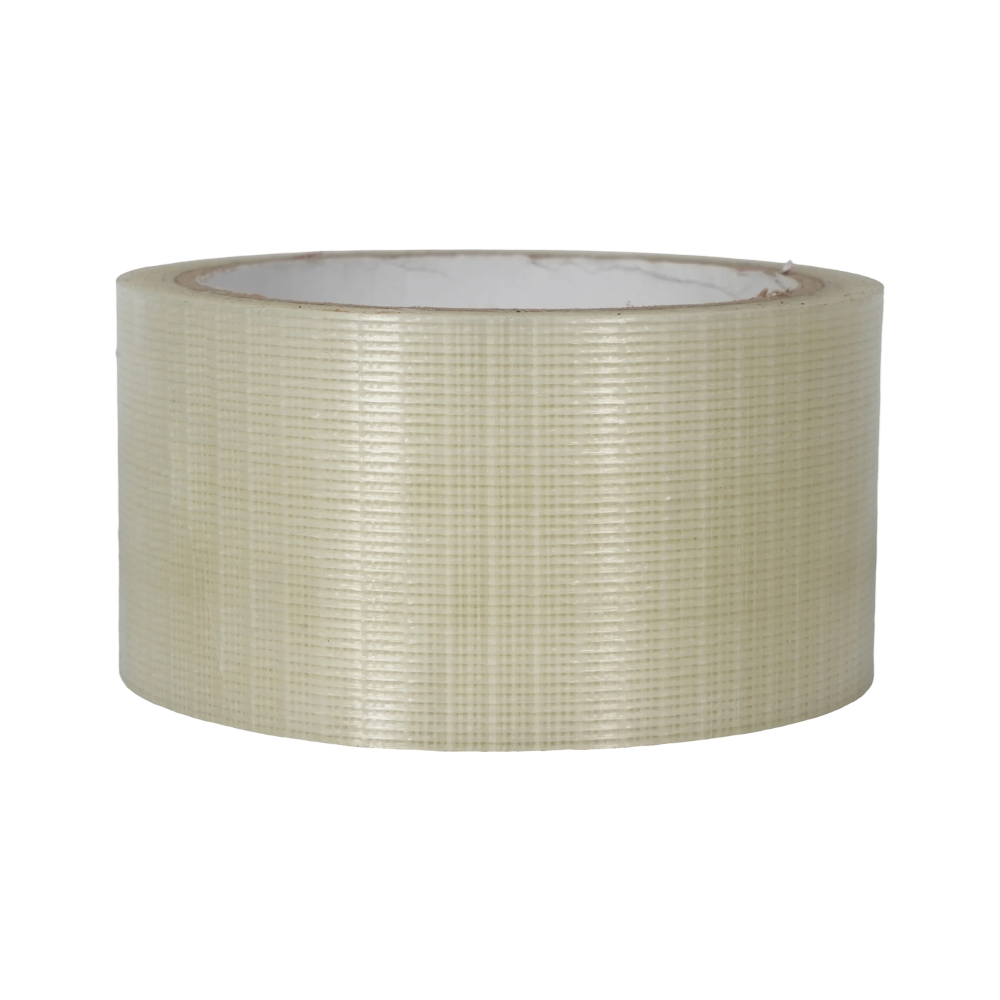
Introduction: A Reinforced Tape Built for Serious Holding Power
Fiberglass mesh tape is designed for work environments where ordinary adhesive tapes are often not enough. In packaging, warehousing, transportation, construction support, surface protection, and industrial bundling, users need a tape that can resist tearing, maintain adhesion, and provide structural reinforcement under stress. The 319-36 fiberglass mesh tape is created for these demanding applications, combining an open-weave fiberglass cloth backing with a high-tack pressure-sensitive adhesive system. This combination gives the product excellent tensile strength, firm bonding, abrasion resistance, and stable performance across typical industrial handling conditions.
Unlike many general-purpose tapes that rely mainly on film thickness or adhesive volume, fiberglass mesh tape gains strength from its reinforced structure. The fiberglass mesh acts like a built-in skeleton, distributing stress across both longitudinal and transverse directions. This helps prevent sudden tearing, deformation, and failure when the tape is used for heavy-duty bundling, carton sealing, edge guarding, tarp repair, profile fixation, or temporary industrial holding. The result is a tape that performs not only as an adhesive material but also as a reinforcement layer.
In modern packaging and logistics, failure at the sealing or bundling stage can lead to product damage, safety risks, additional labor, and higher total cost. A stronger tape can reduce these risks by providing reliable load-bearing performance and better resistance to abrasion during transportation. For businesses that ship heavy cartons, protect irregular edges, bundle pipes or profiles, or secure goods for longer-distance movement, reinforced fiberglass mesh tape offers a practical and cost-effective solution.
Zhejiang Geruite Packaging Materials Co., Ltd. manufactures high-performance packaging materials including adhesive tapes, strapping bands, and films. With a focus on product stability, technical improvement, and strict quality management, the company provides solutions for logistics, industrial manufacturing, construction, household goods, electronics, cargo stabilization, and protective packaging. The 319-36 fiberglass mesh tape reflects this manufacturing philosophy: reliable materials, controlled processing, practical specifications, and performance-oriented design.
Product Overview: What Makes 319-36 Fiberglass Mesh Tape Different
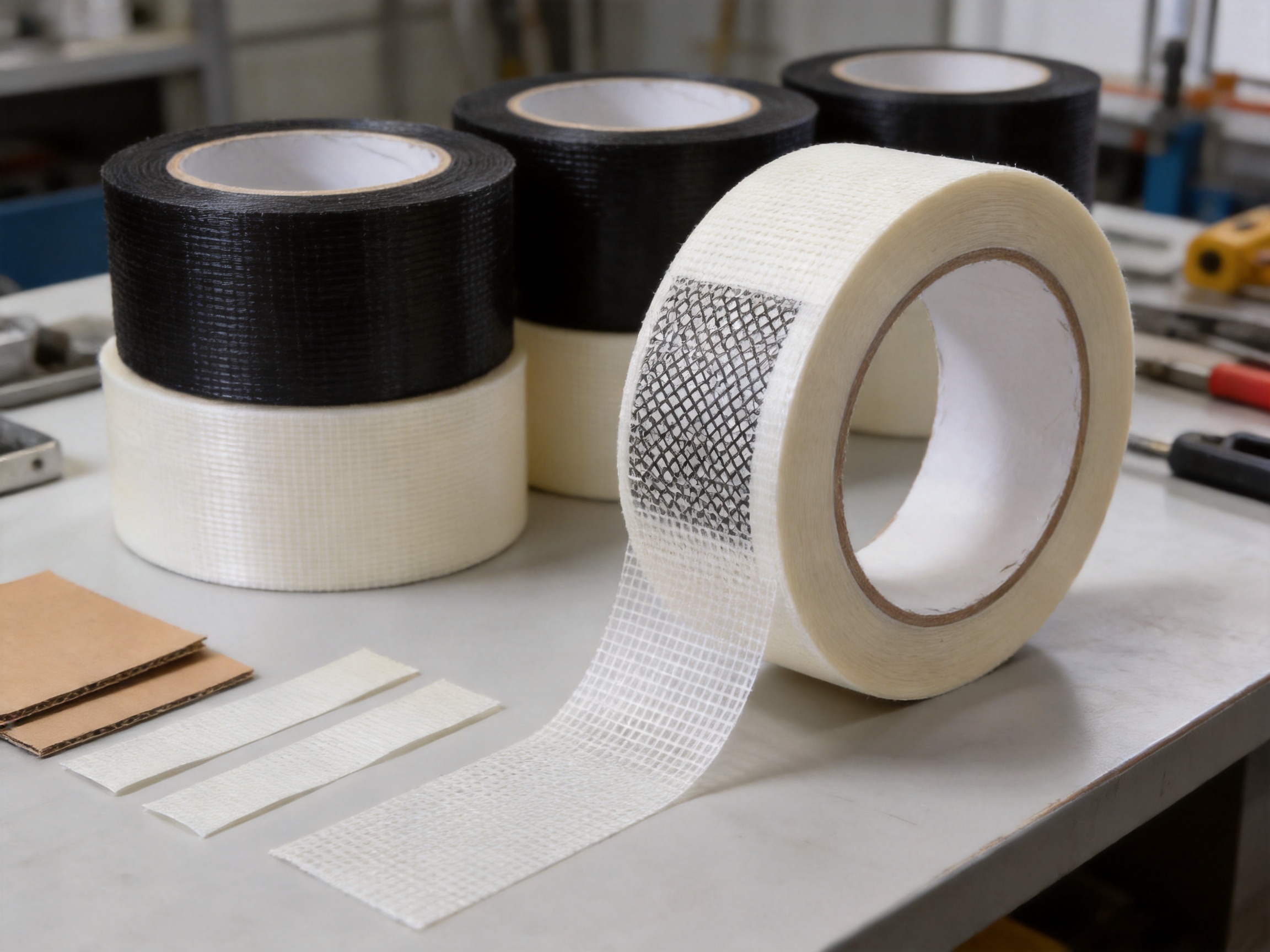
The 319-36 fiberglass mesh tape is a high-strength adhesive tape made with an open-weave fiberglass cloth backing and a pressure-sensitive adhesive layer. The backing provides mechanical reinforcement, while the adhesive provides bonding power to a wide range of surfaces. The tape is typically available in black or off-white and can be supplied in different thickness and dimensional specifications according to application requirements.
The defining characteristic of this tape is its balance between strength and usability. Some reinforced tapes are strong but difficult to apply, while some adhesive tapes are easy to apply but lack the structural performance needed for heavy-duty use. The 319-36 fiberglass mesh tape is intended to achieve a practical combination: high initial tack, strong peel performance, strong tensile resistance, low elongation, and abrasion protection. These features help it perform well in real-world packaging and industrial environments where materials are exposed to pressure, friction, movement, and handling stress.
The product’s total thickness is typically 0.135 mm, tested according to GB/T7125-2014. Its initial tack reaches No. 28 steel ball according to GB/T4852-2002, indicating strong early-stage adhesion when the tape is applied properly. The 180-degree peel strength is typically 27.3 N/25 mm according to GB/T2792-2014, and tensile strength reaches 650 N/in according to GB/T7753-87. Elongation at break is typically 5%, which means the tape stretches very little before breaking. Low elongation is valuable in bundling and reinforcement because it helps the tape maintain dimensional stability rather than stretching under load.
This combination of properties makes the tape suitable for heavy-duty fixing and bundling, carton sealing, edge protection, seam reinforcement, temporary surface protection, tarp and canvas repair, cable and wire bundling, and temporary fixing of lightweight industrial components. It is particularly useful when the user needs more strength than ordinary BOPP packing tape and more surface protection than simple adhesive film tape can provide.
Technical Specification Summary
The following table summarizes typical technical values for the 319-36 fiberglass mesh tape. Actual performance may vary depending on adhesive type, surface conditions, application pressure, temperature, and storage conditions.
| Test Item | Reference Standard | Typical Value |
| Total Thickness | GB/T7125-2014 | 0.135 mm |
| Initial Tack | GB/T4852-2002 | No. 28 steel ball |
| 180 Degree Peel Strength | GB/T2792-2014 | 27.3 N/25 mm |
| Tensile Strength | GB/T7753-87 | 650 N/in |
| Elongation at Break | GB/T7753-87 | 5% |
| Backing Material | Product Design Specification | Open-weave fiberglass cloth |
| Adhesive Type | Product Design Specification | High-tack rubber-based or acrylic-based pressure-sensitive adhesive |
| Typical Color | Product Design Specification | Black or off-white |
| General Service Temperature | Application Guidance | Approximately -10°C to 60°C, depending on adhesive type |
Core Advantage One: High Load-Bearing and Tensile Resistance
The most important performance advantage of fiberglass mesh tape is its tensile strength. Standard packaging tapes may perform well for light cartons, but they can fail when used on heavy goods, sharp edges, moving loads, or objects that require strong bundling tension. The 319-36 tape uses a fiberglass mesh backing that provides exceptional tensile resistance. With a typical tensile strength of 650 N/in, the tape is built for applications requiring higher mechanical strength than common packing tapes.
The mesh structure is especially important because it reinforces the tape in multiple directions. In heavy-duty bundling, force is not always applied in a straight, controlled manner. Packages may be pulled, twisted, compressed, dropped, or scraped during handling. A tape with weak reinforcement may split or stretch, reducing its holding power. Fiberglass mesh reduces this risk by distributing force through a network of glass fibers. This helps the tape maintain structural integrity even under concentrated stress.
Low elongation at break is another strength-related advantage. At a typical value of 5%, the tape does not stretch excessively under load. This is important because a tape that stretches too much can loosen during transportation. When cartons, pipes, profiles, or bundled materials are secured with a low-elongation reinforced tape, the tape is more likely to keep the bundle tight and stable. For users, this means better cargo control and fewer problems caused by loosening or shifting.
Core Advantage Two: Strong Adhesion and Durable Bonding
Strength alone is not enough if a tape cannot stay attached to the surface. The 319-36 fiberglass mesh tape uses a high-tack pressure-sensitive adhesive to deliver strong initial bonding and long-lasting adhesion. Depending on customer requirements and application environments, the adhesive may be rubber-based or acrylic-based. Rubber-based adhesives often offer strong initial tack and good bonding to many practical surfaces, while acrylic-based adhesives generally provide better aging resistance and stability under certain environmental conditions.
The typical initial tack value of No. 28 steel ball demonstrates the tape’s ability to grip quickly after application. This is useful in fast-paced packaging lines and warehouse operations, where workers need tape that bonds without complicated preparation or long waiting times. The typical 180-degree peel strength of 27.3 N/25 mm also indicates reliable resistance to peeling forces when the tape is properly applied to clean, dry surfaces.
In heavy-duty carton sealing, adhesive performance is crucial. Cartons may be exposed to vibration, stacked loads, temperature changes, and friction during transportation. If the adhesive loses contact, the reinforcement backing cannot perform its function. The 319-36 tape is designed to keep the reinforced backing anchored to the package or component surface, allowing the fiberglass mesh to provide real support. This makes it superior to tapes that may look strong but do not have sufficient adhesive strength for demanding surfaces.
Core Advantage Three: Abrasion Resistance and Physical Protection
Packaging damage is not caused only by load or tension. Abrasion is also a major issue in warehouses, vehicles, containers, and industrial handling areas. Edges of cartons, boards, furniture, pipes, and profiles can rub against other objects and become scratched, worn, or weakened. The fiberglass backing of 319-36 tape provides a protective layer that resists wear and scratching better than many ordinary film tapes.
This abrasion resistance makes the tape valuable for edge protection. When applied to carton corners, furniture edges, panel edges, or other contact points, the tape can reduce surface damage caused by friction and impact during handling. It can also reinforce weak seams or torn areas on tarps, canvas, or packaging materials. Because the backing is reinforced, it helps protect the surface while also holding damaged or vulnerable sections together.
Compared with ordinary packaging tape, fiberglass mesh tape offers a more protective function. A standard BOPP tape can seal cartons, but it is not designed to function as a durable guard against abrasion. A masking tape may be easy to remove, but it lacks the strength and wear resistance needed for heavy-duty protection. The 319-36 tape fills the gap between adhesive sealing and physical reinforcement, giving users both bonding performance and mechanical protection.
Core Advantage Four: Dimensional Stability in Practical Conditions
Industrial packaging materials must remain stable during storage, application, and use. A tape that curls, stretches, shrinks, tears, or loses adhesion under normal conditions creates operational problems. The 319-36 fiberglass mesh tape is designed for good stability in typical temperature and moisture conditions. Its general application temperature range is approximately -10°C to 60°C, although the exact range depends on the adhesive system selected.
Fiberglass itself is dimensionally stable compared with many polymer-only backing materials. It does not easily stretch, and it contributes to the tape’s low elongation performance. This means the tape can hold its shape and resist deformation during bundling and reinforcement. The result is a cleaner, more secure application, especially when used on objects that need to remain tightly fixed over time.
Moisture resistance is also important in packaging environments. While the tape should still be applied to clean and dry surfaces for best adhesion, its materials are selected to maintain stable performance under ordinary humidity exposure. This is useful for logistics operations, warehouses, and transportation routes where environmental conditions may vary. The combination of fiberglass reinforcement and suitable adhesive formulation helps reduce performance degradation compared with lower-grade tapes.
Competitive Advantage: Why Reinforced Fiberglass Mesh Tape Outperforms Common Alternatives
When users select tape, they often compare cost per roll. However, the real cost of packaging includes labor, failure rate, product damage, rework, customer complaints, and transportation loss. A low-cost tape may appear economical but can become expensive if it fails during use. The 319-36 fiberglass mesh tape offers stronger performance in applications where ordinary tapes may not provide enough strength or protection.
Compared with standard BOPP carton sealing tape, fiberglass mesh tape provides much higher tensile resistance and better tear prevention. BOPP tape is suitable for normal carton sealing, but it is not intended for heavy-duty reinforcement. When heavy cartons require additional strength, fiberglass mesh tape can reduce the chance of carton seam failure, edge splitting, or tape breakage.
Compared with masking tape, fiberglass mesh tape provides stronger adhesion, better tensile strength, and much greater abrasion resistance. Masking tape is often used for painting, labeling, or temporary light-duty holding. It is not designed for load-bearing packaging. The 319-36 tape is more suitable when the application requires strength, holding power, and protection.
Compared with cloth duct tape, fiberglass mesh tape can offer better dimensional stability and lower elongation. Duct tape is flexible and useful for many temporary repairs, but it may stretch, deform, or lose holding precision under load. Fiberglass mesh tape is designed to resist stretching, making it more suitable for bundling and reinforcement where tightness must be maintained.
Compared with some filament tapes, the open-weave fiberglass mesh construction can provide broader surface reinforcement and protection. Traditional filament tapes are often reinforced with strands running primarily in one direction or in cross patterns. The mesh backing of this product delivers both strength and a surface-protective structure, making it useful for edge protection and seam reinforcement as well as bundling.
Heavy-Duty Fixing and Bundling Applications
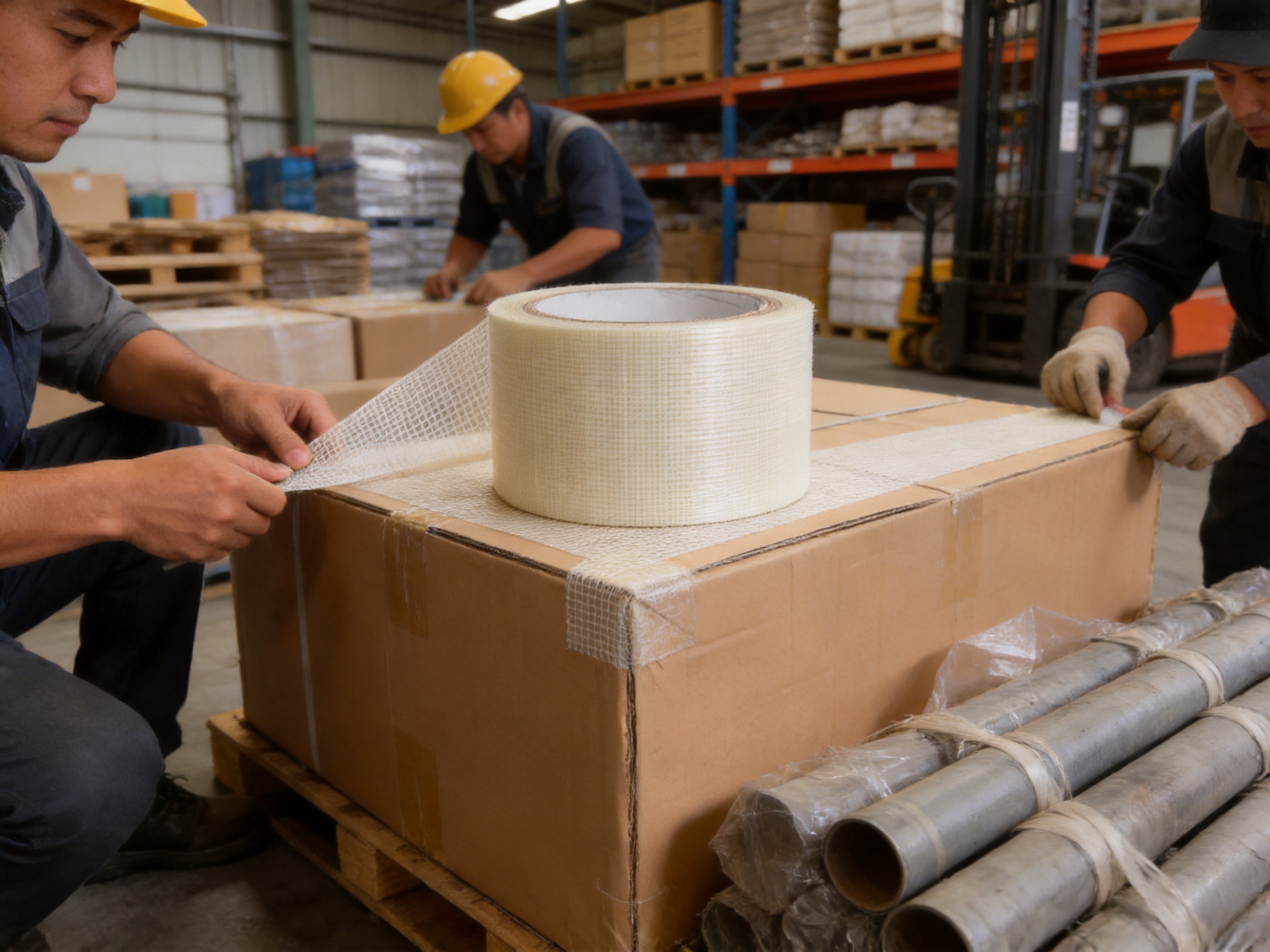
One of the most important uses of 319-36 fiberglass mesh tape is heavy-duty fixing and bundling. In warehouses, factories, and logistics centers, workers often need to bundle pipes, profiles, panels, cartons, cables, and other materials for handling or transportation. The tape’s high tensile strength and low elongation make it suitable for securing goods that need to stay tightly grouped.
For pipes and profiles, ordinary tape can tear when the bundle shifts or when the material edges create stress points. Fiberglass mesh tape distributes stress more effectively and resists tearing. When applied with firm pressure, it can create a stable holding band around the bundled goods. For long or irregular items, this helps reduce movement, prevent scattering, and improve handling efficiency.
For heavy cartons, the tape can be used as a reinforcement layer over seams, corners, or stress points. Long-distance shipping often exposes cartons to stacking pressure, vibration, impacts, and repeated handling. Reinforced tape can strengthen weak areas and reduce the risk of carton failure. This is particularly useful for heavier products, export packaging, or goods with higher damage sensitivity.
Carton Sealing and Edge Protection
Carton sealing is a basic packaging operation, but heavy-duty carton sealing requires more than simple closure. Cartons used for industrial goods, hardware, mechanical parts, tools, electronics, or dense products may experience high stress along the top seam, bottom seam, and corners. The 319-36 fiberglass mesh tape can be used to reinforce these high-stress areas and protect the package during transportation.
Edge protection is another valuable application. Carton corners are often the first areas to be damaged because they contact other packages, pallets, container walls, or handling equipment. Applying fiberglass mesh tape to corners and edges creates a protective layer that resists abrasion and helps prevent tearing. This can improve package appearance, reduce product exposure, and enhance shipping reliability.
The tape is also practical for reinforcing carton handles, cutout areas, or custom packaging structures. Any area that is likely to tear under handling force can benefit from a tape that combines adhesion with reinforced backing. For companies that ship goods through multiple logistics stages, such reinforcement can help maintain packaging integrity from warehouse to customer.
Seam Reinforcement, Repair, and Surface Protection
The tape’s reinforced backing makes it suitable for seam reinforcement and repair tasks. It can be used to mend tears in tarps, canvas covers, protective sheets, or other flexible materials. While the final suitability depends on the exact substrate and environmental exposure, the tape offers a practical method for temporary or medium-term repair where strength and abrasion resistance are needed.
For material joints and seams, the tape can serve as a reinforcing strip. When applied over a seam, the fiberglass mesh helps spread force along the joint and reduce localized tearing. This can be useful in packaging covers, protective wraps, and industrial temporary repairs. The tape is especially valuable when a quick, tool-light solution is needed in a warehouse or factory setting.
Surface protection is another practical use. During moving, assembly, or handling, furniture, boards, panels, and profiles may be scratched or chipped at the edges. Applying fiberglass mesh tape temporarily to vulnerable areas can help reduce impact damage. Because the tape has strong adhesion, surface compatibility should be tested in advance, especially on painted, delicate, or high-value surfaces. Proper selection and removal procedures are important to avoid residue or surface effects.
Industrial Applications Beyond Packaging
Although the product belongs to the adhesive tape and packaging material category, its usefulness extends into broader industrial applications. In factories, it can be used for temporary fixing of lightweight components during assembly or inspection. It can help hold parts in place before mechanical fastening, protect edges during handling, or bundle cables and wires in temporary arrangements.
For cable and wire bundling, the tape’s strength provides secure holding, while its abrasion resistance helps protect bundled materials from friction. In temporary installations, maintenance operations, and workshop organization, a reinforced tape can be more reliable than weaker general-purpose tapes. However, for electrical insulation or long-term electrical applications, users should confirm the tape’s electrical properties and application suitability before use.
In construction support and decoration-related tasks, fiberglass mesh tape can help reinforce surfaces, hold protective sheets, or secure materials during transport and preparation. Its strength and stability make it useful for handling tasks where conventional tape may break. Still, application conditions should be evaluated carefully, especially when surfaces are dusty, rough, damp, or exposed to extreme temperatures.
Manufacturing Strength: Material Selection and Backing Preparation
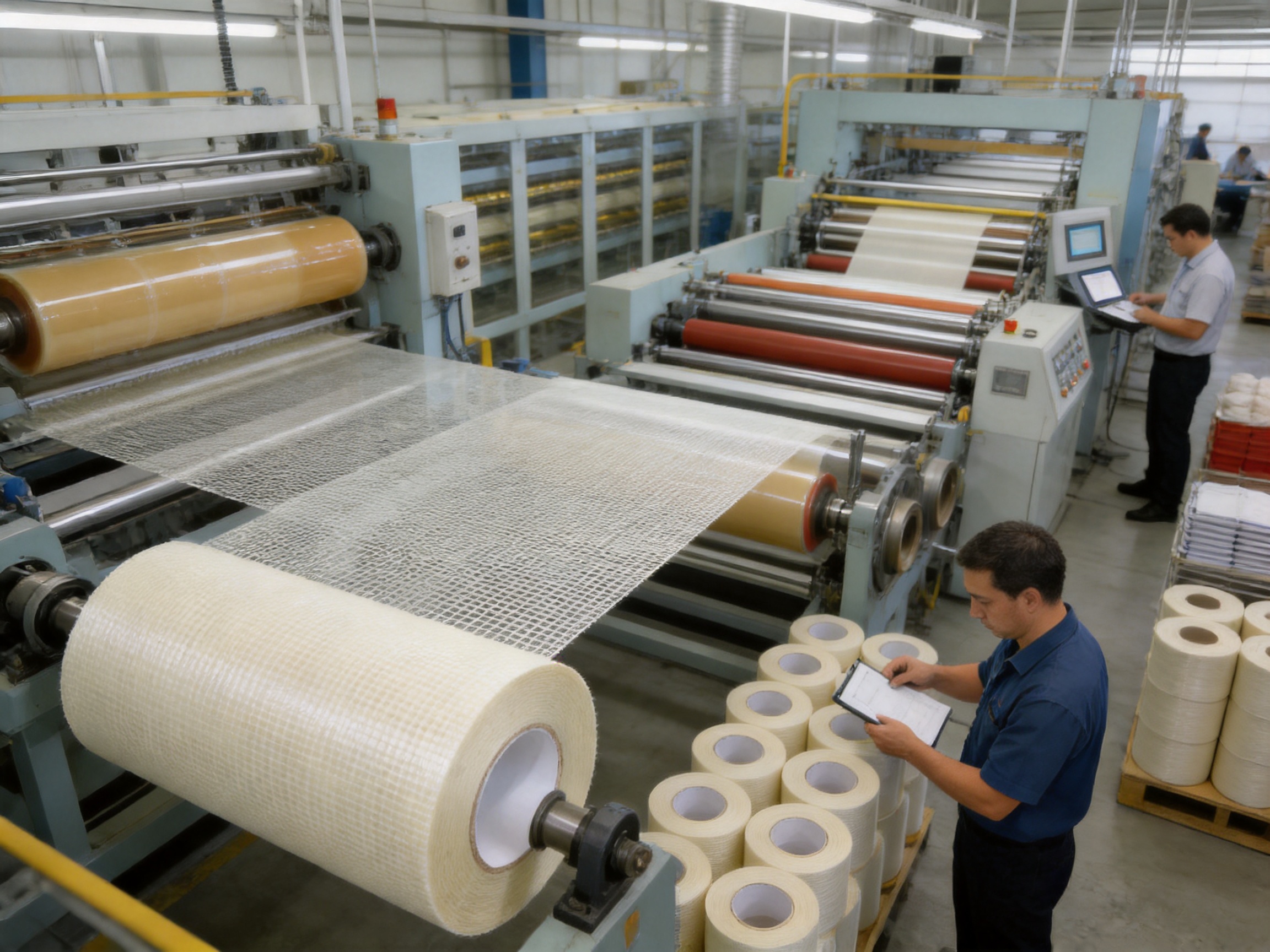
The performance of fiberglass mesh tape begins with material selection. The open-weave fiberglass cloth must provide consistent fiber distribution, reliable tensile strength, and stable dimensional properties. If the mesh is uneven, weak, or contaminated, the finished tape may show inconsistent strength, poor appearance, or adhesive defects. Zhejiang Geruite Packaging Materials Co., Ltd. emphasizes quality control from raw material procurement to final inspection, ensuring stable product performance across production batches.
Backing preparation is an important manufacturing step. The fiberglass cloth must be compatible with the adhesive system and the coating process. Surface cleanliness, weave stability, and material tension must be controlled before adhesive application. Proper preparation helps the adhesive penetrate or anchor effectively to the mesh structure, improving bond consistency between backing and adhesive.
In reinforced tape production, tension control is especially critical. If the backing is stretched, distorted, or wrinkled during coating, the finished roll may not unwind smoothly or apply evenly. Advanced production equipment helps maintain consistent web tension and coating alignment. This allows the tape to deliver reliable performance in use and gives customers a more predictable product.
Adhesive Coating Technology and Performance Control
The adhesive layer is responsible for bonding the fiberglass backing to the target surface. A high-tack pressure-sensitive adhesive must be coated uniformly so that the tape can grip well across its width and length. Uneven coating may create weak zones, excessive residue, or inconsistent peel strength. Therefore, coating precision is one of the key factors in producing high-quality fiberglass mesh tape.
Depending on the product requirement, rubber-based or acrylic-based adhesive systems may be used. Rubber-based adhesives are often selected for strong initial tack and versatile bonding. Acrylic-based adhesives may be selected when aging resistance, UV tolerance, or environmental stability is more important. The manufacturer’s ability to select and control adhesive formulations helps adapt the tape to different customer needs.
During production, coating thickness, drying conditions, adhesive viscosity, line speed, and temperature must be carefully controlled. If the adhesive is under-dried, over-dried, too thick, or too thin, final performance can be affected. Zhejiang Geruite Packaging Materials Co., Ltd. applies rigorous production management to support stable bonding performance, helping ensure that the finished tape meets practical industrial expectations.
Slitting, Rewinding, and Roll Quality
After coating and curing or drying, the tape must be slit and rewound into customer-specified roll widths and lengths. Slitting quality affects both usability and appearance. Clean edges reduce the risk of edge lifting, fiber fraying, and uneven unwinding. Accurate roll width is also important for automated or semi-automated packaging operations, where dimensional consistency affects process efficiency.
Rewinding must be controlled to produce rolls that are firm, even, and easy to handle. Rolls that are wound too tightly may be difficult to unwind or may deform the adhesive layer. Rolls that are too loose may telescope, shift, or become damaged during transportation. Proper rewinding gives customers a tape roll that performs smoothly from the first meter to the last.
Packaging of finished rolls also matters. Adhesive tapes should be protected from dust, moisture, direct sunlight, and excessive heat during storage and shipment. By managing finished product packaging carefully, the manufacturer helps preserve adhesive quality and roll integrity until the tape reaches the end user.
Quality Control Based on Practical Test Standards
Quality control is essential for reinforced adhesive tape because performance depends on multiple properties working together. Zhejiang Geruite Packaging Materials Co., Ltd. uses a rigorous quality management approach from raw material inspection through production monitoring and final testing. The goal is not only to produce tape that meets a specification sheet but also to deliver reliable performance in actual customer applications.
Important test items include total thickness, initial tack, peel strength, tensile strength, and elongation at break. Thickness testing helps confirm that the tape has the intended structure and coating level. Initial tack testing helps evaluate how quickly the tape grips a surface. Peel strength testing measures resistance to peeling forces. Tensile testing evaluates load-bearing capability, while elongation testing indicates dimensional stability under stress.
These tests are connected to real-world use. A tape with high tensile strength but poor tack may fail because it cannot stay attached. A tape with strong adhesion but excessive elongation may loosen under load. A tape with good thickness but inconsistent coating may show uneven performance. By controlling multiple parameters, the manufacturer can deliver a more balanced and dependable product.
Company Capability: A Broad Packaging Materials Foundation
Zhejiang Geruite Packaging Materials Co., Ltd. is located in Zhejiang Province, China, a region known for developed manufacturing infrastructure and active industrial supply chains. The company focuses on research, development, production, and sales of high-performance tapes and packaging materials. Its product range includes BOPP tapes, kraft paper tapes, masking tapes, high-temperature resistant tapes, metal tapes, PE stretch film, PP strapping, and high-strength PET strapping.
This broad product foundation is an advantage for customers because packaging systems often require more than one material. A shipper may need carton sealing tape, reinforced tape, stretch film, and strapping band in the same packaging workflow. A manufacturer may need masking tape for processing, metal tape for specialty applications, and reinforced tape for cargo protection. By supplying multiple categories, the company can help customers build more integrated packaging solutions.
The company’s annual output value has reached over RMB 60 million, reflecting production capacity and market recognition. More importantly, the company emphasizes quality as the lifeline of its operations. Advanced production equipment, strict process control, and final inspection systems support stable product quality. For customers, this means greater confidence in batch consistency, supply reliability, and long-term cooperation.
Advantages for Logistics and Express Delivery
Logistics and express delivery environments are demanding because packages pass through many handling points. They may be loaded, unloaded, stacked, sorted, scanned, compressed, and transported across long distances. In such environments, packaging materials must be strong, efficient, and reliable. Fiberglass mesh tape helps improve package durability where reinforcement is needed.
For heavy parcels, applying reinforced tape over carton seams can reduce the risk of opening during transit. For irregular packages, it can help secure protruding or vulnerable sections. For export or long-distance shipments, it can provide additional confidence by strengthening critical points. In logistics operations, fewer package failures can mean fewer claims, lower rework costs, and better customer satisfaction.
The tape also supports operational efficiency. Because it is pressure-sensitive, it can be applied quickly without heat activation or special curing processes. Workers can use appropriate cutting tools and apply firm pressure to achieve good contact. This makes the tape practical for warehouses, packing stations, and industrial shipping departments.
Advantages for Industrial Manufacturing
Industrial manufacturing often requires temporary holding, bundling, protection, and reinforcement during production and transportation. Components may need to be fixed during assembly, panels may need edge protection, and finished products may need secure bundling before shipment. A reinforced adhesive tape can serve as a flexible support tool in many of these processes.
The 319-36 fiberglass mesh tape is especially useful when ordinary tape cannot withstand mechanical stress. Its high tensile strength helps hold materials together, while its abrasion-resistant backing helps protect surfaces from handling wear. Its low elongation helps maintain tension, which is important when securing objects that must remain stable.
For manufacturers, using a higher-performance tape in critical positions may reduce product damage and improve process reliability. Instead of applying multiple layers of weaker tape, users may achieve better results with a reinforced tape designed for strength. This can save labor and reduce material waste in applications where failure is costly.
Application Guidelines for Best Results
To obtain optimal performance, the application surface should be clean, dry, and free of oil, dust, loose particles, and moisture. Adhesive tapes perform best when the adhesive can make full contact with the substrate. Contamination creates barriers between adhesive and surface, reducing peel strength and long-term bond reliability.
The tape should be applied with firm and uniform pressure. Pressure-sensitive adhesives require pressure to wet out the surface and create intimate contact. Simply placing the tape on a surface without pressing may result in poor bonding. A roller, hand pressure, or suitable application tool can help improve adhesion, especially on larger areas or rougher surfaces.
Application at room temperature is recommended. Extreme cold may reduce initial tack, making it harder for the adhesive to bond quickly. If materials are stored in a cold environment, allowing them to return to a suitable application temperature can improve results. For hot or highly humid environments, users should confirm adhesive suitability and test performance before large-scale use.
Because fiberglass mesh backing can have firm edges and the tape may be difficult to tear by hand, proper cutting tools should be used. Users should avoid dragging sharp tape edges across the skin and should follow workplace safety practices. Gloves may be appropriate in some applications, especially when handling large volumes or sharp-edged materials.
Storage Recommendations
Proper storage helps maintain tape quality. The tape should be stored in a cool, dry place away from direct sunlight, high heat, moisture, and chemical contamination. A recommended storage temperature range is approximately 15°C to 30°C. Excessive heat can soften adhesives or affect roll stability, while excessive cold can reduce tack temporarily and may affect handling.
Rolls should remain in their original packaging until use whenever possible. This helps protect the adhesive edge from dust and prevents moisture exposure. Rolls should also be stored upright or in a stable arrangement to avoid deformation. Good inventory rotation is recommended so that older stock is used before newer stock.
Although fiberglass mesh tape is designed for stable performance, all pressure-sensitive adhesive products can change over time depending on storage conditions. Customers with strict performance requirements should conduct incoming inspection and periodic testing, especially for critical packaging applications.
How to Select the Right Reinforced Tape for Your Application
Selecting the right reinforced tape begins with understanding the application. Users should consider the weight of the goods, the surface material, the expected transportation conditions, the required holding time, the temperature range, and whether the tape must be removed cleanly. Fiberglass mesh tape is ideal when high tensile strength, low elongation, and abrasion protection are important.
Surface type is especially important. Smooth cardboard, plastic, metal, painted surfaces, wood, fabric, and rough materials all interact differently with adhesive. A tape that bonds strongly to cardboard may behave differently on polyethylene film or dusty wood. For critical applications, sample testing is recommended before full production use.
The required balance between initial tack and long-term stability should also be considered. Rubber-based adhesive may be preferred for strong quick grip, while acrylic-based adhesive may be preferred for certain aging or environmental requirements. Consulting the manufacturer can help users select the most suitable adhesive system and specification.
Why Customers Choose a Professional Packaging Materials Manufacturer
Buying reinforced tape from a professional packaging materials manufacturer provides advantages beyond the product itself. Customers benefit from technical understanding, production capability, specification flexibility, and quality control experience. Zhejiang Geruite Packaging Materials Co., Ltd. combines tape manufacturing experience with a broad packaging material portfolio, allowing it to understand different packaging challenges and provide practical solutions.
The company’s focus on research and innovation supports continuous improvement. Packaging requirements are changing as logistics systems become faster, products become more diverse, and customers demand lower damage rates. A manufacturer with development capability can adjust materials, adhesives, dimensions, and performance targets according to market needs.
Professional manufacturing also supports consistency. For industrial customers, a tape that works well in one batch but fails in the next creates serious operational risk. Stable raw material sourcing, controlled coating processes, accurate slitting, and final inspection all contribute to batch-to-batch reliability. This is one of the main reasons customers prefer working with an experienced producer rather than relying only on low-price supply.
Environmental and Cost Efficiency Considerations
A stronger tape can contribute to cost efficiency by reducing overuse. In many packaging operations, workers apply multiple layers of ordinary tape because they are uncertain whether one layer is strong enough. This increases material consumption, labor time, and waste. A reinforced tape with high tensile strength can often provide greater security with fewer layers in appropriate applications.
Reducing packaging failure also has environmental and economic benefits. Damaged goods may require replacement, return shipping, repackaging, disposal, and additional customer service. Preventing damage at the packaging stage is often more sustainable than correcting problems later. By strengthening high-risk areas, fiberglass mesh tape can help reduce the hidden environmental burden associated with failed packaging.
At the same time, users should apply the tape thoughtfully. Reinforced tape is best used where its performance advantages are needed. For light cartons or simple sealing, standard packaging tape may be sufficient. For heavy-duty stress points, edge protection, and bundling, fiberglass mesh tape provides a stronger and more appropriate solution. Proper material matching is the key to both performance and cost control.
Frequently Asked Questions
What is fiberglass mesh tape used for?
Fiberglass mesh tape is used for heavy-duty fixing, bundling, carton reinforcement, edge protection, seam repair, tarp and canvas mending, temporary surface protection, cable bundling, and industrial holding tasks. It is selected when ordinary tape does not provide enough tensile strength, tear resistance, or abrasion protection.
How is 319-36 fiberglass mesh tape stronger than ordinary packing tape?
The tape uses an open-weave fiberglass cloth backing that reinforces the adhesive layer. This backing provides high tensile strength and low elongation, helping the tape resist tearing and stretching under load. Ordinary packing tape usually relies on film backing and adhesive only, making it less suitable for heavy-duty reinforcement.
What is the typical tensile strength of this tape?
The typical tensile strength is 650 N/in according to GB/T7753-87. This high value makes the tape suitable for demanding bundling, carton reinforcement, and industrial protection applications.
Does the tape have strong adhesion?
Yes. The tape is designed with a high-tack pressure-sensitive adhesive. Its typical initial tack is No. 28 steel ball according to GB/T4852-2002, and its typical 180-degree peel strength is 27.3 N/25 mm according to GB/T2792-2014. Proper surface preparation and firm application pressure are important for best results.
Can it be used outdoors?
The tape may be used in some outdoor or semi-outdoor conditions depending on adhesive type, exposure time, temperature, moisture, and surface material. However, users should test the tape under actual conditions before long-term outdoor use. Acrylic-based adhesive may be preferred for certain stability requirements, while rubber-based adhesive may be preferred for strong initial tack.
What surfaces should be prepared before application?
The surface should be clean, dry, and free from oil, dust, moisture, loose particles, and other contaminants. Surface preparation is essential because contamination reduces adhesive contact and can lower peel strength.
Can the tape be torn by hand?
Because the tape is reinforced with fiberglass mesh, it is much stronger than ordinary tape and may not tear easily by hand. Proper cutting tools are recommended for safe and clean application.
What temperature range is suitable for use?
The general application range is approximately -10°C to 60°C, depending on the adhesive type and actual conditions. Application at room temperature is recommended because extreme cold may reduce initial tack.
Is fiberglass mesh tape suitable for protecting carton corners?
Yes. The tape is suitable for carton sealing and edge protection, especially for heavy-duty cartons and long-distance shipping. Its abrasion-resistant backing helps protect corners from friction and handling damage.
Why choose Zhejiang Geruite Packaging Materials Co., Ltd. as a supplier?
The company offers advanced production equipment, a strict quality control system, broad packaging material expertise, and stable manufacturing capability. Its product portfolio includes adhesive tapes, films, and strapping bands, allowing customers to source integrated packaging solutions from a professional manufacturer.
Conclusion: A Reliable Reinforcement Solution for Modern Packaging and Industry
The 319-36 fiberglass mesh tape is more than a simple adhesive tape. It is a reinforced industrial packaging material designed to solve demanding holding, bundling, sealing, protection, and repair challenges. Its open-weave fiberglass backing provides high tensile strength and low elongation, while its high-tack pressure-sensitive adhesive delivers strong bonding performance. With typical values such as 0.135 mm total thickness, No. 28 steel ball initial tack, 27.3 N/25 mm peel strength, 650 N/in tensile strength, and 5% elongation at break, the product offers a strong technical foundation for heavy-duty use.
Its advantages over ordinary tapes are clear. It provides stronger load-bearing performance than standard carton sealing tape, better stability than many flexible cloth tapes, greater reinforcement than masking tape, and practical surface protection for edges and seams. It is suitable for logistics, warehousing, industrial manufacturing, construction support, cargo stabilization, and protective packaging applications.
Zhejiang Geruite Packaging Materials Co., Ltd. strengthens the value of the product through advanced manufacturing processes, careful raw material selection, controlled adhesive coating, accurate slitting and rewinding, and strict quality inspection. With a broad portfolio covering adhesive tapes, PE stretch film, PP strapping, PET strapping, and other packaging materials, the company is well positioned to support customers seeking reliable, integrated packaging solutions.
For businesses that need stronger sealing, safer bundling, better edge protection, and reduced packaging failure, fiberglass mesh tape offers a practical and dependable choice. When applied correctly and matched to the right surface and environment, it can improve packaging security, reduce damage risk, and support efficient industrial operations.
References
GB/T7125-2014, Test Method for Thickness of Adhesive Tapes.
GB/T4852-2002, Test Method for Tack of Pressure-Sensitive Adhesive Tapes by Rolling Ball.
GB/T2792-2014, Test Method for Peel Adhesion Properties of Pressure-Sensitive Adhesive Tapes.
GB/T7753-87, Test Method for Tensile Properties of Pressure-Sensitive Adhesive Tapes.
Pressure Sensitive Tape Council, Pressure-Sensitive Adhesive Tape Technical Guide.
Handbook of Adhesion Technology, Industrial Adhesive Materials and Application Principles.
Packaging Materials and Transport Protection Engineering, Reinforced Tapes and Cargo Stabilization Practices.
Product: 319-36 Fiberglass mesh tape

LATEST POST
Let’s create something amazing together
contact us
CONTACT DETAILS
- Address:No. 241, Yaojiafan, Zhangpanqiao, Shushan Street, Xiaoshan District, Hangzhou City, Zhejiang Province, China
- TEL:+86-0571-83175630
- Phone:+86-13336160217
- Email:anqiaocun@163.com
PRODUCTS
NEWS CENTER
MOBILE TERMINAL
Copyright© Zhejiang Geruite Packaging Materials Co., Ltd. All Rights Reserved.
Privacy Wholesale industrial packaging tape Manufacturers