


 English
  Español
  عربى
عربى 
PE Hand-Held Stretch Wrap for Secure Industrial Packaging
Content
- 1 The Role of Hand-Held Stretch Wrap in Modern Packaging
- 2 Core Product Advantages
- 3 Material Science: Why Pure PE Matters
- 4 Product Specifications
- 5 Advantages Compared with Ordinary Competitor Films
- 6 Application Scenarios
- 7 Advanced Manufacturing Process and Quality Control
- 8 Company Strengths Behind the Product
- 9 How to Select the Right Stretch Wrap
- 10 Best Practices for Manual Wrapping
- 11 Storage and Handling Recommendations
- 12 Cost Efficiency and Total Packaging Value
- 13 Compatibility with Other Packaging Materials
- 14 Environmental and Practical Considerations
- 15 Why This Product Supports Safer Supply Chains
- 16 Q&A Section
- 16.1 What is PE hand-held stretch wrap mainly used for?
- 16.2 Why is pure polyethylene important for stretch wrap?
- 16.3 What thickness should be selected?
- 16.4 Can the film be used without packaging machines?
- 16.5 Does the film protect product surfaces?
- 16.6 Why choose transparent stretch wrap?
- 16.7 How should stretch wrap be stored?
- 16.8 How does PE stretch wrap compare with strapping?
- 16.9 How does this product help reduce packaging cost?
- 16.10 Can roll length and weight be customized?
- 17 Conclusion
- 18 References
- 19 Product: PE Hand-held stretch wrap
In modern logistics, warehousing, manufacturing, and commercial distribution, packaging is no longer a simple final step before shipment. It is an essential part of product protection, operational efficiency, transport safety, and customer satisfaction. PE hand-held stretch wrap is one of the most practical and widely used packaging materials for stabilizing cartons, bundling irregular goods, protecting surfaces, and keeping stored products clean and secure. Designed for manual operation, it allows workers to wrap goods quickly without complex equipment, making it suitable for factories, warehouses, retail distribution centers, construction material suppliers, and many other packaging environments.
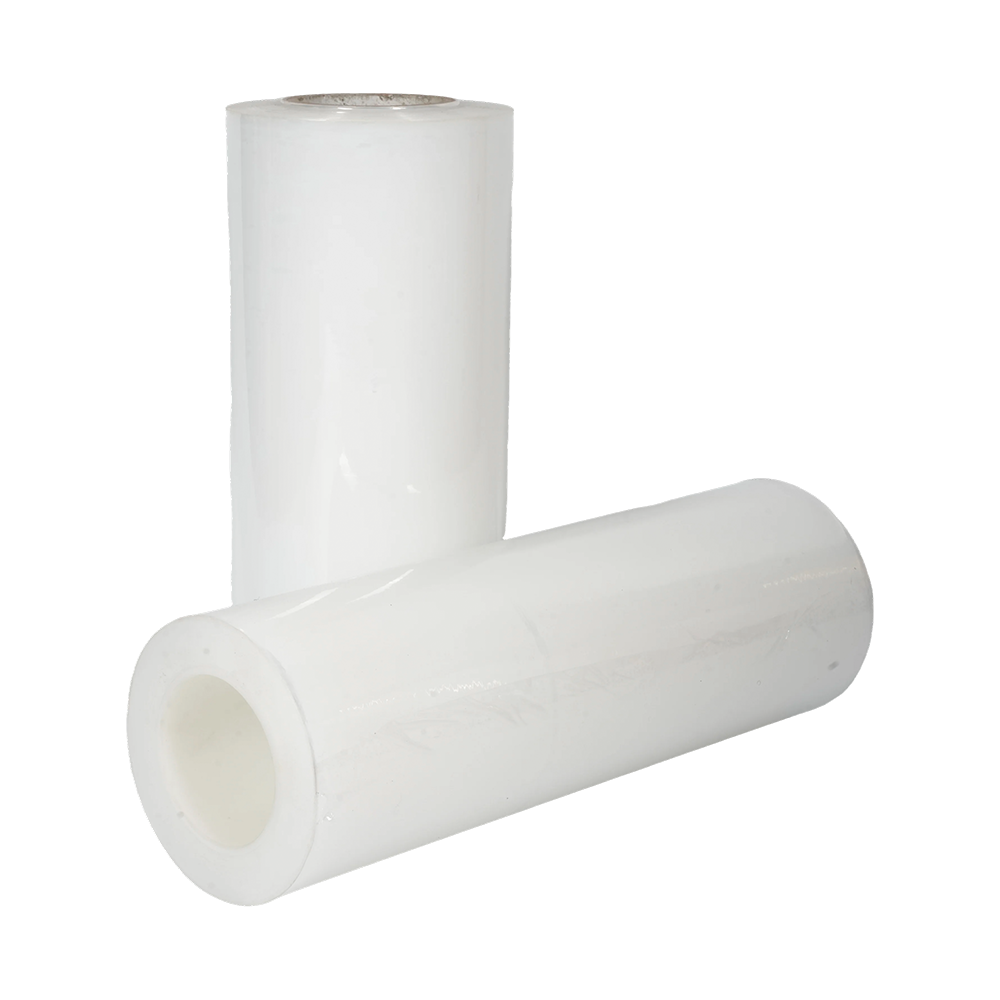
This product is made from pure polyethylene, commonly known as PE, and is engineered to provide stretchability, cling, puncture resistance, surface safety, and reliable load containment. When applied around cartons, pallets, pipes, cables, doors, windows, furniture, metal parts, or electronic goods, the film conforms tightly to the product surface and creates a stable protective layer. Its transparent appearance allows easy identification of the wrapped contents, while its dustproof, moisture-resistant, and oil-resistant performance helps preserve goods during storage and transportation.
Compared with many ordinary wrapping films on the market, a well-manufactured PE hand-held stretch wrap offers a stronger balance of flexibility, tensile strength, elongation, cling performance, and surface protection. It is especially valuable where products need fast manual bundling and where large packaging machines are not practical. With widths such as 45 cm and 50 cm, thicknesses ranging from 0.015 mm to 0.045 mm, and customizable length and roll weight, the film can be adapted to many packaging scenarios, from light-duty carton stabilization to heavier industrial bundling.
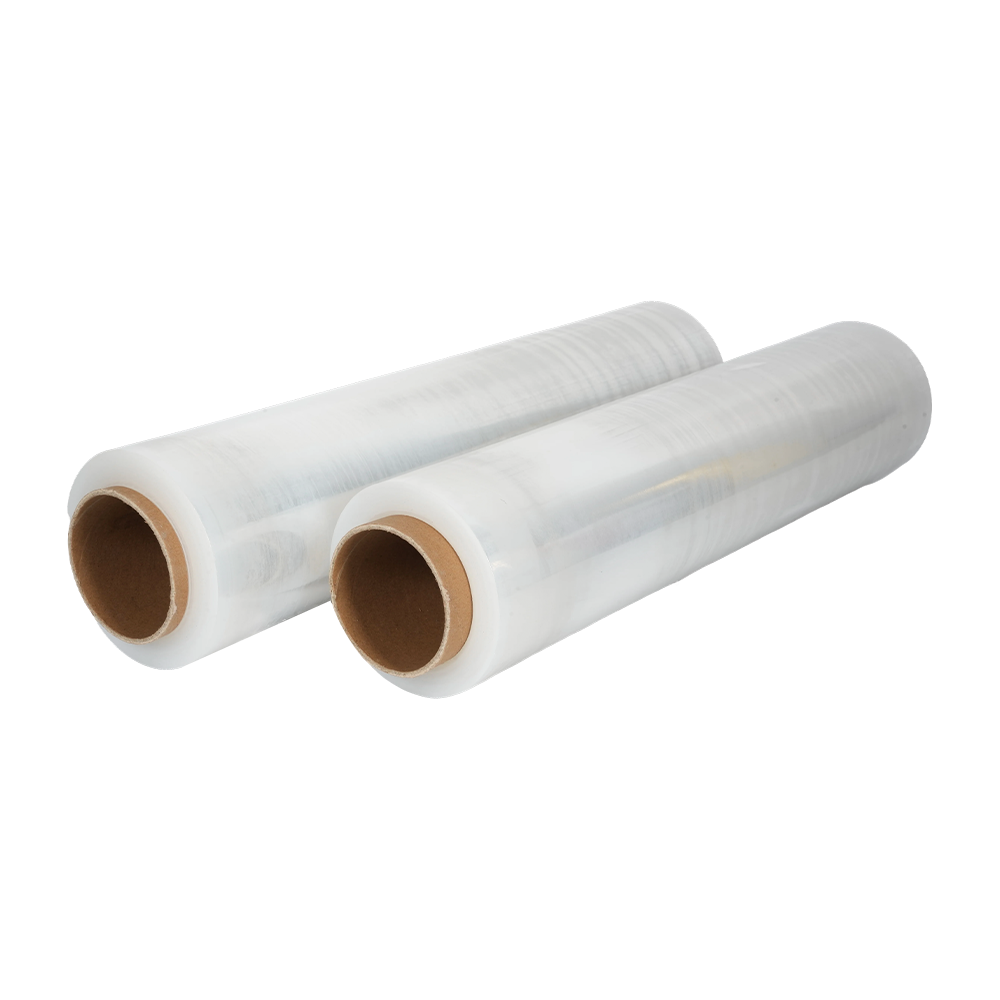
The Role of Hand-Held Stretch Wrap in Modern Packaging
Hand-held stretch wrap is used to unitize, stabilize, protect, and organize goods. The basic function is simple: an operator holds the roll and stretches the film around products or pallets. However, the value it creates is significant. When the film is stretched, it develops elastic recovery force. This force pulls the wrapped items together and reduces the chance of shifting, falling, scattering, or damage during handling and transport. The product is particularly useful for carton pallets because cartons can easily move when forklifts, trucks, conveyors, or manual loading processes create vibration and impact.
For logistics companies, stable pallet loads help reduce transportation claims, delivery delays, repacking labor, and product loss. For warehouses, wrapped pallets are easier to identify, move, stack, and store. For industrial users, the film can bundle parts that do not fit neatly into cartons, including pipes, cables, rods, profiles, hardware, metal components, and building materials. For commercial users, it can temporarily protect large items such as doors, windows, tables, chairs, cabinets, and furniture from dust, fingerprints, moisture, and scratches.
One of the key advantages of hand-held stretch wrap is operational flexibility. It does not require an automatic stretch wrapping machine, electricity, compressed air, or a fixed packaging station. Workers can use it anywhere in the warehouse or production area. This makes it ideal for small-batch packaging, irregular products, temporary reinforcement, field operations, and locations where machine wrapping is inconvenient. Even companies that already use machine stretch film often keep hand rolls available for touch-up wrapping, damaged pallet repair, small orders, or special packaging requirements.
The PE hand-held stretch wrap described here is manufactured for manual tear-and-use operation and is designed to provide good stretchability and cling properties. Its flexible material minimizes the risk of scratching or damaging packaged items, which is important when wrapping painted surfaces, finished furniture, aluminum frames, doors, windows, decorative panels, or electronics. Unlike rigid packaging materials, the film does not add sharp edges or heavy weight. It protects by conforming to the product rather than forcing the product into a fixed shape.
Core Product Advantages
The first major advantage of PE hand-held stretch wrap is strong fixation. Once applied, the elastic memory of the film creates inward holding force around the goods. This helps prevent carton pallets from loosening, collapsing, or shifting during storage and transport. Strong fixation is especially important for mixed loads, uneven pallet layers, and goods that are vulnerable to vibration. In many practical situations, proper wrapping can reduce the need for excessive tape, rope, or secondary packaging materials.
The second advantage is multi-protection. The film creates an external barrier that helps keep dust, moisture, oil mist, and dirt away from packaged items. In warehouses, dust accumulation can affect the appearance of cartons and finished products. In industrial facilities, moisture and oil exposure can reduce product quality or cause contamination. Stretch film offers a simple and economical way to provide everyday protective coverage without fully sealing products in heavy-duty packaging.
The third advantage is surface safety. Because the film is flexible and smooth, it reduces the risk of scratching finished surfaces. This is especially beneficial for irregularly shaped products such as pipes, cables, doors, windows, frames, panels, and furniture. When products have corners, curves, or protruding shapes, hard packaging materials can cause contact damage. PE stretch wrap, by contrast, stretches around the product and distributes pressure more gently.
The fourth advantage is high adaptability. The film can be used on both regular and irregular products. It can wrap a single carton, a stack of cartons, a palletized load, a bundle of tubes, a coil of cable, a set of furniture components, or a large building material panel. The operator controls the wrapping direction, tension, overlap, and number of layers. This makes the material suitable for a wide range of industries without the need for customized tooling.
The fifth advantage is transparency. Transparent stretch wrap allows workers, warehouse managers, and customers to identify goods without removing the packaging. Labels, barcodes, carton markings, product colors, and inventory codes remain visible. This improves inventory control and reduces unnecessary unpacking. Transparent wrapping is also useful for quality inspection because staff can verify product condition while keeping the load protected.
Material Science: Why Pure PE Matters
Polyethylene is one of the most widely used materials in flexible packaging because it provides a strong combination of toughness, flexibility, chemical resistance, and processability. Pure PE stretch film is designed to elongate under tension and then contract slightly, creating load-holding force. This property distinguishes stretch wrap from simple plastic sheeting. A high-quality film must stretch smoothly, cling consistently, resist tearing, and remain stable under common storage conditions.
Using pure polyethylene contributes to more predictable performance. Films made with inconsistent recycled content or poor-quality resin may have uneven thickness, weak spots, unpleasant odor, poor clarity, or unstable cling. They may tear unexpectedly during wrapping, forcing workers to restart the process and waste material. A consistent PE base helps achieve uniform film behavior from roll to roll, which is essential for companies that package products every day.
Good stretchability allows the film to cover more area with less material. When a worker pulls the film during application, the film elongates and becomes thinner while still holding the load. A film with high elongation can reduce material consumption because fewer wraps may achieve the required stability. However, stretchability must be balanced with puncture resistance. If the film stretches but punctures easily at carton corners or metal edges, it will not provide reliable protection. High-quality PE hand-held stretch wrap is engineered to provide both flexibility and strength.
Cling is another important material characteristic. Stretch film should adhere to itself during wrapping so the layers hold together without additional tape. The cling should be strong enough to prevent the film tail from unwinding, but not so excessive that the roll becomes difficult to handle. Controlled cling improves wrapping efficiency and gives the finished package a neat appearance. It also helps maintain the protective seal around the product.
Thickness is a practical performance factor. The product described can be supplied from 0.015 mm to 0.045 mm. Thinner films are suitable for light-duty applications and cost-sensitive wrapping, while thicker films provide increased puncture resistance and holding force for heavier or sharper loads. The ability to select thickness according to the usage scenario helps customers optimize both cost and performance.
Product Specifications
The following table summarizes key specifications and typical practical considerations for PE hand-held stretch wrap.
| Parameter | Available Value | Practical Benefit |
| Material | Pure Polyethylene PE | Provides stretchability, cling, flexibility, and reliable protective performance |
| Width | 45 cm and 50 cm, with other common widths available by requirement | Suitable for carton pallets, bundles, furniture, building materials, and industrial goods |
| Thickness | 0.015 mm to 0.045 mm | Allows selection from light-duty economical wrapping to stronger industrial protection |
| Length and Roll Weight | Customizable according to customer usage scenario | Supports different operator preferences, packaging frequencies, and cost targets |
| Color | Transparent | Keeps labels, barcodes, markings, and product information visible |
| Operation | Manual hand wrapping | No machine required, suitable for flexible and mobile packaging work |
| Main Protection | Dust, moisture, oil, surface contact, and load movement resistance | Improves storage cleanliness, transport safety, and product presentation |
Advantages Compared with Ordinary Competitor Films
Not all stretch films perform the same. In the marketplace, some low-cost films appear attractive at first because the roll price is lower. However, packaging cost should be evaluated by total usage, wrapping efficiency, damage reduction, and product reliability. A low-grade film that tears frequently, stretches unevenly, has poor cling, or provides inadequate load containment can create hidden costs that exceed the initial savings.
A high-quality PE hand-held stretch wrap offers better load stability than many ordinary films because it combines elongation with consistent recovery force. Some competitor films stretch easily but do not recover well, meaning they become loose after application. Others may feel strong but have low elongation, causing operators to use more material to cover the same load. The best performance comes from a balanced film that stretches smoothly, clings reliably, and maintains tension around the goods.
Another advantage is more stable thickness control. Uneven film thickness creates weak areas that can puncture or tear during wrapping. It also causes inconsistent roll quality and unpredictable consumption. Advanced production control helps ensure that each section of film performs similarly, which improves packaging standardization. For customers packaging large volumes of goods, consistent film quality is essential for training workers, calculating costs, and maintaining shipment standards.
Surface safety is also a major competitive advantage. Some packaging materials, especially rigid straps or rough films, can leave marks on product surfaces or damage carton edges. PE stretch wrap provides soft, flexible contact and is suitable for products that need temporary protection without abrasion. This is particularly valuable for decorative materials, furniture, electronics, coated metal parts, and building components.
Compared with tapes alone, stretch wrap covers a larger surface area and holds the entire load together. Tape is useful for sealing cartons, but it cannot easily unitize a pallet or protect all exposed surfaces. Compared with strapping alone, stretch wrap distributes holding force over a broad area rather than concentrating pressure along narrow bands. Strapping is excellent for heavy load reinforcement, but it may need corner protectors and can leave pressure marks. In many industrial packaging systems, stretch wrap is used together with tape or strapping to create a complete packaging solution.
Compared with shrink film, hand-held stretch wrap does not require a heat tunnel or heat gun. This reduces energy consumption, equipment investment, and safety risks related to heat. Shrink film is useful for certain retail and industrial applications, but stretch wrap is often more convenient for pallet stabilization and quick manual wrapping. For many warehouses, the ability to wrap immediately without heating equipment is a major operational advantage.
Compared with paper wrapping, PE stretch wrap provides better moisture resistance and transparency. Paper materials can be environmentally appealing in certain uses, but they do not offer the same cling, elastic recovery, or moisture barrier. When product visibility and tight load containment are required, stretch wrap remains one of the most efficient options.
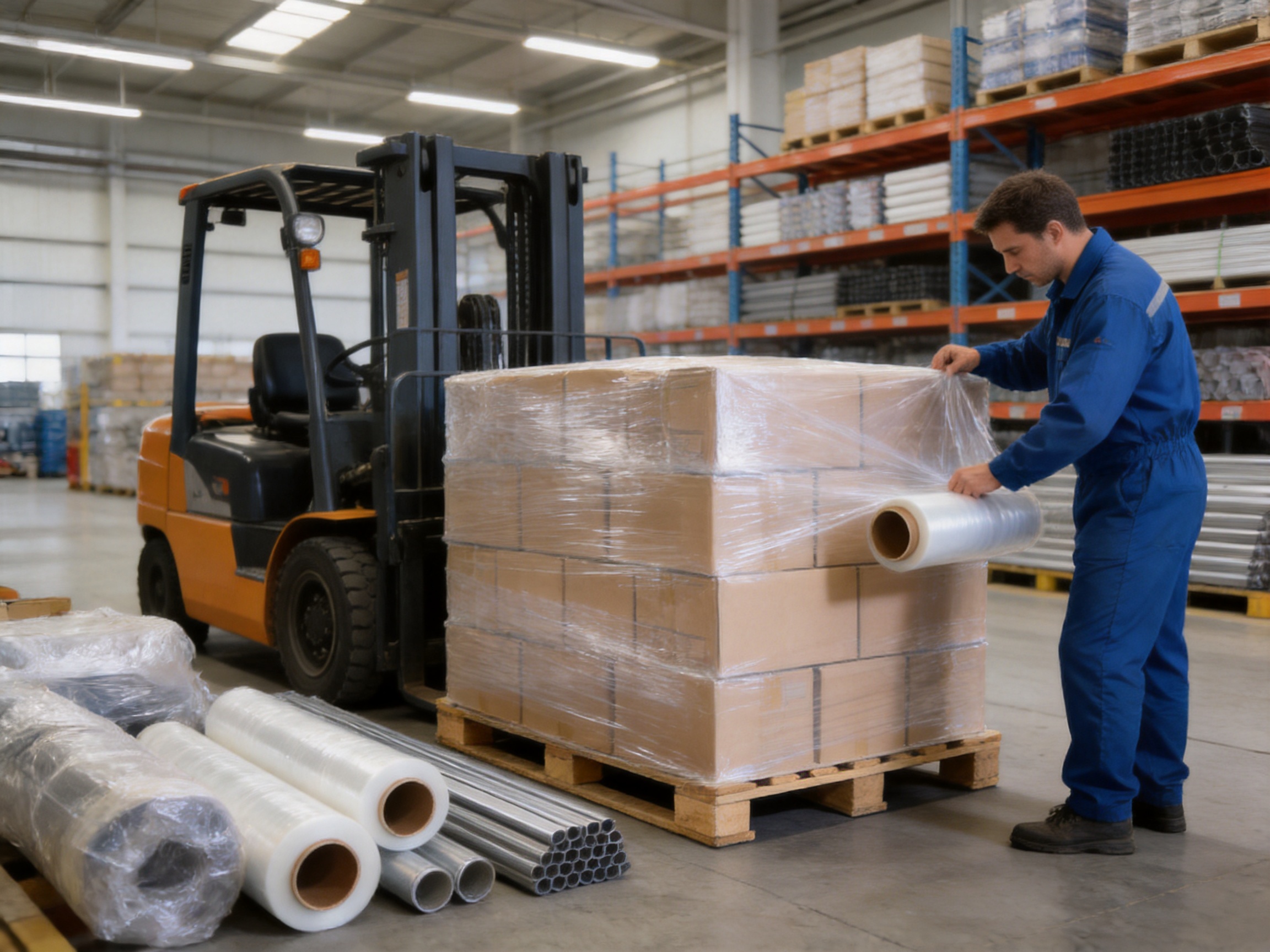
Application Scenarios
Logistics and Transportation
In logistics, the main purpose of stretch wrap is to stabilize goods during transport. Carton pallets may pass through several handling stages, including loading, unloading, forklift movement, warehouse transfer, sorting, and delivery. Each stage introduces vibration, acceleration, and potential impact. If cartons are not properly secured, they may slide, tilt, collapse, or become separated from the pallet. Hand-held stretch wrap helps unitize the pallet into a single stable load.
Transparent film also allows shipping labels and carton marks to remain visible. This is important for express delivery, third-party logistics, export shipments, and warehouse distribution. Workers can scan barcodes or confirm product information without cutting the film. This reduces handling time and helps prevent mistakes.
Industrial Packaging
Industrial goods are often difficult to package because they are heavy, long, sharp, oily, or irregularly shaped. Pipes, cables, metal rods, profiles, spare parts, hardware, and machine components may not fit neatly into cartons. PE hand-held stretch wrap can bundle these items together, reduce scattering, and provide a protective layer against dust and surface contamination. When used correctly, the film helps organize production areas and reduces the risk of parts being lost or mixed.
For metal products, the film can reduce direct contact with dust, moisture, and oil. For cable products, it can keep coils compact and easier to move. For plastic profiles and building materials, it can protect finished surfaces during short-term storage and shipment. Because the operator can control the wrapping angle and tension, the film adapts to many shapes without customized packaging equipment.
Warehousing and Inventory Protection
Warehouses often store goods for days, weeks, or months before distribution. During this time, products may be exposed to dust, humidity, handling marks, insects, and accidental contact. Stretch wrap creates a simple protective layer that keeps stored goods cleaner and easier to manage. It is especially useful for electronics, furniture, building materials, cartons, and semi-finished products.
Wrapped goods are also easier to count and organize. A pallet that has been wrapped neatly is less likely to lose cartons or components. If a pallet is partially picked, workers can rewrap the remaining goods quickly. This makes hand-held stretch film a practical daily tool in inventory management.
Commercial Packaging and Surface Protection
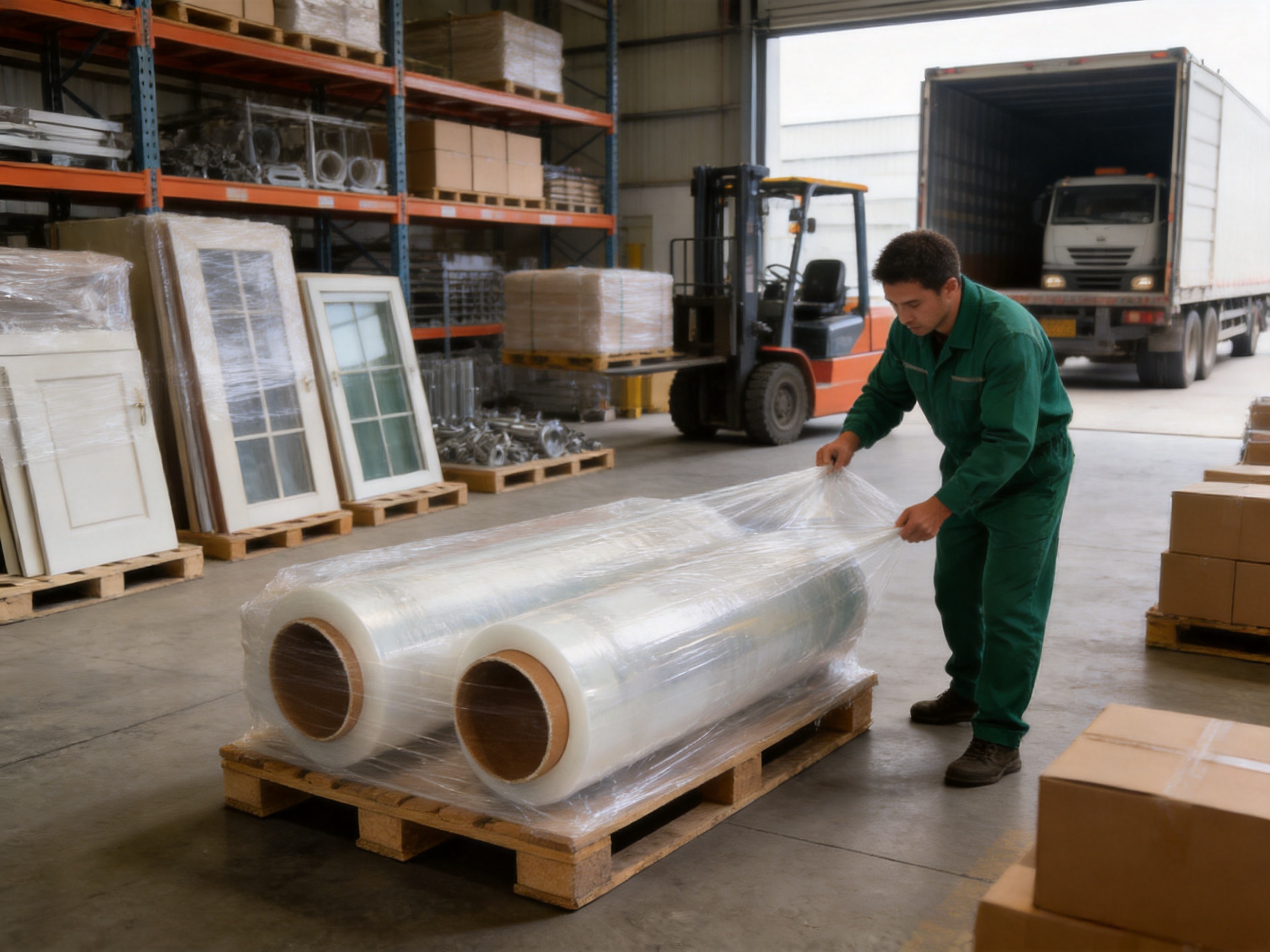
Commercial products such as doors, windows, furniture, cabinets, display racks, and large household items often require temporary protection during movement and installation. PE hand-held stretch wrap can cover surfaces without permanently adhering to them. It helps prevent dust, fingerprints, moisture, and light scratches. Because the film is transparent, customers and installers can still see the product finish and confirm the item before removing the wrapping.
For furniture and decoration materials, soft surface contact is extremely important. Packaging that is too rigid or abrasive may damage paint, veneer, glass, or metal coating. Stretch wrap provides protection while remaining flexible enough to follow product contours. It can also be combined with foam, corner protectors, or cardboard sheets when additional cushioning is required.
Advanced Manufacturing Process and Quality Control
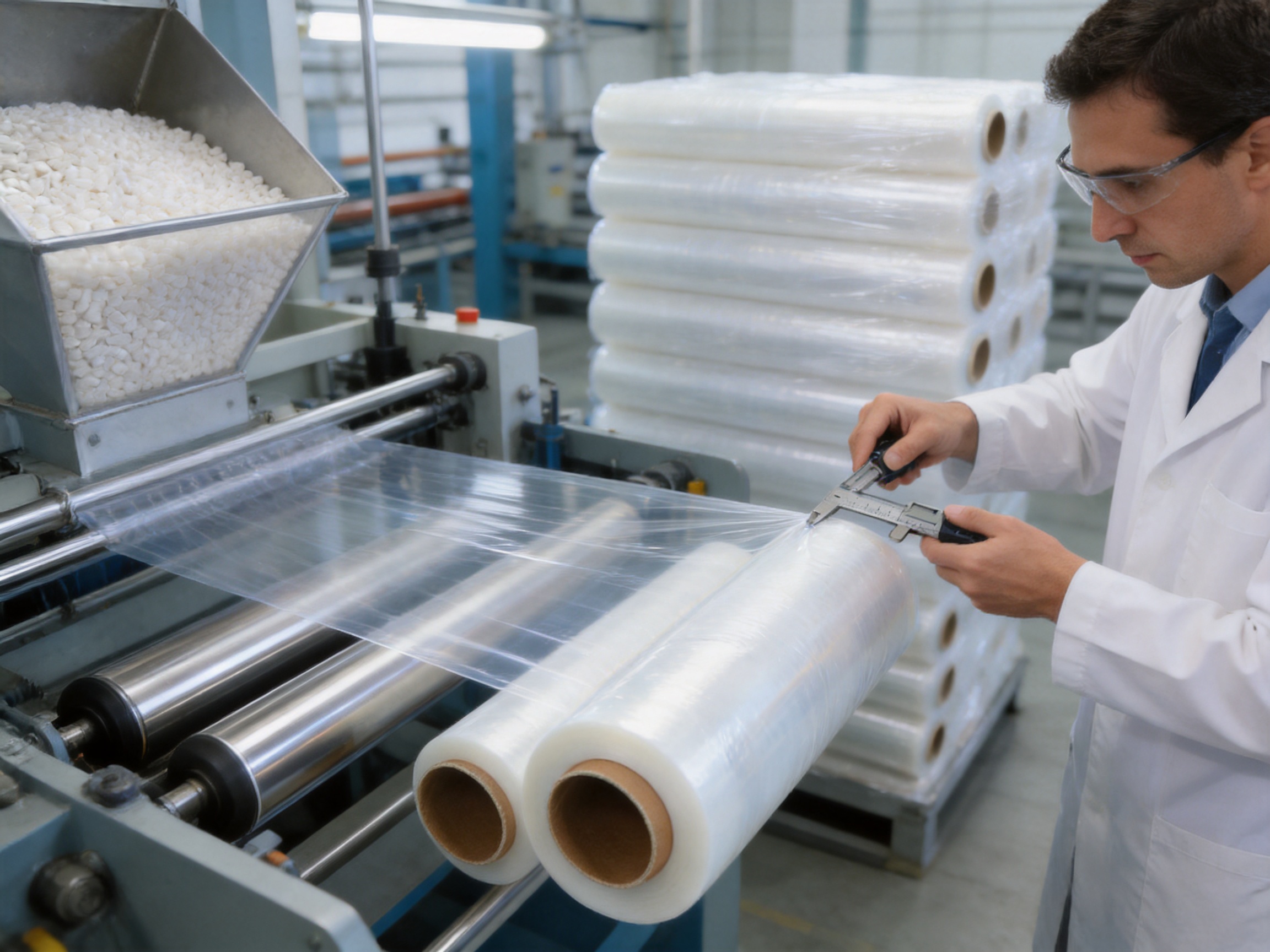
The strength of a PE hand-held stretch wrap begins with manufacturing discipline. Zhejiang Geruite Packaging Materials Co., Ltd. focuses on the research, development, production, and sales of high-performance tapes and packaging materials. Its product range includes BOPP tapes, kraft paper tapes, masking tapes, high-temperature resistant tapes, metal tapes, PE stretch film, PP strapping, and high-strength PET strapping. This broad packaging material experience allows the company to understand how different materials interact in real logistics and industrial packaging environments.
For stretch film production, raw material selection is a critical first step. Quality polyethylene resin helps ensure clarity, stretchability, toughness, and stable processing. Before production, raw materials must be checked for consistency and suitability. Careful material management reduces defects such as gels, black spots, weak film areas, odor, and unstable transparency. Stable raw material quality is the foundation for stable finished roll quality.
The extrusion process is the technical core of stretch film manufacturing. Polyethylene resin is melted under controlled temperature and processed into thin film. Temperature control must be precise because overheated resin may degrade, while insufficient heating may result in poor melt uniformity. A stable melt flow helps create uniform film thickness and smooth appearance. Modern production equipment allows better control of film width, thickness, cooling, winding tension, and roll formation.
Thickness control is especially important. Stretch film is extremely thin, and small variations can affect performance. Advanced manufacturing processes monitor and adjust the film to maintain consistency across the width and length. Uniform thickness helps prevent tearing during wrapping and ensures that each roll provides predictable coverage. For customers, predictable coverage means better cost control and fewer packaging interruptions.
Cooling and film formation also influence film properties. Proper cooling helps create clarity, strength, and stable film structure. If cooling is uneven, the film may develop wrinkles, thickness variation, or inconsistent mechanical properties. Good production control produces film that unwinds smoothly, stretches evenly, and clings reliably.
Winding quality is another important but often overlooked manufacturing factor. A hand roll must be easy to hold, unwind, and apply. If the roll is wound too tightly, workers may struggle to pull the film. If it is wound too loosely, the roll may deform, telescope, or become difficult to use. Balanced winding tension creates a roll that supports efficient manual operation. Neat roll edges also reduce waste and improve product presentation.
Quality control should continue after production. Finished film can be tested for thickness, width, roll weight, tensile strength, elongation, puncture resistance, cling, clarity, and appearance. Inspection helps ensure that each batch meets performance requirements. Because the company operates with a rigorous quality control system from raw material procurement to production and final inspection, customers receive more reliable and consistent packaging materials.
The company’s annual output value has reached over RMB 60 million, reflecting production capability and market acceptance. Its location in Zhejiang Province, a region known for developed manufacturing and strong industrial supply chains, further supports efficient procurement, equipment maintenance, skilled labor, and logistics. These strengths help the company respond to customer requirements for customized length, roll weight, thickness, and packaging specifications.
Company Strengths Behind the Product
A packaging material is only as reliable as the manufacturer behind it. Zhejiang Geruite Packaging Materials Co., Ltd. has developed its business around high-performance packaging materials and practical packaging solutions. The company’s experience across adhesive tapes, stretch film, and strapping products gives it a complete understanding of cargo stabilization, carton sealing, bundling, protection, and transport safety. This multi-product expertise is useful for customers that need more than a single material; they need packaging systems that work together.
The company emphasizes quality as the lifeline of its business. This principle is reflected in strict control from raw material purchasing to production and final inspection. For customers, this means reduced risk of receiving inconsistent batches, defective rolls, or materials that fail during use. In industrial packaging, reliability is not optional. A film that fails during transport can cause product damage, customer complaints, and additional logistics costs.
Advanced production equipment supports stable output and product improvement. Modern packaging material manufacturing requires precision, consistency, and efficiency. Equipment quality influences film thickness, roll appearance, production speed, and defect control. By investing in equipment and process optimization, the company can maintain stable performance while adapting to customer requirements.
Research and innovation are also part of the company’s development direction. Packaging needs continue to evolve as logistics become faster, products become more diverse, and customers demand both performance and cost efficiency. The company continues to optimize product structure and improve service levels, aiming to become a trustworthy packaging material partner for customers worldwide. For PE hand-held stretch wrap, this means ongoing attention to stretch performance, strength, usability, and application support.
Service capability is another competitive strength. Customers may need guidance on thickness selection, roll weight, wrapping method, storage conditions, or compatibility with other packaging materials. A manufacturer with broad packaging experience can provide practical recommendations rather than simply selling standard rolls. This helps customers reduce waste, improve packaging results, and choose the correct material for each product category.
How to Select the Right Stretch Wrap
Selecting the correct PE hand-held stretch wrap depends on product weight, shape, surface sensitivity, storage environment, transport distance, and operator habits. For light cartons or short-distance warehouse movement, a thinner film may provide sufficient protection at a lower cost. For heavier pallets, irregular shapes, or products with edges, a thicker film may be necessary to improve puncture resistance and holding force.
Width selection affects wrapping efficiency. A 45 cm or 50 cm film width is common because it covers a practical area with each pass while remaining easy for an operator to handle. Wider film can cover more surface area but may be less convenient in narrow spaces or when wrapping small goods. Narrower film may be useful for bundling small items but may require more passes for pallets. The best width depends on the product size and packaging workflow.
Roll weight also matters. A heavier roll contains more film and reduces roll-changing frequency, but it may fatigue operators during long shifts. A lighter roll is easier to handle but may require more frequent replacement. Customizable roll length and weight help customers match packaging material to worker comfort and production rhythm. This is one reason customization is valuable for professional packaging operations.
Film thickness should be chosen based on performance rather than assumption. Some users think thicker is always better, but over-specified film increases material cost and may not improve practical results if the load is light. Other users choose very thin film to save money but then use too many layers or experience frequent tearing, which increases total cost. The most efficient solution is the film thickness that achieves stable protection with the lowest total consumption and labor time.
Clarity should be considered when product identification is important. Transparent stretch wrap allows scanning, inspection, and visual confirmation. If security or privacy is required, colored or opaque film may be considered, but for general industrial and logistics use, transparent film offers excellent convenience.
Best Practices for Manual Wrapping
Effective wrapping requires more than simply circling the pallet. Operators should begin by checking the goods and removing sharp protrusions whenever possible. Sharp corners, nails, wire ends, or metal burrs can puncture the film. If sharp edges cannot be removed, corner protectors, cardboard sheets, or cushioning materials may be used before wrapping. Clean surfaces help the film cling properly and reduce contamination between the film and product.
When wrapping a pallet, the operator should anchor the film at the base. Several turns around the pallet bottom help connect the goods to the pallet and prevent sliding. The film should be stretched during application, but not pulled so aggressively that it tears or crushes cartons. Consistent tension is more effective than uneven force. Each layer should overlap the previous layer sufficiently to create continuous coverage.
For carton pallets, extra attention should be given to the lower layers because they carry the load and are most affected by forklift movement. The top of the pallet may also need reinforcement to prevent dust entry or carton separation. If the load is tall, wrapping should proceed upward and then downward to create a cross-layered holding structure. The final film tail should be pressed against the wrapped layers so the cling secures it without additional tape.
For irregular goods such as pipes, cables, or metal parts, the operator should use the film to bundle the items compactly without excessive pressure on delicate surfaces. When wrapping long items, several bands of film along the length may be used, or the entire bundle may be spiral wrapped. For furniture or doors, the film should be applied smoothly to avoid wrinkles that may create pressure marks during long storage. Additional padding may be used on corners and edges.
Training workers in wrapping technique can significantly improve results. Even a high-quality film will not perform well if applied with insufficient tension, poor overlap, or inadequate bottom anchoring. Conversely, proper technique can reduce film consumption while improving load stability. Companies that use stretch wrap daily should establish practical wrapping standards for different product types.
Storage and Handling Recommendations
PE hand-held stretch wrap should be stored in a cool, dry place away from direct sunlight, high heat sources, and excessive humidity. A recommended storage temperature range is 15 degrees Celsius to 25 degrees Celsius. Direct sunlight and high temperature may affect film properties over time, including cling and tensile performance. Keeping rolls in their packaging until use helps prevent dust contamination and preserves film quality.
Rolls should be stored upright or in a manner that prevents deformation. If rolls are compressed, dropped, or exposed to heavy pressure, the core may deform and make unwinding difficult. Clean storage areas also help keep the film surface free from particles that could scratch sensitive goods or reduce cling. For large-volume users, inventory should be rotated so older rolls are used first.
During use, operators should avoid dragging rolls across dirty floors or sharp surfaces. A damaged roll edge can lead to film tearing during application. If a roll is accidentally damaged, the damaged outer layers should be removed before wrapping important goods. Simple handling discipline can prevent unnecessary waste.
Cost Efficiency and Total Packaging Value
Stretch wrap should be evaluated by total packaging value, not only by roll price. Total value includes material consumption, labor efficiency, damage reduction, storage protection, customer satisfaction, and compatibility with existing packaging processes. A cheaper film may require more layers, tear more often, waste worker time, and provide weaker protection. A reliable film may have a slightly higher unit price but reduce total packaging cost by improving efficiency and reducing losses.
High elongation and good cling help reduce film usage. If the film stretches well, operators can cover loads with less material. If cling is reliable, the film tail stays in place without extra tape. If puncture resistance is good, fewer wraps are needed to compensate for weak points. These characteristics directly affect cost per pallet or cost per package.
Product damage prevention is a major economic benefit. When goods shift during transport, cartons can crush, labels can tear, products can scratch, and customers may reject deliveries. The cost of one damaged shipment can be much higher than the cost of quality packaging material. Stretch wrap functions as an inexpensive insurance layer that protects product value throughout the supply chain.
Labor efficiency also matters. A film that unwinds smoothly and stretches consistently allows workers to wrap faster and with less fatigue. Roll weight customization can further improve operator comfort. In busy warehouses, small time savings per pallet can add up to significant productivity gains over weeks and months.
Compatibility with Other Packaging Materials
PE hand-held stretch wrap is often used as part of a broader packaging system. For carton sealing, BOPP tape or kraft paper tape may be used before pallet wrapping. For heavy cargo, PP strapping or high-strength PET strapping may be added to provide extra load reinforcement. For surface-sensitive products, foam sheets, paper pads, or corner protectors can be applied before stretch wrapping. For high-temperature or special industrial applications, specialized tapes may support specific packaging requirements.
The advantage of working with a manufacturer that supplies multiple packaging material categories is that customers can develop integrated packaging solutions. Stretch film secures and protects the overall load, tape seals cartons, and strapping provides concentrated holding force for heavy items. Each material has a specific role. When selected correctly, they complement one another and improve packaging reliability.
For example, a pallet of electronic goods may use carton sealing tape for individual boxes, stretch wrap for pallet unitization, and corner boards for vertical compression protection. A bundle of metal profiles may use protective paper or foam at contact points, stretch wrap for surface coverage, and PET strapping for strong mechanical holding. A furniture shipment may use foam padding, stretch wrap, and outer carton protection. The flexibility of PE hand-held stretch wrap makes it useful in all these systems.
Environmental and Practical Considerations
Packaging users increasingly consider sustainability, waste reduction, and responsible material use. PE stretch wrap is lightweight and efficient, which means it can provide significant protection with a relatively small amount of material. When film is selected correctly and applied properly, material consumption can be minimized. Reducing film waste is one of the most practical steps companies can take toward more responsible packaging.
Using a film with appropriate thickness helps avoid over-packaging. Excessive layers consume more material and create more waste without necessarily improving protection. At the same time, under-packaging can cause product damage, which is also wasteful because damaged goods may need replacement, repair, return transport, or disposal. Sustainable packaging should balance material reduction with product protection.
PE film can be collected and recycled in suitable recycling systems, depending on local infrastructure and contamination level. Clean stretch film is generally more recyclable than mixed or dirty packaging waste. Companies can improve recycling outcomes by setting up collection points for used film and keeping it separate from food waste, oil, paper labels, and other contaminants.
Operational sustainability also includes energy efficiency. Hand-held stretch wrap does not require heat equipment, unlike shrink packaging. It also does not require large machinery for basic use. This makes it practical for small and medium enterprises seeking effective packaging without major energy or equipment investment.
Why This Product Supports Safer Supply Chains
Supply chain safety depends on many details, and packaging is one of the most visible. A poorly wrapped pallet can become unstable, creating risk for workers, forklift operators, truck drivers, and customers. Cartons that fall from pallets can cause injuries and product loss. PE hand-held stretch wrap helps reduce these risks by keeping goods together and improving load integrity.
Clear wrapping also supports inspection and accountability. Because the film is transparent, staff can see whether goods are correctly stacked, labeled, and prepared. Any abnormal carton deformation or missing item may be noticed before shipment. This reduces the risk of sending incorrect or damaged goods.
During transport, wrapped loads are less likely to shift inside trucks or containers. Load movement can cause pressure against doors, walls, and adjacent pallets. In severe cases, unstable cargo can create unloading hazards. Properly applied stretch wrap contributes to safer and more organized cargo handling.
Q&A Section
What is PE hand-held stretch wrap mainly used for?
PE hand-held stretch wrap is mainly used for manually wrapping carton pallets, bundling irregular items, stabilizing goods during transportation, and protecting products from dust, moisture, oil, and surface contamination. It is widely used in logistics, warehousing, industrial packaging, and commercial product protection.
Why is pure polyethylene important for stretch wrap?
Pure polyethylene helps provide stable stretchability, cling, clarity, flexibility, and toughness. Compared with films made from inconsistent or low-grade materials, pure PE film is more predictable during wrapping and less likely to tear unexpectedly.
What thickness should be selected?
The suitable thickness depends on the load. Thin film can be used for light-duty carton wrapping and short-distance storage protection. Thicker film is recommended for heavier pallets, sharper edges, irregular products, and applications requiring stronger puncture resistance. Available thickness can range from 0.015 mm to 0.045 mm.
Can the film be used without packaging machines?
Yes. This product is designed for manual hand wrapping and does not require wrapping machines, electricity, or heat equipment. It is suitable for flexible packaging locations and small-batch operations.
Does the film protect product surfaces?
Yes. The film is flexible and smooth, so it helps reduce dust, moisture, and light surface contact while minimizing the risk of scratching. For highly delicate surfaces, it can be combined with foam, paper pads, or corner protectors.
Why choose transparent stretch wrap?
Transparent film allows product labels, carton markings, barcodes, and contents to remain visible. This improves inventory management, inspection, scanning, and shipment verification without removing the packaging.
How should stretch wrap be stored?
It should be stored in a cool, dry place away from direct sunlight and high heat sources. A recommended temperature range is 15 degrees Celsius to 25 degrees Celsius. Rolls should remain sealed when not in use to preserve cling properties and prevent dust contamination.
How does PE stretch wrap compare with strapping?
Stretch wrap provides broad surface coverage and elastic load containment, while strapping provides concentrated mechanical holding force. For heavy loads, both materials may be used together. Stretch wrap is better for surface protection and unitizing cartons, while strapping is useful for strong load reinforcement.
How does this product help reduce packaging cost?
A quality stretch film reduces cost by stretching efficiently, reducing material waste, lowering tearing frequency, improving wrapping speed, and preventing product damage. Total packaging cost should be measured by cost per protected shipment, not only by roll price.
Can roll length and weight be customized?
Yes. Length and roll weight can be customized according to the customer’s usage scenario, operator preference, wrapping frequency, and packaging cost target.
Conclusion
PE hand-held stretch wrap is a practical, efficient, and highly adaptable packaging material for modern logistics and industrial protection. Made from pure polyethylene, it delivers stretchability, cling, flexibility, transparency, and protective performance. It secures carton pallets, bundles irregular goods, protects stored products, and reduces the risk of movement during transport. Its manual operation makes it convenient for warehouses, factories, distribution centers, commercial packaging areas, and field applications.
The product stands out from ordinary competitor films through balanced stretch performance, strong fixation, surface safety, multi-protection, stable thickness options, and customization possibilities. Compared with tape alone, it provides broader load containment. Compared with strapping alone, it protects a larger surface area and reduces concentrated pressure. Compared with shrink film, it requires no heat equipment and is easier to use for pallet stabilization. These advantages make it a valuable material in both simple and advanced packaging systems.
Behind the product is the manufacturing strength of Zhejiang Geruite Packaging Materials Co., Ltd., a company focused on research, production, and sales of high-performance packaging materials. With advanced equipment, rigorous quality control, broad product expertise, and a commitment to continuous improvement, the company supports customers with stable products and practical packaging solutions. From raw material selection to extrusion, thickness control, winding, inspection, and customization, each production stage contributes to reliable final performance.
For businesses seeking better cargo stability, cleaner storage, safer transportation, and efficient manual packaging, PE hand-held stretch wrap offers a dependable solution. When selected properly, stored correctly, and applied with good wrapping technique, it can reduce damage, improve workflow, and enhance the professional appearance of shipped goods. It is a simple material with a powerful role in protecting product value across the supply chain.
References
Yam, K. L. Encyclopedia of Packaging Technology. John Wiley and Sons.
Robertson, G. L. Food Packaging: Principles and Practice. CRC Press.
Soroka, W. Fundamentals of Packaging Technology. Institute of Packaging Professionals.
Han, J. H. Innovations in Food Packaging. Academic Press.
Marsh, K., and Bugusu, B. Food Packaging: Roles, Materials, and Environmental Issues. Journal of Food Science.
International Safe Transit Association. General Guidelines for Packaged Product Distribution Testing.
ASTM International. Standard Test Methods for Plastic Film and Sheeting Performance Evaluation.
Product: PE Hand-held stretch wrap

LATEST POST
Let’s create something amazing together
contact us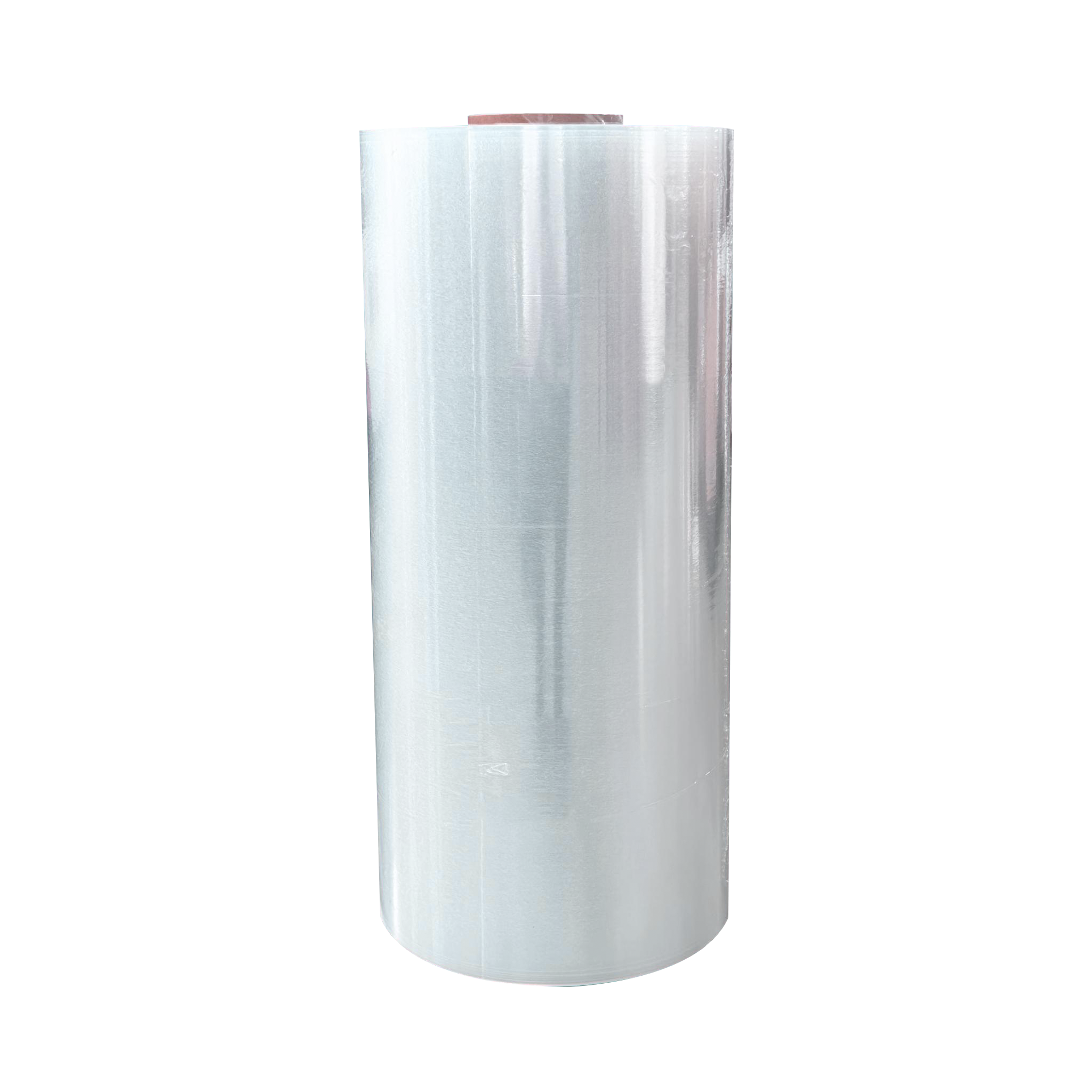

CONTACT DETAILS
- Address:No. 241, Yaojiafan, Zhangpanqiao, Shushan Street, Xiaoshan District, Hangzhou City, Zhejiang Province, China
- TEL:+86-0571-83175630
- Phone:+86-13336160217
- Email:anqiaocun@163.com
PRODUCTS
NEWS CENTER
MOBILE TERMINAL
Copyright© Zhejiang Geruite Packaging Materials Co., Ltd. All Rights Reserved.
Privacy Wholesale industrial packaging tape Manufacturers