


 English
 Español
 عربى

White PP Machine-Grade Strapping for Efficient Automated Packaging
Content
- 1 What Is White PP Machine-Grade Strapping?
- 2 Core Material: Polypropylene
- 3 Manufacturing Process and Product Consistency
- 4 Technical Specifications
- 5 Advantages Over Conventional Manual Strapping
- 6 Advantages Compared with Other Strapping Materials
- 7 Machine Compatibility and Operating Performance
- 8 Application Scenarios
- 9 How the Product Supports Operational Efficiency
- 10 Company Manufacturing Strengths
- 11 Product Selection Guidelines
- 12 Storage, Handling, and Use
- 13 Quality and Sustainability Considerations
- 14 Common Problems and Practical Solutions
- 15 Frequently Asked Questions
- 15.1 What is White PP Machine-Grade Strapping used for?
- 15.2 Can it be used with every strapping machine?
- 15.3 How is the strap sealed?
- 15.4 Is white PP strapping suitable for heavy-duty loads?
- 15.5 What widths and thicknesses are available?
- 15.6 How long can one coil be?
- 15.7 Does polypropylene strapping resist moisture?
- 15.8 How should the material be stored?
- 15.9 How can seal quality be improved?
- 15.10 What information should be provided when requesting a quotation?
- 16 Why Choose a Specialized Packaging Material Supplier?
- 17 Conclusion
- 18 References
- 19 Product: White PP Machine-Grade Strapping
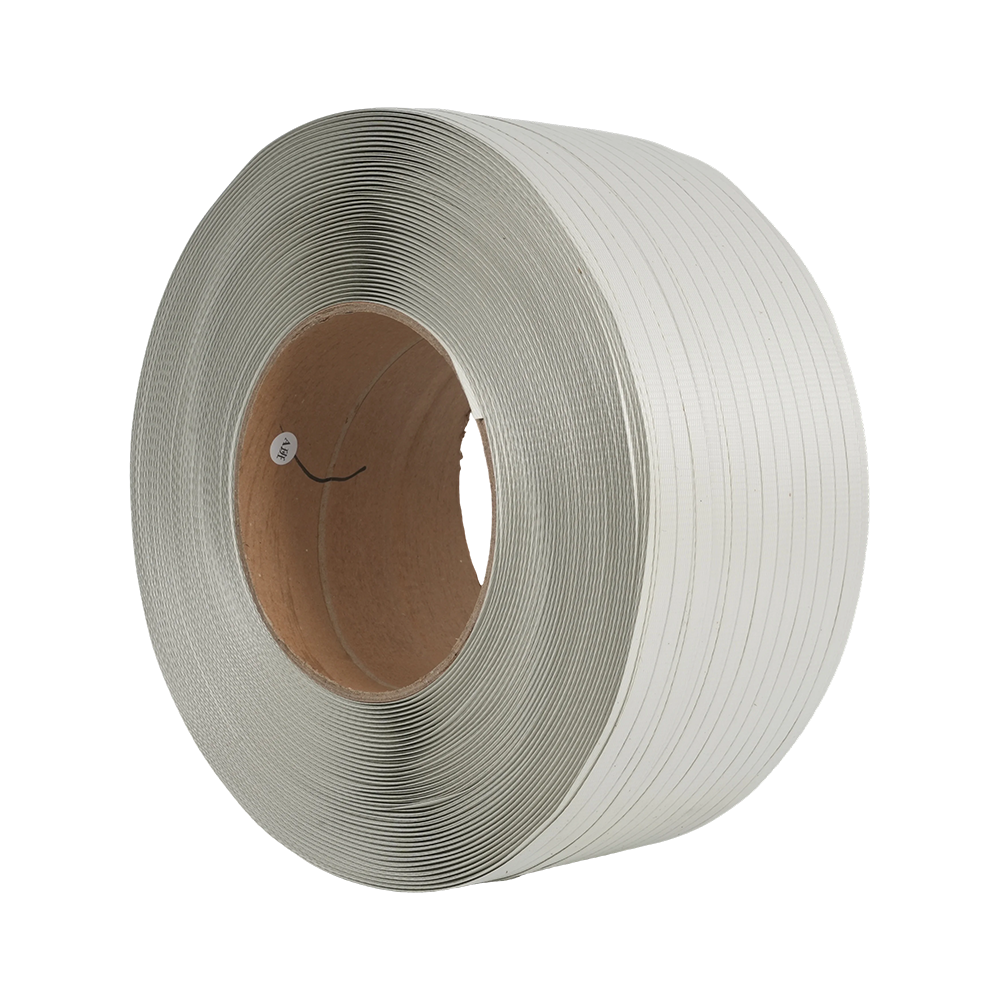
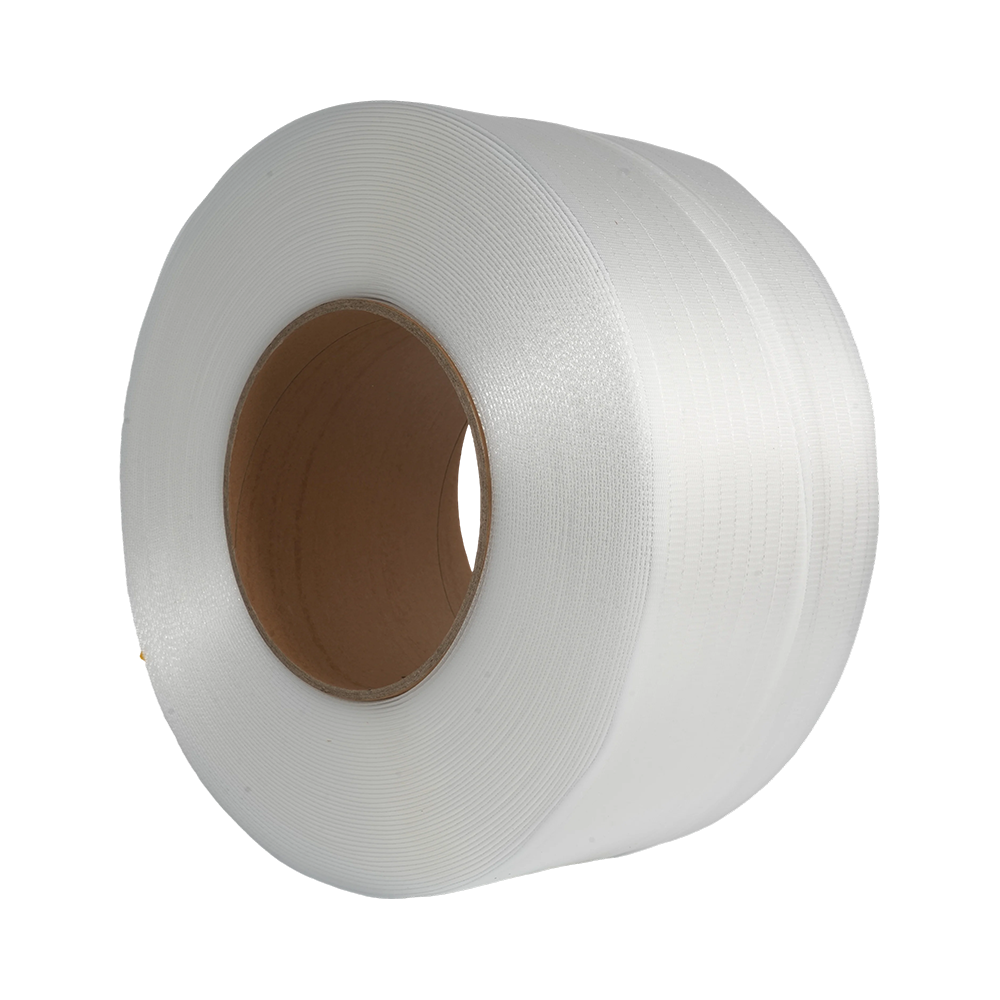
In modern warehousing, distribution, manufacturing, and logistics operations, packaging materials must do more than hold a carton together. They must work reliably with automated equipment, maintain consistent tension, form dependable seals, and support fast, repeatable packaging cycles. White PP Machine-Grade Strapping is designed for precisely this purpose. Manufactured from polypropylene through a controlled extrusion process, it provides a balanced combination of strength, flexibility, impact resistance, machine compatibility, and cost efficiency for standard-duty packaging applications.
Unlike basic manual strapping products, machine-grade polypropylene strapping is engineered around the operating requirements of semi-automatic and fully automatic strapping equipment. Its flat profile, controlled surface characteristics, consistent dimensions, and heat-weld sealing performance allow packaging lines to operate with fewer interruptions and more predictable results. These characteristics make it suitable for businesses that need to secure cartons, printed materials, textile products, lightweight panels, palletized goods, and other general warehouse loads at a steady production rate.
The white color provides a clean and professional appearance while also assisting with product identification, packaging differentiation, and internal tracking. When combined with appropriate machine settings, the strapping can help improve packaging consistency while reducing the manual labor associated with tying, cutting, and sealing individual bundles.
This article examines the construction, manufacturing process, technical properties, operating advantages, applications, selection criteria, and quality considerations associated with White PP Machine-Grade Strapping. It also explains how Zhejiang Geruite Packaging Materials Co., Ltd. supports product performance through material development, extrusion production, quality control, and customer-oriented packaging solutions.
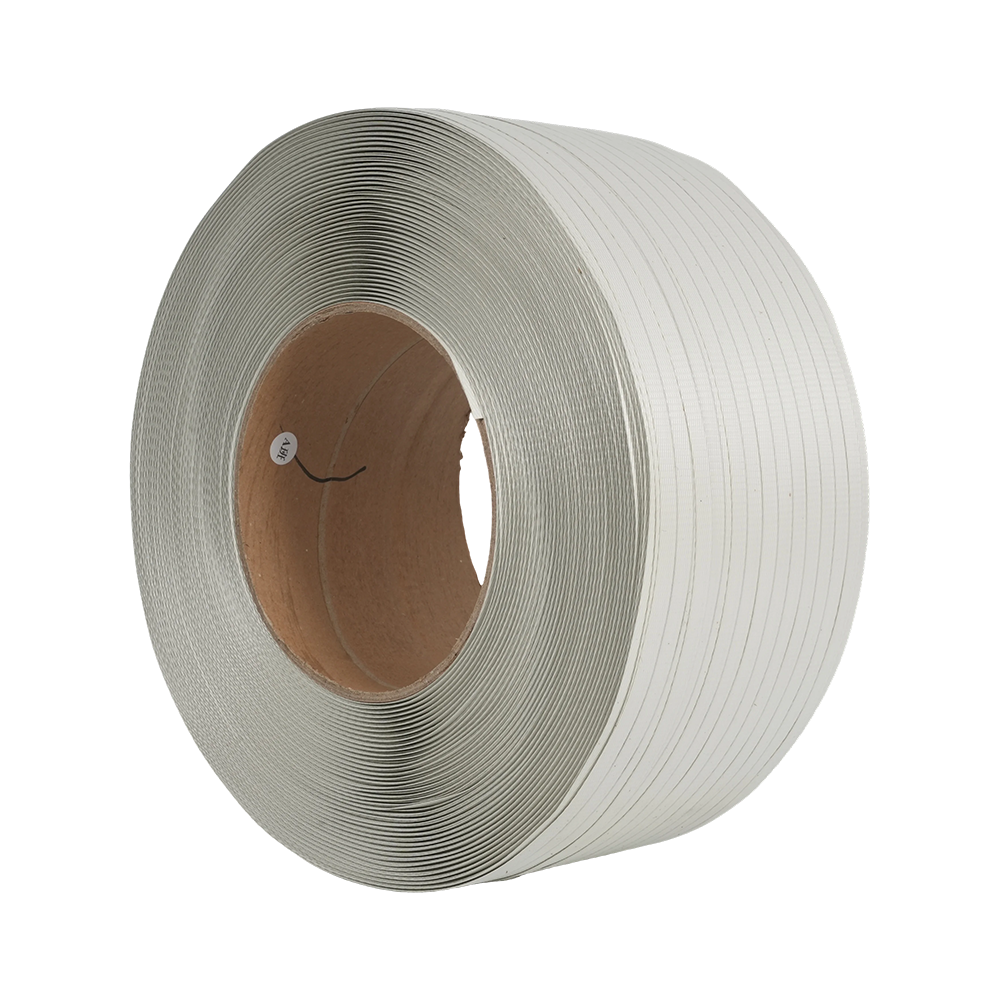
White PP Machine-Grade Strapping
What Is White PP Machine-Grade Strapping?
White PP Machine-Grade Strapping is a polypropylene packaging band produced for use with automated or semi-automated strapping machines. Polypropylene, commonly abbreviated as PP, is a thermoplastic polymer known for its low density, flexibility, chemical resistance, and useful balance of tensile performance and elongation. When processed correctly, PP can be formed into a narrow, continuous band that is suitable for securing packages and stabilizing grouped products.
The term “machine-grade” refers to more than the polymer itself. It describes a collection of physical and dimensional properties that allow the strap to travel smoothly through machine guides, feed wheels, tensioning systems, cutters, and sealing units. A machine-grade strap must maintain a relatively uniform width and thickness, exhibit predictable friction against machine components, and provide clean-cut ends that can be joined through heat welding.
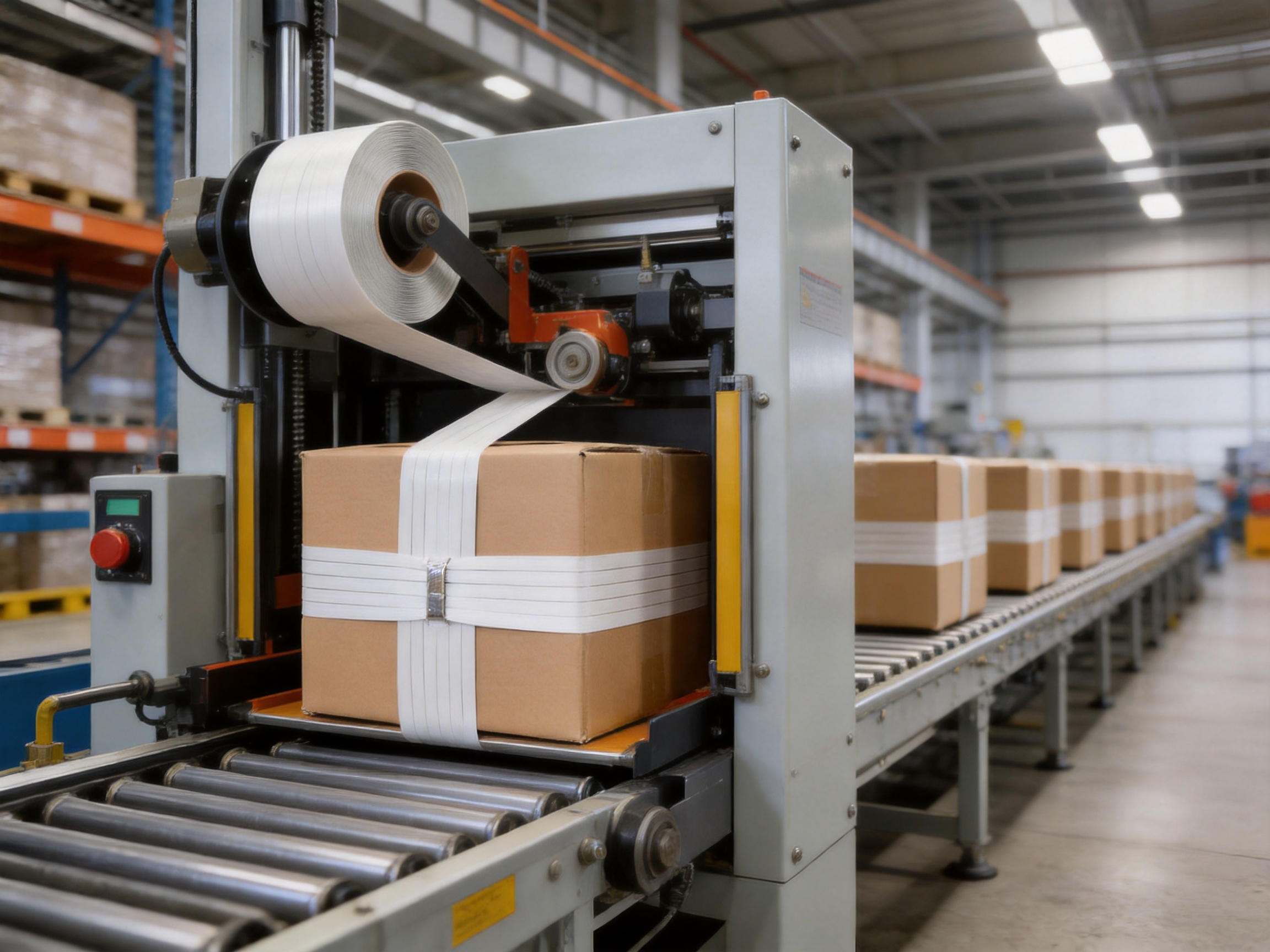
During operation, the machine typically feeds the strap around or through the package, applies a programmed amount of tension, cuts the strap, and bonds the overlapping ends using heat. The resulting seal forms a closed loop around the load. Depending on package size, equipment design, strap dimensions, and tension settings, the system can complete the cycle in a short period and repeat the same process across many packages.
White PP Machine-Grade Strapping is intended primarily for standard-duty applications. It is especially appropriate when the load requires reliable consolidation but does not demand the very high tensile strength or dimensional rigidity associated with heavy-duty PET or steel strapping. This positioning makes it a practical solution for cartons, bundled articles, lightweight products, and general warehouse goods.
Core Material: Polypropylene
Polypropylene provides several advantages for packaging applications. It is lightweight, which reduces the overall weight added to a shipment and makes handling easier for operators. Its flexibility allows it to conform to many carton shapes and bundle configurations without creating unnecessary stress concentrations on the packaged product.
PP also offers useful resistance to moisture and many common acids and alkalis. This property helps the strapping retain functional performance during normal indoor storage, transportation, and warehouse handling. Although no plastic strap should be treated as completely immune to environmental degradation, polypropylene is well suited to ordinary packaging environments where exposure is controlled.
The material also supports heat-weld sealing. When the ends of the strap are heated under controlled conditions and pressed together, the polymer surfaces soften and fuse. After cooling, the bonded area provides the closure required to maintain package integrity. Correct sealing depends on temperature, contact time, pressure, machine condition, strap quality, and the characteristics of the specific equipment.
Another important advantage of polypropylene is its balance between rigidity and elasticity. Excessive rigidity can make a strap difficult to feed around irregular packages, while excessive elasticity can reduce the effectiveness of tensioning. A properly manufactured PP strap provides enough flexibility for smooth handling while retaining adequate tension for standard-duty load consolidation.
Manufacturing Process and Product Consistency
Raw Material Preparation
The manufacturing process begins with the selection and preparation of polypropylene raw material. Material selection influences tensile strength, elongation, surface behavior, heat-welding performance, and color uniformity. For a machine-grade product, raw materials must be managed carefully because small changes in polymer quality or formulation can affect machine feeding and seal formation.
Before production, raw materials are prepared according to the target product specification. The intended strap width, thickness, break strength, flexibility, color, and coil length all influence production settings. White pigmentation and any required processing additives must be distributed consistently so that the finished strap maintains a stable appearance and predictable performance from one section of the coil to another.
Extrusion and Profile Formation
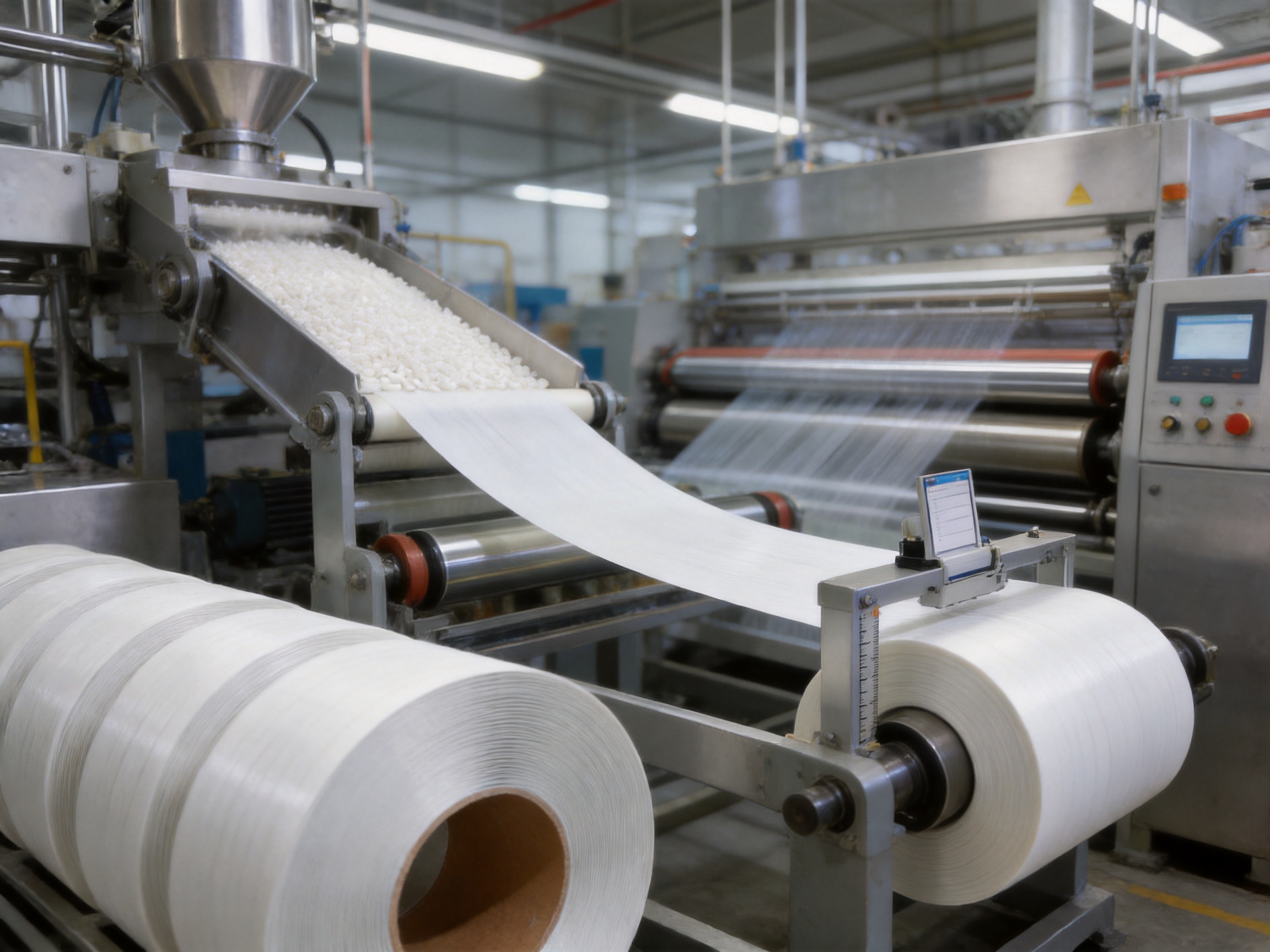
Polypropylene strapping is produced through extrusion. In this process, polymer material is heated until it reaches a workable molten condition and is then pushed through a forming system that creates a continuous flat profile. The extrusion line must be adjusted to control the thickness, width, surface condition, and overall stability of the strap.
Dimensional control is especially important for machine applications. A strap that varies significantly in thickness may feed unevenly through drive wheels or experience inconsistent heat transfer during welding. A strap that varies in width can move laterally within the guide track, potentially increasing the risk of misalignment or jams. Controlled extrusion helps produce a flatter and more uniform band for reliable machine operation.
After leaving the forming section, the material is cooled and stabilized. Cooling conditions influence the final dimensions and mechanical properties of the product. The line must maintain a suitable balance between production speed and cooling effectiveness so that the strap solidifies consistently without excessive distortion.
Surface Treatment and Friction Control
The outer surface of machine-grade strapping has an important role in feeding and tensioning. Automated equipment relies on contact between the strap and mechanical components such as rollers, gears, belts, or feed wheels. If the surface is too slippery, the machine may struggle to transfer sufficient force. If it is too rough or inconsistent, feeding resistance may increase and the strap may experience irregular movement.
White PP Machine-Grade Strapping is produced with a controlled surface condition intended to support positive feeding and tensioning. A consistent friction coefficient allows machine settings to remain more stable across production runs. This is particularly valuable in facilities that process many packages per hour and need to minimize frequent adjustments.
Winding and Coil Formation
Once the strap reaches the required condition, it is wound into coils. Winding quality affects how easily the strap unwinds during use. A properly formed coil should remain organized, with the strap layers positioned consistently and without excessive crossovers, loose sections, or edge damage.
Coil length can be customized according to weight, equipment requirements, and customer preferences. A typical example may be approximately 5,000 meters per coil, although the actual length depends on strap dimensions and the specified coil weight. Correct coil configuration helps reduce changeover frequency and supports efficient use of automatic packaging equipment.
Inspection and Quality Control
Quality control is performed throughout the manufacturing process rather than only at the final stage. Dimensional checks may include width, thickness, flatness, and visual appearance. Mechanical tests can include tensile or break-strength evaluation, elongation measurement, and examination of seal performance.
Production teams also evaluate the strap’s behavior in machine-oriented conditions. This may include checking unwinding stability, feed consistency, cutting performance, and heat-weld formation. The objective is to ensure that the product performs as a complete packaging component rather than merely meeting an isolated laboratory measurement.
Zhejiang Geruite Packaging Materials Co., Ltd. applies a structured approach to raw material procurement, production management, and final inspection. The company’s broader manufacturing experience covers BOPP tapes, kraft paper tapes, masking tapes, high-temperature-resistant tapes, metal tapes, PE stretch film, PP strapping, and high-strength PET strapping. This product diversity supports an integrated understanding of packaging material performance and customer requirements.
Technical Specifications
The following values represent common specifications for White PP Machine-Grade Strapping. Actual performance can vary according to width, thickness, formulation, production conditions, and customer-specific requirements.
| Parameter | Typical Value or Option | Packaging Significance |
|---|---|---|
| Material | Polypropylene (PP) | Provides a lightweight, flexible, and heat-weldable packaging band. |
| Color | White | Offers a clean appearance and supports visual identification. |
| Common widths | 9 mm, 12 mm, 15 mm, and other options | Allows selection according to machine design and load requirements. |
| Common thickness | 0.5 mm to 1.0 mm | Influences stiffness, tensile performance, and material consumption. |
| Coil length | Customized by weight or coil, such as approximately 5,000 meters per coil | Supports different machine capacities and production schedules. |
| Break strength | Approximately 200–500 kgf, depending on specification | Indicates the approximate maximum tensile load under test conditions. |
| Elongation | Up to approximately 25% | Provides flexibility and shock absorption during handling. |
| Sealing method | Heat welding | Creates a bonded closure without metal clips or buckles. |
Specifications should be interpreted together rather than in isolation. A higher break-strength value does not automatically make one strap suitable for every application. Width, thickness, elongation, package geometry, machine capability, tension level, transport conditions, and the stability of the load all influence actual packaging performance.
Advantages Over Conventional Manual Strapping
Improved Productivity
One of the clearest advantages of machine-grade strapping is its ability to support faster packaging cycles. Manual strapping usually requires an operator to position the band, pull it tight, cut it, and apply a buckle, clip, or manual seal. Each individual step consumes time and introduces opportunities for variation.
When used with a suitable machine, White PP Machine-Grade Strapping can be fed, tensioned, cut, and heat-welded within one integrated cycle. This reduces repetitive labor and helps operators process a greater number of packages in a given shift. The productivity benefit becomes more significant as daily packaging volume increases.
More Consistent Tension
Human operators naturally apply different levels of force. Manual straps may therefore vary from package to package, even when the same material is used. Inconsistent tension can lead to loose bundles, crushed cartons, or insufficient load stabilization.
Automated equipment applies tension according to programmed or mechanically controlled settings. A machine-compatible strap with consistent dimensions and surface friction allows the tensioning system to operate more predictably. This produces a more uniform package appearance and reduces the variation that can result from manual handling.
Reliable Heat-Weld Sealing
Heat welding eliminates the need for separate buckles, metal clips, or complicated manual knots. The strap ends are joined through controlled thermal bonding, producing a neat closure with a low external profile. Cleanly cut strap ends and stable material behavior support uniform seal formation.
The quality of a heat-welded joint depends on correct machine adjustment. If the temperature is too low, the polymer may not fuse adequately. If the temperature is too high or the heating time is excessive, the strap may become weakened or deformed. A short test run before full production helps determine the best temperature, pressure, and cycle time.
Reduced Packaging Complexity
Because the strap itself can be sealed by heat, the packaging process requires fewer additional components. Businesses do not need to manage large quantities of buckles or clips for every standard-duty package. This can simplify inventory planning, reduce consumable handling, and improve the visual neatness of finished bundles.
Lower Operator Fatigue
Manual tensioning, cutting, and fastening can create repetitive strain during long production shifts. Automated strapping transfers much of this repetitive work to the machine. Operators can focus on package positioning, quality checks, machine monitoring, and material replenishment rather than repeatedly applying force to individual straps.
Advantages Compared with Other Strapping Materials
Compared with Steel Strapping
Steel strapping offers very high strength and is often selected for heavy, sharp-edged, or demanding loads. However, it is heavier than polypropylene and can present handling hazards if cut ends are exposed. Steel also requires greater care to prevent corrosion and may damage product surfaces when tensioned against vulnerable packaging.
White PP Machine-Grade Strapping is not intended to replace steel in every heavy-duty application. Its advantage lies in standard-duty packaging, where a lighter, safer, and more flexible material is more appropriate. It is easier to handle, does not rust, and is more suitable for cartons, printed materials, textiles, and lightweight industrial goods.
Compared with Polyester Strapping
PET strapping generally provides greater tensile strength and stronger retained tension than standard polypropylene strapping. It is often used for heavier loads, rigid products, and applications where long-term tension retention is important. However, PET can be more rigid and may involve a higher material cost depending on the specification.
PP strapping can be advantageous when the load is moderate and the packaging line prioritizes flexibility, lightweight handling, and economical consumption. The choice between PP and PET should be based on the actual load requirements rather than a simple assumption that the strongest material is always the best option.
Compared with Manual PP Strap
Manual PP strap may be suitable for low-volume operations or irregular packages that cannot be placed efficiently into a machine. However, it may not have the same dimensional consistency, surface treatment, or feeding characteristics required by automatic equipment. Machine-grade PP strapping is developed specifically to travel through guides and tensioning systems with fewer interruptions.
For facilities with regular packaging patterns and moderate to high throughput, the operational benefits of machine-grade material can outweigh the small difference in material cost. Less downtime, fewer failed seals, and greater cycle consistency can contribute to a lower total packaging cost.
Machine Compatibility and Operating Performance
White PP Machine-Grade Strapping is compatible with many semi-automatic and fully automatic strapping machines, provided that the strap dimensions match the equipment specification. Compatibility should always be confirmed before purchase because machines differ in acceptable width, thickness, coil dimensions, feeding direction, sealing method, and tension capacity.
The low-curvature flat profile is important for stable movement through the machine track. Excessive curvature can cause the strap to rub against guides or fail to sit correctly in the channel. A flatter profile helps the strap pass through the system with less lateral movement, reducing the likelihood of feeding problems.
Surface friction also contributes to machine performance. The drive mechanism must grip the strap sufficiently to feed and tension it. A consistent surface supports predictable force transfer and helps reduce slippage. At the same time, the surface should not create unnecessary drag or abrasion against machine components.
Machine operators should regularly inspect feed wheels, guide tracks, heating elements, cutting blades, and tensioning assemblies. Even a high-quality strap may perform poorly if equipment components are worn, contaminated, misaligned, or incorrectly adjusted. Preventive maintenance is therefore part of successful strap application.
Before beginning a full production run, operators should conduct a small test. The test should examine feed stability, tension, seal appearance, seal strength, cut quality, and package compression. If the strap is excessively loose, the tension setting may need adjustment. If cartons are crushed, the tension may be too high or the package may require a wider strap or different support arrangement.
Application Scenarios
Carton Bundling
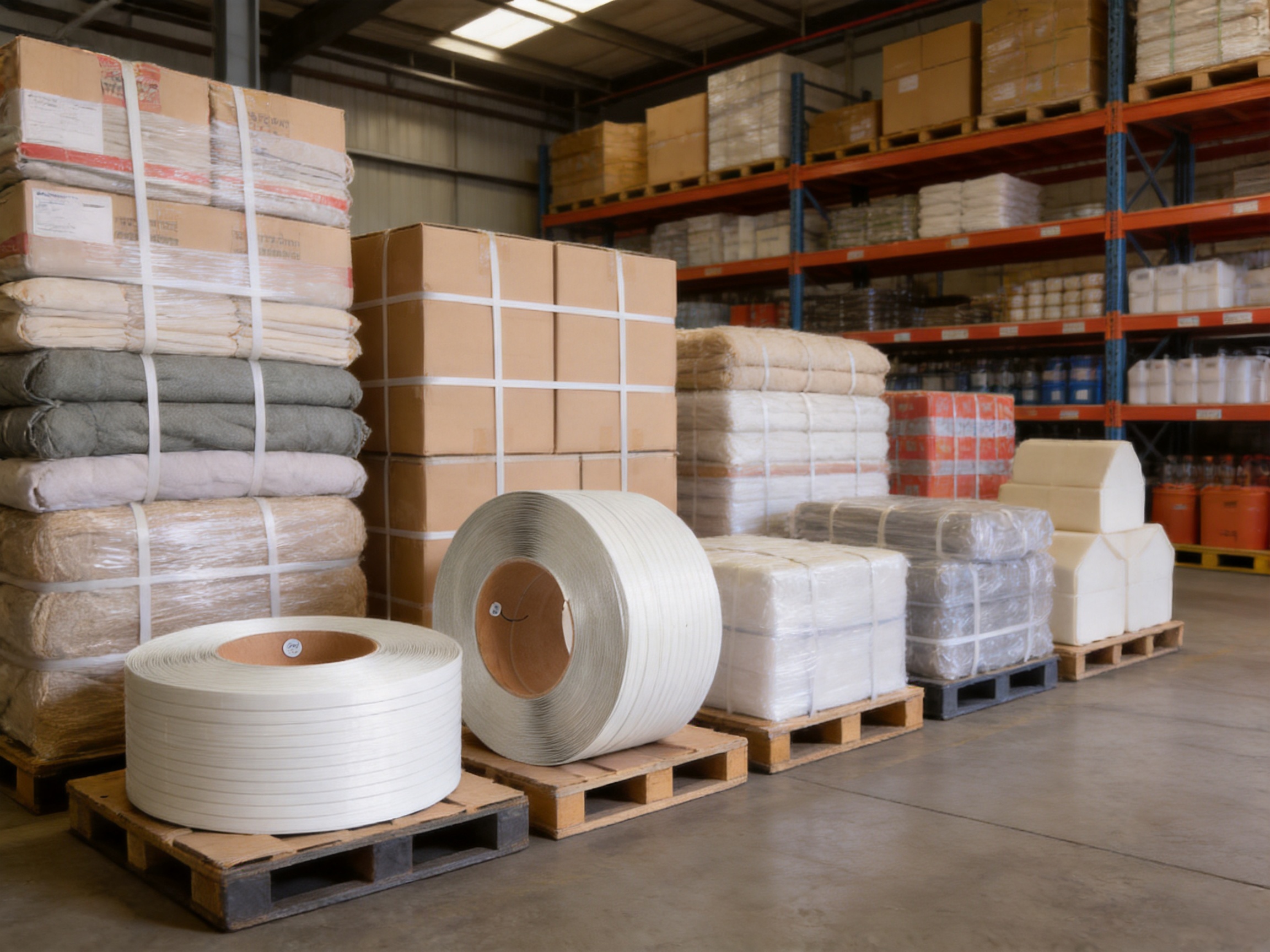
Cartons containing consumer goods, household products, spare parts, and general merchandise can be grouped with PP strapping to simplify handling. A strap around a carton or carton bundle helps keep the package closed and reduces movement during storage and transportation.
For printed cartons or products with visually important surfaces, the flexibility of polypropylene can be useful because it is less likely than rigid metal strap to create sharp contact points. Protective corner boards or appropriate cushioning may still be required when tension is applied to delicate cartons.
Printed Materials and Textiles
Books, magazines, paper products, fabrics, garments, and other printed or textile materials are often consolidated into bundles for distribution. White strapping provides a clean appearance and can help keep stacked products aligned during movement.
Because printed materials and textiles may be compressed by excessive force, machine settings should be selected carefully. Standard-duty PP strapping is most effective when it secures the bundle without deforming the product. The packaging team should evaluate the resilience of the material being bundled and adjust tension accordingly.
Food and Beverage Logistics
Outer cartons for packaged food, beverages, and related products can use PP strapping for pallet stabilization and carton consolidation. The strap helps keep cases grouped during warehouse movement and transportation. It can also assist with securing mixed or partial pallet loads when stretch film alone does not provide sufficient unitization.
The strapping is intended for external packaging use. It should not be treated as a direct food-contact material unless the relevant product specification and regulatory documentation explicitly support such use. Clean storage and suitable handling remain important for packaging materials used around food-related supply chains.
Light Industrial Products
Light industrial components, molded parts, household hardware, and small panels can be bundled with machine-grade PP strapping. The strap provides a practical method for maintaining group integrity while keeping the package lightweight.
For products with sharp edges, protective separators or edge guards may be necessary. These accessories distribute tension and reduce the possibility of strap cutting into the load. If the product is heavy, rigid, or subject to severe vibration, a higher-performance PET or steel solution may be more appropriate.
Pallet Stabilization
PP strapping can assist in stabilizing general warehouse goods on pallets. It is particularly useful when cartons are arranged in uniform layers and the load does not require extremely high restraint force. The strap can be combined with stretch film, corner boards, slip sheets, or other packaging materials to create a more complete load-stabilization system.
The effectiveness of pallet strapping depends on pallet quality, load arrangement, center of gravity, carton strength, and transport conditions. Strapping should support a stable packaging design rather than compensate for an unstable or poorly arranged load.
How the Product Supports Operational Efficiency
Packaging efficiency is influenced by the total operating system, including material quality, machine performance, labor organization, maintenance, and package design. White PP Machine-Grade Strapping contributes to this system in several ways.
First, the material is designed for continuous feeding. A consistent coil helps the machine operate without frequent manual intervention. Second, the strap’s heat-weld capability allows sealing to be completed within the automated cycle. Third, standardized widths and thicknesses make it easier to establish repeatable machine settings for different package types.
Operational efficiency also improves when seal failures and strap breaks are reduced. A failed seal may require the package to be opened, restrapped, inspected, and returned to the production line. Consistent raw materials and appropriate settings can reduce these interruptions, although regular quality checks remain necessary.
The white appearance can also assist production control. Different colors may be assigned to different product categories, customer orders, production lines, or internal handling groups. White is a widely accepted option for clean and neutral packaging presentation, making it suitable for businesses that prefer a professional appearance without prominent branding or strong color coding.
Company Manufacturing Strengths
Zhejiang Geruite Packaging Materials Co., Ltd. is located in Zhejiang Province, China, a major manufacturing region with an established industrial supply chain. The company focuses on research, development, production, and sales of tapes and packaging materials for logistics, manufacturing, construction, household goods, electronics, and other sectors.
Its product portfolio includes BOPP tape, kraft paper tape, masking tape, high-temperature-resistant tape, metal tape, PE stretch film, PP strapping, and high-strength PET strapping. This range enables the company to understand packaging systems from multiple perspectives. Customers can evaluate strapping together with complementary materials such as stretch film and adhesive tape rather than treating each consumable as an isolated product.
The company emphasizes quality management throughout the process, beginning with raw material procurement and continuing through production and final inspection. For machine-grade strapping, this approach is particularly important because the final product must meet both material and equipment requirements. Tensile properties alone are not enough; the strap must also unwind, feed, tension, cut, and seal consistently.
Advanced production equipment supports repeatable extrusion and processing conditions. Production control helps maintain stable dimensions and surface characteristics, while inspection procedures provide information about the material’s mechanical and functional performance. The company’s reported annual output value of more than RMB 60 million reflects an established manufacturing operation and a substantial customer-oriented production base.
Research and development are also important to the company’s long-term strategy. Packaging requirements vary by market, machine, load, and transportation condition. Continued product development can help improve strap strength, flexibility, heat-weld performance, color consistency, coil design, and compatibility with different equipment platforms.
Customer service is another manufacturing strength. Buyers may require customized widths, thicknesses, coil lengths, packaging formats, or performance levels. By discussing machine models, load weights, packaging speeds, and sealing conditions, the supplier can help identify a more appropriate specification instead of offering a one-size-fits-all product.
Product Selection Guidelines
Selecting the Correct Width
Common options include 9 mm, 12 mm, and 15 mm, with additional widths available according to equipment and application requirements. A wider strap may distribute pressure across a larger area and can offer a different balance of strength and package contact. However, the machine must be designed to accept the selected width.
Operators should never assume that a wider strap can be installed without adjustment. The guide track, feed wheel, heater, cutter, and tensioning assembly must all be compatible. The machine manual or equipment supplier should be consulted when changing dimensions.
Selecting the Correct Thickness
Common thicknesses range from approximately 0.5 mm to 1.0 mm. Thicker strap may provide greater stiffness or strength, while thinner strap may reduce material consumption and be more suitable for lighter packages. The correct choice depends on the load, machine capability, package geometry, and required seal performance.
Evaluating Break Strength
Break strength is commonly expressed in kilogram-force and may range from approximately 200 to 500 kgf for different specifications. This value is a reference measurement and should not be treated as the recommended working load. Safety margins are necessary because real packages experience impact, vibration, abrasion, changes in temperature, and uneven load distribution.
For a demanding application, buyers should provide the supplier with the approximate package weight, dimensions, stacking arrangement, transportation method, and expected handling conditions. This information allows a more informed comparison between PP, PET, and other strapping materials.
Considering Elongation
Elongation indicates how much the strap can stretch under load. An elongation value of up to approximately 25 percent reflects the flexible nature of the material. Some stretch can help absorb shocks and accommodate minor changes in package volume. However, excessive movement or long-term tension loss may be undesirable for certain rigid or heavy loads.
Matching Coil Length to Production Needs
Longer coils may reduce the frequency of roll changes and support continuous operation. However, the coil must fit the machine dispenser and be manageable for operators during installation. Coil weight, core dimensions, winding method, and outer diameter should be confirmed before ordering customized material.
Storage, Handling, and Use
Store White PP Machine-Grade Strapping in a dry, clean location away from prolonged direct sunlight. Ultraviolet exposure and excessive heat can gradually affect polymer performance. The storage area should also be protected from oil, chemicals, sharp objects, and mechanical impact that could damage the coil or contaminate the strap surface.
Keep coils in their original packaging until they are ready for use. Place them on a stable surface and avoid dropping them from a height. Damaged coil edges can interfere with smooth unwinding and may introduce defects into the machine feed path.
Before loading the coil, confirm the feeding direction and ensure that the strap is routed according to the equipment manufacturer’s instructions. The guide track should be clean and free of debris. Feed wheels should have adequate contact and should not be excessively worn.
Set the tension, heat temperature, welding time, and cooling or compression time according to the material and machine specifications. Perform a small trial with representative packages. Inspect the seal visually and, where appropriate, test it manually or with suitable equipment to verify adequate bonding.
Do not apply more tension than the product or package requires. Excessive tension can crush cartons, deform products, damage pallet loads, or create a weak point near the edge of the strap. Insufficient tension can allow the load to shift. The ideal setting is the lowest tension that provides the required stability for the specific package.
Unused coils should be protected from dust and moisture. If a coil has been stored for an extended period, inspect its surface and condition before placing it into a high-speed production line. Any strap showing severe deformation, contamination, or physical damage should be evaluated before use.
Quality and Sustainability Considerations
Polypropylene strapping is lightweight, which can reduce material mass compared with heavier alternatives for suitable applications. Its low density also means that a substantial length of strap can be supplied in a relatively manageable coil. Reduced packaging weight may contribute to easier handling and, in some circumstances, lower transportation burden.
End-of-life treatment depends on local recycling infrastructure and contamination levels. PP is a recyclable polymer in appropriate waste-management systems, but used strapping may be mixed with labels, adhesives, dust, or other packaging materials. Companies seeking to improve recycling outcomes should collect used strapping separately where practical and follow local waste-handling requirements.
Material efficiency should be considered alongside product durability. Using a strap that is too light can lead to failures and repackaging, while using a strap that is unnecessarily heavy may increase material consumption. Correct specification selection helps balance packaging security, operational performance, and responsible resource use.
Manufacturing efficiency also contributes to responsible production. Stable extrusion, reduced dimensional variation, effective quality control, and appropriate coil winding can limit avoidable waste. A supplier with experience across multiple packaging product categories can help customers evaluate the complete packaging system rather than focusing on one material characteristic alone.
Common Problems and Practical Solutions
Strap Does Not Feed Smoothly
Possible causes include incorrect strap dimensions, an improperly installed coil, damaged material, dirty guide tracks, worn feed wheels, or unsuitable friction conditions. Confirm that the strap width and thickness match the machine specification. Then inspect the feed path and remove dust or fragments that may obstruct movement.
Strap Slips During Tensioning
Slippage may result from worn rollers, incorrect pressure, surface contamination, or a mismatch between the strap and machine settings. Check the mechanical components first. If the equipment is functioning correctly, review the tension setting and confirm that the selected strap has the appropriate surface condition for the machine.
Heat-Weld Seal Is Weak
A weak weld may be caused by low temperature, insufficient heating time, inadequate pressure, contaminated strap ends, unstable electrical power, or an unsuitable machine setting. Test the strap ends for clean cuts and inspect the heating element. Adjust one variable at a time so that the effect of each change can be evaluated.
Seal Area Is Burned or Deformed
Burning, excessive melting, or deep deformation can indicate too much heat, excessive heating time, or excessive compression. Reduce the heat input gradually and conduct another test. The correct weld should be bonded securely without creating a brittle or severely weakened area.
Cartons Are Crushed
Crushed cartons are commonly associated with excessive tension, weak carton construction, insufficient edge protection, or a load design that concentrates force in a small area. Reduce tension and consider using corner protectors or a different packaging arrangement. The strap should stabilize the package without damaging its contents.
Frequently Asked Questions
What is White PP Machine-Grade Strapping used for?
It is used to bundle and stabilize cartons, printed materials, textiles, lightweight panels, food and beverage cases, light industrial products, and general warehouse goods. It is especially suitable for packaging lines that use semi-automatic or fully automatic strapping machines.
Can it be used with every strapping machine?
No. It is compatible with many common semi-automatic and automatic machines, but the strap width, thickness, coil configuration, and sealing method must match the equipment. Machine specifications should be confirmed before purchase.
How is the strap sealed?
The strap is normally sealed by heat welding. The machine heats the overlapping ends and presses them together so that the polypropylene surfaces fuse. Temperature, heating time, pressure, and cooling conditions should be adjusted through a test run.
Is white PP strapping suitable for heavy-duty loads?
It is primarily intended for standard-duty applications. Some specifications can provide break strength of approximately 200–500 kgf, but heavy or high-tension loads may require high-strength PET or steel strapping. Load weight, geometry, transport conditions, and safety requirements should all be considered.
What widths and thicknesses are available?
Common widths include 9 mm, 12 mm, and 15 mm, while common thicknesses range from approximately 0.5 mm to 1.0 mm. Customized dimensions may be available depending on production requirements and machine compatibility.
How long can one coil be?
Coil length can be customized according to weight, strap dimensions, equipment capacity, and customer requirements. Approximately 5,000 meters per coil is one common example, but the actual length may vary.
Does polypropylene strapping resist moisture?
Polypropylene provides resistance to moisture and many common acids and alkalis, making it suitable for many normal indoor storage and logistics environments. It should still be protected from prolonged direct sunlight, excessive heat, and harsh chemical exposure.
How should the material be stored?
Store the coils in a dry, clean area away from prolonged sunlight, heat sources, oils, sharp objects, and damaging chemicals. Keep the product in its original packaging until use and avoid dropping or crushing the coils.
How can seal quality be improved?
Use cleanly cut strap ends, confirm that the strap dimensions match the machine, inspect the heating element, and optimize heat temperature, welding time, pressure, and cooling time. A trial run with representative packages should be completed before large-scale operation.
What information should be provided when requesting a quotation?
Useful information includes the machine model, strap width and thickness, required coil length or weight, package dimensions, approximate load weight, desired break strength, color, sealing method, order quantity, and delivery requirements. Providing these details helps the supplier recommend a suitable specification.
Why Choose a Specialized Packaging Material Supplier?
A specialized supplier can contribute more than a standard material quotation. Packaging performance depends on the relationship between the strap, machine, package, and transport environment. A supplier with experience in tapes, films, PP strapping, and PET strapping can help compare different options and identify the most economical solution for the application.
Zhejiang Geruite Packaging Materials Co., Ltd. combines product development, manufacturing, quality control, and customer service within one packaging-materials business. Its experience with multiple products allows it to address complete packaging needs, including adhesive tape for carton closure, stretch film for load wrapping, PP strapping for standard-duty bundling, and PET strapping for stronger restraint requirements.
The company’s focus on raw material control, production consistency, equipment capability, and final inspection supports the requirements of machine-grade products. Customers can also discuss customized specifications when standard widths, thicknesses, coil lengths, or packaging formats do not meet their operational needs.
For businesses seeking a reliable packaging partner, the key advantages include manufacturing experience, a broad product portfolio, quality-focused processes, customization capability, and practical understanding of logistics and industrial packaging. These strengths can simplify sourcing and help customers build a more consistent packaging program.
Conclusion
White PP Machine-Grade Strapping is a practical and efficient choice for standard-duty automated packaging. Its polypropylene construction provides a useful balance of flexibility, tensile performance, impact resistance, moisture resistance, and lightweight handling. Its flat profile, controlled friction, consistent dimensions, and heat-weld capability are designed to support reliable operation on semi-automatic and fully automatic strapping machines.
Compared with manual strapping, it can improve productivity, reduce repetitive labor, and produce more consistent package tension and sealing. Compared with steel or high-strength PET, it offers a lighter and more flexible solution for applications that do not require extreme load restraint. Its best performance is achieved when the width, thickness, break strength, coil format, and machine settings are selected according to the actual packaging requirement.
The manufacturing process is central to product performance. Controlled polypropylene extrusion, stable cooling, surface management, accurate winding, and ongoing quality inspection all contribute to dependable machine behavior. Zhejiang Geruite Packaging Materials Co., Ltd. supports these requirements through its packaging-materials manufacturing experience, broad product range, quality-control practices, production capabilities, and customer-focused service.
For carton bundling, textile and printed-material packaging, food and beverage logistics, lightweight industrial products, and general pallet stabilization, White PP Machine-Grade Strapping offers an economical and adaptable packaging solution. With proper machine matching, storage, maintenance, and operating adjustment, it can help packaging operations achieve greater consistency, faster throughput, and reliable load consolidation.
References
1. Polypropylene Packaging Materials: General Material Characteristics and Processing Principles.
2. Industrial Strapping Systems: Automated Feeding, Tensioning, Cutting, and Heat-Welding Practices.
3. Packaging Line Maintenance: Guidelines for Feed Wheels, Guide Tracks, Heating Elements, and Tensioning Units.
4. General Principles of Load Unitization and Pallet Stabilization.
5. Polymer Packaging Quality Control: Dimensional Inspection, Tensile Testing, Elongation, and Seal Evaluation.
6. Zhejiang Geruite Packaging Materials Co., Ltd. Product Information and Corporate Manufacturing Overview.
Product: White PP Machine-Grade Strapping

CONTACT DETAILS
- Address:No. 241, Yaojiafan, Zhangpanqiao, Shushan Street, Xiaoshan District, Hangzhou City, Zhejiang Province, China
- TEL:+86-0571-83175630
- Phone:+86-13336160217
- Email:jeffrey@grtpk.com
- WeChat/WhatsApp:+86-18058115265
PRODUCTS
NEWS CENTER
MOBILE TERMINAL
Copyright© Zhejiang Geruite Packaging Materials Co., Ltd. All Rights Reserved.
Privacy Wholesale industrial packaging tape Manufacturers