


 English
 Español
 عربى

Plastic Carton Sealer: A Practical, Affordable Solution for Everyday Box Sealing
Content
- 1 Understanding the Plastic Carton Sealer
- 2 How the Dispenser Works
- 3 Advantages Compared with Heavier Metal Dispensers
- 4 Suitable Applications and Operating Environments
- 5 Important Product Limitations
- 6 Manufacturing Strengths Behind the Product
- 7 Why Supplier Manufacturing Capability Matters to Buyers
- 8 Purchasing Considerations for Distributors and End Users
- 9 Efficient Use in a Packaging Workflow
- 10 Comparing Plastic, Metal, and Powered Options
- 11 Environmental and Cost Considerations
- 12 Quality Assurance and Customer Confidence
- 13 Recommended Use Cases by Business Type
- 14 Frequently Asked Questions
- 14.1 What type of product is this?
- 14.2 What tape width can it accommodate?
- 14.3 Is it suitable for one-handed operation?
- 14.4 How heavy is the dispenser?
- 14.5 Is it suitable for continuous heavy-duty use?
- 14.6 Does it include a cutting blade?
- 14.7 Why choose a plastic dispenser instead of a metal one?
- 14.8 Can different colours be supplied?
- 14.9 Can the product be customised?
- 14.10 Who is the main target customer?
- 14.11 What other packaging products does the manufacturer supply?
- 14.12 How should the tool be maintained?
- 14.13 What should be tested before bulk purchasing?
- 15 Conclusion
- 16 References
- 17 Product: Plastic Carton Sealer
Packaging operations do not all require heavy-duty equipment. Many small warehouses, online retailers, offices, temporary workspaces, and exhibition teams need a simple tool that can close cartons quickly, apply pressure consistently, and cut packing tape without demanding extensive training. For these applications, a plastic carton sealer offers a practical balance between affordability, convenience, and everyday performance.
The product described in this article is designed for lightweight carton sealing. It is a hand-operated dispenser made from plastic, fitted with a serrated cutting blade, and suitable for packaging tape up to 50 millimetres wide. Its compact format allows an operator to hold, pull, apply, and cut tape using one hand. This straightforward operating method makes it especially suitable for businesses processing modest order volumes or using carton sealers intermittently rather than continuously throughout the day.
Although a plastic dispenser is not intended to replace a reinforced metal sealer in demanding industrial environments, it has several important advantages over more expensive alternatives. It is easier to distribute among employees, simpler to store, available in multiple colours, and more economical for bulk purchasing. These benefits can be valuable when a company needs many tools at different packing stations or wants to provide each worker with a dedicated dispenser.
Zhejiang Geruite Packaging Materials Co., Ltd. produces and supplies packaging materials and related solutions from Zhejiang Province, China. Its wider product portfolio includes adhesive tapes, stretch film, strapping products, and other packaging materials. This broader manufacturing background is relevant because a carton sealer is most effective when matched with suitable packaging tape and an appropriate packing process.
This article examines the product’s construction, operation, applications, advantages, limitations, selection considerations, and relationship to the manufacturer’s production strengths. It also explains how businesses can use the dispenser efficiently and how quality control throughout the packaging-material supply chain can contribute to reliable day-to-day results.
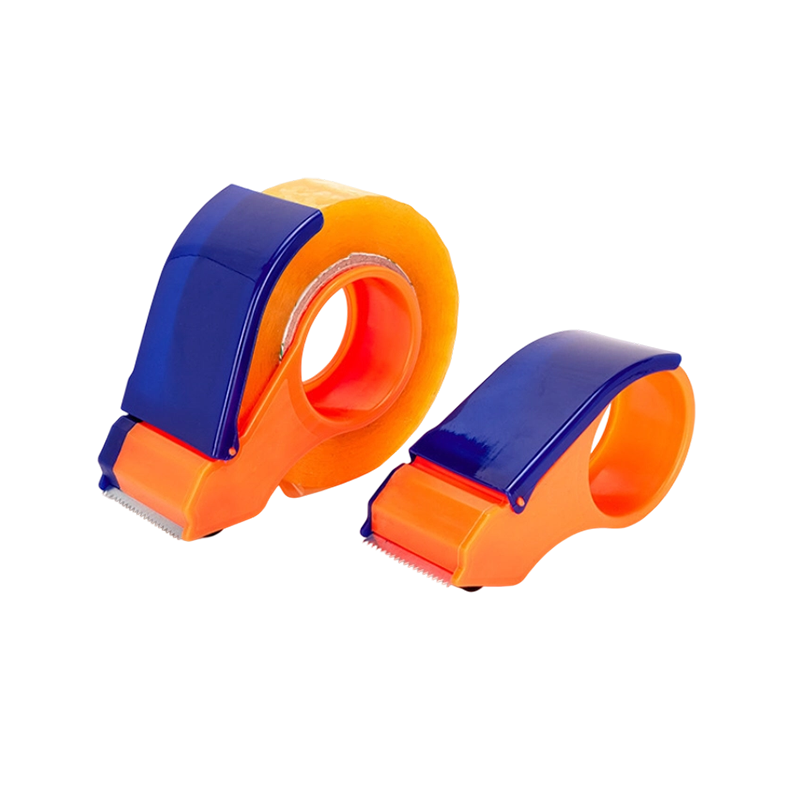
Plastic Carton Sealer
Understanding the Plastic Carton Sealer
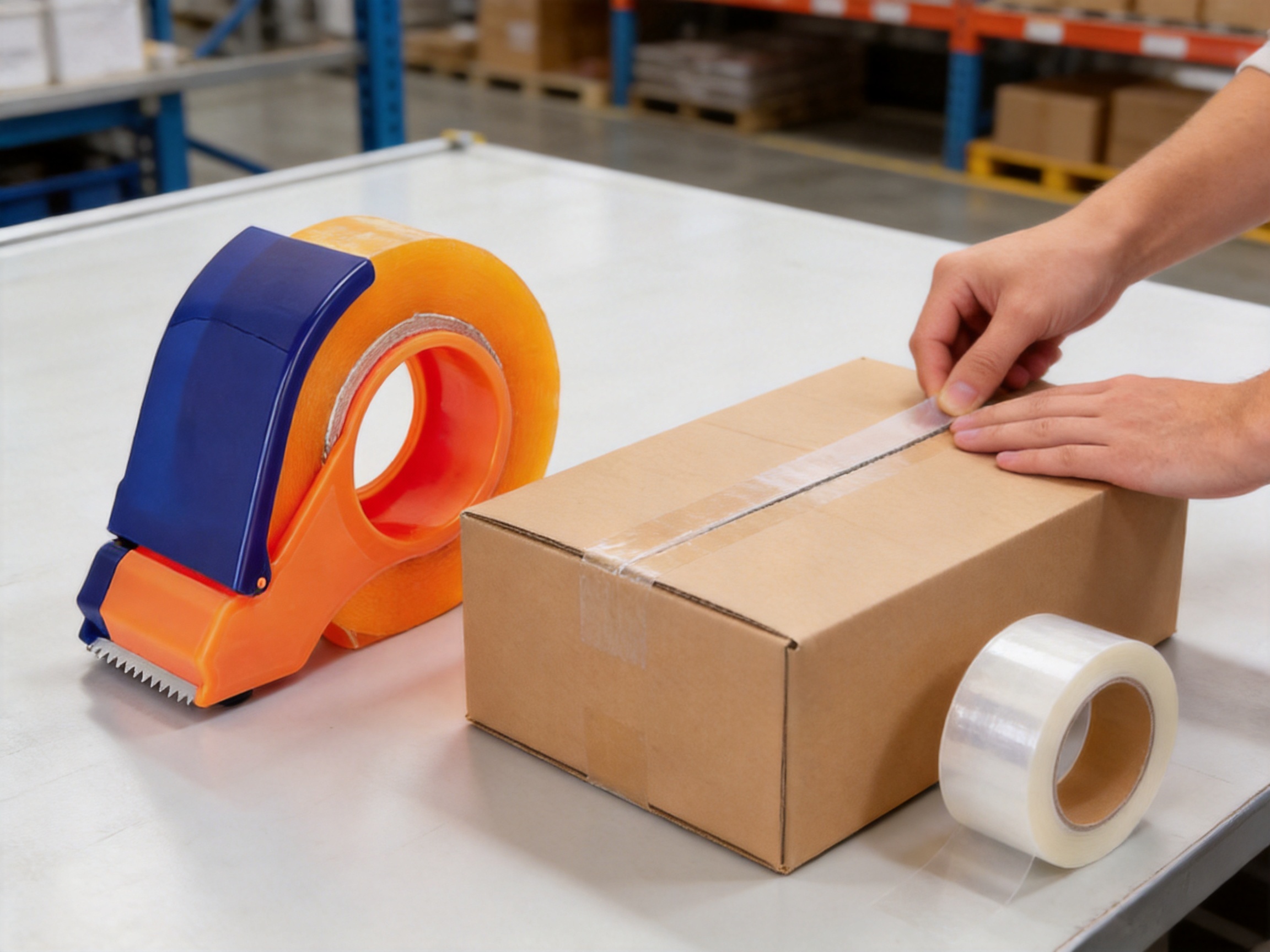
A carton sealer is a handheld tool used to apply pressure-sensitive adhesive tape to a box and cut the tape after the required length has been dispensed. The operator places the tape roll on the dispenser, pulls the tape over the carton seam, and uses the built-in blade to separate the tape from the roll. The tool helps keep the tape aligned and allows the user to complete a sealing action more quickly than applying and cutting tape by hand.
The plastic carton sealer is intended for lightweight and general-purpose packaging work. Its body is manufactured from plastic, making it less costly and easier to handle than many metal-bodied dispensers. The product description positions the tool as weighing less than 200 grams for easy one-handed use, while the supplied specification lists a net weight of 300 grams. Because weight can vary according to the exact configuration, packaging, or measurement method, buyers should confirm the final net weight before placing a large order. In either case, the product is positioned as a lightweight, user-friendly dispenser rather than a heavy industrial applicator.
The dispenser is suitable for tape widths of up to 50 millimetres. This size range covers many commonly used carton-sealing tapes, including standard BOPP packaging tape and other pressure-sensitive tapes used for parcels, cartons, and general warehouse work. Tape width should always be checked before use, since a roll that exceeds the dispenser’s specified capacity may not fit properly or may affect the smoothness of operation.
The listed size information includes a value of 50 with customisation available, while the product dimensions are given as approximately 45–48 millimetres and 50–60 millimetres. These figures should be confirmed against a technical drawing or production sample when exact fit, shelf space, or automated packing-station compatibility is important. For ordinary manual sealing, the compact design is intended to remain easy to carry and store.
Main Product Characteristics
| Item | Listed Information | Practical Meaning |
|---|---|---|
| Product type | Plastic carton sealer | Handheld dispenser for applying and cutting packaging tape |
| Primary material | Plastic | Low-cost, lightweight construction suitable for general use |
| Suitable tape width | Up to 50 mm | Compatible with many standard carton-sealing tape rolls |
| Net weight | 300 g listed in specifications | Buyers should confirm the final configuration and measurement basis |
| Product size | 50, customisation available | Dimensions and selected details may be discussed for larger orders |
| Product dimensions | Approximately 45–48 mm and 50–60 mm | Compact format for manual packing stations |
| Cutting system | Serrated blade | Enables the operator to cut tape after application |
| Operating method | Manual, one-handed operation | Supports quick sealing with limited training |
| Colour options | Various colours available | Useful for team, shift, product, or warehouse identification |
The serrated blade is one of the most important functional elements. It removes the need for a separate pair of scissors in routine sealing work. The blade is intended for everyday tape-cutting requirements, and its simple design means that workers can begin using the tool with little or no formal instruction. Nevertheless, the blade should be treated as a cutting component: users should keep fingers clear of the serrated edge, store the dispenser safely, and replace the tool if the cutting action becomes unsafe or unreliable.
How the Dispenser Works
Using the carton sealer begins with loading a compatible tape roll. The roll is positioned on the dispenser so that the adhesive side faces the carton during application. The tape is then guided through the tool’s intended contact path, allowing the roll to rotate as the operator pulls the dispenser across the box seam. Correct loading is important because an incorrectly positioned roll can create excessive resistance, uneven tape application, or adhesive contact with the wrong surfaces.
Once loaded, the operator places the leading edge of the tape at one end of the carton seam. The dispenser is moved along the seam while light, even pressure is maintained. This action helps the tape adhere to the carton surface and reduces the likelihood of wrinkles, loose sections, or air pockets. At the end of the sealing path, the operator tilts or presses the dispenser against the tape-cutting edge to separate the applied tape from the roll.
The process is simple, but technique still affects performance. Pulling the dispenser too quickly may cause the tape to lift or form folds. Applying excessive downward force may compress the carton or make the tool harder to move. The best results usually come from a controlled, consistent motion that follows the centre of the carton joint.
For small cartons, the operator may seal only the top centre seam. For heavier or more vulnerable packages, additional strips can be applied across the edges or along the side seams, depending on the carton design and the expected handling conditions. The dispenser provides the application tool, but the final packaging strength also depends on the tape formulation, carton quality, surface cleanliness, storage conditions, and shipping environment.
Simple Training for New Operators
A short demonstration is normally sufficient for most new users. Training should cover four points: how to load the roll, how to keep the adhesive side in the correct position, how to guide the dispenser along the carton seam, and how to use the serrated blade safely. Supervisors can also demonstrate the correct amount of tape overlap at the carton ends.
Because the tool has a familiar handheld format, it can be introduced quickly during seasonal recruitment, temporary relocation projects, trade fair preparation, or short-term order increases. This is an important advantage for businesses that do not want to spend significant time training employees to use complex machinery.
Advantages Compared with Heavier Metal Dispensers
Metal carton sealers are often selected for durability, rigidity, and intensive use. They may be the correct choice for large distribution centres that seal cartons continuously for many hours each day. However, a metal dispenser can be unnecessarily expensive or heavy for low-to-medium frequency operations. The plastic carton sealer addresses a different part of the market by prioritising accessibility, economical purchasing, and ease of distribution.
Lower Purchase Cost
The product description states that the plastic carton sealer is priced at approximately one-third the cost of a metal box sealer. Actual pricing depends on order quantity, configuration, colour, packaging, and shipping conditions, but the stated positioning highlights a substantial cost advantage. When a company needs several dozen or several hundred dispensers, the difference in unit cost can influence the overall packaging budget significantly.
Lower cost makes it practical to place one dispenser at every packing station instead of requiring employees to share a limited number of tools. It can also make sense to keep spare units in reserve. If a dispenser is misplaced, damaged, or temporarily unavailable, a replacement can be issued without creating the same financial concern associated with a higher-priced metal tool.
Reduced Hand Fatigue
A lighter tool generally places less strain on the hand and wrist during repeated short sealing actions. This can be useful in small online businesses where staff members perform multiple duties, including picking, packing, labelling, and dispatch administration. It is also beneficial in temporary settings where employees may not have a dedicated packing role.
The ergonomic benefit depends on the actual configuration and net weight, which should be confirmed before purchase. Even so, the product’s lightweight positioning and one-handed operating method are intended to support comfortable routine use. Operators should still use sensible work practices, adjust the packing height where possible, and rotate repetitive tasks during long shifts.
Easy Colour Coding
Colour availability gives the product a practical management feature that is often overlooked. A warehouse can assign different colours to different work zones, shifts, product categories, or teams. For example, one colour may be used for outbound parcels, another for returns, and a third for quality-control stations. Colour coding helps staff identify where a tool belongs and can reduce time spent searching for shared equipment.
Colour coding may also support process discipline. If a particular tape type is allocated to a particular product category, the corresponding dispenser colour can act as a visual reminder. Colour does not replace formal labelling or inspection, but it can provide a simple additional control in busy working environments.
Convenient Bulk Distribution
When the tool is economical enough to purchase in volume, each employee can receive a dedicated dispenser. This reduces the movement of tools between workstations and allows workers to develop a consistent operating habit. Dedicated tools may be especially useful during periods of high order activity, temporary relocations, or trade fair set-ups where the packing area changes frequently.
Minimal Learning Curve
The dispenser does not require specialised technical training or electrical power. It can be used immediately after loading the tape roll. This makes it suitable for small and medium-sized e-commerce sellers that may employ part-time workers, seasonal staff, or people who pack only occasionally.
By contrast, powered or semi-automatic sealing equipment may require installation, maintenance, process adjustment, and more extensive operator training. Such equipment can increase productivity in the right environment, but it is not always justified when order volumes are moderate or fluctuating.
Suitable Applications and Operating Environments
The plastic carton sealer is best suited to situations where cartons must be sealed reliably but not necessarily at an extreme industrial speed. The product description identifies small and medium-sized e-commerce sellers handling fewer than 500 orders per day as a key user group. This does not mean that every business below this volume will have identical needs. Carton size, order composition, labour availability, and packing procedures all influence equipment selection. However, the stated volume provides a useful reference for the intended operating level.
E-Commerce Packing Stations
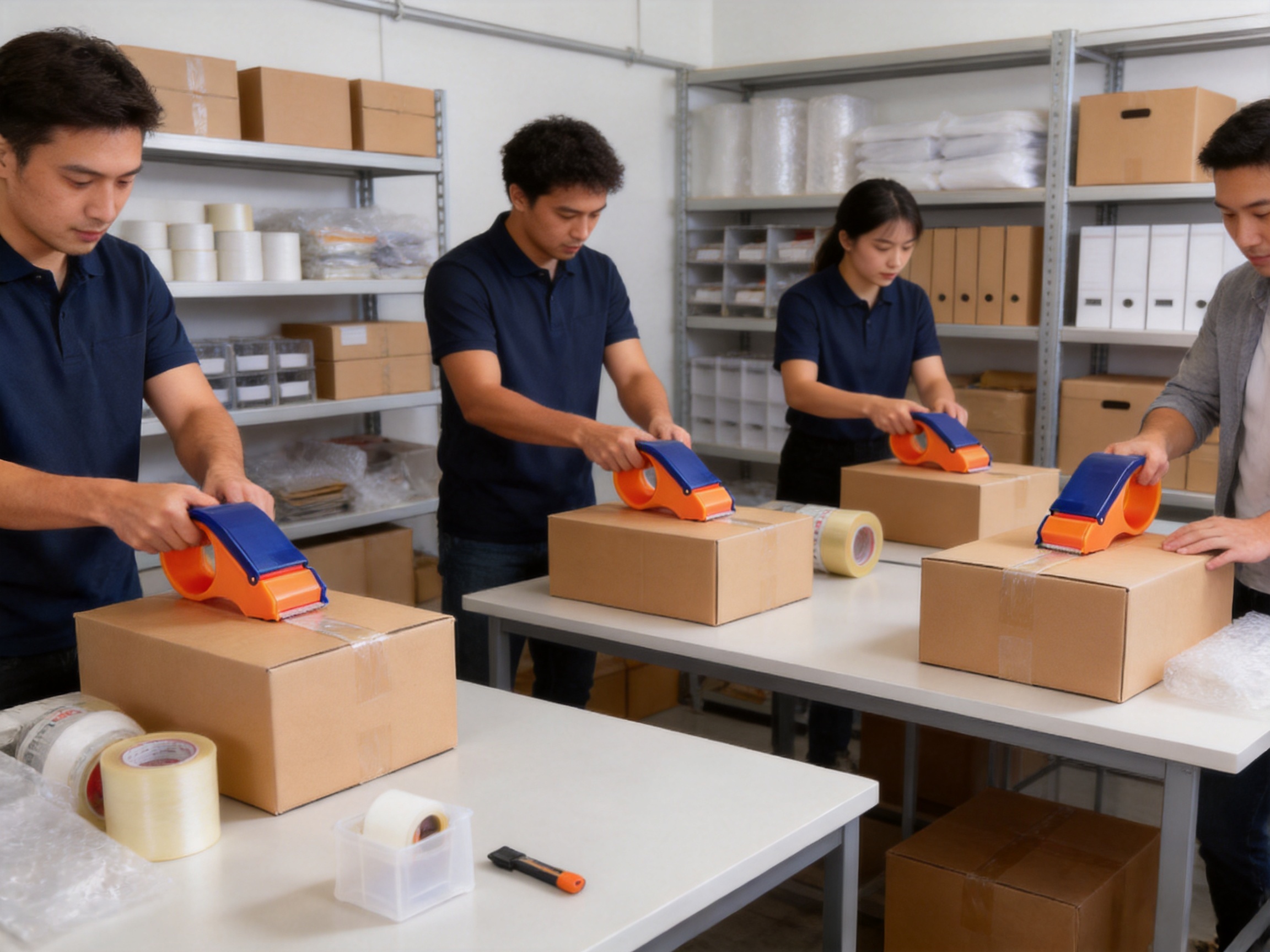
Online retailers often pack a mixture of small and medium parcels. A plastic dispenser can be placed beside each packing table, allowing operators to close cartons without walking to a shared tool. It is suitable for general products such as household goods, accessories, consumer items, packaged components, and non-hazardous retail merchandise.
E-commerce businesses may also appreciate the ability to purchase additional dispensers during promotional campaigns or seasonal peaks. Because the tool is economical, it can be deployed temporarily and stored afterward without representing a major capital investment.
Small Warehouses
Small warehouses may not require powered sealing machinery. Manual dispensers can provide a flexible solution for outgoing cartons, internal transfers, replacement packaging, and occasional repacking. The compact tool can be stored in drawers, tool cabinets, or designated packing-station holders.
In a small warehouse, the same worker may carry out picking, inspection, packing, and shipping. A simple dispenser reduces the number of separate tools needed at the workstation. It also supports a consistent sealing method across different employees.
Temporary Relocations
Businesses moving offices, stockrooms, or retail inventory often need to seal cartons for a limited period. Purchasing expensive industrial equipment may not be worthwhile for a relocation project lasting only several days or weeks. A plastic carton sealer can provide the required functionality while remaining easy to distribute among staff.
Trade Fair and Exhibition Set-Ups
Exhibitors frequently pack display materials, samples, printed documents, and promotional items before transport. During set-up and dismantling, tools must be portable, simple, and readily available. A compact carton sealer can be carried with packing supplies and used without electricity, making it useful at venues where access to equipment is limited.
Office and Departmental Shipping
Offices that send occasional parcels may not need a permanent industrial packing area. A plastic dispenser can be kept with shipping labels, cartons, and tape. Its low purchase cost makes it practical for administrative departments, service teams, educational facilities, and small workshops that dispatch items intermittently.
Low-to-Medium Frequency Manufacturing Support
Manufacturers often use cartons for spare parts, samples, maintenance items, and finished products. While high-volume production lines may need automated sealing, supporting departments may benefit from manual dispensers. The tool can be used for engineering samples, quality-control returns, or small production batches without interrupting the main line.
Important Product Limitations
Responsible product selection requires an understanding of limitations as well as advantages. The plastic carton sealer is described as adequate, user-friendly, and affordable rather than as an extreme-durability tool. This distinction is important. A plastic dispenser can perform well in its intended environment, but it should not automatically be treated as a replacement for a reinforced metal tool in high-intensity conditions.
Businesses processing large volumes continuously may subject the dispenser to more mechanical stress than it was designed to handle. In such cases, a metal-bodied dispenser or powered sealing system may offer longer service life and more consistent performance. The correct choice depends on total cost of ownership rather than purchase price alone.
The tool is also intended for compatible packaging tape up to 50 millimetres wide. Very thick, unusually tacky, reinforced, or specialty tapes may require a different dispenser design. Before purchasing, users should test the exact tape construction, roll core, roll diameter, and adhesive properties.
The serrated blade is suitable for everyday sealing, but it must be kept clear of contamination and damage. Tape adhesive, dust, carton fibres, and impact can affect cutting performance. A basic inspection routine should check whether the blade remains secure and whether it cuts tape cleanly without requiring excessive force.
Finally, the dispenser does not determine the entire strength of a sealed carton. The tape must be appropriate for the carton material and shipping conditions. A weak or dusty carton surface can reduce adhesion, while excessive humidity, cold temperatures, or rough handling can affect packaging performance. The dispenser should therefore be considered one component of a complete packaging system.
Manufacturing Strengths Behind the Product
Zhejiang Geruite Packaging Materials Co., Ltd. is based in Zhejiang Province, a region with a developed manufacturing sector and an established packaging-materials industry. The company focuses on the research, development, production, and sales of packaging materials and related products. Its portfolio includes BOPP tape, kraft paper tape, masking tape, high-temperature-resistant tape, metal tape, PE stretch film, PP strapping, and high-strength PET strapping.
This product range indicates experience across several packaging applications rather than dependence on a single product category. A supplier with knowledge of adhesive tape, stretch film, and strapping can evaluate packaging needs from a broader perspective. For customers purchasing carton sealers together with tape or other consumables, this can simplify sourcing and support more coordinated product selection.
Research and Development
The company states that it has focused on research and innovation in packaging materials since its establishment. Research and development in this sector may involve material selection, adhesive performance, film thickness, tensile strength, application behaviour, product dimensions, and manufacturing efficiency. For a carton-sealing tool, practical development also includes ease of use, blade integration, dimensional consistency, and compatibility with common tape formats.
Product development should connect user requirements with production feasibility. A dispenser intended for small e-commerce businesses must remain affordable while providing sufficient functional reliability. This requires attention to material usage, mould design, assembly efficiency, component compatibility, and quality inspection. The goal is not to maximise every performance characteristic, but to achieve a useful balance between cost and expected service conditions.
Production Equipment and Process Control
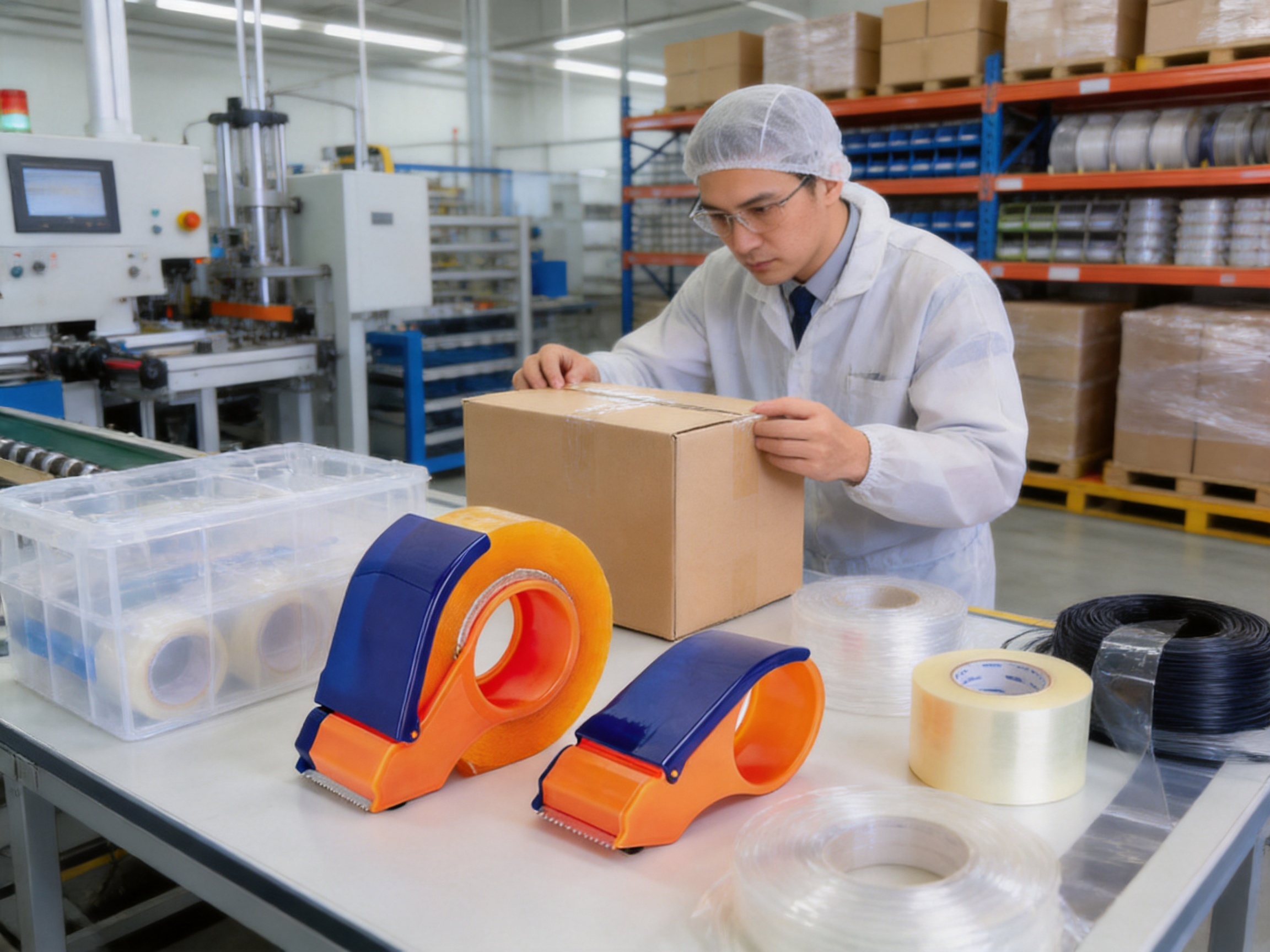
The company describes itself as equipped with advanced production equipment and a rigorous quality-control system. Although specific machine models and inspection standards are not provided, an effective manufacturing process for packaging products generally includes controlled raw-material purchasing, component preparation, forming or moulding, assembly, visual inspection, functional checks, packing, and final shipment review.
For a plastic carton sealer, process control may include checking the body for cracks or deformation, verifying the correct fit of the tape-holding components, examining the blade installation, confirming that moving parts operate properly, and checking product dimensions against the approved specification. Colour consistency may also be reviewed when multiple colours are produced for team or warehouse identification.
Consistent process control is important because low-cost products still need to function reliably. A dispenser that is inexpensive but difficult to load, uncomfortable to hold, or unsafe to cut can create hidden labour costs. Quality therefore involves more than appearance; it includes practical operation, repeatability, and suitability for the intended use.
Quality from Raw Materials to Final Inspection
The company states that quality is managed from raw-material procurement through production and final inspection. This whole-process approach is valuable for packaging products because performance can be affected by small variations at several stages. Plastic material quality can influence strength and dimensional stability. Component fit can affect tape movement. Blade positioning can affect cutting. Packaging quality can influence whether products arrive ready for use.
A controlled supply chain also helps manufacturers respond to customer requirements. For example, an importer may need a specific colour mix, private packaging, dimensional adjustment, or bulk carton configuration. These requests require coordination between purchasing, production, inspection, and dispatch. A structured quality system makes such coordination more manageable.
Experience across Complementary Packaging Products
The manufacturer’s wider portfolio is a significant strength for buyers that need more than a single dispenser. BOPP tape can be used for general carton sealing, while kraft paper tape may be selected for particular branding or recycling preferences. PE stretch film can help stabilise pallet loads, and PP or PET strapping can provide additional load security. By supplying multiple packaging categories, the company can support a more complete packaging programme.
This broader capability may also help customers compare packaging methods. A business shipping lightweight cartons may need only tape and a dispenser, while a warehouse handling palletised goods may need stretch film and strapping tools as well. A supplier with knowledge of these product relationships can help organise purchasing and reduce the number of separate vendor relationships.
Production Scale and Business Continuity
The company reports an annual output value of more than RMB 60 million. This figure suggests an established manufacturing operation with meaningful production capacity, although output value alone should not be interpreted as a guarantee of any specific order quantity, lead time, or quality level. Buyers should still confirm current capacity, delivery schedules, packaging requirements, and inspection arrangements for each project.
An established supplier can nevertheless offer potential advantages in continuity of supply. Regular production experience, existing equipment, established material channels, and a developed product portfolio may support repeat orders more effectively than an untested source. For distributors and wholesalers, consistency across replenishment orders is often as important as the initial sample.
Why Supplier Manufacturing Capability Matters to Buyers
When purchasing a simple tool, it can be tempting to focus only on unit price. However, the total value of a carton sealer also includes order consistency, communication, customisation options, packaging quality, and compatibility with related products. Manufacturing capability influences each of these factors.
A supplier with controlled production can help maintain consistent dimensions and colours across batches. This matters when a customer wants to introduce a colour-coded tool system across several warehouses. It also matters when dispensers are packed into retail boxes or bundled with specific tape rolls, because inconsistent sizing may affect the presentation or fit of the package.
Manufacturing experience can also support more effective troubleshooting. If customers report tape slipping, difficult cutting, or awkward loading, a manufacturer with internal product knowledge is better positioned to investigate whether the cause relates to the dispenser, tape roll, blade, or operating method. This does not eliminate the need for customer testing, but it can shorten the path to a practical solution.
For international buyers, communication about technical details is especially important. The supplied product information includes several dimensional and weight references that should be clarified before mass production or bulk shipment. A professional purchasing process should confirm the final drawing, material, colour, tape-width range, net weight, gross weight, packing method, carton quantity, and inspection expectations.
Purchasing Considerations for Distributors and End Users
Before ordering, buyers should define the intended use. If the dispenser will be used only a few times per day, a plastic model may provide excellent value. If it will be used continuously by multiple operators, testing should be extended and a comparison with metal models should be made.
Confirm Tape Compatibility
The stated maximum tape width is 50 millimetres. Buyers should confirm the actual tape width, roll diameter, core size, and adhesive type. Standard packaging tape may behave differently from reinforced tape or unusually thick specialty tape. A sample test using the intended tape is recommended before a large order.
Evaluate the Workload
Order volume alone does not describe workload. A business processing 300 orders may use large cartons and apply several strips of tape to each parcel, while another business processing 500 small orders may use only one short strip per carton. The number of sealing actions per hour, duration of each shift, number of users, and required service life should all be considered.
Request a Pre-Production Sample
A sample allows buyers to evaluate loading, grip, tape movement, cutting, and general comfort. It also provides an opportunity to check whether the product fits the company’s preferred tape roll. For distributors, a sample can be used for photography, staff training, customer demonstrations, and packaging design review.
Clarify Customisation
The supplied information indicates that customisation is available and that multiple colours can be provided. Buyers should clarify which features are customisable. Possible considerations may include colour, packaging, printed labels, dimensions, logo placement, tape compatibility, and carton quantity. Any custom requirement should be confirmed in writing before production begins.
Review Safety Expectations
The serrated blade should be securely installed and protected during storage and transport. Buyers should ask how the product is packed and whether the blade area is shielded sufficiently to reduce accidental contact. Workplace instructions should require safe handling, especially when tools are distributed to temporary staff or used in crowded packing areas.
Plan Replacement and Stock Levels
Because the product is economical, businesses can maintain spare units without a large investment. A replacement policy can reduce interruption if a tool is lost or damaged. Distributors should also consider whether different colours need to be stocked in balanced quantities or according to customer demand.
Efficient Use in a Packaging Workflow
The dispenser performs best when integrated into an organised packing station. Tape, cartons, labels, protective materials, and the carton sealer should be positioned so that the operator can complete the packing sequence without unnecessary reaching or walking. A stable work surface helps the operator maintain consistent pressure and alignment.
Cartons should be folded so that the flaps meet correctly before tape is applied. Dust, loose fibres, oil, and moisture should be removed from the sealing surface when necessary. The operator should avoid stretching the tape excessively unless the tape product is specifically designed for that application. A smooth, centred strip generally provides better presentation and more predictable adhesion.
At the end of the sealing action, the cutting motion should be deliberate rather than forceful. If the tape does not cut cleanly, the user should inspect the blade and tape path instead of applying excessive pressure. Damaged blades should not be sharpened informally or modified in a way that could compromise safety. Replacement of the dispenser may be more practical when the product is intended as an economical tool.
Colour-coded tools can be assigned to standard operating procedures. A warehouse may record which colour is used for each tape type or packing zone. This visual system can support training and reduce cross-use, particularly where different adhesive tapes are reserved for specific products or shipping conditions.
Comparing Plastic, Metal, and Powered Options
Plastic, metal, and powered carton-sealing solutions each serve different needs. A plastic dispenser is usually the most accessible option for businesses prioritising low cost and simple handling. A metal dispenser generally offers a more rigid structure and may tolerate heavier repetitive use. A powered or semi-automatic machine can provide higher throughput but requires greater investment, floor space, maintenance, and process control.
| Factor | Plastic Carton Sealer | Metal Carton Sealer | Powered or Semi-Automatic Equipment |
|---|---|---|---|
| Initial cost | Generally low | Generally higher | Highest among the three |
| Portability | Very convenient | Convenient but heavier | Limited by equipment size |
| Training | Minimal | Minimal to moderate | More extensive |
| Power requirement | None | None | Often required |
| Best use | Lightweight, low-to-medium frequency sealing | Repeated manual sealing and tougher conditions | High-throughput, standardised operations |
| Colour coding | Practical when multiple colours are available | May be more limited | Usually managed through workstation controls |
| Replacement cost | Relatively economical | Higher | Potentially substantial |
| Flexibility for temporary projects | Excellent | Good | Limited |
This comparison does not mean that one category is universally better. The correct solution depends on the operating environment. The plastic model is attractive where a company needs many simple tools, where staff turnover is high, or where packing activity is intermittent. Metal or powered equipment becomes more appropriate when maximum service life, high throughput, or demanding conditions justify the additional investment.
Environmental and Cost Considerations
Using a low-cost plastic tool does not automatically make a packaging operation environmentally preferable or less preferable. Environmental performance depends on the product’s service life, material composition, replacement frequency, shipping distance, and end-of-life handling. Buyers should avoid purchasing more tools than needed, but they may also reduce unnecessary transport and tool-sharing losses by assigning dispensers efficiently.
Packaging waste is influenced more directly by tape consumption, carton selection, and packing technique. A dispenser can help operators apply tape in a controlled manner, potentially reducing uneven strips and accidental waste. However, the tool itself does not guarantee reduced material usage. Training and clear packing standards remain essential.
Cost should be evaluated over the expected operating period. A low purchase price is attractive, but a tool that fails quickly may create additional labour and replacement costs. Conversely, a metal dispenser may last longer but tie up more capital than necessary in a light-duty environment. Sampling, workload analysis, and user feedback can help buyers make a balanced decision.
Quality Assurance and Customer Confidence
Quality assurance is particularly important when products are purchased in bulk. A customer may accept minor variation in a single tool, but a distribution order requires consistency across many units. The manufacturer’s stated emphasis on quality control from raw materials to final inspection is therefore relevant to importers, wholesalers, and large end users.
A sensible incoming inspection plan may check product quantity, colour, dimensions, surface condition, blade security, tape loading, and cutting function. Inspection criteria should be agreed before shipment, especially for customised orders. Photographs, sample approvals, packaging specifications, and written descriptions can help establish a clear reference point.
Customers should also distinguish between product defects and application problems. Tape that does not adhere may be unsuitable for the carton surface or storage temperature. A difficult cut may result from incorrect tape loading or an unsuitable roll. Clear troubleshooting information and sample testing can reduce unnecessary claims while ensuring genuine quality issues are addressed.
Supplier communication remains an important part of confidence. Zhejiang Geruite Packaging Materials Co., Ltd. provides contact channels for product enquiries and business discussions. Buyers should use those channels to confirm current specifications, available colours, sample arrangements, order quantities, delivery schedules, and any technical requirements before making purchasing decisions.
Recommended Use Cases by Business Type
Small Online Retailer
A small online retailer with a few packing employees can place one dispenser at each station. The low unit cost allows the business to maintain spares and colour-code tools by product line. The tool is suitable for daily parcel sealing when cartons are lightweight and the volume remains moderate.
Growing E-Commerce Operation
A growing seller approaching several hundred orders per day may use the plastic dispenser as an economical solution while monitoring workload. If sealing frequency increases significantly, management can compare operator feedback and replacement rates with the cost of upgrading selected stations to metal or powered equipment. This creates a gradual equipment strategy rather than requiring a large immediate investment.
Temporary Warehouse Team
A temporary team preparing stock for relocation can receive a dispenser during the project and return it afterward. The lack of power requirements and simple training make the tool practical in changing locations. Multiple colours can help assign tools to separate teams or rooms.
Exhibition Contractor
An exhibition contractor may need to pack and unpack materials at many venues. Compact manual tools are easier to transport than powered equipment and can be used wherever cartons and tape are available. Dedicated dispensers can be included in project tool kits so that workers do not need to search for shared equipment.
Packaging Material Distributor
A distributor selling tape, stretch film, or strapping may add plastic carton sealers to its product range. The tool complements carton-sealing tape and can be offered as part of a starter kit for small businesses. Multiple colours and economical bulk pricing may provide additional options for retail packaging or warehouse customers.
Frequently Asked Questions
What type of product is this?
It is a manual plastic carton sealer designed to dispense and cut pressure-sensitive packaging tape. It is intended for lightweight, general-purpose carton sealing rather than extreme industrial duty.
What tape width can it accommodate?
The supplied specification states that it is suitable for tape up to 50 millimetres wide. The exact roll dimensions, core size, and adhesive construction should be confirmed before use, especially when selecting specialty tapes.
Is it suitable for one-handed operation?
Yes. The product is designed for one-handed use, allowing the operator to guide the dispenser along the carton seam while applying and cutting the tape. Correct loading and a controlled pulling motion are important for smooth operation.
How heavy is the dispenser?
The product description positions it as weighing less than 200 grams, while the supplied information table lists a net weight of 300 grams. Because these figures differ, buyers should request confirmation of the final model’s net weight and the applicable measurement method before ordering.
Is it suitable for continuous heavy-duty use?
It is primarily intended for lightweight sealing and low-to-medium frequency applications. Businesses requiring continuous, intensive use should compare it with a reinforced metal dispenser or powered sealing equipment and conduct a workload-based trial.
Does it include a cutting blade?
Yes. It is fitted with a serrated blade for cutting tape after application. Users should handle the blade carefully and inspect it regularly for damage, contamination, or looseness.
Why choose a plastic dispenser instead of a metal one?
The plastic model is generally more economical, easier to distribute in large numbers, lighter to handle, and suitable for temporary or moderate-use environments. It may not provide the same extreme durability as a metal tool, so the choice should reflect actual workload and service expectations.
Can different colours be supplied?
The product is described as available in a variety of colours. Buyers can use colour coding for teams, warehouse zones, shifts, product categories, or tape types. Colour availability and minimum order quantities should be confirmed for each order.
Can the product be customised?
The supplied information indicates that customisation is available. Buyers should clarify which details can be modified, such as colour, packaging, dimensions, labels, or other production features. A sample or approved specification should be used before mass production.
Who is the main target customer?
The product is particularly suitable for small and medium-sized e-commerce sellers, businesses handling fewer than approximately 500 orders per day, offices, small warehouses, temporary relocation teams, and trade fair or exhibition operations.
What other packaging products does the manufacturer supply?
The company’s stated product range includes BOPP tape, kraft paper tape, masking tape, high-temperature-resistant tape, metal tape, PE stretch film, PP strapping, and high-strength PET strapping. This allows buyers to discuss broader packaging requirements with the same supplier.
How should the tool be maintained?
Keep the dispenser clean and dry, remove adhesive residue when appropriate, check that the tape path remains clear, and inspect the serrated blade and body for damage. If the tool becomes unsafe or unreliable, replace it rather than modifying critical components.
What should be tested before bulk purchasing?
Buyers should test the intended tape roll, carton surfaces, loading process, cutting action, operator comfort, colour consistency, and general durability under realistic conditions. They should also confirm the final product dimensions, net weight, packaging, and delivery requirements.
Conclusion
The plastic carton sealer is a practical tool for businesses that need straightforward carton sealing without the cost, weight, or complexity of heavy-duty equipment. Its key strengths include an economical purchase price, one-handed operation, compatibility with tape up to 50 millimetres wide, a built-in serrated blade, multiple colour options, and a minimal learning curve.
These characteristics make it particularly appropriate for small and medium-sized e-commerce sellers, modest warehouses, office shipping areas, temporary relocations, trade fair set-ups, and low-to-medium frequency packaging tasks. The product can also be purchased in sufficient quantities to provide one dispenser for each employee or workstation, reducing the inconvenience of shared tools.
Its limitations should be recognised clearly. The dispenser is designed for adequate everyday performance rather than extreme durability. Companies with continuous high-volume sealing requirements should evaluate metal or powered alternatives. Buyers should also resolve the difference between the stated marketing weight of less than 200 grams and the listed specification of 300 grams before finalising an order.
The manufacturer’s broader strengths add value for customers seeking packaging materials from an established supplier. Zhejiang Geruite Packaging Materials Co., Ltd. reports experience in research, development, production, and sales across adhesive tapes, stretch film, strapping, and related materials. Its stated use of advanced production equipment and quality control from raw-material procurement through final inspection supports a structured approach to product consistency.
Ultimately, the best carton sealer is the one that matches the workload, tape, carton type, budget, and expected service life. When used in its intended environment and supported by suitable tape and sensible operating practices, this plastic dispenser can provide an accessible and efficient solution for everyday packaging.
References
1. Product information supplied for the plastic carton sealer, including material, tape-width capacity, dimensions, weight, colour availability, and intended applications.
2. Company information supplied for Zhejiang Geruite Packaging Materials Co., Ltd., including manufacturing capabilities, product portfolio, quality-control approach, and annual output value.
3. General packaging practice for manual application of pressure-sensitive carton-sealing tape.
4. General workplace guidance concerning safe handling of serrated cutting components and repetitive manual packing tasks.
5. General purchasing principles for comparing lightweight plastic, reinforced metal, and powered carton-sealing equipment.
Product: Plastic Carton Sealer

Featured Products
-
Water-Activated Reinforced Kraft Paper
-
Aluminum Foil Adhesive Tape
-
High viscosity, Tearable by hand Plastic-free kraft paper tape
-
Clear Construction Building Protective Plastic Sheeting Film
-

1608/1610/1910/2512 Handheld Opaque PET Plastic Steel Belt
-
1608/1610/1910/2512 Handheld Transparent P+E+T Plastic Steel Belt
CONTACT DETAILS
- Address:No. 241, Yaojiafan, Zhangpanqiao, Shushan Street, Xiaoshan District, Hangzhou City, Zhejiang Province, China
- TEL:+86-0571-83175630
- Phone:+86-13336160217
- Email:jeffrey@grtpk.com
- WeChat/WhatsApp:+86-18058115265
PRODUCTS
NEWS CENTER
MOBILE TERMINAL
Copyright© Zhejiang Geruite Packaging Materials Co., Ltd. All Rights Reserved.
Privacy Wholesale industrial packaging tape Manufacturers