


 English
 Español
 عربى

White PP Manual Strapping Band: A Practical Solution for Efficient Load Securing
Content
- 1 1. What Is White PP Manual Strapping Band?
- 2 2. Core Advantages of Polypropylene Manual Strapping
- 3 3. Advantages Compared with Competing Strapping Materials
- 4 4. Manufacturing Process and Quality Control
- 5 5. Application Scenarios
- 6 6. Manual Tools and Joining Methods
- 7 7. How to Select the Correct Specification
- 8 8. Storage, Handling, and Environmental Recommendations
- 9 9. Why Work with an Experienced Packaging-Material Manufacturer?
- 10 10. Practical Performance Benefits for Business Operations
- 11 11. Limitations and Responsible Use
- 12 12. Purchasing Checklist
- 13 13. Frequently Asked Questions
- 13.1 Q1: What is white PP manual strapping band used for?
- 13.2 Q2: Is PP strapping stronger than steel strapping?
- 13.3 Q3: Can the strap be applied without an automatic machine?
- 13.4 Q4: What widths are commonly available?
- 13.5 Q5: What thicknesses are commonly available?
- 13.6 Q6: Can the coil length be customized?
- 13.7 Q7: How are PP strap ends joined?
- 13.8 Q8: Is white PP strapping suitable for outdoor use?
- 13.9 Q9: Can PP strap replace PET strap?
- 13.10 Q10: How should PP strapping be stored?
- 13.11 Q11: What quality factors should buyers inspect?
- 13.12 Q12: Why choose a manufacturer with several packaging-material product lines?
- 14 14. Conclusion
- 15 References
- 16 Product: White Plastic Strapping Tape, PP Manual Strapping Band
Packaging operations depend on reliable materials that can hold products together, stabilize loads, and support safe handling from the production line to the final destination. For many light- and medium-duty applications, white polypropylene manual strapping band offers a practical balance of strength, flexibility, cost efficiency, and ease of use. Also known as white plastic strapping tape or PP strapping, this material is designed for bundling cartons, printed products, pipes, profiles, agricultural goods, and many other items that require dependable unitization without the cost or complexity of heavy-duty systems.
Manufactured from virgin polypropylene, the product combines moderate tensile strength with useful elasticity and recovery. It can be tensioned manually, processed with compatible hand tools, and joined by friction welding or seal clamping. These characteristics make it especially suitable for low- to medium-volume packaging operations, warehouses, distribution centers, workshops, and businesses that need flexible packaging procedures without investing in powered or pneumatic strapping equipment.
Compared with steel strapping, white PP manual strapping band is lighter, safer to handle, and generally more economical. Compared with certain rigid plastic alternatives, it offers convenient bending performance and simple manual processing. Its smooth surface helps reduce feeding resistance through a tensioner or strapping tool, while its consistent dimensions support predictable operation across repeated packaging tasks.
This article examines the construction, performance, manufacturing process, application value, tool compatibility, quality considerations, and purchasing factors associated with white PP manual strapping band. It also explains how a specialized packaging-material manufacturer can support customers through controlled production, material selection, inspection, customization, and technical service.
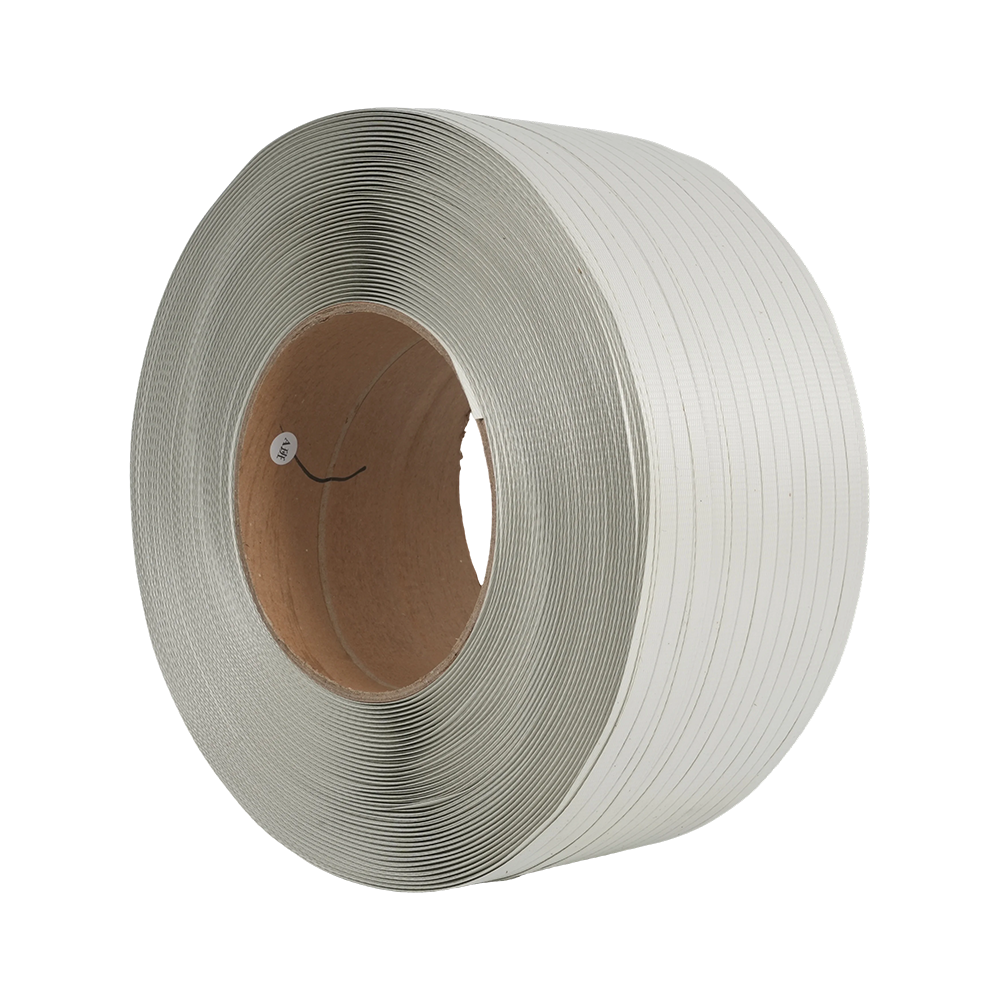
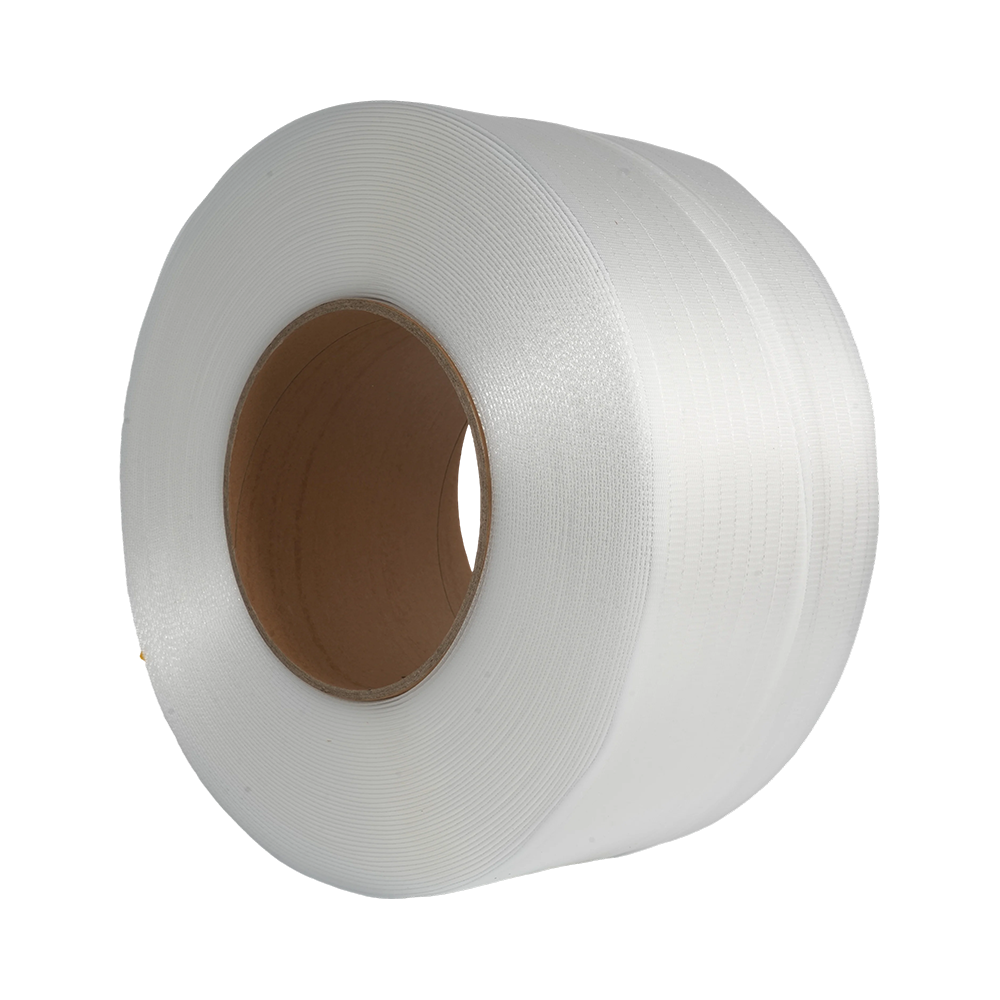
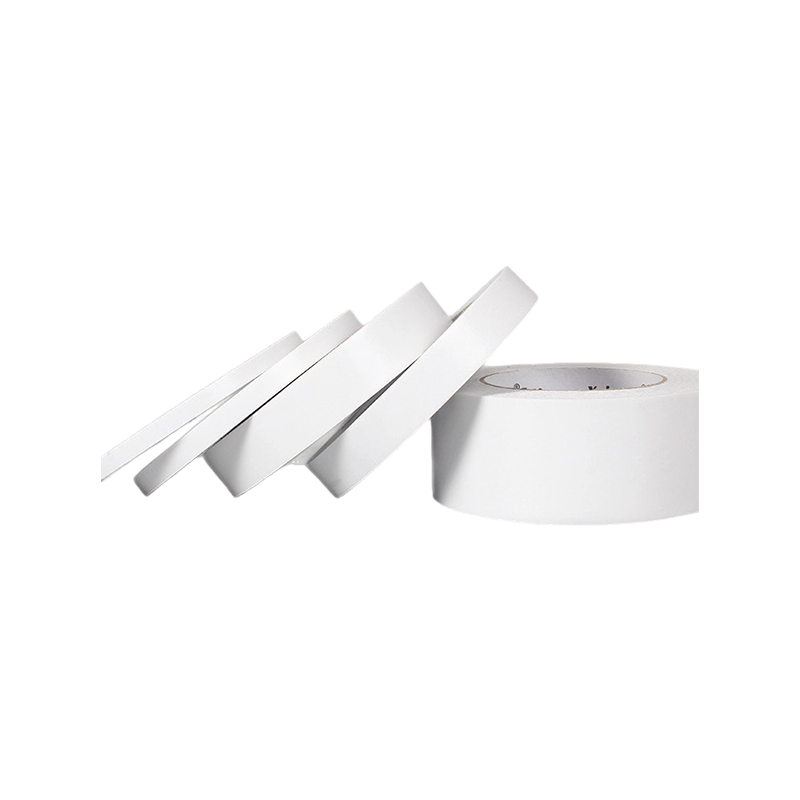
White Plastic Strapping Tape, PP Manual Strapping Band
1. What Is White PP Manual Strapping Band?
White PP manual strapping band is a flat packaging strap produced primarily from polypropylene resin. It is supplied in coils and is commonly used to gather, compress, stabilize, or secure products during storage and transportation. The strap is generally available in several widths and thicknesses so that users can select an appropriate specification for the weight, shape, and handling requirements of the load.
The term “manual” refers mainly to the operating method. Unlike fully automatic machine strapping, manual PP strapping is applied by an operator using a tensioner, cutter, sealer, friction-welding tool, or related hand-operated equipment. This operating method is useful when packaging volumes are variable, products differ substantially in size, or a company needs a flexible system that can be deployed at different workstations.
White polypropylene is selected for this type of strapping because it provides a useful combination of low density, flexibility, tensile performance, and resistance to ordinary moisture exposure. The strap can bend around cartons and bundled products without the sharp edges associated with some metal bands. Its light weight also reduces the physical burden on workers who repeatedly carry, position, and remove packaging materials.
The product is not intended to replace every type of industrial strapping. Heavy steel band, high-strength PET strapping, or specialized composite systems may be more suitable for very heavy loads, sharp-edged materials, long-distance transport under severe conditions, or applications requiring exceptionally high retained tension. PP manual strapping is instead optimized for general-purpose, light- to medium-duty packaging where ease of use and total operating cost are important.
Typical Product Specifications
Common widths include 9 mm, 12 mm, and 15 mm. Typical thicknesses range from approximately 0.4 mm to 0.8 mm. Coil lengths can be customized according to customer requirements, with examples including 100 meters per coil and 200 meters per coil. Tensile strength commonly falls within the range of 200 N to 500 N, depending on width, thickness, formulation, and production specification. Elongation at break is generally no more than 25 percent.
| Parameter | Typical Value | Packaging or Application Significance |
|---|---|---|
| Material | Polypropylene (PP) | Lightweight, flexible, and suitable for general packaging operations |
| Color | White | Provides a clean appearance and supports easy visual identification |
| Common widths | 9 mm, 12 mm, 15 mm | Allows selection according to bundle size and load requirements |
| Common thickness | 0.4 mm–0.8 mm | Influences stiffness, strength, and handling characteristics |
| Common coil length | Customized, such as 100 m or 200 m per coil | Supports different consumption rates and packaging workflows |
| Tensile strength | Approximately 200 N–500 N | Varies according to specification and intended load |
| Elongation at break | Up to 25% | Provides limited elasticity during tensioning and load movement |
| Tool compatibility | Manual tensioners, strapping tools, friction-weld tools, and seals | Enables flexible manual application and joining methods |
2. Core Advantages of Polypropylene Manual Strapping
2.1 Cost-Effective Packaging
One of the main reasons businesses choose PP manual strapping is its favorable cost structure. Polypropylene is generally less expensive than steel strapping and many high-performance alternatives. The material is also lightweight, which can reduce handling costs, shipping weight, storage requirements, and the physical effort associated with daily packaging work.
The manual operating method creates an additional economic advantage. A company does not necessarily need to purchase a fully automatic strapping line or install pneumatic systems. For low- and medium-volume applications, a hand tensioner, cutter, friction-welding tool, or seal-based tool may be sufficient. This makes the product accessible to small manufacturers, wholesalers, logistics providers, retailers, agricultural businesses, and workshops with changing packaging volumes.
Lower material and equipment costs do not mean that users must accept inconsistent packaging. When the strap is produced with controlled width, thickness, and tensile properties, it can deliver repeatable performance for the intended application. The most economical solution is not always the strap with the lowest purchase price; it is the option that balances material cost, labor efficiency, failure prevention, storage, and tool compatibility.
2.2 Safer Manual Handling
PP strapping has smooth edges and does not present the same sharp-edge risk associated with many metal bands. This feature can improve operator comfort during application, cutting, removal, and disposal. The strap is also considerably lighter than steel, reducing the risk of strain when workers move coils or apply multiple straps to a load.
Safer handling is particularly valuable in warehouses and distribution centers where packaging tasks are performed repeatedly. A material that is easy to bend and position can help workers complete jobs more efficiently while reducing unnecessary contact with rigid or abrasive edges. Appropriate gloves, eye protection, and safe cutting procedures should still be used, especially when tensioned strap is being removed.
2.3 Flexibility Around Different Loads
Many packages are not perfectly rigid or uniform. Cartons may have slightly different dimensions, paper products may compress, and bundled pipes or profiles may create curved or irregular surfaces. PP manual strapping can bend around these shapes and accommodate moderate changes in load geometry.
Its partial elastic recovery helps the strap maintain useful tension after application. When a load experiences minor movement during handling or transportation, the strap can accommodate some deformation rather than behaving as a completely rigid band. This does not eliminate the need for proper tensioning, but it can help reduce loosening in ordinary packaging situations.
2.4 Resistance to Ordinary Moisture and Chemicals
Polypropylene provides basic resistance to moisture and many common chemical exposures. This makes the strap suitable for general storage and transportation environments where occasional humidity, condensation, or contact with ordinary packaging substances may occur.
However, basic resistance should not be confused with unlimited environmental durability. Continuous outdoor exposure, intense ultraviolet radiation, extreme temperatures, or aggressive chemicals may reduce service performance over time. Users should evaluate the actual environment and consider a more specialized strapping material if the load will remain outdoors or experience severe conditions.
2.5 Clean Appearance and Product Identification
The white surface gives the strap a clean, professional appearance. It can be suitable for packaging printed matter, cartons, consumer goods, and products where presentation matters. White material also provides visual contrast against many loads, making the strap easier to identify during inspection and removal.
For some customers, color consistency is an important quality characteristic. A stable white appearance can support brand-neutral packaging, organized warehouse operations, and visual differentiation between packaging specifications. Color is only one part of product quality, but it can contribute to a more consistent overall presentation.
3. Advantages Compared with Competing Strapping Materials
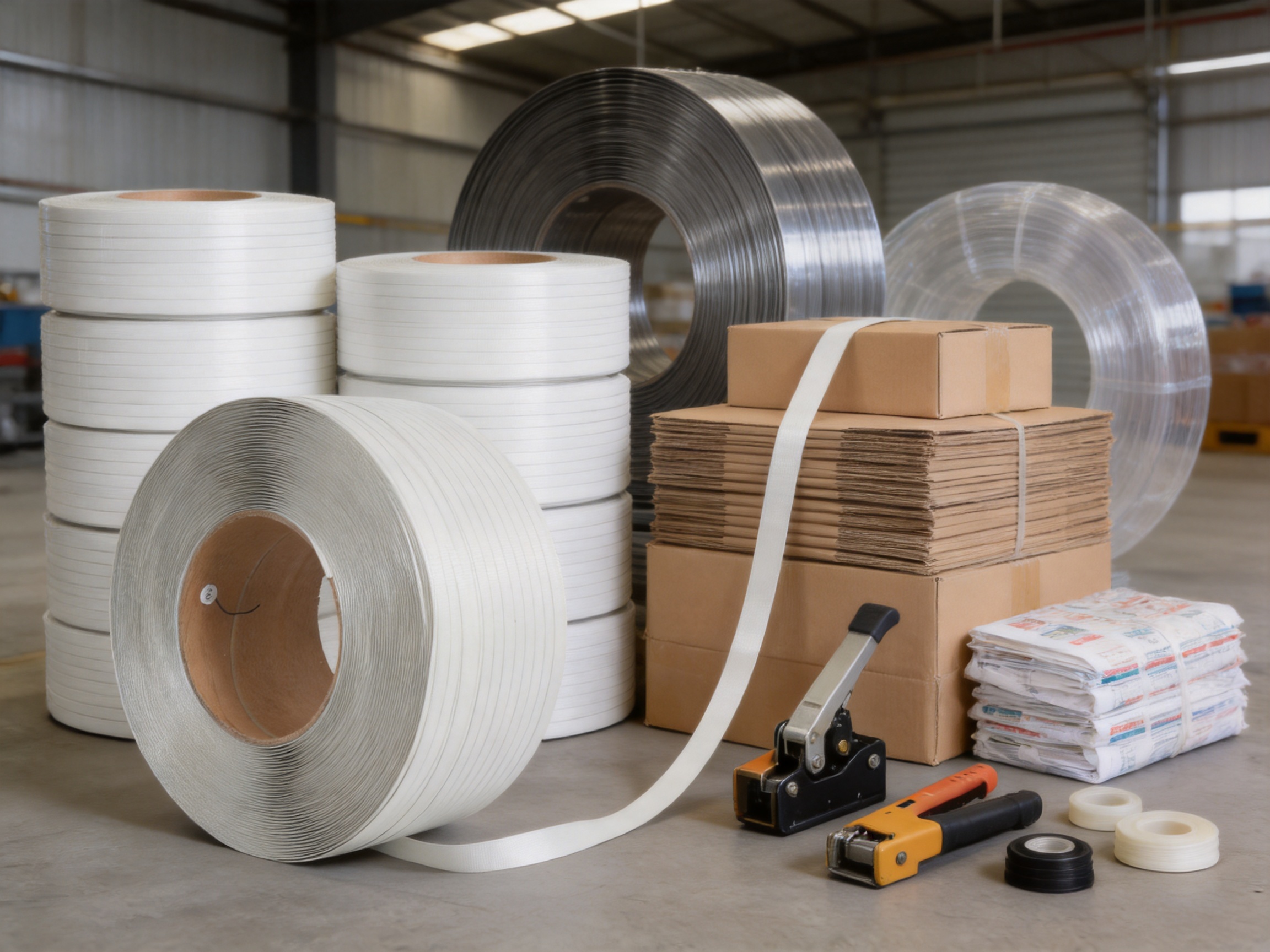
3.1 PP Strapping Compared with Steel Strapping
Steel strapping is known for high strength and is used in demanding applications such as heavy metal products, dense construction materials, and large industrial loads. Nevertheless, it is not always the most efficient choice for general packaging. Steel is heavier, may have sharp edges, and can require additional protective equipment during application and removal.
White PP strapping offers a more user-friendly alternative when the load does not require the extreme strength of steel. Its lower weight simplifies coil handling, its smooth edges improve handling safety, and its flexibility makes it easier to wrap around cartons and bundled products. It also avoids corrosion concerns associated with exposed steel in humid environments.
The appropriate comparison should always be based on load requirements. PP strap should not be selected for loads whose weight, movement, sharp edges, or transport conditions exceed its design range. Its advantage is not maximum strength; its advantage is a more balanced solution for light- and medium-duty packaging.
3.2 PP Strapping Compared with PET Strapping
PET strapping generally provides higher tensile strength and stronger retained tension than standard PP strapping. It is often selected for heavier loads or applications requiring enhanced resistance to tension loss. However, PET can be more than necessary for lightweight bundles, cartons, printed materials, and routine distribution packaging.
PP manual strapping can provide a lower-cost and more flexible option when the application does not require PET-level performance. It is easy to process manually and can reduce material consumption costs for businesses handling large numbers of light packages. The lower density of PP can also make coils easier to move and store.
For purchasers, the correct decision depends on the required strength, package weight, transport distance, environmental exposure, and available tools. A professional supplier should help customers compare these criteria rather than recommending the strongest material for every application.
3.3 PP Strapping Compared with String, Rope, or Unreinforced Film
String, rope, and ordinary stretch film can be useful for certain bundling tasks, but they may not provide the same combination of flat contact area, tension control, and joint security as dedicated PP strapping. Flat strapping distributes pressure across a broader surface and can create a more stable bundle when used correctly.
Stretch film is designed primarily to wrap and contain a load, while strapping is designed to create direct bundling pressure. In some operations, the two materials can be used together. For example, stretch film may protect a palletized load from dust and moisture while PP strap reinforces the unit and helps keep cartons together.
Compared with simple rope or twine, PP strap offers consistent width and thickness, making it more suitable for standardized packaging procedures. It can also be tensioned and joined using dedicated tools, allowing operators to achieve a repeatable closure method.
4. Manufacturing Process and Quality Control
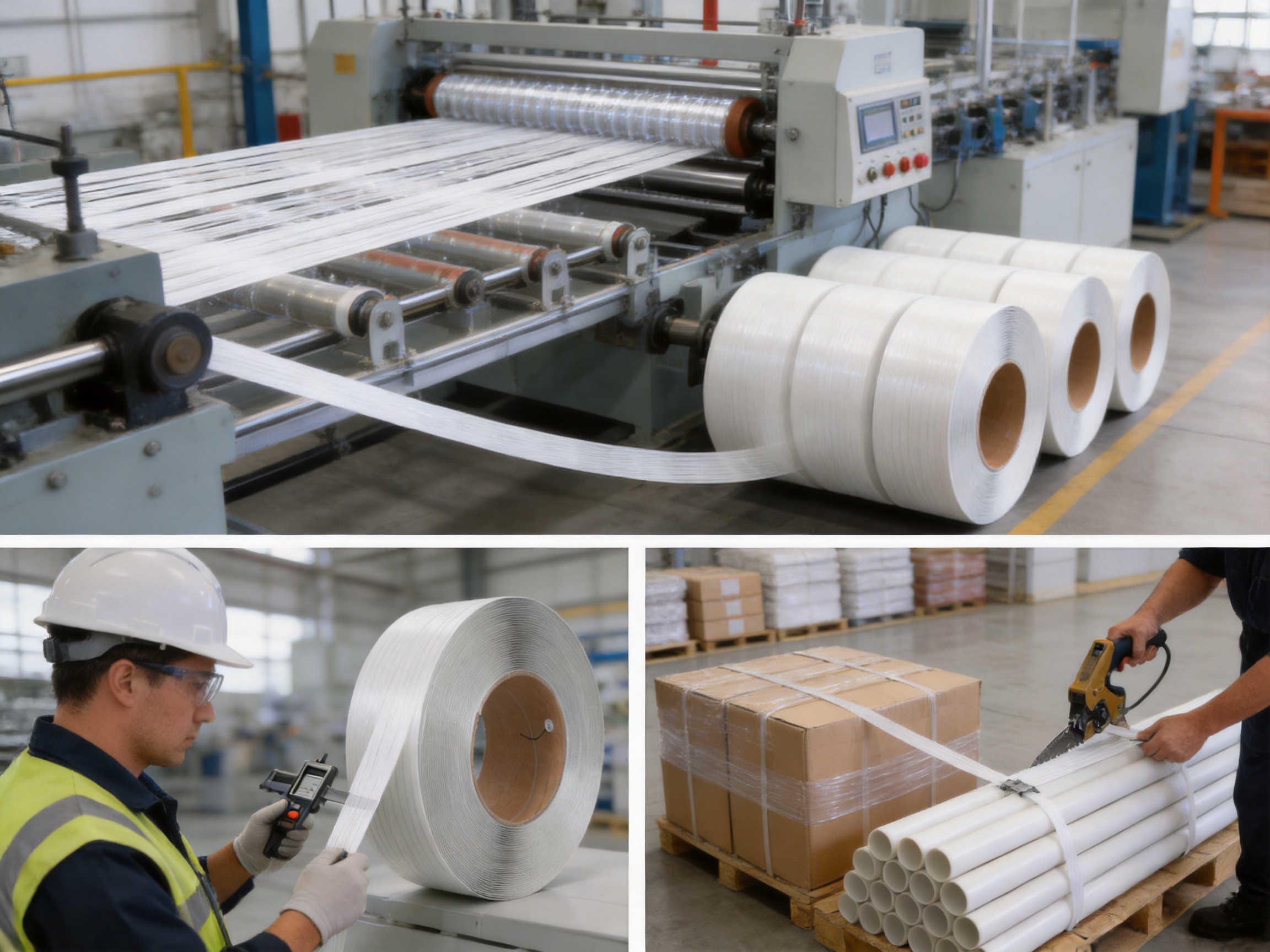
The performance of PP manual strapping depends heavily on raw material selection, extrusion control, dimensional consistency, surface quality, cooling, stretching, winding, and final inspection. A professional packaging-material manufacturer must manage these stages as an integrated process rather than treating the finished coil as the only quality checkpoint.
4.1 Virgin Polypropylene Material Selection
The product described here is made from white virgin PP material. Virgin resin provides a controlled starting point for producing consistent physical and visual properties. It can support stable melt behavior, color uniformity, surface quality, and mechanical performance when processed under appropriate conditions.
Raw materials should be checked before entering production. Important considerations include resin grade, moisture condition, cleanliness, color, melt behavior, and supplier consistency. Controlled material selection helps reduce variations that could later appear as uneven thickness, weak areas, surface defects, or inconsistent elongation.
4.2 Controlled Extrusion
During extrusion, polypropylene is heated and transformed into a continuous flat profile. The processing temperature, screw conditions, melt pressure, die gap, and line speed must be coordinated to form a stable strap with the intended width and thickness.
Consistent extrusion is essential because dimensional variation can affect tool feeding, tensioning, joint formation, and load security. If a strap becomes too thick in some sections and too thin in others, operators may experience inconsistent resistance and reduced confidence during packaging. Advanced production management therefore emphasizes stable operating parameters and regular monitoring.
4.3 Cooling and Dimensional Stabilization
After forming, the strap must be cooled in a controlled manner so that its dimensions stabilize without excessive distortion. Cooling conditions can influence flatness, surface appearance, and final dimensional accuracy. Uneven cooling may contribute to curling, waviness, or variation across the strap profile.
A stable cooling process supports smooth passage through manual tools. It also helps the finished product remain easier to unwind from the coil. For customers, this means fewer interruptions caused by feeding resistance, twisting, or unexpected dimensional changes.
4.4 Stretching and Orientation
Polypropylene strapping can be processed to improve its mechanical behavior through controlled stretching or orientation. This stage aligns portions of the polymer structure and can influence tensile strength, elongation, stiffness, and recovery. The correct balance is important: a strap that is too rigid may be difficult to handle, while a strap with insufficient strength may not maintain a secure bundle.
Production parameters must be matched to the intended width and thickness. The goal is to create a practical combination of strength and flexibility for manual packaging. Inspection of tensile strength and elongation helps confirm that the strap remains within the customer’s required specification.
4.5 Surface Treatment and Winding
The surface of the strap is generally kept smooth to reduce resistance as it passes through a tensioner or related tool. A clean and uniform surface also supports reliable friction welding and helps minimize damage to the operator’s hands or the packaged product.
After production, the strap is wound into coils of specified length. Accurate winding is important because loose, crossed, or uneven coils can create feeding problems. A well-formed coil should unwind in a controlled way, helping operators maintain an efficient workflow.
4.6 Inspection and Final Release
Quality control should cover both measurable properties and practical usability. Dimensional checks may include width, thickness, coil length, and weight. Performance checks may include tensile strength, elongation, joint behavior, surface condition, and winding quality. Visual inspection can identify discoloration, contamination, deformation, edge damage, or other defects.
Final inspection is particularly important for export orders and customized specifications. Customers may require a particular width, thickness, coil length, packaging format, or labeling system. A documented inspection process helps ensure that the finished product matches the agreed requirements before shipment.
4.7 Manufacturing Strengths of the Supplier
Zhejiang Geruite Packaging Materials Co., Ltd. focuses on the research, development, production, and sales of packaging tapes and related materials. Its product range includes BOPP tape, kraft paper tape, masking tape, high-temperature tape, metal tape, PE stretch film, PP strapping, and high-strength PET strapping.
This broader product portfolio provides a useful manufacturing perspective. Because the company works with several packaging-material categories, it can understand how strapping interacts with stretch film, adhesive tape, cartons, and other load-protection products. Customers seeking a complete packaging solution may benefit from discussing several materials with one experienced supplier.
The company reports the use of advanced production equipment and a quality-control system covering raw-material procurement, manufacturing, and final inspection. It also reports an annual output value of more than RMB 60 million. These capabilities indicate an established production organization with experience serving diverse packaging requirements.
For international customers, manufacturing strength should be assessed not only by equipment but also by process discipline, production consistency, customization ability, communication, and after-sales support. A reliable supplier should be able to explain material options, recommend appropriate specifications, provide samples when necessary, and maintain consistent quality across repeat orders.
5. Application Scenarios
5.1 Carton Bundling
PP manual strapping is widely suited to carton bundling. It can hold several cartons together, reinforce an individual carton, or stabilize a group of boxes before palletizing. The strap helps prevent cartons from separating during movement through a warehouse or distribution center.
When applying the strap, operators should position it so that pressure is distributed appropriately and the carton edges are not crushed. Corner protectors may be used when the carton material is soft or the tension level is relatively high.
5.2 Paper Products and Printed Matter
Newspapers, magazines, brochures, notebooks, and other printed products are often gathered into bundles for storage and distribution. PP strap can help maintain a compact unit while allowing easy removal at the destination. Its smooth surface is less likely to create the kind of sharp contact associated with metal banding.
For printed products, users should select a suitable tension level. Excessive tension may leave marks or deform the bundle, while insufficient tension may allow the contents to shift. The flexibility of PP allows operators to adapt the process to different paper densities and bundle sizes.
5.3 PVC Pipes and Light Aluminum Profiles
Light construction materials such as PVC pipes, trim, light aluminum profiles, and similar long products can be bundled with PP strapping. The strap helps keep units together during movement and makes grouped products easier to handle.
Because these products may have rounded surfaces or uneven contact points, the strap should be positioned carefully. Edge protection or intermediate packaging may be appropriate where surfaces are sensitive or where the bundle could shift under vibration.
5.4 Logistics and Distribution Centers
Distribution centers often handle products with different dimensions and packaging formats. A manual strapping system allows workers to secure individual parcels, grouped cartons, returned goods, and irregular packages without changing a fixed machine setup.
The portability of manual tools is an important benefit in this environment. Operators can apply strap at receiving stations, picking areas, dispatch lanes, or temporary packing locations. This flexibility can be valuable when order volumes change from day to day.
5.5 Agricultural Produce and Light Goods
Light agricultural products, trays, boxes, and related goods may benefit from PP bundling when the packaging objective is to keep units together rather than create a fully sealed package. The strap can be used with cartons, trays, and protective film according to the product’s ventilation and handling requirements.
Users should consider moisture, temperature, and outdoor exposure. Temporary or indoor applications are generally more suitable than prolonged direct exposure to strong sunlight and severe weather.
6. Manual Tools and Joining Methods
6.1 Tensioners
A manual tensioner pulls the strap tight around the load. The operator feeds the strap through the tool, positions it around the package, and applies tension according to the material and load requirements. Correct tension improves bundle stability, but excessive force can damage cartons, deform products, or exceed the strap’s intended performance.
6.2 Friction-Welding Tools
Friction-welding tools join overlapping PP strap ends by generating heat through rapid movement and pressure. The resulting joint can provide an efficient closure without requiring separate metal seals. The quality of the weld depends on tool compatibility, strap condition, overlap length, pressure, welding time, and operator technique.
Training is recommended when friction welding is introduced. Operators should verify that the joint is properly formed before the load is released. A weak joint may result from incorrect settings, contamination, insufficient overlap, or unsuitable strap specifications.
6.3 Seals and Seal-Clamping Tools
Another joining method uses a metal or plastic seal together with a compatible tensioner and sealer. The strap ends are overlapped, tensioned, and secured by crimping or clamping the seal. This method can be useful where friction-welding equipment is not available or where the customer’s established packaging procedure relies on seals.
Seal selection must match the strap width and thickness. An incompatible seal may not grip properly or may interfere with tool operation. Suppliers should confirm the complete system rather than discussing strap in isolation.
6.4 Cutting and Safe Removal
When removing tensioned strap, operators should stand clear of the potential release path and use an appropriate cutter. The strap should not be cut while another worker is directly in front of the load. Safe removal procedures are important even when the material has smooth edges, because tension can cause sudden movement.
7. How to Select the Correct Specification
Choosing a PP manual strapping specification requires more than selecting a width from a catalog. The application should be evaluated according to load weight, package dimensions, surface condition, transportation environment, required tension, joint method, and expected storage period.
7.1 Width and Thickness
Narrower strap can be convenient for smaller bundles and lighter products, while wider strap may provide broader contact and a different strength profile. Thickness affects stiffness, tensile performance, and tool compatibility. The selected combination should be tested with the actual load rather than chosen solely by appearance.
7.2 Load Weight and Movement
Customers should estimate the total weight of the bundle and consider how much movement it may experience. A stationary warehouse bundle may require less performance than a load transported over long distances on a truck, ship, or rail system. Vibration, repeated handling, stacking pressure, and changes in temperature can all affect packaging stability.
7.3 Product Shape and Edges
Sharp edges can cut or damage plastic strap, especially when the load shifts. If the package contains metal corners, construction materials, or rigid profiles, corner protection and contact padding may be necessary. PP strap is best suited to applications where the load surface is reasonably compatible with plastic banding.
7.4 Coil Length and Consumption
Coil length should match the frequency of use and the operator’s workflow. Shorter coils may be easier to carry and replace, while longer coils can reduce the number of changeovers. Customized lengths such as 100 meters or 200 meters per coil allow businesses to align supply with their packaging stations and storage practices.
7.5 Tool Compatibility
Before placing an order, customers should confirm that the selected strap works with their existing tensioners, friction-welding tools, seals, and cutters. Width and thickness tolerances are especially important. A supplier can help verify compatibility through samples or application testing.
8. Storage, Handling, and Environmental Recommendations
PP strapping should be stored in a dry, cool indoor location away from direct sunlight and excessive heat. Coils should remain protected from heavy compression, which could deform the winding structure or make unwinding more difficult. The storage area should be clean and free from sharp objects that could damage the strap.
Prolonged ultraviolet exposure may accelerate polymer degradation. For this reason, outdoor storage should be avoided unless the product has been specifically formulated and tested for that environment. High-temperature storage can also affect dimensional stability and handling performance.
During transportation and internal handling, coils should be protected from impact and moisture contamination. Packages should not be dropped from excessive height. Before use, operators should inspect the coil for visible damage, contamination, or deformation.
Although PP is resistant to ordinary moisture, the final packaging system should be selected according to the complete environment. Where loads face rain, strong sunlight, extreme heat, aggressive chemicals, or long-term outdoor storage, customers should consult the supplier about alternative grades or higher-performance materials.
9. Why Work with an Experienced Packaging-Material Manufacturer?
A packaging strap is only one part of a larger packaging process. An experienced supplier can help identify the correct material, coordinate the strap with tools, recommend complementary packaging products, and improve the efficiency of the customer’s operation.
Zhejiang Geruite Packaging Materials Co., Ltd. is based in Hangzhou, Zhejiang Province, China, an area with a developed manufacturing base and strong industrial supply chains. The company specializes in packaging materials and serves sectors including logistics, express delivery, household goods, electronics, construction and decoration, industrial manufacturing, cargo stabilization, and packaging protection.
Its product range allows customers to source several related materials, including adhesive tapes, stretch film, PP strapping, and PET strapping. This can simplify procurement for businesses that require multiple packaging products. It also enables a more integrated discussion of load stabilization, surface protection, carton sealing, and bundling.
The company emphasizes product quality as a central operating principle. Its reported quality-control approach covers raw-material procurement, production, and final inspection. For PP manual strapping, this means that attention should be given to resin selection, color, dimensions, tensile properties, coil formation, surface condition, and compatibility with manual tools.
Customization is another important supplier capability. Customers may need nonstandard widths, thicknesses, coil lengths, packaging formats, labels, or shipment quantities. A manufacturer with established production and inspection procedures can evaluate these requirements and provide a more practical solution than a generic trading channel.
Technical communication is equally important. A capable supplier should ask about the load, packaging method, operating tools, transport conditions, and expected consumption. This information helps prevent under-specification, unnecessary over-specification, and compatibility problems.
10. Practical Performance Benefits for Business Operations
10.1 Reduced Equipment Investment
Manual PP strapping is suitable for companies that do not need a fully automated line. A basic tool system can support several packaging formats and can be relocated as workflows change. This is particularly useful for small and medium-sized enterprises, seasonal operations, and warehouses with variable demand.
10.2 Flexible Packaging Workflows
Because operators can apply the strap at different locations, businesses can package products close to storage racks, picking zones, loading docks, or production areas. This reduces the need to move every product to a single fixed machine.
10.3 Lower Handling Weight
The low density of PP contributes to lighter coils and easier material movement. Over a full working day, lower handling weight can improve comfort and reduce the effort associated with replenishing packaging stations.
10.4 Consistent Appearance
Uniform white strap can support a clean packaging appearance across different product categories. It is suitable for commercial shipments where customers expect organized, professional presentation.
10.5 Compatibility with Combined Packaging Systems
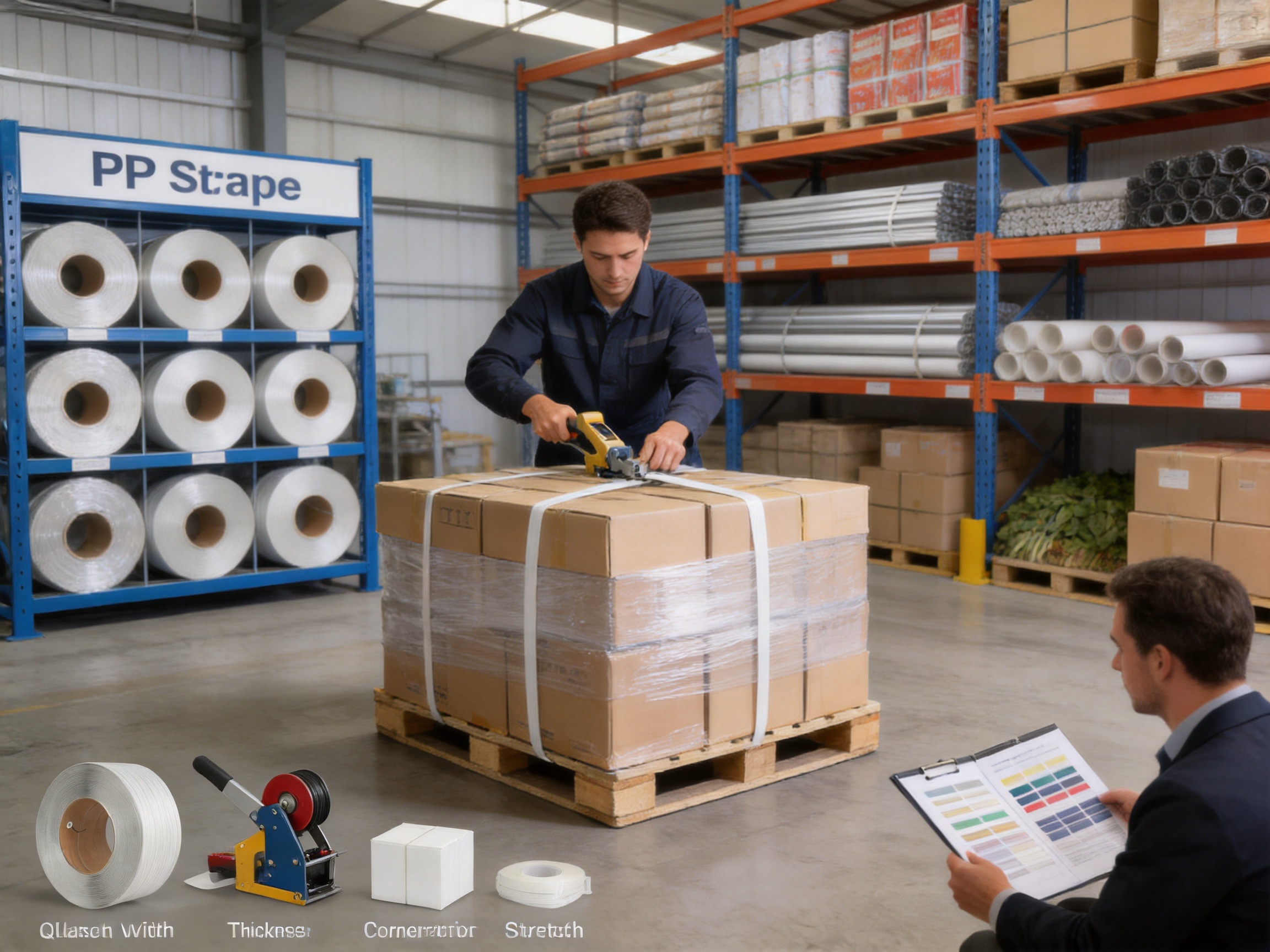
PP strap can be combined with corrugated cartons, stretch film, edge protectors, adhesive tape, and other packaging materials. For example, a palletized load may use stretch film for containment, tape for carton closure, and PP strap for additional bundle stability. This combined approach can address several packaging risks at once.
11. Limitations and Responsible Use
Every packaging material has a defined performance range. PP manual strapping is not intended for every load. Users should not assume that a wider strap will automatically solve all stability problems or that additional tension can compensate for an unsuitable material.
Heavy machinery, dense metal products, sharp-edged materials, high-value fragile goods, and loads exposed to severe transport conditions may require stronger PET, steel, or specialized composite strapping. A professional evaluation should be completed where load failure could cause injury, product loss, or significant transportation damage.
Users should also remember that joint quality is a critical part of total strap performance. Even a well-manufactured strap may fail to secure a load if the wrong tool is used, the strap is contaminated, the overlap is insufficient, or the joint is incorrectly formed.
Environmental conditions must also be considered. Prolonged ultraviolet exposure, extreme outdoor temperatures, and aggressive chemical contact may reduce the service life of polypropylene. When the application is uncertain, customers should request technical guidance and conduct a trial under realistic conditions.
12. Purchasing Checklist
Before ordering white PP manual strapping band, purchasers should prepare the following information:
1. The approximate weight and dimensions of the load.
2. The type of products being bundled and whether they have sharp edges.
3. The required strap width and thickness, if already established.
4. The available manual tools, including tensioners, friction welders, sealers, and cutters.
5. The preferred coil length and estimated monthly consumption.
6. The expected storage and transportation conditions.
7. Whether the strap will be used with stretch film, cartons, corner protectors, or other packaging materials.
8. Any requirements for color, labeling, private packaging, or customized dimensions.
9. The required tensile strength, elongation, and joint performance.
10. The destination market, shipping method, and delivery schedule.
Providing this information allows the manufacturer to recommend a more accurate product configuration. It also helps reduce the risk of purchasing a strap that is incompatible with existing tools or insufficient for the intended application.
13. Frequently Asked Questions
Q1: What is white PP manual strapping band used for?
It is used for bundling, securing, and stabilizing light- to medium-duty loads. Typical applications include carton bundling, paper products, printed matter, PVC pipes, light aluminum profiles, logistics parcels, and lightweight agricultural goods.
Q2: Is PP strapping stronger than steel strapping?
No. Steel strapping generally provides higher strength for very heavy or demanding loads. The advantage of PP strapping is its lower weight, smoother handling, flexibility, lower cost, and suitability for general light- and medium-duty packaging.
Q3: Can the strap be applied without an automatic machine?
Yes. The product is designed for manual operation with suitable tensioners, cutters, friction-welding tools, seals, and seal-clamping equipment. This makes it appropriate for operations that do not require automated strapping lines.
Q4: What widths are commonly available?
Common widths include 9 mm, 12 mm, and 15 mm. The best choice depends on the load, packaging design, tool compatibility, and required tension.
Q5: What thicknesses are commonly available?
Common thicknesses range from approximately 0.4 mm to 0.8 mm. Thickness influences stiffness, tensile strength, handling behavior, and compatibility with tools and seals.
Q6: Can the coil length be customized?
Yes. Coil lengths can be customized according to the customer’s application and consumption requirements. Examples include 100-meter and 200-meter coils, although other configurations may be discussed.
Q7: How are PP strap ends joined?
They can be joined using friction welding or seal clamping, depending on the available tools and the customer’s packaging procedure. The selected joining method must be compatible with the strap width and thickness.
Q8: Is white PP strapping suitable for outdoor use?
It may be suitable for short-term or protected outdoor handling, but prolonged exposure to strong ultraviolet radiation, extreme heat, and severe weather is not recommended unless the material has been specifically designed and tested for those conditions.
Q9: Can PP strap replace PET strap?
It can replace PET strap in applications where the required strength, retained tension, and environmental performance fall within the capability of PP. It should not be used as a direct replacement when the load requires higher-strength performance.
Q10: How should PP strapping be stored?
Store it indoors in a dry, cool environment away from direct sunlight and excessive heat. Avoid heavy compression, sharp objects, and impacts that could deform or damage the coil.
Q11: What quality factors should buyers inspect?
Important factors include resin quality, color consistency, width, thickness, tensile strength, elongation, surface smoothness, coil winding, length accuracy, joint performance, and compatibility with the customer’s tools.
Q12: Why choose a manufacturer with several packaging-material product lines?
A supplier with experience in PP strapping, PET strapping, stretch film, adhesive tape, and related materials can provide more complete packaging advice. The customer may also simplify procurement and coordinate different materials within one load-securing system.
14. Conclusion
White PP manual strapping band is a versatile packaging material for businesses that need dependable light- and medium-duty load securing without the expense or complexity of automated systems. Manufactured from white virgin polypropylene, it offers useful flexibility, moderate elasticity, low weight, smooth handling, basic moisture and chemical resistance, and compatibility with manual tensioning and joining tools.
Its principal advantages over steel include safer handling, lower weight, lower material cost, and greater flexibility. Compared with higher-strength plastic strapping, it can offer a more economical solution when the load does not require maximum tensile performance. Its value is particularly clear in carton bundling, printed products, logistics parcels, light construction materials, agricultural goods, and other applications where packaging volumes and load formats vary.
Product quality depends on more than the polymer itself. Controlled raw-material selection, extrusion, cooling, orientation, surface finishing, winding, and inspection are essential for producing consistent strap. A manufacturer with established equipment, a broad packaging-material portfolio, and a systematic quality-control process can provide greater confidence in repeat orders and customized requirements.
Zhejiang Geruite Packaging Materials Co., Ltd. offers PP strapping together with adhesive tapes, stretch film, PET strapping, and other packaging products. Its manufacturing experience, quality-focused process, customization capability, and packaging-material range position it as a potential partner for customers seeking practical and coordinated packaging solutions.
For the best results, users should match strap width, thickness, tensile performance, coil length, and joining method to the actual load and operating environment. When selected and applied correctly, white PP manual strapping can provide an efficient, economical, and user-friendly method for keeping products bundled and secure throughout storage, handling, and transportation.
References
1. Internal product specification information for white polypropylene manual strapping band, including material, dimensions, tensile strength, elongation, coil length, and tool compatibility.
2. Packaging-material manufacturing information supplied for Zhejiang Geruite Packaging Materials Co., Ltd., including product categories, quality-control practices, production capabilities, and company background.
3. General principles of polymer strapping selection, load stabilization, manual tensioning, and packaging-tool compatibility.
4. General warehouse safety practices for applying, cutting, removing, and storing plastic strapping materials.
5. General packaging engineering considerations for comparing polypropylene, polyethylene terephthalate, steel, stretch film, and other load-securing materials.
Product: White Plastic Strapping Tape, PP Manual Strapping Band

LATEST POST
Let’s create something amazing together
contact us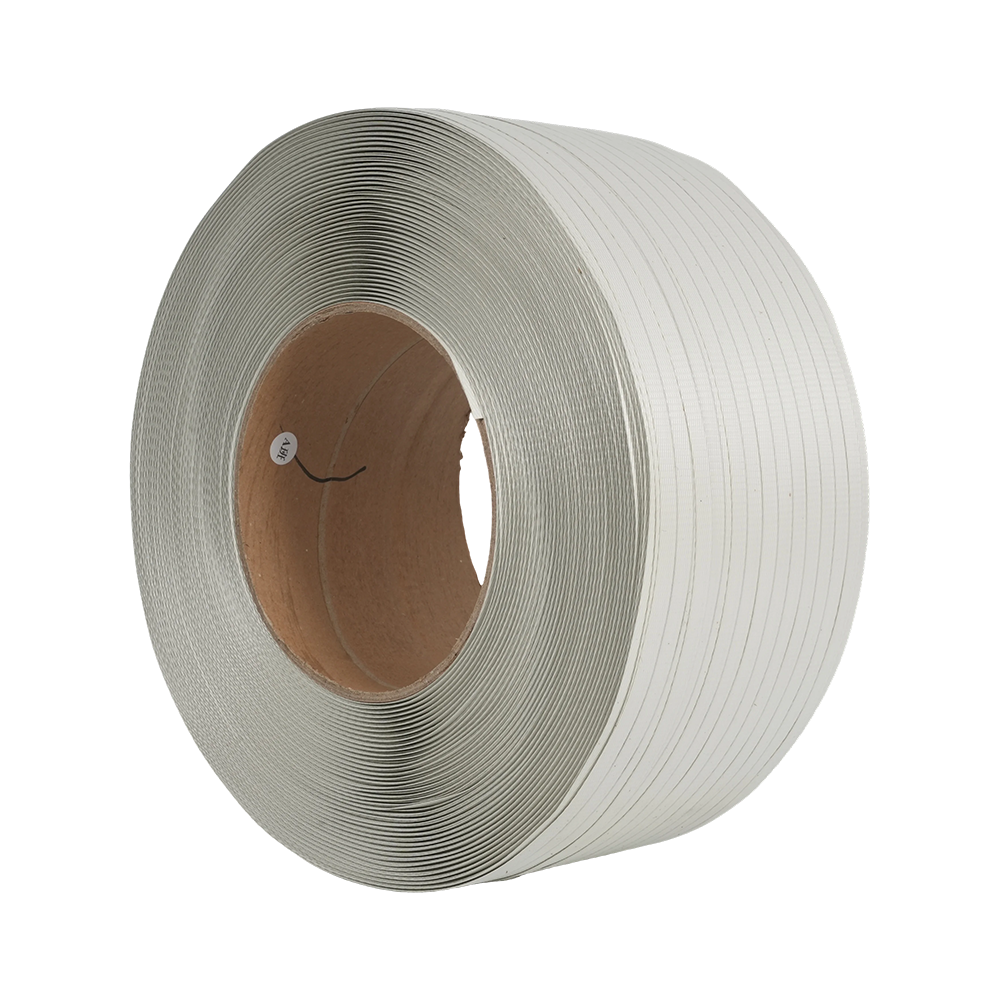
CONTACT DETAILS
- Address:No. 241, Yaojiafan, Zhangpanqiao, Shushan Street, Xiaoshan District, Hangzhou City, Zhejiang Province, China
- TEL:+86-0571-83175630
- Phone:+86-13336160217
- Email:jeffrey@grtpk.com
- WeChat/WhatsApp:+86-18058115265
PRODUCTS
NEWS CENTER
MOBILE TERMINAL
Copyright© Zhejiang Geruite Packaging Materials Co., Ltd. All Rights Reserved.
Privacy Wholesale industrial packaging tape Manufacturers